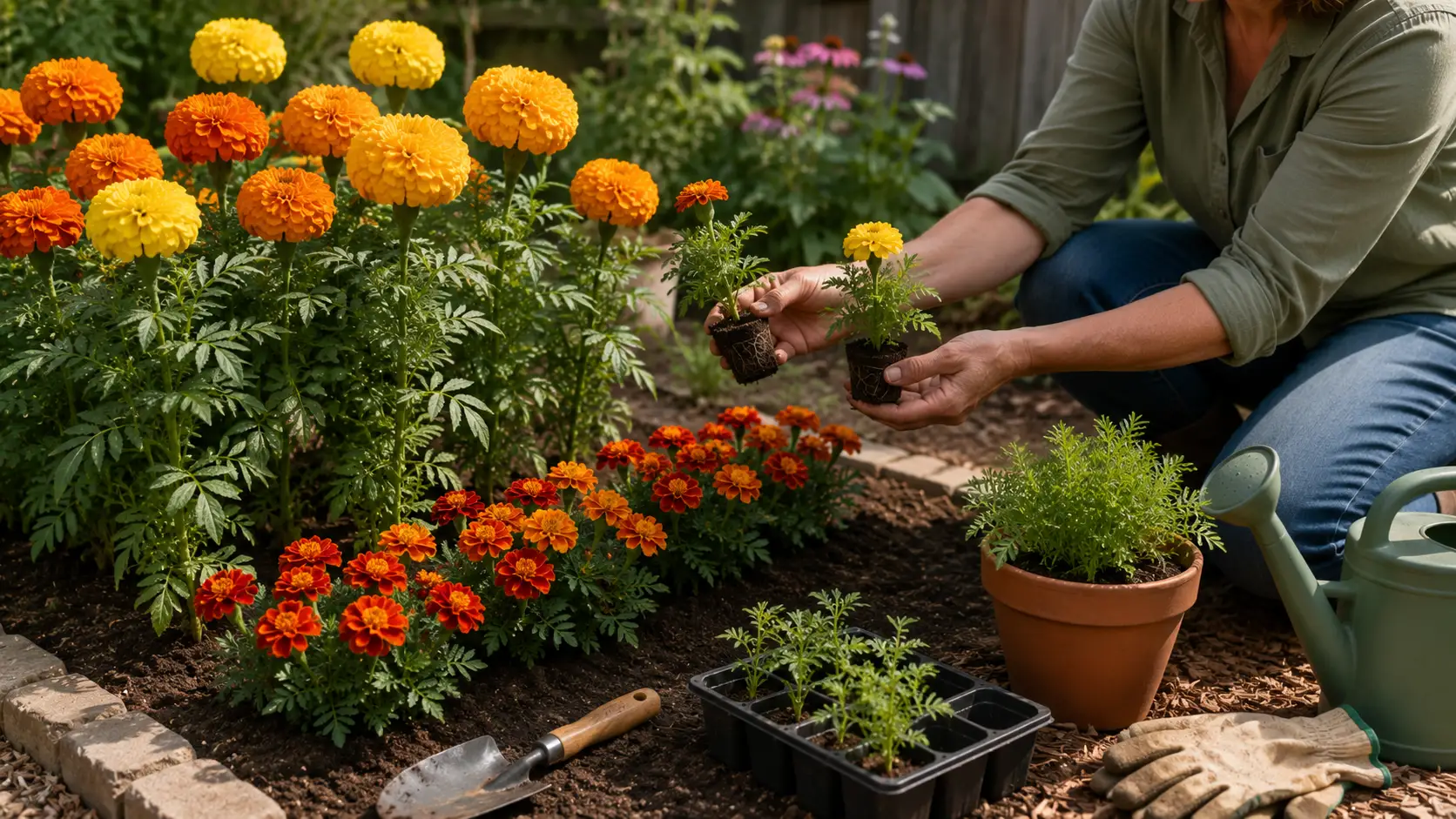
| Plant Detail | Quick Information |
| Common Name | Marigold |
| Botanical Name | Tagetes, mainly Tagetes erecta, Tagetes patula, Tagetes tenuifolia, and Tagetes lucida |
| Family | Asteraceae, the daisy family |
| Plant Type | Usually grown as an annual |
| Sun Exposure | Full sun |
| Soil Type | Well-draining soil, average garden soil, loam, or improved sandy soil |
| Soil pH | Around 6 to 7 is a practical target |
| Bloom Time | Late spring through frost in many gardens |
| Hardiness Zones | Usually grown across USDA Zones 2 to 11 as warm-season annuals |
| Native Area | Mexico, Central America, and parts of subtropical America, depending on the species |
| Best Uses | Borders, vegetable garden edges, containers, cut flowers, low edging, pollinator patches |
Marigolds look simple at first: bright flowers, fast growth, and seed packets that make them sound almost interchangeable. Then the plants start growing, and the differences become easier to see. Some stay low and rounded, some stretch upward, and some bring finer leaves that change the texture of a bed or container.
That is where choosing the right types of marigolds matters. The best choice is not only about yellow, orange, red, or cream flowers. It is about how much room the plant needs, how it fills a sunny spot, and whether it belongs in a pot, border, vegetable bed, or cutting row.
This list helps sort marigolds by growth habit, bloom style, size, and use, so each plant has a clear place before the garden starts to feel crowded.
What Marigold Means in Garden Use
Most garden marigolds sold for home growing belong to the genus Tagetes, but the term “marigold” is often used loosely to refer to different plants. Before choosing varieties, it helps to understand classification, growth behavior, and spacing needs across types.
- Genus Identification: Most garden marigolds fall under Tagetes plant group
- Species Variation: Different species show distinct growth and bloom patterns
- Garden Placement: Size and structure determine pot or bed suitability
This mainly refers to Tagetes types such as Tagetes erecta, Tagetes patula, Tagetes tenuifolia, hybrids, and Tagetes lucida.
These are not just color variations. They differ in height, plant shape, foliage texture, bloom size, and spacing needs, which affect where they fit in a garden. Some work well in pots, while others are better suited to open garden beds.
A common confusion is the term “pot marigold,” which usually refers to Calendula officinalis, a completely different plant. It may look similar, but it has different growing traits and uses.
Marigolds are also used in companion planting near vegetables, but this does not guarantee pest control. It works best as a supportive, not primary, gardening strategy.
What Gulf Coast Gardeners Need to Know Before Planting Marigolds
Houston sits in USDA Zone 9a, and the Gulf Coast combination of heat and sustained humidity changes how marigolds perform compared to general planting guides written for cooler climates.
The best window here is after the last frost, typically mid-March through April, following the same spring planting timing that applies to most warm-season annuals. African marigolds planted in late August or early September carry bold color into November, well past when most summer annuals have finished.
Humidity is the main challenge. Planting too close together invites powdery mildew and botrytis. Water at the soil level only, and space plants at their full recommended distance. Grayish residue on leaves by midsummer is fungal pressure, not a watering issue.
Spider mites appear during hot, dry stretches between rain events. Stippled or bronzed leaf undersides are the first sign. Proper sun, spacing, and plant vigor are the best prevention
Which Types of Marigolds Are Best for Garden Beds?
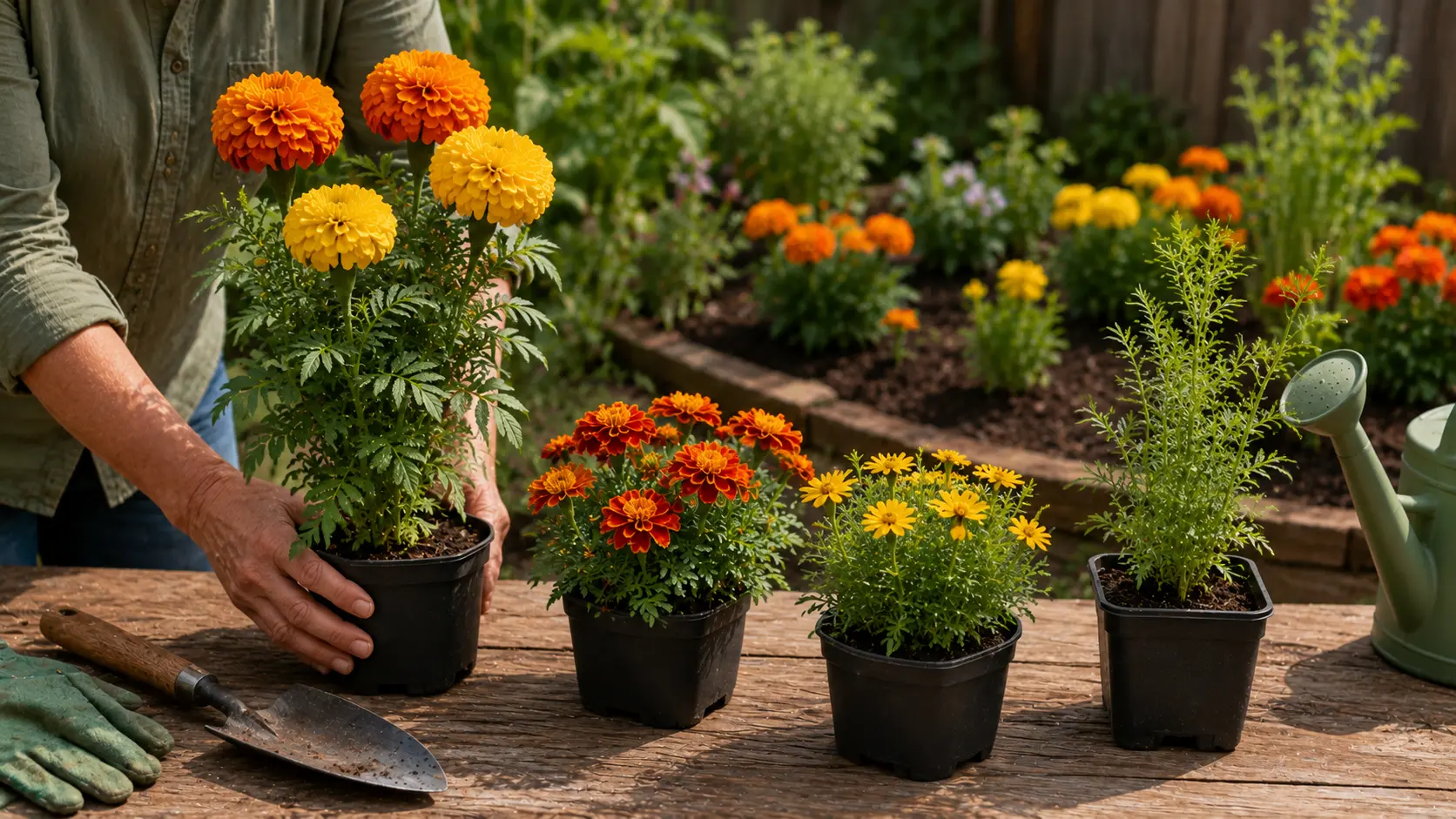
French marigolds are often the best fit for low borders, mixed beds, and vegetable garden edges because they stay compact and branch well without taking over the space around them.
African marigolds work better when the goal is height, large flower heads, or cut stems for arrangements, since they grow taller and bolder than most other types.
Signet marigolds suit edging, small pots, and herb-style planting thanks to their fine foliage and small flowers. Triploid hybrids are worth considering where strong summer performance matters, since they combine traits from both African and French parent types.
Mexican mint marigold fits gardeners who want scented foliage and a taller, herb-like plant rather than a typical bedding flower.
The simple rule that tends to hold up: choose by height first, then flower size, then how the spot will actually be used.
Types of Marigolds: Garden Picks to Grow
The best types of marigolds depend on where they will grow, how much space they get, and what job they need to do. These marigold varieties include tall cut-flower plants, compact border choices, heat-tolerant hybrids, edible signets, and scented plants suited for herb-style gardens.
1. African Marigold
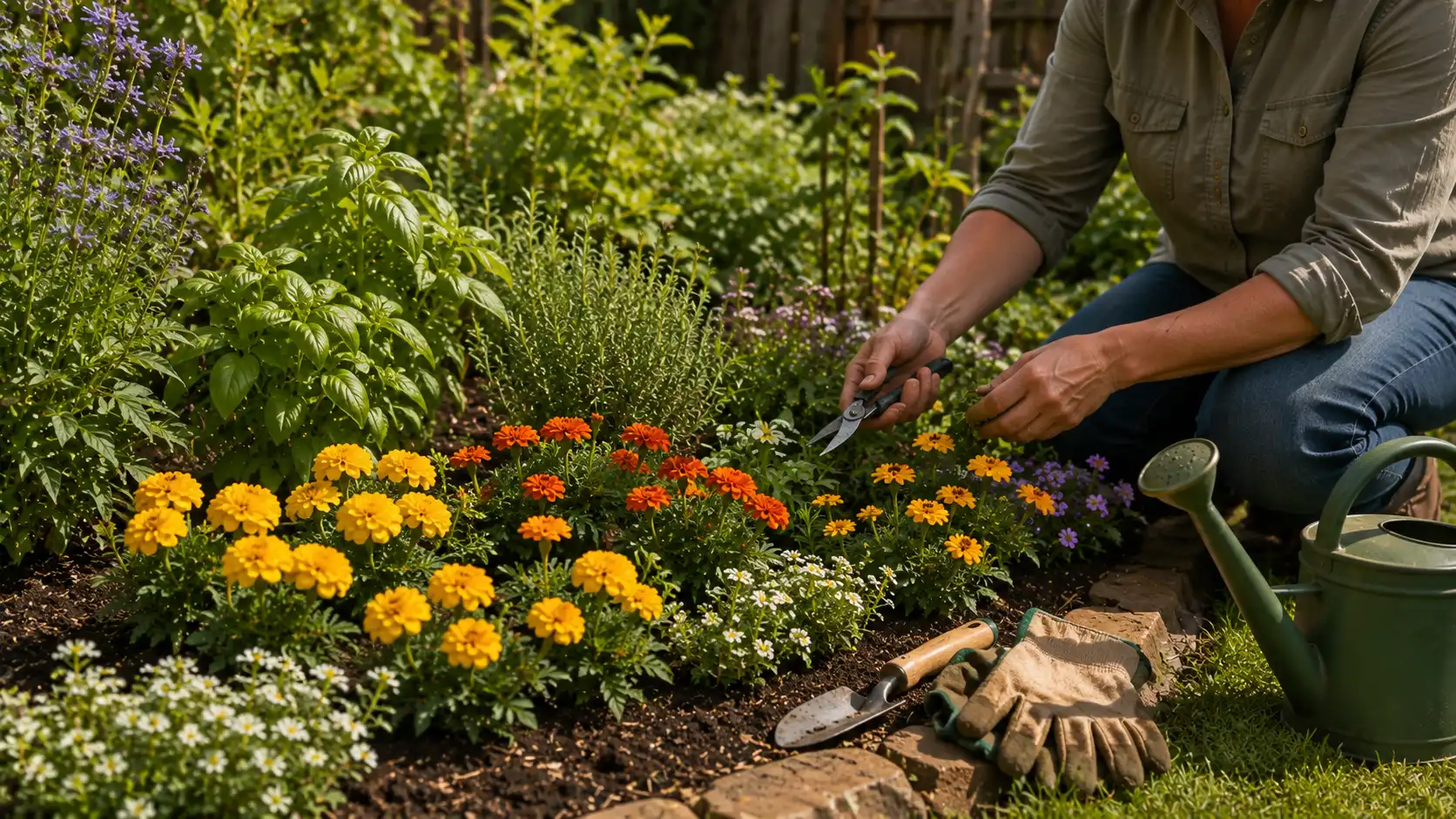
African marigolds are tall, upright plants known for their large, round blooms in bright yellow and orange shades. They grow best in full sun and warm conditions, making them ideal for bold garden displays and background planting in flower beds or borders due to their strong stems and height advantage.
African marigolds generate more calls than any other type I talk about. The most common issue: gardeners plant them in partial shade, thinking the heat protection will help, and then wonder why stems are weak and blooms are sparse. African marigolds want full, blasting Texas sun. The more they get, the better they perform
Benefits: African marigolds provide strong garden impact and natural pest resistance, making them useful for landscaping and companion planting systems.
- Bold Garden Presence: Tall structure creates striking visual impact in borders and landscape designs
- Pest Deterrent Effect: Strong scent helps reduce common garden pests naturally
- Best Background Plant: Ideal for back rows in flower beds due to height
2. French Marigold
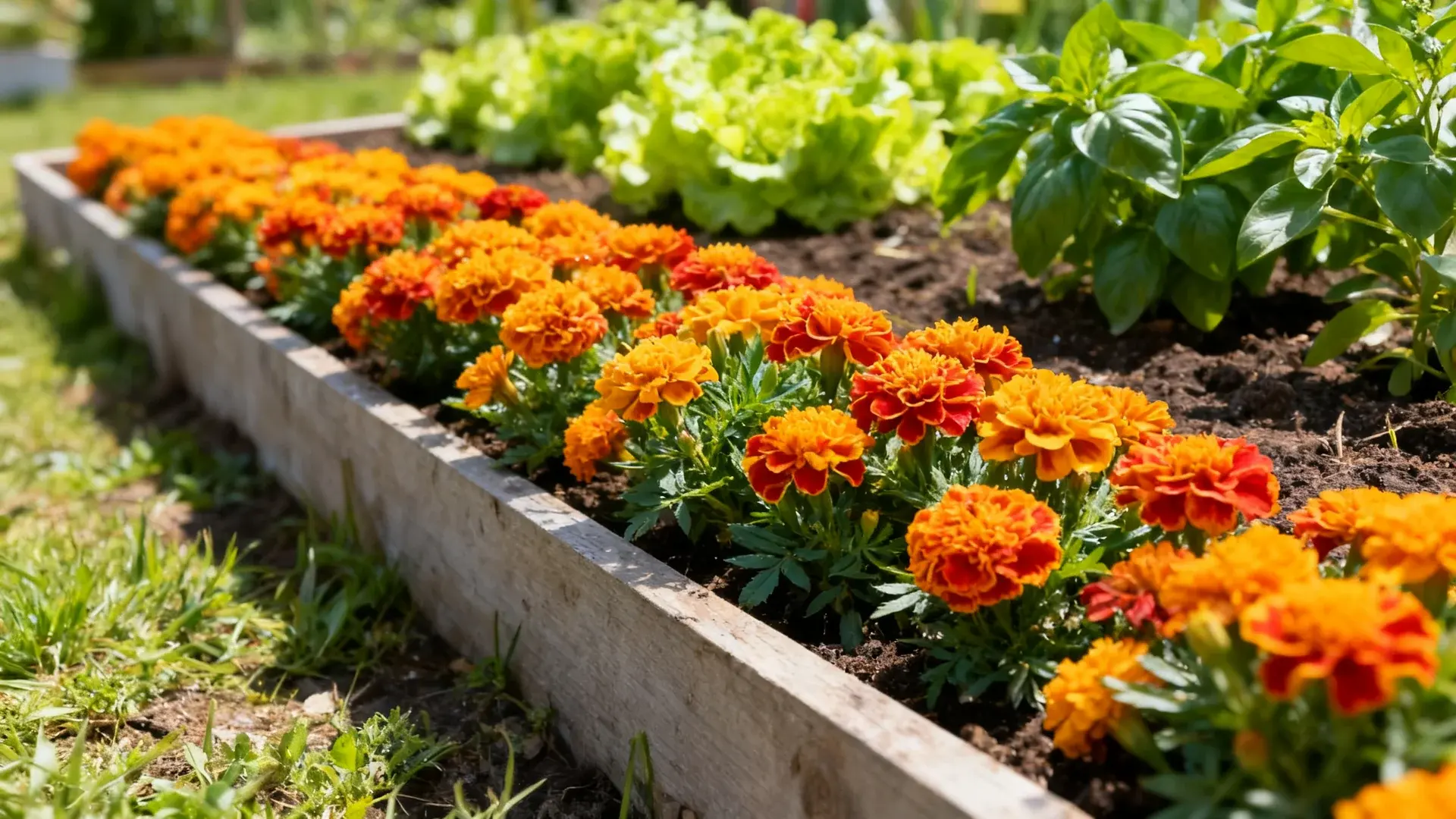
French marigolds are compact, branching plants that usually grow 6 to 18 inches tall. They produce yellow, orange, red, and bicolor blooms from late spring through frost when planted in full sun and well-draining soil. Their smaller size makes them easier to place between vegetables, along raised bed edges, or at the front of mixed flower borders without crowding nearby plants.
Benefits: French marigolds are useful where steady color and controlled size matter
- Border Friendly: Compact growth keeps bed edges neat and easy to manage
- Vegetable Bed Fit: Small plants sit well along rows and paths
- Color Variety: Red, yellow, orange, and bicolor forms offer more contrast than many tall types
3. Signet Marigold
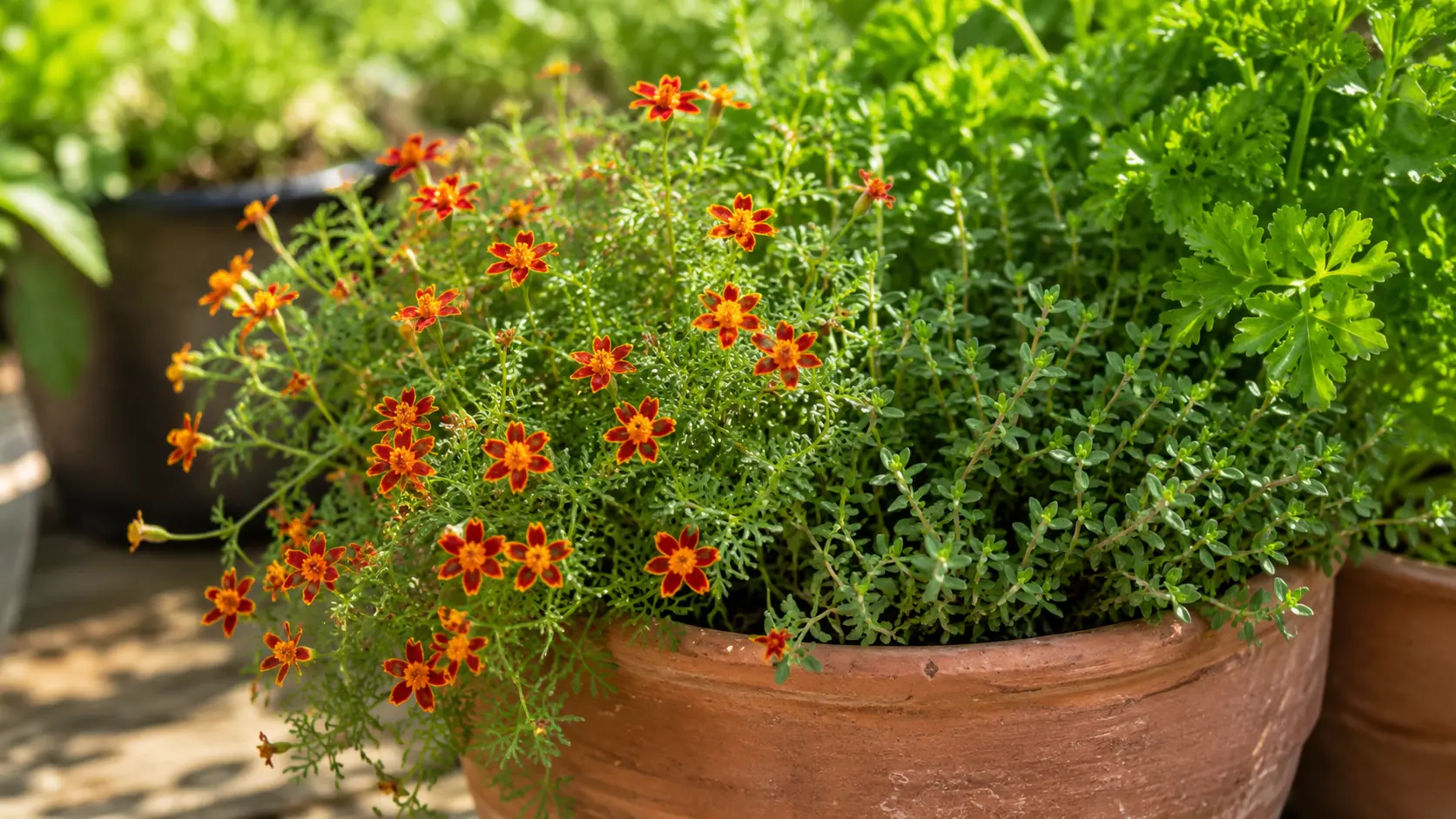
Signet marigolds have fine, ferny foliage and small single flowers in yellow, orange, or red-orange tones. They usually grow 8 to 12 inches tall and form soft mounds in full sun and well-draining soil. Their lighter texture makes them feel different from fuller African and French types. They are especially useful in pots, edging, herb-style beds, and small sunny corners.
The citrusy scent of signet foliage is one of the most underrated things about this type. Lemon Gem and Tangerine Gem both have foliage that smells far better than a typical marigold when brushed. Place them near a walkway or patio edge, and they add a sensory layer that the larger types simply do not offer.
Benefits: Signet marigolds bring fine texture, small blooms, and flexible use in tight spaces
- Fine Foliage: Soft leaves add lighter texture around herbs and low flowers
- Small-Space Fit: Mounding growth works well in pots and narrow borders
- Edible Flower Use: Flowers may be used carefully when correctly identified
4. Triploid Marigold
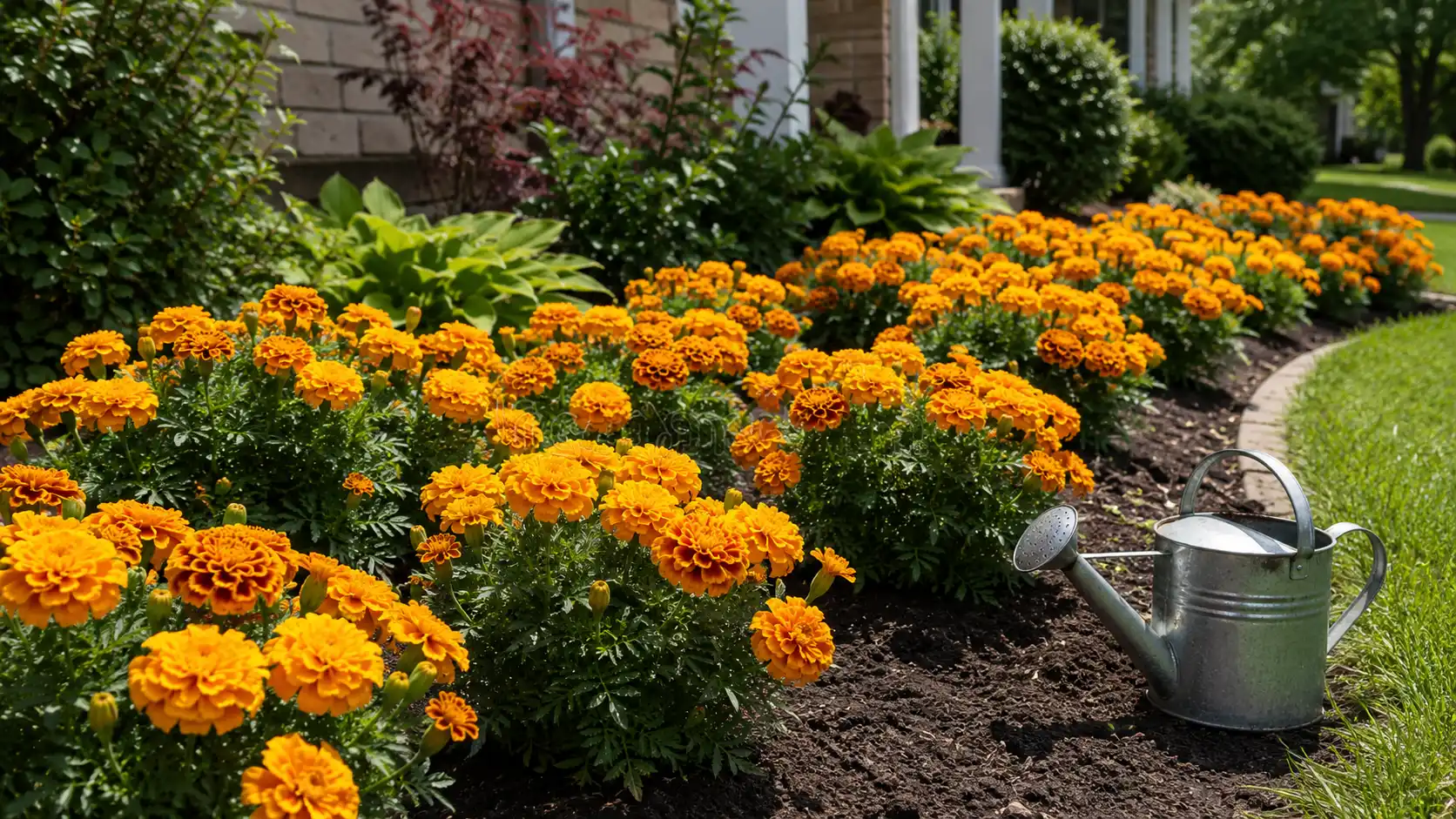
Triploid marigolds are hybrids between African and French marigolds. They are usually grown as annuals and often stay around 10 to 14 inches tall, while still producing larger blooms than many compact French types. They like full sun, well-draining soil, and moderate watering.
Many gardeners choose them when they want strong summer bedding performance without the height of older African marigolds.
Benefits: Triploid marigolds combine fuller blooms with a more manageable plant size
- Hybrid Strength: Blends traits from African and French parent types
- Summer Bedding Use: Helpful in sunny beds that need steady seasonal color
- Balanced Size: Gives larger blooms without taking as much room as tall types
5. Mexican Mint Marigold
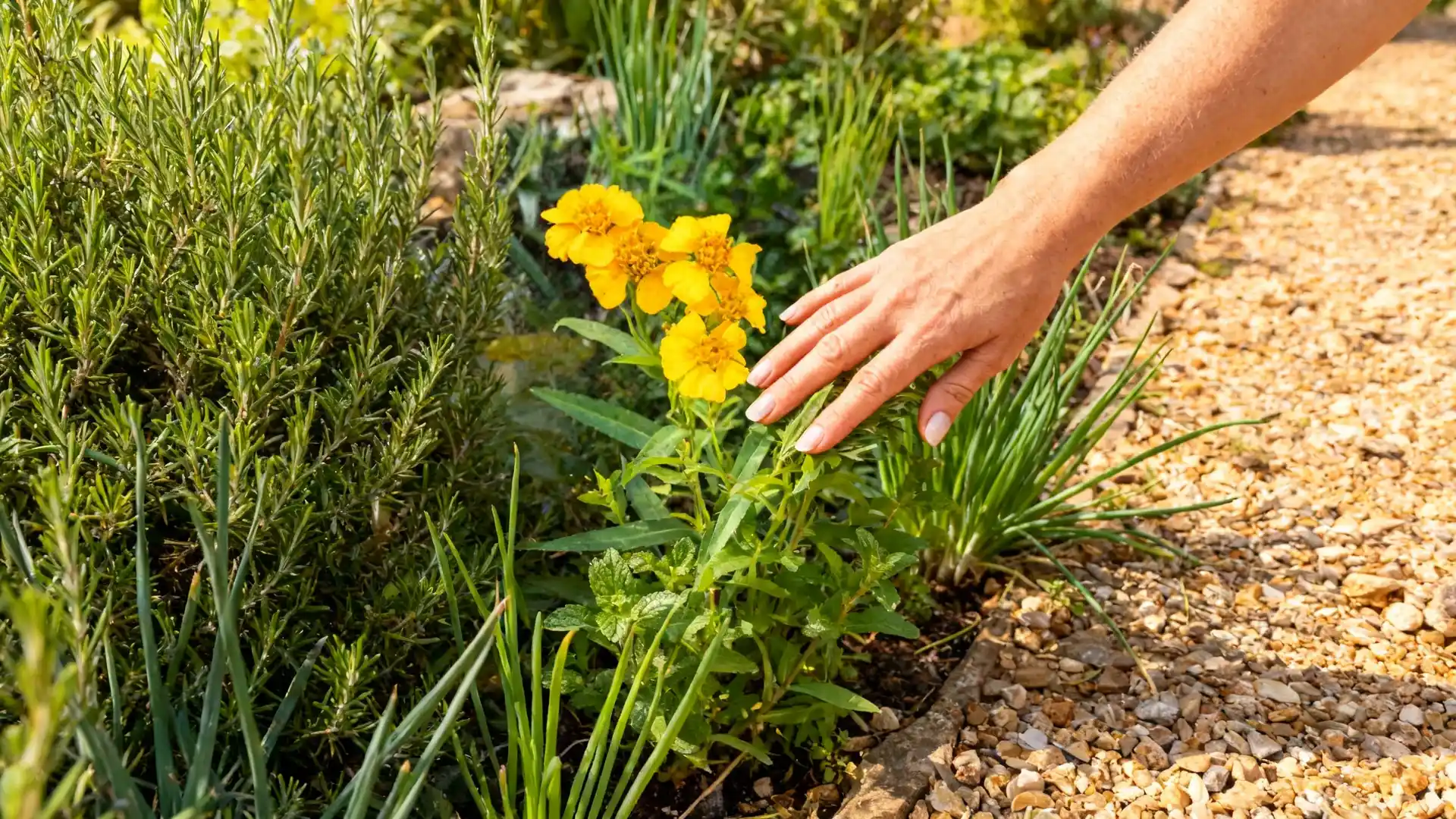
Mexican mint marigold, or Tagetes lucida, grows differently from common bedding marigolds. It has yellow flowers, narrow leaves, and an anise-like scent that makes it useful in herb-style gardens. It can grow as a perennial in warmer zones and as an annual elsewhere. Plants often reach 18 to 24 inches and bloom later in the season, usually from late summer into fall.
Benefits: Mexican mint marigold adds scented foliage and late-season flowers to sunny gardens
- Herb Garden Value: Scented leaves make it useful beyond flower color
- Later Bloom Time: Flowers arrive when some summer annuals begin slowing down
- Taller Habit: Works well where a light, upright plant is needed
6. Crackerjack African Marigold
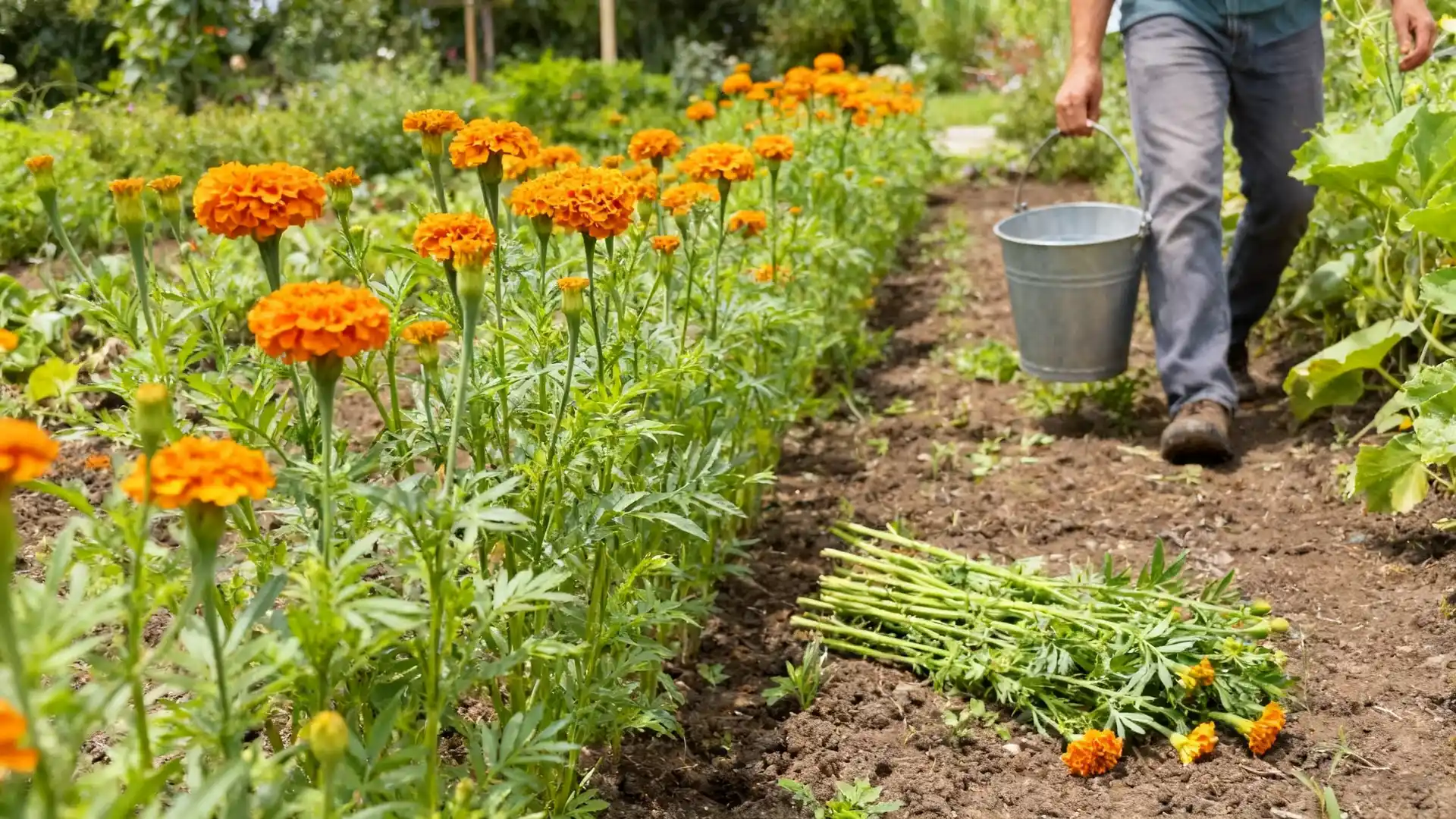
Crackerjack African marigold is one of the taller African types, often reaching about 3 feet in good conditions. It produces large double blooms in yellow and orange shades and grows best in full sun with well-draining soil. Because of its height, it should not be squeezed into small pots or front borders. It works better in back rows, cutting gardens, and open sunny beds.
Benefits: Crackerjack gives height, large blooms, and a traditional cut-flower look
- Tall Border Use: Strong height works well behind shorter annuals
- Large Double Blooms: Full flower heads stand out from a distance
- Cutting Garden Fit: Long stems make it useful for simple flower cutting
If you are cutting these for vases, condition the stems in cool water for several hours before arranging. African marigold stems held in fresh water can last a week or more. The scent mellows faster than the bloom, so they hold up visually well past when the fragrance has faded.
7. Antigua Orange Marigold
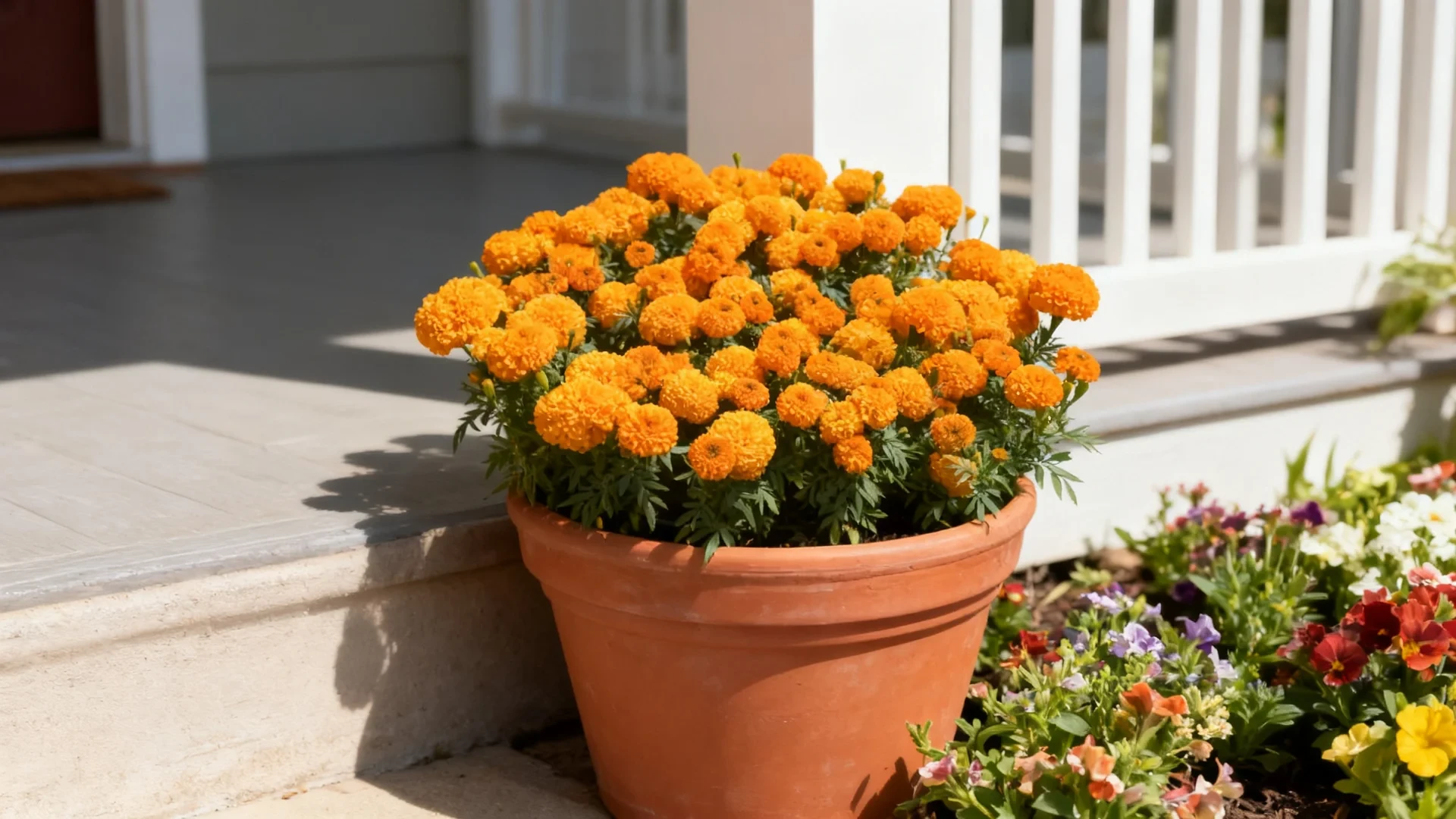
Antigua Orange is a compact African-type marigold with round orange blooms and a shorter habit than standard African types. It usually stays around 10 to 12 inches tall, which makes it easier to place in containers, front beds, and middle rows. It still gives the fuller flower form associated with African marigolds, but without the tall, space-heavy growth.
Benefits: Antigua Orange gives full blooms in a compact size that fits smaller spaces
- Container Ready: Shorter height works well in medium pots
- Full Flower Shape: Round blooms give a fuller look than many small types
- Middle Row Use: Fits between low edging plants and taller background flowers
8. Antigua Yellow Marigold
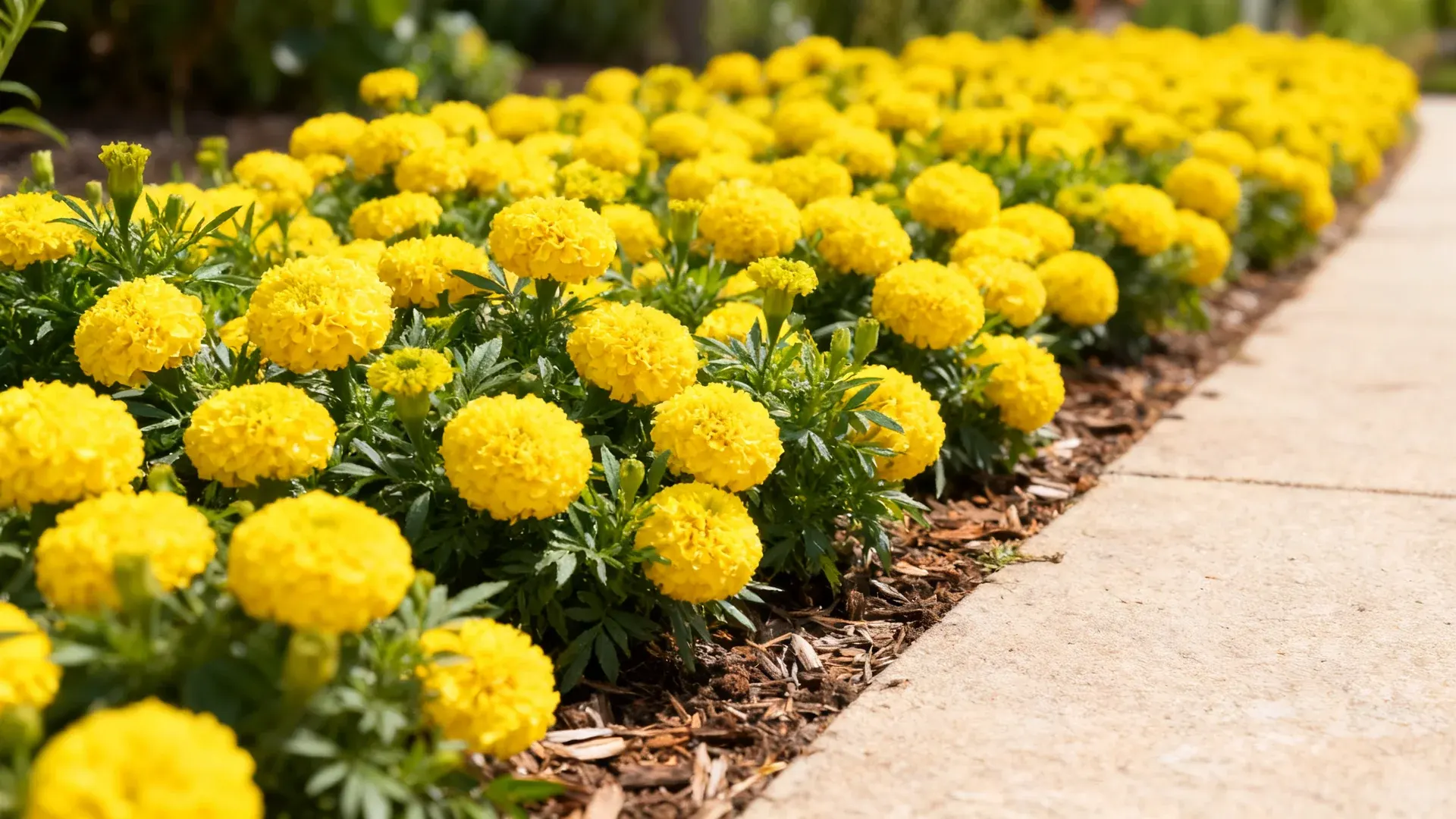
Antigua Yellow is a compact African-type marigold with bright yellow blooms and a tidy growth habit. It usually stays near 10 to 12 inches tall and grows best in full sun with well-draining soil. Its even size makes it useful for mass planting, pots, and sunny borders where tall marigolds would block smaller plants or look too heavy for the space.
Benefits: Antigua Yellow offers clean, bright color in a controlled plant form
- Mass Planting Fit: Even height helps grouped plantings look orderly
- Pot Friendly: Short growth works better in containers than tall African types
- Front Bed Use: Bright blooms show well without covering nearby plants
9. Discovery Orange Marigold
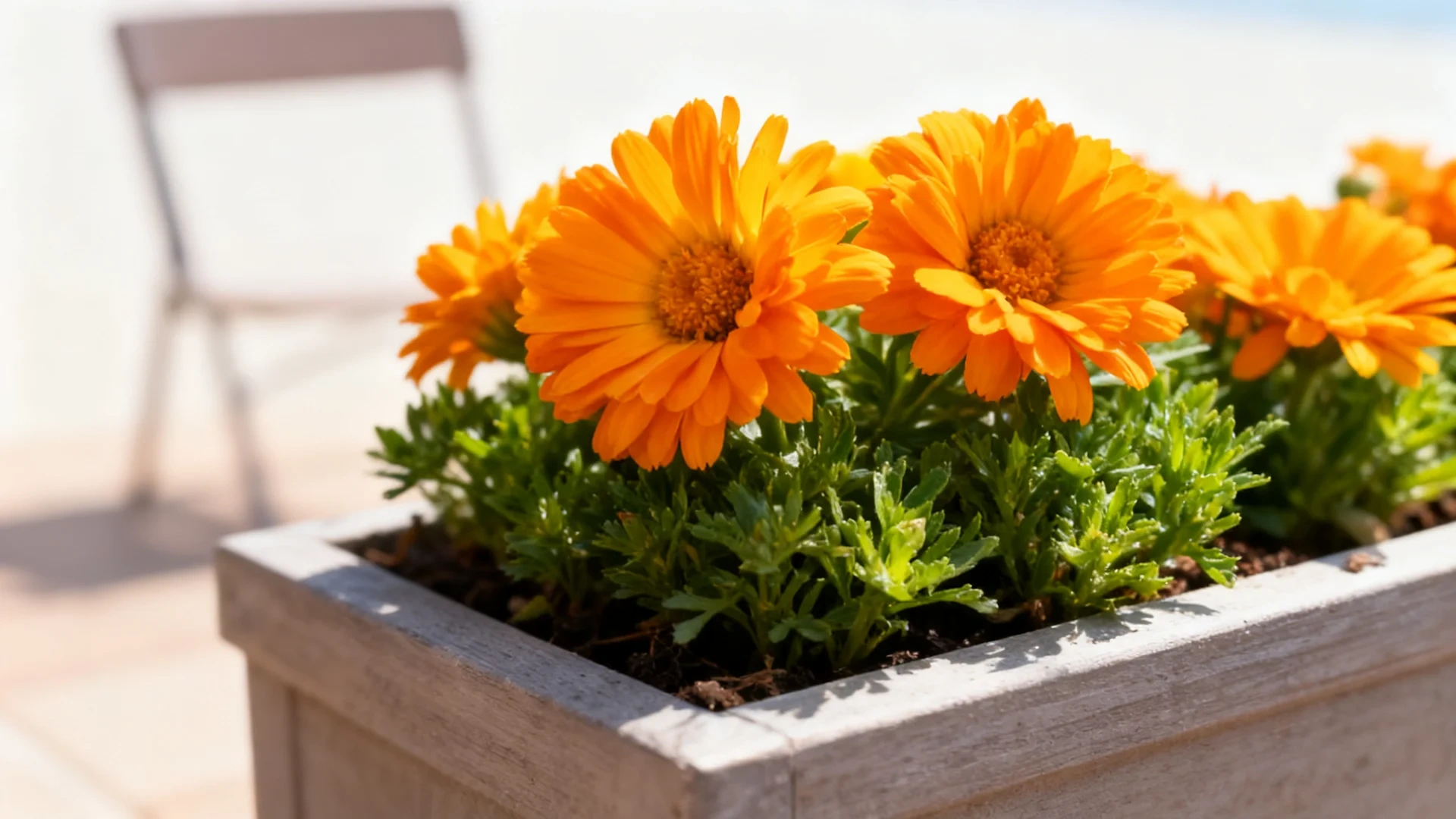
Discovery Orange is a dwarf African-type marigold that usually reaches 8 to 10 inches. It produces large orange flower heads on short plants, which makes it helpful when a gardener wants fuller blooms without tall stems. It grows best in full sun and well-draining soil, with moderate watering after the soil surface dries. It suits patio planters, low beds, and sunny edges.
Benefits: Discovery Orange gives larger blooms on a short, easy-to-place plant
- Dwarf Growth: Short height works well in low plantings
- Large Orange Blooms: Flower size feels bold without needing tall stems
- Patio Use: Fits containers near seating areas and walkways
10. Discovery Yellow Marigold
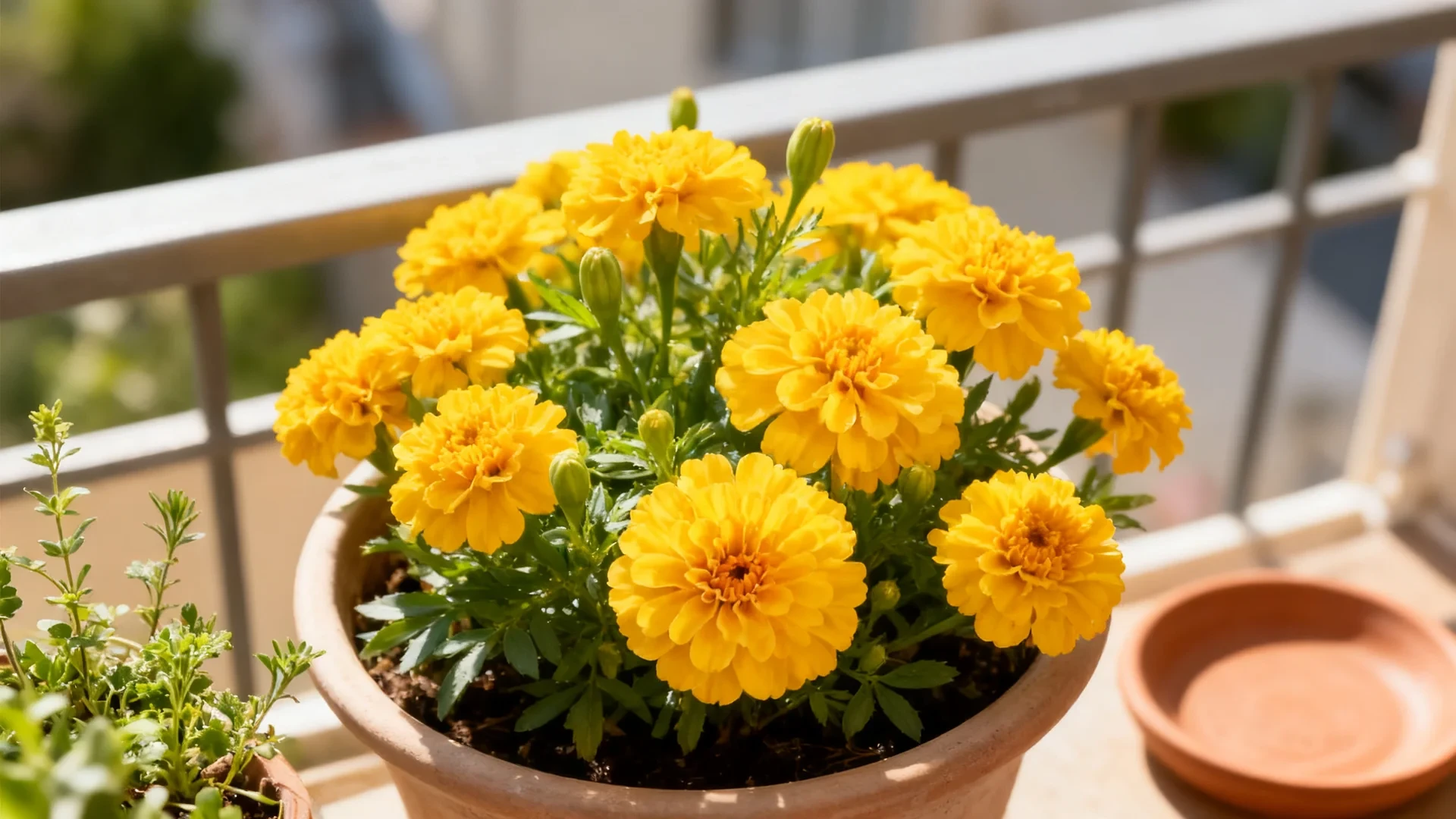
Discovery Yellow is another dwarf African-type marigold, valued for bright yellow blooms on compact plants. It usually stays 8 to 10 inches tall and keeps a neat shape in grouped plantings. Full sun and well-draining soil help it bloom from late spring through frost. It is a good fit for shallow containers, balcony planters, and sunny garden edges that need low color.
Benefits: Discovery Yellow works well where low height and clear color are both needed
- Compact Bedding Use: Short growth keeps group plantings tidy
- Clear Yellow Color: Bright blooms stand out in small containers
- Edge Planting: Useful along paths where taller plants would lean or crowd
11. Taishan Gold Marigold
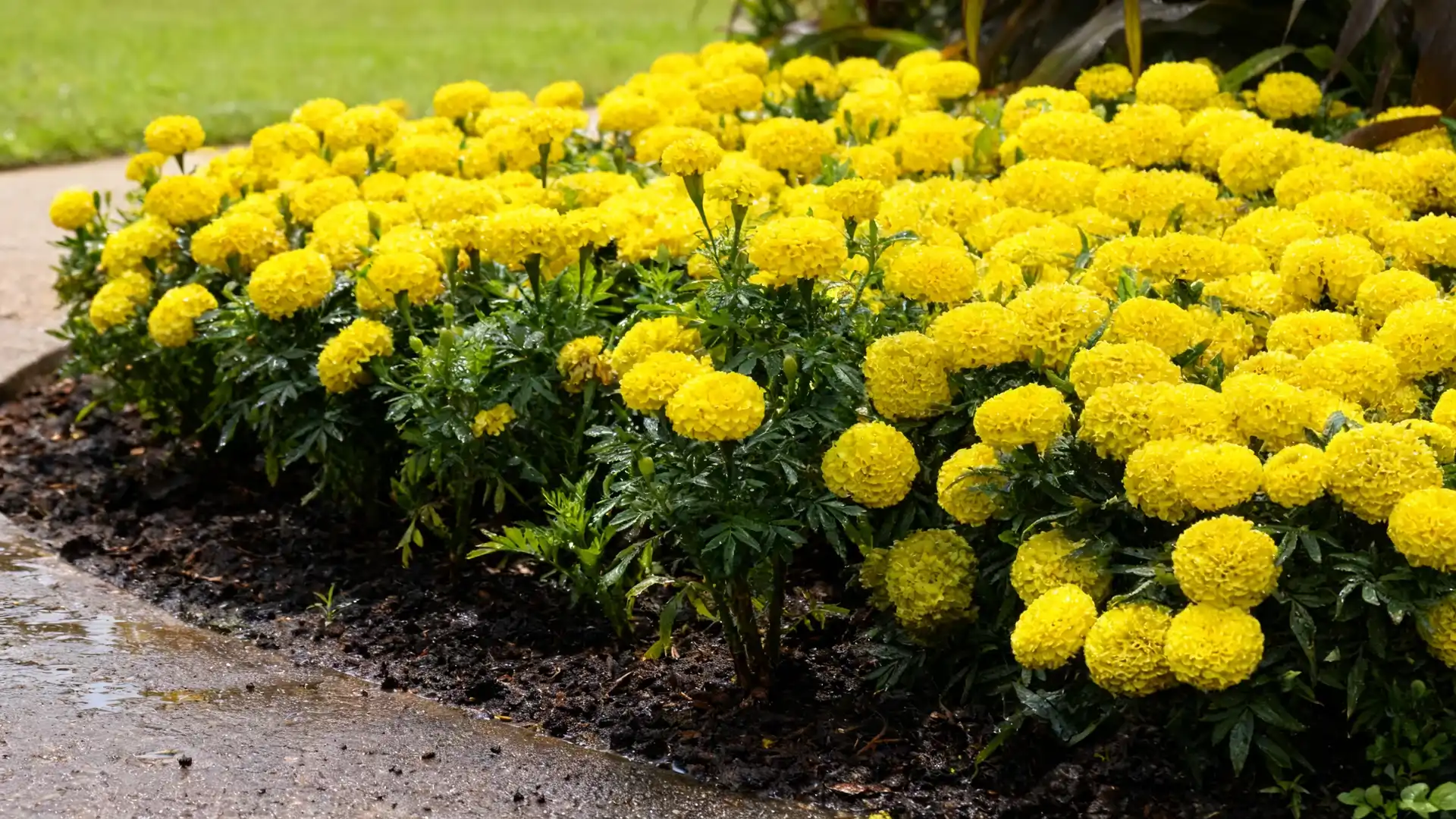
Taishan Gold is a sturdy African-type marigold with full gold blooms and strong stems. It often reaches 10 to 12 inches and performs well in open sunny beds. This type is useful where rain, heat, or exposed planting areas can make weaker stems flop. With full sun, well-draining soil, and moderate water, it gives a solid, uniform look across larger plantings.
Benefits: Taishan Gold is dependable for sunny beds that need sturdy plants
- Strong Stems: Blooms stay more upright in exposed spots
- Landscape Use: Good for larger beds that need a uniform look
- Gold Flower Color: Warm blooms show clearly in open garden areas
12. Taishan Orange Marigold
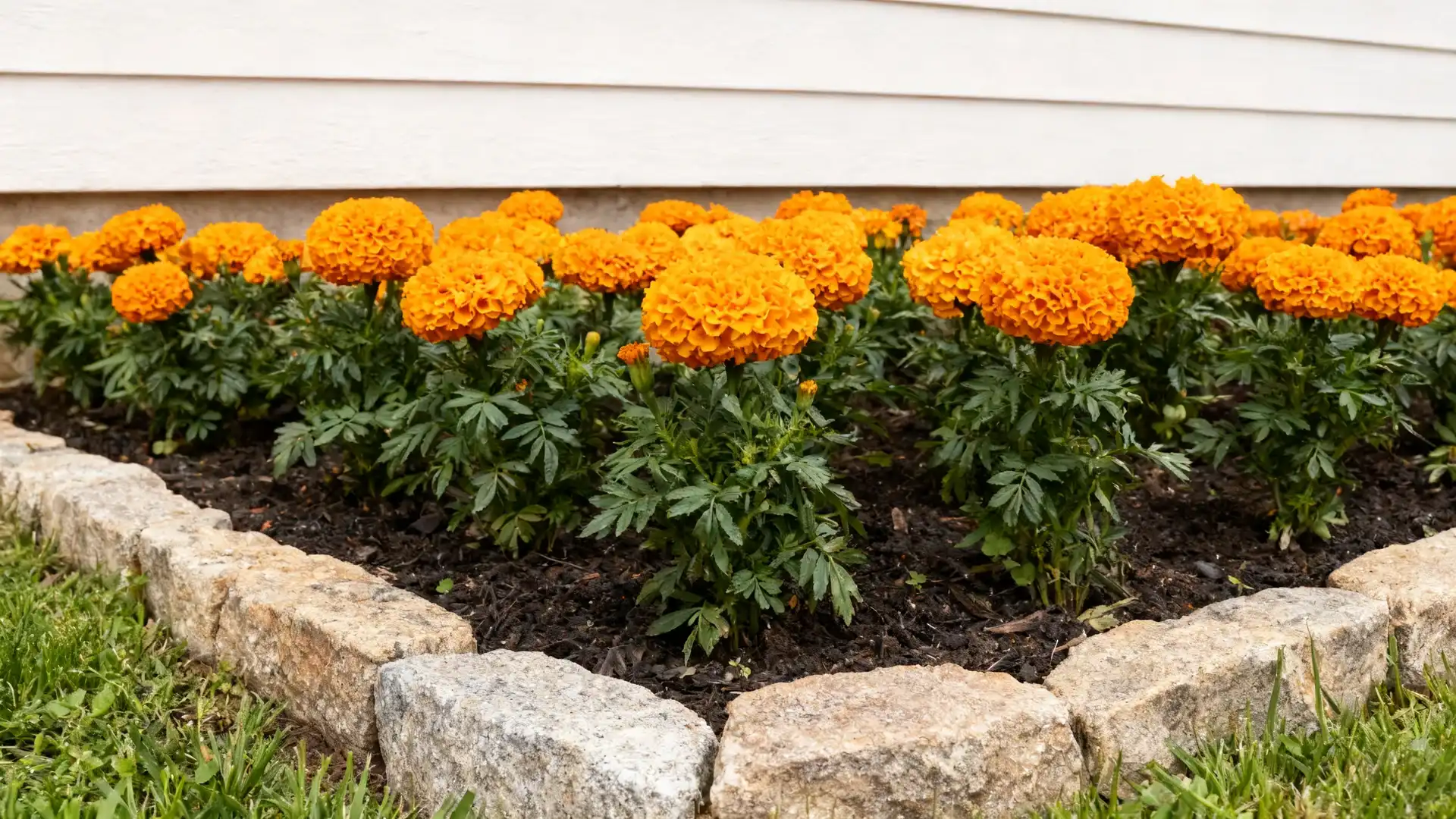
Taishan Orange has the same sturdy character as other Taishan types, but with full orange blooms. It usually grows 10 to 12 inches tall and keeps a compact shape in warm garden conditions. This makes it useful in foundation beds, public-facing borders, and larger sunny plantings where flowers need to stay neat for more than a few weeks.
Benefits: Taishan Orange offers strong stems and warm color for long-season beds
- Neat Growth: Compact habit keeps borders looking controlled
- Warm Orange Blooms: Works well with gold, yellow, and green plantings
- Larger Bed Fit: Useful when many plants need to perform evenly
13. Big Duck Gold Marigold
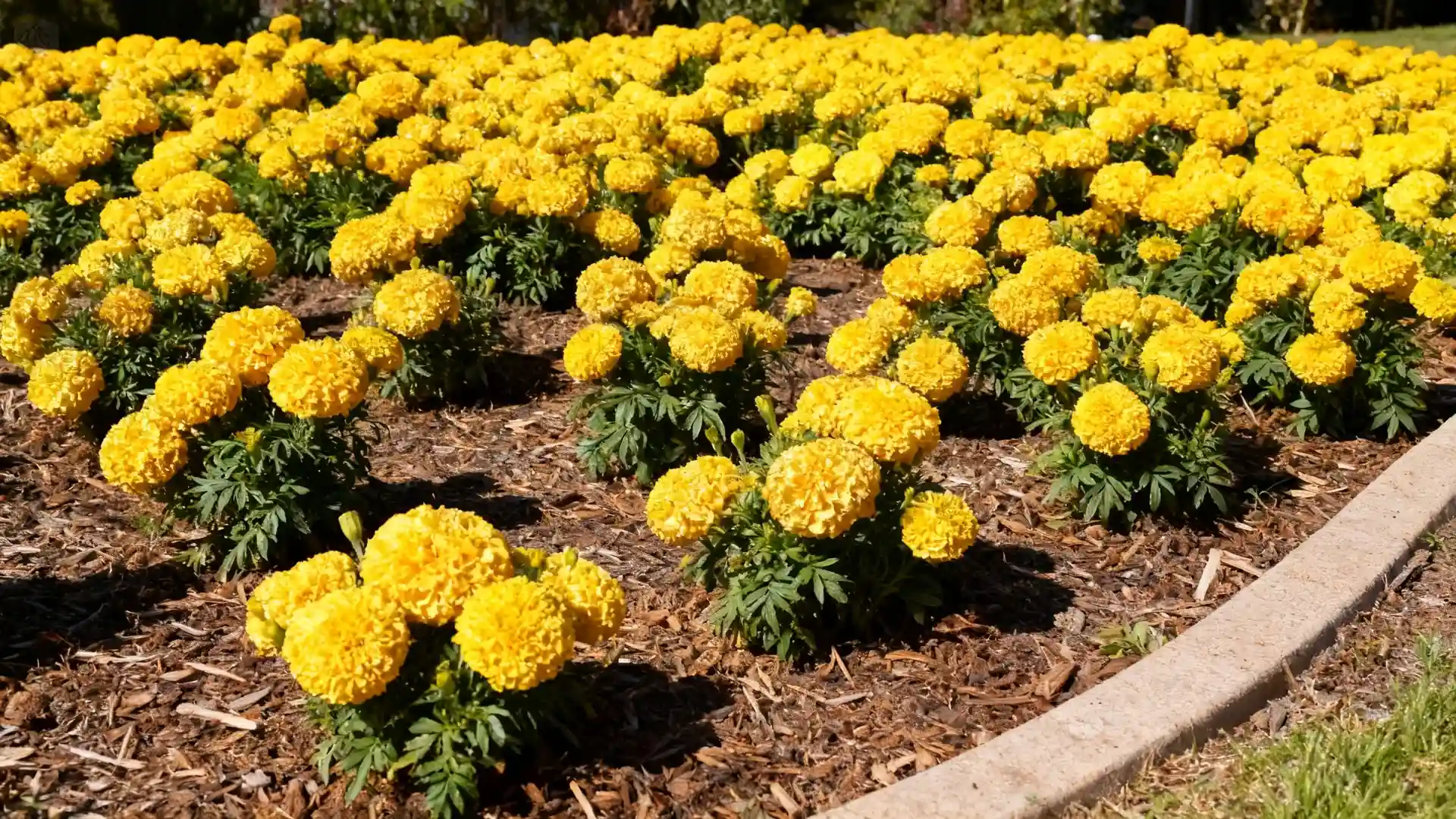
Big Duck Gold is a large-flowered African-type marigold with oversized gold blooms on compact plants. It usually reaches 12 to 14 inches and can fill space with fewer plants than smaller-flowered varieties. Full sun, well-draining soil, and steady moisture during dry periods help it perform well. It is useful in wide beds where big flower heads are wanted without excessive height.
Benefits: Big Duck Gold fills sunny beds quickly with fewer plants
- Oversized Blooms: Large flower heads cover space well
- Compact Frame: Gives full color without very tall growth
- Wide Bed Use: Helpful in broad borders and open sunny spaces
14. Big Duck Orange Marigold
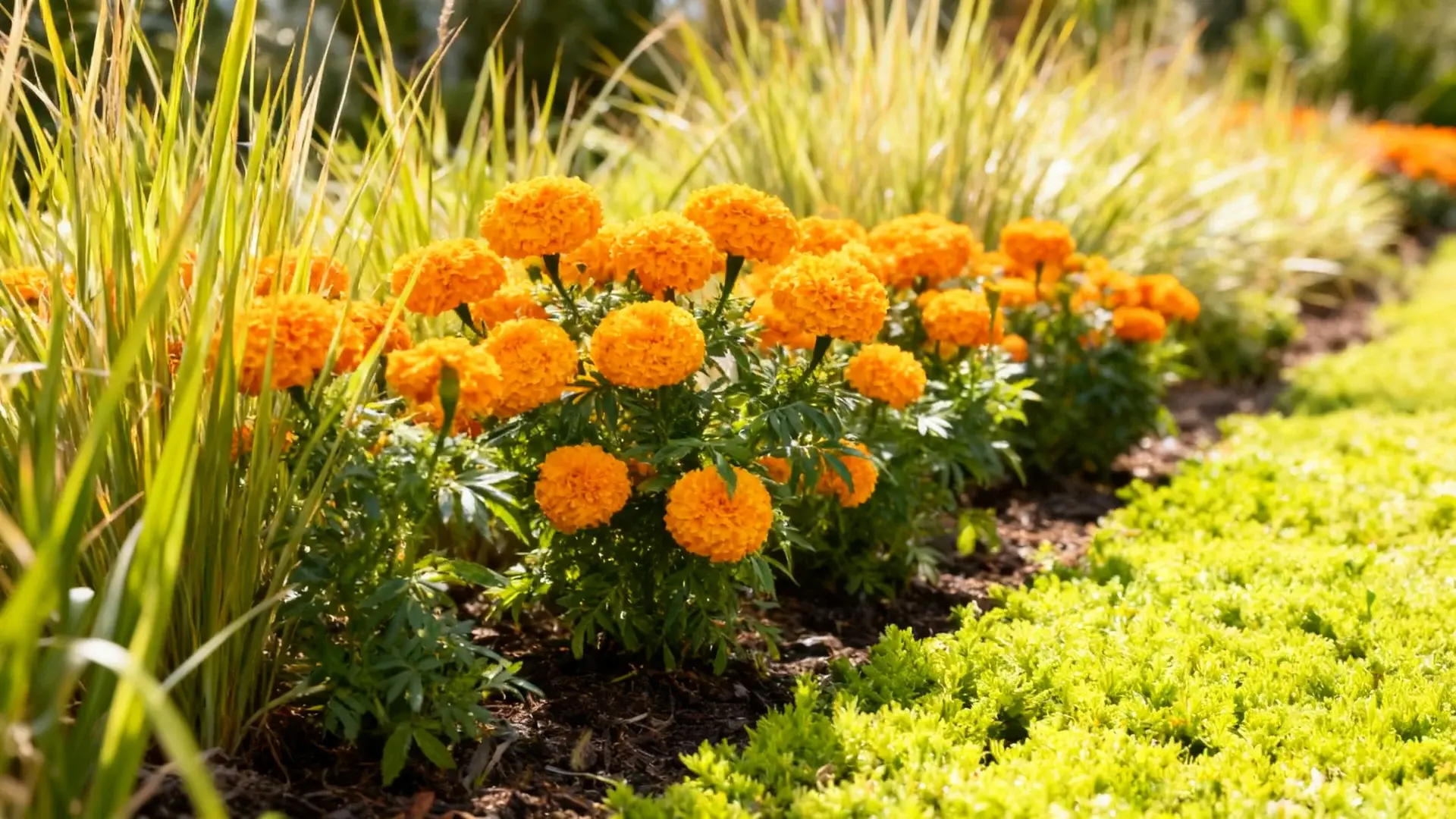
Big Duck Orange brings large orange blooms to a compact African-type plant. It usually grows 12 to 14 inches and looks fuller than many short bedding marigolds. It performs best in full sun and well-draining soil with moderate watering. This type is useful when a bed needs a strong orange color, but the gardener does not want the height of older African marigolds.
Benefits: Big Duck Orange gives strong flower coverage while staying manageable
- Large Bloom Size: Orange flower heads create a fuller bed appearance
- Controlled Height: Easier to place than tall African marigolds
- Sunny Bed Use: Good for areas that need bright seasonal color
15. Inca II Gold Marigold
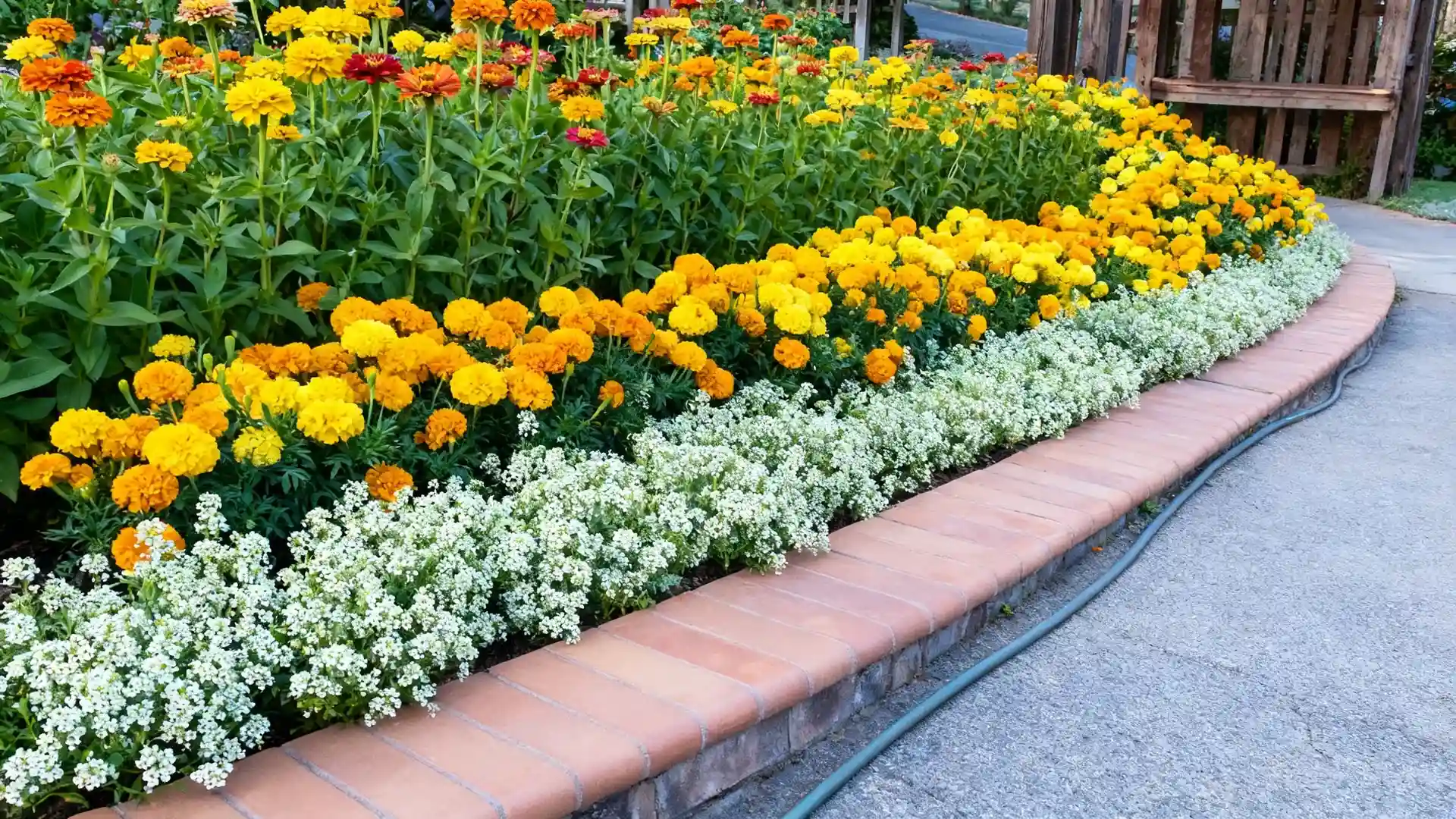
Inca II Gold is an upright African-type marigold with full gold blooms and a steady middle-height habit. It usually reaches 12 to 14 inches, which makes it useful behind lower edging flowers but in front of taller background plants. It needs full sun, well-draining soil, and moderate water. Its upright structure helps a bed feel layered rather than flat.
Benefits: Inca II Gold helps build a clear middle layer in sunny beds
- Upright Growth: Adds structure without looking thin
- Middle Bed Placement: Fits between low borders and taller plants
- Full Gold Blooms: Gives bright color with a neat plant shape
16. Inca II Orange Marigold
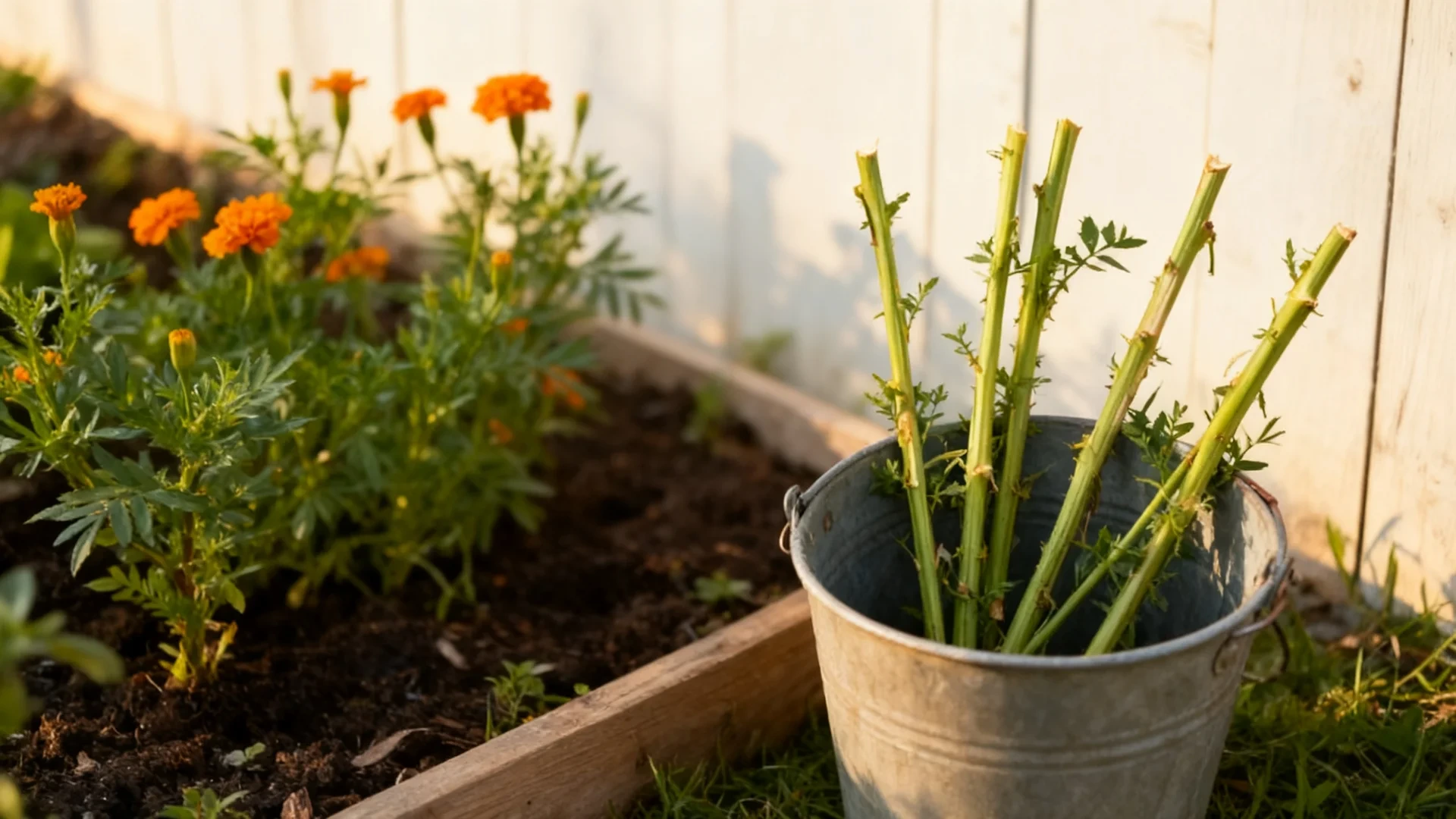
Inca II Orange has upright stems, full orange flower heads, and a manageable height of about 12 to 14 inches. It grows best in full sun and well-draining soil, with moderate water during dry stretches. The plant works well in larger containers, sunny beds, and cutting areas where clear flower form and stem strength matter.
Benefits: Inca II Orange works for both garden display and simple cutting
- Upright Stems: Flowers sit clearly above the foliage
- Container Use: Larger pots can handle its height and bloom size
- Cut Stem Value: Full blooms can be clipped for small arrangements
Every season from gardeners who did not realize white marigolds existed. Kilimanjaro White is useful beside deep orange or gold plantings in a way no yellow marigold can replicate. If a bed is starting to feel like one long warm-toned blur, this is the fix.
17. Kilimanjaro White Marigold
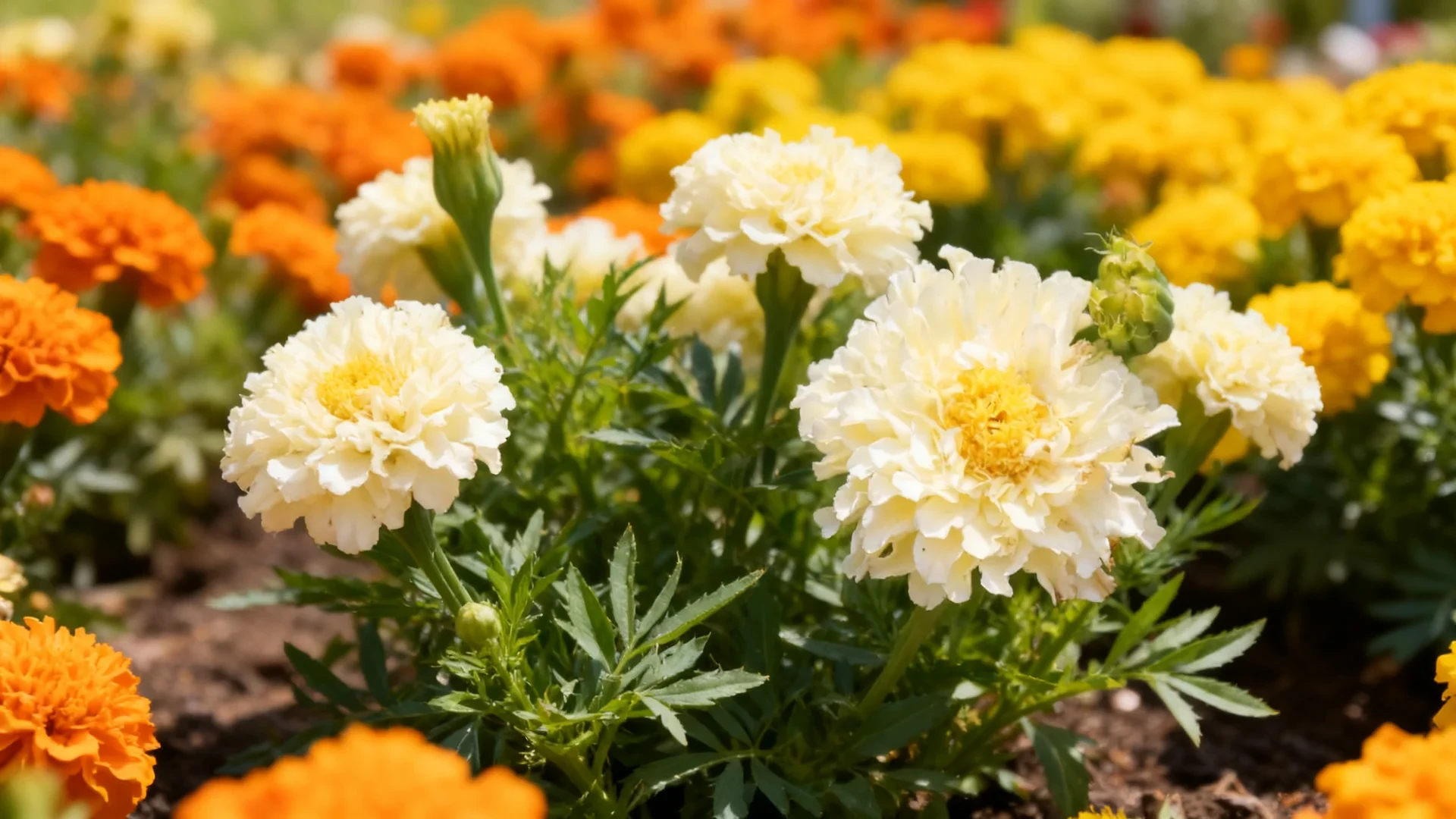
Kilimanjaro White is an African-type marigold known for creamy white blooms rather than the usual yellow or orange shades. Plants often reach 14 to 16 inches and grow best in full sun with well-draining soil. Its lighter color works well when a planting needs contrast or a softer break between warmer marigold tones.
Benefits: Kilimanjaro White brings a lighter color option to African marigolds
- Creamy Bloom Color: Softens beds filled with orange and yellow
- Contrast Planting: Useful beside deeper red or gold flowers
- African-Type Form: Keeps the full bloom shape in a lighter shade
18. Vanilla Marigold
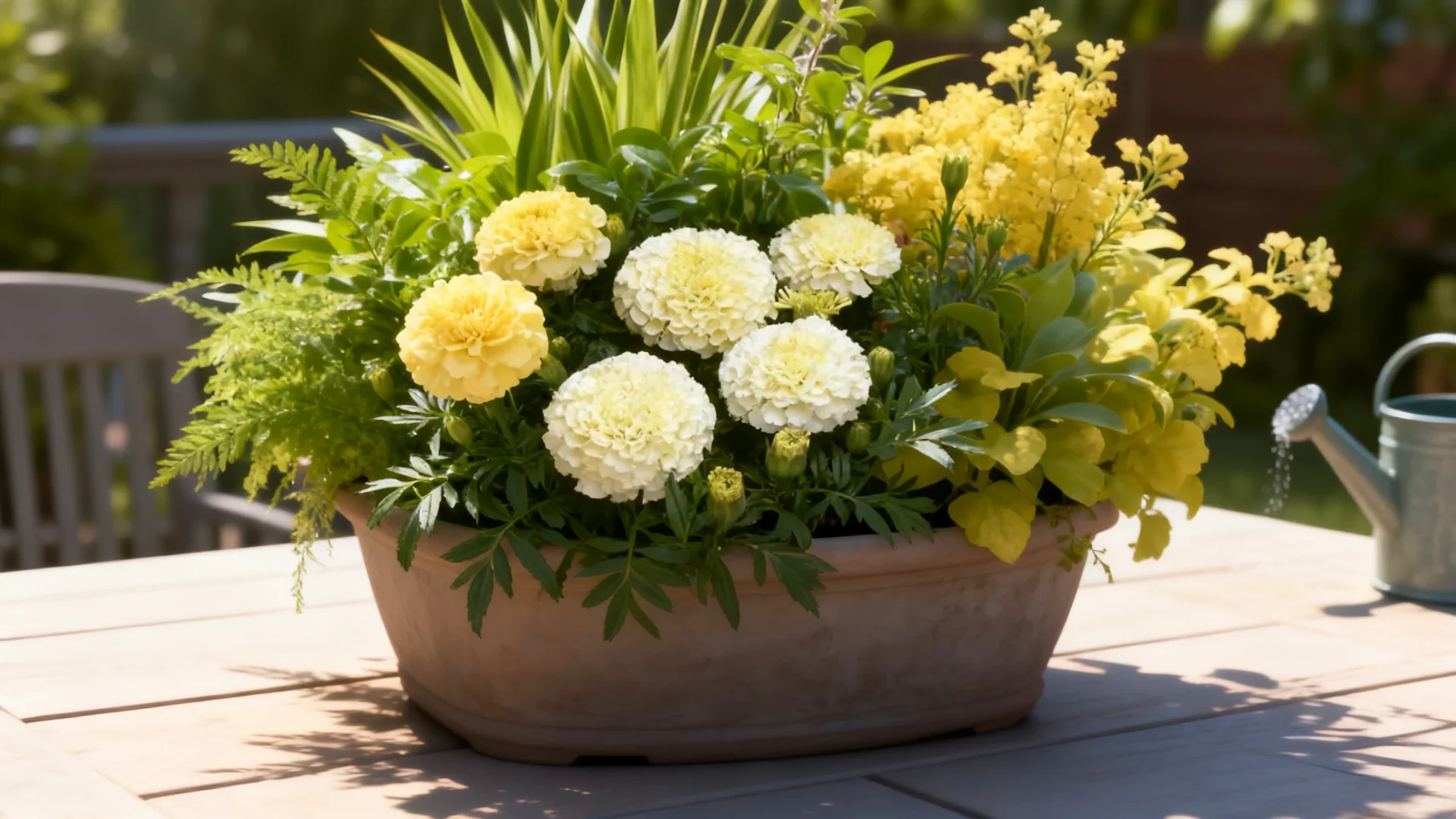
Vanilla marigold is an African-type selection with cream to pale yellow blooms. It usually grows 14 to 18 inches and works best in full sun with well-draining soil. The lighter flower color makes it useful in mixed containers and beds where bright orange or gold would feel too strong. It pairs well with green foliage, red accents, and softer yellow plantings.
Benefits: Vanilla marigold helps balance stronger flower colors in mixed plantings
- Soft Color Role: Pale blooms connect brighter flowers without overpowering them
- Mixed Container Use: Works well with foliage and warm accent colors
- Medium Height: Fits beds that need presence without extreme height
19. Bonanza Flame French Marigold
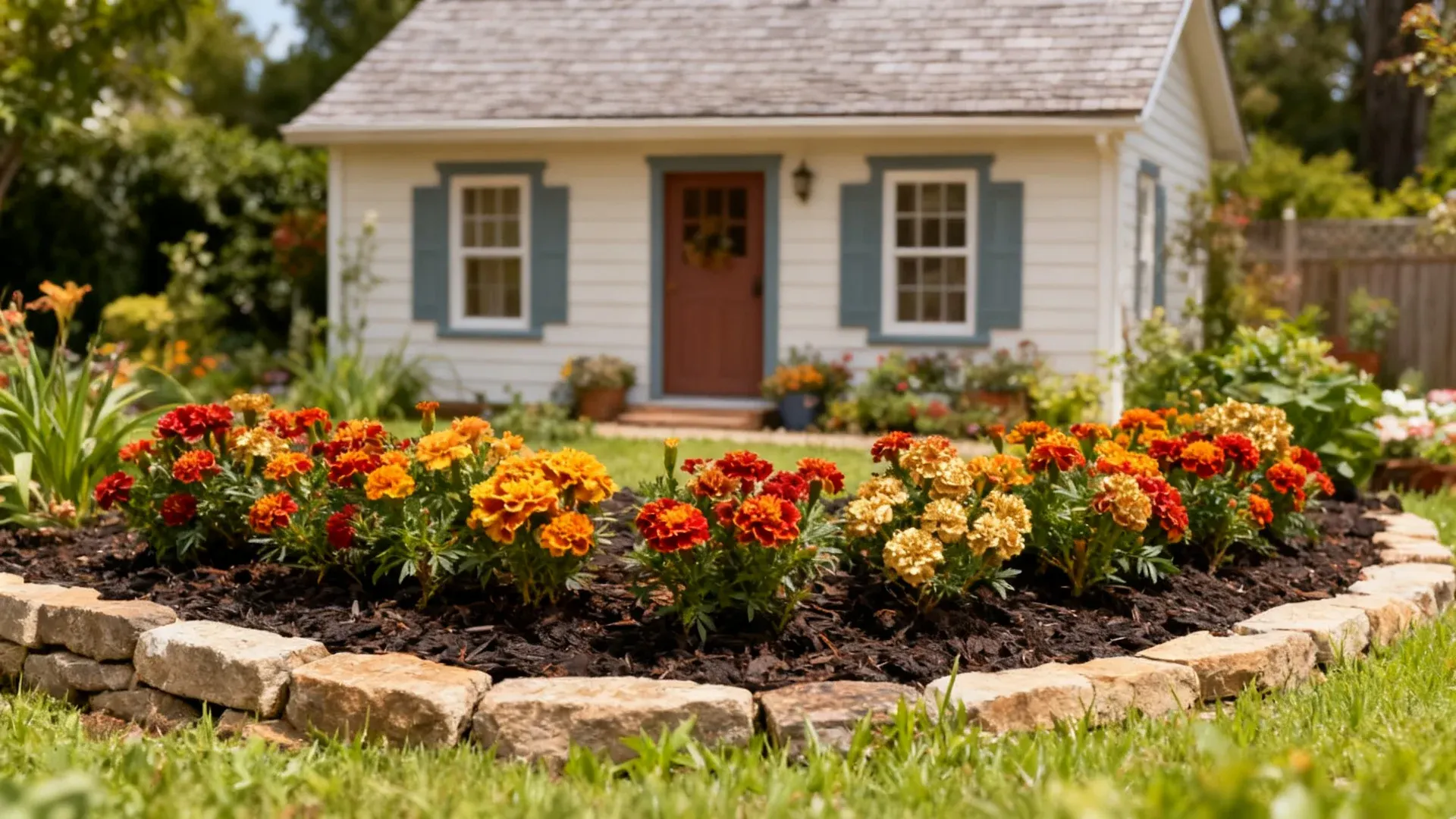
Bonanza Flame is a compact French marigold with red, orange, and gold tones on short branching plants. It usually reaches 8 to 10 inches and grows well in full sun with well-draining soil. Its warm mixed color makes it useful at the front of borders, in small beds, and along container edges where one plant can bring more than one color note.
Benefits: Bonanza Flame adds mixed warm color in a small, easy-to-place plant
- Front Border Use: Short growth keeps it visible without blocking other plants
- Mixed Color Blooms: Red, orange, and gold tones add contrast
- Small Bed Fit: Useful where space is limited but color variety is wanted
20. Bonanza Yellow French Marigold
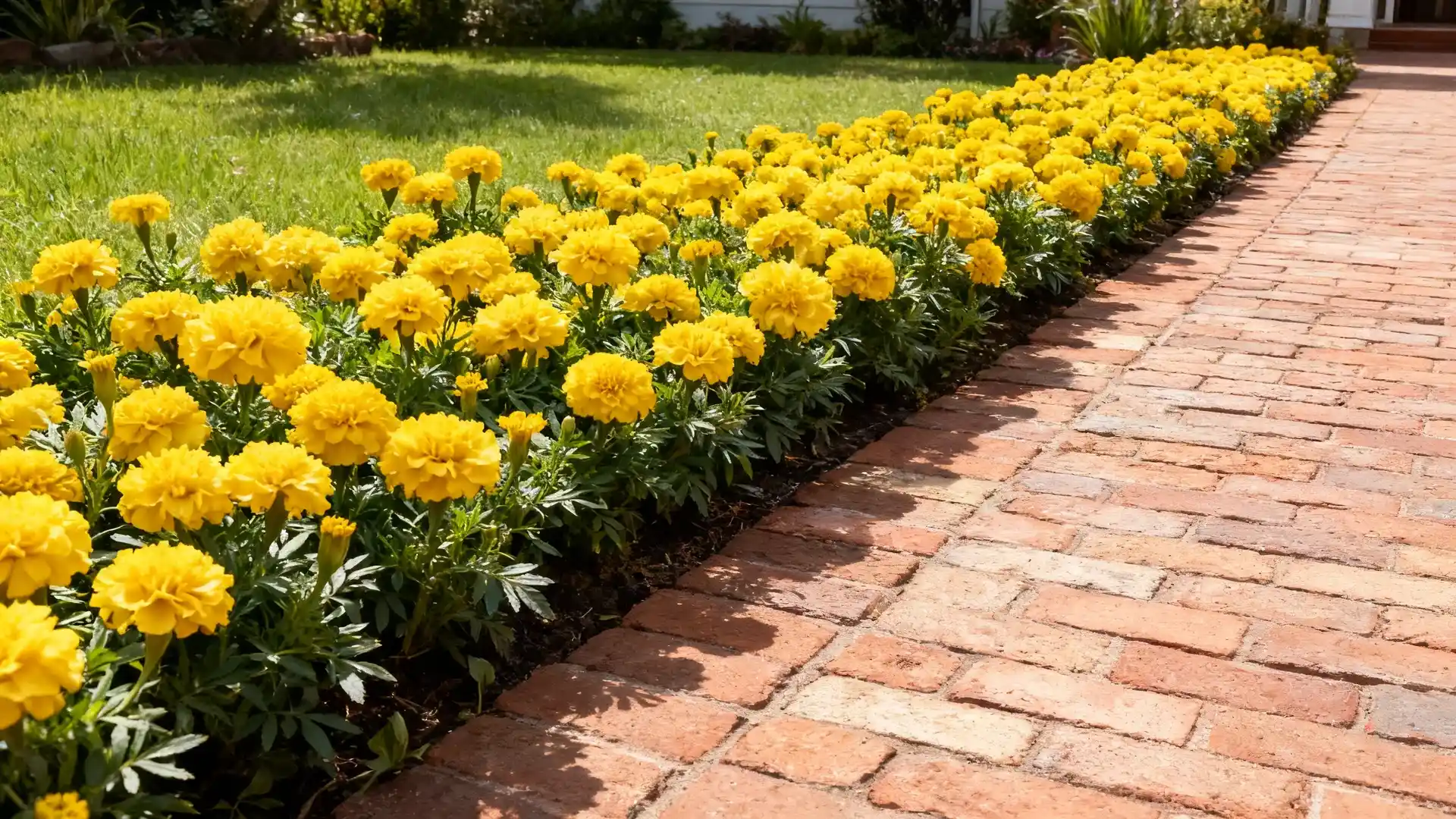
Bonanza Yellow is a short French marigold with clear yellow blooms and compact branching growth. It usually reaches 8 to 10 inches and works well in full sun with well-draining soil. Its even height makes it useful along walkways, patio edges, and small borders. It offers steady bloom without the larger size of African types.
Benefits: Bonanza Yellow creates a tidy low line of bright yellow blooms
- Path Edge Use: Even height works well beside walkways
- Small Pot Fit: Compact roots and top growth suit containers
- Steady Color: Yellow blooms stay easy to pair with other annuals
21. Bonanza Orange French Marigold
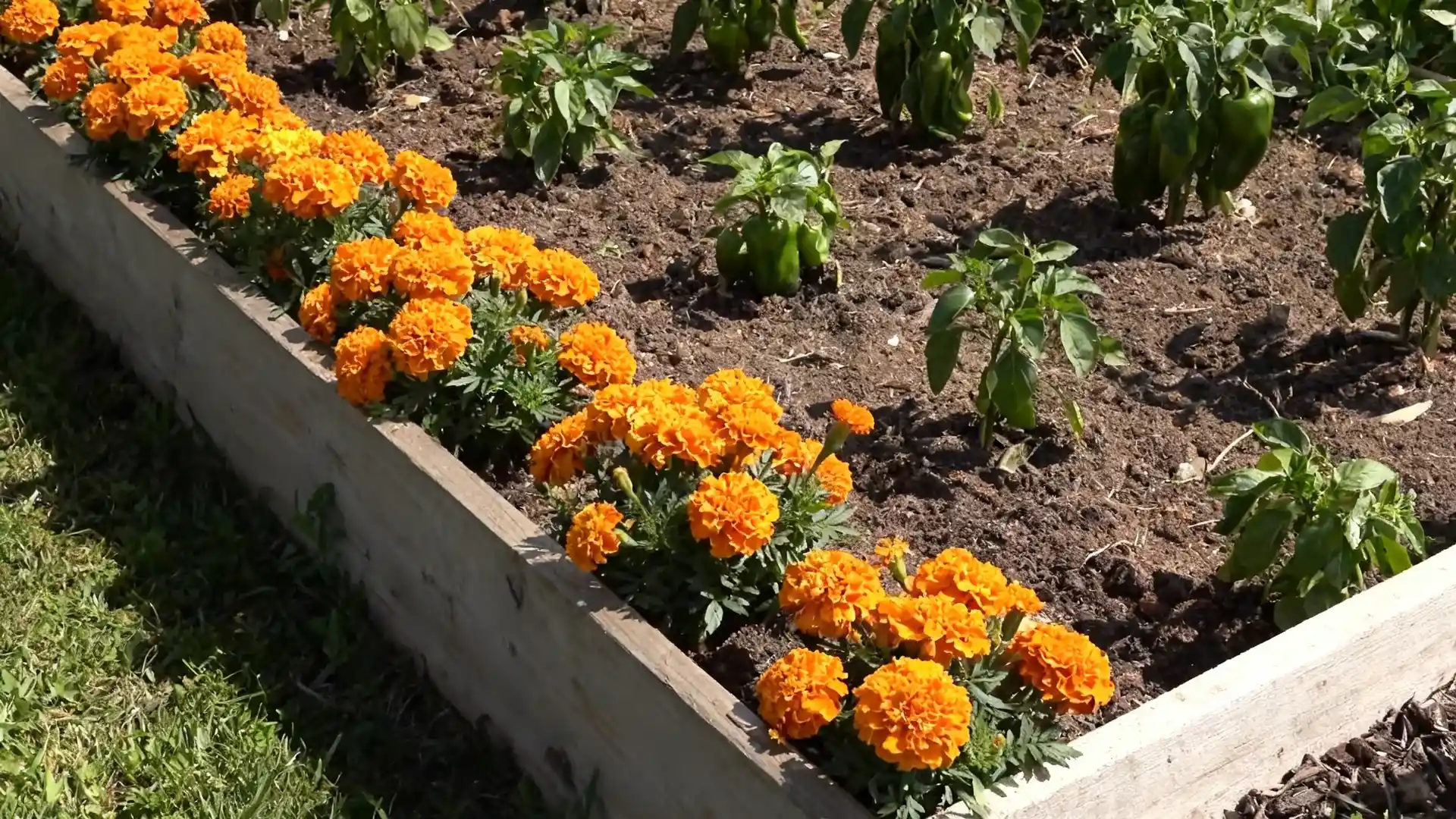
Bonanza Orange is a compact French marigold with bright orange blooms and dense foliage. It usually stays around 8 to 10 inches and grows well in tight spaces. Full sun, well-draining soil, and moderate watering keep it blooming from late spring through frost. It works well along raised bed edges, narrow borders, and small garden corners.
Benefits: Bonanza Orange gives reliable color in tight planting areas
- Raised Bed Edge: Compact size fits beside vegetables and herbs
- Dense Growth: Branching habit helps fill small gaps
- Orange Flower Color: Adds warm color without needing much space
22. Durango Red French Marigold
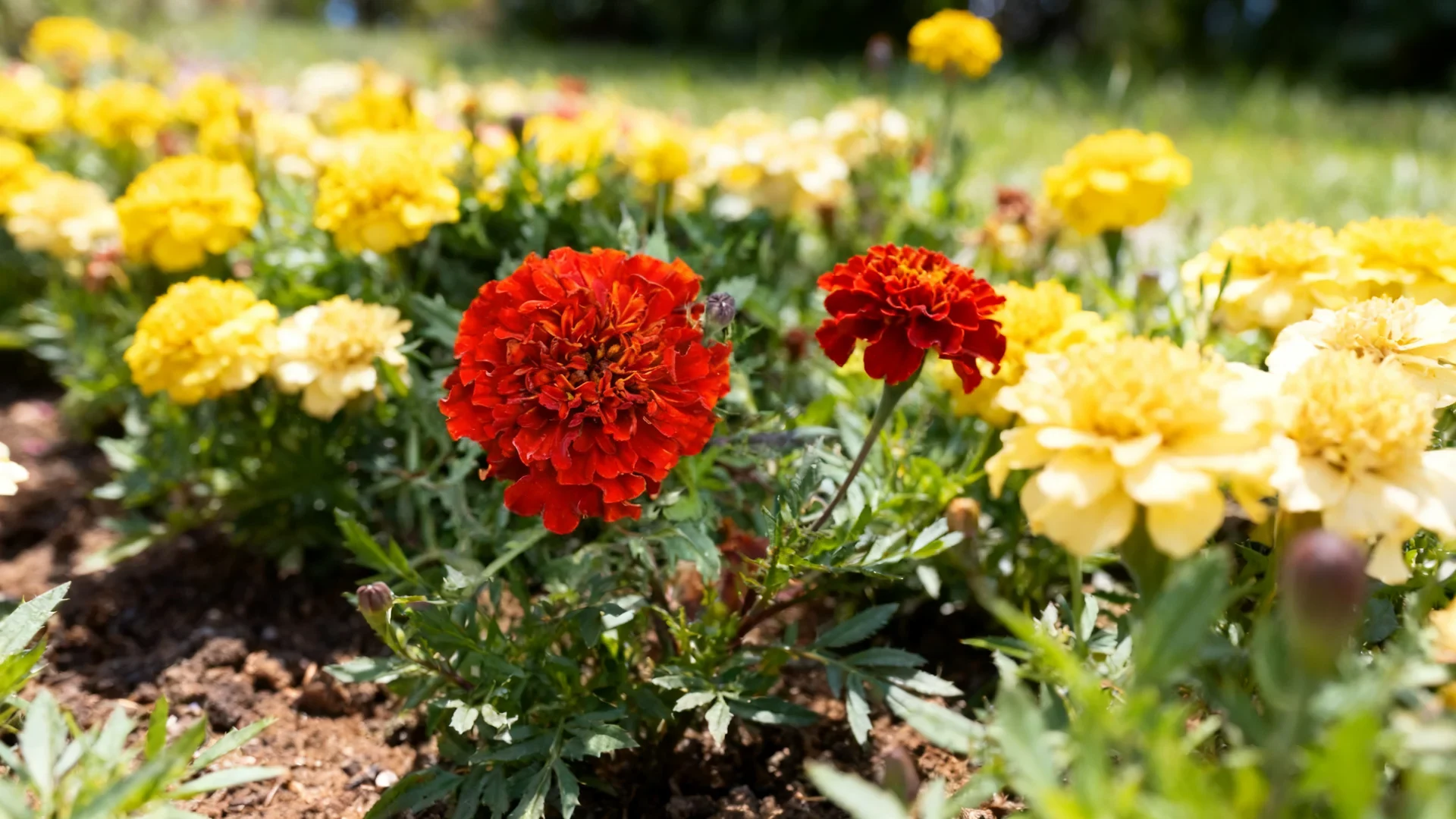
Durango Red is a French marigold with warm red blooms on compact plants around 10 to 12 inches tall. It grows best in full sun and well-draining soil. The deeper color makes it useful in beds that already have yellow, orange, or cream flowers and need more contrast. It brings a richer tone without requiring taller plants.
Benefits: Durango Red adds deeper color while staying compact
- Color Contrast: Red blooms stand out beside yellow and cream flowers
- Compact Size: Fits borders and containers without taking over
- Warm Planting Use: Works well in late-summer style color schemes
23. Durango Bee French Marigold
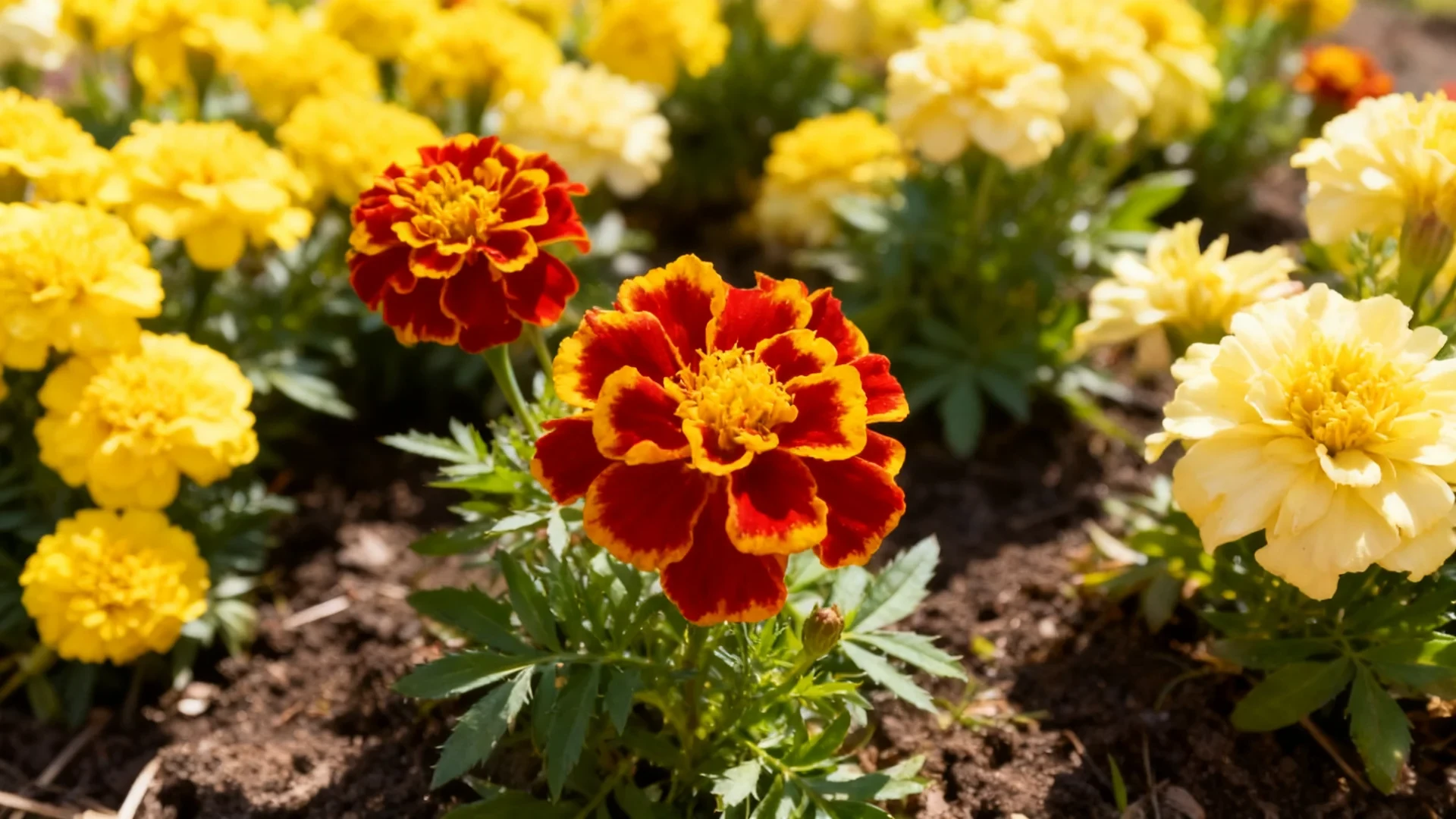
Durango Bee is a patterned French marigold with red and yellow petals on compact plants. It usually reaches 10 to 12 inches and blooms well in full sun with moderate water. The patterned flowers help it stand out without needing multiple separate cultivars. It fits small beds, containers, and vegetable garden edges where flower detail can be seen up close.
Benefits: Durango Bee adds pattern and color contrast in compact spaces
- Patterned Petals: Red and yellow markings create built-in contrast
- Close-Up Interest: Best where people can see the flower detail
- Compact Habit: Easy to manage in pots and front borders
24. Durango Tangerine French Marigold
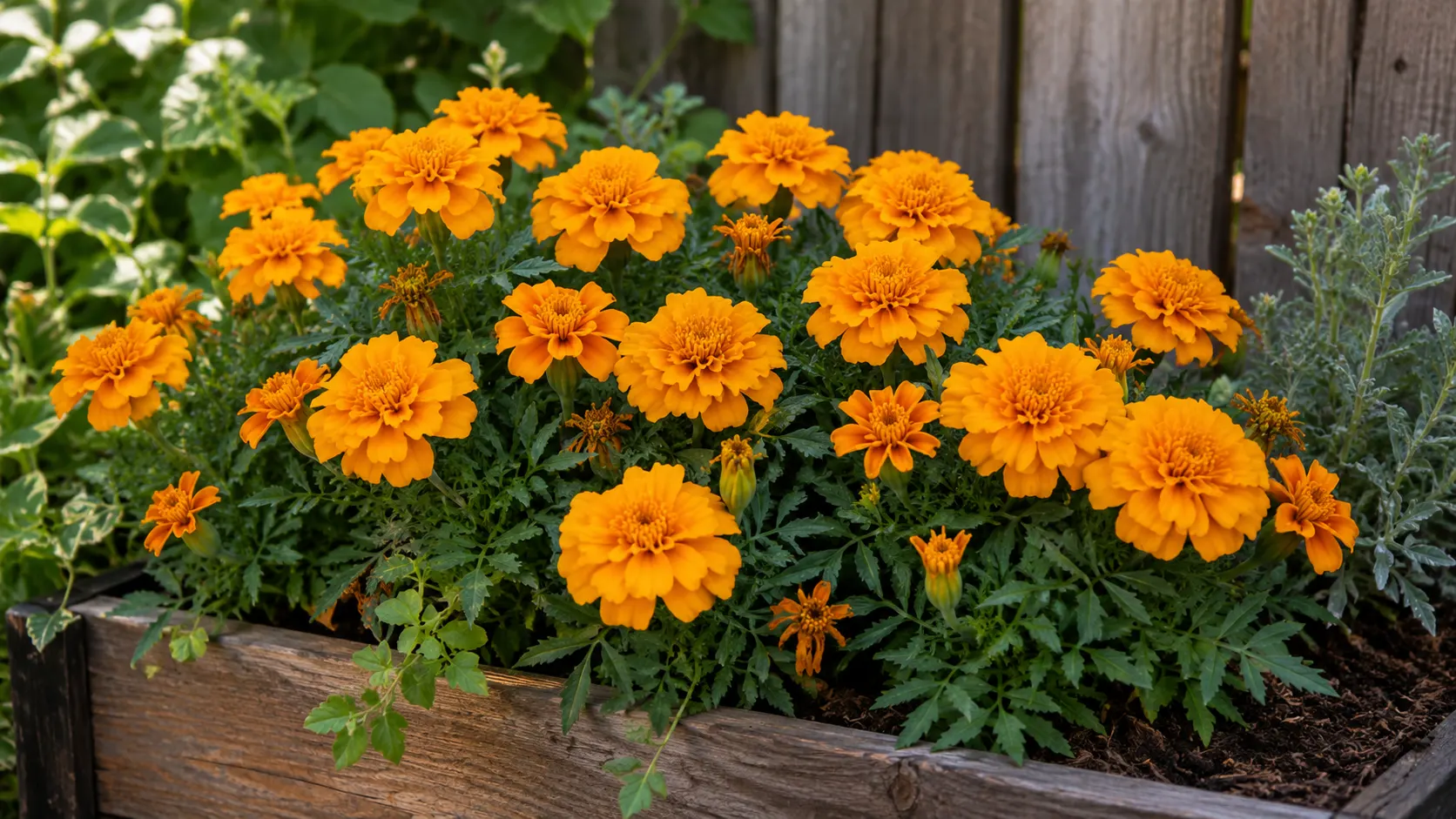
Durango Tangerine is a compact French marigold with warm orange blooms and a neat growth habit. It usually reaches 10 to 12 inches and performs best in full sun with well-draining soil. Its size works well in containers, vegetable bed edges, and low sunny borders. The tangerine color pairs easily with herbs, peppers, tomatoes, and green foliage.
Benefits: Durango Tangerine works well where a compact orange color is needed
- Container Grouping: Fits pots beside herbs or other annuals
- Vegetable Garden Edge: Short plants sit neatly along rows
- Warm Bloom Color: Orange flowers pair well with edible garden plants
25. Janie Deep Orange French Marigold
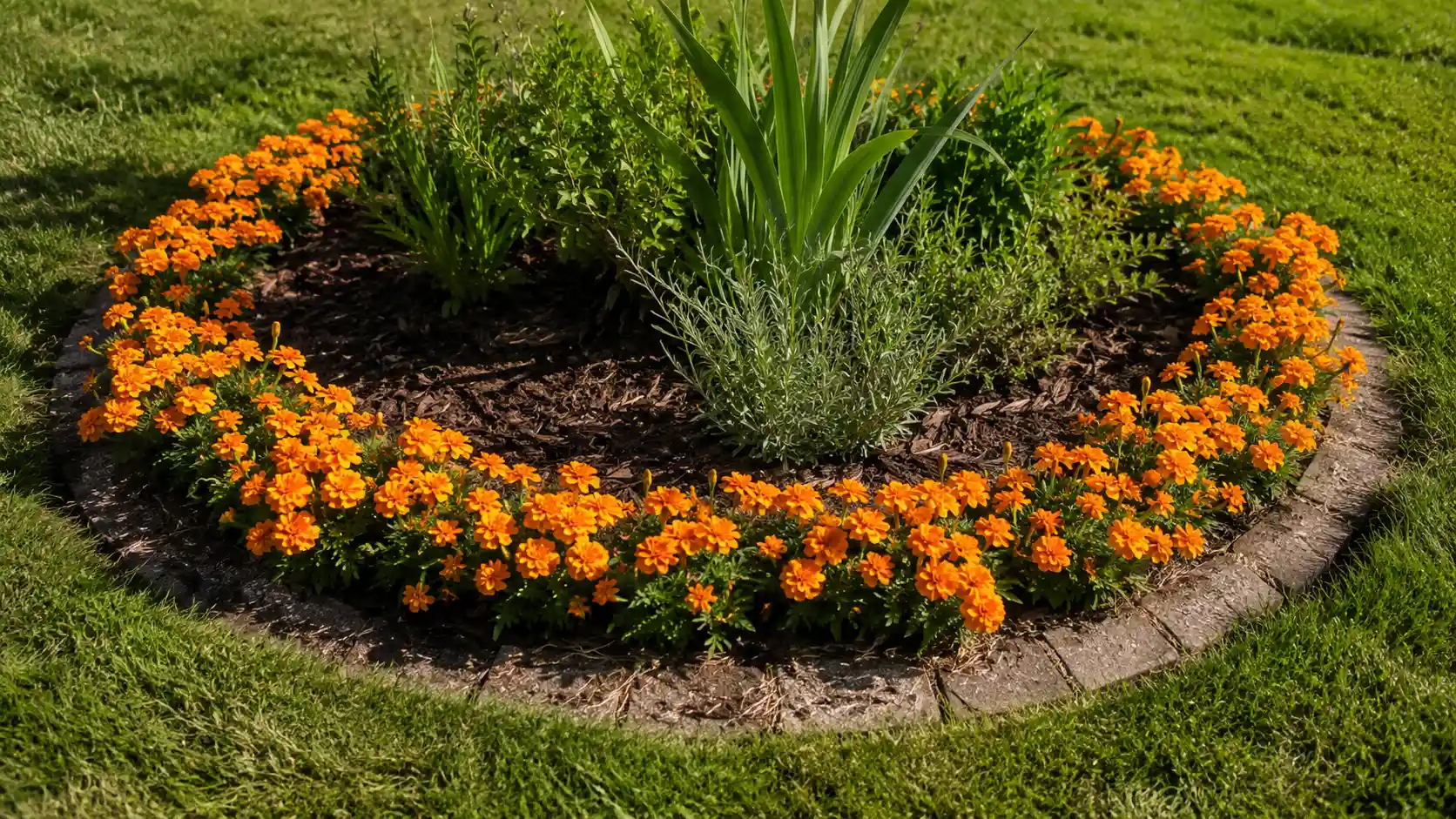
Janie Deep Orange is a dwarf French marigold that usually stays 6 to 8 inches tall. It produces deep orange blooms on very low plants, making it useful for edging and small pots. Full sun and well-draining soil help it bloom from late spring through frost. Its low shape keeps it from hiding nearby flowers or vegetables.
Benefits: Janie Deep Orange is useful where very low height matters
- Tight Edging: Works well along small bed borders
- Small Container Use: Short plants fit shallow or narrow pots
- Deep Orange Color: Adds strong color without adding height
26. Janie Yellow French Marigold
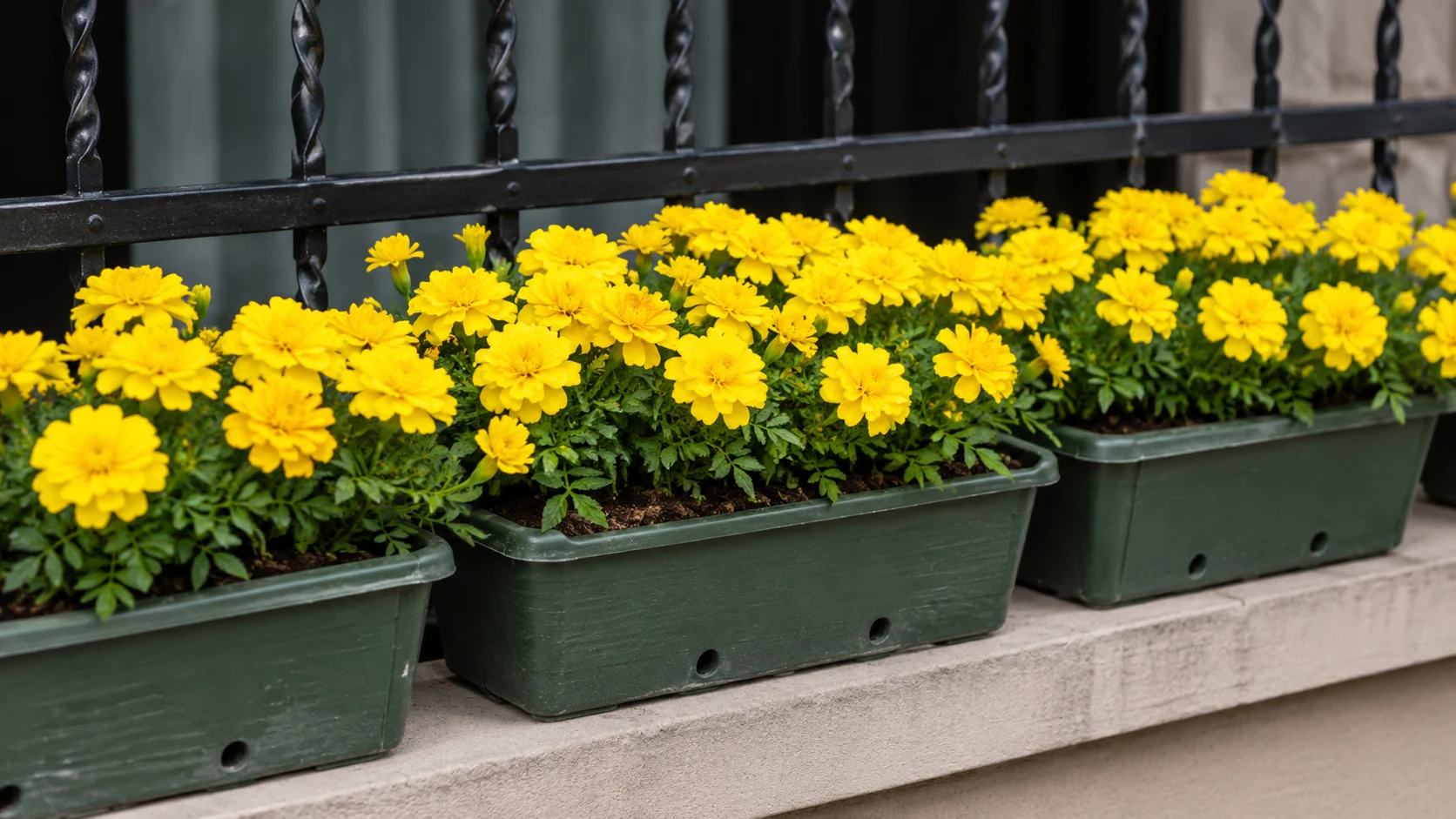
Janie Yellow is a dwarf French marigold with yellow blooms and a short, even habit. It often stays 6 to 8 inches tall, which makes it useful in small gardens, window boxes, and narrow border strips. It grows best in full sun with well-draining soil and moderate water. Its uniform height makes it easy to plan around.
Benefits: Janie Yellow creates a low, even line in small sunny spaces
- Uniform Height: Good for borders that need a clean edge
- Window Box Fit: Short growth works well in narrow planters
- Small Garden Use: Adds color without taking much room
27. Disco Marietta French Marigold
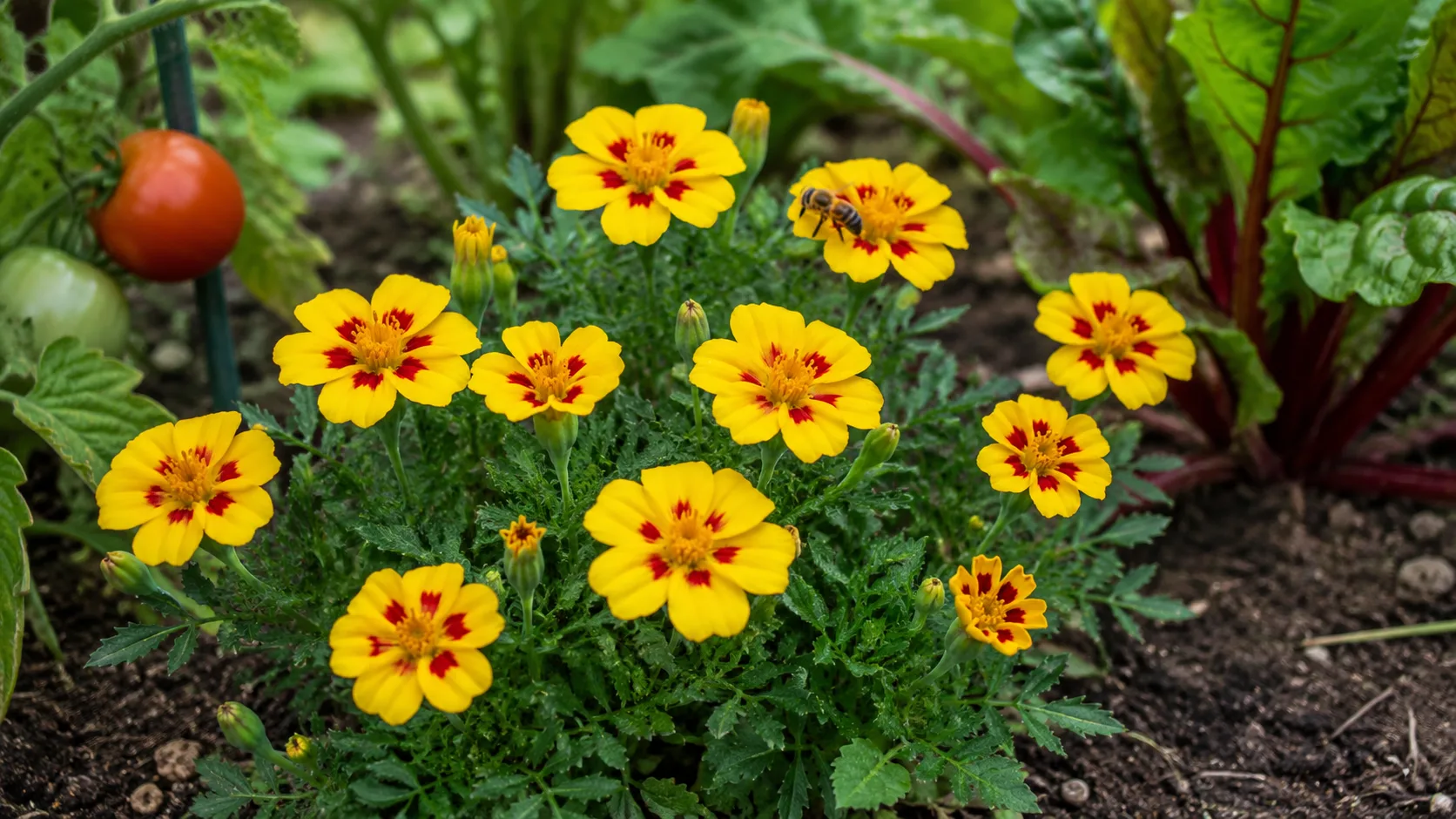
Disco Marietta is a single-flowered French marigold with yellow petals and red markings. It usually grows 8 to 10 inches tall and performs best in full sun with well-draining soil. Its open flower form is less dense than double types, which can make it easier for visiting insects to reach the center of the bloom.
Benefits: Disco Marietta works well where open flowers and compact size are useful
- Open Flower Form: Easier for some insects to access than dense doubles
- Bicolor Interest: Yellow petals with red markings add detail
- Mixed Bed Use: Fits flower and vegetable beds without crowding
28. Naughty Marietta French Marigold
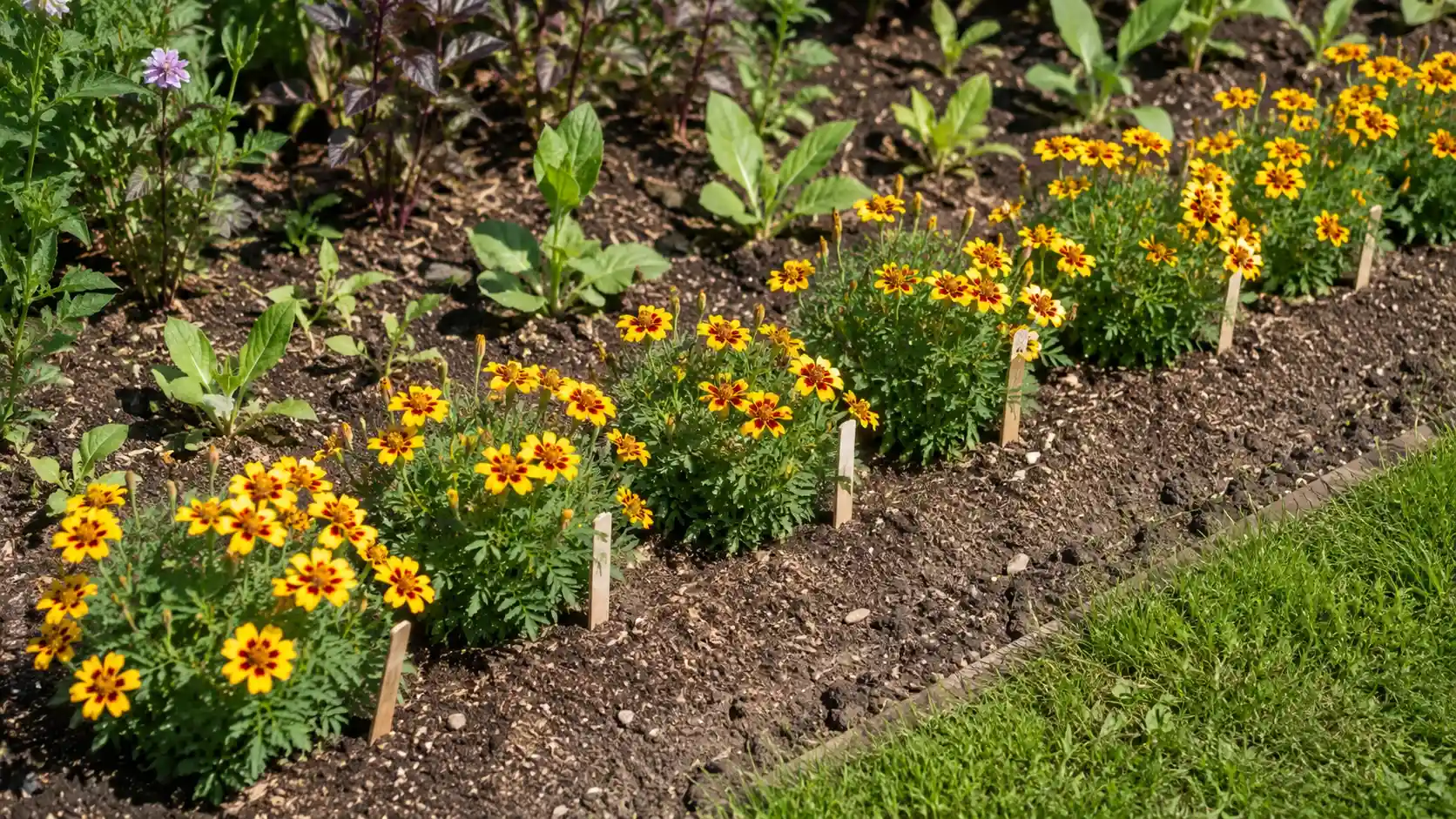
Naughty Marietta is a classic French marigold with yellow flowers marked in red. It usually reaches 8 to 10 inches and grows well from seed in full sun. This type has an older garden feel and works well in traditional borders, cottage-style beds, and small vegetable plots. It stays compact while still bringing clear flower detail.
Benefits: Naughty Marietta is a dependable seed-grown choice for classic garden beds
- Reliable Growth: A familiar choice for seed starting
- Marked Petals: Red accents add detail to yellow blooms
- Traditional Border Use: Fits older-style flower beds and vegetable edges
29. Strawberry Blonde French Marigold
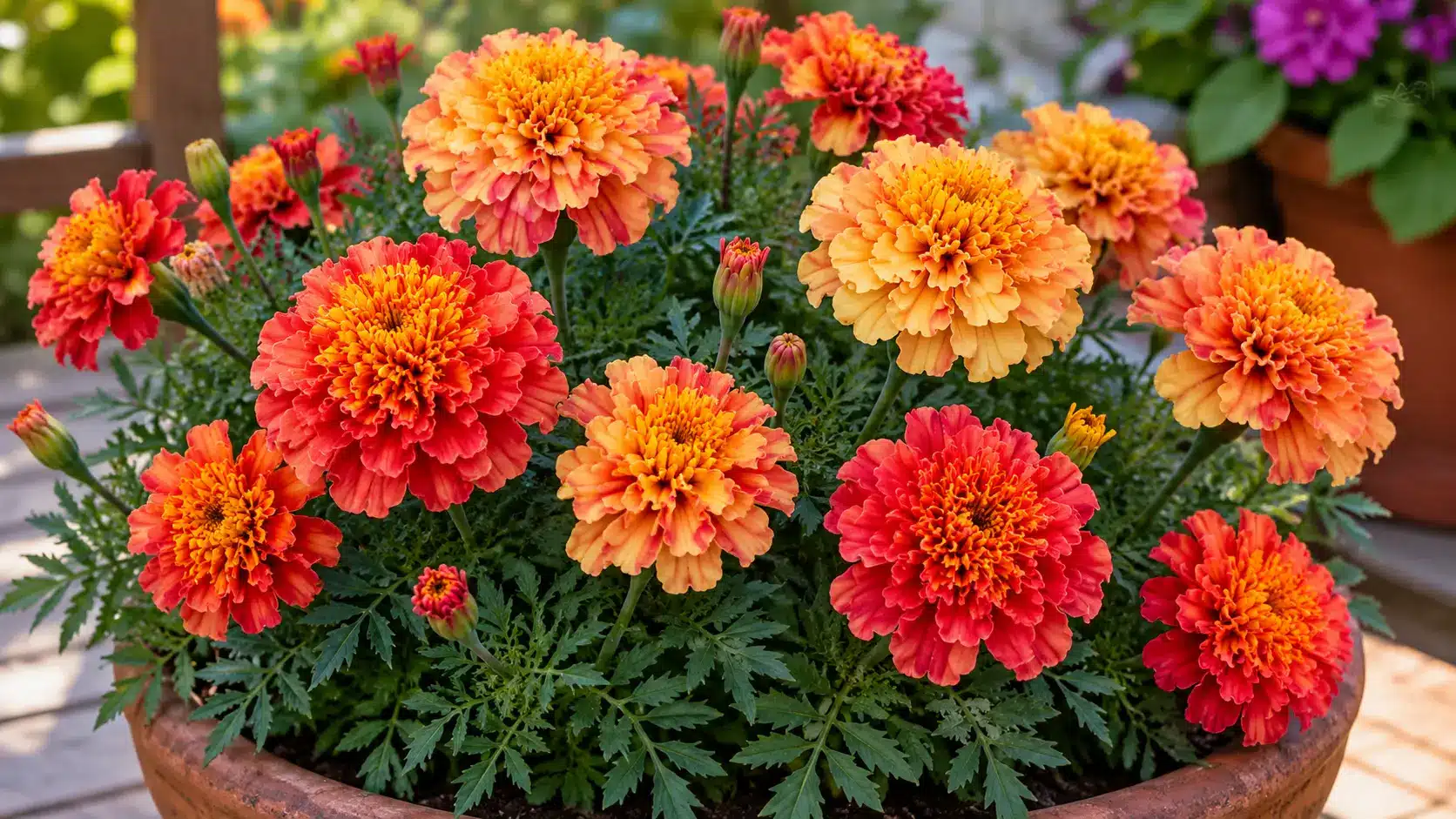
Strawberry Blonde is a compact French marigold known for flowers that shift from red tones toward gold as they mature. Plants usually stay 8 to 10 inches and grow best in full sun with well-draining soil. The changing colors make one plant feel more varied through the season, especially in containers or small beds with limited planting space.
Benefits: Strawberry Blonde adds changing flower color on a compact plant
- Color Shift: Blooms change as they age, adding variety
- Small Space Value: One plant can bring several warm tones
- Container Friendly: Compact size works well in porch pots and patio planters
30. Lemon Gem Signet Marigold
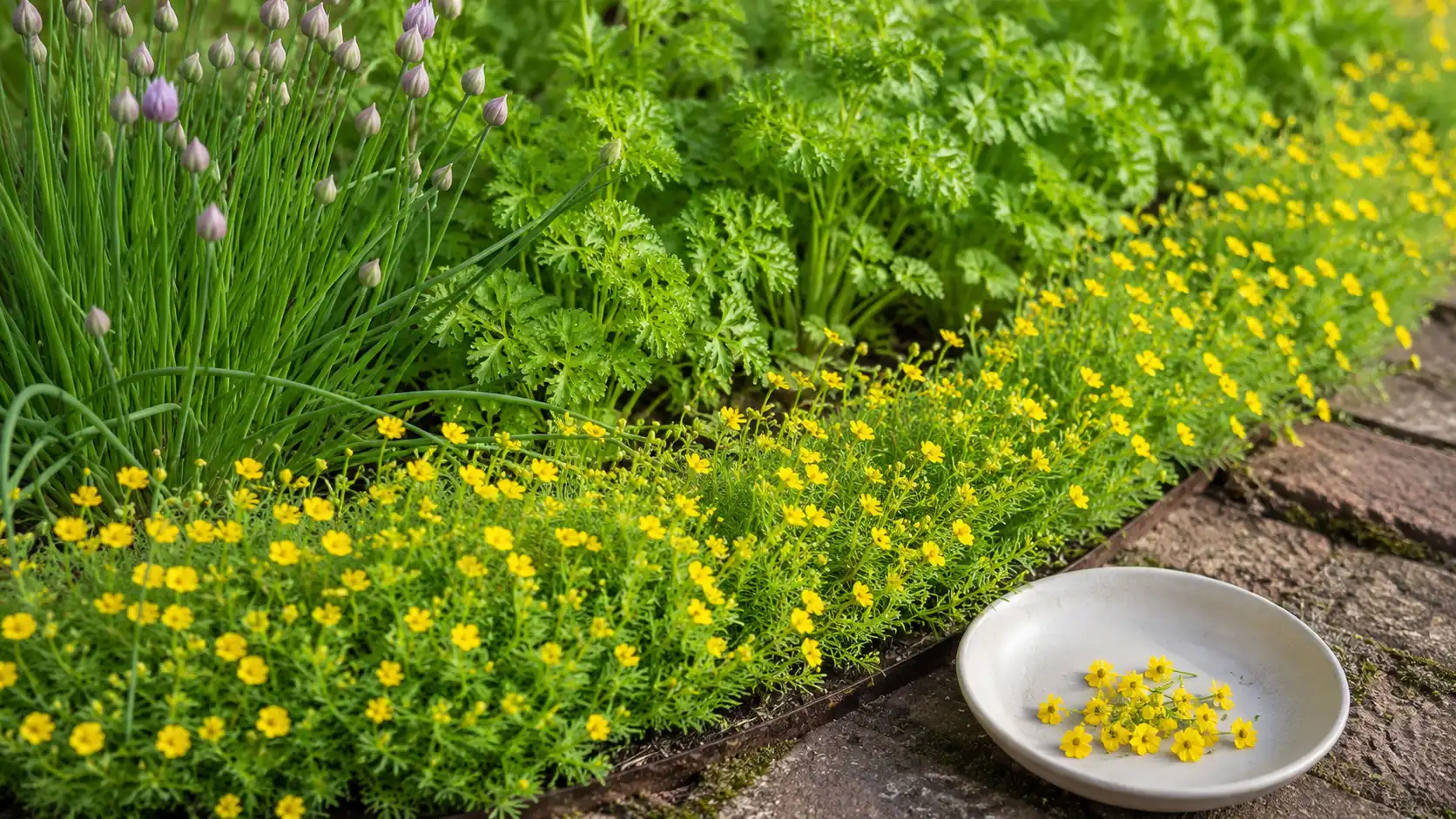
Lemon Gem is a signet marigold with small lemon-yellow flowers and fine foliage. It usually reaches 8 to 12 inches and forms a soft mound in full sun. It suits herb-style beds, containers, and low edging where a lighter texture is useful. The flowers may be used as an occasional garnish when the plant is correctly identified.
Benefits: Lemon Gem brings fine foliage, small flowers, and low garden texture
- Herb Bed Fit: Works well beside parsley, chives, thyme, and basil
- Fine Texture: Soft leaves break up heavier bedding plants
- Careful Garnish Use: Flowers may be used only when correctly identified
31. Tangerine Gem Signet Marigold
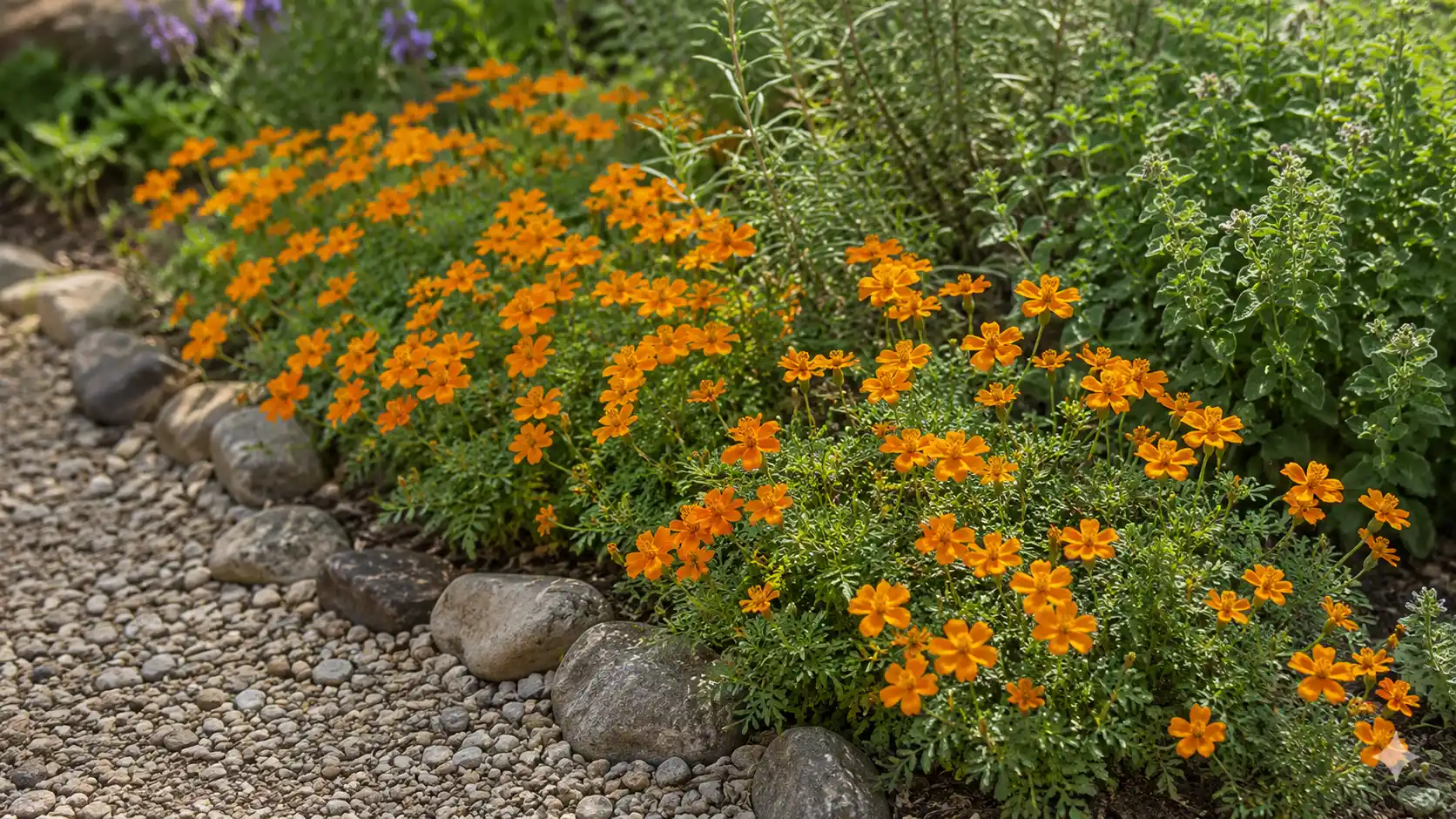
Tangerine Gem is a signet marigold with small orange flowers and fine-textured foliage. It usually grows 8 to 12 inches and handles sunny, well-draining spots well. Once established, it can tolerate some dryness. It works nicely along gravel paths, in low borders, and near herb plantings where fine foliage adds a softer edge.
Benefits: Tangerine Gem suits low borders, pots, and herb-style sunny spaces
- Pathway Use: Low growth sits neatly beside paths
- Fine Foliage: Adds texture near herbs and small annuals
- Dryness Tolerance: Established plants handle some dry spells better than many bedding types
32. Red Gem Signet Marigold
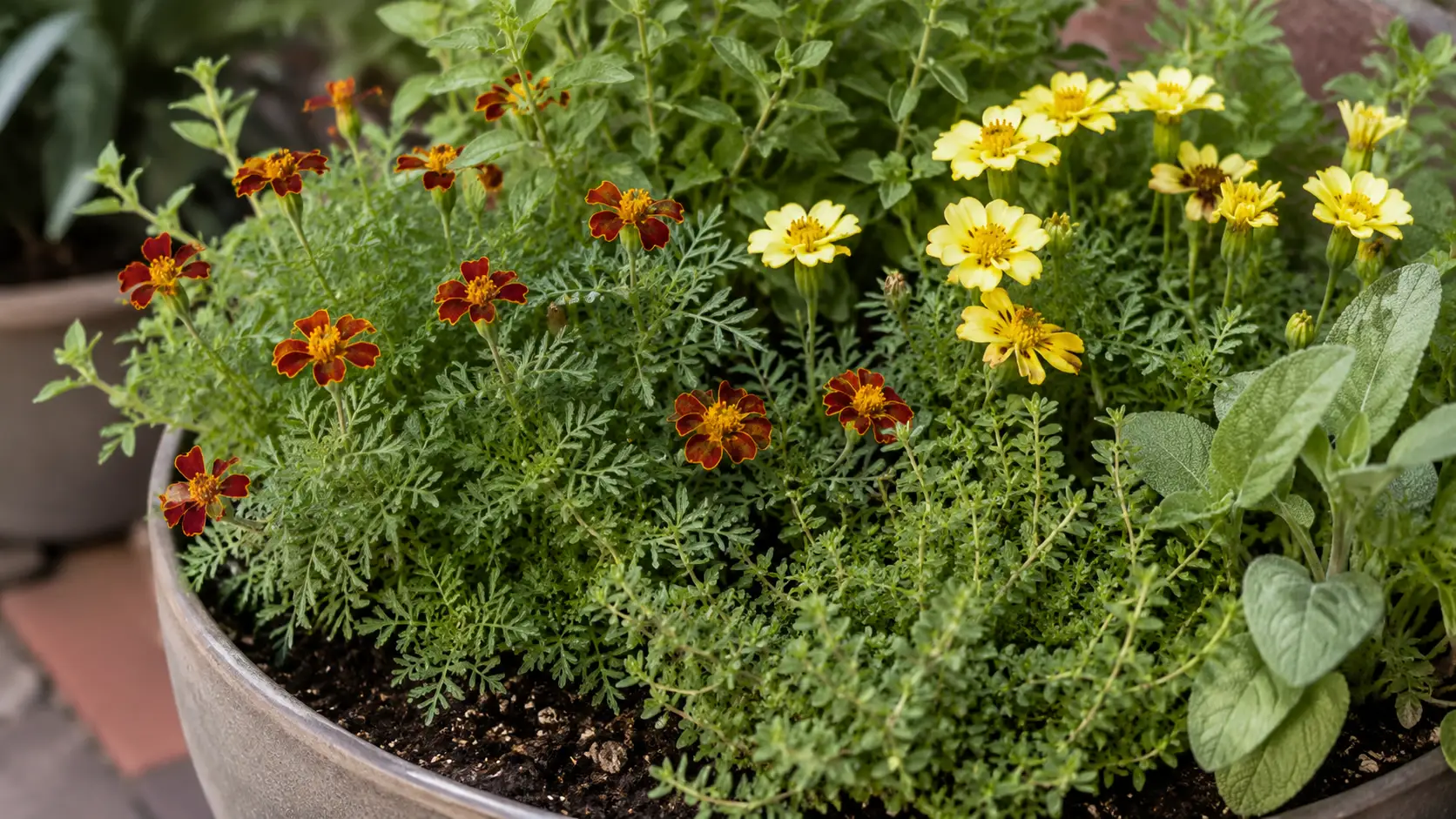
Red Gem is a compact signet marigold with small red-orange flowers and fine foliage. It usually reaches 8 to 12 inches and grows best in full sun with well-draining soil. Its deeper color makes it useful beside yellow or orange signets, especially in pots and low borders. It keeps the same light texture but adds stronger contrast.
Benefits: Red Gem adds deeper color while keeping the compact signet habit
- Color Contrast: Red-orange flowers stand out beside lighter signets
- Container Use: Compact growth fits small mixed pots
- Low Border Fit: Fine foliage and short height work well at bed edges
Choosing among these marigolds becomes easier when height, flower size, and garden use take precedence over color. Pick the planting spot first, then match the plant’s mature size, bloom style, and care needs to that space.
Marigold Types by Garden Use
Choosing by garden use is often easier than choosing by color. A tall plant may look great on the seed packet but feel wrong in a small pot, while a compact type may disappear in the back of a wide flower bed.
| Garden Goal | Best Marigold Type | Why It Works |
| Back of a flower bed | African marigold | Tall stems and large flower heads |
| Low border | French marigold | Compact size and steady bloom |
| Pots and small patios | French or signet marigold | Short plants fit containers better |
| Vegetable garden edge | French marigold | Easy to place along rows and paths |
| Cut flowers | African marigold | Long stems and large blooms |
| Herb-style planting | Mexican mint marigold | Scented foliage and yellow flowers |
| Hot summer beds | Triploid marigold | Stronger performance in heat than many standard forms |
| Edible garnish, used carefully | Signet marigold | Small edible flowers, used occasionally and correctly identified |
Use this table as a starting point, then check mature size before planting. The right match should fit the bed, pot, or border without crowding nearby plants or needing extra correction once the season is underway.
Care Tips for Growing Marigolds Well
Marigolds are genuinely easy plants, but a few habits make the difference between a patch that blooms all season steadily and one that fades by midsummer.
- Give them full sun: Most marigolds flower best in direct sun for six or more hours a day, though a little afternoon shade can help in very hot regions where leaves might scorch.
- Use well-draining soil: Wet roots cause more trouble for marigolds than average garden soil ever will. If the soil holds water after rain, working in some compost or coarse material helps.
- Water at the soil line: Keeping foliage drier by watering at the base reduces the chance of fungal issues, especially in humid climates.
- Do not overfeed: Rich, heavily fertilized soil tends to push leafy growth at the expense of flowers. A lean to moderate soil often produces more blooms.
- Deadhead when useful: Removing spent flowers keeps plants looking tidy and can encourage continued blooming through the season.
- Space by mature size: A dwarf French marigold needs a fraction of the space a tall African marigold requires, so check the mature size before deciding on spacing.
Getting care right starts with choosing the right type in the first place. A marigold matched to its spot needs far less ongoing adjustment than one that was forced into a space too small or too shaded for its habit.
Are Marigolds Good Companion Plants?
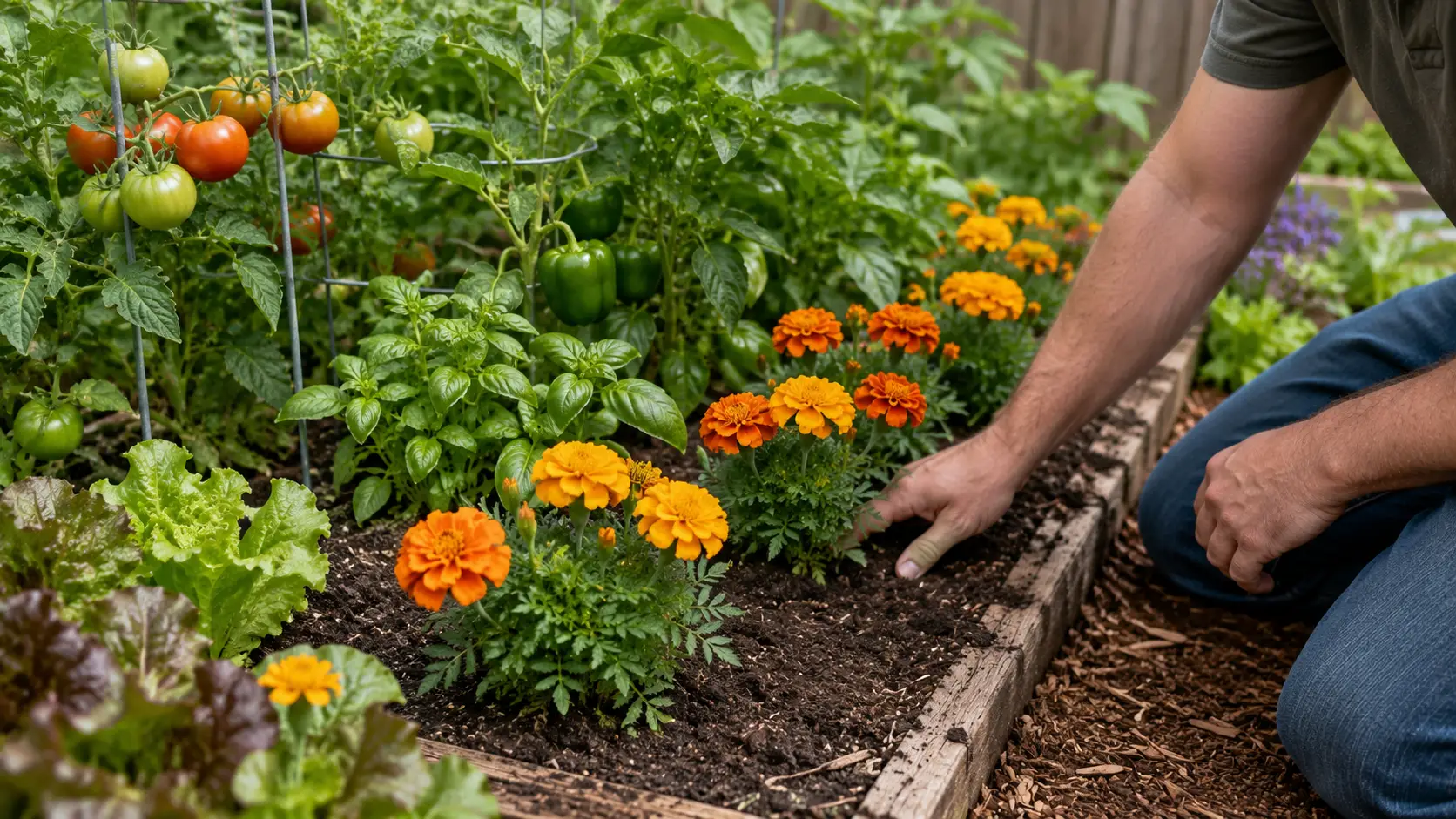
Marigolds get mentioned often in companion planting discussions, but the honest answer depends on the specific pest, the marigold type, and the broader garden setup rather than any single guarantee.
French marigolds in particular come up frequently in vegetable garden contexts, and flowering strips that include marigolds may also support beneficial insects in some settings, according to research summarized by the University of Maryland Extension.
The more useful framing is to think of marigolds as one piece of a planting plan rather than a standalone pest solution. They add color, attract some pollinators, and fit well alongside vegetables without crowding them, which on its own is worth the space even before any pest-related benefit comes into play.
Frequently Asked Questions
Are African and French marigolds the same plant?
No. African marigolds are usually taller, with larger flower heads and stronger upright growth. French marigolds stay shorter and branch more, which makes them easier for borders, small beds, and vegetable garden edges. Both belong to Tagetes, but they fit different spaces in a garden layout.
Can marigolds grow in pots all season?
Yes, many marigolds grow well in pots if the container drains properly and the plant gets full sun for most of the day. French and signet types usually fit containers better than tall African types. Water when the top inch of soil starts to feel dry.
Which marigolds are best for pollinators?
Single or open-flowered marigolds are usually easier for insects to access than very dense double blooms. Signet marigolds and some French types with single flower forms are good choices when pollinator access matters. Avoid pesticide use on flowers if bees or butterflies are visiting regularly.
Why do some marigolds get tall and floppy?
Tall marigolds may lean when they get too much shade, too much rich fertilizer, exposure to strong wind, or heavy flower heads after rain. African marigolds are more likely to need staking than compact French types. Better spacing and full sun help stems stay sturdier through the season.
Are pot marigolds the same as garden marigolds?
No. Pot marigold usually refers to Calendula officinalis, while common garden marigolds typically belong to Tagetes. The flowers can look related from a distance, but they are different plants with different uses. This distinction matters most for anyone considering edible flowers or herbal preparations.
Final Takeaway
Choosing among types of marigolds comes down to more than picking a favorite color. Height, bloom size, heat tolerance, container fit, and the specific job the plant needs to do all matter more than whether it leans toward yellow or orange.
The practical order that tends to work: pick the garden spot first, then think about plant height, then narrow down by flower color and bloom form.
African, French, signet, triploid, and Mexican mint marigolds each solve a different problem, and most gardens end up using more than one of these marigold varieties across different spots rather than relying on just one.
Use the list above to match one marigold to the bed, pot, border, or vegetable row that needs it most this season.