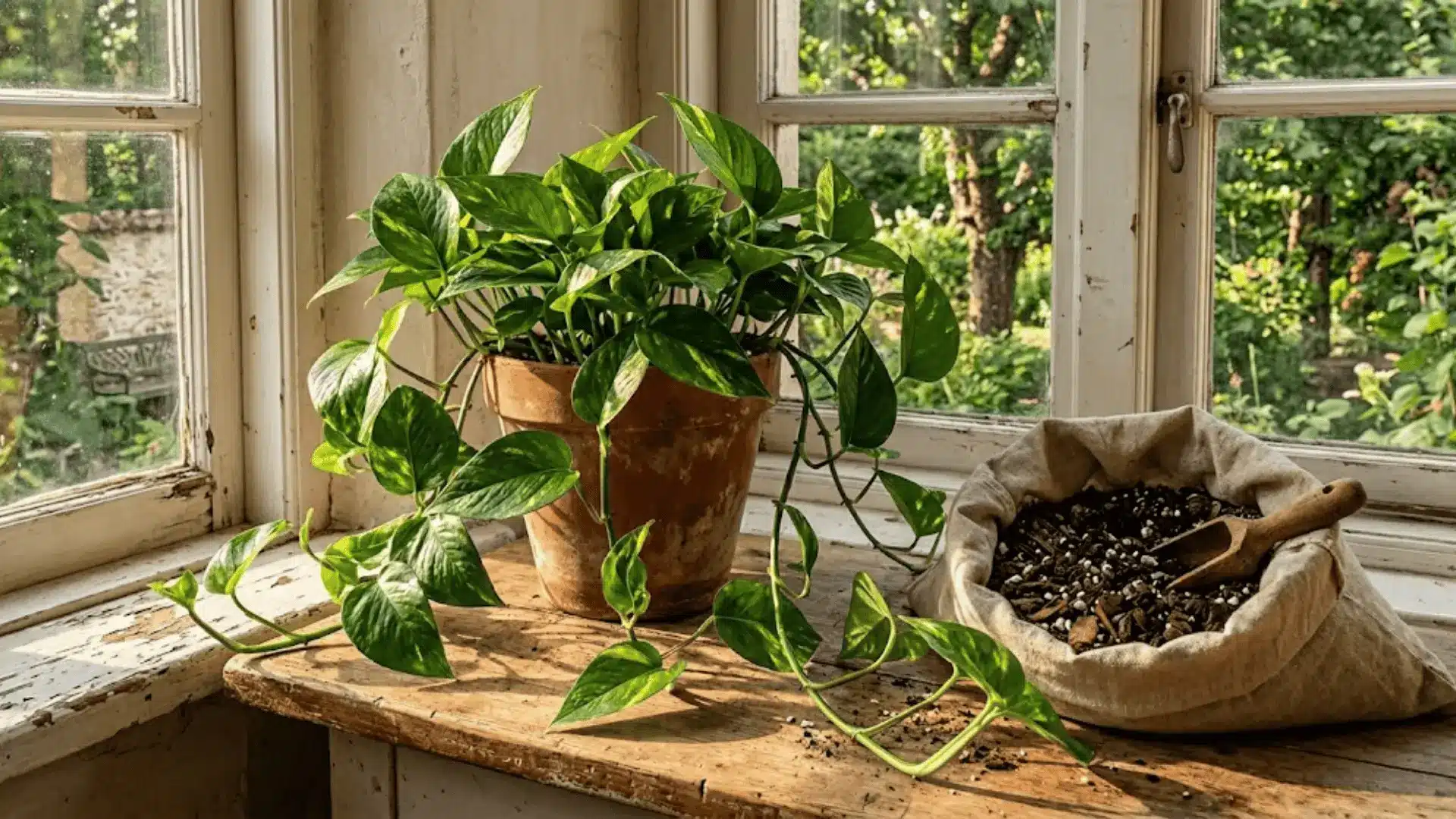
Pothos is one of those plants that somehow makes everyone feel like they have a green thumb, and honestly, that reputation is well deserved.
But even the most forgiving plants have their preferences, and pothos is no exception.
Getting the soil mix right is quietly the biggest thing you can do for your plant’s health, growth, and those long, gorgeous trailing vines you’re dreaming of.
A well-draining, airy mix that still holds onto a little moisture? That’s your starting point for a seriously thriving pothos.
The Soil Your Pothos is Actually Rooting for
Getting the soil right does more than just keep your pothos alive; it sets the tone for everything else.
Poor soil is almost always what leads to root rot, which is honestly the most common reason pothos struggle.
The right mix supports faster growth and healthier, fuller leaves while mimicking the light, airy conditions pothos naturally thrive in back in their tropical homes.
It also makes watering and fertilizing so much more predictable and effective. Good soil is not a small detail; it is the whole foundation.
What is the Best Soil Mix for Pothos?
Pothos are adaptable, but their soil does not need to be a guessing game.
Knowing what goes into the mix and why makes all the difference between a plant that survives and one that genuinely thrives.
What Good Pothos Soil Actually Looks Like?
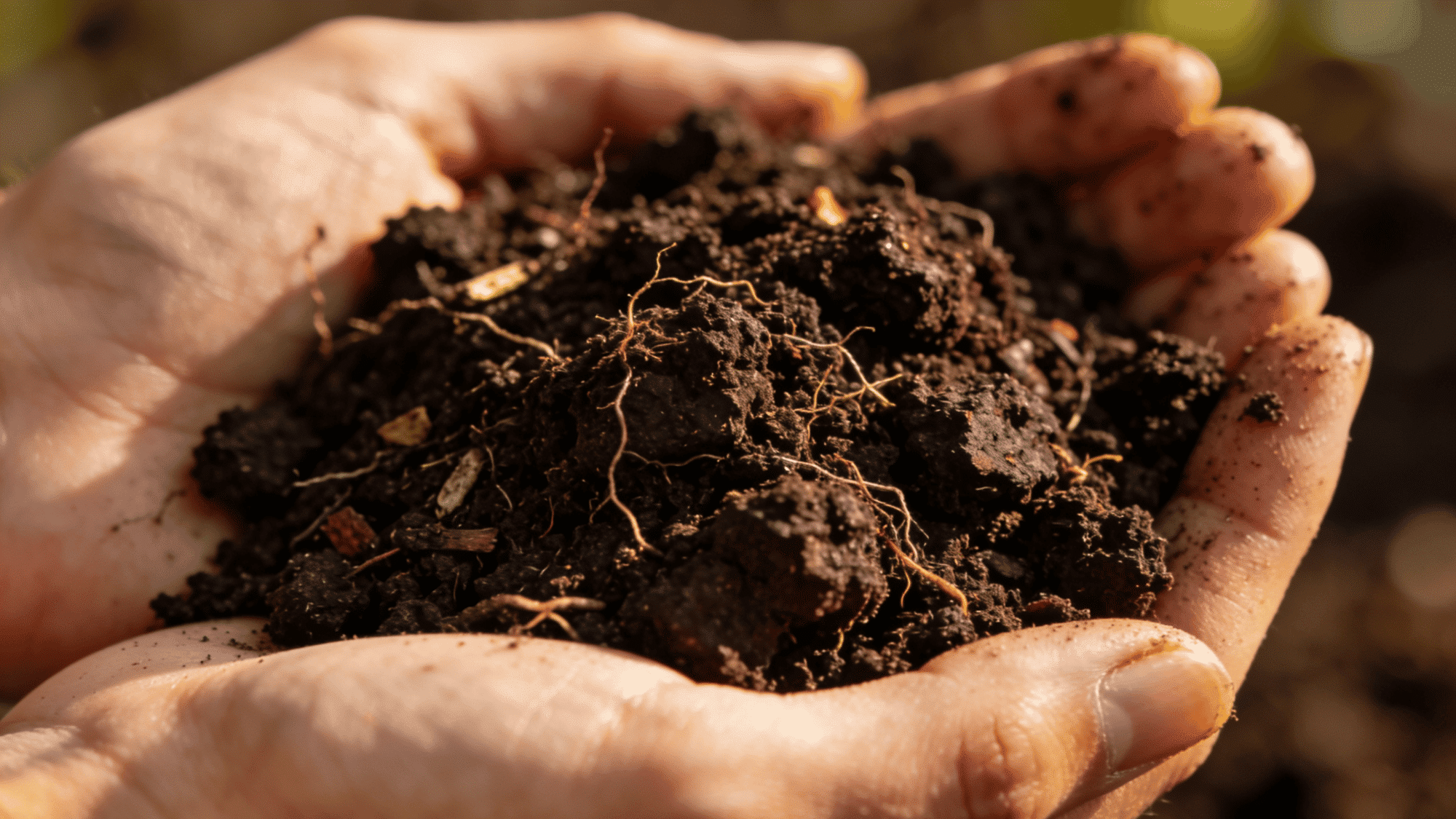
Not all potting soil is created equal, and pothos have a pretty clear preference. The right mix feels light in your hands, never dense or compacted, and it drains water without holding onto it for too long.
Here is what to look for:
- Well-Draining but Moisture-Retentive: Holds just enough water without staying soggy.
- Loose and Airy Structure: Lets roots breathe and spread freely.
- Rich in Organic Matter: Feeds the plant naturally over time.
- Slightly Acidic to Neutral pH: Somewhere in that 6 to 7 range keeps nutrient absorption smooth.
The Ratio That Actually Works
Think of your pothos soil mix as a balance, not a guessing game.
A base of 60 to 70% quality potting soil gives your plant the organic richness it needs, while the remaining 30 to 40% drainage material, like perlite or orchid bark, keeps things airy and light.
This ratio makes sure water moves through efficiently while still giving roots that brief moment of moisture they actually need to grow.
Best DIY Pothos Soil Mix Recipes
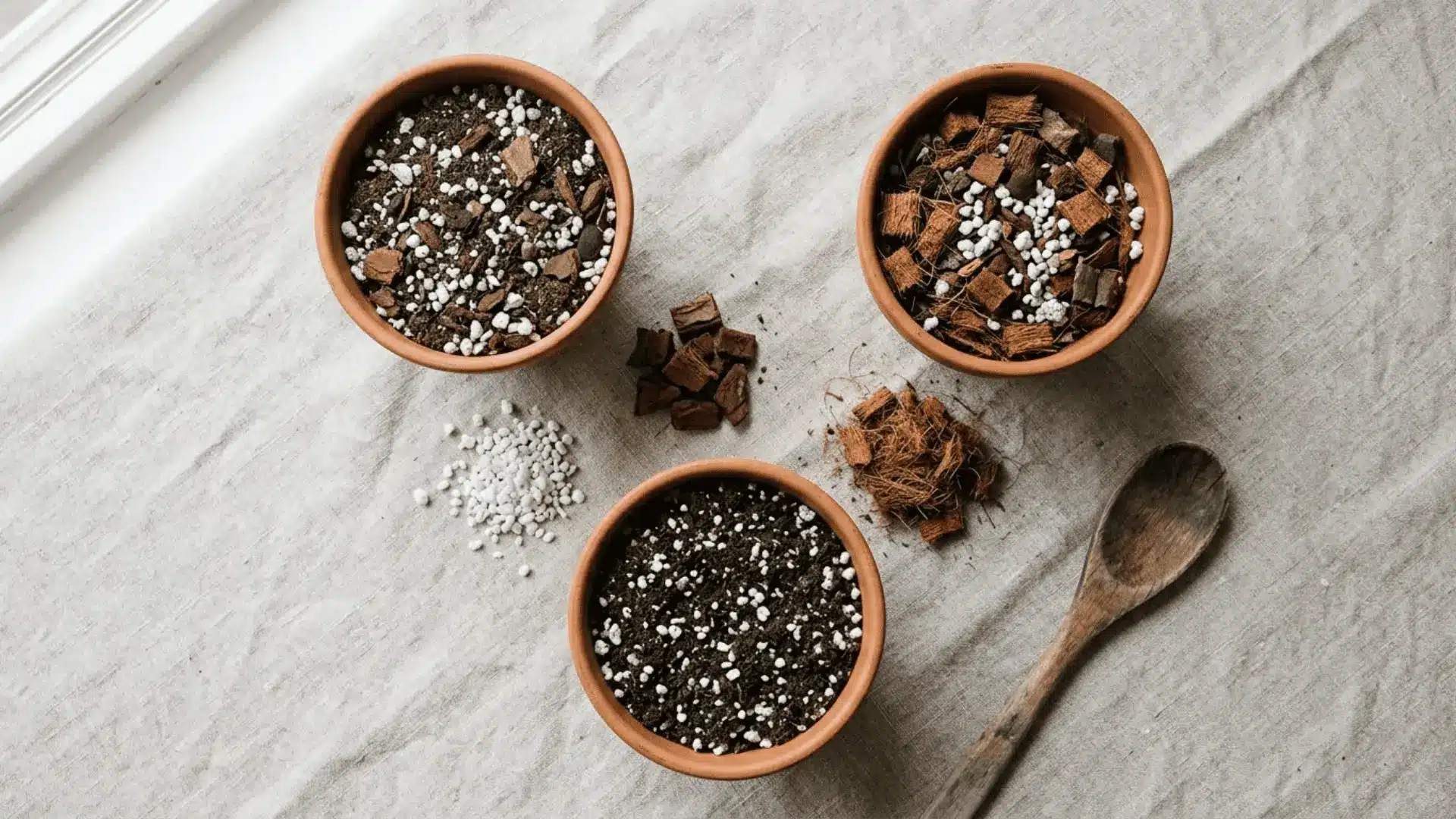
Making your own pothos mix is easier than it sounds, and it gives you full control over what your plant is growing in.
A simple two-ingredient setup, a chunky aroid blend, a minimalist combo all have a spot here, so just pick what works for your plants and go with it.
The Classic Beginner Mix
This is the one most plant parents start with, and for good reason. A combination of potting soil, perlite, and orchid bark gives you drainage, aeration, and just enough organic matter to keep your pothos happy.
It is easy to source, hard to mess up, and widely recommended across the plant community for a reason.
The Chunky Aroid Mix
For those who want to get a little more intentional, this mix is worth the effort.
Here is a ratio that works really well:
- Coco Coir or Peat Moss: The moisture-retentive base.
- Perlite: Keeps things light and well-aerated.
- Bark Fines: Adds chunkiness and mimics natural growing conditions.
- Optional Sand or Activated Charcoal: Improves drainage and keeps the mix fresh.
A 2:1:1:1 ratio across these ingredients hits that sweet spot between moisture and airflow.
The Minimalist Mix
Sometimes the simplest combinations do the most reliable work.
If you are working with a budget or just want something low-effort that still delivers, this two-ingredient mix is genuinely all your pothos needs to grow well.
| Component | Amount | Role in the Mix |
|---|---|---|
| Quality potting soil | 70% | Provides organic richness and base structure |
| Perlite | 30% | Improves drainage and prevents compaction |
Perlite is the real hero here, keeping the mix light and breathable so roots have room to spread without sitting in moisture for too long.
Reddit-Recommended Pothos Soil Mixes
Sometimes the most practical advice comes straight from people who have already killed a plant or two and learned from it.
The pothos community on Reddit is surprisingly detailed about soil, and a few clear patterns keep emerging.
The “Chunky Mix” Trend
The chunky mix has become something of a community favorite, and it is easy to see why. Perlite, orchid bark, and potting soil together create a mix that prioritizes airflow and drainage above everything else.
As one Reddit user in r/pothos put it, pothos love a chunky soil mix for the airflow it provides. Roots stay healthier, water moves through cleanly, and the plant just does better overall.
Popular Community Ratios
Plant parents on r/houseplants tend to gravitate toward ratios that are simple but intentional.
Here is what comes up most consistently:
| Ingredient | Ratio | Purpose |
|---|---|---|
| Potting soil | 1 part | Organic base and structure |
| Orchid bark | 1 part | Adds chunkiness and aeration |
| Perlite | 1 part | Improves drainage and airflow |
| Activated charcoal | Optional | Keeps mix fresh, fights bacteria |
| Worm castings | Optional | Gentle, natural nutrient boost |
Common Mistakes Users Highlight
These are the two things that come up most, and both are easy to avoid once you know what to look for:
- Soil Too Dense or Compacted: Suffocates roots over time and creates the perfect conditions for rot to set in.
- Too Much Coco Peat Without Drainage Amendments: Coco peat holds onto moisture longer than most people expect, and without perlite or bark to balance it out, the mix stays wet for way too long.
Key Ingredients in a Pothos Soil Mix
Every ingredient in a good pothos mix has a job to do, and understanding what each one brings to the table makes it a lot easier to build or adjust your mix with confidence.
Here is a closer look at what actually goes into a well-balanced pothos soil.
1. Potting Soil or Coco Coir
This is your base, the starting point from which everything else builds.
Potting soil brings organic richness and holds just enough moisture to keep roots hydrated between waterings. Coco coir is a great alternative for those who want something more sustainable and slightly lighter in texture.
Both work well for pothos, just make sure neither is too dense on its own.
Ideal Portion: 40 to 60% of your total mix
2. Perlite or Pumice
If your mix had a drainage hero, this would be it.
Perlite and pumice are both lightweight, porous materials that create space within the soil for water to move through and air to reach the roots.
Without one of these in the mix, even a decent potting soil can compact over time and start holding more moisture than your pothos actually wants.
Ideal Portion: 20 to 30% of your total mix
3. Orchid Bark
Orchid bark is what gives a pothos mix that chunky, airy quality so many plant parents swear by.
Bark pieces create natural air pockets throughout the soil, keeping the structure loose and mimicking the kind of organic debris pothos roots would naturally grow through in a tropical environment.
It also breaks down slowly, so it improves the mix over a longer period of time.
Ideal Portion: 10 to 20% of your total mix
4. Compost or Worm Castings
Think of this as the quiet, slow-working addition that keeps your pothos fed without any extra effort.
Worm castings, especially, are gentle enough to use directly against roots without burning them, and they release nutrients gradually as the plant grows.
A small amount goes a long way, and your pothos will show the difference in its leaf color and overall growth pace.
Ideal Portion: 10% of your total mix
Optional Add-Ins
These are not must-haves, but they are worth considering depending on your setup and environment:
- Activated Charcoal: Helps with odor control and keeps the mix from going stale, especially useful in pots without drainage holes.
- Coarse Sand: Adds an extra layer of aeration and is particularly helpful in humid climates where soil tends to stay wet longer than usual.
Store-Bought vs. DIY Soil Mix
Both options can work really well for pothos, and the right pick honestly comes down to where you are in your plant parenting experience and how much control you want over what goes into the mix.
Here is a side-by-side look to help you decide:
| Factor | Pre-Made Potting Mix | DIY Mix |
|---|---|---|
| Convenience | Ready to use, no prep needed | Requires sourcing and mixing ingredients |
| Best For | Beginners and low-maintenance setups | Enthusiasts who want more control |
| Drainage | Varies; look for mixes with perlite or bark already added | Fully customizable to your plant’s needs |
| Nutrient Control | Pre-formulated, less flexibility | Adjust compost and worm castings as needed |
| Long-Term Results | Decent, but may need amendments over time | Often better with the right ratio |
| Cost | Higher per use | More economical over time |
If you are just getting started, a good pre-made mix with perlite already in it will do the job well. If you have been growing for a while and want to dial things in, a DIY chunky mix is absolutely worth the extra effort.
Signs Your Pothos Soil Mix is Wrong
Your pothos is pretty vocal about what is not working; you just have to know what to look for. If something feels off with your plant, the soil is usually the first place worth checking.
- Yellow Leaves: Often a sign that the soil is too dense and holding more moisture than the roots can handle.
- Slow or Stunted Growth: Compacted soil limits root spread, and roots that cannot move cannot grow.
- Mushy or Rotting Roots: A clear indicator of poor drainage and water sitting in the mix far too long.
- Wilting Despite Regular Watering: Fast-draining soil may be pulling moisture away before roots even get a chance to absorb it.
- Soil Pulling Away From Pot Edges: The mix has dried out too quickly and lost its structure entirely.
If your pothos is showing any of these signs, it is worth revisiting your mix before chalking it up to anything else. More often than not, a simple soil refresh is all it takes to turn things around.
How to Repot Pothos With the Right Soil Mix?
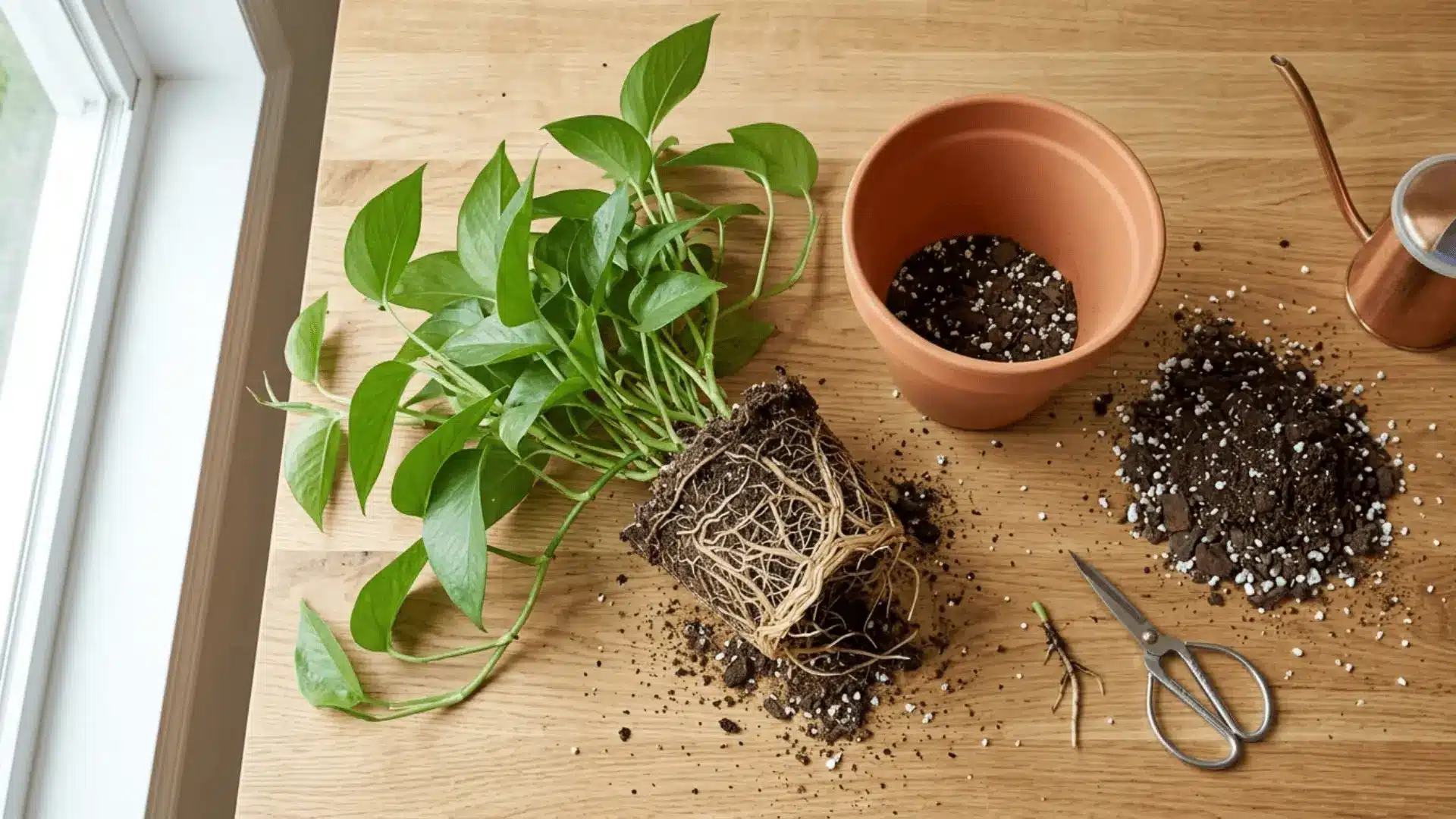
Repotting is one of those things that feels intimidating the first time and completely second nature after that. Done right, it gives your pothos a fresh start and the kind of soil environment it actually needs to grow well.
When to Repot?
A good rule of thumb is to repot every one to two years, but your pothos will usually tell you before the calendar does. Roots circling the bottom of the pot or pushing through drainage holes are the clearest signs it is time.
Yellowing leaves and soil that dries out unusually fast are also worth paying attention to, as both can point to a plant that has simply outgrown its space.
Step-by-Step Repotting Guide
Fresh soil, a slightly bigger pot, and a little patience are really all you need here.
Here is how to do it without stressing your plant out:
- Step 1: Remove your pothos gently from its current pot and shake off as much of the old soil as you can without pulling at the roots.
- Step 2: Trim any damaged or mushy roots with clean scissors before moving forward. Healthy roots should look white or light tan.
- Step 3: Add a layer of your fresh mix to the bottom of the new pot, then set your plant in and fill in around it.
- Step 4: Water it in lightly to help the soil settle, then place it back in its usual spot and let it adjust.
Pro Tips to Improve Your Pothos Soil Mix
Even a solid mix can be tweaked and improved over time, and small adjustments often make a bigger difference than starting from scratch.
These are the things experienced plant parents tend to do quietly and consistently:
- Match Your Mix to Your Climate: Humid environments call for more drainage amendments like perlite or bark, while drier spaces benefit from a slightly more moisture-retentive base.
- Always Use Pots With Drainage Holes: No matter how good your mix is, water needs somewhere to go, or it will sit at the bottom and cause rot.
- Refresh Your Soil Every One to Two Years: Nutrients deplete over time, and soil structure breaks down. A periodic refresh keeps your pothos growing at its best.
- Layer Coarse Material at the Bottom: A small layer of orchid bark or perlite at the base of the pot improves drainage right where it matters most.
- Amend Before Problems Show Up: Do not wait for yellow leaves or wilting to revisit your mix; checking in on your soil health proactively saves a lot of trouble later.
Your soil mix is not something you set once and forget, and these small adjustments are what keep a pothos looking genuinely healthy rather than just surviving on the shelf.
Wrapping It Up
A thriving pothos really does start from the ground up, and now that you know what goes into a good pothos soil mix, putting it together feels a lot less overwhelming.
Your plant does not need perfection; it needs a mix that drains well, breathes well, and suits the environment it is actually living in.
Give it that, and it will reward you with those long, lush trailing vines that make pothos so worth growing..
Tried a mix that worked really well for you? Share it in the comments; it might be exactly what someone else needs to hear.