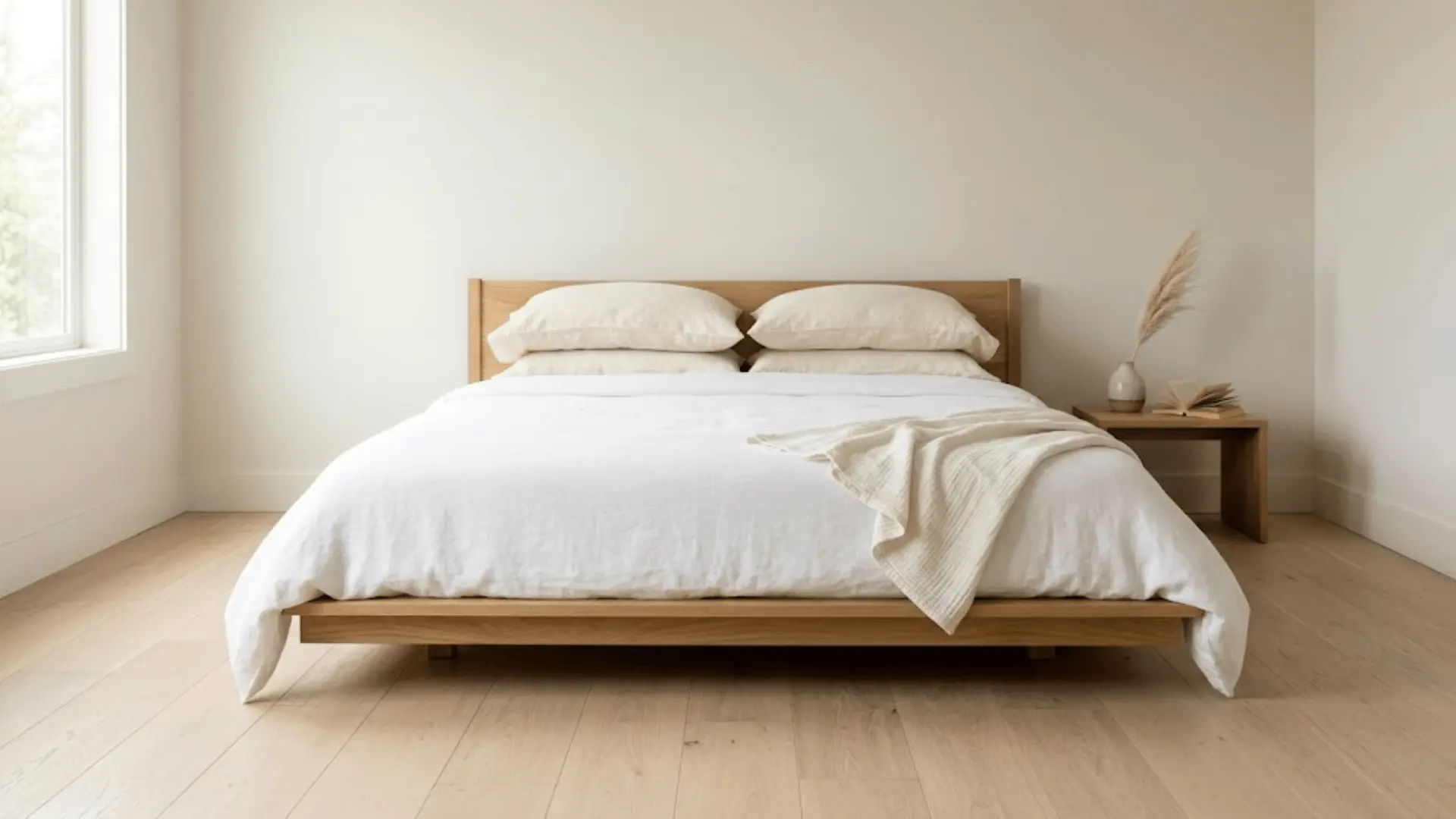
A platform bed is a sturdy bed frame with a built-in base that supports your mattress directly, no box spring needed.
If you have been scrolling through minimalist bedroom inspo and wondering what makes those clean, low-profile frames look so effortlessly put-together, this is exactly what you are looking for.
Unlike a traditional panel bed, a platform bed skips the bulk and keeps things grounded, literally and aesthetically.
By the end of this guide, you will know exactly what sets it apart and whether it deserves a spot in your space.
What is a Platform Bed?
A platform bed is a bed frame with a built-in support surface, either a solid base or evenly spaced wooden and metal slats, that holds your mattress without any additional foundation underneath.
The design sits closer to the ground than most traditional frames, giving it that sleek, intentional look you keep seeing in modern bedroom setups.
What makes it different is that it does the job of both a bed frame and a foundation at once, so you get full mattress support in one clean, no-fuss structure.
What Makes a Platform Bed Worth It?
Platform beds have quietly become a staple in modern bedroom design, and for good reason. Here is a closer look at what actually makes them stand out.
1. Built-in Support System
One of the biggest draws of a platform bed is that it comes with its own support surface, either solid wood panels or evenly spaced slats, built right into the frame.
That means no box spring, no extra expense, and no guessing if your mattress is sitting right. The surface does all the foundational work on its own, keeping your mattress stable and supported night after night.
2. Low-Profile Design
Platform beds sit noticeably closer to the floor than traditional frames, and that subtle shift makes a bigger visual difference than you would expect.
Lower height opens up the room, makes ceilings feel taller, and creates a calm, uncluttered vibe typical of minimalist and modern interiors. If your bedroom favors a clean, intentional look, this design detail does much of the heavy lifting.
3. Strong and Durable Structure
A well-made platform bed is built to last. The wide, evenly distributed base spreads weight across the entire frame, rather than concentrating it at a few points, which means less stress on the structure over time.
This also makes platform beds a solid choice for heavier mattresses like memory foam or hybrid styles that need consistent, full-surface support to perform their best.
4. Versatile Styles
Platform beds come in more variations than most people expect. You can find them in upholstered fabric, warm wood tones, sleek metal finishes, and everything in between, with or without a headboard.
That range of styles makes it easy to find one that fits your existing bedroom without having to redesign the whole space around it.
5. Optional Storage
Many platform beds take the under-bed space seriously. Built-in drawers or lift-up storage compartments turn what is usually wasted floor space into real, usable storage.
It is a practical bonus that works especially well in smaller rooms where every square foot counts, and it keeps the overall look tidy without adding any extra furniture.
Types of Platform Beds
Not all platform beds are built the same, and that variety is honestly part of the appeal. Depending on your space, sleep style, and aesthetic, there is a type that fits just right.
1. Solid Platform Beds
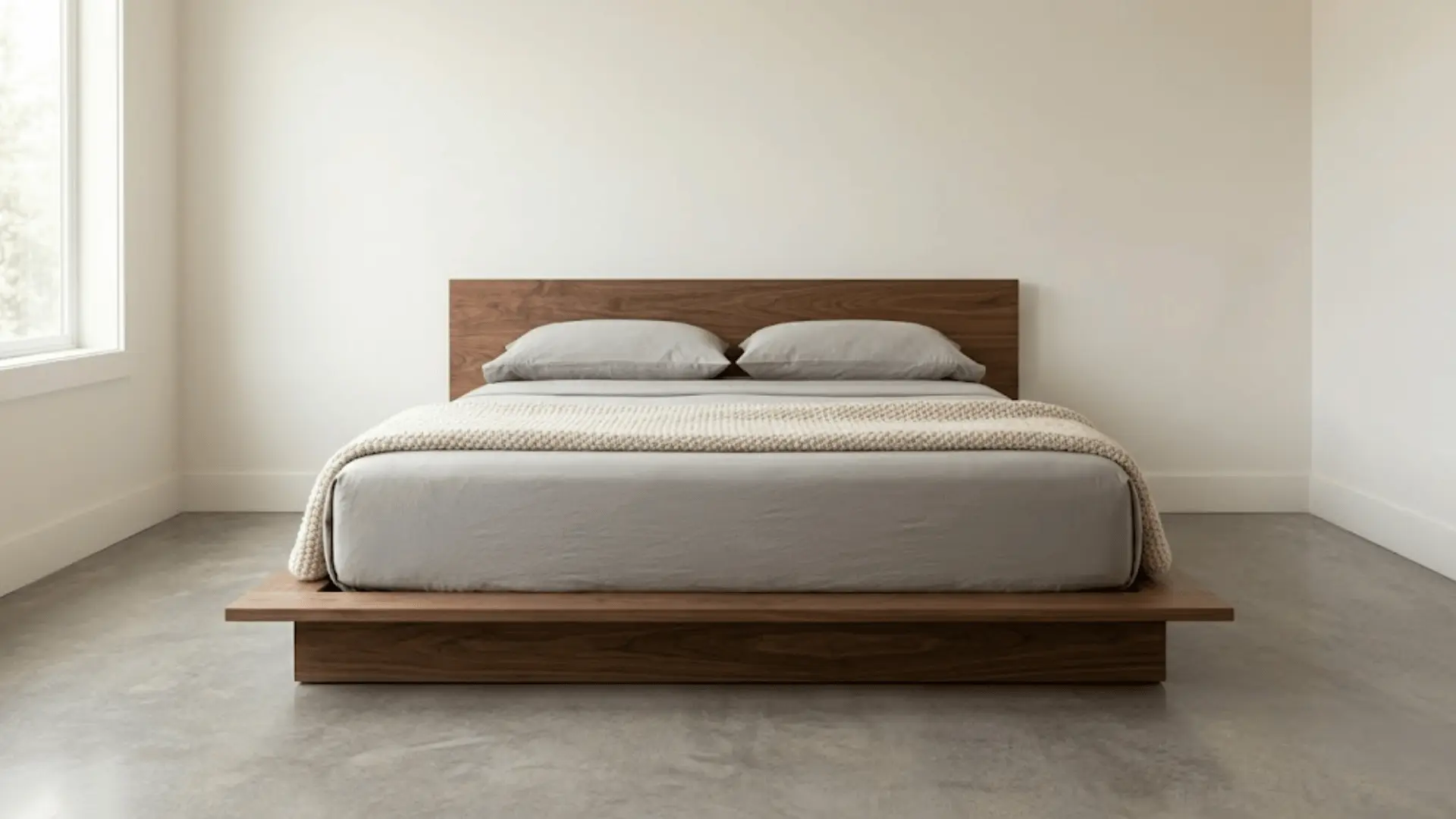
A solid platform bed features a completely flat, continuous base that supports your mattress from edge to edge.
Because there are no gaps in the surface, it delivers exceptionally firm, even support underneath, making it a great match for memory foam mattresses that need full contact to work properly.
The structure is straightforward, sturdy, and built for people who want reliability without any extra layers.
2. Slatted Platform Beds
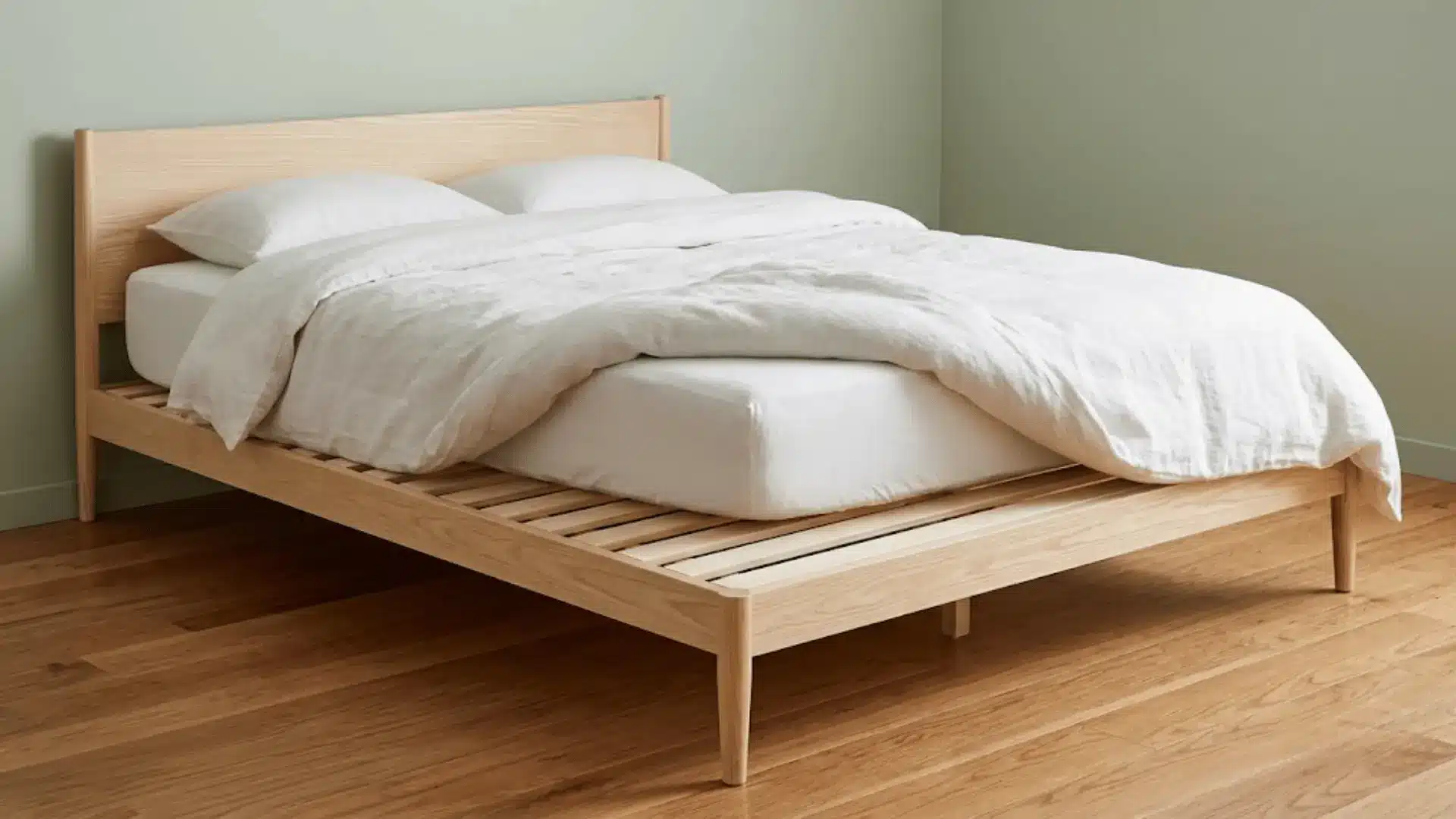
Slatted platform beds use evenly spaced wooden or metal slats across the frame instead of a solid surface.
The gaps between slats allow air to circulate beneath your mattress, which helps regulate temperature and reduces moisture buildup over time.
They are one of the most common platform bed styles because they balance solid support with better breathability, and they tend to work well with most mattress types.
3. Storage Platform Beds
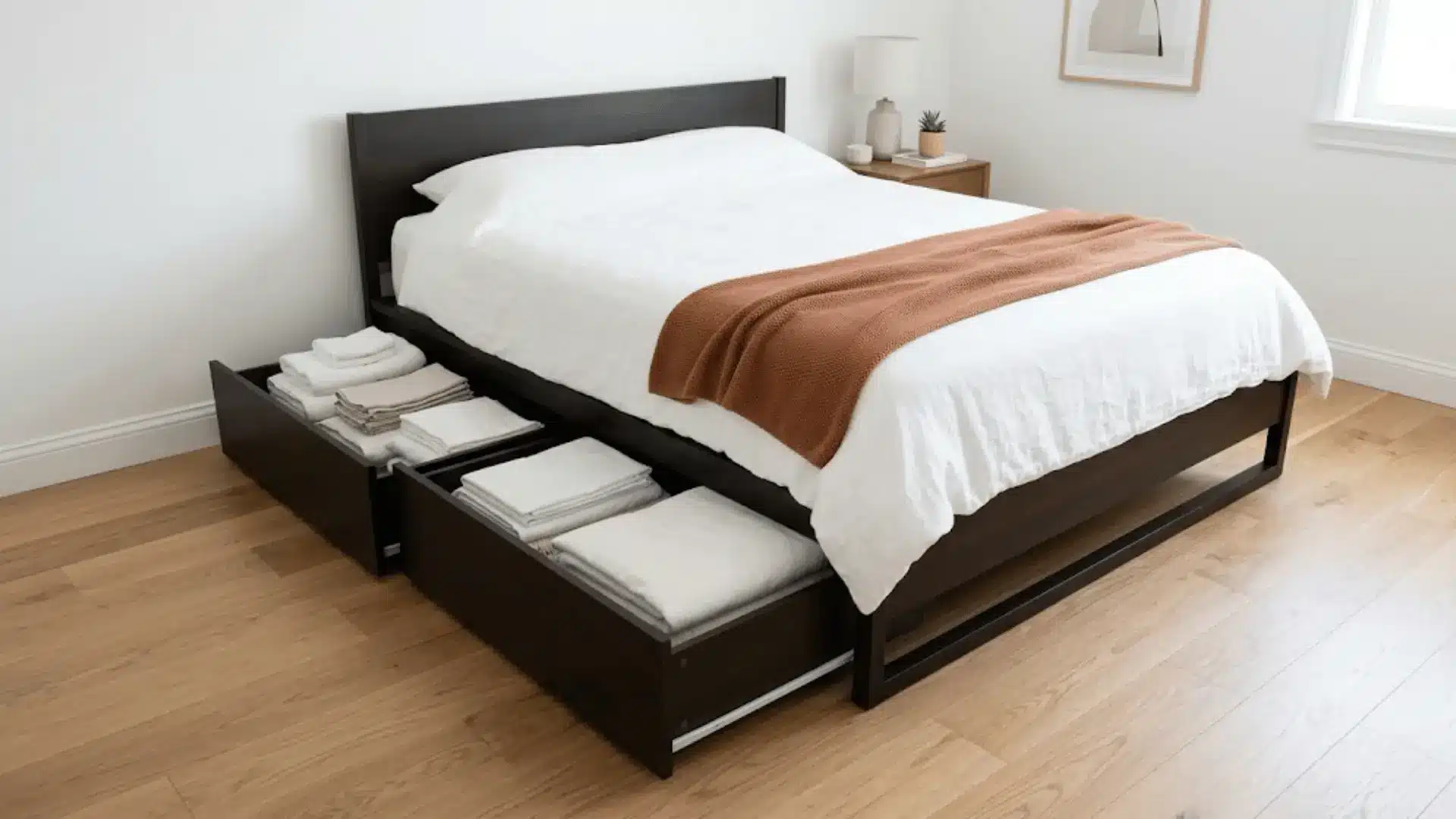
Storage platform beds are designed to make the most of the space underneath. They typically come with:
- Built-in side drawers for clothing, bedding, or everyday essentials
- Lift-up bases that reveal a large open compartment beneath the mattress
- A cleaner bedroom look with less need for extra storage furniture
4. Floating Platform Beds
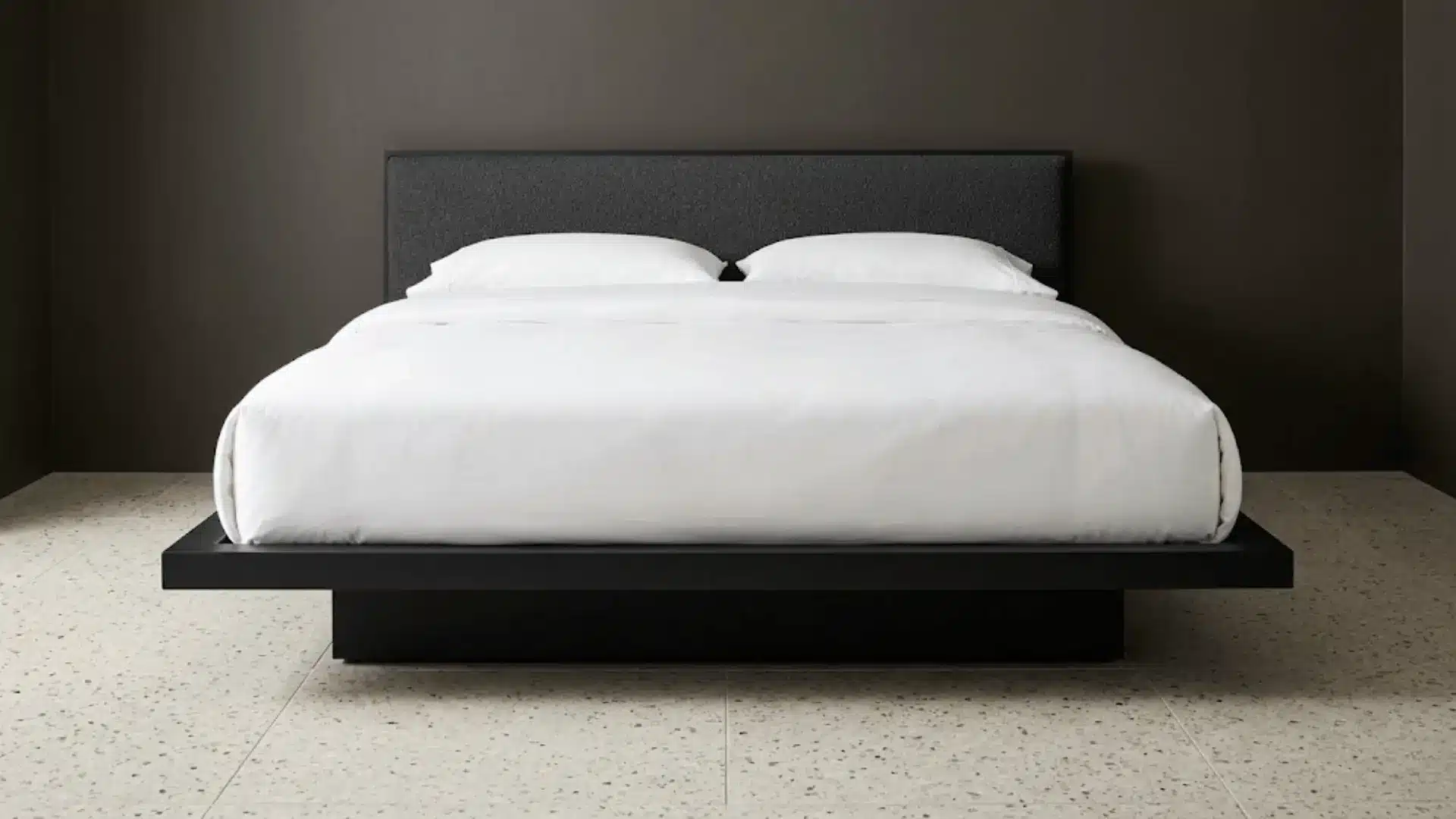
Floating platform beds are designed with a recessed or cantilevered base that makes the frame appear to hover just above the floor.
The visual effect is subtle but striking, adding a sculptural, architectural quality to the bedroom.
They are a favorite in contemporary and minimalist interiors where the furniture itself is meant to feel like a design statement.
5. Low Platform Beds
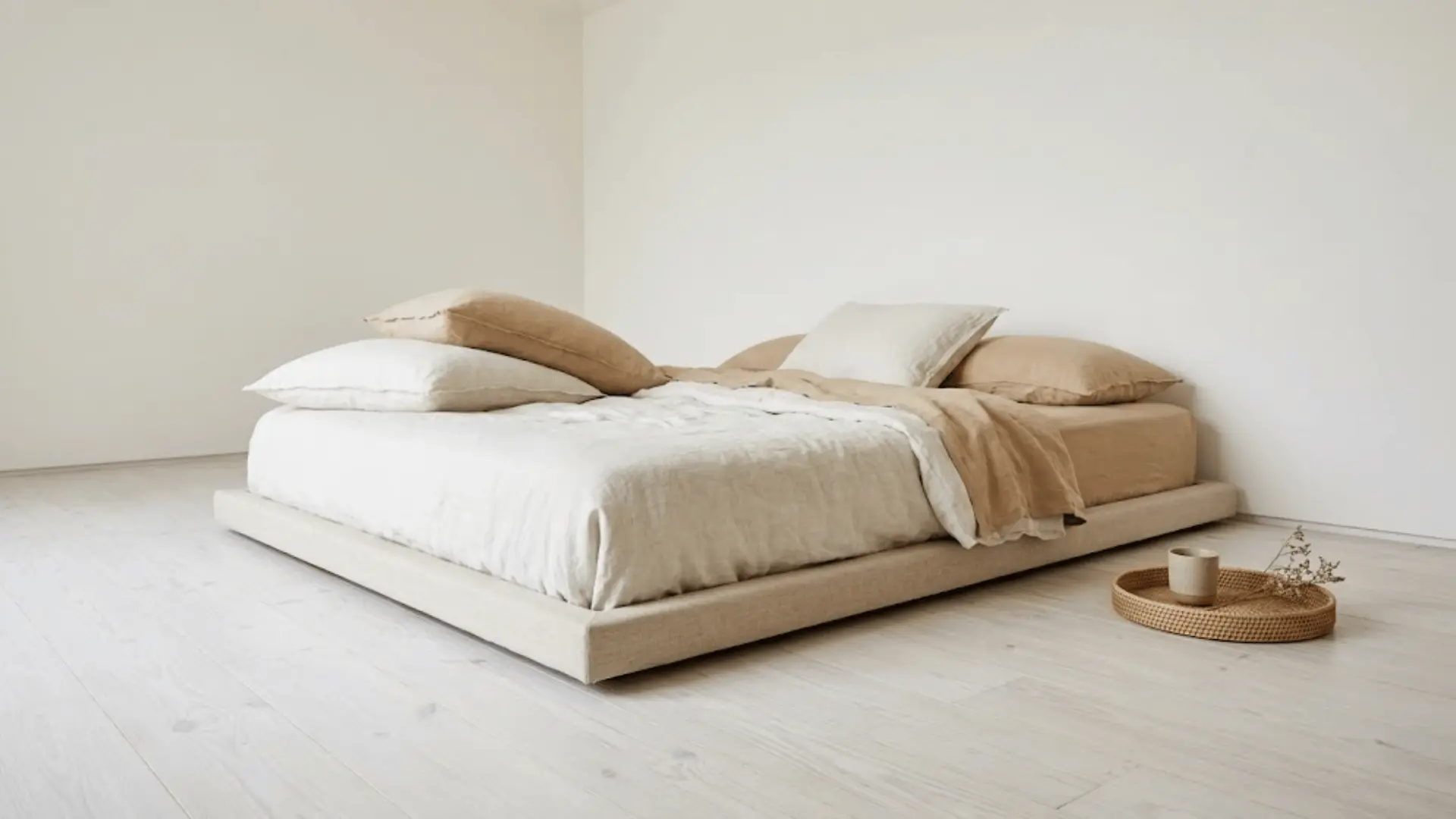
Low platform beds take the already-grounded nature of platform frames and push it further.
Sitting very close to the floor with minimal frame height, they create an ultra-minimal look that feels calm, open, and intentional.
They pair well with floor-level decor, oversized pillows, and rooms where the goal is to keep everything visually quiet and close to the ground.
Platform Bed vs. Panel Bed: Key Differences
If you have ever found yourself torn between the two, the difference really comes down to how each bed is built to support your mattress and the kind of look it brings to your space.
| Feature | Platform Bed | Panel Bed |
|---|---|---|
| Structure | Built-in solid or slatted base | Requires a separate box spring |
| Mattress Support | Supports the mattress directly | Supports a mattress through a foundation |
| Height | Lower, closer to the floor | Higher off the ground |
| Style | Modern, minimal, clean-lined | Traditional, classic, ornate |
| Extra Cost | No box spring needed | Box spring adds to the overall cost |
| Best For | Minimalist and contemporary spaces | Conventional and formal bedroom setups |
The boldest functional difference between the two is that panel beds require a box spring, while platform beds carry the mattress on their own.
A platform style makes it easier to create a cleaner, pared-back bedroom both structurally and visually.
Advantages of a Platform Bed
Platform beds bring a lot more to the bedroom than just good looks.
Here is why so many people are making the switch.
- No box spring needed, which means one less thing to buy, move, or replace over time.
- Clean, low-profile silhouette that makes any bedroom feel more intentional and put-together.
- Even mattress support across the full base, keeping your mattress stable and lasting longer.
- Smart use of space, especially in smaller rooms where the lower height keeps things feeling open.
- Built-in storage options in many styles, so the area under your bed actually works for you.
Once you factor in the savings, the style, and the practicality, a platform bed starts to feel less like a furniture choice and more like a quietly good decision for your whole bedroom setup.
Disadvantages of a Platform Bed
Platform beds are a great fit for a lot of people, but like any furniture piece, they come with a few trade-offs worth knowing before you decide.
- Sitting closer to the floor can feel uncomfortable for people who prefer a higher bed or have mobility concerns.
- Without a box spring underneath, the overall feel tends to be firmer, which may not suit every sleep preference.
- Heavier and bulkier than standard frames, making assembly and moving them around a real workout.
That said, most of these are easy to work around once you know what to expect, and for many sleepers, they barely register as drawbacks at all.
Who Should Choose a Platform Bed?
Platform beds work beautifully for a lot of different lifestyles, but they tend to feel like a natural fit for certain kinds of sleepers and spaces more than others.
- Anyone drawn to modern, minimalist interiors where clean lines and a low-profile frame do most of the visual work.
- Memory foam and hybrid mattress owners, since these mattresses are specifically designed to perform best on a firm, even surface without a box spring.
- People living in smaller spaces like apartments or studios, where a lower bed height and optional built-in storage help the room breathe and function better.
- Budget-conscious buyers who would rather put that box spring money toward a better mattress or better bedding instead.
Materials Used in Platform Beds
The material of your platform bed does more than affect how it looks; it shapes how it feels, how long it lasts, and how well it fits into your space.
- Solid wood like oak, walnut, or pine brings warmth, durability, and a natural quality that ages really well over time.
- Engineered wood, such as MDF or plywood, offers a more budget-friendly option without sacrificing too much on structure or finish.
- Metal frames tend to be sleek, lightweight, and incredibly sturdy, making them a popular pick for industrial and contemporary bedroom styles.
- Upholstered fabric adds softness and texture to the frame, with linen, velvet, and boucle being some of the most sought-after finishes right now.
Each material brings its own character to the bedroom, so the right choice really comes down to the aesthetic you are going for and how much wear and tear your furniture typically goes through.
Platform Bed Sizes and Dimensions
Platform beds come in all standard mattress sizes, but the overall dimensions can vary depending on the frame style, material, and slat configuration.
Here is a general reference to help you figure out what works for your space.
| Size | Mattress Dimensions | Ideal For | Typical Frame Height |
|---|---|---|---|
| Twin | 38″ x 75″ | Kids’ rooms, single sleepers, small spaces | 6″ to 12″ |
| Full | 54″ x 75″ | Solo adults, guest rooms, compact apartments | 6″ to 14″ |
| Queen | 60″ x 80″ | Couples, shared bedrooms, most standard rooms | 8″ to 14″ |
| King | 76″ x 80″ | Couples who want more space, larger bedrooms | 8″ to 18″ |
| California King | 72″ x 84″ | Taller sleepers, spacious master bedrooms | 8″ to 18″ |
One detail worth paying attention to beyond size is slat spacing, ideally kept between 2 and 3 inches.
Wider gaps can cause certain mattresses, especially softer foam ones, to sag over time, while closer spacing gives you that consistently even support that makes a real difference in how your mattress feels and holds up.
How to Choose the Right Platform Bed?
With so many styles and configurations out there, narrowing it down feels overwhelming until you know exactly what to look for.
- Match your mattress type to the base; memory foam and latex do best on solid or closely slatted surfaces.
- Check the weight capacity of the frame, especially if you are going with a heavier hybrid or latex mattress.
- Decide on storage early, since beds with built-in drawers or lift-up bases have a different frame structure altogether.
- Consider your room’s existing style so the material and finish you choose feel cohesive rather than out of place.
- Set a realistic budget that accounts for the full frame, not just the mattress, since quality hardware and joinery make a long-term difference.
The right platform bed is less about finding the most popular option and more about finding the one that fits how you actually live and sleep.
Platform Bed Assembly and Maintenance
Most platform beds come with straightforward assembly, typically involving connecting the side rails, securing the headboard, and laying the slats evenly across the frame before placing your mattress.
For upkeep, wipe down wood or metal frames with a dry or lightly damp cloth every few weeks to prevent dust buildup.
Check your slats every few months to make sure none have shifted or cracked, since uneven slats affect mattress support more than most people realize.
A little routine attention goes a long way in keeping the whole structure feeling solid and looking good.
Wrapping Up
At the end of the day, knowing what is a platform bed is really just the starting point.
The more you look into it, the more it starts to make sense for modern bedrooms that value both function and a certain quiet beauty.
Drawn to the storage, the clean silhouette, or simply the idea of skipping the box spring altogether, it is a choice that tends to age really well.
If you have a question or are still weighing your options, drop it in the comments below.
Frequently Asked Questions (FAQs)
What is a Platform Bed in Simple Terms?
A platform bed is a bed frame with a built-in base that holds your mattress directly, no box spring needed. It is a cleaner, more self-contained alternative to traditional bed setups.
Are Platform Beds Good for Your Back?
For most sleepers, yes. The firm, even surface supports your mattress consistently, which helps keep your spine better aligned through the night.
Can Any Mattress Be Used on a Platform Bed?
Most modern mattresses, including memory foam, latex, and hybrid styles, work really well on a platform bed. Innerspring mattresses can work too, though they tend to do better with a box spring underneath.