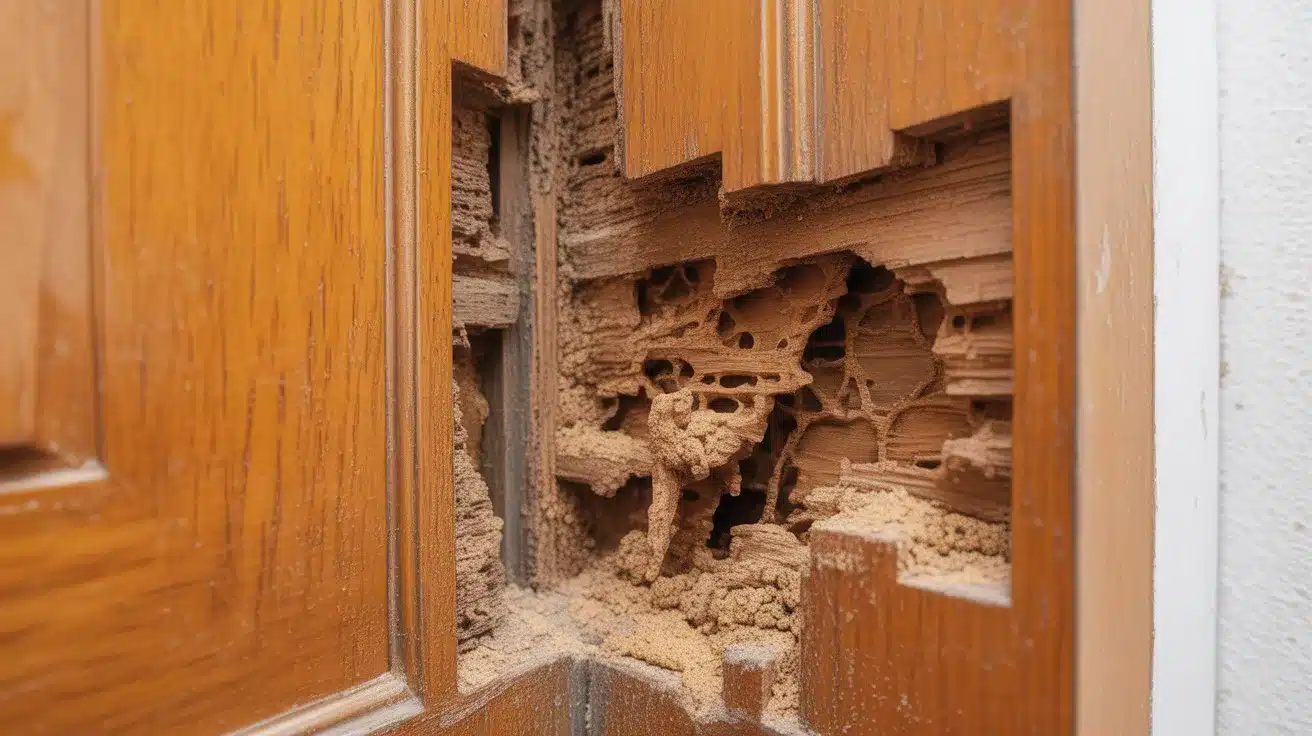
Termites do not work loudly. There is no warning, no visible sign, until one day a door sticks or a floor feels slightly off. That soft spot under your foot? That might be months of termite damage.
Catching it late does not mean it is too late. Termite damage can be repaired in most homes, even when the damage appears severe. It does not always mean tearing everything apart.
What it does mean is following a clear plan. Treat the infestation first, identify the type of damage, then choose the right repair. This guide breaks it all down.
Can Termite Damage Actually Be Repaired?
Yes, termite damage can be repaired in almost every case. The key is not waiting. Termites are active every single day, and the longer they stay, the more it costs to fix.
Even homes with serious structural damage can be restored with the right approach. The one non-negotiable step is treating the infestation before any repair work begins.
Skip that, and you are putting fresh wood in front of a live colony.
Types of Termite Damage
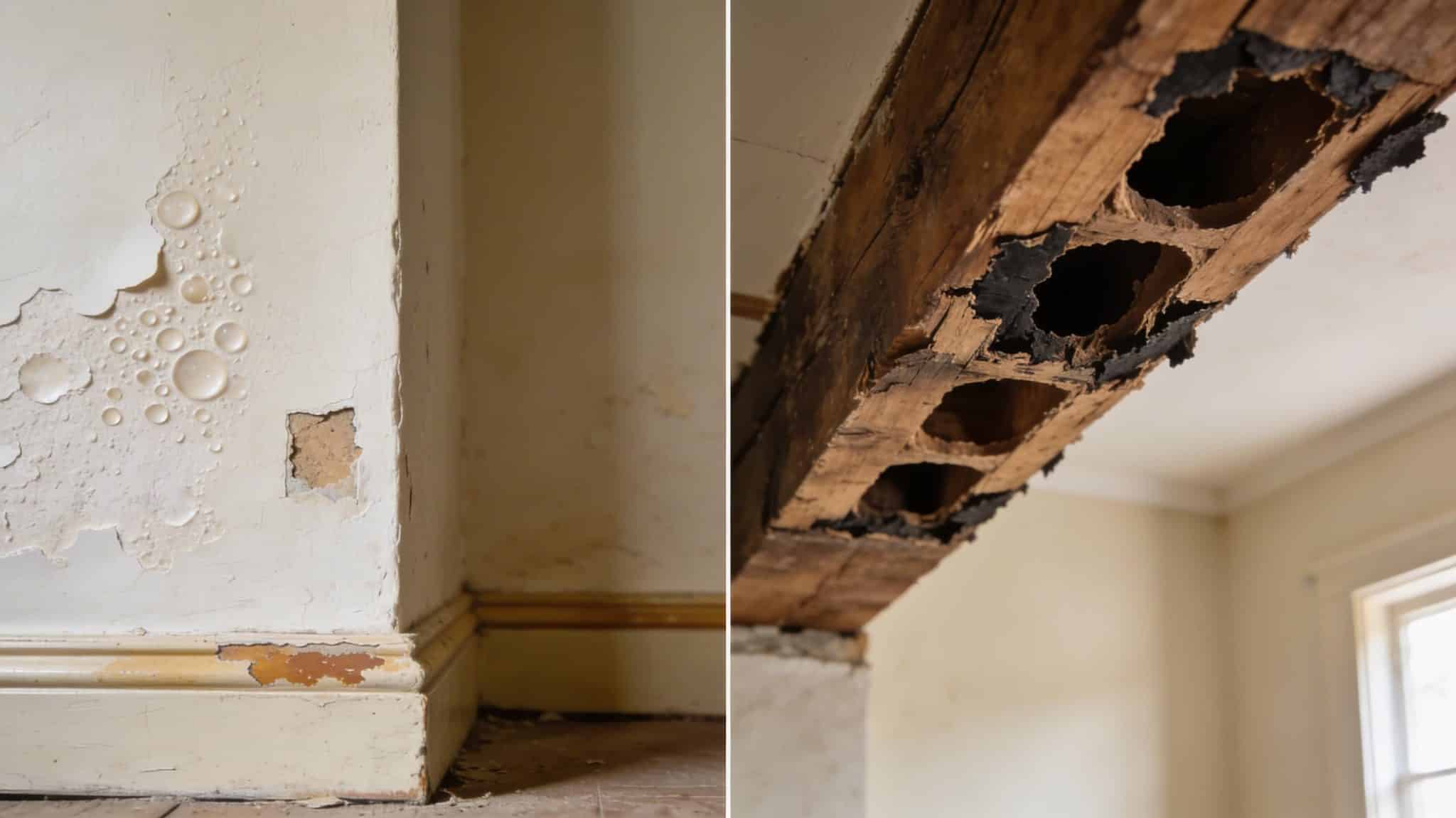
Alt Text: Wall with peeling paint and moisture damage alongside a wooden beam with severe termite damage and hollowed sections.
Once you spot the signs, the next step is figuring out what kind of damage you are dealing with. The type determines the repair method and, more importantly, who should be doing the repairs.
| Feature | Cosmetic Damage | Structural Damage |
|---|---|---|
| What it affects | Appearance of the home | Load-bearing parts of the home |
| Common examples | Chipped paint, bubbled wallpaper, discolored flooring | Weakened beams, sagging floors, and cracked foundation |
| Who fixes it | Homeowner (DIY-friendly) | Licensed contractor only |
| Typical cost range | A few hundred dollars | $1,500 to $40,000+ |
| How urgent is it | Important, but not an emergency | Needs immediate attention |
Key point: If you are not sure which type you have, always get a professional to check first. What looks cosmetic on the surface can sometimes run deeper than expected.
Signs of Termite Damage You Should Not Ignore
Termite damage rarely looks like what you would expect. Here are the signs that appear most often and what each one actually tells you.
- Mud tubes: Long, thin tunnels of soil along your walls or foundation are how termites travel between their nest and your home.
- Hollow-sounding wood: Tap on a wooden surface. A hollow sound means termites have eaten through the inside.
- Bubbling or blistering paint: Termites create moisture inside walls, which pushes paint outward in visible bubbles or blisters.
- Frass (termite droppings): Small piles resembling sawdust near tiny holes in wood are droppings left by active termites.
- Discarded wings: Small, clear wings near windowsills or doorways mean termites have recently swarmed nearby.
- Sticking doors or windows: Moisture from termite tunnels warps wood frames, making them harder to open or close.
- Sagging floors or ceilings: When structural wood is weakened, floors feel soft underfoot and ceilings can begin to bow.
- Pinhole-sized holes in walls: Tiny exit holes in walls or wood surfaces are where termites have broken through from the inside.
How to Repair Termite Damage: Step by Step
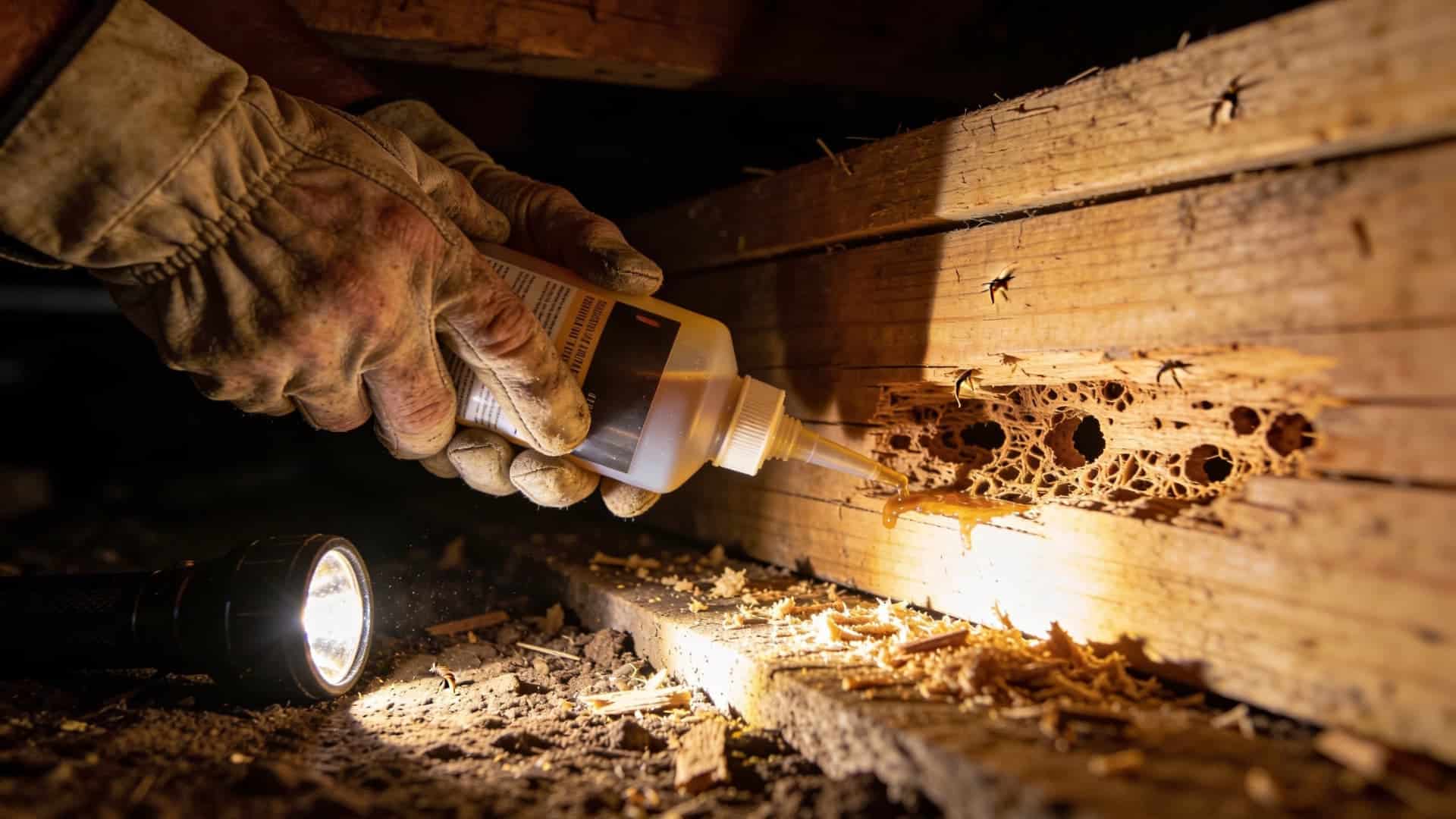
Alt Text: Applying termite treatment to a damaged wooden beam with visible tunnels and wood debris.
The repair process has a set order. Skipping steps, especially the first two, is the most common reason people end up dealing with termite damage all over again.
Step 1: Treat the Infestation First
No repair work should start until every termite is gone. A pest control professional will handle the treatment, which could include spot treatments, fumigation, or soil barriers, depending on the type of infestation.
The national average for termite treatment alone is around $575, and most treatments last about five years. Get written confirmation that the infestation has been fully eliminated before proceeding with any repairs.
Pro Tip: Ask your pest control provider for a written report confirming full elimination. This document will also be useful if you ever need it for insurance or resale purposes.
Step 2: Get a Professional Inspection
A licensed inspector checks every part of your home, including the attic, crawl spaces, walls, foundation, and garage.
The inspection report tells you exactly which areas are damaged, how serious the damage is, and what repairs are needed.
Keep this report for your records, as it may also help with insurance claims down the line. Annual inspections are worth scheduling even after repairs are complete.
Step 3: Assess the Damage Level
Look at the inspection report and identify two things: which areas have cosmetic damage and which have structural damage. Cosmetic damage means surface-level repairs you can likely handle yourself.
Structural damage means a licensed contractor needs to be involved before any work begins. Do not rely only on what you can see.
Termites often damage areas that are hidden behind walls or under floors, and a visual check alone will not catch everything.
Step 4: Apply Wood Hardener for Minor Surface Damage (DIY)
If the wood feels soft or spongy but is still mostly intact, a liquid wood hardener can restore it. You brush or pour the hardener onto the damaged area, let it soak into the fibers, and allow it to cure fully before sanding or painting.
This works well for shallow surface damage, but it will not help wood that has been fully eaten through. Available at most hardware stores, no special tools required.
Step 5: Fill Gaps with Wood Filler or Epoxy (DIY)
Once the damaged wood is hardened, any remaining holes or gaps can be filled with a two-part epoxy wood filler.
Mix it as directed, press it firmly into the gap, let it cure, then sand it smooth and paint to match the surrounding surface.
Epoxy does not shrink or crack over time, which makes it a more reliable option than standard wood filler for repairs that need to hold up long-term.
Step 6: Replace Damaged Wood Boards (DIY or Professional)
If the wood is too far gone to harden or fill, replace it entirely. Remove the damaged board, check behind or beneath it for any additional hidden damage, cut a new piece of treated lumber to fit, and secure it in place.
This method works well for DIY projects on floorboards, trim, and surface panels. For any structural work, the replacement should be handled by a licensed contractor.
Step 7: Reinforce Load-Bearing Wood, Sister Boarding (Professional Only)
When a structural beam or floor joist is weakened but not completely destroyed, a contractor will sister it.
This means placing a new piece of lumber directly alongside the damaged beam and bolting them together so the new board carries the load.
You will likely need this repair if floors feel soft underfoot, if there are noticeable dips, or if a ceiling has started to bow. Never attempt this as a DIY project.
A mistake on a load-bearing element puts the safety of the entire structure at risk.
Step 8: Use Termite-Resistant Materials to Finish the Job
When installing new wood, always use treated lumber or composite materials. Treated lumber has protective chemicals built in that termites actively avoid.
Composite materials, made from wood fiber and plastic, are not a food source for termites at all. Other resistant options for exterior areas include fiber cement board, steel framing, and concrete.
Using these materials wherever you make repairs gives the work a far better chance of holding up without a repeat infestation.
Termite Damage Repair Cost Breakdown
Repair costs vary widely depending on the extent of damage and the length of time the termites were active. Here is a clear breakdown to help you plan and budget before calling anyone in.
| Damage Scale | What It Typically Involves | Cost Range |
|---|---|---|
| Small | Surface or cosmetic damage, caught early | $250 to $1,000 |
| Medium | Multiple areas affected, flooring or walls damaged | $1,000 to $3,000 |
| Large / Structural | Load-bearing elements compromised | $3,000 to $10,000+ |
| Severe | Foundation or multiple structural replacements needed | Up to $40,000 |
Note: These figures cover repair costs only. Termite treatment is a separate expense, with a national average of around $575.
Other factors that affect your final cost:
- Type of termite: Subterranean termites tend to cause the most expensive damage
- Colony size: Larger colonies cause more widespread damage over time
- Location of damage: Foundation or roof damage costs more to access and fix than wall damage
- Labor rates in your area: Costs vary significantly between regions across the US
DIY Termite Damage Repair vs. Hiring a Professional
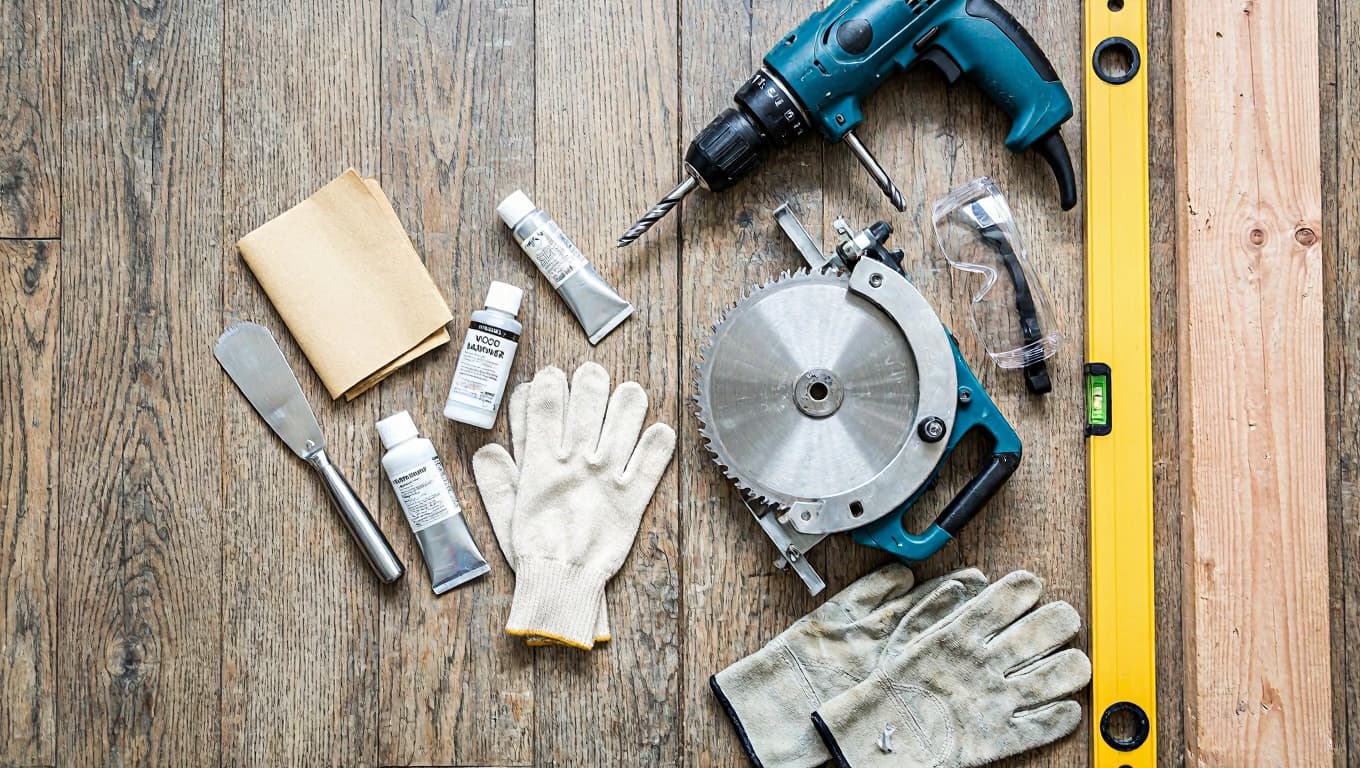
Alt Text: Assorted DIY tools and repair materials, including a drill, circular saw, gloves, level, wood filler, and safety gear, on a wooden surface.
Not every termite repair needs a contractor. But some absolutely do. Here is a straightforward way to figure out which side of that line you are on.
DIY is a reasonable choice when:
- The damage is cosmetic only, such as paint, wallpaper, or surface wood
- The infestation has been fully treated and professionally confirmed as gone
- The area is small, easy to reach, and does not involve any load-bearing wood
- You have solid basic carpentry skills and the right tools for the job
Call a professional when:
- Any load-bearing beam, joist, or wall stud is involved
- You cannot clearly see or assess the full extent of the damage
- The affected area is in a crawl space, attic, or behind walls
- You are getting the home ready for sale and need certified repair documentation
- The damage spans multiple areas of the home
Important: A DIY repair on a structural element that is not done correctly can lead to faster failure down the line. When you are not fully sure, a professional assessment is worth every penny.
How to Prevent Termite Damage From Happening Again?
Keep wood away from your foundation, including mulch and firewood stored on the ground.
Fix moisture problems quickly, clean your gutters regularly, and make sure water drains away from your home properly. Apply termite-resistant coatings to any exposed wood around the structure.
Set out bait stations around the perimeter and schedule a professional inspection every single year.
These steps will not make your home completely immune, but they make it significantly harder for a new colony to move in and get established before you notice.
Wrapping It Up
Termite damage repair does not have to be a stressful process. Yes, it takes time and some money. But the bigger risk is doing nothing. Every week you wait, the damage grows, and so does the repair bill.
The process is straightforward. Get the termites treated first. Have a professional check the full extent of the damage. Then choose the repair method that fits your situation.
Finish with termite-resistant materials and schedule regular inspections going forward.
Your home can come out of this in good shape. Thousands of homeowners fix termite damage every year and move on.
Have you dealt with termite damage before? Share what you went through in the comments below.