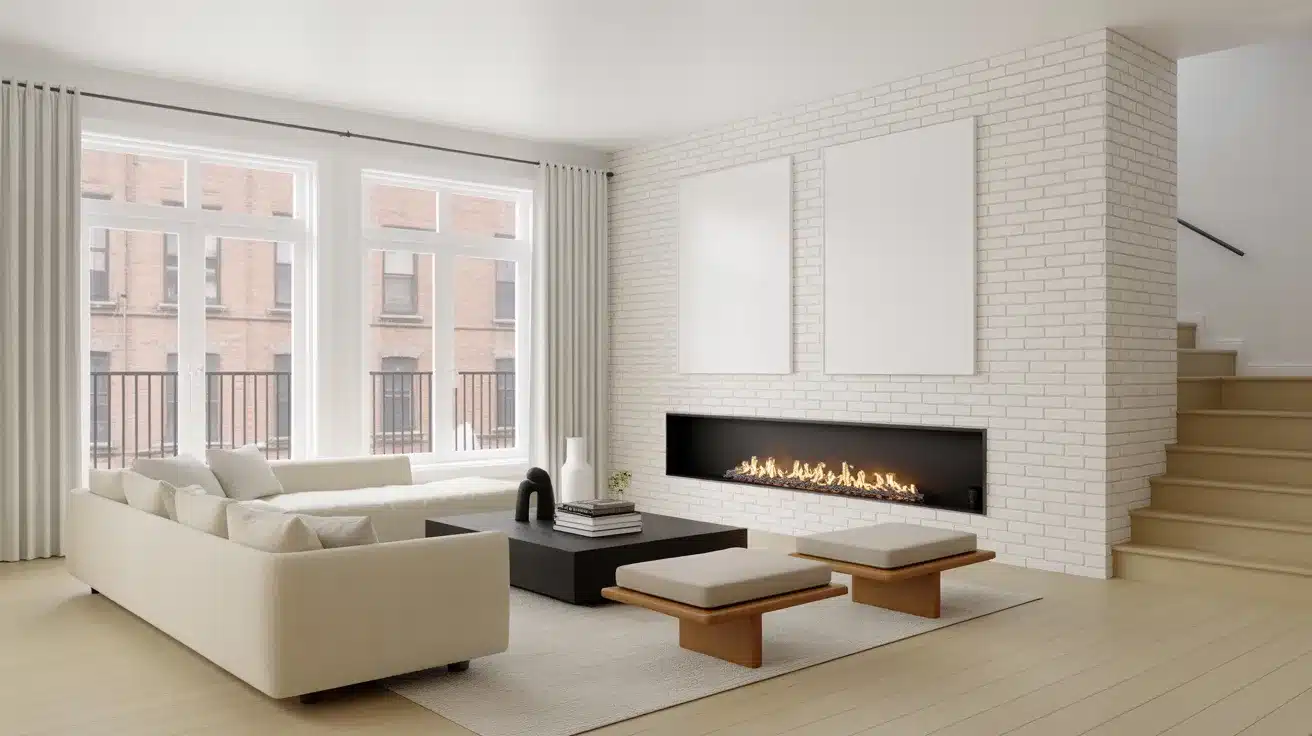
Most people hear “Scandinavian minimalism” and think bare white rooms with nothing in them. That is not it. This design style is warm, lived-in, and honestly one of the most practical ways to set up a home.
In this guide, you will get the full picture. We cover what Scandinavian minimalism actually means, the core ideas behind it, like Lagom and Hygge, the different types that exist, and how it looks in every room, from your living room to your home office.
You will also see how it stacks up against other minimalist styles, get easy tips to bring the look home, and find out whether it is still worth doing. No fluff. Just everything you need to know.
What Is Scandinavian Minimalism?
Scandinavian minimalism is a design philosophy rooted in the Nordic countries, including Sweden, Denmark, Norway, Finland, and Iceland.
It took shape in the 1950s out of a simple need: to make homes feel warm, bright, and functional during long, dark winters.
The result was a style built on clean lines, natural materials, neutral colors, and a deep respect for things that actually serve a purpose.
Unlike strict minimalism, the Scandi version leaves room for warmth, texture, and a personal touch. It is less about having nothing and more about choosing wisely.
Types of Scandinavian Minimalism
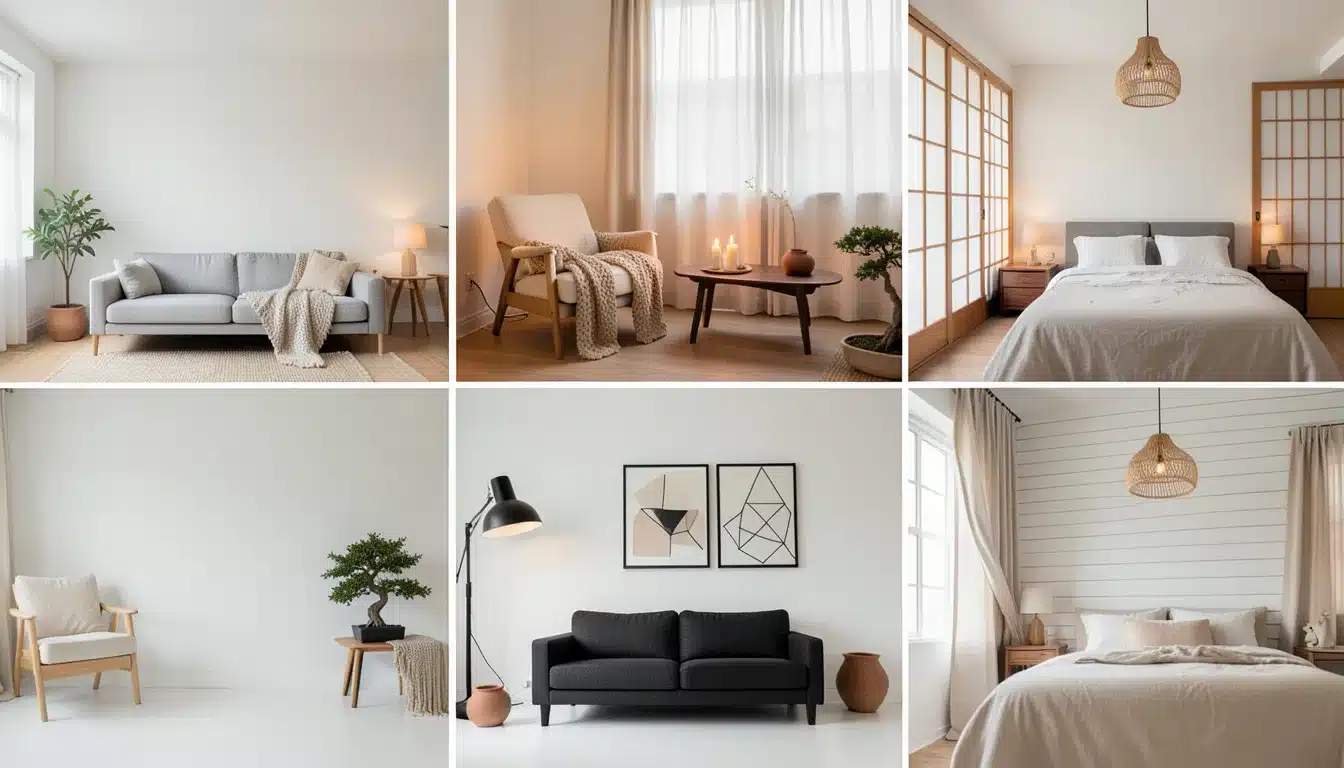
Scandi minimalism is not one fixed look. It has taken on different forms over the years, and knowing which type speaks to you makes it much easier to shape your own space.
| Type | What It Looks Like | Best For |
|---|---|---|
| Classic Scandi | White walls, light wood, simple furniture, neutral textiles | Anyone starting fresh with a clean, timeless base |
| Hygge-Inspired | Soft lighting, cozy throws, candles, warm tones | Homes that need warmth and a lived-in feel |
| Japandi | A mix of Japanese and Scandi minimalism, very spare, earthy, and quiet | Those who want an even more stripped-back, meditative space |
| Modern Nordic | Scandi base with bold black accents, geometric shapes, and graphic art | Urban homes that want a sharper, contemporary edge |
| Coastal Scandi | Light palette meets natural textures like rattan, rope, and linen | Homes near water or those who want a relaxed, airy feel |
Core Principles of Scandinavian Minimalism
These principles are not design rules you follow from a textbook. They are ideas that come from how Nordic people actually live, and once you understand them, every design choice starts to click.
- Lagom (Just Right): A Swedish idea that means “not too much, not too little.” Keep what feels balanced and right for your space.
- Hygge (Coziness): A Danish concept that brings warmth into simplicity through soft textures, candlelight, and comfort.
- Function first: Every item in the home should earn its place by serving a useful purpose.
- Less clutter, more calm: Clear surfaces are not empty. They are intentional.
- Quality over quantity: One well-made wooden chair beats four forgettable ones.
- Nature indoors: Wood, plants, wool, and linen connect the home to the natural world outside.
Scandinavian Minimalism Room by Room
Every room in your home tells a story. The Scandi approach ensures the story is calm, clear, and worth coming back to.
1. Living Room
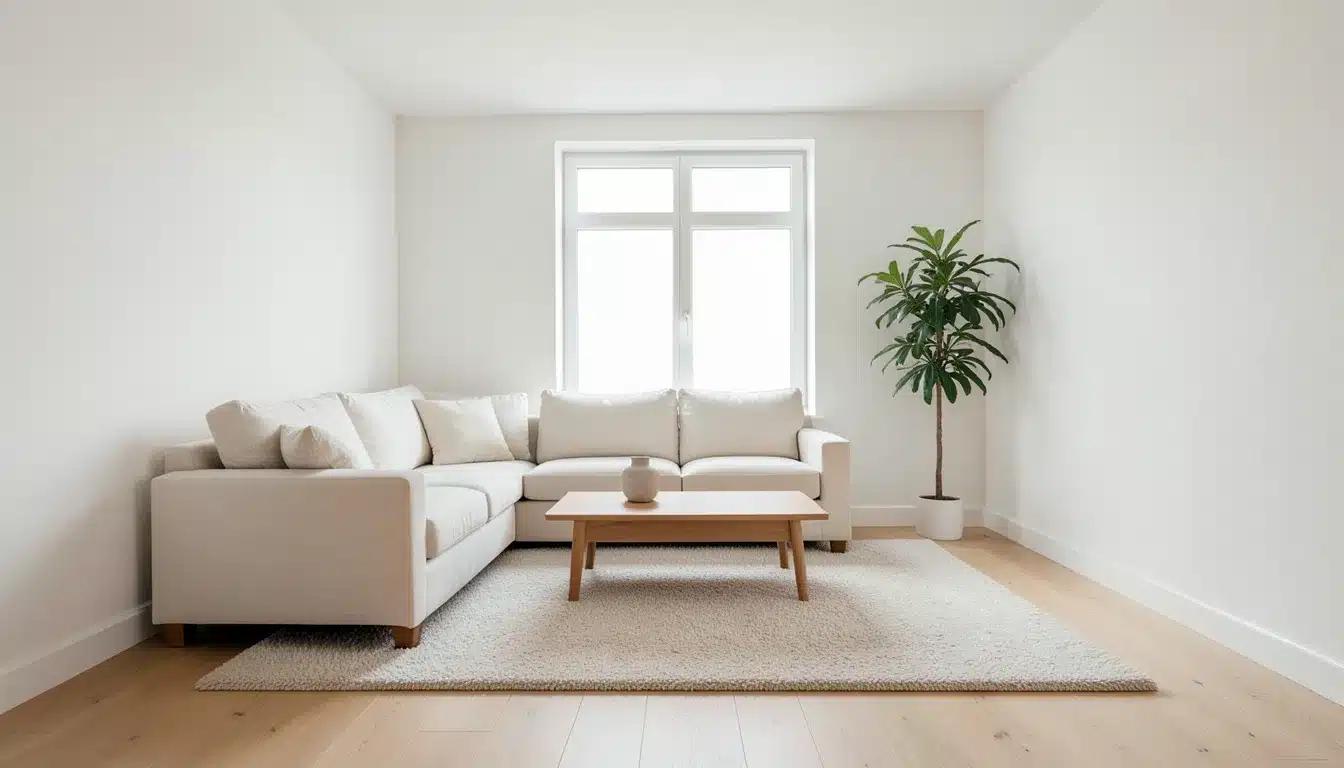
Start with a neutral sofa, a clear coffee table, and one soft rug to anchor the space. Add a floor lamp in the corner and a single plant. That combination does more for the room than a full shelf of decor ever will.
2. Bedroom
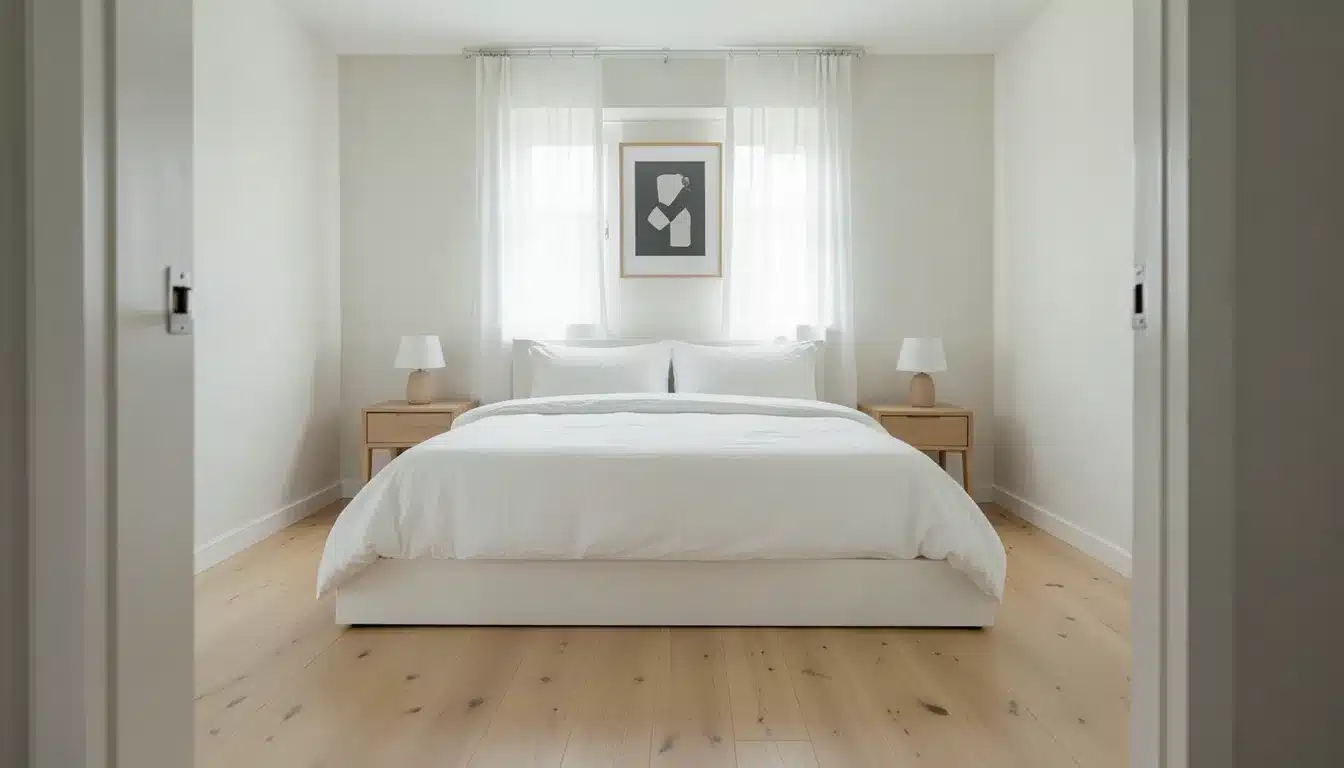
White or warm gray linen bedding, a lamp on the nightstand, and nothing on the floor. Keep the wardrobe doors closed and the surfaces bare. The bedroom should feel like the quietest, easiest room in your home.
3. Kitchen
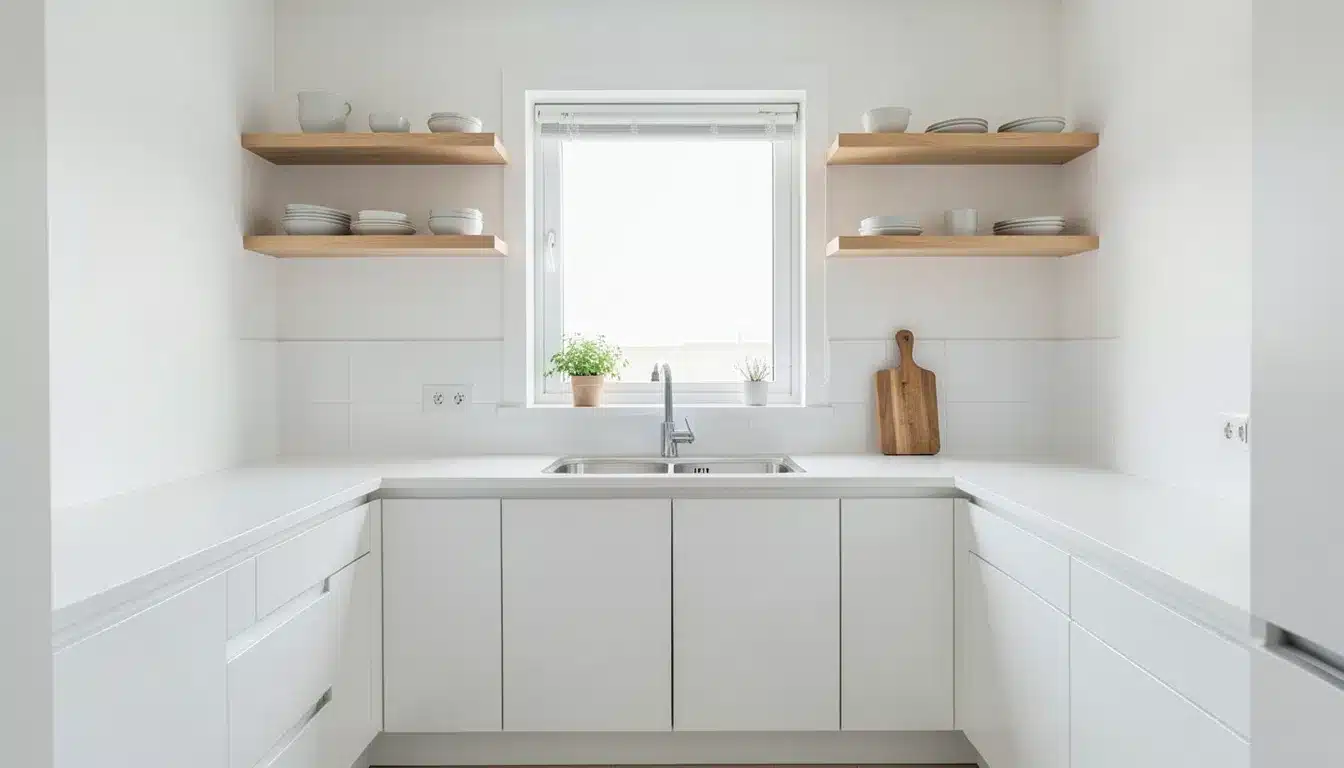
Clear the counters and store appliances you do not use daily out of sight. A wooden cutting board, simple ceramic dishes, and a small herb plant on the windowsill are all the personality this room needs.
4. Home Office
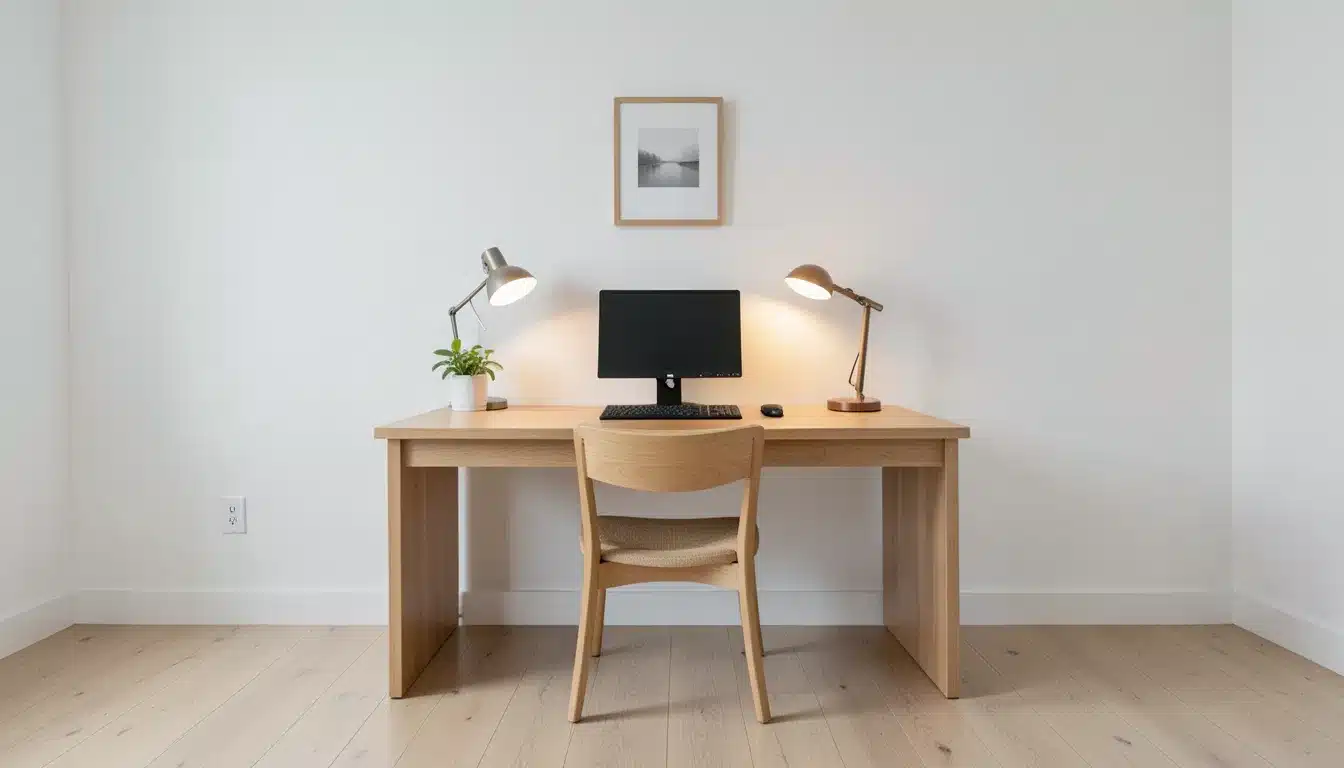
A clean desk in natural wood or white, one good lamp, and a plant. Tuck cables out of sight and keep the walls around you calm. A clear desk is not just about looks. It genuinely helps you focus better.
5 Small Apartments
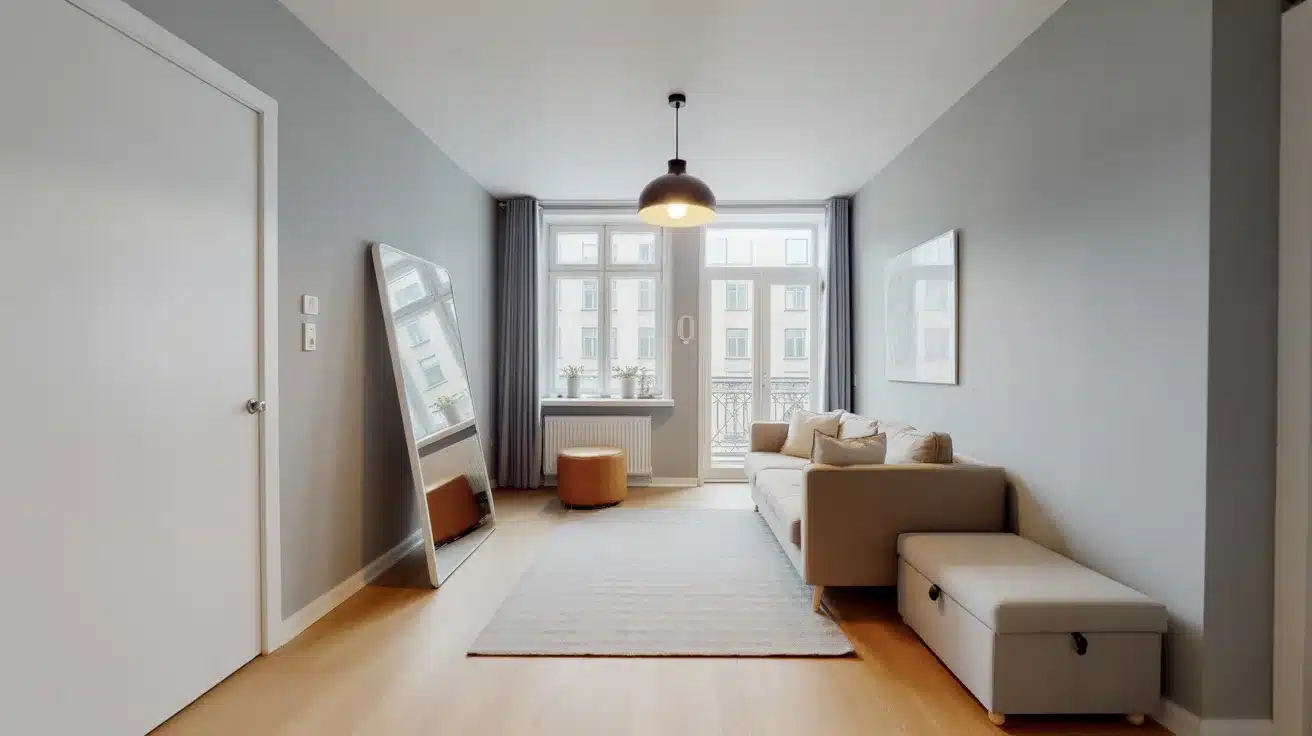
Use light colors on walls and floors to make the space feel bigger. Choose furniture that doubles as storage, like an ottoman with a lid or a bed with built-in drawers. A mirror placed across from your window will make the room feel twice as open.
6. Bathroom
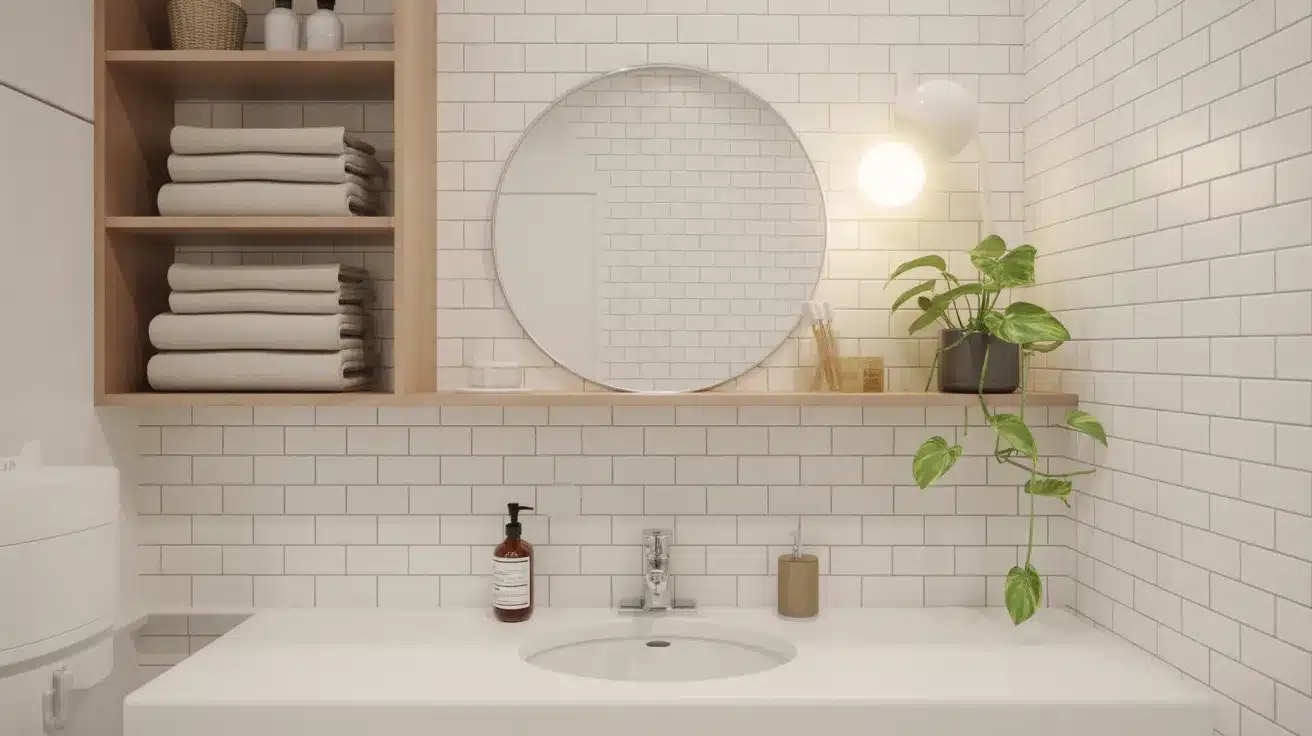
Light tiles, a simple soap dispenser, and folded towels in a neutral tone on a small shelf. Keep the counter clear of anything you do not use every day. One humidity-friendly plant, like a pothos, adds warmth without adding clutter.
Things Worth Knowing Before You Start
It looks simple from the outside. But a few things can trip you up before you even get started. Here is what actually matters.
- Start with decluttering, not shopping. Removing what you do not need costs nothing and often has the biggest effect on how a room feels.
- Donate what you remove. This lines up with the Scandi value of not wasting things that still have life in them.
- Lighting sets the whole mood. Warm-toned bulbs (around 2700K) feel far more inviting than cool, bright overhead lights.
- Avoid all-white with no texture. A room with no soft surfaces feels clinical, not calm. Add a rug, a throw, or linen curtains.
- Do not buy cheap versions of Scandi furniture. The style depends on honest materials. A poorly made wooden table defeats the purpose.
- Revisit your space every few months. Things accumulate. A quick reset keeps the feel intact.
- Personal items are allowed. One framed photo, a favorite book, a candle you actually burn. These make the space yours.
Scandinavian Minimalism vs. Other Minimalist Styles
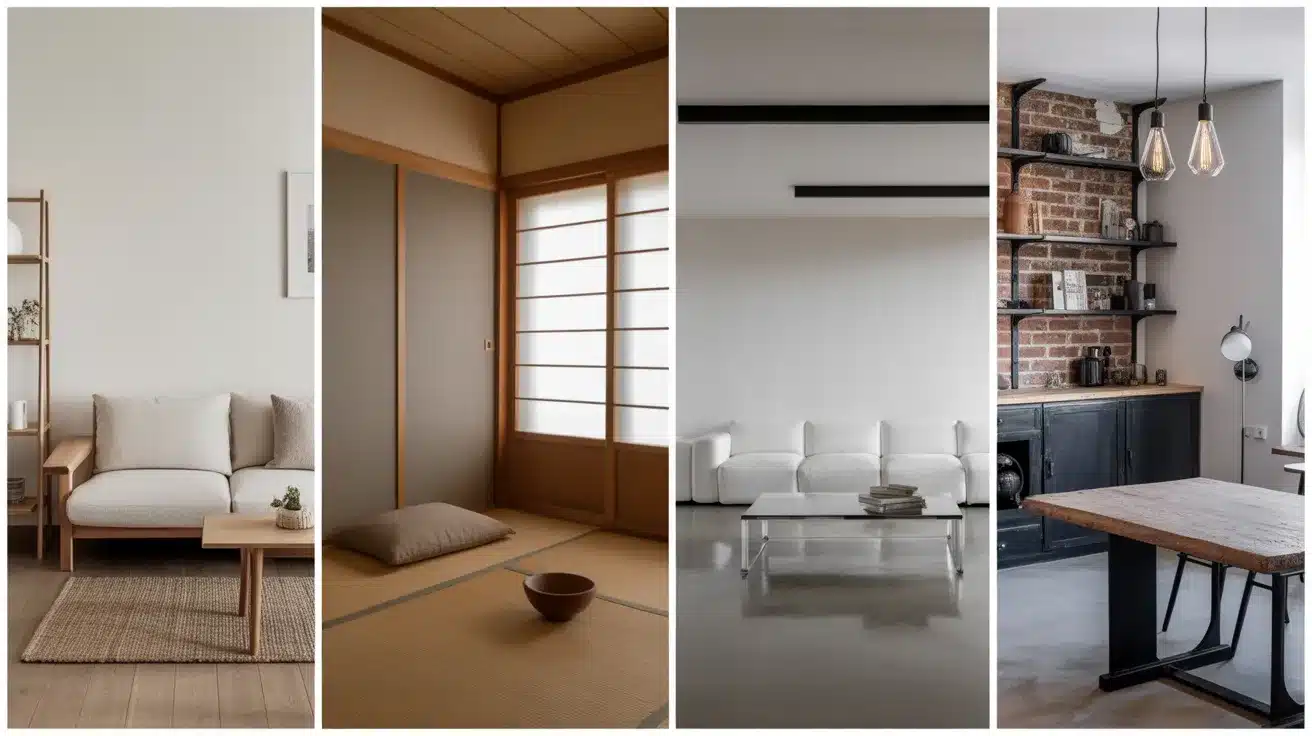
Scandi minimalism gets grouped with other styles that also value simplicity. But they are not the same thing. Here is a quick look at how they differ.
| Style | Core Idea | Feel | Materials |
|---|---|---|---|
| Scandinavian Minimalism | Warm simplicity rooted in Nordic living | Calm, cozy, livable | Wood, wool, linen, ceramics |
| Japanese Minimalism (Wabi-Sabi) | Beauty in imperfection and natural aging | Meditative, very spare | Raw wood, stone, clay |
| Modern Minimalism | Clean geometry, no ornamentation | Precise, sometimes cold | Glass, steel, concrete |
| Industrial Minimalism | Raw, unfinished surfaces as a feature | Urban, edgy, bold | Exposed brick, metal, raw wood |
Practical Tips to Get the Scandi Minimalist Look
These are not rules. They are starting points that make the biggest difference with the least amount of effort.
- Paint your walls white or off-white. This is the single biggest visual shift you can make in any room.
- Choose furniture with clean, straight lines. Avoid anything overly ornate or bulky.
- Add one natural material per room. A wool rug, a wooden shelf, or a linen cushion is enough.
- Use warm lighting, not just overhead lights. A floor lamp or a table lamp can completely change how a room feels.
- Keep shelves edited. Three to five items on a shelf are plenty. Anything more tips into clutter.
- Let windows breathe. Use sheer curtains or none at all to let natural light in.
- Bring in one plant. It does not have to be large. Even a small potted plant adds life to a minimal space.
- Use hidden storage. Ottomans, bed frames with drawers, and closed cabinets keep things tidy without taking up space.
Is Scandinavian Minimalism Still Trending?
Yes, it is. And the reason is simple: it works. Scandi minimalism has held its ground while other design trends have come and gone because it is not built on novelty.
It is built on how people want to feel in their homes: calm, comfortable, and clear-headed. In the US, its popularity has only grown as more people look for ways to make their living spaces feel less overwhelming.
How to start without overhauling your whole home:
- Pick one room, ideally the one you spend the most time in.
- Spend one hour removing anything you do not use, love, or need.
- Repaint the walls in a warm white or soft neutral if the current color is dark or busy.
- Add one natural element, such as a cotton throw or a small wooden tray.
- Swap your lightbulbs to a warm tone if they are currently cool and harsh.
That is it. You do not need a full renovation or a new furniture budget. You need a clear eye and a willingness to let go of what is not working.
Closing Remarks
Scandinavian minimalism is not a design trend you follow for a season and then drop. It is a practical, honest way to think about the space you live in. Keep what works.
Let go of what does not. Make room for light, warmth, and the things that actually matter to you. The homes that feel best to live in are not the ones with the most in them.
They are the ones where every corner has a reason for being exactly the way it is. That is what Scandinavian minimalism gives you.
Not a perfect-looking room for photographs, but a home that genuinely feels good to be in, every single day.
So, which room are you starting with? Let us know in the comments below.