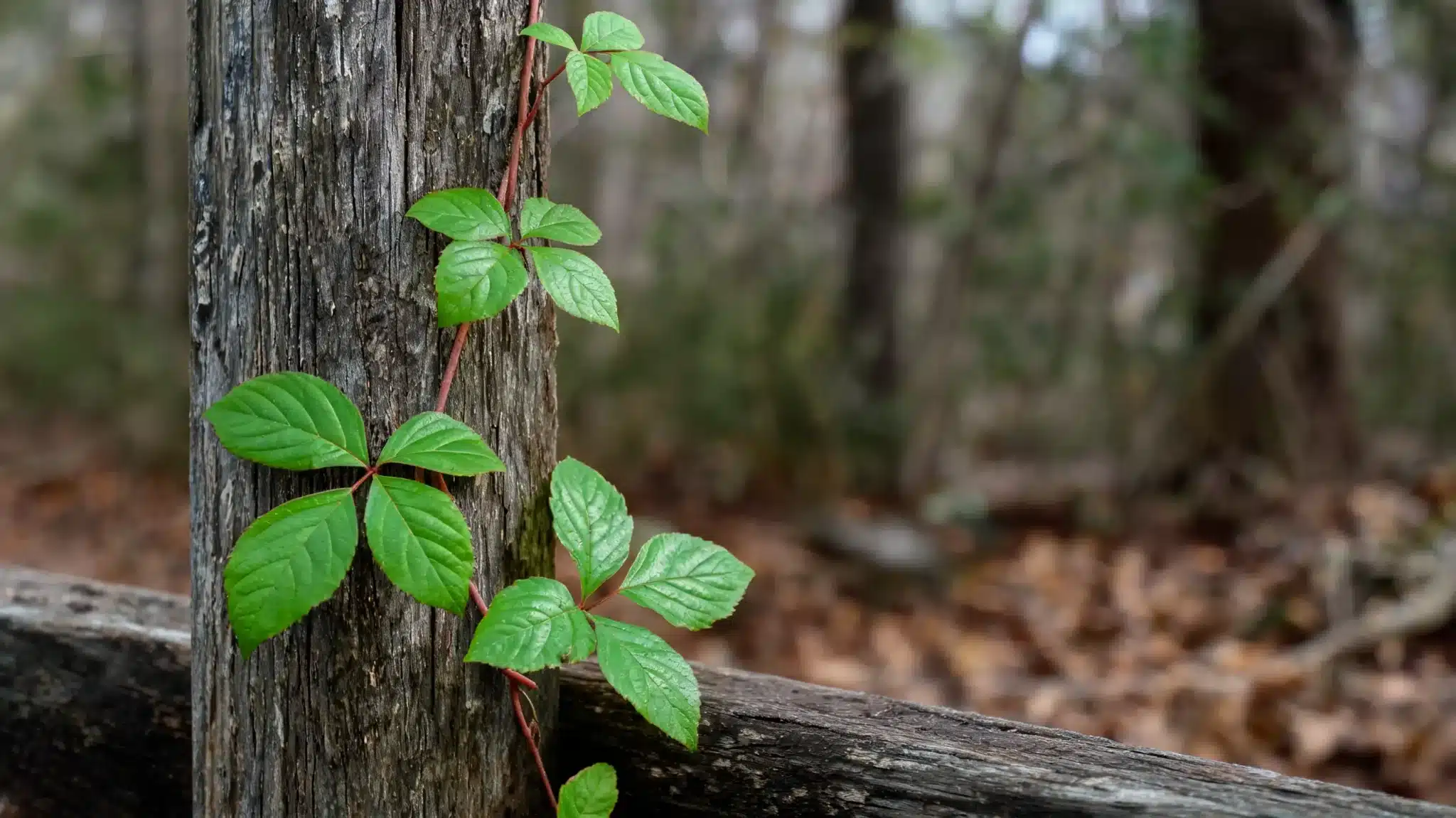
Most people think of the weeping willow first, but willow trees come in many forms. They belong to the Salix genus, which includes large upright trees, weeping trees, compact ornamental shrubs, flexible-stemmed osiers, and ground-hugging species.
Familiar types of willow trees include weeping willow, white willow, black willow, pussy willow, corkscrew willow, and dappled willow. Each type has its own shape, leaf color, bark, stems, catkins, and space needs.
Learn how to identify willow trees and compare their growth forms, mature sizes, uses, and planting limits.
How to Identify Willow Trees
The most reliable way to identify a willow is to check its shape, leaves, catkins, bark, twigs, and growing site in order. The U.S. Forest Service also uses leaf form and catkins in its identification keys.
- Start with shape: Decide if the plant is weeping, upright, twisted, shrubby, or close to the ground. Crown width and main stems can remove poor matches.
- Compare the leaves: Check length, width, edge teeth, surface feel, and underside color. Many willows have alternate leaves that are much longer than wide.
- Look for catkins: Note when they appear, along with their color, shape, and texture. Catkins that open before the leaves are useful in late winter and early spring.
- Study bark and twigs: Check bark for ridges, scales, or deep furrows, then inspect young stems for gold, purple, gray, or twisted growth. These clues are often clearest after leaf fall.
- Consider the setting: Use region, nearby water, soil moisture, mature height, and habitat to test the match. Rocky Mountain National Park records willows in wet meadows, while alpine forms stay close to the ground.
Expert’s Tip: Confirm the name with at least three matching traits. Young plants and hybrids may share one feature, but shape, leaves, stems, and setting should support the same result.
Common Types of Willow Trees
Identify each willow by its strongest field mark, then confirm the match using its mature size and growth form. This same field-mark approach, matching leaf shape and edge pattern first, is the same logic behind elm tree leaf identification, since both groups depend on outline and vein pattern before size or bark come into play.
Each profile covers the willow’s clearest identifying trait, mature size, common uses, and main planting concern.
1. Weeping Willow Trees

Weeping willow (Salix babylonica) reaches about 30 to 50 feet tall and develops a broad crown with long, curtain-like branches. Narrow leaves and yellow-green twigs are its clearest marks.
Its rapid growth suits pond edges and large, moist lawns. Allow a wide planting area because the crown spreads heavily, the roots can be aggressive, and weak branches may break during storms.
2. Golden Weeping Willow

Golden weeping willow (Salix × sepulcralis var. chrysocoma) grows about 30 to 50 feet tall with a wide, cascading crown. Its young branches are yellow or golden, which sets it apart from the standard weeping willow, especially in winter.
It performs well in moist soil near water. This fast-growing tree needs ample open space, and its weak wood may be damaged by strong winds or heavy snow.
3. Kilmarnock Dwarf Weeping Willow
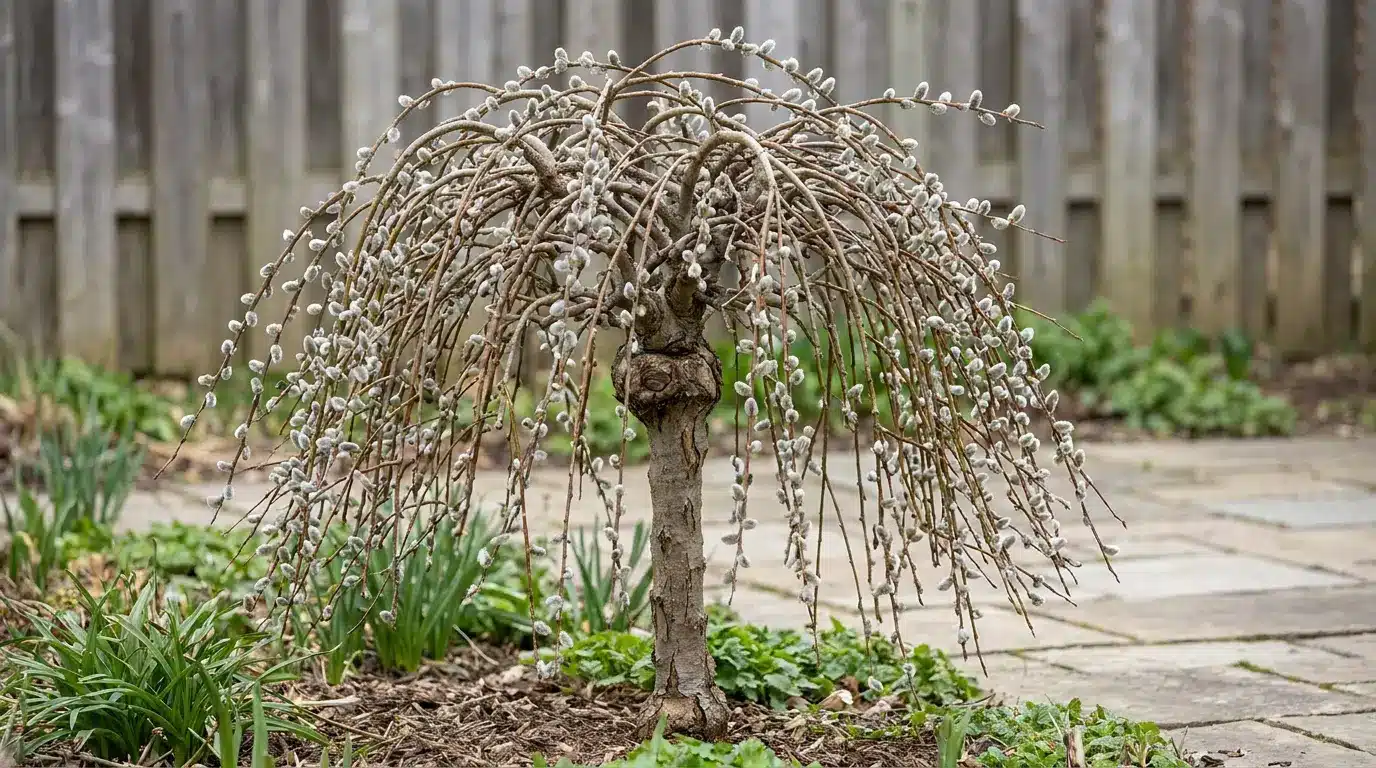
Kilmarnock dwarf weeping willow ( Salix caprea ‘Pendula’) is a grafted goat willow that usually stays under 7 feet tall. It forms a rounded crown of hanging branches and bears fuzzy gray-yellow catkins in spring.
Its compact size suits patios, courtyards, and restricted gardens. It is a mature small tree, not a young full-sized weeping willow, and its height depends on the graft.
4. White Willow
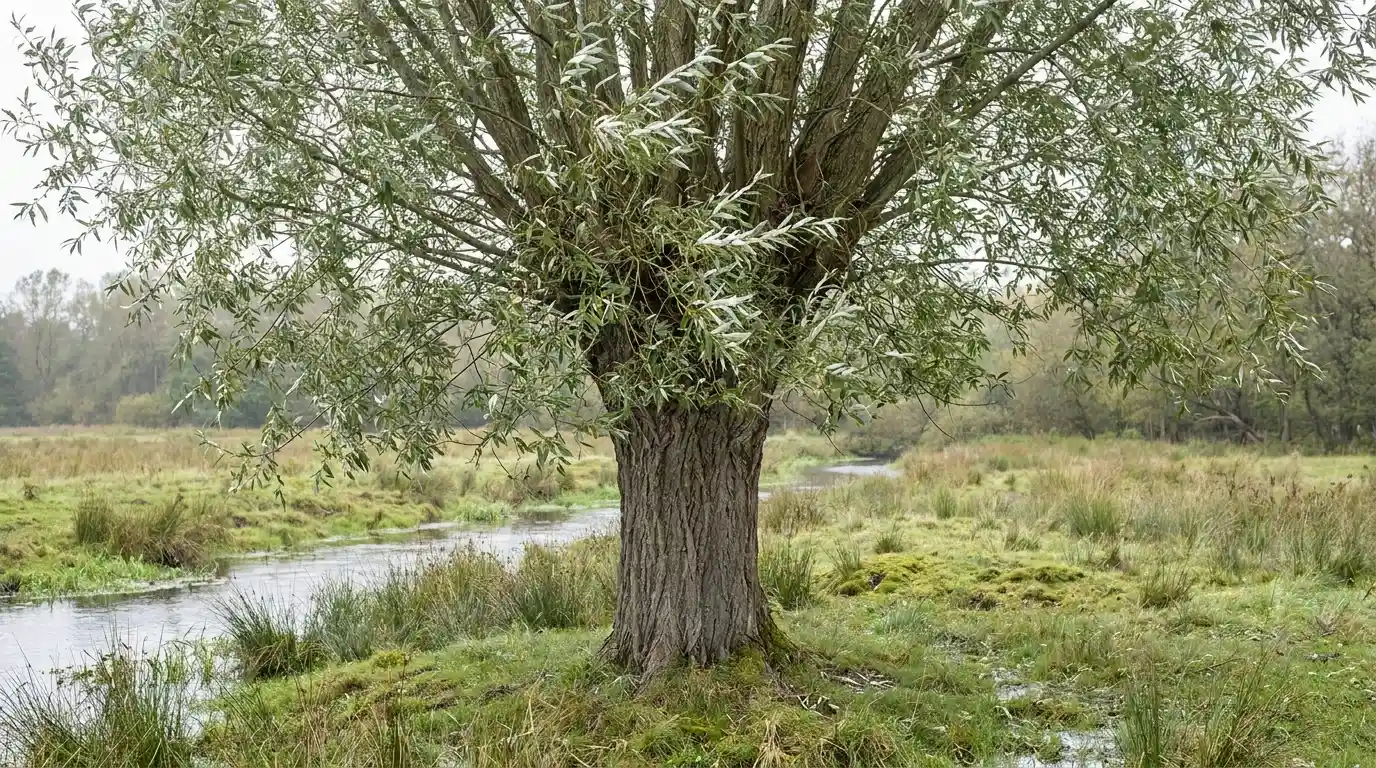
White willow (Salix alba) is a fast-growing upright tree that may reach 50 to 100 feet. Finely toothed leaves have silvery-white undersides that seem to flash when the wind turns them.
Older trunks develop deeply ridged bark. This species suits open, damp ground near ponds or streams. Its great size and breakable wood make it unsuitable for small yards or sites close to buildings.
5. Black Willow

Black willow ( Salix nigra ) reaches about 30 to 80 feet and often has an irregular crown with a leaning or divided trunk. Narrow green leaves and dark, deeply furrowed bark provide the strongest clues.
This North American species commonly grows along riverbanks and floodplains. Its very large size makes it more suitable for naturalized wet areas than small residential yards.
6. Crack Willow

Crack willow (Salix × fragilis) grows about 50 to 65 feet tall with a broad crown. Its name comes from branches that snap cleanly and easily. Glossy green upper leaf surfaces and paler undersides offer added clues.
It often grows beside waterways, where broken branches may root in wet soil. Brittle wood is the main concern because storms can leave fallen limbs around nearby paths or buildings.
7. Corkscrew Willow
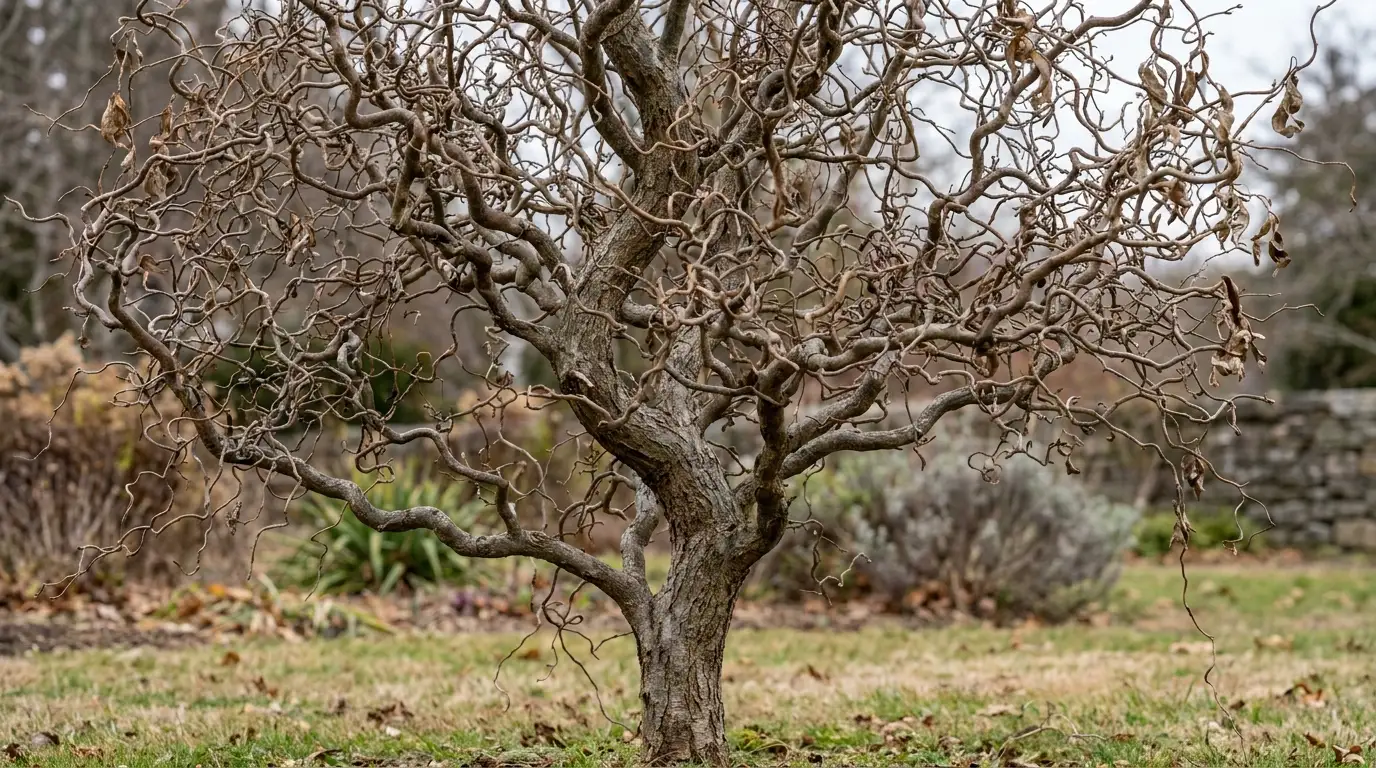
Corkscrew willow ( Salix matsudana ‘Tortuosa’) grows 20 to 40 feet tall as an upright tree. Twisted branches, curled twigs, and contorted leaves make it easy to recognize, even when bare.
The stems provide strong winter form and are often cut for floral arrangements. Although commonly sold as an ornamental, it becomes much larger than a compact shrub and needs generous planting room.
8. Goat Willow
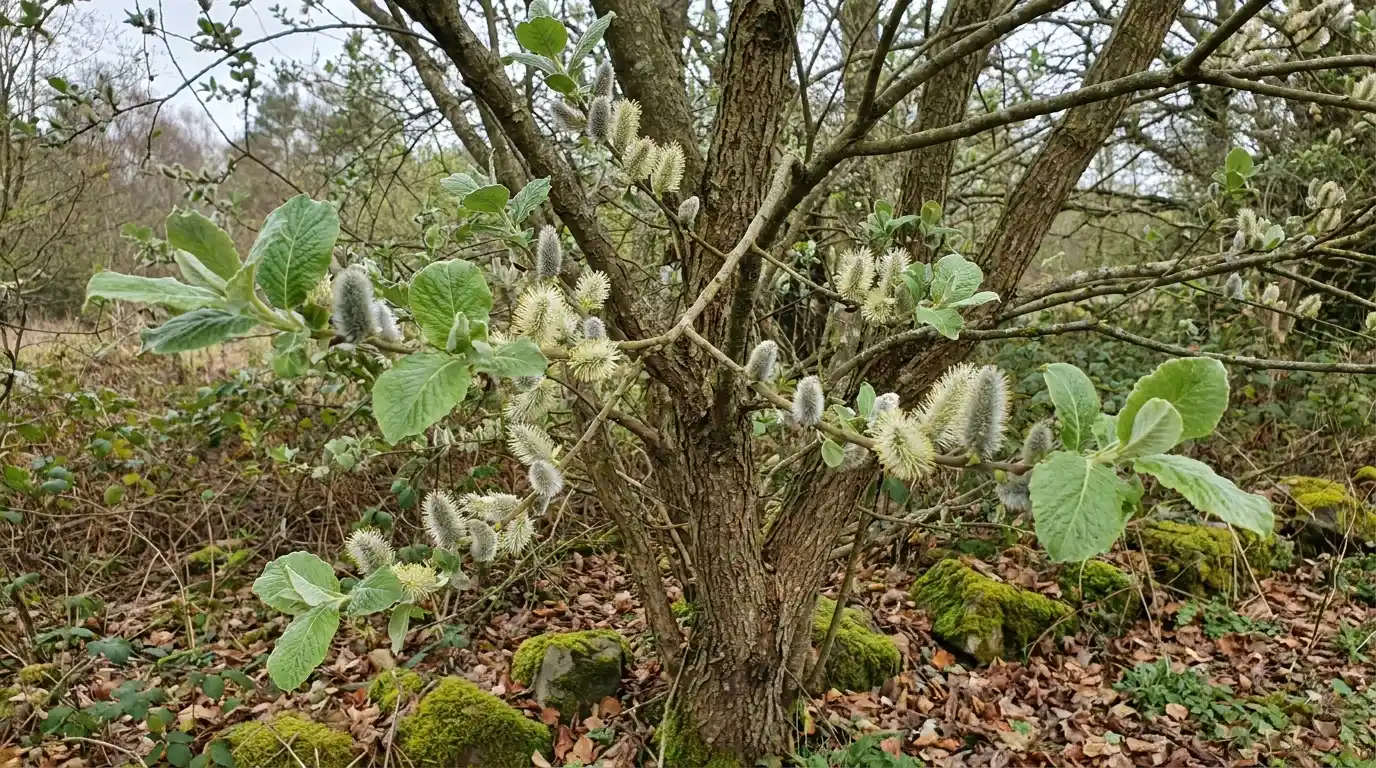
Goat willow (Salix caprea), also called European pussy willow, grows 12 to 30 feet tall as a large shrub or small tree. Broad oval leaves and fuzzy gray-yellow catkins separate it from many narrow-leaved willows.
It suits moist hedges, screens, wildlife gardens, and low planting areas. Spreading roots and weak wood call for careful placement near paving, drains, and buildings.
9. American Pussy Willow
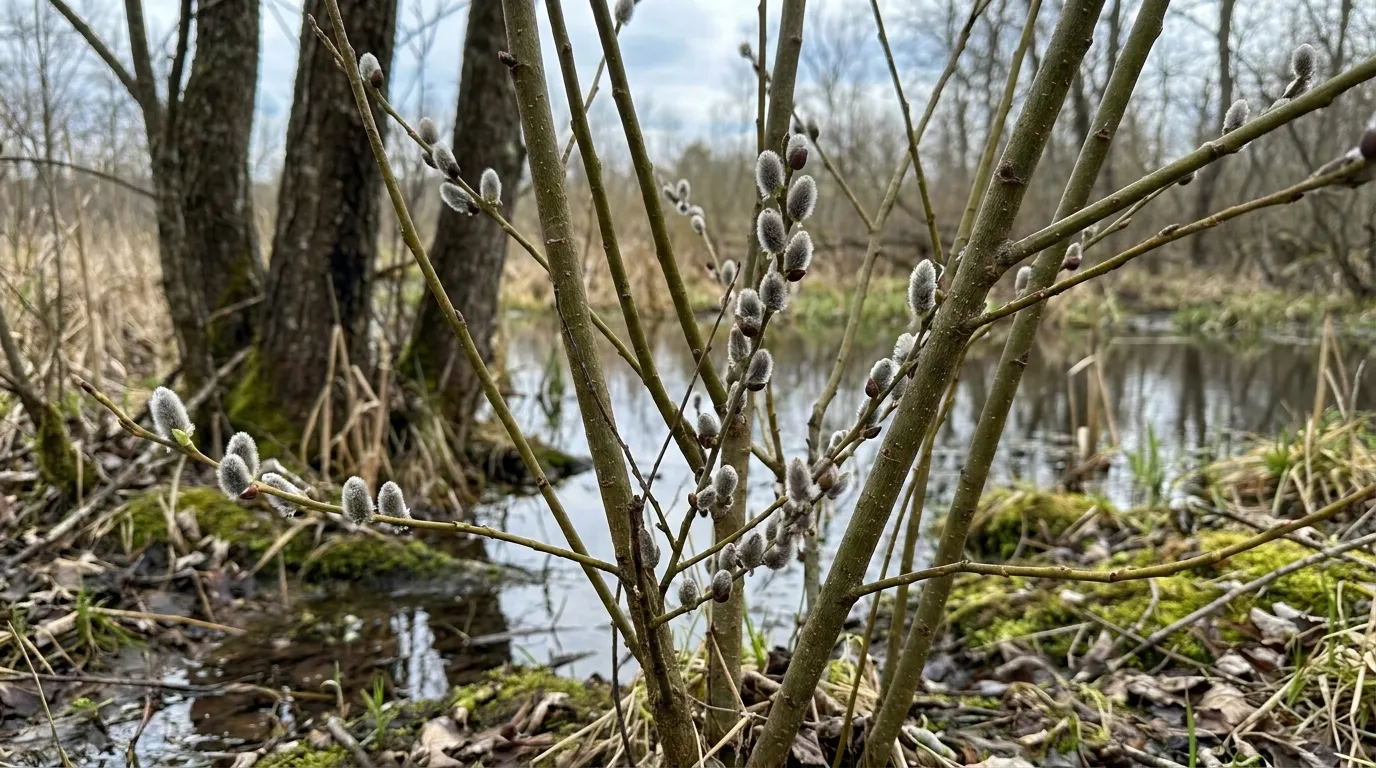
American pussy willow (Salix discolor) is a North American shrub or small tree that grows about 6 to 25 feet tall. It has several stems, broad leaves, and soft silver catkins that open before the foliage.
Cut branches are valued in spring displays, while living plants suit rain gardens and wet borders. It is a separate species from European goat willow.
10. Dappled or Flamingo Willow
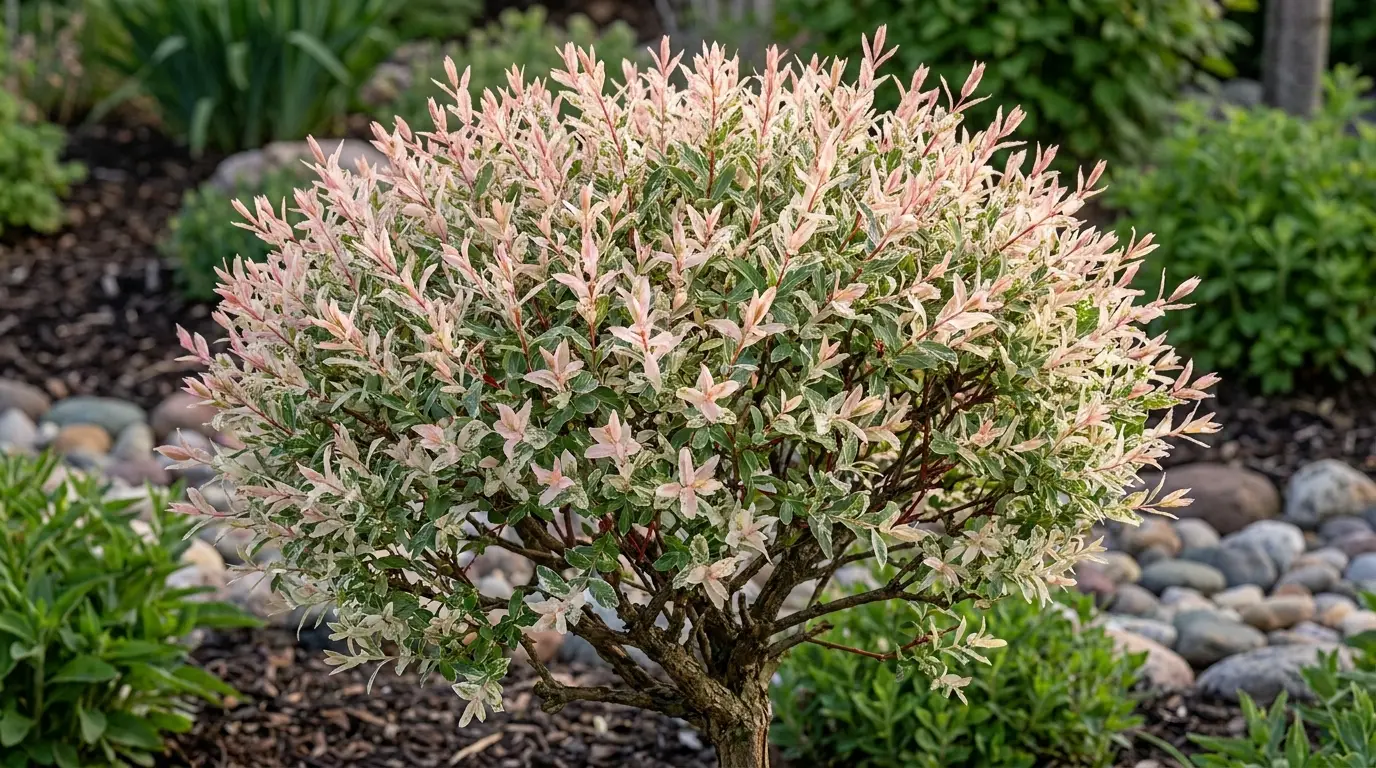
Dappled or flamingo willow ( Salix integra ‘Hakuro-nishiki’) forms a rounded shrub 4 to 10 feet tall, though it is also sold grafted onto a short trunk. New leaves open pink, then develop cream and green markings, while young stems turn red in winter.
Its smaller size suits compact gardens and mixed borders. Regular pruning is needed to keep the freshest leaf and stem color.
11. Purple Osier Willow
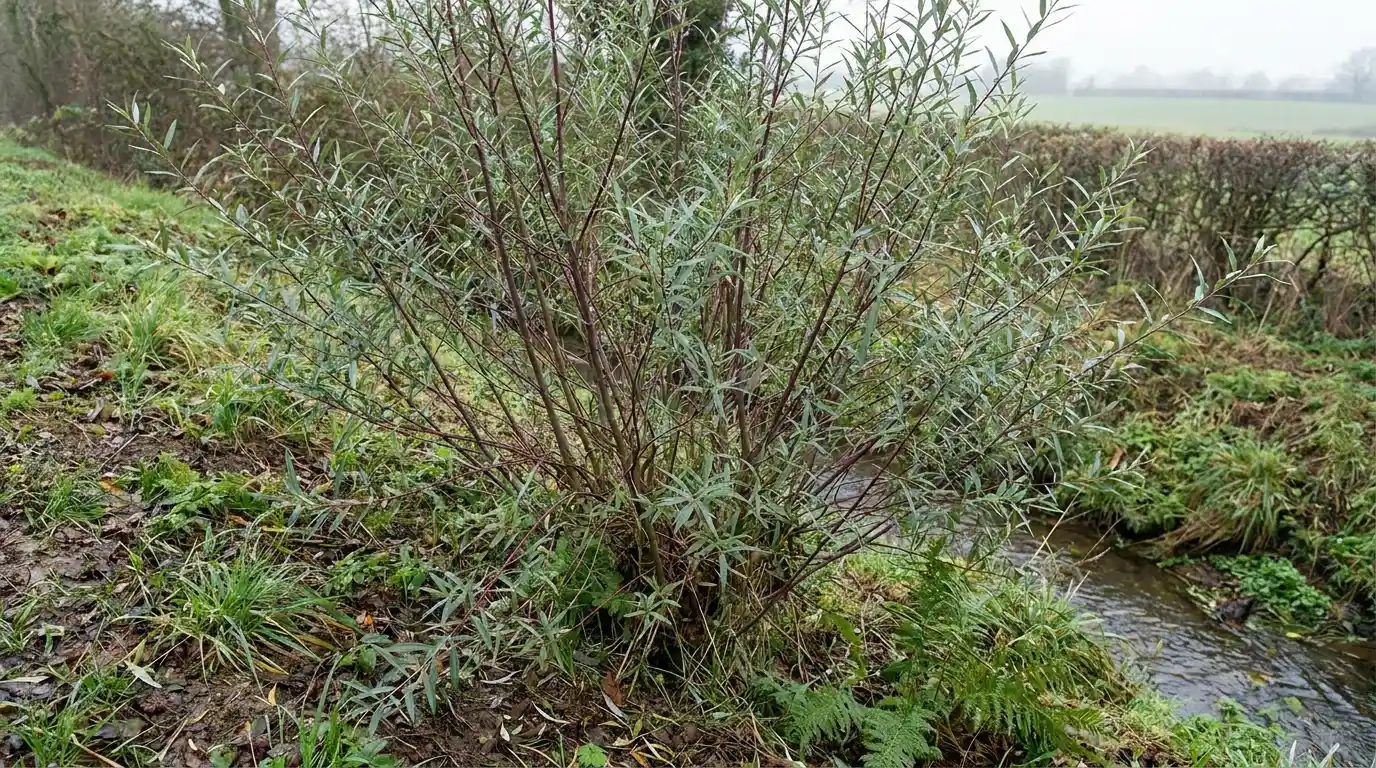
Purple osier willow (Salix purpurea) is a 3- to 15-foot shrub with slender purple stems and narrow blue-green leaves. Its flexible young growth works well for basketry, while dense roots and branching suit hedges, wet slopes, and erosion control.
Regular cutting encourages fresh, brightly colored stems. The shrub may spread beyond a neat boundary, so allow room for its natural growth.
12. Common Osier
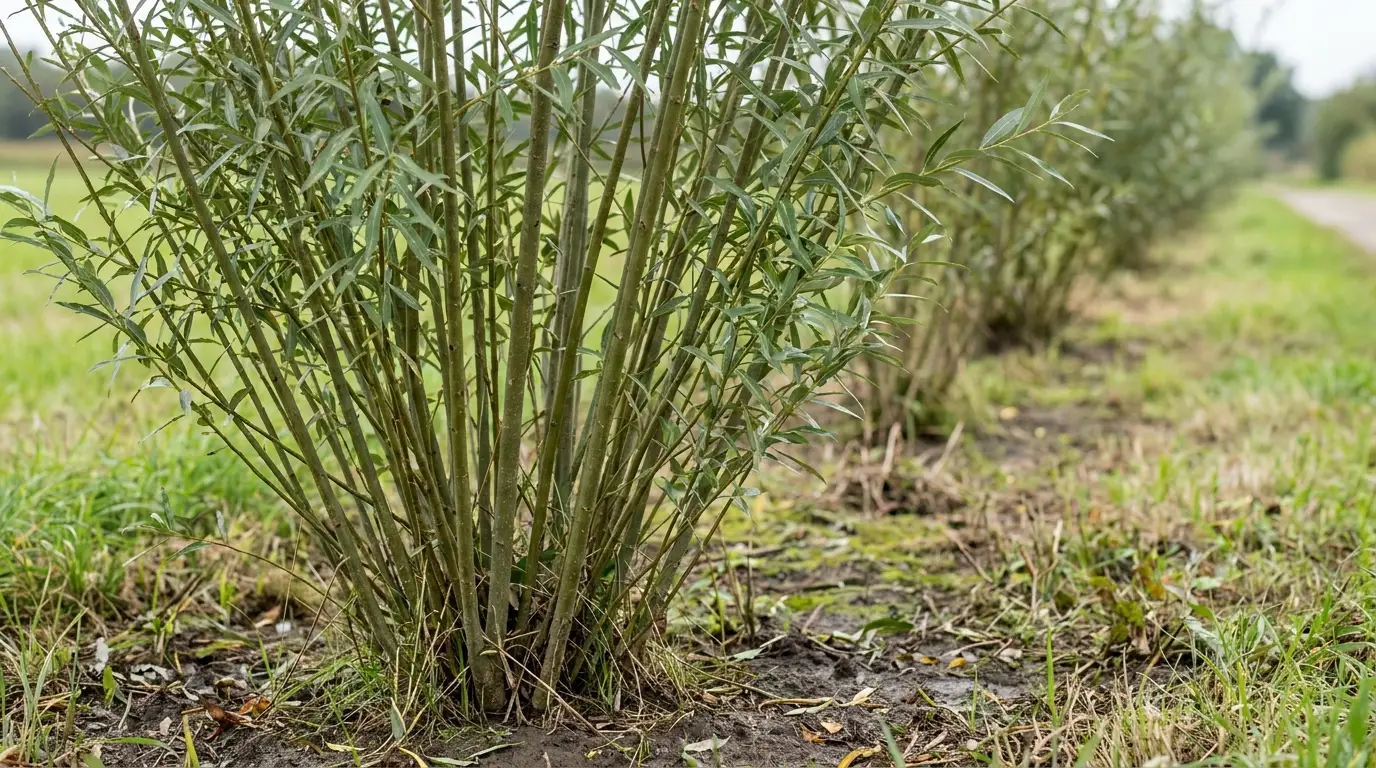
Common osier (Salix viminalis) grows up to 20 feet and is a fast-growing shrub or small tree. Its main marks are very long, narrow leaves and straight, flexible stems.
The strong young rods are used for baskets, woven fence panels, furniture, and living willow structures. It performs well in moist ground, but vigorous growth requires space and regular control where a tidy boundary matters.
13. Bay Willow
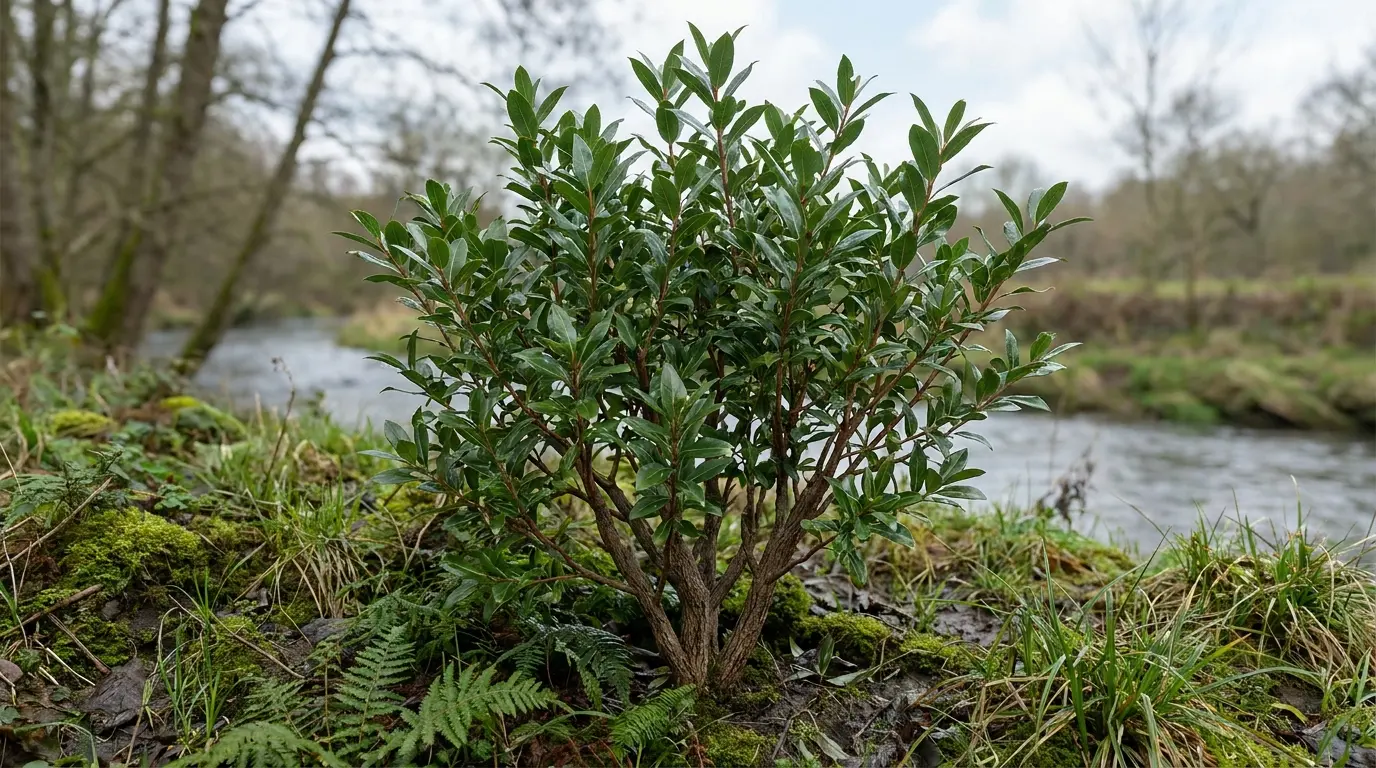
Bay willow (Salix pentandra) commonly grows 16 to 23 feet tall as a large shrub or bushy tree. Glossy, dark green, leathery leaves resemble bay or laurel leaves and provide the quickest clue. Its catkins appear later than those of many willows.
This species suits damp borders and waterside sites where bold foliage is wanted without a broad curtain of hanging branches.
14. Peachleaf Willow
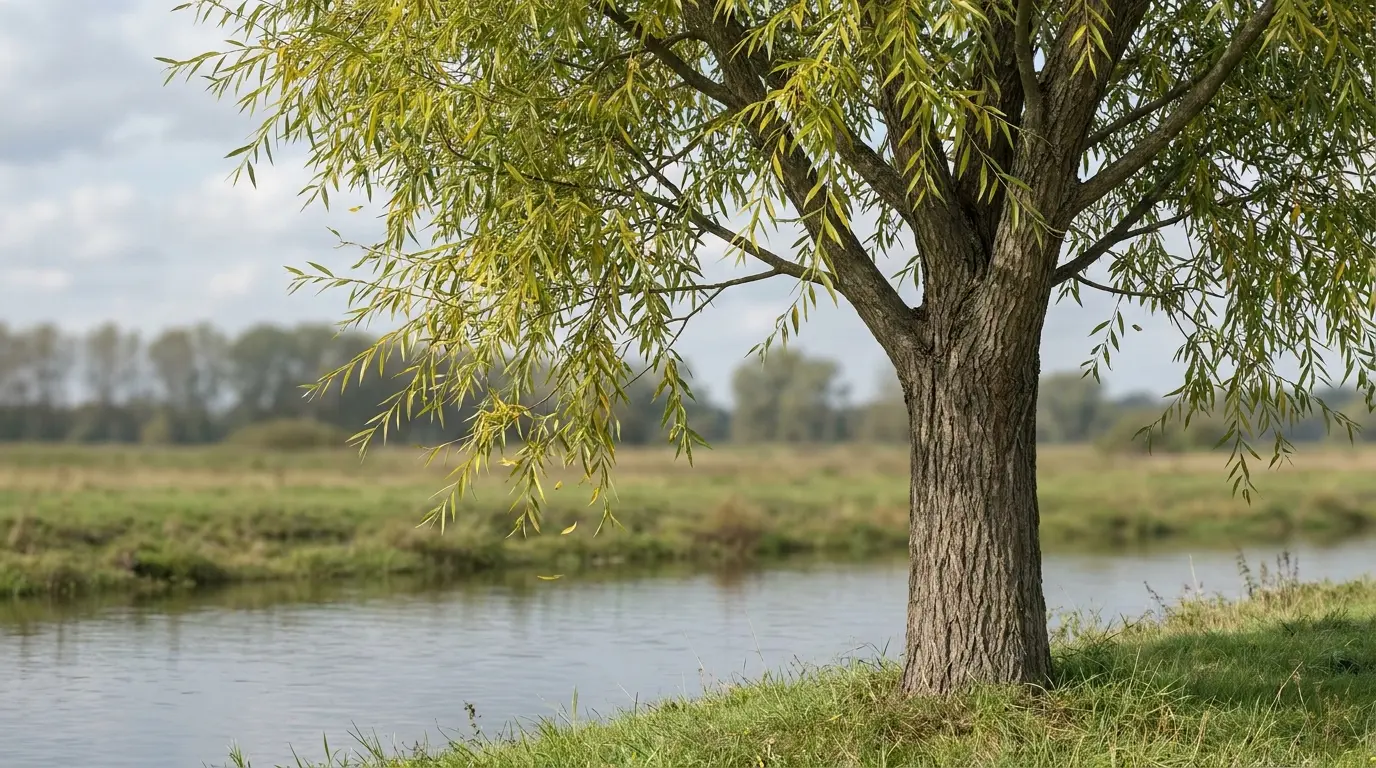
Peachleaf willow (Salix amygdaloides) is a North American tree that reaches about 35 to 50 feet, with an upright or broadly oval crown. Long, pointed leaves resemble peach leaves and provide its clearest mark.
It grows near rivers and other moist ground, offering fast cover, bank support, and naturalized planting. Its mature height makes it unsuitable for most restricted gardens.
15. Narrowleaf or Coyote Willow
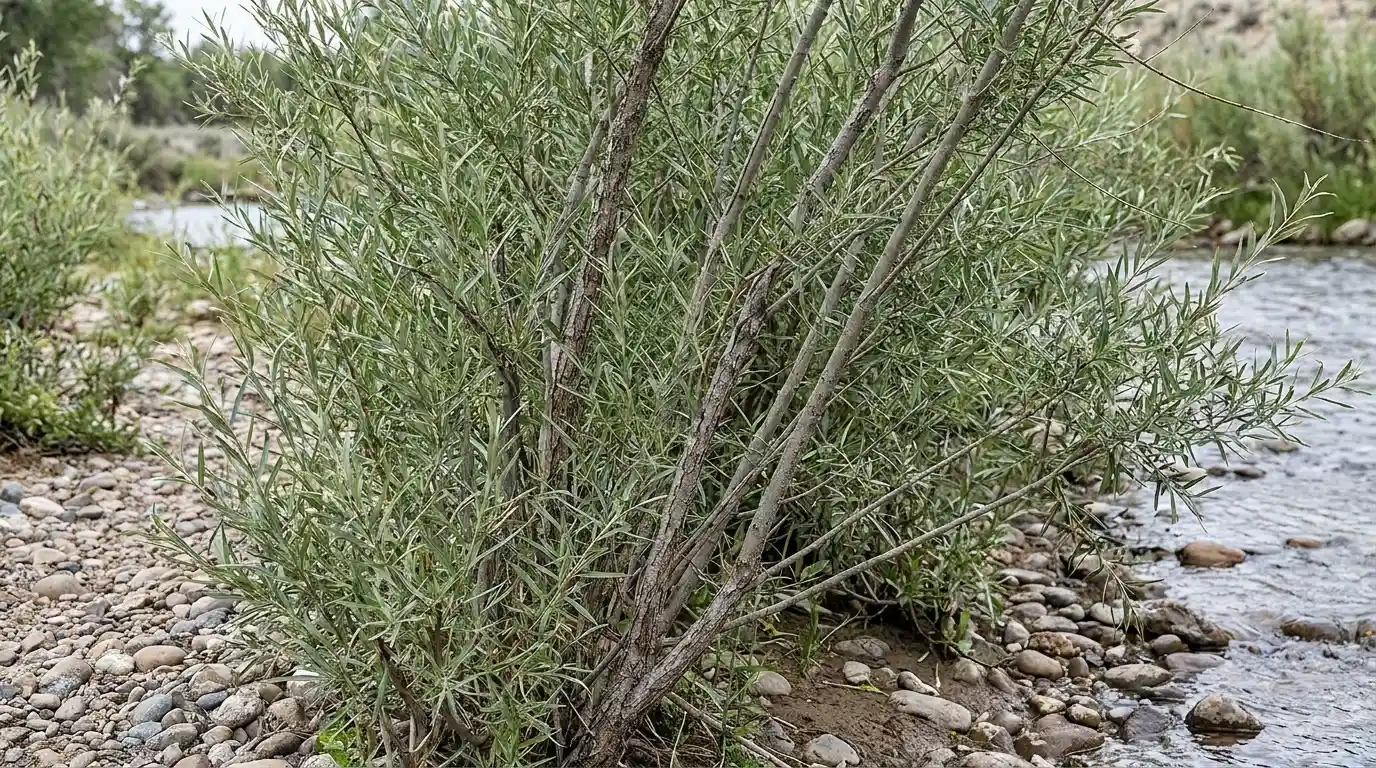
Narrowleaf or coyote willow (Salix exigua) is a 6- to 15-foot North American shrub with very narrow gray-green leaves and a thicket-forming habit. It commonly grows along streams and gravel bars.
Spreading roots help restore banks, hold soil, and limit erosion. Once established, it handles flooding and some dry periods. Its loose form suits natural sites better than formal garden beds.
16. Bebb Willow
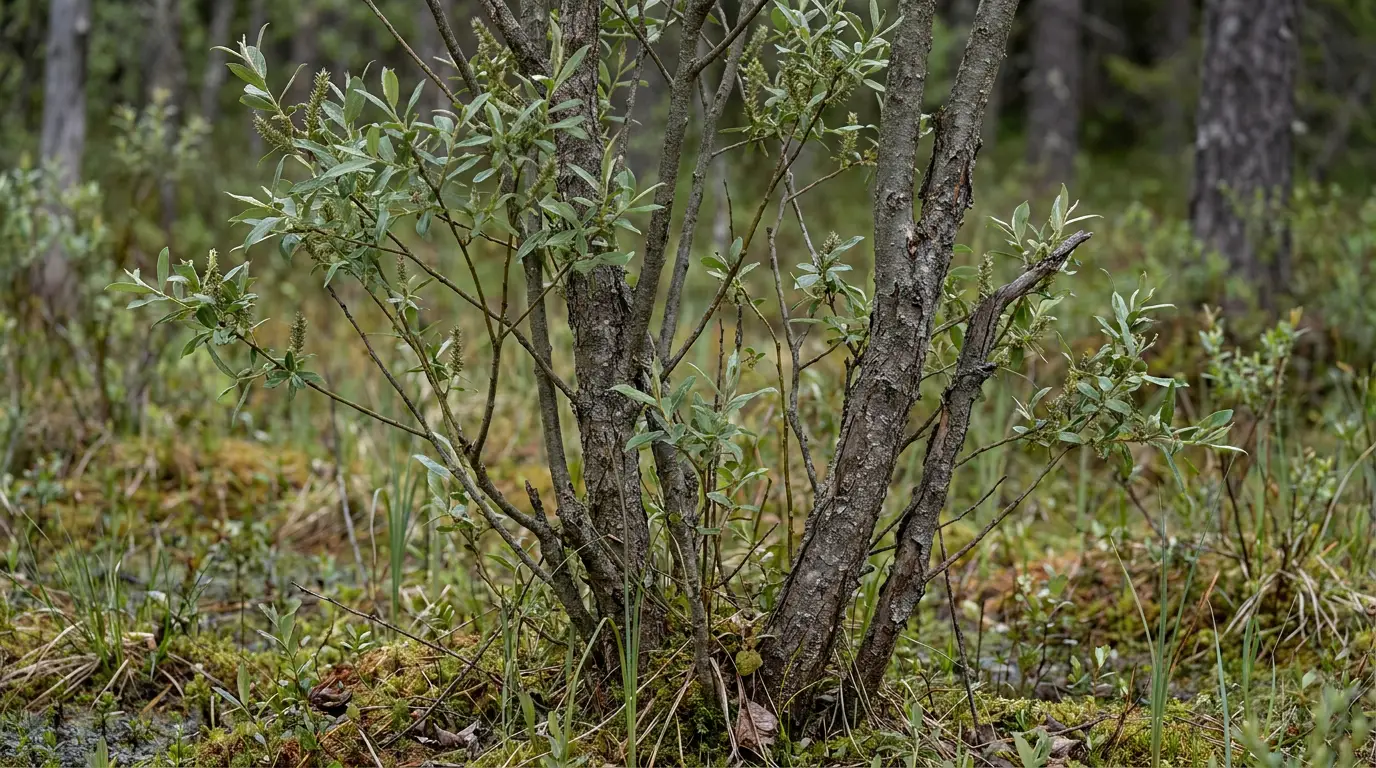
Bebb willow (Salix bebbiana) grows 10 to 30 feet tall as a multi-stemmed shrub or small tree in northern wetlands and moist woods. Older stems may form diamond-patterned grain valued for carving, while the plant supplies food and cover for wildlife.
It is less common in formal landscapes because it can be short-lived and may suffer from insects, disease, stem decay, or breakage.
17. Arctic Willow
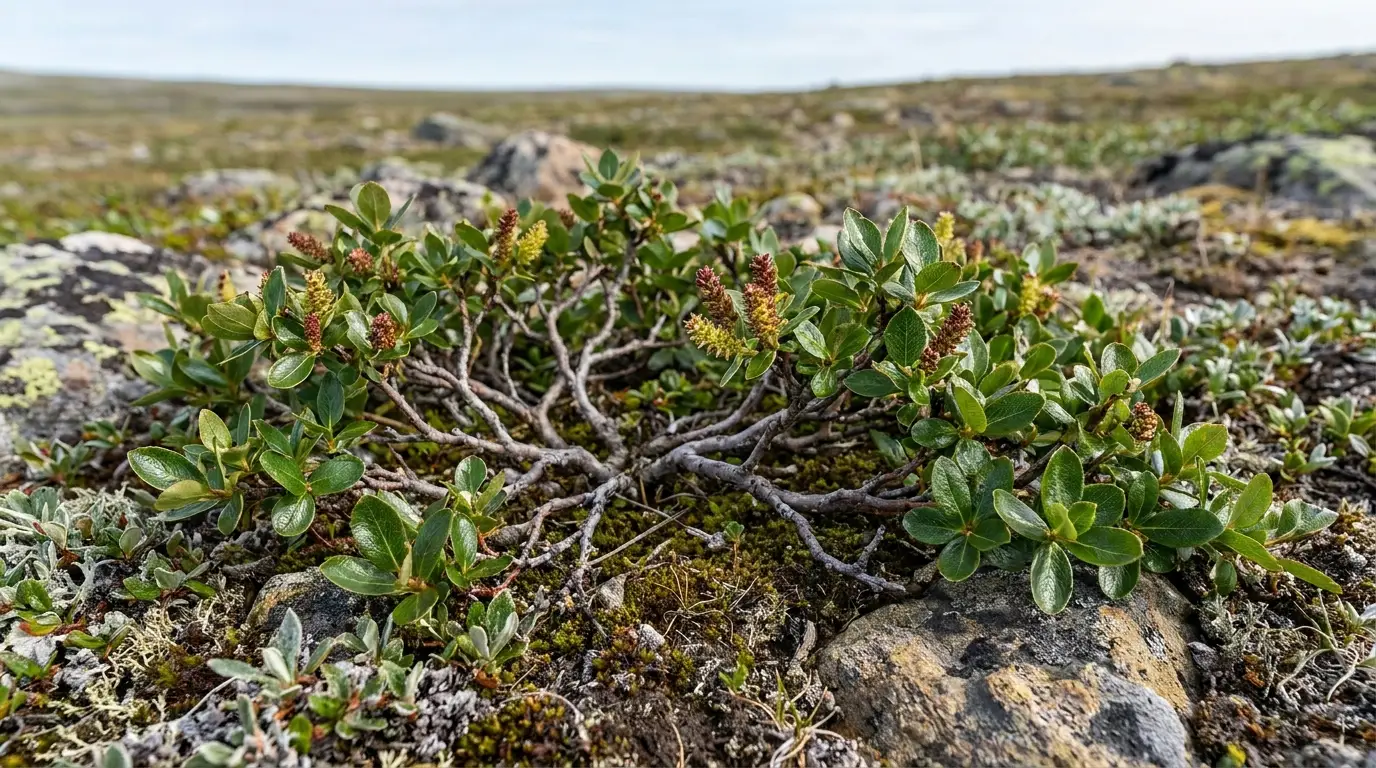
Arctic willow (Salix arctica) is a ground-hugging species that grows only about 2 to 5 inches tall. Small glossy leaves and colorful catkins sit close to the soil, offering its clearest marks.
Its tiny form and strong cold tolerance suit alpine beds and rock gardens. It cannot provide shade and may struggle in hot locations far removed from its cool native habitat.
18. Violet Willow
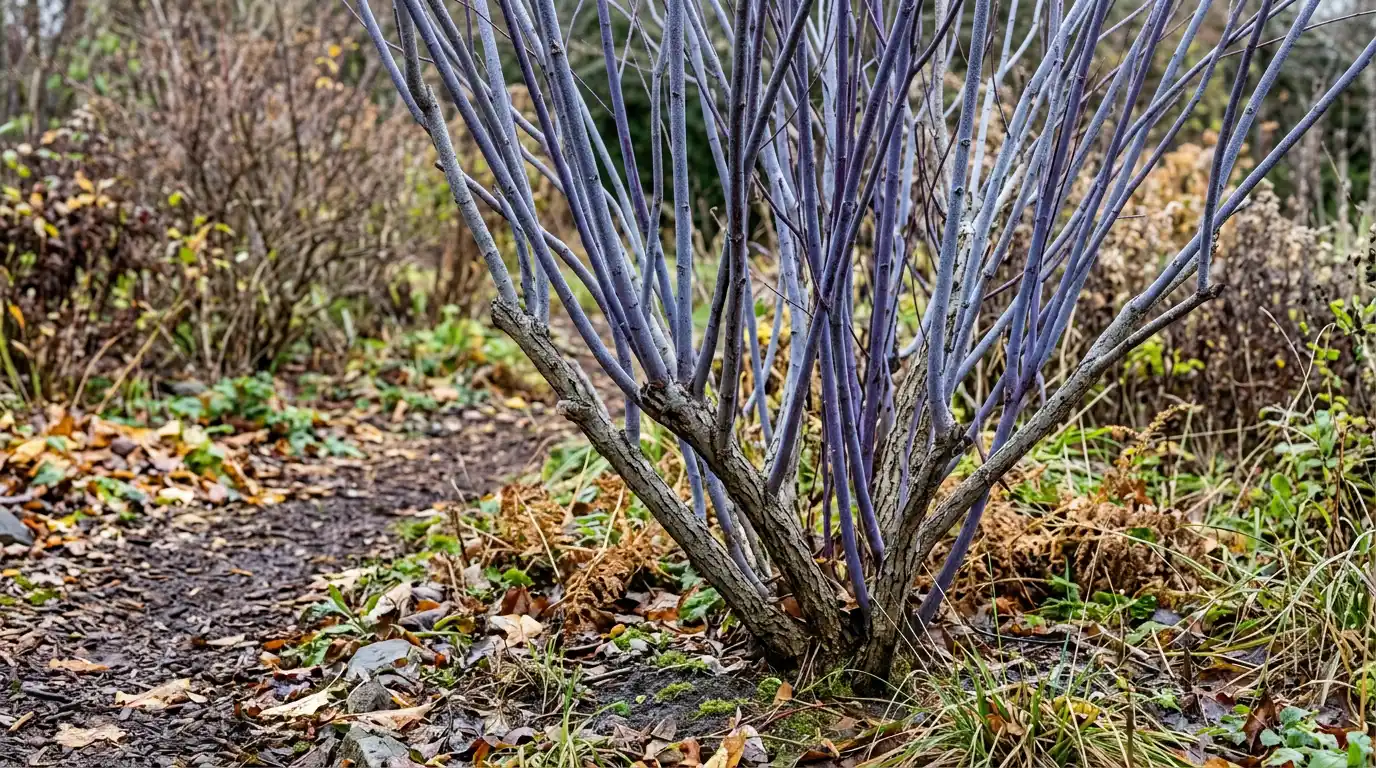
Violet willow (Salix daphnoides) matures as a medium shrub or small tree with purple-blue young stems. A pale waxy coating gives the shoots a frosted look, especially in winter.
Fresh growth shows the richest color and adds useful seasonal structure to moist plantings and winter gardens. Older stems become less bright, so the plant’s strongest display depends on maintaining healthy young growth.
Quick Steps to Plant a Willow Tree
Plant a willow in a bright, moisture-retentive location with enough room for its mature canopy and roots. Careful placement during planting prevents many problems that cannot be corrected easily once the tree becomes established.
- Choose the right light: Most willows grow best in full sun, though many shrub forms can handle partial shade. Avoid deeply shaded spots, where growth may become thin or uneven.
- Allow enough space: Check the expected height and spread before digging. Keep large willows away from foundations, paving, drains, septic systems, and water pipes because their shallow, spreading roots often grow toward dependable moisture.
- Prepare the planting hole: Dig a hole as deep as the root ball and wider than the root system. Position the tree at its previous soil level, spread loose roots outward, refill with the removed soil, and water thoroughly to settle the ground.
- Water during establishment: Keep the soil evenly moist throughout the first growing season, especially during hot or dry periods.
- Protect the root area: Add a layer of mulch around the planting area to slow moisture loss and limit weeds, but leave a clear gap around the trunk to reduce bark problems.
- Consider drought tolerance: Black and weeping willow trees need dependable moisture, while narrowleaf and some shrub willows can handle short dry periods once established.
Choose the site with the willow’s full size in mind because transplanting a mature tree later can be difficult and damaging.
Willow Tree vs. Weeping Willow Tree
A willow tree is any tree or shrub in the Salix group, while a weeping willow is a willow with branches that hang strongly toward the ground. Every weeping willow is a willow, but most willow species do not have a weeping form.
| Difference | Willow tree | Weeping willow |
|---|---|---|
| Meaning | Any tree or shrub in the Salix group | A willow with a strongly hanging branch form |
| Growth habit | May be upright, spreading, shrubby, creeping, or weeping | Develops long branches that fall downward around the crown |
| Crown shape | Varies by species | Usually broad with a curtain-like outline |
| Common examples | White, black, bay, and peachleaf willows | Salix babylonica and related weeping cultivars |
| Branch form | Branches may grow upright, spread outward, or arch slightly | Branches hang clearly toward the ground |
| Dwarf forms | Some willow shrubs remain naturally compact | Many dwarf weeping forms are grafted onto short trunks |
| Kilmarnock willow | A compact willow cultivar within the wider group | A common grafted dwarf form with a hanging crown |
| Identification | Check the species name, leaves, bark, catkins, stems, and mature form | The NC State Extension identifies pendulous branches as a key feature of Salix babylonica |
| Buying guidance | Check the botanical name and expected mature size | Do not assume every hanging willow will become a full-sized weeping tree |
When buying a willow, check its botanical name and mature size because the common name may not clearly indicate its final height or crown shape.
How Do You Care for a Willow Tree?
Willow care mainly involves seasonal pruning, moisture checks, storm inspection, and early attention to pests or diseases. The amount of maintenance depends on the species, its growth habit, and where it is planted.
- Prune during dormancy: Remove dead, damaged, crossing, or poorly placed branches while the tree is dormant. This makes the branch structure easier to assess and reduces unnecessary cutting during active growth.
- Coppice selected willows: Colorful-stemmed and basket willows can be cut close to the base to encourage fresh, straight shoots. New growth usually provides the strongest stem color and the most useful rods.
- Inspect after storms: Willow wood is often soft, so branches may split during strong wind, snow, or ice. Check the crown after severe weather and remove hanging or damaged limbs that could fall.
- Plan for cleanup: Leaves, catkins, twigs, and small branches may collect around lawns, paths, patios, and ponds. Regular cleanup prevents slippery surfaces and keeps drainage areas clear.
- Watch for pests: Aphids and borers are common concerns. Look for curled leaves, sticky residue, holes in stems, thinning foliage, or weak shoot growth.
- Check for disease: Rust, cankers, and leaf spot may cause discolored foliage, dying shoot tips, or sunken bark. Sunken or cracked bark stands out faster once you already know what healthy bark looks like; the same reasoning applies to hackberry tree bark identification, where warty ridges are the normal pattern and any break from that pattern signals a problem. Remove affected growth when practical and keep pruning tools clean between cuts.
A quick seasonal inspection can catch weak branches, pests, and disease symptoms before they become harder to manage.
How to Choose the Right Willow for Your Yard
Among all types of willow trees, choosing the right one starts with matching its mature size, main purpose, and growing needs to your yard.
For large lawns or pond edges, weeping and golden weeping willow suit wide, moist spaces, while white willow needs open ground and black willow fits natural riverbanks.
Small gardens do better with dappled willow, Kilmarnock willow, or compact purple osier, which stay smaller or more contained. For winter color, violet willow offers purple-blue stems, and golden weeping willow adds bright yellow branches once leaves drop.
If you want early catkins for pollinators, goat willow and American pussy willow flower before much else is blooming, with cuttings that work well indoors.
For basketry, common osier produces long, straight rods, while purple osier offers thinner, more flexible stems. For erosion control along streambanks or wet slopes, narrowleaf willow, purple osier, and peachleaf willow all provide fast, effective cover. A well-matched willow rewards you with color, wildlife value, and useful stems for years.
Frequently Asked Questions
Is a desert willow a true willow?
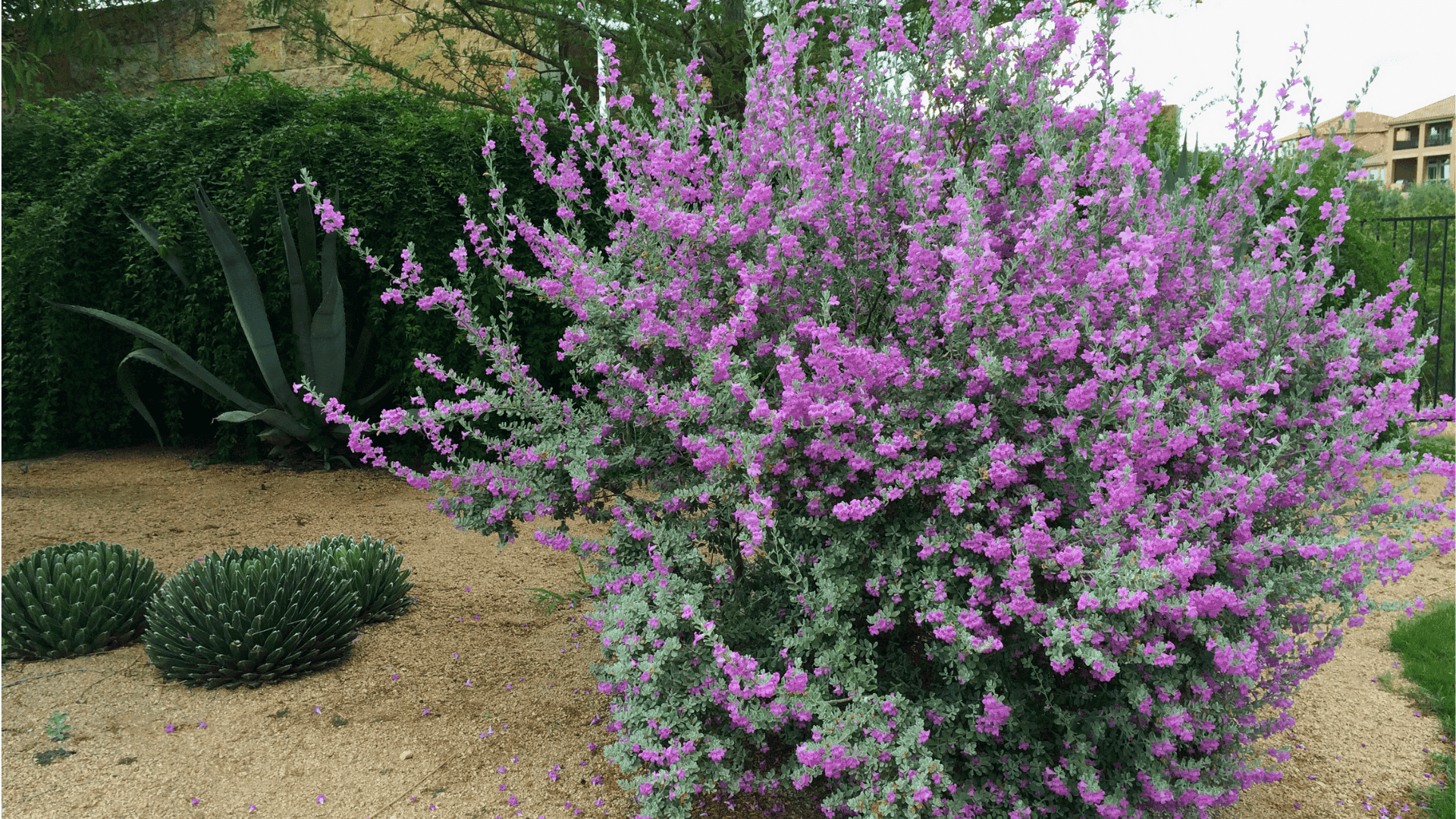
No. The USDA Forest Service classifies desert willow (Chilopsis linearis) in the Bignonaceae family, not Salix. it favors dry climates, bears trumpet-shaped flowers, and lacks willow catkins.
Is a willow oak a type of willow tree?
No. Willow oak (Quercus phellos) is an oak with narrow, smooth-edged leaves. It produces acorns, while true willows belong to Salix and bear catkins.
Which willow tree is easiest to identify?
Pussy willow stands out during catkin season, corkscrew willow has twisted growth, and weeping willow has a hanging outline. The easiest match changes with the season.
Do willow trees lose their leaves in winter?
Yes. Willows are deciduous and normally shed their leaves in fall. Early leaf loss during the growing season may point to drought, pests, disease, or root stress.
Final Thoughts
Start with the willow’s growth form, then confirm the match by checking its leaves, catkins, bark, and stems. Compare the mature height and spread with the space available, and make sure the site can support the plant’s moisture needs and root habits.
Large weeping and upright willows belong in open ground with dependable water, while compact shrub forms are usually better suited to smaller residential yards.
When comparing different types of willow trees, do not choose by appearance alone. Check the botanical name, expected size, and growing conditions before buying. Review these points carefully, then choose the willow that fits your yard and plant it where it can grow safely for years.
Drop a comment below and tell me which willow you have spotted around your neighborhood.