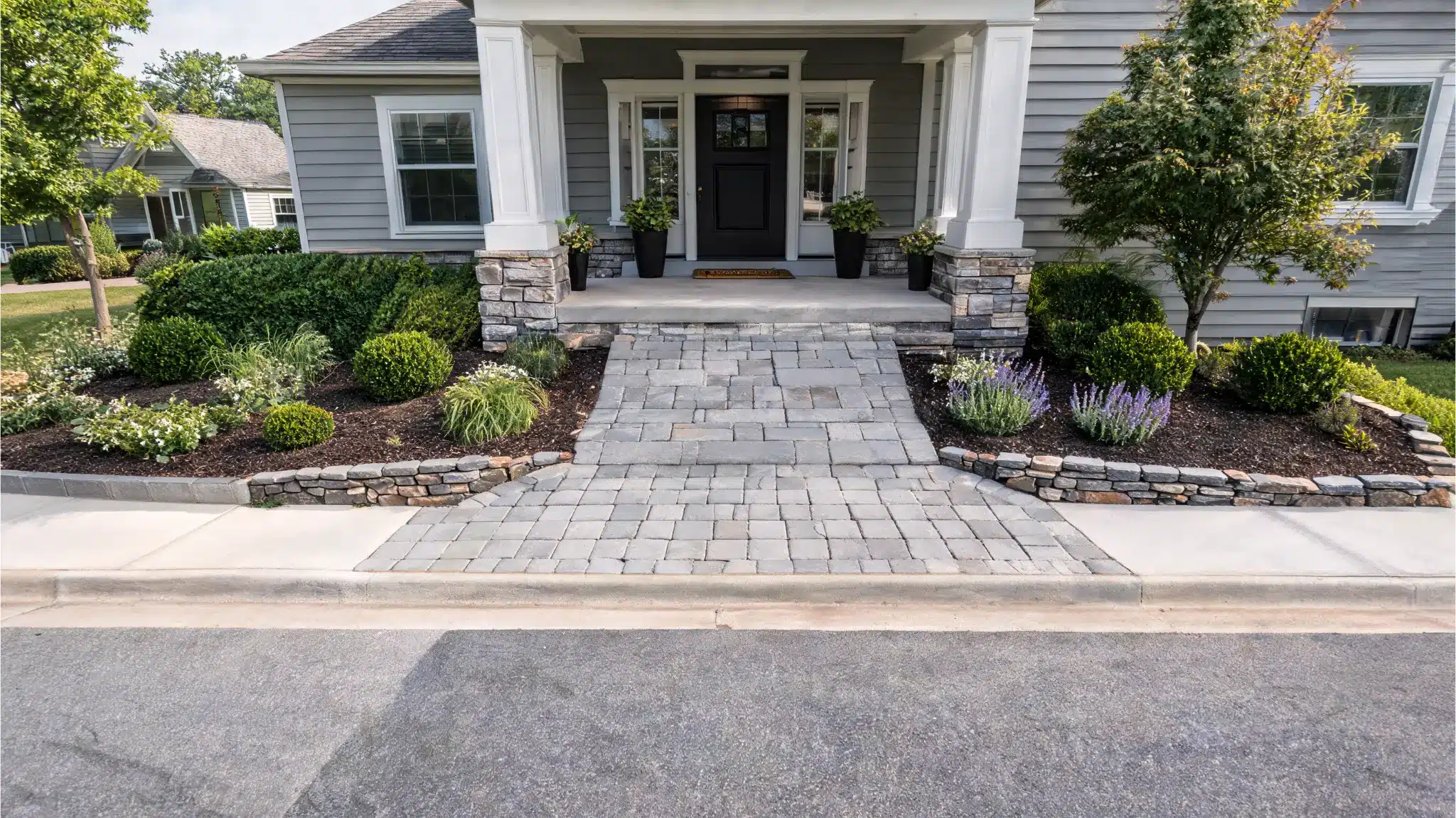
Your front yard is the first thing people see before they reach the door. Even a tiny space can feel neat, warm, and planned.
The best small front yard landscaping ideas give you a clear view from the curb first, then help you choose plants, paths, borders, and planters that fit your home.
Most people searching for front yard landscaping ideas want photos, examples, and simple ways to improve a space that feels plain or hard to use.
I’d start with the areas you notice fastest: the walkway, the porch, the bed edge, and the space under the windows. Once those feel intentional, the whole front yard looks more pulled together.
Start with the View from the Sidewalk
Before choosing plants or buying stones, stand on the sidewalk and look back at your house. This helps you see the yard the way guests, neighbors, and delivery drivers see it. A small front yard does not need many pieces. It needs a clear plan.
In the U.S., standard suburban lots range from 5,000 to 10,000 square feet, while smaller urban lots can be as little as 1,500 to 3,000 square feet.
Since the front yard usually makes up 20 to 40 percent of the lot, a small front yard is roughly 200 to 1,500 square feet.
If your front yard is shallower than 20 feet from the house to the sidewalk, or narrower than 30 feet wide, the ideas below apply directly to your space.
Start with the path. If the walkway feels hidden, add low plants, path lights, or a cleaner edge to lead the eye toward the door.
If the porch feels empty, use matching planters to add height without taking up lawn space. If the house looks flat from the street, a curved flower bed or one small tree can add shape.
This quick check also stops you from buying the wrong things. A plant may look good at the store, but it may not fix what your yard needs.
Your space may need color, shade plants, a better border, or a clearer walkway. Once you spot the real gap, every choice becomes easier.
Small Front Yard Landscaping Ideas Worth Saving
1. Frame the Walkway
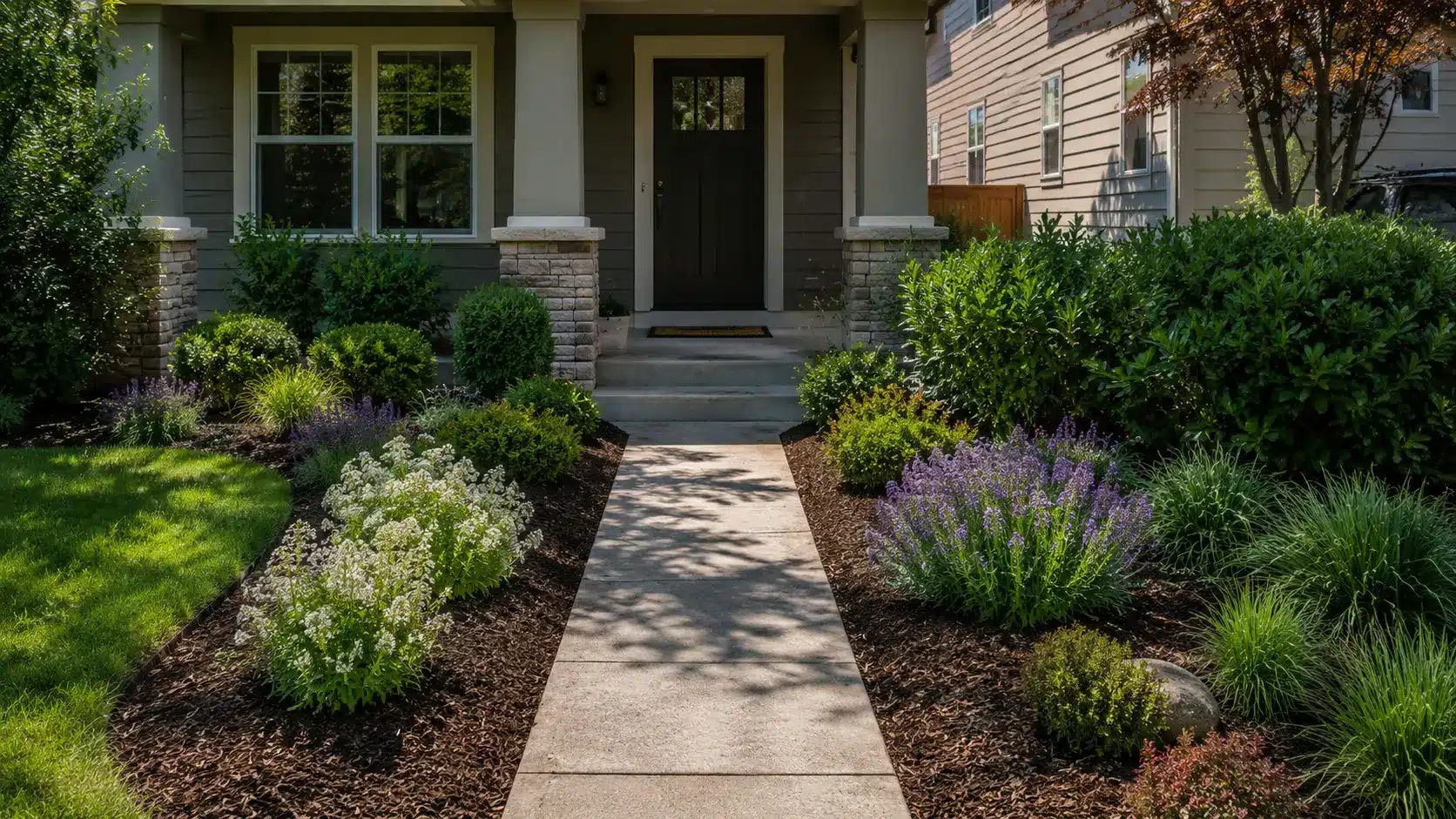
A walkway is often the main line in a small front yard. When it is clean and easy to follow, the whole space feels more planned. Low plants on each side can frame the path without making it feel narrow or crowded.
Short flowers, compact grasses, and small evergreen shrubs can soften the walkway while keeping it open.
Gravel, pavers, or ornamental grasses can give a modern look. Mulch or river rock along the bed edge helps the shape stand out and makes the yard look finished.
You can start with a clean edge and mulch, then add plants or pavers when your budget or season allows.
Best for: Straight walkways, narrow entries, modern or traditional homes, and front doors facing the street.
2. Build a Curved Flower Bed
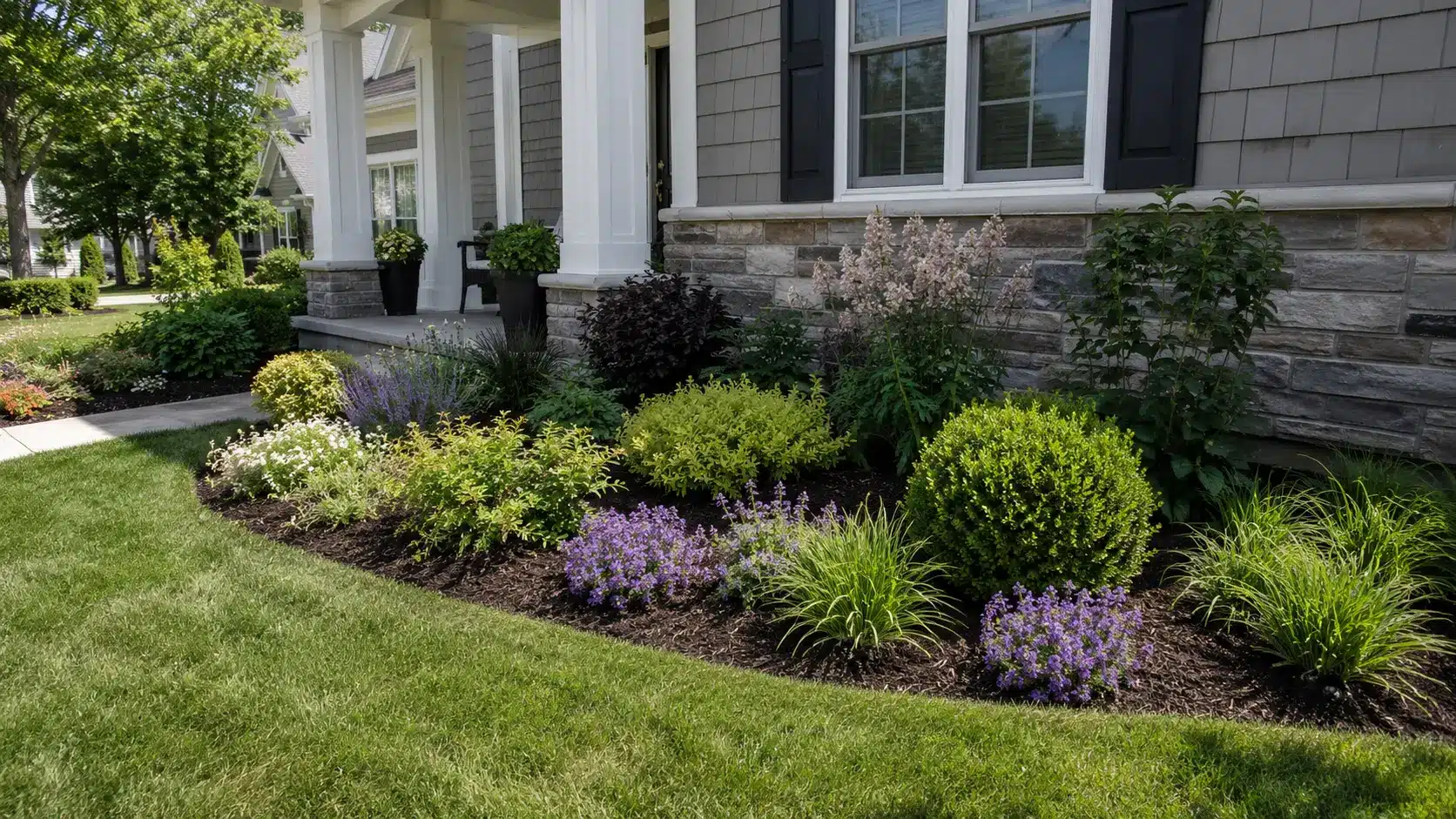
A curved flower bed helps a plain front yard feel softer and more complete. It works especially well when the lawn feels too square, flat, or empty from the street.
Place the deepest part of the bed near the porch, driveway, or front corner of the house. Let the thinner end fade toward the walkway or lawn.
Use compact shrubs, low flowers, and a few perennials for depth. Keep the color plan simple so the bed feels calm instead of busy.
Best for: Plain lawns, square yards, and homes that need softer lines.
3. Replace Grass with Gravel and Plants
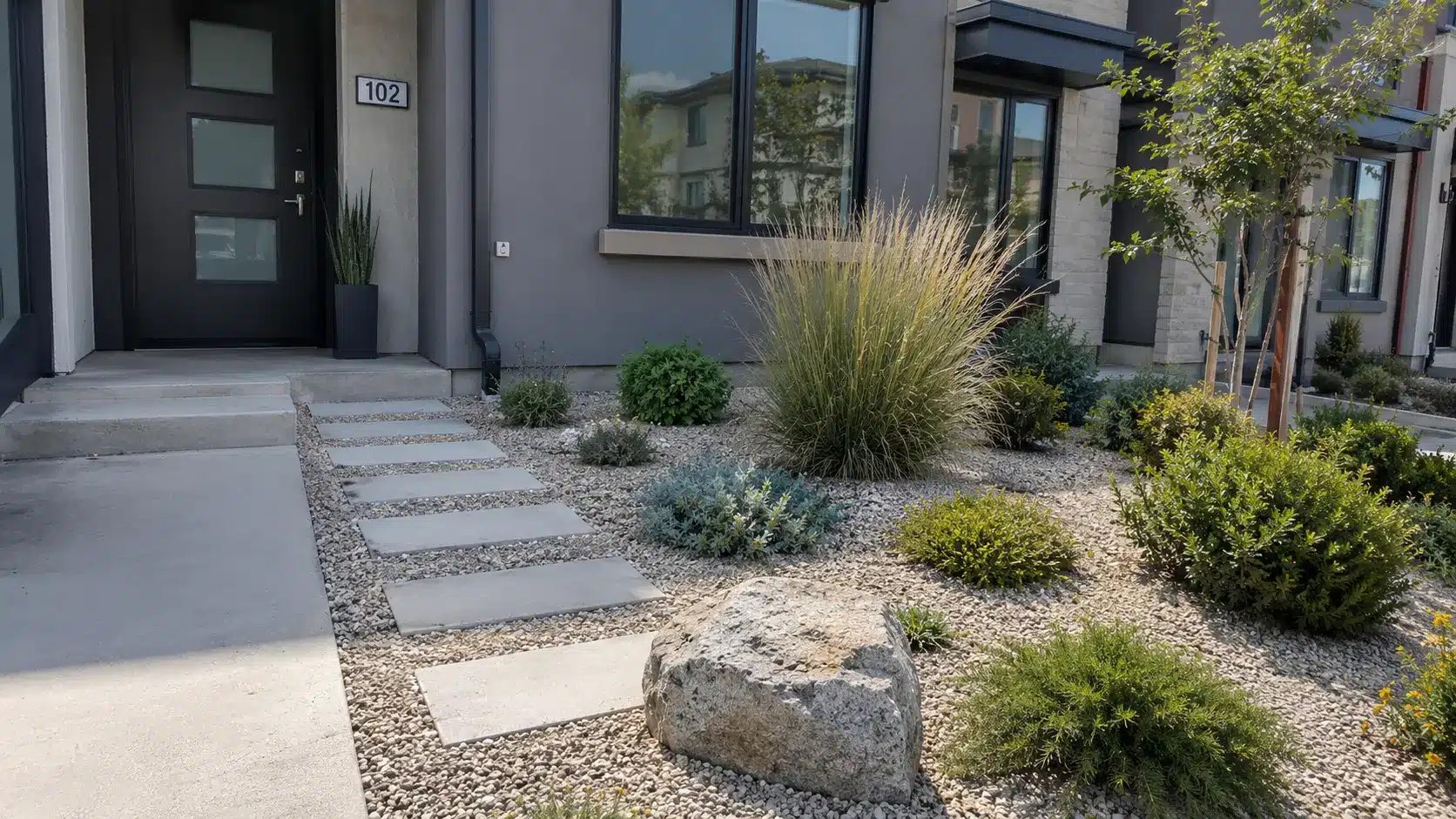
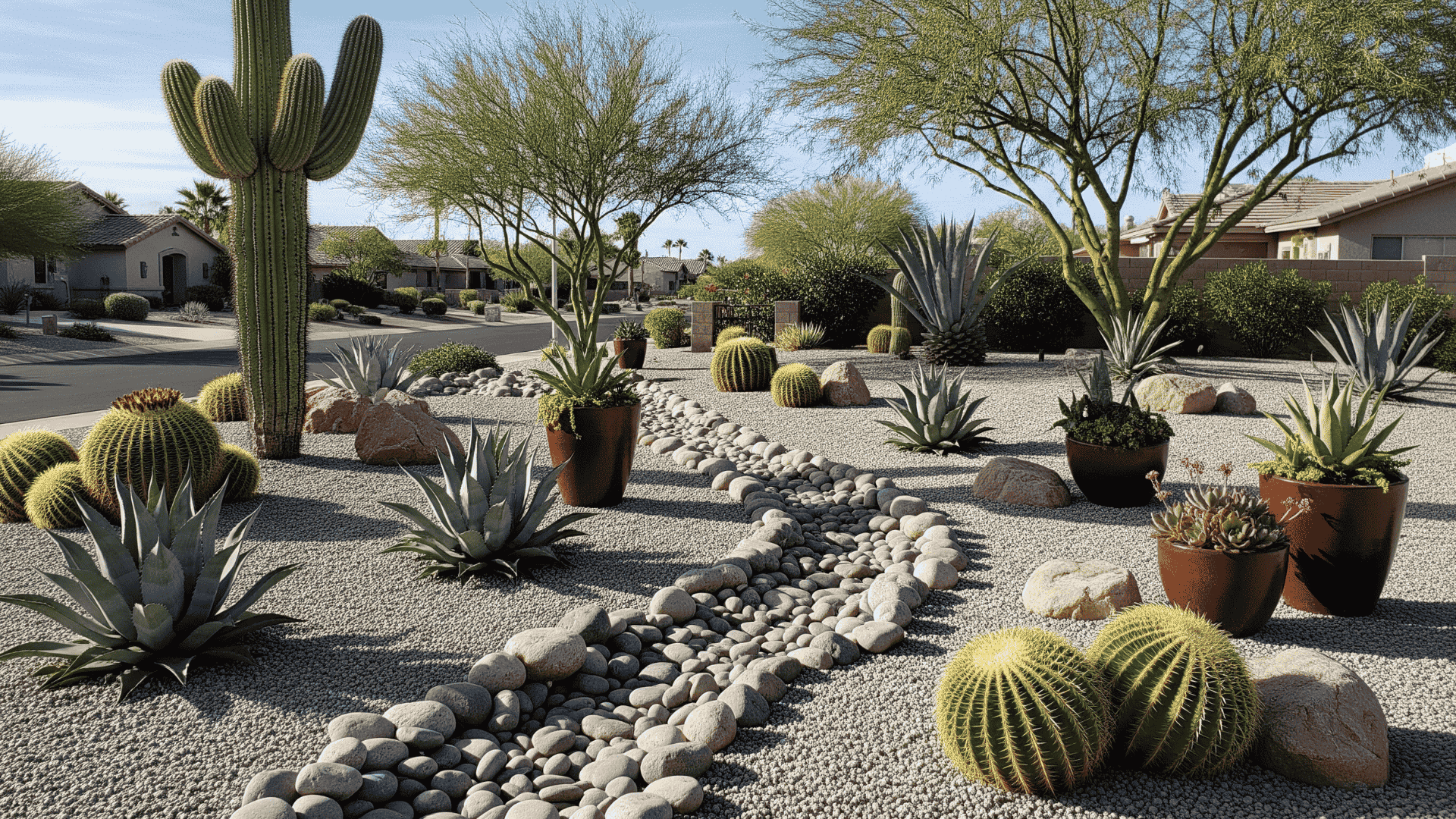
A no-grass front yard can be a smart choice when the lawn is small, patchy, or hard to water. Gravel gives the space a clean base, but plants keep it from looking bare.
Use stepping stones to create a clear walking route. Add compact shrubs, ornamental grasses, or ground covers around the path.
A small boulder or low tree can add height if the yard feels too flat. This works especially well in front yards under 400 square feet.
Best for: No-grass yards, dry areas, narrow townhouse entries, and low-maintenance front yards.
4. Place Matching Planters and Flower Border
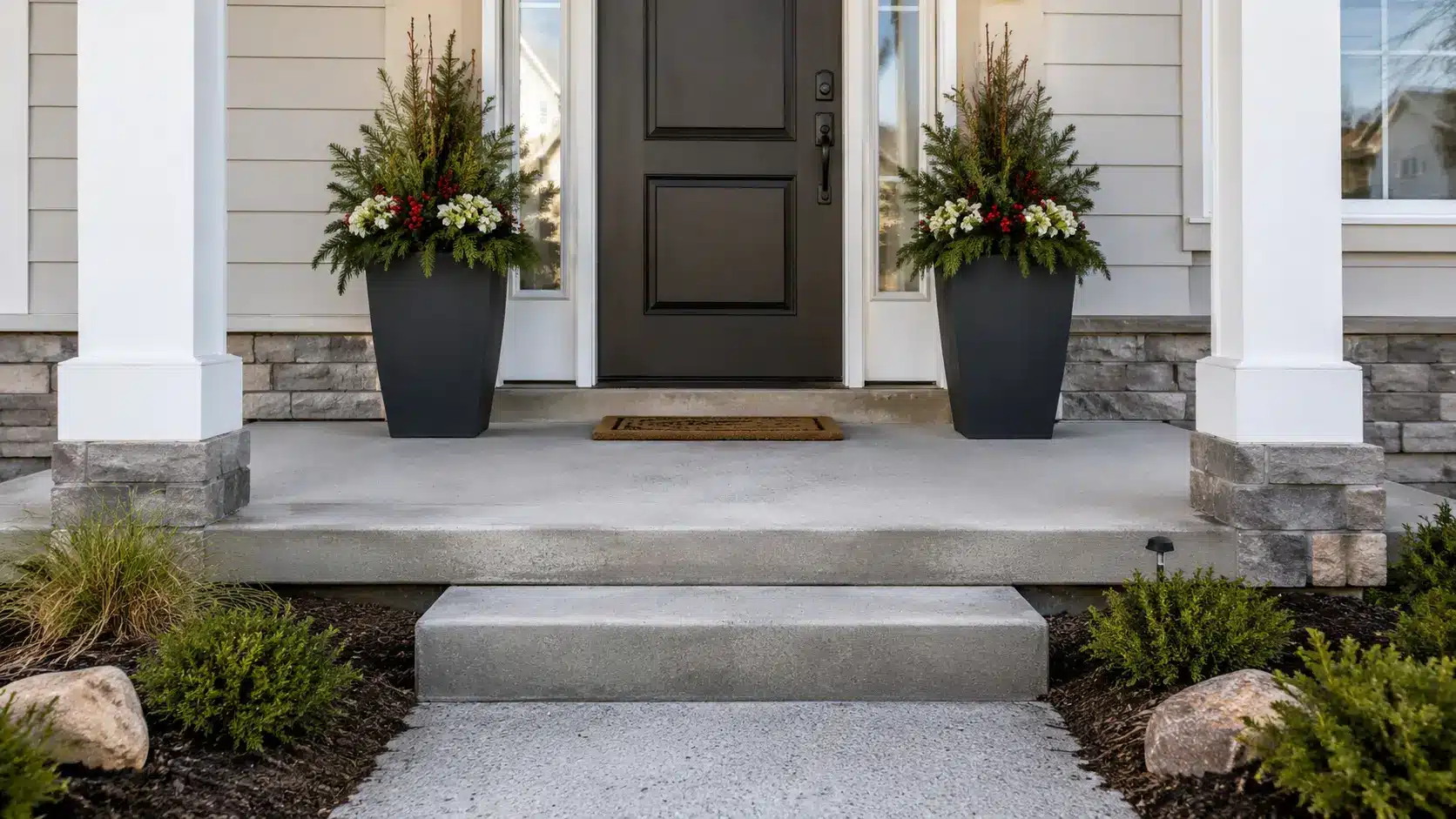
Matching planters and a narrow flower border along the porch create a welcoming, balanced entry. Two pots beside the door add color and height without changing the yard itself.
Low plants near the porch base soften the edge while keeping walking space open.
Tall pots work well on tight porches, while wider pots suit steps or open porches. Keep plants below the railing so the front of the house still feels open from the street.
Best for: Porch-front homes, small porches, townhouses, and limited planting space.
5. Plant a Small Tree Near the House
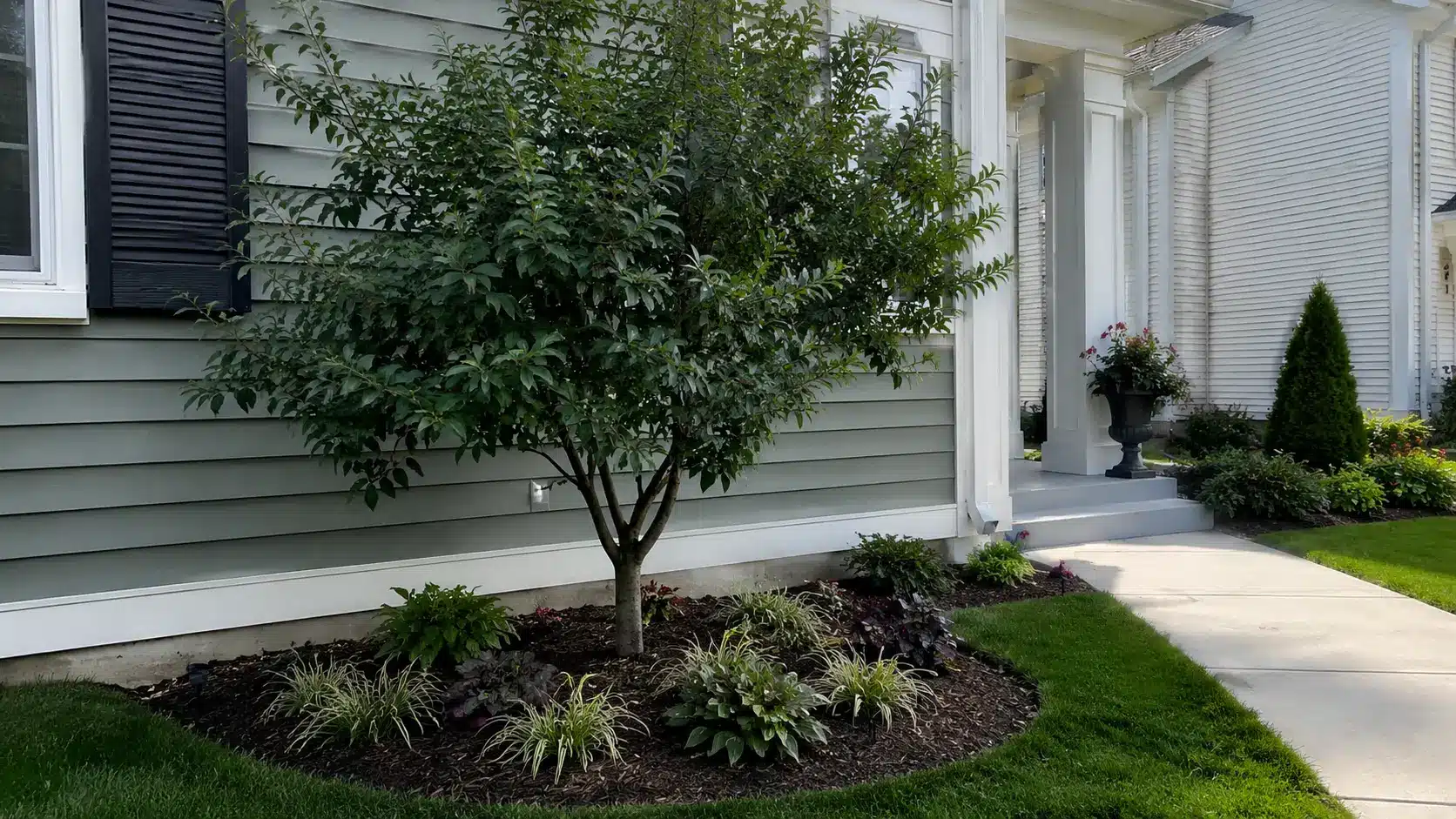
A small tree can give a flat front yard a better shape. It works well near a front corner, beside a walkway bend, or in a small lawn area that needs height.
Choose a type that stays compact when mature, such as redbud, crape myrtle, or dwarf Japanese maple. Keep it away from wires, gutters, and narrow paths.
Add mulch and low plants around the base to connect it to the rest of the yard.
Best for: Flat yards, open corners, and homes that need height near the entry.
6. Add a Rock Garden Around the Mailbox
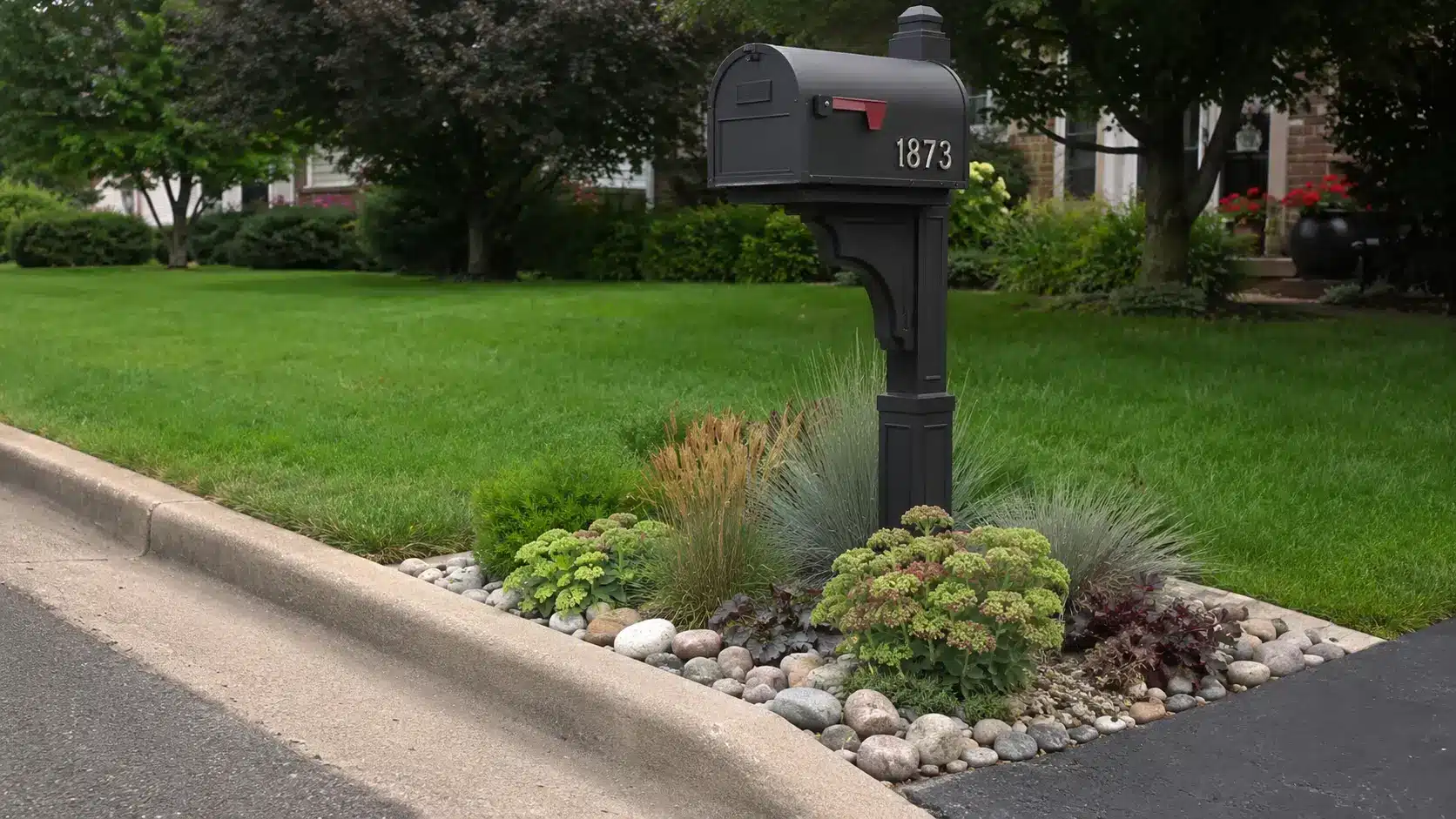
A mailbox garden is a small project that can change the curb view quickly. Since the mailbox sits close to the street, it becomes one of the first things people notice.
Use tough plants that can handle sun, heat, dry soil, and road splash. Compact perennials, low grasses, sedum, and daylilies work well. River rock or mulch holds the shape and keeps weeds down.
Keep the planting low enough so the mailbox is easy to reach.
Best for: Curbside color, sunny mailbox areas, and small yards that need a quick focal point.
7. Install Window Boxes for Color
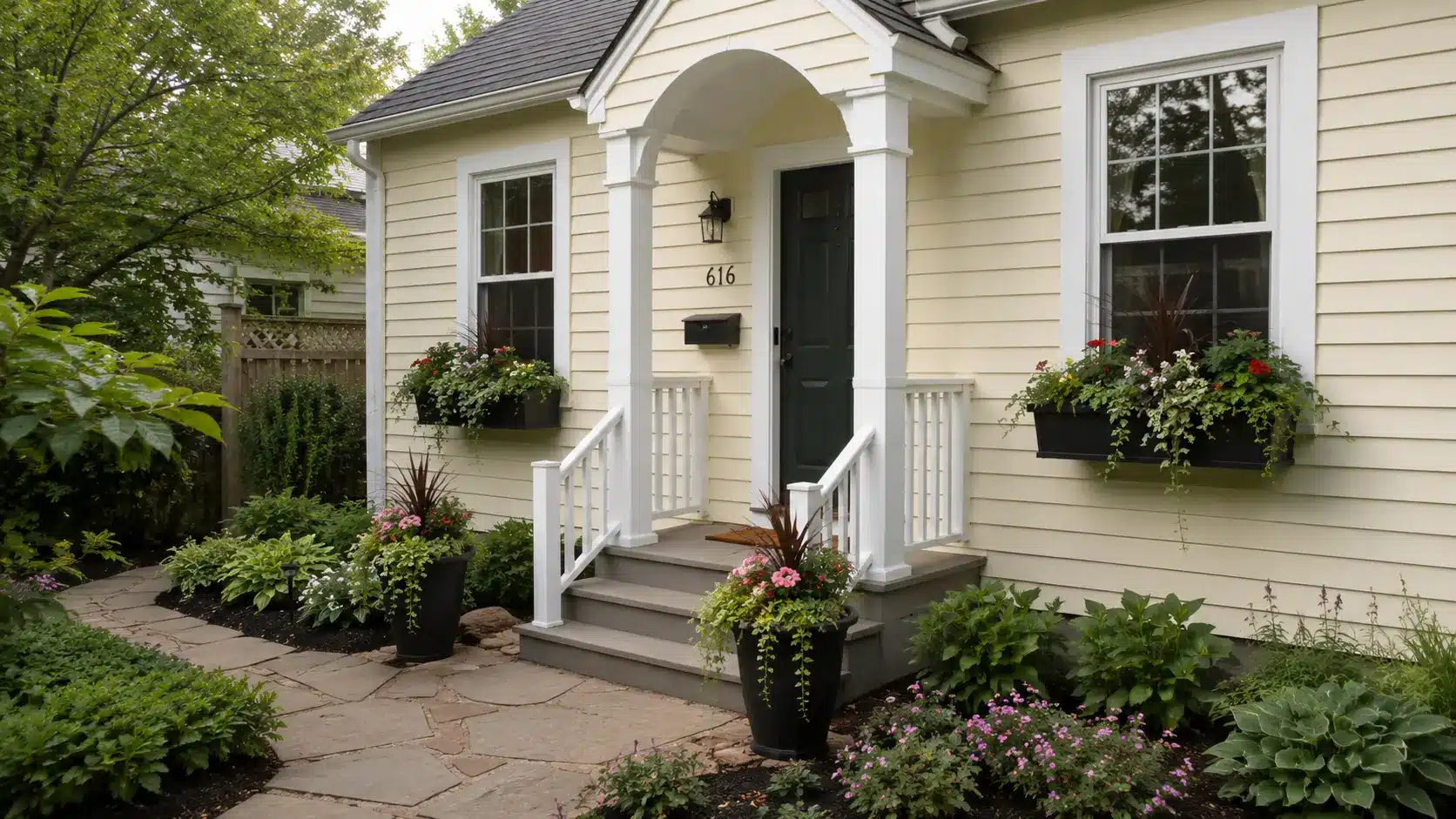
Window boxes bring color up to eye level when the yard is too small for deep planting beds. They make the front of the house feel complete and add seasonal interest.
Choose boxes that match your window width. Trailing plants soften the front edge while upright plants give fullness. Repeating the same flowers in planters and window boxes creates a connected look.
Best for: Tiny yards, bare windows, cottage-style homes, and homes without deep planting beds.
8. Replace Patchy Grass With Ground Cover
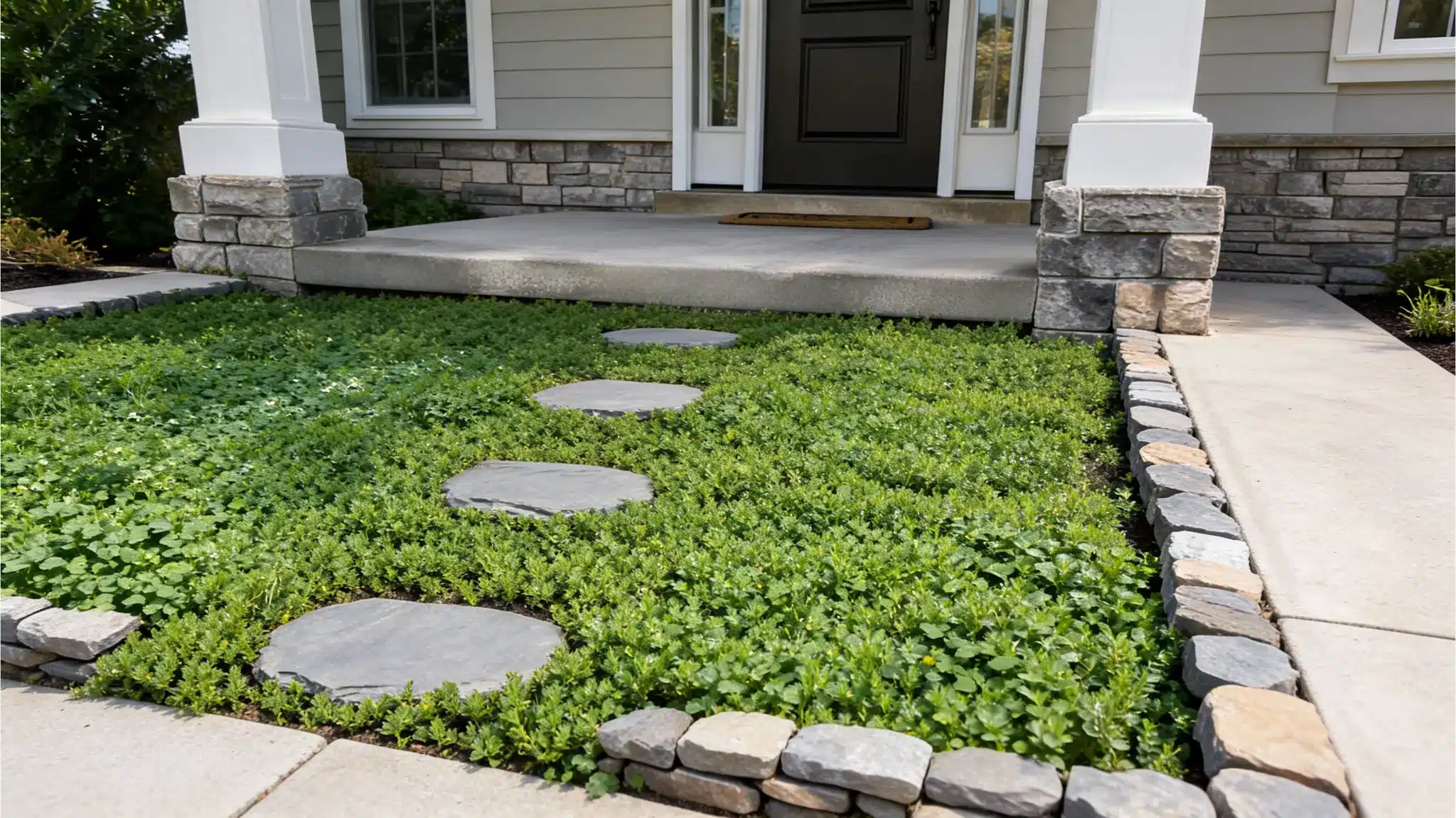
Some small lawns never grow well. They may be too shaded, dry, sloped, or narrow. Ground cover can be a better choice in those spots.
Creeping thyme, sedum, clover, ajuga, and native ground covers fill bare areas and reduce mowing. Some handle light foot traffic, while others need stepping stones.
Start with a small patch before replacing a larger lawn. Clear borders help ground cover look planned instead of messy.
Best for: Shaded lawns, dry patches, slopes, and small yards where grass will not grow well.
9. Create a Narrow Bed Beside the Driveway
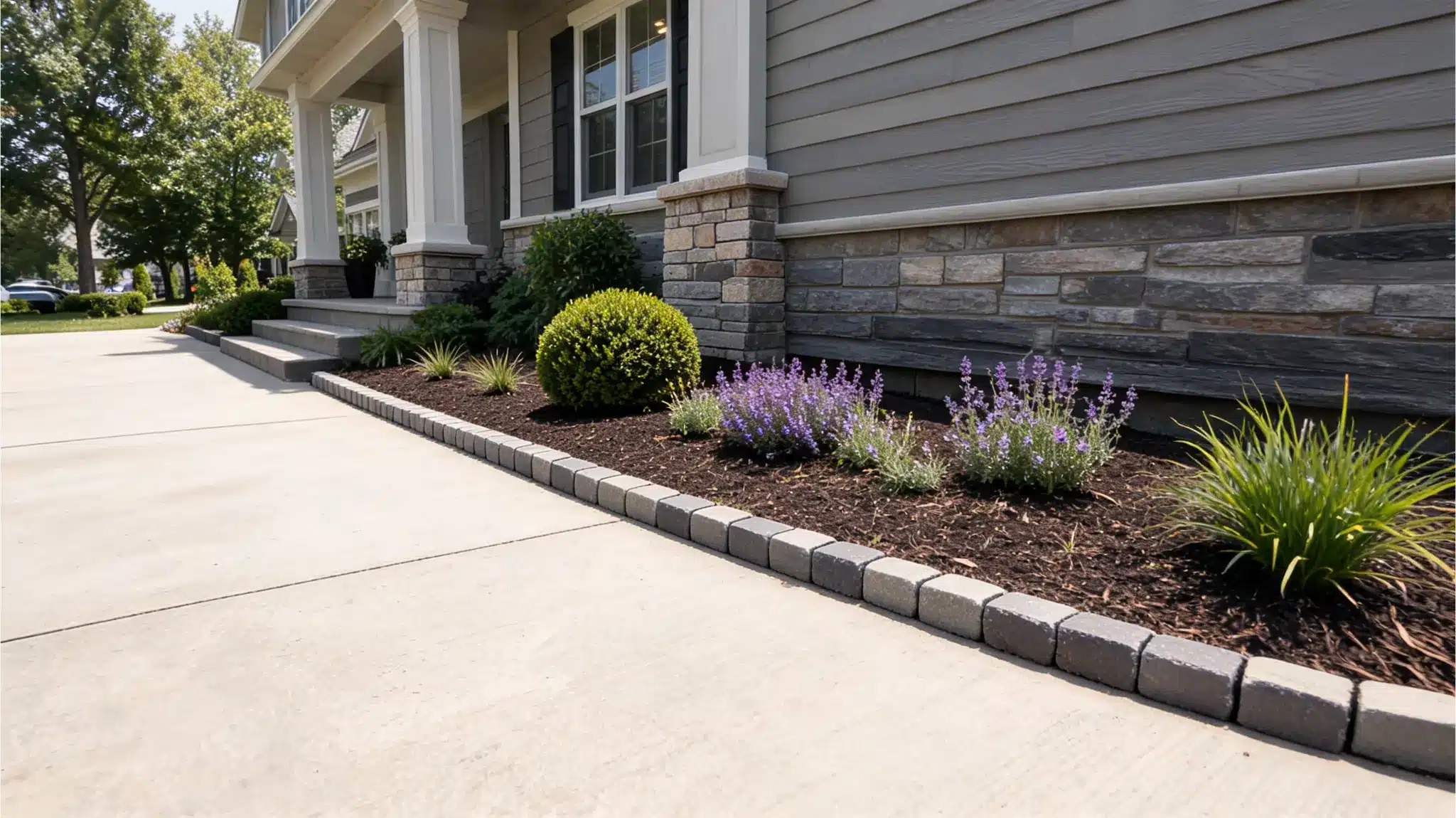
A narrow bed along the driveway edge makes a small front yard feel finished without taking space from the lawn or walkway.
Use low plants near the driveway edge so car doors can still open easily. Add one or two compact shrubs closer to the house for shape.
Mulch, gravel, or brick edging keeps the bed neat and prevents grass from spreading into the planting area.
Best for: Driveway edges, plain side strips, and small yards without room for a large bed.
10. Match Your Plants to Light Conditions
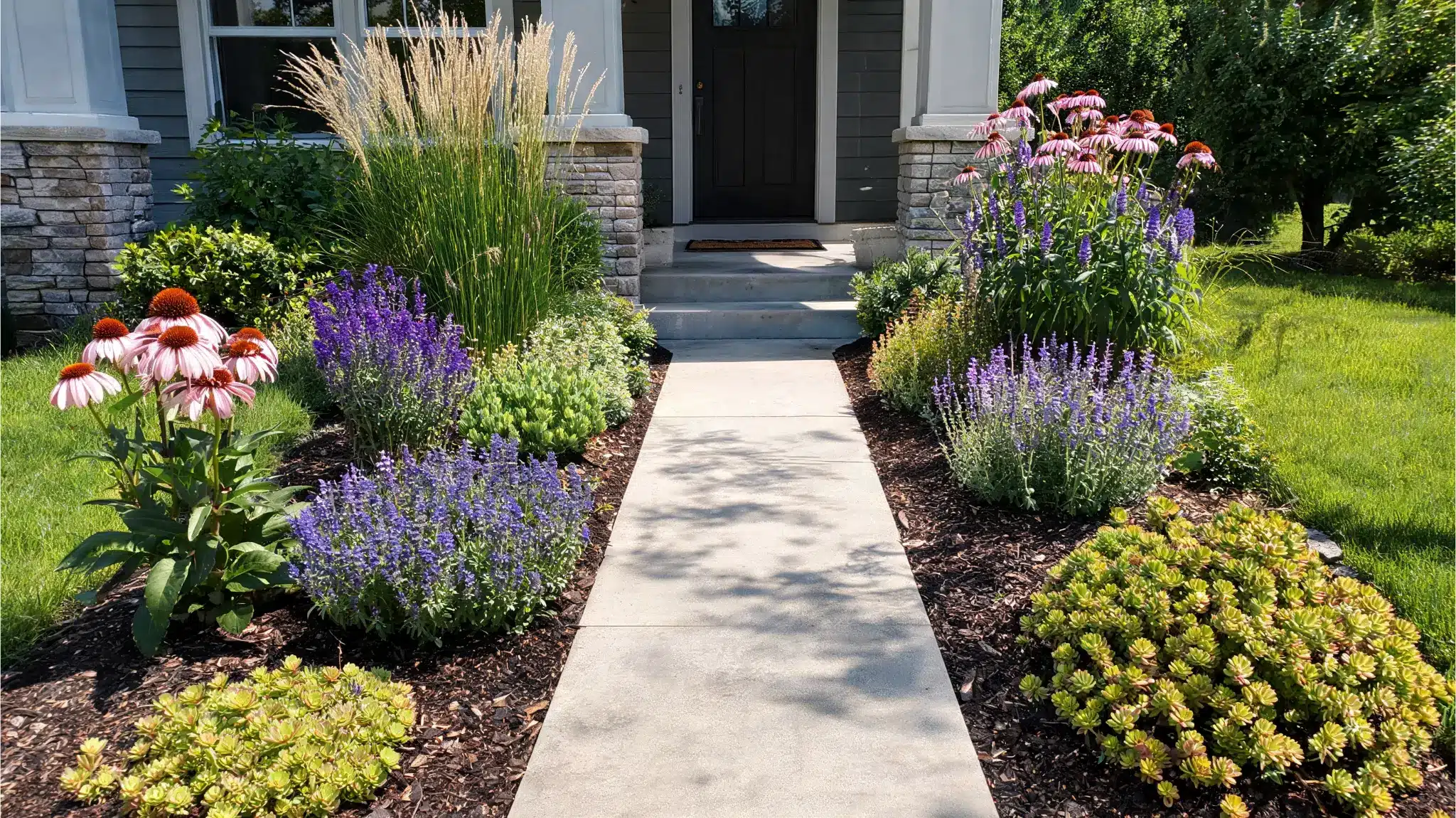
Choose plants that thrive in the specific sun and shade conditions of your yard. Sun-loving options include lavender, salvia, coneflowers, and ornamental grasses.
Shade-loving options include hostas, ferns, and Japanese forest grass.
Place taller plants toward the back of beds and lower plants near edges to keep the space open. Repeat mulch, gravel, or stone accents in small amounts to keep the yard looking planned.
Best for: Full-sun areas, shaded porches, side entries, and yards with mixed light conditions.
11. Add Vertical Elements or a Trellis
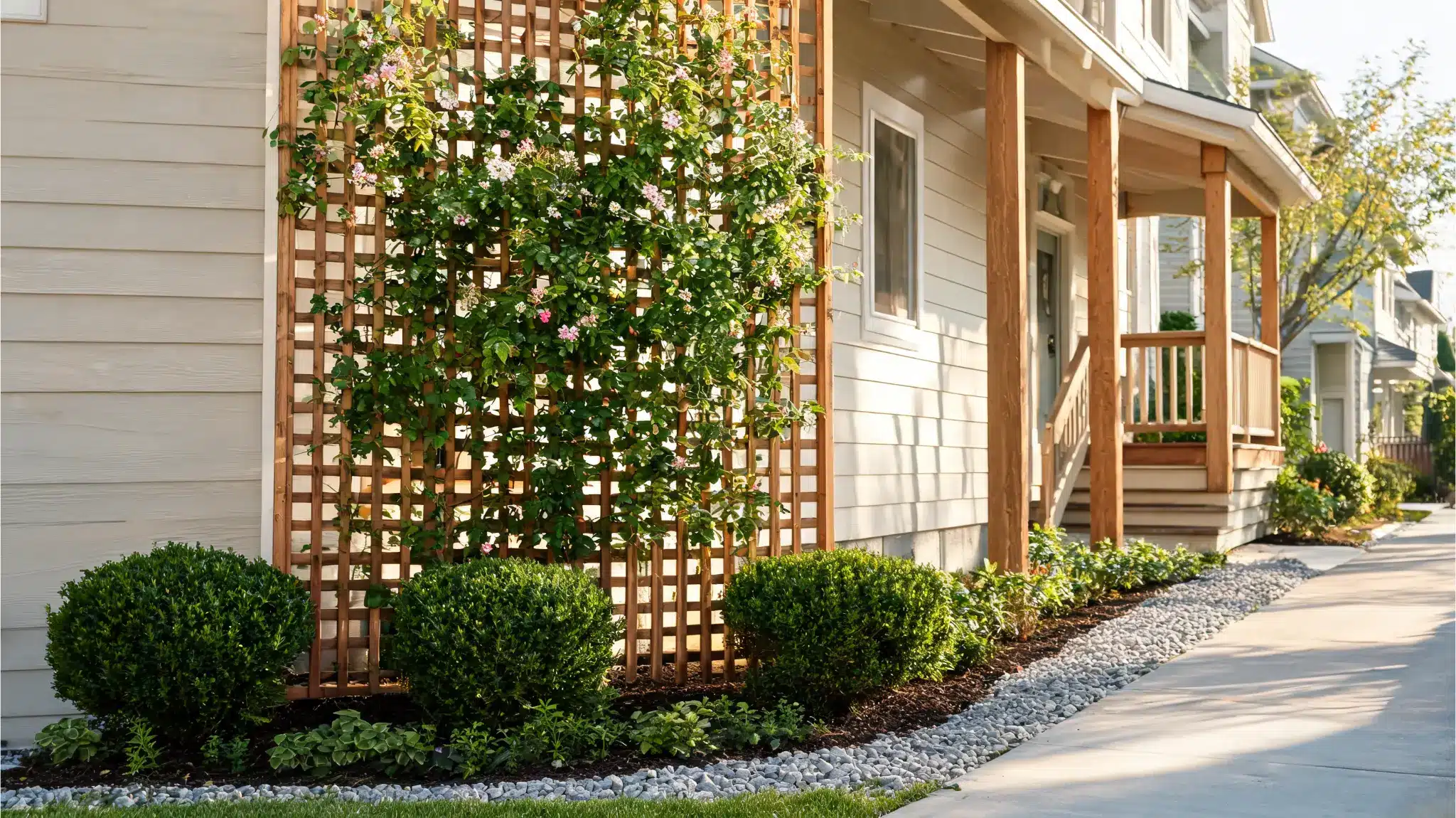
Vertical elements make a small yard feel larger by drawing the eye upward. A trellis, narrow climbing frame, or lattice can support vines or flowers without taking up horizontal space.
Place it near the porch, fence, or along a narrow side yard. Use compact climbing plants or small vines to keep the area tidy. Vertical structures can also create privacy or frame the entry.
Best for: Narrow entries, small yards, vertical interest, and creating privacy without walls.
Choose the Right Layout Before You Buy Plants
A small front yard looks better when the layout fits the shape of the house. If the plan does not match the space, even good plants can feel out of place.
| Yard Type | Best Layout |
|---|---|
| Townhouse front yard | Keep the walkway open and use tall planters, narrow beds, or window boxes near the entry |
| Ranch-style home | Add height with a curved bed, compact tree, or layered shrubs |
| Porch-front home | Connect the porch to the yard with step planters, low flowers, and path lights |
| Narrow front yard | Use slim beds, low border plants, and simple containers |
| No-lawn front yard | Mix gravel or stepping stones with small planting pockets |
The layout should make the door easy to find. Once that part works, the plants, edging, and materials are easier to choose.
Budget-Friendly Updates
A small front yard is a good place to spend carefully because every update is easy to see. You do not need to finish the whole space at once. Start with the entry, walkway, or mailbox since those spots shape the first impression.
Fresh mulch can make old beds look cleaner in one afternoon. A sharp bed edge can make a plain lawn feel more cared for. Two planters can fill an empty porch. Solar lights can make the route to the door easier to follow at night.
| Budget | Best Update | Best Spot to Use It |
|---|---|---|
| Under $75 | Fresh mulch and clean edging | Existing beds, mailbox area, walkway edge |
| $75 to $200 | Entry planters or solar lights | Porch, steps, front path |
| $200 to $500 | Small flower bed or ground-cover patch | Walkway side, porch base, front corner |
| $500 and up | No-grass section or compact tree | Patchy lawn, narrow yard, open corner |
If the budget is tight, work in layers. Clean first, then edge, then plant. Add rocks, lights, or a tree later so each update still fits the final plan.
Common Mistakes and Simple Fixes
A small front yard can feel crowded fast when the plants, materials, and path are not planned together. These simple fixes can help the space feel cleaner, easier to use, and more balanced.
- Choosing plants only by store size: Young plants can grow much taller or wider than expected. Check mature height and width before planting near windows, paths, or the porch.
- Planting tall shrubs under windows: Large shrubs can block light and make the house look hidden. Use low plants under windows and place taller plants near corners or porch posts.
- Mixing too many materials: Brick, gravel, mulch, rock, and several pot colors can make a small yard feel messy. Pick two or three main materials and repeat them.
- Using too much rock: A rock-only yard can feel flat and bare. Add compact shrubs, ground covers, or ornamental grasses so the space still feels planted.
- Blocking the walkway: Overgrown plants can make the entry feel tight. Keep plants low near paths and leave room for guests, bags, and deliveries.
- Hiding the front door: The yard loses its main focus when the door is hard to see. Keep the entry visible from the street and add lighting along the route.
- Starting too many projects at once: The yard can feel unfinished for longer. Start with one visible area, such as the entry, walkway, or mailbox.
Fix the biggest issue first, then move to the next one. A small front yard usually improves faster when each update supports the path, the door, and the planting space around them.
Frequently Asked Questions
What should go closest to the house?
Use low plants that stay below the windows and leave space for air flow. Compact shrubs, small perennials, and mulch work well near the wall. Taller plants fit better near corners, porch posts, or open side areas.
How can a tight entry feel wider?
Keep the path open, use low plants beside the walkway, and place taller plants closer to the house. Repeating the same plant on both sides can make the entry feel calmer, cleaner, and easier to read.
Is rock better than mulch?
Rock works well for dry strips, drainage areas, and modern layouts. Mulch is better around many flowers and shrubs because it helps protect soil moisture. Many small yards look best when both are used in separate areas.
What can replace large bushes?
Try ornamental grasses, low perennials, ground covers, large planters, a narrow trellis, or one small tree. These choices add shape without covering windows. Choose by mature size, not by how the plant looks in-store.
How do I start with a small budget?
Clean the yard first, then edge the beds and add fresh mulch. After that, add one visible feature near the door, such as two planters, path lights, or a small flower bed beside the walkway.
Final Takeaway
Small front yard landscaping ideas work best when they help you make one clear decision at a time. Choose the view you want from the curb, then shape the path, bed edges, plants, and entry details around it.
The strongest front yard landscaping ideas are not always the most expensive ones. A clean border, a better planter pair, a small tree, or a no-grass bed can change the whole first impression.
I’d save two or three ideas that fit your house, check your sunlight, then start with the easiest visible area. Pick one weekend project now, take a before photo, and build from there with a plan you can keep using next season.