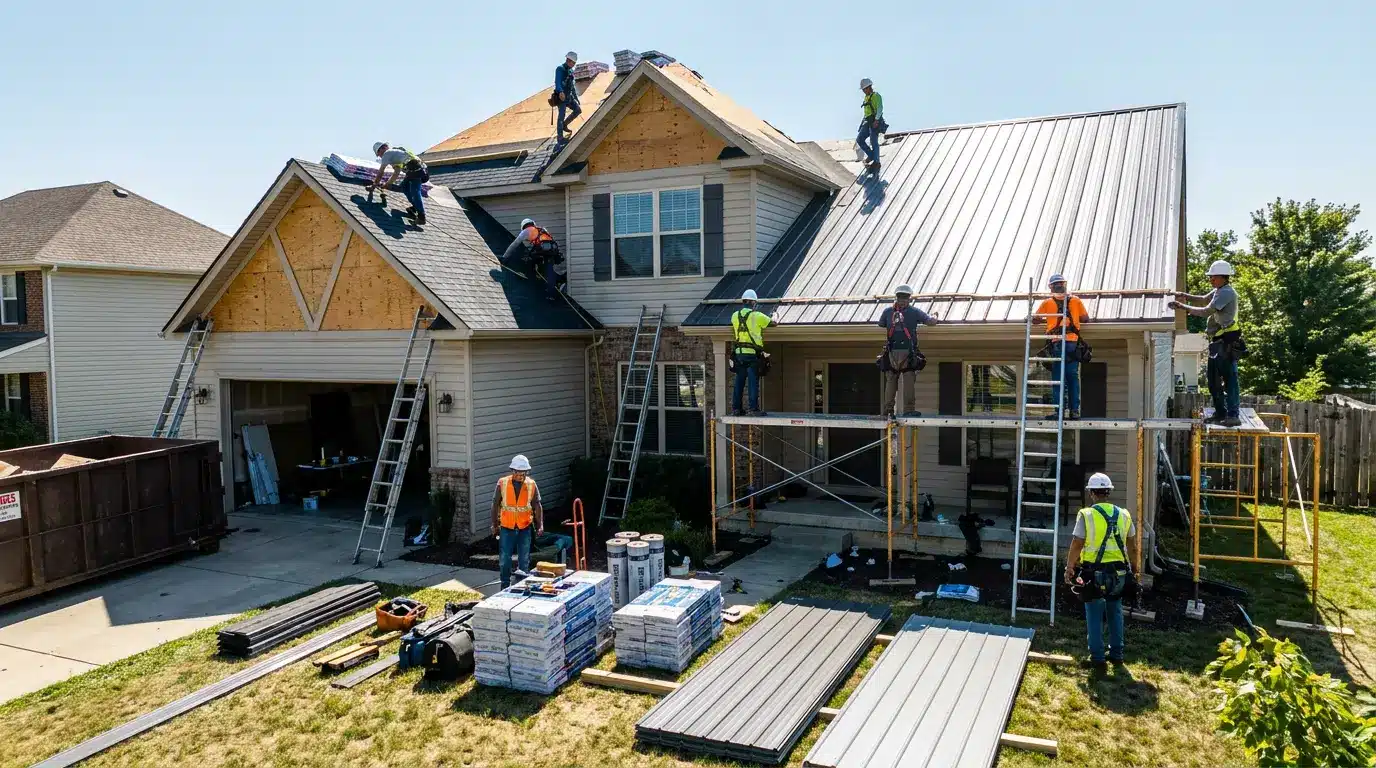
Have you ever looked at your roof and wondered, “How much is a new roof on a house going to cost me?” It’s a question that trips up many homeowners, especially when you consider materials, labor, and all the hidden factors that come into play.
I’ve been there, trying to figure out if a repair will do or if a full replacement is worth the investment. That’s why I wanted to create this guide for you.
Ahead, I’ll break down roofing cost, material options, roof designs, labor, and location differences. By the end, you’ll feel confident budgeting for your project and making informed choices.
Curious to see how you can save money without compromising on quality?
How Much Is a New Roof on a House?
A full roof replacement does not have a single fixed price, but the Department of Energy has used about $10,000 as a reference point, with the final cost varying based on roof size and other factors.
For you, that means this number is a starting point, not a guaranteed quote. A smaller asphalt shingle roof will usually cost less, while a large, steep, or detailed roof can cost much more. The price also depends on what is under the old roofing once it comes off.
If the decking is damaged or extra work is needed, the bill can rise. So when you get a quote, look beyond the headline price and ask what is included
Average Roofing Cost by Roof Size
Roof size is the cleanest place to begin because it controls how much roofing material, underlayment, and crew time you need.
Still, your roof can appear larger than your living space because pitch, overhangs, garages, and porches change the surface area.
| Roof Size | Planning Cost Range | What It Usually Means |
|---|---|---|
| 1,000 sq. ft. | $3,000 to $8,000 | Small homes, garages, porches, or additions |
| 1,500 sq. ft. | $4,500 to $12,000 | Smaller homes with simple layouts |
| 2,000 sq. ft. | $6,000 to $16,000 | Common full roof replacement size |
| 2,500 sq. ft. | $7,500 to $20,000 | Larger homes or wider one-story layouts |
| 3,000 sq. ft. | $9,000 to $24,000+ | Large roofs where labor and waste add up |
These ranges are planning numbers, not final bids. A simple asphalt roof may stay near the lower side, while steep slopes, difficult access, or premium materials can move the same-sized roof much higher.
Roofing Cost Per Square Foot and Per Roofing Square
Roofers often price work by the square because it keeps material ordering and labor planning clean. One roofing square equals 100 square feet, so a 2,000-square-foot roof has about 20 squares before waste is added.
Many standard roof replacements cost about $300 to $600 per roofing square, or roughly $3 to $6 per square foot for basic asphalt work.
That does not mean every roof fits that range. Metal, tile, slate, steep pitches, and detailed rooflines can cost more. A properly installed quote should include materials, underlayment, fasteners, basic flashing, labor, setup, and cleanup.
When you review an estimate, ask how many squares were measured and what is included in that price. That one question helps you compare bids fairly
How Roof Material Affects Cost
The material you choose can change the cost of your new roof more than almost anything else. Some roofs are easier to install, while others need stronger framing, careful handling, or trained crews.
1. Asphalt Shingles Roof Cost
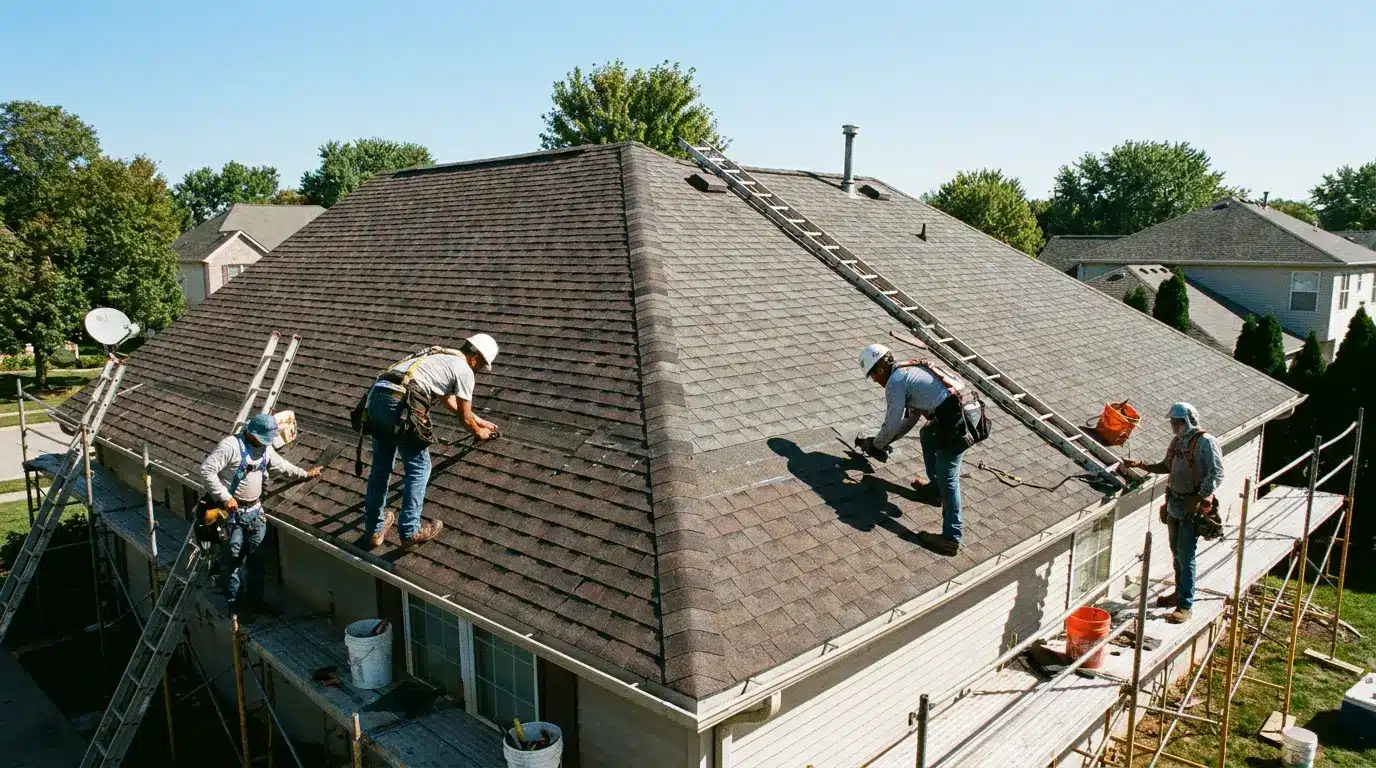
Asphalt shingles are often the practical starting point because crews know them well, supply is common, and installation is usually quicker. You’ll see them on suburban homes across many states, especially where owners want a reliable roof without a premium material bill.
- Budget fit: They usually have lower upfront costs than metal, tile, or slate, which helps when you need a solid replacement without stretching your savings.
- Repair ease: Individual damaged shingles are often easier to replace, so small future fixes may stay simpler than with heavier roof systems.
2. Architectural Shingle Roof Cost
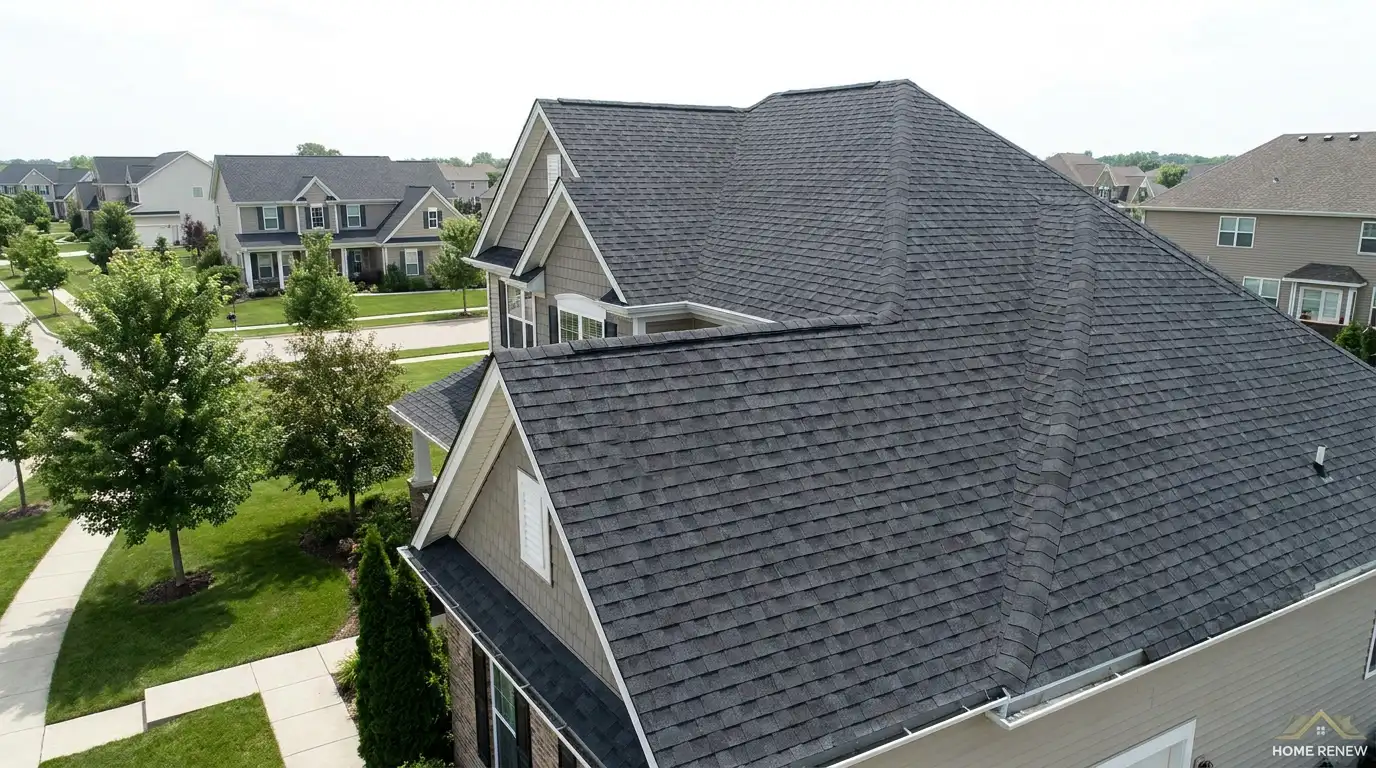
Architectural shingles cost more than basic three-tab shingles, but they give you a thicker, layered roof with better curb appeal and stronger performance. You’ll often see them in planned neighborhoods where homeowners want an upgraded look without paying premium roof prices.
- Middle price: Architectural shingles often run about $4 to $6 per square foot installed, placing them between basic asphalt and premium materials.
- Layered build: Their thicker profile can better hide small flaws on the roof surface than flat three-tab shingles and add more roof depth.
3. Metal Roof Cost
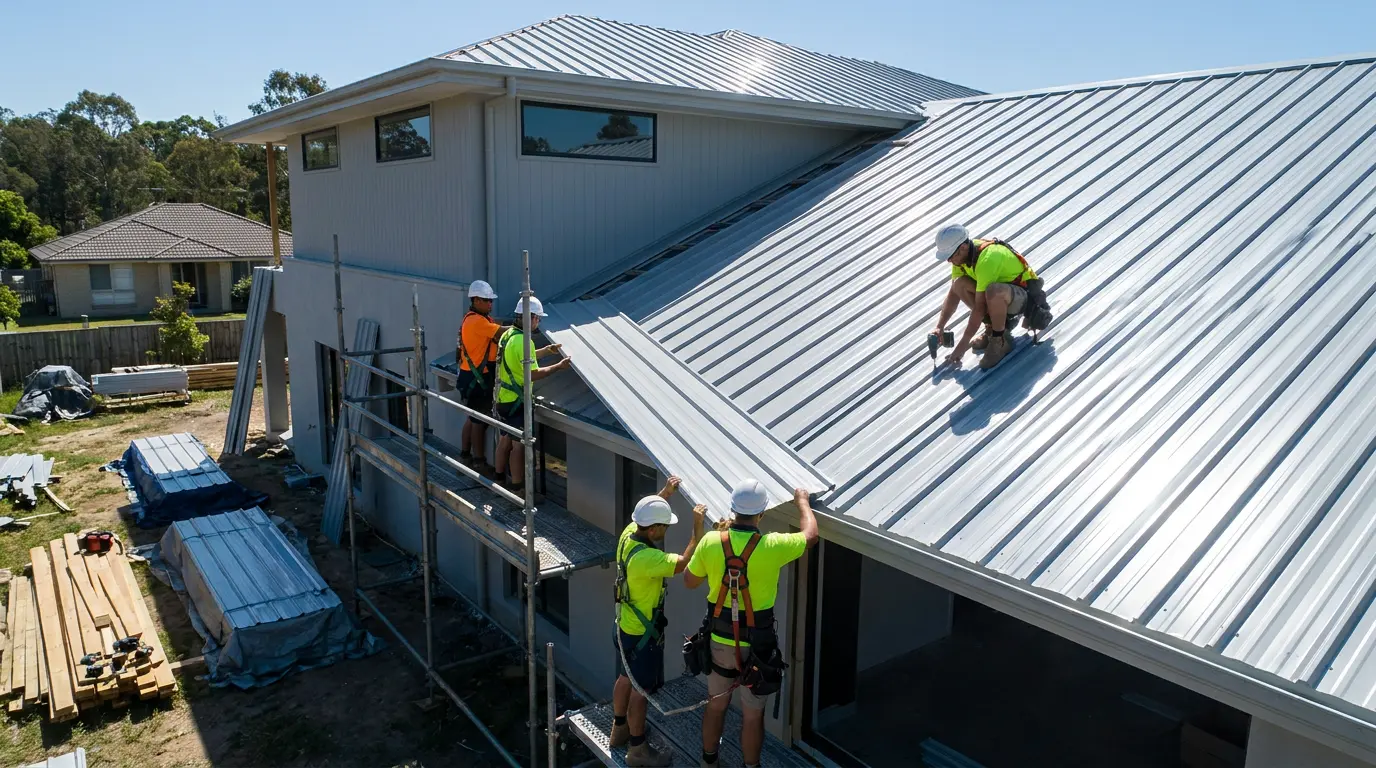
Metal roofing costs more at installation, but it can make sense when you want long service life and strong weather performance. It is often considered in snowy, rainy, wildfire-prone, and rural areas where durability and lower maintenance carry real value.
- Higher Range: Metal roofing often costs about $5 to $16 per square foot installed, depending on the metal type, panel style, and roof details.
- Weather match: Coated metal can reflect heat, shed snow well, and resist fire exposure better than many basic roofing options.
4. Tile Roof Cost
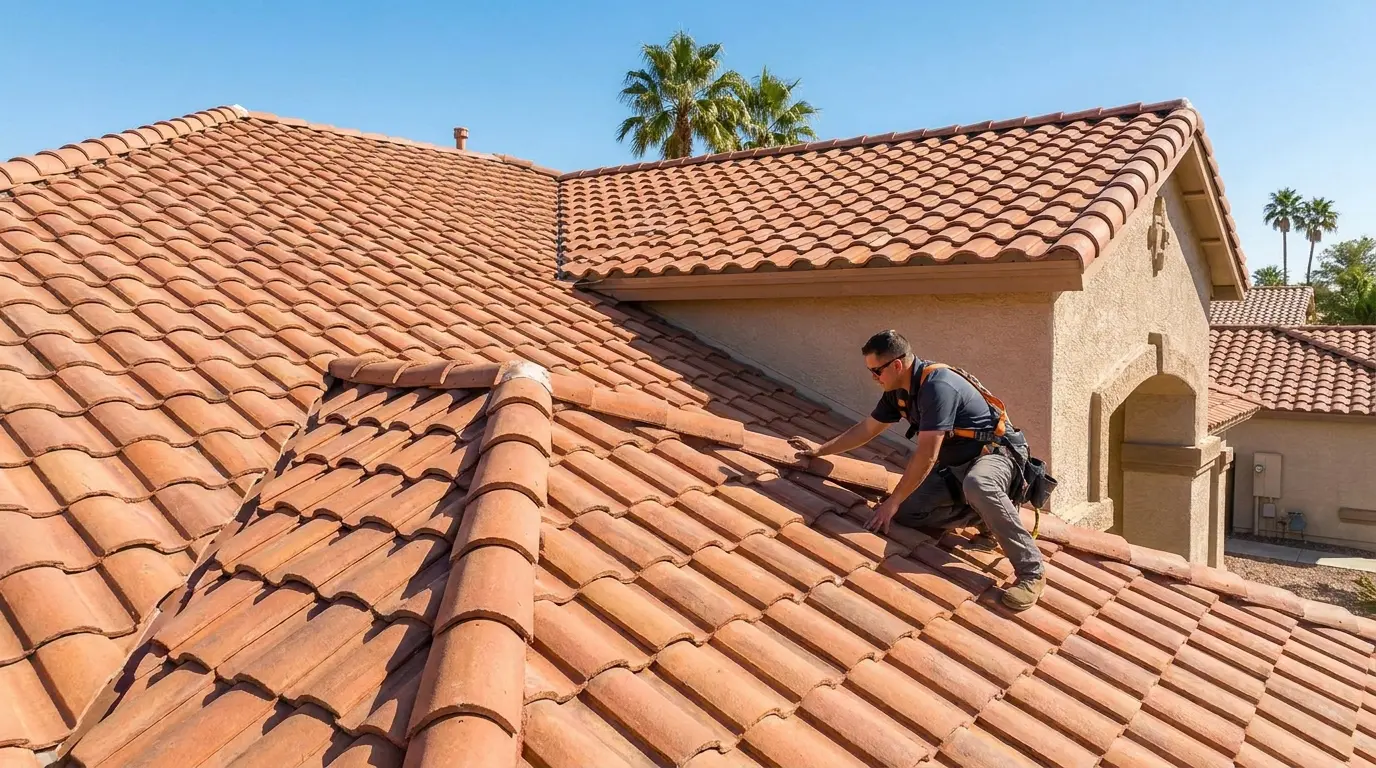
Tile roofing usually sits in a higher price range because the material is heavy and installation needs more care. You’ll often see clay or concrete tile in the Southwest, California, Florida, and warmer neighborhoods where heat resistance and style both matter.
- Cost range: Tile roofs often land in a higher total project range, commonly around $8,500 to $26,000 or more for many homes.
- Heat fit: Tile can work well in hot regions, but broken pieces and skilled labor can raise repair costs later
5. Slate Roof Cost
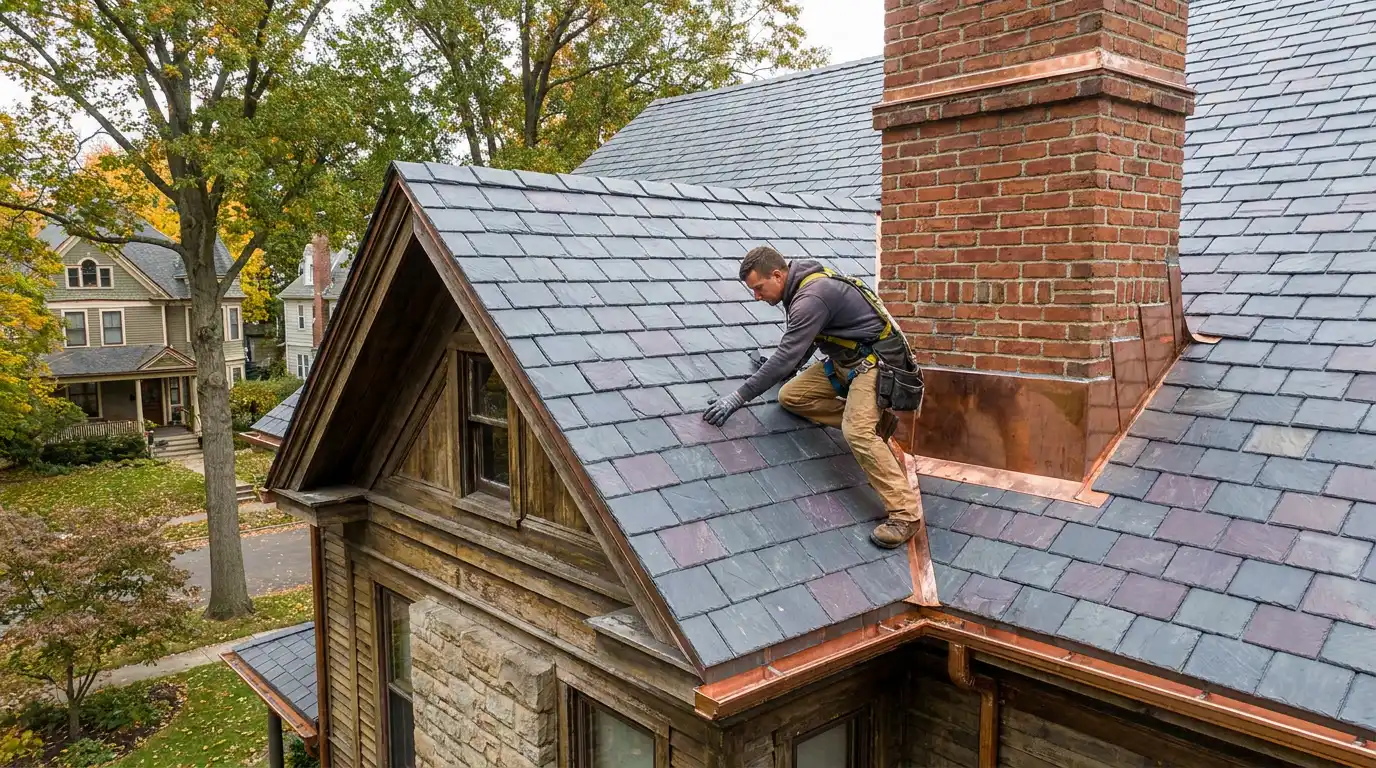
Slate is a premium roof choice, and the cost reflects both the material and the skill needed to install it correctly. You’ll see it more on older homes, custom houses, and parts of the Northeast where long-lasting traditional roofs are valued.
- Skilled labor: Slate requires trained installers because improper handling can crack pieces and undermine the roof’s long-term performance.
- Premium price: Natural slate can cost about $10 to $30 per square foot installed, and large custom projects can rise much higher.
6. Wood Shake or Wood Shingle Roof Cost
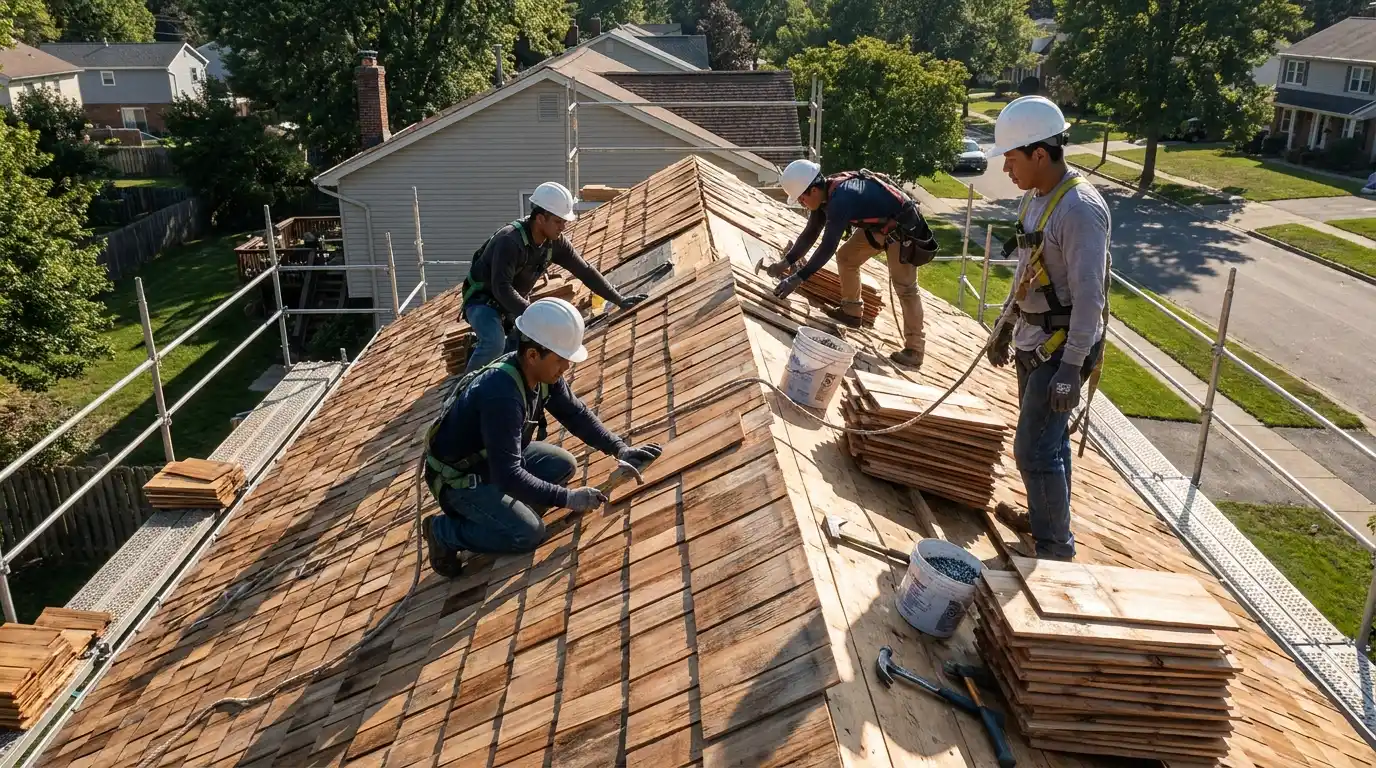
Wood shakes and shingles bring a warm, natural look, but they usually require more care than asphalt or metal roofing. They appear on cabins, Craftsman homes, and some coastal or mountain properties, though fire rules can limit their use in dry areas.
- Mid-high cost: Wood roofing often costs about $5 to $12 per square foot installed, depending on wood type, treatment, and local labor
- Rule limits: Some communities restrict wood roofing because of fire risk, so check local code before pricing it seriously
7. Flat Roof Material Cost
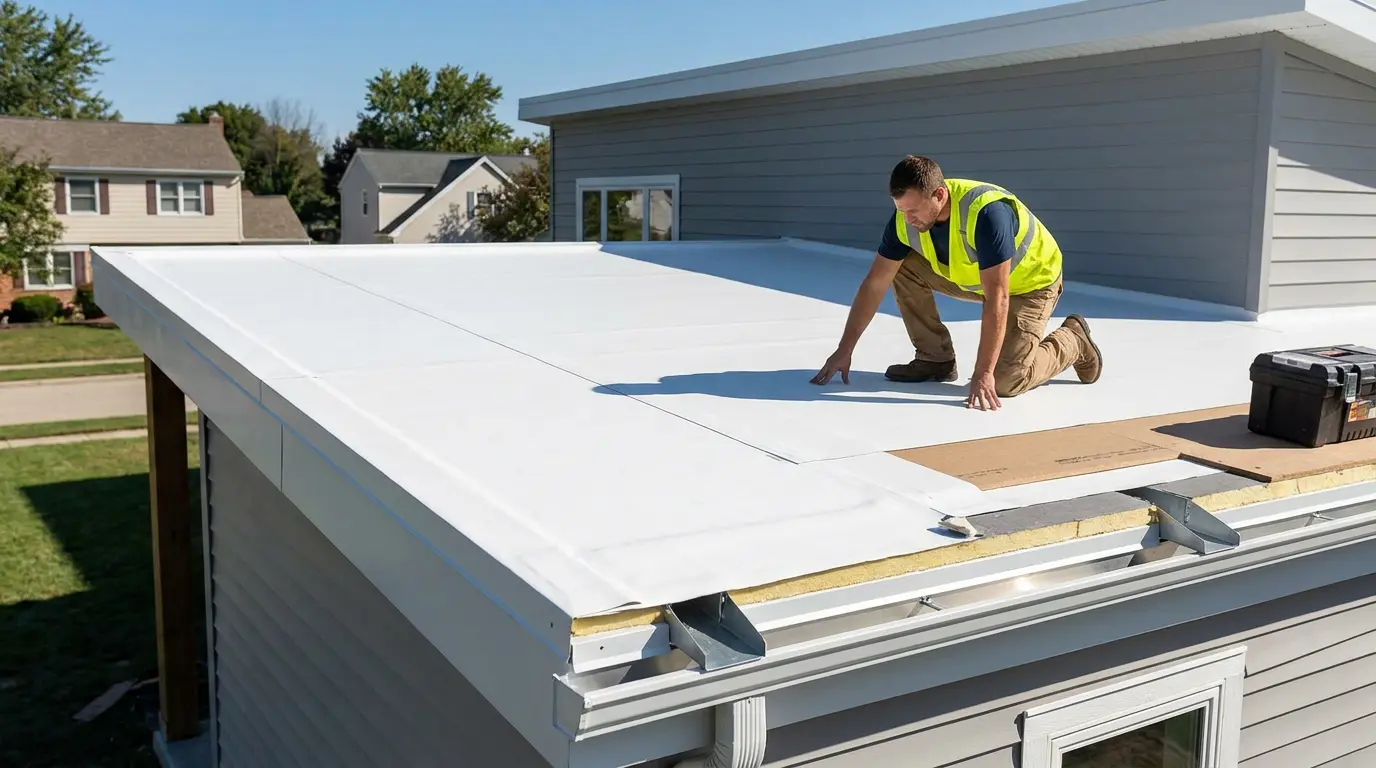
Flat roof materials are usually used on low-slope homes, additions, garages, and modern builds, not on steep traditional roofs. Options like TPO, EPDM, and modified bitumen depend heavily on drainage, seams, and waterproofing, so installation quality matters a lot for you.
- Drainage plan: Standing water can shorten roof life, so slope, scuppers, gutters, and drains need careful planning.
- Seam quality: Many low-slope systems rely on seams, making installer skill and product fit more important than appearance.
How Location Affects Roofing Cost
Where your home sits can significantly affect your roof estimate. Weather, local labor demand, permit rules, and job access vary across regions, so your location can affect both the work required and the price range you receive.
| Location Type | Cost Level | Cost Impact |
|---|---|---|
| Hot states | Moderate | Reflective or heat-reflective roofing may increase upfront costs. |
| Coastal zones | High | Wind, rain, and salt air may require stronger roof details. |
| Snow regions | Moderate to high | Ice barriers and drainage planning can add to the quote. |
| Hail areas | Moderate to high | Impact-rated shingles may increase material costs. |
| High-wind areas | High | Stronger fastening and sealed edges may be needed. |
| Large metros | High | Labor, permits, parking, and disposal often cost more. |
| Rural properties | Moderate | Travel, fuel, delivery, and dumpster access may add fees. |
| Local code areas | Moderate to high | Permits, inspections, or code upgrades can raise costs. |
Material supply can also affect your estimate. Common asphalt shingles are usually easier to source, while slate, tile, specialty metal, or low-slope roofing may cost more if your area has fewer suppliers or trained installers nearby
Roofing Cost by Roof Type and Complexity
Roof design can change the final quote because some roofs take more time, cutting, safety planning, and detail work than others. A simple shape is usually easier to replace, while steep sections and roof features can raise labor.
1. Gable Roof Cost
A gable roof is one of the simpler roof shapes, with two sloped sides meeting at a ridge. You’ll see it on many ranch, Cape Cod, and suburban homes because it sheds water well and usually doesn’t require heavy detailing.
- Cleaner layout: Fewer roof planes mean less cutting, easier material placement, and a smoother installation process for the roofing crew.
- Lower waste: Because the shape is more direct, contractors often deal with fewer awkward cuts around corners and roof transitions.
2. Hip Roof Cost
A hip roof slopes on all four sides, which gives it a sturdy, balanced look. It is common on many newer homes and in areas where wind performance matters, but it usually takes more work than a basic gable roof.
- More edges: Hips, ridges, and corners require careful alignment, which takes more time than a roof with fewer connecting lines.
- Added cutting: More angles often create more trimming and fitting, so crews may need extra material to finish the roof cleanly.
3. Flat or Low-Slope Roof Cost
Flat and low-slope roofs are common on modern homes, additions, porches, and some garages. They do not shed water as well as steep roofs, so the system depends on proper drainage, sealed seams, and robust waterproofing details.
- Drainage focus: Small slope changes, scuppers, gutters, and drains matter because standing water can shorten roof life and lead to leaks.
- Seam work: Low-slope systems rely on tight seams and edges, so installer skill can affect performance more than the roof’s appearance.
4. Mansard Roof Cost
A mansard roof has steep lower slopes and a more detailed shape, often seen on French-style homes, older properties, and some custom houses. It can look distinctive, but the design usually takes more care during replacement.
- Steep sections: Crews may need more safety setup and slower installation because the lower slopes can be harder to work on.
- Detail points: Transitions, edges, and dormer areas often need careful flashing and sealing to help prevent future water issues.
5. Complex Roof Cost
A complex roof has several sections, levels, valleys, skylights, chimneys, or dormers. You’ll see this on larger custom homes, luxury builds, and houses with additions. The price rises because the crew must work around more details.
- Flashing needs: Chimneys, skylights, walls, and valleys require precise flashing because these areas are more prone to leaks if rushed.
- Slower progress: Multiple slopes and levels make movement harder, increase setup time, and often require more hand-cutting around roof features.
Extra Costs That Can Increase Roof Replacement Price
Some roofing costs are not apparent until the old roof is removed. That is why I’d always leave room in your budget for work below the shingles, around roof edges, and near leak-prone areas.
- Old removal: Tear-off adds labor, disposal, and cleanup time, especially if your roof has more than one old layer.
- Deck repairs: Rotten plywood or soft boards must be replaced before the new roof goes on, or the roof will lack support.
- Flashing work: Chimneys, skylights, valleys, and wall joints may need new metal flashing to reduce water entry points.
- Ventilation fixes: Ridge vents, soffit vents, or attic airflow upgrades may be needed when heat and moisture are trapped.
- Trim damage: Fascia, soffits, gutters, or skylight surrounds can add cost if water damage has spread beyond the roof surface.
Roof Repair vs. Roof Replacement Cost
Choosing between repair and replacement is really about the roof’s age, the extent of damage, and how often problems recur. A repair can be smart for a small issue, but repeated fixes may point to a roof that is ready to be replaced.
| Situation | Repair May Make Sense | Replacement May Make Sense |
|---|---|---|
| Damage size | One leak, a few missing shingles, or one small flashing issue | Leaks in several areas or damage spread across large sections |
| Roof age | The roof is still well within its expected service life | The roof is near or past its usual lifespan |
| Cost pattern | One affordable fix solves the problem clearly | Repairs keep returning and the total cost keeps growing |
| Roof surface | Most shingles or panels still look secure and functional | Widespread curling, cracking, sagging, or loose roofing is visible |
| Home risk | The issue is small and caught early | Waiting could lead to ceiling, attic, or structural damage |
A good inspection can help you avoid guessing. The best choice is not always the cheapest today, but the one that protects your home better over time.
Does Insurance Cover a New Roof?
Insurance can help with a new roof when damage is caused by a covered event, such as wind, hail, fire, or a fallen tree. It usually will not pay just because the roof is old, worn out, or poorly maintained.
I’d check your policy before making assumptions, because deductibles, exclusions, roof age, and coverage type can affect what you receive.
Some policies pay replacement cost, while others use actual cash value, which subtracts for age and wear. Take photos, note the date of damage, and get a written inspection before filing.
If the damage is small and below your deductible, paying out of pocket may make more sense than opening a claim. Your agent can clearly explain the best next step.
How to Hire the Right Roofing Contractor
Hiring the right roofing contractor can make all the difference between a smooth project and a stressful one. Knowing how to verify credentials, check references, and understand warranties ensures your roof is installed safely, efficiently, and professionally.
These key points will help you choose a contractor you can trust and avoid costly mistakes:
- Check Credentials: Verify licenses, certifications, and insurance coverage to ensure the contractor is qualified and protected.
- Ask References: Talk to previous clients to understand the quality of work, timeliness, and professionalism.
- Compare Quotes: Get multiple estimates to evaluate pricing, services, and inclusions without focusing on the cheapest option.
- Warranty Details: Confirm what warranties are offered for materials and workmanship to avoid surprises later.
- Communication Skills: Choose a contractor who communicates clearly, answers questions thoroughly, and sets realistic timelines.
Frequently Asked Questions (FAQs)
How long does it take to install a new roof?
The timeline depends on the roof size, material, and complexity. Most standard asphalt shingle roofs take 1–3 days, while larger homes or specialty materials like metal and tile can take up to 1–2 weeks.
Can I install a new roof myself to save money?
While some experienced homeowners take on roofing projects, it requires specialized tools, safety equipment, and installation knowledge. Mistakes can lead to leaks, structural damage, and voided warranties.
Does roof replacement increase my home insurance premium?
Not necessarily. In many cases, a new roof can help lower insurance costs because it reduces the risk of future claims. Premium changes depend on the roofing material, your location, and your insurance provider’s policies.
Are there tax credits or rebates for installing a new roof?
Some energy-efficient roofing products may qualify for local, state, or federal incentives. Programs vary by location, so it’s worth checking current rebate opportunities before choosing roofing materials.
How do I know if my contractor’s quote is fair?
Compare at least three estimates and review the breakdown of labor, materials, permits, and warranties. A fair quote should be detailed, transparent, and backed by positive reviews, proper licensing, and a clear project timeline.
Final Thoughts
Now that I’ve covered the ins and outs of roofing cost, I hope you feel better prepared to tackle your roof project.
From understanding average prices and material differences to factoring in labor, location, and hidden expenses, you can make smarter decisions for your home.
You’ve seen how design choices, repairs versus replacement, and choosing the right contractor all affect both cost and long-term durability.
By applying these tips, you’ll protect your home, save money, and gain peace of mind. Don’t wait, take what you’ve learned here and start planning your roofing project today.