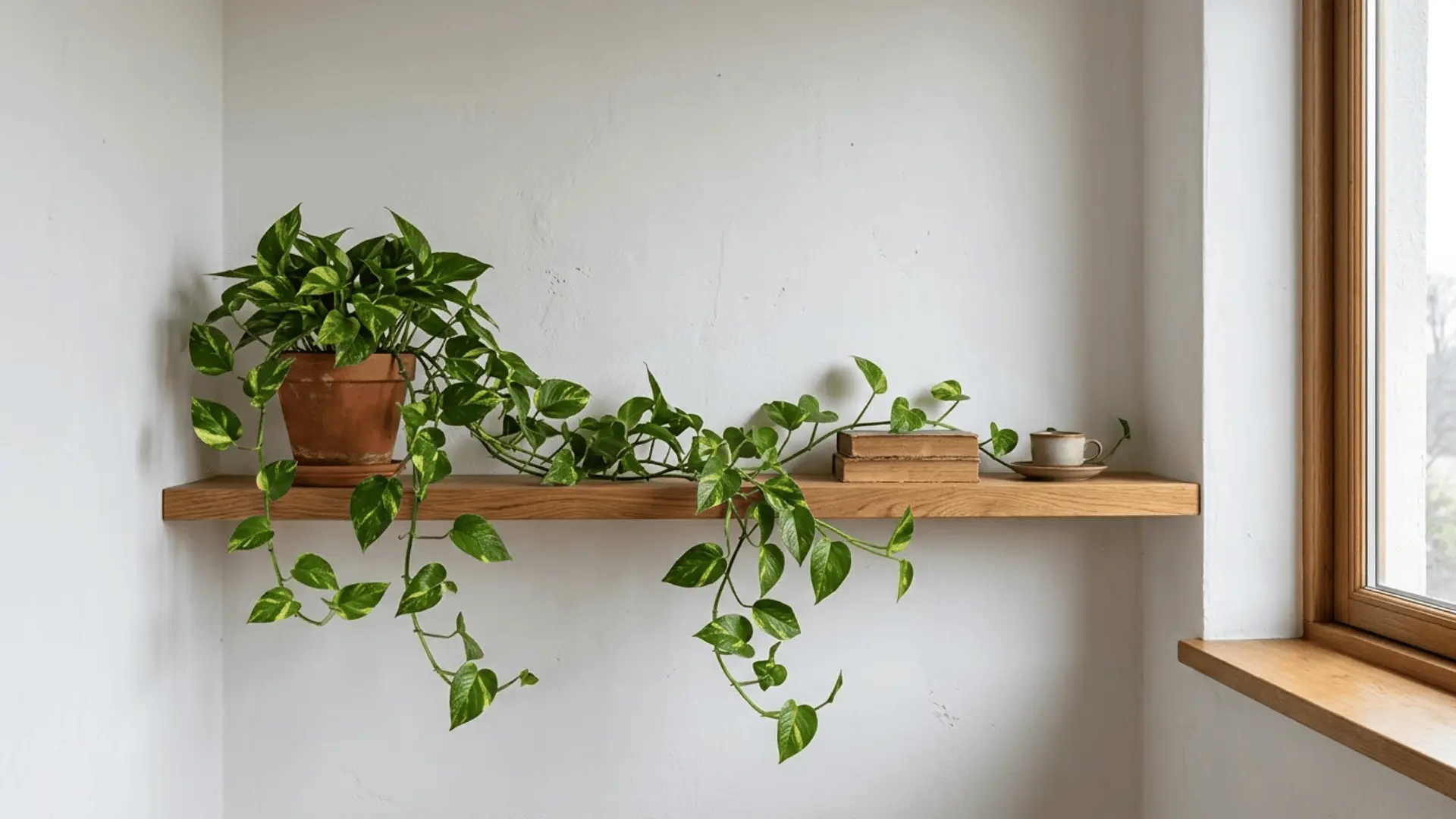
Pothos might just be the plant that started everyone’s indoor jungle obsession, and it’s easy to see why.
Trailing vines, lush heart-shaped leaves, and an almost effortless ability to thrive wherever you place it, Epipremnum aureum is basically the ultimate low-maintenance companion.
A beginner-friendly favorite that somehow looks gorgeous in every corner of a home, it keeps up with busy lives without asking for much in return.
Watering, lighting, soil, propagation, and even troubleshooting common issues, everything you need to keep your pothos thriving is right here.
What is a Pothos Plant?
Pothos is a hardy tropical vine that has made itself right at home in living rooms, offices, and shelfie setups worldwide.
What makes it such a crowd favorite comes down to a few things: it grows fast, tolerates a pretty wide range of lighting conditions, and asks for very little in return. Basically, it thrives on a bit of neglect.
Epipremnum aureum comes in several gorgeous varieties, each with its own personality:
- Golden Pothos
- Marble Queen Pothos
- Neon Pothos
- Jade Pothos
Ideal Growing Conditions for Pothos
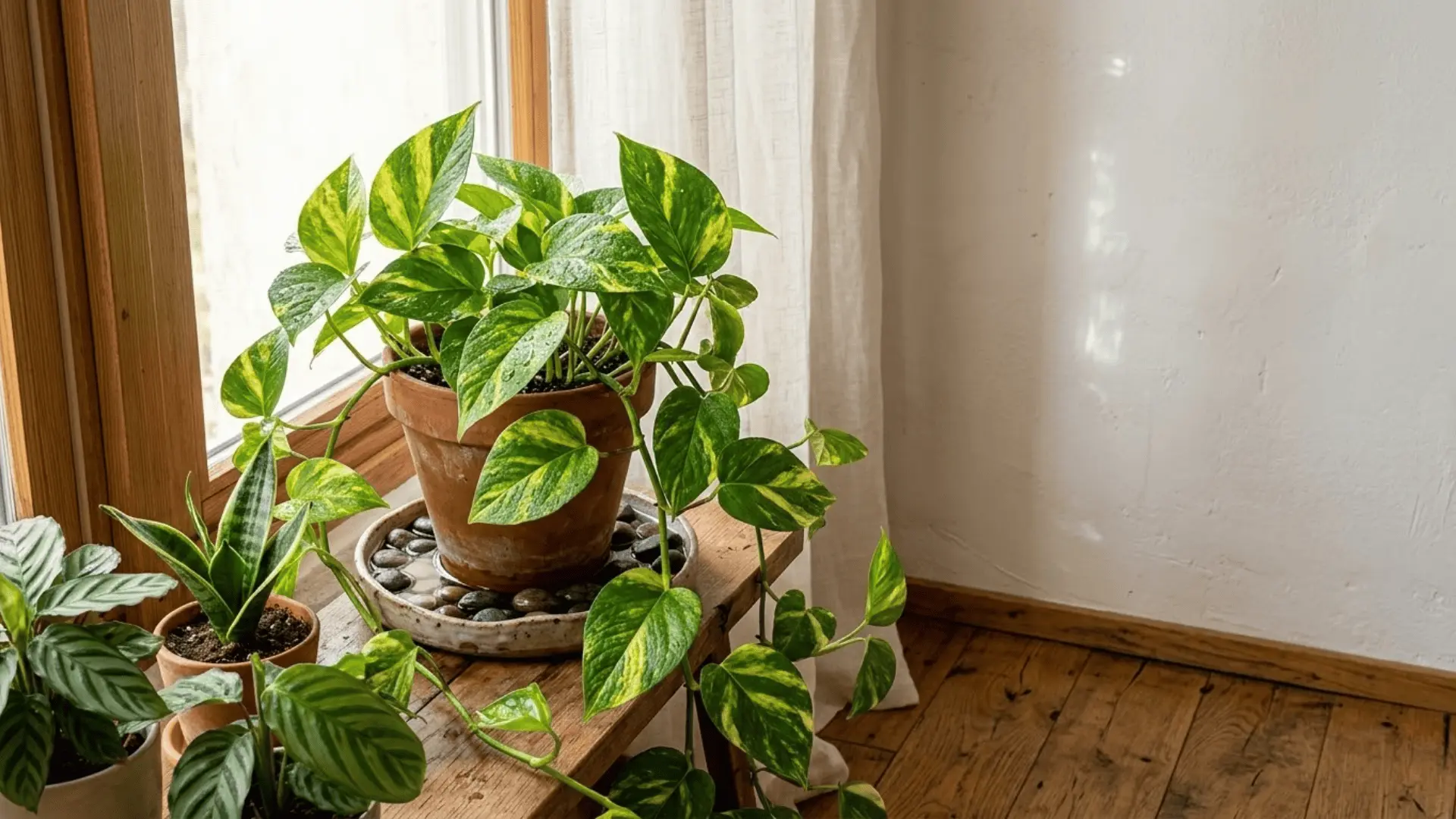
Pothos is refreshingly adaptable, but giving it the right environment brings out its best growth. A few simple conditions go a long way in keeping those vines lush and happy.
Light Requirements
Bright, indirect light is where pothos truly flourishes, producing vibrant, well-variegated leaves.
That said, it handles low light better than most houseplants, making it a reliable choice for dimmer corners and rooms with limited windows.
Direct sunlight is the one thing to avoid, as it tends to scorch the leaves and wash out that beautiful variegation over time.
Temperature Needs
Pothos prefers to stay in warm, stable indoor conditions and is fairly sensitive to cold drafts and sudden temperature drops.
Here’s what to keep in mind:
- Thrives between 60°F and 85°F
- Avoid placing near air conditioning vents or cold windows
- Growth slows noticeably in cooler temperatures
- Not frost-tolerant; keep strictly indoors in colder climates
Humidity Preferences
While pothos adapts well to average indoor humidity, higher moisture levels genuinely encourage lusher, faster growth.
A few easy ways to boost humidity:
- Mist the leaves lightly every few days
- Place a pebble tray filled with water beneath the pot
- Group it with other houseplants to create a humid microclimate
- Use a small humidifier nearby for consistent moisture
Pothos Plant Watering Guide
Watering pothos is less about sticking to a fixed schedule and more about reading what the plant actually needs. Getting this one thing right makes a noticeable difference in how well it grows.
How Often to Water Pothos?
Pothos prefers its soil to dry out slightly between waterings rather than sitting in consistently moist conditions. A good rule of thumb is to check the top couple of inches of soil before reaching for the watering can.
If it still feels damp, give it a few more days. During winter, the plant’s water needs slow down considerably, so watering even less frequently keeps things balanced.
Recognizing Watering Problems
Catching watering issues early keeps your pothos healthy and saves you from bigger problems down the line.
| Sign | Overwatering | Underwatering |
|---|---|---|
| Leaves | Yellowing, mushy | Drooping, curling |
| Stems | Soft, blackening at base | Limp but firm |
| Soil | Soggy, waterlogged | Bone dry, pulling away from the pot |
| Roots | Rotting, foul smell | Dry, shriveled |
Best Soil for Pothos Plant Care
Soil might not be the most glamorous part of plant care, but it quietly determines how well your pothos grows. The right mix keeps roots happy, healthy, and free to spread.
Well-Draining Potting Mix
Pothos does best in a light, well-draining potting mix that holds just enough moisture without becoming waterlogged.
A standard indoor potting mix works well on its own, though mixing in perlite or orchid bark improves aeration significantly.
Heavy, compacted soil is worth avoiding altogether as it traps excess moisture around the roots and creates the perfect conditions for rot to set in.
Importance of Drainage Holes
Drainage holes are non-negotiable for pothos. No matter how well-draining the soil mix is, water needs somewhere to escape.
Pots without drainage cause moisture to accumulate at the bottom, putting roots at constant risk.
If a decorative pot without holes catches your eye, simply use it as a cachepot and keep your pothos in a nursery pot with proper drainage sitting inside it.
Repotting When Roots Outgrow the Pot
Pothos is a fast grower, and its roots will eventually run out of room. Repotting every one to two years keeps growth steady and prevents the plant from becoming too root-bound.
A few signs it’s time to repot:
- Roots are visibly circling the bottom of the pot
- Water drains almost immediately, barely absorbed by the soil
- Growth has slowed despite good care
- Roots are poking out of the drainage holes
Fertilizing Pothos Plants
Pothos is not a heavy feeder, but a little fertilizing during the right season goes a long way in keeping those vines full and the leaves deeply colored.
Think of it as a gentle boost rather than a necessity.
When to Fertilize?
Spring through summer is the sweet spot for fertilizing pothos, aligning with its natural growing season. Feeding once a month during this period is plenty.
Come fall and winter, the plant slows down and no longer needs the extra nutrients, so it is best to pause fertilizing altogether and let it rest until warmer months return.
Best Fertilizer Types
Choosing the right fertilizer keeps feeding simple and effective. A balanced liquid houseplant fertilizer is generally the easiest and most reliable option for pothos.
| Fertilizer Type | How It Works | Best For |
|---|---|---|
| Balanced Liquid Fertilizer | Diluted in water, absorbed quickly | Regular monthly feeding during the growing season |
| Slow-Release Granules | Nutrients are released gradually over time | Low-maintenance feeding with less frequent application |
| Fish Emulsion | Organic, gentle on roots | Those preferring a natural fertilizing approach |
| Seaweed Extract | Mild, micronutrient-rich | Supplementing alongside a primary fertilizer |
Note: Always dilute liquid fertilizers to half the recommended strength to avoid fertilizer burn on pothos roots.
Pruning and Training Pothos Vines
Pothos vines have a way of sprawling beautifully in every direction, but a little shaping keeps them looking intentional rather than overgrown.
Pruning and training are simpler than they sound, and the results are genuinely rewarding.
How to Prune Pothos?
Regular pruning encourages pothos to grow bushier and fuller rather than sending all its energy into single, leggy vines. Trimming just above a leaf node is all it takes to prompt new growth from that point.
It also gives you the chance to remove any yellowing or damaged leaves, keeping the plant looking its best. Pruned cuttings never go to waste, either, since they propagate effortlessly in water.
Pruning and Training Safely
Keeping your pothos well-shaped is a quick and satisfying process.
Here is a simple step-by-step to do it right:
- Step 1: Sterilize a pair of sharp scissors or pruning shears before making any cuts to avoid introducing bacteria.
- Step 2: Identify leggy, overgrown, or damaged vines and trim just above a healthy leaf node.
- Step 3: For training on a moss pole or trellis, gently guide newer vines upward and secure them loosely with plant ties.
- Step 4: For trailing arrangements, allow longer vines to drape naturally from shelves or hanging baskets, trimming only when they outgrow the space.
Propagating Pothos Plants
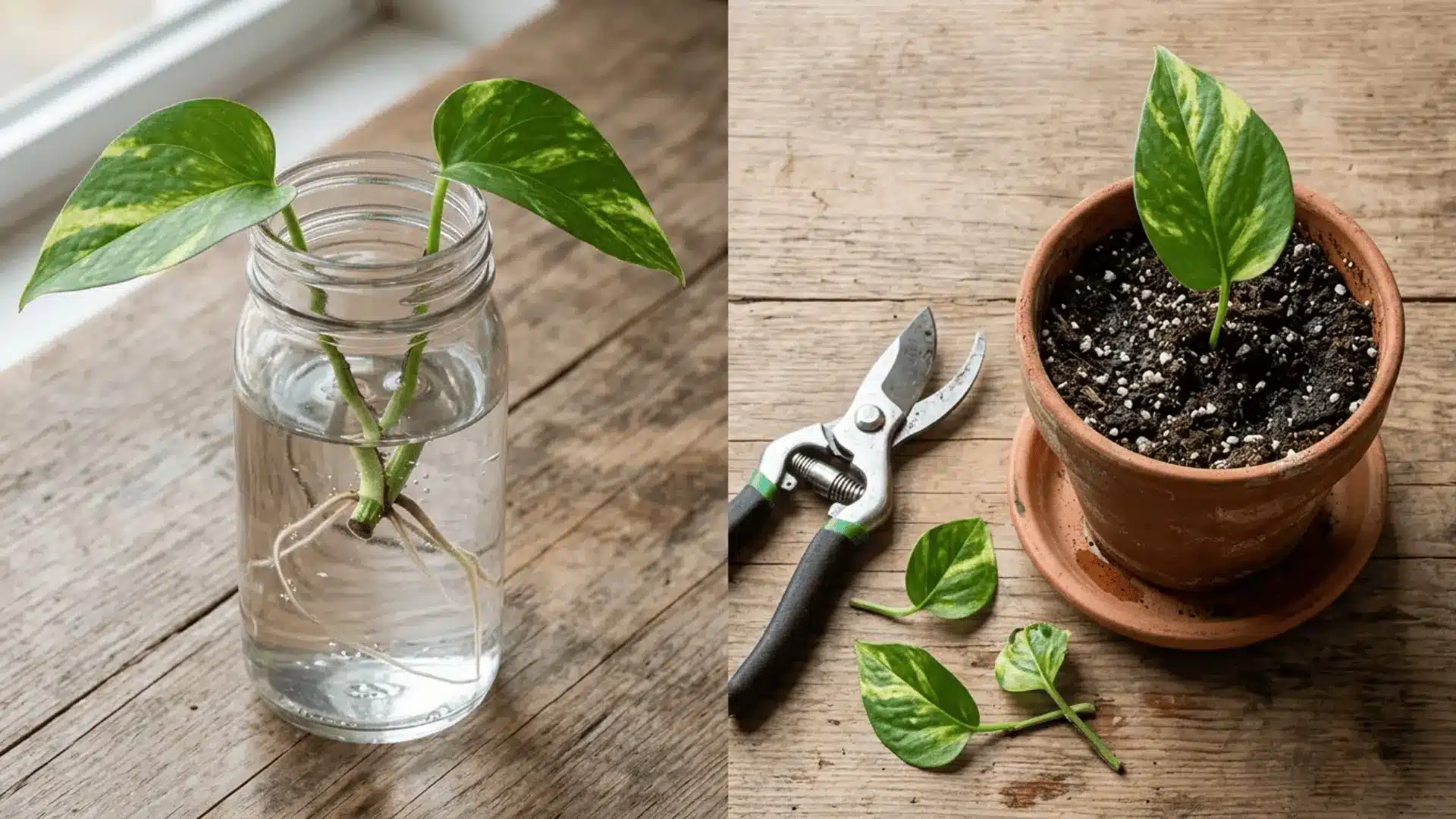
Propagating pothos is one of those genuinely satisfying plant activities that requires almost no effort. A healthy cutting is really all it takes to grow an entirely new plant from scratch.
Propagating in Water
Water propagation is the most popular method for a reason since it lets you watch the root development in real time.
Here is how to get started:
- Step 1: Select a healthy vine and cut just below a leaf node, ensuring at least one or two leaves remain on the cutting.
- Step 2: Remove any leaves that would sit below the waterline to prevent rotting.
- Step 3: Place the cutting in a clear glass or jar of water, positioning the node fully submerged.
- Step 4: Set in bright, indirect light and refresh the water every few days until roots reach a couple of inches long.
Propagating in Soil
Soil propagation skips the transitioning step entirely, rooting the cutting directly into its permanent growing medium.
Here is the process:
- Step 1: Take a healthy cutting just below a node, with one or two leaves attached.
- Step 2: Allow the cut end to dry out for an hour or two before planting to reduce the risk of rot.
- Step 3: Press the cutting into a small pot of moist, well-draining potting mix, burying the node completely.
- Step 4: Keep the soil lightly moist and place in bright, indirect light until new growth signals successful rooting.
Common Pothos Plant Problems
Even the most easygoing plants run into trouble occasionally, and pothos is no exception. Catching problems early and knowing exactly what to do makes all the difference.
Problem 1: My pothos leaves are turning yellow, and I don’t know why.
Solution: Yellowing is almost always a watering signal. Pull back on watering, ensure the pot drains properly, and if overwatering has been ongoing, inspect the roots for rot and repot into fresh soil if needed.
Problem 2: The tips of my pothos leaves are turning crispy and brown.
Solution: Brown tips usually point to low humidity or inconsistent watering. Mist the leaves more regularly, move the plant away from heating vents, and water thoroughly rather than in small, infrequent sips.
Problem 3: My pothos looks sparse, and the vines seem stretched out.
Solution: Leggy growth is a classic sign of insufficient light. Moving it closer to a bright, indirect light source encourages compact, fuller growth, and a light pruning helps redirect energy into new shoots.
Problem 4: I noticed tiny bugs crawling on my pothos, and I’m not sure what they are.
Solution: Mealybugs, spider mites, and scale insects are the most common culprits. Wipe down the leaves, treat with neem oil or insecticidal soap, and isolate the plant immediately to prevent spreading.
Tips for Healthy Pothos Growth
Keeping pothos in great shape comes down to a handful of small, consistent habits that add up over time.
- Rotate the pot every few weeks to ensure all sides of the plant receive even light exposure.
- Wipe down the leaves with a damp cloth occasionally to remove dust and keep photosynthesis running efficiently.
- Prune regularly to encourage bushier, fuller growth and prevent vines from becoming too leggy.
- Flush the soil with water every few months to clear out any salt buildup from fertilizers.
- Check the roots during watering to catch any early signs of rot or overcrowding before they escalate.
A little routine care goes a long way with pothos, and once these habits feel second nature, maintaining a thriving plant becomes genuinely effortless.
That’s a Wrap
Pothos care really does come down to paying attention and enjoying the process along the way. Once you understand what the plant needs, everything else falls into place naturally.
A little light, occasional watering, and some light pruning are genuinely all it takes to keep Epipremnum aureum looking its absolute best.
Hopefully, this has made pothos plant care feel a lot less overwhelming and a lot more enjoyable.
Got a pothos story, a question, or a variety you absolutely love? Drop it in the comments below. I would love to hear how your plant-caring experience is going.
Frequently Asked Questions (FAQs)
How Often Should You Water a Pothos Plant?
Watering once every one to two weeks works well for most indoor conditions. Always check the top few inches of soil first and water only when it feels dry to the touch.
Can Pothos Grow in Low Light?
Pothos handles low light better than most houseplants, making it a reliable choice for dimmer spaces. Growth will slow down, and variegation may fade, but the plant generally continues to survive.
How Fast Do Pothos Plants Grow?
Pothos is a notably fast grower, especially during spring and summer when conditions are warm and bright. With consistent care, vines can extend quite significantly within a single growing season.