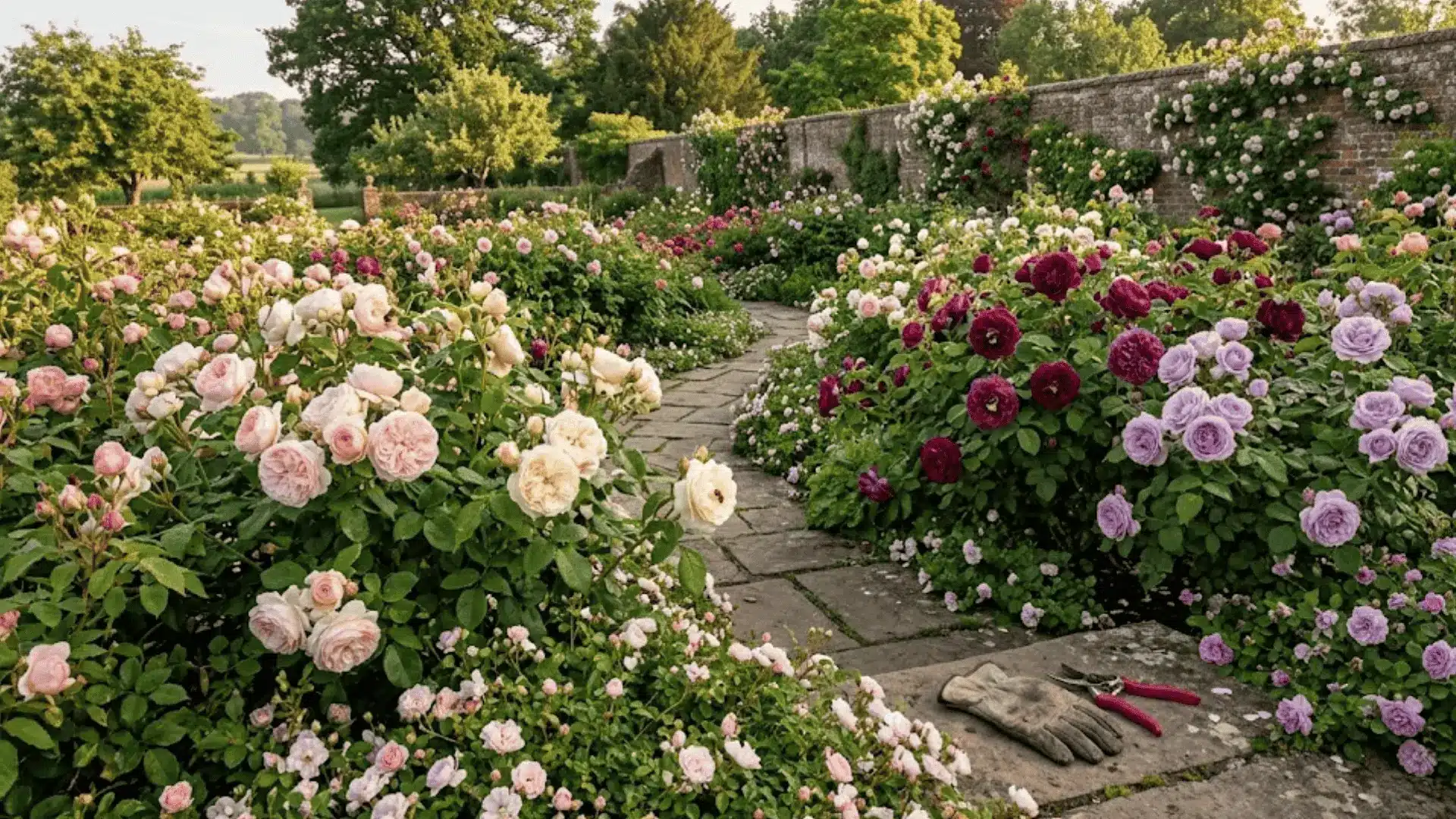
Roses are one of those plants that quietly contain multitudes.
Walk through any garden, nursery, or flower market, and you’ll notice how wildly different they can look from one another, ranging from delicate, loosely-cupped blooms to tightly-packed rosettes in every shade imaginable.
That variety isn’t random; it comes from centuries of cultivation across distinct categories, each with its own personality, growth habit, and care needs.
Knowing where a rose belongs changes how you grow it, and honestly, how much you fall in love with it.
How Roses are Classified?
At their core, roses fall into three broad families: modern roses, old garden roses, and wild roses. Each one carries a distinct personality.
Modern roses tend to be showier and repeat-bloom reliably; old garden roses lean into fragrance and a certain romantic looseness; wild roses are the untouched originals, closer to nature than to a cutting garden.
What sets them apart goes deeper than looks because bloom style, scent intensity, pruning demands, and space requirements all shift depending on which family you’re working with.
Knowing the difference before you plant saves a lot of guesswork later.
Overview of the Main Types of Roses
Not all roses are created equal, and that’s exactly what makes them so interesting to work with. Each type below brings something different to the table, even if you’re filling a small balcony pot or training a climber up a garden wall.
Here’s a quick look at how the main types compare before we get into each one in detail.
| Rose Type | Bloom Style | Fragrance | Best For | Maintenance Level |
|---|---|---|---|---|
| Hybrid Tea | Large, high-centered, one bloom per stem | Moderate to strong | Cutting gardens, formal beds | High |
| Floribunda | Clusters of smaller blooms | Mild to moderate | Borders, mass planting | Moderate |
| Grandiflora | Large blooms in clusters on tall stems | Moderate | Back of borders, hedges | Moderate to high |
| Climbing | Long canes, blooms along arching stems | Varies | Walls, fences, pergolas | Moderate |
| Shrub | Loose, relaxed, varied bloom forms | Mild to strong | Landscapes, naturalistic gardens | Low to moderate |
| Miniature | Tiny, perfectly formed blooms | Mild | Containers, small spaces, edging | Low to moderate |
| Groundcover | Low-growing, spreading clusters | Mild | Slopes, borders, low-maintenance beds | Low |
| English Roses | Cupped, rosette, deeply layered petals | Strong, old-rose scent | Cottage gardens, mixed borders | Moderate |
Modern Garden Roses
Modern garden roses are what most people picture when they think of a rose. Bred for performance, visual impact, and adaptability, these varieties have shaped gardens and flower markets alike.
1. Hybrid Tea Roses
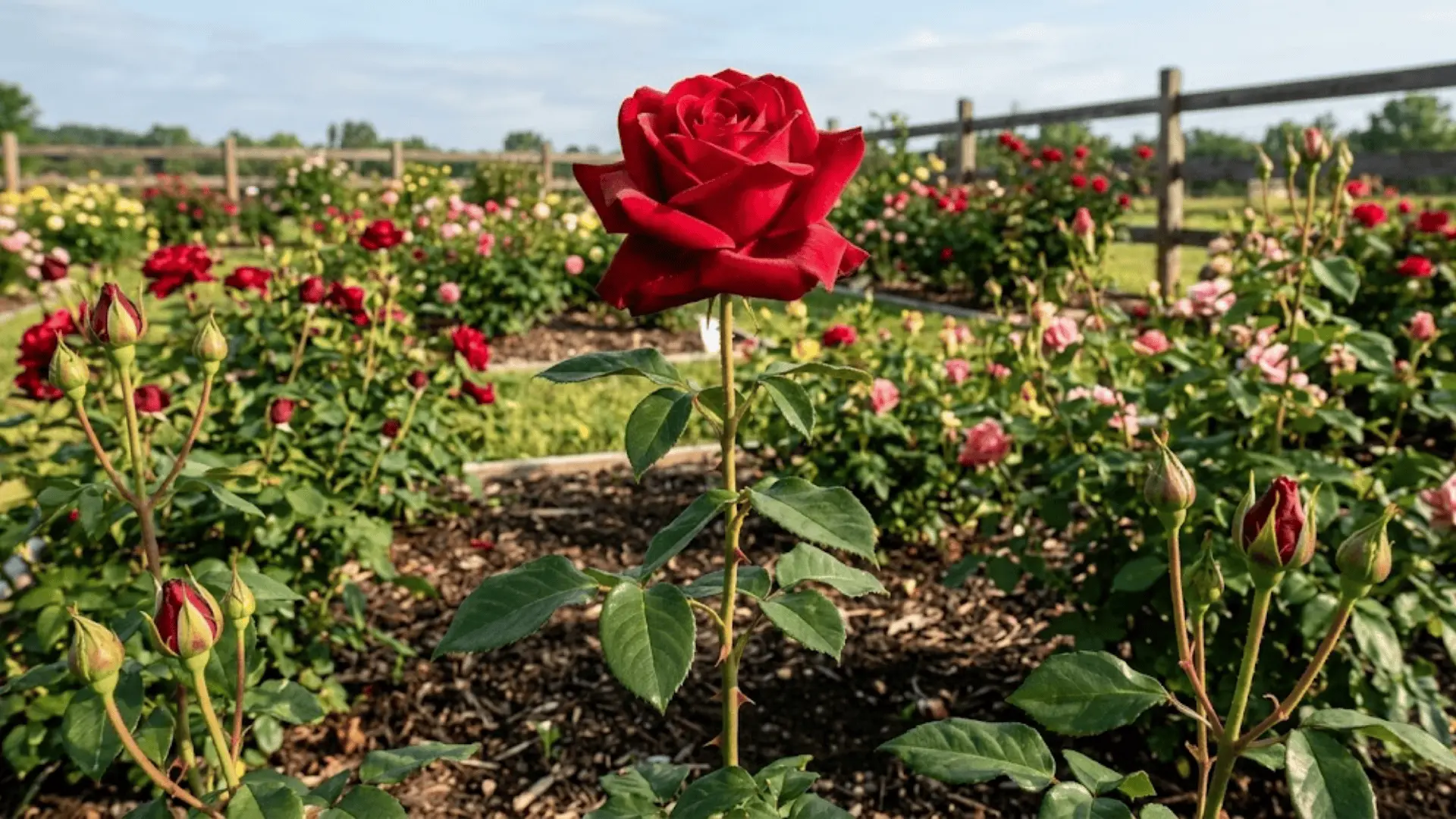
Ideal For: Cutting gardens, floral arrangements, and anyone who wants a rose that looks like it belongs in a bouquet.
Hybrid teas are the classic rose, tall-stemmed, high-centered, and quietly commanding. Each stem carries 1 large bloom, which is exactly what makes them so prized for arrangements.
The fragrance tends to be strong and true, the kind you notice before you even lean in. They do ask for consistent care in return, regular pruning, feeding, and some disease management, but the payoff is a bloom that feels special.
2. Floribunda Roses
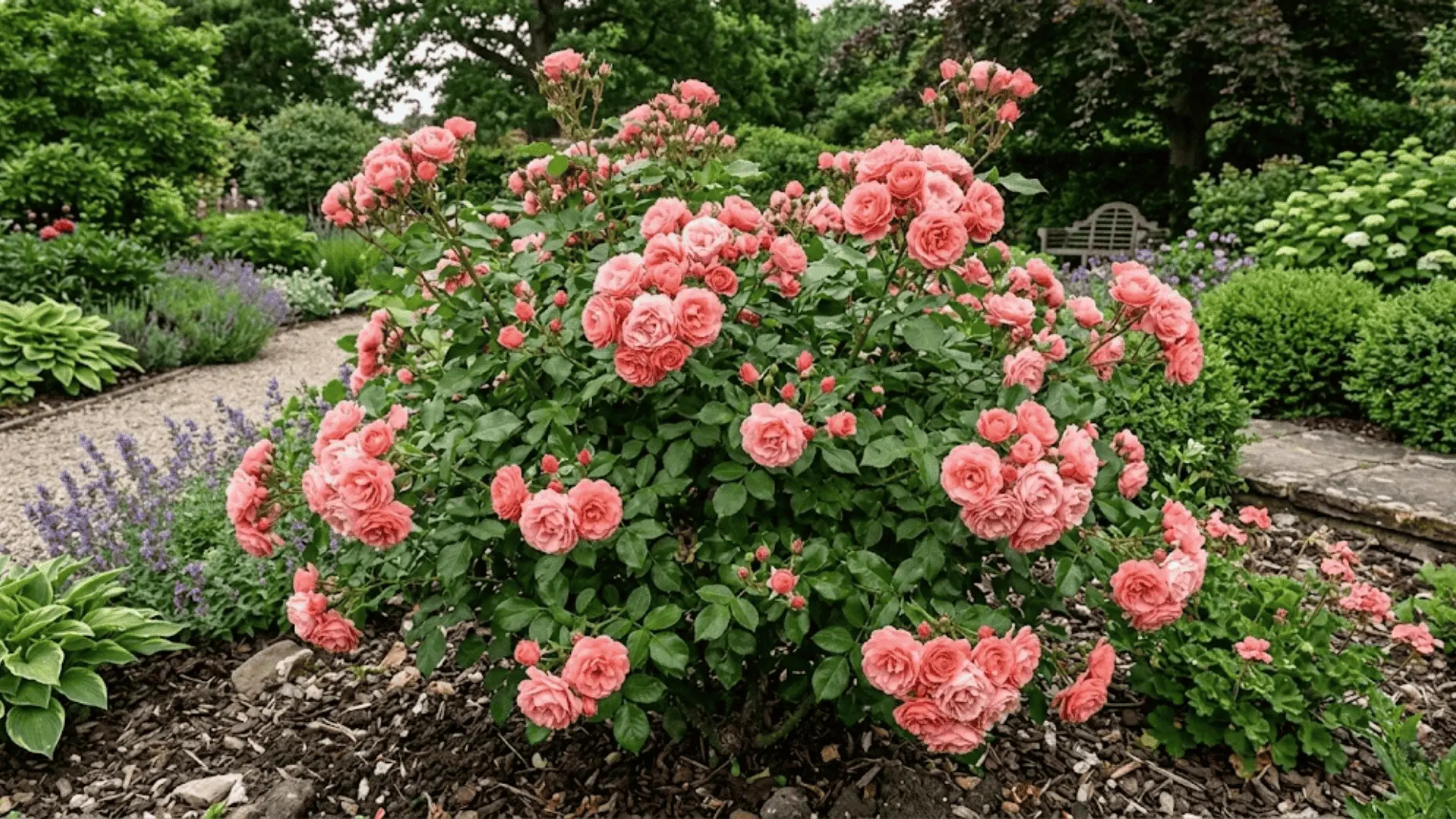
Ideal For: Garden borders, landscaping, and anyone who wants continuous color without constant intervention.
Where hybrid teas offer 1 perfect bloom, floribundas offer abundance. Flowers come in clusters, covering the plant in waves of color through most of the growing season.
They are sturdier and more forgiving than hybrid teas, making them reliable for gardeners seeking impact with less fuss. Though individual blooms are smaller, a floribunda’s abundant flowers more than make up for it.
3. Grandiflora Roses
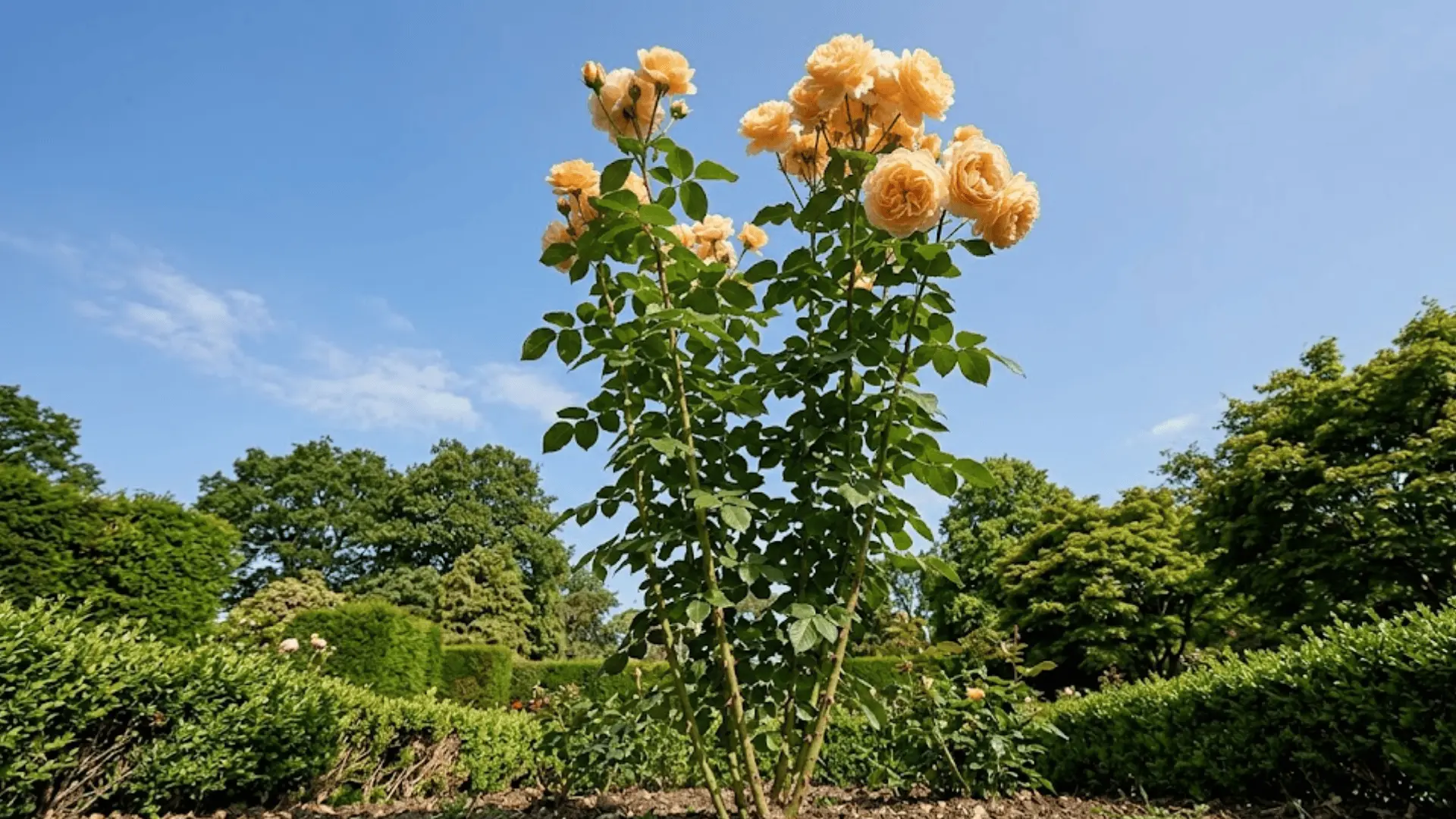
Ideal For: Back-of-border planting, garden statements, and spaces that need height with impact.
Grandifloras sit right at the intersection of hybrid tea elegance and floribunda productivity. You get large, beautifully formed blooms arriving in clusters on tall, upright canes that can easily clear 4 to 6 feet.
They repeat flower reliably through the season, making them 1 of the more rewarding modern types to grow. If you have a garden bed that needs a focal point with some vertical presence, grandifloras tend to deliver exactly that.
4. Miniature Roses
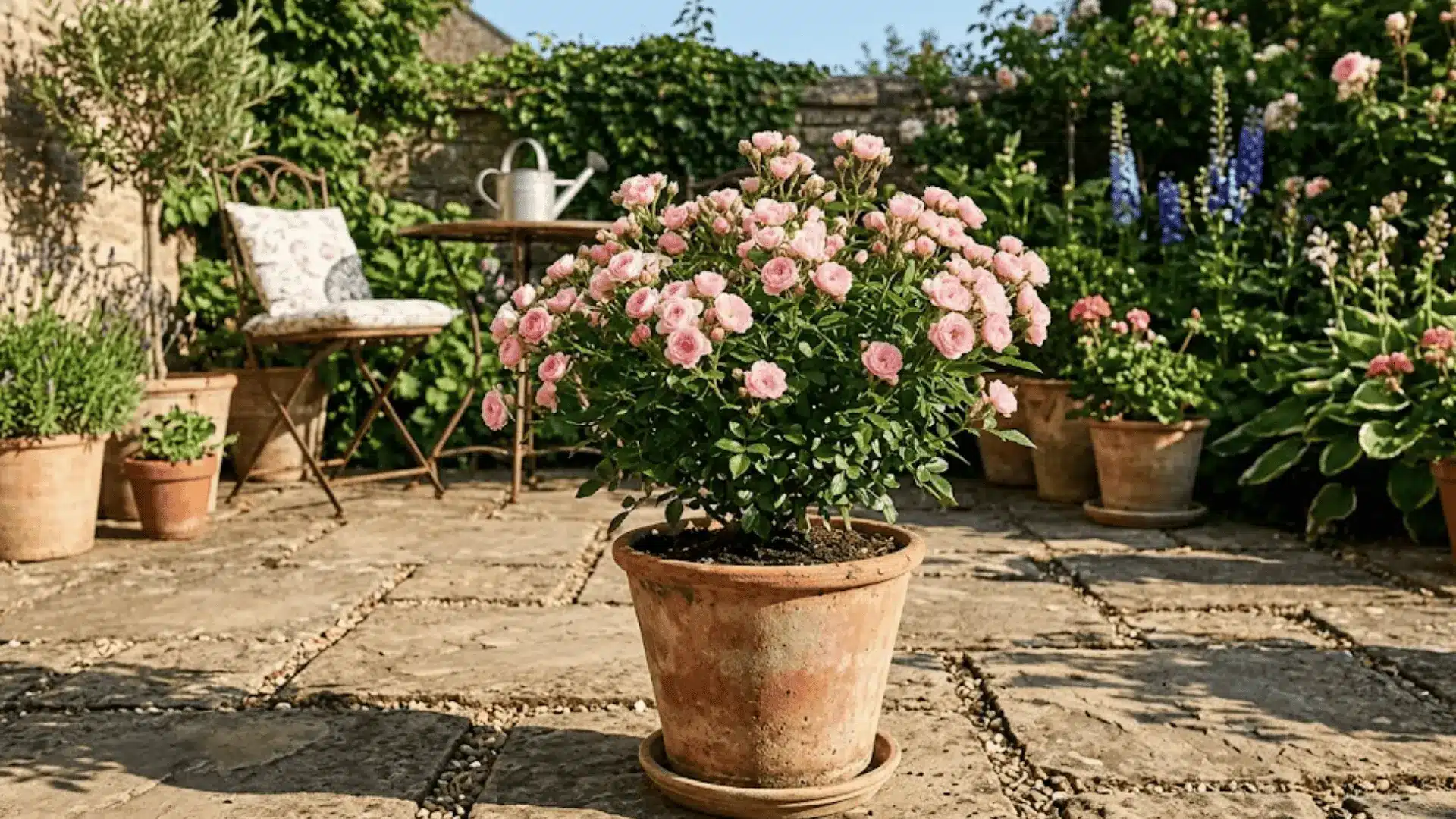
Ideal For: Container gardening, small spaces, patios, and balcony gardens.
Everything about a miniature rose is scaled down except its will to grow. The flowers are tiny and perfectly formed, the leaves delicate, the whole plant compact enough to thrive in a pot on a windowsill or edge a narrow garden path.
Do not let their size suggest fragility, though. Miniatures are prolific bloomers and surprisingly resilient, often outperforming larger varieties when it comes to consistent flowering through the season.
5. Climbing Roses
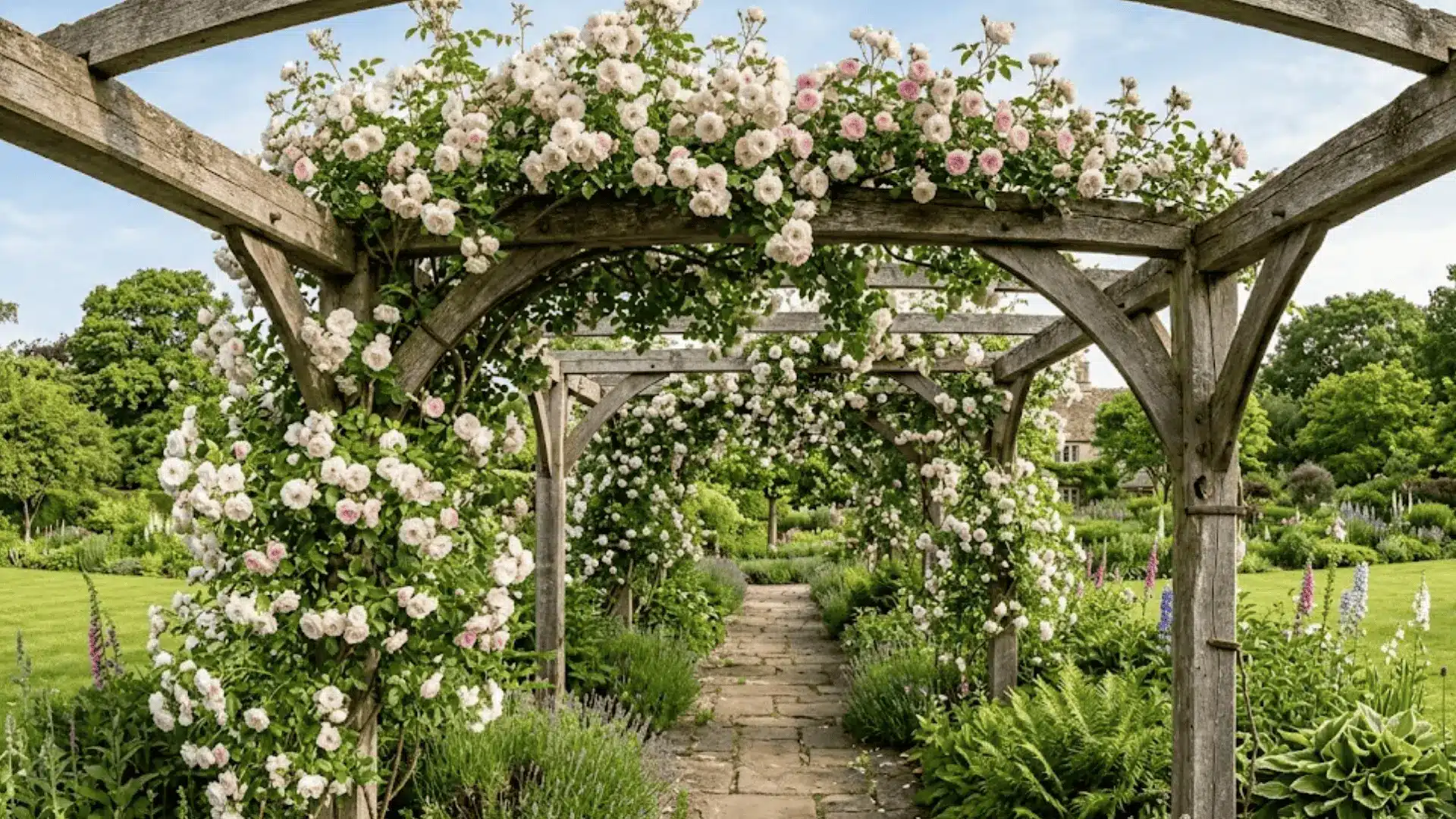
Ideal For: Vertical gardening, trellises, fences, pergolas, and garden walls.
Climbing roses do not actually climb the way a vine does. They grow long, arching canes that need to be guided and tied to a structure, but once established, the effect is worth every bit of the effort.
Canes can easily reach 10 to 12 feet, draping walls and pergolas in bloom. They work beautifully as a living backdrop, softening hard landscaping or framing an entrance with a kind of effortless, layered beauty.
6. Shrub Roses
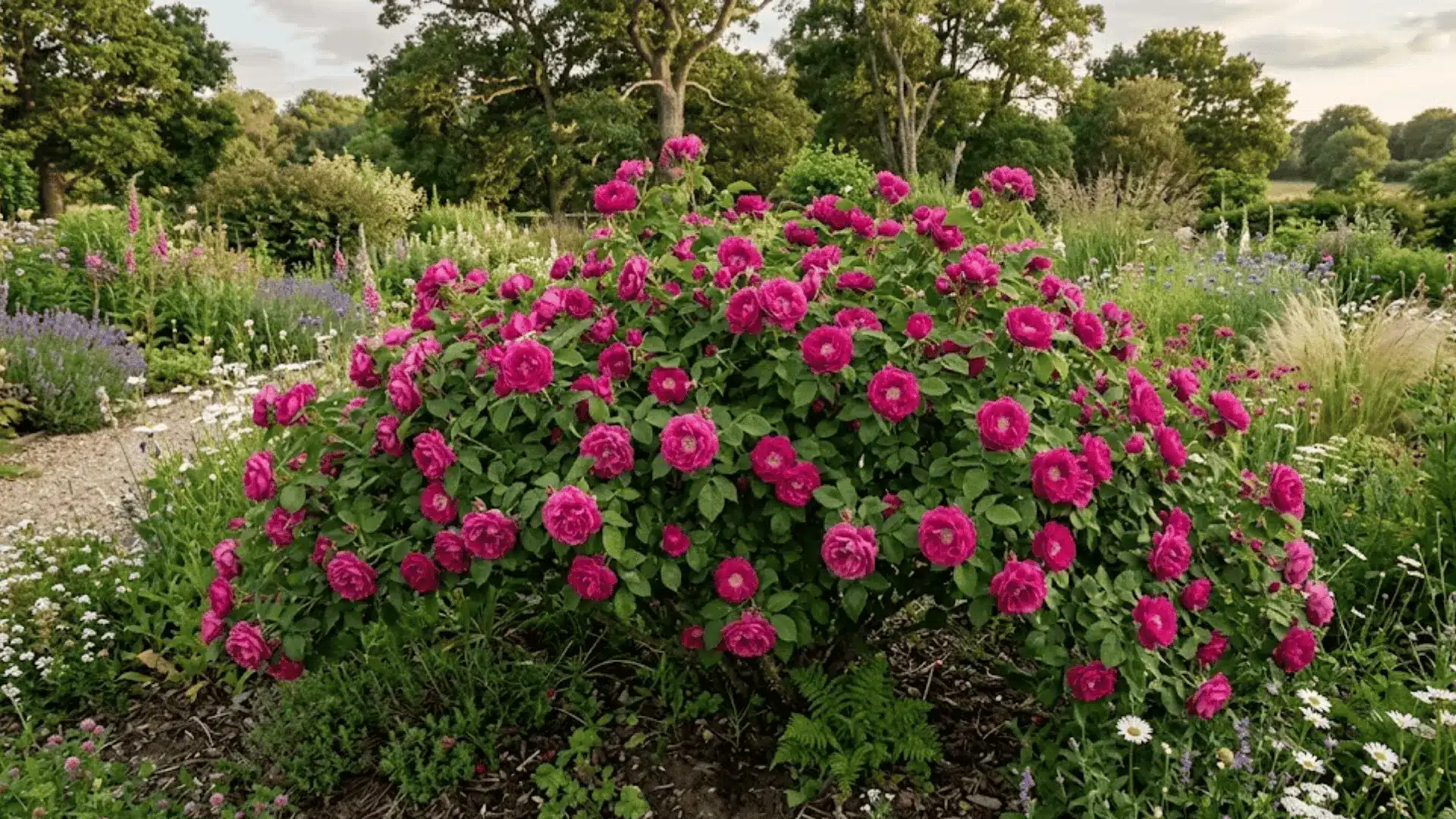
Ideal For: Low-maintenance landscapes, naturalistic gardens, and mixed planting schemes.
Shrub roses are the workhorses of the rose world, bred more for toughness than theatrics. They are naturally disease-resistant and largely content to bloom continuously without much intervention.
The growth habit is relaxed and full, ideal for informal gardens or anyone seeking seasonal color with minimal care. For gardeners who love roses but dislike their upkeep, shrub roses are often the solution.
Old Garden Roses
Old garden roses are where the story of the rose really begins.
Predating 1867, these heritage varieties carry centuries of cultivation history in every petal, and what they may lack in repeat flowering, they more than make up for in fragrance and character.
What Makes Them Different?
Cultivated before 1867, old garden roses predate the modern breeding programs that prioritized repeat blooming and uniform form.
The trade-off is a once-a-year bloom season that is hard to ignore. The flowers are large, full, and deeply layered, and the fragrance is what the entire rose industry has spent generations trying to recreate.
They tend to be more naturally robust than modern varieties, asking less in terms of intervention and rewarding patience with a kind of beauty that feels unhurried.
Popular Types at a Glance
Each of these 3 types represents a distinct chapter in rose history, differing in origin, bloom behavior, and the kind of garden they suit best.
| Type | Origin | Bloom Habit | Key Trait | Best For |
|---|---|---|---|---|
| Damask | Middle East, ancient cultivation | Once per season | Intensely fragrant, used in perfumery for centuries | Cottage gardens, fragrance-focused planting |
| Bourbon | Réunion Island, early 19th century | Repeat blooming | Full, cupped blooms with old-rose fragrance | Gardeners wanting heritage character with a second flush |
| Gallica | Cultivated since the 13th century | Once per season | Deep crimson and purple tones, earthy complex scent | Historic gardens, naturalistic planting |
Wild Roses
Wild roses are the original, untouched by hybridization and shaped entirely by nature. They are what roses looked like before gardeners got involved, and there is something genuinely refreshing about that.
Simple, resilient, and quietly beautiful, they thrive where more cultivated varieties would struggle, adapting easily to difficult soils, exposed sites, and low-input growing conditions.
If you want a rose that largely looks after itself, species roses are worth a serious look.
Key Features
Wild roses keep things simple, and that simplicity is exactly where their strength lies:
- 5-petaled blooms with an open, natural form that pollinators love.
- Exceptionally resilient, tolerating poor soils and harsh conditions with ease.
- Minimal maintenance required, no heavy pruning or feeding schedules needed.
- Naturally disease-resistant, making them one of the lowest-effort rose types to grow.
For gardeners drawn to naturalistic planting or wildlife-friendly gardens, wild roses bring both beauty and function without demanding much in return.
Specialty Rose Types You Should Know
Some roses do not fit neatly into the standard categories, and that is precisely what makes them worth knowing about.
These 3 specialty types each bring something distinct to a garden, from old-world fragrance to effortless ground coverage to dramatic seasonal flushes.
1. English Roses
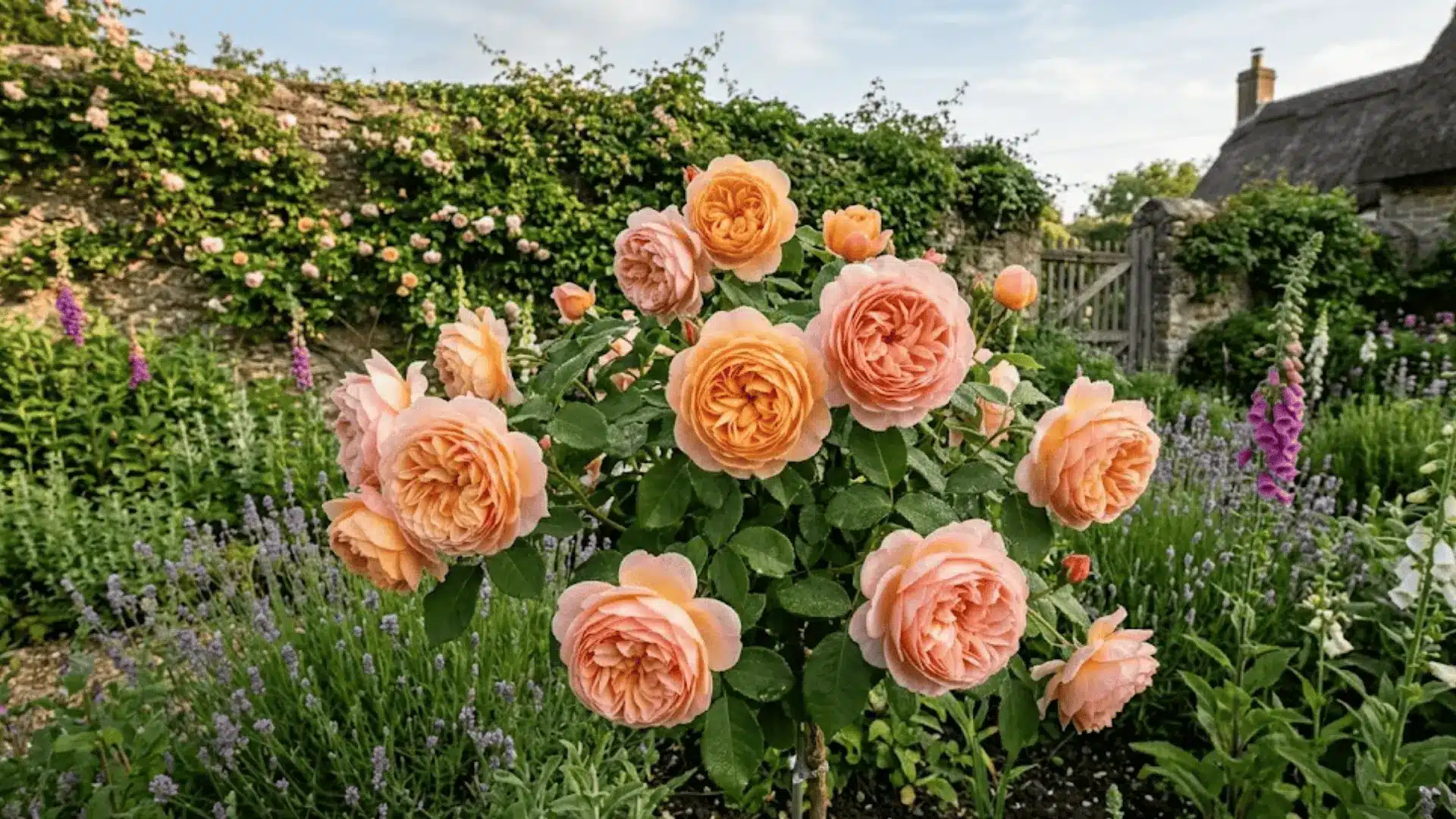
Characteristics: A deliberate cross between old garden rose charm and modern repeat-blooming reliability, developed largely by breeder David Austin.
English roses manage to feel timeless and practical at once. The blooms are full, deeply cupped, and often rosette-formed, carrying a fragrance that rivals the best old garden roses.
What sets them apart from true heritage varieties is their ability to flower more than once through the season.
They suit cottage gardens and mixed borders beautifully, offering that soft, painterly aesthetic without the once-a-year limitation of their old rose ancestors.
2. Groundcover Roses
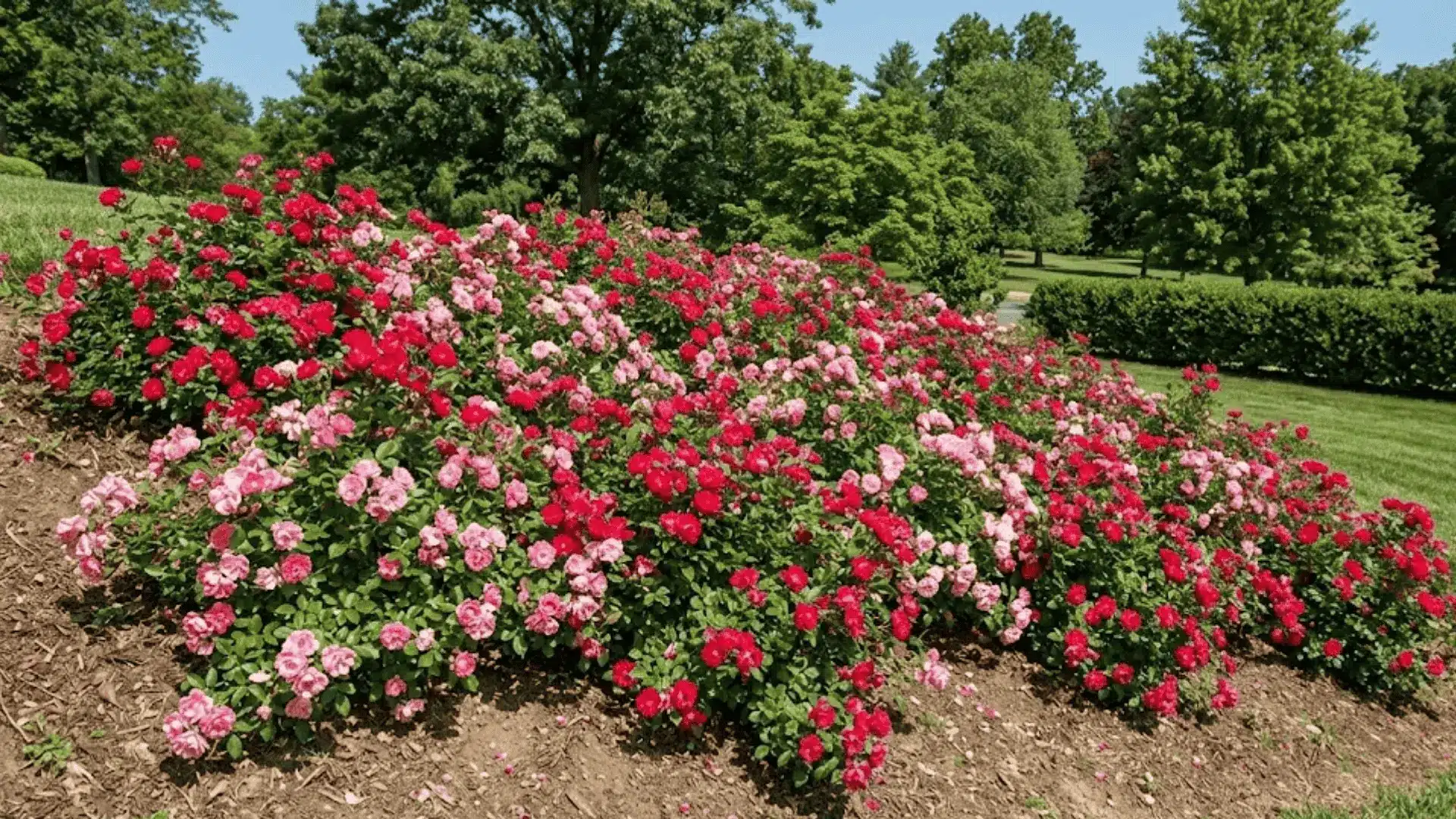
Characteristics: Low-growing, horizontally spreading roses bred specifically for landscape coverage and minimal upkeep.
Groundcover roses solve a problem many gardeners have: how to fill large areas with color without committing to high-maintenance planting.
They spread wide and stay low, forming a dense, flowering mat that suppresses weeds and requires very little pruning or feeding.
Slopes, banks, and wide open borders are where they perform best. The blooms tend to be small and plentiful, arriving in steady flushes through the growing season.
3. Rambling Roses
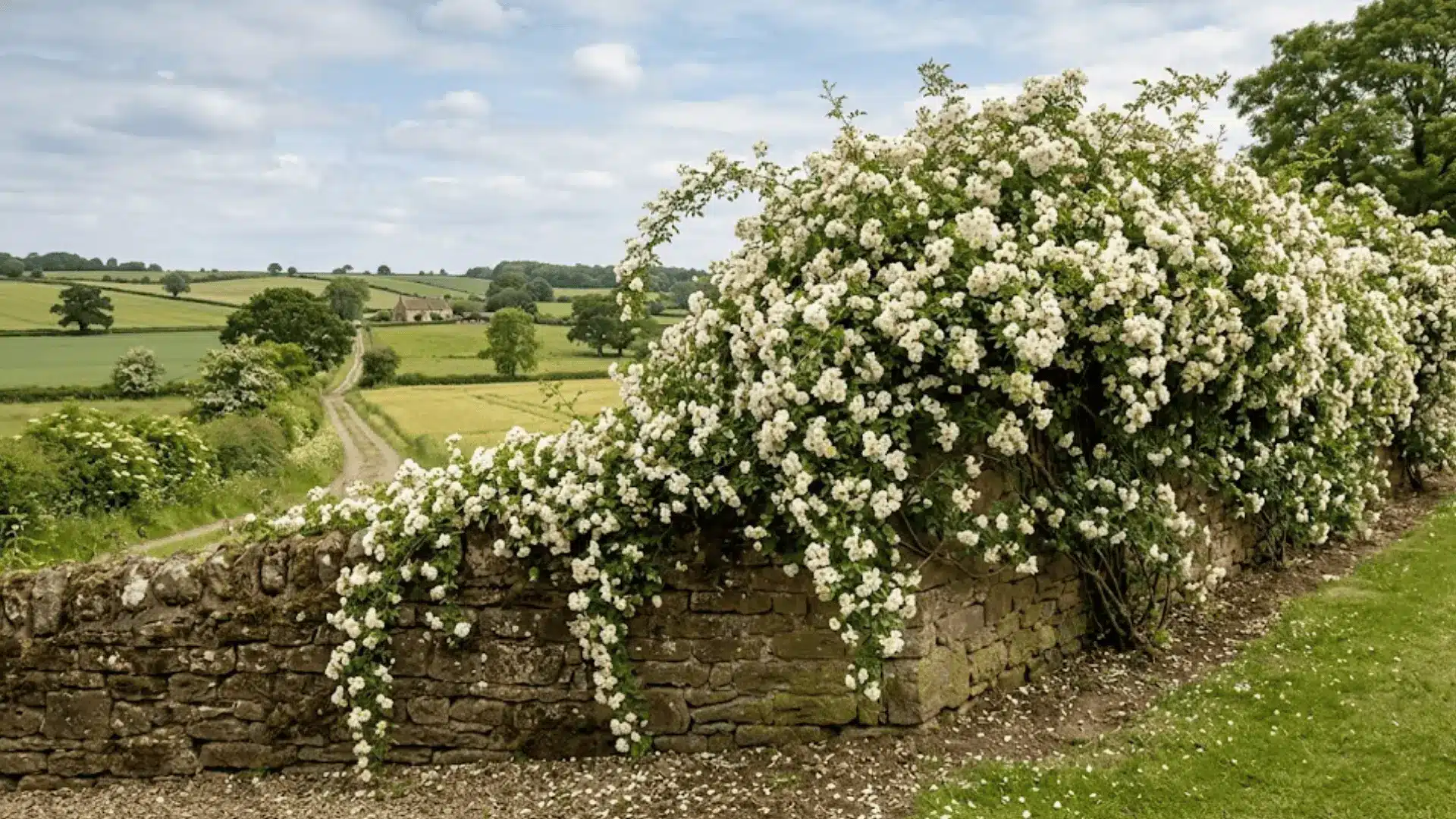
Characteristics: Vigorous, large-growing roses with long, flexible canes that can be trained across wide structures.
Ramblers are built for drama. They can spread 15 to 20 feet or more, tumbling over pergolas, cascading down walls, or threading through trees with an almost wild generosity.
The bloom is typically a single spectacular flush in early summer, packed with clusters of small flowers that cover the entire plant.
They are not the roses for a tidy, controlled garden, but for a space that has room to breathe; they are genuinely breathtaking.
How to Choose the Right Type of Rose?
Choosing a rose gets a lot easier once you know what you actually need it to do. Match the variety to your space, your lifestyle, and your intention, and you are already halfway to a garden that works.
- For cutting and bouquets, hybrid tea roses are the natural choice with their long stems and single, exhibition-worthy blooms.
- For low-maintenance color, shrub roses deliver reliable seasonal interest without demanding much in return.
- For small spaces and containers, miniature roses pack all the beauty of a full-sized rose into a compact, manageable plant.
- For vertical impact on walls and pergolas, climbing roses are unmatched in their ability to transform a structure into a flowering focal point.
- For fragrance above everything else, old garden roses offer a depth and intensity that modern varieties rarely replicate.
The right rose is not always the most beautiful one in the nursery. It is the one that fits where you are planting it, suits how much time you have, and gives you exactly what you are looking for every single season.
Key Differences Between Popular Rose Types
Understanding how rose types differ from one another makes every garden decision a little clearer.
This side-by-side comparison breaks down the most commonly confused pairings so the differences actually stick.
| Feature | Hybrid Tea | Floribunda | Shrub | Climbing | Modern Roses | Old Garden Roses |
|---|---|---|---|---|---|---|
| Bloom Style | 1 large bloom per stem | Clustered smaller blooms | Relaxed, varied forms | Blooms along long arching canes | Uniform, bred for visual consistency | Large, full, deeply layered petals |
| Bloom Cycle | Repeat blooming | Continuous | Continuous | Once or repeat, varies by variety | Repeat blooming | Mostly once per season |
| Fragrance | Strong, classic | Mild to moderate | Mild to strong | Varies | Varies, often mild | Consistently strong and complex |
| Growth Habit | Upright, single stem | Bushy, multi-stem | Spreading, self-supporting | Long canes need a structure | Varies by type | Naturally bushy and robust |
| Height | 3 to 6 feet | 2 to 4 feet | 3 to 5 feet | 10 to 12 feet or more | Varies widely | 3 to 6 feet typically |
| Maintenance | High | Moderate | Low to moderate | Moderate | Moderate to high | Low to moderate |
| Best Use | Cutting gardens | Borders, mass planting | Landscapes, naturalistic gardens | Walls, fences, pergolas | Formal gardens, flower markets | Heritage and cottage gardens |
Common Mistakes When Choosing Roses
Even seasoned gardeners get this wrong sometimes. Picking a rose is about more than falling for a bloom at the nursery; a little forethought here saves a lot of disappointment later.
- Choosing based on looks alone without considering whether the variety actually suits your climate or soil.
- Overlooking maintenance requirements, some roses are genuinely high-need and will underperform without consistent feeding, pruning, and disease control.
- Ignoring climate suitability, a rose that thrives in mild coastal conditions may struggle significantly in harsh winters or humid summers.
- Underestimating space requirements, climbing and rambling roses in particular need far more room than they appear to at the point of purchase.
- Planting without a purpose in mind, knowing whether you want fragrance, cut flowers, ground coverage, or vertical impact, changes everything about which rose belongs in your garden.
Getting these basics right from the start means less guesswork, fewer replacements, and a garden that actually delivers on what you pictured when you first started planning it.
The Closing Note
Different types of roses exist for a reason, and that reason is simply that no two gardens, gardeners, or intentions are alike.
A hybrid tea brings structured beauty to a cutting garden, a species rose thrives where others give up, and an old garden variety fills the air with something no modern bloom quite replicates.
There is a rose that fits exactly where you are and what you love. The hardest part is narrowing it down.
Which type are you thinking of growing this season? Drop your thoughts in the comments below.