Before you buy a part for your shower valve, you need to know what you are working with.
Old shower valves come in many shapes and brands. Grab the wrong cartridge or stem, and you may end up back at the store or with a valve that still leaks once it is reassembled.
Two handles, one lever, or a round dial can look almost the same.
Underneath, they often work in different ways. Delta, Moen, Price Pfister, and Kohler each use their own designs, and parts rarely swap between brands.
A few minutes identifying your valve now saves time and money later.
Why Identifying Your Old Shower Valve Matters
Every brand builds its valve a little differently. Even models from the same brand can change from year to year.
A cartridge that fits an old Moen Posi-Temp valve won’t fit a newer one. A Delta ball assembly looks nothing like a Price Pfister ceramic disc.
Buying a part based on handle style by itself is one of the most common mistakes people make.
You will usually need to identify your valve when:
- You notice a slow drip or steady leak behind the wall or at the handle.
- You are updating a cramped bathroom layout and replacing trim, tile, or fixtures.
- A handle has cracked, loosened, or needs a style update.
- Water flow has dropped, or the temperature won’t adjust the way it used to.
How to Identify an Old Shower Valve?
Identifying your valve mostly takes careful observation, not guesswork. Start on the outside and work your way in.
Look at the handle, then the trim, then the parts hidden behind the wall. Each layer gives you more specific clues about the brand and valve type.
1. Check the Handle Style
The handle shape is your first clue. It narrows things down, but it won’t confirm the brand on its own. A round knob often means an older compression valve. A single lever usually means a cartridge or ball valve system.
Cross handles were common in older two-handle setups, especially in homes built before the 1980s. Take note of the material, too.
Heavy metal handles tend to be older. Lighter plastic or acrylic handles suggest a newer replacement. Photograph the handle before you remove it. The screw placement and shape can help you match it later.
2. Look for Brand Names or Logos
Manufacturers often stamp their name on the handle, the escutcheon plate, or the valve body. Check the front and back of the handle. Check the edges of the trim plate, too, and around the screw that holds the handle in place.
Moen, Delta, Kohler, and American Standard usually include a small embossed logo somewhere visible.
If nothing shows on the surface, check behind the trim plate. Some brands stamp their name on the valve body instead of the decorative cover.
3. Count the Number of Handles
The number of handles tells you a lot about what is hiding behind the wall. A single handle almost always means a cartridge, ball, or pressure-balance valve. These control both temperature and flow.
Two handles typically indicate a compression valve, with one for hot and one for cold.
Three-handle faucets are less common today, but they still show up in older homes. They usually have a separate diverter that switches water between the tub spout and the showerhead.
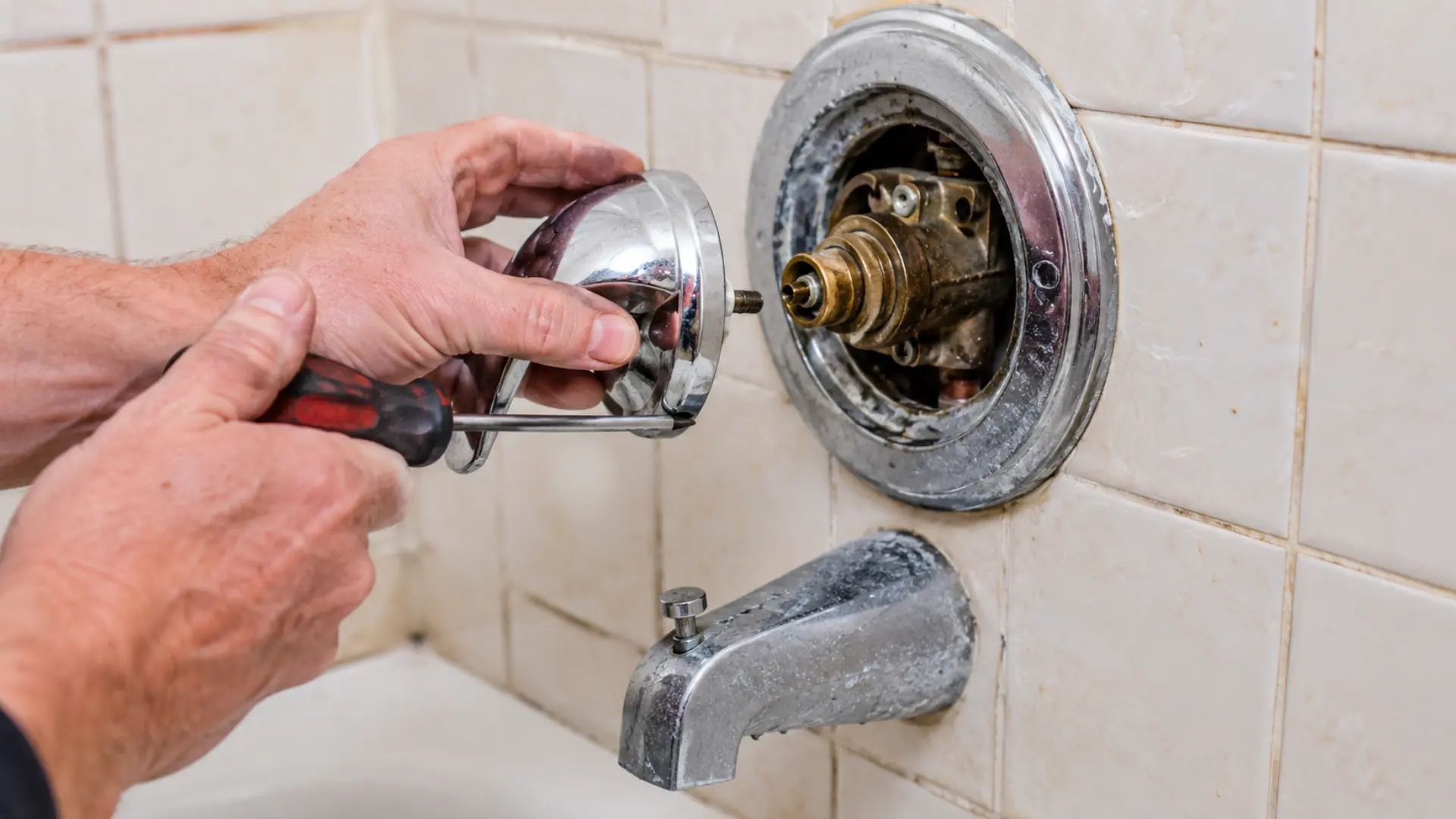
4. Remove the Trim Plate to Inspect the Valve Body
Shut off the water supply first. Then remove the trim plate to reach the valve body. Unscrew it carefully, since old caulk or paint can make it stick.
Behind it, you will usually find a metal or plastic housing with the cartridge or stem inside. Take a photo right away. This is often where brand stamps, part numbers, or casting marks show up most clearly.
This step also shows you the valve’s overall condition. You may spot corrosion, mineral buildup, or cracked parts that you could not see just by looking at the handle.
5. Compare the Cartridge or Stem Shape
Cartridges and stems vary a lot between brands, even when the valve looks the same from outside. Moen cartridges tend to be cylindrical with flat sides. Delta often uses a shorter, rounded design.
Price Pfister stems usually have a distinct ridged pattern near the base. If you can, gently pull the cartridge or stem out. Compare it to manufacturer charts, or bring it to a hardware store for a physical match.
Measuring the length, diameter, and spline pattern is far more reliable than guessing the brand by eye.
6. Note Any Model Numbers or Casting Marks
Many valve bodies have small numbers or letters cast into the metal. Look near the base or along the inner rim. These marks are small and easy to miss, so use a flashlight and take your time.
Model numbers usually match a specific entry in the manufacturer’s catalog. That makes it much easier to find the exact replacement part.
If the marks are too worn to read, try rubbing with paper and a pencil. This can reveal the imprint underneath. This one step often clears up most of the remaining guesswork.
7. Take Photos Before You Take It Apart
A clear set of photos is often the fastest way to confirm an identification. It beats describing the valve out loud to a store clerk or a forum. Photograph the handle straight-on, then at an angle to show the screw placement.
Once the trim plate is off, photograph the valve body, the cartridge or stem, and any casting marks. Set a coin or a tape measure next to the part for scale.
These photos do two things. Plumbing supply staff and online forums can often confirm a brand or era from a clear photo faster than from a spoken description.
Common Types of Old Shower Valves
Most older showers use one of six valve types, each with its own internal mechanism and identifying quirks.
Learning the differences helps you match what you see behind the trim plate to the right category. That makes it much easier to find the correct replacement part.
Compression Valves
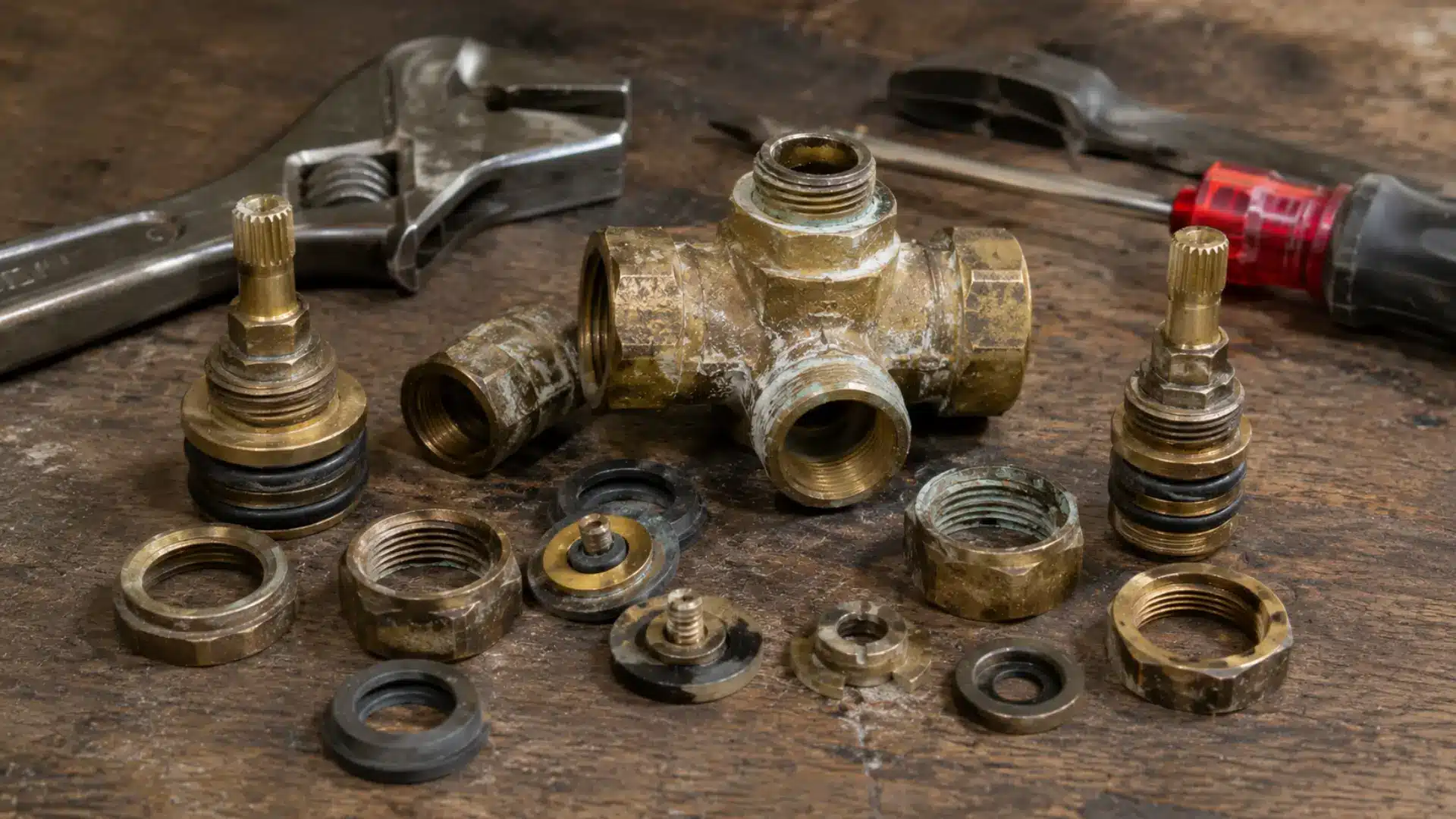
Compression valves are among the oldest designs, typically found in homes built before the 1980s.
They use two separate handles, one for hot and one for cold. Each handle turns a stem that presses a rubber washer against a seat to stop the water.
You can usually spot them by their round knobs and the slight resistance you feel when you shut off the water tightly. Dripping is common with this type, since the washers wear out over time.
If you are constantly re-tightening handles just to stop a drip, you likely have a compression valve.
Ball Valves
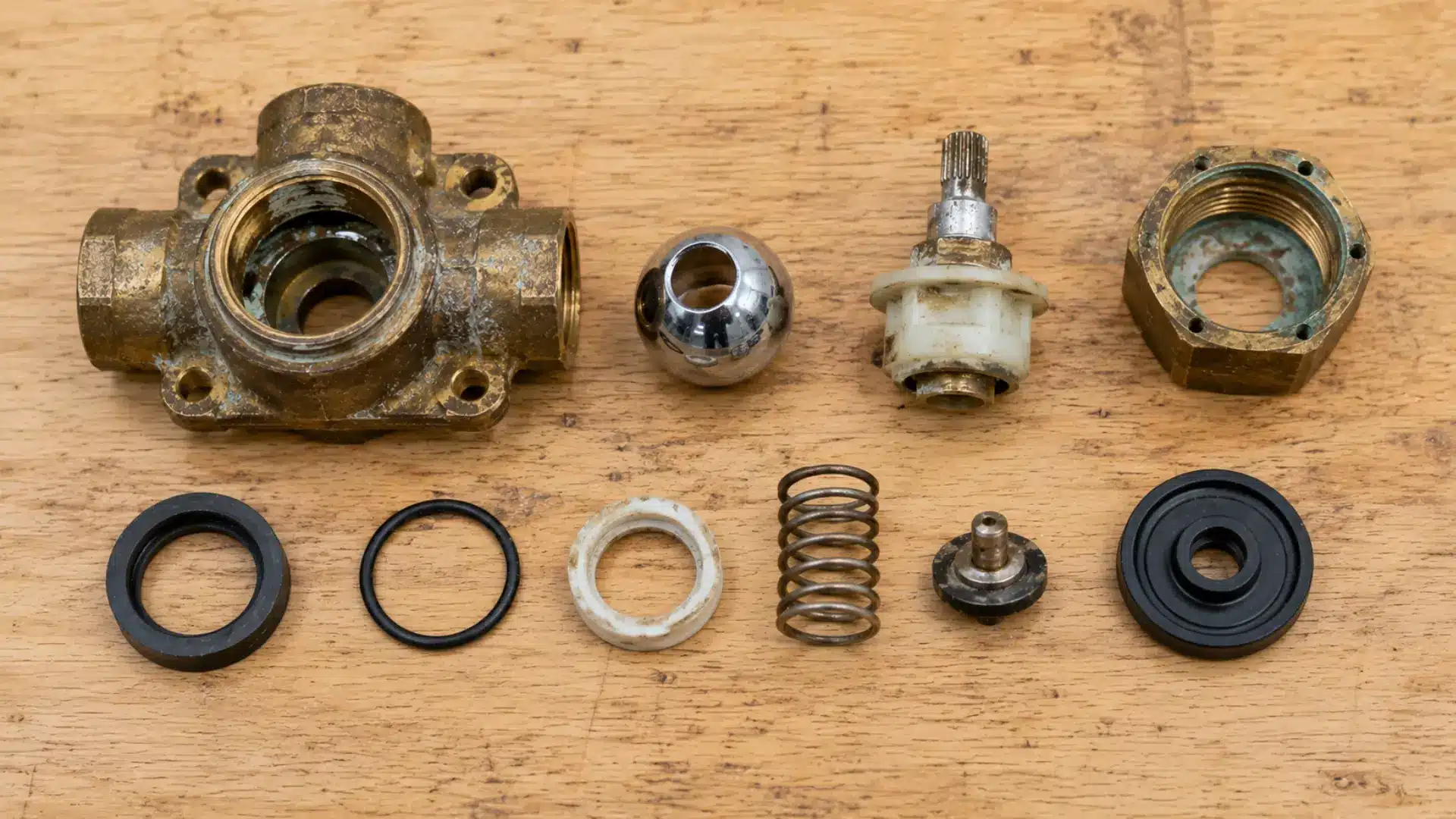
Ball valves use a single handle that moves a slotted metal or plastic ball. This ball controls both temperature and flow.
Delta made this design popular, and you will often find their name stamped on the handle or escutcheon plate.
These valves feel smooth when you turn them. They do not have the stiff resistance of a compression stem. Behind the trim plate, the ball assembly sits inside a rounded cap. Once opened, you will often see a spring and seat.
If your single handle moves in a full circle rather than in a straight line, a ball valve is a likely match.
Cartridge Valves
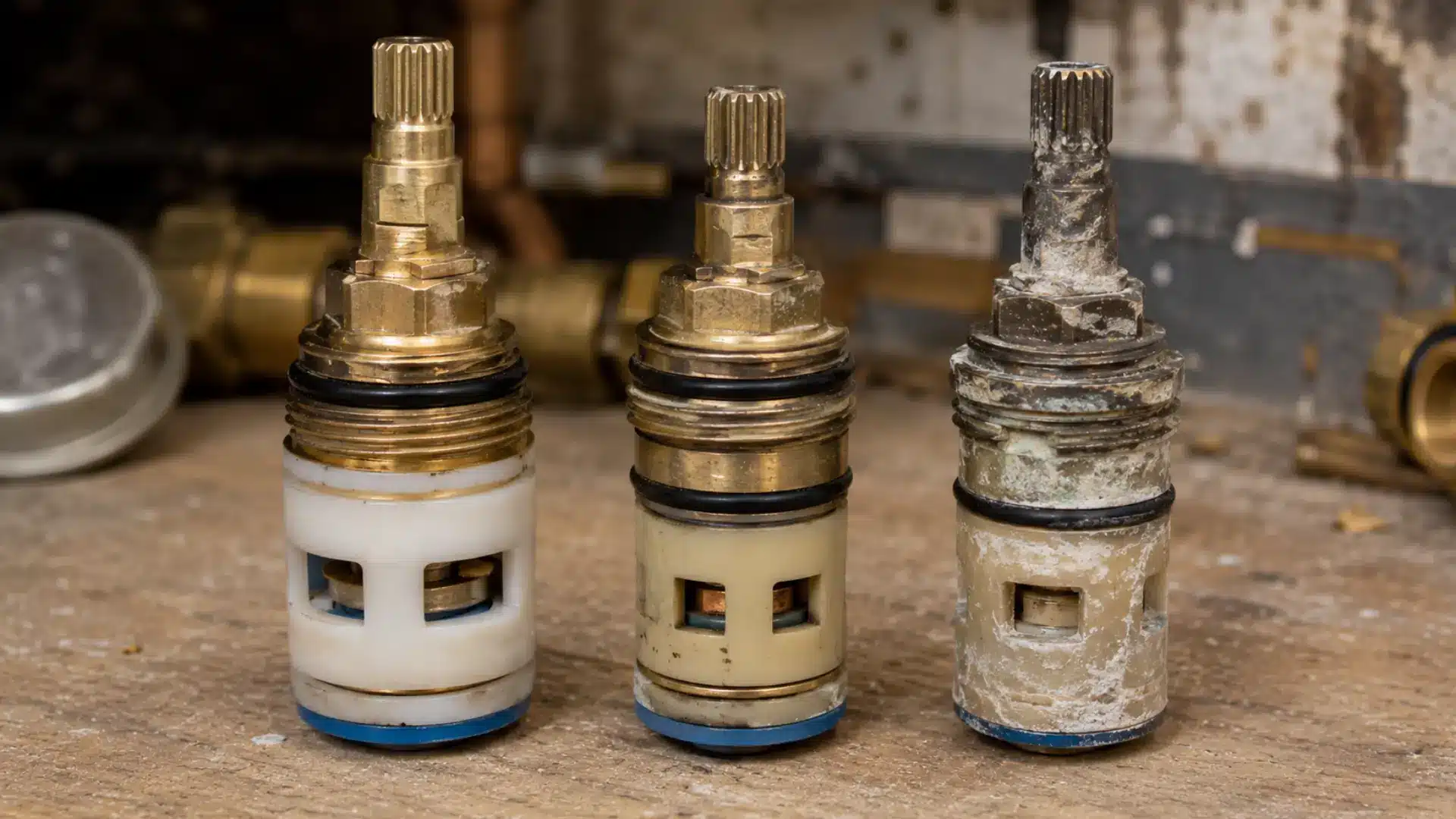
Cartridge valves use a removable cylindrical cartridge to control temperature and flow. They show up in both single- and double-handle setups.
Moen is closely linked to this design, though many other brands use similar systems.
The handle usually moves less than a ball valve handle, often up and down or side to side instead of in a full turn.
Once you remove the trim, the cartridge is easy to spot. It’s held in place by a retaining clip or nut. Cartridges are also the easiest valve type to replace without special tools.
Ceramic Disc Valves
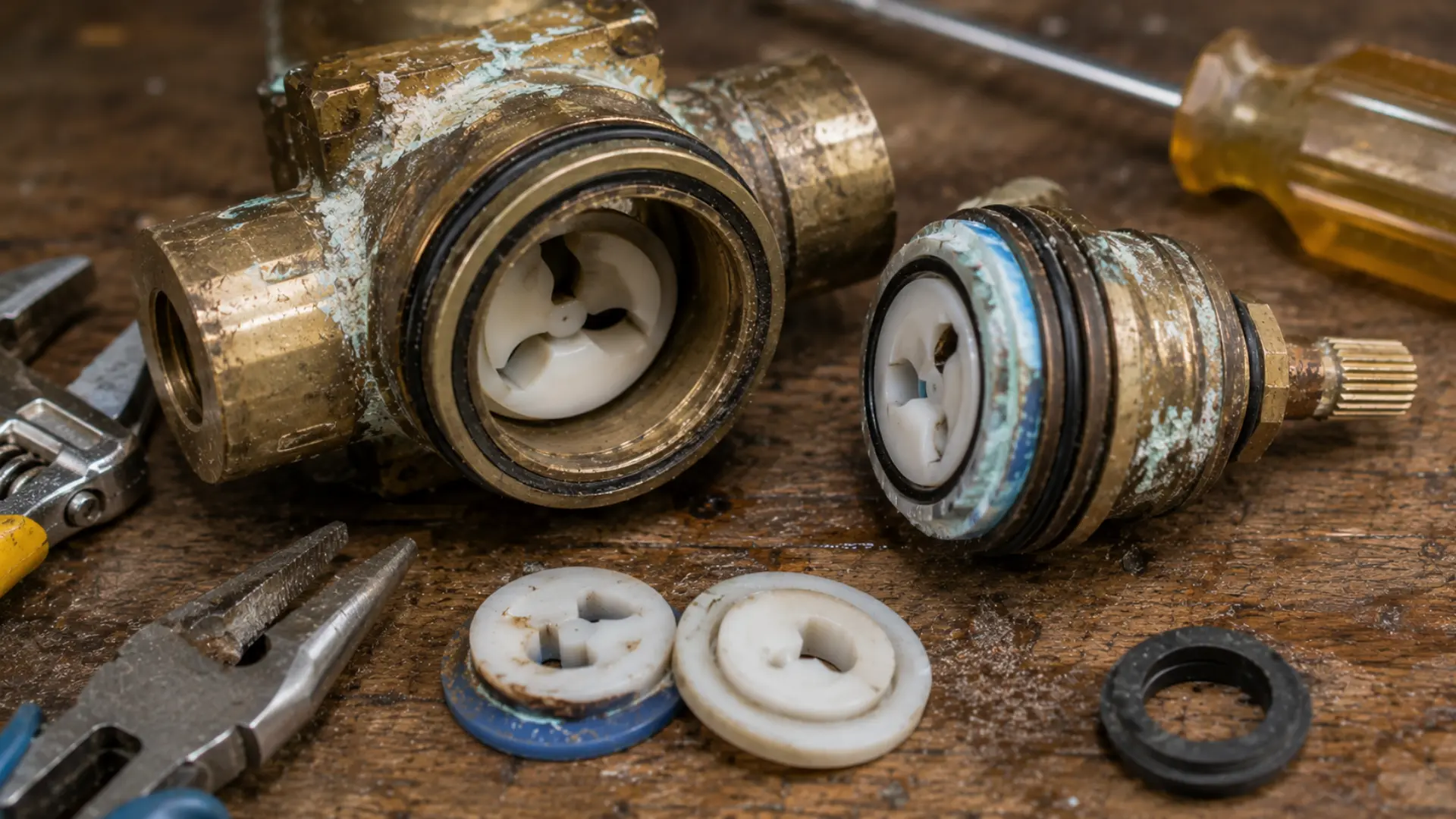
Ceramic disc valves use two flat, hardened discs that slide against each other to control water flow. They wear down very little. These valves handle temperature changes smoothly and rarely drip, even after years of daily use.
Price Pfister and Kohler both often use ceramic disc systems. The label is usually on the cartridge itself once you remove it.
You will notice the handle turns with very little resistance and stops precisely, without overshooting.
If your valve feels smooth and precise compared to older stems, and the fixtures around it show almost no mineral buildup, a ceramic disc is a strong possibility.
Pressure-Balancing Valves
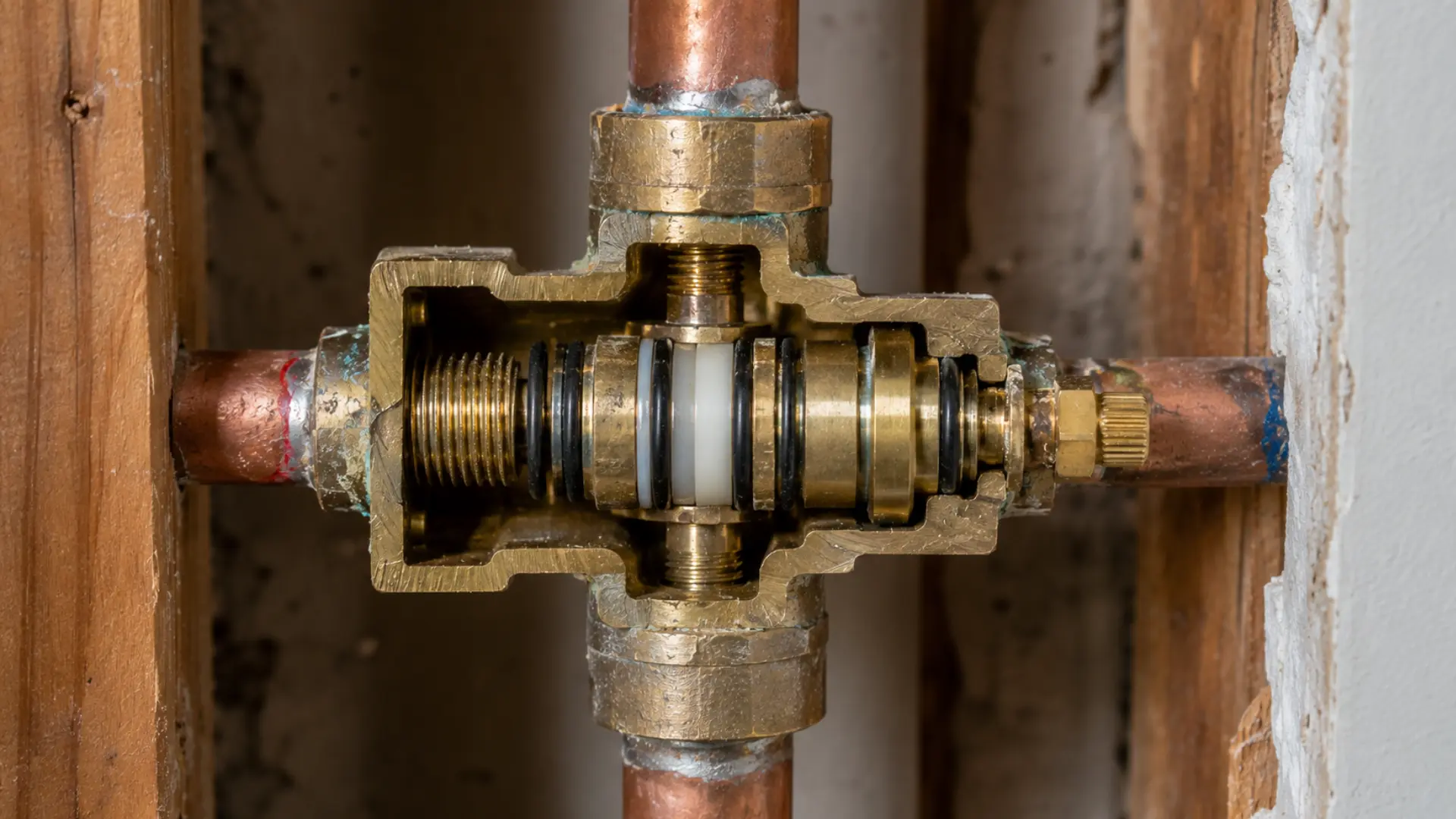
Pressure-balancing valves stop sudden temperature spikes when water pressure changes elsewhere in the house, like when someone flushes a toilet.
Inside, a sliding piston balances the hot and cold water to keep the output steady. These valves are usually single-handle.
Many include a small set screw behind the handle to adjust how far it can turn.
If your shower has ever surged hot or cold when another fixture turned on, you likely already had a pressure-balancing valve. It may just be worn or set wrong.
Thermostatic Shower Valves
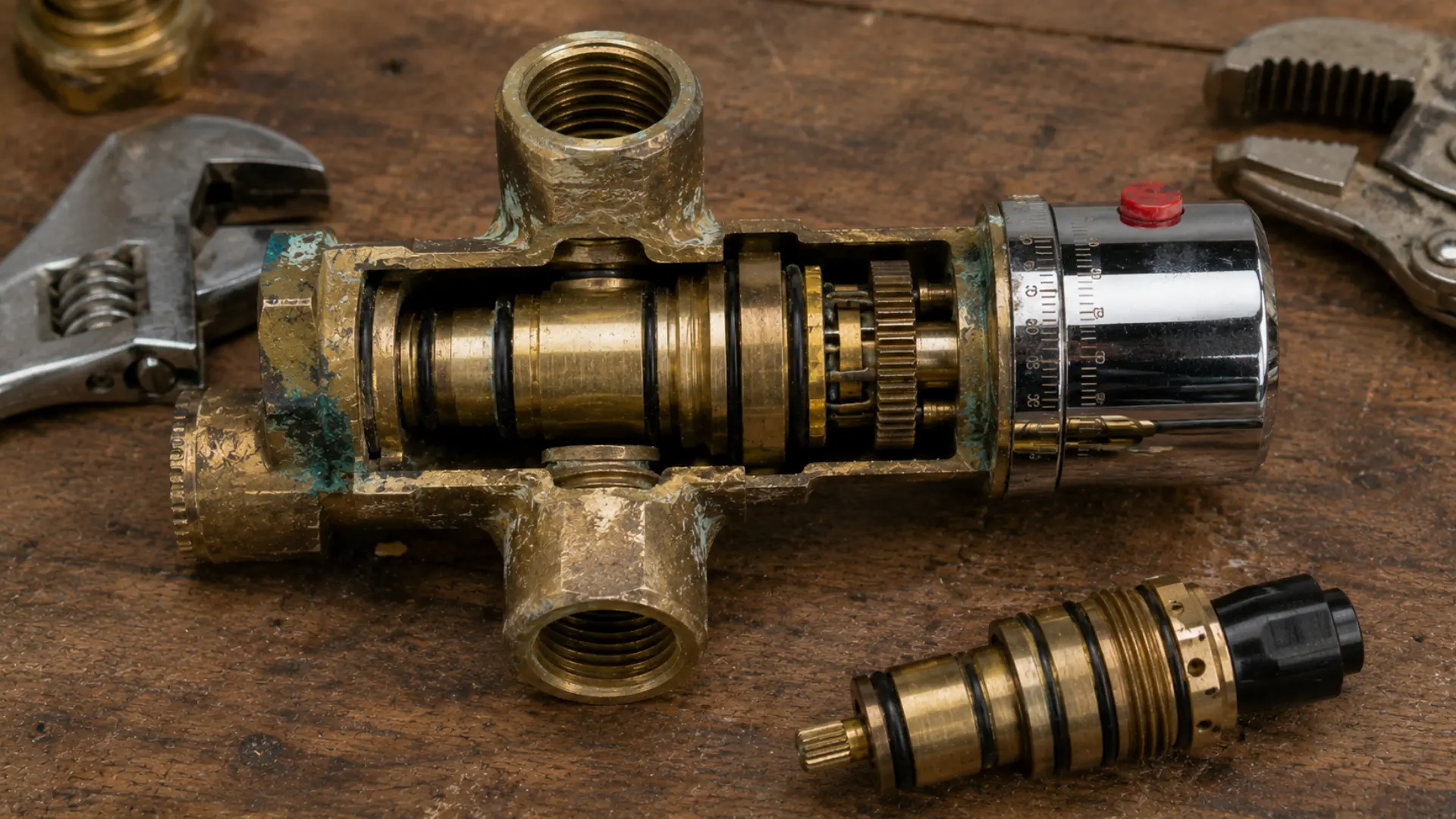
Thermostatic valves go a step further than pressure balancing. They let you preset an exact water temperature with a separate control.
These systems often use two handles instead of one, one for temperature and one for volume or diverting. Inside, a thermostatic element expands or contracts with heat to keep the mix precise.
You’ll find these more often in higher-end or newly renovated bathrooms, though older thermostatic systems do exist.
If your shower has a temperature dial marked with actual degree numbers, you’re almost certainly looking at this type.
Old Shower Valve Identification Chart
Use this chart as a quick reference once you know your handle count and general observations. Matching your valve to a row here can save you an extra trip to the store.
| Valve Type | Handle Style | Typical Age | Common Brands | Replacement Parts Needed |
|---|---|---|---|---|
| Compression | Two handles, round knob or cross handle | Pre-1980s | Kohler, American Standard, Pfister | Stem, rubber washer, seat washer |
| Ball | Single lever, full rotation | 1970s-1990s | Delta | Ball assembly, seat and spring kit, cam and packing |
| Cartridge | Single or double handle, limited motion | 1980s-present | Moen, American Standard, Mixet | Cartridge, retaining clip, O-rings |
| Ceramic Disc | Single lever, smooth, precise turn | 1990s-present | Pfister, Kohler | Ceramic disc cartridge, seals |
| Pressure-Balancing | Single handle with set screw | 1990s-present | Moen, Delta, Symmons | Pressure-balance cartridge, O-rings |
| Thermostatic | Two handles, numbered temperature dial | 2000s-present | Grohe, Symmons | Thermostatic cartridge, volume control cartridge |
How Old is Your Shower Valve?
Age plays a bigger role in identification than most people expect. Manufacturers redesign the internals every decade or so.
A valve’s age can tell you almost as much as its brand, especially once the logo has worn away. Matching design features to a general era narrows your search before you even find a model number.
This is especially useful for valves that have been repainted, partially replaced, or stripped of visible branding over the years.
Signs Your Valve is Discontinued
- No model number or part listing shows up on the manufacturer’s website.
- The cartridge or stem shape doesn’t match any current catalog images.
- Local hardware stores no longer stock compatible parts.
- Online searches only return forum posts or discontinued listings.
- The valve body shows an older casting style no longer used in current products.
Can You Still Find Parts for Old Shower Valves?
Parts are often available even for decades-old valves, though supply drops once a brand is discontinued. It depends mostly on the valve body’s condition, not the wear on the handle or trim.
A cartridge swap is usually enough if the body has no cracks, corrosion, or stripped threads. This is the most common fix. Moen and Delta cartridges are stocked at most hardware stores.
Replace the whole valve if the body is cracked, corroded, or leaking behind the wall, or if parts for an obsolete brand no longer exist. Worn threading on old compression valves also calls for full replacement.
Where to Find Parts for Discontinued Models
A few sources turn up parts most often for discontinued models:
- Specialty plumbing supply stores and online marketplaces like eBay, for hard-to-find or salvaged parts.
- Manufacturer archives, customer service lines, or local plumbers, who often keep old diagrams and leftover stock.
- Plumbing forums and community sites, for identification help and part leads.
Common Shower Valve Identification Mistakes
A few common errors cause most misidentified valves and wasted trips to the hardware store. Watching for these upfront saves you time and money.
- Assuming every single-handle valve is the same. A single handle can mean a ball, cartridge, or pressure-balancing valve, so confirm the mechanism before you buy.
- Ignoring hidden brand markings. Many brands stamp their name behind the handle, inside the escutcheon, or on the cartridge, not just on the front.
- Ordering parts before checking the cartridge. Cartridges vary across product lines, even within the same brand, so compare the old part before you buy.
- Confusing trim kits with valve bodies. Trim kits only change the look. The real mechanism lives inside the wall, not in the trim.
Most of these mistakes come down to skipping a step. A quick check behind the trim plate, before you buy anything, is usually all it takes to avoid them.
The Bottom Line
Most valve mix-ups come from skipping a step, not from a hard-to-find brand. Check the handle, look for a stamped logo, and compare the cartridge once the trim is off.
Match what you find against the type and brand details above before you head to the store.
A clear photo of each part beats a guess almost every time, especially at the counter or online.
Have you found a valve with no markings at all? Tell us what worked for you in the comments.
Frequently Asked Questions (FAQs)
How Can I Tell What Brand My Old Shower Valve is?
Check the handle, escutcheon plate, and cartridge or valve body for stamped logos. If the surface shows nothing, remove the trim plate and inspect the body directly, since many brands mark parts that are not visible from outside.
Can I Identify a Shower Valve Just From a Picture?
Sometimes, especially if the handle style or a visible logo is a strong match for a known brand. However, pictures alone can’t confirm the internal cartridge or stem shape, so a physical inspection is more reliable for an exact match.
Do Shower Valve Cartridges Fit All Brands?
No. Cartridges are brand- and often model-specific, with different lengths, diameters, and spline patterns. A cartridge that fits one Moen model won’t necessarily fit another Moen valve, let alone a Delta or Kohler valve.
What If My Shower Valve Has No Brand Name?
Focus on measuring the cartridge or stem directly and comparing it to manufacturer charts or bringing it to a hardware store for a physical match. Casting marks on the valve body can also help narrow down the manufacturer.
What If My Shower Valve Has No Brand Name?
If no cartridge or stem is available through standard retailers, try specialty plumbing supply stores, online marketplaces, or manufacturer customer service lines.