Low-growing perennials do a lot of quiet work in a garden. Plant them once, and they come back on their own, year after year, with no replanting required.
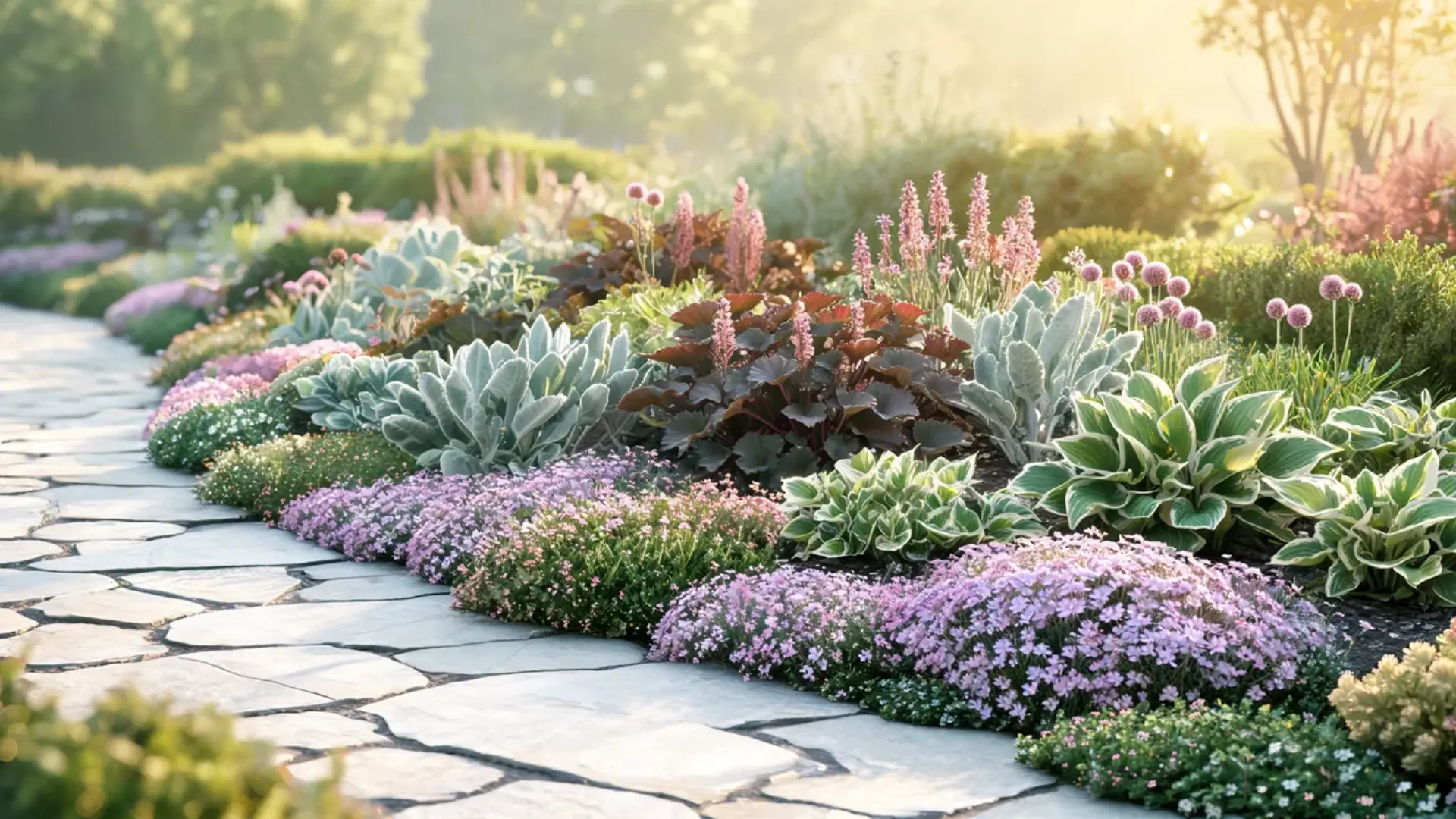
Run them along a path, and they soften the hard edge where pavers meet soil. Tuck them at the front of a bed, and they cover the bare patch that always shows up beneath taller plants, doing double duty as the transition between lawn and border.
Some varieties creep and spread, filling in as ground cover. Others hold their shape as tidy, small border plants and widen a little each season. A few keep their foliage low but send up thin, delicate flower stems well above it, so you get height without losing that low profile.
The picks below mix flowering ground covers, foliage plants, sun lovers, and shade-tolerant low-growing perennials for the front of a border. Height, spread, and care needs will shift somewhat by species and cultivar, so use the specifics here as a starting point rather than a fixed rule.
How to Choose Low-Growing Perennials for Garden Borders
Not every low-growing perennial that catches your eye will actually do well in your border. A plant that thrives in a friend’s garden two states over might struggle in yours simply because the light, soil, or spacing doesn’t match; a few quick checks before buying save you from replacing plants a season later.
| Check | What to Look At | Why It Matters |
|---|---|---|
| Mature height and spread | Fast spreaders cover ground quickly but need periodic trimming or division. Clump formers stay contained and fill in slower, with less upkeep. | A 6-inch-tall plant can still spread 2 feet wide within a couple of seasons, so height alone doesn’t tell you how much room to leave. |
| Sunlight conditions | Full sun means 6+ hours of direct light. Partial shade means 3 to 6 hours, often morning sun. Full shade means less than 3 hours, or dappled light all day. | Matching a plant to the light it actually gets prevents leggy growth or scorched leaves. |
| Soil and moisture | Dry, sandy borders suit plants adapted to lean soil. Plants that need consistent moisture will wilt in fast-draining sand. | Roots can rot in soil that stays wetter than the plant is built for, or dry out where it stays too lean. |
| Foliage and structure | Evergreen or semi-evergreen leaves, foliage color like silver or burgundy, leaf texture, seed heads, or fall color. | Flowers fade, but foliage carries the border through most of the year. |
| Bloom timing | Mix spring, summer, and autumn bloomers, pairing early performers like creeping phlox with later-season plants. | Staggered bloom times keep the border from going bare once one wave of flowers finishes. |
Zone ratings on plant tags refer to the USDA Plant Hardiness Zone Map, which is worth checking against your own zip code before assuming a plant will survive your winter.
Ground-Covering Low-Growing Perennials
Bare soil between pavers or along a border’s edge invites weeds fast. These low-growing perennials fill that space instead, softening hard lines, crowding out anything trying to take root, and flowing naturally around rocks and stepping stones as they spread.
1. Creeping Thyme
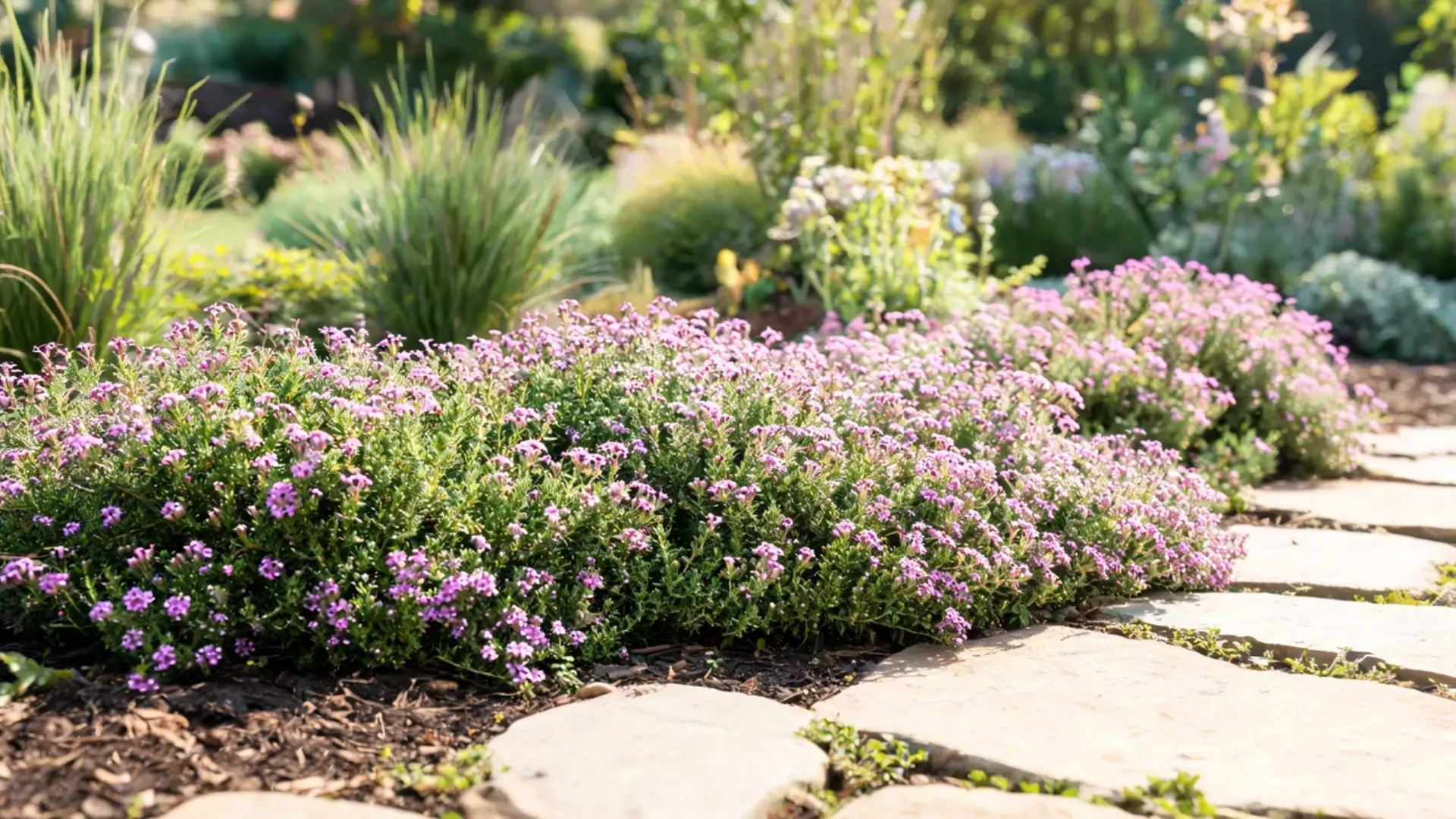
Thymeing thyme grThymento a low, fragrant carpet of tiny leaves and even tinier flowers. Tuck it between pavers or along a sunny path, and it will fill the gaps on its own within a season or two.
- USDA Zones: 2–9, depending on species
- Mature Size: 2–6 in. tall × 6–18 in. wide
- Sun: Full sun
- Best Border Use: Pavers, pathways, rock gardens, dry border edges
2. Creeping Phlox
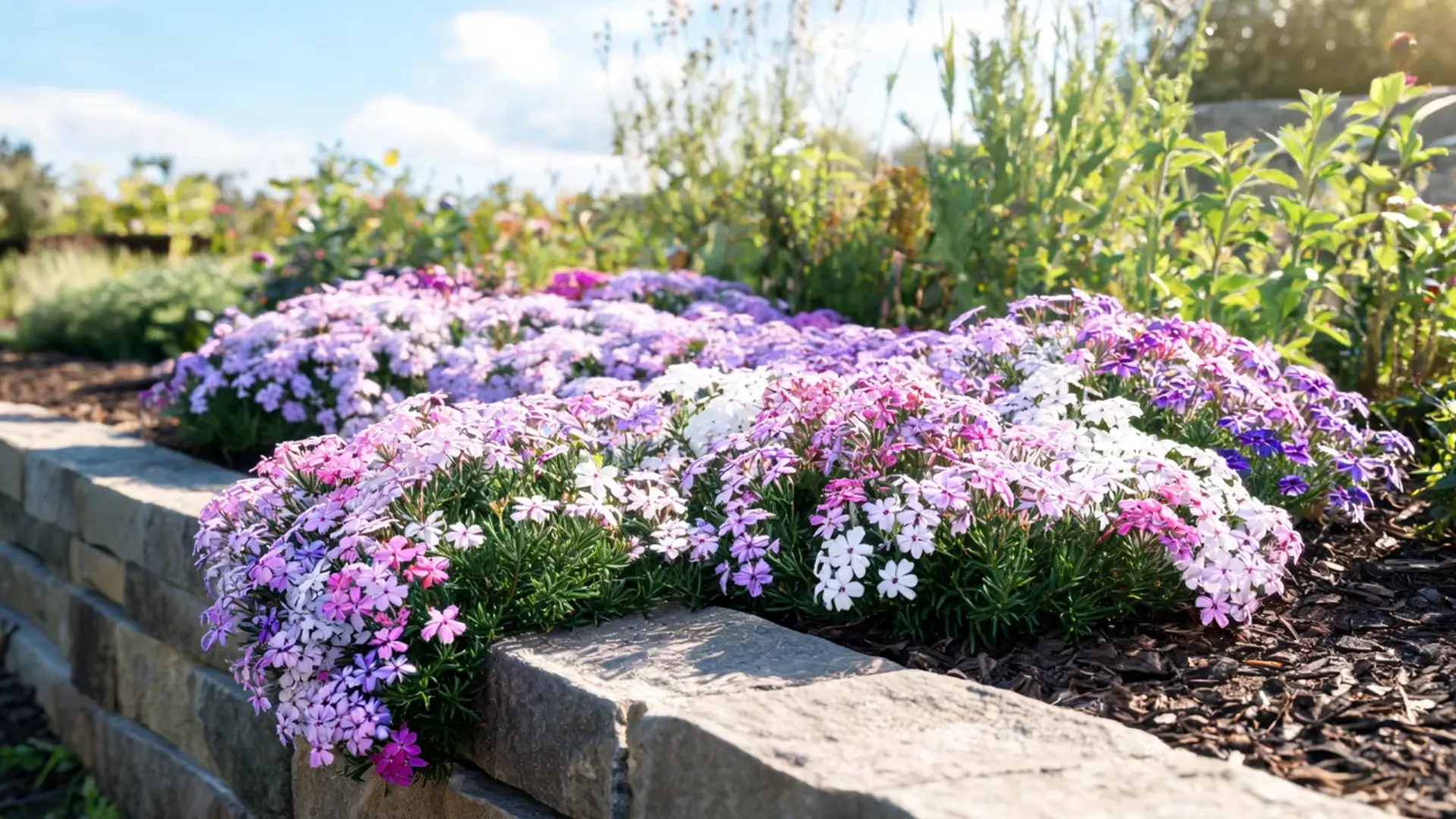
Phlox puts on a dense spring show in pink, purple, white, and red. It spreads well over slopes and raised beds, which makes it a natural fit for the sunny front of a border.
- USDA Zones: 3–9
- Mature Size: 6–9 in. tall × 9–18 in. wide
- Sun: Full sun to partial shade
- Best Border Use: Slopes, rock gardens, pathways, sunny border fronts
3. Creeping Sedum
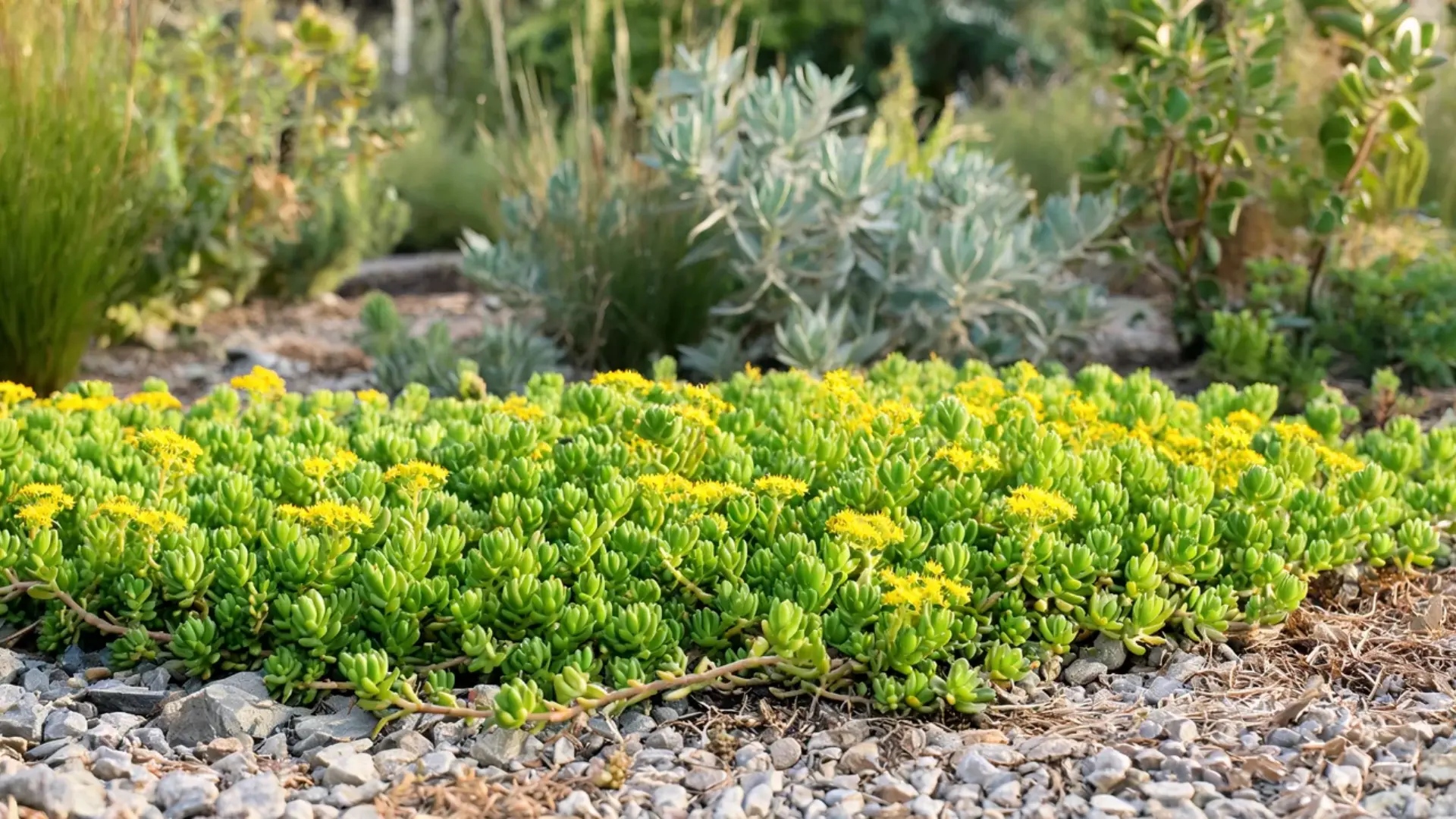
Creeping sedum is a low-maintenance succulent that handles poor soil without complaint. It fills sunny gaps and rarely needs extra water once established.
- USDA Zones: 4–9
- Mature Size: 3–6 in. tall × 1–2 ft. wide
- Sun: Full sun to partial sun
- Best Border Use: Dry borders, gravel gardens, rocks, sunny bed edges
4. Creeping Juniper
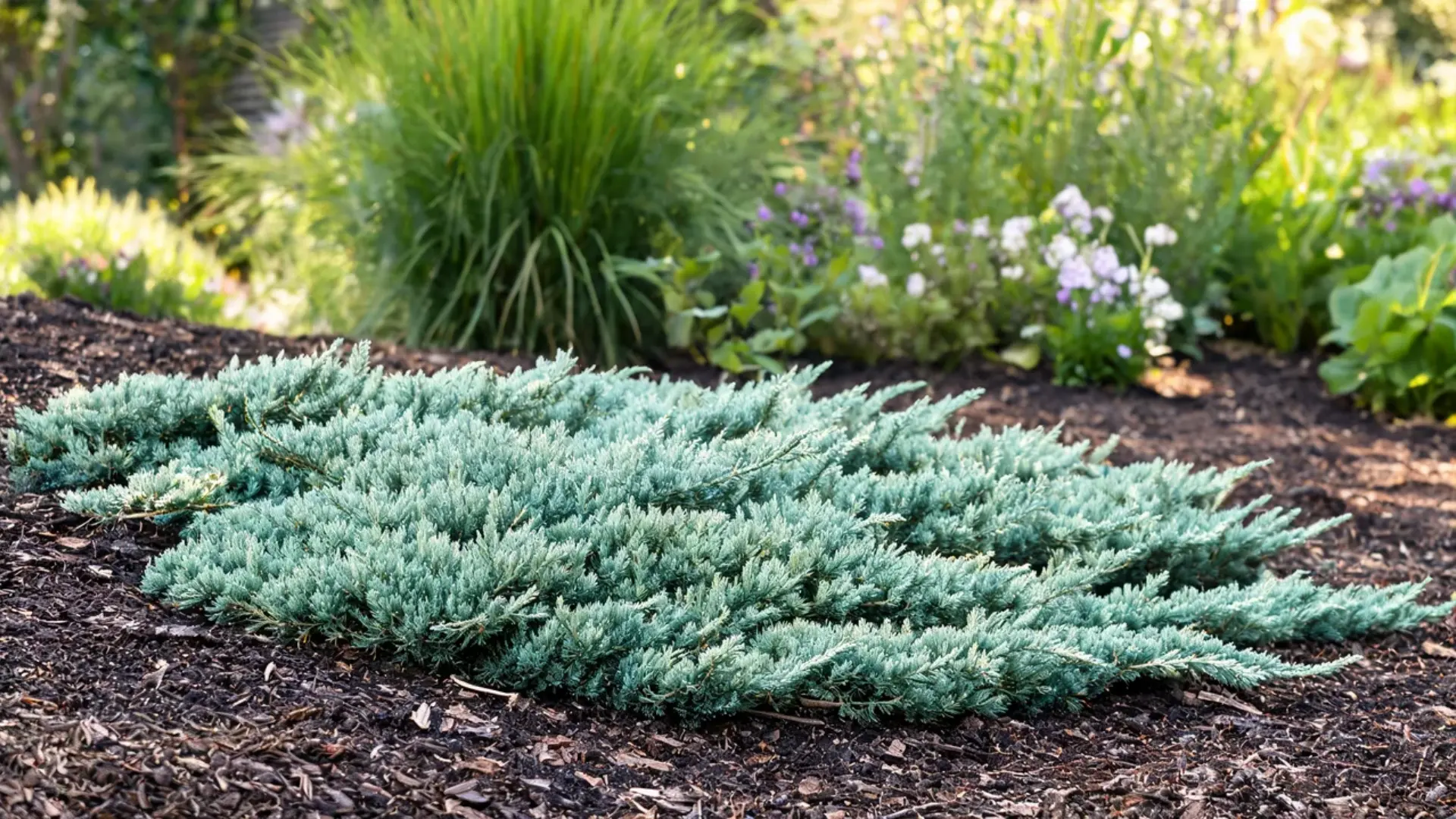
Creeping juniper spreads into a wide evergreen mat that holds its shape on difficult, sloped ground. Because it’s evergreen, it gives a border structure even in winter, when the flowering plants around it have gone dormant.
- USDA Zones: 3–9
- Mature Size: 8–18 in. tall × up to 8 ft. wide
- Sun: Full sun
- Best Border Use: Slopes, large borders, erosion-prone areas, difficult ground
5. Barrenwort
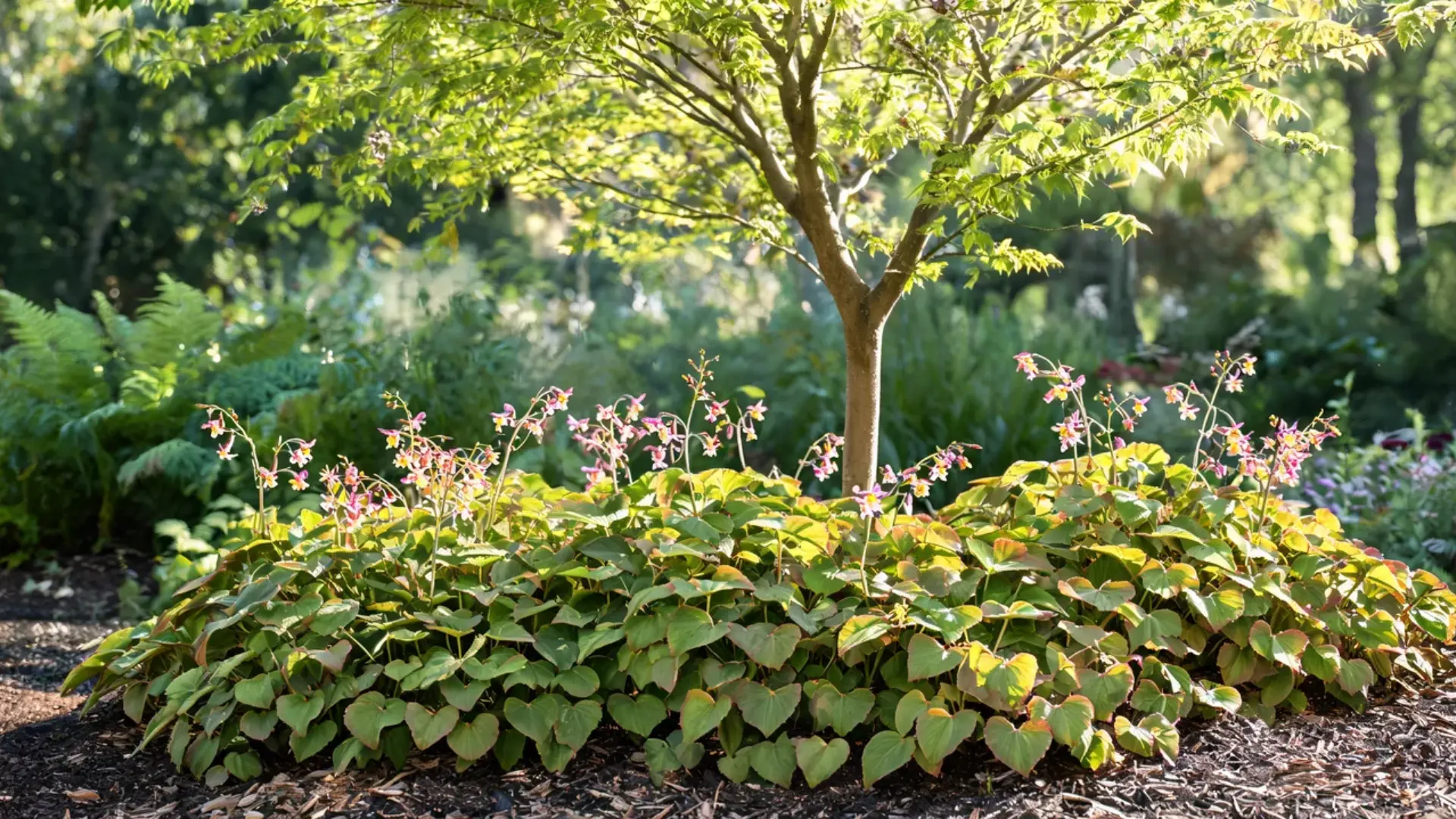
Also sold as epimedium, barrenwort has heart-shaped leaves and delicate spring flowers. Its spreading roots make it one of the few plants that will actually fill in beneath trees and shrubs.
- USDA Zones: 4–8
- Mature Size: 8–12 in. tall × 12–36 in. wide
- Sun: Full shade to partial sun
- Best Border Use: Dry shade, woodland borders, spaces beneath trees
6. Leadwort
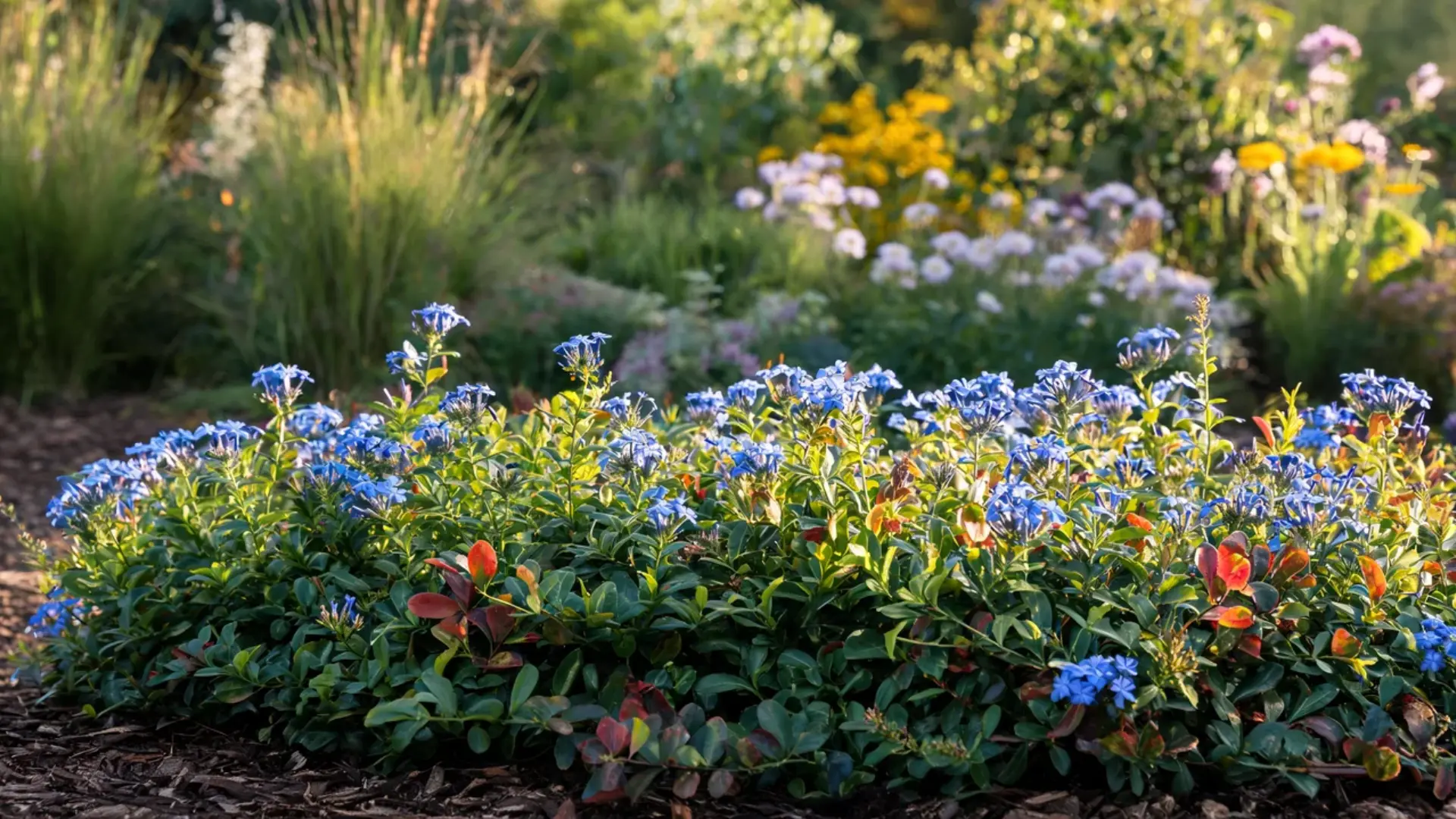
Leadwort is a compact ground cover with bright blue flowers that show up toward the end of summer. It’s slow to get going in spring, but it earns its spot by adding color later in the season, when many borders start to fade.
- USDA Zones: 4–8
- Mature Size: 8–12 in. tall × 10–14 in. wide
- Sun: Partial to full sun
- Best Border Use: Late-season borders, slopes, pathway edges
7. Basket of Gold
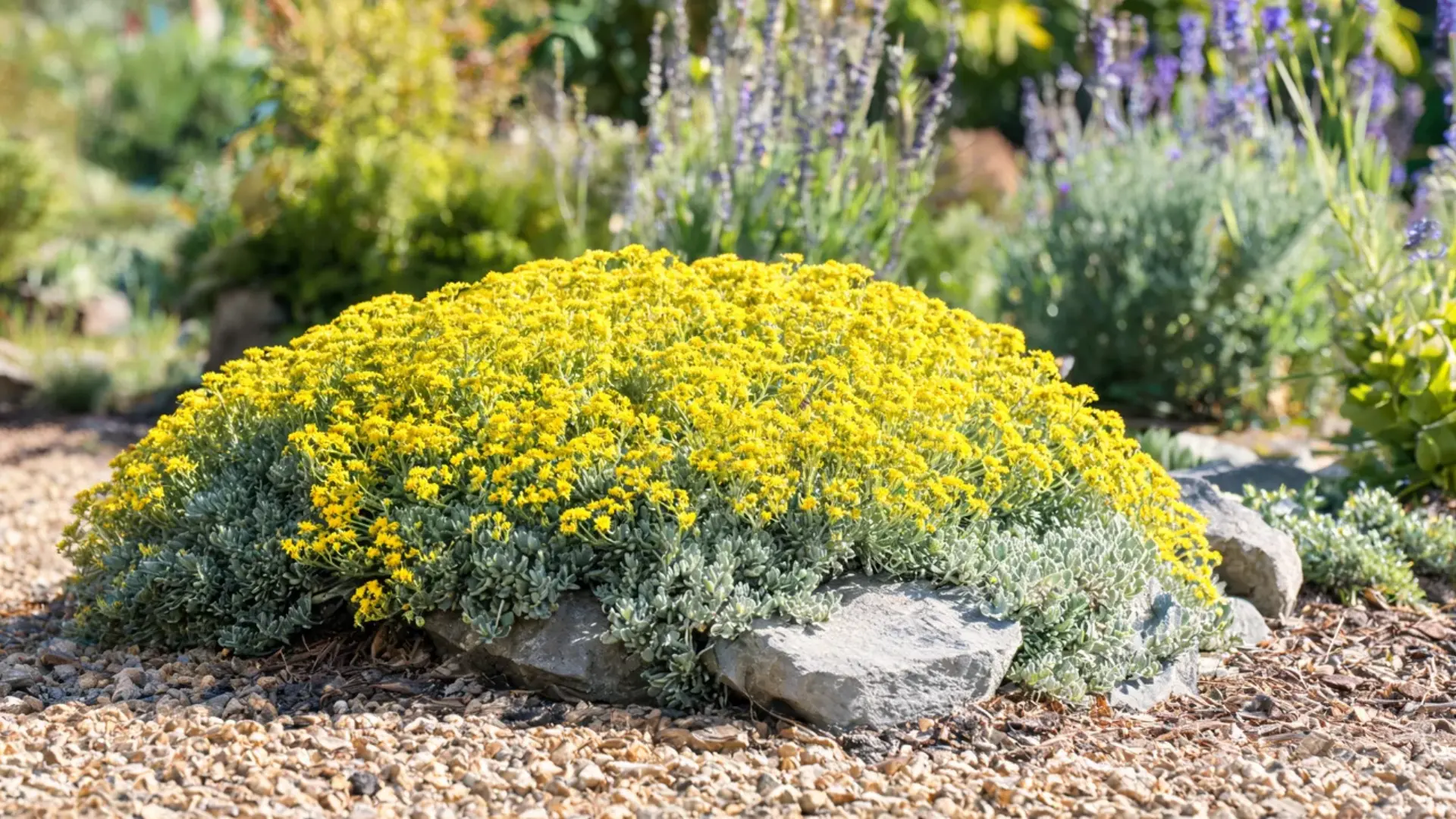
Basket of gold covers itself in bright yellow flower clusters over low foliage. It tolerates drought and fast-draining soil, so it holds up well in sunny spots that other plants find too dry.
- USDA Zones: 4–7
- Mature Size: 6–12 in. tall × 12–18 in. wide
- Sun: Full sun
- Best Border Use: Rock gardens, dry borders, walls, sunny edging
8. Ice Plant
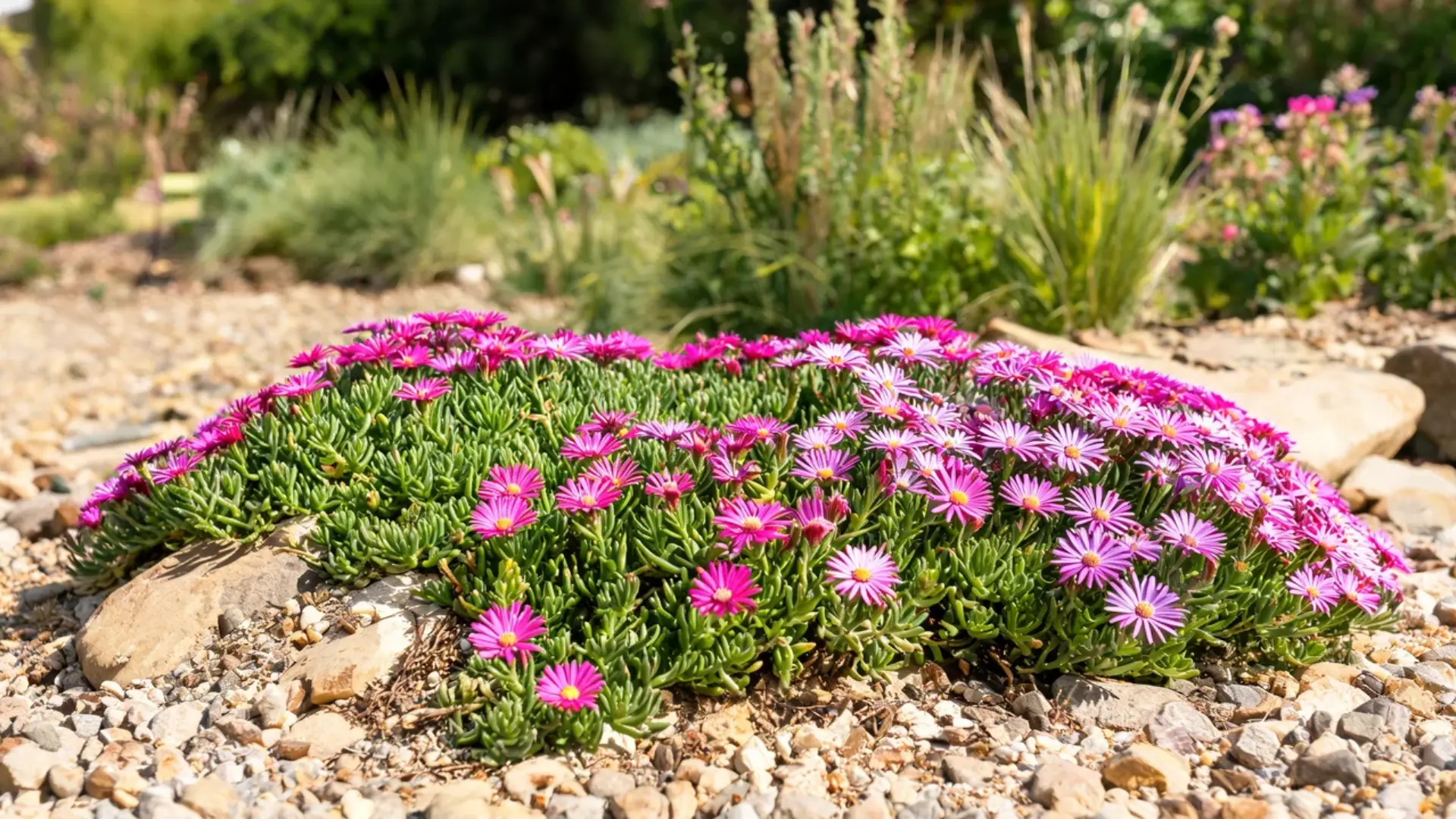
Ice plant is a spreading succulent with fleshy leaves and bright, daisy-like flowers. It stays flat to the ground and holds up in heat, drought, and exposed sites where little else survives.
- USDA Zones: 4–11
- Mature Size: About 2 in. tall × 24 in. wide
- Sun: Full sun
- Best Border Use: Arid gardens, slopes, seaside borders, rock gardens
9. Bunchberry
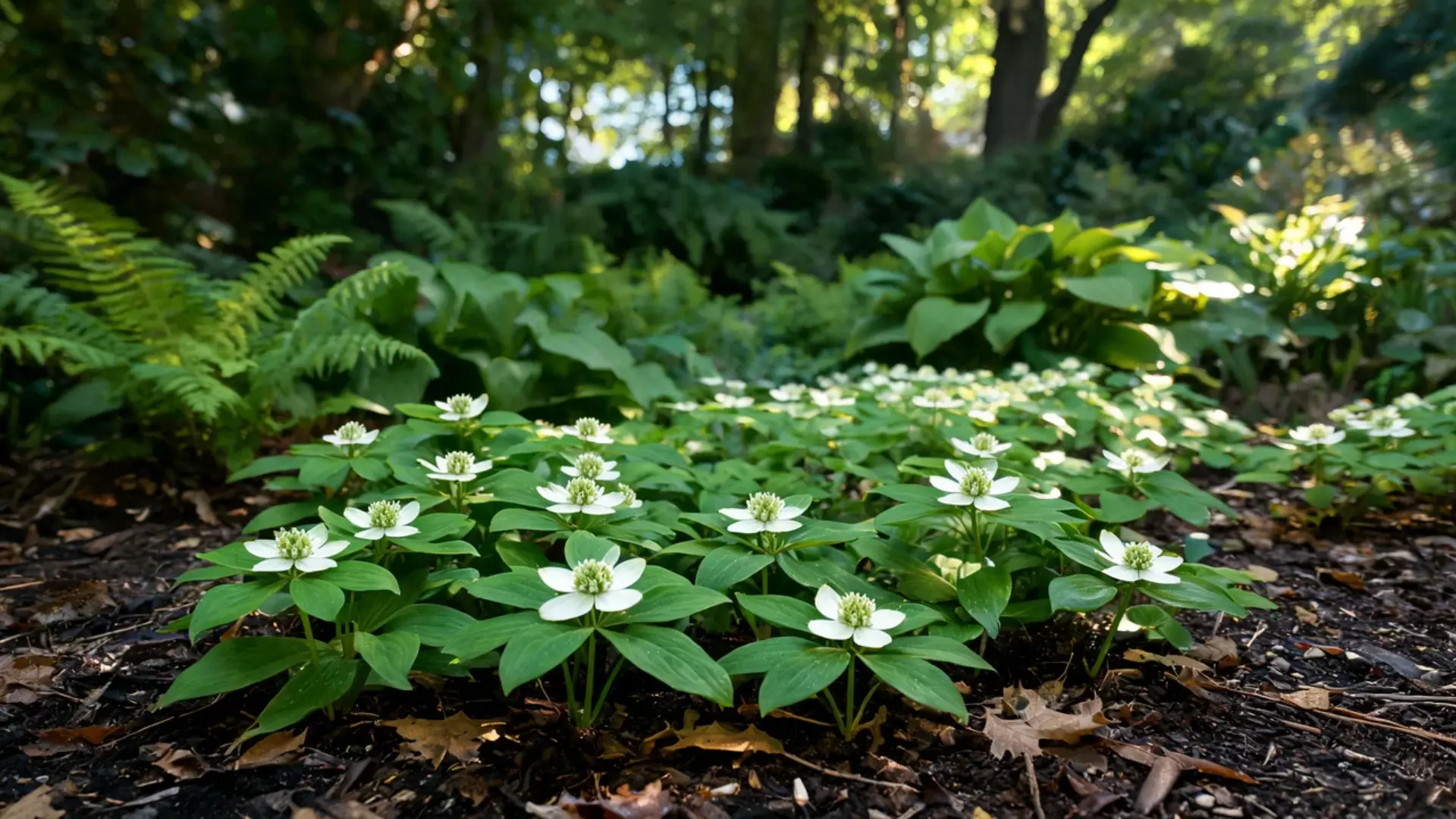
Bunchberry is a shade-loving relative of dogwood that stays low and spreads gradually. Its white flower clusters brighten shaded ground that would otherwise go bare.
- USDA Zones: 2–6
- Mature Size: 8–9 in. tall × about 12 in. wide
- Sun: Partial shade
- Best Border Use: Woodland gardens, shaded paths, cool northern borders
10. Everbearing Strawberry
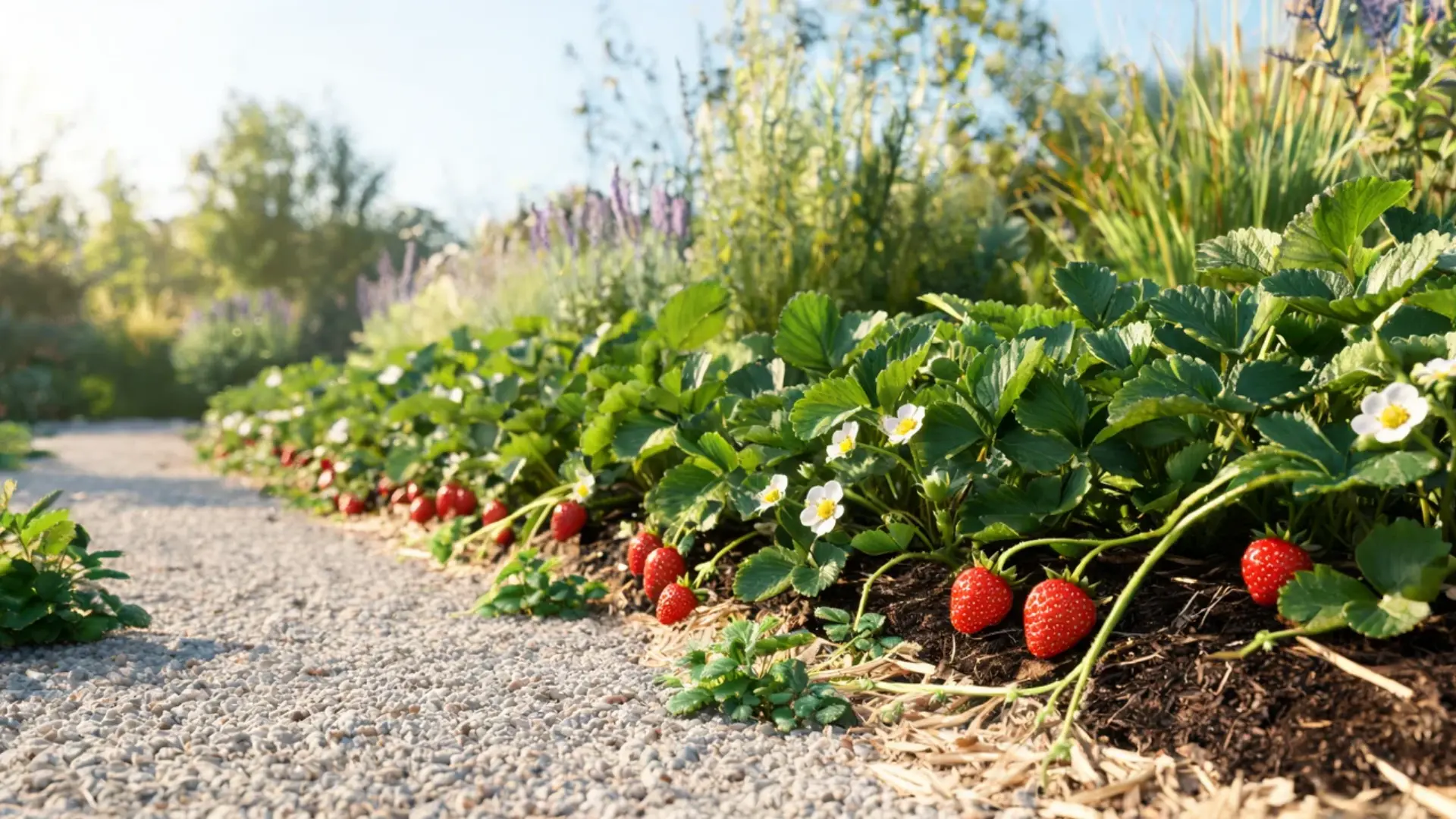
Everbearing strawberries do double duty: leafy ground cover plus edible fruit. Their spreading habit fills sunny gaps in a border while giving you something actually to pick and eat.
- USDA Zones: 3–10
- Mature Size: 8–10 in. tall × 12–18 in. wide
- Sun: Full sun
- Best Border Use: Edible borders, cottage gardens, sunny bed edges
Sun-Loving Small Border Plants
For a warm, sunny border, you want small border plants that can handle full sun without wilting by afternoon. These compact perennials deliver strong color through the hottest months and shrug off dry spells once they’re established, with minimal watering needed.
11. Lamb’s Ear
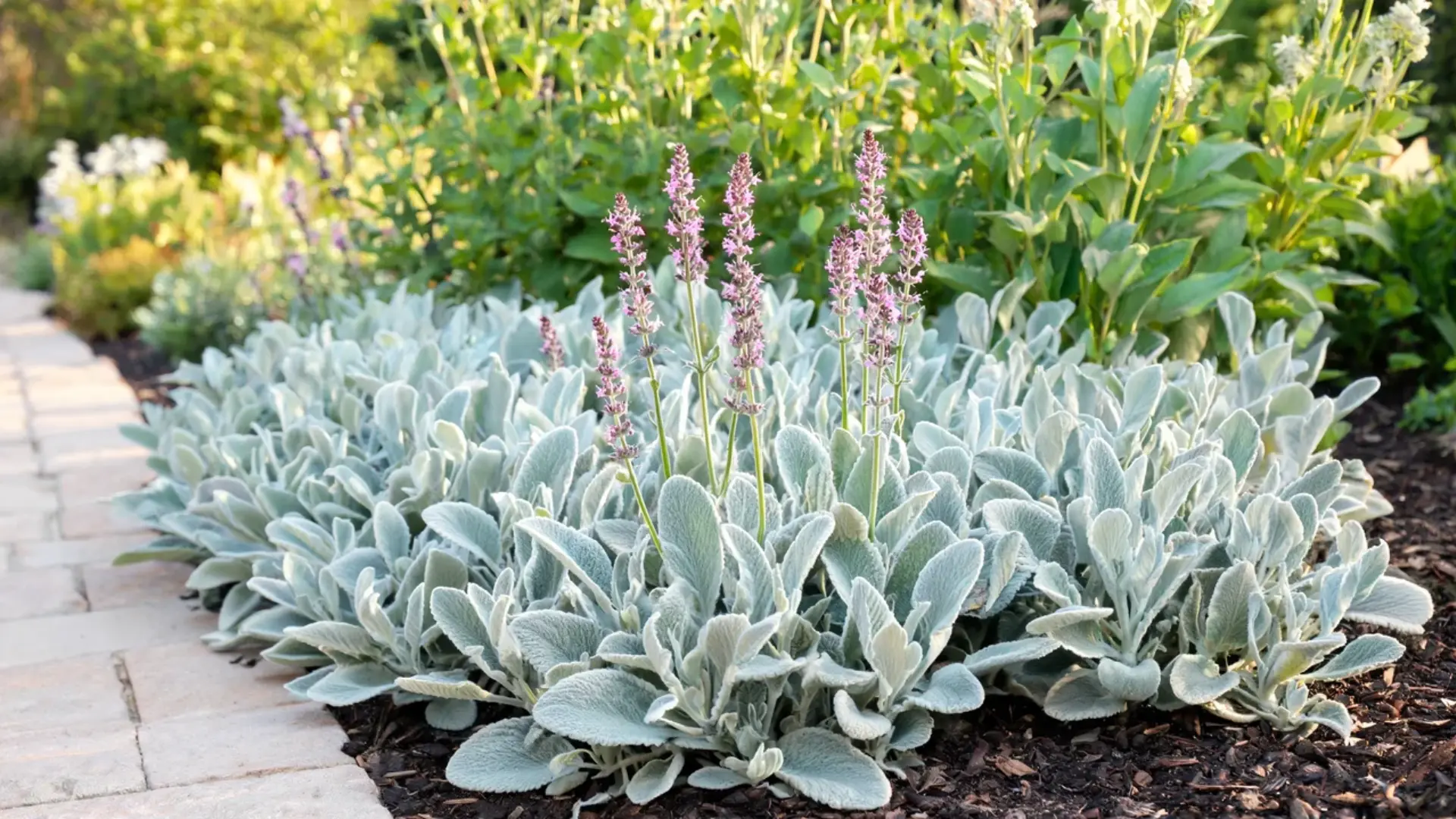
Lamb’s ear is grown mostly for its soft, silver-gray leaves, which stay low while pinkish flower spikes rise above them in summer. Kids and adults both tend to reach out and touch it, which makes it a good pick for a border edge people walk close to.
- USDA Zones: 4–8
- Mature Size: 6–24 in. tall × 12–36 in. wide
- Sun: Full sun to partial shade
- Best Border Use: Pathways, sensory gardens, silver-foliage borders
12. Red Salvia
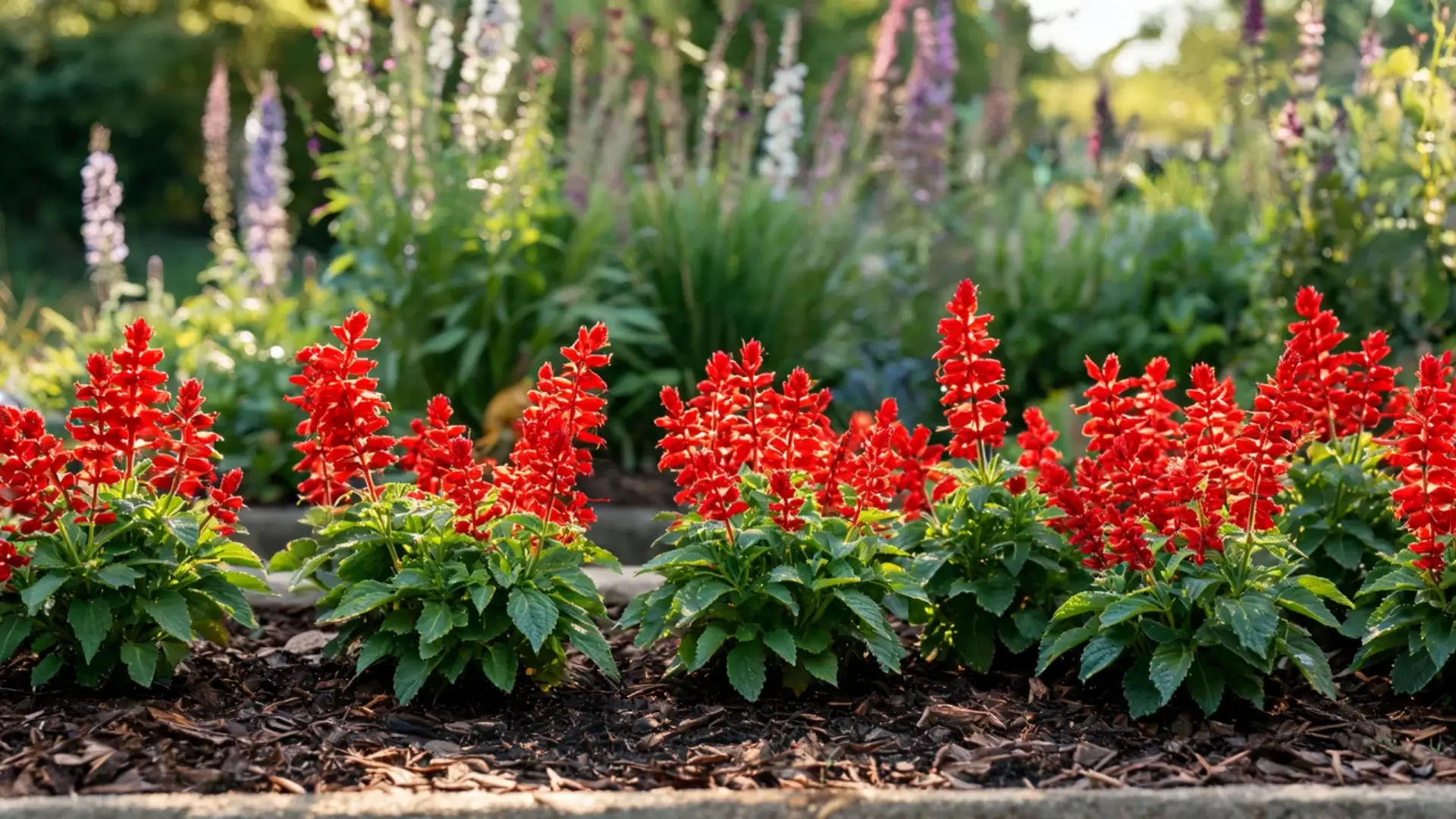
Red salvia sends up upright spikes of bright flowers that pollinators find hard to resist. It behaves as a true perennial in warmer climates, but gardeners further north often grow it as an annual instead.
- USDA Zones: 3–10, perennial in warmer areas
- Mature Size: 12–24 in. tall × 9–18 in. wide
- Sun: Full sun to partial shade
- Best Border Use: Pollinator gardens, colorful front-to-middle borders
13. Threadleaf Coreopsis
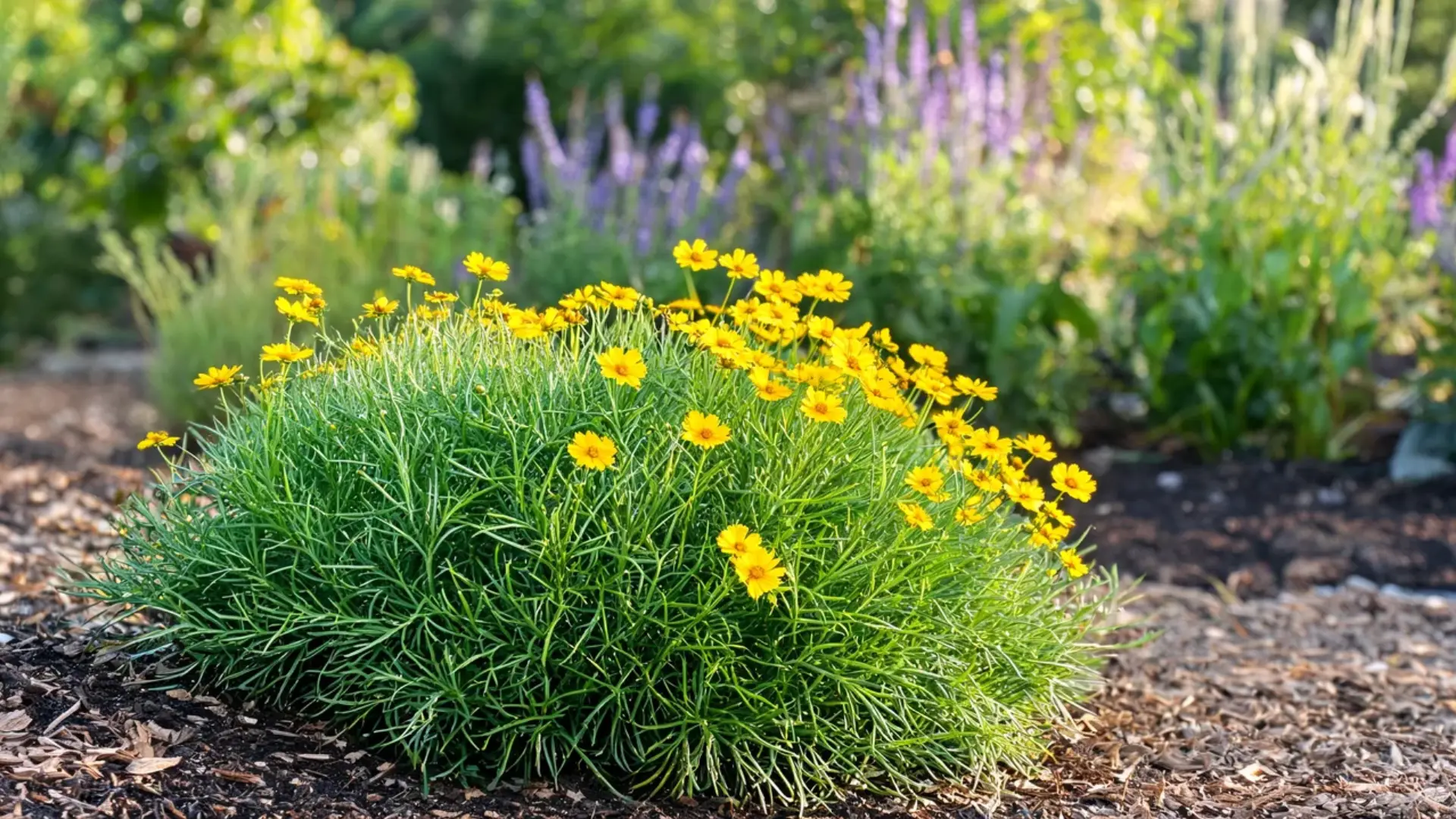
Threadleaf coreopsis has fine, feathery foliage topped with cheerful daisy-like flowers all summer. Compact cultivars stay in scale with a border instead of sprawling over their neighbors.
- USDA Zones: 2–11, depending on cultivar
- Mature Size: 15–18 in. tall × 18–20 in. wide
- Sun: Full sun
- Best Border Use: Cottage gardens, pollinator borders, sunny beds
14. Dianthus
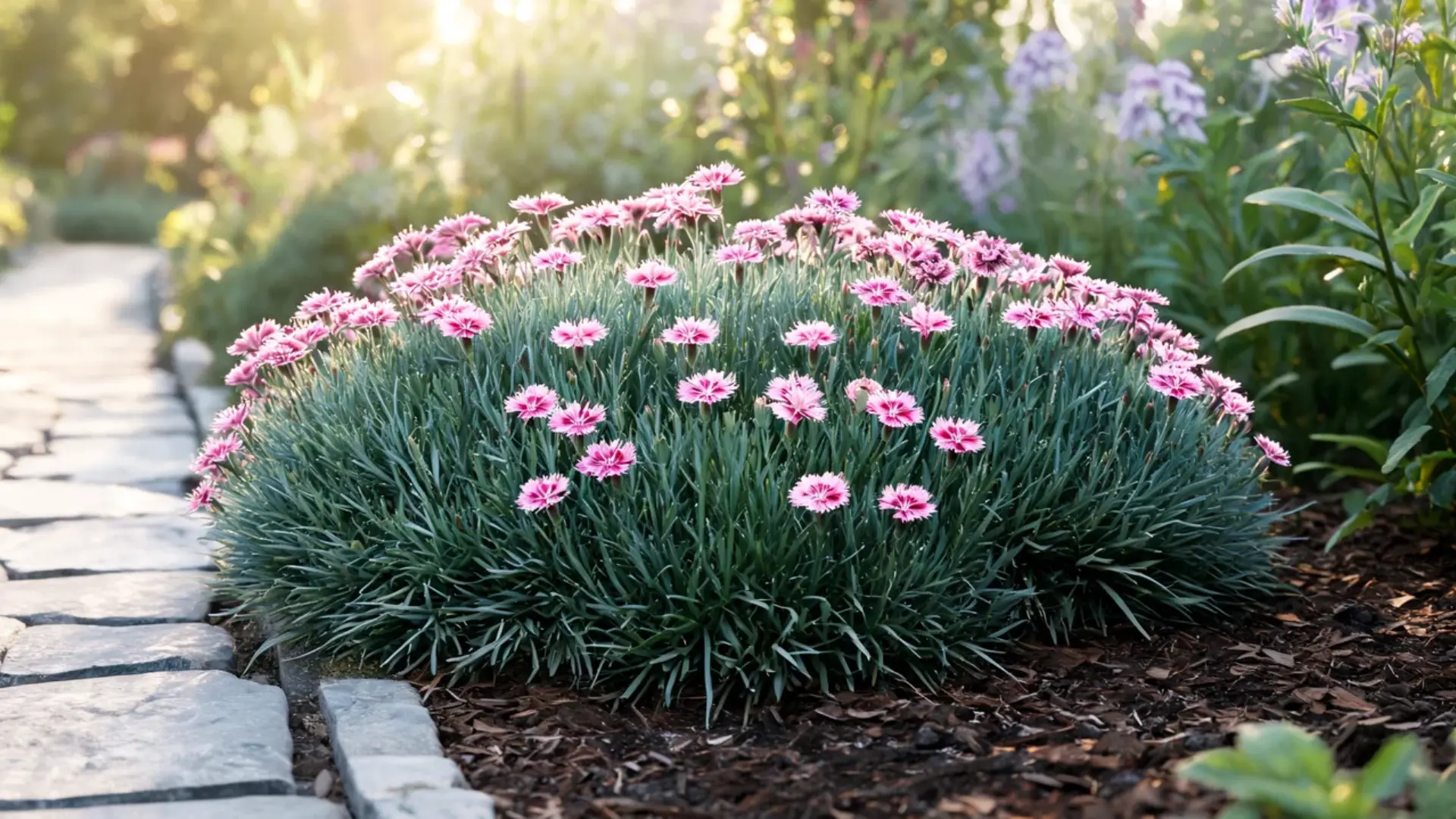
Dianthus forms neat, low mounds of grass-like foliage topped with fragrant flowers. It comes in shades of pink, red, and white, and the scent alone is worth planting it near a path.
- USDA Zones: 3–9
- Mature Size: About 10 in. tall × 12 in. wide
- Sun: Full sun to partial sun
- Best Border Use: Path edging, cottage gardens, fragrant borders
15. Geum
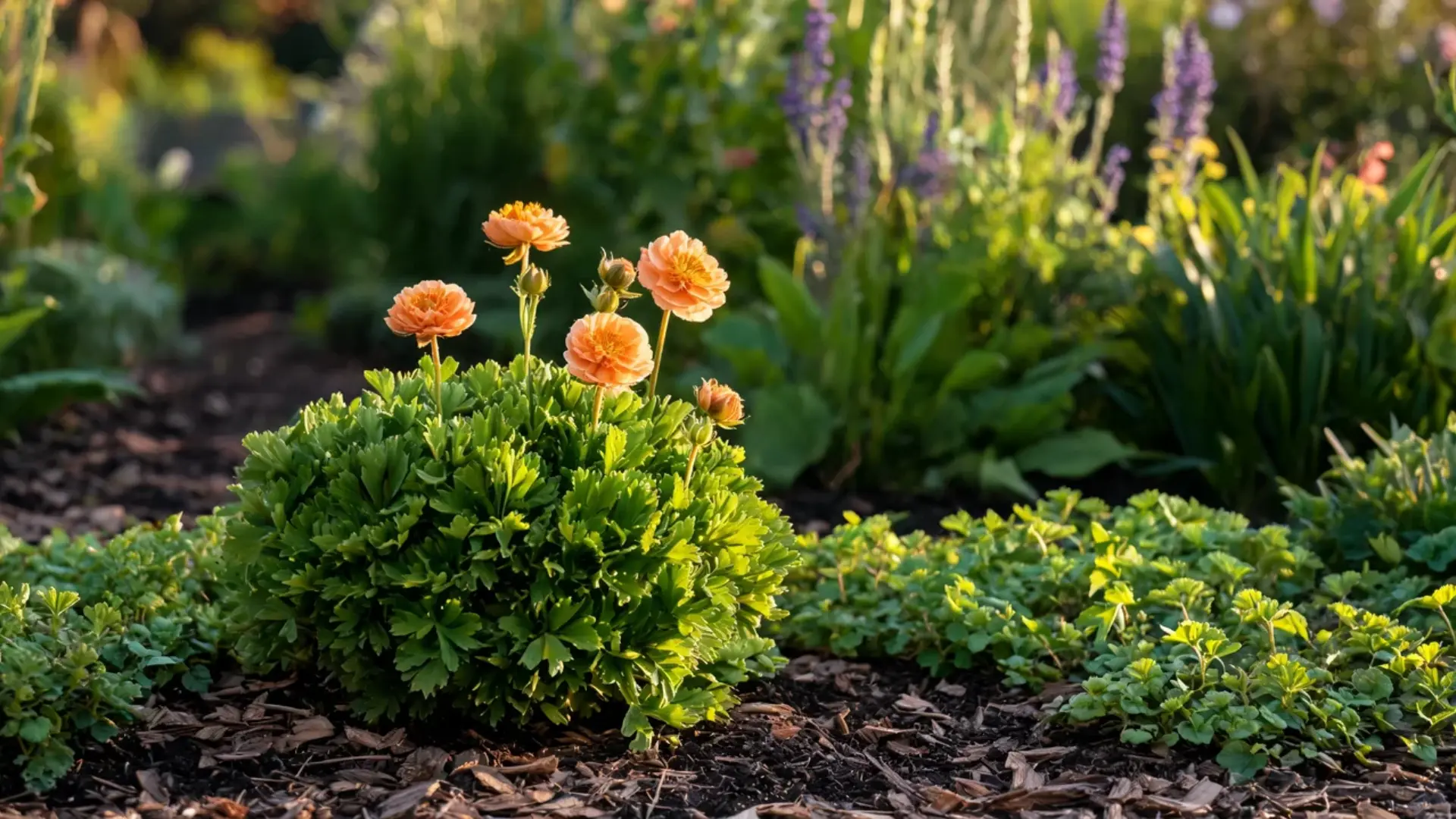
Geum forms tidy clumps with late-spring flowers in cream, yellow, orange, pink, and red. The flowers sit on upright stems, so they add color without turning into a wall that blocks the view behind them.
- USDA Zones: 4–9
- Mature Size: 8–15 in. tall × 15–18 in. wide
- Sun: Full sun to partial sun
- Best Border Use: Cottage borders, warm-colored planting schemes
16. Dwarf Bearded Iris
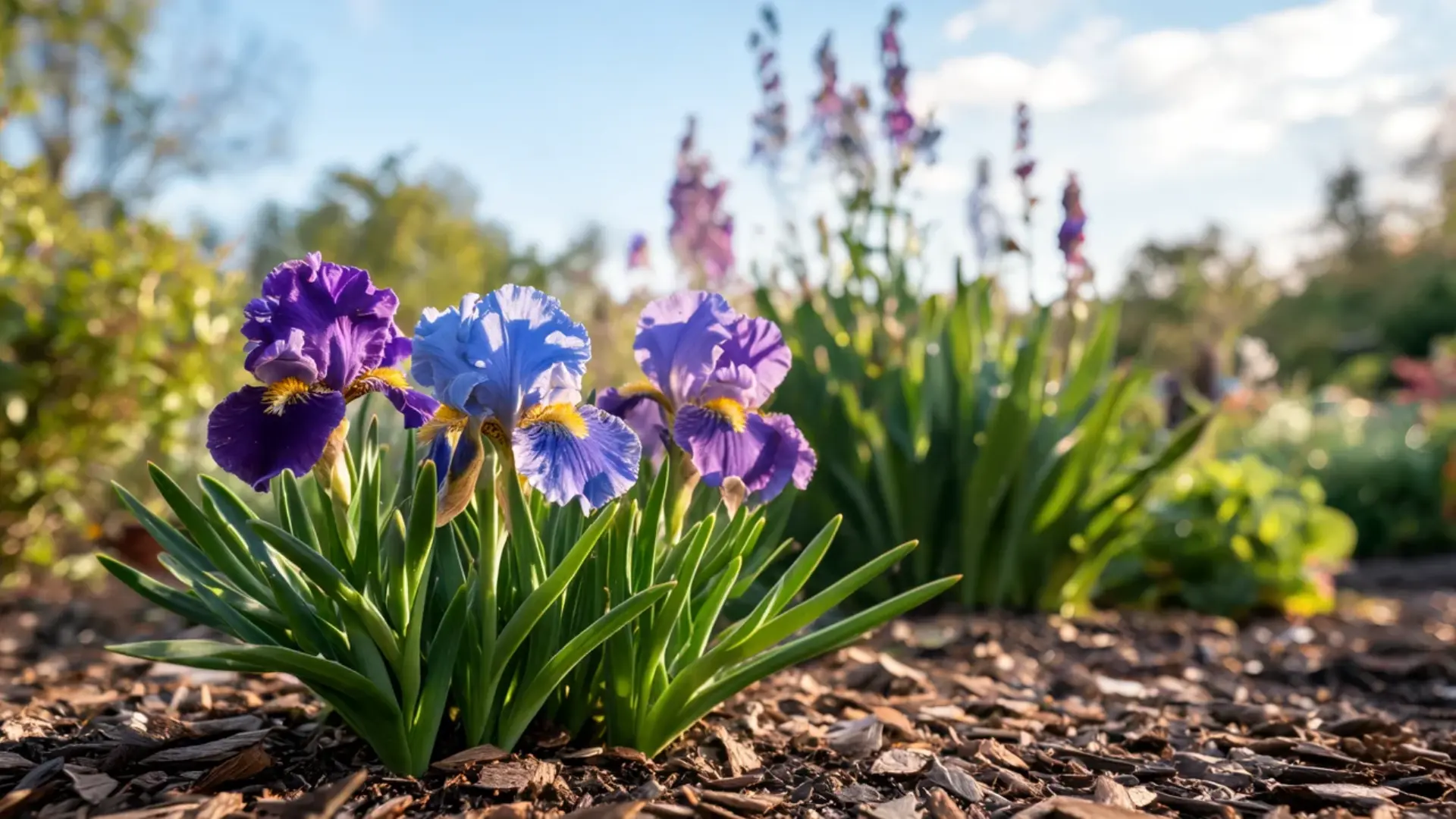
Dwarf bearded iris packs the classic iris shape and color range into a much shorter plant. It also tends to flower earlier in the season than its taller relatives.
- USDA Zones: 4–7
- Mature Size: 8–16 in. tall × 24–36 in. wide
- Sun: Partial to full sun
- Best Border Use: Spring borders, pathways, front of iris beds
17. Compact Beardstongue
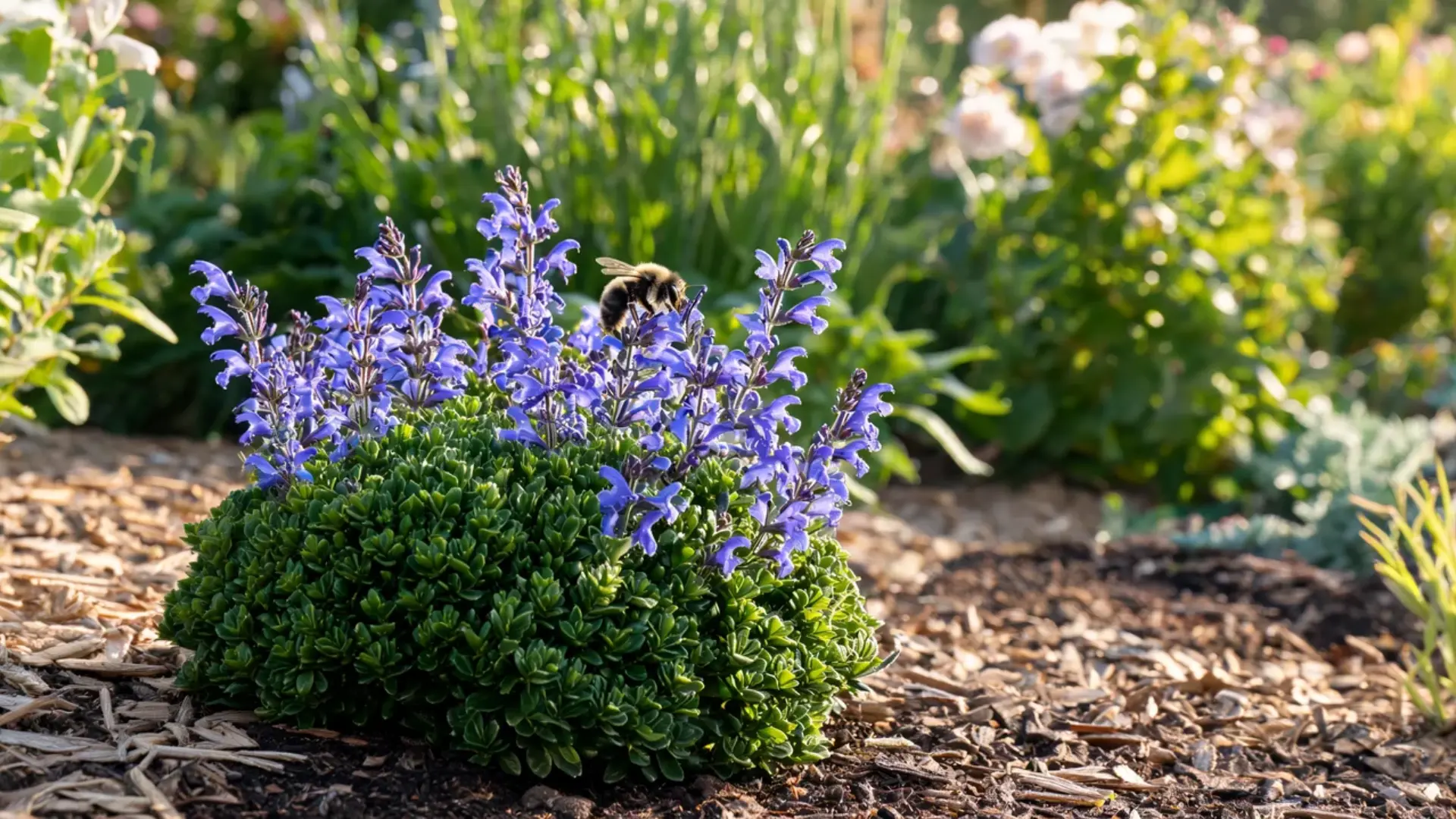
Compact beardstongue (Penstemon) produces tubular flowers that pollinators visit heavily. Look for named dwarf cultivars specifically, since mature height varies a lot across the wider genus.
- USDA Zones: 3–8
- Mature Size: About 8–18 in. tall for compact cultivars
- Sun: Full sun
- Best Border Use: Pollinator beds, dry borders, colorful edging
18. Dalmatian Bellflower
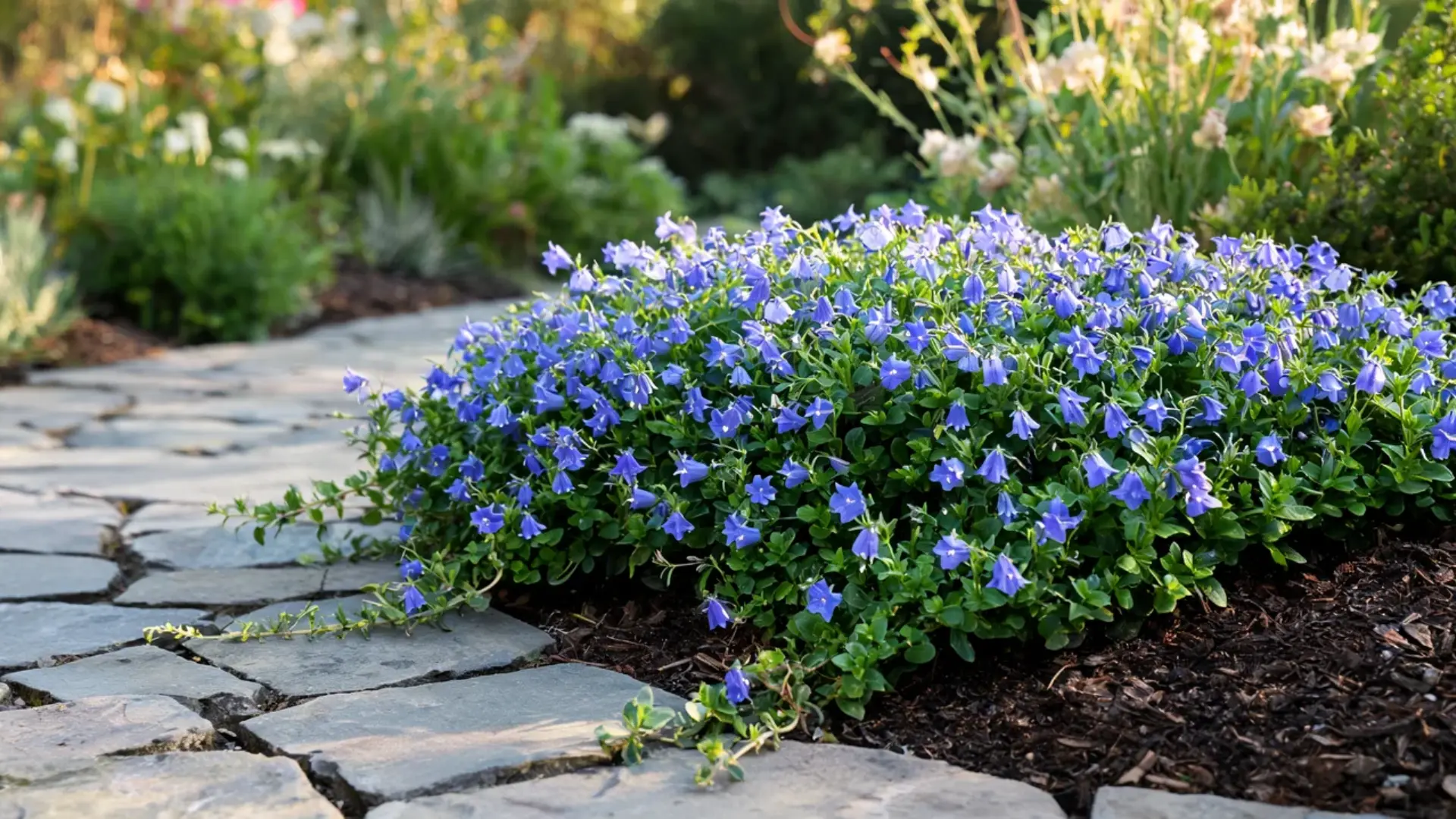
Dalmatian bellflower is short and spreads into a mound covered with bell-shaped blooms. It’s useful for softening narrow gaps along a path without growing tall enough to get in the way.
- USDA Zones: 4–8
- Mature Size: About 6 in. tall × 12 in. wide
- Sun: Full sun to partial shade
- Best Border Use: Pathways, walls, crevices, rock gardens
19. Serbian Bellflower
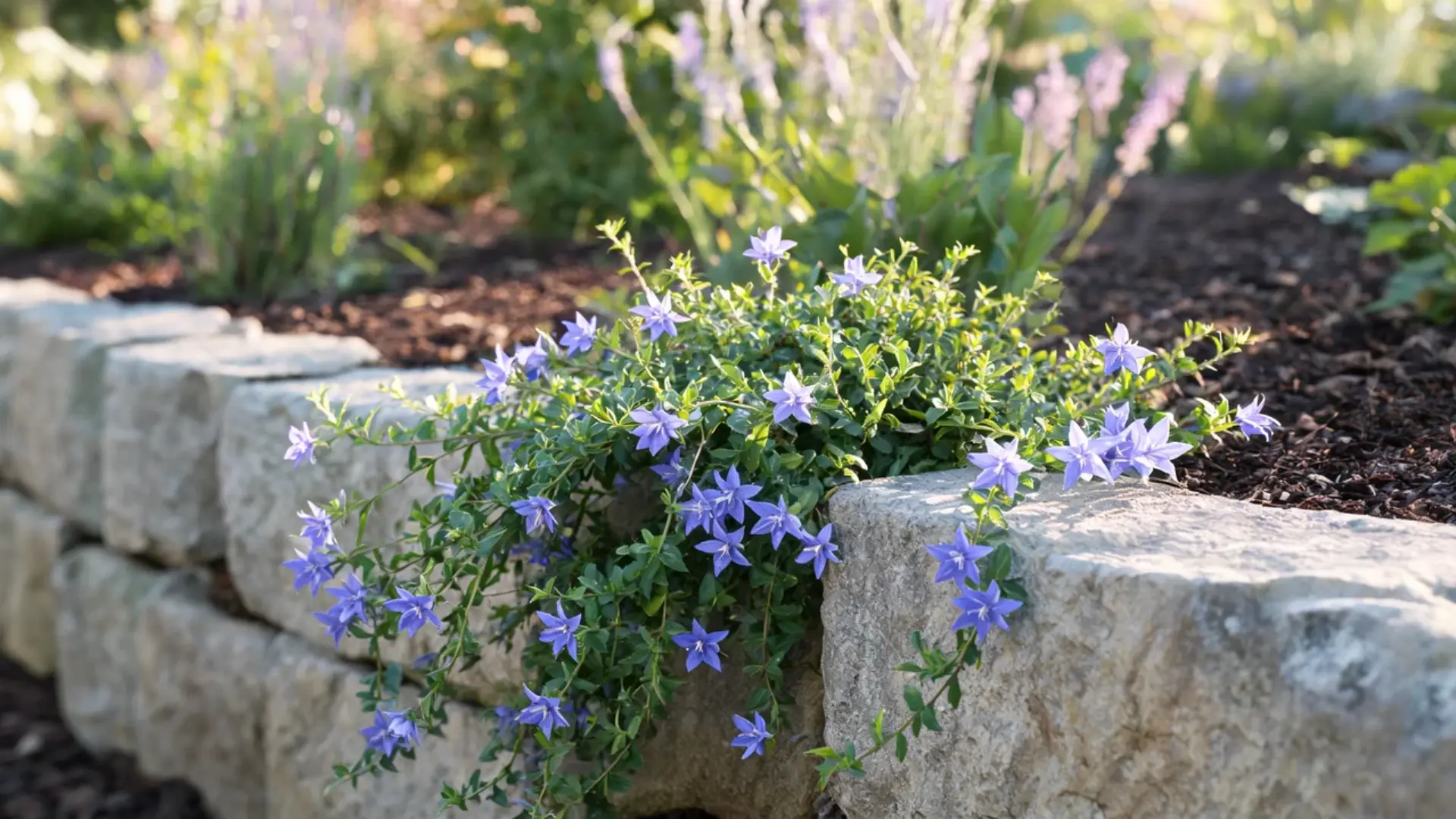
Serbian bellflower spreads gently and flowers for several weeks with cascading blue or violet blooms. It looks best when it’s allowed to spill over a stone edge or raised bed rather than staying flat.
- USDA Zones: 4–8
- Mature Size: 6–12 in. tall × 18–24 in. wide
- Sun: Partial shade to partial sun
- Best Border Use: Raised beds, walls, paths, sloped borders
20. Veronica
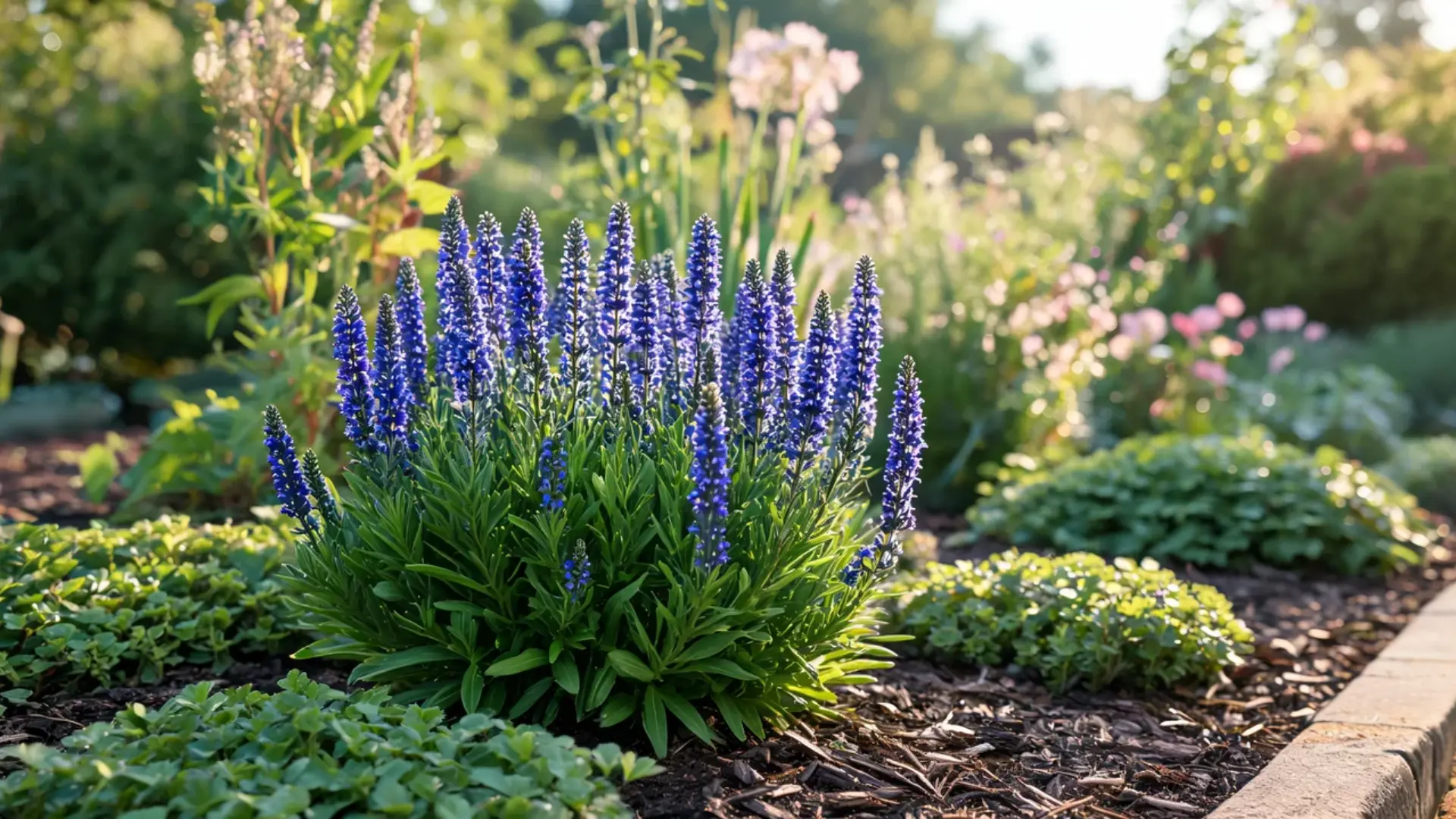
Compact veronica sends up upright violet-blue flower spikes over tidy, low foliage. It flowers for a long stretch, which helps keep the front of a border colorful later in the season when other plants have finished.
- USDA Zones: 4–9
- Mature Size: About 18 in. tall and wide
- Sun: Full sun to partial shade
- Best Border Use: Pollinator borders, cutting gardens, sunny bed fronts
Shade-Friendly Low-Growing Perennials
Under a tree canopy or along a shaded foundation, sun-hungry perennials struggle. These low-growing perennials are built for that environment instead, filling low-light spots with texture and color while asking for little more than the shade already provides.
These raised flower bed designs cover a few raised planting ideas for shaded corners and pair well with the shade-tolerant picks below.
21. Woodland Phlox
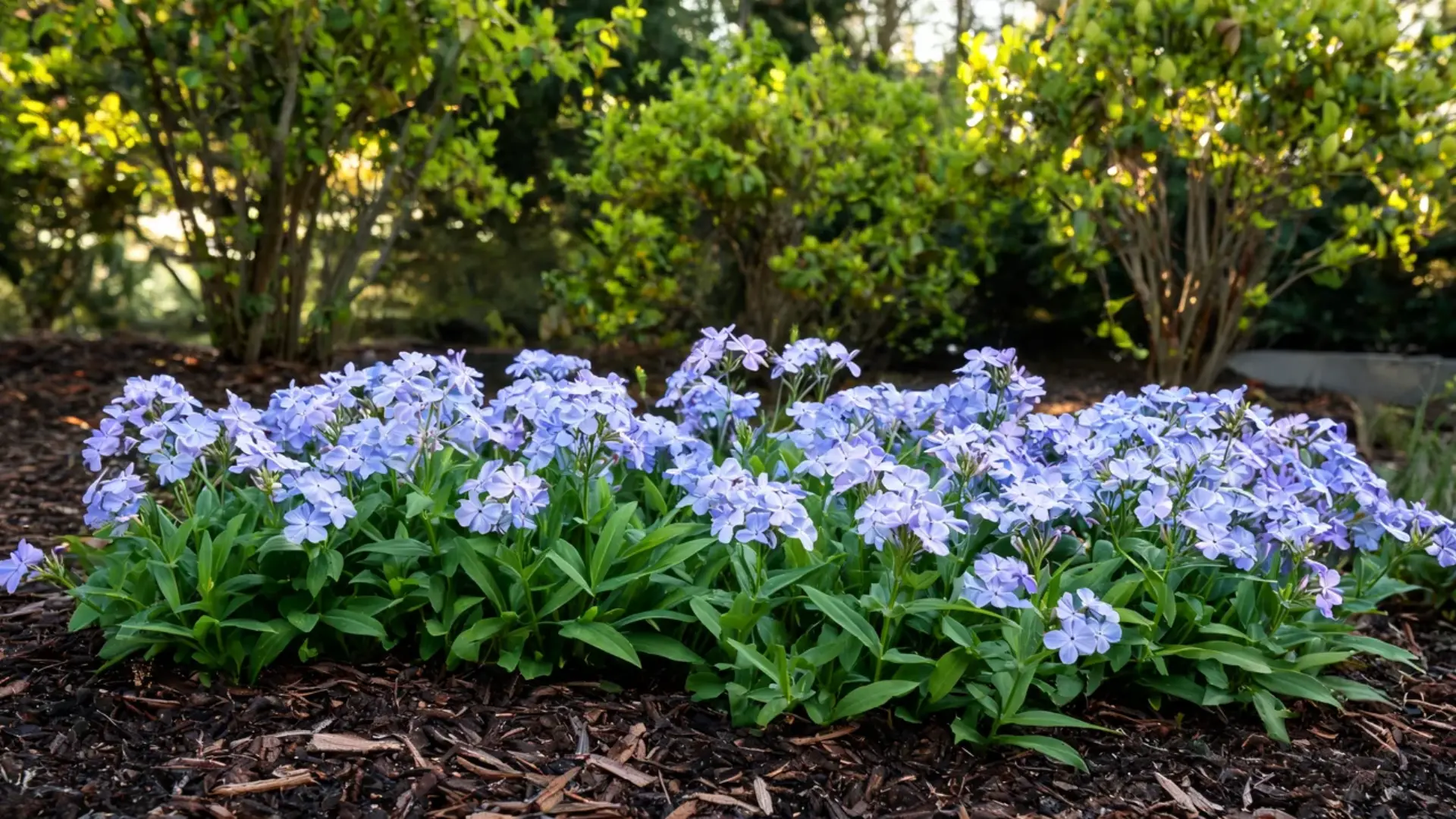
Woodland phlox flowers in spring in white, blue, violet, and lavender. It slowly bulks up over the years and can be divided to start matching clumps further down a shaded border.
- USDA Zones: 3–8
- Mature Size: 6–12 in. tall × 10–20 in. wide
- Sun: Partial sun to shade
- Best Border Use: Woodland gardens, shaded pathways, spring borders
22. Dwarf Hostas
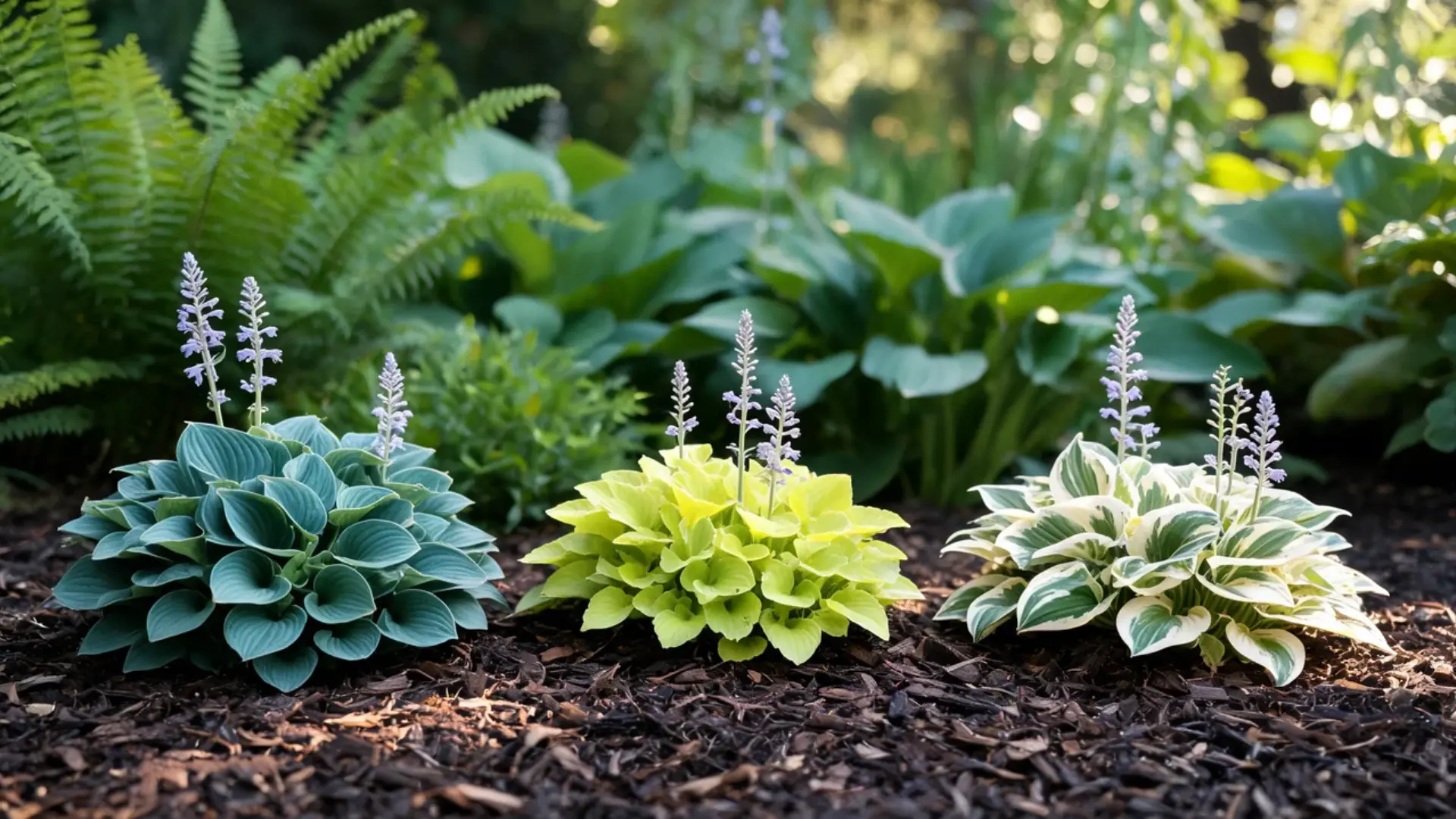
Dwarf hostas give you the same lush leaves as full-size hostas in a fraction of the footprint. Leaf color ranges from blue and green to chartreuse and variegated combinations.
- USDA Zones: 4–7
- Mature Size: 6–12 in. tall × 10–18 in. wide
- Sun: Partial sun to full shade
- Best Border Use: Shaded beds, pathway edges, small woodland gardens
23. Japanese Forest Grass
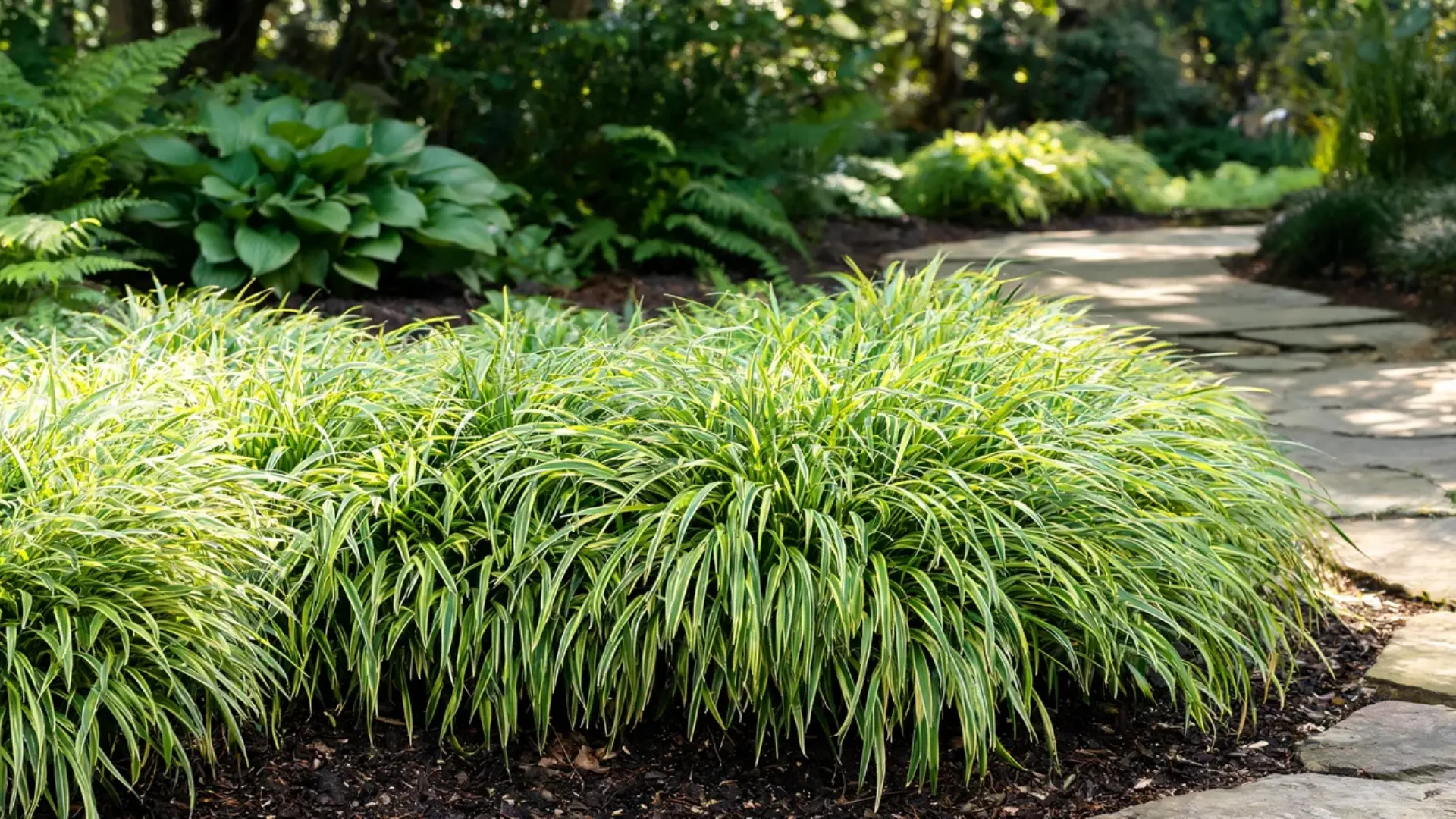
Japanese forest grass arches into graceful clumps that add movement to a shaded border. Unlike many ornamental grasses, it stays put instead of spreading where it isn’t wanted.
- USDA Zones: 4–9
- Mature Size: 12–18 in. tall × 12–24 in. wide
- Sun: Partial sun
- Best Border Use: Shaded pathways, woodland gardens, foliage borders
24. Brunnera
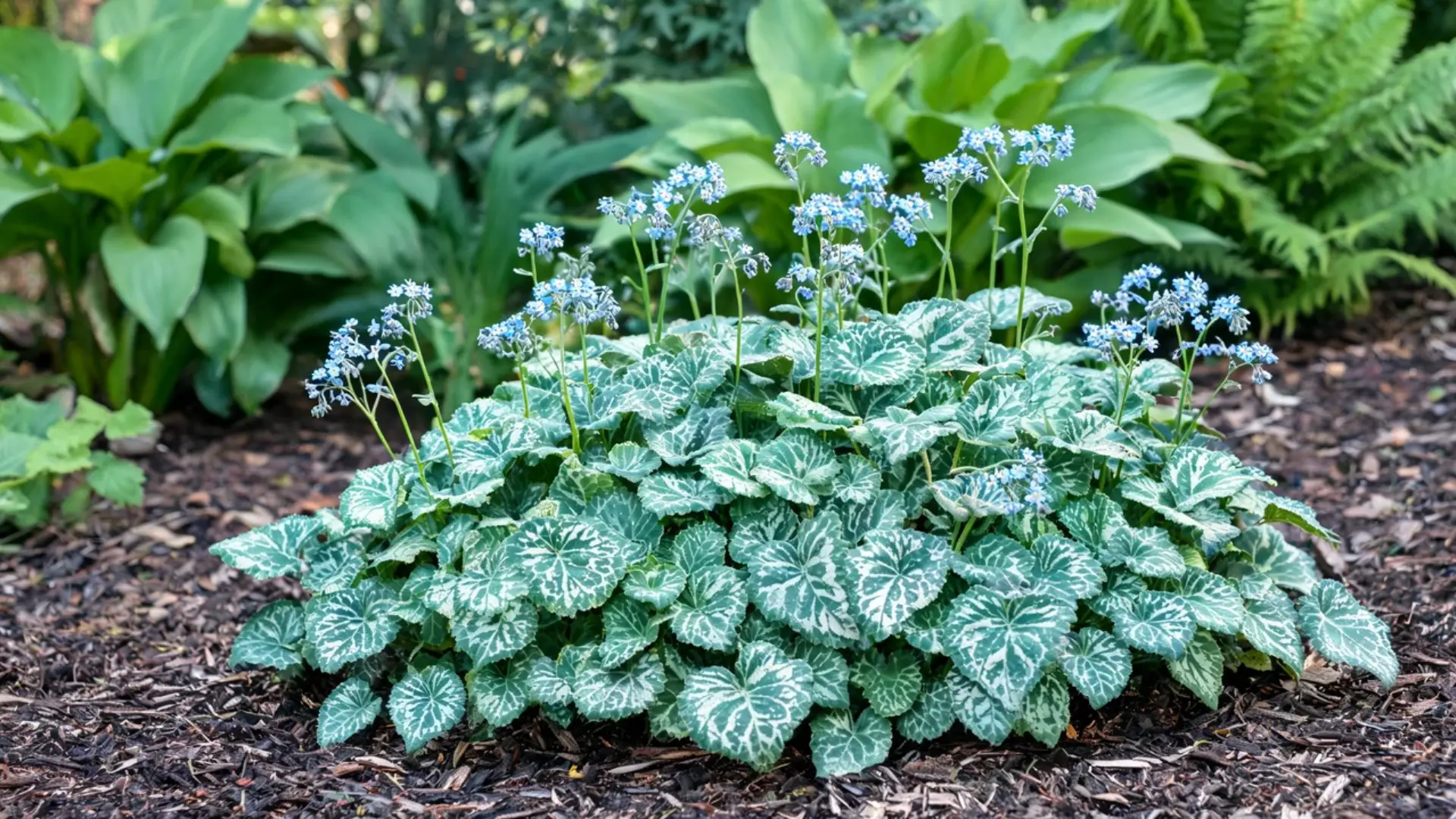
Brunnera opens small blue flowers in spring above broad, heart-shaped leaves. It’s a solid choice for filling shaded gaps beneath shrubs, where many flowering plants won’t grow.
- USDA Zones: 3–8
- Mature Size: 12 in. tall × 18 in. wide
- Sun: Partial shade
- Best Border Use: Foundation beds, dry shade, woodland borders
25. Japanese Painted Fern
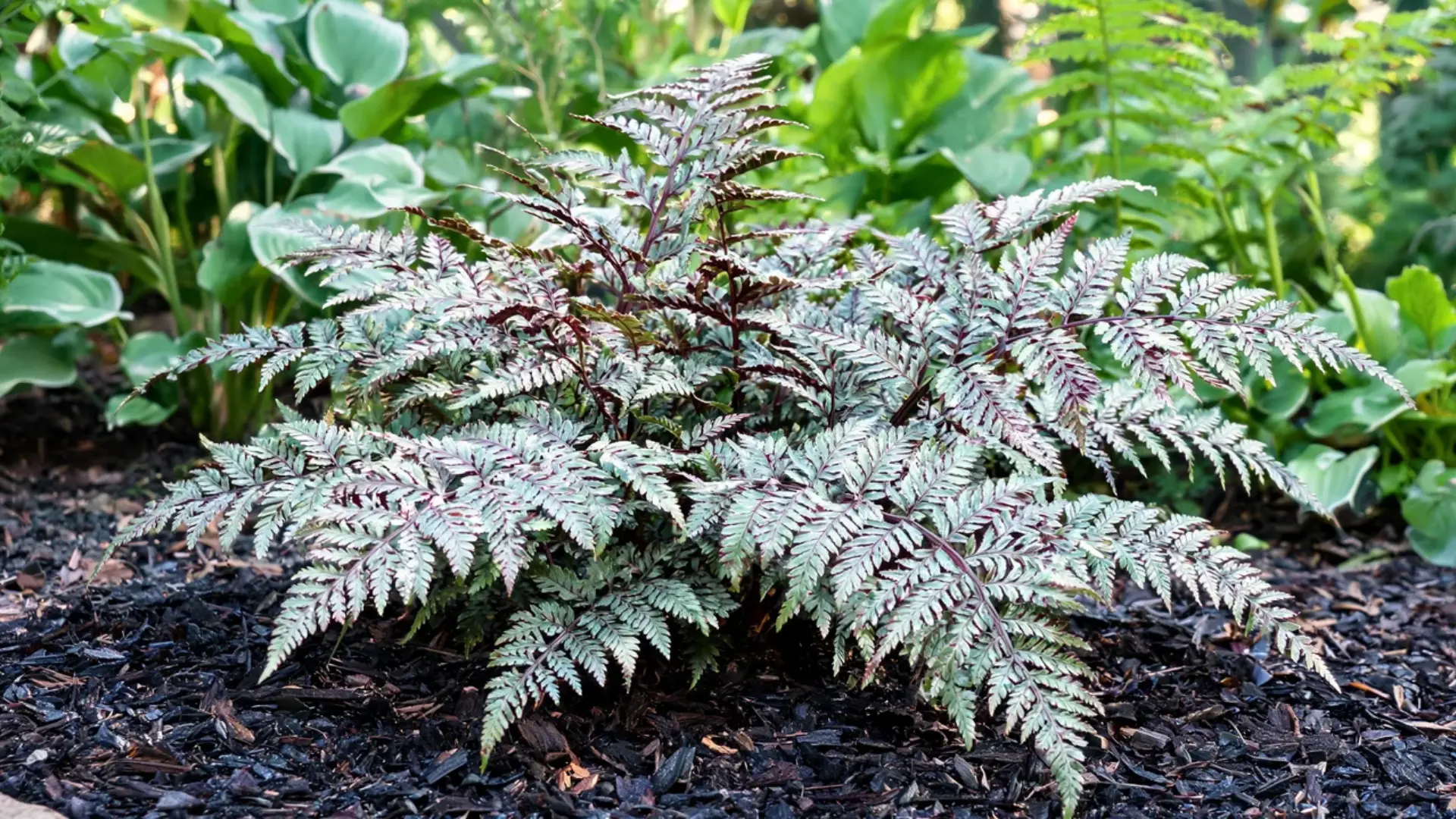
Japanese painted fern brings silver, green, and burgundy tones to spots where flowers struggle to grow. The color holds through the whole season, so it still does something even when nothing nearby is blooming.
- USDA Zones: 3–8
- Mature Size: 12 in. tall × 18 in. wide
- Sun: Partial to full shade
- Best Border Use: Woodland gardens, shaded paths, foliage combinations
26. Lungwort
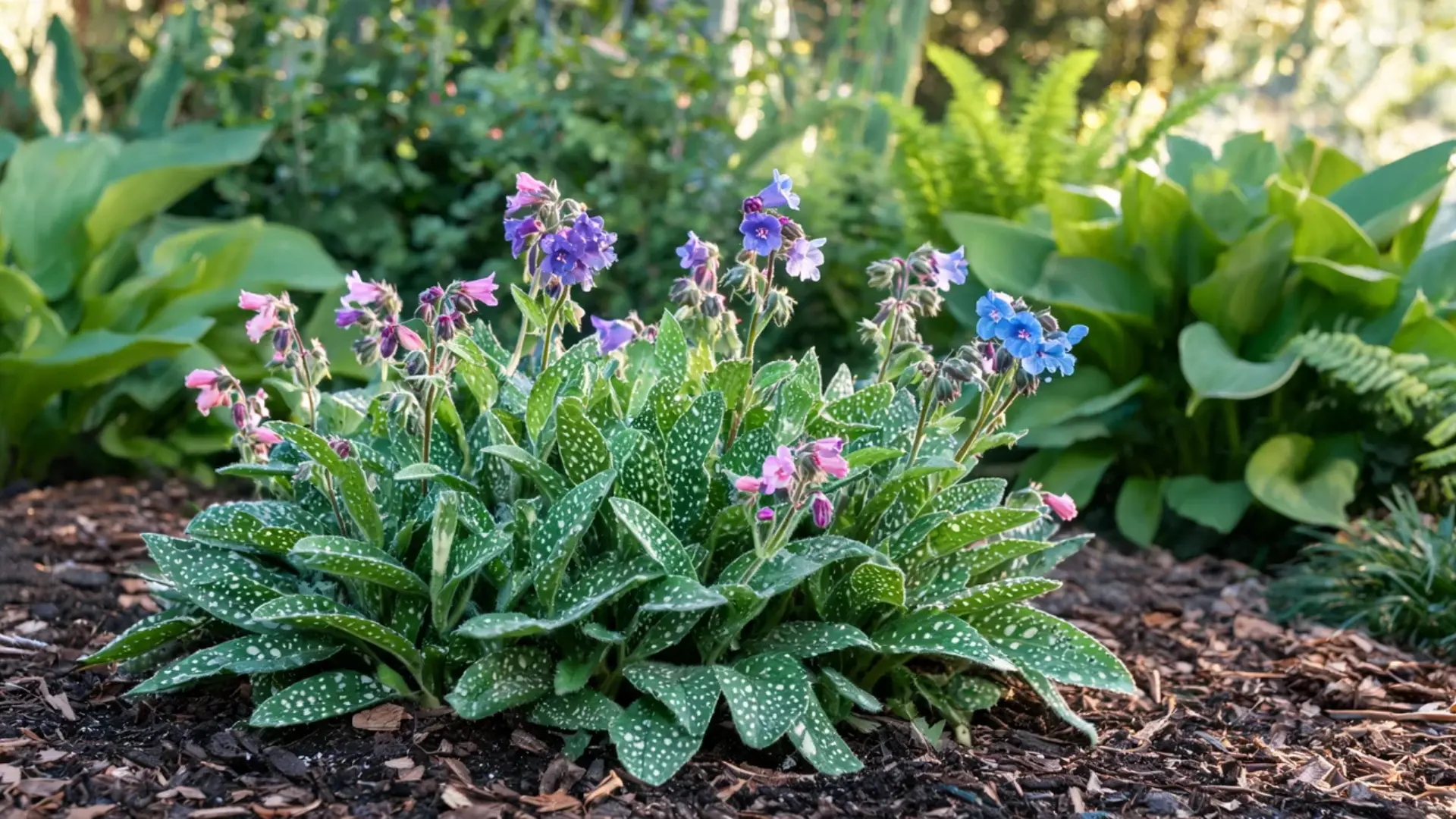
Lungwort pairs silver-spotted leaves with spring flowers that can shift from pink to blue to purple, sometimes all on the same plant. It forms a compact mound and prefers moist, shaded ground.
- USDA Zones: 3–9
- Mature Size: 6–12 in. tall × 12–18 in. wide
- Sun: Partial to full shade
- Best Border Use: Shaded pathways, woodland beds, early pollinator gardens
27. Primrose
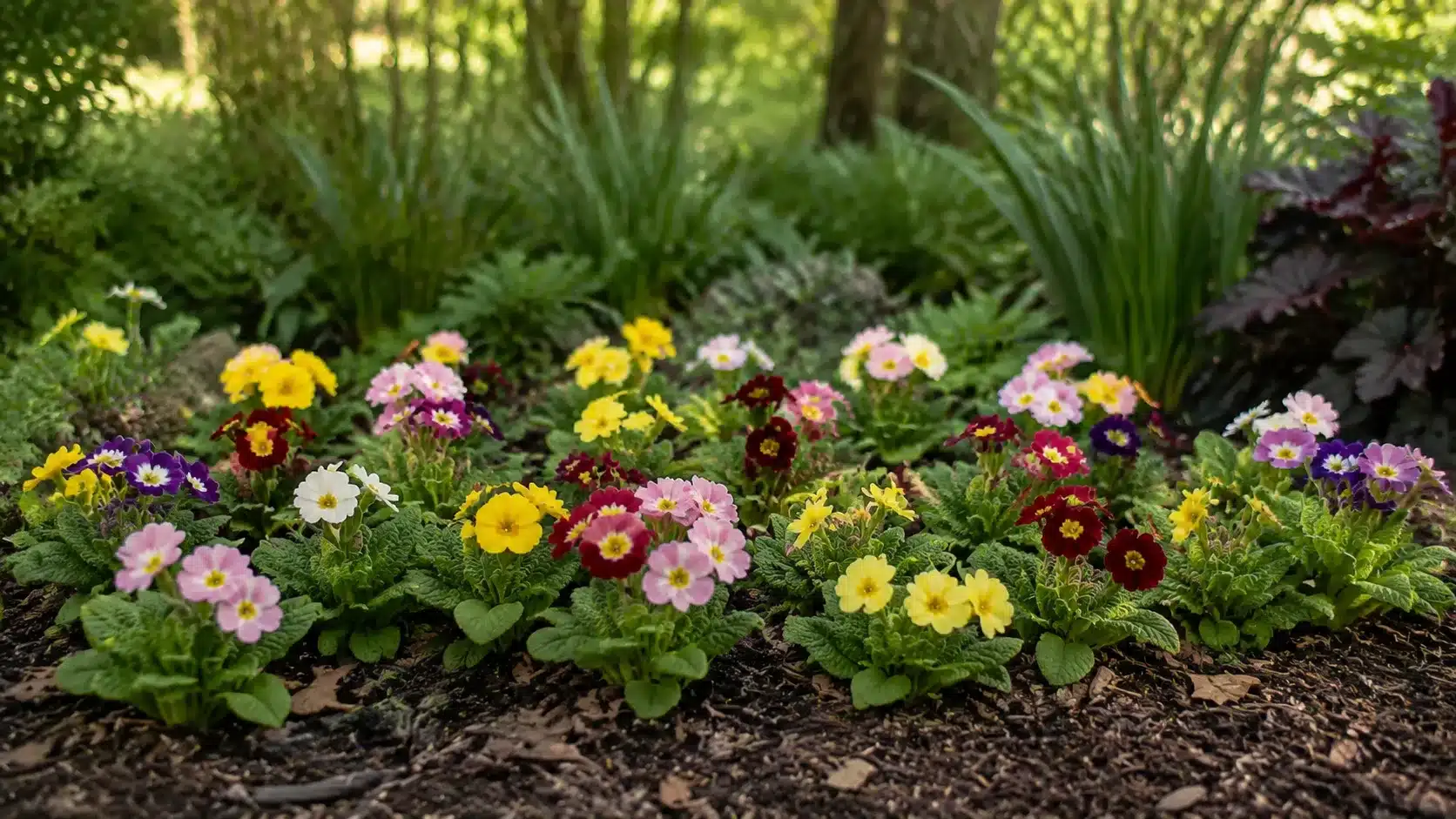
Primroses are usually the first border plants to flower each year. Their bright blooms show up in partial shade well before most summer perennials have even started growing.
- USDA Zones: 3–8
- Mature Size: 6–20 in. tall × 8–20 in. wide
- Sun: Partial shade
- Best Border Use: Spring borders, woodland gardens, moist shaded beds
28. Bergenia
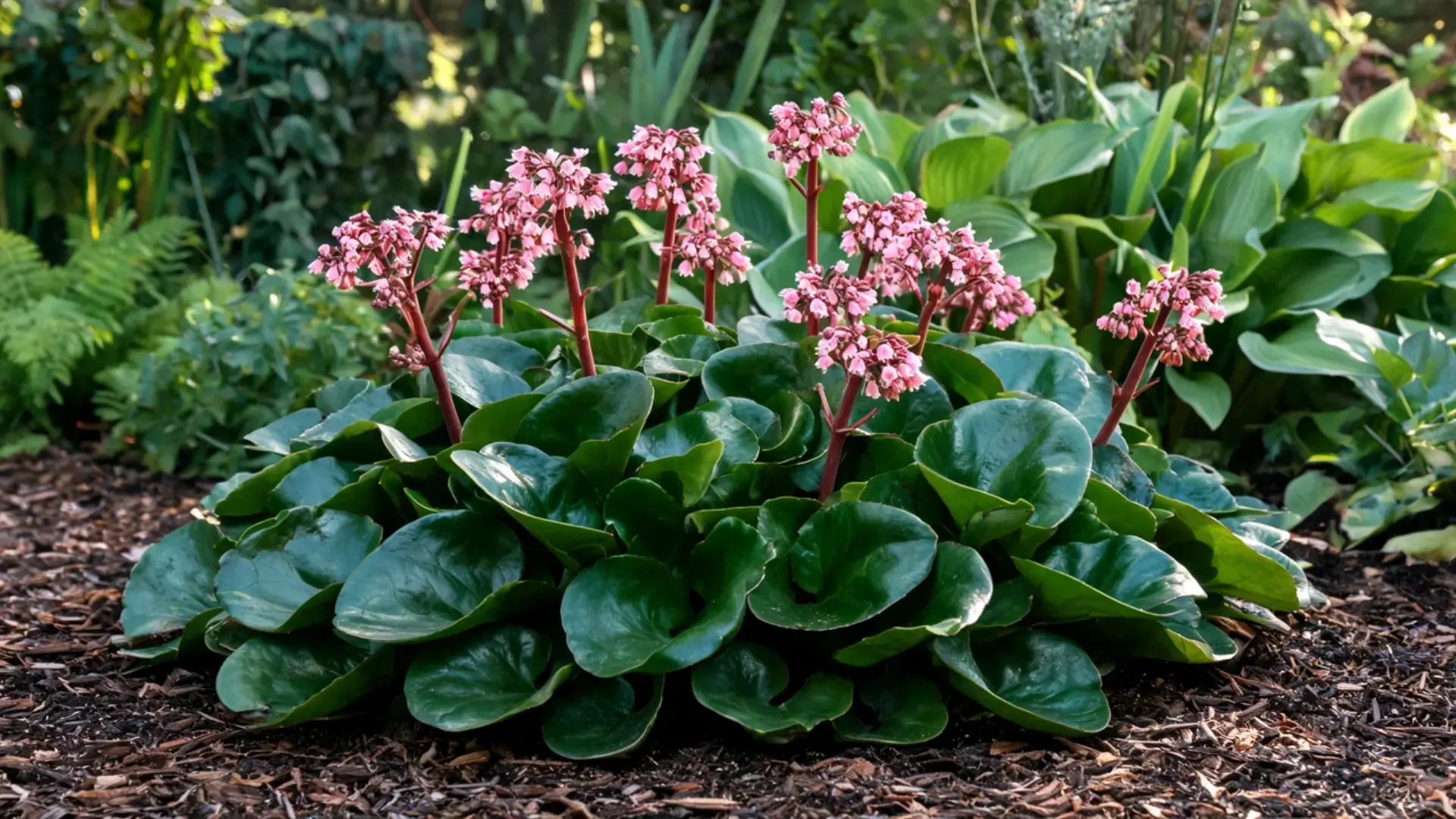
Bergenia grows broad, substantial leaves and flowers in early spring. The clumping habit gives a border a stronger foliage shape than most low-growing perennials can offer.
- USDA Zones: 3–8
- Mature Size: About 12 in. tall and wide
- Sun: Partial to full shade
- Best Border Use: Shaded ground cover, foundation beds, woodland edges
29. Dead Nettle
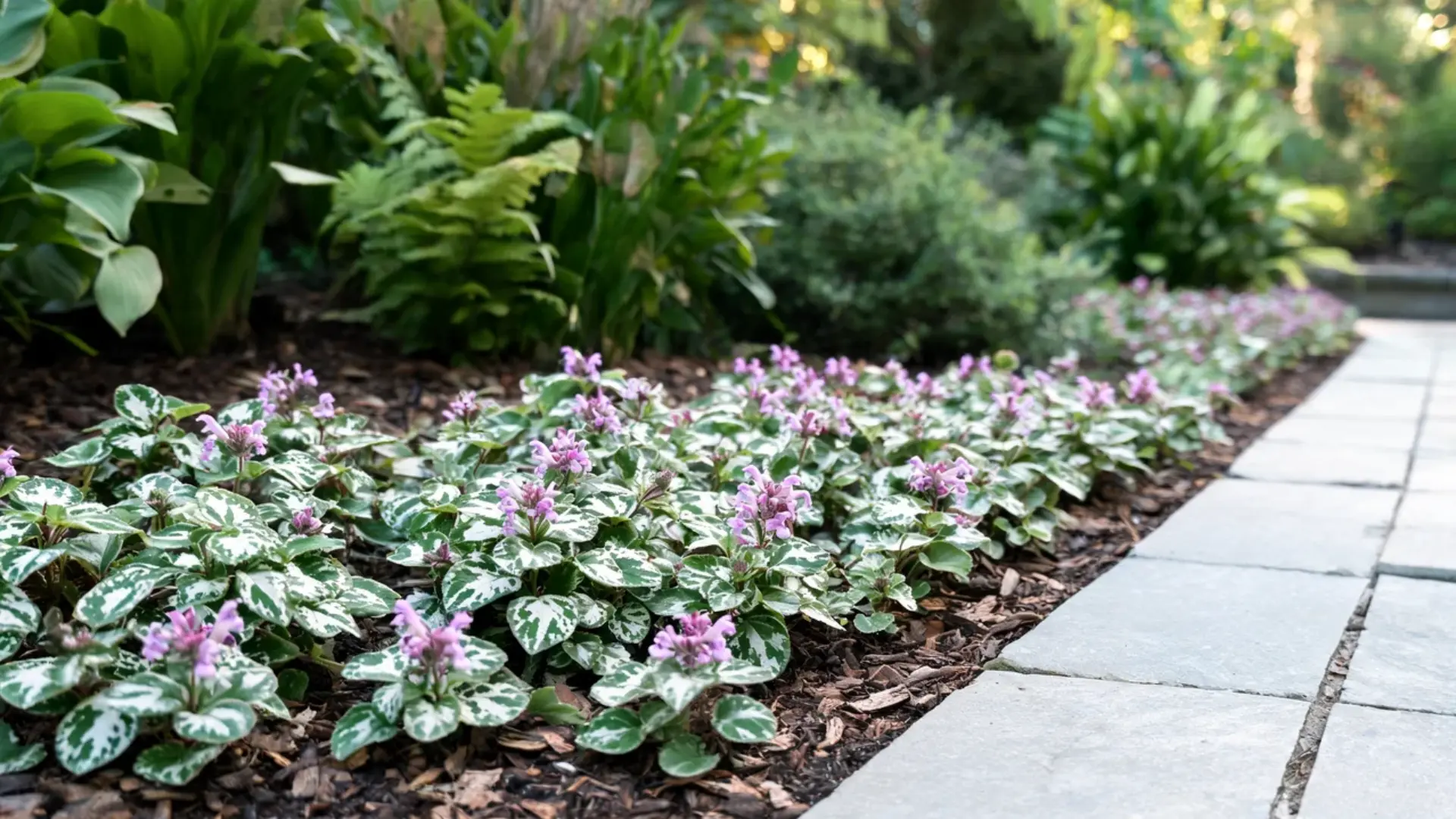
Dead nettle offers variegated, brightly marked foliage and small flowers in shaded spots. It spreads efficiently, so keep an eye on it near paths and other plants so it doesn’t crowd them out.
- USDA Zones: 4–9
- Mature Size: About 8 in. tall × 12 in. wide
- Sun: Partial to full shade
- Best Border Use: Difficult shade, tree bases, shaded ground cover
30. Foamflower
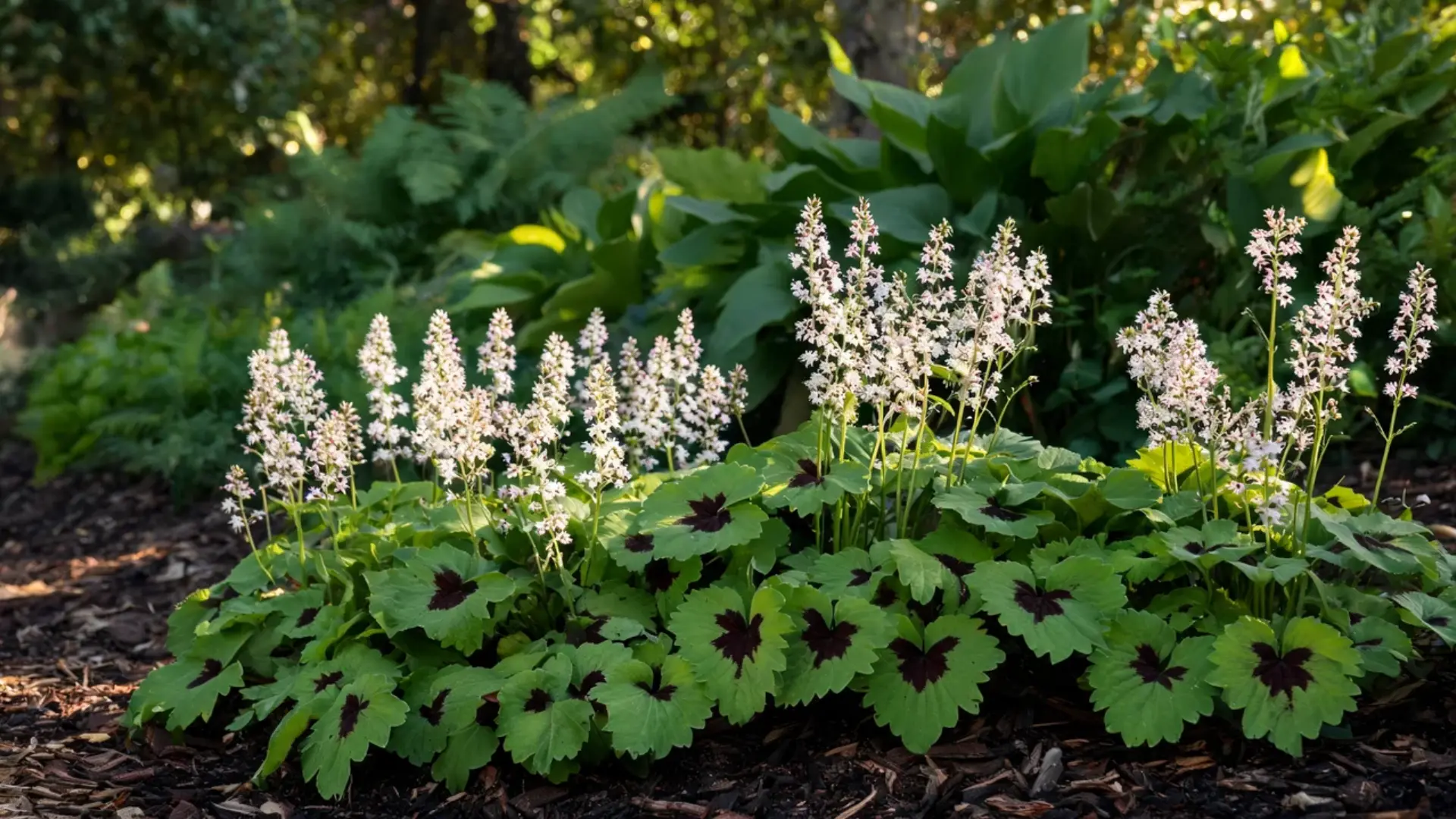
Foamflower forms foliage clumps topped with light, airy white or pink flower spikes. It adds texture to a shaded border without hiding whatever is planted behind it.
- USDA Zones: 3–9
- Mature Size: About 8 in. tall × 12 in. wide for compact cultivars
- Sun: Partial to full shade
- Best Border Use: Woodland borders, foundation beds, shaded pathways
Low-Growing Perennials for Foliage and Seasonal Interest
Not every plant needs to bloom all season to be worth planting. These low-growing perennials earn their spot in the border through steady foliage color, interesting texture, a burst of late-season flowers, or a tidy clumping habit that still looks good long after the blooms have faded.
31. Coral Bells
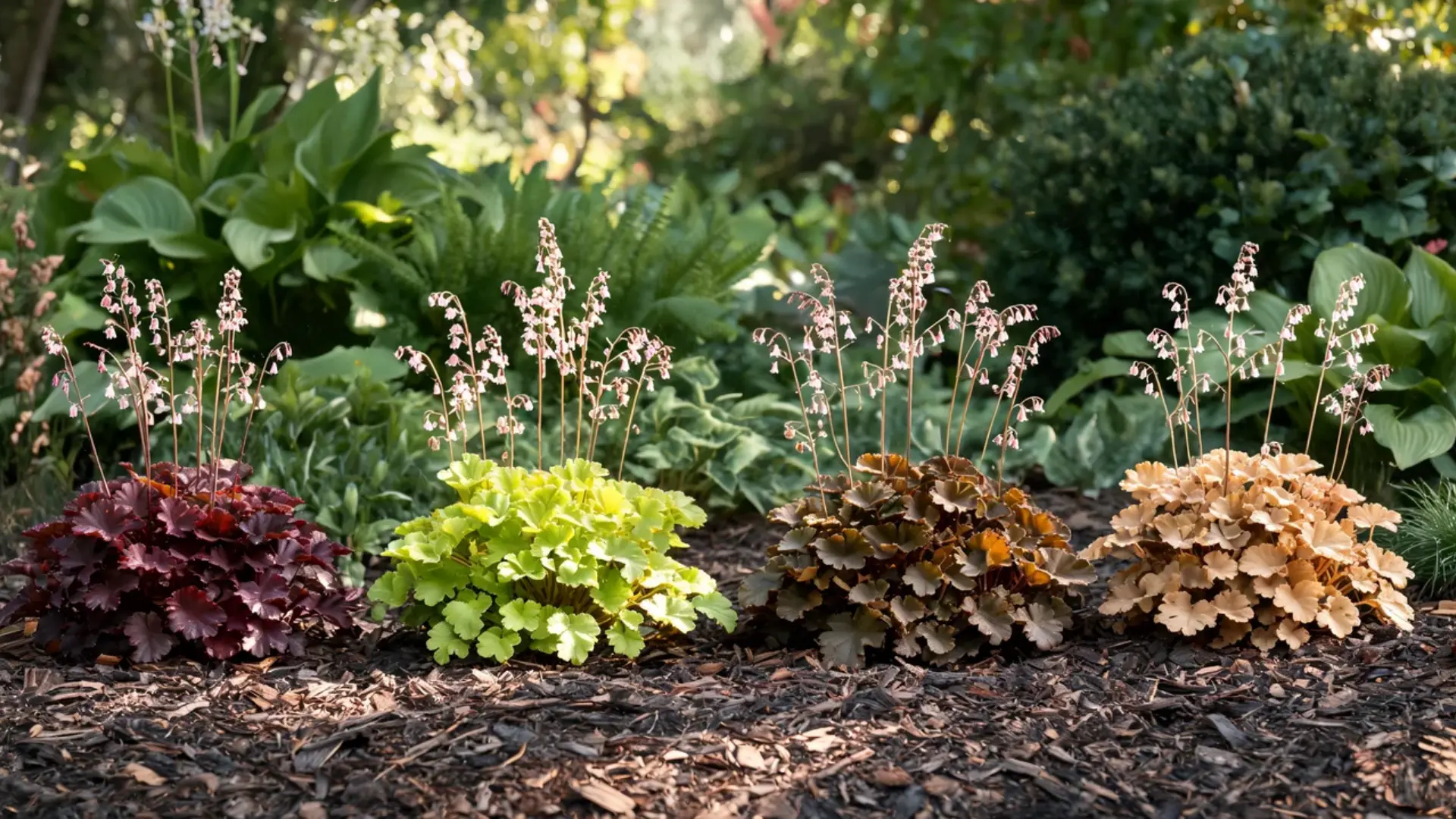
Coral bells are grown mainly for leaf color, which ranges from deep burgundy and purple to lime green and silver. Their flowers grow on thin stems that add height without hiding the foliage underneath.
- USDA Zones: 4–9
- Mature Size: 8–18 in. tall × 12–24 in. wide
- Sun: Full sun to partial shade, depending on cultivar
- Best Border Use: Foliage displays, mixed borders, pathway edges
32. Lady’s Mantle
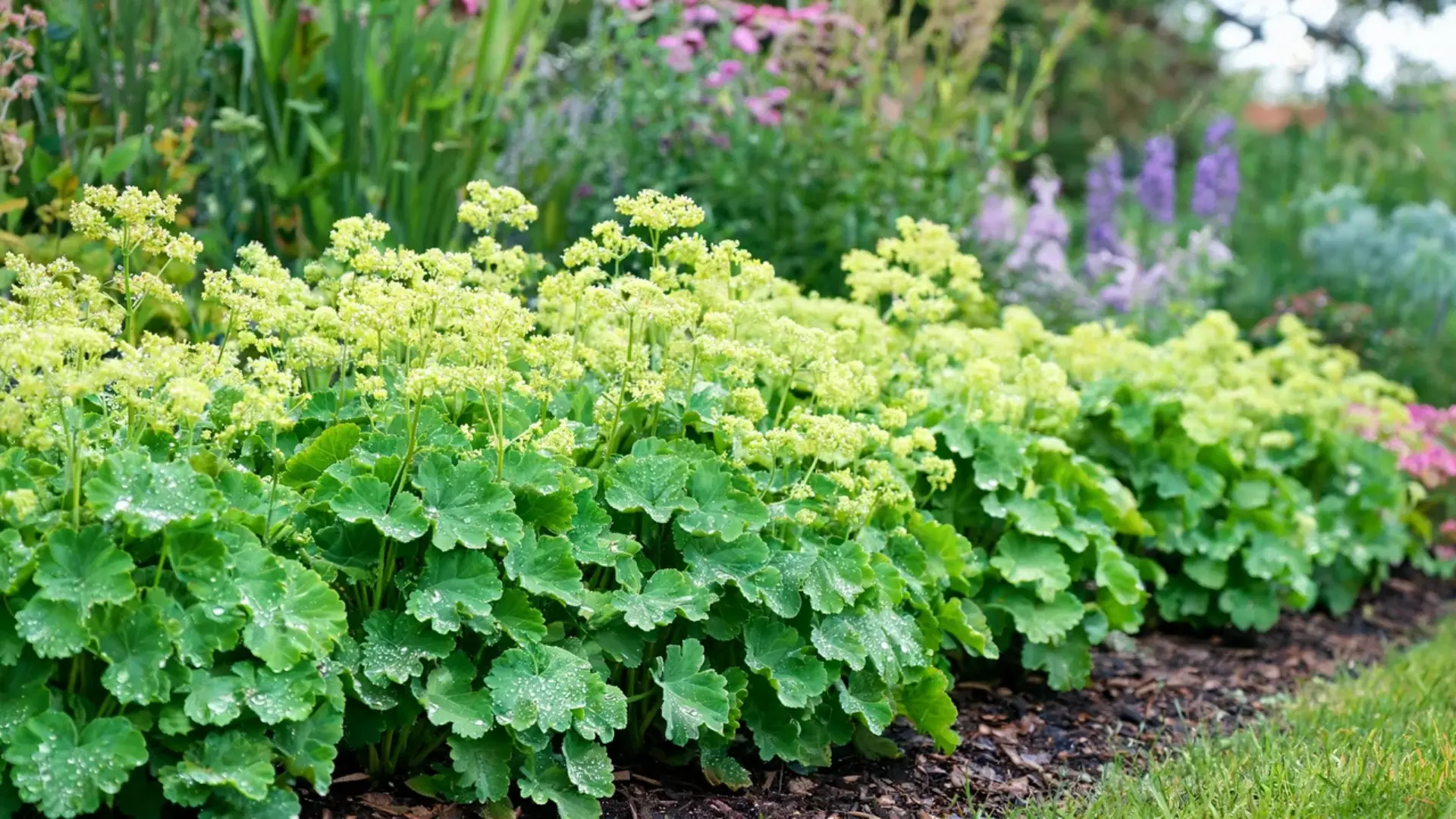
Lady’s mantle grows rounded, scalloped leaves that hold beads of water after rain, which is reason enough to plant it near a path. Its soft chartreuse flowers bridge the gap between stronger flower colors elsewhere in the border.
- USDA Zones: 3–8
- Mature Size: 12–24 in. tall and wide
- Sun: Full sun to partial shade
- Best Border Use: Cottage gardens, slightly deeper front borders
33. Liriope
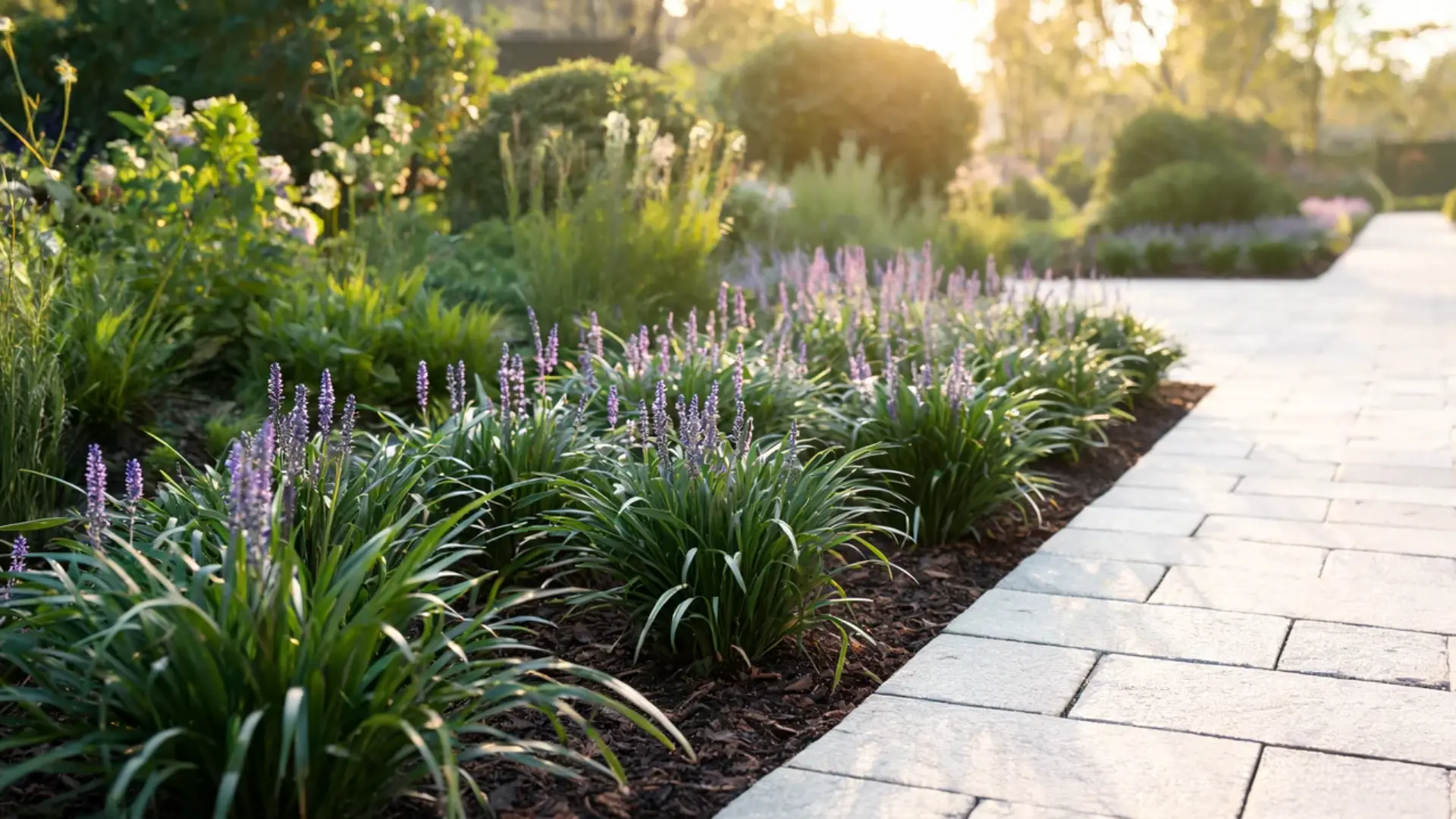
Liriope forms tidy clumps of glossy, grass-like foliage and sends up purple flower spikes later in summer. It’s a good choice anywhere a border needs a clean, repeated edge.
- USDA Zones: 5–10
- Mature Size: About 12 in. tall and wide
- Sun: Full sun to partial shade
- Best Border Use: Formal edging, pathways, foundation beds
34. Liverleaf
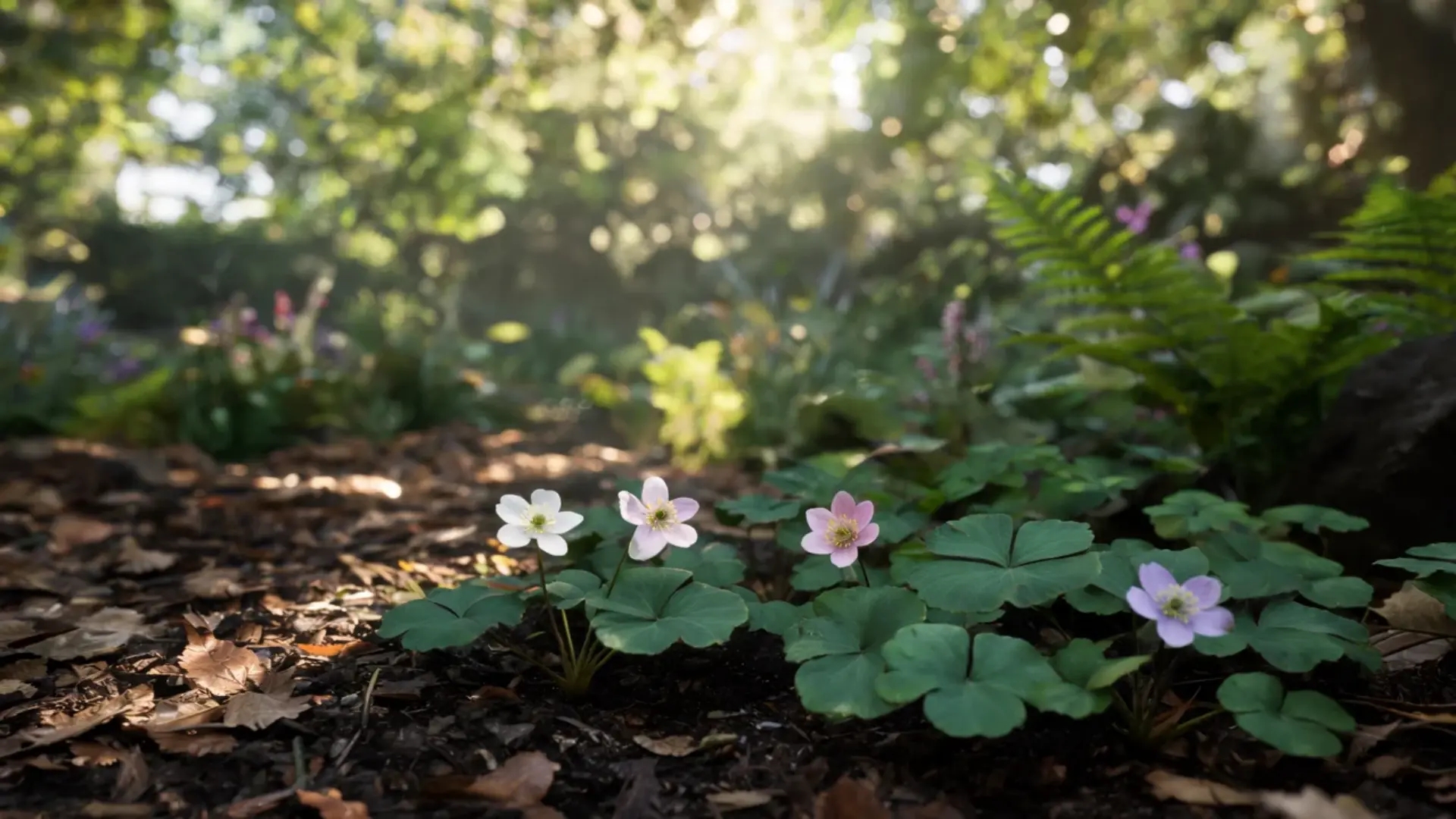
Liverleaf is a small woodland wildflower that fills narrow gaps without spreading aggressively. Its white, pink, or lavender flowers show up early and add a quiet burst of color before much else is growing.
- USDA Zones: 3–8
- Mature Size: About 6 in. tall × 9 in. wide
- Sun: Partial shade
- Best Border Use: Small woodland spaces, shaded border fronts
35. Betony
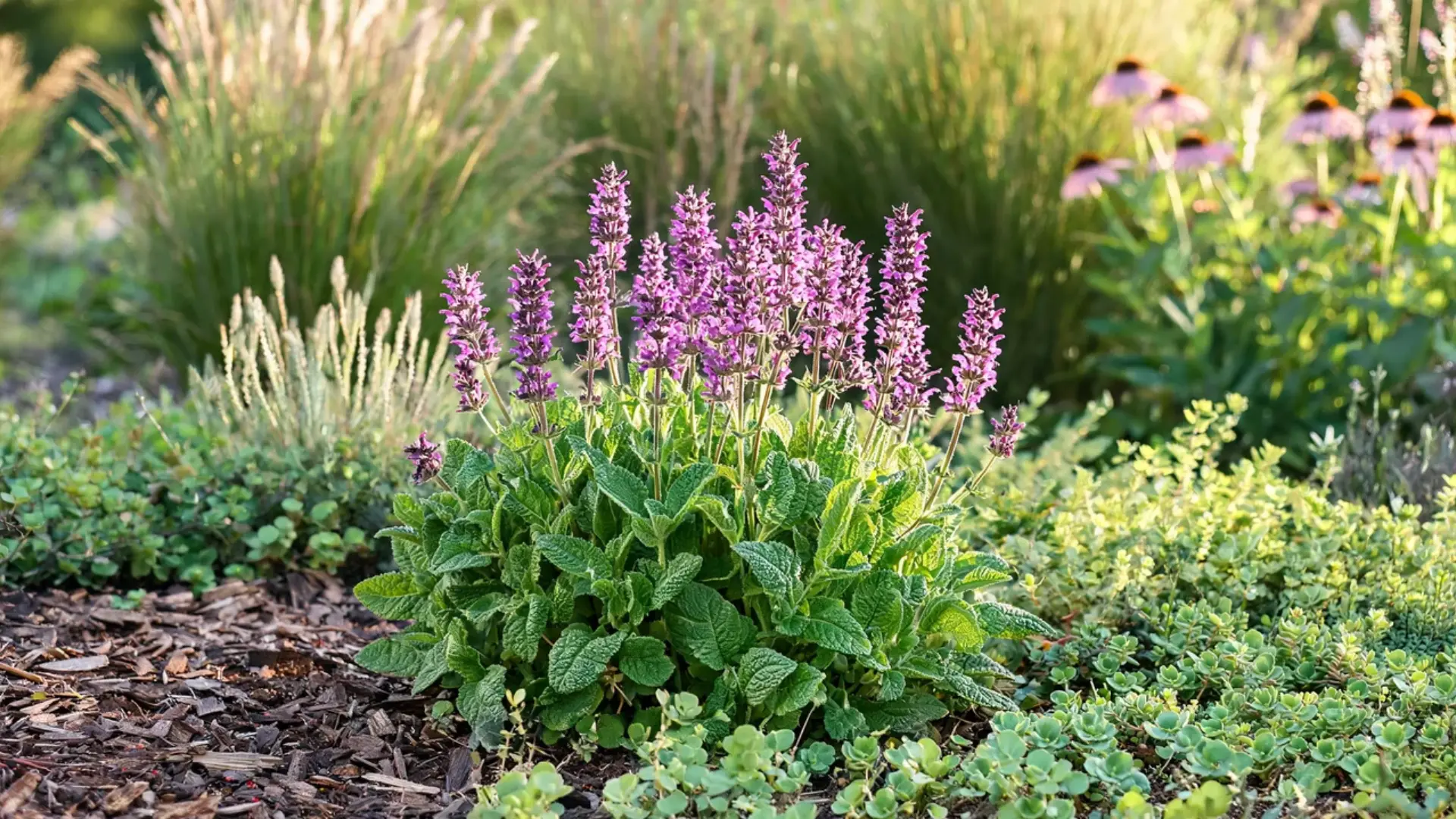
Betony forms a tidy clump that looks good even before it flowers. Its blooms come later in the season, which helps keep color going once many spring plants have already finished.
- USDA Zones: 4–8
- Mature Size: About 18 in. tall and wide
- Sun: Full sun
- Best Border Use: Cottage gardens, late-summer border fronts
36. Cranesbill Geranium
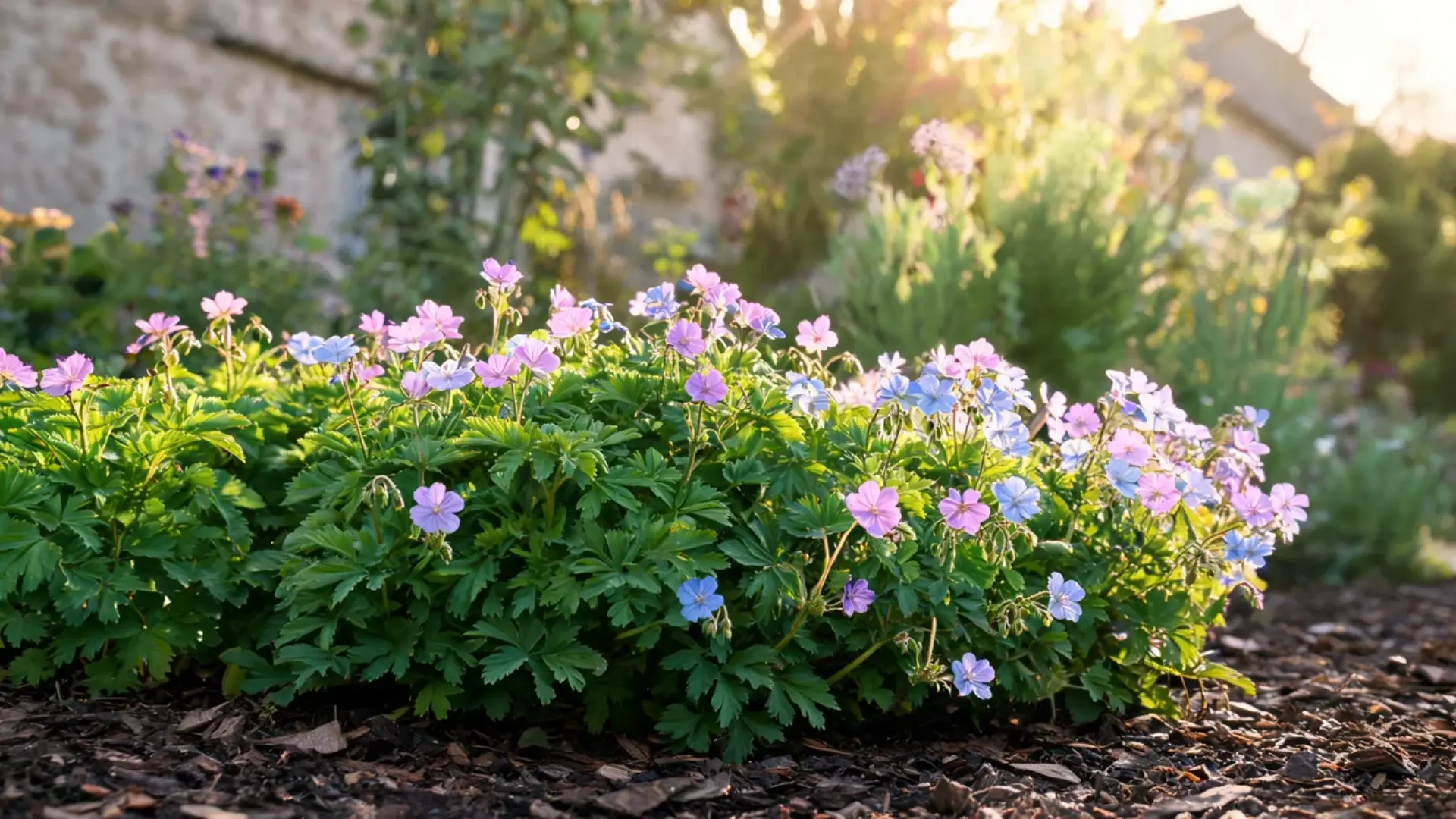
Perennial cranesbill geraniums come in both spreading and clump-forming forms, so check the cultivar before buying. Flowers appear in pink, purple, and blue above attractive, often lobed foliage.
- USDA Zones: 3–9, depending on cultivar
- Mature Size: 9–18 in. tall × 1–3 ft. wide
- Sun: Full sun to partial sun
- Best Border Use: Cottage gardens, mixed borders, informal edging
37. Woods Blue Aster
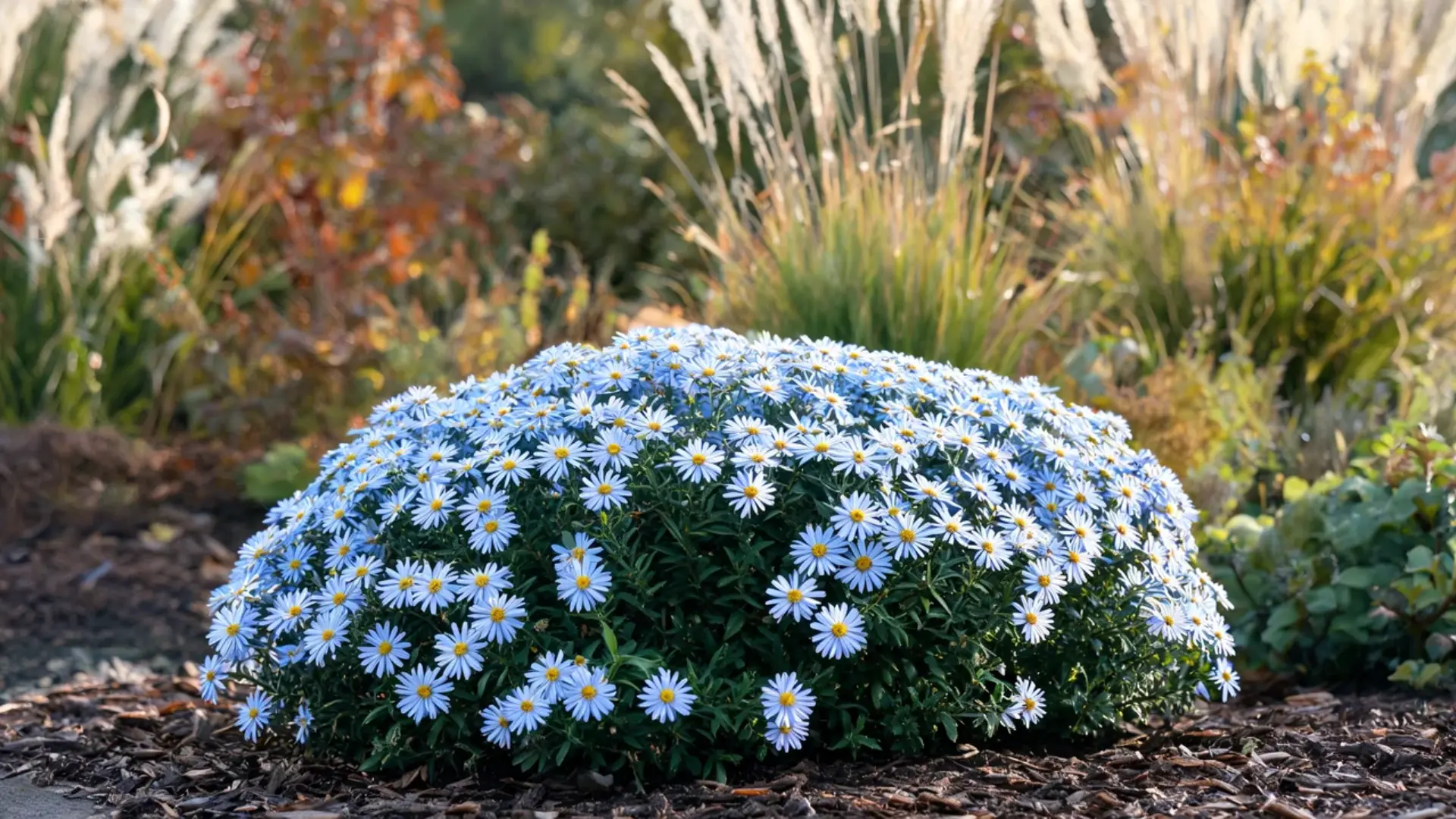
Woods Blue aster flowers from late summer into autumn, with pale blue petals around yellow centers. Its compact size adds real color once many earlier perennials have already faded.
- USDA Zones: 4–8
- Mature Size: 8–12 in. tall × 12–18 in. wide
- Sun: Partial to full sun
- Best Border Use: Autumn borders, late-season pollinator gardens
38. Sea Thrift
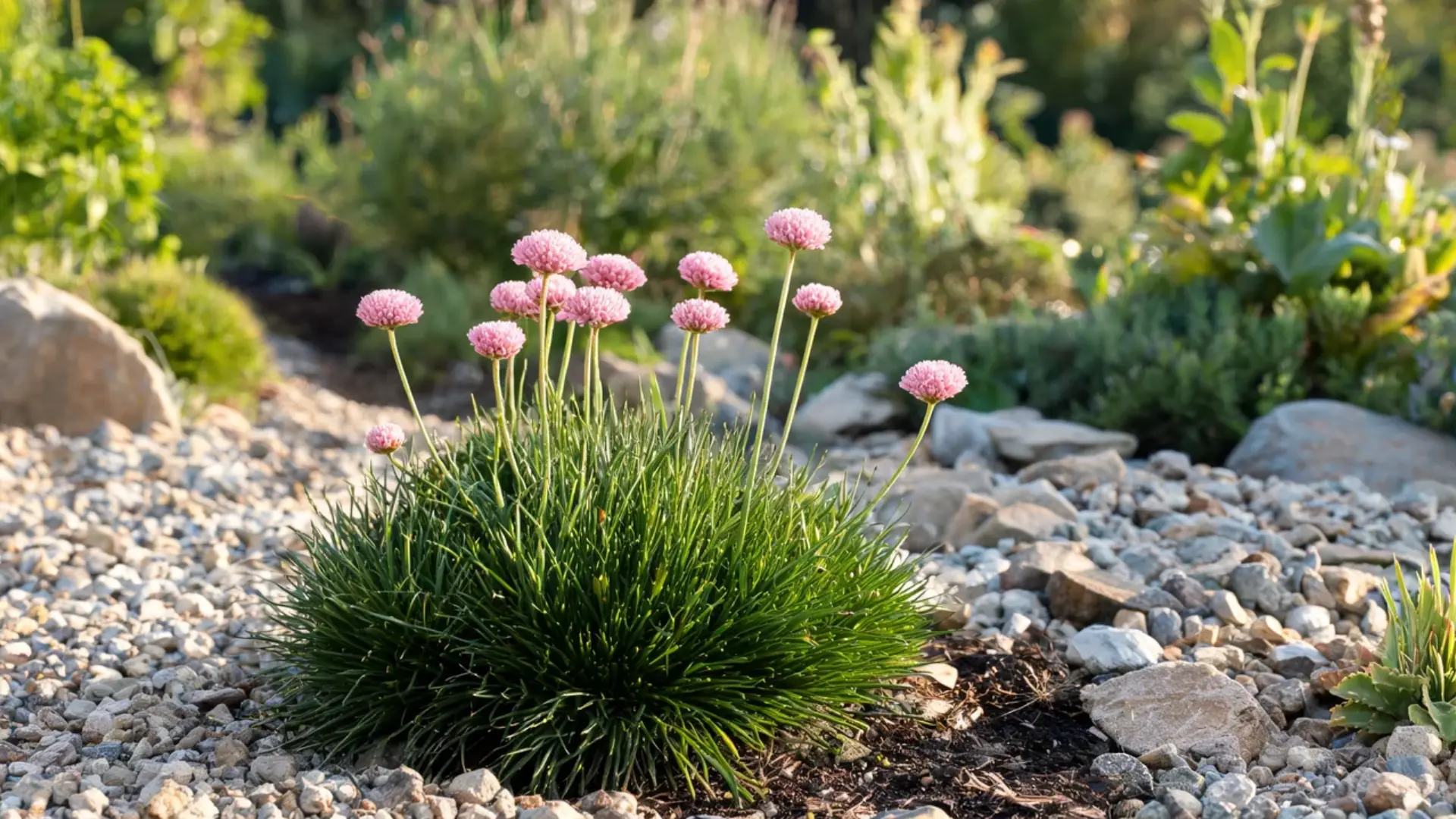
Sea thrift grows into evergreen, grass-like mounds topped with rounded pink, lilac, or white flower clusters. It handles dry soil and exposed sites better than most border plants, which makes it a natural fit near walls or coastal gardens.
- Mature Size: 3–12 in. tall; spread varies by cultivar
- Sun: Usually full sun
- Best Border Use: Coastal gardens, rock gardens, dry pathways
- USDA zone range varies by variety; check with your local nursery.
39. Silver Shamrock
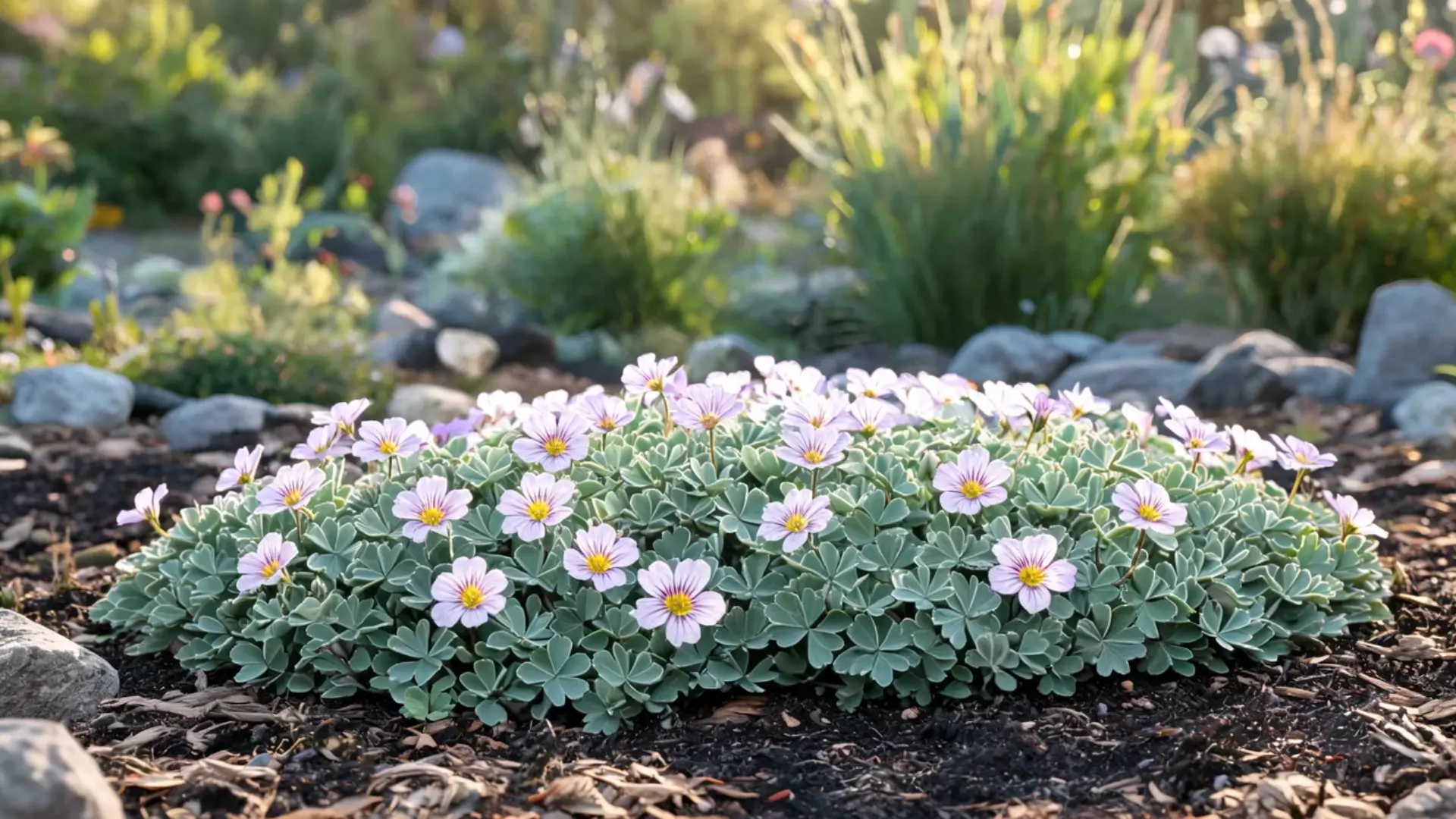
Silver shamrock stays extremely low, forming mounds of silvery, clover-shaped leaves. Its pale flowers carry deeper purple markings that add detail right at the very front of a border.
- Mature Size: Up to about 4 in. tall
- Sun: Full sun to partial shade
- Best Border Use: Rock gardens, narrow edges, very low border fronts
- USDA zone range varies by variety; check locally before planting.
40. Rock Soapwort
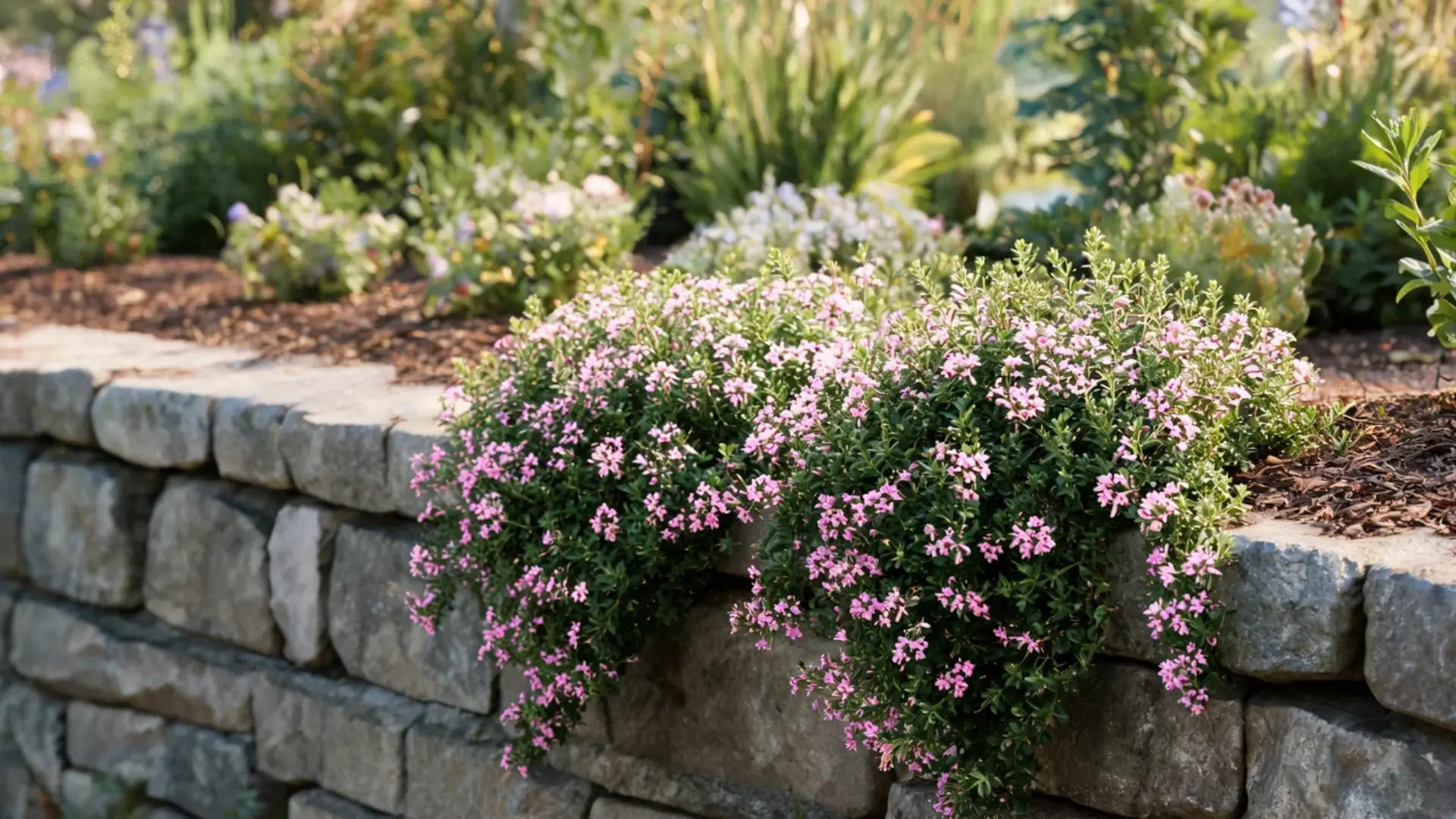
Rock soapwort spreads over stones and walls, covering itself in small pink flowers in early summer. A trim after flowering keeps its shape compact instead of straggly.
- Mature Size: About 6–9 in. tall
- Sun: Full sun
- Best Border Use: Walls, raised beds, rock gardens, sloping edges
- USDA zone range varies by variety; check locally before planting.
How to Arrange Small Border Plants
Once you’ve picked your plants, arrangement makes the difference between a border that looks planned and one that looks scattered.
The same spacing and layering logic covered in these perennial flower garden layout plans applies just as well to a row of low-growing perennials as it does to a full mixed border.
| Placement Rule | What to Do |
|---|---|
| Shortest plants at the front | Put creeping plants and anything under 6 inches tall right along the path or lawn edge, so they get room to spread without being shaded out. |
| Taller stems behind ground covers | Plants like coral bells, veronica, and coreopsis send flower stems higher than their foliage. Set these farther back so they don’t flop into a walkway. |
| Repeat plants along the border. | Plant in groups of three, five, or more, and repeat those groups down the border, so it reads as one design instead of scattered specimens. |
| Match growing requirements | Group plants with similar sun, water, and soil needs. A drought-tolerant plant next to one that wants constant moisture means one of them struggles. |
| Leave room for mature growth. | Space plants based on their mature width, not the pot size. Crowding now means digging plants back out once they fill in. |
Care Tips for Low-Growing Perennials
Most low-growing perennials need little upkeep once established, but a few habits keep them looking their best.
- Water New Plants Regularly: Keep soil moist for the first few weeks until roots establish. Water occasionally during dry periods afterward.
- Apply Mulch Carefully: Use a mulch layer for moisture and weed control. Keep it away from crowns and stems.
- Deadhead Repeat Bloomers: Remove faded flowers from reblooming plants like veronica and dianthus to encourage more blooms.
- Divide Crowded Clumps: Split dense plants every few years to maintain growth and create new planting areas.
- Trim Spreading Plants: Cut back creeping thyme, sedum, and other spreaders that move into paths.
- Control Fast Ground Covers: Check vigorous growers like dead nettle and leadwort to prevent crowding nearby plants.
- Keep Evergreen Foliage: Leave plants like creeping juniper and bergenia untouched through winter for year-round greenery.
Before planting anywhere pets or kids spend time, it’s worth checking a variety against the ASPCA’s toxic and non-toxic plant list, since a few low-growing perennials, including lily of the valley relatives, can cause irritation if eaten.
Frequently Asked Questions
Can low-growing perennials be planted over spring bulbs?
Yes. Shallow-rooted varieties like creeping thyme or creeping phlox can be planted with bulbs, since their roots stay near the surface while bulbs grow deeper. The foliage also helps hide bulb leaves as they die back after flowering.
Which low-growing perennials can tolerate light foot traffic?
Creeping thyme and so-called Thymes hold up to occasional steps, which is why they’re often planted between stepping stones. They won’t survive a regular walking path, though; for that, stick to actual pavers or mulch.
Can small border Mulchs be grown successfully in containers?
Many of them, yes. Compact clump formers like dianthus, coral bells, and dwarf hostas do well in pots, as do trailing types like creeping sedum, which will spill nicely over the container’s edge. Fast spreaders like creeping juniper need more room than a typical container offers.
How do I stop spreading perennials from crossing into pathways?
A physical edge, like a buried paver strip or metal edging, works better long-term than trimming alone. For plants without a barrier, an occasional cutback along the edge keeps them from creeping onto pavers or lawn.
Which low-growing perennials stay attractive during winter?
Creeping juniper, bergenia, and liriope all hold their foliage through cold months, giving a border some structure when most flowering plants have died back. Dwarf hostas and geum, by contrast, go fully dormant and disappear until spring.
Are low-growing perennials safe for pets and children?
Most of the plants on this list are considered non-toxic, but a few, including lily of the valley relatives and some bulb-adjacent plants, can irritate if eaten.
Key Takeaway
The best low-growing perennials for a border aren’t chosen by flower color alone. Mature size, sunlight, soil, and spreading habit matter more in the long run, since a plant that fights its spot will always look worse than one that’s suited to it.
A border with real staying power usually combines a few different things: spring and autumn bloomers so something is always flowering, foliage-focused plants alongside flower-focused ones for texture, and clump formers next to gentle spreaders for structure and fill.
You don’t need all forty small border plants from this list to start. Pick a handful of perennials that suit your border’s light and soil, and build outward from there. Which of these perennials are you planning to add to your border first? Let me know in the comments below.