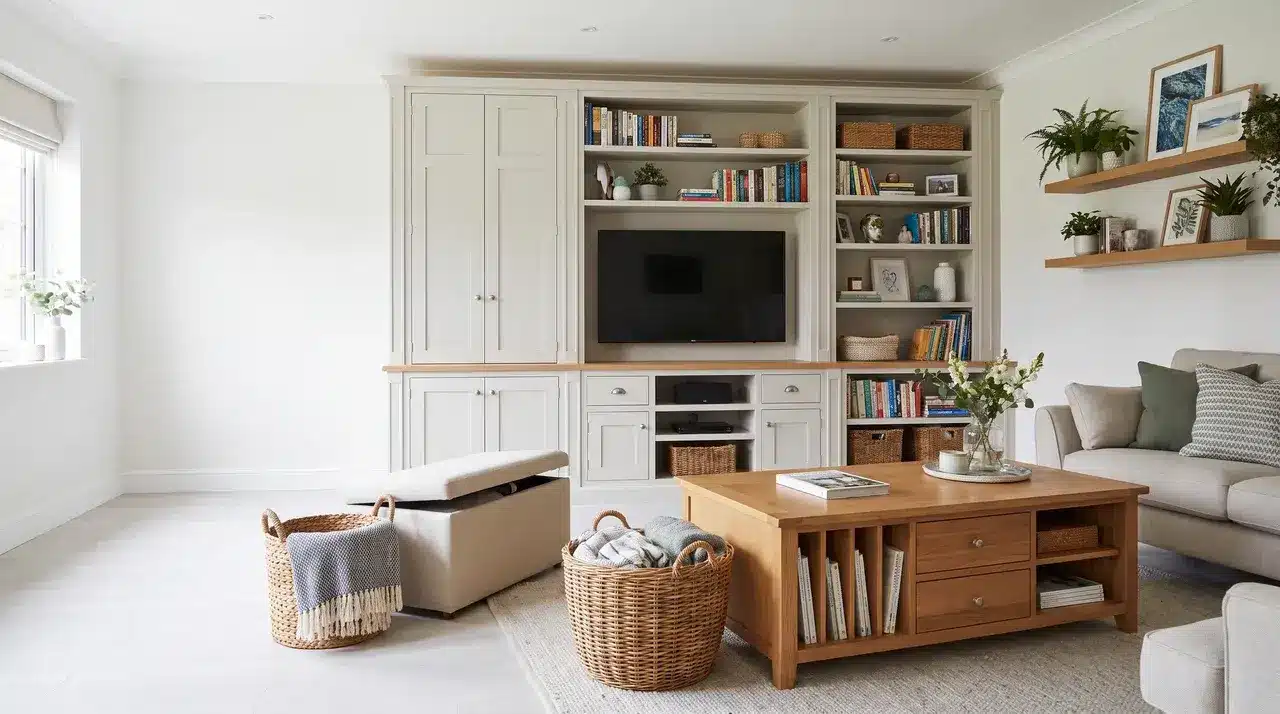
The living room is usually the first place clutter shows up and the last place anyone plans for it.
It’s where you unwind at night, where kids leave toys behind, where a laptop or a stack of mail sits for days, and where the TV setup adds its own mess of remotes and cords.
My own living room looked exactly like that for years, until I finally sat down and mapped out where things were actually piling up.
This is where living room storage ideas make a real difference. Good storage shapes how the room feels day to day, since a shelf that tucks away cords or a basket that holds toys settles the whole space without much effort.
Here, you get options for every part of the room, each noting its best use, a rough cost, and what it stores.
How to Choose the Right Living Room Storage
Picking storage before you’ve thought through the space usually backfires, since a cabinet that looked perfect online can end up blocking a doorway or making a small room feel smaller.
Start by measuring the available space, walking the room to note unused walls, corners, and alcoves, and checking doorways before adding anything large.
Next, decide what actually needs to live there, grouping items like books, toys, blankets, and remotes, and moving anything that doesn’t belong in the living room elsewhere. Finally, aim for a balance of open and hidden storage rather than committing to just one.
Organizing by how often you reach for something, not just by category, is a principle covered well in this guide to master closet layouts that actually work, and it applies just as neatly to a living room.
Match the finish and material to your existing furniture so the new piece looks intentional rather than added on.
Built-In Living Room Storage Ideas
Built-ins use the room’s own walls, so they add storage without taking up floor space.
They cost more than off-the-shelf furniture, but the fit is hard to match, which lines up with a broader shift the Census Bureau’s housing data points to: new homes have been trending smaller, and every wall has to work harder.
1. Floor-to-Ceiling Storage Cabinets
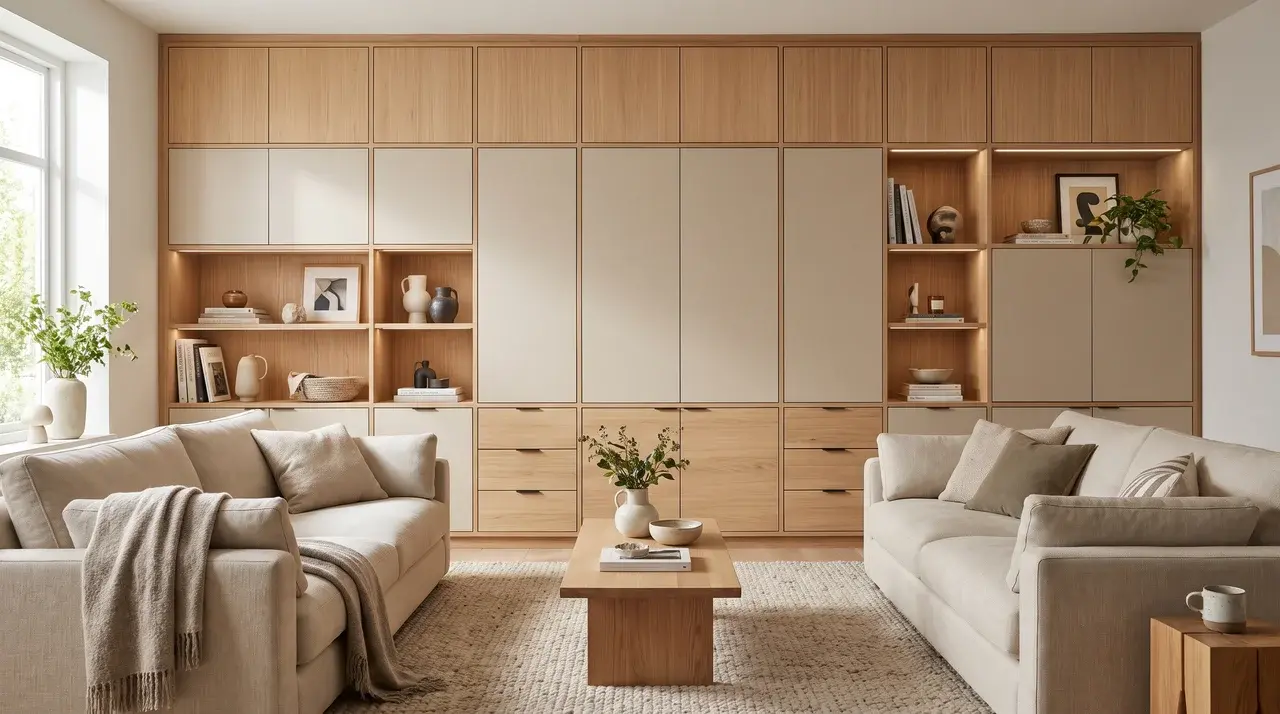
A full-height cabinet turns an empty wall into serious storage, combining cupboards, drawers, and open shelves in one unit. I fit one into a narrow hallway wall last year, and it swallowed years of accumulated clutter almost overnight. Keep everyday items low and save the top shelves for things you rarely touch.
- Best for: Large storage needs and rooms with unused walls
- Cost: $3,000–$8,000
- Stores: Electronics, books, games, paperwork, and seasonal items
2. Built-In TV and Media Unit
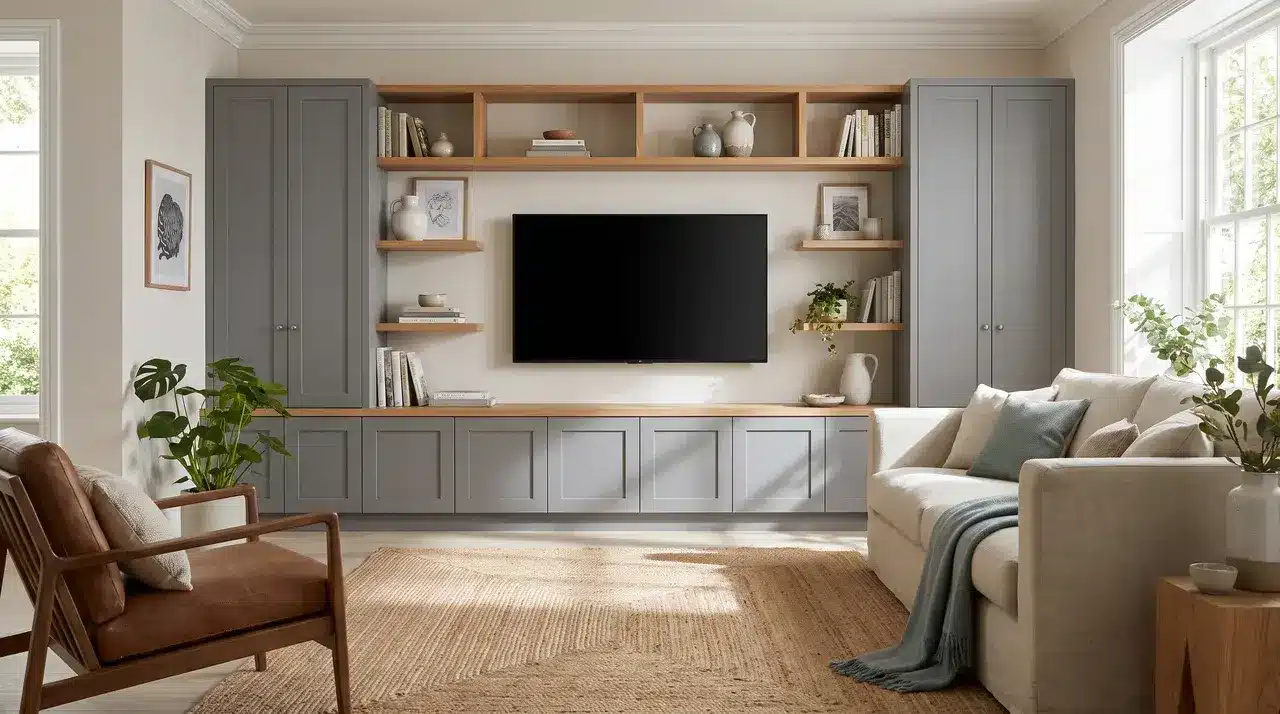
A built-in media unit gives the television and everything that comes with it one organized home. Wires, consoles, controllers, and other accessories tuck away behind cabinet doors instead of trailing across the floor, while open shelves above or beside the screen leave room for a few chosen decor pieces.
- Best for: Family rooms and entertainment spaces
- Cost: $5,000–$12,000
- Stores: Media devices, cables, games, remotes, and books
3. Made-to-Measure Alcove Cabinets
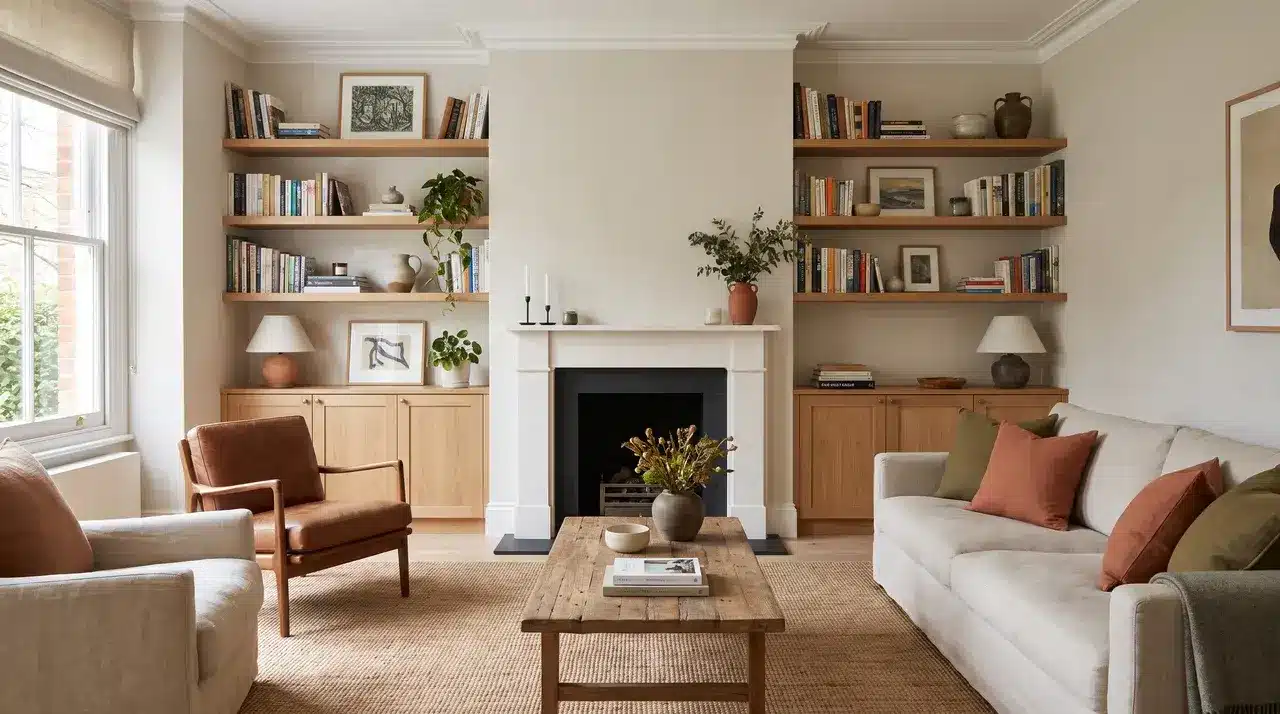
The recessed spaces beside a fireplace or chimney breast are often wasted, but made-to-measure cabinets fill them perfectly.
Lower cupboards keep clutter out of sight, while open shelving above suits books or decorative objects. Matching units on both sides of the fireplace give the whole wall a finished look.
- Best for: Period homes and awkward alcoves
- Cost: $2,500–$6,000
- Stores: Books, electronics, decorative objects, and household items
4. Bay Window Seat With Hidden Storage
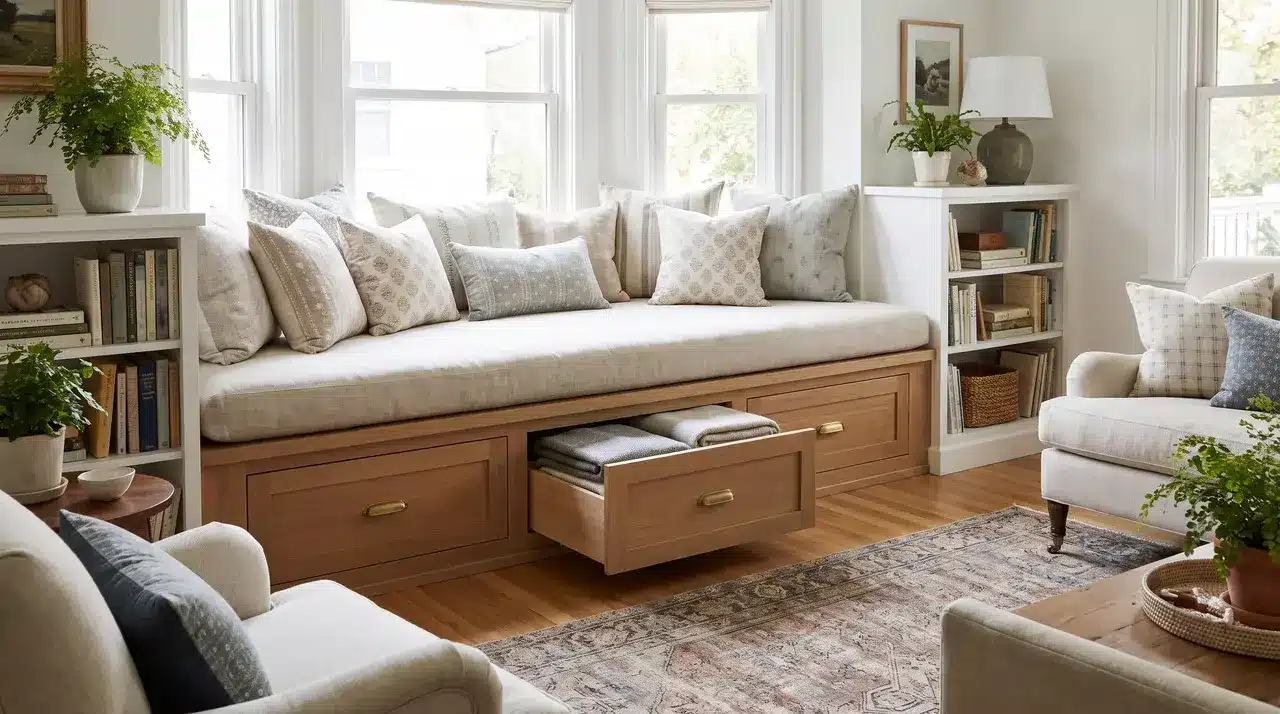
A bay window is often just empty floor space, but adding a seat with storage underneath puts it to work.
A friend of mine built one over a weekend and now uses it for every spare blanket in the house. A lift-up cushion or drawers hold bulky items that would otherwise crowd a closet.
- Best for: Small rooms with bay windows
- Cost: $1,500–$4,000
- Stores: Blankets, pillows, toys, and board games
5. Under-Bench Storage Drawers
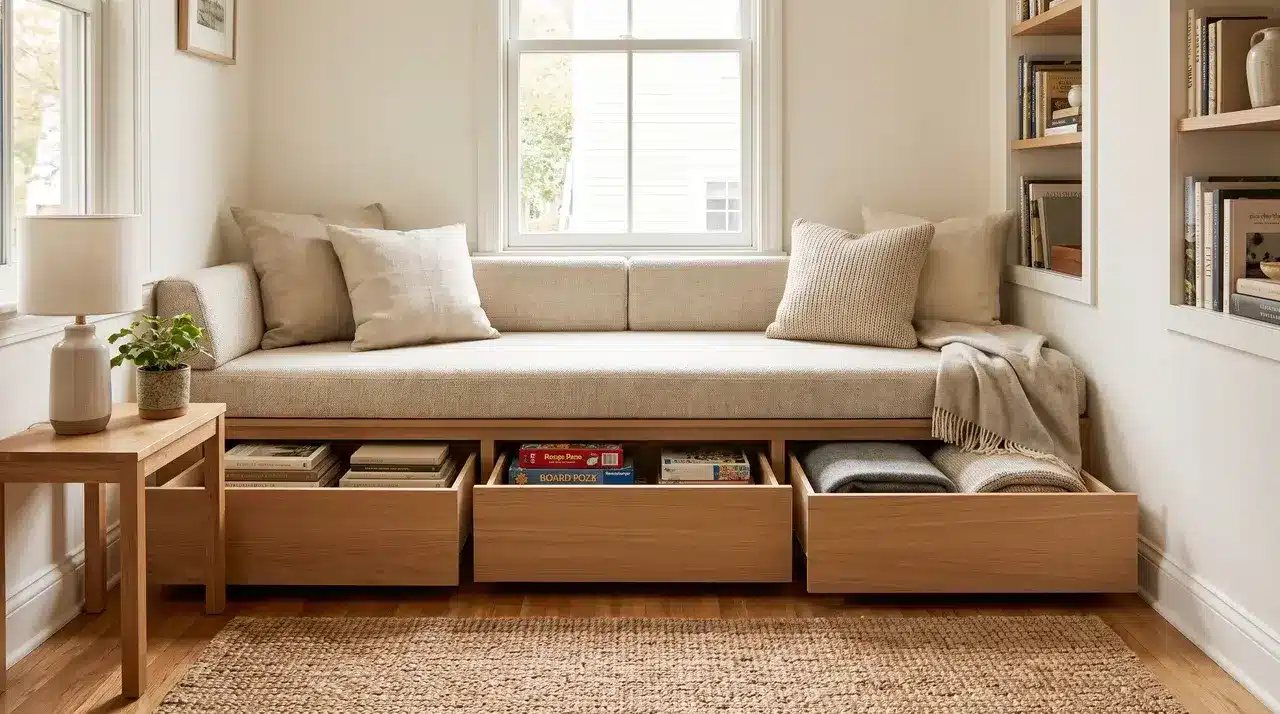
A bench installed beneath a window or along a bare wall does two jobs at once. Deep drawers underneath hold everyday items out of sight, and the bench top doubles as extra seating whenever guests need it.
- Best for: Family rooms and compact lounges
- Cost: $800–$2,500
- Stores: Toys, books, shoes, blankets, and seasonal decor
6. Room-Divider Shelving Unit
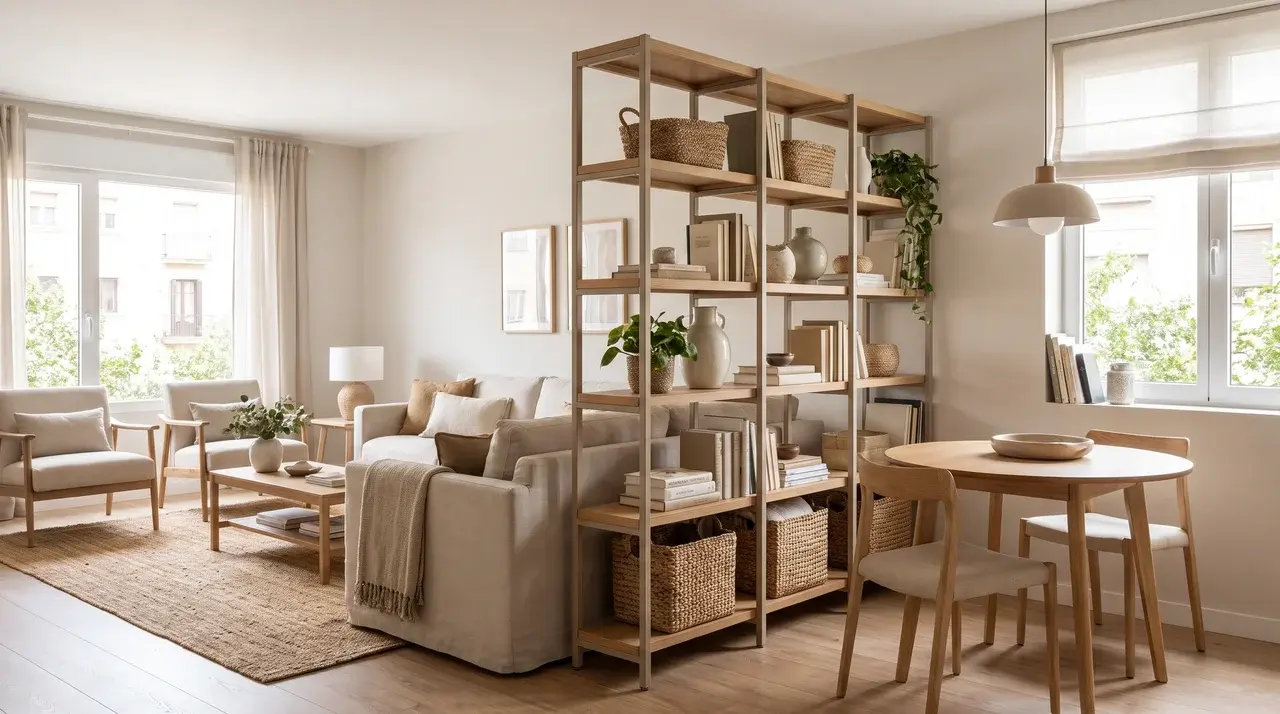
In an open-plan space, a shelving unit can mark off separate zones without closing the room in the way a solid wall would. Open shelves let light pass through while still giving each side of the room its own boundary, whether that’s a reading corner, a workspace, or a dining area.
- Best for: Open-plan and multi-use rooms
- Cost: $250–$2,500
- Stores: Books, baskets, plants, and display pieces
Built-ins, alcove units, and storage seating help make use of architectural areas that might otherwise be wasted.
Wall and Vertical Living Room Storage Ideas
When floor space is limited, the walls become the next best option. These ideas add storage without eating into the room you actually walk through.
7. Floating Wall Shelves
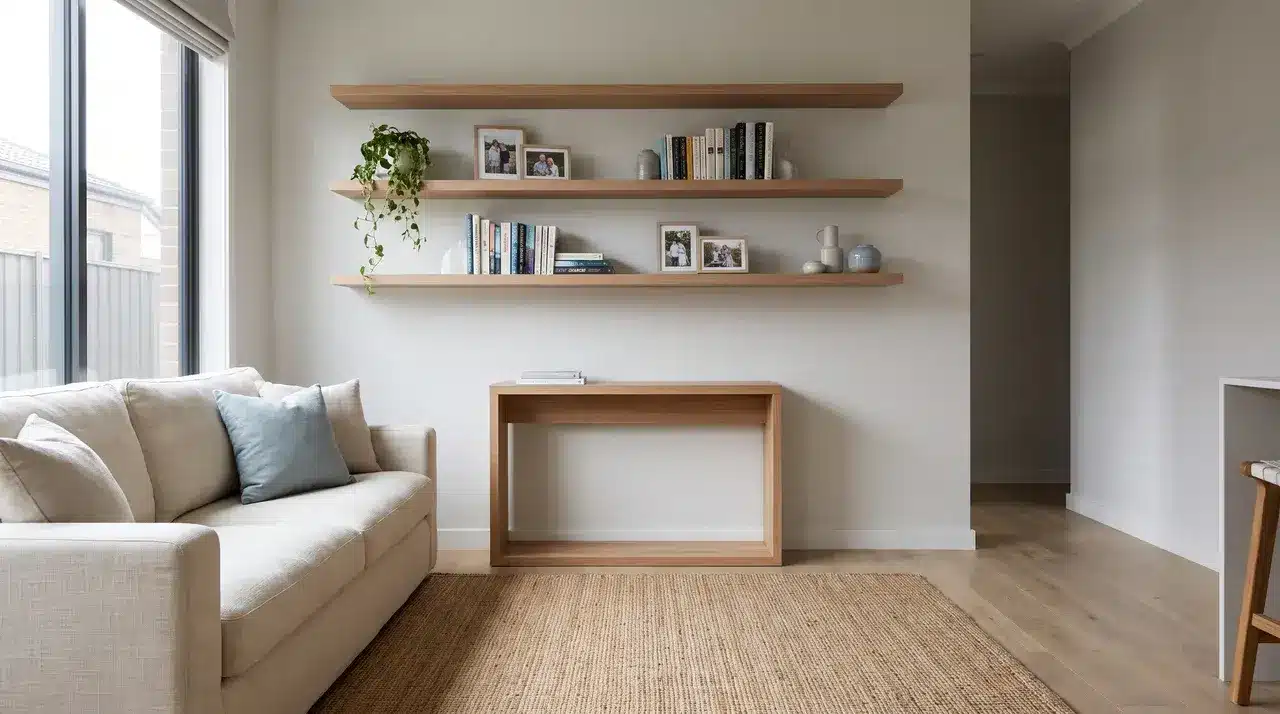
Shelves mounted above a sofa, console, or TV make use of wall space that usually sits empty. Staggering them at different heights gives the arrangement a more modern look, and keeping the number of displayed items limited stops the wall from turning into visual clutter itself.
- Best for: Small rooms and blank walls
- Cost: $100–$600
- Stores: Books, photos, plants, and lightweight decor
8. Tall and Narrow Bookcase
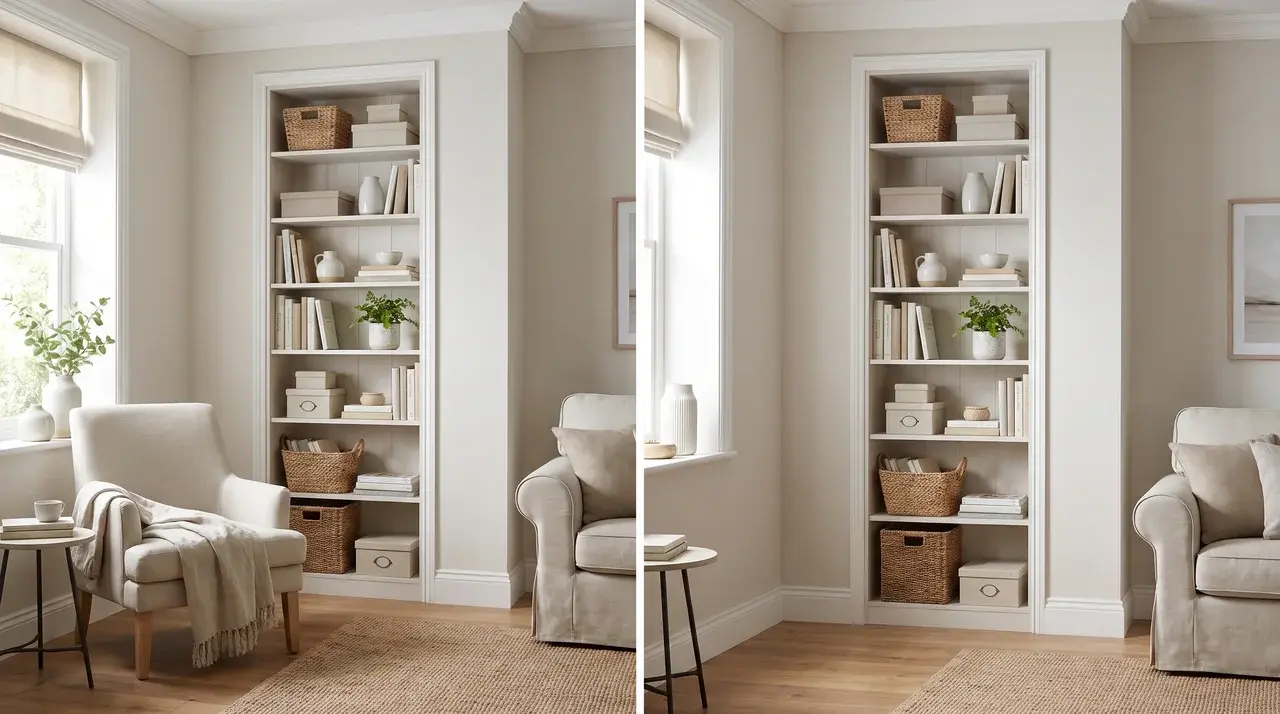
A slim bookcase gets its storage from height rather than width, which makes it a good fit for narrow gaps between furniture or walls.
Baskets or boxes on the lower shelves keep smaller items contained. Any tall unit like this needs to be secured to the wall, a step the Consumer Product Safety Commission’s anchoring guidance treats as essential safety practice rather than an optional extra.
- Best for: Narrow wall spaces
- Cost: $150–$500
- Stores: Books, files, baskets, and ornaments
9. Corner Shelving Unit
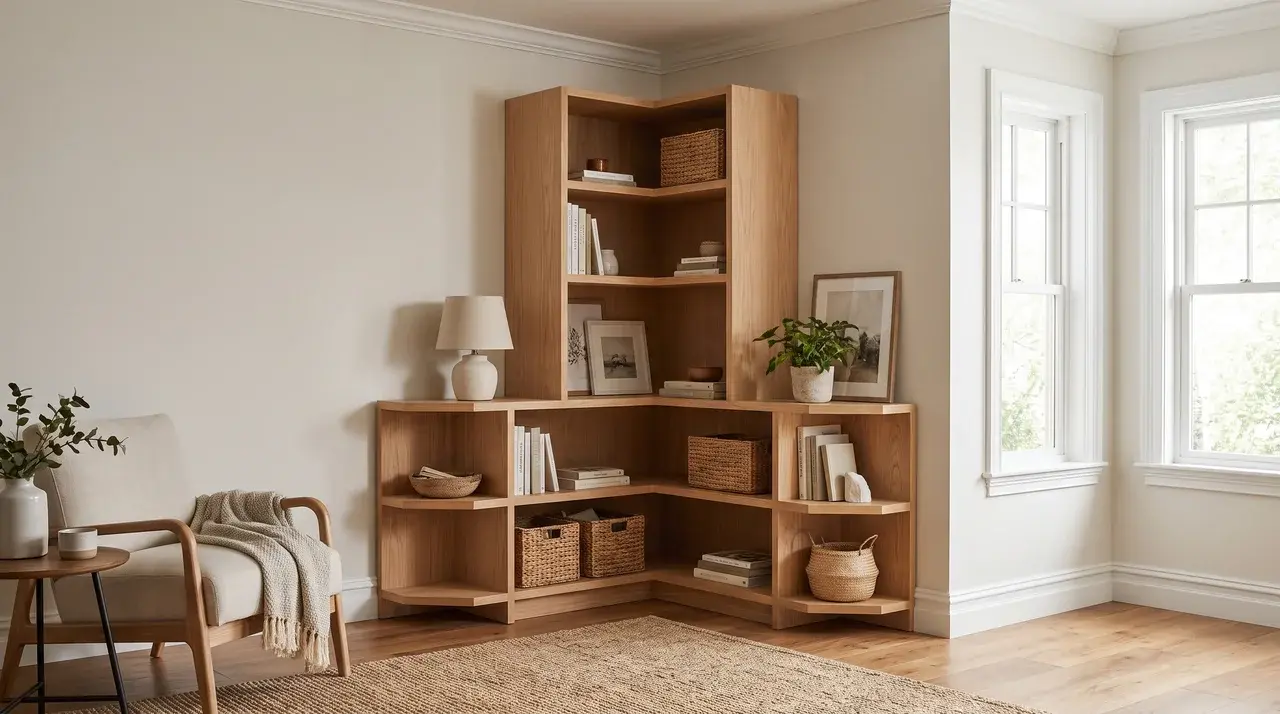
Corners are some of the most overlooked spots in a living room. A triangular shelf or fitted corner cabinet turns that dead space into working storage, as long as the size stays proportionate to the room instead of overwhelming it or crowding the walkway around it.
- Best for: Compact and awkward layouts
- Cost: $50–$300
- Stores: Books, small baskets, plants, and decor
10. Shelving Above Doors and Windows
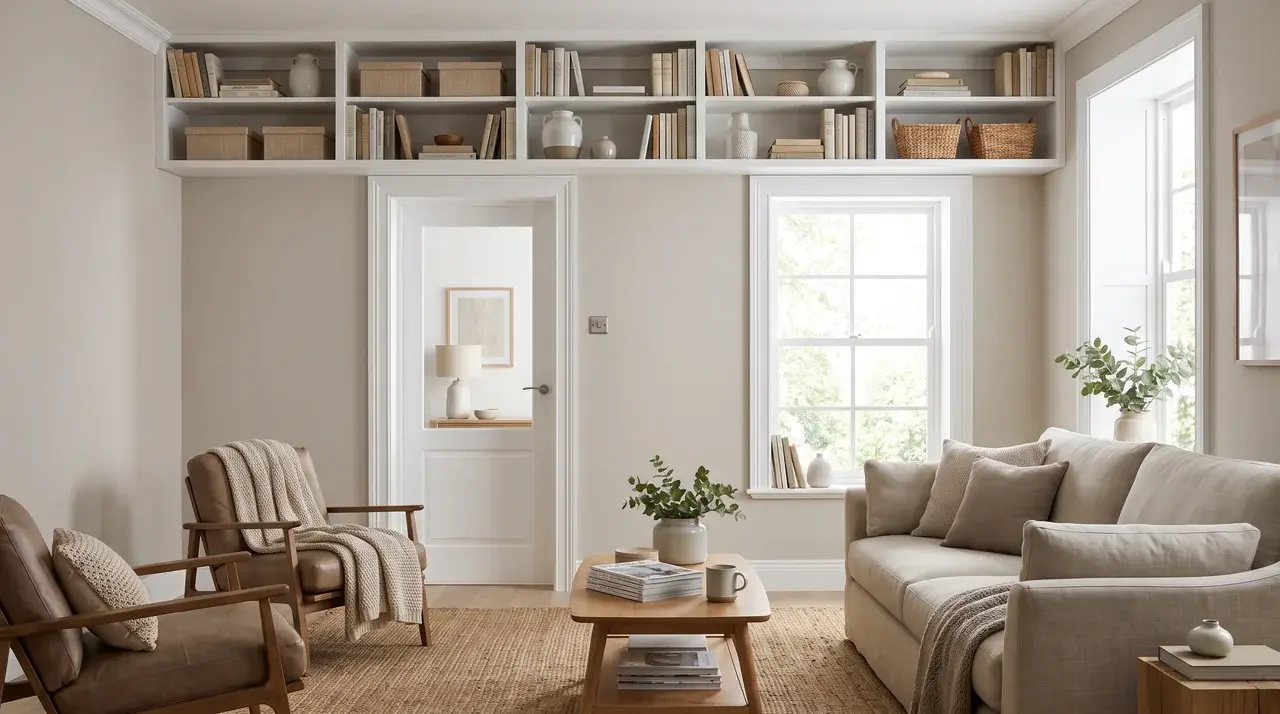
The wall space above doors and windows almost always goes unused. A shallow shelf up there adds storage without narrowing the walkway or blocking daylight, making it a good spot for lighter items you don’t reach for very often but still want close at hand.
- Best for: Rooms with very little free wall space
- Cost: $80–$400
- Stores: Books, decorative boxes, and occasional-use items
11. Wall-Mounted Storage Cabinets
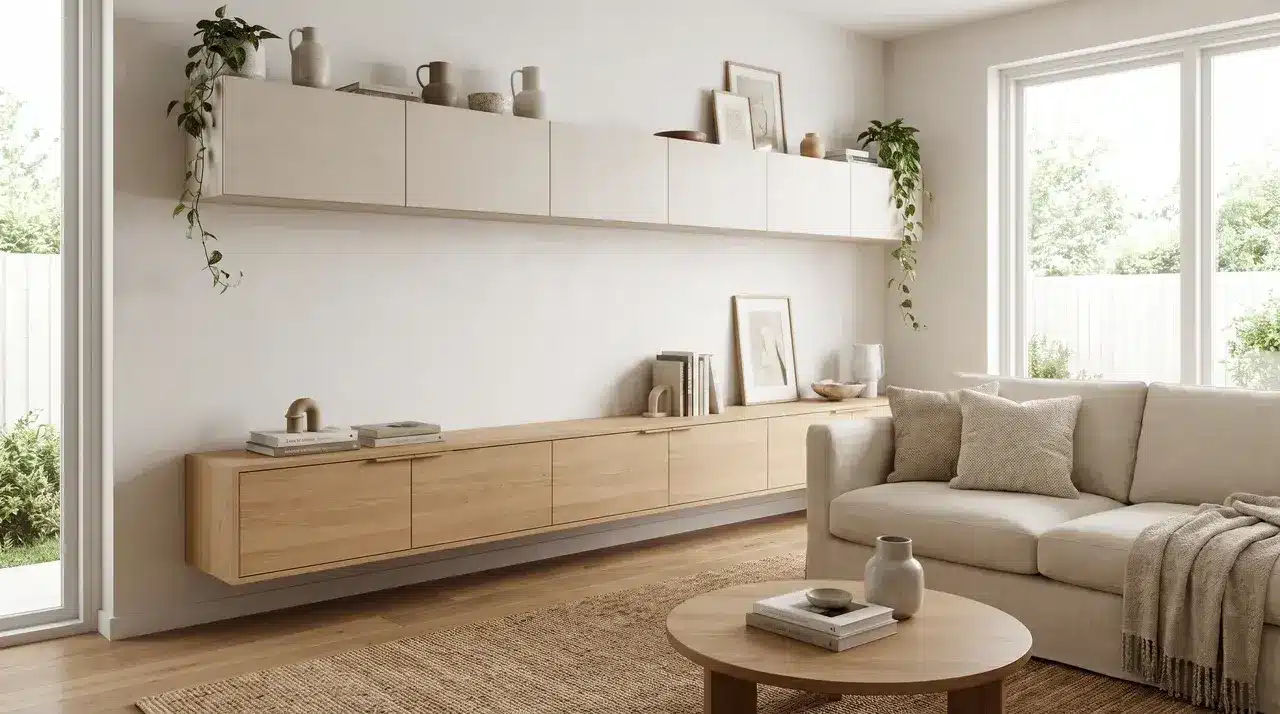
Shallow cabinets fixed above the floor hide loose items behind closed doors while leaving the floor itself completely clear. That combination gives small or modern living rooms a cleaner, more open feel, especially when the cabinet color matches the wall behind it.
- Best for: Modern and small living rooms
- Cost: $150–$600
- Stores: Electronics, paperwork, games, and accessories
12. Full-Wall Feature Bookcase
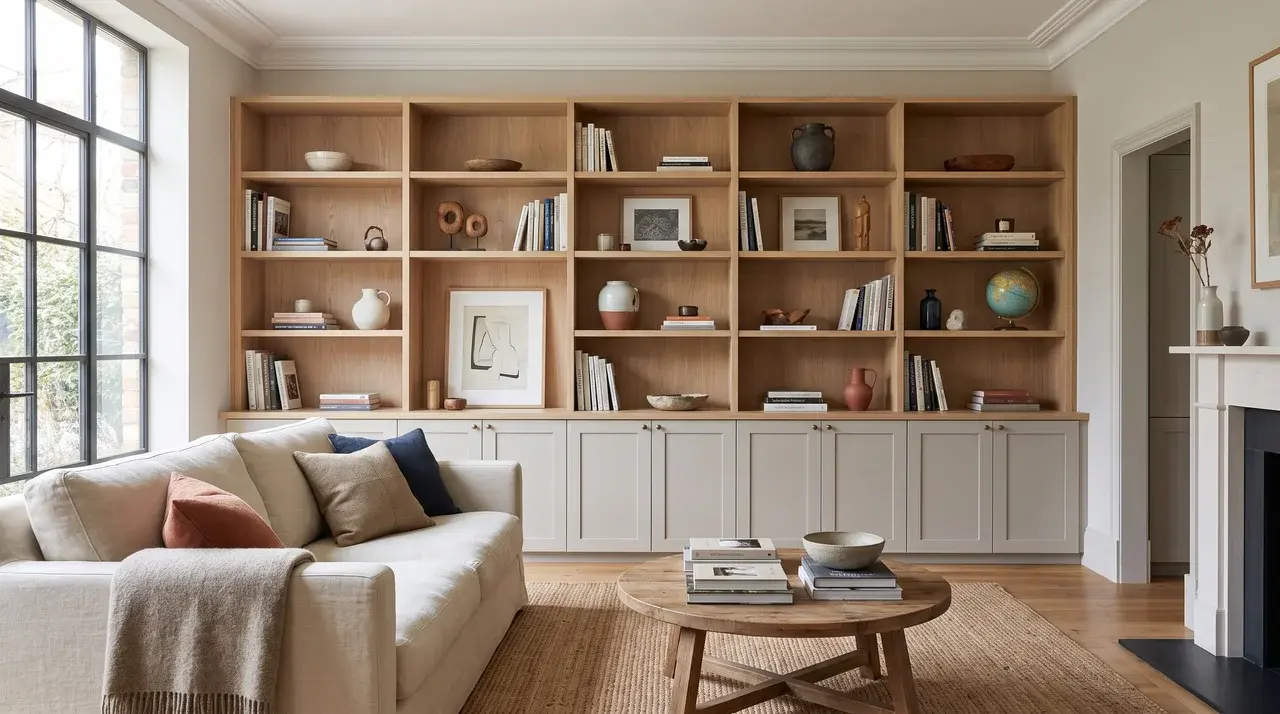
Rather than tucking storage into a corner, a full-wall bookcase turns it into the room’s main feature. Mixing open shelving with lower cupboards keeps it practical, and leaving a few shelves empty stops the wall from feeling too packed or too busy to look at.
- Best for: Large book collections and statement walls
- Cost: $4,000–$10,000
- Stores: Books, art, photographs, records, and decor
Tall storage, floating shelves, and high-level shelving use overlooked vertical space without taking up much of the room’s footprint.
Multifunctional Living Room Storage Furniture
Not every storage solution has to be an extra piece of furniture. These options build storage into things the room already needs, like a sofa, coffee table, or side table, which is exactly the approach that finally worked for our own cramped apartment.
13. Storage Sofa
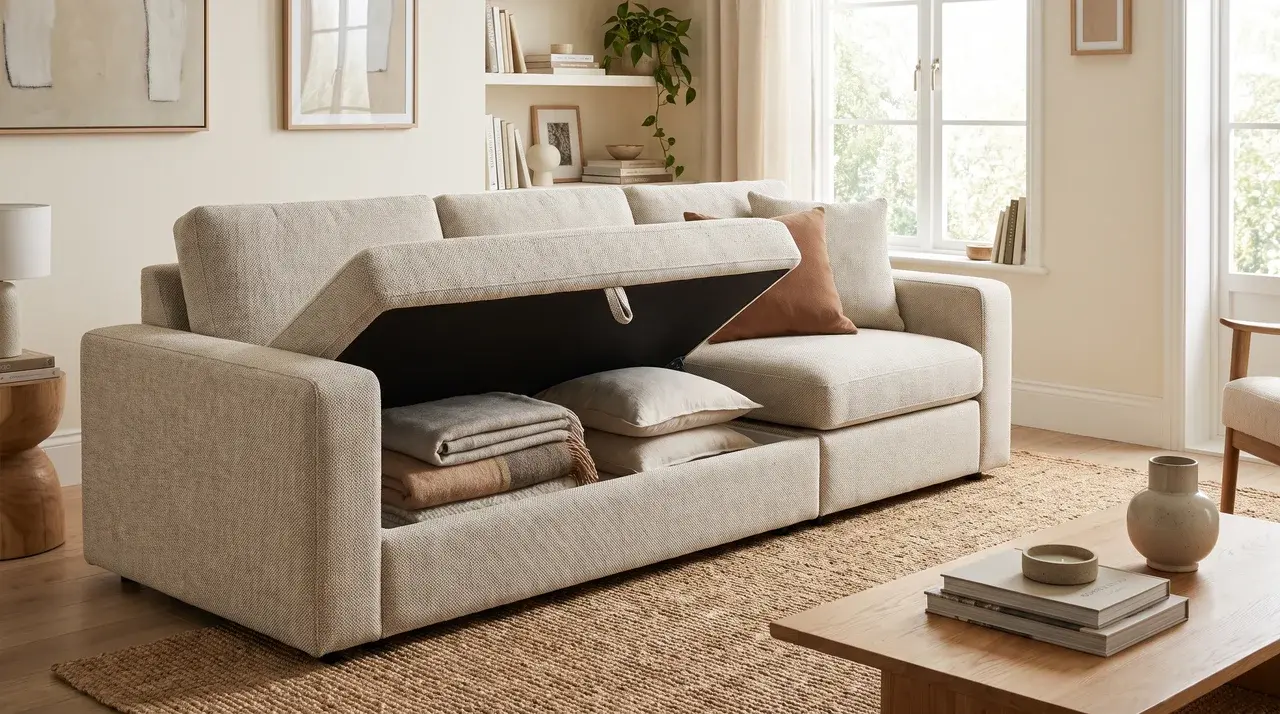
A sofa with a compartment beneath the seat or chaise turns seating into serious storage, which matters most in smaller homes where every piece of furniture needs to earn its space. Look for a mechanism that opens easily, since a stiff lid defeats the point entirely.
- Best for: Small homes and apartments
- Cost: $1,200–$3,500
- Stores: Blankets, bedding, pillows, and seasonal textiles
14. Storage Ottoman
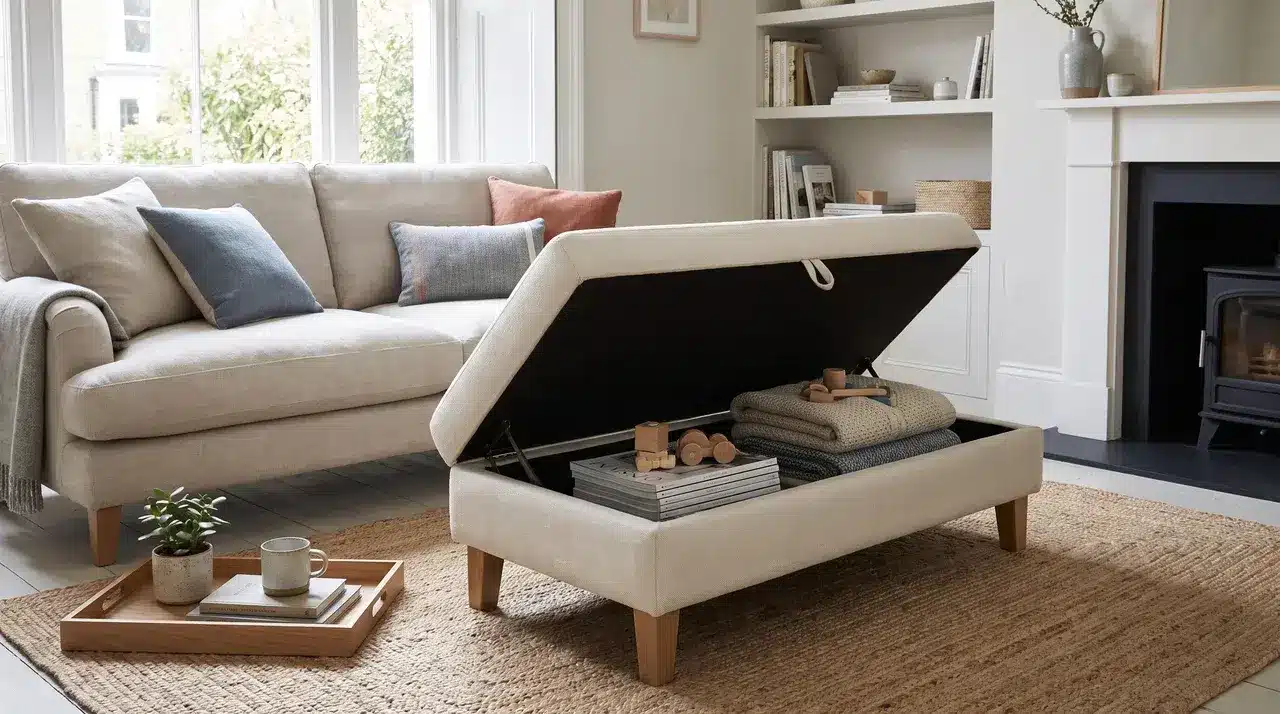
An ottoman can act as seating, a footrest, and hidden storage all at once. Ours doubles as a coffee table most evenings once a tray goes on top, and it’s easily the piece guests ask about most. Choosing a lighter option makes it easy to move as needs change.
- Best for: Flexible family spaces
- Cost: $100–$250
- Stores: Toys, blankets, magazines, and remotes
15. Lift-Top Storage Coffee Table
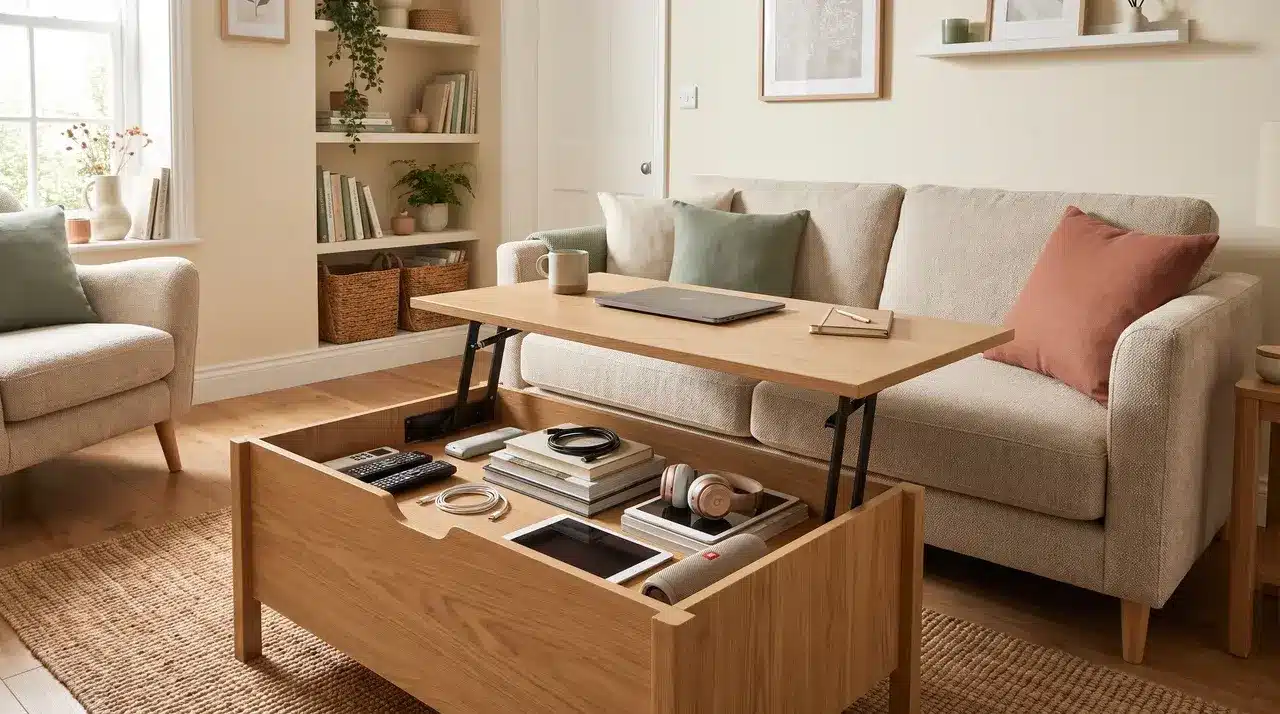
Everyday clutter can sit in the hidden compartment below, while the top lifts up to become a surface for working, eating, or using a laptop. It’s worth checking that the raised surface stays stable, since a wobbly top makes the table less useful in practice than it looks in photos.
- Best for: Small rooms and work-from-home spaces
- Cost: $150–$400
- Stores: Chargers, remotes, books, electronics, and stationery
16. Coffee Table With Drawers
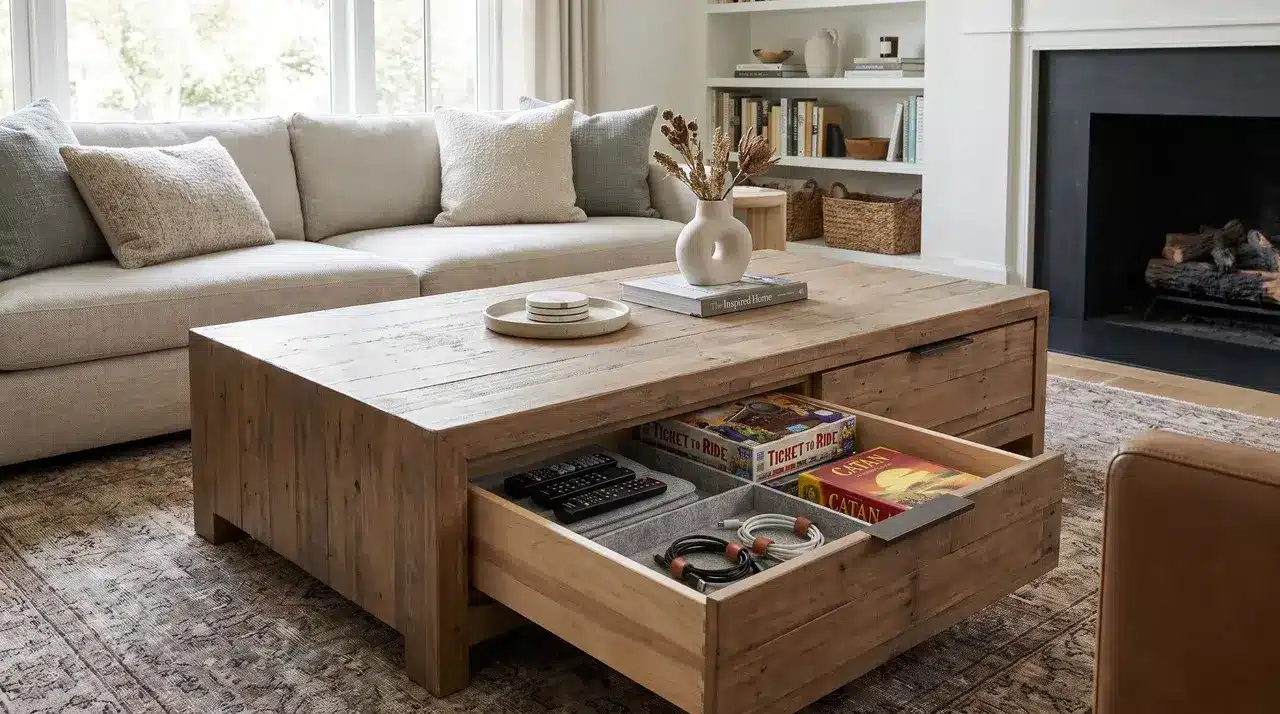
Drawers built into a coffee table keep small items close at hand without leaving them scattered across the top. Wide, smooth-opening drawers make this practical for daily use, and keeping the tabletop itself clear is what actually makes the storage work in the long run.
- Best for: Everyday family living rooms
- Cost: $200–$600
- Stores: Remotes, games, cables, magazines, and coasters
17. Storage End Tables
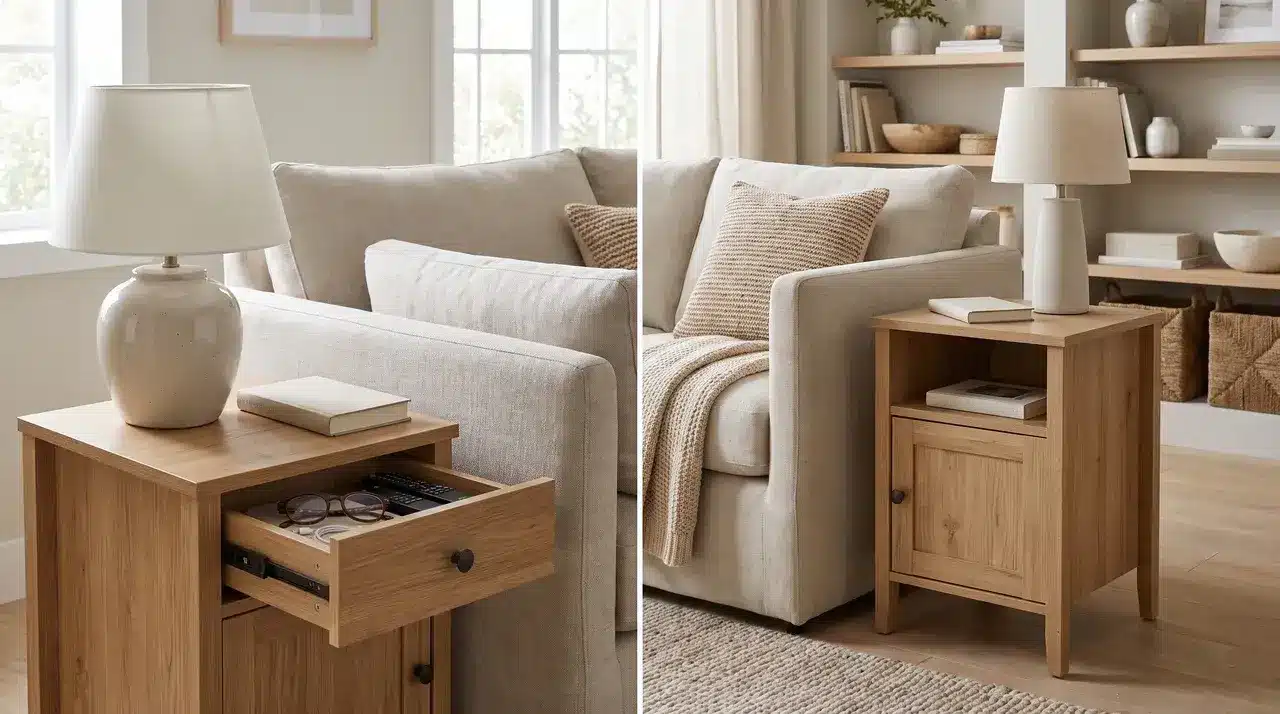
Swapping a basic side table for one with a drawer or small cabinet keeps personal items within reach of the sofa instead of piling up elsewhere. The top still works for a lamp and a couple of essentials, just without turning into a catch-all surface for everything else.
- Best for: Small-item organization
- Cost: $80–$250
- Stores: Glasses, chargers, remotes, books, and medication
18. Storage Bench
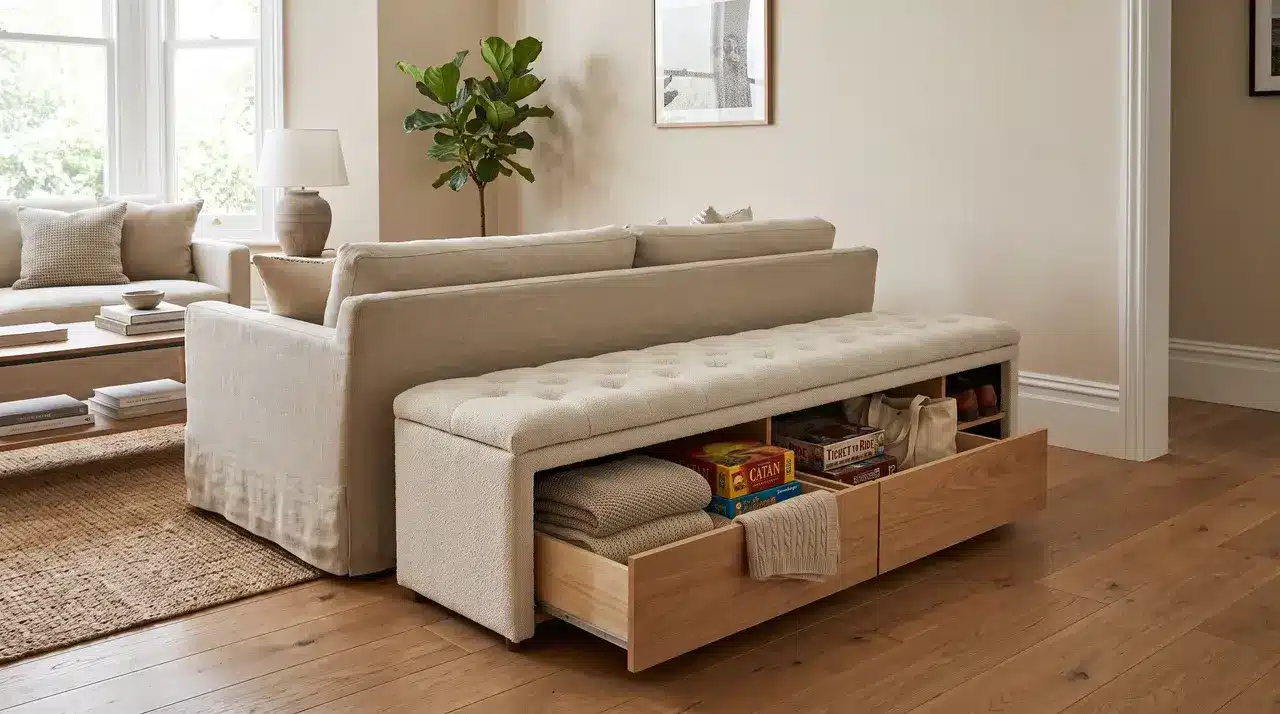
A storage bench works behind a sofa, under a window, or against a bare wall, and it doubles as extra seating whenever guests arrive. Whether it opens with drawers or a lift-up top usually comes down to where it ends up sitting in the room.
- Best for: Flexible seating and hidden storage
- Cost: $150–$500
- Stores: Bags, shoes, games, blankets, and toys
19. Storage Chest Used as a Coffee Table
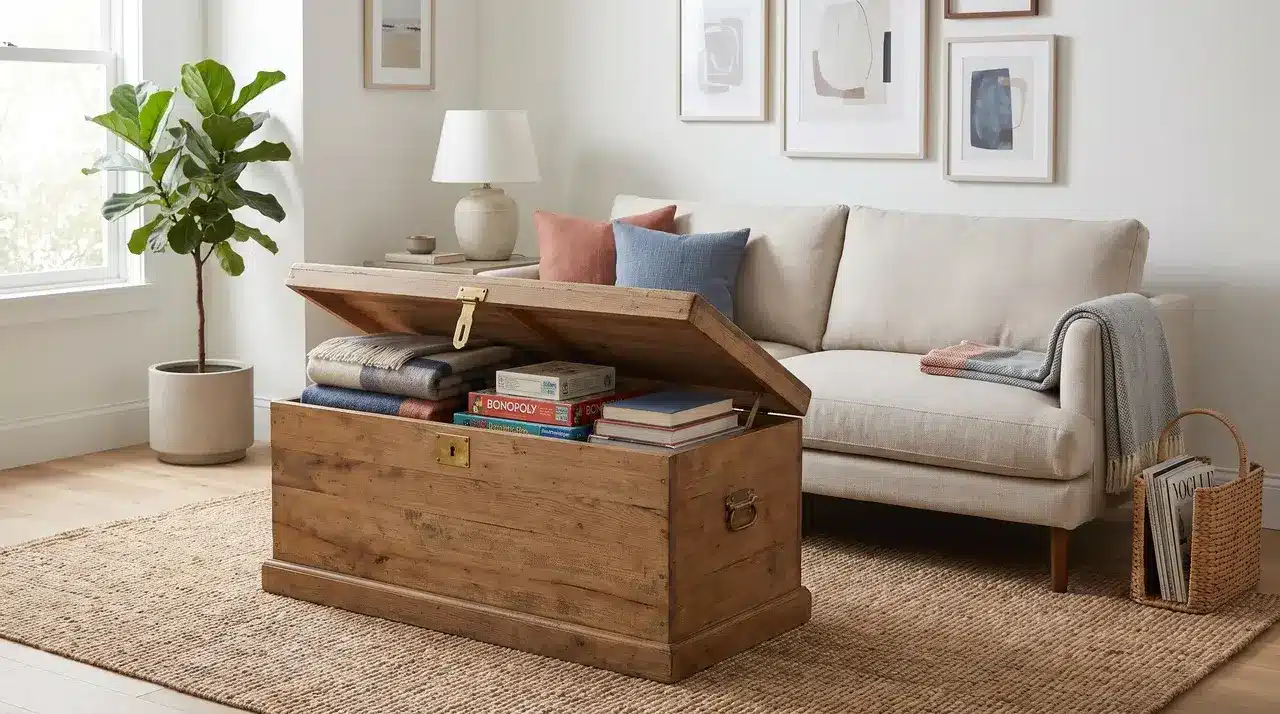
An old wooden chest makes a practical, characterful stand-in for a coffee table. Check the height against your sofa before committing, and adding internal dividers makes it easier to keep what’s inside organized instead of just piled together in one loose heap.
- Best for: Traditional, rustic, and eclectic rooms
- Cost: $150–$450
- Stores: Blankets, games, books, and seasonal items
20. Freestanding TV Console With Cabinets
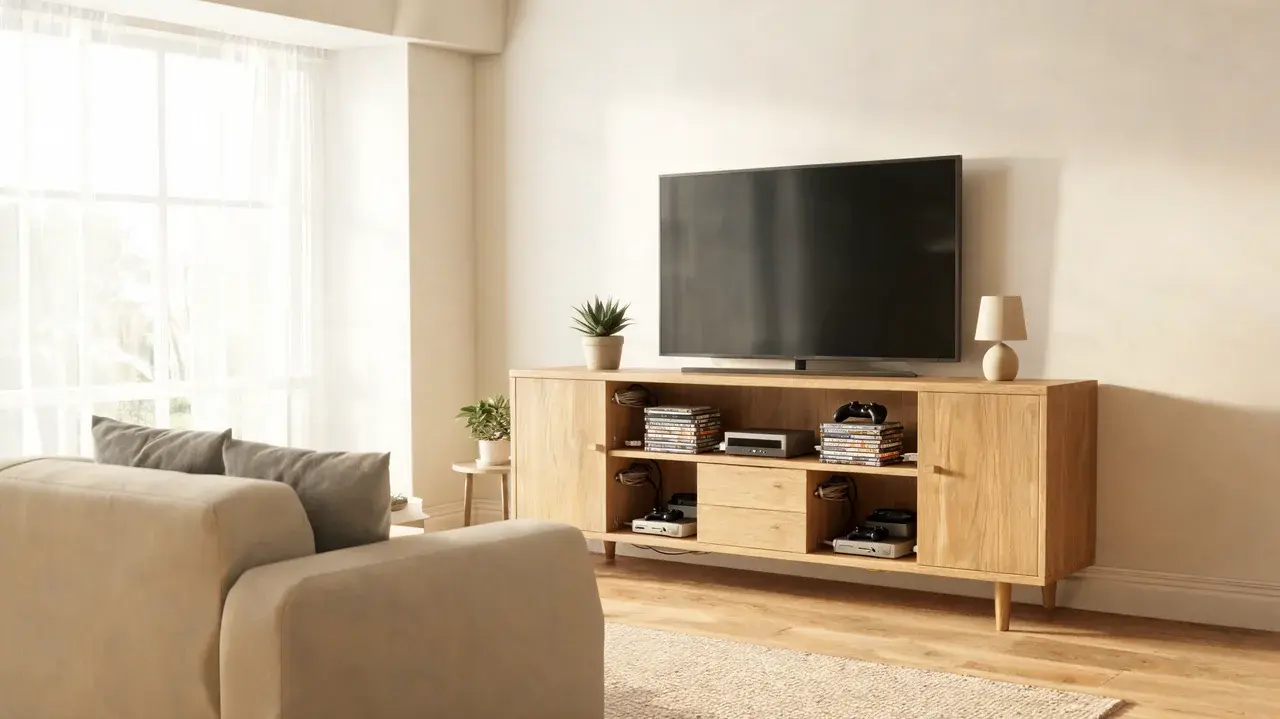
A console with drawers, doors, and proper ventilation hides cables and equipment while still keeping electronics accessible. Since it’s freestanding rather than built-in, it’s a solid option for renters who need something they can take with them at the end of a lease.
- Best for: Homes without fitted media storage
- Cost: $200–$800
- Stores: Consoles, routers, cables, DVDs, and controllers
Storage sofas, coffee tables, and ottomans let one item perform several jobs, which is valuable when floor space is limited.
Small Living Room Storage Ideas
Small rooms don’t have room for bulky furniture, but they usually have more overlooked gaps than people realize. Our first apartment taught me that lesson the hard way; most of the useful space was hiding in plain sight.
21. Slim Containers Under the Sofa
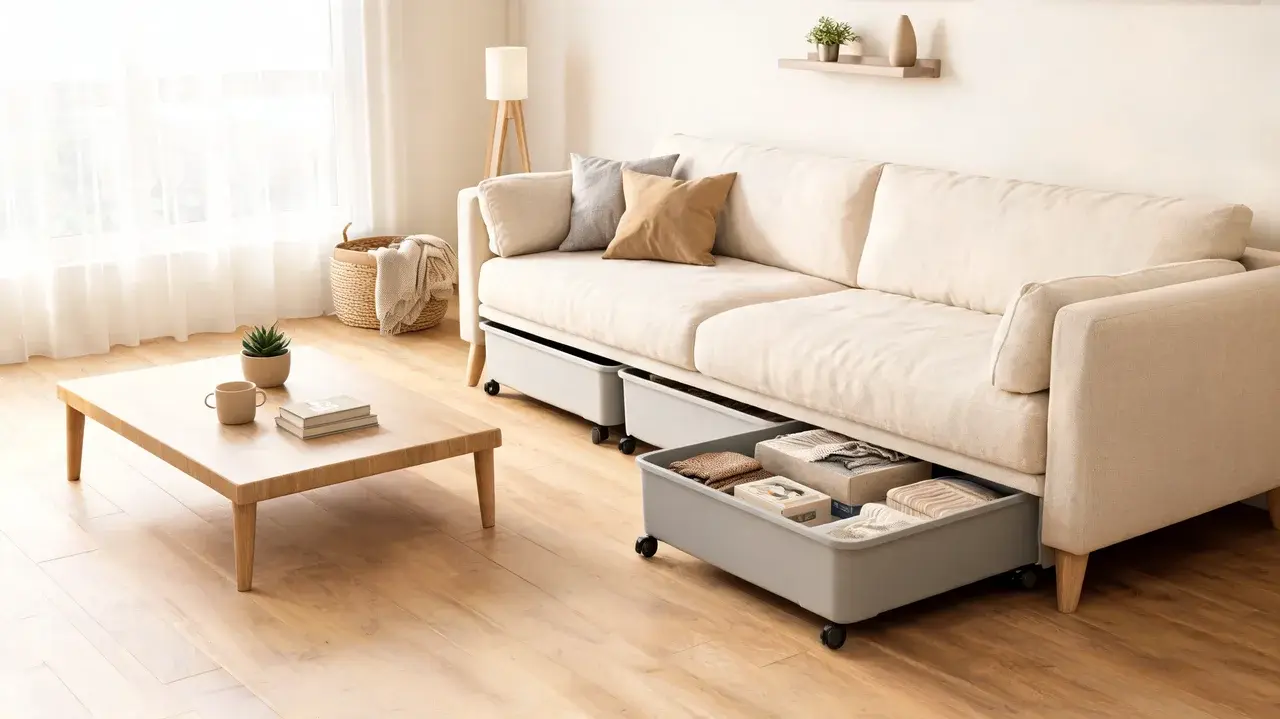
The gap beneath a raised sofa is easy to miss but useful once filled. Measure the space before buying containers, since low boxes with wheels or handles make them far easier to slide in and out than a box that barely fits under the frame.
- Best for: Raised sofas and limited floor space
- Cost: $20–$80
- Stores: Board games, throws, flat items, and seasonal accessories
22. Low-Line Cabinets for Toys and Games
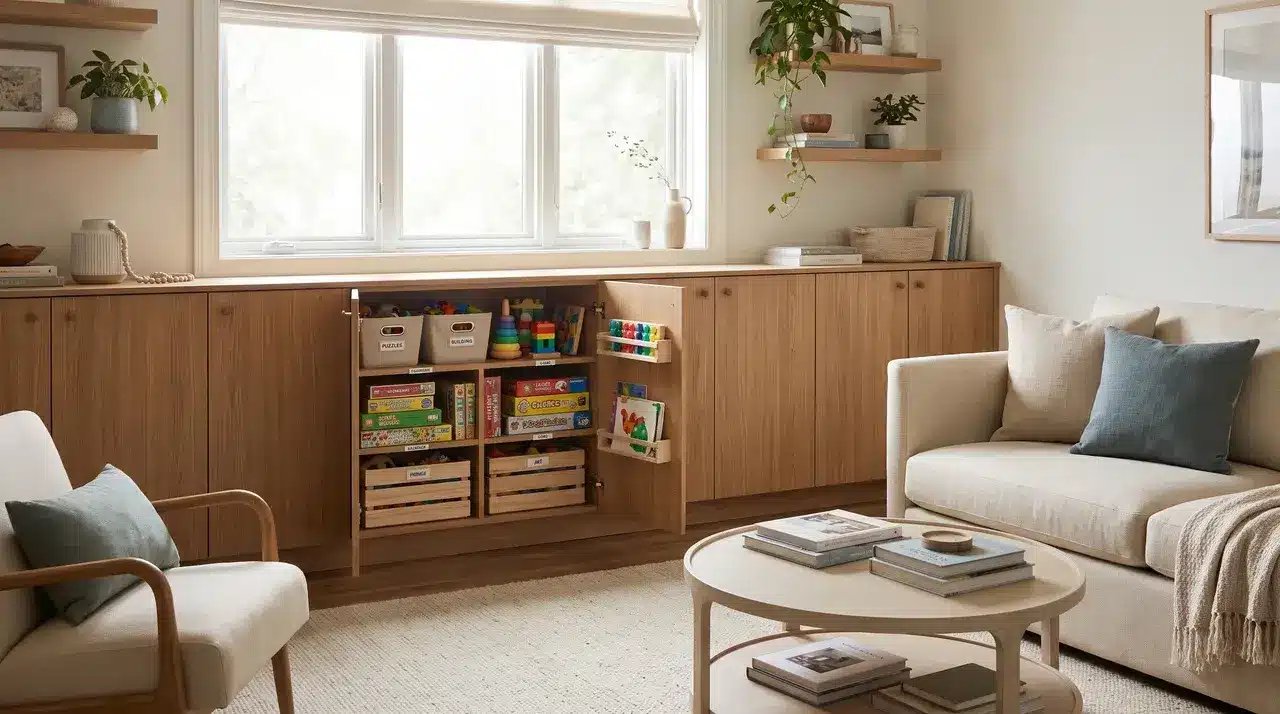
A low cabinet keeps toys within a child’s reach while still clearing the floor between uses. Internal bins help separate toys from games instead of dumping everything into one pile, and the top surface can still hold a display or media equipment.
- Best for: Family living rooms
- Cost: $100–$350
- Stores: Toys, puzzles, craft supplies, and board games
23. Sofa-Arm Storage Organizer
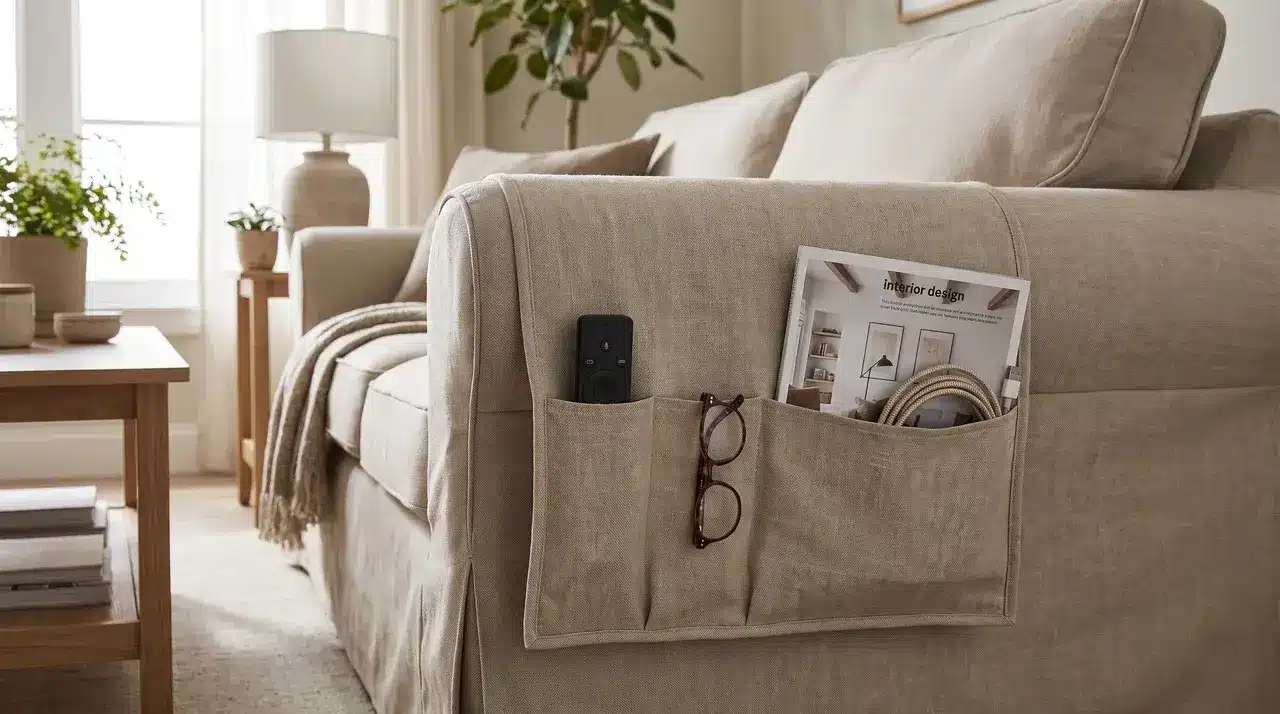
A slim organizer that hangs over the sofa arm keeps frequently used items like remotes and glasses within reach instead of lost in the cushions. It’s a small addition, so it’s worth picking a design that matches the sofa rather than overfilling the pockets.
- Best for: Renters and very small rooms
- Cost: $15–$40
- Stores: Remotes, glasses, magazines, and charging cables
24. Over-the-Door Organizer
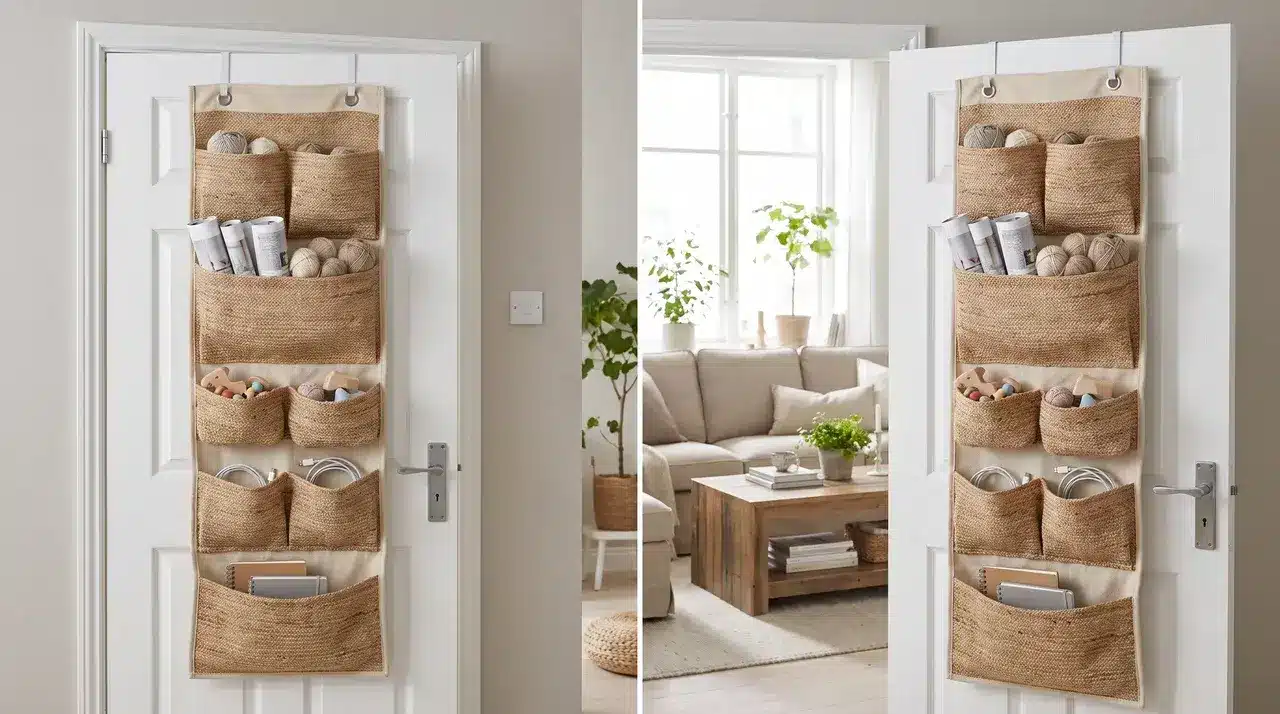
The back of a door, whether it’s the living room door or a nearby closet, is space that almost never gets used. A lightweight organizer hung there adds storage without taking up any floor or wall space, as long as it doesn’t interfere with the door swinging open.
- Best for: Rooms with no spare wall or floor space
- Cost: $25–$80
- Stores: Crafts, magazines, small toys, and accessories
25. Modular Cube Storage
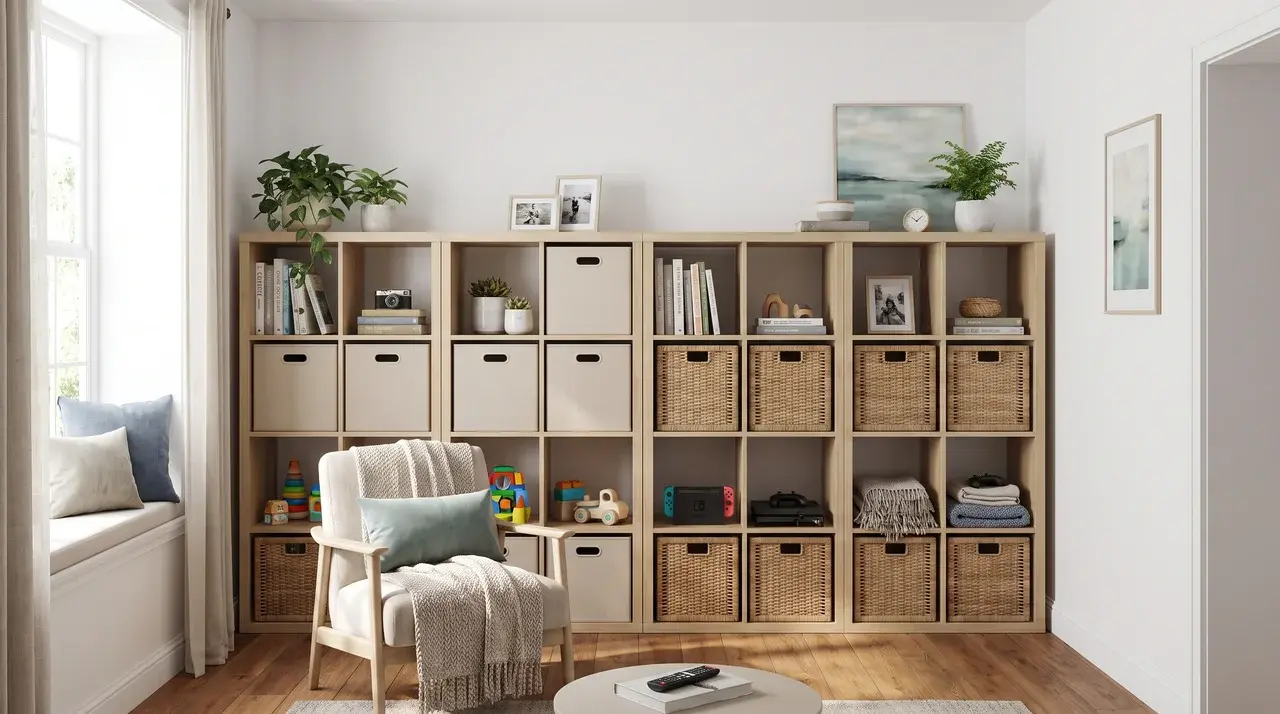
Cube storage can be rearranged as the room’s needs change, stacked vertically for a small footprint or spread horizontally along a wall. Mixing a few open cubes with fabric bins or baskets keeps some items visible and others hidden from view entirely.
- Best for: Renters, families, and changing needs
- Cost: $35–$250
- Stores: Books, toys, electronics, baskets, and decor
26. Compact Mini-Office Storage
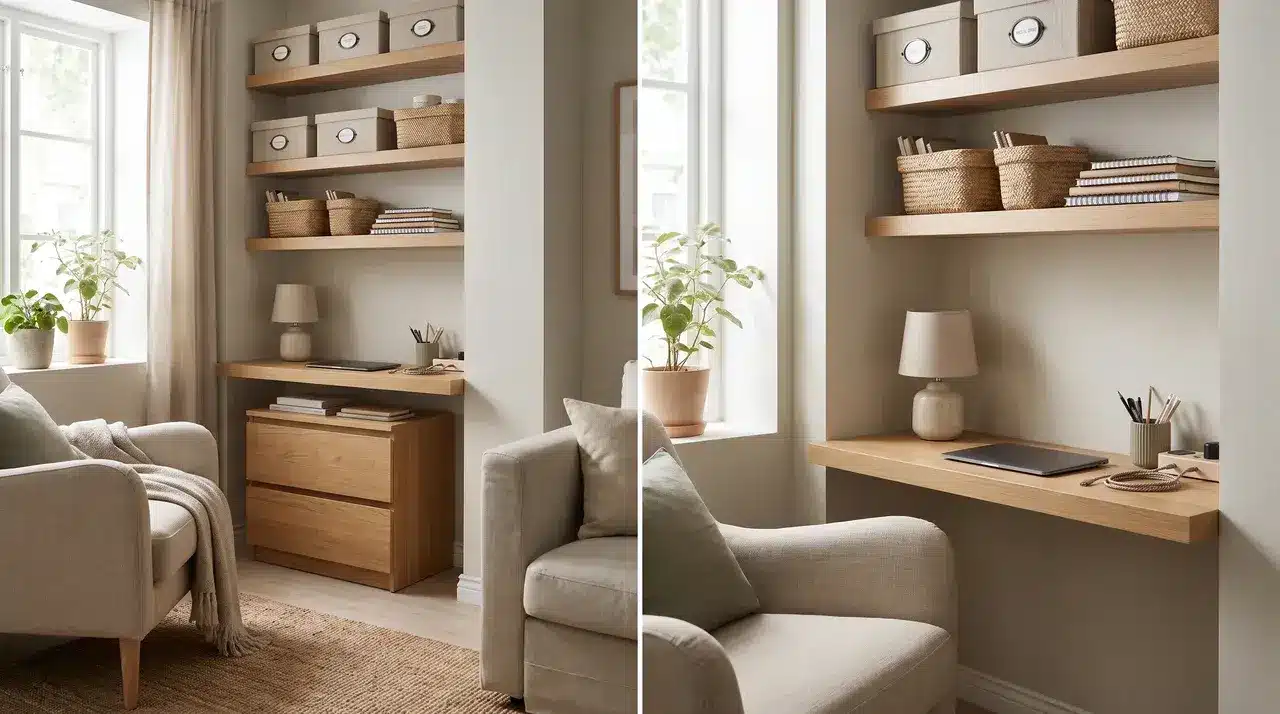
A narrow desk paired with vertical shelving fits into a single corner without taking over the room. Closed drawers keep paperwork and supplies out of sight once the workday ends, so the living room doesn’t end up doubling as a visible office all evening.
- Best for: Multi-use living rooms
- Cost: $200–$800
- Stores: Files, stationery, notebooks, chargers, and devices
Under-sofa boxes, door organizers, and other narrow solutions can turn forgotten gaps into useful storage.
Decorative and Flexible Living Room Storage Ideas
These last few ideas add texture and personality to a room while still doing real organizational work, which is the balance I try to keep in mind with every new piece I bring home.
27. Woven Storage Baskets
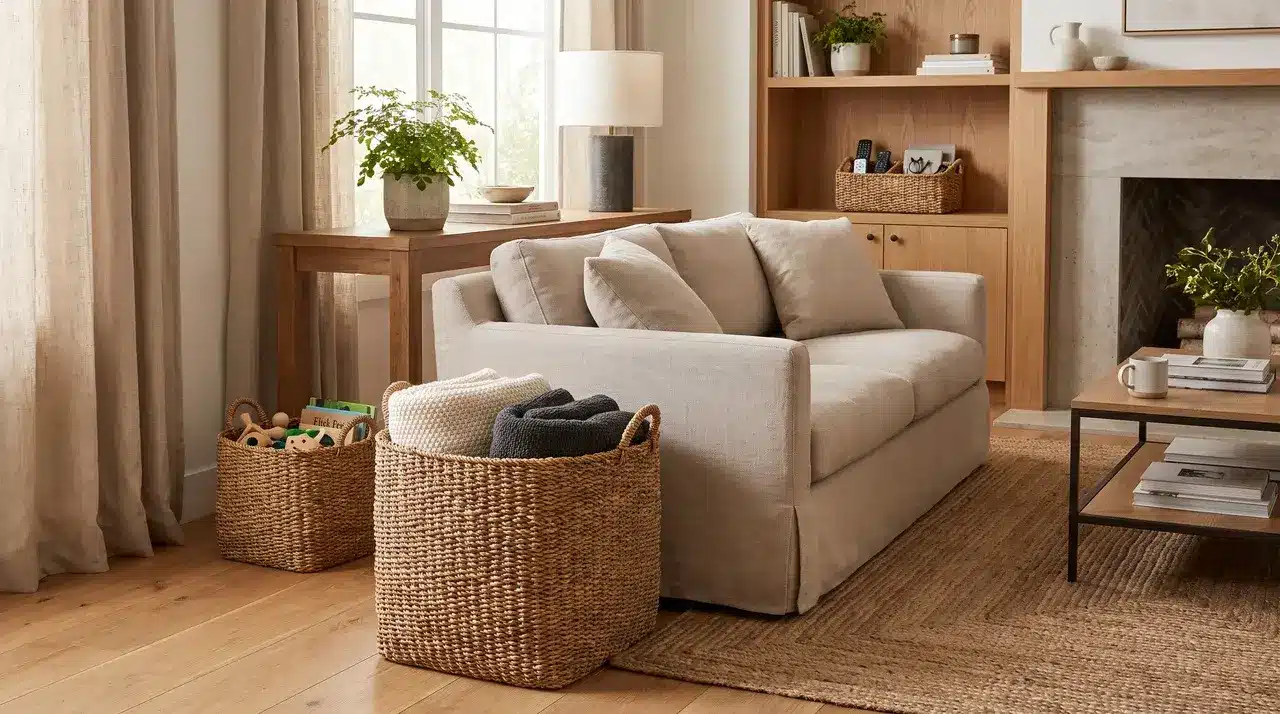
A large basket beside the sofa or tucked beneath a console handles overflow without needing any installation.
Matching materials keep several baskets looking coordinated, a texture-first approach that shows up throughout these rattan living room ideas, though it helps to give each basket a specific purpose so it doesn’t become a catch-all.
- Best for: Quick, flexible storage
- Cost: $15–$80 each
- Stores: Blankets, pillows, toys, magazines, and knitting supplies
28. Decorative Storage Boxes and Bins
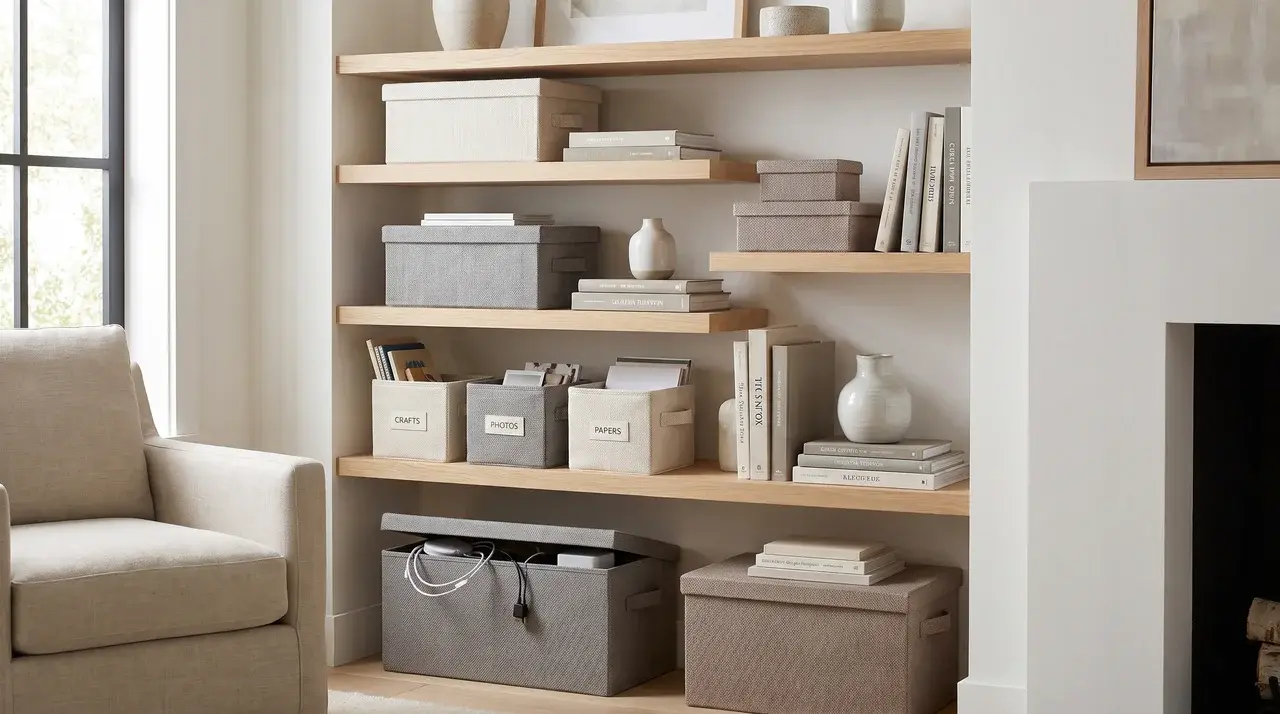
Attractive boxes on open shelves hide contents while still looking intentional rather than like clutter shoved out of sight. Labeling the ones that hold less obvious items and grouping similar objects together makes them easier to actually use day to day.
- Best for: Shelves and cube units
- Cost: $10–$50 each
- Stores: Cables, paperwork, photographs, crafts, and small accessories
29. Glass-Front Display Cabinet
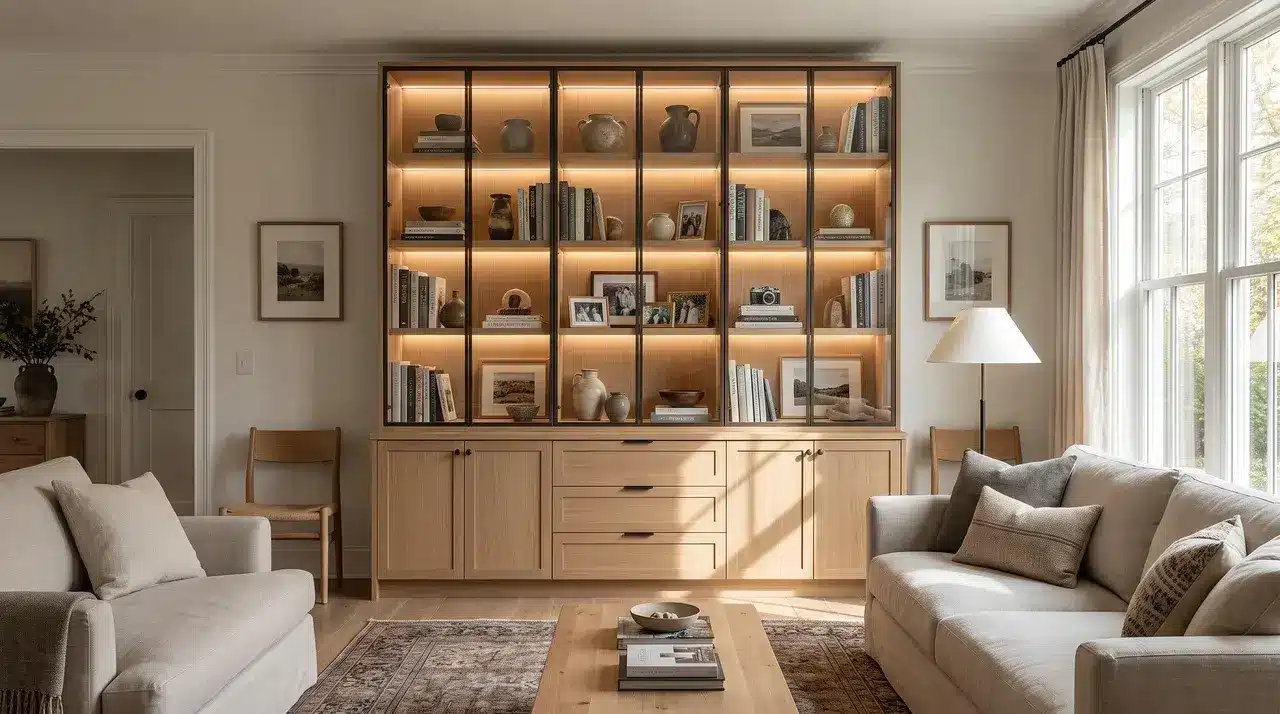
A glass-front cabinet protects meaningful items while still keeping them visible, which open shelving alone can’t do for anything fragile. Lower drawers or cupboards handle the less decorative overflow, and leaving space around displayed pieces keeps the cabinet from looking overcrowded or cluttered.
- Best for: Collections and sentimental objects
- Cost: $120–$400
- Stores: Ceramics, books, glassware, photographs, and keepsakes
30. Mixed Open and Closed Storage
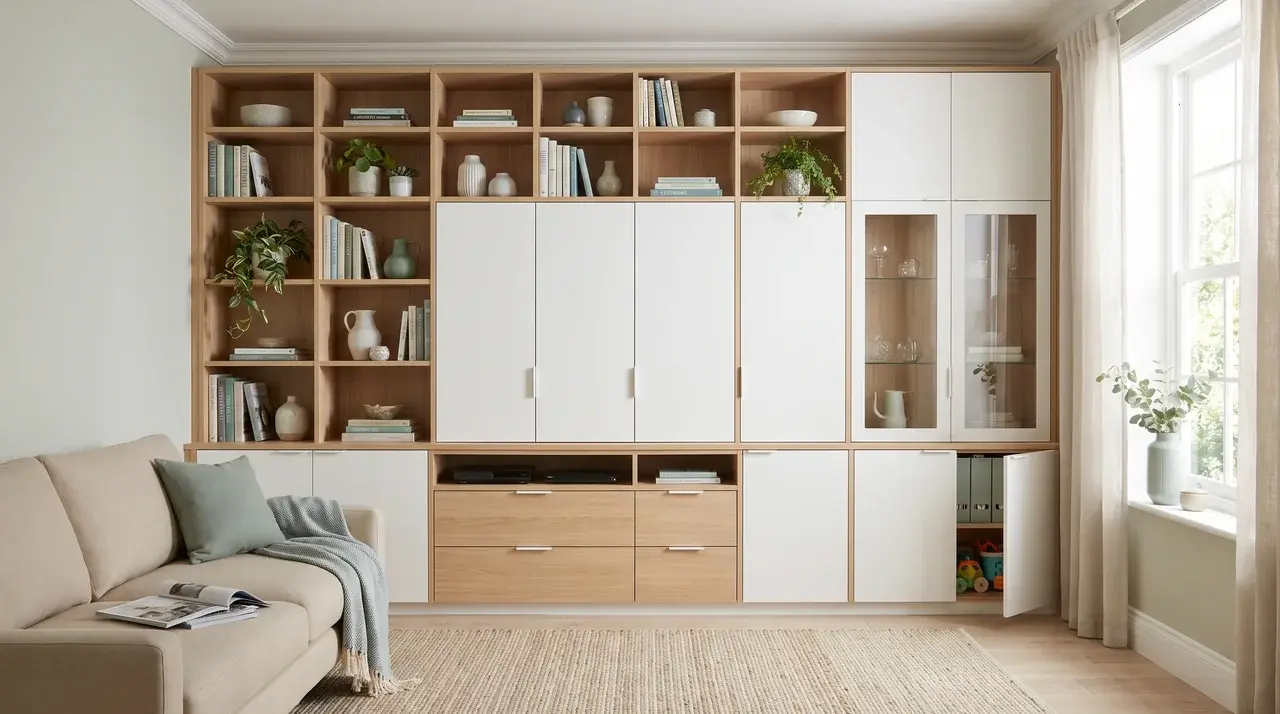
Combining display shelves with drawers, cupboards, and glass-front sections gives a single unit the flexibility to do both jobs at once. Attractive items go in the open areas, while everyday clutter stays behind closed doors, which is the setup I finally settled on myself.
- Best for: Balanced whole-room storage
- Cost: $2,000–$7,000
- Stores: Books, electronics, toys, paperwork, decor, and household items
A combination of open and closed storage lets you display selected objects while hiding everyday clutter.
Current Living Room Storage Trends
Living room storage has moved well past plain shelves and boxes in recent years. Floor-to-ceiling storage is showing up more often, since full-height units use every inch of wall space and leave fewer awkward gaps for dust and clutter to collect.
Hidden storage furniture, including sofas, ottomans, benches, and tables with concealed compartments, continues to gain ground in smaller homes, offering pieces that serve more than one daily function without adding extra furniture.
Many rooms now favor mixed storage walls that combine open shelving for display with closed cupboards for clutter, often built with lighting and space for media equipment.
Modular and moveable units suit renters and growing families well, since layouts can shift as storage needs change without a matching furniture budget.
Finally, natural and textured storage, such as woven baskets, wood finishes, and fabric bins, softens practical storage, turning functional pieces into something decorative rather than purely utilitarian.
Frequently Asked Questions
How much storage does a living room actually need?
It depends more on how the room is used than on its size. A living room that also handles play, work, or media needs more storage than one used purely for sitting and relaxing. A useful starting point is to list what typically ends up out of place, then plan storage around those specific items instead of adding furniture and hoping it’s enough.
Are built-in cabinets worth the investment?
For a long-term home, usually yes. Built-ins use the room’s existing architecture, so they don’t eat into floor space the way freestanding furniture does, and they tend to hold up better over time. The main trade-off is cost and installation time, which makes them less practical for anyone planning to move in the next few years.
Which living room storage options are best for renters?
Freestanding and modular pieces work best since they move with you and don’t require any changes to the walls. Storage ottomans, modular cube units, freestanding TV consoles, and slim under-sofa containers all add real storage without needing landlord permission or any installation at all.
How can I child-proof living room storage furniture?
Anchor tall or top-heavy pieces like bookcases and cabinets to the wall so they can’t tip. Choose soft-close drawers and doors to avoid pinched fingers, and keep anything sharp, small, or otherwise unsafe in the higher sections that stay out of reach.
Final Takeaway
Start with decluttering. Get rid of anything that doesn’t need to be in the living room, since no amount of storage fixes a room full of things that belong elsewhere.
After that, a few small choices make the biggest difference. Use walls and corners before adding more floor furniture.
In smaller rooms, pick pieces that do two jobs, like a storage ottoman that works as a footrest or a lift-top table that works as a desk. Mix in some open display alongside the hidden storage so the room still feels warm rather than closed off.
Give the things you use every day- remotes, chargers, blankets- one fixed place to go back to.
It’s a small habit, but it’s the one change that made the biggest difference in my own living room. The right setup is whatever fits your room, your budget, and how your household lives day to day. What’s your go-to storage trick? Share it in the comments below.