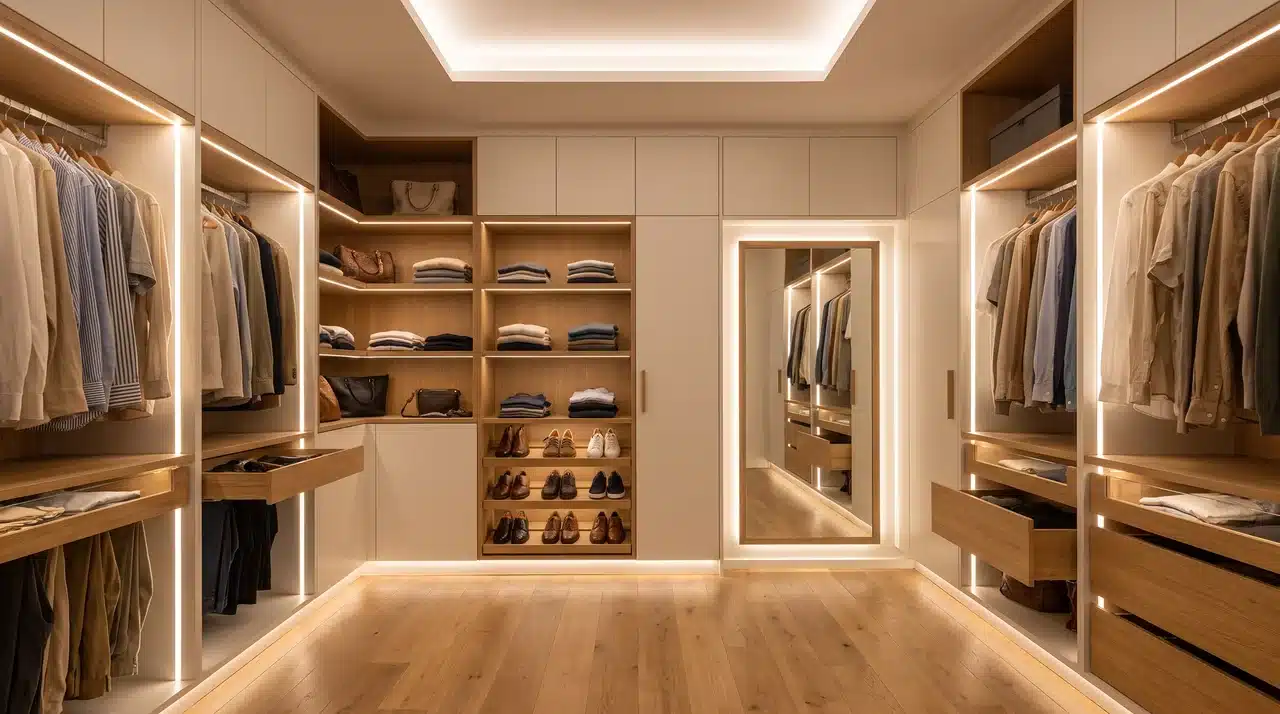
Opening a closet and still not being able to tell black from navy is frustrating. One weak ceiling light can leave shelves, drawers, and hanging clothes in shadow. A quick stick-on light can also waste money if it needs frequent charging or directs light toward the floor rather than your clothes.
The right closet lighting ideas fix those dark spots without forcing you into a costly setup your space does not need. I’ll help you choose the right type for your closet size, power access, budget, and comfort with installation.
I compared closet lighting ideas, including rechargeable bars, LED strips, puck lights, ceiling fixtures, track lighting, sconces, and mirror lights. You’ll see the strongest picks first, a side-by-side table, a review of style advantages and drawbacks, and recommendations for different closet setups.
What Are the Best Closet Lighting Ideas?
A rechargeable motion-sensor LED bar is the best choice for most reach-in closets. It requires no new wiring, mounts with little work, and switches on when you open or enter the closet.
Choose another option when your closet has a more specific need:
- Best for long shelves and rods: LED strip lights
- Best for cubbies and drawers: Battery-powered puck lights
- Best without an outlet: A rechargeable bar or battery-powered puck light
- Best permanent ceiling option: Flush mount or recessed LEDs
- Best for adjustable walk-in lighting: Track lighting
- Best for mirrors and vanities: Wall sconces or a lighted mirror
- Best decorative option: A pendant or chandelier supported by task lighting
Use these recommendations as a starting point, then compare power source, placement, installation effort, and upkeep to find the best fit for your closet.
How Do the Main Closet Lighting Options Compare?
Wireless lights are easier to add, while wired lights provide steady power. Your best option depends on coverage, access to electricity, installation effort, and the upkeep you are willing to accept.
| Lighting option | Best for | Power and installation | Approx. hardware price |
|---|---|---|---|
| Rechargeable motion-sensor bar | Reach-ins and rentals | Rechargeable; very easy | $15–$35 per bar |
| LED strip lights | Shelves, rods, and wardrobe edges | Battery, plug-in, or hardwired; easy–moderate | $25–$80 per kit |
| Puck lights | Drawers, cubbies, and displays | Battery, plug-in, or hardwired; very easy–moderate | $20–$60 per set |
| Flush-mount LED | Small closets and low ceilings | Hardwired; moderate | $30–$90 per fixture |
| Recessed LEDs | Remodels and walk-ins | Hardwired; difficult | $25–$60 per fixture |
| Track lighting | Zoned walk-in lighting | Hardwired; moderate–difficult | $70–$200 per system |
| Sconces or lighted mirrors | Mirrors and dressing areas | Battery, plug-in, or hardwired; easy–difficult | $25–$200 |
| Pendant or chandelier | Large walk-ins with clearance | Hardwired; moderate–difficult | $60–$250 |
Price note: Prices are approximate US hardware costs and may vary by product size, kit contents, retailer, and location. Professional installation is not included.
Brightness figures vary widely between products, so compare the manufacturer’s listed lumens together with beam angle, fixture length, placement, and the number of lights required. A higher lumen number will not correct poor placement or light blocked by shelves and hanging clothes.
What Are the Best Wireless Closet Lighting Ideas?
The best wireless closet lighting ideas come down to two simple but effective options: rechargeable motion-sensor light bars for full-closet illumination and battery-powered puck lights for targeted lighting. A light bar is the most practical choice when you want instant visibility as soon as you open your closet, while puck lights work best for specific shelves, drawers, or display areas.
Here are some more of the low-effort options when you need removable lighting, minimal electrical work, or a quick solution for a dark closet.
1. Rechargeable Motion Sensor Light Bars
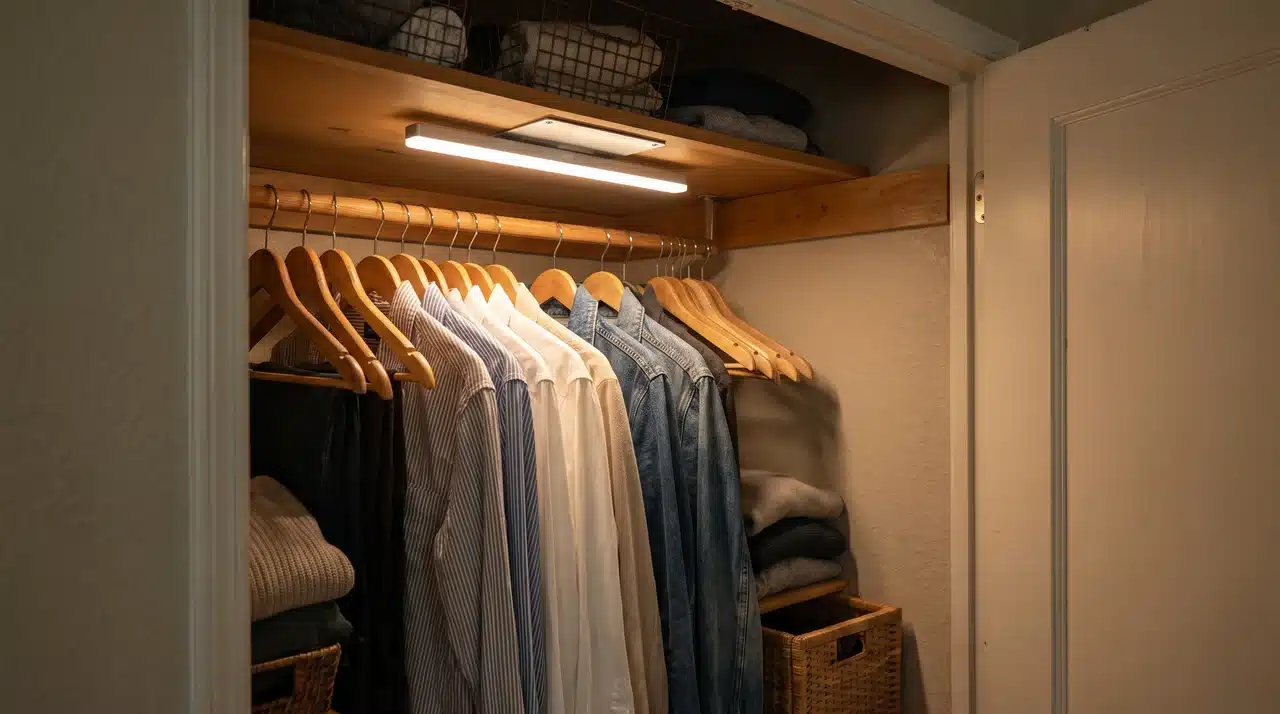
Rechargeable motion sensor bars are a practical starting point for reach-in closets, rentals, and spaces without an outlet. Most attach with magnets or adhesive mounts, so the bar can be removed when it needs charging. The light switches on when it detects movement and turns off after a set period.
Best for: Reach-in closets, rentals, and quick visits
Main advantage: Simple installation without wiring
Main drawback: Requires periodic charging
Power: USB rechargeable battery
Installation: Very easy
Verdict: Choose this option when Automatic operation and easy installation matter more than permanent power.
2. Battery-Powered Puck Lights
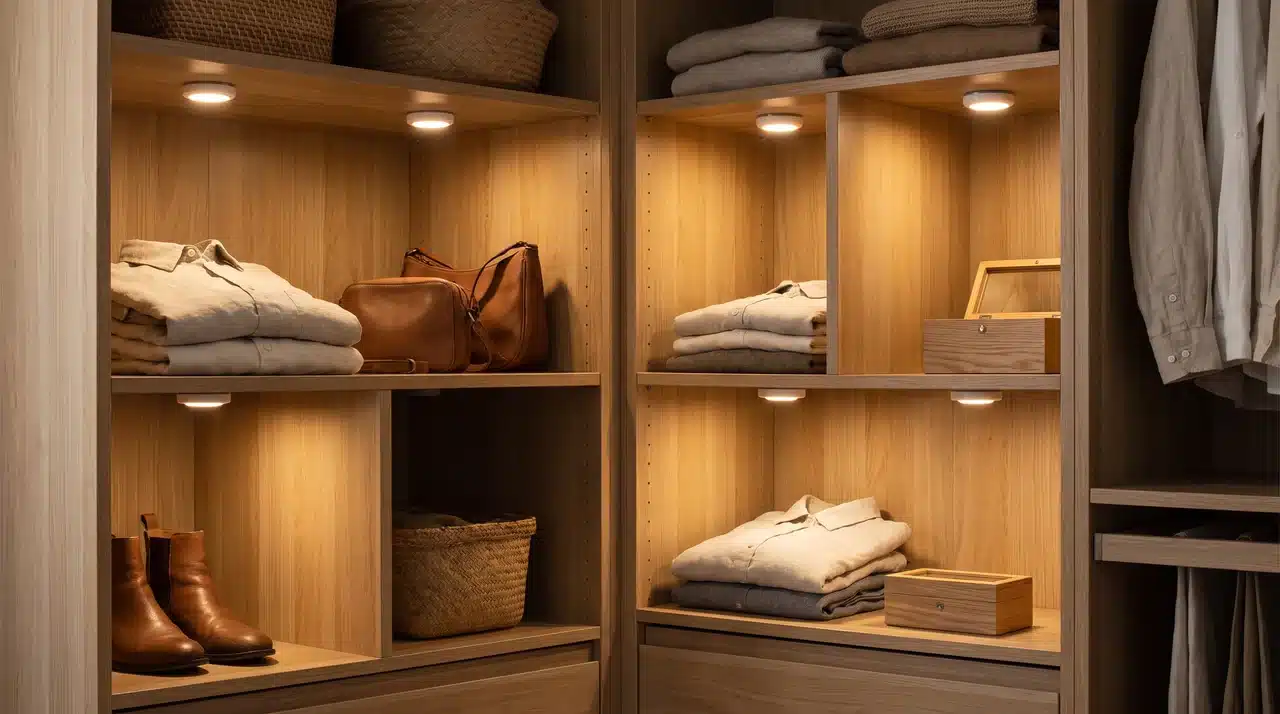
Battery-powered puck lights provide focused illumination inside drawers, cubbies, jewelry sections, and shoe shelves. Their compact size makes them easy to place in areas where a long strip or bar would not fit. Some models use tap controls, remotes, or motion sensors.
Best for: Small compartments and display areas
Main advantage: Compact and easy to position
Main drawback: Several pucks may be needed for a long shelf
Power: Disposable or rechargeable batteries
Installation: Very easy
Verdict: Choose puck lights when one or two small areas need focused light rather than continuous coverage.
Shelf, Wardrobe, and Integrated LED Lighting
These options place light closer to stored items, reducing shadows across shelves, rods, drawers, and wardrobe interiors. Under-shelf describes placement, vertical strips describe orientation, cob describes light quality, and hardwired strips describe the power and installation method.
3. Under-Shelf LED Strip Lights
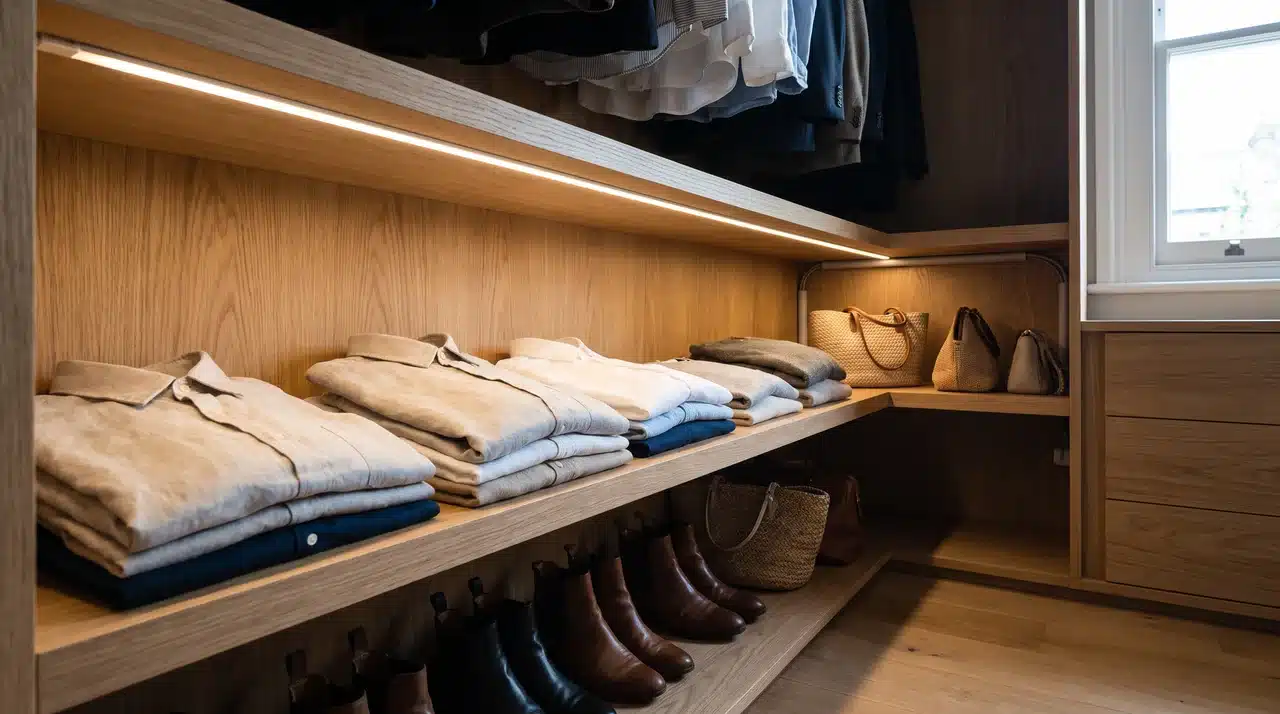
Under-shelf LED strips cast light directly onto folded clothes, shoes, bags, and accessories stored below. Their continuous shape covers more space than individual pucks and reduces dark gaps along long shelves. Some strips can be cut to length or connected to additional sections.
Best for: Long shelves and folded clothing
Main advantage: Broad, continuous coverage
Main drawback: Corners and shelf gaps may require connectors or extra wire
Power: Plug in, rechargeable, or hardwired
Installation: Easy to moderate
Verdict: Choose under-shelf strips when you need even light across a wide storage area
4. Vertical Wardrobe LED Strips
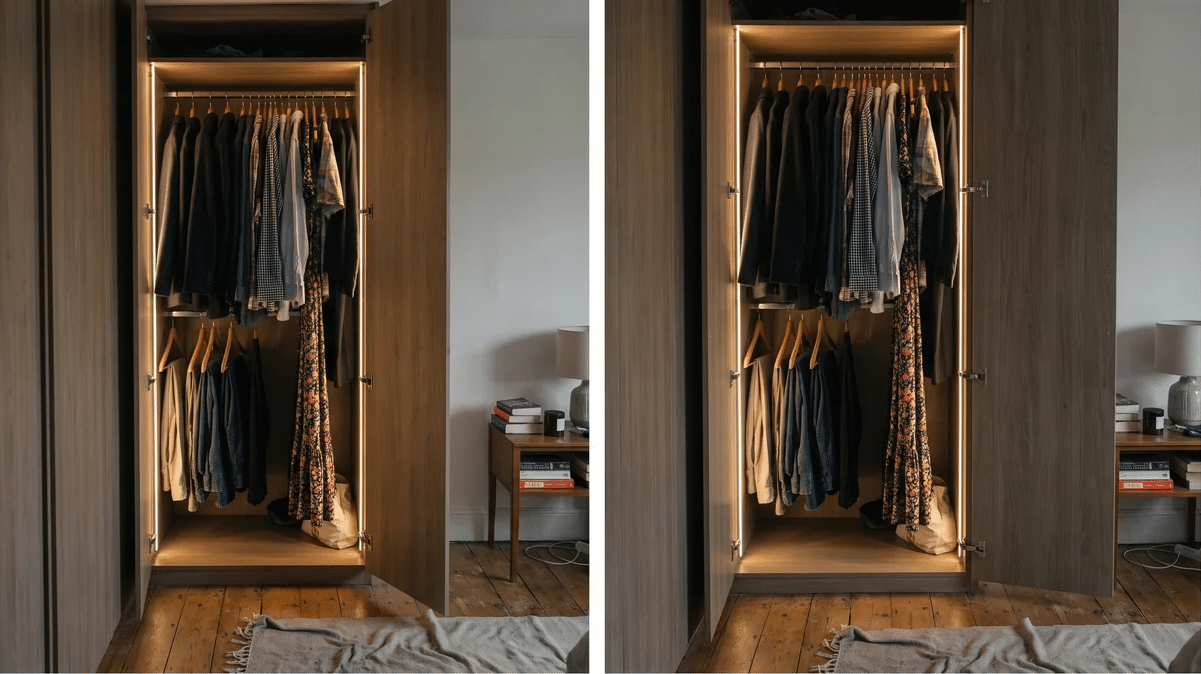
Vertical LED strips are installed near the front sides of a wardrobe or hanging section. This position directs light across the full length of shirts, jackets, trousers, and dresses instead of only lighting the top of the closet.
Best for: tall Hanging Sections and Wardrobes
Main Advantage: illuminates Garments from Top to Bottom
Main Drawback: requires Careful Mounting and Cable Routing
Power: plug-in or Hardwired
Installation: moderate
Verdict: choose Vertical Lighting when Overhead Fixtures Leave the Lower Half of Hanging Clothes in Shadow.
5. Cob or Dotless LED Strip Lights
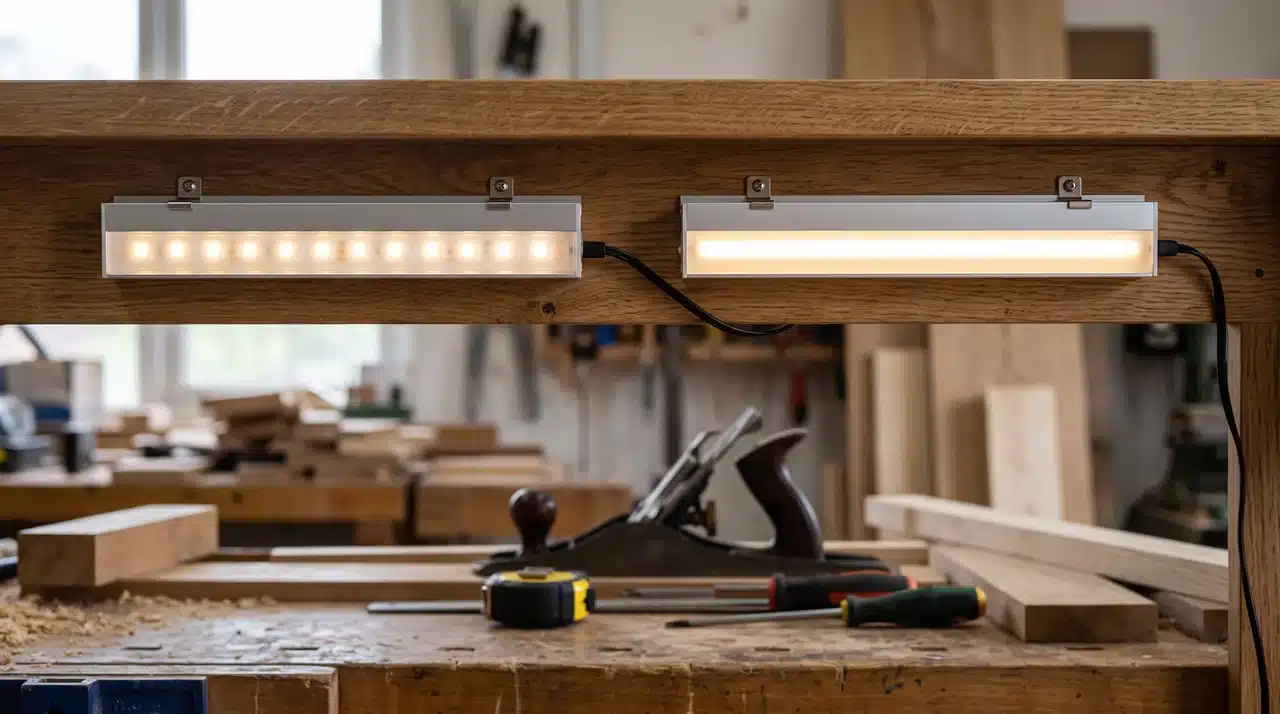
Cob and dotless LED strips create a more continuous line of light than strips with widely spaced diodes. They work well where the strip or its reflection will remain visible, especially under open shelves or inside fitted wardrobes. A diffuser channel can further soften the light.
Best for: Visible shelf lighting and clean linear installations
Main advantage: Fewer visible bright spots
Main drawback: Often costs more than a basic LED strip
Power: Usually plug-in or hardwired
Installation: Moderate
Verdict: Choose cob or dotless strips when smooth light matters more than the lowest initial price.
6. Lighted Closet Rods
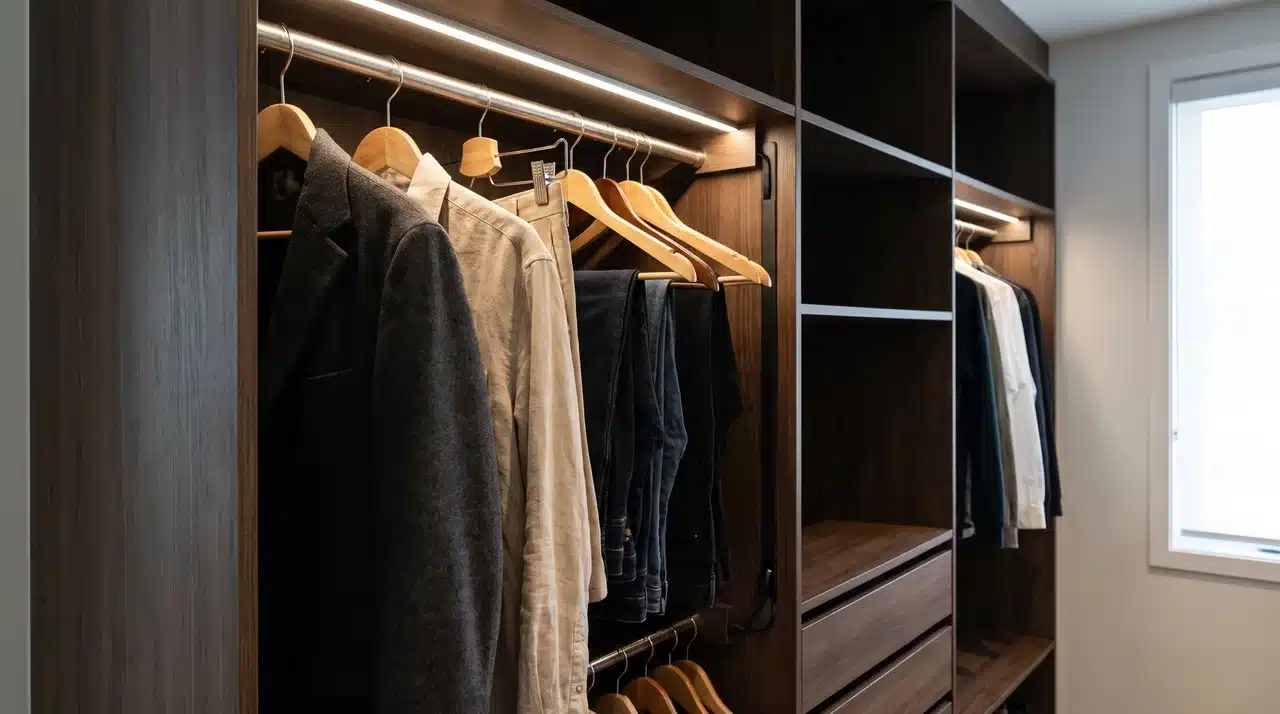
A lighted closet rod places the light source directly above hanging garments. This helps prevent the user’s body or a shelf from blocking overhead light. Some systems integrate the LEDs into the rod, while others place a linear channel beside it.
Best for: Hanging clothes in wardrobes and walk-ins
Main advantage: Directs light toward garments
Main drawback: Usually costs more than attaching a basic strip
Power: Plug-in or hardwired
Installation: Moderate to difficult
Verdict: Choose a lighted rod when hanging clothes is the main dark area, and you want the lighting built into the storage system.
7. Motion Activated Drawer Lights
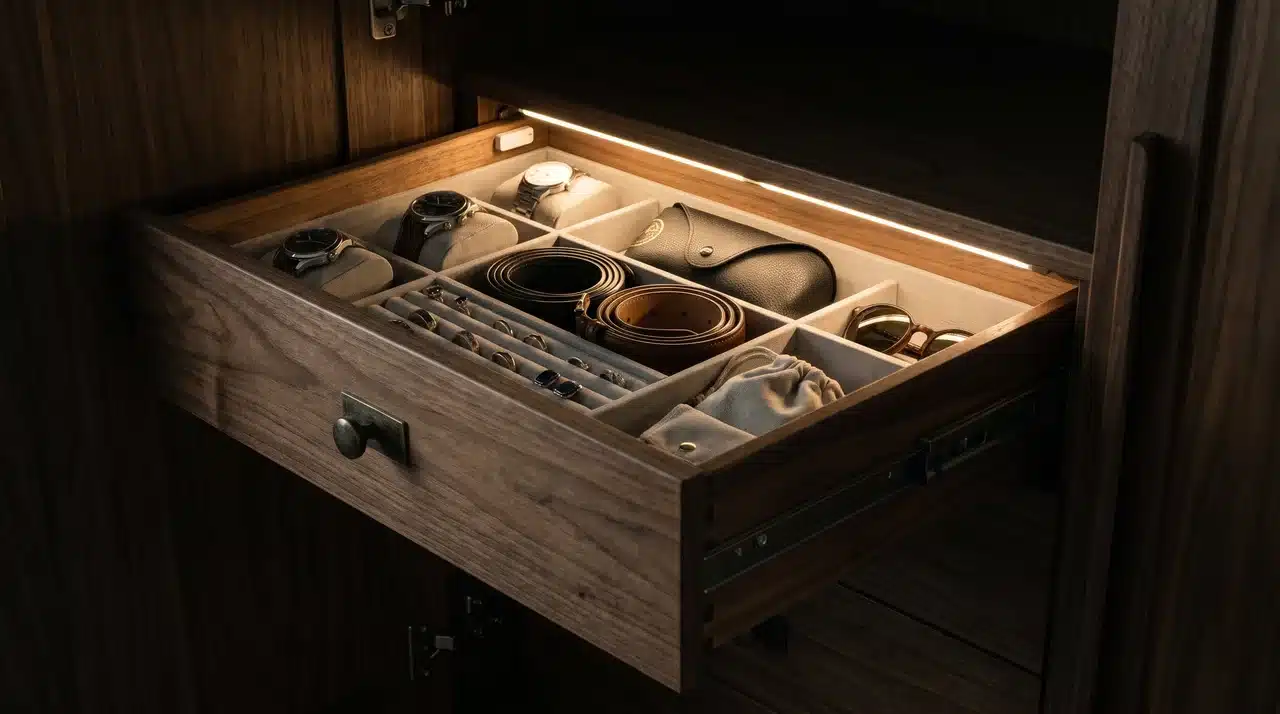
Motion-activated drawer lights switch on when a drawer opens and turn off after it closes or after movement stops. They make it easier to find jewelry, belts, watches, and other small items without having to keep the entire closet lit.
Best for: Accessory drawers and enclosed storage
Main advantage: Provides light only when the drawer is in use
Main drawback: Each drawer may require its own fixture
Power: Battery, rechargeable, or hardwired
Installation: Easy to moderate
Verdict: Choose drawer lights when small accessories are difficult to see under general room lighting.
8. Cabinet and Cubby Lights
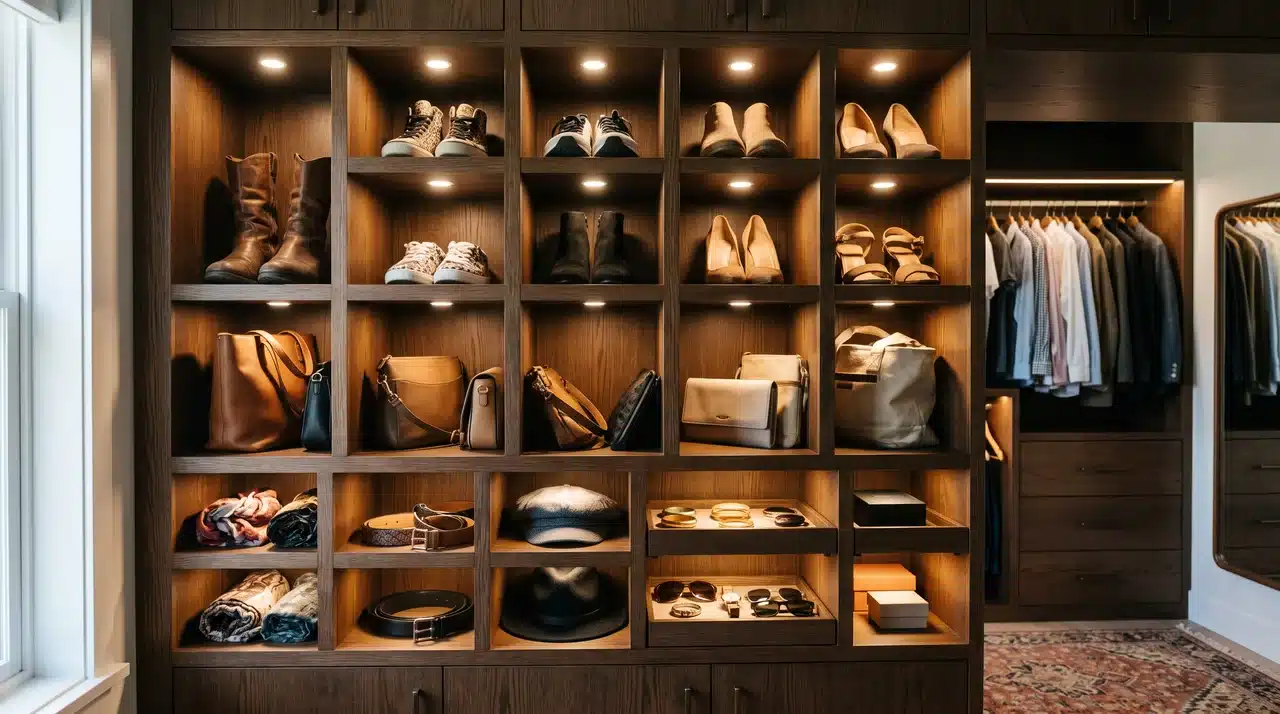
Small cabinet and cubby lights provide focused illumination inside enclosed shelves, shoe sections, handbag displays, and other compact storage zones. Pucks, short bars, and miniature strips can all serve this purpose.
Best for: Cubbies, cabinets, shoes, and display shelves
Main advantage: Targets one storage area without lighting the whole room
Main drawback: Multiple compartments may require several fixtures
Power: Battery, rechargeable, plug-in, or hardwired
Installation: Easy to moderate
Verdict: Choose cabinet lights if individual compartments remain dark even after installing general lighting.
9. Plug-In Closet Light Bars
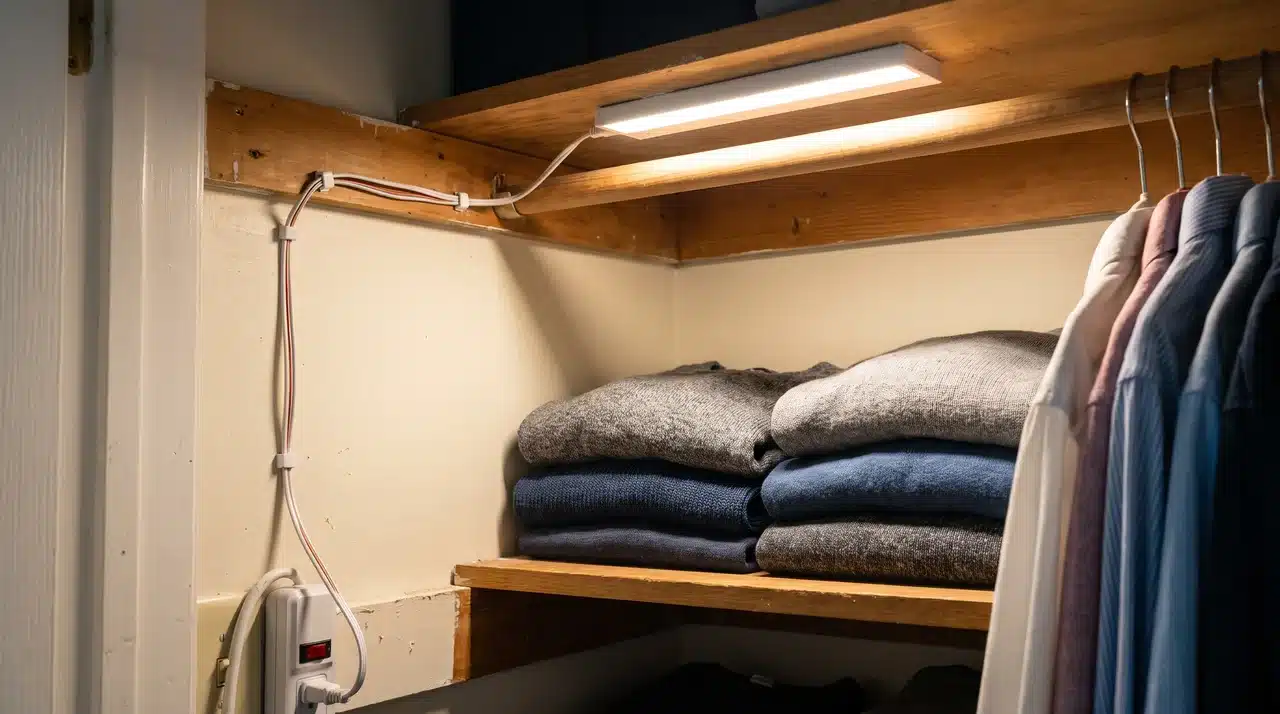
Plug-in light bars provide steady power without the repeated charging required by wireless fixtures. They work well near shelves, mirrors, and hanging sections when an outlet is available. The main planning issue is finding a cable path that does not interfere with doors, drawers, or stored items.
Best for: Frequently used closets with an accessible outlet
Main advantage: Continuous power without hardwiring
Main drawback: The cord must be routed safely and neatly
Power: Standard outlet
Installation: Easy to moderate
Verdict: Choose a plug-in bar when you want reliable power without opening the wall.
10. Hardwired LED Strip Lights
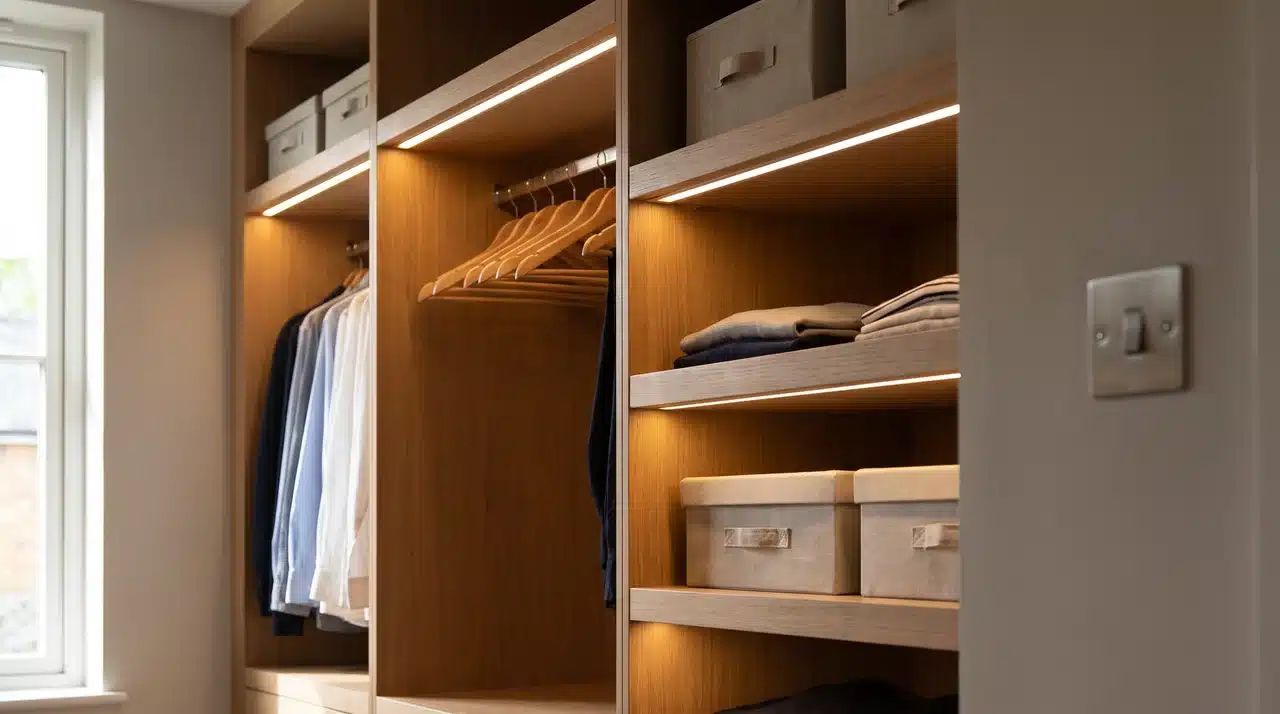
Hardwired LED strips are suited to permanent closet installations. They can be connected to wall switches, dimmers, motion sensors, or a larger lighting system. Channels and diffusers can protect the strip and provide a more finished installation.
Best for: Remodels and frequently used walk-in closets
Main advantage: Steady power and integrated controls
Main drawback: Installation may require an electrician
Power: Hardwired
Installation: Difficult
Verdict: Choose hardwired strips when long-term reliability matters more than fast installation or portability.
Ceiling and Directional Closet Lighting Ideas
Consider these fixtures when the closet needs broad room light, adjustable beams, or a permanent overhead solution.
11. Flush-Mount Ceiling Lights
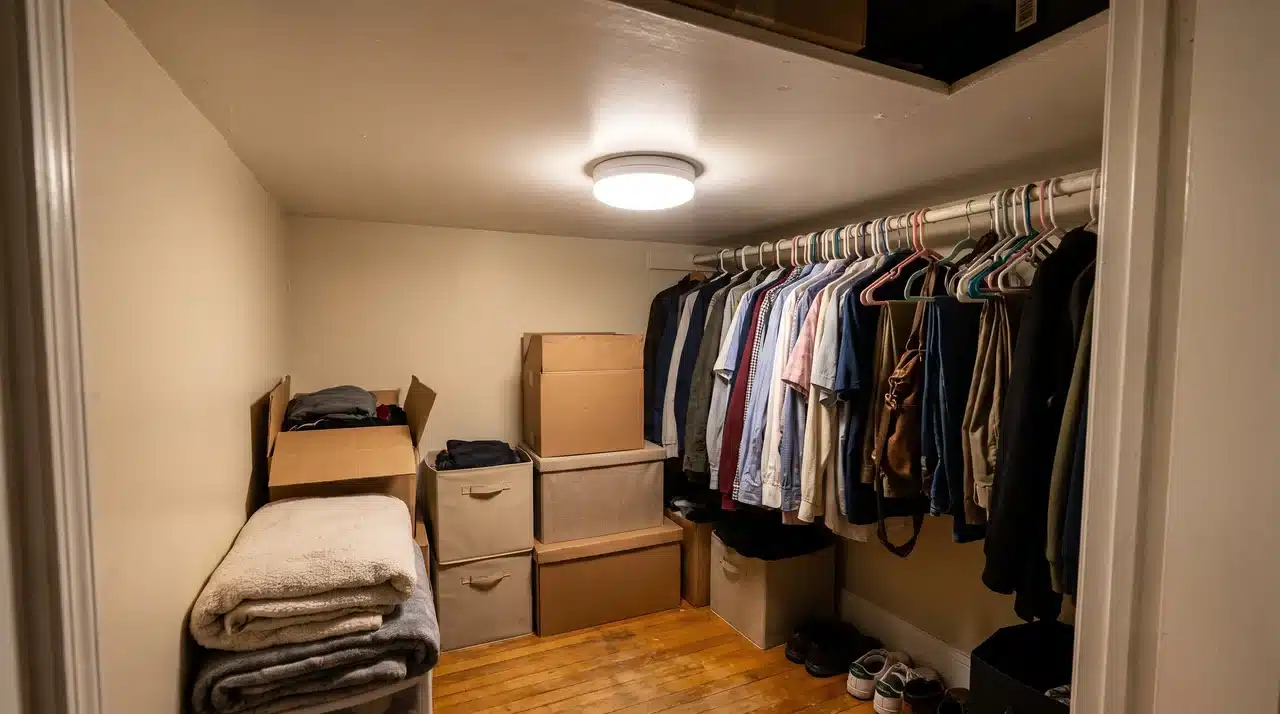
Flush-mount lights sit close to the ceiling and provide broad, general illumination without taking up much headroom. They are well suited to small closets, reach-ins with existing wiring, and walk-ins with lower ceilings.
Best for: Small closets and low ceilings
Main advantage: Broad light with a compact profile
Main drawback: Fixed light may not reach behind shelves or hanging clothes
Power: Hardwired
Installation: Moderate
Verdict: Choose a flush-mount when you need a single ceiling source and cannot accommodate a hanging fixture.
12. Recessed Ceiling Lights
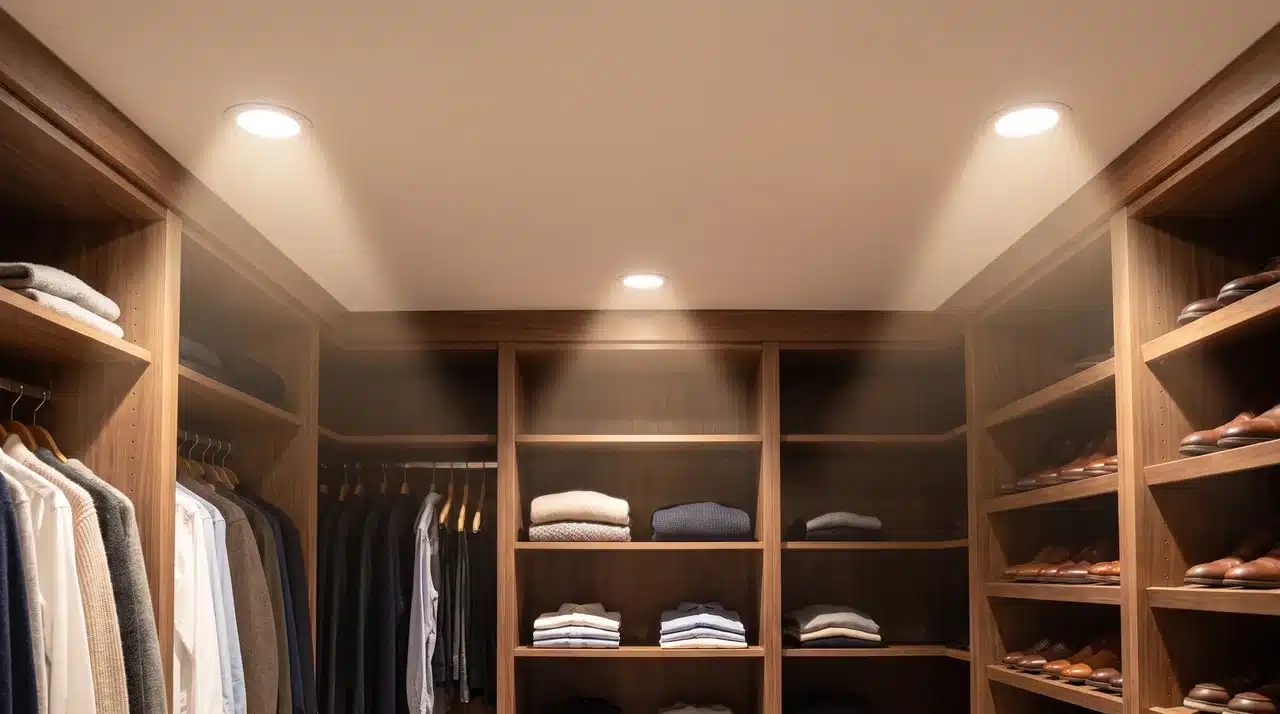
Recessed lights sit inside the ceiling and preserve headroom while providing general illumination. Several fixtures can be arranged across a walk-in closet, and adjustable versions can direct light toward storage walls instead of only the open floor.
Best for: Remodels and permanent walk-in lighting
Main advantage: Low-profile ceiling installation
Main drawback: Requires ceiling access, wiring, and careful placement
Power: Hardwired
Installation: Difficult
Verdict: Choose recessed lighting during a remodel when you want broad ceiling light with minimal visual bulk.
13. Adjustable Track Lighting
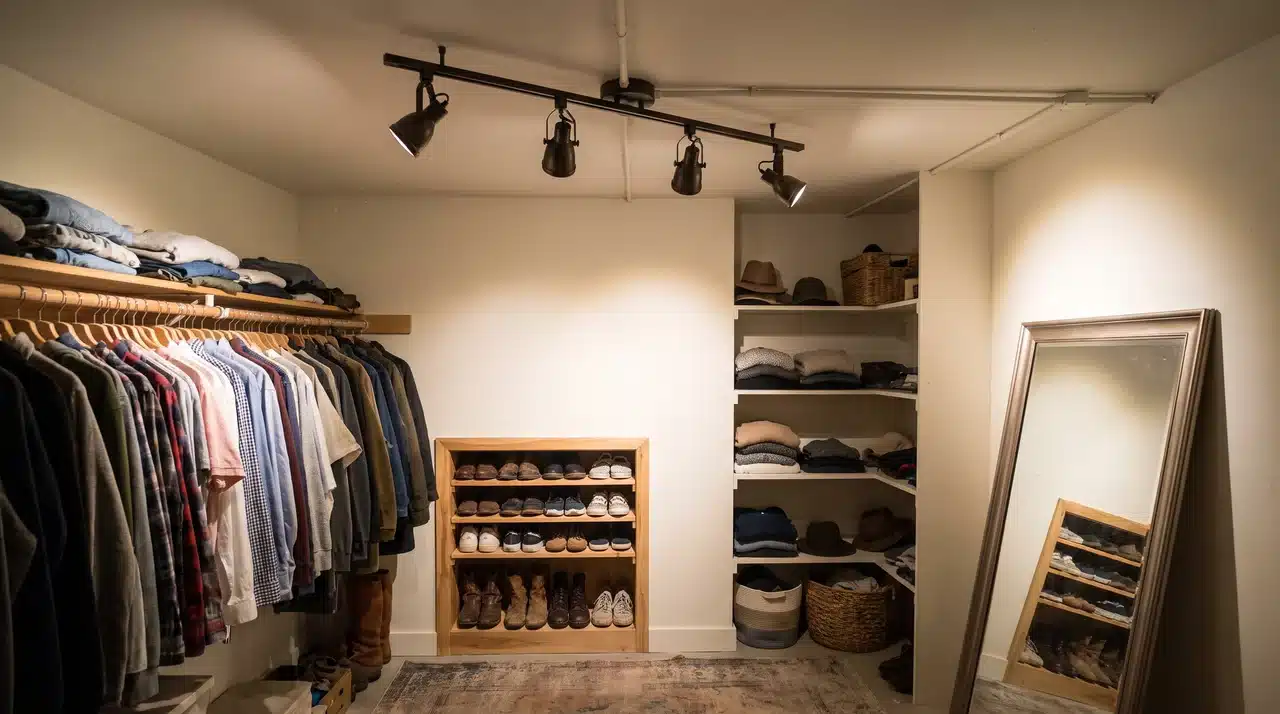
Track lighting uses several movable heads mounted along one powered rail. Each head can point toward a different area, such as hanging clothes, shoe racks, shelves, mirrors, or dark corners. The direction can be changed if the closet layout changes.
Best for: Walk-ins with several storage zones
Main advantage: Adjustable light from one ceiling connection
Main drawback: More visible than recessed lighting
Power: Hardwired
Installation: Moderate to difficult
Verdict: Choose track lighting when flexible direction is more important than a hidden ceiling fixture.
14. Directional Spotlights
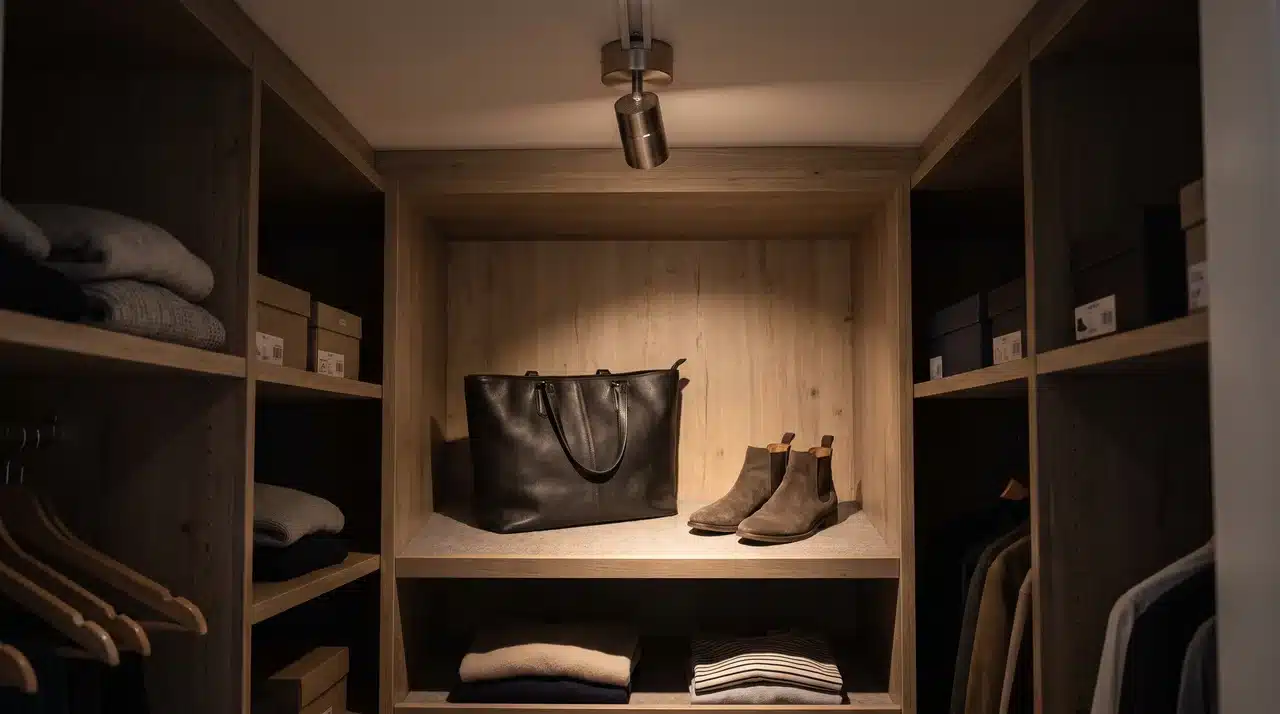
Directional spotlights create a focused beam for one shelf, display, mirror, or storage section. They can be ceiling-mounted, wall-mounted, or attached to a track. Their narrow coverage makes them more useful as task or display lighting than as the only source in a closet.
Best for: Shoe racks, handbags, jewelry, and displays
Main advantage: Precise control over where the light falls
Main drawback: Narrow beams can leave surrounding areas dark
Power: Usually plug-in or hardwired
Installation: Moderate
Verdict: Choose spotlights when one specific area needs attention rather than broad room coverage.
Mirror, Wall, and Smart Lighting
These options improve front-facing visibility or give you greater control over brightness, timing, and daily operation.
15. Wall Sconces
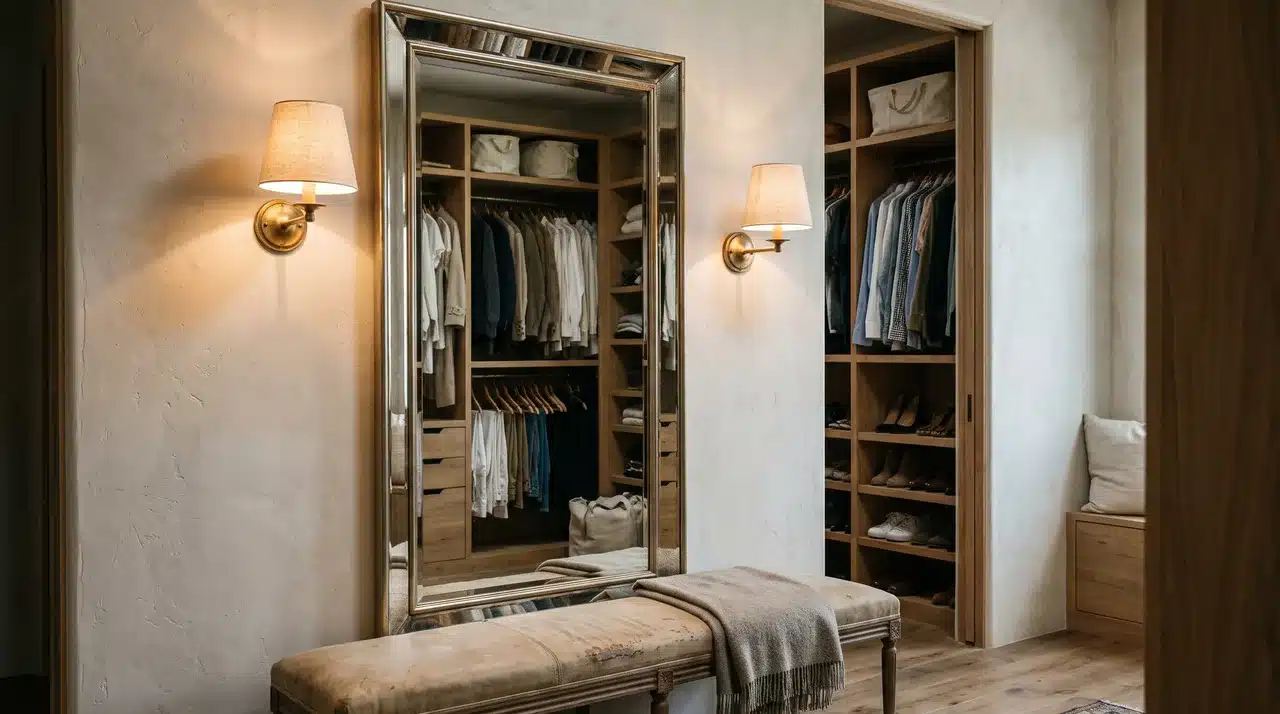
Wall sconces provide light from the side or front rather than relying solely on the ceiling. Placing them beside a mirror can reduce facial shadows during outfit checks or grooming. Hardwired sconces suit planned remodels, while plug-in and rechargeable versions require less work.
Best for: Mirrors, vanities, and dressing areas
Main advantage: Provides useful front-facing light
Main drawback: Limited coverage for shelves and hanging clothes
Power: Hardwired, plug-in, or rechargeable
Installation: Easy to difficult
Verdict: Choose sconces when mirror lighting matters more than general room illumination.
16. Lighted Mirrors
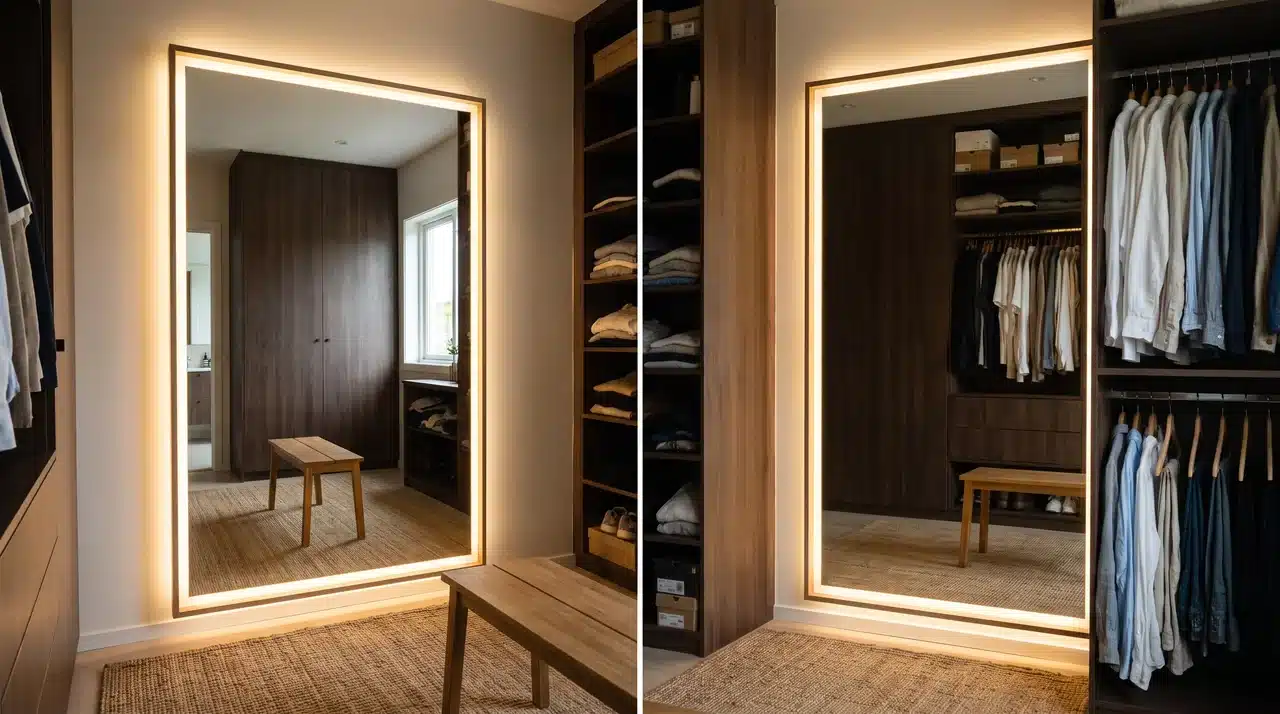
A lighted mirror combines reflection and front-facing illumination in one unit. It is useful for checking outfits, matching colors, and grooming without depending on a ceiling fixture behind the user. Some models include adjustable brightness or color temperature.
Best for: Dressing areas and full-length outfit checks
Main advantage: Reduces shadows across the face and body
Main drawback: Does not provide enough light for shelves or drawers
Power: Plug in, rechargeable, or hardwired
Installation: Easy to moderate
Verdict: Choose a lighted mirror as a task light, not as the closet’s only fixture.
17. Smart Bulbs and App-Controlled Lights
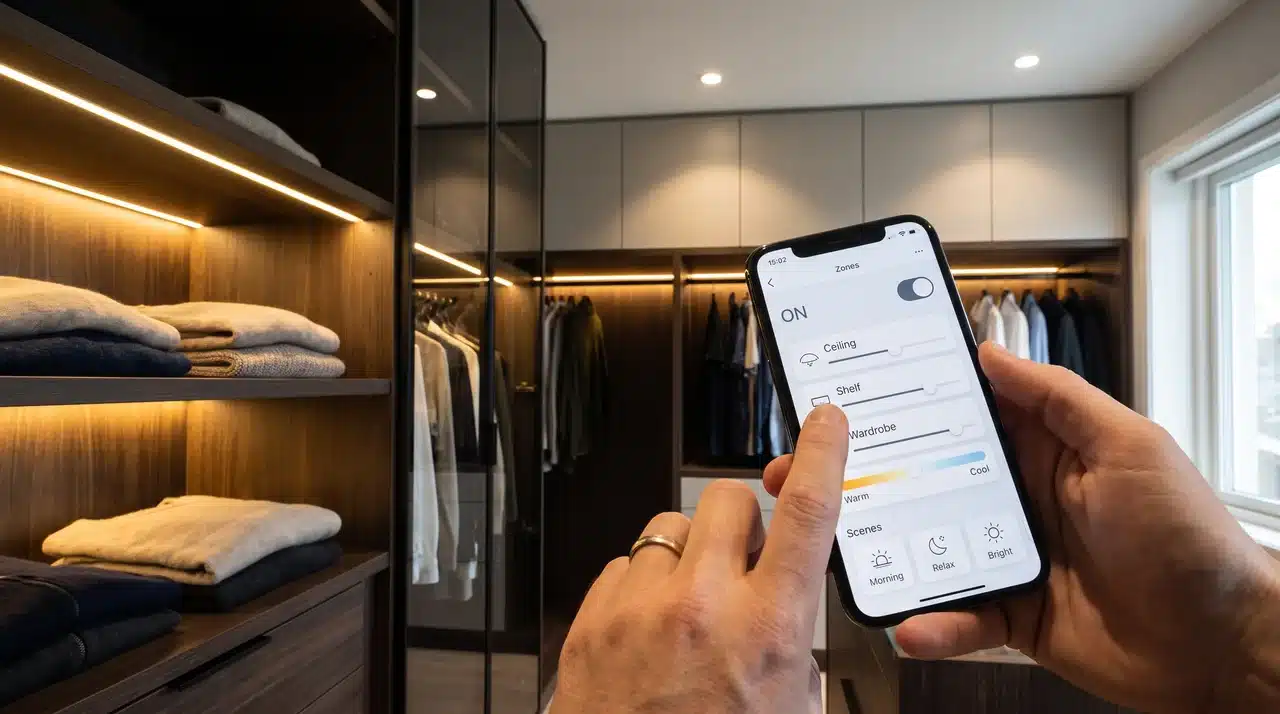
Smart bulbs and app-controlled fixtures allow users to adjust brightness, color temperature, schedules, or lighting zones via a phone or a compatible home system. They make the most sense in walk-ins where the lighting is used for longer periods.
Best for: Connected homes and adjustable walk-in lighting
Main advantage: Flexible control over brightness and timing
Main drawback: Compatibility and setup differ between systems
Power: Plug-in or hardwired fixture
Installation: Easy to moderate
Verdict: Choose smart controls when remote operation and adjustable settings will be used regularly.
Indirect, Decorative and Low-Level Lighting
These options add reflected, decorative, or low-level illumination and should support rather than replace the main general and task lighting.
18. Cove or Above-Molding Lighting
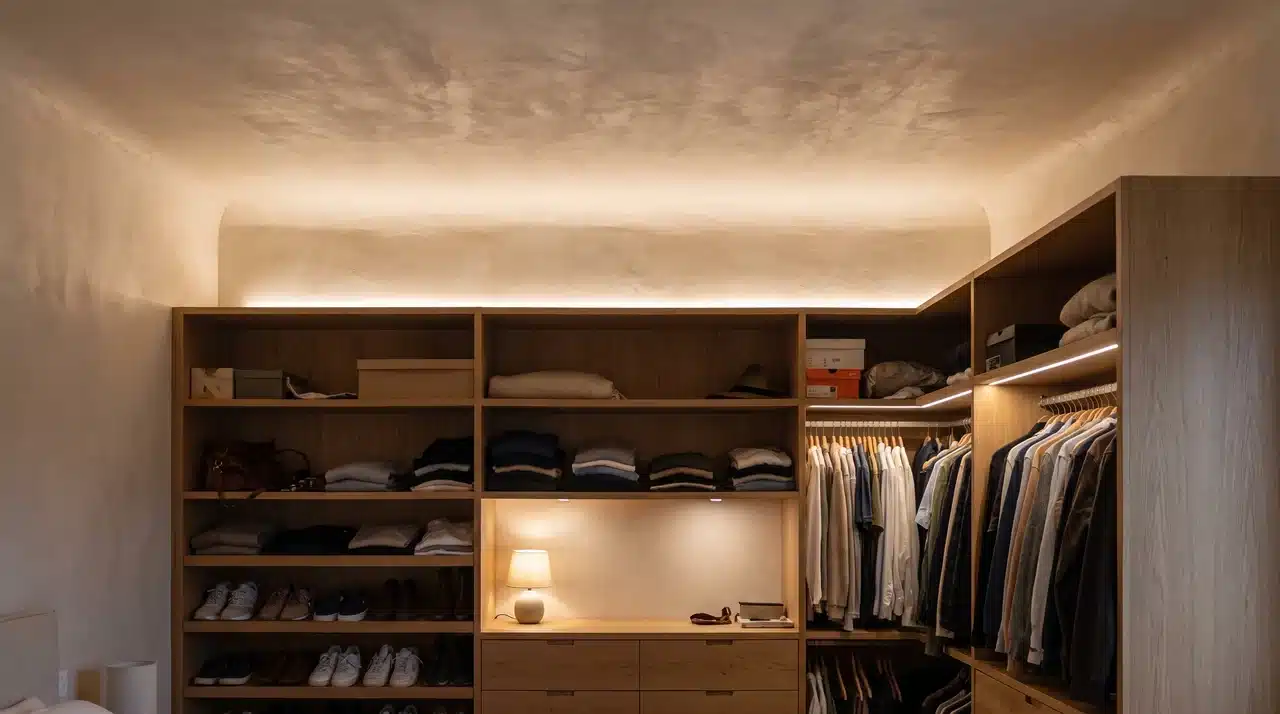
Cove or above molding lighting hides an LED strip near the ceiling or above built-in storage, allowing light to reflect across the upper part of the closet. It creates soft secondary illumination rather than direct task light.
Best for: Walk-ins and fitted closets
Main advantage: Adds indirect light without visible bulbs
Main drawback: Does not adequately illuminate drawers or hanging clothes alone
Power: Plug-in or hardwired
Installation: Moderate to difficult
Verdict: Use cove lighting as a supporting layer after the main storage areas have sufficient task lighting.
19. Pendant Lights
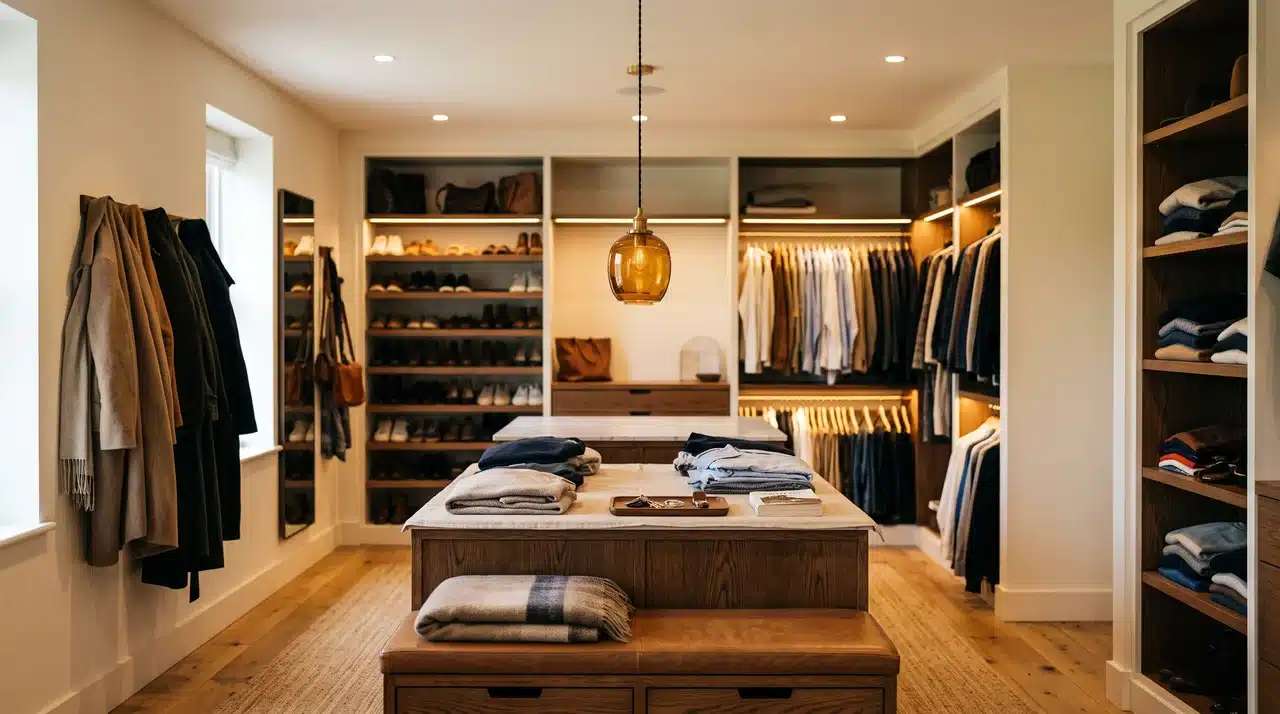
Pendant lights hang from the ceiling and can provide central illumination in a suitable walk-in or dressing area. Their downward light works best over an open floor, an island, a bench, or a folding surface. They should be supported by shelf or rod lighting where storage creates shadows.
Best for: Large walk-ins with enough ceiling clearance
Main advantage: Combines general light with a decorative focal point
Main drawback: May reduce headroom and leave shelves dark
Power: Hardwired
Installation: Moderate to difficult
Verdict: Choose a pendant only in a suitable walk-in or dressing area after confirming the required ceiling, storage, and electrical clearances.
20. Chandeliers
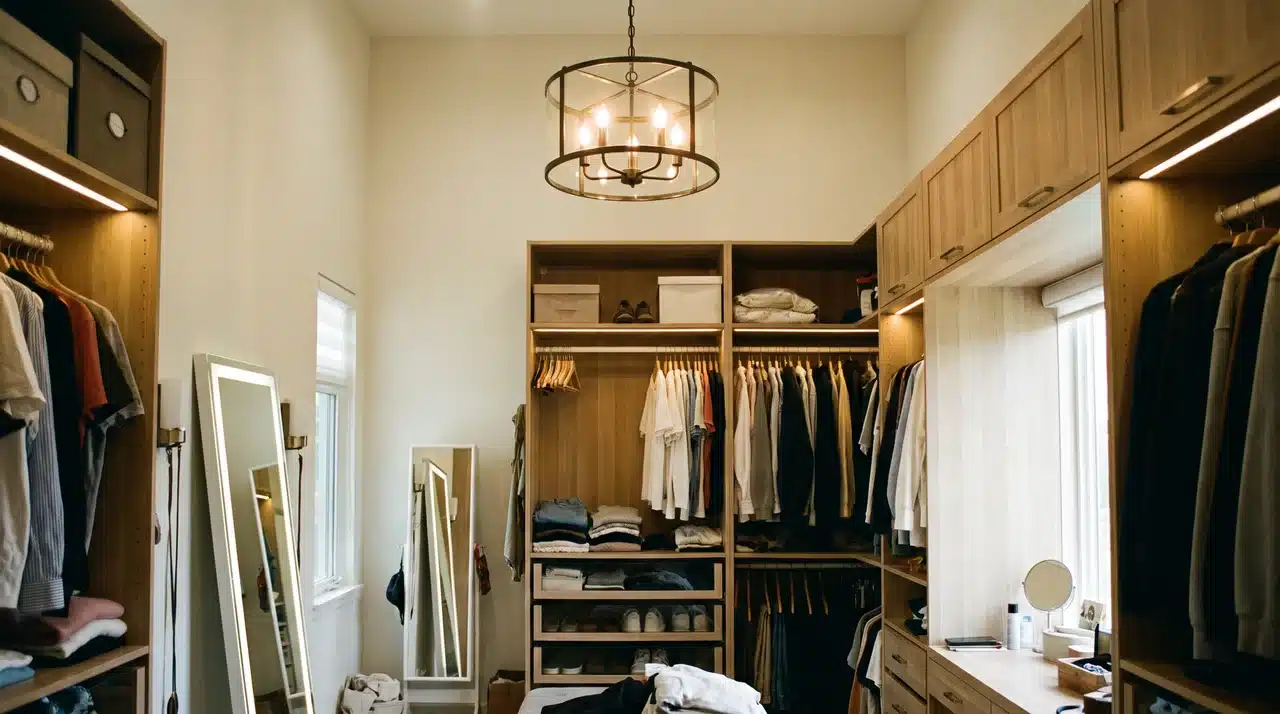
A chandelier can provide central light and a strong decorative feature in a large walk-in closet. It works best over an open center area and alongside recessed, strip, rod, or mirror lighting. The fixture size must suit the room and leave safe clearance from clothing and storage.
Best for: Large dressing rooms and walk-ins with high ceilings
Main advantage: Adds central light and visual interest
Main drawback: Not suitable for every closet size or ceiling height
Power: Hardwired
Installation: Difficult
Verdict: Choose a chandelier only when the closet has sufficient ceiling height, open space, and confirmed clearance from clothing and storage.
21. Toe-Kick or Cabinet-Base Lighting
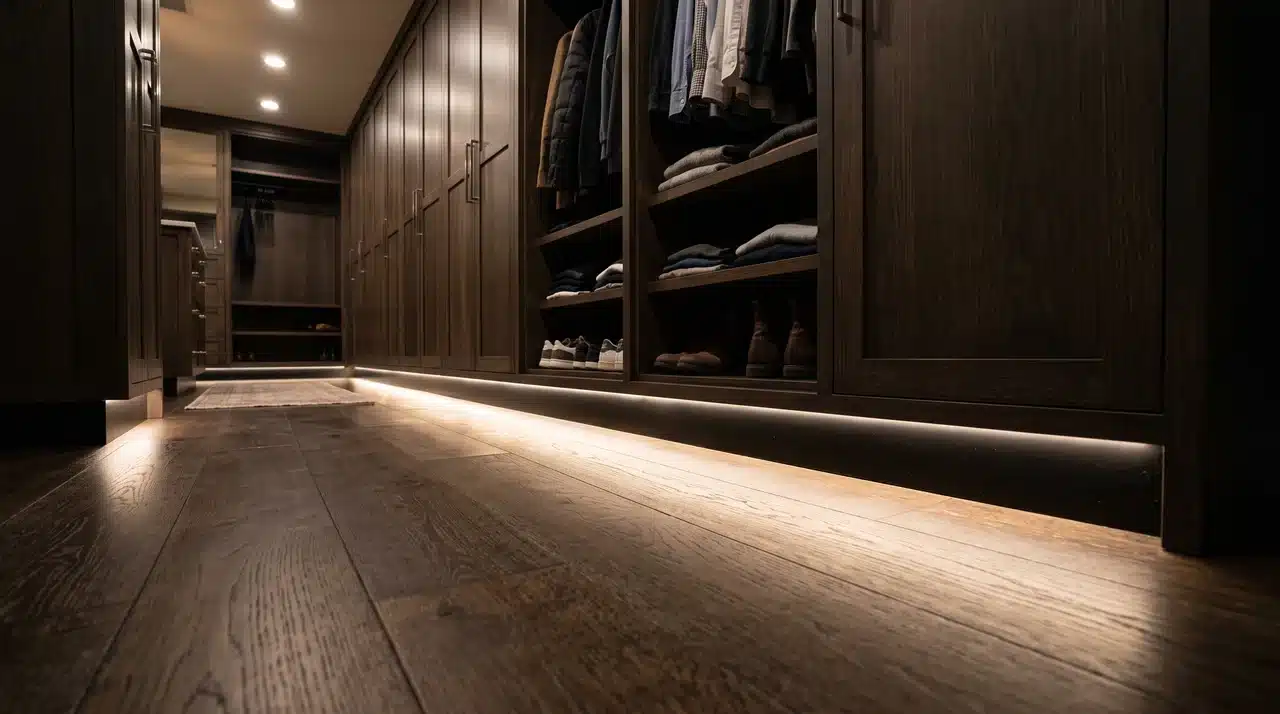
Toe-kick and cabinet base lights sit near the floor beneath islands, cabinets, or built-in storage. They provide low-level illumination that can help users move through a walk-in closet after dark. Their position makes them better for secondary or guide lighting than for identifying clothing colors.
Best for: Walk-ins, cabinet bases, and nighttime guide lighting
Main advantage: Adds low-level light without occupying shelf space
Main drawback: Cannot replace general or task lighting
Power: Plug-in or hardwired
Installation: Moderate
Verdict: Choose cabinet base lighting as a supporting layer after the main storage areas are properly lit.
Which Closet Lighting Option Should You Choose?
Choose your closet lighting based on the area you need to brighten, how long the light must stay on, and whether you want a temporary or permanent setup.
LED strips suit long storage areas, puck lights handle small spaces, wireless options simplify installation, and wired fixtures provide reliable lighting for frequent use.
| Comparison | Choose the First Option for | Choose the Second Option for | Verdict |
|---|---|---|---|
| LED Strips vs. Puck Lights | Long Shelves, Rods, and Wardrobe Edges | Drawers, Cubbies, and Small Displays | Use Strips for Continuous Coverage and Pucks for Focused Light. |
| Motion Sensors vs. Manual Controls | Quick, Hands-Free Closet Visits | Dressing, Cleaning, and Organizing | Use Motion Controls for Convenience and Manual Controls when The Light Must Stay on. |
| Wireless vs. Wired Lighting | Rentals, Quick Installation, and Closets without Power Access | Permanent and Frequently Used Closets | Use Wireless Lights for Flexibility and Wired Lights for Reliable Power. |
| Ceiling Fixtures vs. Track Lighting | Broad General Light and Low Ceilings | Walk-Ins with Several Storage Zones | Use Ceiling Fixtures for Fixed Coverage and Track Lighting for Adjustable Direction. |
Before Buying: Check the Listed Lumens, Color Temperature, Cri, Power Source, Sensor Timing, Mounting Method, Cord Length, Warranty, and Any Additional Parts Required for Installation. For Hardwired Fixtures, Also Consider Wiring Supplies and Professional Labor.
Start by identifying the darkest part of your closet, then choose the option that provides the right coverage without adding unnecessary fixtures or maintenance.
What Lighting Is Best for Each Type of Closet?
The best lighting for each type of closet is the setup that fits its layout, power access, and available space. The recommendations below help you choose an effective starting point without adding more fixtures than you need.
- Reach-in closets: Start with one rechargeable motion sensor bar near the front. Add a vertical strip for a dark hanging section or one puck for a specific drawer or cubby.
- Walk-in closets: Use a flush-mount, recessed, or track fixture for general lighting, then add strip, drawer, rod, or mirror lighting only where storage creates shadows.
- Rental closets: Choose removable magnetic bars, rechargeable strips, or a small number of battery-powered pucks. One longer rechargeable fixture usually requires less upkeep than several disposable battery lights.
- Closets with low ceilings: Use flush mount or recessed fixtures to preserve headroom. Add under-shelf lighting where needed and avoid hanging fixtures near doors, boxes, clothing, or upper storage.
Matching the fixture to your closet type improves coverage, limits maintenance, and prevents you from paying for lighting your space does not need.
Where Should You Place Closet Lights?
Before permanently mounting a fixture, test the proposed position with a flashlight or temporary light. Stand where you normally access the closet and make sure your body, shelves, doors, and hanging clothes do not block the beam.
Place task lighting in front of stored items whenever possible. A light behind hanging clothes may brighten the wall while leaving the garments difficult to see.
For wired fixtures, confirm that the product is approved for the intended closet location and follow current local electrical requirements. Use a qualified electrician for new wiring, junction-box work, or circuit changes.
- Shelves: Run an LED strip or place puck lights beneath the shelf above.
- Hanging sections: Install a vertical strip near the front edge or use a lighted clothing rod.
- Drawers: Add a sensor-activated light that switches on when the drawer opens.
- Mirrors: Place sconces or mirror lighting beside the mirror or near face level.
- Ceilings: Direct recessed or track lights toward storage zones instead of only the open floor.
- Cabinet bases: Use toe-kick lighting as a guide light, not as the main source when choosing clothes.
Natural light and mirrors can help spread light during the day, but they do not replace a dependable fixture after dark.
Frequently Asked Questions
What is the best lighting for a closet?
The best option depends on the dark area. Use a bar for a reach-in, strips for long shelves, pucks for compartments, and layered lighting for a walk-in.
How can I add closet lighting without wiring?
Use rechargeable motion-sensor bars, battery-powered puck lights, or battery-powered LED strips. Magnetic and adhesive mounts add light without opening walls or adding wiring.
What color temperature is best for closet lighting?
A neutral white setting is a practical starting point. Choose warmer light for a softer atmosphere or cooler light when distinguishing similar clothing colors is the priority.
Are LED lights safe to use in closets?
LED fixtures may be suitable when approved for the location and installed with the required clearances. Check the fixture instructions and local electrical requirements before installation.
Final Thoughts
The most useful closet lighting ideas address the areas that remain dark rather than adding unnecessary fixtures. LED strips work well along shelves and clothing rods, while puck and drawer lights provide focused illumination inside smaller compartments.
Walk-in closets usually benefit from a ceiling- or track-mounted fixture, with task lighting near storage and mirrors. Rechargeable motion-sensor bars remain a practical option for rentals, reach-in closets, and spaces without an outlet.
Before buying, compare brightness, power source, installation effort, upkeep, and hardware cost. Test the fixture position before mounting it so clothing, shelves, doors, or your body do not block the light.
Use the comparison table to shortlist the right fixture, then measure the mounting area and confirm your power access before you buy.