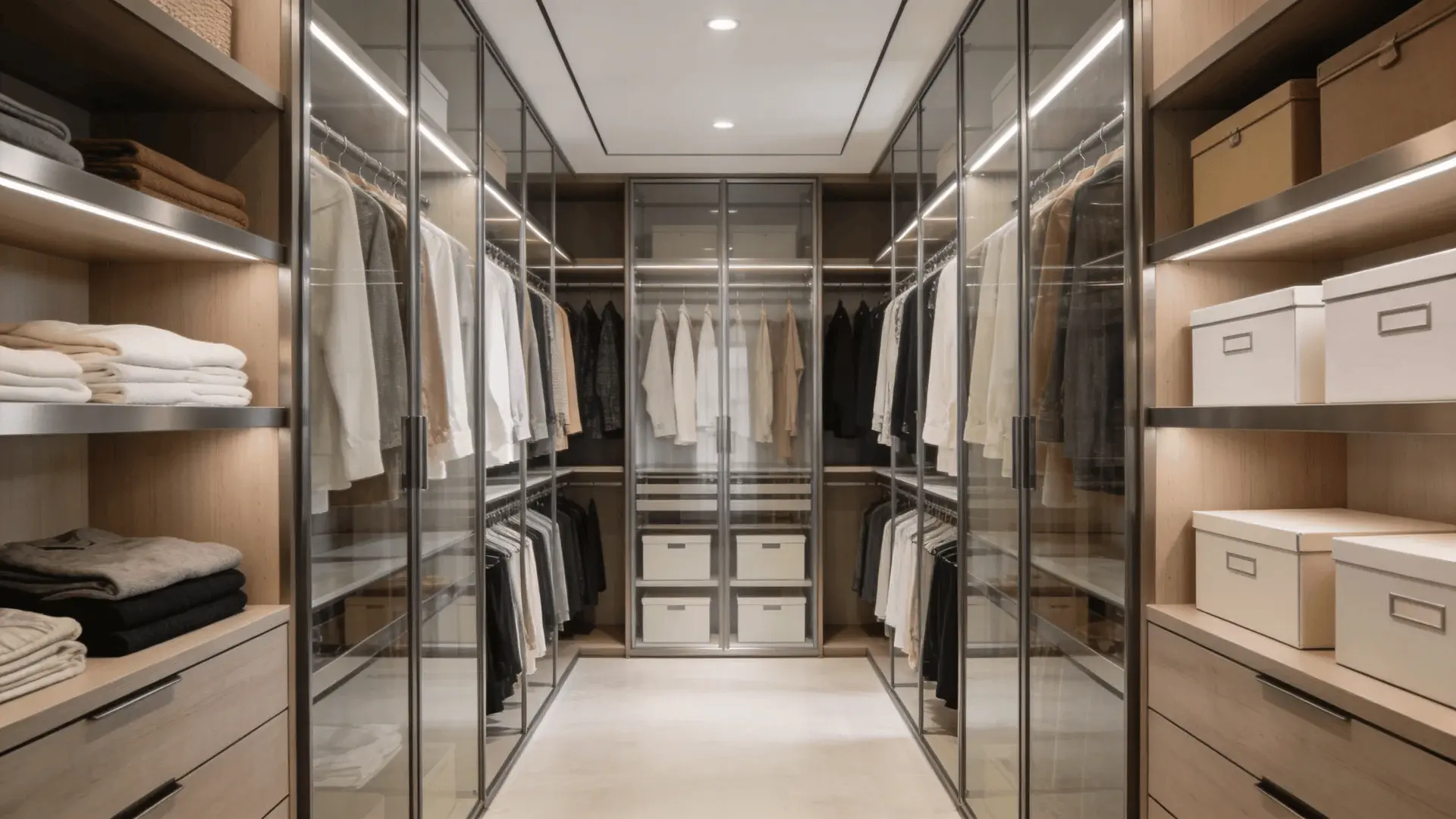
Closet design often starts with aesthetics, but function is what determines whether the space truly works.
The difference between a tight, frustrating layout and one that feels effortless often comes down to inches, not square footage.
That’s why the smartest master closet ideas aren’t about copying a showroom; they’re about understanding clearance, reach, and flow before adding shelves or drawers.
In this guide, I’ll cover how layout shapes movement, how storage should match your wardrobe, and when popular features help or hurt. Let’s start with the foundation of any great layout.
What Makes Master Closet Ideas Actually Work?
Before we get into styles or finishes, we need to be clear about what “working” actually means.
A master closet layout works when it preserves 30–36 inches of clear aisle space, accounts for hanging depth, and places storage based on frequency of use. Movement should remain unobstructed, and drawers and shelves should sit within natural reach zones.
Closet layout failures almost always trace back to circulation miscalculations rather than storage shortages.
You shouldn’t have to twist sideways to pass through. You shouldn’t have to bend, stretch, or shuffle things around just to grab a shirt. And the room shouldn’t feel tense or cramped, even if it’s full.
In practical terms, a functional master closet means:
- You can move freely through the aisle without turning your shoulders
- You can reach everyday items comfortably and naturally
- Storage is arranged around how often you use things
- The space feels open and controlled, not packed tight
Here’s a quick function check:
- 30–36 inches of clear aisle space
- Hanging depth that doesn’t steal your walkway
- Daily-use items placed at easy reach height
- Doors and corners that don’t block movement
Now let’s break down why each of those matters.
Minimum Aisle Width and Why It Determines Usability
Hanging clothes extend about 20–24 inches from the wall once they’re on the rod.
In a 5-foot-wide closet (60 inches):
24 inches (left hanging)
+ 24 inches (right hanging)
= 48 inches used
60 − 48 = 12 inches of aisle space
That’s not a usable aisle. It forces you to turn sideways and brush against clothing every time you pass through.
Industry-standard comfort clearance is 30–36 inches of aisle space after hanging depth is accounted for. If adding more rods reduces that clearance, the layout may look efficient, but won’t feel good to use.
Hanging Depth vs. Walking Space: The Clearance Equation
Most rods sit about 12 inches from the wall, but once clothing is added, the total depth reaches 20–24 inches or more.
Coats, blazers, and thicker fabrics extend even farther. In a shallow closet, that extra depth directly reduces your walkway.
Shifting to single-wall hanging or slightly reducing rod depth can reclaim several inches of clear space. And those few inches make a noticeable difference in how the room feels.
Square footage alone doesn’t determine comfort; usable walking space does
Why More Storage Can Reduce Function
This is the mistake I see most often.
It’s easy to assume that more drawers, more shelves, and more rods automatically make a closet better. On paper, added storage feels efficient.
But when storage replaces circulation, usability drops. Filling every wall and corner removes clear movement paths, and once movement is restricted, the space starts to feel tight and stressful, even if it looks organized.
A functional closet balances storage and open space. Storage should support movement, not compete with it.
Master Closet Layout Ideas by Room Shape
Layout is not a style choice; it’s a geometry decision. Room shape and width determine what’s possible long before finishes or hardware matter. Let’s break down the main types.
1. Single-Wall Layouts for Shallow Rooms
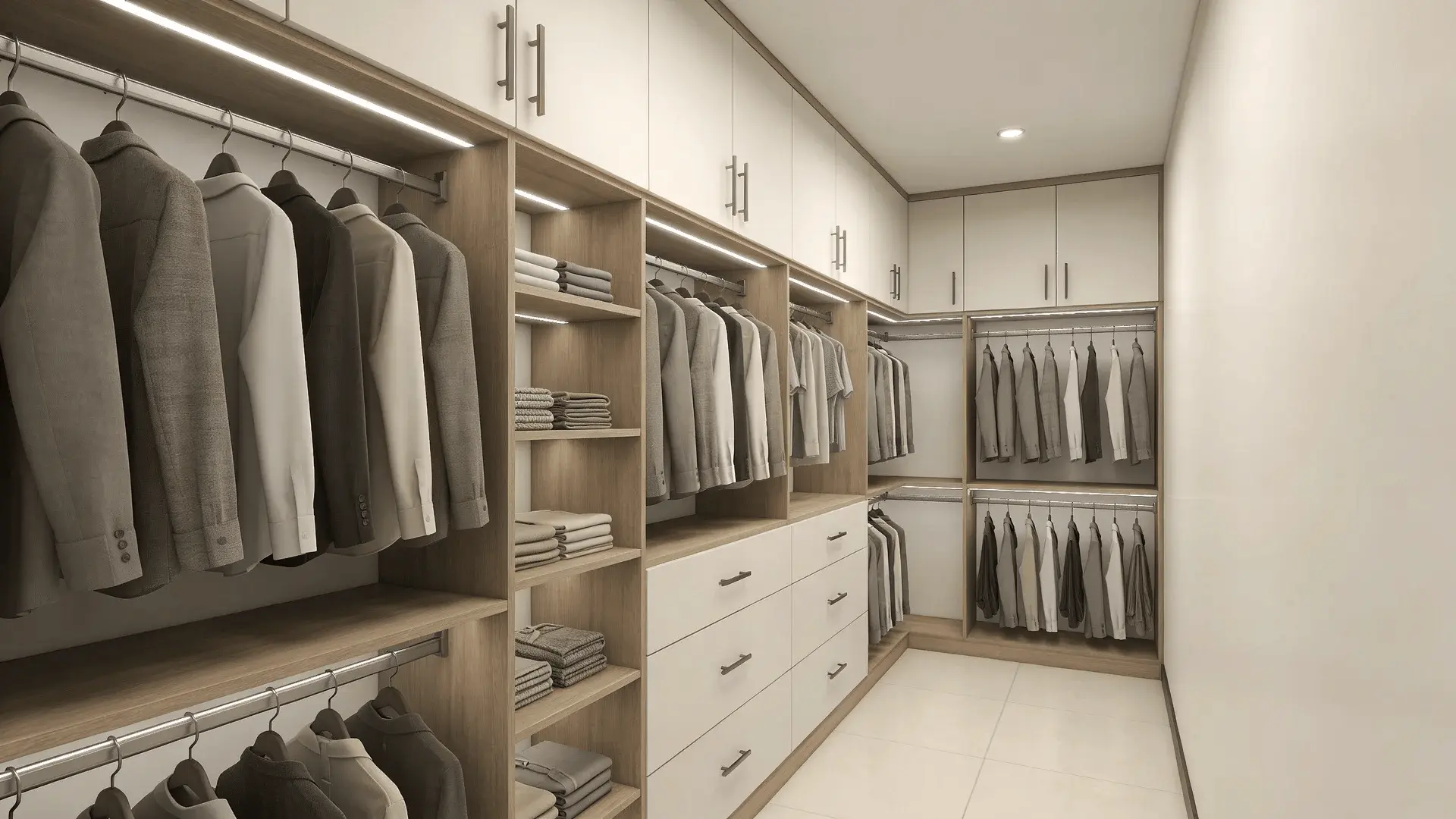
Single-wall layouts work best in narrow closets under 6 feet wide. All hanging and shelving sit on one wall, which preserves the full aisle width across from it.
That means no shoulder compression and a clear sightline from entry to back wall. The trade-off is reduced storage and less symmetry, but movement stays comfortable and usable.
2. Double-Wall Layouts and Minimum Width Requirements
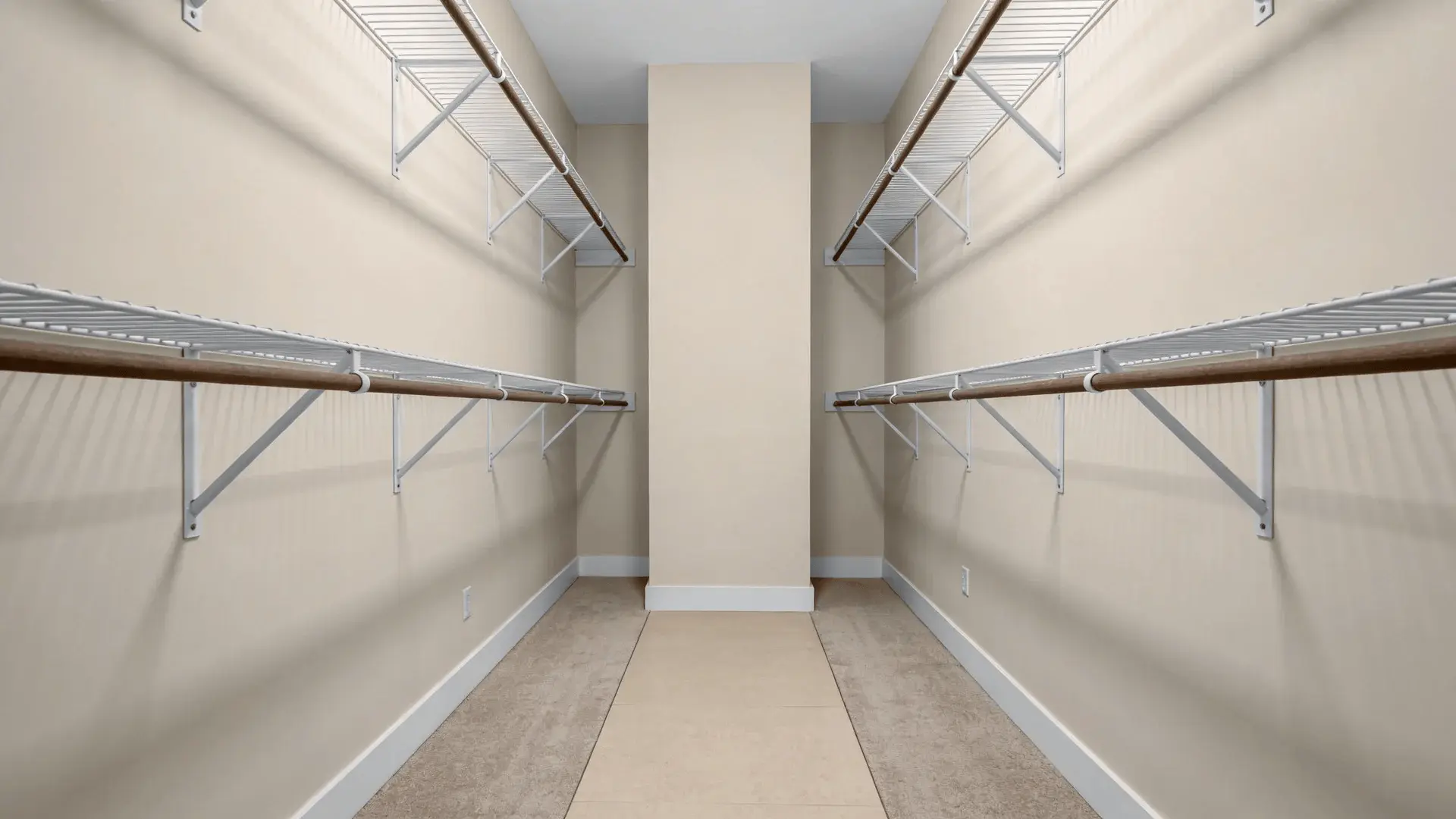
Double-wall layouts place hanging on both sides and create the classic walk-in look.
For this to work, the closet should be at least 7 feet wide. With roughly 24 inches of hanging depth on each side and 36 inches for the aisle, you need about 84 inches total. Any narrower, and the walkway becomes tight.
3. U-Shaped Layouts and Flow Control
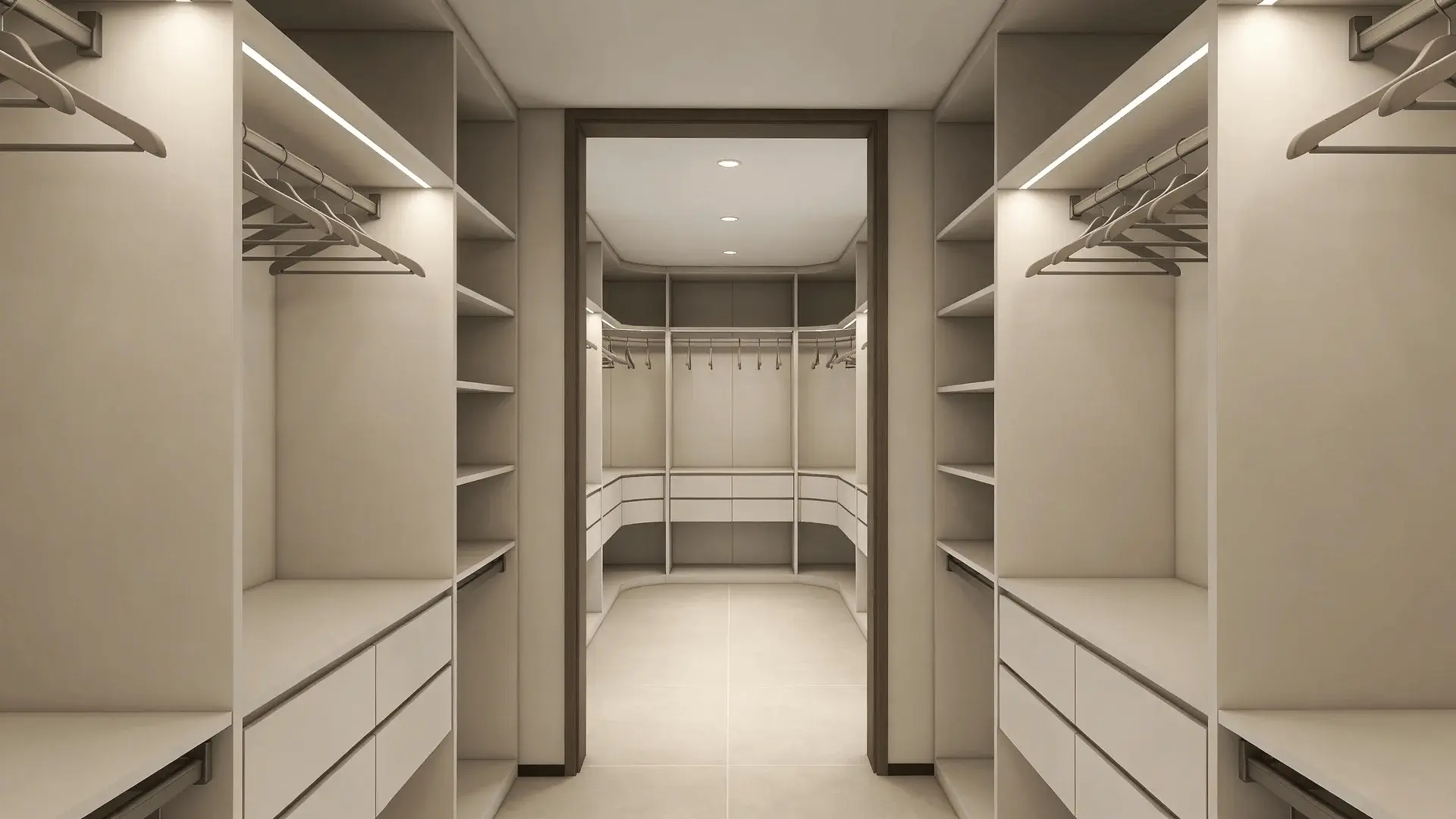
U-shaped layouts wrap storage around three walls and maximize capacity. They perform best when the closet exceeds 7 feet in depth, and the entry placement doesn’t block side walls.
While they increase storage density, they also increase the risk of crowding. Careful planning is needed to keep movement smooth around corners.
4. Corners: Dead Zones vs. Optimized Transitions
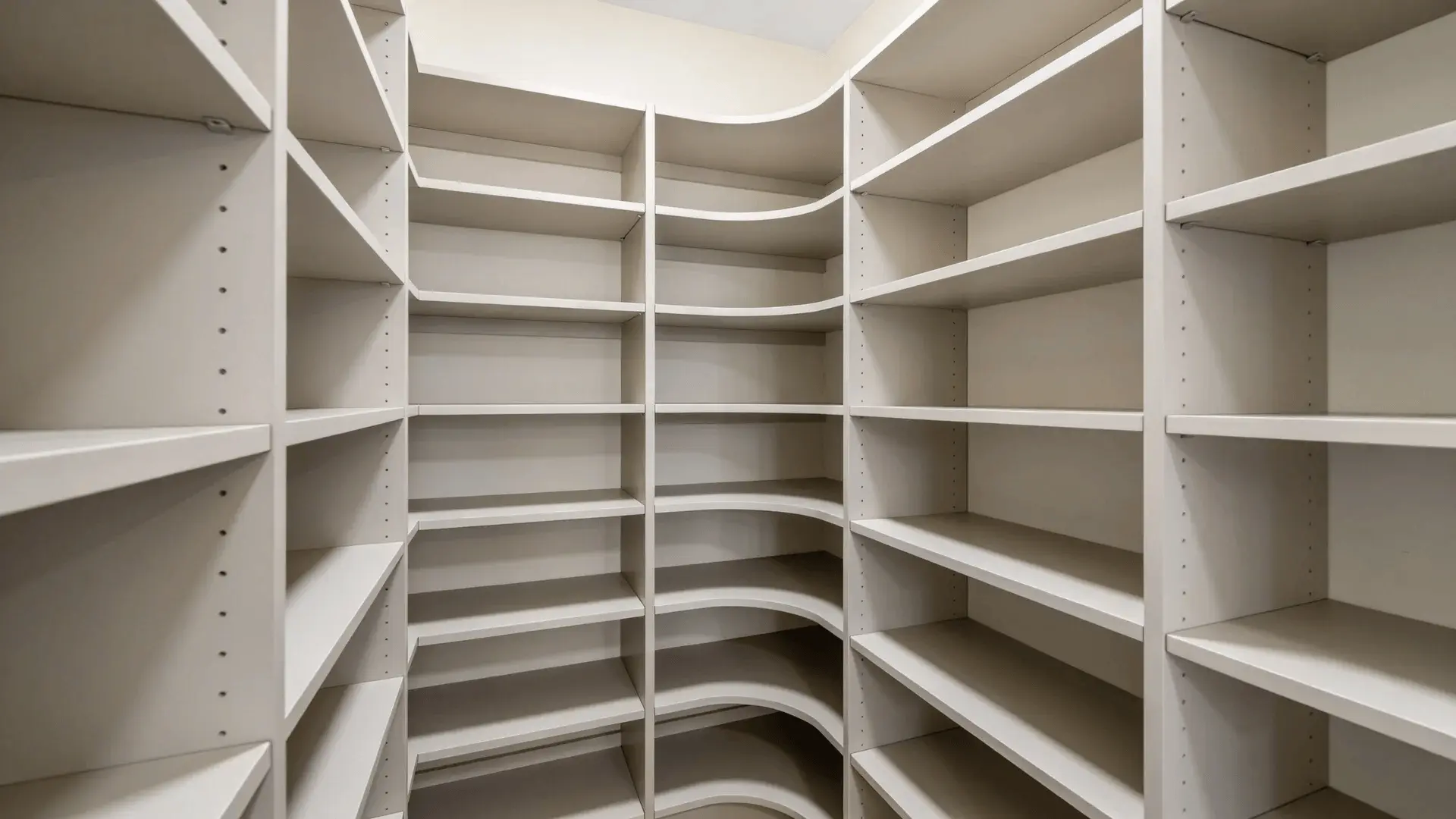
Corners often appear efficient, but can quickly become problem areas. Corner rods crowd garments together and reduce visibility, making sections hard to access.
Shelving, open cubbies, or specialized rotating hardware can work better, depending on space. The goal is to create a smooth transition between walls, not a compressed bottleneck.
Small Master Closet Ideas that Don’t Sacrifice Function
A smaller master closet doesn’t automatically mean limited function. It just means every decision carries more weight.
In tight spaces, small layout mistakes have bigger consequences. A few lost inches can turn a workable aisle into a squeeze. So the focus shifts from maximizing storage to protecting clearance first.
5. Avoiding the Opposite-Wall Hanging Mistake
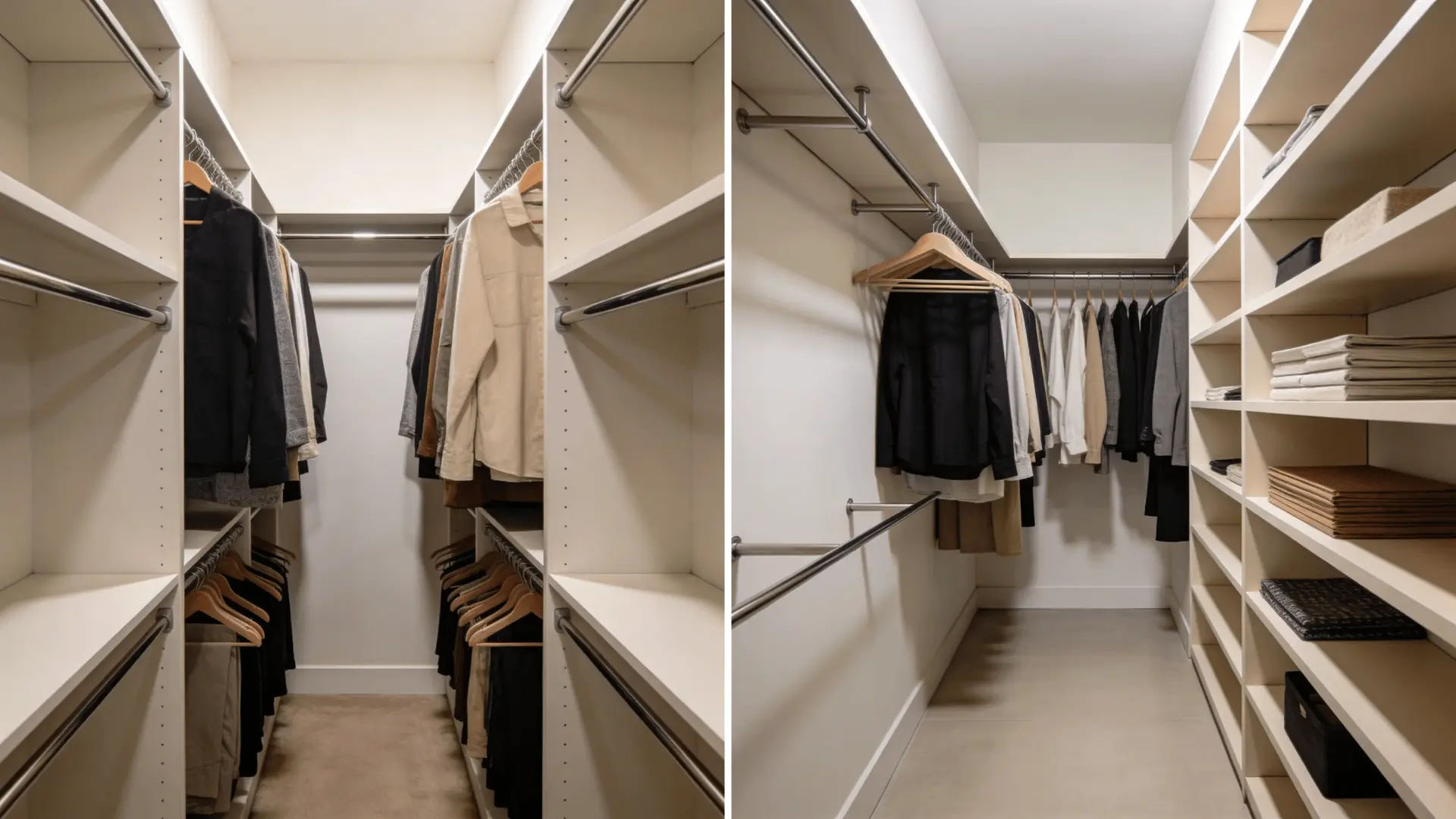
In closets under 6 feet wide, skip rods on both sides. Even if the math works on paper, the clothing depth will shrink the aisle too much.
Instead, use single-wall hanging or pair one hanging wall with shallow shelving opposite. This keeps at least 30 inches of clear walking space and prevents shoulder compression.
6. Using Vertical Zones Strategically
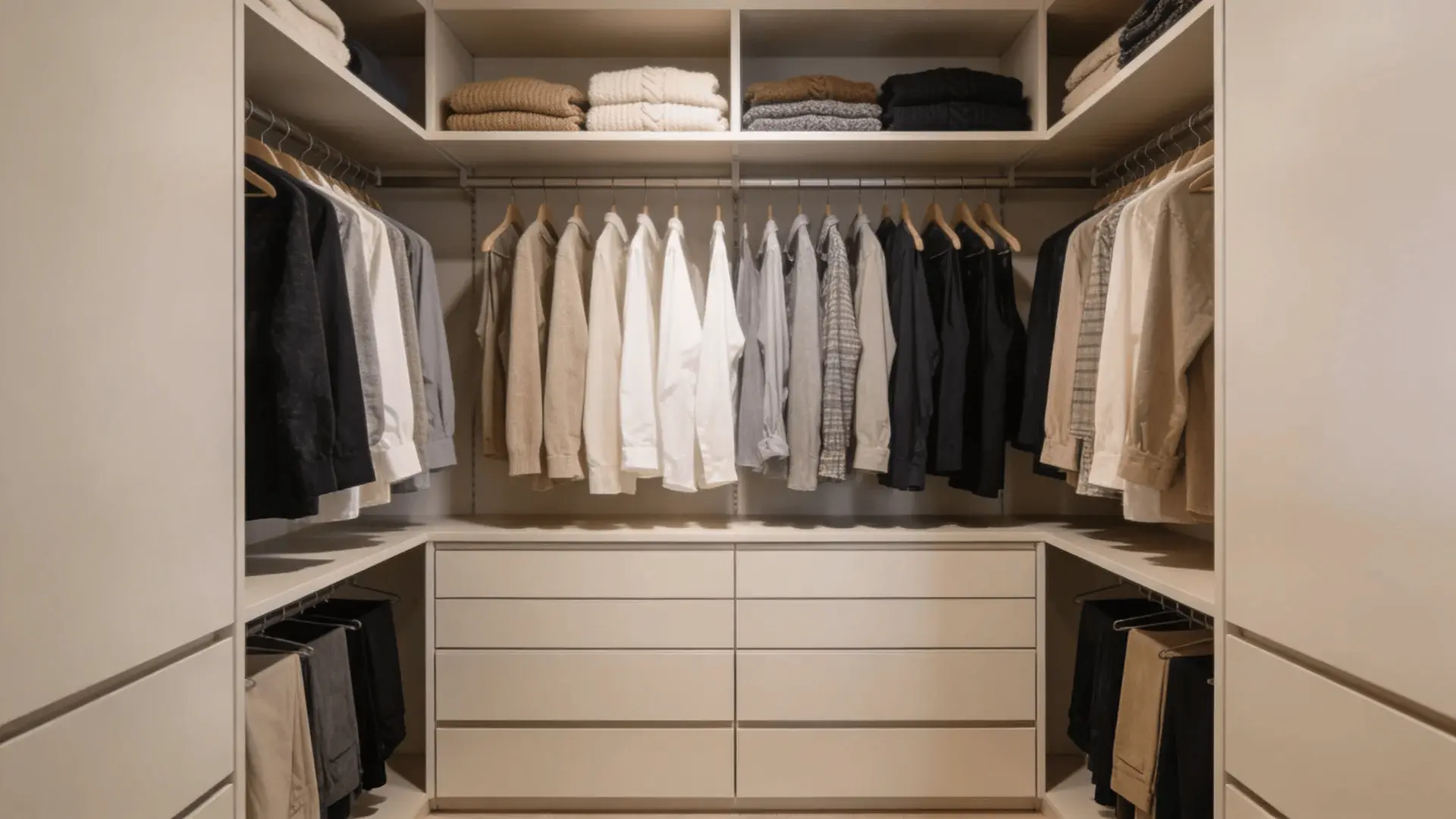
In small closets, stack storage with intention. Reserve top shelves for seasonal bins and rarely used items. Keep daily clothing at eye level where reach is natural. Place shoes and drawers lower, but not so low that you’re constantly bending.
Organizing by frequency keeps movement efficient and reduces daily friction.
7. Reducing Shelf Depth in Narrow Spaces
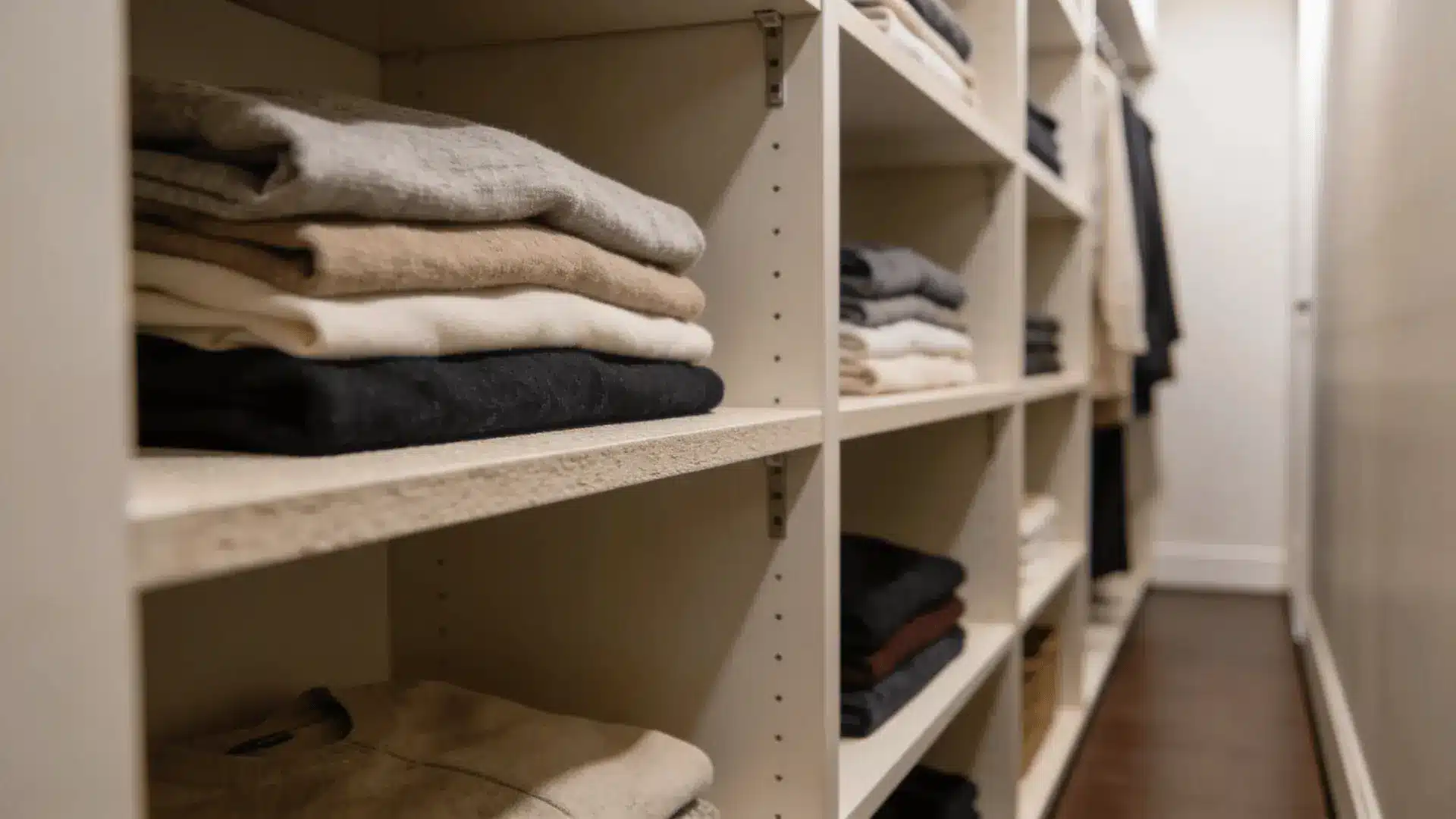
If your closet feels tight, check the shelf depth before removing storage. Many systems use 16–18 inch shelves, but folded clothing only needs about 12 inches.
Switching to 14-inch shelves can restore several inches of aisle width without sacrificing function. Shallow storage often works better in compact layouts.
8. Prioritizing Single-Hang Over Double-Hang when Space is Limited
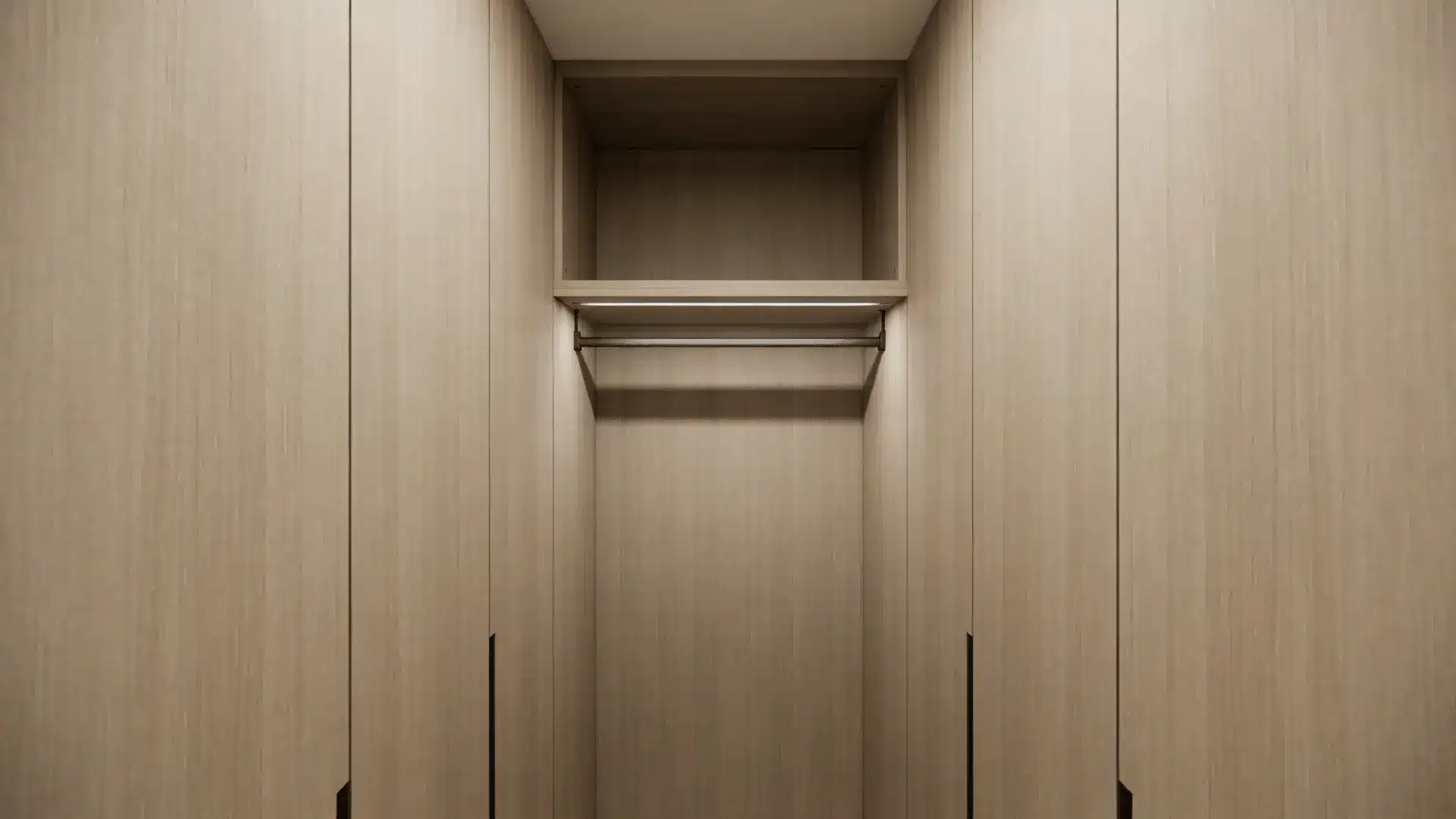
Double-hang increases rod capacity but reduces visual openness. In tight closets, a single row of long-hang can feel less crowded and easier to manage.
If you need more capacity, add open cubbies above or below rather than compressing the walkway with extra rods.
9. Choosing Open Shelving Over Heavy Cabinetry
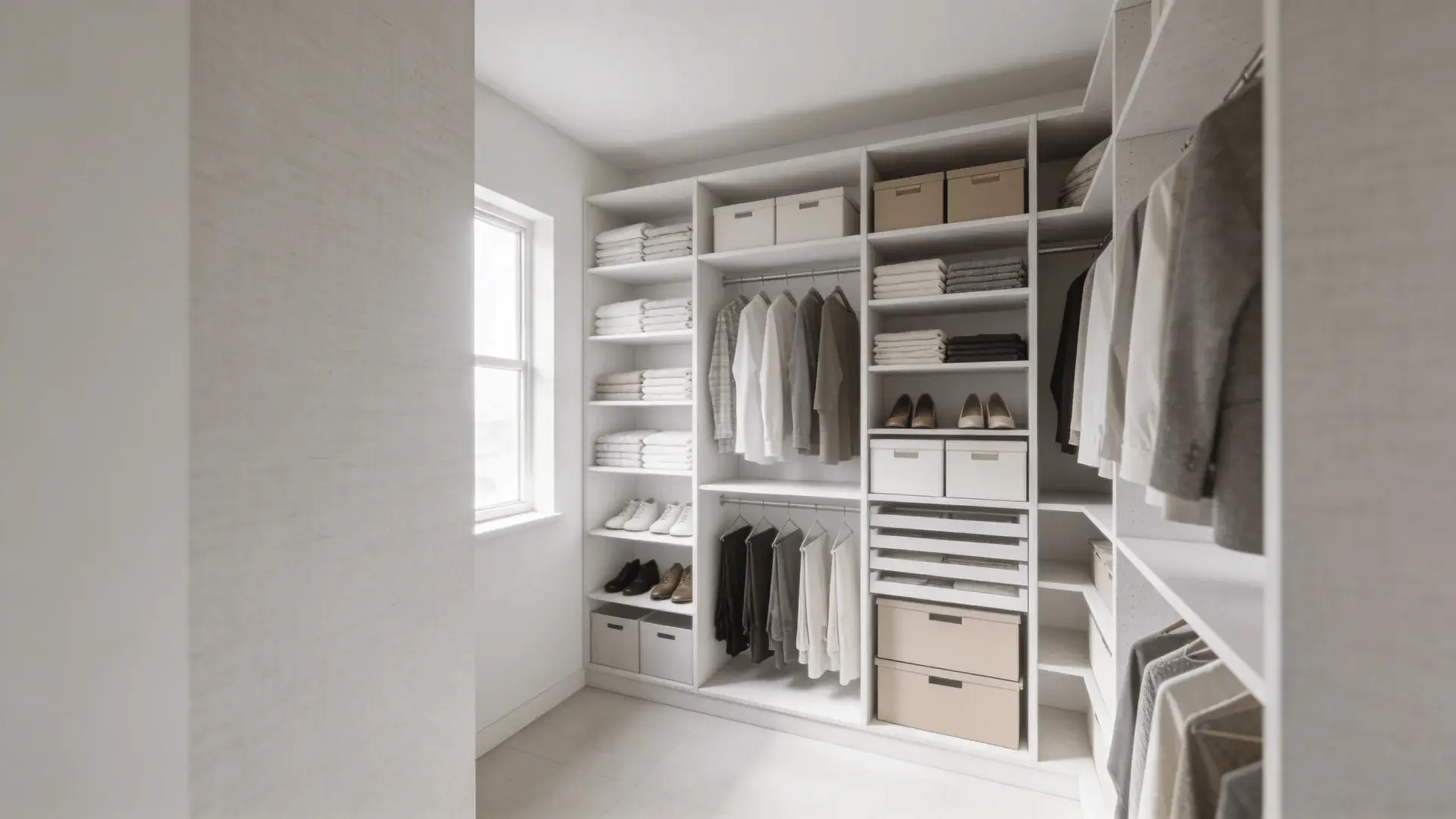
Bulky built-ins can overwhelm a small master closet. Open shelving or lighter framing keeps sightlines clear and prevents the room from feeling boxed in.
If closed storage is necessary, limit it to one wall so circulation remains open and balanced.
10. Keeping Corners Simple and Functional
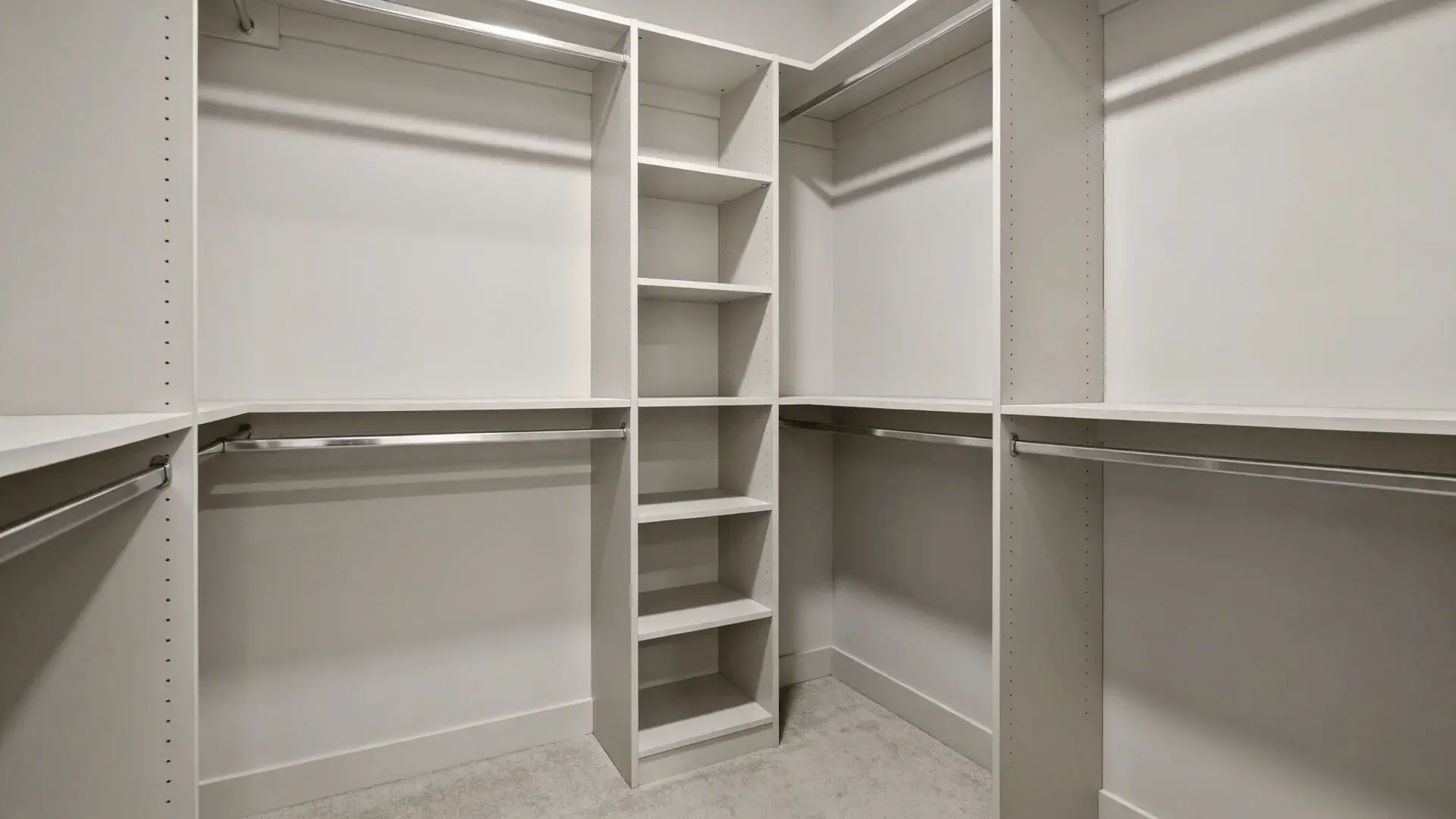
Avoid forcing rods into tight corners. In small closets, corners work better with shelves, angled cubbies, or simple vertical storage.
Keeping transitions clean around corners maintains smoother flow and prevents hard-to-reach sections from becoming clutter zones.
How to Divide Hanging, Shelving, and Drawers Logically
This is where most master closet ideas become practical instead of just attractive. Instead of organizing by category alone, organize by frequency of use.
Long-Hang vs. Double-Hang: Height Thresholds
Long-hang sections, used for dresses and coats, typically require about 60 inches of vertical clearance.
Double-hang sections, used for shirts and folded-over pants, need roughly:
- 40 inches for the top rod
- 40 inches for the bottom rod
If you install long-hang everywhere, you leave large gaps of unused vertical space. If you install double-hang everywhere, longer garments get compressed or wrinkled.
A balanced layout reflects your actual wardrobe. If you own mostly shorter garments, double-hang will increase capacity. If you own more dresses and coats, long-hang deserves more wall space.
This isn’t about symmetry; it’s about matching storage to clothing length.
Shelf Depth and Folded Garment Stability
Shelf depth directly affects how stable your folded stacks remain.
Most folded clothing measures around 10–12 inches deep. When shelves extend to 16–18 inches, stacks grow taller to fill the space. Taller stacks are less stable and harder to see clearly.
Once stacks exceed about 12–14 inches in height, they collapse more easily. When they collapse, you stop refolding and start piling. That’s how clutter builds.
Keep shelves slightly shallower to encourage manageable stack heights and better visibility. Stability improves when depth is controlled.
Drawer Placement and Reach Efficiency
Drawer height should follow natural reach zones.
Drawers placed between knee and chest height are easiest to use daily. When drawers sit too low, repeated bending creates strain and inconvenience. When they sit too high, visibility drops and access becomes awkward.
Everyday drawers should sit within comfortable reach. Specialty drawers, like jewelry or accessories, can sit slightly higher if they’re used less often. When reaching feels natural, organization is easier to maintain.
When an Island Improves Your Master Closet and When It Ruins It
An island can make a master closet feel high-end and tailored. But before thinking about finishes or drawer fronts, you need to check the numbers. An island is a space trade-off, not just a style choice.
Minimum Room Dimensions Before Adding an Island
For an island to feel comfortable, you need:
- At least 36 inches of clear space on all sides
- Enough room to account for hanging depth on surrounding walls
If your closet is under 10 feet wide, adding an island will usually compress the aisle. Once clearance drops below a comfortable threshold, the room starts to feel tight.
You may gain extra drawers, but you lose ease of movement. And that loss shows up every day.
Functional Roles an Island Should Serve
An island should solve a problem. It can work well as:
- A dedicated folding surface
- Jewelry or accessory storage
- Additional concealed drawers
If it doesn’t serve a clear function, it becomes decorative mass in the center of the room. In that case, it’s taking away circulation without giving much back. The island has to earn the space it occupies.
When to Skip It Entirely
Skip the island if:
- It reduces aisle width below 30 inches
- It interferes with door swing
- It creates tight or unusable corners
In smaller master closets, well-designed wall-mounted storage almost always performs better than a center island. True luxury in a closet isn’t about adding more pieces. It’s about moving comfortably through the space.
Why Beautiful Master Closets Fail in Real Life
Photos rarely show how a closet feels to move through. They highlight symmetry and finishes, not daily friction. Here are the most common ways good-looking designs fail in real use:
- Opposite-wall hanging in narrow closets
In a 5-foot-wide space, rods on both sides leave almost no comfortable aisle. Once clothing is added, shoulder room disappears and sections become hard to access. - Ignoring minimum aisle clearance
Designs that don’t preserve at least 30 inches of clear walking space feel tight, even if the square footage seems generous. Movement becomes awkward and rushed. - Overloading corners with rods
Corner rods add hanging length but reduce visibility and reach. Clothes overlap, and the angled layout wastes more usable space than it creates. - Installing shelves that are too deep
Deep shelving encourages taller, unstable stacks. When piles collapse, organization breaks down quickly and clutter builds. - Overbuilding drawers and cabinetry
Filling every wall with built-ins restricts circulation. The room may look full and custom, but movement feels constrained and stressful. - Prioritizing symmetry over wardrobe needs
Equal rod sections may look balanced, but if they don’t match your clothing lengths, space is wasted or garments get compressed.
Most failures come down to the same mistake: storage was maximized before movement was protected. In practice, circulation determines comfort more than visual balance ever will.
Wrapping Up
A closet doesn’t fail because it lacks storage. It fails when movement becomes an afterthought. Once circulation is compressed, every drawer and rod starts to feel heavier than it should.
The strongest master closet ideas protect space first and layer storage around it with intention.
When hanging lengths match your wardrobe, shelves are sized correctly, and aisles stay clear, the room works quietly in the background of your day. That’s the goal.
Before making changes, measure your clearance, review your wardrobe needs, and rethink any crowded corners. Small adjustments can really change how the space feels. Start with the layout, and build from there.
Frequently Asked Questions
Is it cheaper to buy or build a closet?
DIY closet systems typically cost less upfront. Custom closets cost more but provide better fit and space optimization.
What is a California closet?
It refers to a custom modular closet system with built-in drawers, rods, and shelves. The concept focuses on tailored fit and premium finishes.
What layout trends are gaining popularity?
Cleaner lines, open shelving, integrated lighting, and shallow-depth storage are trending. Function-driven layouts are replacing overly decorative designs.