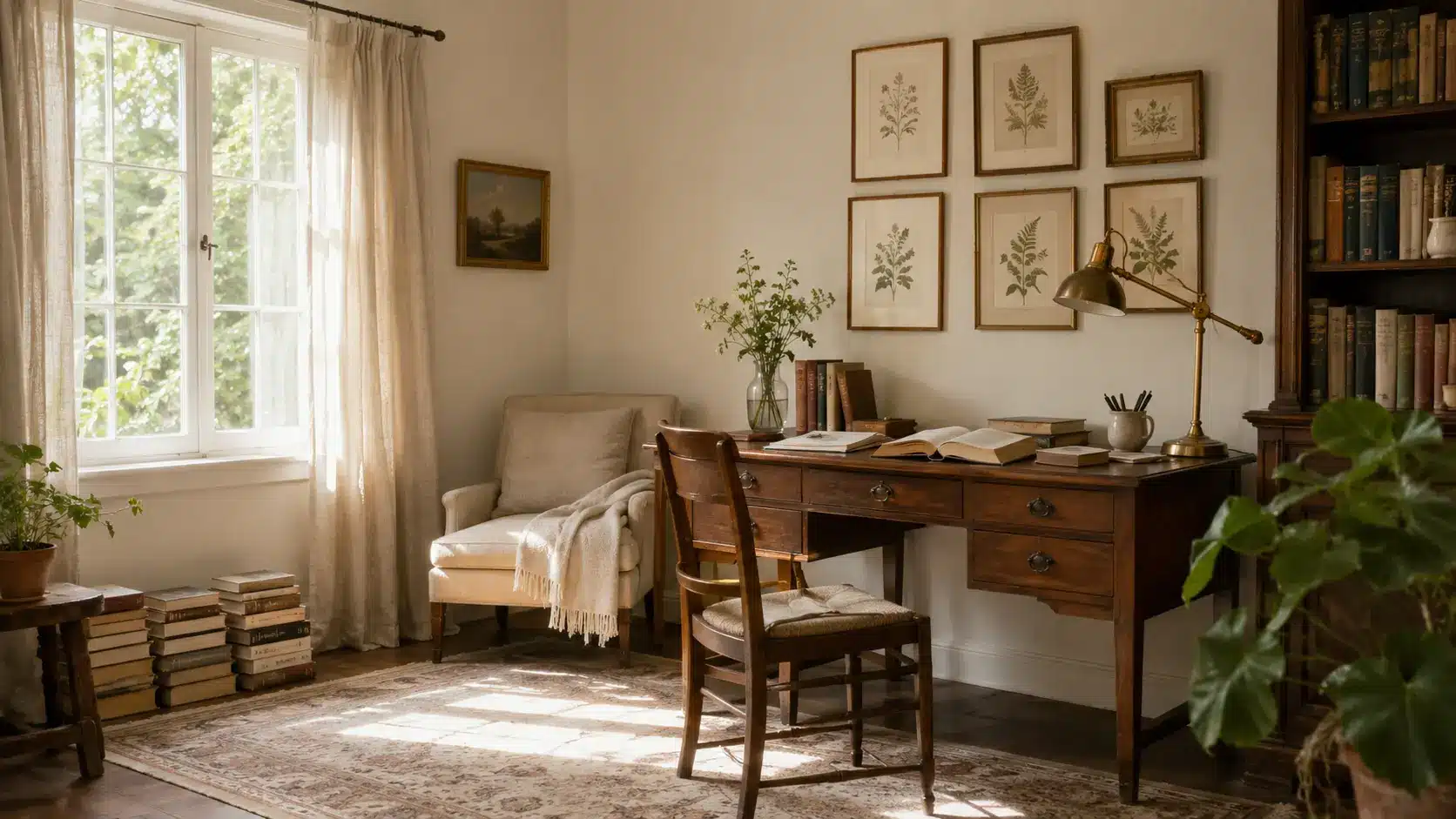
The room feels different when sunlight lands on books, wood, and soft fabric. It slows the space down before you even choose a chair. That is why the light academia aesthetic works so well for interiors.
It brings the feeling of a bright study into bedrooms, living rooms, small apartments, and desk corners. Think cream walls, warm wood, paperbacks, linen curtains, brass lamps, framed art, and a seat that makes you want to stay. You do not need a full library or costly antiques. You need a room that feels useful, calm, and personal.
Start with the space you use most, then add pieces that support reading, rest, work, and daily life.
What Is Light Academia Interior Design?
Light Academia interior design takes inspiration from old study rooms, classic books, art spaces, and historic schools, but keeps the mood bright and soft. Instead of dark colors and heavy furniture, it uses daylight, pale walls, warm wood, linen, books, framed art, and gentle lighting.
The look should feel academic without becoming formal or staged. A wooden desk, a soft chair, a bookshelf, a warm lamp, and a few personal pieces can be enough.
Modern rooms can also carry the style. A plain sofa, simple bedroom, or small desk corner can work when the colors, textures, and lighting feel calm, useful, and personal.
Light Academia Aesthetic Elements to Add First
If the room feels far from this look, start with the pieces that change the mood fastest. These light academia aesthetic ideas work because they are practical, easy to layer, and useful in daily life.
1. Warm Lighting
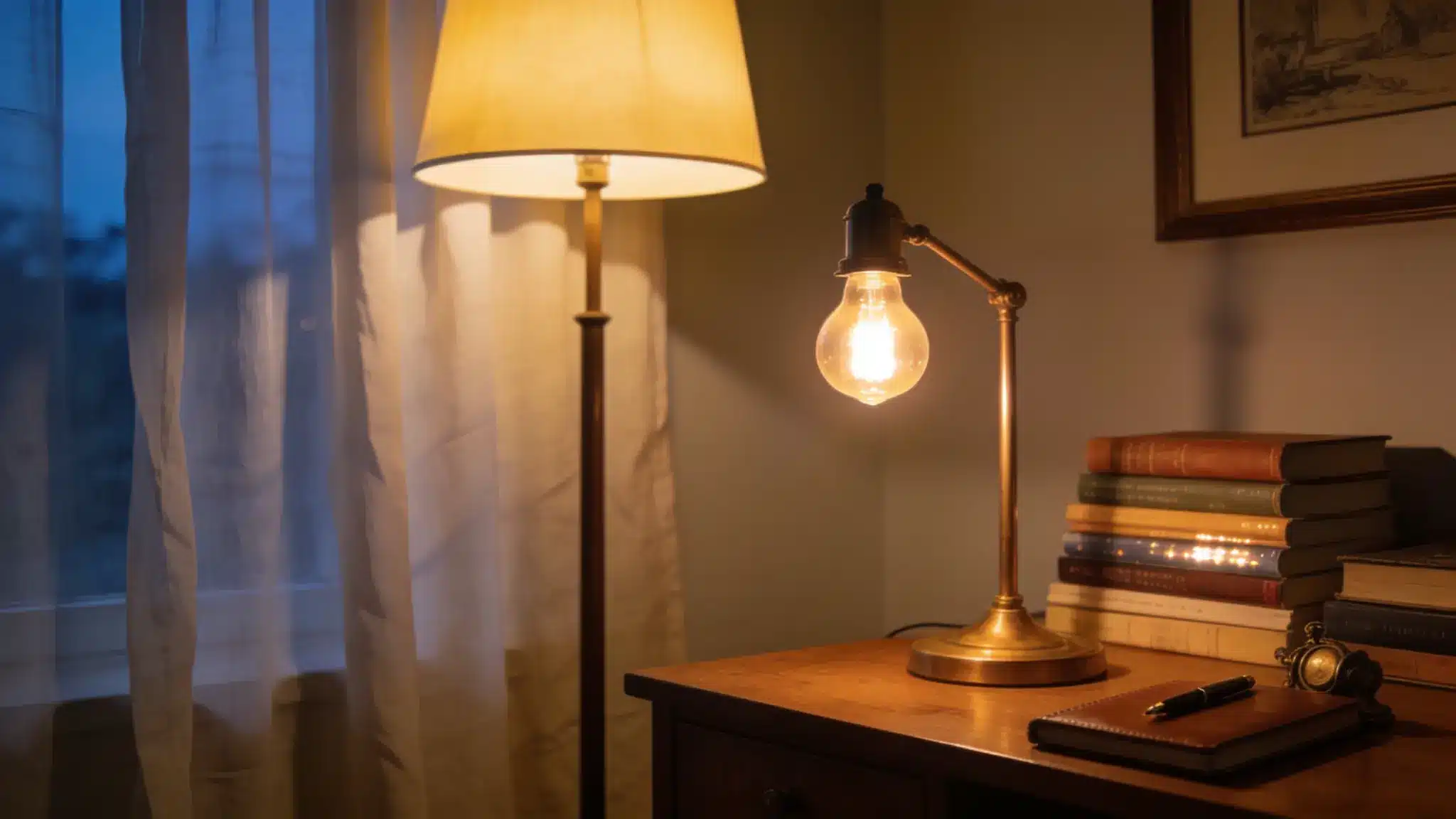
Start with a table lamp, desk lamp, or floor lamp. Warm bulbs make a plain corner feel softer at night and help the room move away from harsh ceiling light.
Use lighting where you read, write, rest, or get ready. Brass, ceramic, wood, and fabric lampshades all fit the mood. Even one good lamp can make a desk, nightstand, or side table feel more intentional.
2. Soft Pale Colors
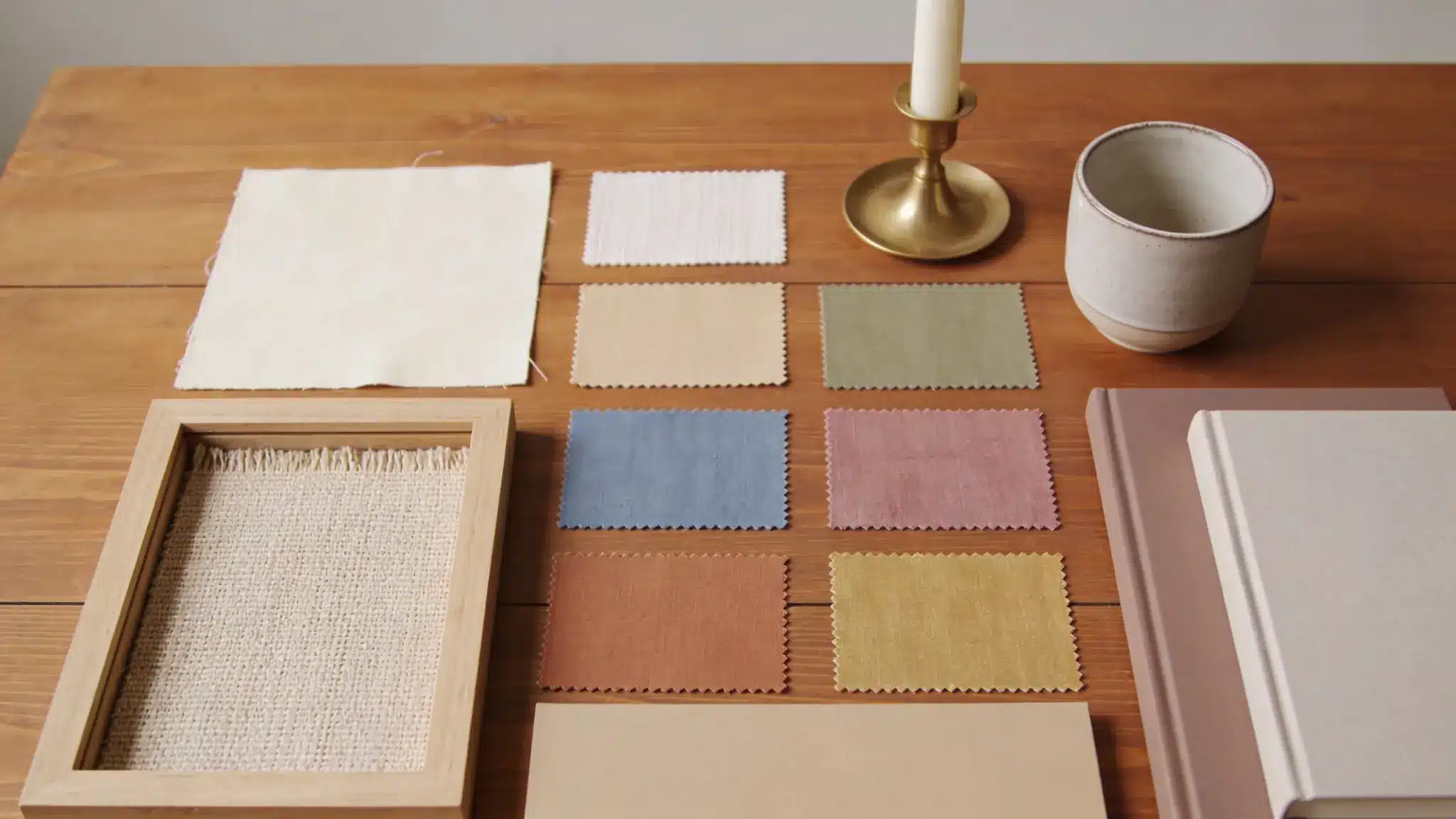
Cream, ivory, beige, warm white, pale tan, soft brown, and muted gold all help the room feel bright without looking cold.
You do not have to repaint the whole space. Use these colors through bedding, curtains, rugs, lampshades, frames, and throws. Small accents like sage, dusty blue, clay, faded rose, or muted mustard can add depth without making the room feel too busy.
3. Warm Wood Furniture
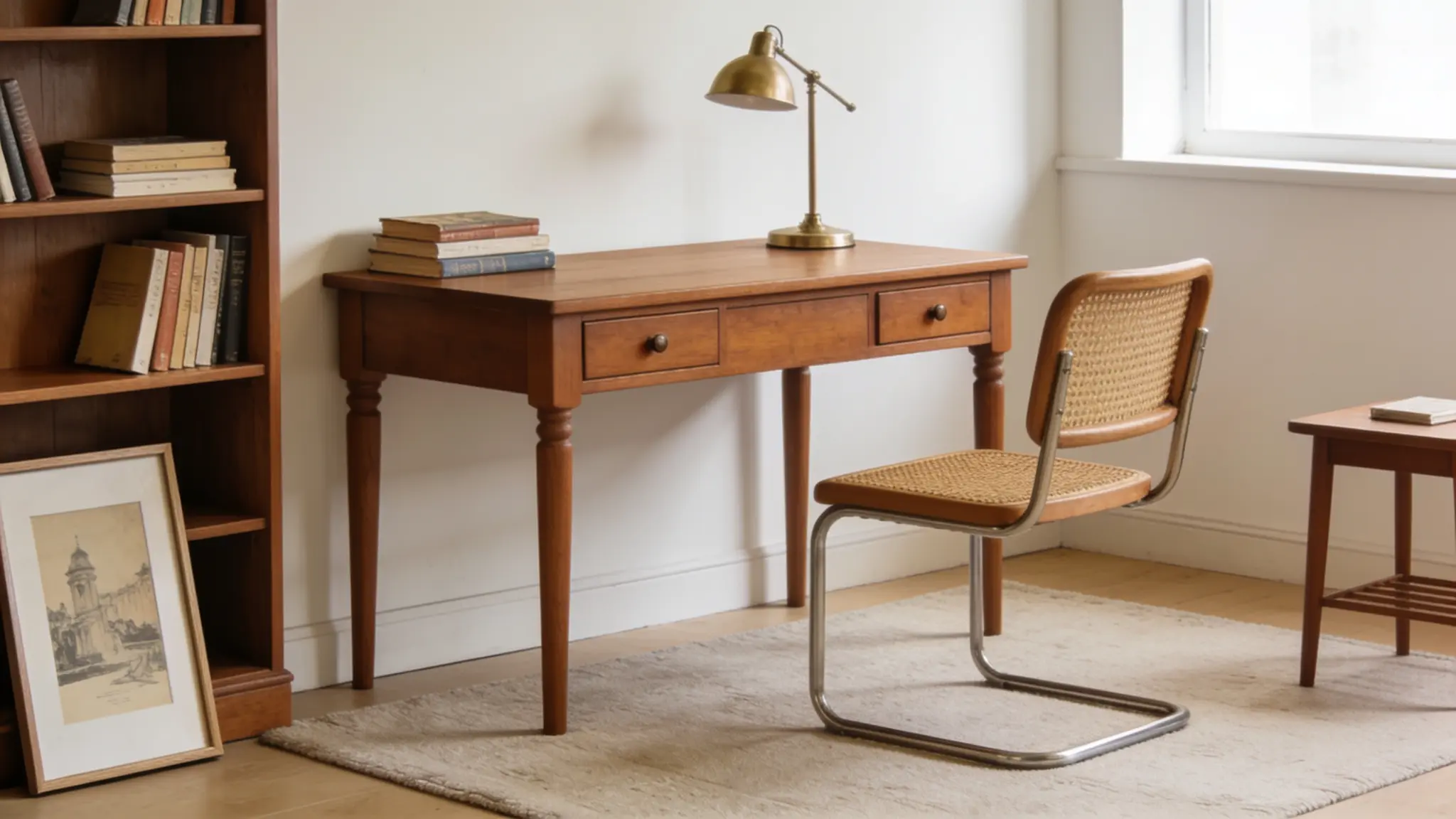
A wooden desk, bookcase, side table, nightstand, or reading chair can do more for the room than many small objects.
You do not need antiques. Honey wood, medium brown wood, cane, and simple classic shapes work well. A plain modern sofa or white desk can still fit when you pair it with warm lighting, books, fabric, and framed art.
4. Books and Shelves
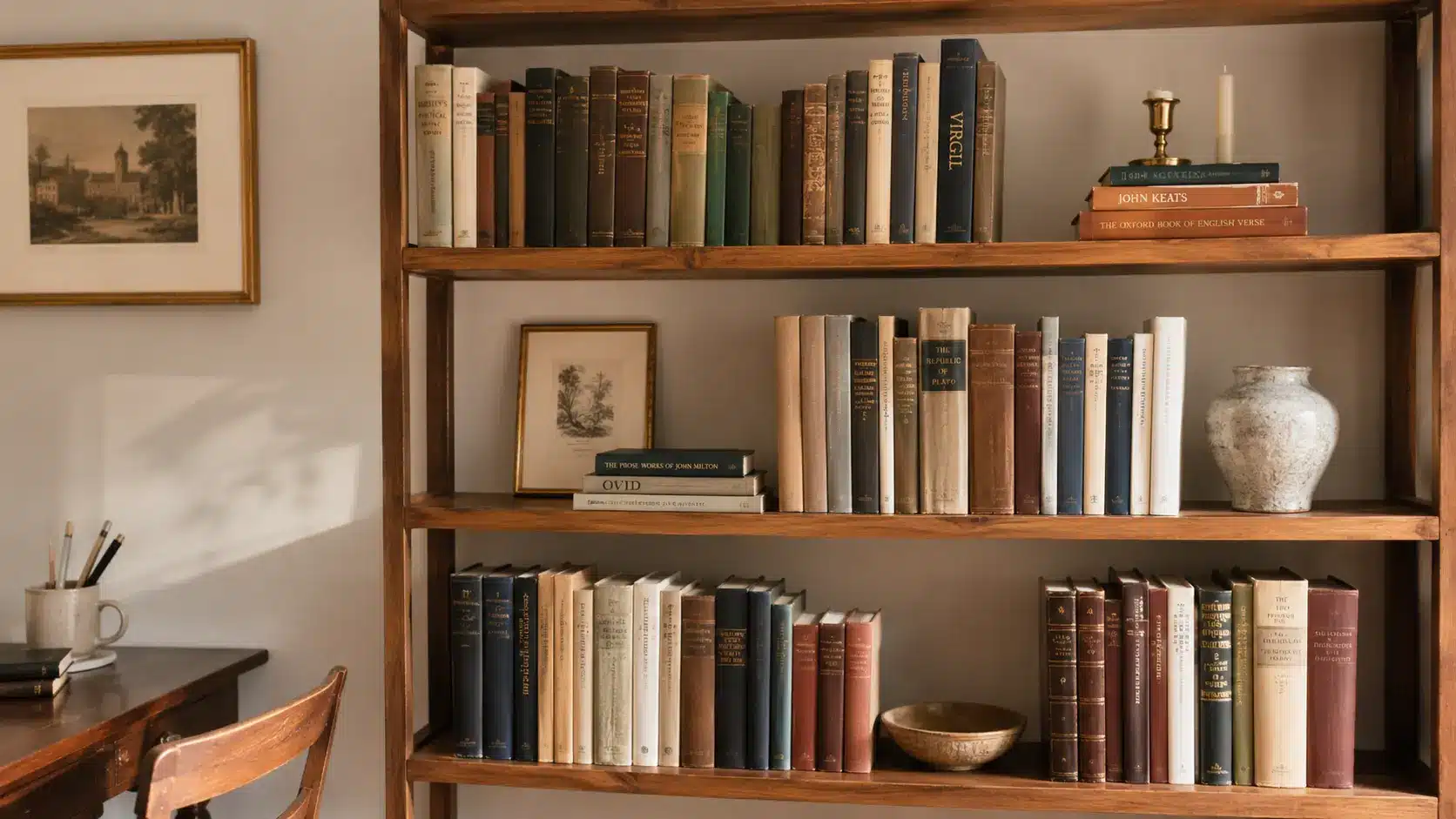
Books are one of the easiest ways to bring in the light academia aesthetic. Use them on shelves, nightstands, desks, coffee tables, or small wall ledges.
Mix upright books with small stacks so the room feels collected, not packed. Leave some open space on the shelf. Add one framed print, vase, or candle holder if the shelf needs balance.
5. Linen Cotton and Soft Texture
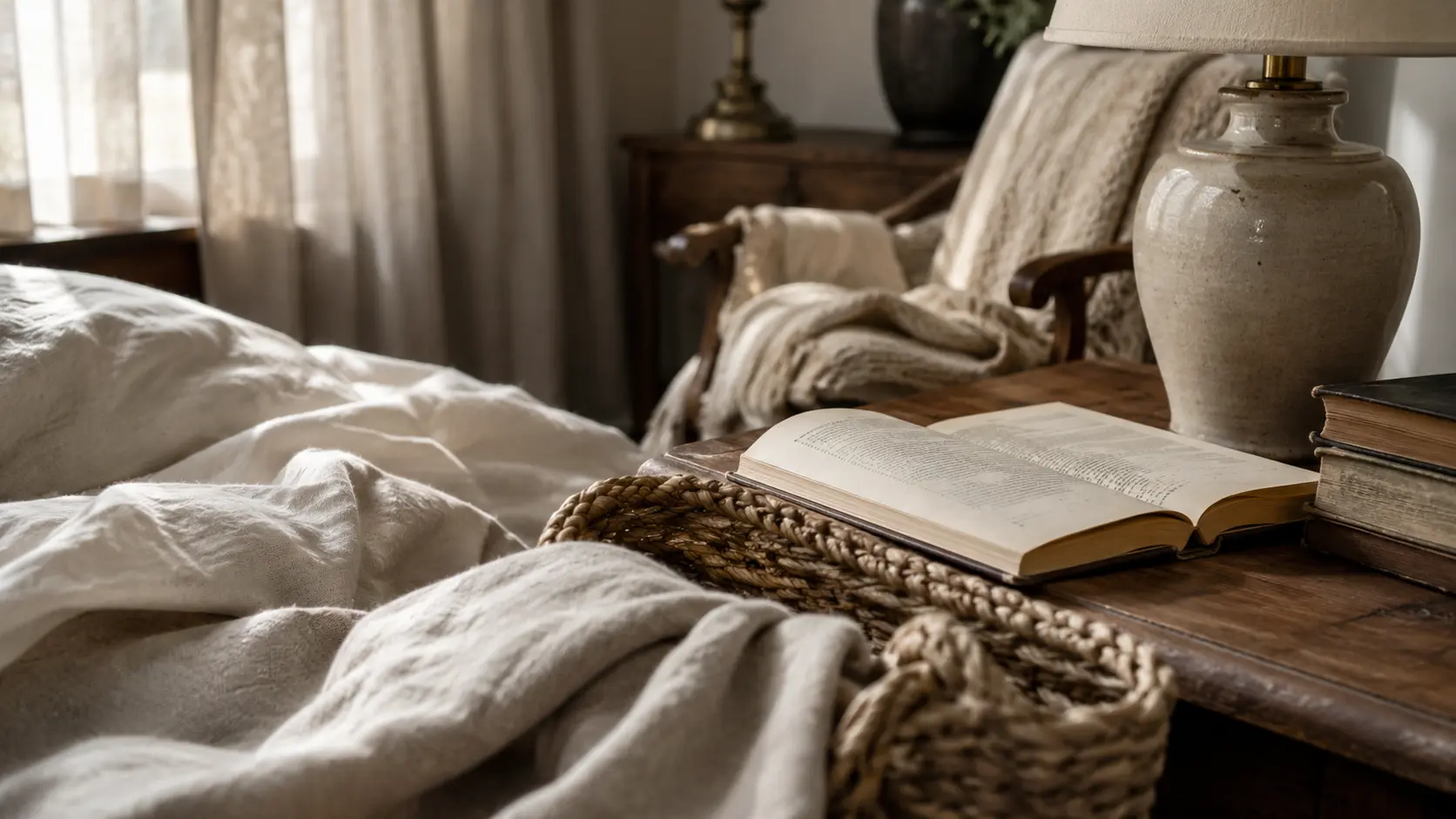
Texture keeps pale rooms from looking flat. Linen curtains, cotton bedding, woven baskets, paper pages, wood grain, ceramic lamps, and soft throws all add quiet depth.
A simple bed feels better with layered fabric. A plain desk feels better with a wood tray, paper notebook, and ceramic cup. These details make the room feel real instead of overly polished.
6. Framed Art and Wall Pieces
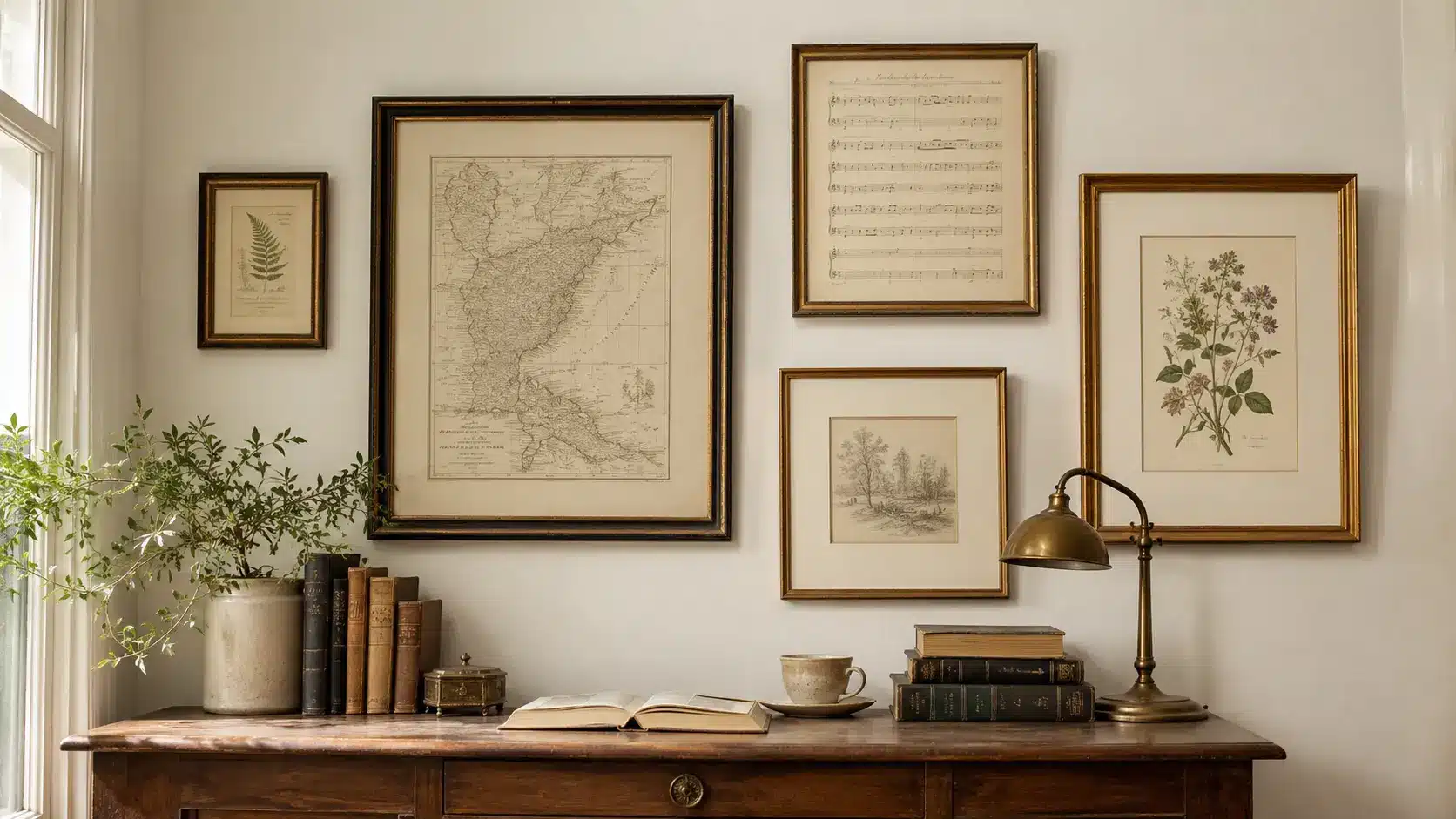
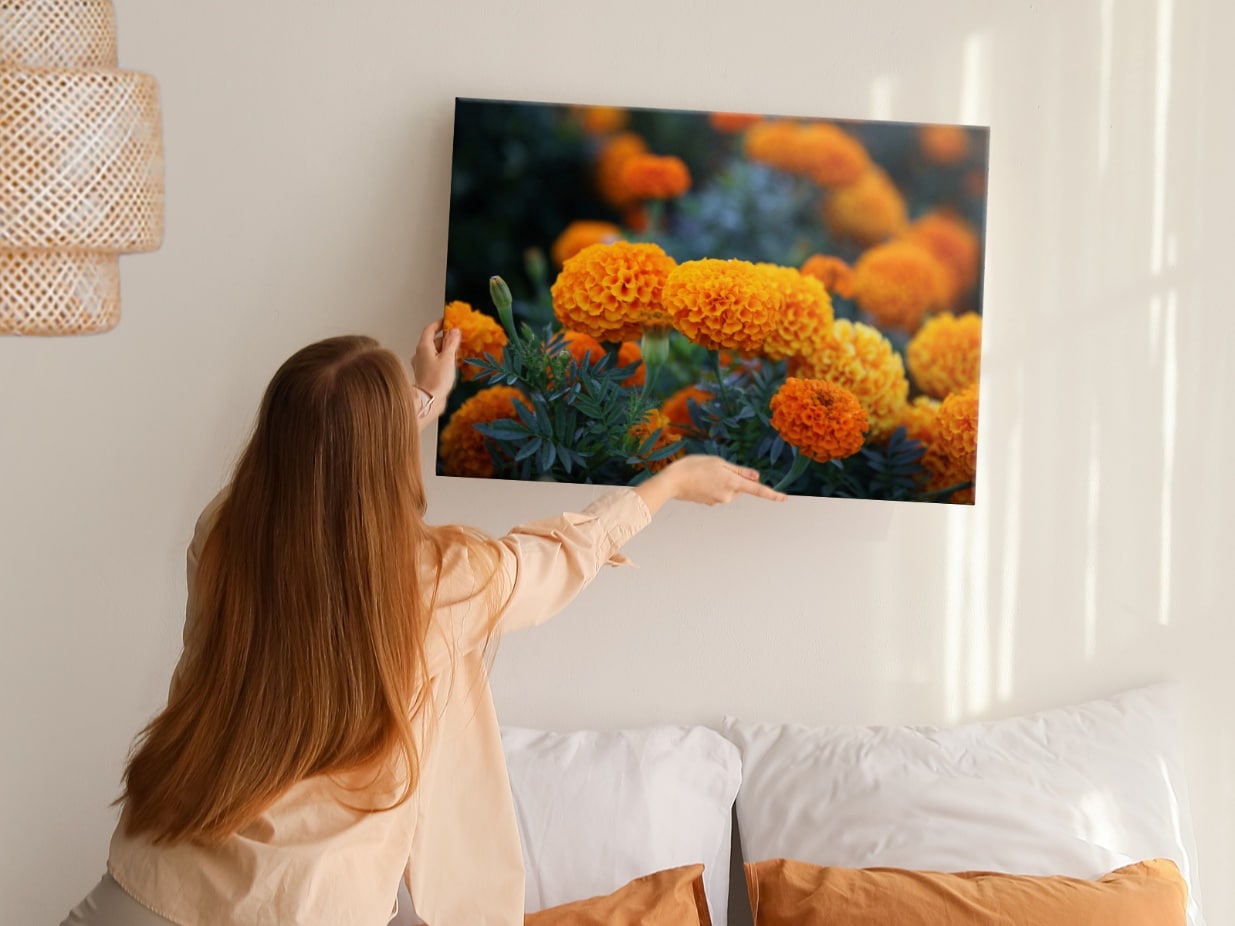
Use botanical prints, old maps, soft sketches, sheet music, museum-style art, or simple landscape prints. Wood, brass, and antique gold frames usually work better than shiny plastic or silver frames.
Do not cover every wall. One strong piece above a bed, desk, sofa, or shelf can make the room feel finished without making it feel crowded.
7. A Reading or Study Corner
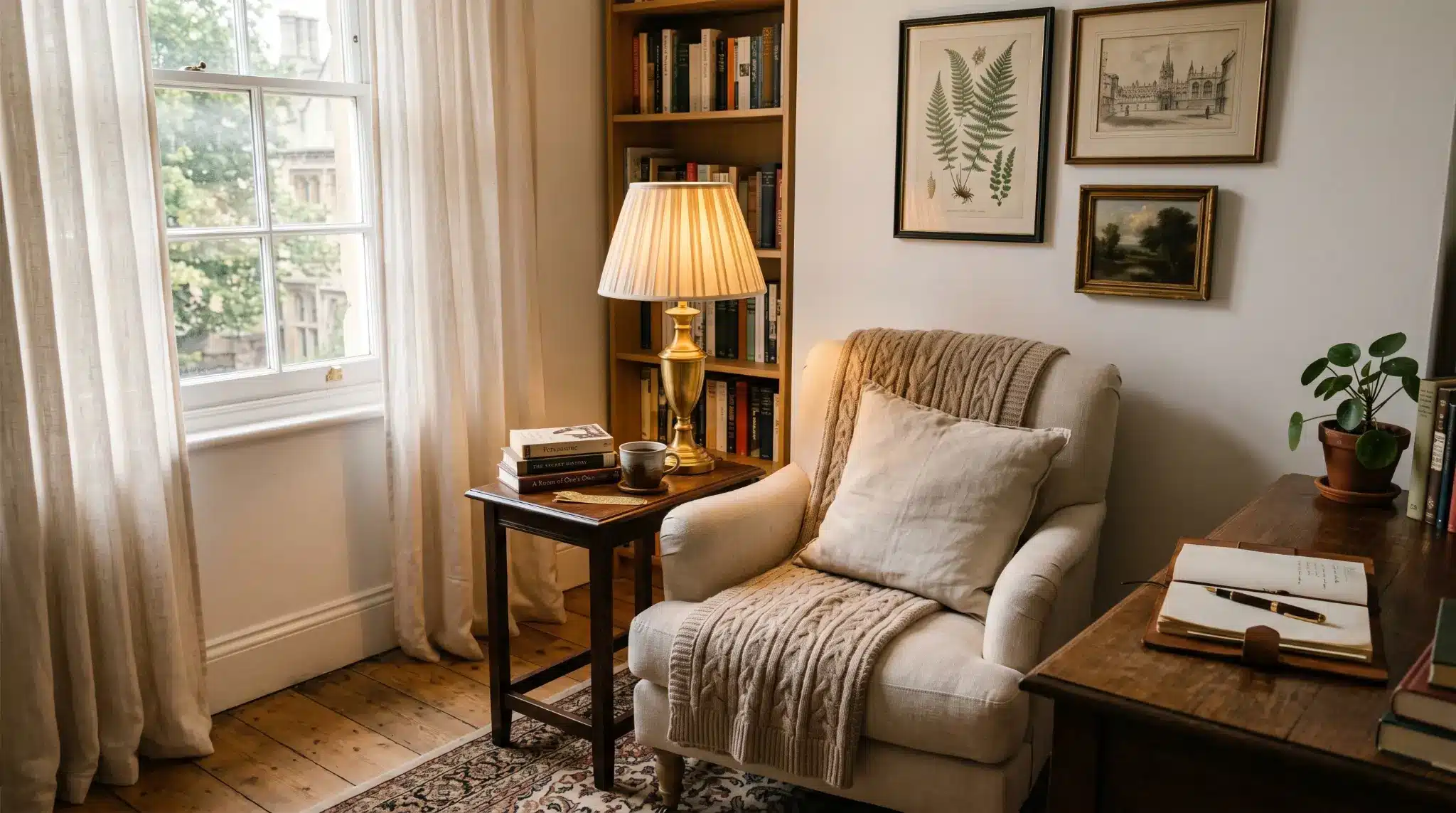
A light academia room should have at least one corner that invites reading, writing, or quiet time. It can be as simple as a chair, lamp, side table, and a small stack of books.
In a bedroom, this could be a nightstand setup. In a living room, it could be a reading chair. In a dorm, it could be the desk. The point is to make the style useful, not just decorative.
Light Academia Aesthetic Ideas for Different Rooms
You can bring the light academia aesthetic into any room with a few steady choices: warm lighting, pale colors, books, wood, and soft fabric.
Start with the room you use most, then use the ideas below to shape it around reading, rest, work, or quiet daily routines.
1. Apartments and Small Spaces
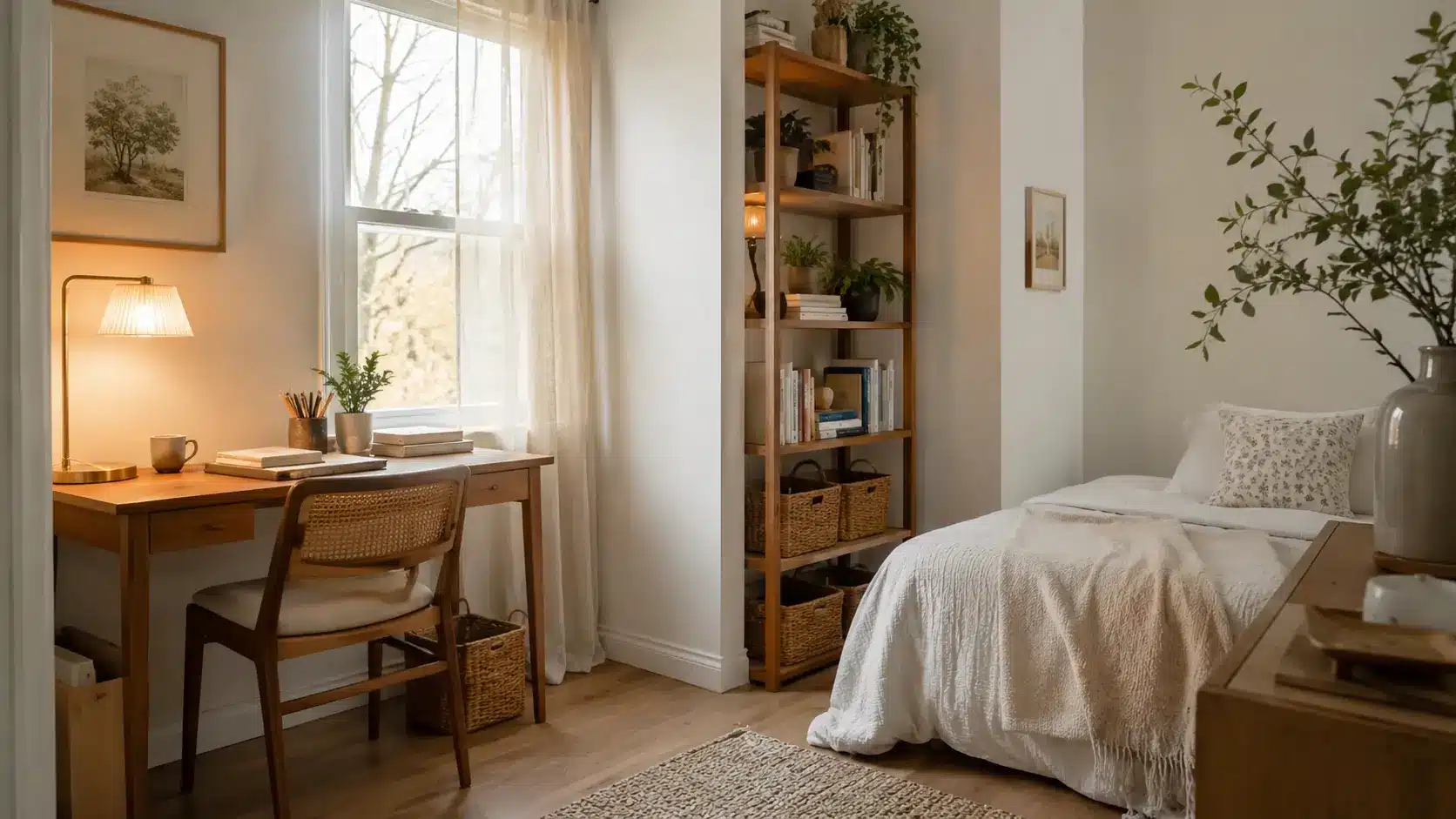
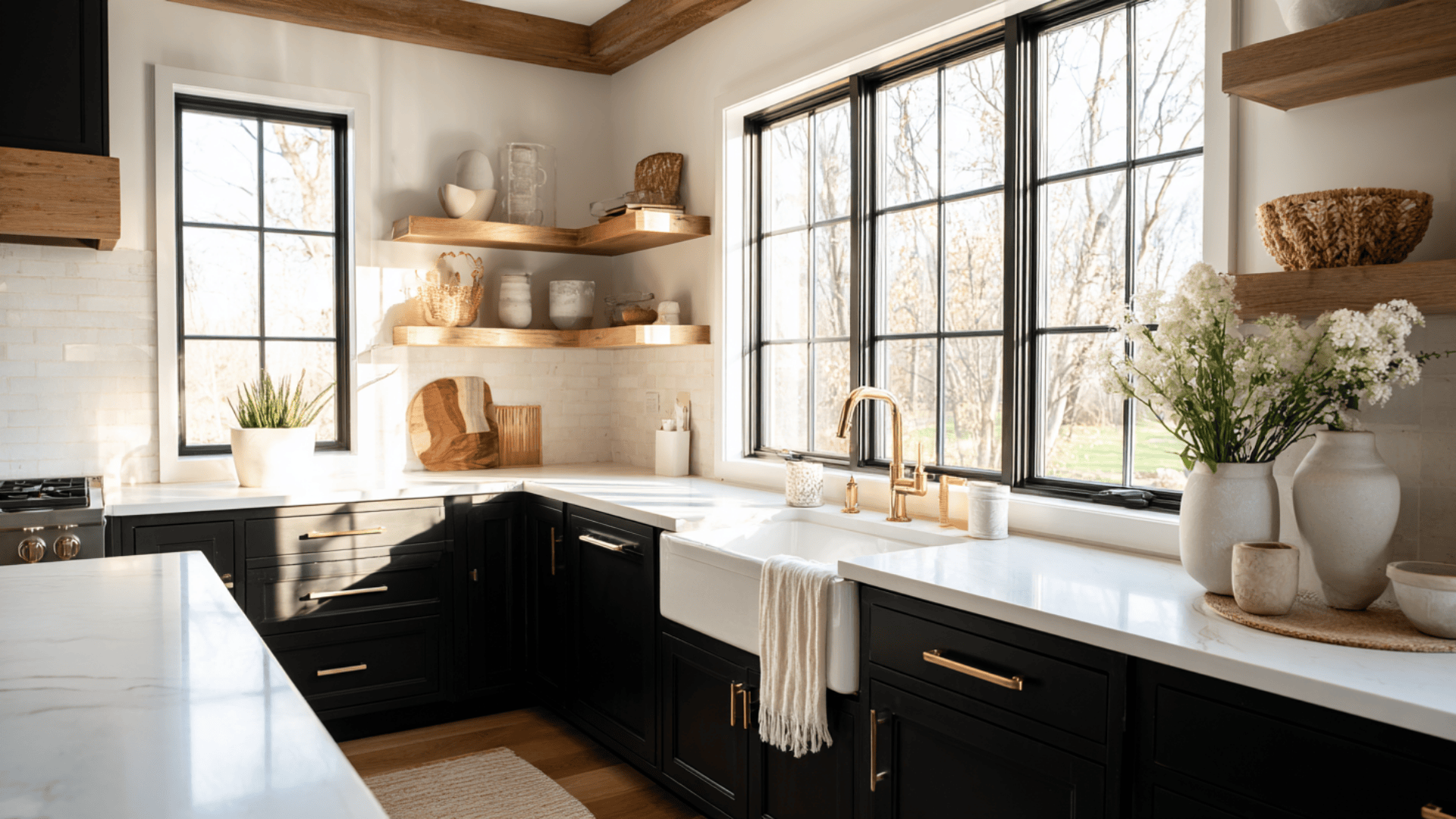
In small spaces, restraint matters. Use light colors, simple furniture, and quiet storage so the room feels open. A tall shelf can add height without taking up much floor space. A small desk near a window can give the room a clear purpose.
Keep only the most meaningful pieces on display. Books, a lamp, a frame, and one soft textile can be enough. Store the rest in baskets, drawers, or boxes so the room does not feel crowded. Small rooms often work well with this look because the mood is gentle. You do not need much. You just need the right few pieces.
2. Living Rooms
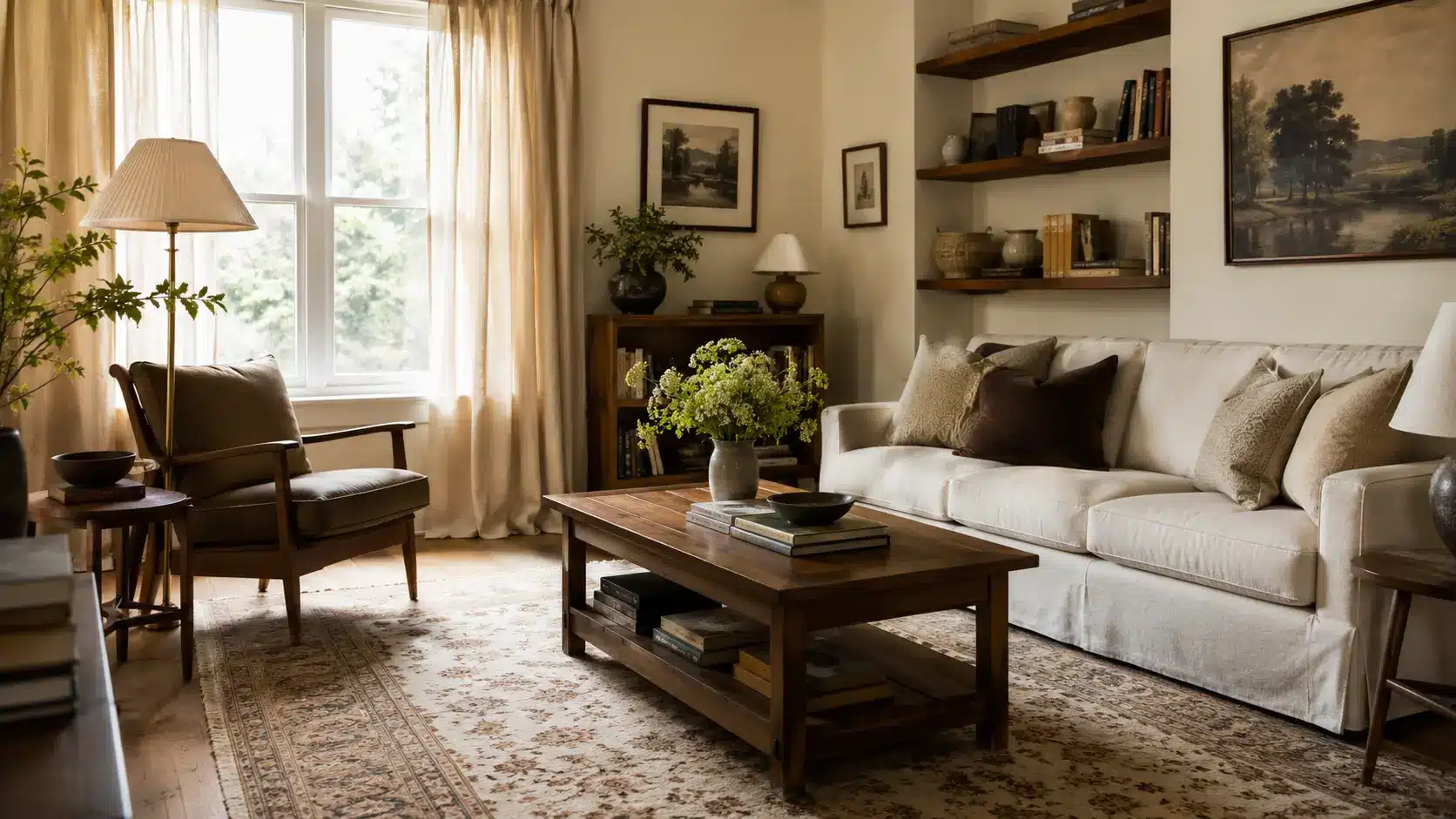
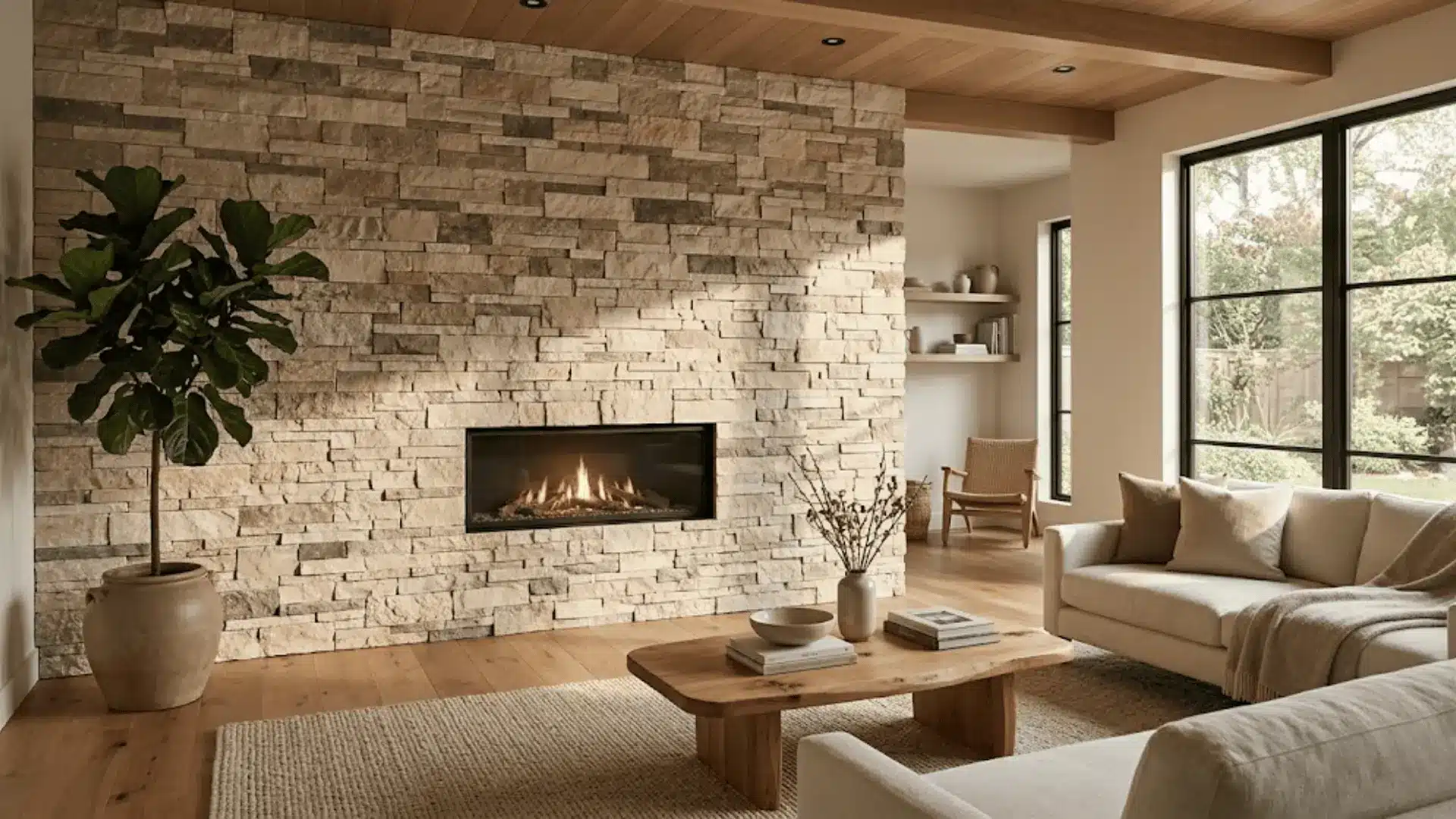
In a living room, start with comfort. A soft sofa, a reading chair, a wood coffee table, and warm lighting can set the base. Place the furniture so the room does not feel built only around the TV. It should also allow reading, talking, or sitting quietly.
Bookshelves or floating shelves can bring height and interest. Add framed art, pale fabric, and one or two older pieces for warmth. The room should feel open enough for guests, but calm enough for slow evenings.
3. Bedrooms
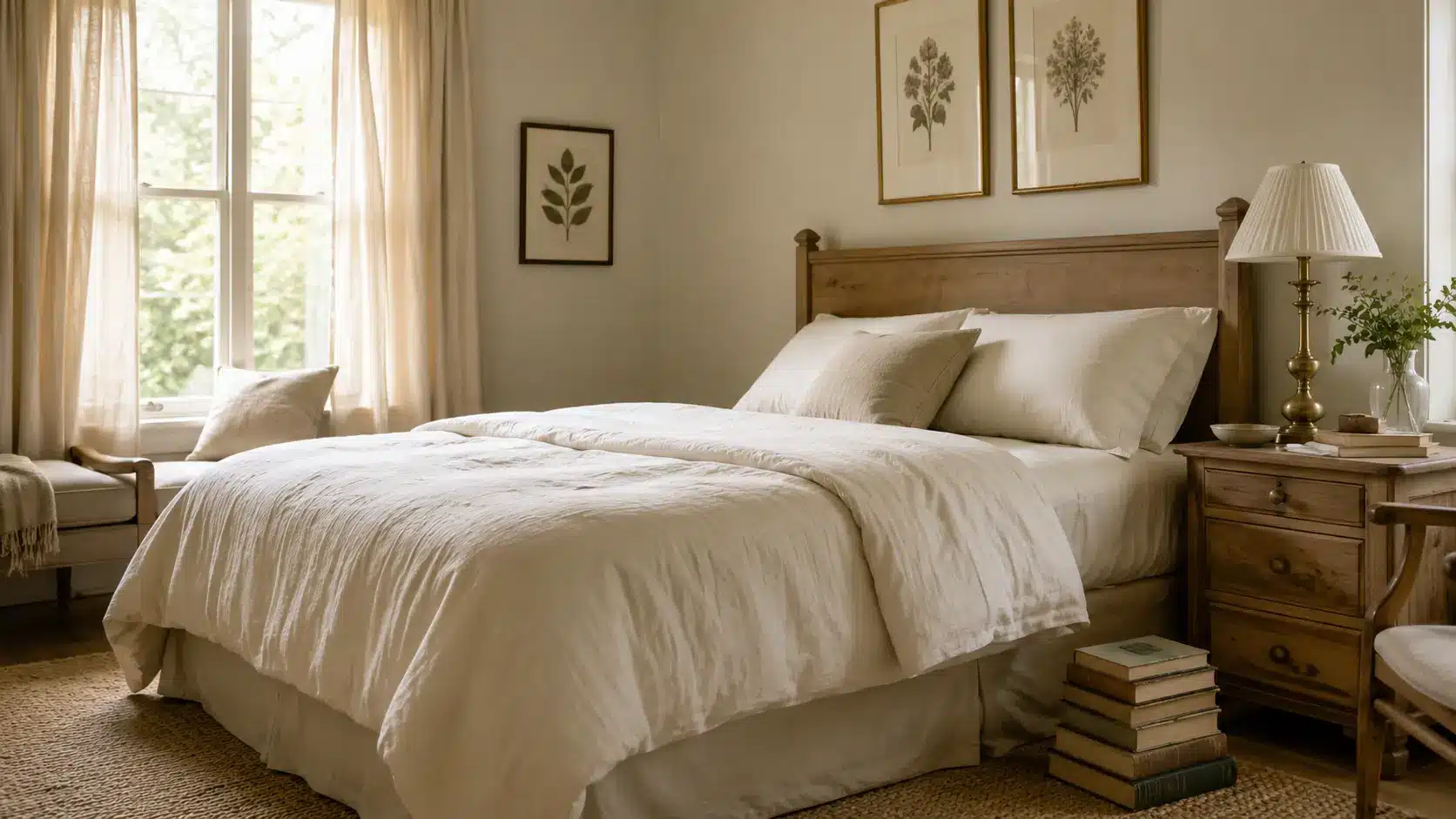
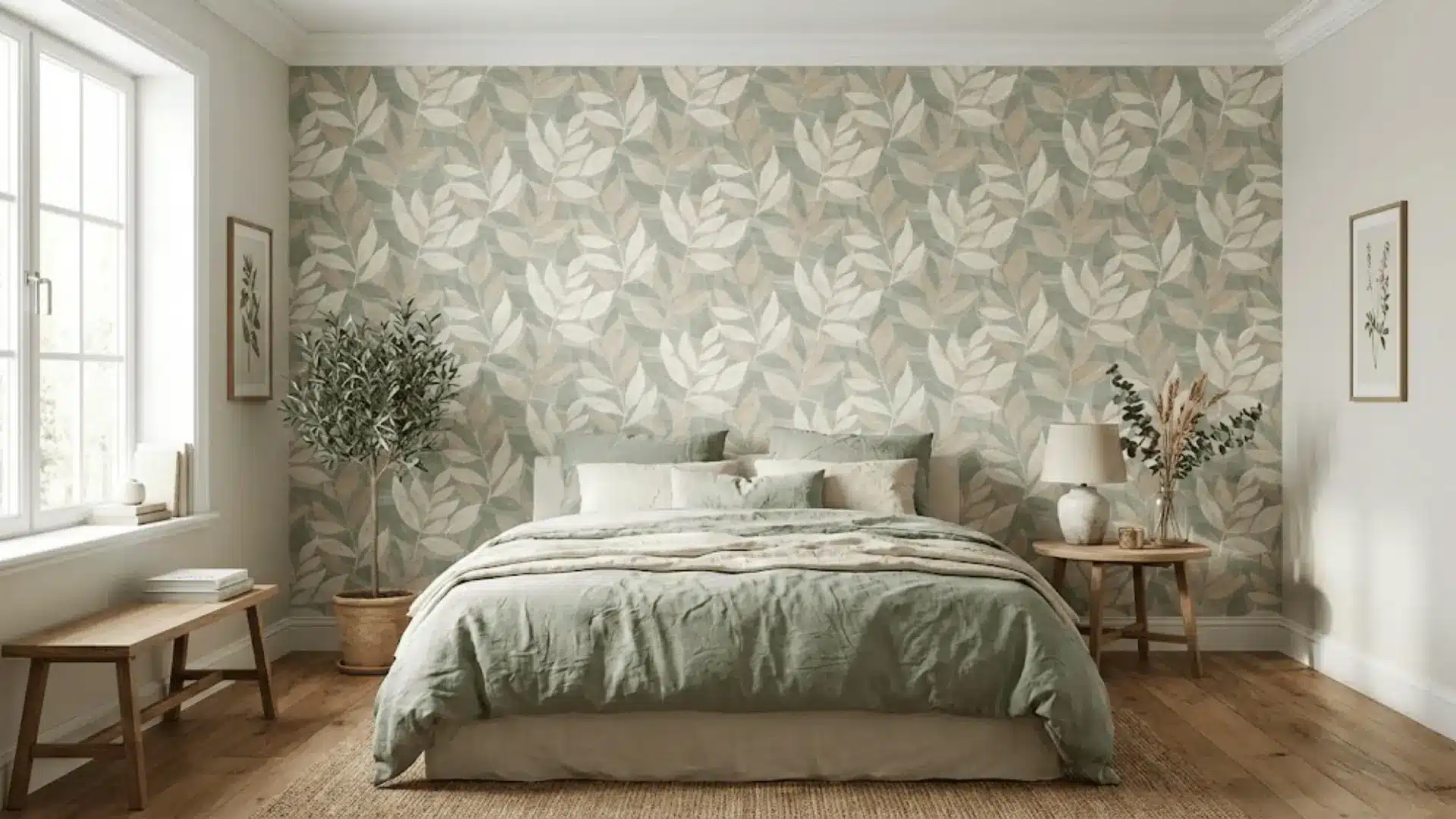
In bedrooms, the light academia aesthetic should feel restful, not busy. Cream bedding, warm lamps, wood nightstands, and soft curtains can do most of the work.
A small stack of books near the bed feels natural. A framed print above the headboard can make the room feel more complete. If you have space, a small chair or bench can help the room feel more layered. Avoid filling the bed or nightstand with too many things. A bedroom should still feel easy to use at the end of the day.
4. Home Offices and Studies
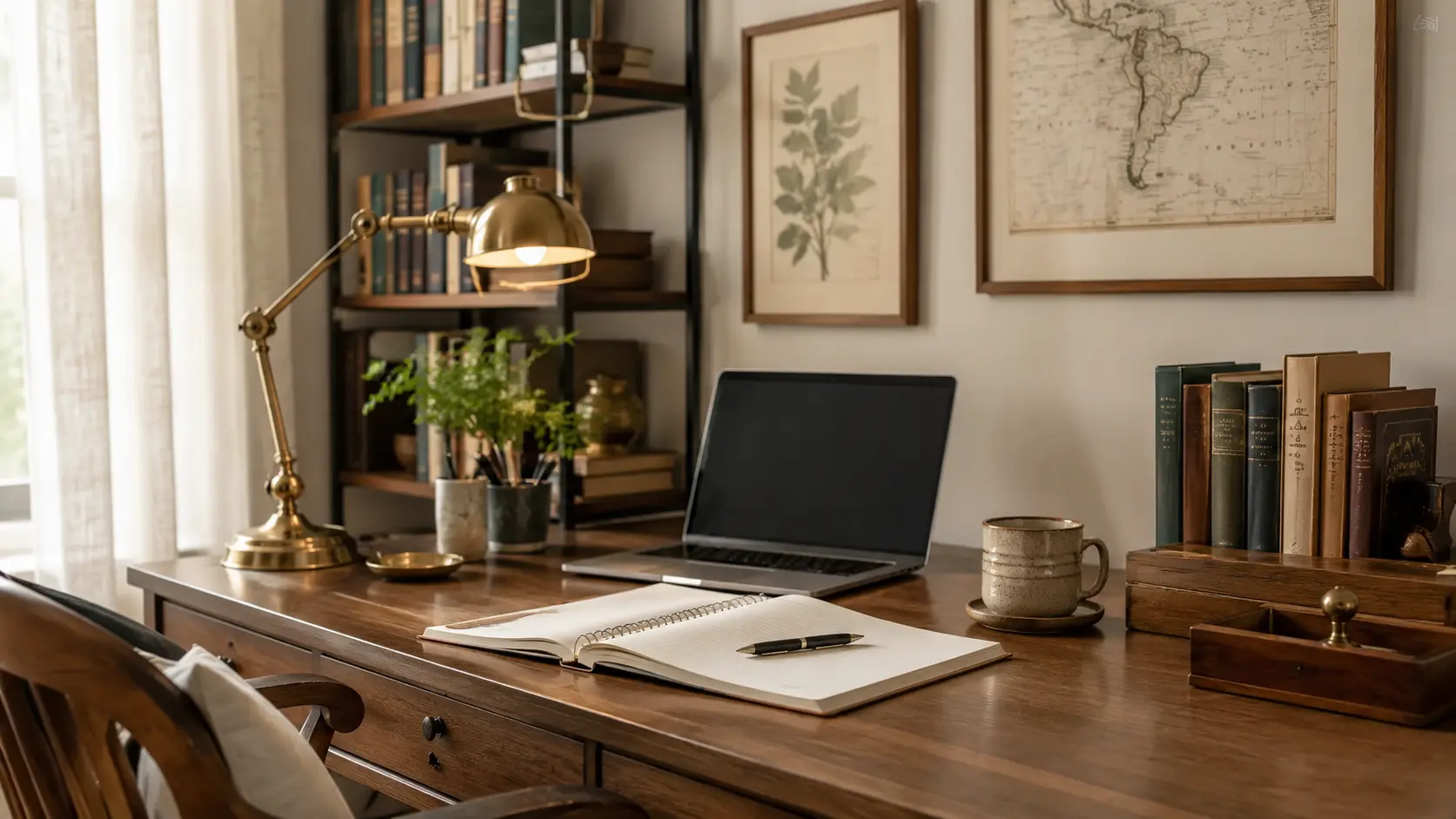
This is where the style fits most naturally. A desk, chair, lamp, and shelf can create a strong mood even in a small corner.
Keep the setup practical. The desk should have room for your laptop, notebook, and daily items. A lamp should give enough light for work. Art, books, and small objects can bring in character, but they should not make the surface hard to use. A good study area should make you want to sit down. It should feel calm, but still ready for work.
5. Dorms and Rentals
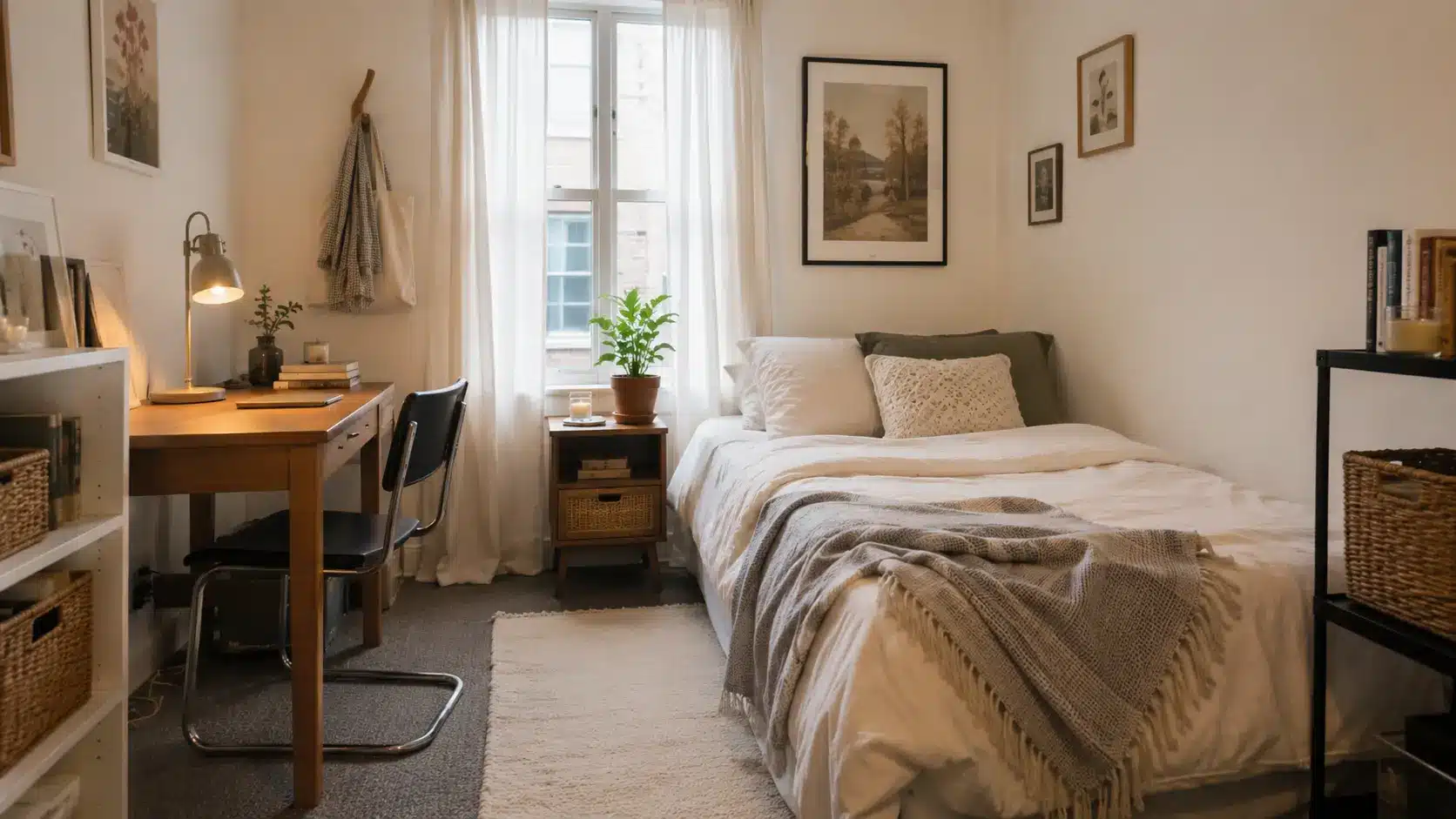
Dorms and rentals can still carry the look, even when you cannot paint or change furniture. Use the parts you can control: bedding, lamps, wall art, books, curtains, and small storage.
A clip lamp, thrifted books, removable prints, a soft throw, and a small desk setup can change the mood without permanent changes. The goal is to make the room feel softer while still keeping it easy to move or reset.
Modern Light Academia for Today’s Homes
Light Academia has changed with the way people live now. It is no longer only about old libraries, dark wood, or school-like rooms. In modern homes, it feels cleaner, softer, and easier to live with.
You can bring this look into everyday spaces through simple pairings:
- A clean-lined sofa with a vintage side table
- A white desk with a brass lamp and secondhand books
- Cream bedding with wood frames and a soft reading chair
- Plain walls with warm lighting and classic details
This style keeps the thoughtful feeling of Light Academia without copying the past too closely. The room does not need to look like a set. It should feel lived in, calm, and useful.
That is why modern Light Academia works well in apartments and newer homes. It adds warmth and character without making the space feel heavy.
Light Academia Compared to Similar Styles
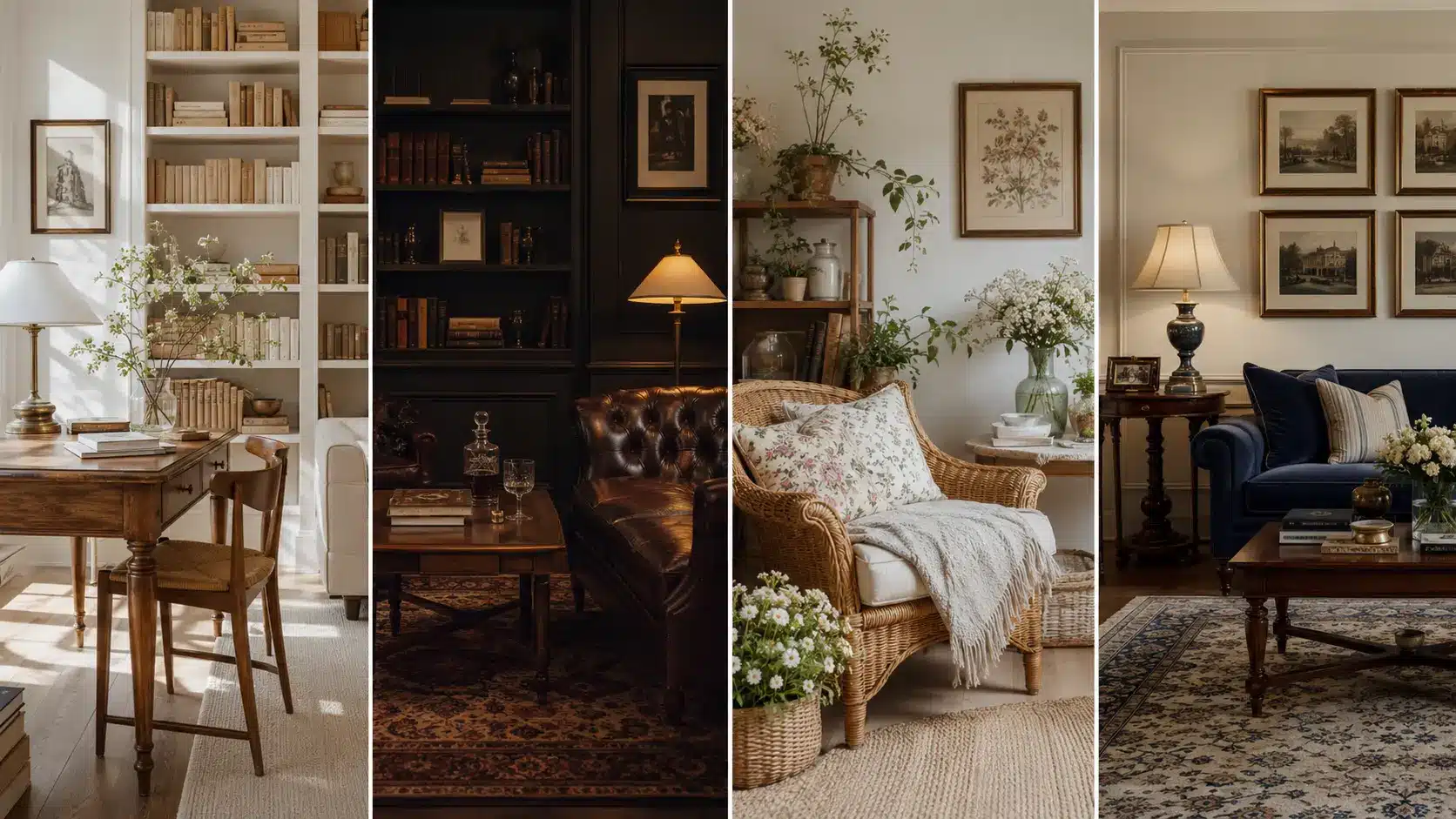
Light Academia shares ideas with other interior styles, but the feeling is different. This comparison helps you keep the room bright, bookish, and soft instead of making it too dark, rural, or formal.
| Style | Mood | Colors and Light | Materials and Room Pieces | Overall Feel |
|---|---|---|---|---|
| Light Academia | Soft, bright, bookish | Pale neutrals, warm daylight | Linen, books, wood, brass, art | Calm, thoughtful, airy |
| Dark Academia | Quiet, deep, bookish | Dark tones, low lighting | Wood, leather, books, vintage art | Moody, layered, still |
| Cottagecore | Gentle, rural, cozy | Florals, pastels, natural light | Rattan, flowers, quilts, ceramics | Homey, soft, nature-led |
| Traditional | Polished, classic, formal | Balanced tones, structured light | Matching wood, framed art, refined fabrics | Ordered, neat, formal |
Use the table as a quick check while decorating. If the room starts feeling too dark, too floral, or too formal, bring it back with pale colors, warm light, useful books, and simple wood pieces.
Light Academia Pieces to Add First
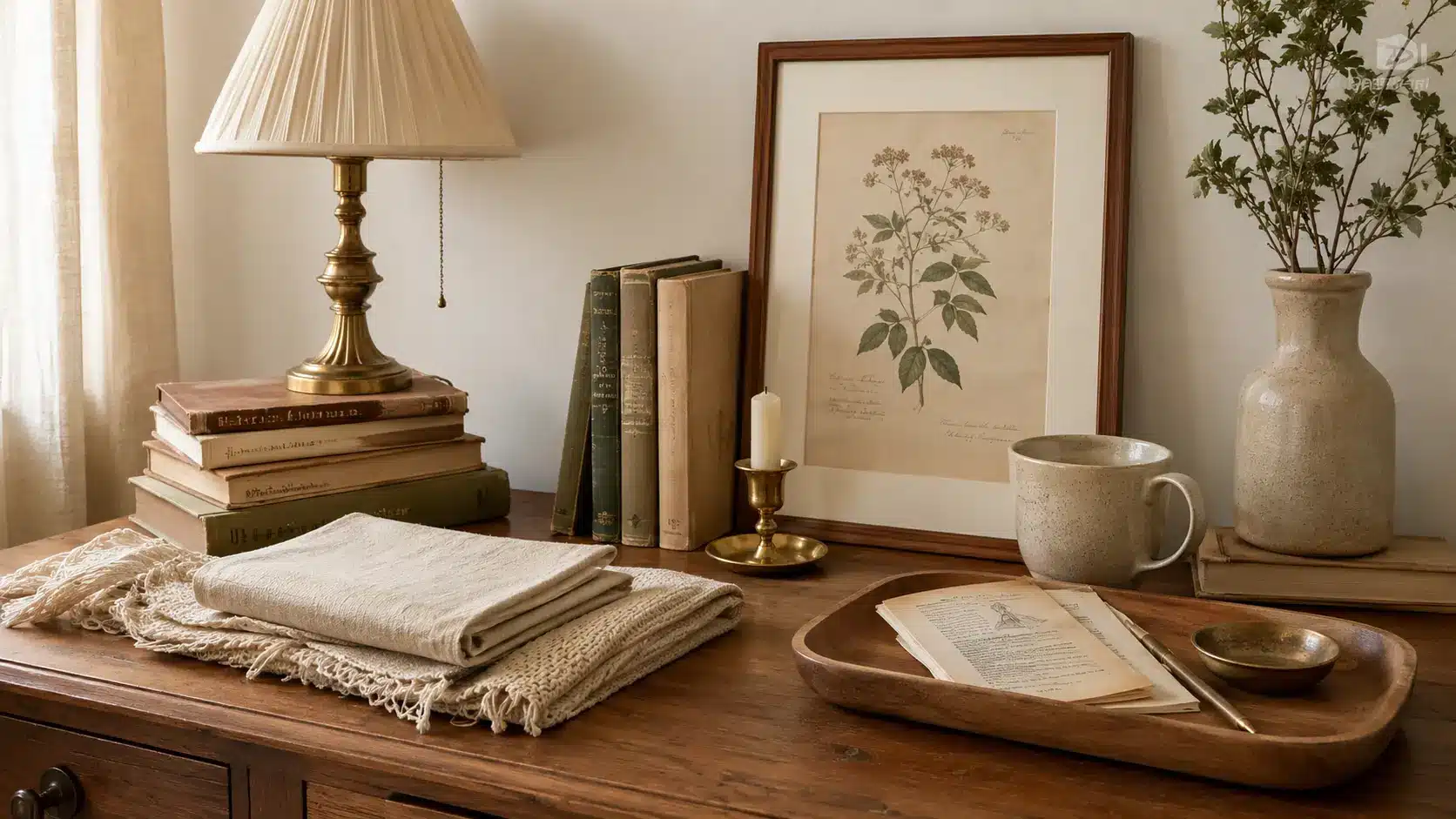
If the room feels far from this look, start with the pieces that change the mood fastest. Build the room in layers instead of filling every surface at once.
- Warm lighting: Start with a table lamp, desk lamp, or floor lamp. Warm bulbs make a plain corner feel softer at night and help the room move away from harsh ceiling light.
- Soft fabric: Add linen curtains, cotton bedding, a neutral rug, or a light throw. Fabric covers more visual space than small objects, so it changes the room quickly.
- One useful wood piece: Bring in a desk, shelf, nightstand, side table, or chair. Warm wood gives the room shape and makes the style feel grounded.
- Bookshelves and books: Mix upright books with small stacks. Leave some open space so the shelf feels collected, not packed. Add one framed print, vase, or candle holder if the shelf needs balance.
- Wall pieces: Use botanical prints, old maps, soft sketches, sheet music, or museum-style art. Wood, brass, and antique gold frames usually work better than shiny plastic or silver frames.
- Desk details: Keep the desk useful first. A notebook, warm lamp, pen cup, tray, and one framed piece nearby can make the area feel academic without turning it into a theme.
- Small finishing pieces: Add ceramic cups, wood trays, woven baskets, brass candle holders, and simple vases slowly. Choose fewer pieces with purpose instead of filling every surface.
These pieces work best when they are added slowly. Start with the parts you will use every day, then bring in smaller details only when the room already feels comfortable and clear.
Common Mistakes That Ruin the Look
It is easy to get excited about Light Academia and go too far. But the room works best when it feels natural and thoughtful, not like a theme or a costume.
Here are some common missteps that can make the space feel off instead of calm and warm:
- Using too many dark pieces, which can make the room feel closer to Dark Academia
- Buying fake old items that look too shiny or plastic
- Filling shelves until they lose shape and breathing room
- Using only ceiling lights instead of softer lamps
- Choosing pale colors without adding texture, which can make the room feel flat
- Buying many small objects before fixing furniture, lighting, and fabric
- Adding books only for display, instead of keeping pieces that feel personal
A good Light Academia room feels lived in, not staged. It is better to start with a few strong choices and let the room grow slowly.
Frequently Asked Questions
Can I create this look without many books?
Yes. Use notebooks, framed art, a desk lamp, linen fabric, and a few meaningful titles. The room can still feel bookish if the pieces suggest reading, writing, and quiet time.
What can I use instead of vintage furniture?
Use simple wood furniture, cane details, warm lamps, framed prints, and soft fabric. The piece does not need to be old. It only needs to feel warm, useful, and not too glossy.
How do I make dark furniture work?
Balance it with cream fabric, pale walls, warm lighting, and lighter art. One dark desk or shelf can work well, but too many dark pieces may pull the room toward a heavier style.
What if my room has very little sunlight?
Use warm bulbs, mirrors, pale curtains, and lamps at different heights. A desk lamp, table lamp, and floor lamp can make the room feel softer when natural light is limited.
Can this work with colorful decor?
Yes, but keep the colors muted. Sage, dusty blue, faded rose, clay, and soft mustard work better than bright neon shades. Use color in art, cushions, books, or small fabric pieces.
Wrap Up
The light academia aesthetic works best when your room supports reading, rest, and daily use. It should not feel like a set or a copy of someone else’s photo.
Start with the space you use most. Add one warm lamp, one useful wood piece, a few books, soft fabric, and art that feels quiet. Then adjust the room slowly instead of filling every surface at once.
I would begin with a corner because small changes are easier to finish and easier to live with. Clear one surface, fix one shelf, or soften one chair today. Let the room grow from there until it feels like home for you.