Laundry rooms get messy fast. One load turns into loose socks, crowded shelves, sticky bottles, and hampers that never seem to stay empty.
If you are trying to figure out how to organize laundry room storage without making the space feel stiff or overdone, the right setup can make a big difference.
I’ll help you sort what belongs there, create useful zones, choose better cabinet storage, and make room for folding, drying, and daily supplies.
By the end, you will have simple ideas that make your laundry room easier to use and nicer to look at.
Why Laundry Rooms Get Messy So Fast
Laundry rooms often hold more than just laundry supplies. Detergent, stain remover, towels, hampers, cleaning sprays, paper goods, and random pocket items can all end up in the same small space.
When there is no clear system, the room quickly becomes crowded and hard to use. Before you start organizing, it helps to understand what is causing the mess.
Most laundry room clutter comes from three things: too many products, poor storage placement, and no fixed zones for daily tasks.
How to Organize a Laundry Room in 6 Simple Steps
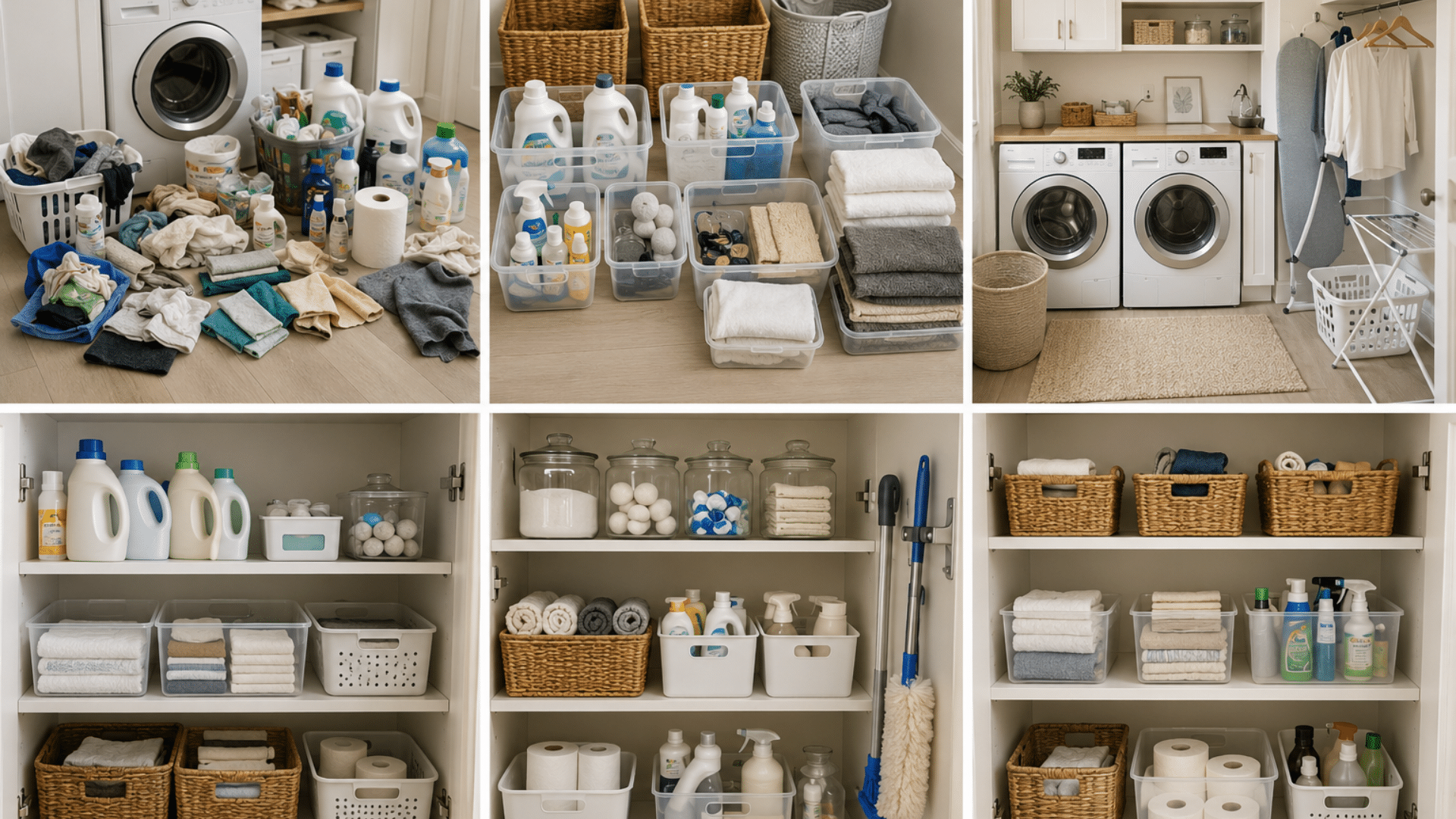
A well-organized laundry room makes washing, drying, and folding clothes faster, easier, and far less stressful.
- Empty everything first: Remove items from cabinets, shelves, counters, carts, hampers, and the floor. Toss empty bottles, expired products, and supplies no one uses. Move unrelated items to better rooms, then wipe shelves and counters before restocking.
- Sort items by category: Group laundry supplies, stain care, dryer supplies, ironing and garment-care tools, cleaning tools, towels, linens, paper goods, hampers, sorting baskets, and pocket finds before buying bins or putting anything back.
- Create zones based on the laundry routine: Set up a wash zone near the washer, a dry zone near the dryer, a folding zone on a flat surface, a hang-dry zone with a rack or rod, a cleaning zone, and an overflow zone for refills.
- Store daily items within easy reach: Keep detergent, stain spray, dryer sheets, dryer balls, lint rollers, mesh laundry bags, and a small lint bin at eye or waist level. Store extra detergent, paper goods, seasonal towels, linens, and bulk supplies higher, lower, or in an overflow area.
- Use containers that match the item: Store detergent bottles on a shelf, tray, or pull-out caddy. Use secure clear containers for pods or dryer balls, open baskets for towels, labeled bins for cleaning cloths, wall holders for mops, and a small bowl for loose change or buttons.
- Label each zone: Use broad labels like Laundry, Stain Care, Dryer Items, Cleaning Cloths, Extra Towels, Paper Goods, Garment Care, and Refills. Simple labels make the setup easier to maintain without constant changes.
Laundry Room Cabinet Ideas That Add Storage Without Clutter
The right laundry room cabinets can keep supplies organized, maximize storage, and make the space feel cleaner without adding visual clutter. These ideas combine function and style to help you get more from every inch of your laundry room.
1. Use Upper Cabinets for Supplies That Need to Stay Hidden
Wall cabinets above the washer and dryer are useful for storing products that do not need to sit out on counters. Use them for detergent, stain remover, dryer sheets, cleaning sprays, extra soap, and small baskets. Keep the products used most often on the easiest shelf to reach.
If detergent pods, bleach, or strong cleaning products are stored in these cabinets, make sure they are secure. This matters most in homes with children or pets.
2. Add Adjustable Shelves Inside Cabinets
Adjustable shelves help prevent wasted cabinet space. Set taller openings for detergent bottles, bleach, and spray cleaners. Use shorter openings for shallow baskets, folded towels, and smaller laundry supplies.
Higher shelves can hold backup products, paper goods, or seasonal items. Lower shelves work better for heavy bottles and bulk supplies because they are safer and easier to lift.
3. Use Pull-Out Baskets in Deep Cabinets
Deep cabinets can get messy when small items slide to the back. Pull-out baskets make those supplies easier to see, reach, and return after use.
Use pull-out baskets for hand towels, cleaning cloths, dryer balls, extra sheets, laundry bags, and shoe cleaning kits. Add simple labels so each basket has a clear purpose.
4. Hide Hampers Behind Cabinet Doors
Built-in or pull-out hampers keep dirty clothes out of sight and make the room feel cleaner. They also help with sorting before laundry starts.
Hampers can be used for whites, darks, and colors. They can also separate towels, clothes, bedding, adult laundry, kids’ laundry, everyday pieces, and hand-wash items.
5. Add a Tall Utility Cabinet for Cleaning Tools
A tall utility cabinet works well for items that do not fit neatly on shelves. Use it for a mop, broom, vacuum attachments, ironing board, stepstool, duster, and steamer.
Add hooks, holders, or clips inside the cabinet so tools stay upright instead of falling over. Store heavier tools near the bottom and lighter items higher up.
6. Use the Inside of Cabinet Doors
The inside of cabinet doors can hold small items that often get lost. Add a stain chart, laundry symbol chart, ironing guide, or a clip for missing socks.
Small hooks can hold mesh bags, brushes, or laundry scoops. A narrow rack can also work for lint rollers, dryer sheets, or small stain tools.
7. Choose Closed Cabinets, Open Shelves, or Both
Closed cabinets are best for hiding bottles, refills, and cleaners. Open shelves work well for baskets, towels, jars, and folded items. Glass-front cabinets can look clean, but visible clutter shows quickly.
| Storage Type | Best For | Possible Issue |
|---|---|---|
| Closed cabinets | Hiding bottles, refills, and cleaners | Can get messy inside |
| Open shelves | Baskets, towels, jars, and folded items | Needs regular straightening |
| Glass-front cabinets | Neat towels and containers | Visible clutter shows fast |
| Tall cabinets | Mops, hampers, and ironing boards | Needs inner organizers |
| Lower cabinets | Heavy bottles and backup supplies | Items can get pushed to the back |
Small Laundry Room Ideas That Save Space
- Add wall cabinets above the machines: Use upper wall space for detergent, stain care, dryer supplies, and backup products.
- Use a slim rolling cart beside the washer: Store detergent, stain spray, dryer balls, lint roller, and cleaning cloths in a narrow cart.
- Add an over-the-door organizer: Use the door for an ironing board, spray bottles, mesh bags, small cleaning tools, and extra hangers.
- Use a fold-down drying rack: Add drying space for air-dry items without taking over the room.
- Add a tension rod or short hanging rod: Use it for air-dry shirts, freshly steamed clothes, and hangers waiting to return to closets.
- Use stackable machines when floor space is tight: Stacking machines can free space for cabinets, a hamper, or a folding surface.
Laundry Room Ideas by Layout
These layout-specific ideas can help you make the most of your room, whether you’re working with a compact closet, a narrow hallway, or a spacious dedicated laundry area.
1. For a Galley Laundry Room
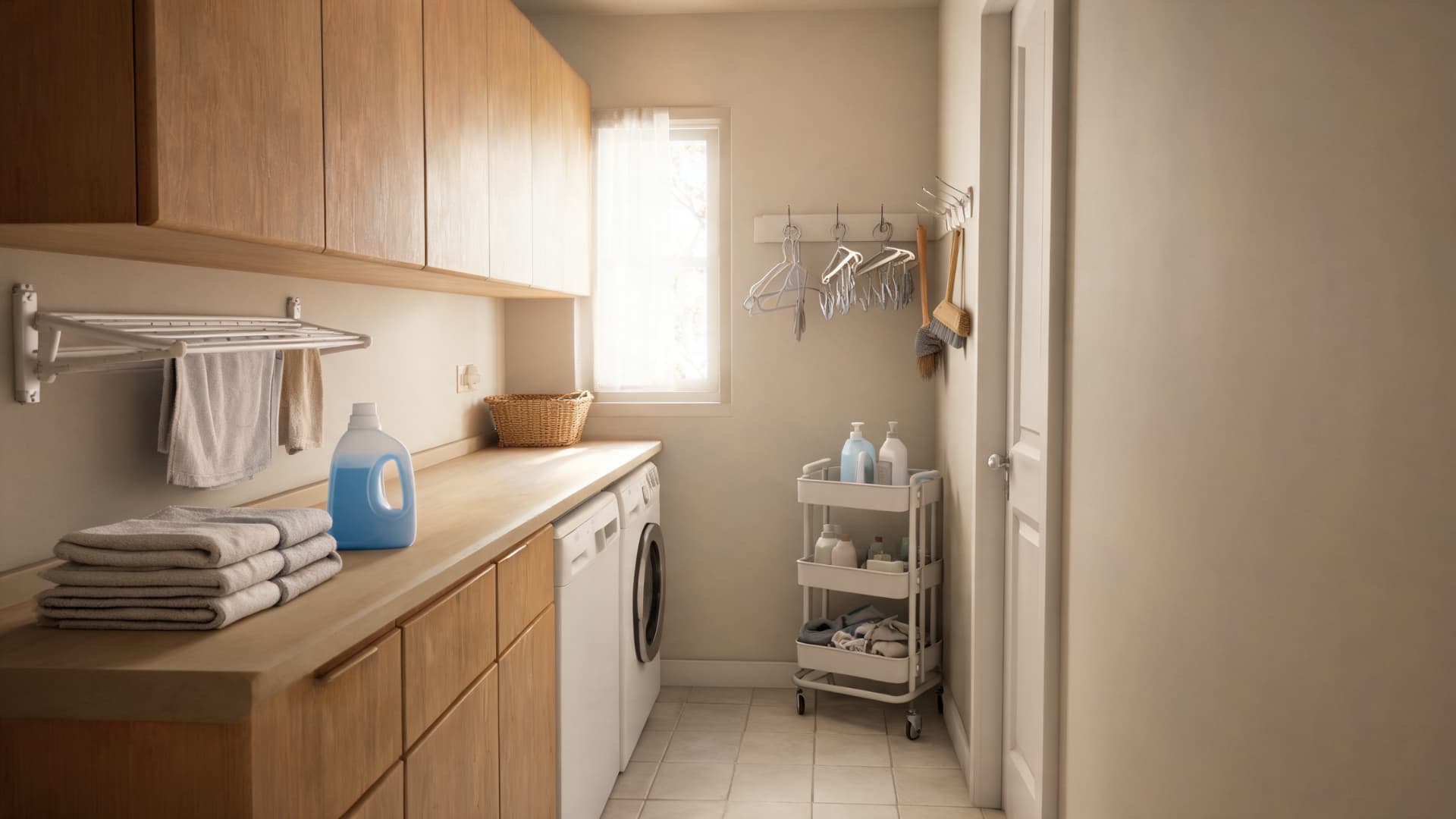
Use a long counter to create a folding area along one wall. Add upper cabinets for supplies, a narrow rolling cart for small products, a wall-mounted drying rack, and hooks at the end wall for bags, hangers, or cleaning tools.
2. For a Mudroom-Laundry Combo
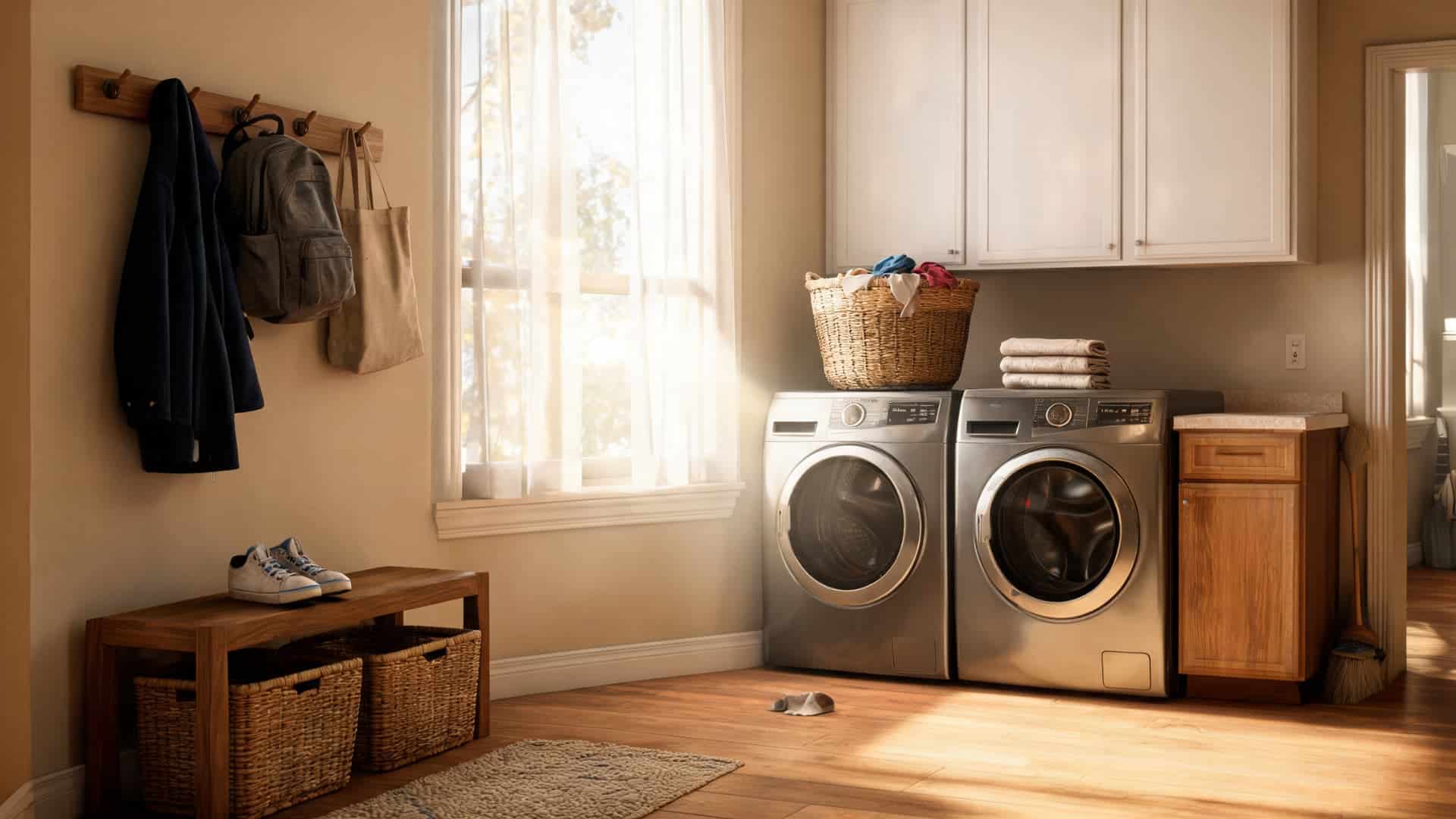
Divide the space into clear areas for shoes, bags, laundry, and cleaning supplies. Use closed cabinets for detergent, bench baskets for family items, and hooks placed away from drying clothes so wet garments do not crowd daily entryway items.
3. For a Laundry Room With a Sink
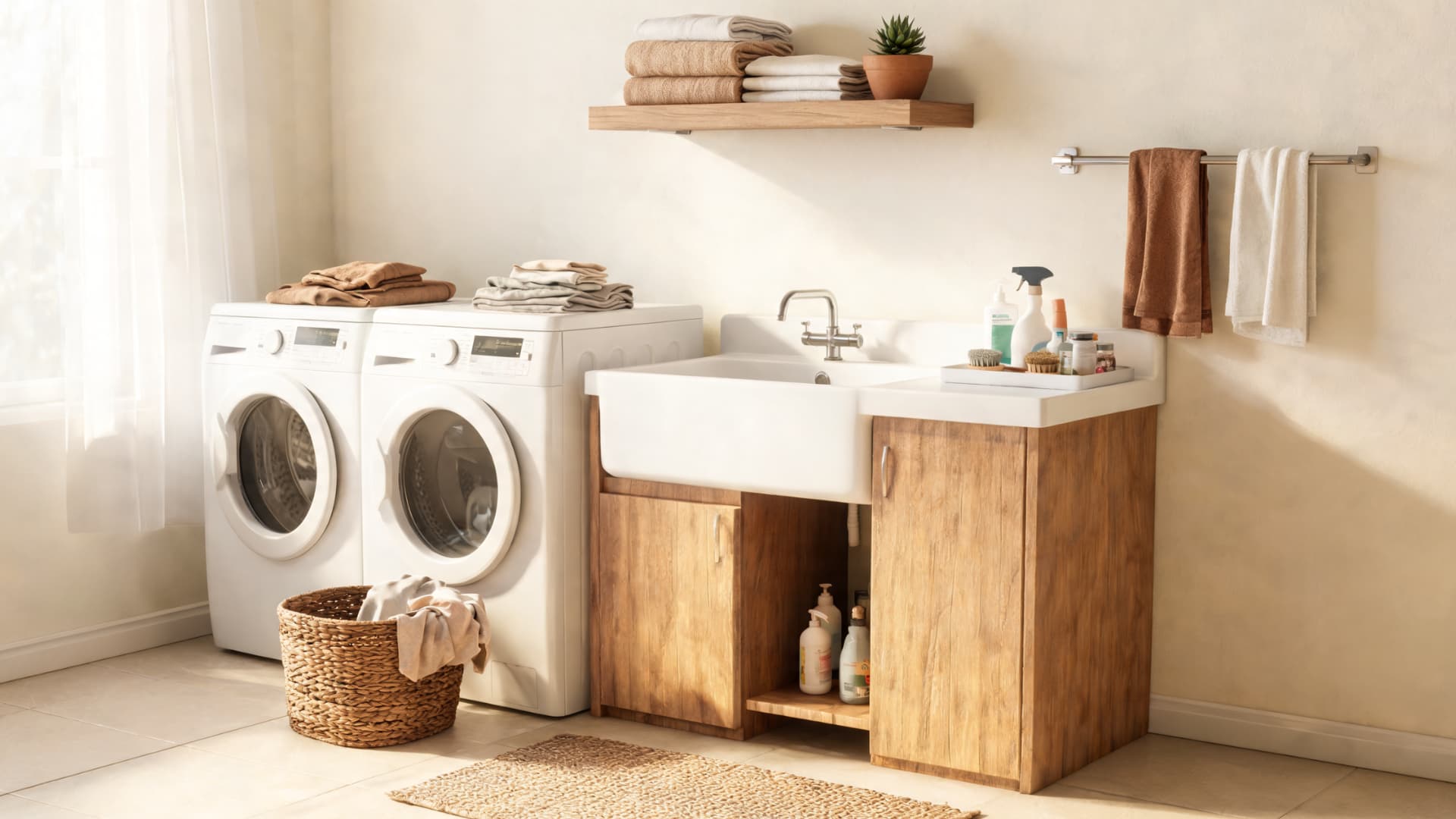
Use the under-sink cabinet for cleaning supplies and refills. Keep a tray beside the sink for stain care products, add a wall shelf above the sink for towels, and place a drying rod nearby for hand-wash items.
4. For Top-Load Machines
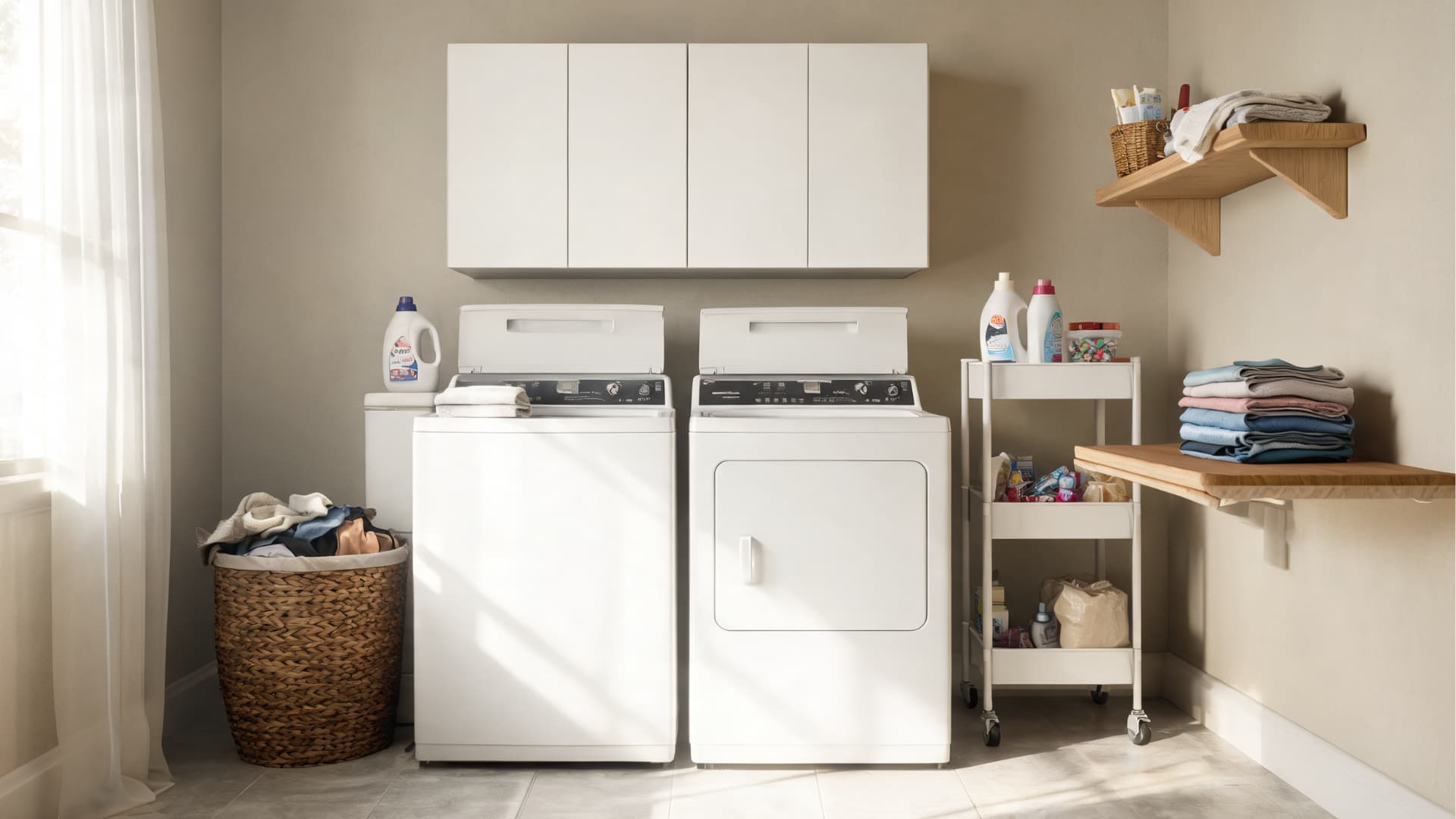
Use wall cabinets instead of a full counter over the machines. Add a side cart for detergent, a wall shelf above easy reach, and a fold-down table nearby for folding clothes.
5. For Front-Load Machines
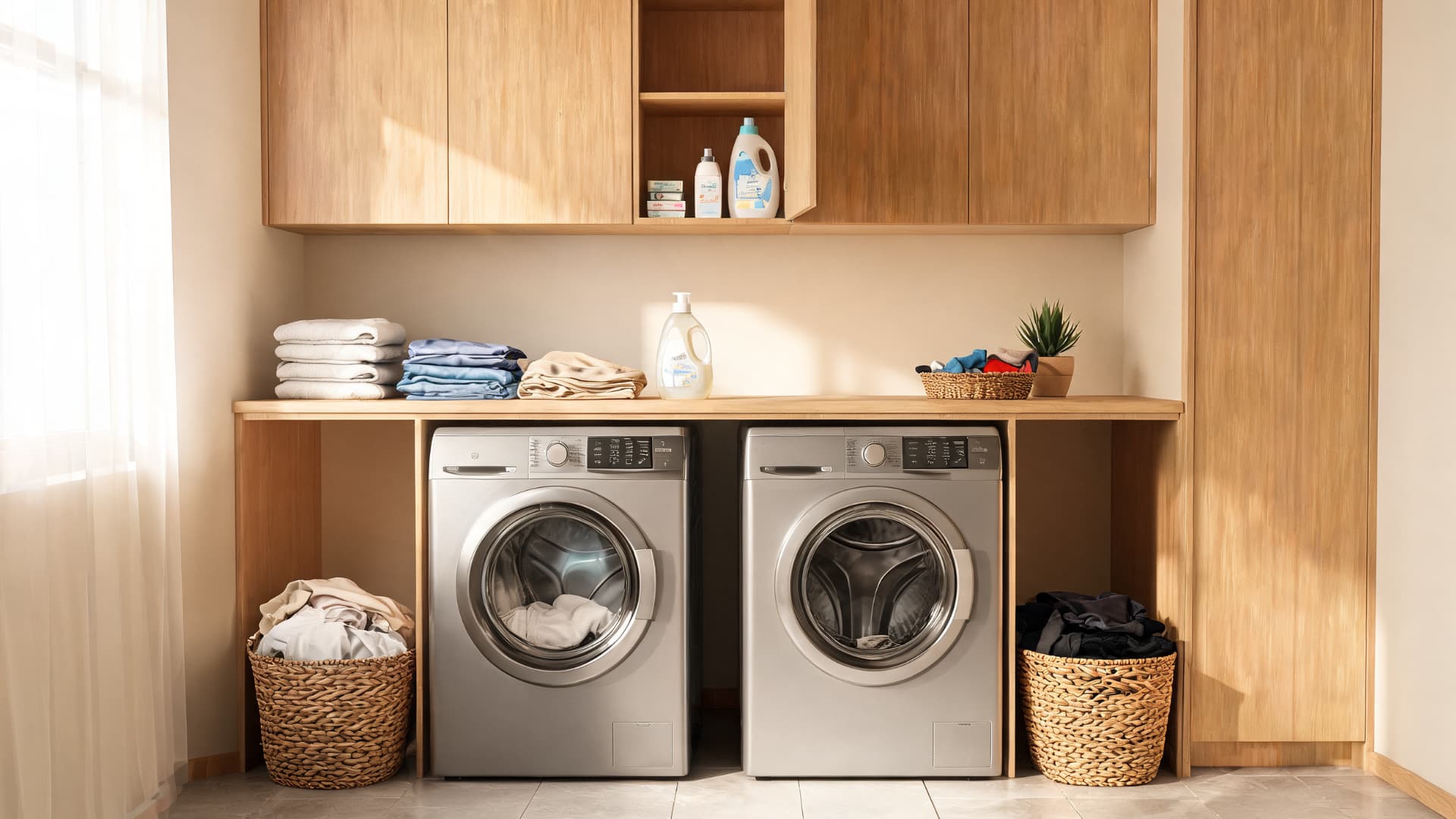
Add a countertop over the machines to create a folding zone directly above the appliances. Use under-counter baskets for sorted laundry and upper cabinets for detergent, dryer supplies, and backup products.
Common Mistakes to Avoid
Even the best organizing plan can fall apart if a few common mistakes creep in. Avoid doing these:
- Buying bins before sorting: Buying baskets, bins, or drawer organizers too early often leads to poor fit and wasted money. Sort everything first, then measure shelves, cabinets, and product sizes before choosing storage.
- Using too many tiny categories: Labels should make the room easier to use, not harder to maintain. Instead of creating separate bins for every small item, use broader labels like Laundry, Stain Care, Dryer Items, Cleaning Cloths, and Refills.
- Letting the counter become a drop zone: A folding counter stops being useful when it collects random items, clean clothes, mail, bags, or extra supplies. Keep this surface mostly clear so clothes can be folded and sorted right away.
- Keeping too many backup products: Extra detergent, paper towels, dryer sheets, and cleaning sprays can quickly crowd cabinets. Keep only what fits neatly in the overflow zone, and avoid buying more until current backups are running low.
- Ignoring wall and door space: Small laundry rooms need vertical storage to work well. Use wall hooks, over-the-door racks, cabinet-door organizers, hanging rods, or wall-mounted drying racks to free up counters, shelves, and floor space.
Frequently Asked Questions
What should not be stored in laundry room cabinets?
Avoid storing food, medicine, important papers, candles, and heat-sensitive items in laundry room cabinets. Moisture, heat, and chemical products can damage these items or make the space less safe.
How deep should laundry room cabinets be?
Upper laundry room cabinets are often around 12 inches deep, while lower cabinets are usually deeper. Before buying organizers, measure cabinet depth, bottle height, shelf spacing, and door swing clearance.
How do I keep laundry detergent from making shelves sticky?
Place detergent bottles on a washable tray, plastic liner, or pull-out caddy. Wipe bottle caps after use and avoid overfilling decorative containers if liquid detergent tends to drip.
What is the best way to store air-dry clothes in a small laundry room?
Use a fold-down drying rack, short hanging rod, tension rod, or over-door drying rack. Choose an option that folds away so the room still has space for sorting and folding.
Conclusion
A tidy laundry room is easier to use when every item has a clear place and the setup matches your routine.
I like starting with the basics: clear the space, sort supplies, create zones, and keep daily products close to the washer and dryer.
You can then add cabinets, baskets, labels, drying racks, and small storage fixes that make the room feel cleaner without adding extra work.
The real value is simple: you spend less time searching, folding feels easier, and supplies do not pile up in random spots. Once you know how to organize laundry room storage, try one idea this week and share what worked for you.