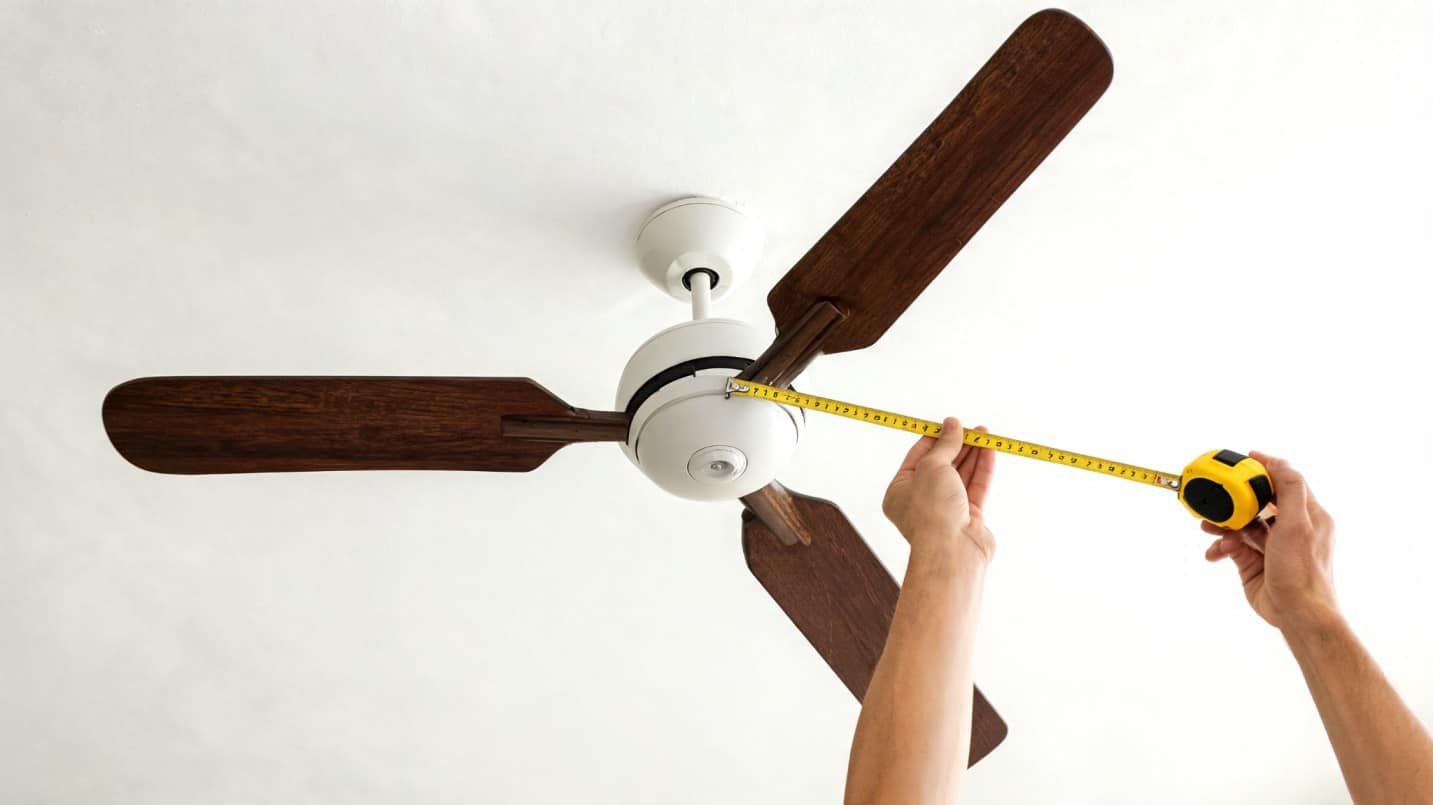
Have you ever felt like your ceiling fan just isn’t doing its job? Maybe the airflow feels weak, or the fan looks too big for the room.
This happens a lot, and it’s usually because the fan isn’t the right size. Picking the wrong size can reduce airflow by up to 20 percent and make your space feel uncomfortable.
I’ll show you exactly how to measure a ceiling fan and match it to your room. You’ll learn how to check your room’s dimensions, measure ceiling height, and consider clearance around walls and furniture.
We’ll also talk about different fan types, energy efficiency, and placement tips so your fan works well and looks right in your space. By the end, you’ll feel confident choosing the perfect fan for every room.
Understanding Ceiling Fan Measurements
Fan size refers to the total width of a ceiling fan, measured across the tips of its blades, also called the blade span or sweep.
The blade span can be described either as a diameter, which is the full tip-to-tip distance, or a radius, which is half that distance from the center to the tip.
Measuring your fan correctly is essential for proper airflow, effective room coverage, and maintaining the right look for your space. The right size ensures comfort while preventing oversized fans from overwhelming the room.
To measure accurately, you’ll need basic tools such as a tape measure, a ladder, and a calculator, with a laser distance measurer as an optional helper for precision.
How to Measure Your Room for the Right Fan
Before picking a ceiling fan, it’s important to know the exact size of your room. Measuring your space correctly ensures the fan will fit well, provide proper airflow, and look balanced.
Measurement Instruction:
- Measure the length: Use a tape measure to find the distance from one wall to the opposite wall.
- Measure the width: Measure the distance between the other two walls perpendicular to the first ones.
- Calculate square footage: Multiply length by width to get the area in square feet.
- Handle irregular shapes: For L-shaped or open rooms, divide the space into rectangles, measure each, then add the areas together.
- Check size charts: Use a fan size chart to match your room’s square footage to an ideal blade span.
Tip: Small rooms (up to 75 sq. ft.) need 29–36-inch fans; medium (76–144 sq. ft.) need 36–42-inch fans; large (145–225 sq. ft.) need 44–50-inch fans; and extra-large (225+ sq. ft.) need 52-inch or larger fans.
How to Measure a Ceiling Fan and Ceiling Height
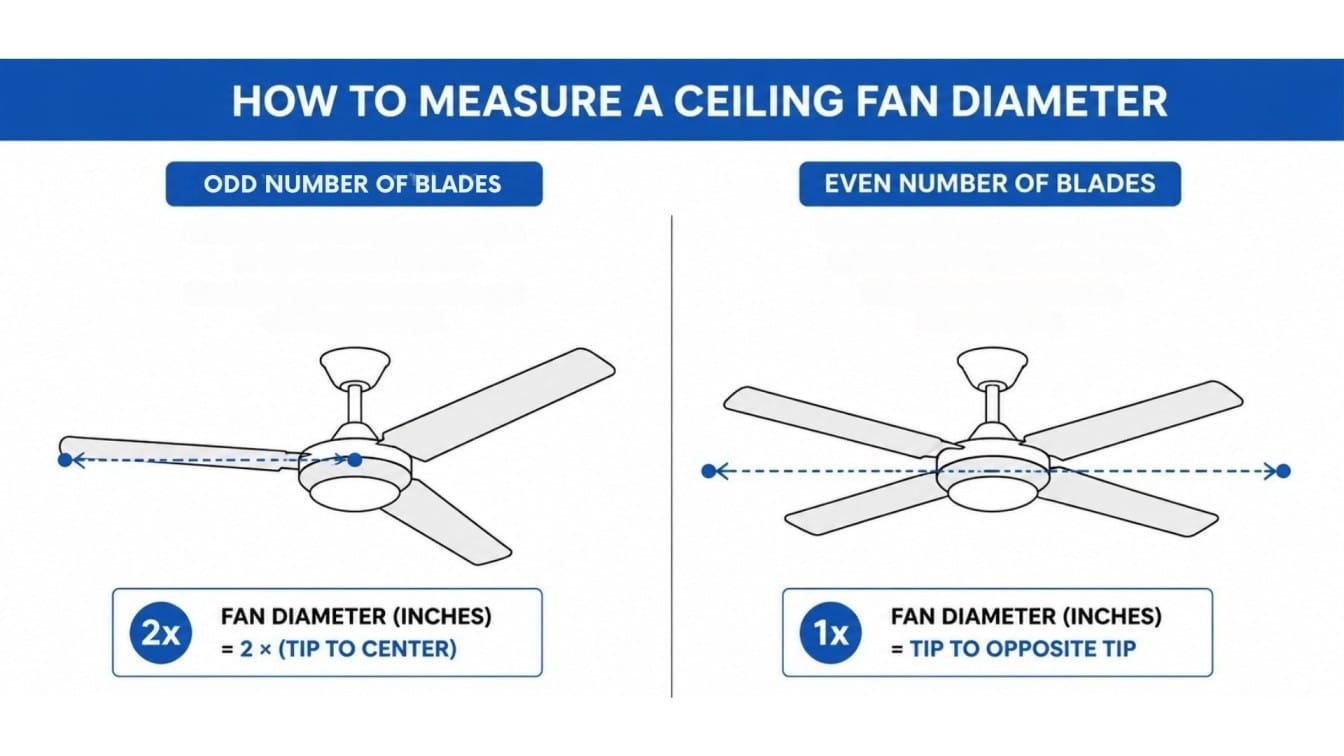
Knowing how to measure your ceiling fan and ceiling height helps you pick the right size and ensures the fan works efficiently. Accurate measurements also prevent safety issues and make sure the fan fits comfortably without hitting walls, furniture, or people.
Measuring a Fan Diameter
- Turn off the fan and wait for the blades to stop.
- For fans with an even number of blades, measure from the tip of one blade to the tip of the blade directly opposite.
- For fans with an odd number of blades, measure from the tip of one blade to the center, then multiply by 2.
Measuring Ceiling Height
- Use a tape measure to find the distance from the floor to the ceiling.
- Ensure there is at least seven feet from the floor to the blades and about 30 inches from walls or furniture.
By carefully measuring both the fan diameter and ceiling height and maintaining proper clearance from walls and furniture, you can choose a fan that delivers good airflow, looks balanced in your room, and is safe for everyone in the space.
Downrod Length Considerations
Your ceiling height affects how well a fan circulates air and how safe it is. Choosing the right mount and downrod keeps the fan at the perfect height, avoids obstacles, and ensures comfortable airflow in any room.
| Ceiling Type | Recommendation | Notes |
|---|---|---|
| Low ceilings (<8 ft) | Use flush-mount fans | Keeps blades close to the ceiling, saves headroom |
| Standard ceilings (8–10 ft) | Use a standard downrod | Position the fan so the blades are 7–8 ft from the floor |
| High ceilings (>10 ft) | Use a longer downrod | Ensures proper airflow and safety |
| Sloped ceilings | Consider an angled ceiling mount adapter | Blades need the correct angle for efficient operation |
| General safety | Maintain at least 7 ft from the floor and 30 in from the walls | Prevents accidents and allows proper airflow |
Following these guidelines makes sure your fan hangs safely and works efficiently, whether your ceiling is low, standard, or sloped. Proper positioning improves airflow, keeps heads safe, and prevents wobbling or damage over time.
Types of Ceiling Fans and Style Considerations
Fans come in different styles and features, and picking the right type can affect comfort, noise, and room design. Understanding the options helps you choose a fan that works well for your space while matching your personal style and practical needs.
1. Standard Fans
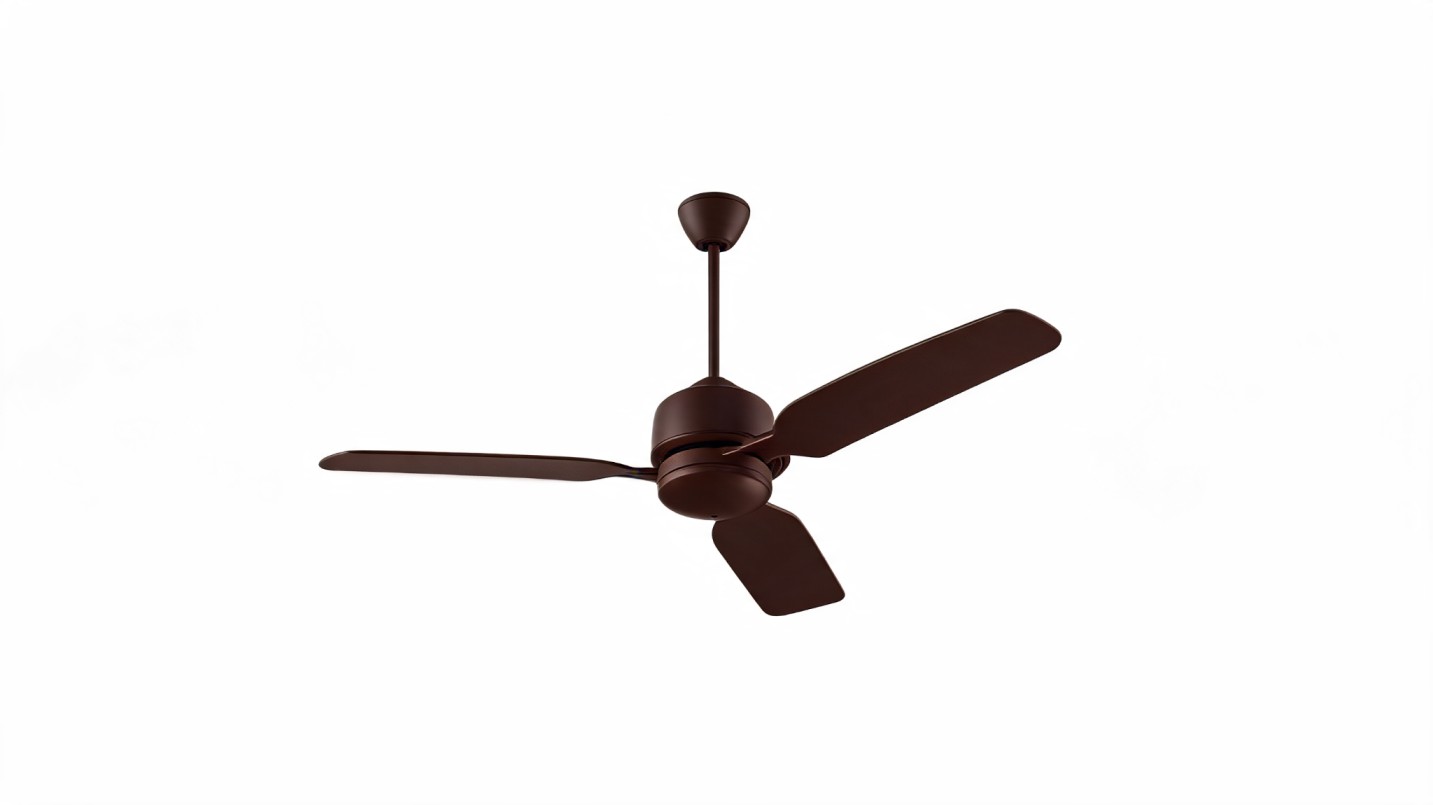
Standard ceiling fans are the most common option and work well in almost any room. They usually have basic metal or plastic blades and a simple motor, offering reliable airflow without extra features. Standard fans are durable and easy to maintain, making them suitable for bedrooms, kitchens, or living rooms.
When choosing one, consider the room size to ensure proper air circulation. These fans are cost-effective and provide a clean, simple look that fits most interiors. Their straightforward design makes them a practical choice for everyday use, without emphasizing decoration or advanced features.
2. Designer Fans
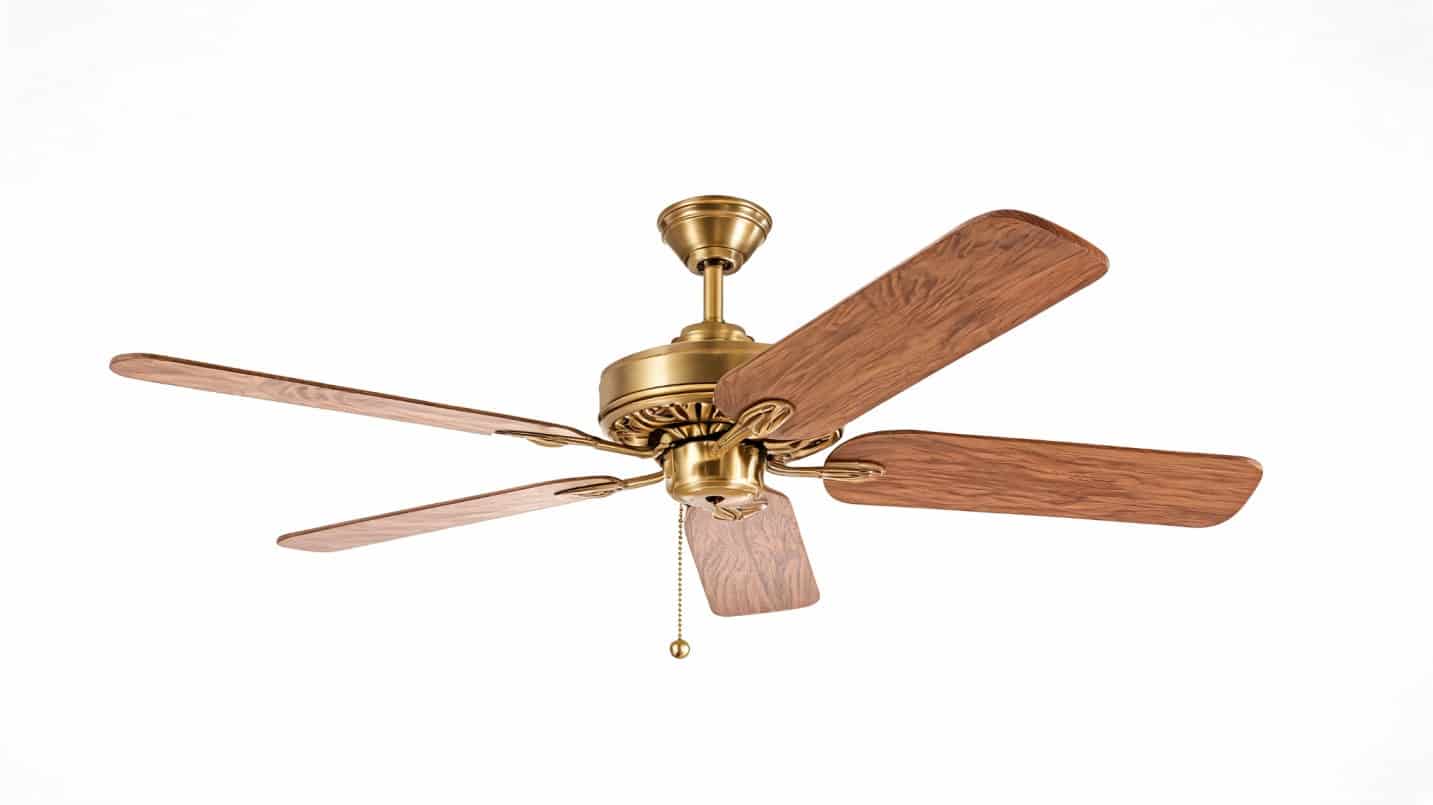
Designer fans combine style with functionality and are ideal for living rooms, open spaces, or areas where aesthetics matter. They often feature larger blades, unique materials like wood or metal, and decorative finishes that complement the room’s décor.
When selecting a designer fan, consider both the room size and ceiling height, as these fans can be heavier or more elaborate.
Designer fans provide efficient airflow while also serving as a centerpiece. They are best used in spaces where visual appeal is as important as comfort, adding elegance without compromising on performance or durability.
3. Fans with Lights
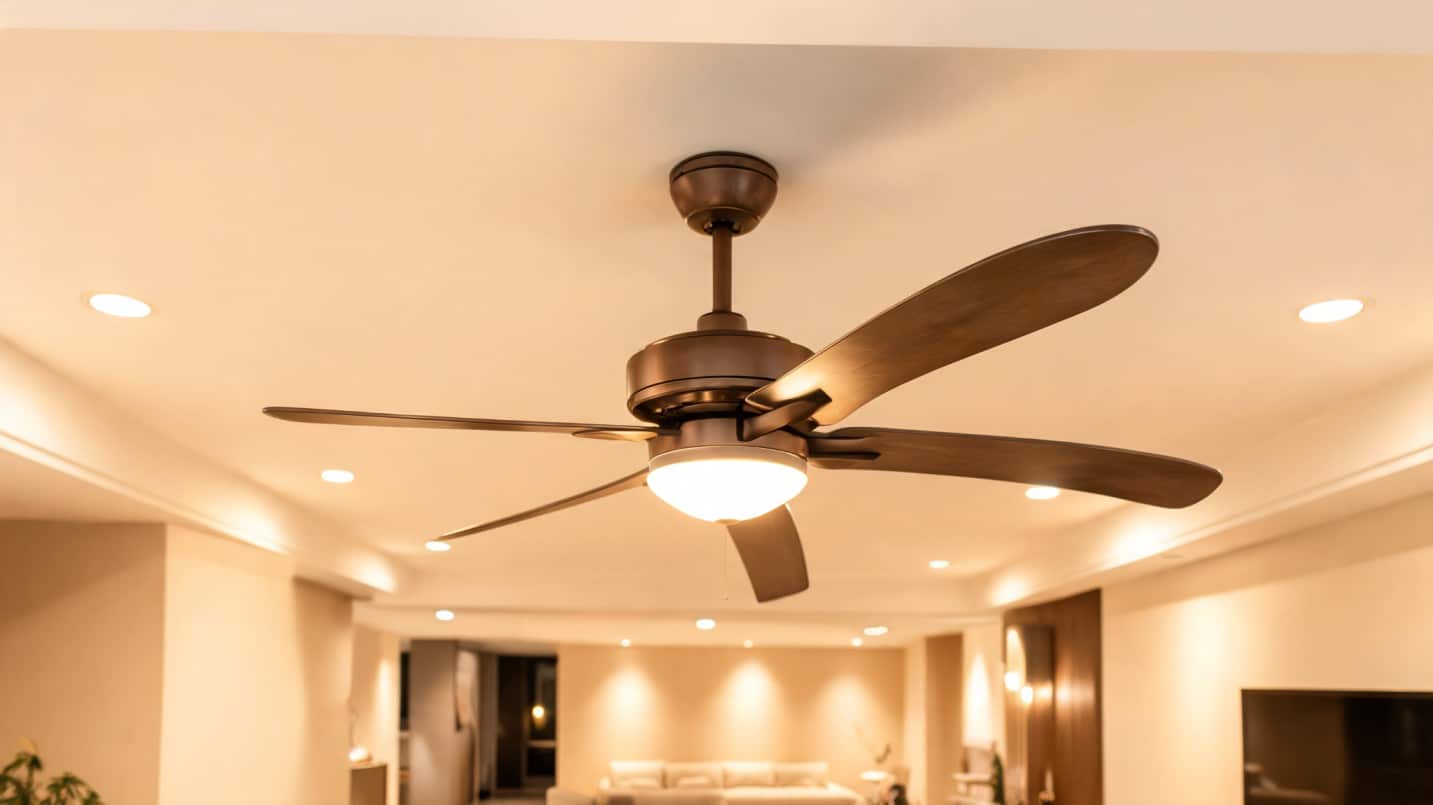
Fans with built-in lights serve a dual purpose, providing both cooling and illumination in rooms like bedrooms, kitchens, and living rooms. These fans typically feature glass or acrylic light fixtures, sometimes with multiple bulbs for adjustable brightness.
When choosing one, consider the wattage and type of lighting, as well as the fan’s size, to ensure proper airflow. They are perfect for spaces where ceiling lights are needed, but floor or wall lamps are limited. Fans with lights save space, add convenience, and maintain a clean ceiling look while balancing style, efficiency, and functionality.
4. Remote-Controlled Fans
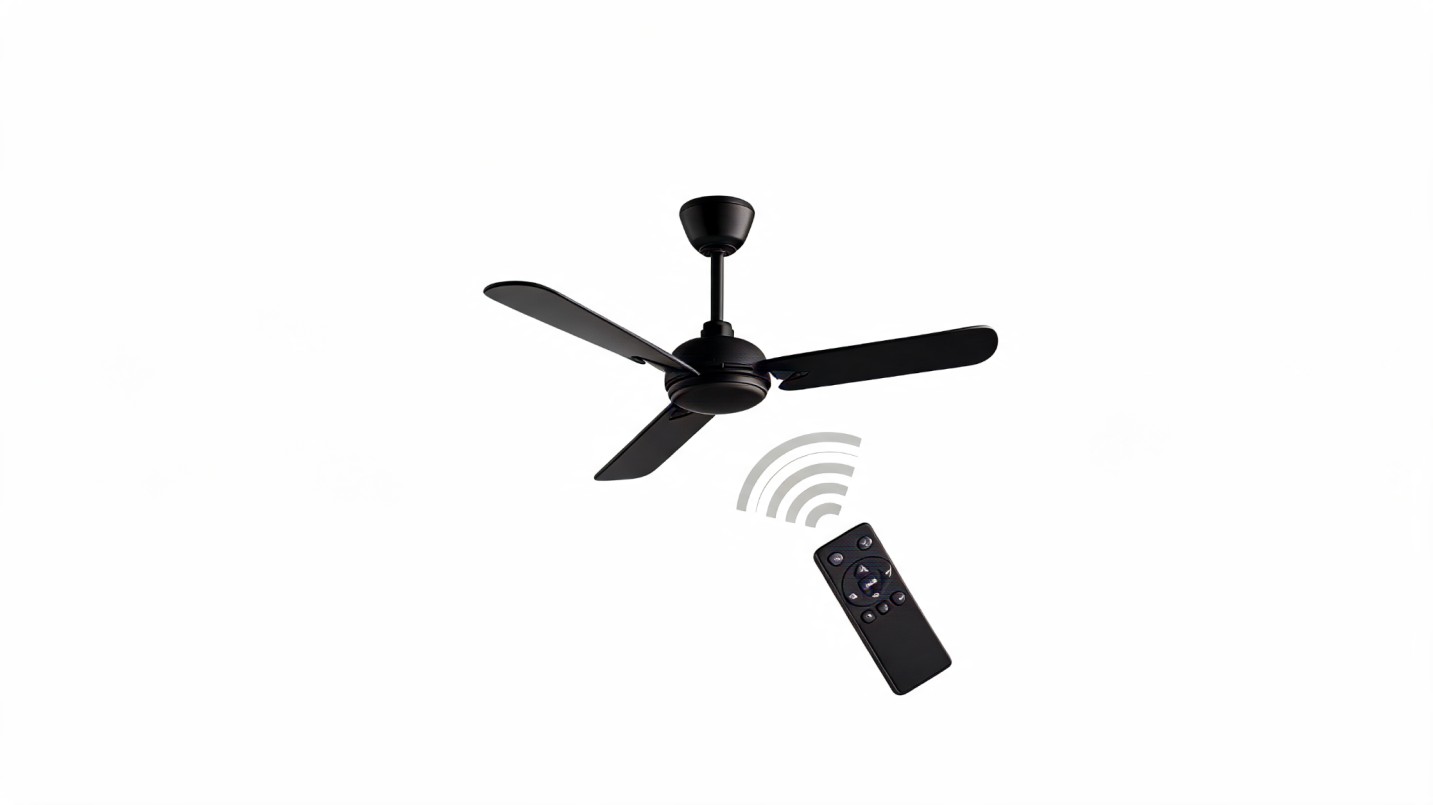
Remote-controlled fans offer convenience, especially in rooms where the switch is hard to reach. These fans often have similar materials and designs to standard or designer fans but include a wireless control system for speed, power, and sometimes light settings. Consider battery life, signal range, and ease of use when choosing one.
Remote fans are best in bedrooms, dining rooms, or large living areas where adjusting settings from a distance improves comfort. They simplify operation, allowing you to change fan speed or turn it off without leaving your seat, combining modern convenience with efficient airflow.
5. Smart BLDC Fans
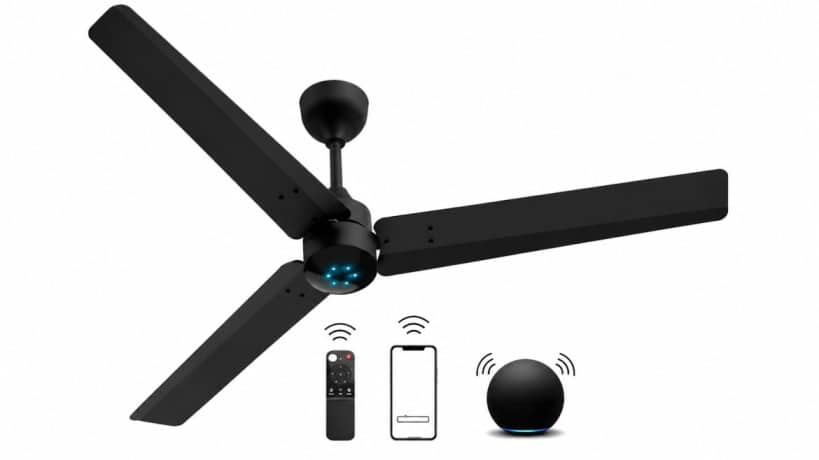
Smart BLDC (Brushless Direct Current) fans are energy-efficient, tech-friendly options that can be controlled via apps or voice commands. These fans usually feature high-quality motors and lightweight, durable blades, often in materials like aluminum or reinforced plastic. Consider room size, desired energy savings, and connectivity options when selecting one.
Smart BLDC fans are ideal for modern homes with smart devices and are designed for long-term energy efficiency, often reducing electricity consumption by up to 40 percent. They combine convenience, quiet operation, and powerful airflow, making them suitable for bedrooms, living rooms, and tech-savvy spaces.
6. Quiet Fans
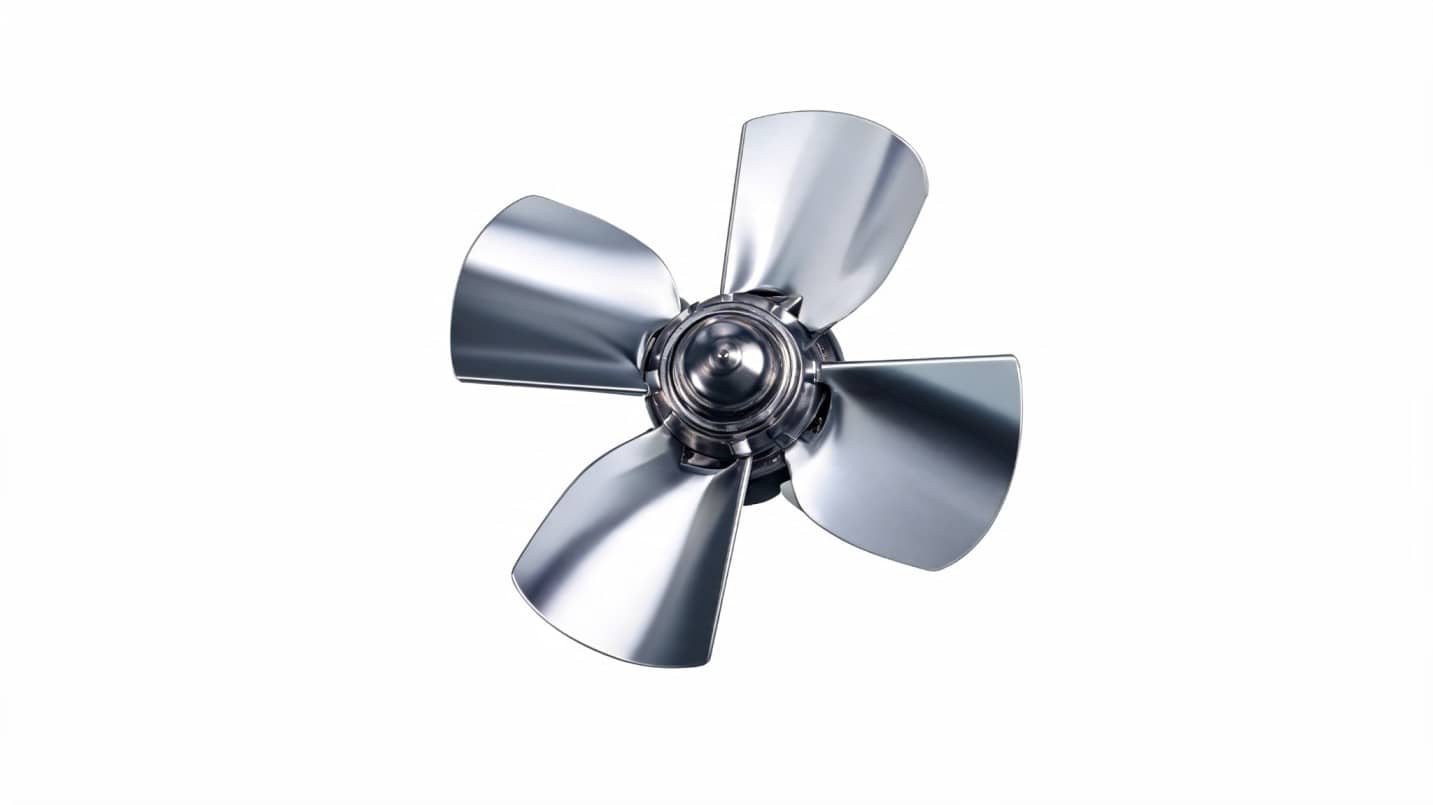
Quiet fans are designed to operate with minimal noise, making them perfect for bedrooms, study rooms, or home offices. They often feature aerodynamic blades, precision motors, and sometimes special insulation to reduce vibration. Consider the room size, ceiling height, and required airflow to maintain comfort while keeping noise low.
Materials usually include lightweight metals or wood, ensuring durability without extra weight. Quiet fans allow you to work, read, or sleep without distraction, providing a peaceful environment while still circulating air effectively. They are ideal where silence is valued as much as cooling performance.
7. Outdoor / High-Airflow Fans
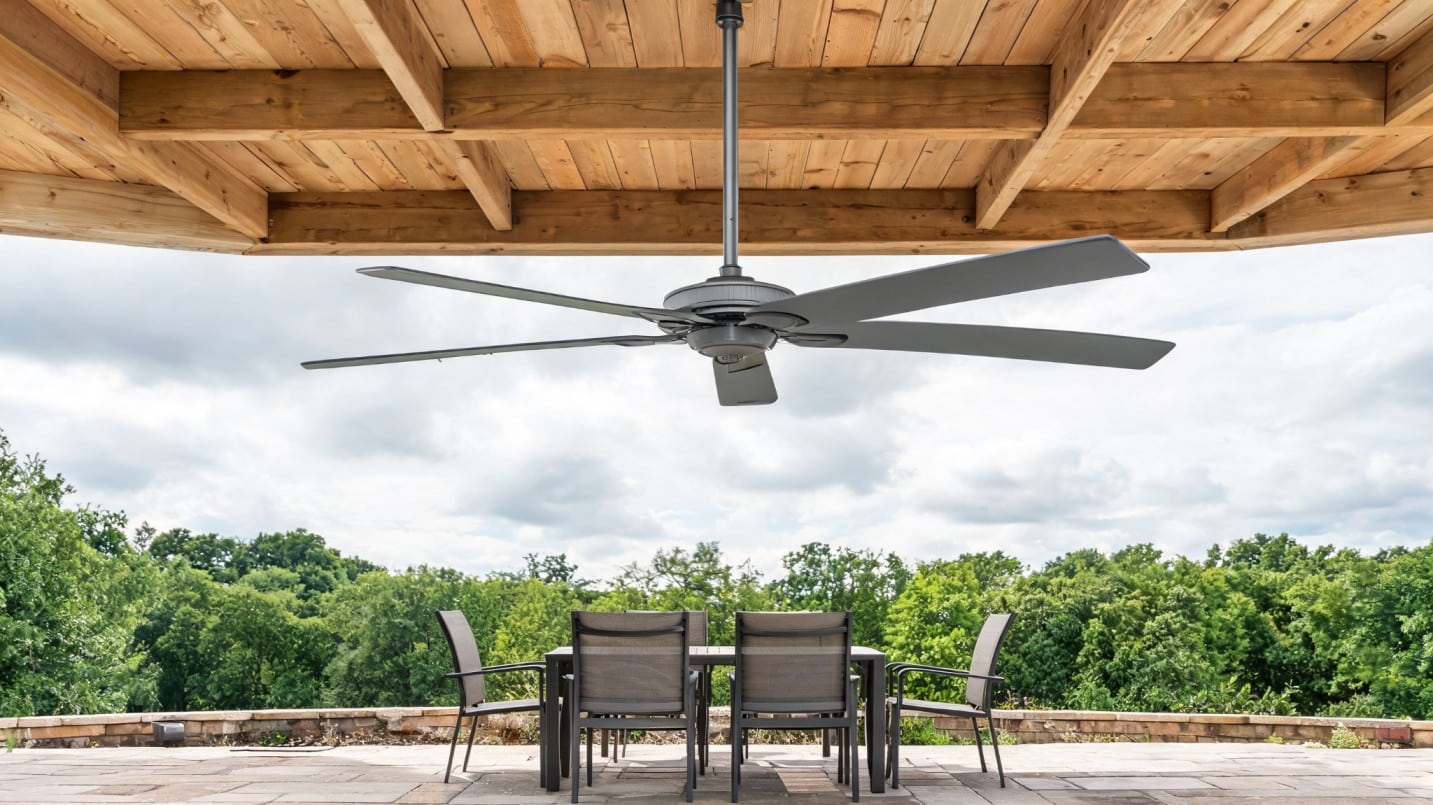
Outdoor and high-airflow fans are designed to handle larger spaces, patios, porches, and humid environments. They often have durable, weather-resistant materials such as treated wood, coated metal, or specialized plastics to resist moisture and dust. These fans typically have larger blades and stronger motors to move more air effectively.
When choosing one, consider the outdoor conditions, ceiling type, and required airflow. Outdoor fans improve comfort in open or semi-open areas, provide cooling in hot weather, and withstand environmental factors, making them both functional and long-lasting for outdoor living spaces.
Know About Airflow and Energy Efficiency
Airflow is measured in CFM (cubic feet per minute) and indicates how much air a fan can move.
The right airflow depends on both fan size and room type; larger rooms need fans that move more air, while smaller rooms need less. Choosing a fan with adequate CFM ensures even cooling and comfort.
Energy efficiency is also important. Fans with a BEE star rating or BLDC motors use less electricity while maintaining strong airflow.
BLDC fans, in particular, can save up to 40% in energy costs. By considering both airflow and efficiency, you get a fan that keeps your room comfortable without driving up electricity bills.
Choosing the Right Fan for Each Room
Choosing the right ceiling fan for each room ensures comfort, proper airflow, and safety. Room size, function, and layout all affect the ideal blade span and airflow.
| Room Type | Recommended Blade Span | Airflow / CFM | Notes / Tips |
|---|---|---|---|
| Living Room | 48–56 inches | 4000–6000 | Large rooms may need decorative or multiple fans |
| Bedroom | 36–48 inches | 3000–4500 | Choose quiet fans for better sleep |
| Kitchen | 36–48 inches | 3500–5000 | Efficient airflow to handle heat and odors |
| Kids’ Room | 36–42 inches | 3000–4000 | Safety and quiet operation are important |
| Outdoor Areas | 52 inches or more | 5000+ | Use weather-resistant fans with strong airflow |
Proper fan selection ensures even cooling, enhances comfort, and keeps your space efficient. Multiple fans in larger rooms can maintain consistent airflow and avoid hot spots.
Common Mistakes to Avoid
Choosing and installing a ceiling fan might seem straightforward, but small mistakes can make a big difference in comfort and efficiency.
- Choosing a fan that is too large or too small for the room
- Ignoring the ceiling height or sloped ceilings when installing the fan
- Not leaving enough space around furniture or obstacles for proper airflow
- Overlooking energy efficiency or selecting fans that are too noisy
Taking a little extra time to measure, plan placement, and check features like energy efficiency and noise will save you headaches later and give you the best results.
Frequently Asked Questions
How do I know What Size Ceiling Fan I Have?
Measure from the tip of one blade to the tip of the opposite blade for even-blade fans. For odd-blade fans, measure from the tip to the center, then double that distance. This gives you the fan’s diameter or sweep.
What is the Difference Between a 1200mm and a 1400mm Ceiling Fan?
The difference is in blade span. A 1200mm fan has a 48-inch sweep, while a 1400mm fan has a 56-inch sweep. Larger fans move more air and are suitable for bigger rooms, while smaller fans are better for medium or smaller spaces to maintain proper airflow.
What Does a 48-inch Fan Mean?
A 48-inch fan refers to the total distance from one blade tip to the opposite tip, also called the sweep. It shows the fan’s size and helps you match it to room dimensions for proper air circulation, ensuring comfort and efficiency.
Is a 52-inch Fan Too Big for a 10×10 Room?
Yes, a 52-inch fan is usually too large for a 10×10 room. It may overpower the space and cause uneven airflow. A smaller fan, around 36–42 inches, is more suitable for providing balanced cooling and avoiding the fan looking oversized in a small room.
Final Thoughts
Measuring your ceiling fan before buying is one of the simplest ways to make sure it works efficiently and fits your room. By knowing the blade span, checking ceiling height, and leaving enough clearance from walls and furniture, you can avoid oversized or undersized fans that reduce comfort.
Remember to factor in energy efficiency ratings and features like quiet operation or smart controls to save on electricity and make your home more comfortable.
Taking the time to measure your space and compare fan options ensures you get a fan that not only looks good but also circulates air evenly. Before you make a purchase, check efficiency ratings and room coverage, and consider multiple fans for larger areas.
Using these steps to measure a ceiling fan will help you choose a model that works well, saves energy, and keeps your home comfortable all year.