Shower glass can look dirty right after you clean it, and that feels frustrating. You scrub, rinse, and still see cloudy streaks, white spots, or a dull film when the light hits the door.
After visiting dozens of Houston-area homes through my consulting work, I can tell you the most common mistake people make: they treat all shower glass buildup the same. Soap scum, hard water stains, and track grime are three different problems, and they each need a slightly different approach.
This blog covers how to clean shower glass, which tools to use, which method works best for each problem, and how to keep the glass clear longer.
Know What Is Making Your Shower Glass Look Dirty
Before you grab a cleaner, look closely at the glass. Soap scum, hard water stains, cloudy film, and track grime do not all clean the same way.
- Soap scum often looks dull or greasy. It comes from soap, shampoo, body oils, and minerals sticking to the glass.
- Hard water stains usually look white, chalky, or spotty. These marks form when mineral-heavy water dries on the glass.Hard water contains elevated levels of calcium and magnesium. When that water evaporates, those minerals are left behind and crystallize on the surface. Over time, they harden and become much more difficult to shift.
- A thick, cloudy film often indicates both soap scum and hard water buildup. This usually needs more soaking time before scrubbing.
- Dark grime near tracks, seals, or hinges often comes from trapped moisture, soap, hair, and dirt sitting in tight areas.
- Cloudiness that never clears may be etching. Etching is glass damage, not dirt, so cleaning may not fully fix it. If mineral deposits are left untreated for too long, they can etch into the glass surface, causing permanent damage that no DIY method can reverse. That is why it matters to act on stains early.
Once you know what you are dealing with, you can choose the right tools and avoid cleaners that are either too weak or too rough.
What You Need Before You Start Cleaning Shower Glass
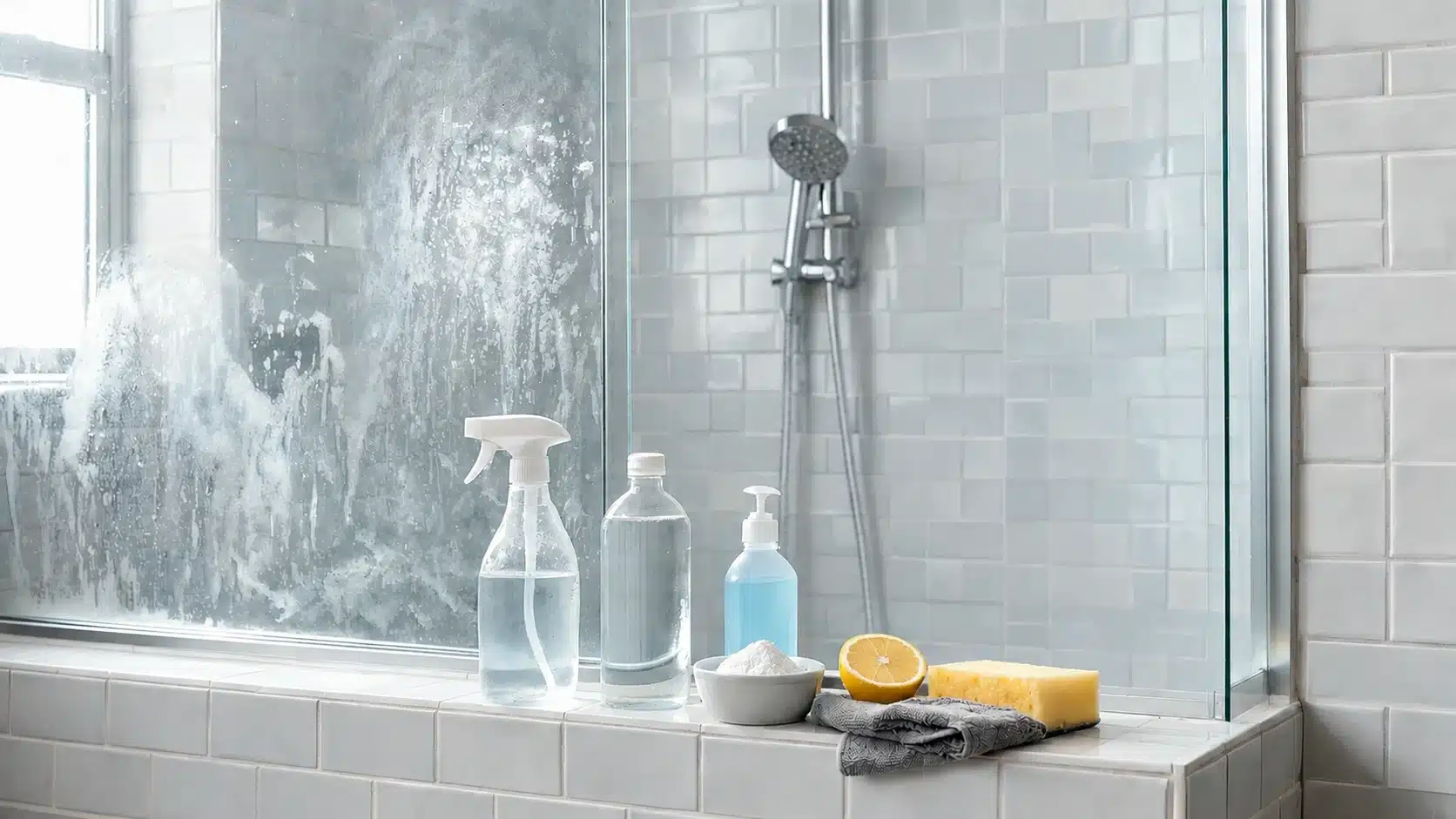
A small cleaning kit can handle most shower glass problems. Keep your tools gentle, easy to rinse, and safe for glass. Skip rough pads unless the product label or glass maker says they are safe.
|
Essential tools:
|
For heavy buildup, keep stronger options as backup, not your first step. Bar Keepers Friend, 0000 steel wool, water repellent, and extra microfiber can help, but only on surfaces that can handle them. Two other options worth keeping on hand: a Magic Eraser (melamine foam) for stubborn mineral spots, and CLR (Calcium, Lime and Rust Remover) for severe hard water deposits.
CLR is EPA-recognized and works faster than vinegar on thick mineral crust, but follow the label carefully and never leave it on glass for more than two minutes. To know how to clean the shower glass, you need to check the type of shower glass before using anything stronger.
Tip: Label homemade spray bottles so vinegar mixes stay separate from bleach, ammonia, and other cleaners that should never be mixed.
Check Your Shower Glass Type Before You Scrub
One quick test before you pick a cleaner: spray a small area of the glass with plain water. If the water sheets off in even rivulets, the glass is likely uncoated standard glass.
If it beads up like a freshly waxed car, the glass almost certainly has a factory-applied hydrophobic coating such as ShowerGuard or EnduroShield. Coated glass requires pH-neutral cleaners only; acidic cleaners like vinegar will degrade the coating over time.
| Shower Glass Type | What to Know | Safer Cleaning Choice | What to Avoid |
| Clear Shower Glass | Standard clear glass is the same type of flat, untreated glass used in projects like recycled window glass structures. It can usually handle mild soap, vinegar, and non-scratch tools. | Test a small spot first, then clean with mild methods. | Rough pads or strong pressure. |
| Coated Shower Glass | Coated glass has a finish that helps water roll off. | Use microfiber and mild cleaner based on care instructions. | Steel wool, harsh scrubs, or acids without checking. |
| Framed Shower Doors | Tracks and metal trim collect grime, soap, hair, and water. | Use mild soap, warm water, and a soft toothbrush. | Ignoring tracks and only cleaning the middle. |
| Frameless Shower Glass | Edges, hinges, and bottom seals often hold water. | Dry edges after cleaning and after showers. | Leaving water to sit near hinges and seals. |
| Glass Near Natural Stone | Marble, travertine, and limestone can react badly to acids. | Use stone-safe cleaners near these surfaces. | Vinegar, lemon, or acidic sprays near stone. |
Once you know your glass type, you can clean with more care. Match the cleaner to the buildup, protect nearby surfaces, and start with the mildest safe method before trying anything stronger.
Best Methods to Clean Shower Glass Based on the Problem
Start with the mildest method that fits the buildup. Strong cleaners can help, but they should not be your first choice on coated glass, older doors, or showers near stone tile.
1. Vinegar and Dish Soap for Cloudy Film
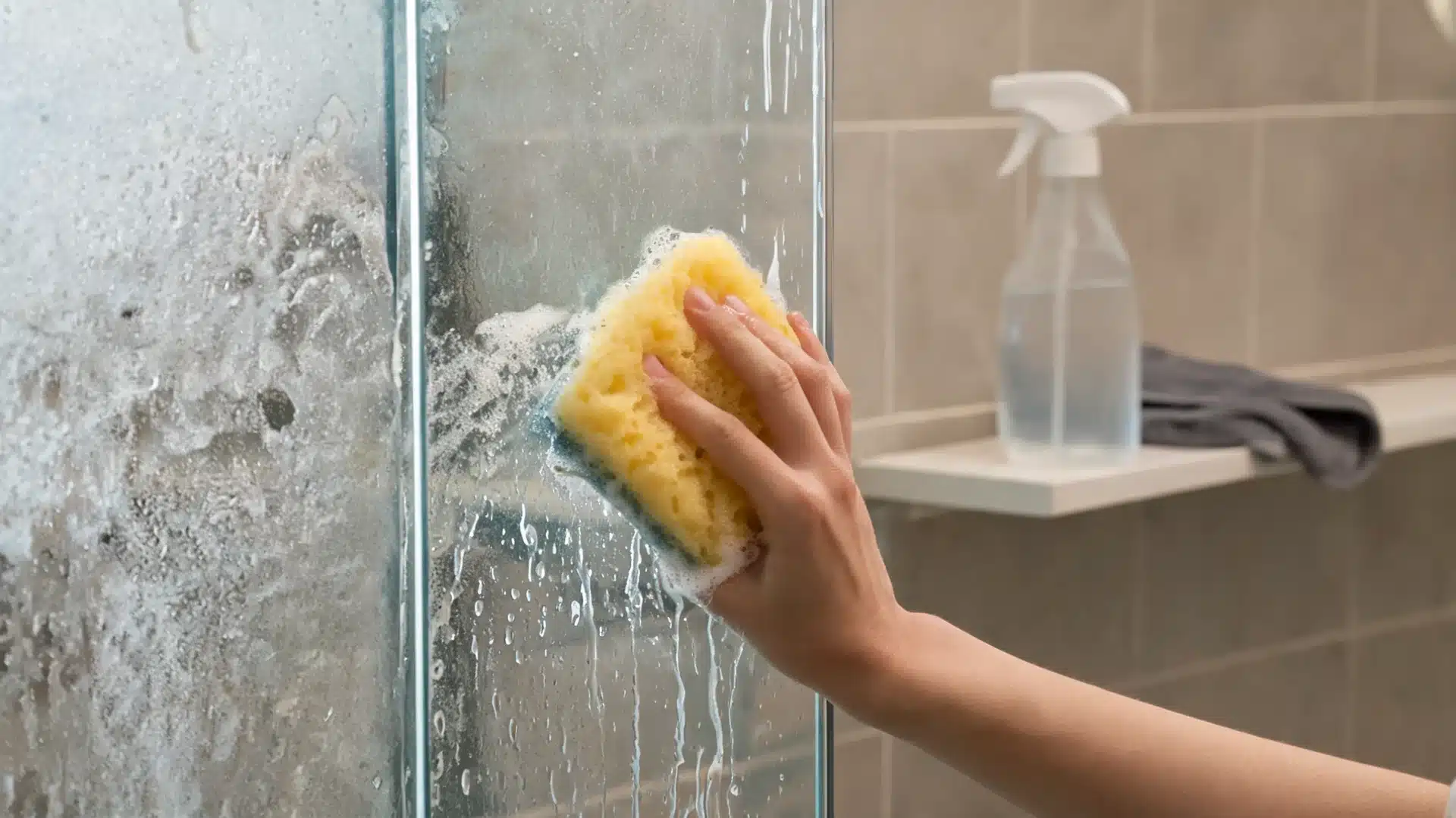
This works best for soap scum, light hard water marks, and dull glass. Use less dish soap if streaks appear, as too much soap can leave a residue.
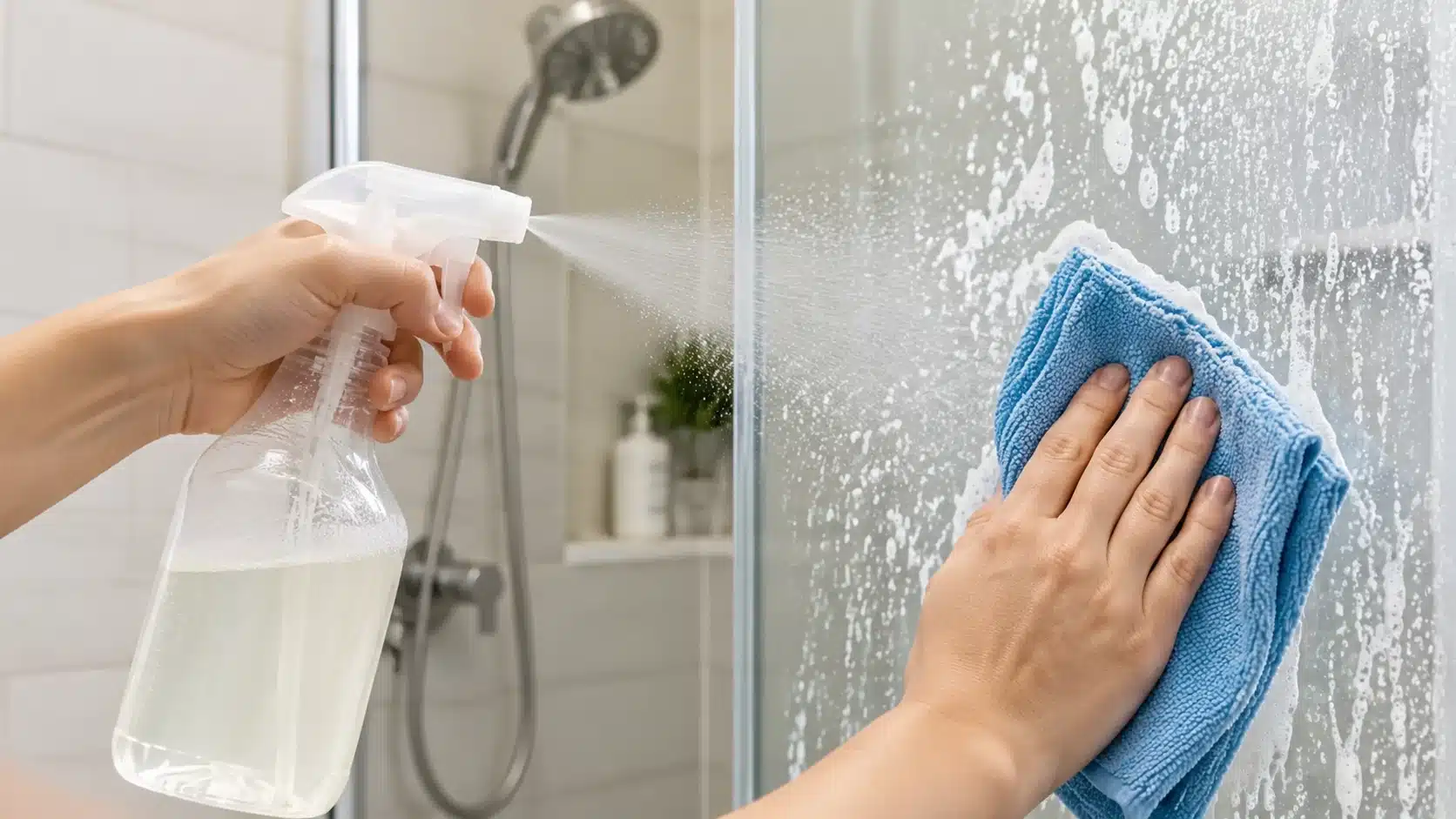
- Mix the cleaner: Add equal parts warm white vinegar and dish soap to a spray bottle, then shake gently before spraying.
- Spray the glass: Coat the cloudy areas well, especially the lower half, where soap scum and water spots often collect.
- Let it sit: Leave the cleaner on for 15 to 30 minutes so it can loosen film before scrubbing.
- Scrub gently: Use a non-scratch sponge and light pressure to work across the glass in small sections.
- Rinse and dry: Rinse until the glass no longer feels slick, then dry with a clean microfiber cloth.
| Tip: Run the bathroom fan while using vinegar. The smell can feel strong in small bathrooms, and airflow makes cleaning more comfortable. A trick I share with clients on house visits: heat the bathroom first by running a hot shower for two minutes before you start. Warm glass loosens buildup faster, and the vinegar solution penetrates more effectively. |
2. Baking Soda Paste for Stubborn Spots
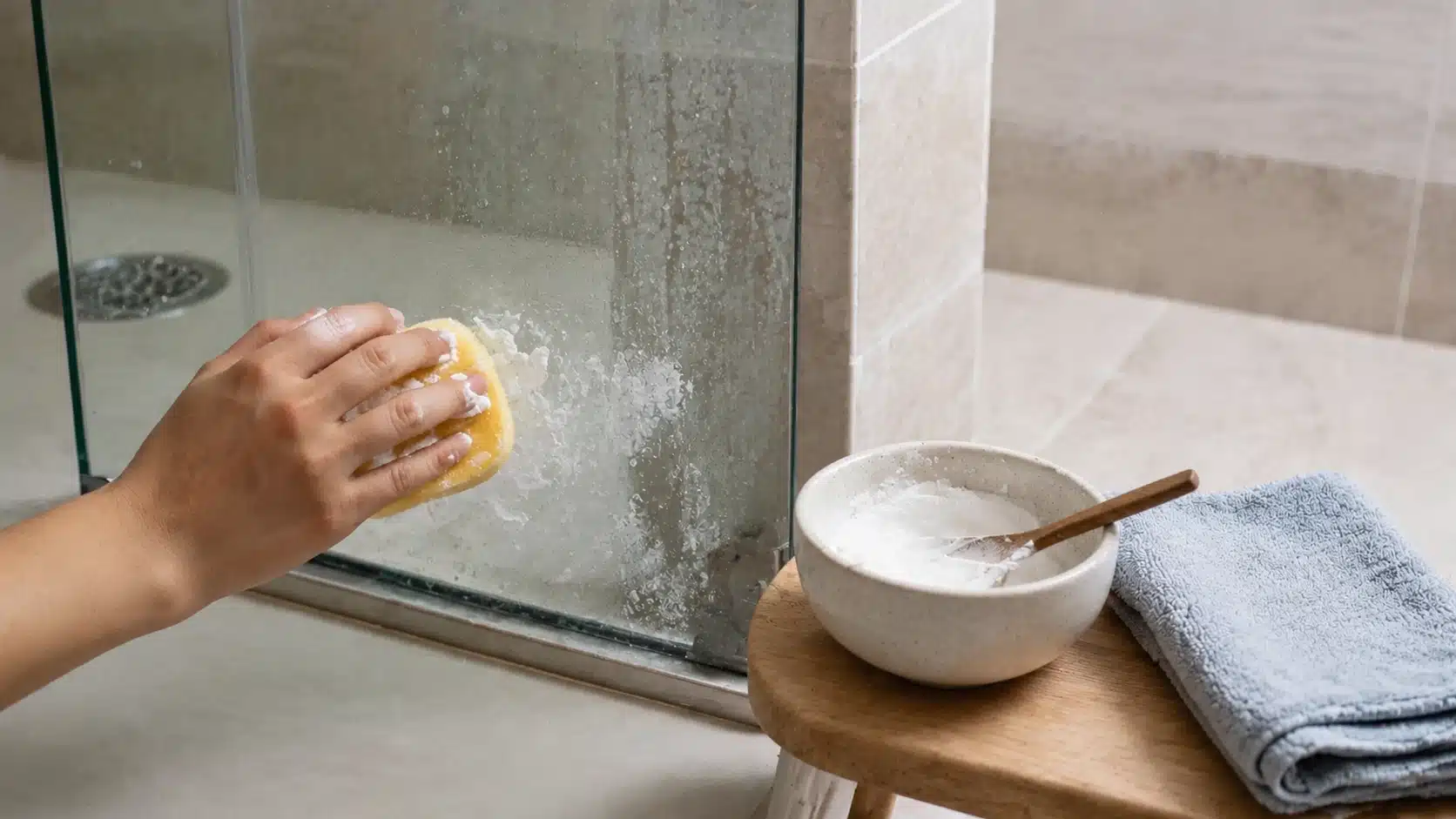
This works best for small stuck-on spots that need light scrubbing. Keep the paste soft because a dry, gritty mix can feel too rough.
- Make the paste: Add baking soda to a bowl, then mix in small amounts of water until it forms a smooth paste.
- Apply to spots: Spread the paste only on stained areas, not the entire shower door.
- Scrub with care: Rub in small circles with a non-scratch sponge, avoiding hard pressing on the glass.
- Rinse fully: Remove all paste with warm water so no powdery residue dries on the surface.
- Dry the glass: Use a microfiber cloth to dry the cleaned area, then check for any remaining spots.
| Tip: Baking soda works well for small areas. For a full cloudy door, a spray cleaner is usually faster and easier. |
3. Lemon for Fresh Water Marks
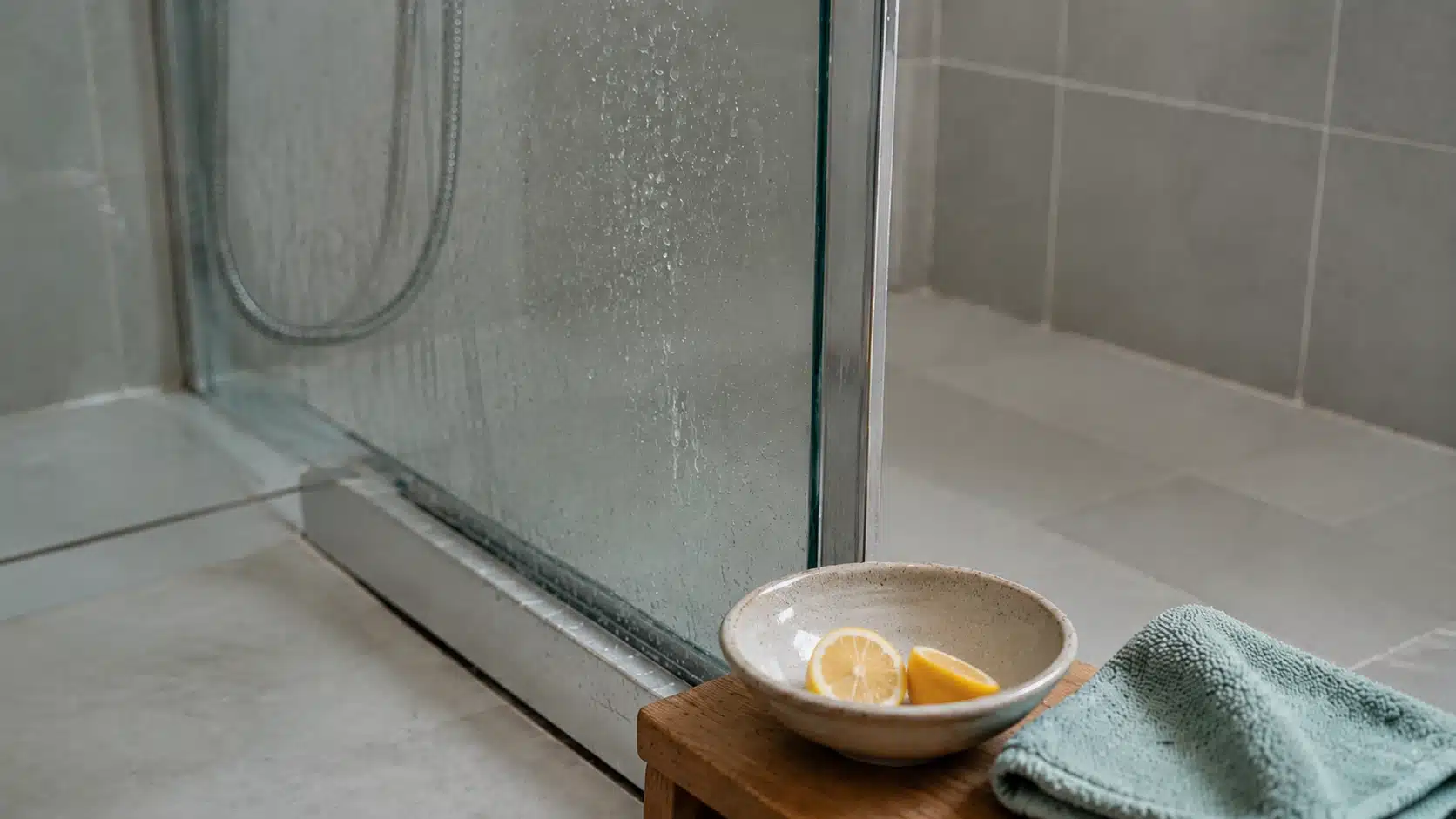
This works best for light mineral marks and quick spot cleaning. Lemon is acidic, so keep it away from natural stone, metal finishes, and coated glass.
- Cut the lemon: Slice a lemon and use fresh lemon halves rather than dehydrated or bottled juice, since the fresh citric acid content is significantly stronger and works faster on mineral marks.
- Rub the marks: Move the lemon over small water spots so the juice covers the mineral marks.
- Wait briefly: Let the lemon juice sit for a short time, but do not let it dry.
- Rinse the area: Use warm water to remove juice, pulp, and loosened residue from the glass.
- Dry with a microfiber cloth: Wipe the area dry immediately to prevent new water spots from forming.
| Tip: Lemon is best for quick marks, not thick, cloudy film. Use another method if the whole door looks hazy. For particularly stubborn lime scale spots, dip the cut side of the lemon in baking soda before rubbing. The citric acid and mild abrasive work together and are safe on standard glass. |
4. Bar Keepers Friend for Heavy Film
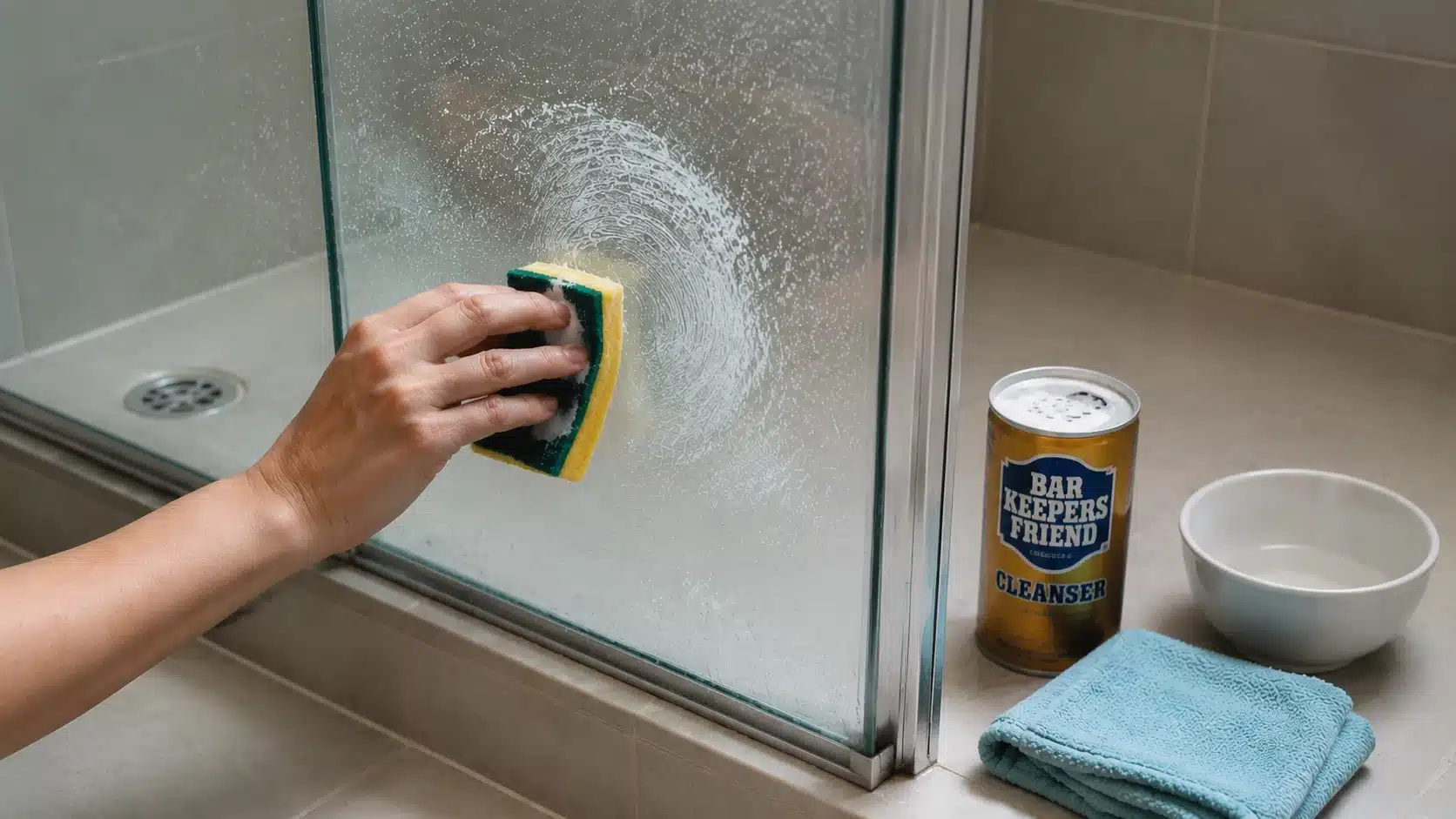
This works best for tough buildup that mild methods did not remove. Always follow the label and avoid surfaces the product warns against.
- Wet the glass: Lightly wet the shower glass before applying the cleaner to help it spread more evenly.
- Apply the product: Use the amount listed on the label and keep it away from unsafe surfaces.
- Scrub lightly: Use a non-scratch sponge and apply gentle pressure, especially near trim and edges.
- Do not let it dry: Keep the cleaner damp and rinse within the time given on the label.
- Rinse and dry: Rinse several times, then dry the full glass panel with microfiber.
| Tip: Test one of the lower corners first. If the glass looks dull, scratched, or cloudy, stop before cleaning the full door. |
5. 0000 Steel Wool for Neglected Standard Glass
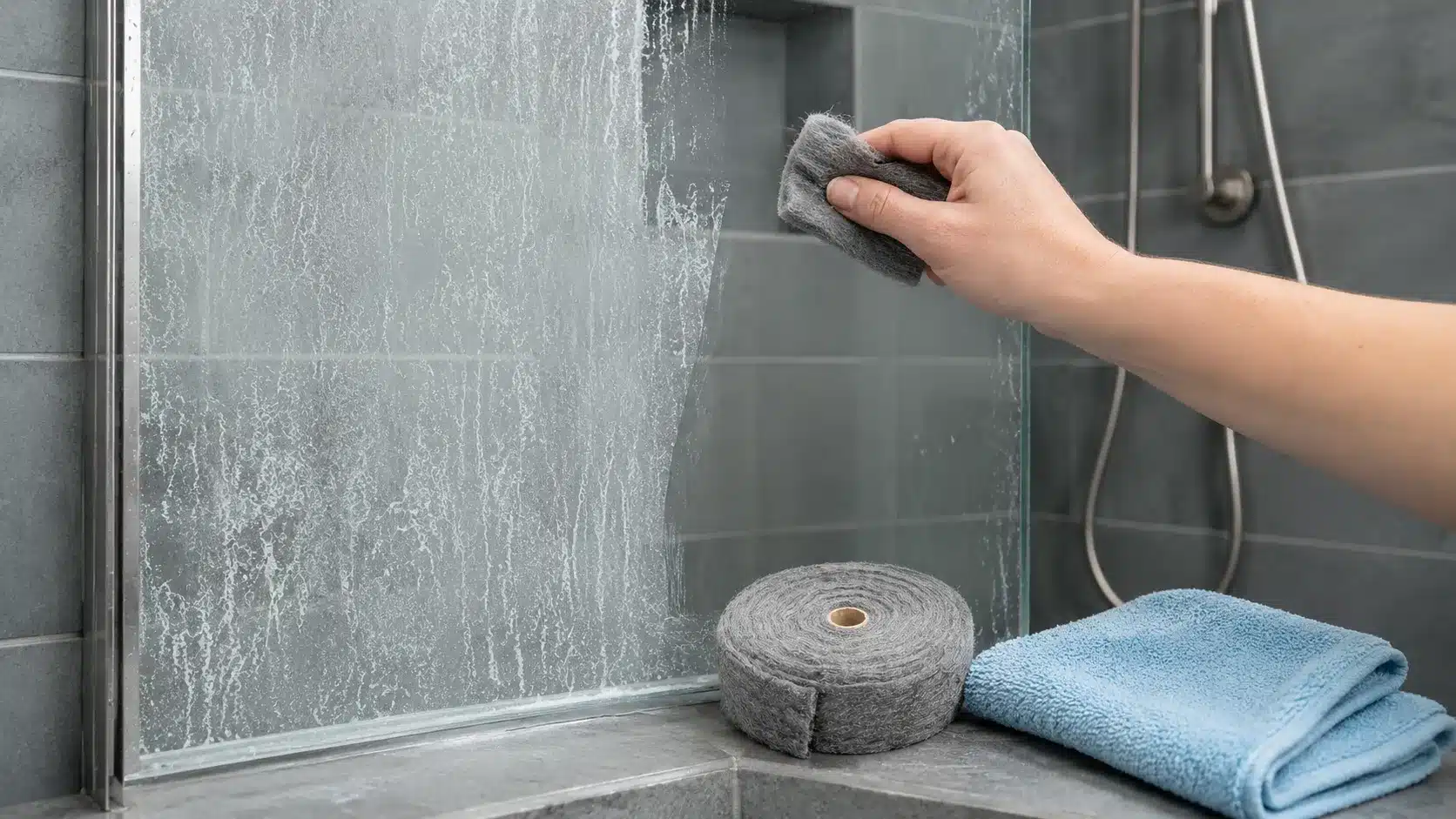
This works best for severe hard water buildup on standard, uncoated glass. Skip this method if you are unsure about glass coating.
- Check the glass: Confirm the glass is standard and uncoated before using steel wool.
- Use the right grade: Choose only 0000 steel wool because regular steel wool can scratch the surface.
- Test a corner: Rub a small, hidden area first, then check for marks before continuing.
- Use light pressure: Move slowly across the buildup without pressing hard or scrubbing one spot too long.
- Rinse and dry: Rinse away loosened residue, then dry the panel fully with microfiber.
| Tip: If the glass has any coating or unknown treatment, skip steel wool and use a safer cleaner with a soft sponge. |
These cleaning methods can answer your question on how to clean shower glass and make shower glass look much clearer, but small mistakes can bring back streaks, residue, or scratches. Before you start scrubbing, it helps to know what habits can make the job harder.
Mistakes That Make Shower Glass Harder to Clean
- Using rough scrub pads: Rough pads can scratch glass, damage trim, or harm a coating. Use non-scratch sponges and microfiber instead.
- Letting the cleaner dry on the glass: Dried cleaner can leave streaks or residue. Keep the surface damp while cleaning, then rinse well.
- Mixing cleaning chemicals: Never mix vinegar with bleach. The CDC warns that household bleach can release chlorine gas when mixed with certain cleaning products, and advises against mixing household cleaners.
- Using vinegar near stone: Acidic liquids can dull or etch some natural stone. Protect marble, travertine, limestone, and similar surfaces before spraying.
- Skipping the rinse step: Cleaner left behind can attract film and leave streaks. Rinse until the glass feels clean, not slick.
- Cleaning only the center glass: Tracks, hinges, seals, and lower edges often hold grime. These spots can smell even when the main glass looks clear.
- Using too much dish soap: More soap does not always mean cleaner glass. It can leave film if not rinsed fully.
- Using the wrong cleaner on a coated door: Naphtha, lye (sodium hydroxide), and acetone can each dissolve silicone sealants and degrade coated glass surfaces. Always check the active ingredients of any cleaner before applying it to a glass door, even if the label says it is designed for showers.
Avoiding these mistakes makes every deep clean go more smoothly. Once the glass is clean, small daily habits help keep spots from coming back so quickly.
Habits That Keep Shower Glass Clear Longer
Clean glass does not stay clear by luck. A few small habits can stop water, soap, and minerals from sitting on the surface long enough to leave spots or cloudy film.
| Habit | What To Do | Why It Helps |
| Use a squeegee | Run it over the glass after each shower. | Removes water before minerals dry. |
| Dry the lower edge | Wipe hinges, seals, and bottom edges with a microfiber cloth. | Stops water from sitting in problem areas. |
| Keep air moving | Run the fan during and after showers. | Helps reduce moisture and stale odor. |
| Use a weekly quick spray | Spray lightly with a glass-safe cleaner when needed. | Prevents buildup from getting thick. |
| Apply water repellent | Use a shower-safe product if your glass allows it. | Helps water bead and run off faster. |
These habits take less time than scrubbing cloudy glass later. Keep a squeegee and microfiber cloth nearby so daily care feels easy, not like another full cleaning task.
One habit that makes a measurable difference over months: if your home has very hard water, consider installing a showerhead filter ($20 to $40) or a whole-house water softener. A softener removes the mineral load at the source and protects every glass surface, pipe, and appliance in the house. It does not eliminate the need for cleaning, but it dramatically slows how fast buildup returns.
Why Shower Glass Smells Bad and How to Fix It
Shower glass usually does not smell on its own. Odor often comes from trapped buildup around the glass, especially in tracks, seals, hinges, caulk, grout, and drains, where moisture sits too long.
- Clean the Door Tracks: Framed shower tracks can hold soap scum, hair, skin oils, and standing water. Spray mild soapy water into the track, scrub with a toothbrush, rinse carefully, and dry with a cloth.
- Wipe the Bottom Seal: The bottom seal catches water and grime. Pull back only the flexible areas that are meant to move. Wipe with mild soap and warm water, then dry the strip well.
- Scrub Hinges and Corners: Hinges and corners collect buildup that a sponge may miss. Use a toothbrush, warm water, and mild detergent. Rinse with a damp cloth and dry after.
- Check Caulk and Grout: If the smell stays after cleaning, check nearby caulk and grout. Dark, soft, cracked, or peeling caulk may need to be replaced. Dirty grout may need deeper cleaning. Different bathroom mold types behave differently on caulk and grout, and identifying which one you have shapes how you clean it and whether a simple scrub is enough or a full recaulk is needed.
- Check the Drain: A musty or sewer-like smell may come from the drain, not the shower glass. Clean visible hair and grime from the drain area. If the smell keeps coming back, a plumber may be needed.
Once the glass, tracks, seals, and drain area are clean, focus on airflow and drying. A dry shower area is much less likely to hold odor or collect grime quickly.
When to Call a Professional
Most shower glass problems can be handled at home, but there are situations where a professional cleaning service makes sense.
If your glass has heavy etching that does not respond to any method listed here, or if large sections of the glass look permanently foggy after a thorough clean and dry, the surface may have sustained mineral damage below the glass coating.
Professional cleaning services have access to commercial-grade polishing compounds and restoration tools that can sometimes recover etched glass. If the glass cannot be restored, replacement is the only remaining option, and addressing it sooner costs less than replacing the surrounding tile and trim later.
Frequently Asked Questions
Can you clean shower glass with just water?
Water can rinse loose dirt, but it usually will not remove soap scum or hard water stains. Use water for a quick rinse, then dry with a microfiber towel. For cloudy buildup, use a glass-safe cleaner or a mild DIY method.
Why does my shower glass still look cloudy after cleaning?
Cloudiness may remain if mineral buildup has sat too long, soap scum was not fully removed, or the glass has light etching. Try cleaning again with the right method, then dry fully. If nothing changes, the surface may be damaged.
How often should shower glass be deep-cleaned?
Most shower glass needs a deeper clean once a week or every two weeks. Hard water, daily showers, and bar soap can accelerate buildup. A squeegee after each shower can reduce heavy film and stretch time between deep cleans.
Can vinegar damage shower glass?
Vinegar is usually safe for standard glass, but it can harm nearby stone, some metal finishes, and certain coated glass surfaces. Check care instructions first, test a small area, and keep vinegar away from marble, travertine, limestone, and similar stone.
What cloth works best for drying shower glass?
A clean microfiber cloth works well because it absorbs water without leaving much lint. Use it after rinsing or squeegeeing. Drying matters because leftover water can leave minerals, streaks, and fresh spots.
Final Thoughts
Learning how to clean shower glass gets easier when you match the method to the buildup. Soap scum, hard water marks, cloudy film, and neglected glass do not always need the same cleaner. Start with the mildest method first, rinse well, and dry the glass so new spots do not settle right away.
If your shower glass is coated or sits near natural stone, check the care instructions before using vinegar, strong cleaners, or steel wool. The best routine is the one you can repeat, even if it is just a quick squeegee after each shower.
One thing I tell every homeowner I visit: the squeegee is the single highest-return tool in any bathroom. Thirty seconds after every shower buys you weeks of clear glass. Everything else in this guide is what you do when the squeegee habit slips.
Have you tried vinegar, baking soda, Bar Keepers Friend, 0000 steel wool, or another shower glass method? Share your best tip in the comments so other readers can learn from your results.