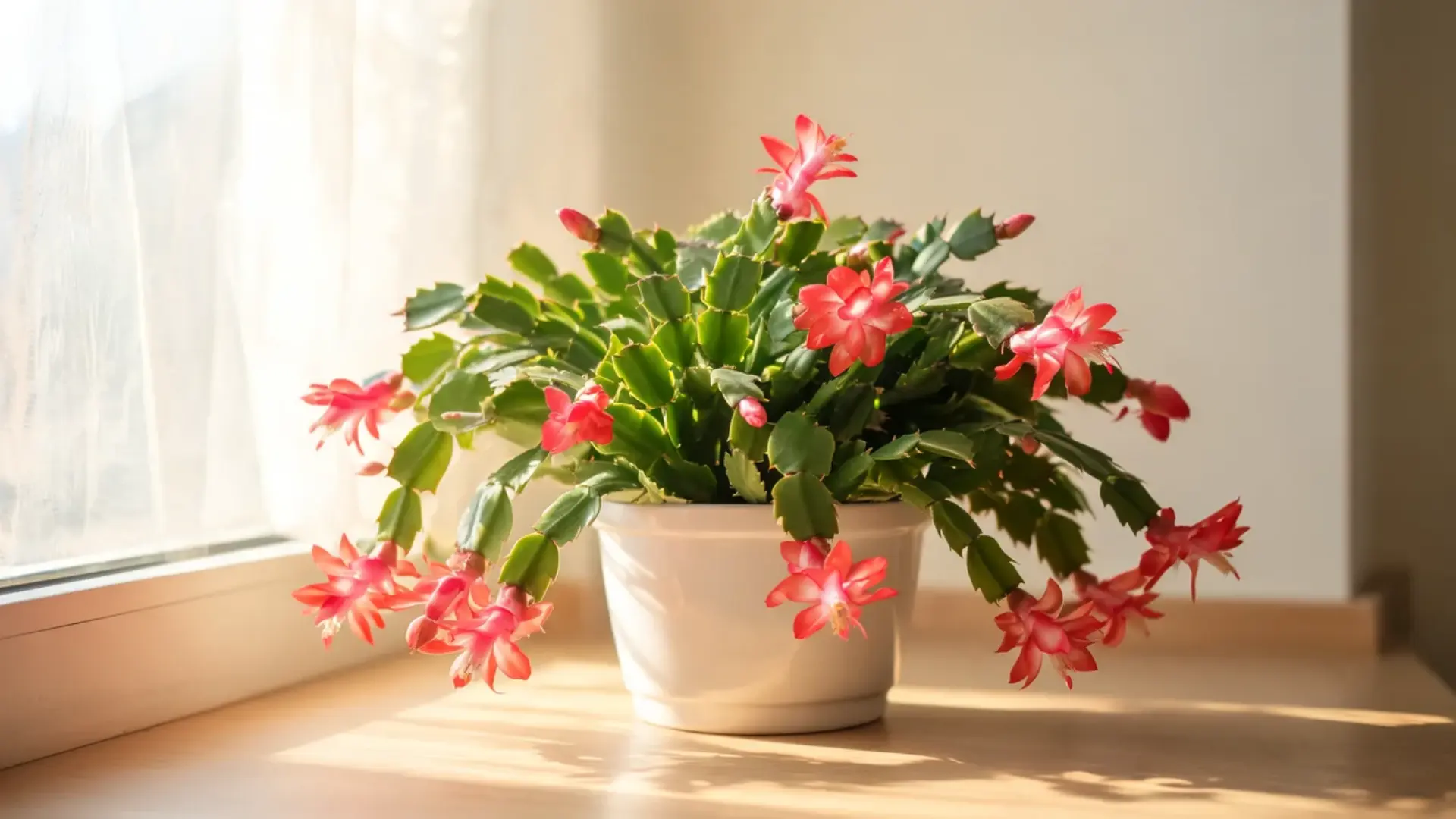
Want an Easter cactus covered in bright spring flowers instead of weak stems and fallen buds? This tropical houseplant rewards steady care with colorful blooms and fresh green growth.
Unlike desert cacti, it prefers warm conditions, moderate humidity, filtered light, and soil that stays lightly moist without becoming soggy. Its flat, segmented stems can quickly show signs of stress when watering, light, or temperature changes.
With the right routine, you can help your Easter cactus grow stronger and flower more reliably each year.
Below, you will learn how to water, feed, prune, and repot it at the right time. You will also see how to prepare the plant for blooming, adjust care through the seasons, and solve common problems before they cause lasting damage.
What Is an Easter Cactus?
An Easter cactus (Rhipsalidopsis gaertneri) is a tropical flowering cactus that usually blooms in spring, often near Easter, according to the NC State Extension Gardener Plant Toolbox. It is also called a spring cactus because its flowering period comes later than that of most other holiday cacti.
Unlike desert cacti, Easter cactus grows naturally in the tropical forests of Brazil. It grows as an epiphyte, which means it can live on tree surfaces and other raised areas instead of rooting in dry desert ground.
The plant has flat, connected green segments with smooth, rounded edges.
Because of its natural growing conditions, it needs more moisture and humidity than a desert cactus. However, its roots should never remain in wet soil. Bright indirect light, loose soil, good drainage, careful watering, and steady temperatures provide the basic conditions it needs.
How Easter Cactus Differs from Christmas and Thanksgiving Cacti
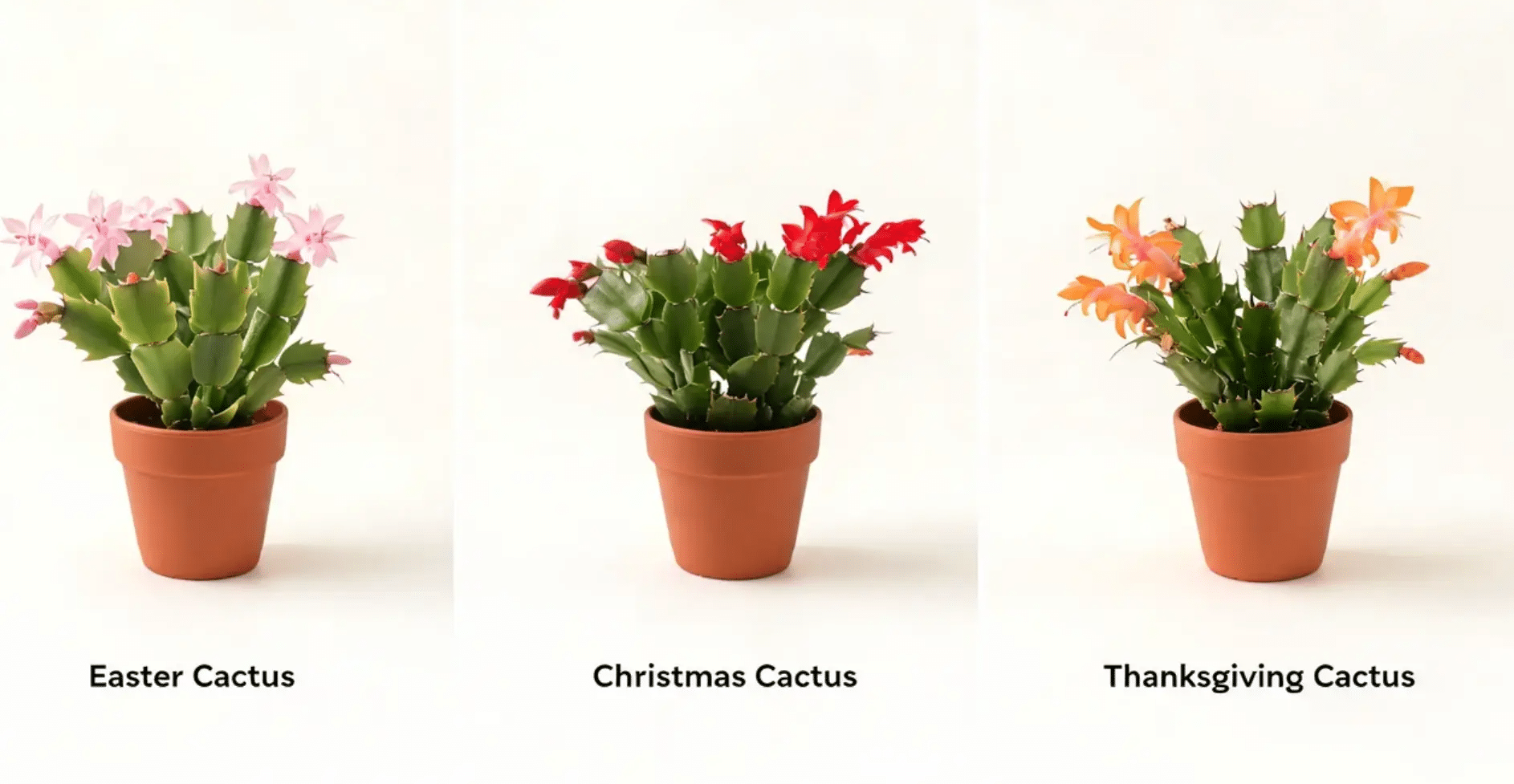
Easter, Christmas, and Thanksgiving cacti are tropical holiday plants with flat, connected stems and colorful flowers. Since they share a similar appearance, they can be difficult to tell apart at first.
The easiest way to identify your plant is to compare its usual flowering season and the shape of its stem segments. Indoor light and temperature may affect bloom time, so it is helpful to check more than one feature.
| Plant | Typical bloom time | Stem segments |
|---|---|---|
| Easter cactus | Spring | Rounded, smooth edges |
| Christmas cactus | Winter | Smooth edges with shallow curves |
| Thanksgiving cactus | Late fall | Sharp, pointed edges |
Easter cactus usually flowers in spring and has smooth, rounded segment edges. Christmas cactus commonly blooms in winter and has gently curved edges. Thanksgiving cactus often flowers in late fall and has sharper, claw-like points.
Since flowering time may shift indoors, check the stem shape as well. Correct identification helps you adjust watering, temperature, and the rest period at the right time, giving your plant a better chance of blooming each year.
How to Care for an Easter Cactus
An Easter cactus grows best when its care reflects the mild, moist conditions of a tropical forest. It needs bright indirect light, careful watering, loose soil, stable temperatures, and moderate humidity.
Feeding during active growth, pruning after flowering, and repotting only when necessary also help maintain healthy roots, firm stems, and dependable spring blooms.
1. Hydrating the Plant
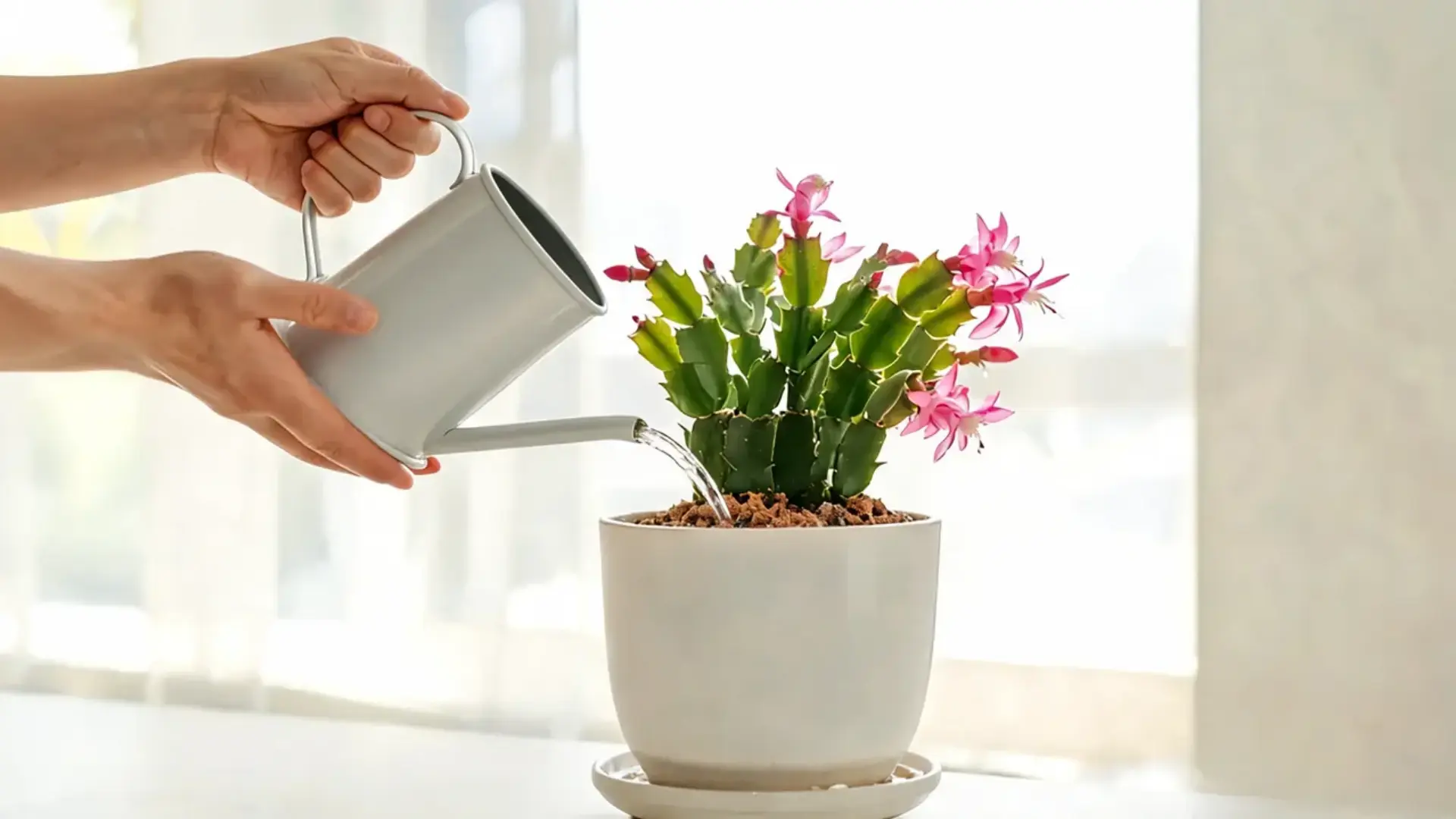
Watering affects the roots, stems, and flowers of an Easter cactus. Check the soil before adding moisture instead of following a fixed weekly schedule, since drying time may change with the season and room conditions, similar to the seasonal adjustments covered in this piece on how often to water cactus.
- Water when the top 1–2 inches of soil feel dry.
- Pour slowly until water drains from the bottom.
- Empty any water collected in the saucer.
- Reduce watering slightly during fall and winter.
- Watch for wrinkled segments, which may signal dryness.
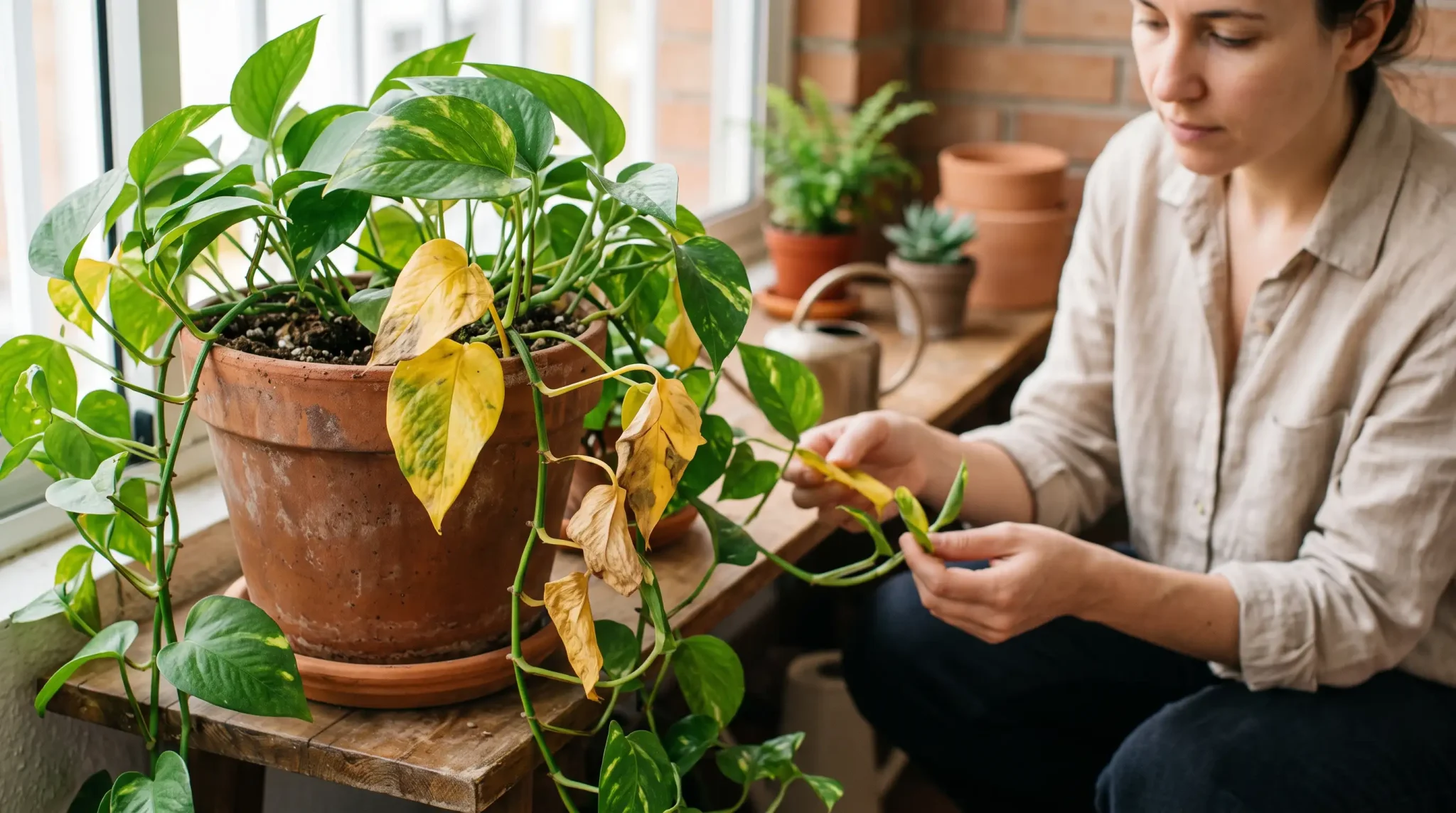
- Treat yellow or soft segments as possible signs of excess water.
The soil should feel lightly moist after watering, not soggy or heavy. Regular checks help you avoid both dryness and root damage.
2. Light Requirements
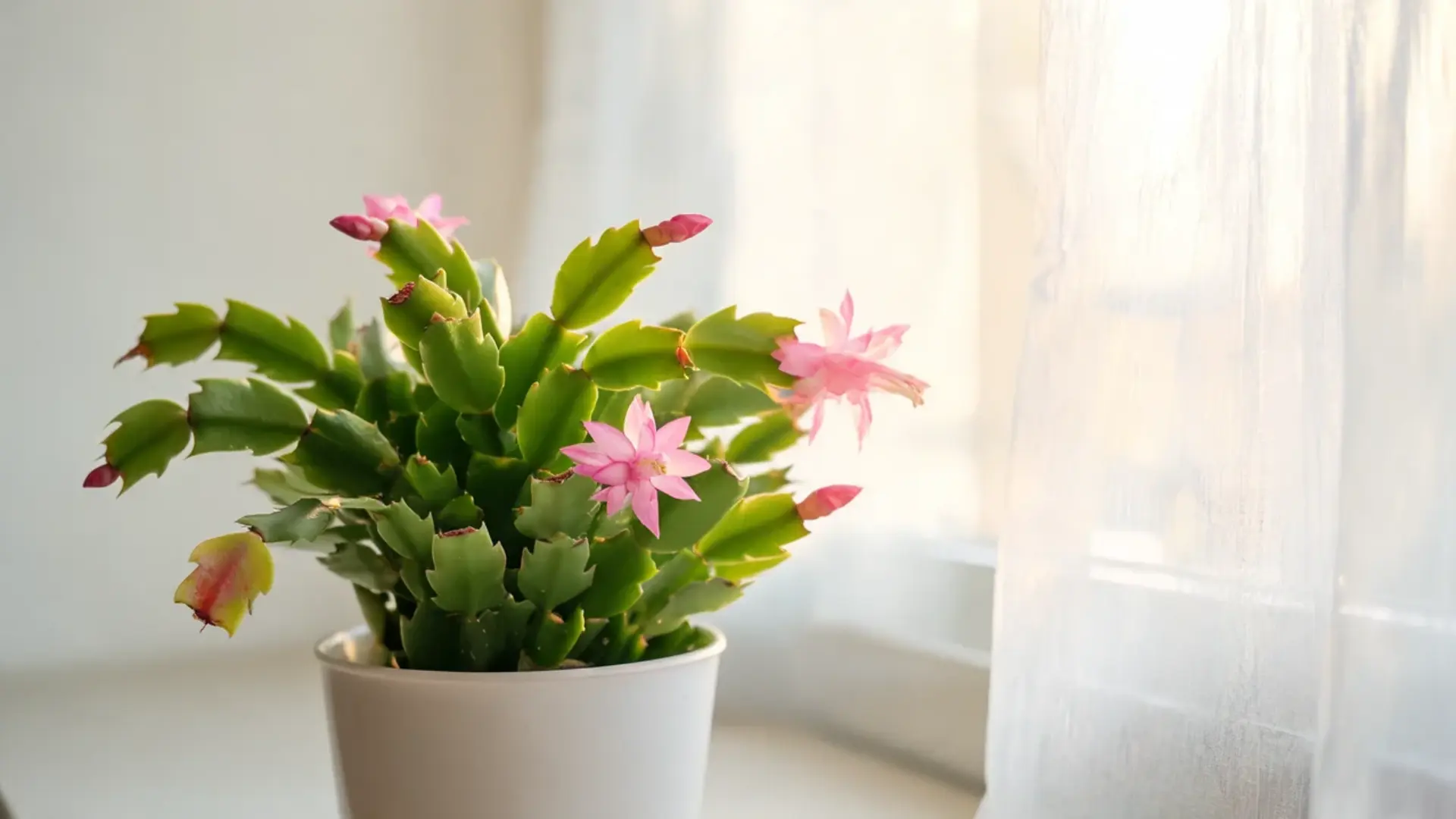
An Easter cactus needs enough light to grow firm green segments and produce flowers. Strong direct sunlight can burn its soft growth, while a dark location may weaken the stems and reduce blooming.
- Place the plant in bright indirect light.
- Choose an east-facing window for gentle morning sun.
- Use a thin curtain to filter strong sunlight.
- Protect it from harsh afternoon exposure.
- Watch for brown, pale, or red areas.
- Treat weak growth as a possible sign of low light.
A well-lit room with filtered sunlight usually provides the right balance. Check the side facing the window for early signs of light stress.
3. Soil and Potting Mix
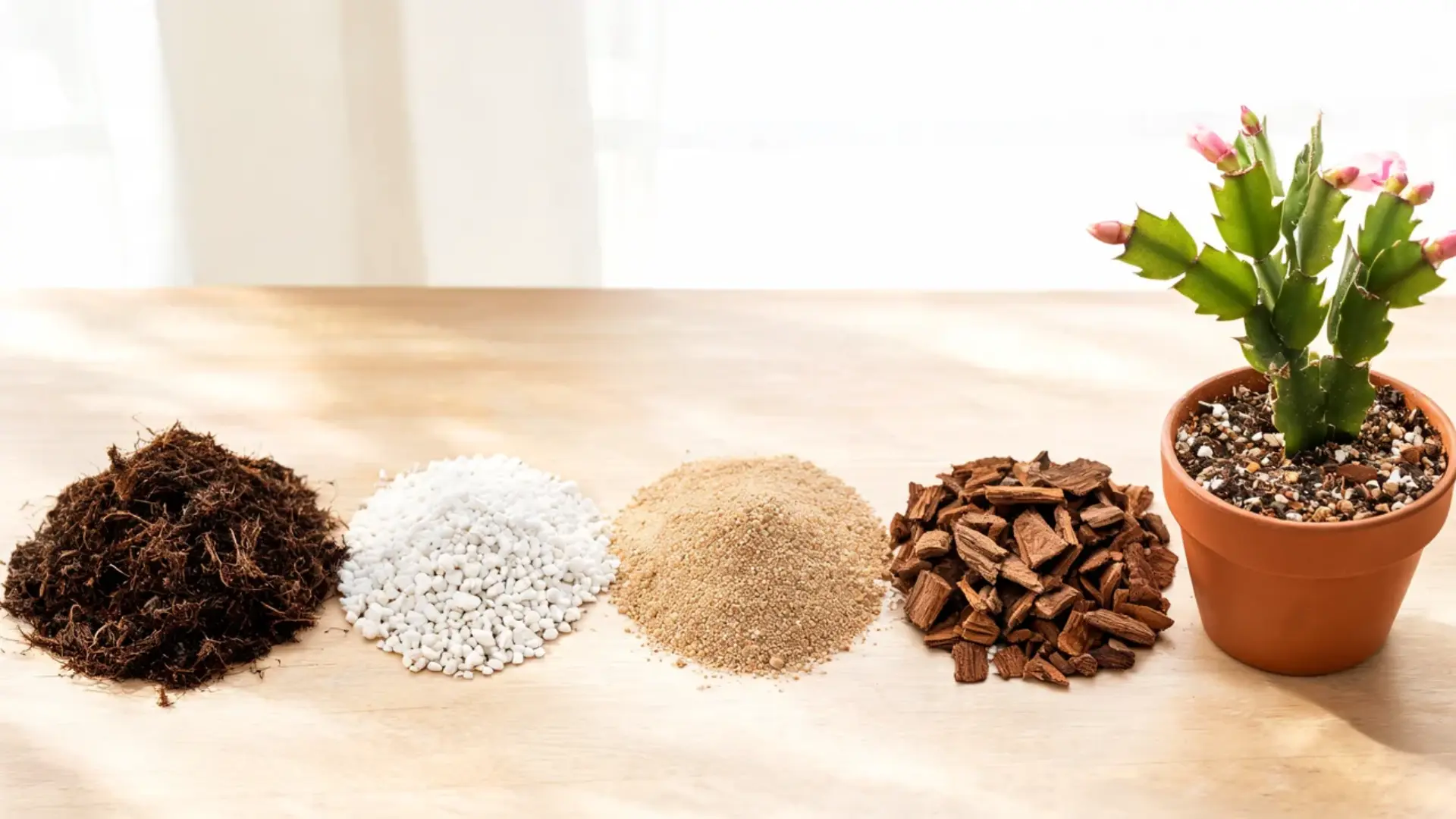
Easter cactus roots need a loose mix that holds slight moisture while allowing air and extra water to move freely. Dense soil can stay wet for too long and increase the risk of root problems.
Use a mix containing:
- Cactus or succulent potting soil.
- Perlite to improve drainage.
- Orchid bark to create air spaces.
- Coarse sand to reduce compaction.
- Peat moss to hold light moisture.
- Avoid using heavy garden soil that retains too much water.
The finished mix should feel light and crumbly rather than thick or muddy. Replace it if it becomes hard, compacted, or slow to drain.
4. Temperature and Humidity
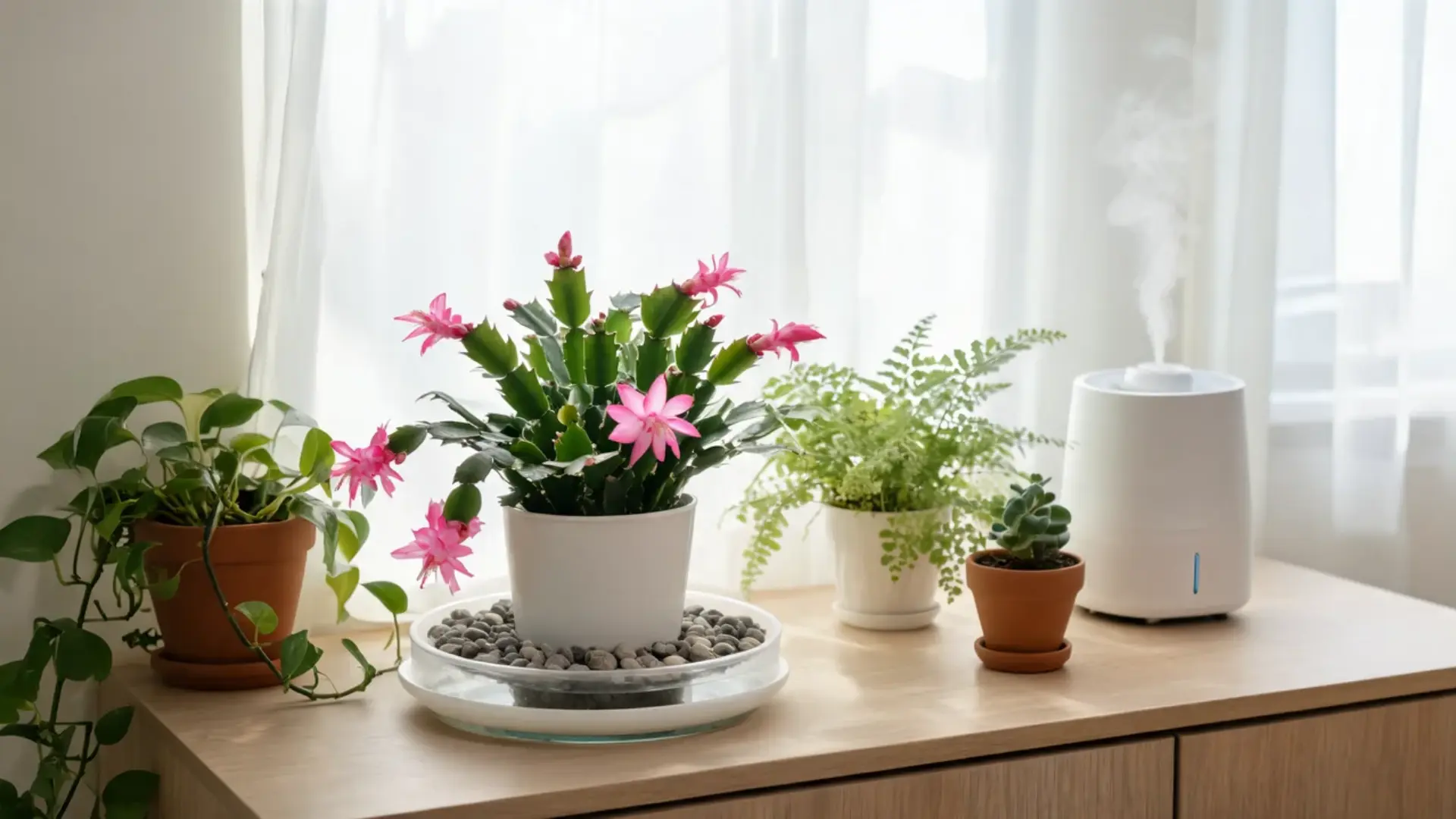
Stable temperature and humidity help an Easter cactus grow without stress. Sudden shifts, dry air, heaters, or cold drafts may weaken the plant and affect the development of future flowers.
- Keep temperatures between 60°F and 80°F during regular growth.
- Protect the plant from cold drafts.
- Keep it away from heaters and air vents.
- Avoid moving it between hot and cold rooms.
- Use a humidifier when indoor air is dry.
- Place it above a pebble tray without letting the pot touch the water.
Moderate humidity supports firm stems without soaking the roots. Focus on raising moisture in the air rather than keeping the soil constantly wet.
5. Feeding for Healthy Growth
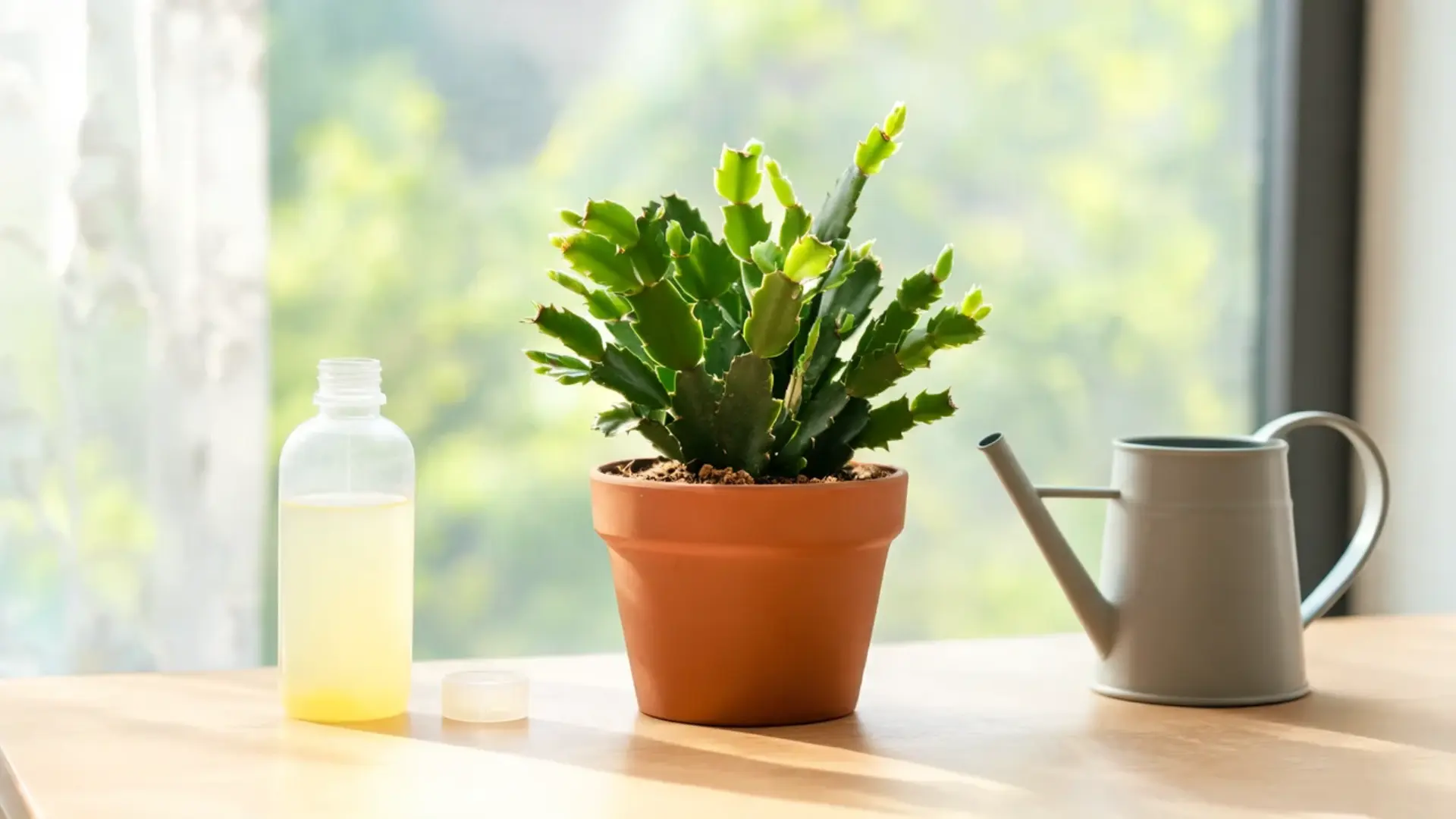
Fertilizer supports new stem growth and helps the plant store energy for future flowers. Feeding too often or using a strong mixture may damage the roots or create weak growth.
- Feed during spring and summer.
- Use a balanced, water-soluble fertilizer.
- Apply it at reduced strength.
- Feed every few weeks during active growth.
- Reduce or stop feeding during fall and winter.
- Resume feeding after flowering.
Slow growth does not always mean the plant lacks nutrients. Correct watering, drainage, or light problems before increasing fertilizer.
6. Shaping the Plant
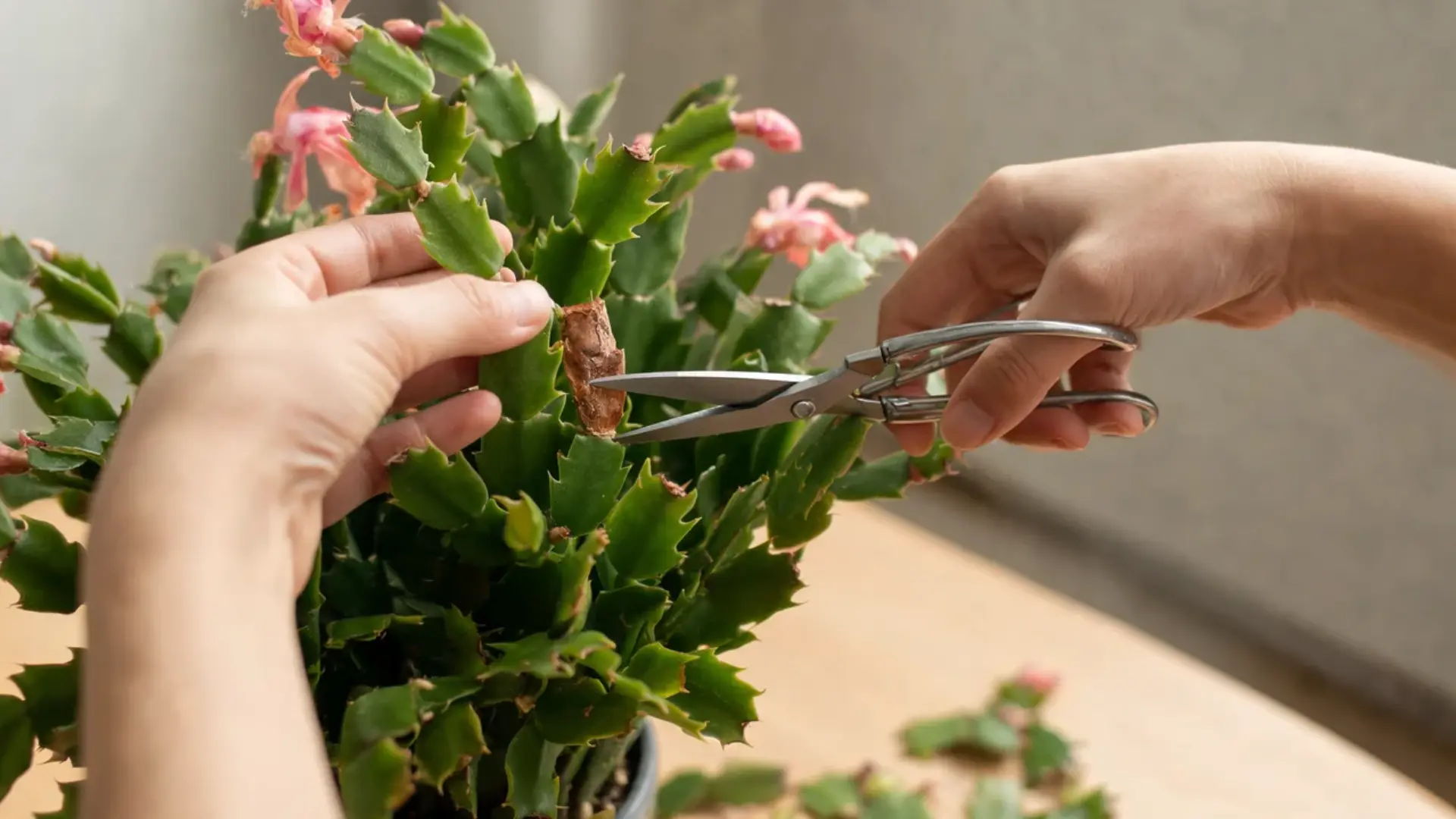
Pruning removes damaged growth and helps the plant maintain a full, balanced shape. The best time to trim an Easter cactus is shortly after the flowers have faded.
- Remove brown, weak, or damaged segments.
- Shorten stems that have become too long.
- Separate stems at their natural segment joints.
- Use clean hands or clean cutting tools.
- Avoid removing too much growth at once.
- Do not prune heavily during fall or bud formation.
Light pruning gives the plant time to replace removed segments. It also lowers the chance of cutting off growth that may produce future flowers.
7. Giving the Roots More Room
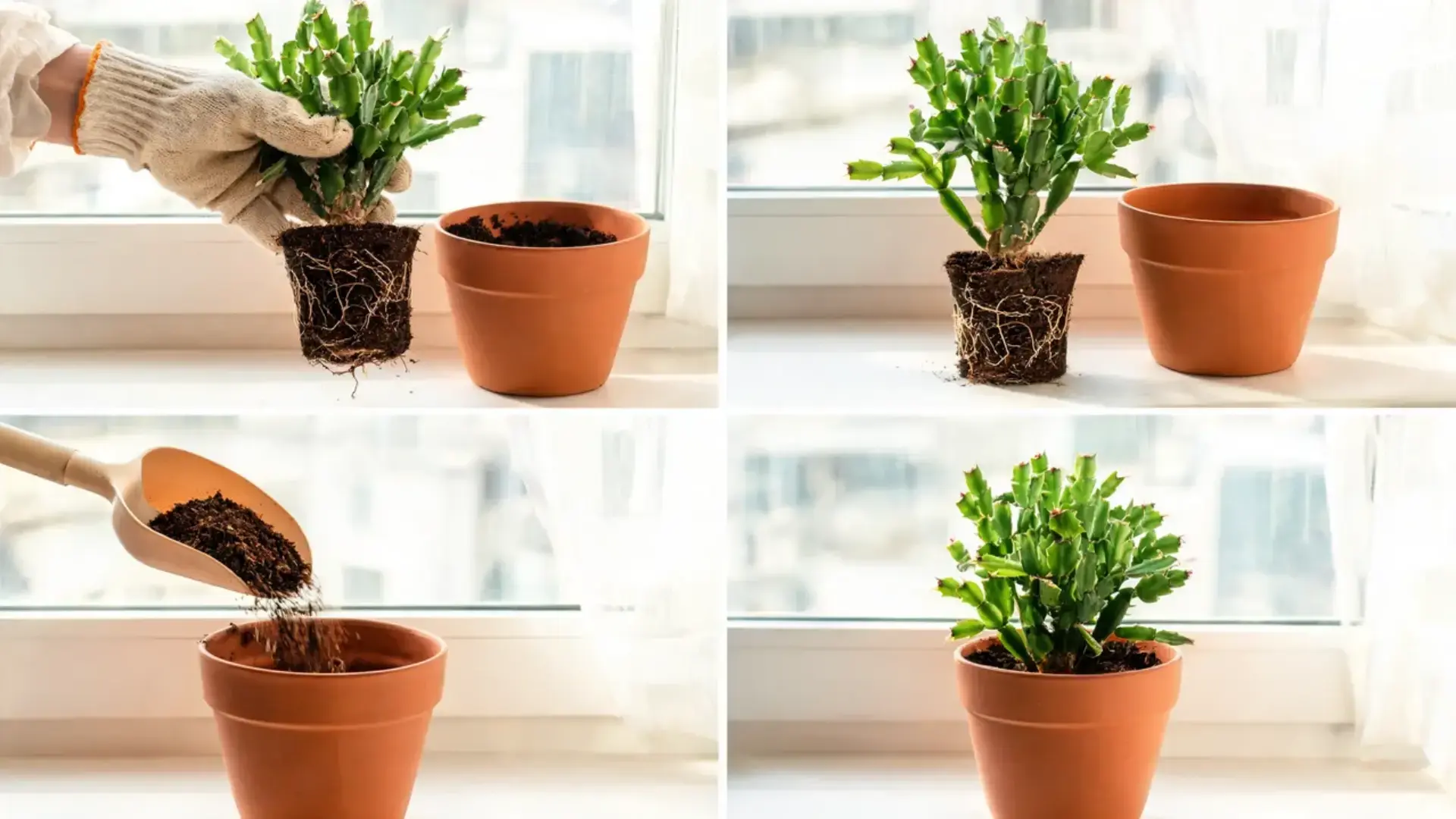
An Easter cactus often grows well when its roots fit closely inside the container. Repotting too often can stress the roots, while an oversized pot may keep the soil too wet. Repot the plant when:
- Roots grow through the drainage holes.
- The root system fills the container.
- The soil becomes dense or compacted.
- Water drains too slowly.
- The plant dries out much faster than before.
- The pot becomes cracked or unstable.
Repot after flowering, and choose a container that is only one size larger. Use fresh, well-draining soil and handle the roots gently.
Healthy Easter cactus care depends on steady habits and regular checks. Keep the soil lightly moist, provide filtered light, and protect the plant from sudden temperature changes.
Use a loose potting mix, feed during active growth, prune after flowering, and repot only when roots become crowded. Small corrections made early can prevent larger problems.
Easter Cactus Care Calendar
An Easter cactus needs different care as it moves through flowering, active growth, and rest. Spring and summer support blooms and new stems, while fall and winter prepare the plant for its next flowering cycle. The table below shows how to adjust watering, light, feeding, and seasonal tasks without following the same routine all year.
| Season | Watering | Light | Feeding | Main task |
|---|---|---|---|---|
| Spring | Water as the topsoil dries | Bright indirect light | Resume after flowering | Remove faded flowers, prune, or repot |
| Summer | Check soil regularly | Protect from harsh afternoon sun | Feed lightly | Support healthy new growth |
| Fall | Reduce slightly | Begin longer dark periods | Reduce or stop | Prepare the plant for buds |
| Winter | Water carefully | Maintain longer nights | Avoid regular feeding | Keep temperatures cool and stable |
Seasonal changes help an Easter cactus grow without unnecessary stress. Maintain regular care during spring and summer, then reduce watering and feeding as fall begins.
Cooler nights and longer darkness support winter bud formation. Once buds appear, keep the pot steady and avoid sudden changes. This yearly pattern supports healthy roots, firm stems, and dependable spring flowers.
How to Make an Easter Cactus Bloom Again
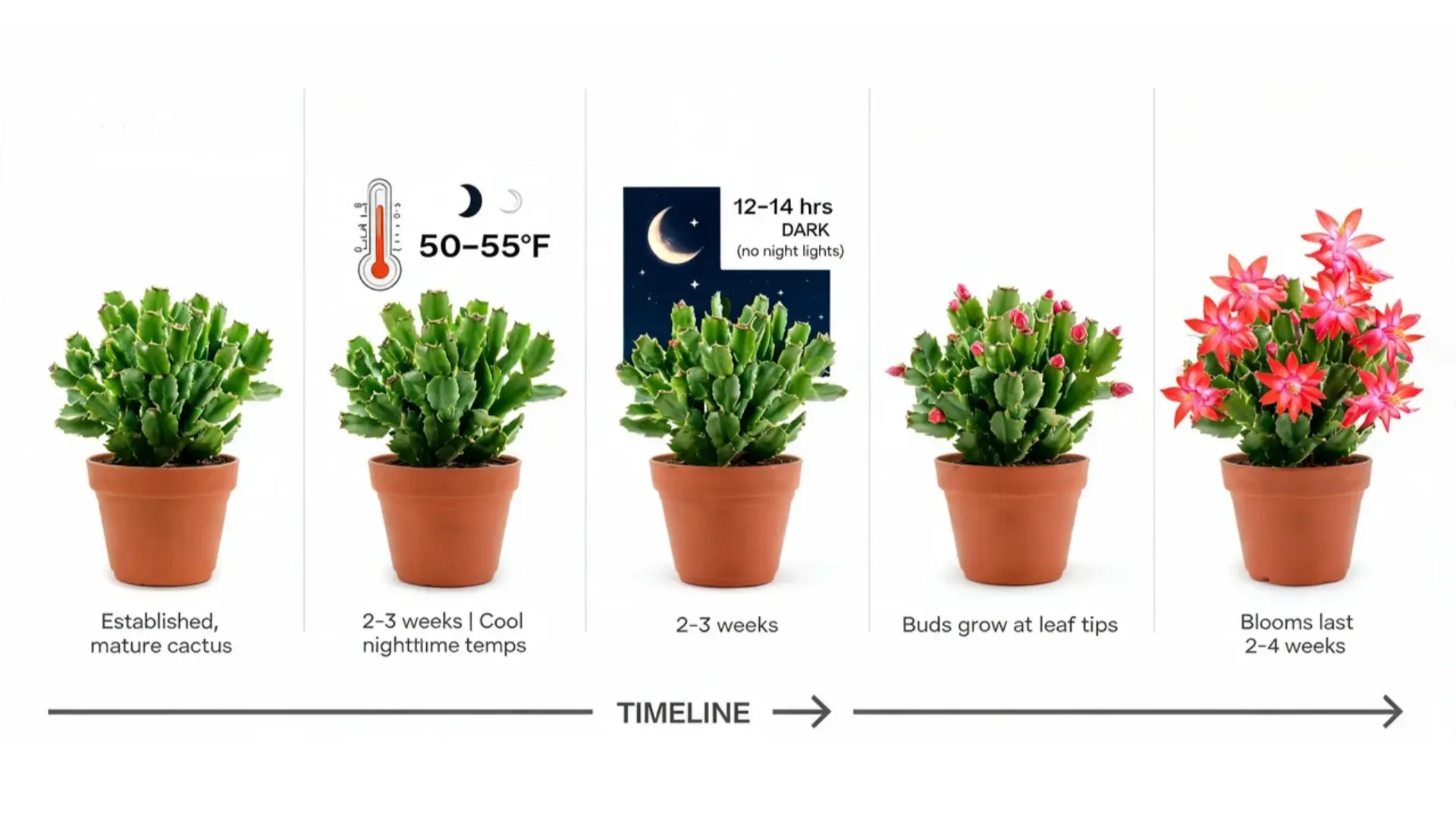
An Easter cactus needs a short rest period before it can form flower buds. Cooler nights, longer darkness, lighter watering, and less fertilizer help signal that spring is near, a pattern University of Illinois Extension generally describes for holiday cacti.
Start this routine several weeks before the expected bloom period and keep the conditions steady. Once buds appear, avoid sudden changes in light, temperature, watering, or placement, since stress can cause the buds to stop growing or fall.
- Start bloom preparation early: Begin changing the plant’s conditions several weeks before spring. Follow the same routine each day because flower buds need time to develop.
- Provide cooler nights: Keep nighttime temperatures around 50°F to 55°F. Maintain comfortable daytime warmth and protect the plant from frost, drafts, and sudden cold changes.
- Give it longer darkness: Provide 12–14 hours of uninterrupted darkness each night. Keep the plant away from lamps, televisions, hallway lights, and outdoor light entering through windows.
- Adjust watering and fertilizer: Let the soil dry slightly more between waterings without allowing it to become fully dry. Reduce or stop feeding during the rest period.
- Keep the plant steady after buds form: Avoid moving or rotating the pot. Maintain the same light, watering, and temperature conditions to reduce the risk of bud drop.
- Return to regular care after flowering: Remove faded flowers, resume normal watering, and begin feeding when new growth appears. Prune or repot the plant at this time if needed.
Helping an Easter cactus bloom again depends on steady seasonal changes, not one quick action. Begin early, provide cool nights and long periods of darkness, and reduce water and fertilizer with care.
After buds form, keep the plant in the same place and maintain stable conditions. When flowering ends, return gradually to regular care so the plant can recover, grow new segments, and prepare for the next spring bloom.
Common Easter Cactus Problems and Fixes
Easter cactus problems often show through changes in the stems, flowers, or soil, caused by watering habits, light levels, sudden temperature shifts, or pests like mealybugs, a problem shared by many houseplants, including jade plants and succulents. Spotting these signs early helps you find the cause and fix it before it gets worse.
| Problem | Fix |
|---|---|
| Buds drop before opening from moving the plant, uneven watering, or light at night. | Keep the plant in one stable spot with steady watering, away from drafts. |
| Segments turn thin and pale from too little light. | Move to a brighter, filtered spot or add a grow light. |
| Brown patches or pink discoloration form from direct or sudden sun. | Shift to bright, filtered light and trim damaged sections. |
| Mealybugs, scale, or fungus gnats appear at joints or in damp soil. | Remove pests by hand and reduce excess soil moisture. |
| Mushy or collapsing segments indicate root rot caused by overly wet soil. | Let soil dry between waterings and repot into fresh, well-draining mix. |
Most Easter cactus problems improve once the main cause is corrected. Check the plant regularly, adjust only what is needed, and avoid making several changes at once. Steady watering, light, temperature, and humidity give the plant time to recover fully.
Frequently Asked Questions
Why is my Easter cactus not blooming?
Warm nights, insufficient darkness, too much fertilizer, weak daytime light, or frequent changes in location can stop an Easter cactus from blooming. Provide cooler nights, 12 to 14 hours of uninterrupted darkness, and steady care to encourage bud formation.
When should I repot an Easter cactus?
Repot an Easter cactus after flowering when roots fill the container, grow through drainage holes, the soil becomes compacted, or water drains poorly. Choose a clean pot only one size larger and use a loose, well-draining mix.
How long can an Easter cactus live?
With steady care, an Easter cactus can live for many years and continue producing flowers each spring. Its lifespan depends on healthy roots, bright indirect light, careful watering, stable temperatures, and consistent seasonal care throughout the year.
Why are my Easter cactus segments turning red?
Red or pink segments often appear when an Easter cactus receives too much direct light or experiences temperature stress. Move it to bright filtered light, protect it from sudden changes, and watch new growth to see whether the color improves.
Can an Easter cactus bloom more than once a year?
An Easter cactus usually follows one main spring flowering cycle each year. A second bloom may happen under favorable indoor conditions, but steady care, proper seasonal rest, cooler nights, and longer darkness provide the best chance of regular flowering.
Final Thoughts
Healthy Easter cactus care comes down to consistency. Give your plant bright indirect light, water only when the top layer of soil feels dry, and use a loose mix that drains well. Keep it away from harsh sun, cold drafts, heaters, and sudden changes that can cause stress or bud drop.
Pay close attention to the stems, since they often reveal problems early: wrinkled segments may need more moisture, while pale, soft, yellow, or reddish growth can point to light or watering issues.
Check the soil, drainage, and plant position before making several changes at once. Start with one small adjustment today, then watch how your Easter cactus responds over the next few weeks. Drop a comment below and share your questions.