A leftover tree stump can make a yard look messy and unfinished. It gets in the way during mowing, takes up useful space, and can even attract bugs over time.
The good part is that removing a stump does not always mean renting huge machines or spending money on professional help.
Many homeowners can handle smaller stumps on their own with simple tools and a little patience.
Some methods work fast, while others take time but need less effort. The trick is knowing which option makes the most sense for your yard and how much work you want to do.
Why Removing a Tree Stump is Worth It
A tree stump may not look like a major problem at first, but it can slowly make yard work harder and take away useful space. Removing it early can save time and effort later.
- Makes Mowing Easier: No more pushing the mower around an awkward stump or worrying about hitting it every time the grass grows. It also makes regular yard work much faster.
- Creates More Usable Space: A leftover stump takes up valuable room that could be used for a garden, seating area, fire pit, or even simple landscaping updates.
- Keeps Bugs Away: Old wood often attracts termites, ants, beetles, and other insects that may slowly spread to nearby plants or wooden structures.
- Stops Fungal Growth: Rotting stumps can trap moisture for long periods, which creates the perfect spot for fungus and unwanted growth in the yard.
- Prevents Root Sprouts: Some stumps continue sending out small shoots from the roots, leading to annoying regrowth around the lawn.
- Improves Yard Safety: Tree stumps can easily become a tripping hazard for kids, pets, and guests, especially when hidden by grass or leaves.
DIY Methods That Actually Work
Removing a tree stump does not always mean renting giant machines or spending money on professional help. The best part is that most of these tricks use simple tools many homeowners already have at home.
1. Dig it Out by Hand
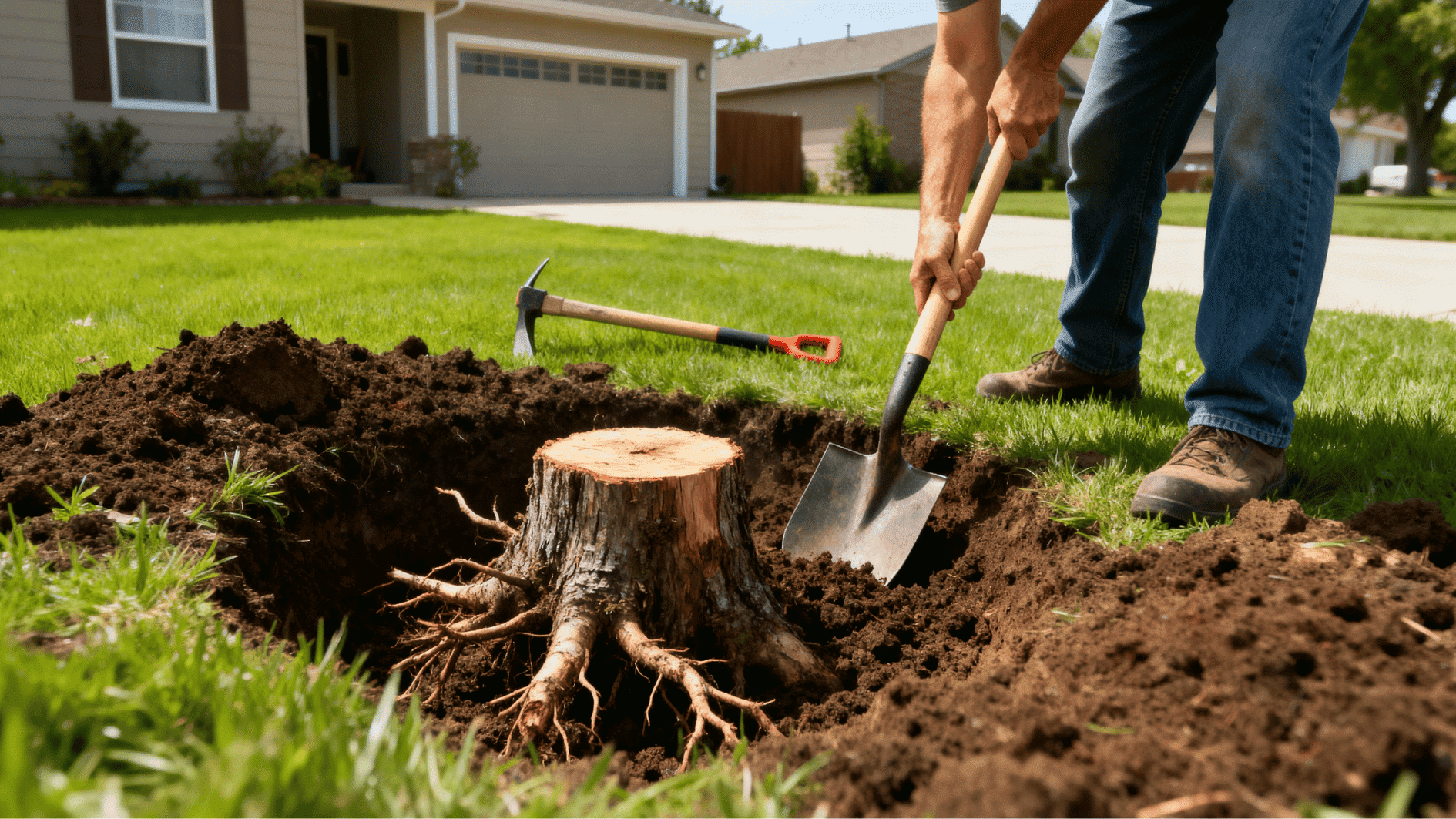
This is one of the fastest ways to remove a small or freshly cut stump. It takes a little digging and root cutting, but it works much quicker than waiting for the stump to rot naturally.
| What You Need | Best For | Why It Works |
|---|---|---|
| Shovel | Small stumps | Helps expose roots underground |
| Mattock or axe | Thick roots | Cuts stubborn roots faster |
| Hand saw and gloves | Fresh stumps | Makes pulling the stump easier |
Steps to Follow:
- Dig around the stump to expose the roots
- Cut the larger roots with a saw or axe
- Rock the stump side to side
- Pull it loose from the soil
2. Use Epsom Salt to Rot the Stump
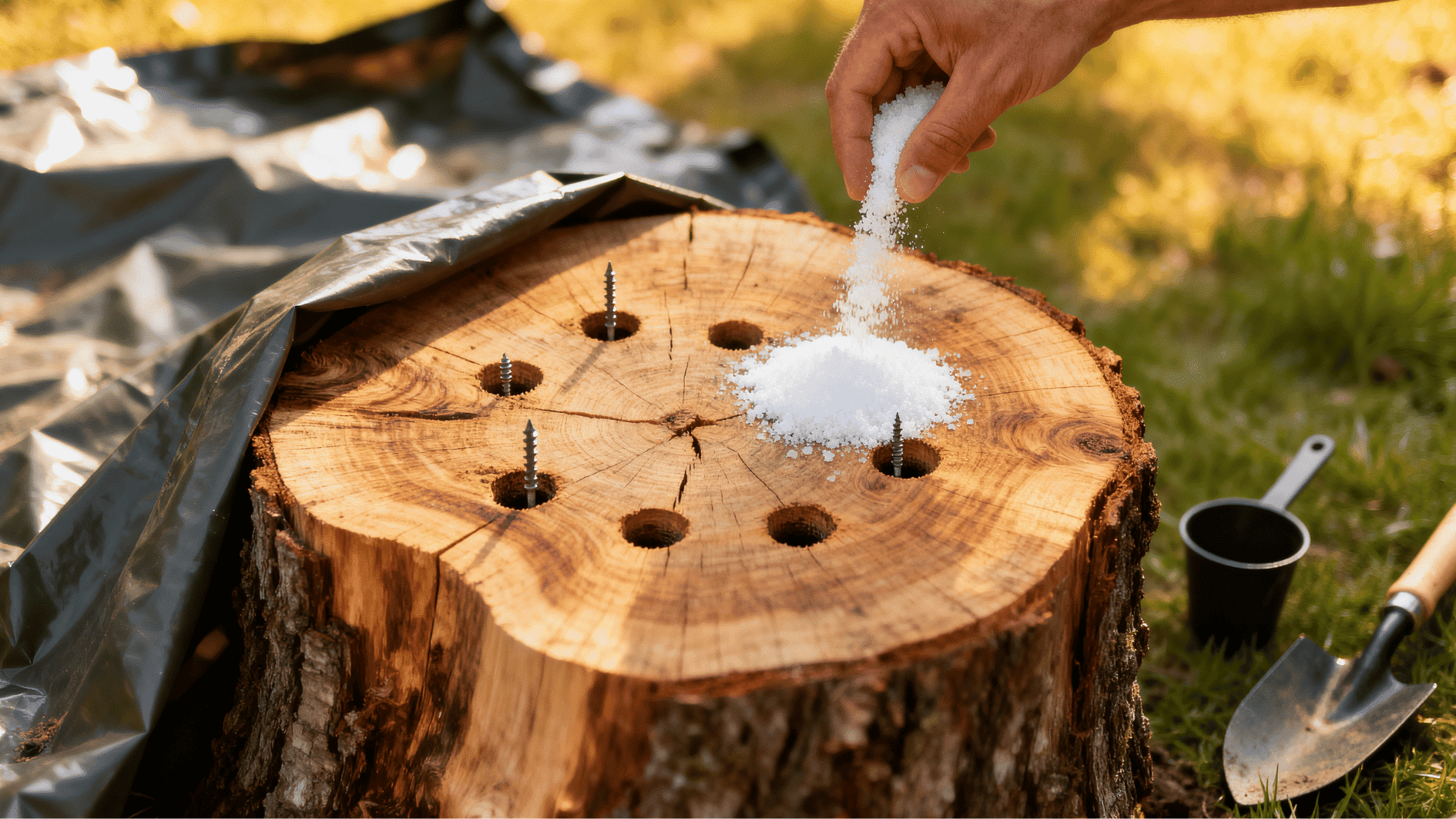
If digging sounds exhausting, this method is much easier on the body. Epsom salt slowly dries out the wood, making the stump softer and easier to break apart over time.
| What You Need | Best For | Why It Works |
|---|---|---|
| Drill | Hard wood stumps | Creates deep holes for the salt |
| Epsom salt | Large stumps | Dries out the wood naturally |
| Water and tarp | Slow rotting methods | Traps moisture and speeds up the process |
Steps to Follow:
- Drill deep holes into the stump
- Fill the holes with Epsom salt
- Add warm water
- Cover the stump with a tarp
3. Burn the Stump from the Inside
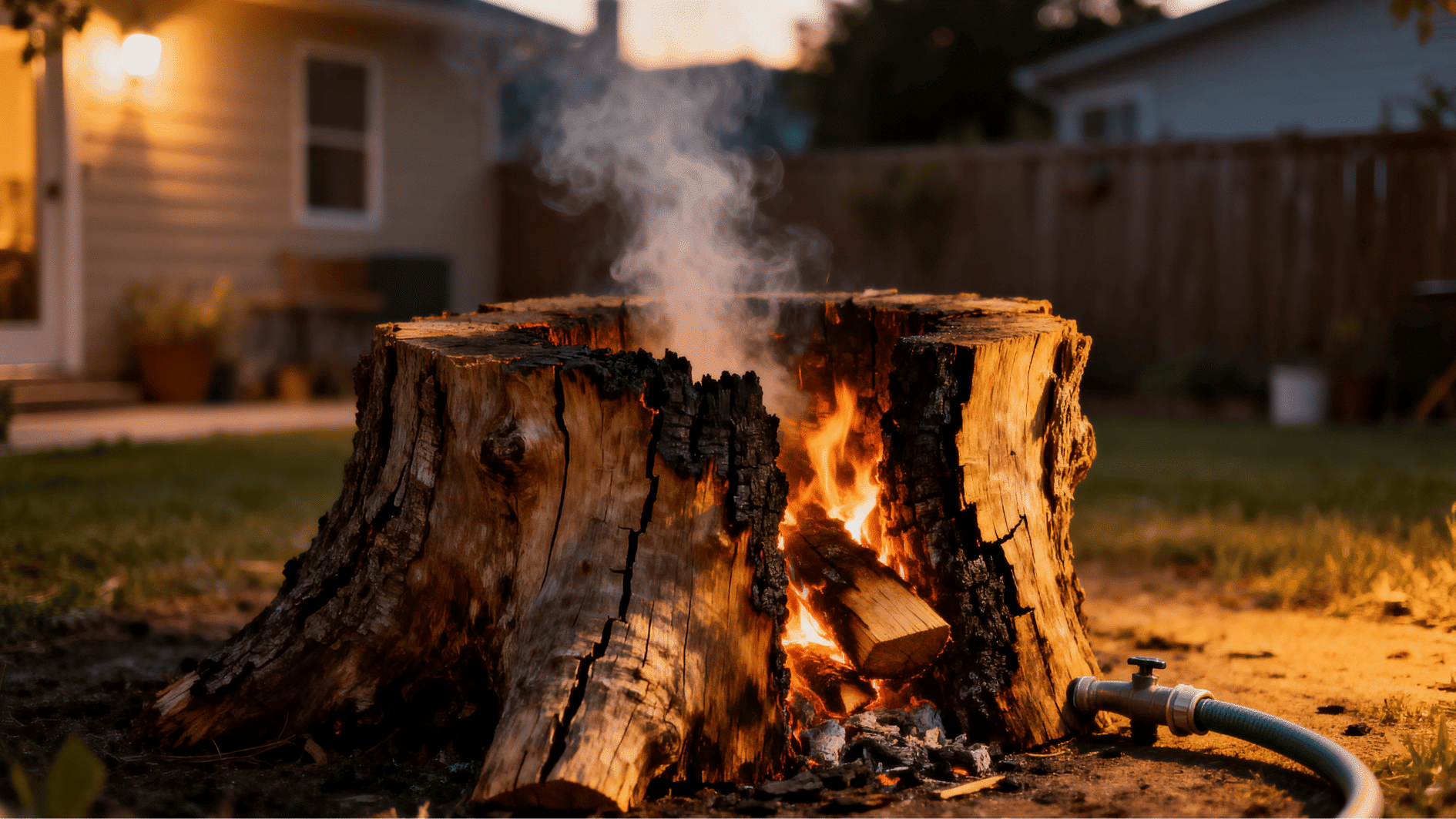
Burning works best on older and dry stumps that are difficult to pull out by hand. The fire slowly weakens the stump from the inside until it starts breaking down naturally.
| What You Need | Best For | Why It Works |
|---|---|---|
| Drill | Dry stumps | Helps the fire spread inside |
| Burning material | Old stumps | Slowly burns away the wood |
| Water hose | Outdoor safety | Helps control the fire if needed |
Steps to Follow:
- Drill holes into the stump
- Add safe burning material carefully
- Light the stump and let it burn slowly
- Keep water nearby for safety
4. Loosen Roots with Boiling Water
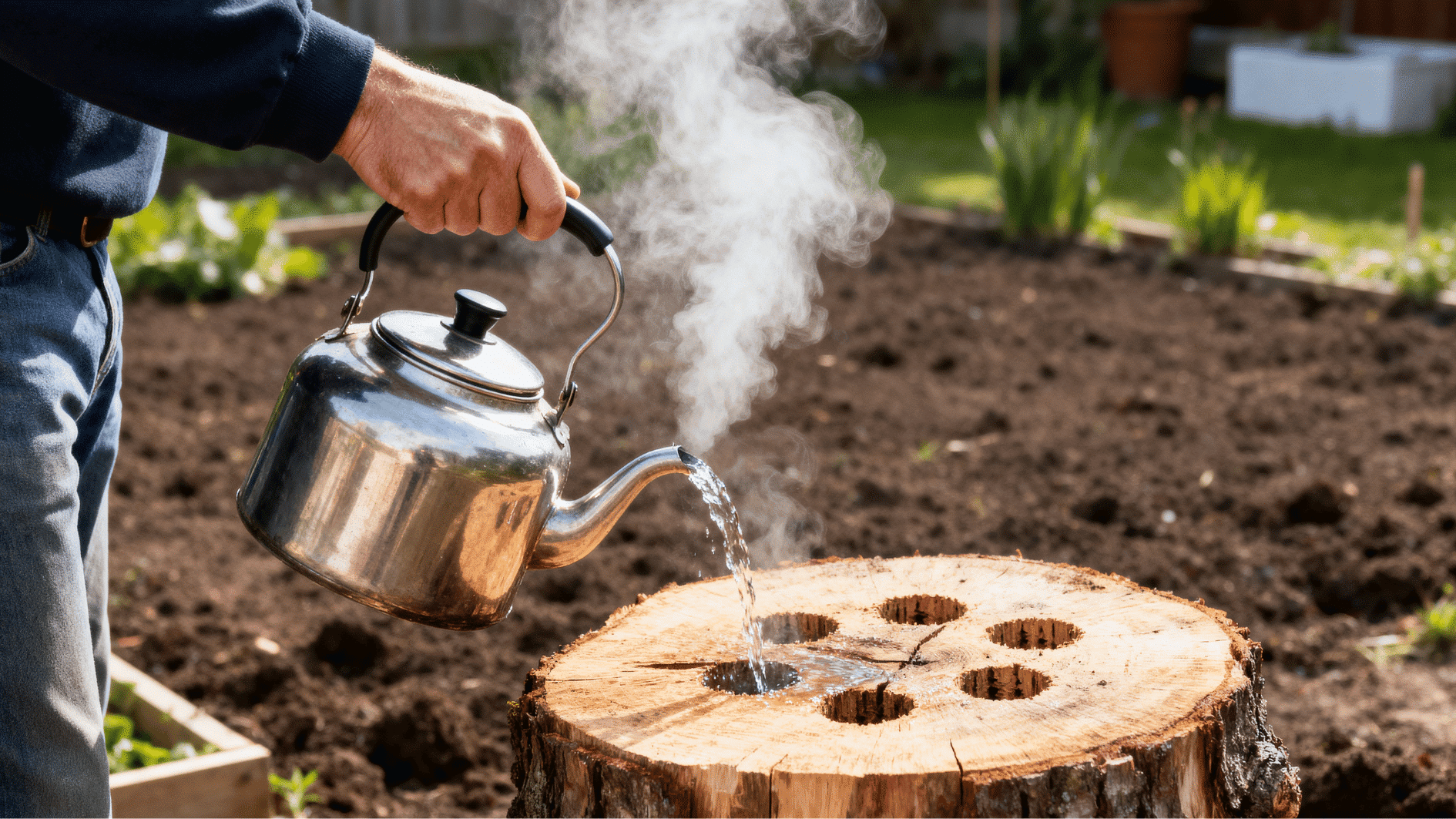
This simple trick helps soften stubborn roots underground without using chemicals. It may take a few days, but it can make digging much easier later.
| What You Need | Best For | Why It Works |
|---|---|---|
| Drill | Deep roots | Helps water reach inside the stump |
| Boiling water | Tough roots | Softens roots underground |
| Shovel | Loose soil | Makes digging easier afterward |
Steps to Follow:
- Drill holes into the stump
- Pour boiling water into the holes
- Repeat daily for several days
- Dig around the loosened roots
5. Cut Through Roots with a Mattock
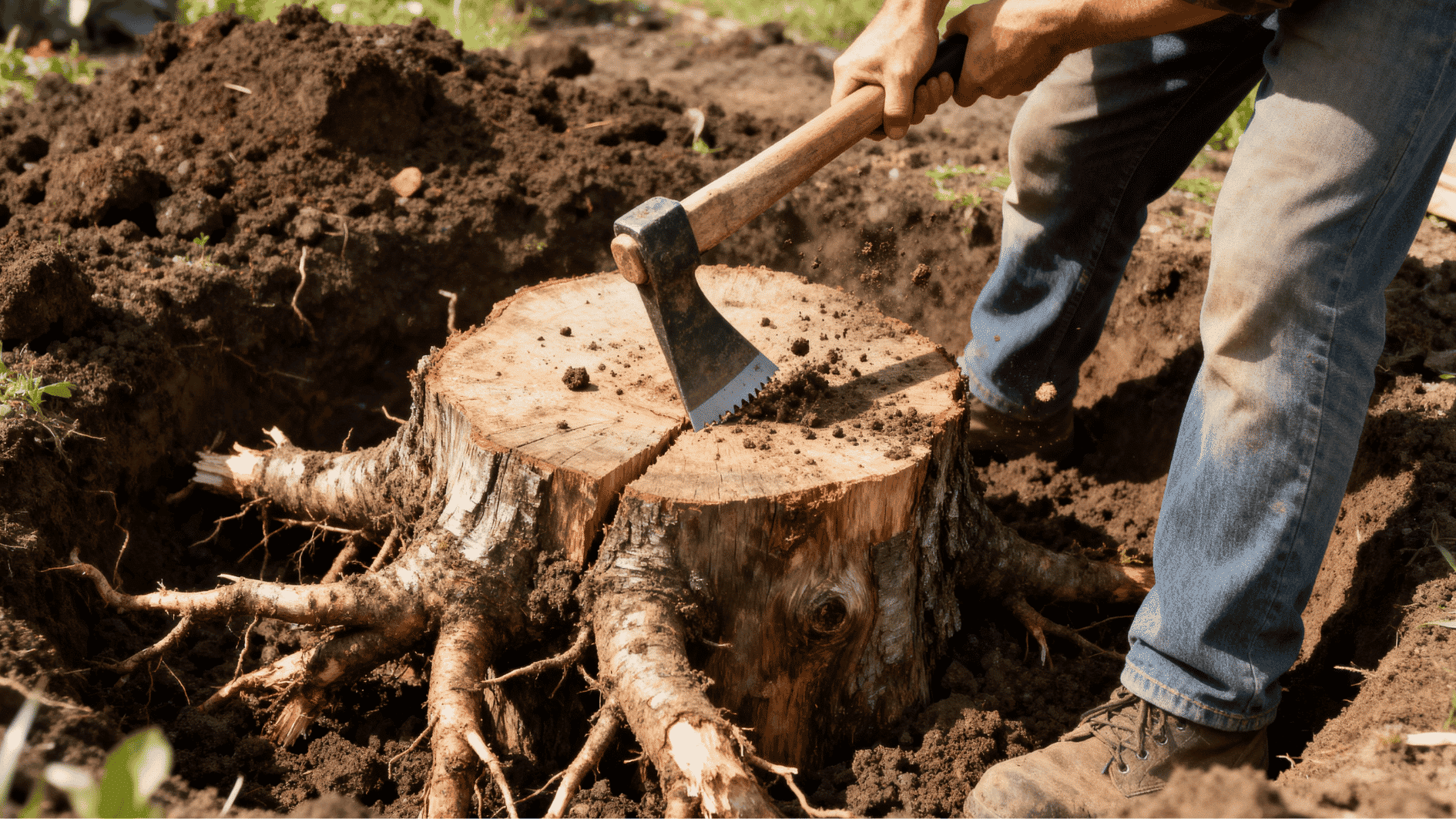
A mattock works better than a regular shovel when dealing with thick roots and packed soil. This method is great for stumps with strong root systems hiding underground.
| What You Need | Best For | Why It Works |
|---|---|---|
| Mattock | Thick roots | Breaks roots faster than a shovel |
| Shovel | Packed soil | Helps uncover hidden roots |
| Gloves | Tough digging work | Protects hands from blisters and splinters |
Steps to Follow:
- Dig around the stump first
- Swing the mattock into thick roots
- Loosen packed soil around the base
- Pull away broken roots
6. Combine DIY Methods for Faster Results
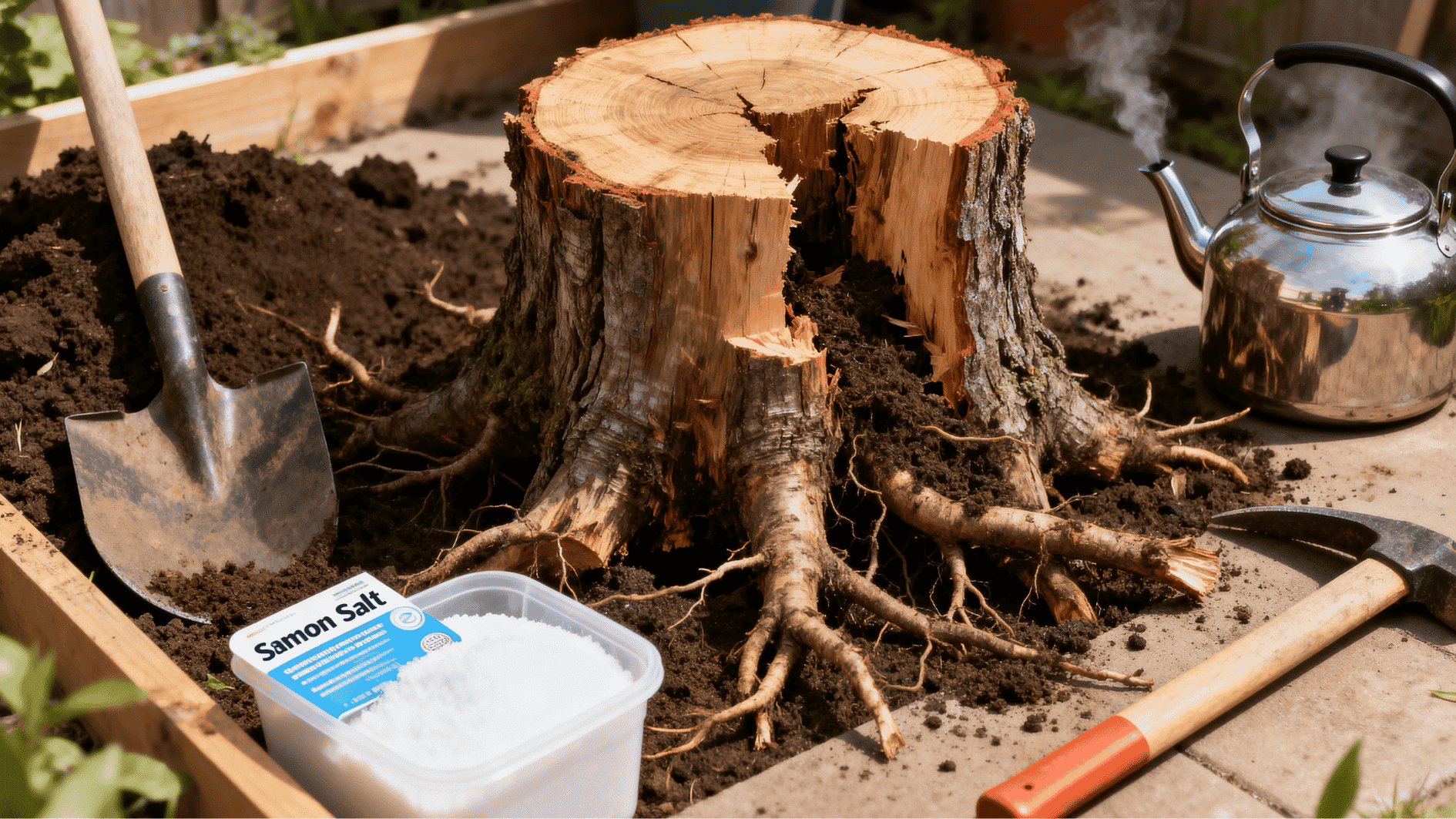
Sometimes one method alone is not enough for a stubborn stump. Mixing tricks like digging, boiling water, or Epsom salt can make the whole process easier and save time.
| What You Need | Best For | Why It Works |
|---|---|---|
| Digging tools | Large stumps | Helps loosen roots first |
| Epsom salt or boiling water | Stubborn wood | Weakens the stump naturally |
| Saw or mattock | Thick roots | Makes final removal easier |
Steps to Follow:
- Start by digging around the stump
- Use boiling water or Epsom salt
- Cut loose roots with a mattock or saw
- Pull the stump out once it loosens
DIY vs. Professional Tree Stump Removal Cost
Removing a tree stump yourself is usually the cheapest option, especially for smaller stumps that only need basic tools and patience.
Most DIY methods cost between $20 and $100, depending on supplies like a mattock, drill, Epsom salt, or saw.
Hiring a professional costs more, but it saves time and heavy labor. Most stump grinding services charge around $100 to $400 per stump, depending on the stump size, root depth, and location.
DIY works well for smaller jobs, while professional removal is often better forlarge, deep-rooted, or hard-to-reach stumps that need specialized equipment for safe and fast removal.
Conclusion
Learning how to remove a tree stump by yourself is a lot easier than it may seem at first. You do not need fancy machines or a big budget to get the job done.
Simple methods like digging, cutting, burning, or letting the stump rot naturally can all work well, depending on how much time and effort you want to put in.
Some stumps come out fast, while others take a little patience. Pick the method that feels right for your yard, grab a few basic tools, and that annoying stump can finally stop taking up space in the lawn.
Frequently Asked Questions
What is the best time of year to remove a tree stump?
Dry weather is usually better because the ground is easier to work with and burning methods work more effectively.
How deep do tree stump roots usually go?
Some roots stay close to the surface, while others can spread several feet underground depending on the tree type.
Can a tree stump damage nearby plants?
Sometimes. Large root systems can continue taking nutrients and water from nearby plants for a while.
How far should I dig around a tree stump?
Dig wide enough to see the main roots around the stump. Once the roots are visible, cutting and pulling becomes easier.