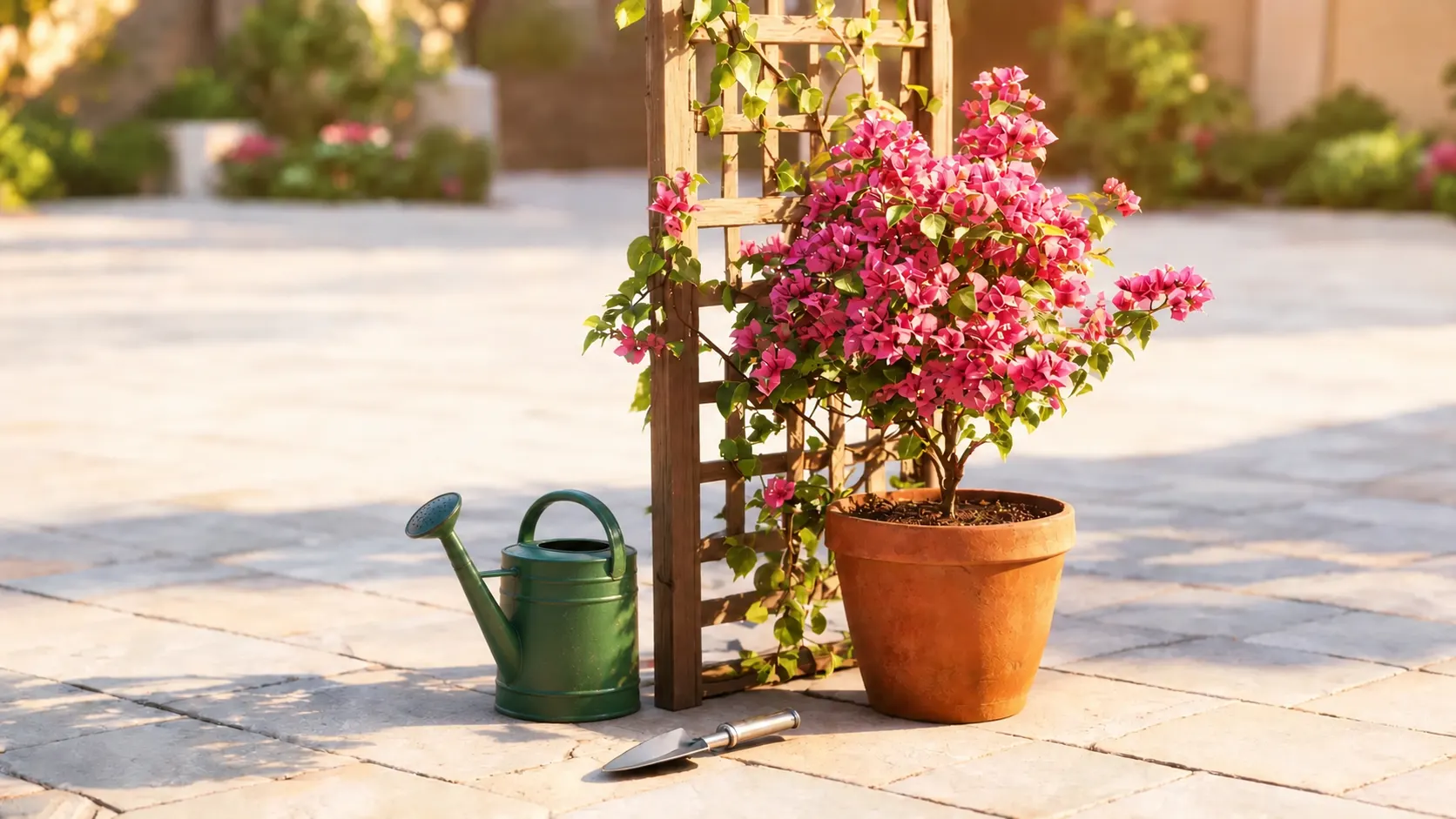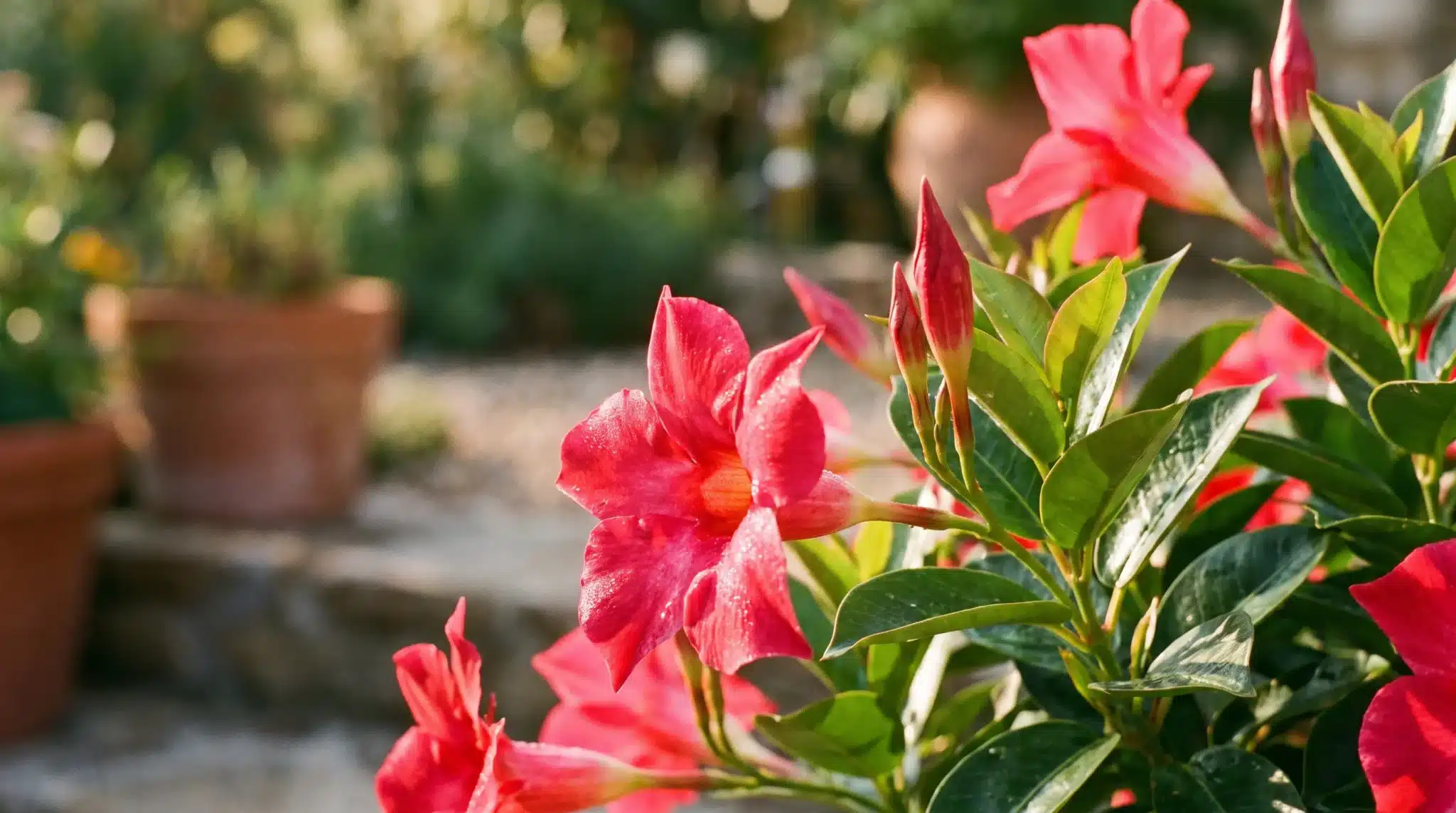
The dipladenia flower brings long-lasting color to warm, sunny spaces with very little fuss. Its trumpet-shaped blooms appear in shades of red, pink, white, coral, and yellow, while its compact growth suits pots, hanging baskets, and garden beds.
Often confused with Mandevilla, Dipladenia usually grows as a bushy or trailing plant rather than a tall climbing vine, holding its shape without a trellis or stake.
Give it plenty of sunlight, fast-draining soil, and water only when the upper soil begins to dry, and it rewards that routine with steady color for months. With the right care, it can flower from late spring through fall, staying full season after season.
What Is a Dipladenia Flower?
The dipladenia flower is a warm-climate plant known for its trumpet-shaped blooms and neat, bushy growth. It belongs to the same plant family as Mandevilla, though Dipladenia usually stays shorter and fuller, growing more like a shrub than a vine.
Its stems tend to dangle or cascade rather than reach upward, and its leaves are smooth, glossy, and smaller than Mandevilla’s. Blooms come in red, pink, white, coral, and yellow, and the plant flowers steadily from late spring through fall.
Its long flowering season and compact form make it a strong choice for pots, hanging baskets, patio planters, and garden beds. Because it doesn’t climb, it needs no trellis or support, just a spot with good light and room to fill out.
Popular Dipladenia Varieties
Breeders have expanded the dipladenia flower into dozens of varieties over the years, each with its own bloom color, size, or growth habit. Some stay compact for small pots; others produce larger flowers closer to Mandevilla size. Here are the varieties most commonly found at nurseries.
1. Sun Parasol
Native Area: South American tropical forests
USDA Hardiness Zones: 10–11
Height: 1–2 feet (spreading 2–3 feet wide)
Bloom Period: Late spring through fall
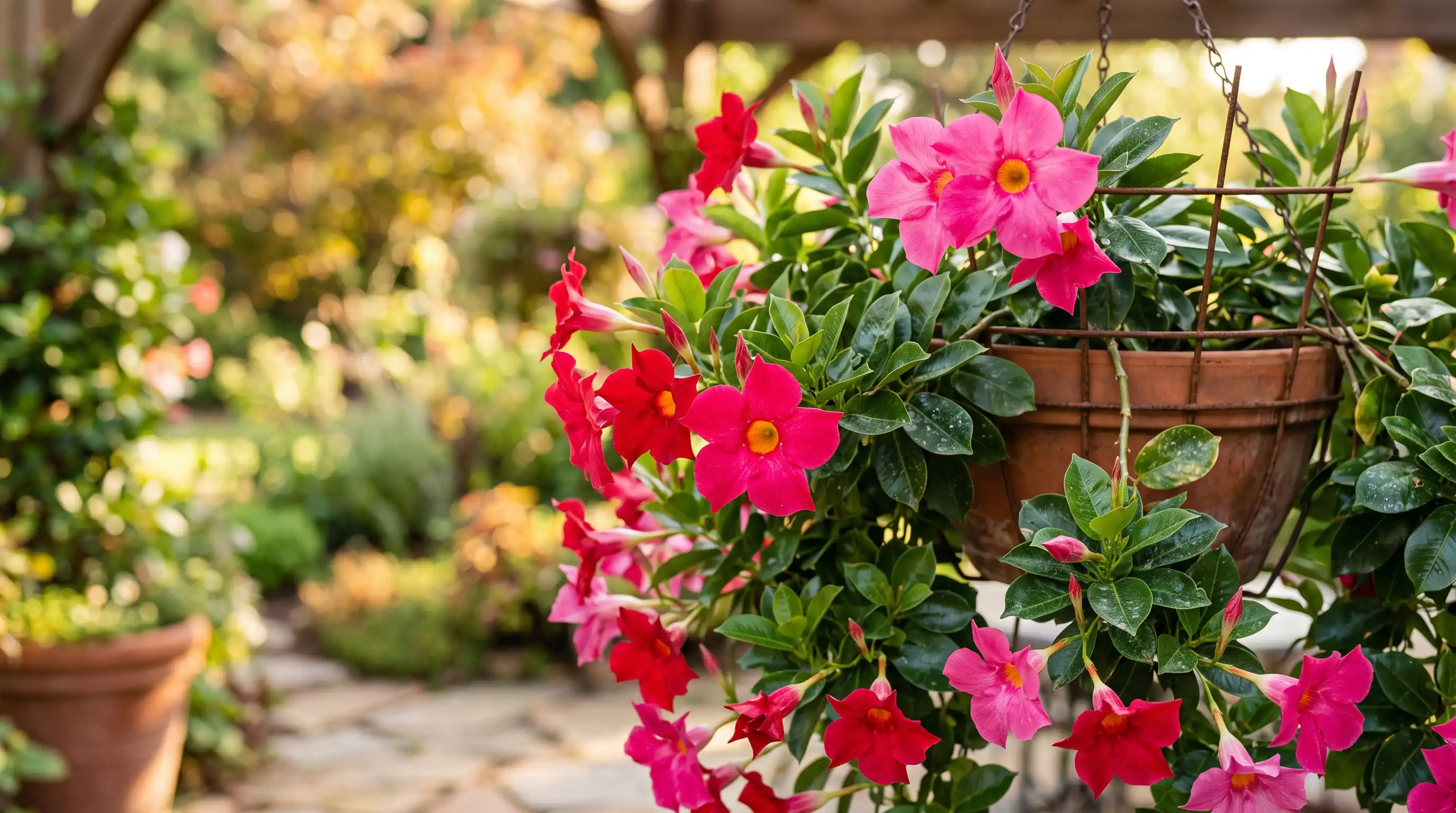
Sun Parasol keeps a bushy, compact shape and blooms heavily through the warm season. Its parasol-shaped flowers come in crimson, pink, white, and apricot, each with a bright orange-yellow throat at the center.
Best suited for containers, where its fuller, rounder form fills out the pot without needing any support.
2. Sundenia
Native Area: South American tropical forests
USDA Hardiness Zones: 10–11
Height: 2 feet (spreading 2 feet wide)
Bloom Period: Through summer
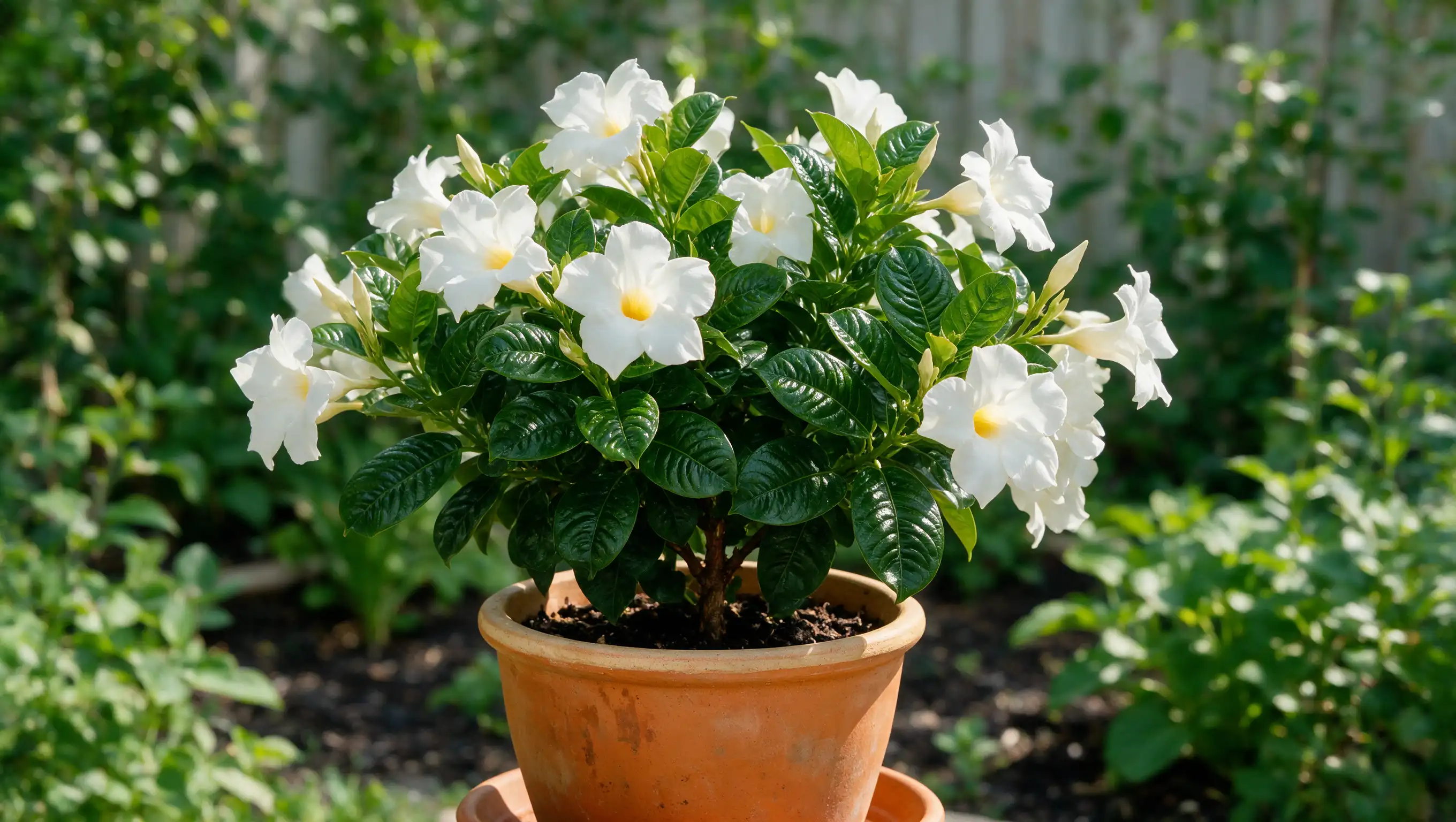
Sundenia was bred to pair Mandevilla-size blooms, 3 to 5 inches wide, with a smaller, shrub-like frame. Its dark green, puckered leaves stay dense through summer, while the flowers come in white, coral, and red.
Best suited for pots and containers where bigger blooms are wanted without the plant taking up much room.
3. Summer Romance (Diamantina)
Native Area: South American tropical forests
USDA Hardiness Zones: 9–11
Height: Vining habit that does best with a small trellis or support, unlike most bushy Dipladenia types
Bloom Period: Earlier in the season than most other Dipladenia varieties
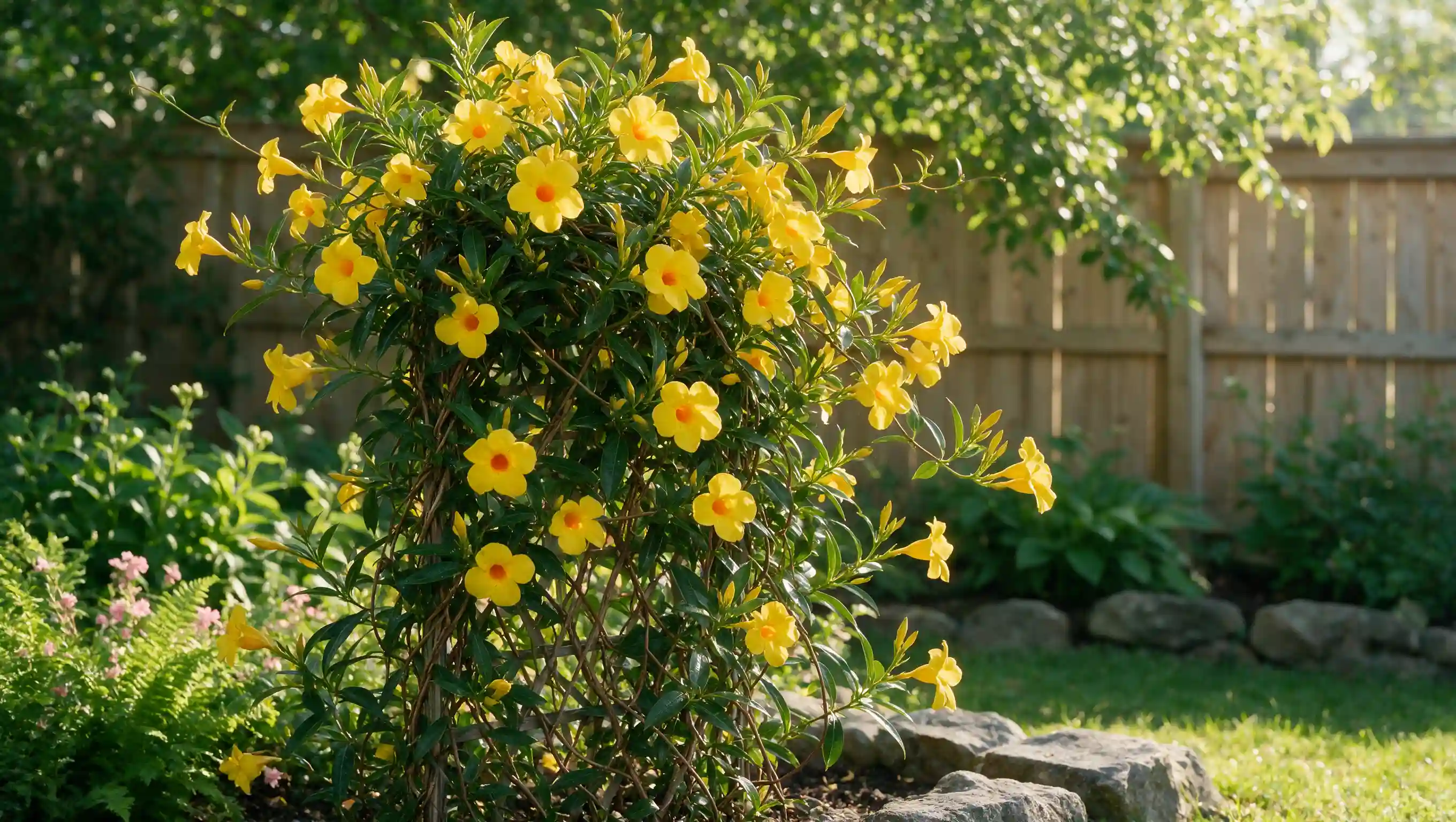
Summer Romance stands out as the yellow, vining type in the Dipladenia group, and it tolerates cooler temperatures better than most other varieties.
Best suited for gardeners in regions with shorter warm seasons who still want reliable, early color.
4. Rio
Native Area: South American tropical forests
USDA Hardiness Zones: 10–11
Height: 1–2 feet (12 to 24 inches)
Bloom Period: Mid-spring through mid-fall
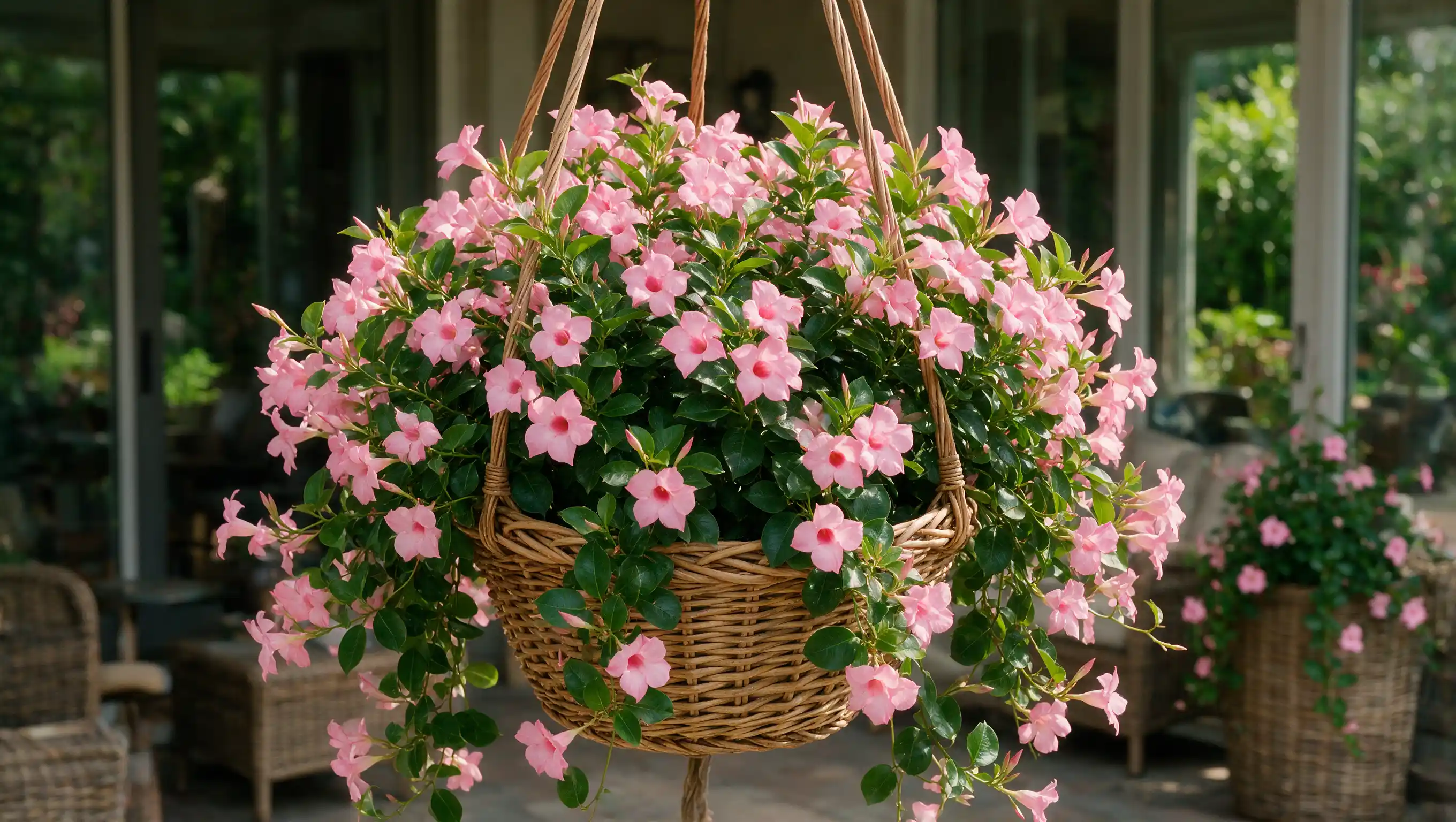
Rio is one of the more widely available Dipladenia varieties, known for its trumpet-shaped blooms in red, pink, and white, along with consistent flowering across different growing conditions.
Best suited for gardeners who want a dependable, easy-to-find variety without needing to hunt down specialty nurseries.
Main Characteristics of Dipladenia
Dipladenia combines bright, trumpet-shaped flowers with dense, glossy green foliage, making it stand out even before it blooms. The table below breaks down its key traits, growing needs, and safety notes compared with its climbing cousin, Mandevilla.
| Trait | Details |
|---|---|
| Growth Habit | Compact, bushy, or trailing, and holds its rounded shape naturally, unlike vining relatives that need something to climb |
| Mature Size | Usually 1 to 3 feet tall and wide in containers, though some trailing varieties spill 2 feet or more over the edge of a pot or basket |
| Flowers | Red, pink, white, coral, or yellow trumpet-shaped blooms, roughly 2 to 3 inches wide, often appearing in clusters of several open flowers and buds at once |
| Leaves | Smooth, pointed, glossy dark green foliage that stays dense and attractive year-round, even during the weeks between bloom cycles |
| Bloom Time | Late spring through the first fall frost, with flowering slowing down or pausing once the plant moves indoors or temperatures drop |
| Climate | Hardy outdoors year-round only in warm, frost-free zones; treated as an annual or brought indoors for winter in cooler regions |
| Growth Rate | Moderate grower during the warm season, filling in a container within one summer, then slowing considerably once cooler weather sets in |
| Toxicity | Mildly toxic; the milky sap can irritate skin and eyes on contact, and eating any part of the plant may cause stomach upset in pets and children, so gloves are worth wearing during pruning |
These traits make Dipladenia easy to place in small outdoor spaces, patio pots, and hanging baskets, since its tidy, rounded shape holds up well without needing extra staking or regular pruning to keep its form.
Dipladenia vs. Mandevilla Dipladenia: What Is the Difference?
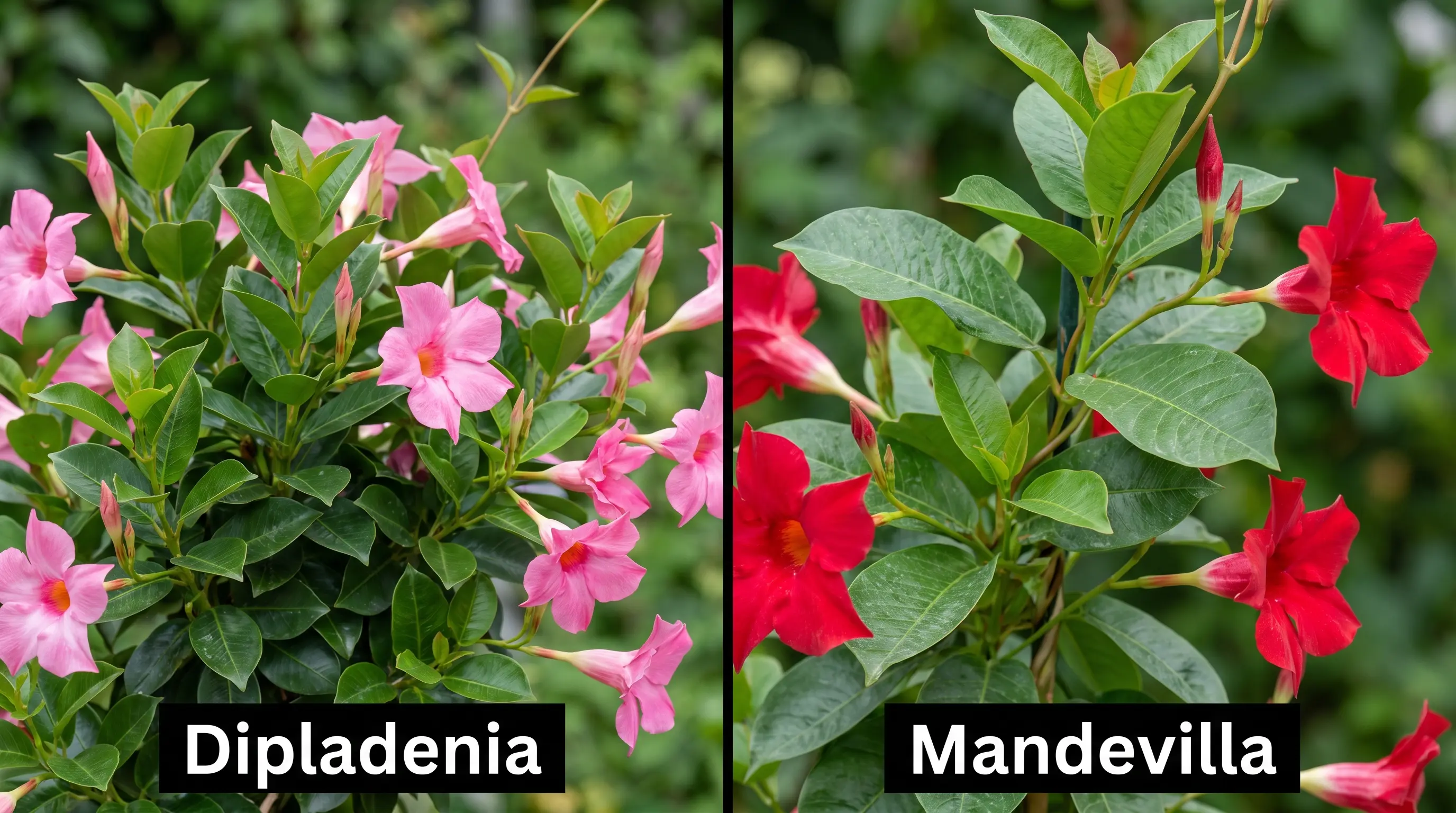
Dipladenia and Mandevilla belong to the same plant group, so garden centers often use the names loosely. According to Mississippi State University Extension, the real difference between the two comes down to growth habit: Mandevilla climbs, while Dipladenia stays shrub-like. Check the plant label for mature size and growth habit before choosing.
1. Growth Habit and Support
Dipladenia usually grows as a compact, bushy, trailing, or shrub-like plant, often forming a low mound or spilling gently over the edge of a container. It typically holds its shape without a trellis, stake, or frame.
Mandevilla, on the other hand, has a vigorous climbing habit, sending out long stems that twist around nearby structures. Without support such as a trellis, arbor, or fence, those stems tend to spread across the ground or become tangled instead of forming a neat vertical display.
2. Leaves and Flowers
Dipladenia leaves are usually smaller, denser, and smoother, giving the plant a full, compact look, with a glossy surface and leaves that sit closely along the stems.
Mandevilla leaves are generally larger, longer, thinner, and more textured.
Both plants produce bright, trumpet-shaped flowers in similar colors, including red, pink, white, and yellow, but Dipladenia blooms are usually smaller with a shallower throat, while Mandevilla produces larger blooms with deeper centers.
3. Growth Speed and Pruning
Dipladenia generally grows at a moderate or slower pace, which makes it easier to keep neat in pots and small garden spaces. It needs only light pruning to maintain a rounded, compact shape, with occasional trimming of long or untidy stems.
Mandevilla grows faster, sending out long climbing stems during warm weather, which helps it cover a trellis or fence quickly. That speed usually means more regular pruning and training to stop the vine from becoming tangled or oversized.
4. Best Garden Uses
Dipladenia works well in patio pots, hanging baskets, mixed containers, and small borders, since it stays compact or trails gently without needing extra space to climb. For more ideas on pairing it with other low-maintenance options, these tips on container gardening for small spaces cover other plants that fit the same setup. It’s a practical choice where space is limited, or support isn’t available.
Mandevilla is better suited to trellises, fences, arbors, and pergolas, where its climbing stems can spread upward and fill out a structure. Your available space and desired display should determine which plant fits your garden best.
Both plants offer the same trumpet-shaped blooms, so the real choice comes down to space and style. Pick Dipladenia for pots and borders that stay compact, or Mandevilla if you want a climbing vine to fill a trellis or fence.
How to Grow Dipladenia Flowers
Dipladenia grows best with a simple, steady routine: bright light, warm temperatures, fast-draining soil, and water only once the upper layer begins to dry. These three basics, light, water, and soil, set the foundation for a healthy plant before anything else comes into play.
- Light and temperature: Place it where it gets at least six hours of direct sunlight daily, with light afternoon shade in very hot areas to prevent leaf scorch. Indoors, a bright south- or west-facing window works best. When moving plants outdoors in spring, increase sun exposure gradually over seven to ten days so the leaves can adjust without burning.
- Watering: Water when the top one to two inches of soil feel dry in spring and summer, soaking well and emptying the saucer afterward. In fall and winter, let the top two to three inches dry before watering again. Yellow leaves with wet soil usually point to overwatering, while wilting with crisp edges means the plant needs more moisture.
- Soil and containers: Use a loose, fast-draining mix, such as two parts potting soil to one part perlite or pumice, to protect the roots from excess moisture. Choose a container with open drainage holes and avoid oversized pots, which stay wet longer. Repot only one size up when roots circle the container or the soil dries unusually fast during warm summer months.
Once light, water, and soil are dialed in, Dipladenia settles into a steady rhythm and asks for very little beyond regular checks, making it a rewarding choice for patios, containers, and sunny garden beds, along with other summer-blooming annuals that share the same light and watering needs.
Feeding and Pruning for Steady Blooms
Once the basics are in place, regular feeding and light pruning keep Dipladenia blooming steadily through the growing season. These two habits work together to support healthy leaves and a longer flowering window.
Feeding
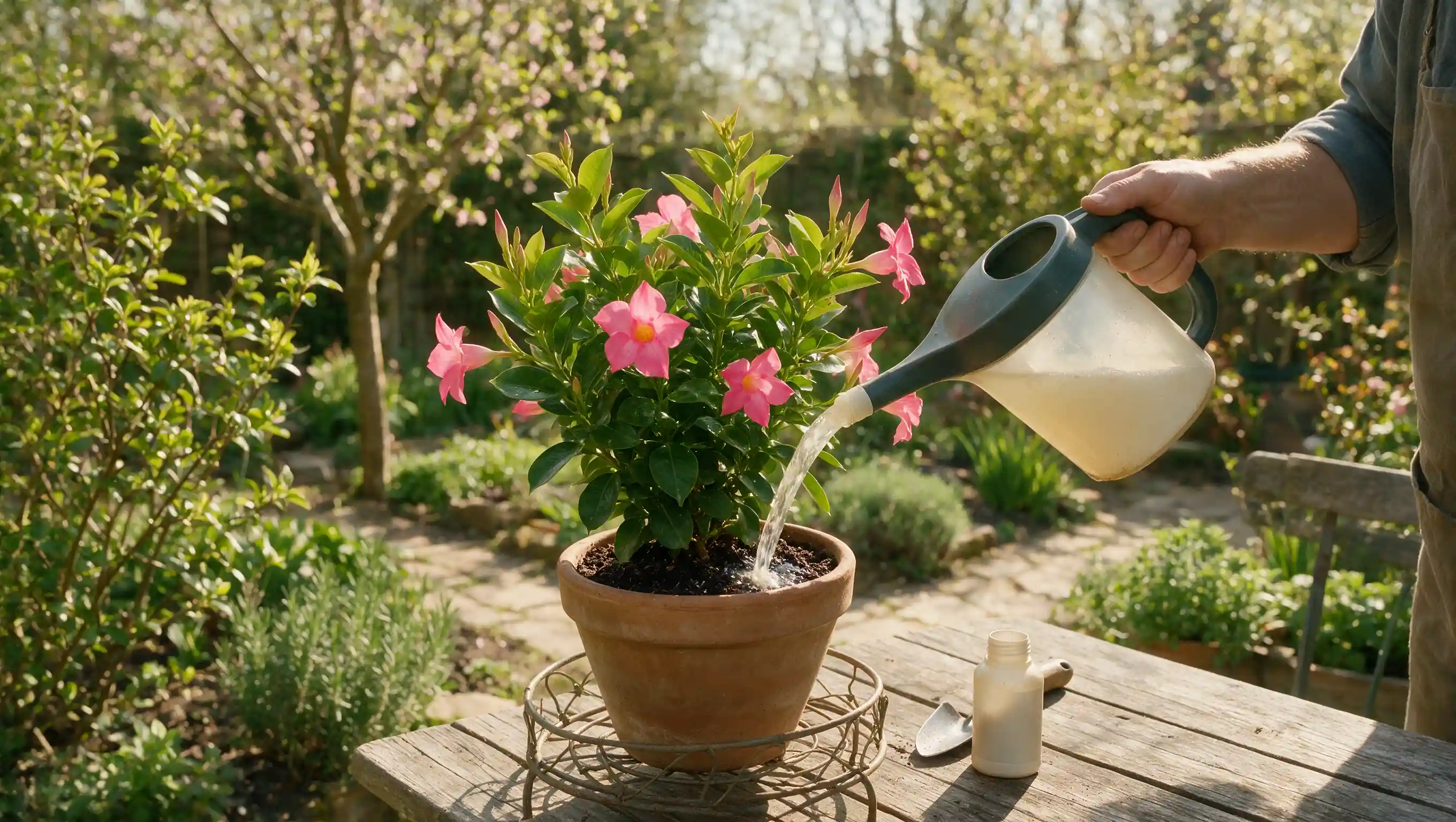
Feed Dipladenia during spring and summer, when it is actively producing leaves and flower buds. Apply a balanced liquid fertilizer at half strength every two to four weeks, or use a slow-release product as directed.
Reduce or stop feeding once growth slows in fall. To prevent salt buildup and brown leaf tips, rinse the potting mix with plain water every six to eight weeks.
Flowering and Pruning
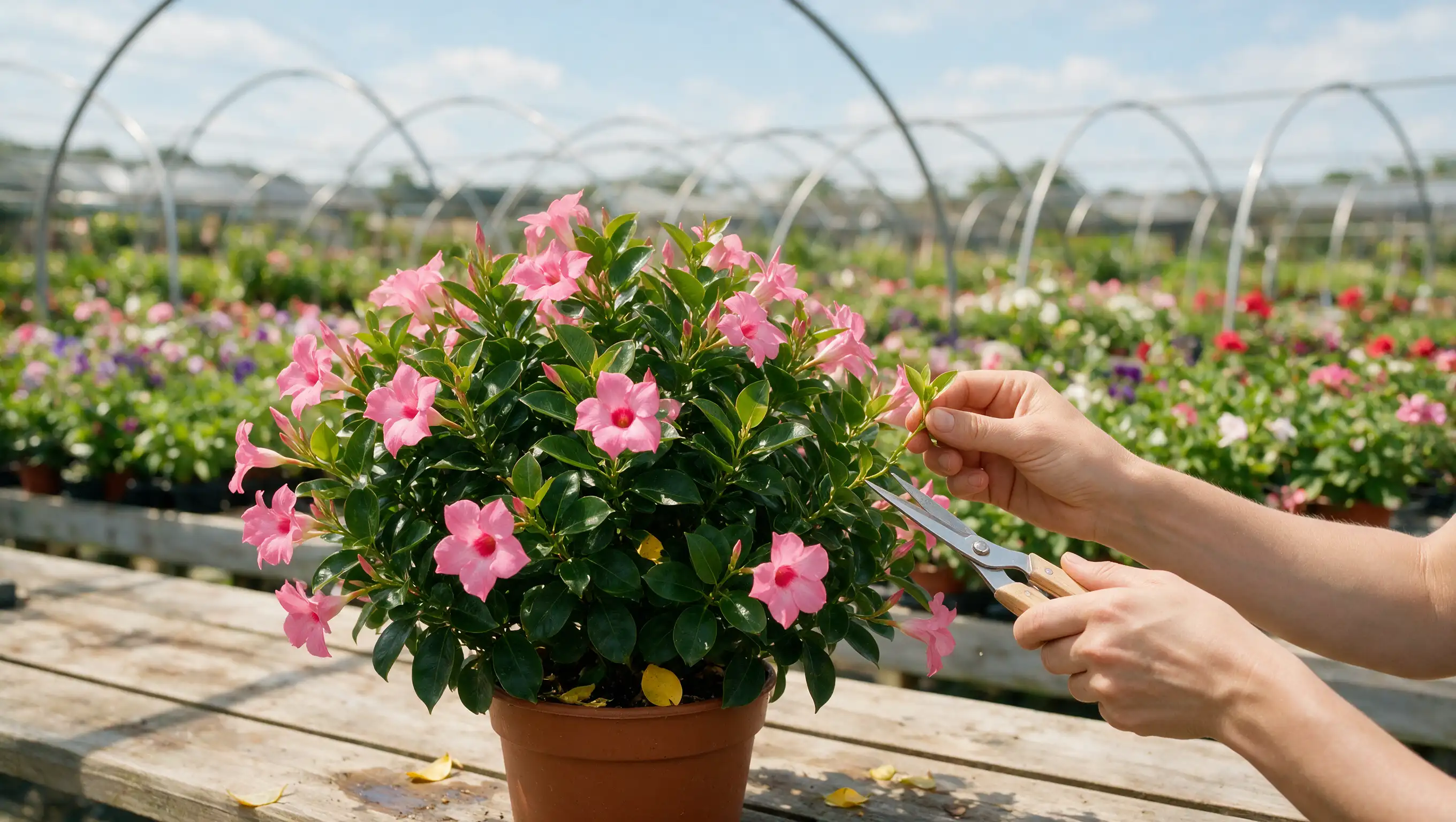
Dipladenia usually keeps flowering without deadheading when it receives enough sunlight and regular feeding. Lightly trim the growing tips to encourage branching and maintain a rounded shape.
In late winter or early spring, cut long or weak stems back by about 20 to 30 percent before new growth begins. Remove yellow, damaged, or crowded leaves whenever needed to improve the plant’s appearance and airflow naturally.
Maintenance Tips for Winter
As temperatures fall, Dipladenia’s care routine shifts from active growing to protecting the plant through the colder months ahead, since cooler weather naturally slows growth and calls for less water and feeding than the plant needed in spring and summer.
- Bring it indoors: Move potted Dipladenia inside before the first frost hits.
- Give it the right spot: Keep it in a cool, bright place away from cold drafts.
- Cut back on watering: Water less often while growth slows for the season.
- Trim if space is tight: Cut the plant back by half before moving it inside.
- Take cuttings: Root four- to six-inch stem cuttings indoors as a backup.
- Check in occasionally: Look in on the plant through winter so the soil never stays completely dry for long.
Planning ahead before the first frost hits makes this seasonal shift much easier to manage and gives the plant a better chance of coming back strong and full of color once warmer weather returns in spring.
Common Problems and Fixes
A dipladenia flower is fairly low-maintenance, but a few issues do show up, usually linked to light, water, or temperature. Catch these early, and they’re simple to fix.
| Problem | Cause | Fix |
| Bud Drop | Temperature swings, low light, or overwatering | Keep the plant somewhere warm and steady, away from cold drafts; water only when the topsoil is dry |
| Leaf Scorch | Sudden exposure to strong afternoon sun | Move the plant into brighter light gradually over 7–10 days; give it light afternoon shade in hot climates |
| Spider Mites and Aphids | Dry air, low airflow, and tender new growth | Rinse leaves to knock pests off, then treat weekly with insecticidal soap or neem oil; boost airflow and humidity |
| Chlorosis | High-pH soil or nutrient lockout | Switch to a slightly acidic, well-drained mix; add a chelated iron feed if pale leaves persist |
Most of these issues, along with related pests like scales and whiteflies noted by the Clemson University Home & Garden Information Center, trace back to light, water, or temperature, and small adjustments usually fix them fast. Keep an eye on the leaves and buds through the season, catch changes early, and your plant should bounce back without much extra effort.
Frequently Asked Questions
Does a dipladenia plant need a trellis?
No. Dipladenia grows as a compact shrub rather than a climbing vine, so it doesn’t need a trellis, stake, or any other support. Its stems dangle or trail naturally instead of reaching upward, which is why it works so well in pots and baskets.
Do I need to deadhead dipladenia to keep it blooming?
No. Dipladenia keeps blooming on its own without deadheading, unlike many flowering plants that need spent blooms removed. Just remove yellow or damaged leaves as you spot them to keep the plant looking tidy and healthy through its bloom season.
Can I grow dipladenia indoors?
Yes. Place it near a bright, south- or west-facing window, since it needs plenty of light to keep blooming. In winter, when natural light drops, add a grow light to stop buds from thinning out and keep the plant flowering steadily.
How do I keep dipladenia alive over winter?
Bring potted plants indoors before frost hits. Root 4–6-inch stem cuttings as houseplants, or trim the plant back by half and keep it in a cool, sunny spot with less water. For dormancy, cut foliage back hard and store in a cool, dark place.
What does dipladenia attract?
Dipladenia’s trumpet-shaped blooms, like those of its close relative Mandevilla, attract hummingbirds and bees, making it a good pick for pollinator gardens. It’s also rabbit-resistant, so it tends to stay untouched in outdoor beds where other flowering plants often get nibbled on.
Bottom Line
The dipladenia flower earns its spot in gardens and patios for a simple reason: bright, trumpet-shaped blooms with very little upkeep. Give it full sun, fast-draining soil, and water only when the topsoil dries out.
Skip the trellis, since its shrub-like growth holds its own shape without support. Pick a variety like Sun Parasol or Sundenia based on your space, and watch for bud drop, leaf scorch, or pests so you can fix them early.
Bring the plant indoors before frost hits to keep it going year after year. With warmth, light, and a little routine care, Dipladenia keeps flowering from late spring through fall, season after season. Drop a comment below and let me know if you have any further questions.