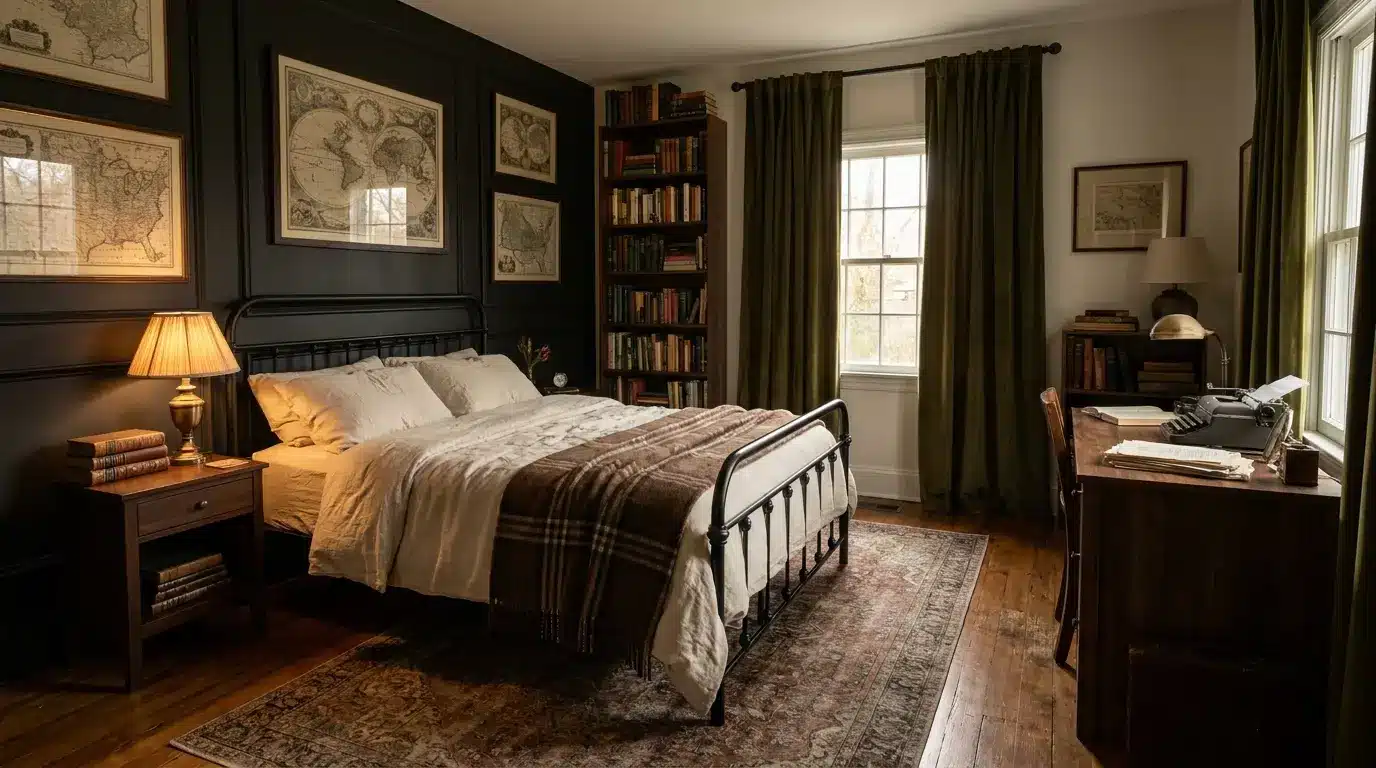
Some bedrooms feel like they were made for slow evenings, old books, and warm lamp light. A dark academia bedroom creates a visual mood with deep colors, vintage furniture, framed art, and cozy, study-inspired details.
If you are collecting ideas, the focus is not only on making a room look darker. It is about creating a space that feels thoughtful, layered, and easy to picture in real life.
I always think the best rooms in this style look personal, not staged. You can build that feeling with bookshelves, rich bedding, antique-style pieces, and soft lighting. Ahead, you will find clear room ideas that help you shape the look without making it feel forced.
What Makes a Dark Academia Bedroom?
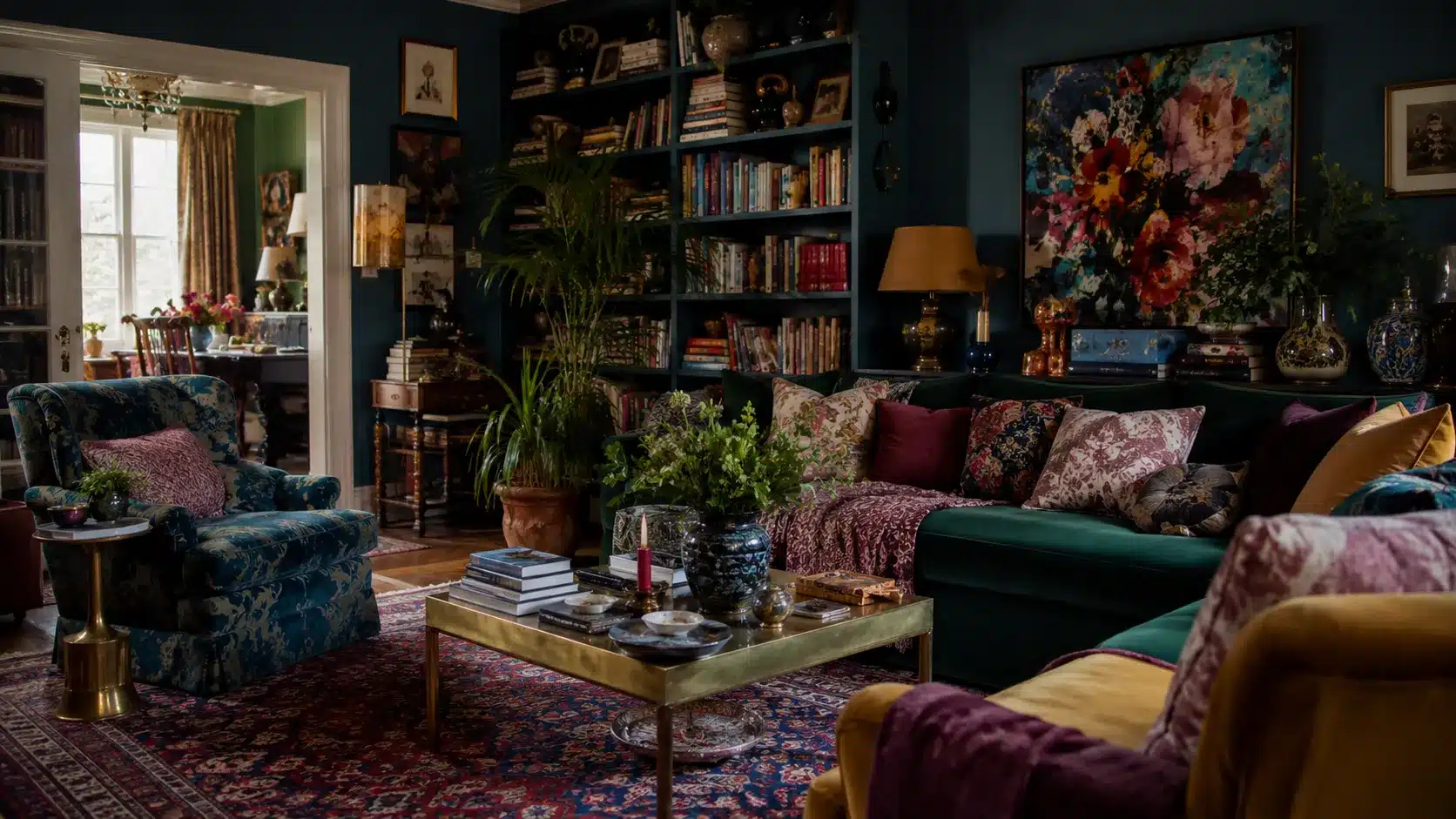
A dark academia bedroom feels moody, warm, and thoughtful without looking messy or overdone. The look usually starts with deep wall colors, dark wood, soft bedding, and warm lamps that make the room feel calm.
Books play a big role, but they should feel natural, not placed only for decor. Framed art, old maps, vintage portraits, brass details, and layered textures help create that collected look.
The room should also have a quiet study mood, so a desk, reading chair, or small bookshelf can become the main focus. What makes this style work is balance.
Dark shades need cream, brown, or gold accents so the space does not feel flat. With warm lighting and personal details, the room feels lived in, cozy, and visually rich.
Dark Academia Bedroom Color Palettes That Work Well
Dark academia bedroom colors should feel rich, warm, and layered. The right palette keeps the room moody without making it feel flat, cold, or too heavy.
| Element | Color Ideas | How to Use Them |
|---|---|---|
| Main Palette | Charcoal, deep brown, forest green, burgundy, black | Use on walls, bedding, curtains, or one feature wall to set the moody base. Try Benjamin Moore Wrought Iron, Kendall Charcoal, Tarrytown Green. |
| Soft Balance | Cream, beige, antique white, warm tan | Add through sheets, pillows, lampshades, rugs, or curtains so the room feels cozy instead of heavy. |
| Furniture and Details | Walnut, espresso, dark oak, brass, bronze, black iron | Use through beds, desks, shelves, nightstands, lamps, frames, handles, and candle holders for a vintage study feel. |
| Layered Look | Olive, rust, faded burgundy, chocolate brown, ivory | Repeat these shades in small places like throws, art, books, cushions, and decor so the room feels lived-in. |
| Mood Board | Deep brown, forest green, charcoal, burgundy, cream, black | Show these swatches alongside wood, brass, leather, books, linen, and old paper textures to create a clear visual palette. |
A strong palette makes each decor choice easier. Pick one dark base, one soft neutral, and one warm accent to make the bedroom feel moody, cozy, and complete.
Dark Academia Bedroom Ideas You Can Actually Use
These ideas focus on real bedroom choices, not vague styling advice. Each one gives you a clear scene to picture, so the room can feel moody, useful, and personal without looking forced.
1. Dark Wood Bed
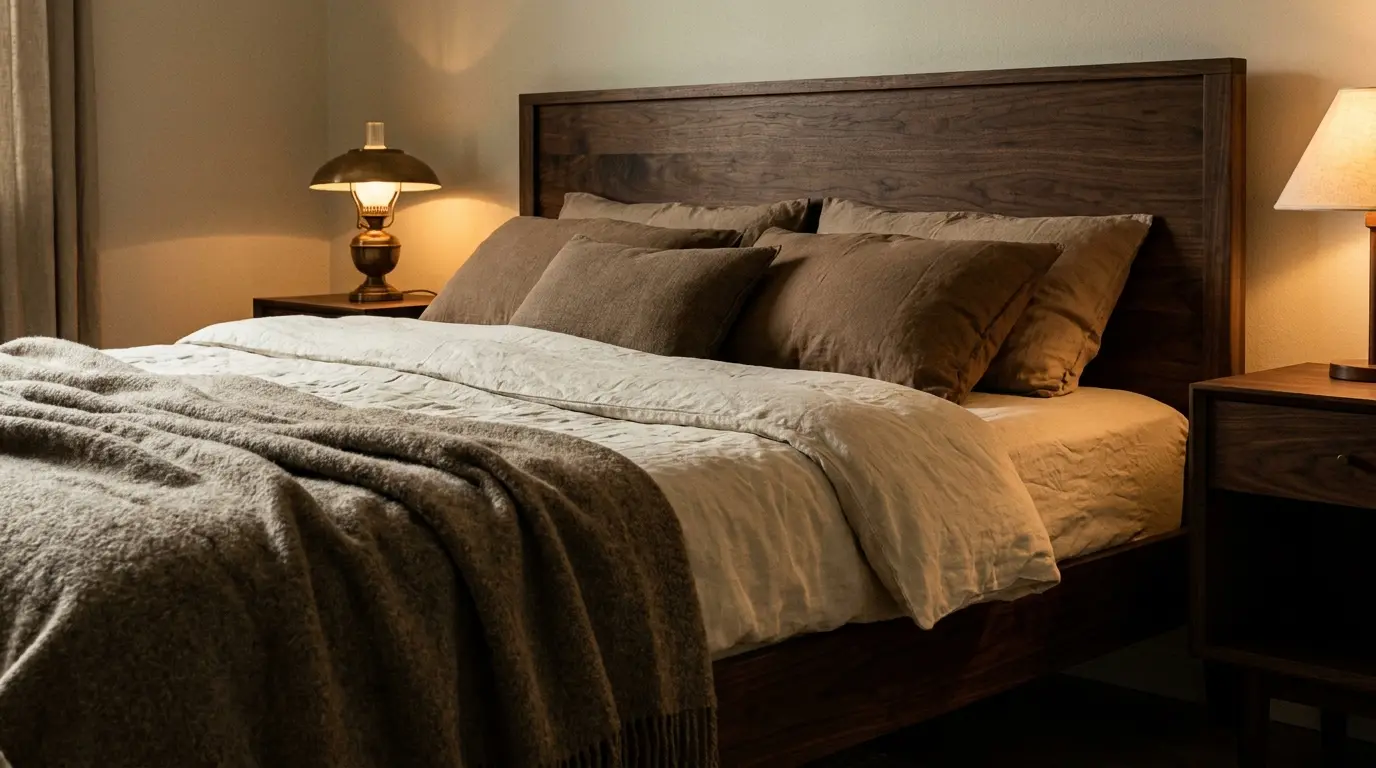
A dark wood bed creates the strongest starting point for this room style. Choose walnut, espresso, or deep brown wood with a simple headboard. Let the frame feel sturdy rather than glossy or modern.
Pair it with cream sheets, brown pillows, and a wool throw. Keep nearby decor low and calm so the bed feels like the center of the room, not just another piece of furniture, with purpose and warmth.
2. Charcoal Wall Contrast
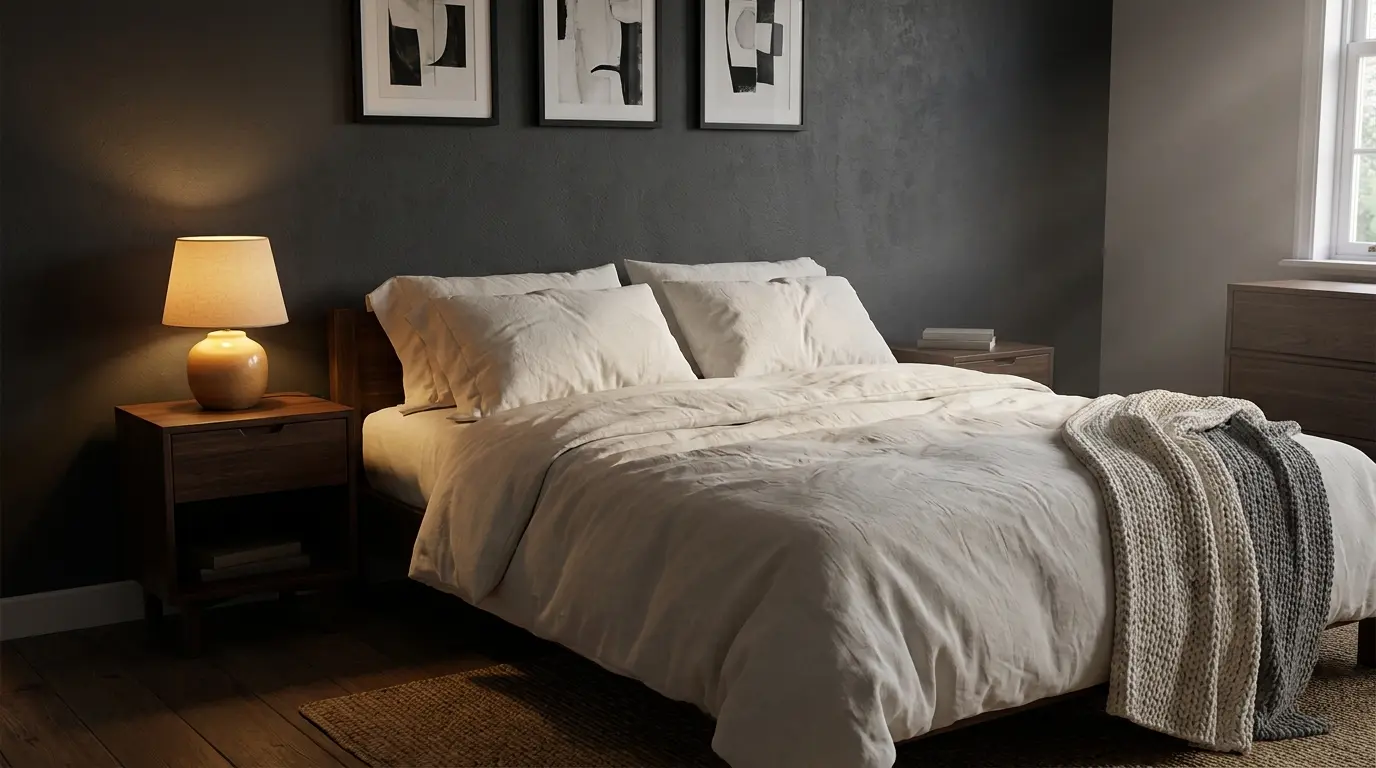
Charcoal walls can make a bedroom feel quiet and focused when the bedding stays soft. Use warm white, ivory, or oatmeal sheets to keep the space open. Add black frames, wooden furniture, and one warm lamp for balance.
This idea works well when the room has natural light. The contrast gives the space depth, while the pale bedding stops the dark walls from feeling too heavy visually in smaller rooms.
3. Walnut Desk Corner
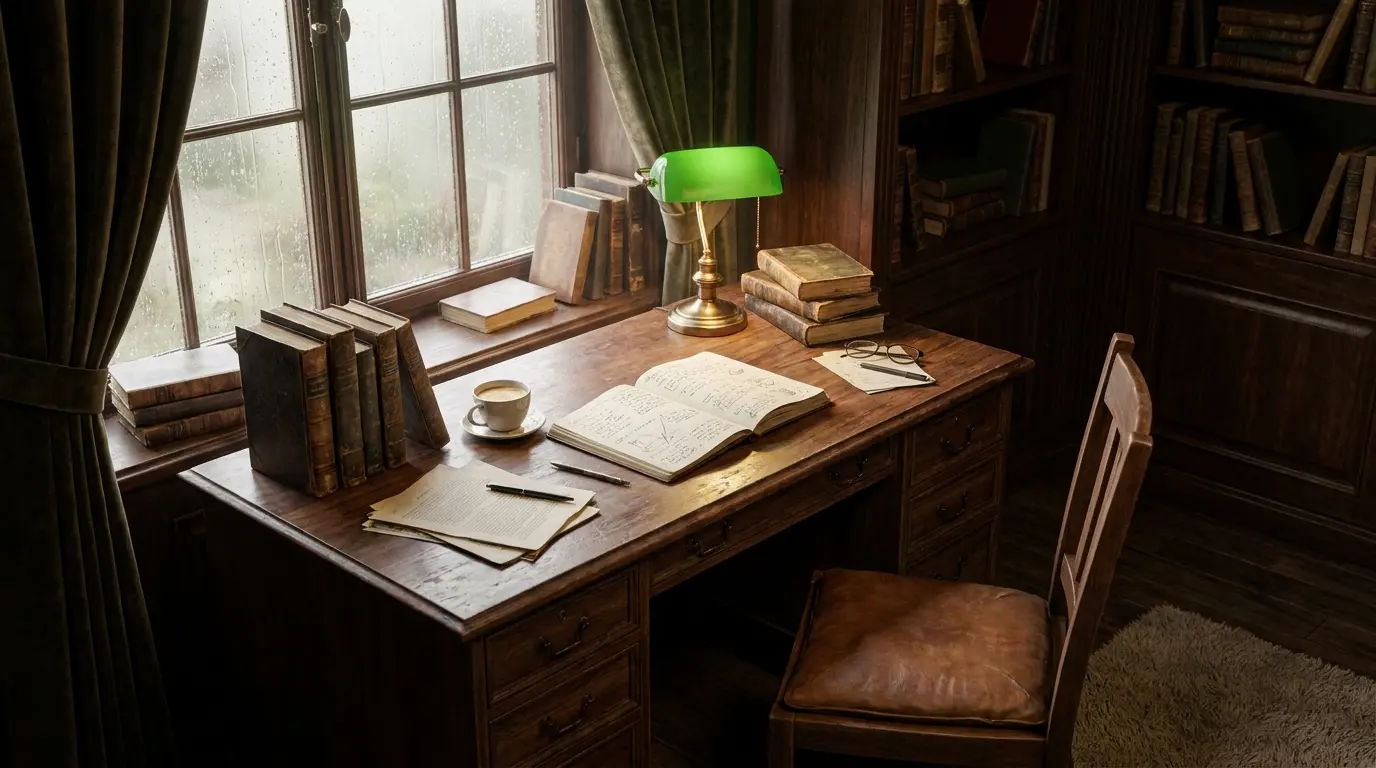
A walnut desk creates a clear academic corner in the bedroom. Place it near a window or beside a bookcase. Add a shaded lamp, a notebook, a ceramic cup, and a few stacked books. Keep the chair simple and comfortable.
The desk should look ready to use, not staged. This setup creates a quiet place for reading, writing, planning, or studying without requiring much floor space in small bedrooms.
4. Tall Bookshelf Wall
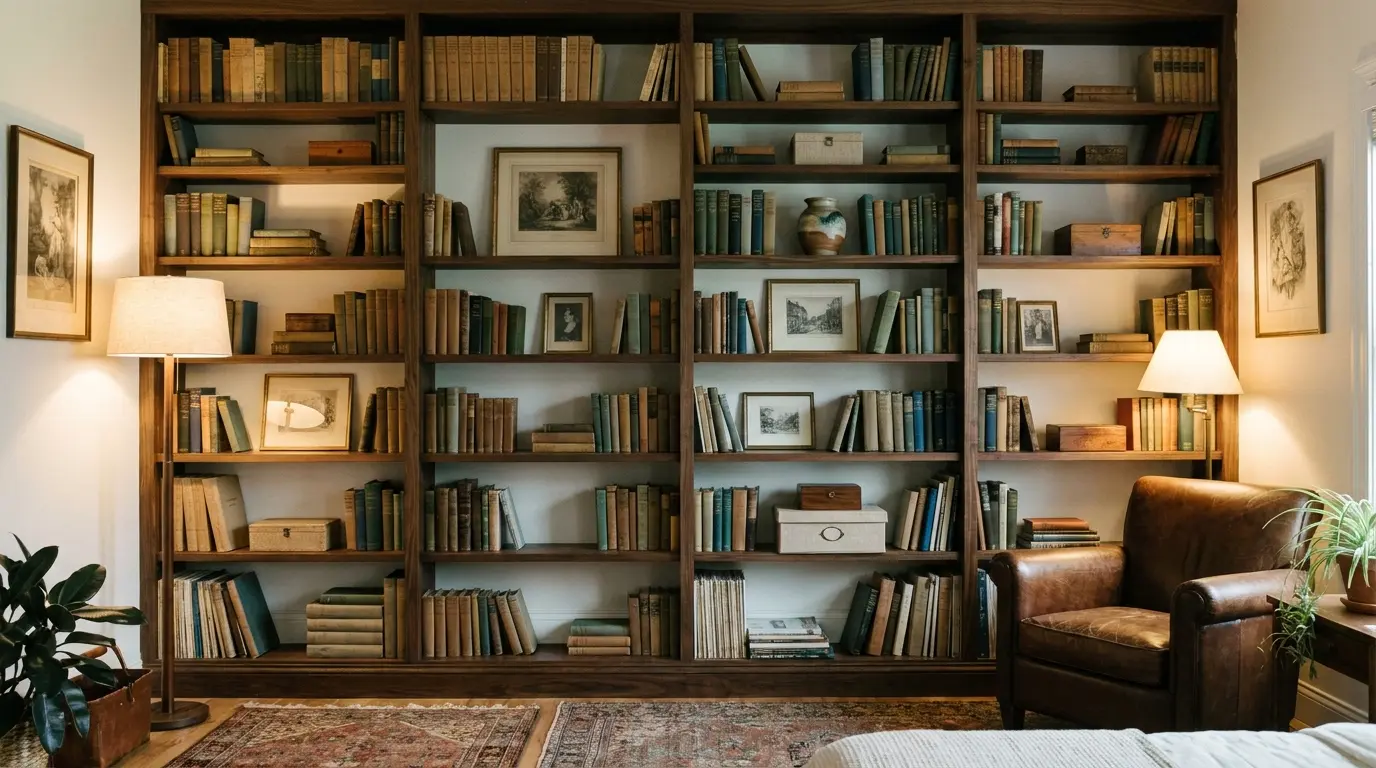
A tall bookshelf can make the room feel smarter and more lived in. Fill it with books of different heights, then add framed art, small boxes, and one ceramic object. Leave a few open spaces so it does not feel packed.
Keep the brightest covers turned inward or grouped together. The shelf should feel natural, useful, and personal, like it has grown slowly over time at home with real purpose.
5. Plaid Quilt Layers
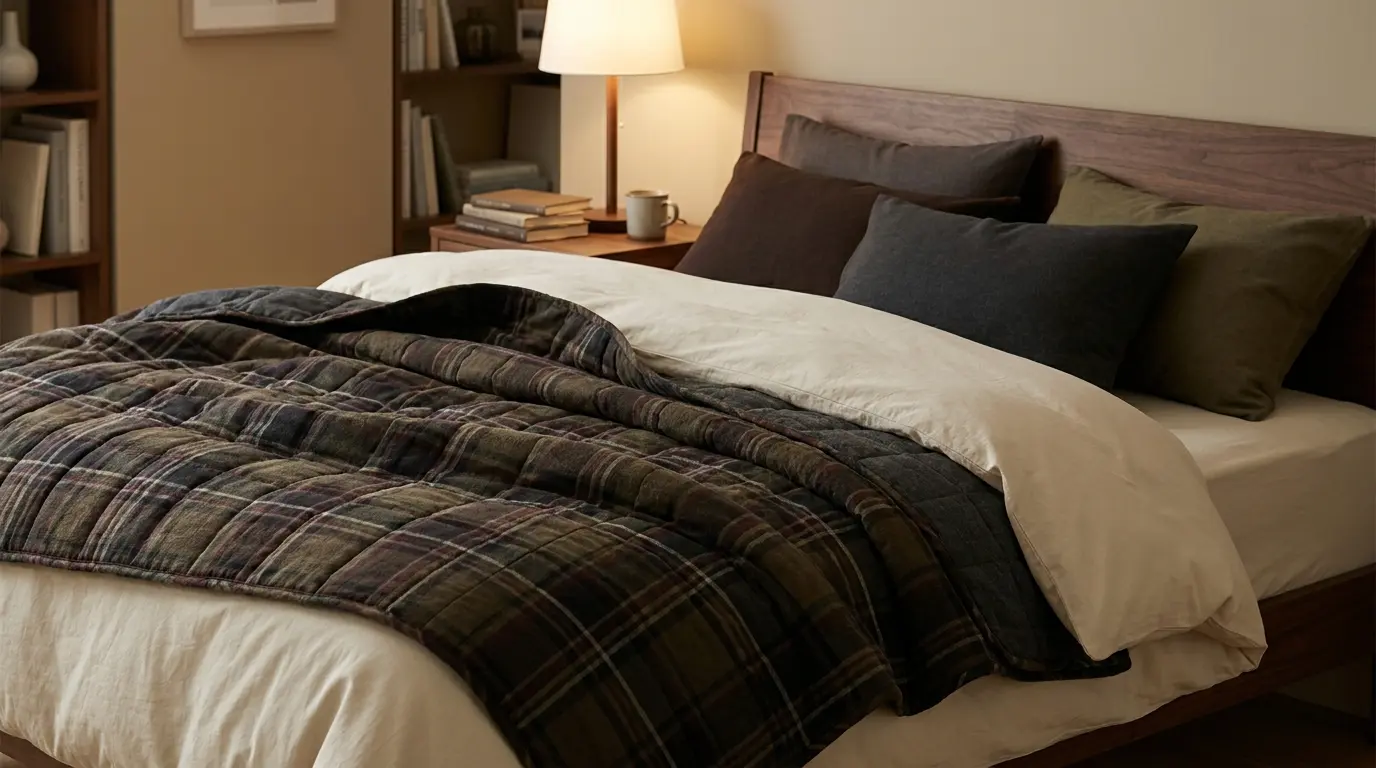
A plaid quilt adds pattern without making the whole room feel busy. Choose shades like brown, olive, burgundy, cream, or charcoal. Place it over plain sheets and a simple duvet. Add two solid pillows to keep the bed balanced.
The quilt gives the room an academic feel while still looking practical. It works especially well when the walls and furniture around it are simple and dark, without needing extra decor.
6. Vintage Nightstand Lamp
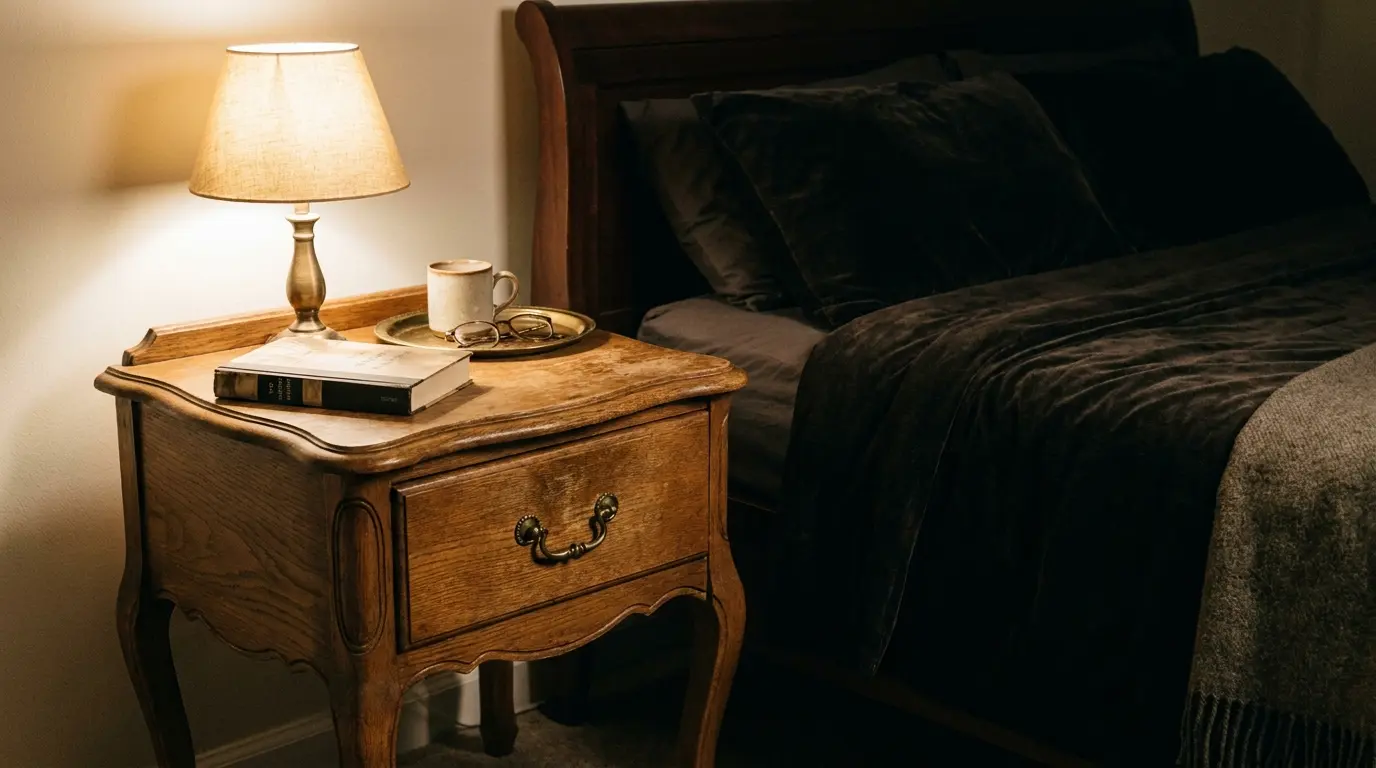
A vintage nightstand can make the bedside area feel more complete. Look for wood, curved legs, small drawers, or aged handles. Place one strong lamp on top, then add a book and a small tray. Avoid filling the surface with too many items.
The nightstand should support the bed visually and give the room a calm, useful corner that still feels warm at night, especially during quiet reading hours too.
7. Portrait Dresser Wall
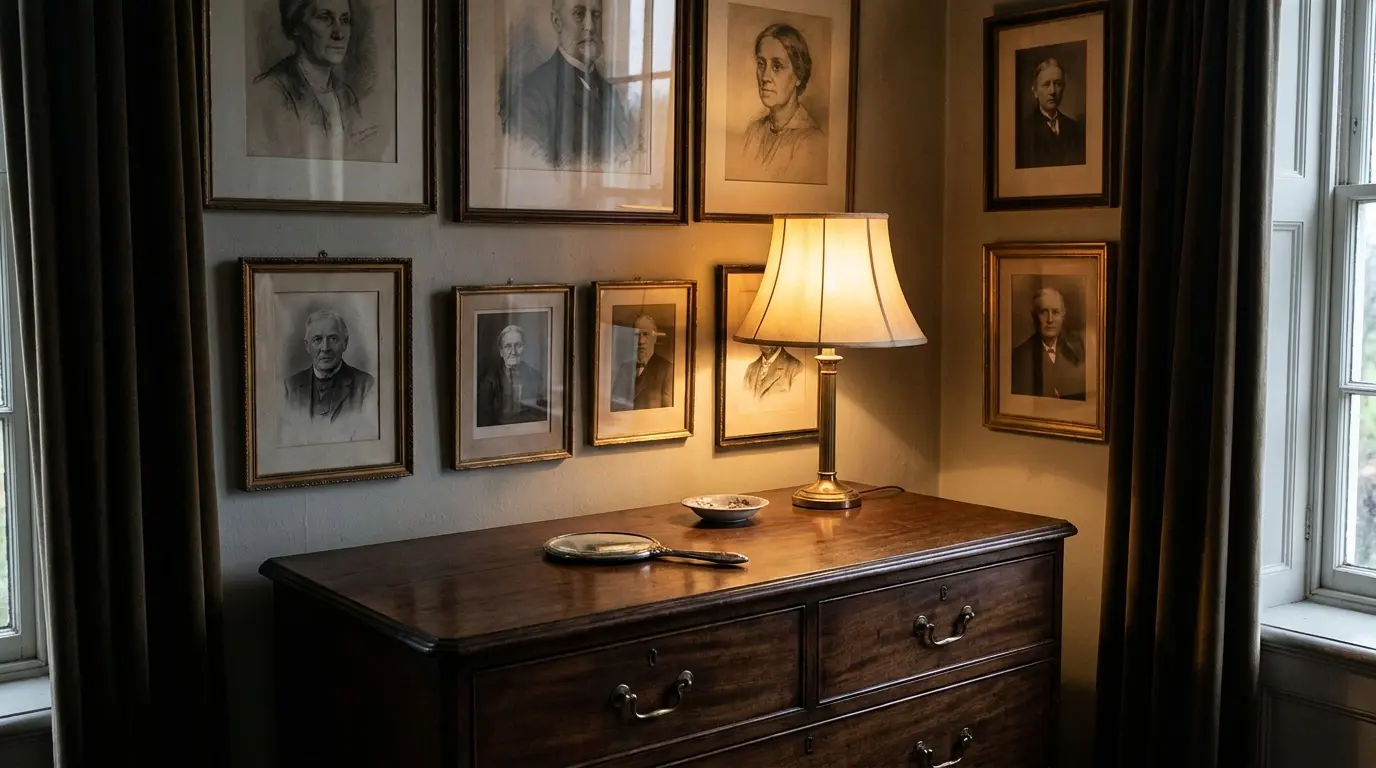
An old portrait wall adds a serious, story-filled look to the bedroom. Use portraits, sketches, or classic figure studies in dark frames. Hang them above a dresser so the wall feels grounded.
Keep the dresser simple with a lamp, mirror, or small dish. The portraits should feel slightly faded, not bright. This creates a room feature that feels quiet, dramatic, and personal at night without making it feel crowded.
8. Leather Reading Chair
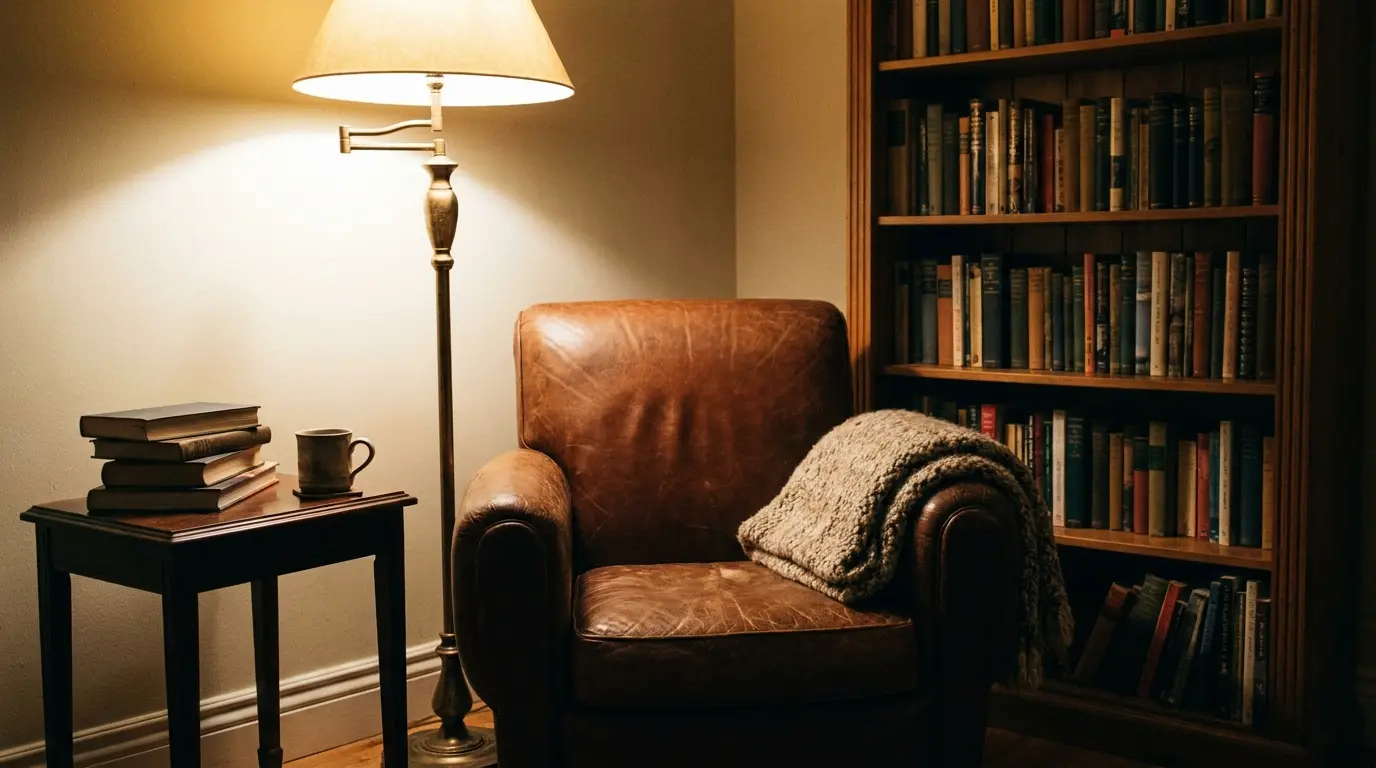
A brown leather chair gives the bedroom a proper reading spot. Place it beside a floor lamp, near a window, or close to a bookshelf. Add one wool throw across the arm for softness.
Keep the area clear so it feels useful. The leather brings warmth and age to the room. It also balances the bed by giving the space another strong furniture moment with purpose beside the sleeping area.
9. Persian Rug Base
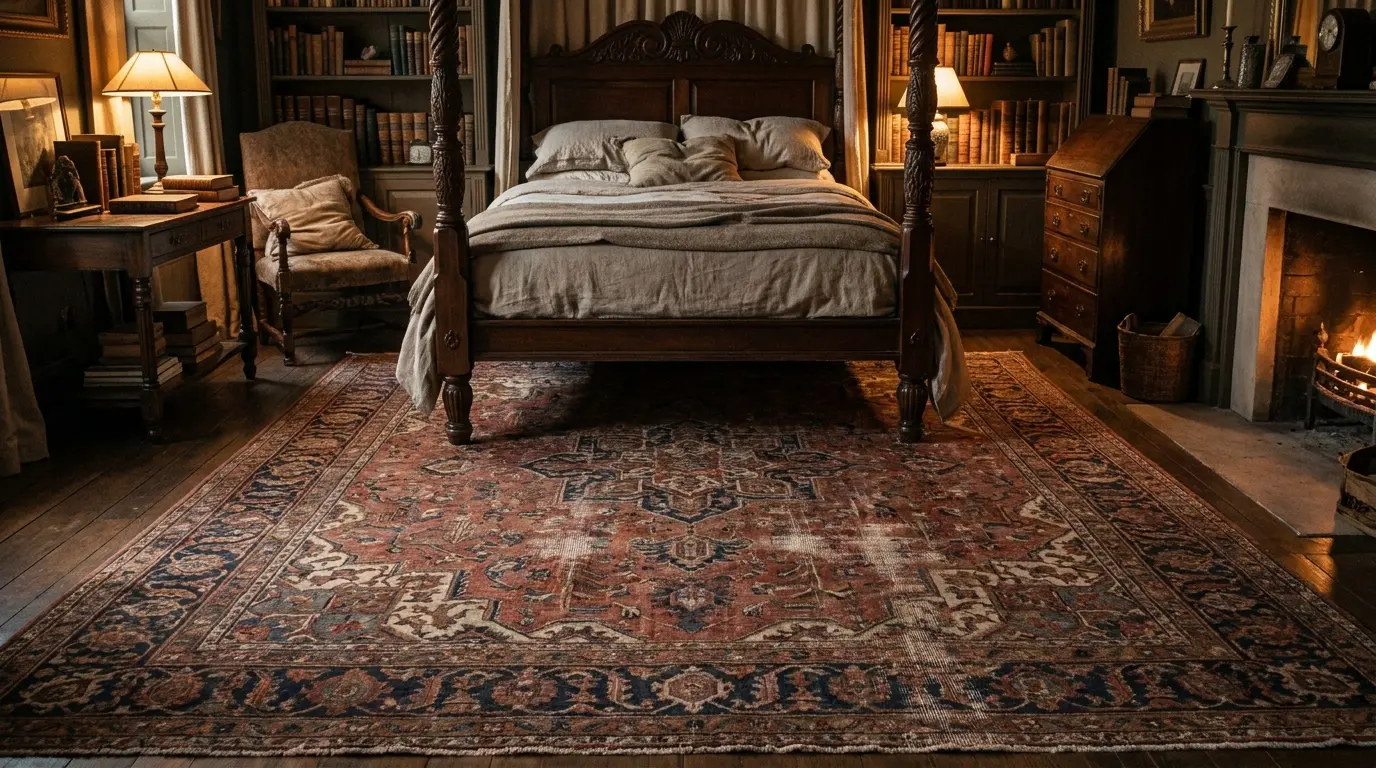
A Persian-style rug can make the whole bedroom feel warmer and more finished. Choose faded reds, navy, brown, rust, or cream tones. Place it under the lower half of the bed so the pattern frames the room.
The rug softens hard flooring and adds visual weight. It works best when the bed and furniture stay simple, letting the pattern carry the floor with ease without visually overwhelming the room.
10. Arched Mirror Frame
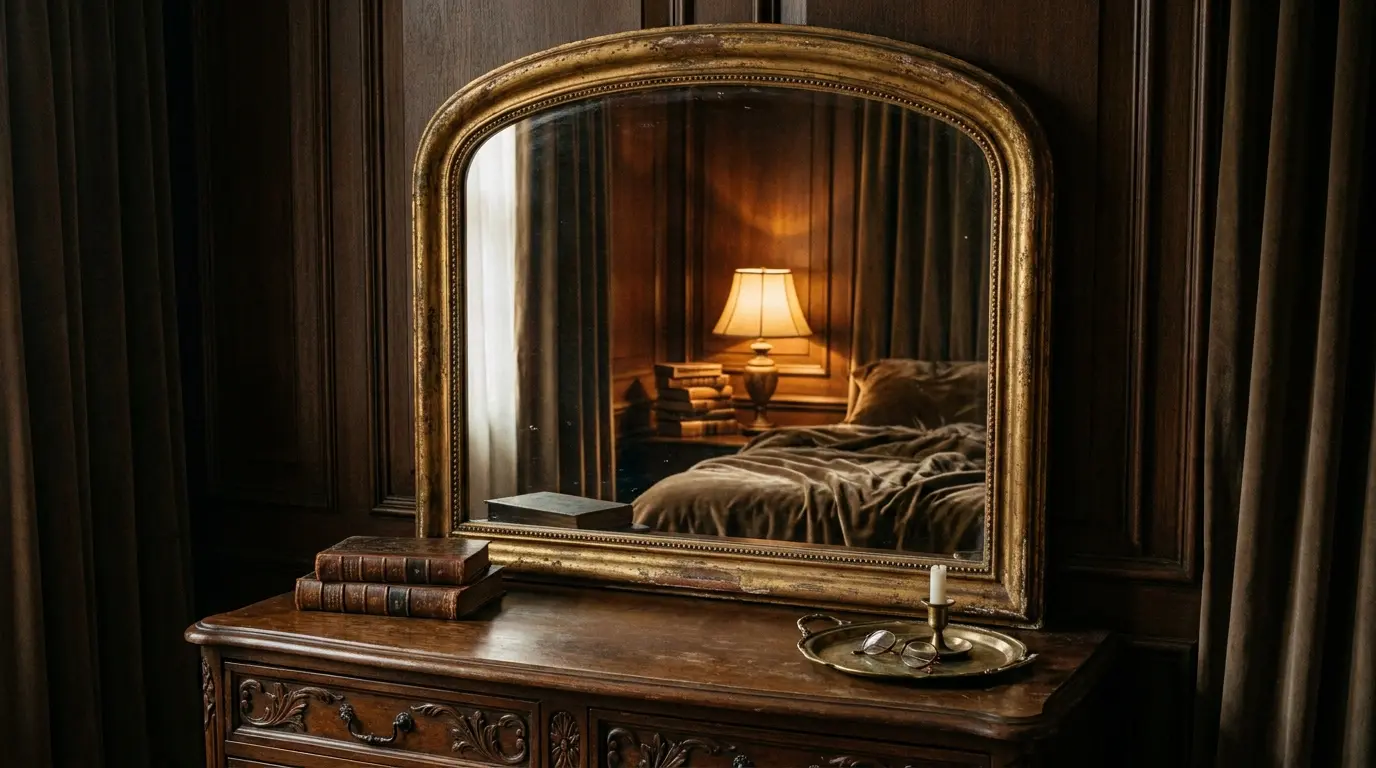
An arched mirror adds height, light, and old-room character. Choose a frame in dark wood, black metal, or aged gold. Place it above a dresser, beside a wardrobe, or near a window.
The curved shape softens heavy furniture and reflects warm light at night. Avoid frameless modern mirrors. This piece should look like it belongs with books, wood, fabric, and quiet corners without making the wall feel too busy.
11. Green Window Curtains
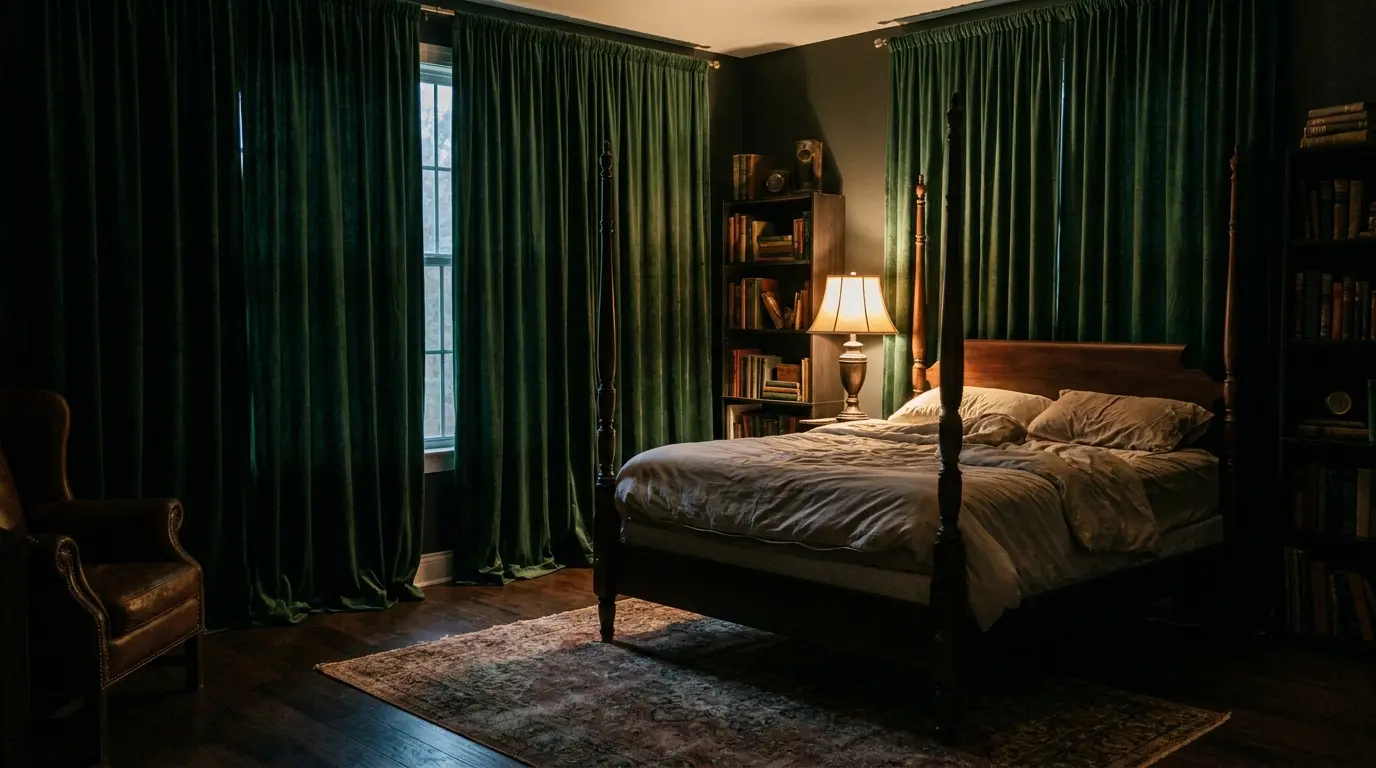
Dark green curtains bring color and softness to the window without the need for painted walls. Choose cotton, linen, or velvet fabric that falls close to the floor. Hang the rod higher than the window to make the room feel taller.
Pair the curtains with brown furniture and cream bedding. The green creates a calm library mood, and the fabric keeps the bedroom private after sunset while still feeling soft and useful.
12. Dresser Book Styling
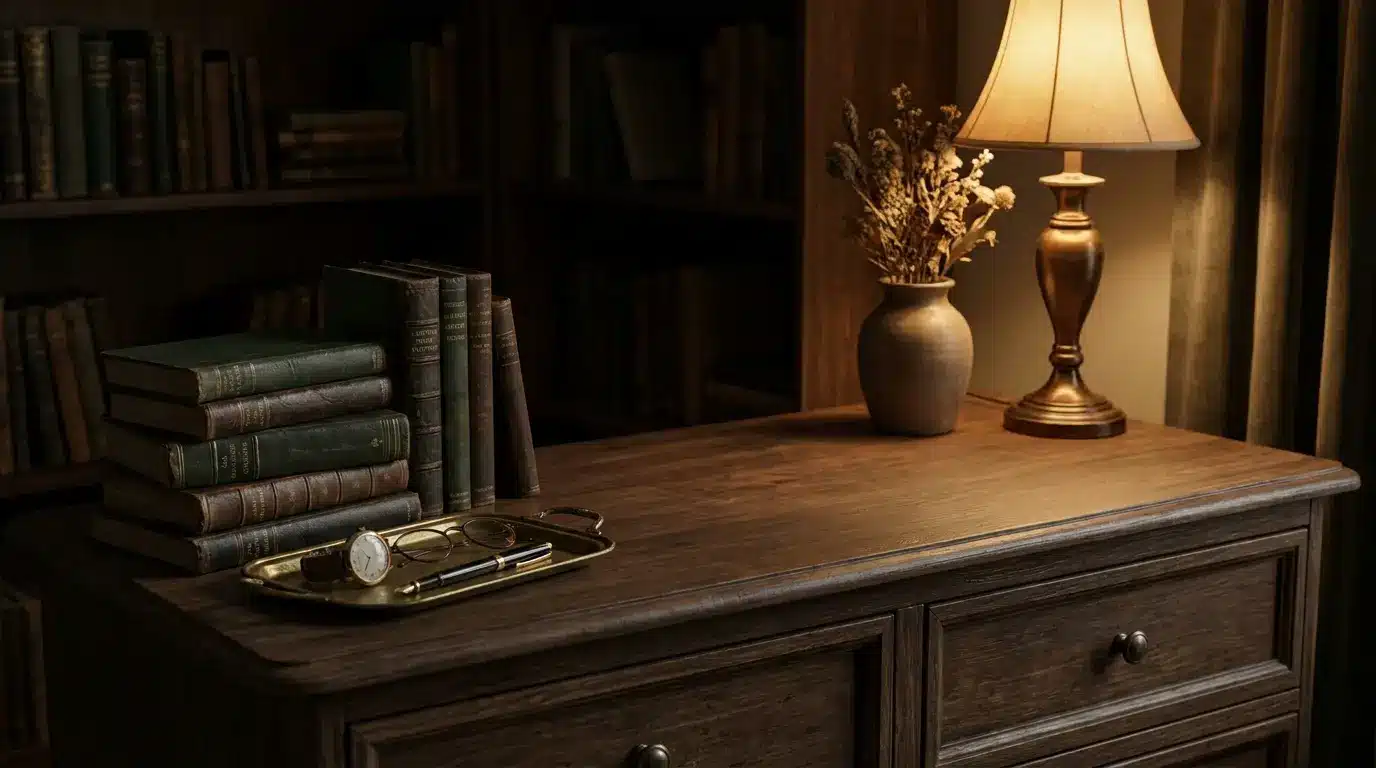
A dresser can become a strong visual surface when styled with care. Place a small stack of books on one side, then add a tray for jewelry, keys, or daily items. Add a lamp or vase to bring height. Keep the middle area open.
This makes the dresser feel useful and designed. It also prevents random clutter from breaking the dark academia mood in the room without needing extra decor.
13. Floral Bed Wall
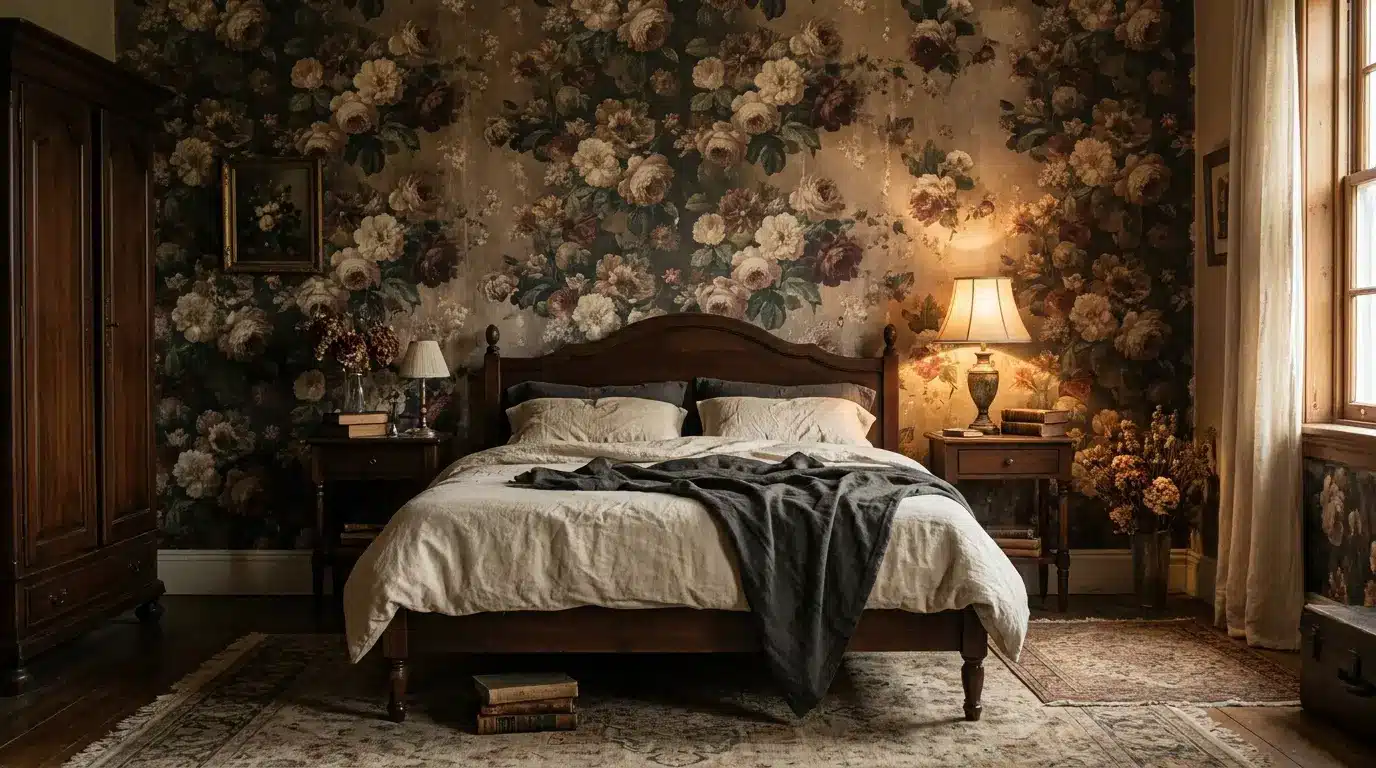
Moody floral wallpaper adds more depth and softness to the bed wall. Choose a dark base with faded flowers in brown, cream, burgundy, or green. Use it behind the headboard so the pattern feels focused.
Keep the bedding plainer to avoid visual clutter. This idea creates a romantic, old-bedroom feeling without needing many wall pieces, making it useful for plain or rental rooms alike without making the room feel crowded.
14. Candle Shelf Glow
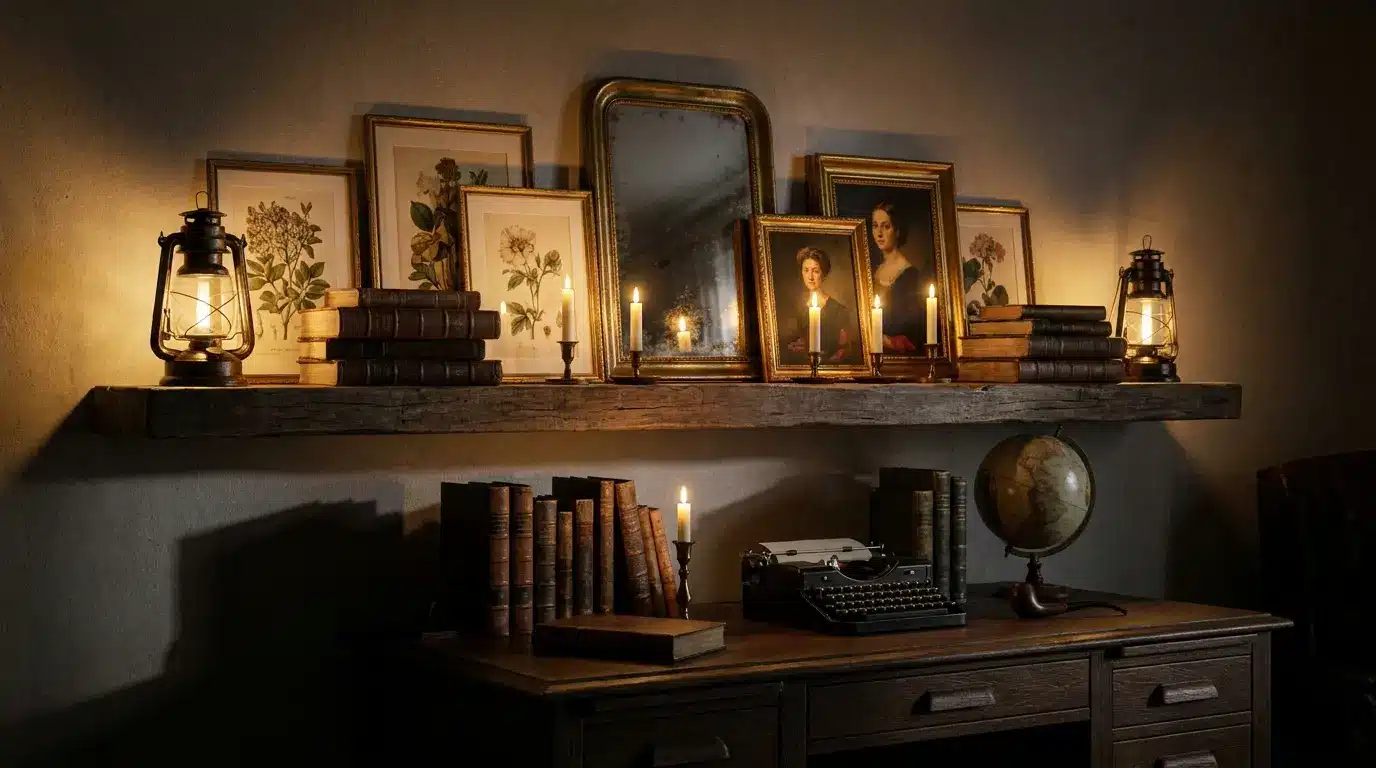
Candle-style lighting adds a soft evening glow without relying on real flames. Use LED candles, lantern lamps, or small candle-shaped lights on a shelf. Place them near framed art, books, or a mirror. Keep the light warm, not white.
This creates a calm corner after sunset and helps dark colors feel softer. It works well above desks, dressers, or bookcases at night without adding visual clutter anywhere nearby.
15. Book Nook Corner
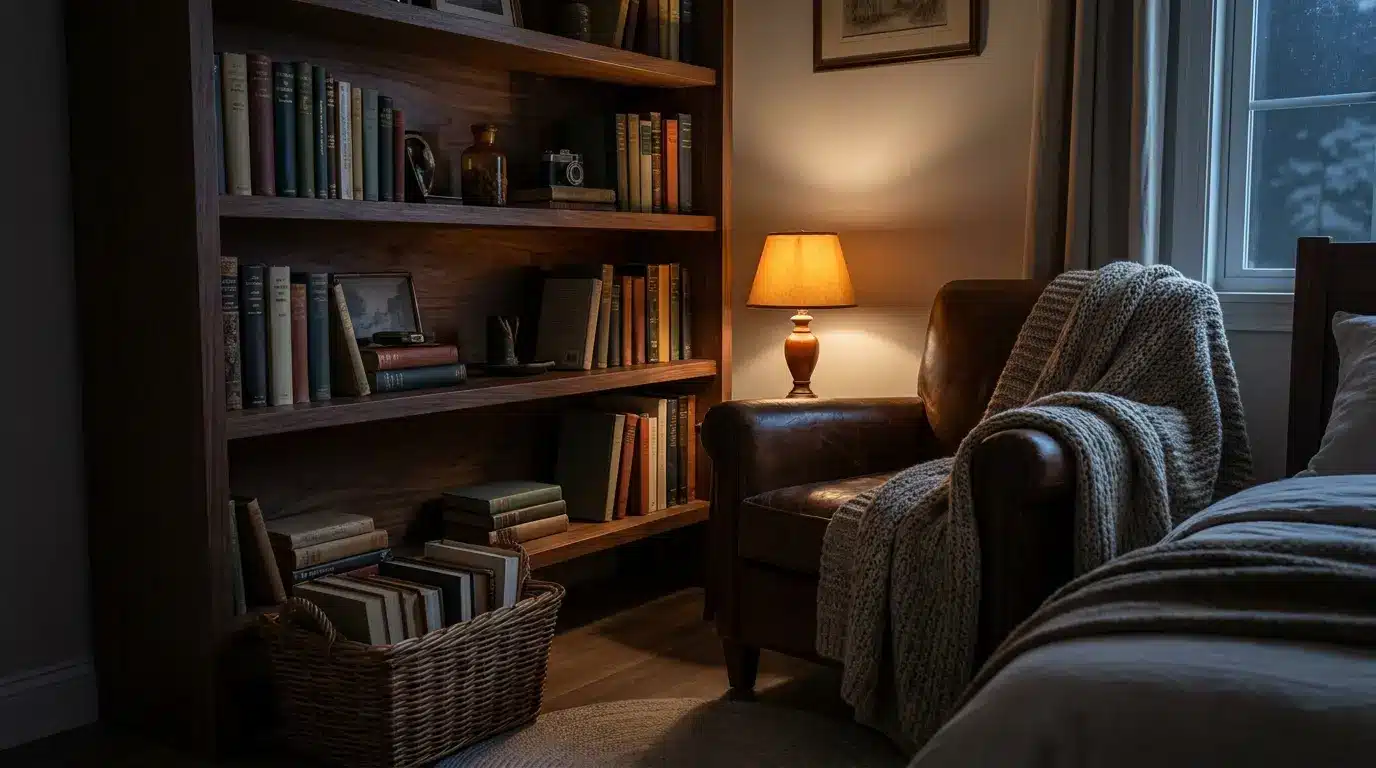
A book nook can make one corner feel intentional, even if it is small. Use a narrow shelf, a chair, and a lamp close together.
Add a basket for extra books or blankets. Keep the colors dark and warm so the corner connects with the rest of the bedroom. The setup feels like a mini reading room inside the sleeping space, which suits the mood well without feeling overly styled.
16. Black Iron Bed
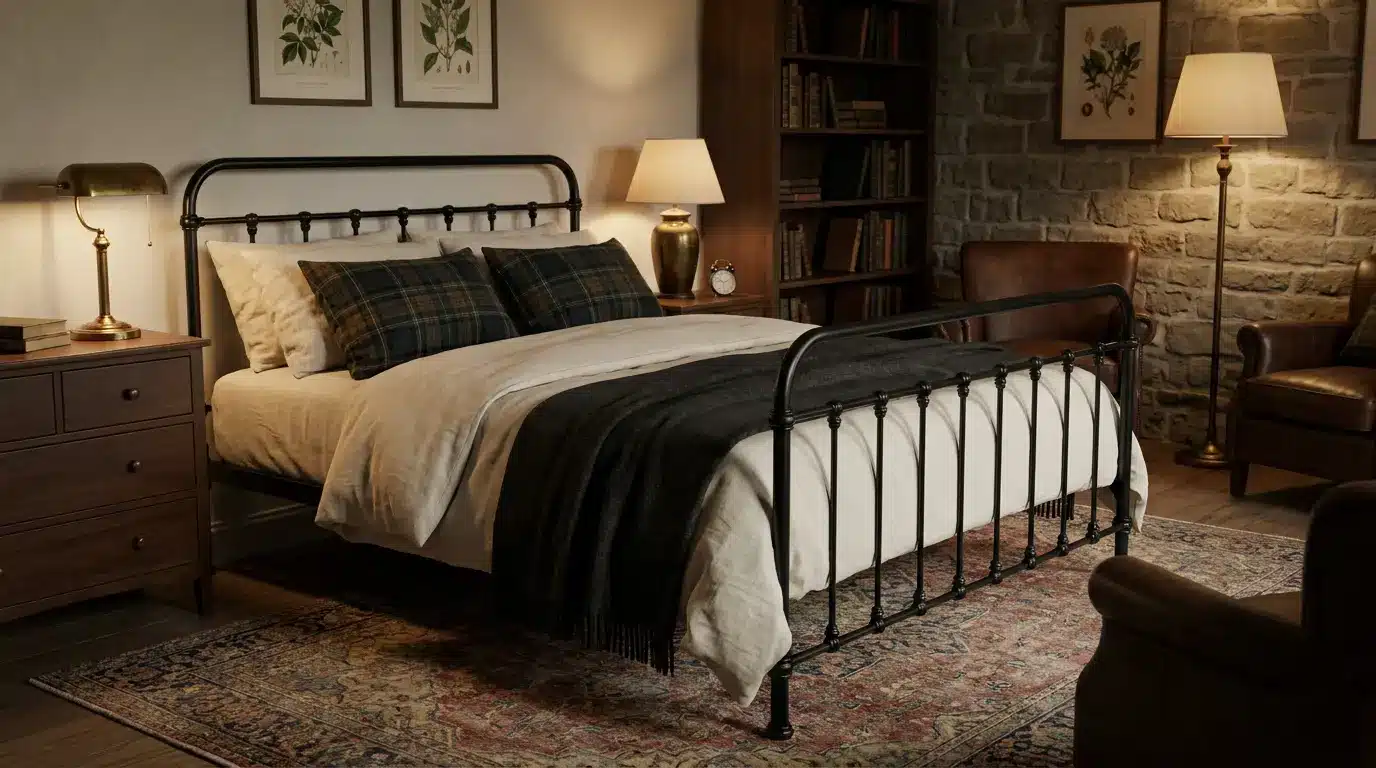
A black iron bed frame gives the room a classic shape without making it feel bulky. The open frame works well in small bedrooms because it does not block the view.
Pair it with cream bedding, plaid pillows, and a darker throw. Add a faded rug beneath the bed. This mix keeps the room structured, warm, and easy to style around every day without adding overall weight to the layout.
17. Dark Wood Wardrobe
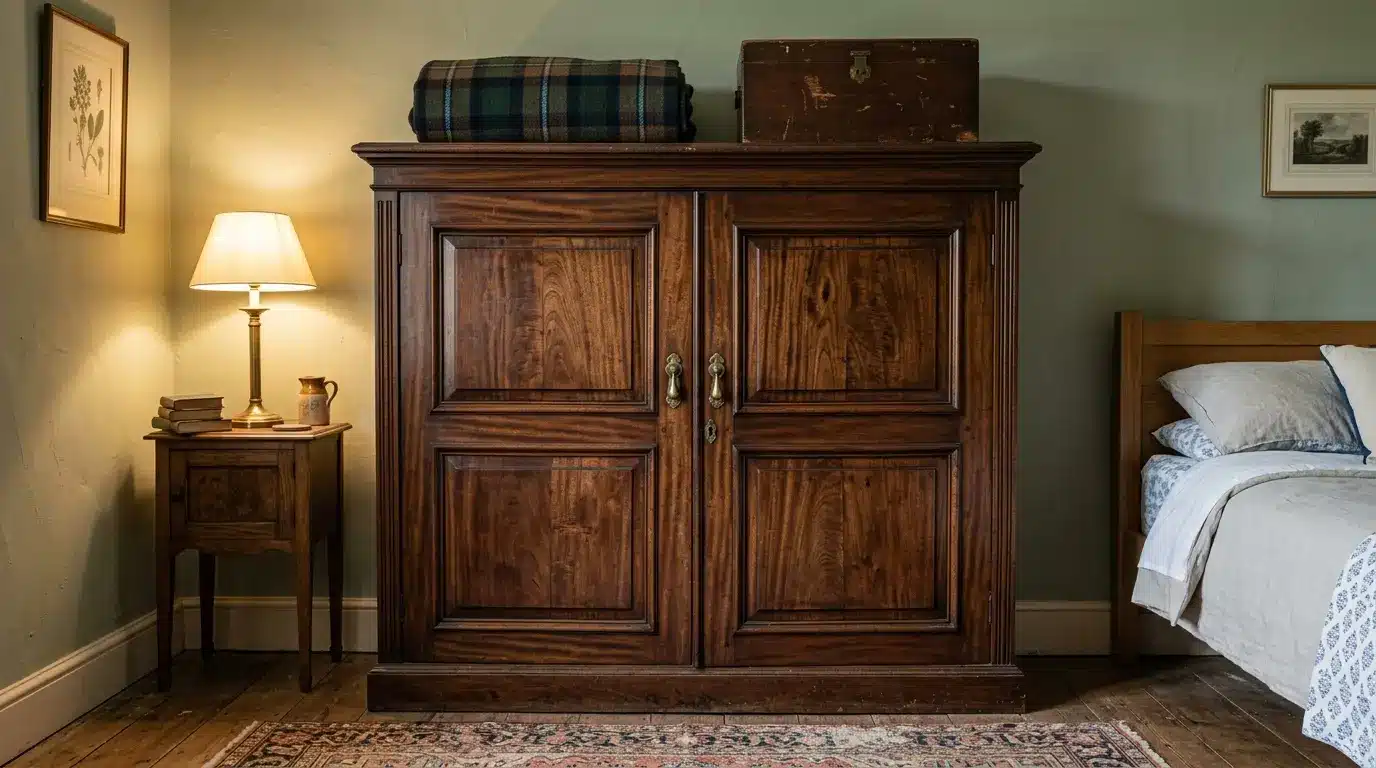
A dark wood wardrobe can act like a built-in feature when styled well. Choose one with paneled doors, carved detail, or a deep stain. Add brass handles if the piece feels too plain. Keep the top simple with a folded blanket or storage box.
The wardrobe adds height and weight to the room while hiding everyday items that would otherwise create clutter nearby without adding more visible storage pieces.
18. Framed Map Wall
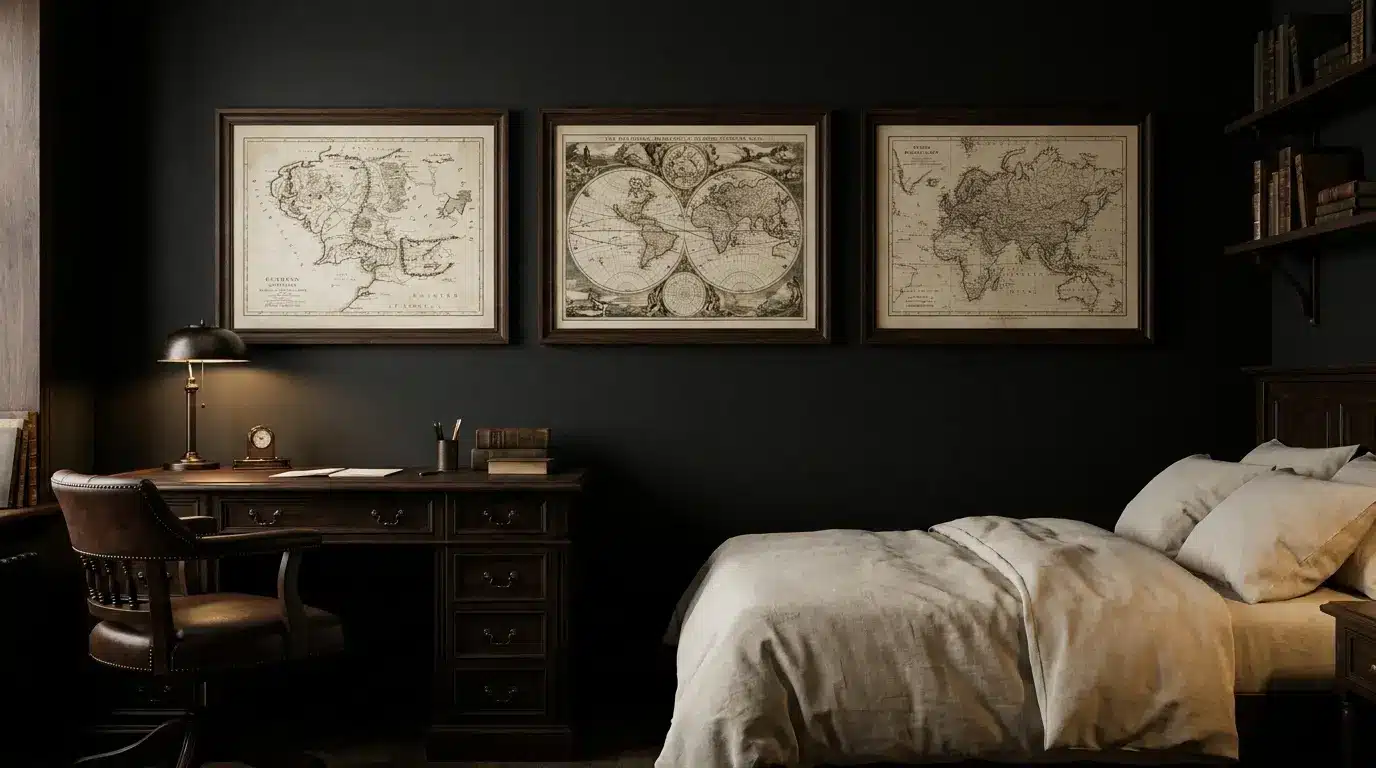
Framed maps lend the room an academic mood without cluttering it with too many objects. Choose old world maps, city plans, or muted landscape prints. Hang one large map above the bed or three smaller maps above a desk.
Use dark frames for structure. The map wall adds detail and meaning, especially in rooms with plain paint, simple bedding, and wooden furniture around it, while keeping the wall visually simple and focused.
19. Earth Tone Bedding
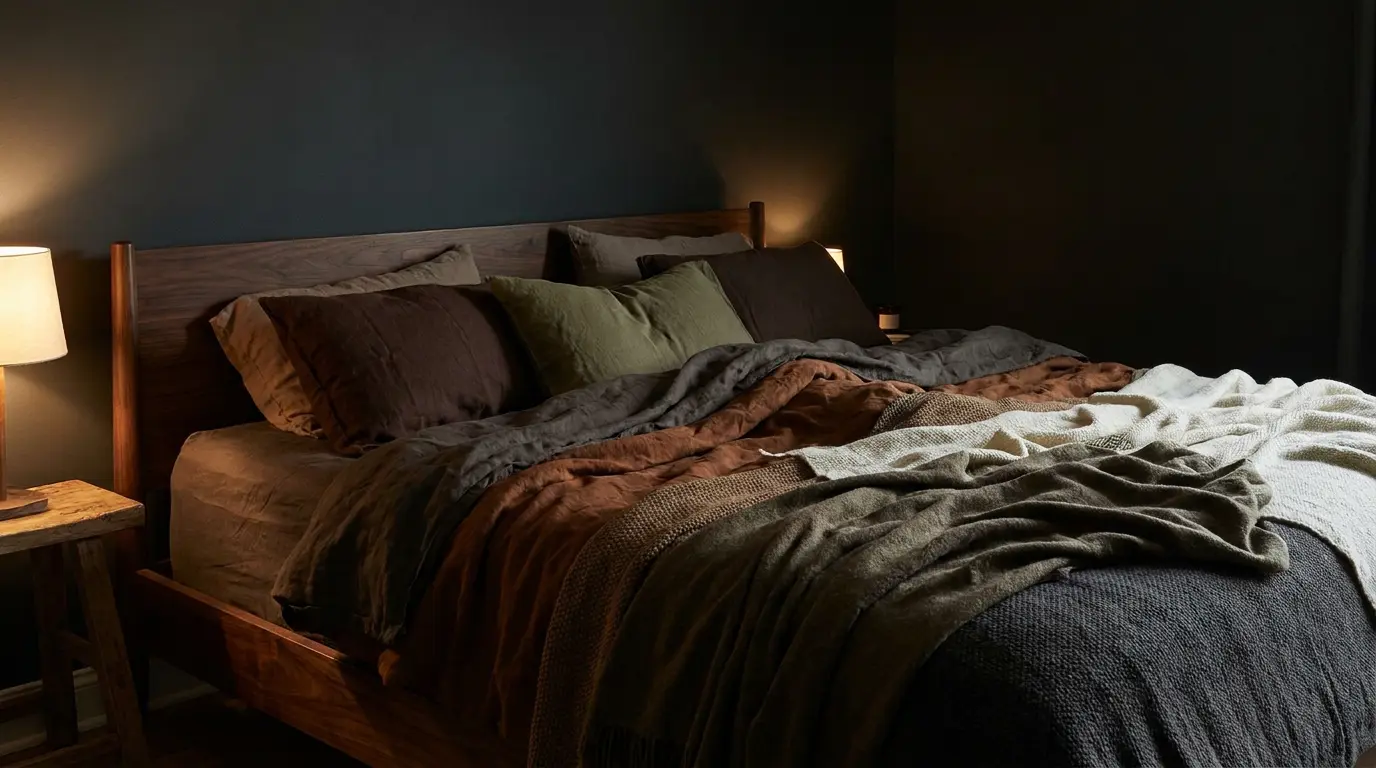
An earth-toned bedding palette feels warm, calm, and easy to live with. Use brown, tan, rust, olive, cream, and deep gray across sheets, pillows, and throws. Keep the fabrics natural, such as cotton, linen, or wool.
This suits bedrooms where the walls must stay light. The bedding brings the dark academia feeling through color and texture instead of paint alone, while keeping the room practical and soft too.
20. Desk Shelf Display
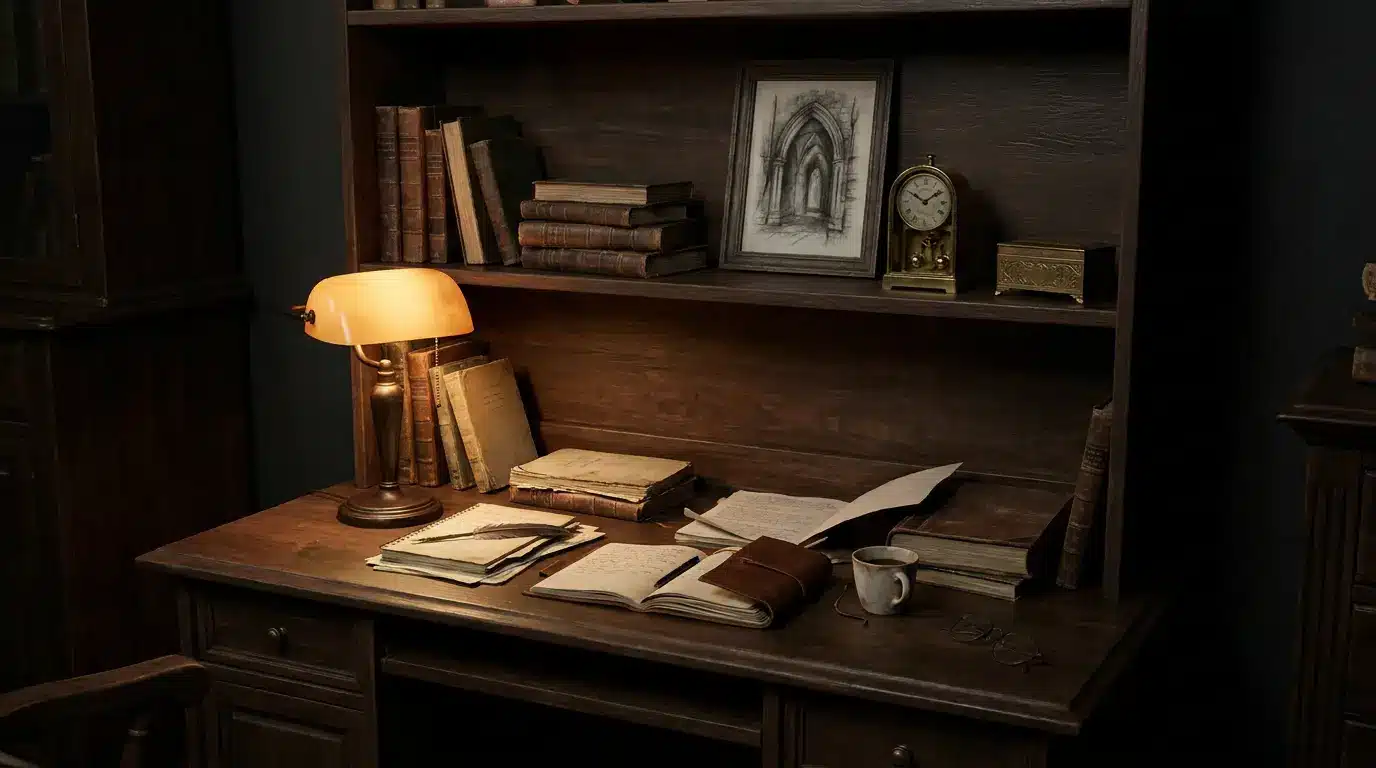
A small shelf above the desk can make the work area feel more thoughtful. Add a few books, a framed sketch, a small clock, and one aged object, such as a brass box. Keep the arrangement low and balanced.
The shelf should support the desk, not crowd it. This creates a layered study corner while keeping the work surface open for real use daily without making the desk area feel messy.
21. Footboard Trunk Storage
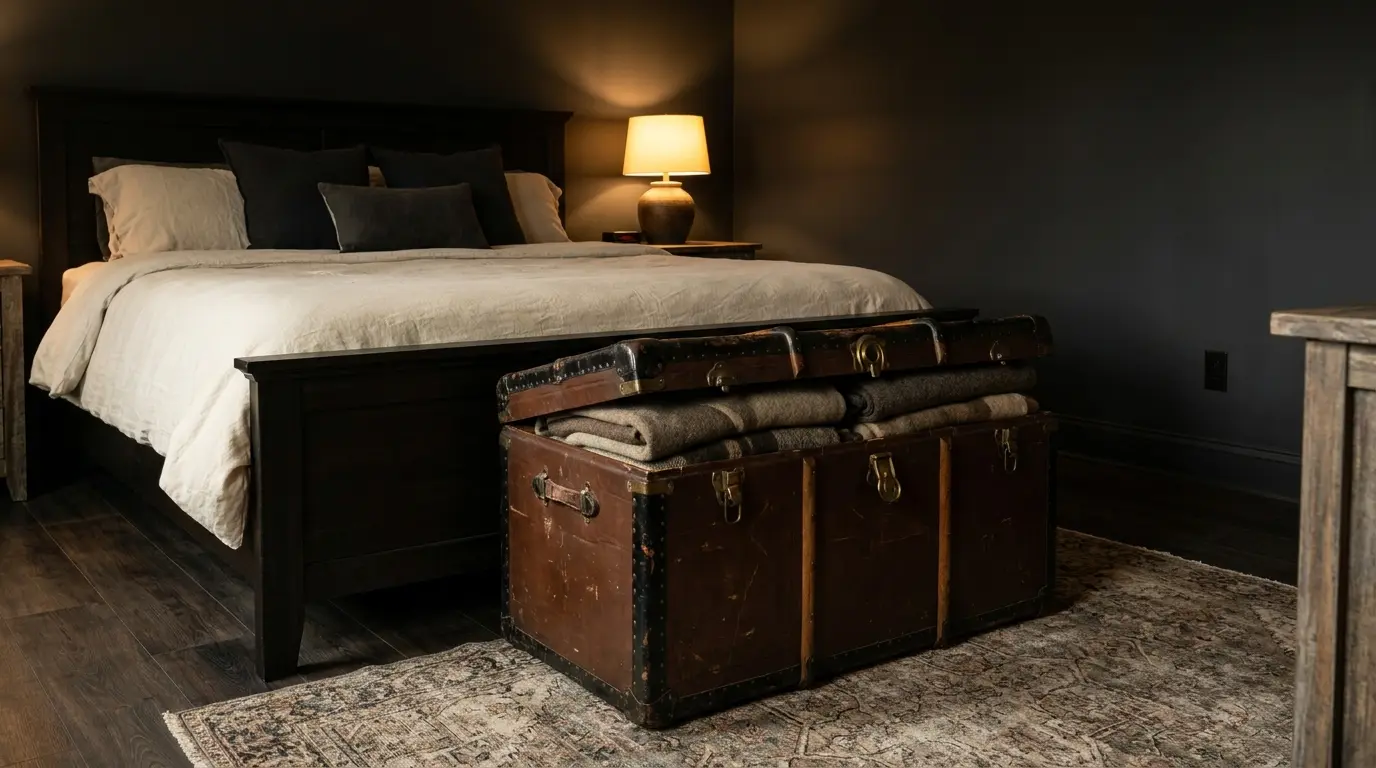
A trunk at the foot of the bed adds storage and character at the same time. Choose dark wood, brown leather, black metal, or weathered green. Use it for blankets, seasonal clothes, or books. The trunk gives the bed area a finished look and adds an old travel feeling.
It works especially well with wood furniture, plaid bedding, and faded rugs nearby, without needing another large piece of furniture.
22. Soft Black Wall
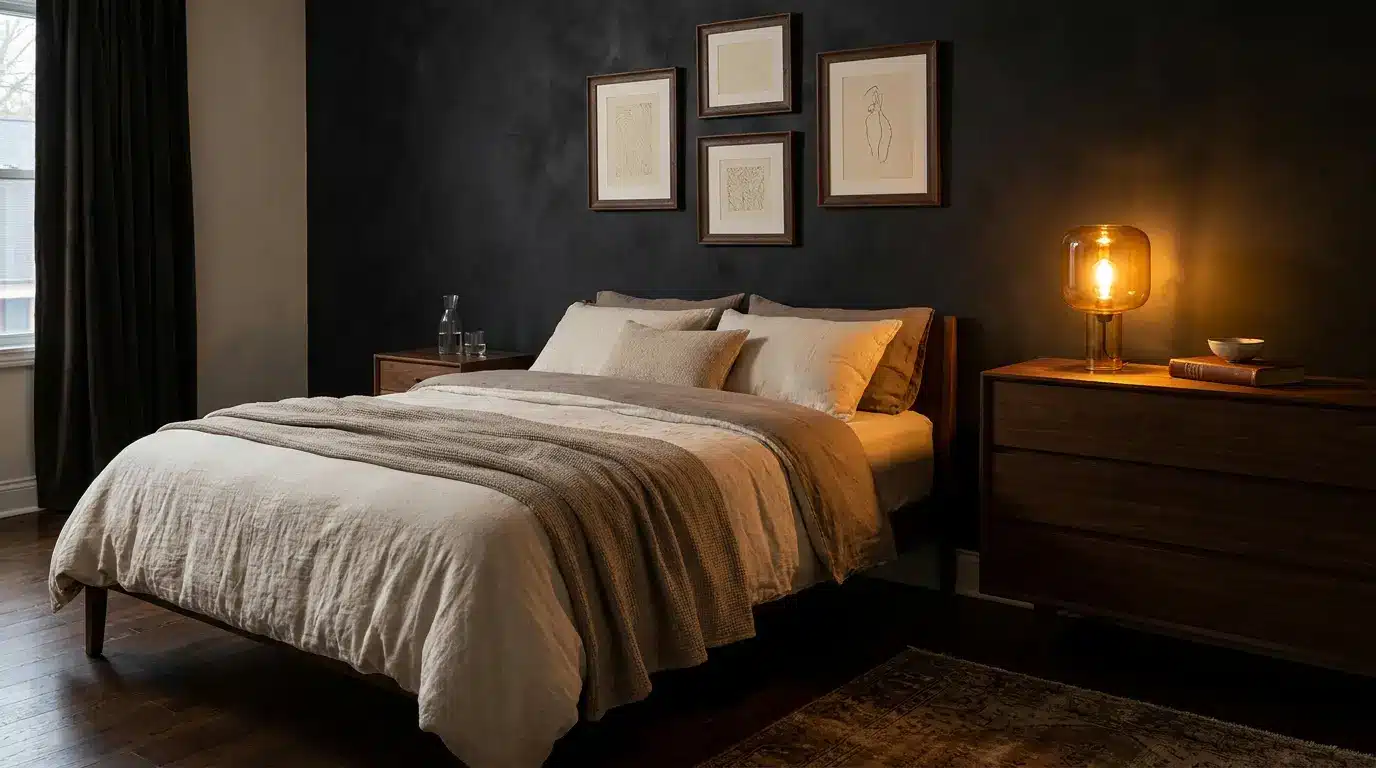
A soft black accent wall can feel calm when paired with the right art. Use matte paint behind the bed or desk. Add two or three framed prints with cream paper and dark frames.
Keep the furniture warm, not glossy. This wall creates depth without making the room dark. It works well when the rest of the room stays lighter and softer without feeling flat, closed in, or plain.
23. Dried Botanical Corner
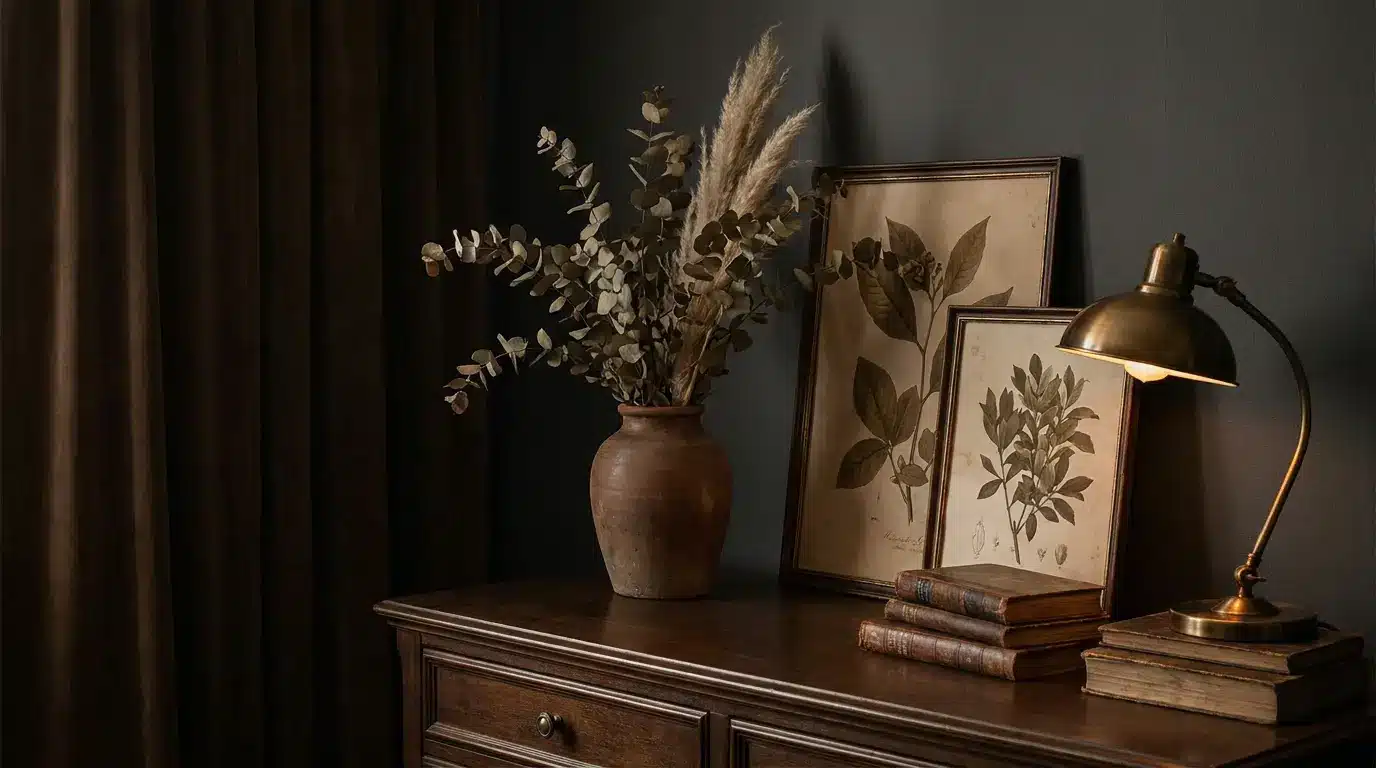
A botanical corner softens the room without making it bright. Use dried stems, pressed flowers, branches, or muted botanical prints. Place them near a desk, dresser, or bookshelf. Choose clay, glass, or dark ceramic vases.
The natural shapes break up heavy wood and dark colors. This idea feels quiet and old-fashioned while still keeping the room simple and grounded overall without making the space feel too decorated or busy.
24. Layered Headboard Art
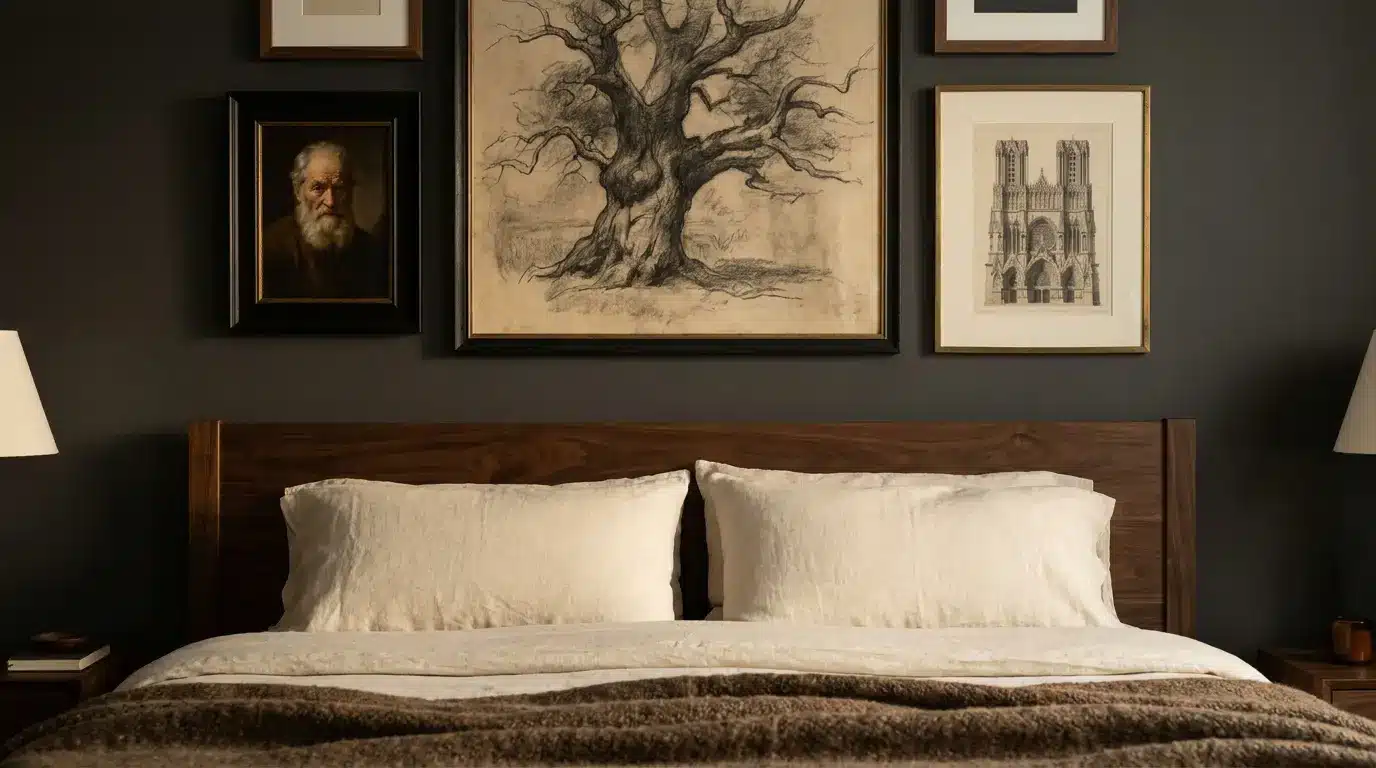
Layered art above the headboard can make the bed feel finished. Use one large print in the center, then add two smaller frames nearby. Choose subjects like architecture, old sketches, portraits, or landscapes.
Keep the frame tones similar so the wall feels connected. This creates a strong focal point without needing shelves, wallpaper, or extra furniture around the bed at all, while keeping the bed area visually clean and simple.
25. Brown Monochrome Room
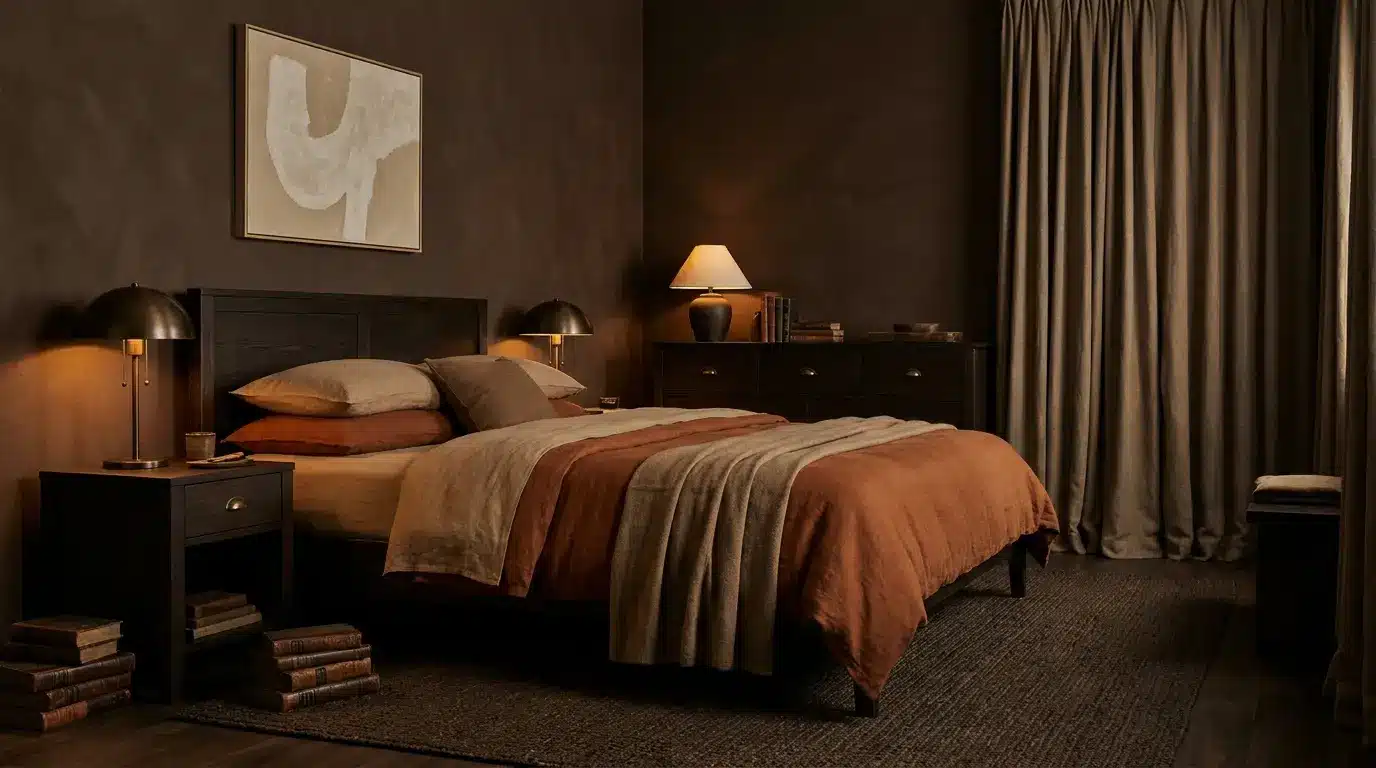
A brown monochrome bedroom feels deep without becoming too dark. Use espresso furniture, tan bedding, rust pillows, bronze accents, and beige art. Keep the tones close, but not identical.
This creates a layered look that feels warm and quiet. It is a good choice if black feels too harsh, or if the room needs a softer take on the dark academia mood while staying warm and easy to live with.
These bedroom ideas work best when each choice has a clear role. Use one idea for the bed, one for the walls, one for lighting, and one for storage. That keeps the room full of character without making it hard to live in.
Dark Academia Bedroom on a Budget
A moody bedroom does not need a big budget. With smart swaps, secondhand pieces, and a few personal details, you can create the look affordably.
- Thrifted furniture upgrades: Paint secondhand desks, nightstands, or shelves in dark tones, then add brass or antique-style handles.
- Low-cost wall decor: Print public domain art, maps, portraits, or botanical sketches and frame them in thrifted dark or gold frames.
- Affordable decor sources: Use IKEA, H&M Home, and Amazon for shelves, lamps, bedding, rugs, plug-in lights, and small brass accents.
- Free personal decor: Style old books, dried flowers, handwritten notes, glass jars, unused frames, or family objects on shelves and desks.
- Budget breakdown: Under $100 covers small decor and lighting. $100 to $300 can add bedding, curtains, or a rug. $300 to $500 can refresh the full room.
Start with the easiest update first, then build slowly. A darker lamp, a thrifted frame, or an old book stack can shift the whole room’s mood.
How to Decorate a Small Bedroom
A small room can still carry this look well. Focus on scale, wall space, lighting, and storage so the room feels cozy instead of cramped.
- Use one dark accent wall instead of painting every wall, then balance it with light bedding.
- Choose a narrow bookshelf or floating shelves to save floor space.
- Pick a bed frame with storage underneath and use baskets or boxes for modern items.
- Use wall lamps or plug-in sconces to keep nightstands and floors clear.
- Hang curtains high and add a mirror across from a window or lamp to make the room feel taller and brighter.
- Keep the floor clear and use one strong rug instead of many small ones.
- Choose fewer decor pieces with greater visual impact, such as one framed map, one lamp, or one stack of books.
- Keep the bed, shelf, or desk as the main focus so the room does not feel visually crowded.
Small rooms need breathing space. Let one feature lead the room, then support it with smart storage, warm lighting, and simple decor choices.
Common Design Mistakes That Break the Mood
Small mistakes can make a moody bedroom feel flat, cramped, or too staged. This table clearly shows what to avoid and what to do instead.
| Mistake | Why It Hurts the Room | Better Choice |
|---|---|---|
| Using too many dark tones | The room can feel flat, closed in, and heavy. | Mix deep shades with cream bedding, warm wood, mirrors, and soft lighting. |
| Choosing harsh lighting | Cold bulbs or bright overhead lights can ruin the calm mood. | Use warm bulbs, shaded lamps, bedside lights, and candle-style lighting. |
| Overcrowding surfaces | Too many props, patterns, and small objects can make the room look forced. | Choose fewer pieces with stronger visual value and leave empty space. |
| Ignoring large visual areas | Plain beds, bare walls, or empty floors can make the room feel unfinished. | Add layered bedding, framed art, curtains, or a vintage-style rug. |
| Using glossy modern finishes | Shiny furniture, chrome, or bright plastic can break the old-room feel. | Choose matte paint, aged brass, dark wood, leather, ceramic, and brushed finishes. |
Fixing one mistake at a time keeps the room easy to improve. Start with lighting first, balance the dark tones, then edit crowded surfaces carefully.
Frequently Asked Questions
Can this style work in a dorm room?
Yes, but keep the setup simple and removable. Use peel-off wall pieces, compact bedding, a small lamp, and framed prints. A dorm room needs fewer items, so choose pieces that add mood without taking away study or storage space.
How do I make the room feel less gloomy?
Add warmer accents through cream fabric, soft brown pieces, and gentle lighting. A dark room should still feel comfortable during the day. Keep one or two lighter areas visible, so the space feels moody without becoming dull or closed.
Is this style good for teenagers?
Yes, it can work well for teenagers when the room stays practical. Use easy bedding, simple shelves, safe lighting, and personal art. Avoid fragile decor or too many heavy pieces, so the space still feels comfortable for school, hobbies, and rest.
How can I keep the room easy to clean?
Choose closed storage, washable bedding, and fewer small objects on open surfaces. Dust shows quickly on dark furniture, so keep displays simple. A room with clear surfaces still feels styled, but it becomes much easier to clean each week.
Can I mix this look with another style?
Yes, but keep one style as the main base. Dark academia can blend with vintage, rustic, cottage, or modern pieces if the colors stay warm and muted. Too many mixed details can make the room feel unclear instead of thoughtful.
Final Thoughts
A moody room feels best when it looks thoughtful, not overly styled. I would start with the pieces that most shape the space: deeper colors, warm lamps, layered bedding, useful storage, and one strong furniture piece.
You can then add books, framed art, mirrors, curtains, and small personal objects to slowly build character. This matters because a beautiful room should still feel easy to use every day.
A dark academia bedroom works when it supports rest, reading, studying, and quiet time without feeling crowded. Pick the ideas that fit your space first, then adjust as you go. Share your favorite idea in the comments, or check out my related room decor blog posts.