A circular driveway can change how a home feels the moment you pull in. It’s more than a loop of pavement. It’s a functional layout that affects traffic flow, curb appeal, and how the entire front yard works together.
But building one isn’t as simple as sketching a circle and pouring material. The shape you pick, the space you have, and the way the ground handles water all play a bigger role than people expect.
In this guide, I’ll walk you through the practical details, the design choices, and the real-world costs so you can decide if a circular driveway fits your property and your daily routine.
Let’s start with the basics and break down what it actually is.
What is a Circular Driveway?
A circular driveway is pretty much what it sounds like. It’s a drive that loops around so you can pull in, swing through, and pull back out without stopping or backing up.
You get one entrance, one exit, and a smooth path that keeps traffic moving the same way every time. It feels easy. It feels controlled. And it makes day-to-day parking a whole lot simpler.
The big difference between this and a regular straight driveway is how you use it. A standard driveway is a one-way trip. You pull in, you stop, and when it’s time to leave you back out into the street.
A circular layout cuts all that out. You stay forward the whole time. No tight turns. No worrying about blind spots or street traffic while you reverse.
People search for these under a few different names. Some call it a circle driveway. Others call it a horseshoe driveway or a half-circle driveway.
You’ll also see U-shaped driveway when folks are talking about a version that isn’t a full loop but still gives you two access points. All of those point to the same idea: an easier way to get in and out without the stop-and-back routine.
Types of Circular Driveways
Choosing the right shape matters because each one takes up space differently and changes how you pull in and out of the property. Some layouts feel smooth and natural. Others feel tight unless the yard is built for it. The shape you pick decides how easy the driveway is to use every day.
1. Full Circle Driveway

A full circle is the classic version with a complete loop from one side of the yard to the other. It needs solid width and depth to pull it off, because the arc has to be gentle enough for cars to move comfortably.
Bigger lots handle this style best, especially if you want something in the middle like a tree or a simple planting bed. The traffic flow is clean and you never have to think about reversing, but the tradeoff is space and cost.
It uses the most materials and often needs more grading and planning than the smaller layouts.
2. Half-Circle / Horseshoe Driveway
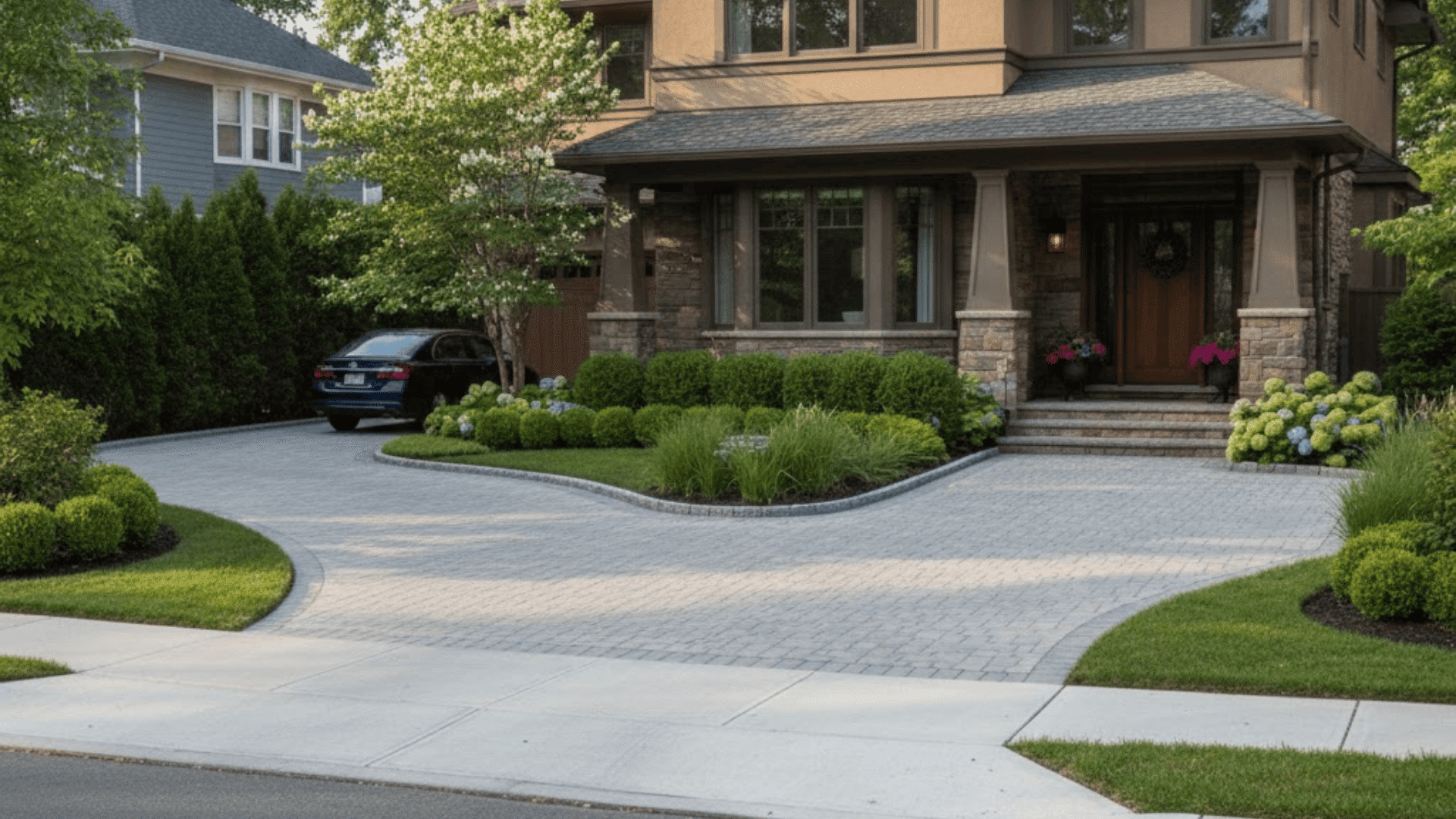
A half-circle curves in front of the house and swings back out, which makes it the easier option for smaller or more typical neighborhoods.
You don’t need a deep yard since the driveway sits closer to the street, and most homes have enough frontage for two access points without pushing anything too tight.
You get the same forward entry and forward exit feel as a full circle, but the footprint is lighter and much easier to fit without redesigning the whole front yard.
3. Teardrop and Oval Layouts
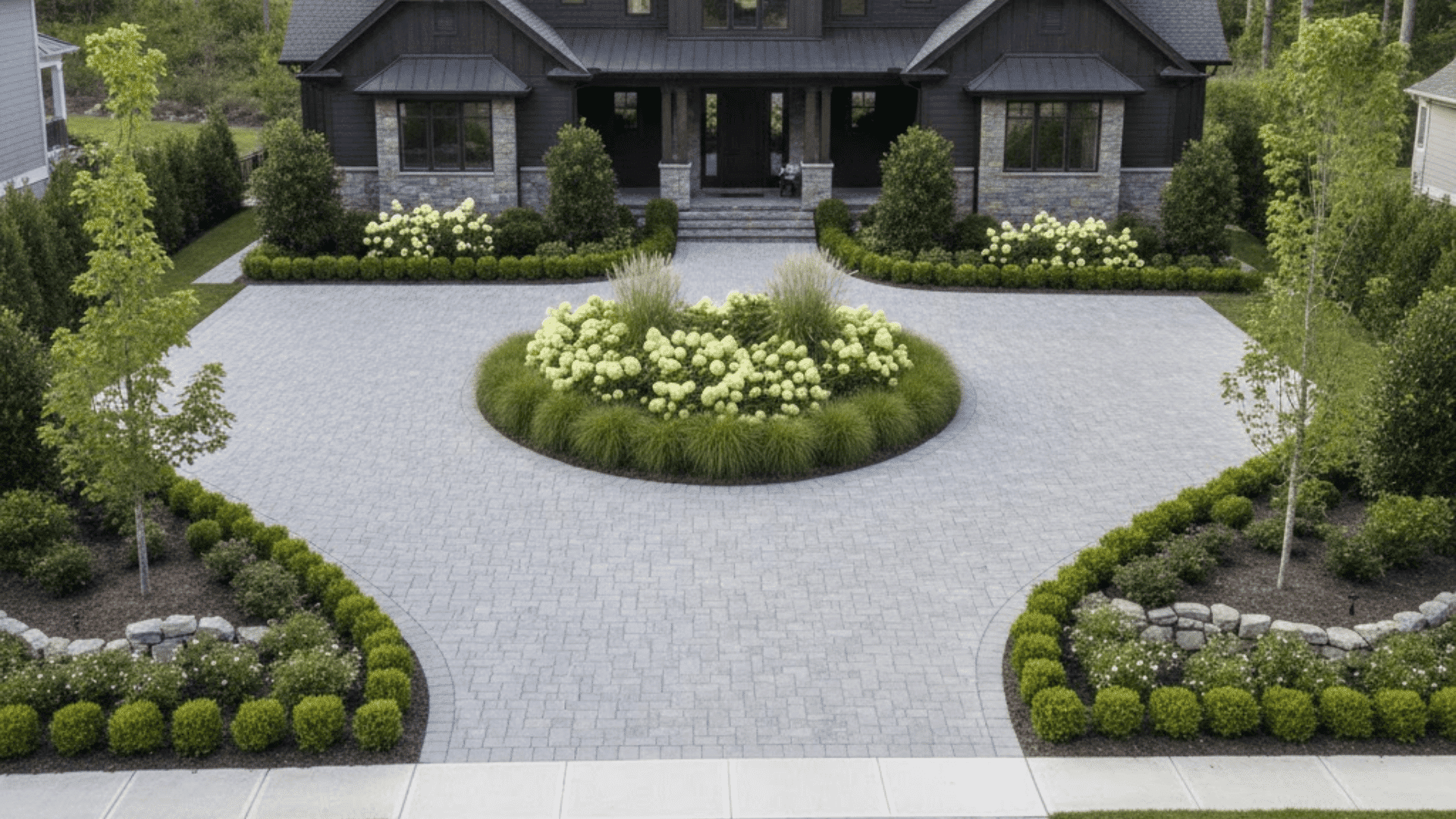
A teardrop or oval setup works when you want the circular flow but don’t have the room for a full loop. The shape narrows on one end, which cuts down how much yard it takes up.
This helps if the front yard is uneven, sloped, or shaped in a way where a perfect circle just won’t sit right. The longer curve also gives you more flexibility for parking along the side of the loop, so guests can pull in without blocking the flow.
How Much Space Do You Need?
A circular driveway only works when the yard gives you enough room to build a clean, comfortable loop. When the space is right, the driveway feels smooth and natural. When it’s not, the layout turns into a tight squeeze.
Here’s what actually matters when you’re sizing things out:
1. Frontage Width
You need enough room along the street for two openings that don’t crowd each other.
- A wider frontage gives you cleaner entrances.
- Cars can pull in and out without cutting across the lawn.
- Narrow frontage forces the openings too close together, and the loop starts feeling cramped.
A simple way to think about it:
If the entrances feel like they’re bumping elbows, the frontage isn’t wide enough.
2. Yard Depth
Depth decides how relaxed the curve can be.
- Houses close to the street make the arc too sharp.
- More depth means a smooth, natural curve that cars can follow without slowing down.
- Tight depth compresses everything and makes the driveway feel like a half-circle jammed up against the house.
3. Turning Radius
This is the piece most people underestimate.
- Cars need a gentle arc to stay forward the whole time.
- Bigger vehicles like SUVs, trucks, or delivery vans need even more room.
- A good radius feels slow and steady, not like you’re trying to swing a U-turn in a grocery store parking lot.
A quick gut-check:
If you picture turning a car through the loop and it feels like work, the radius is too tight.
4. When a Circular Driveway Isn’t Practical
Some properties just can’t make the shape work, no matter how much you tweak the layout.
- Narrow frontage with nowhere to spread the entrances
- A shallow front yard that pushes the curve too tight
- Steep slopes that make grading a major project
- Large trees, utility boxes, or permanent structures sitting in the center of the ideal loop
- Roads where adding a second access point creates visibility or safety issues
When those things line up, forcing a circular driveway usually makes it harder to use, not easier. In those cases, a simpler layout or a modified U-shape works better without fighting the space.
Circular Driveway Cost Breakdown: What You’ll Pay and Why It Varies
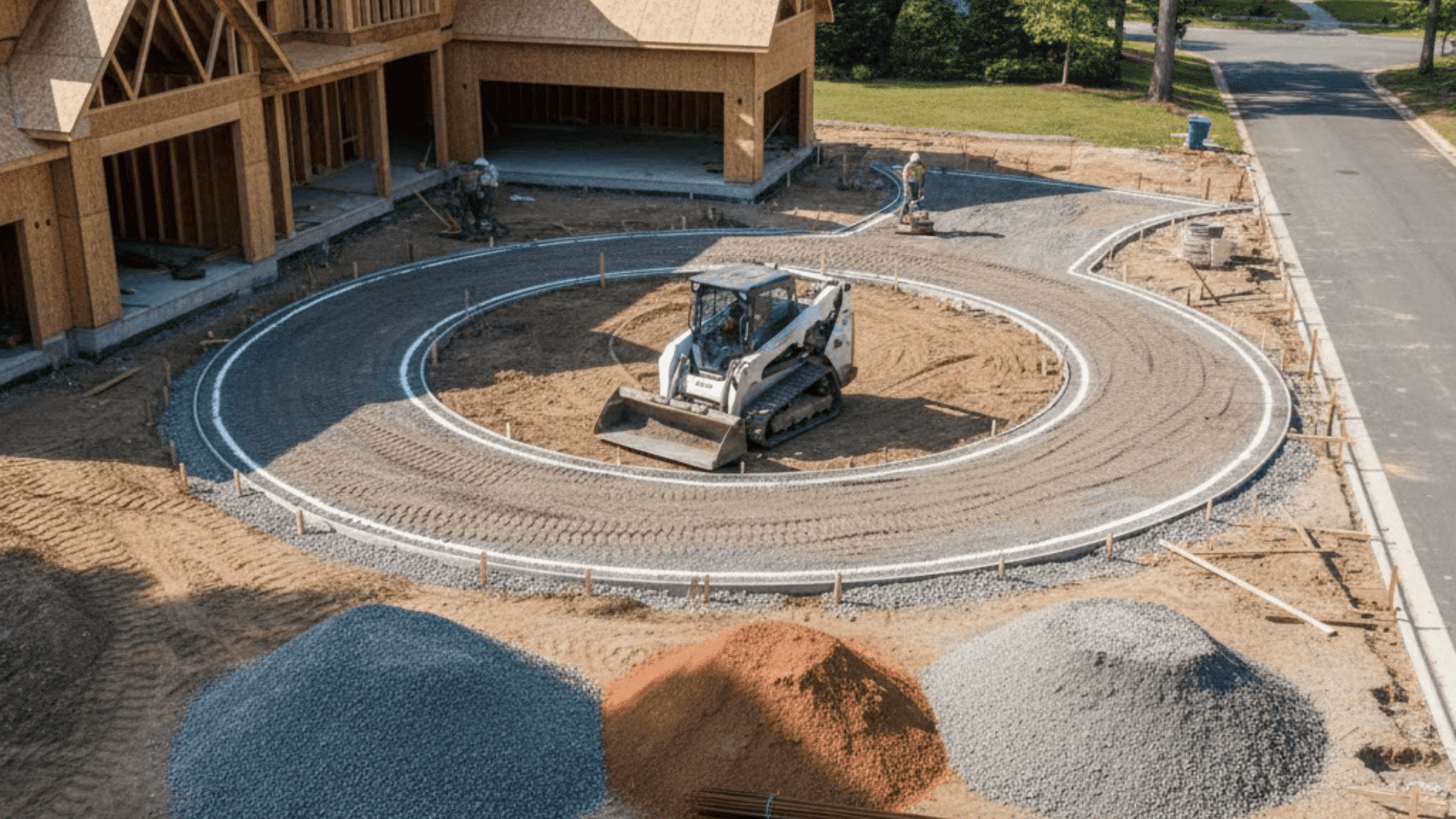
Figuring out the real cost of a circular driveway can get confusing fast, because the price shifts with size, layout, and the material you pick. Getting the full picture before you start calling contractors is really good.
Here are the numbers so you know what you’re getting into and what actually drives the total price:
1. Average Cost Ranges
| Project Size / Scope | Typical U.S. Cost | Notes |
|---|---|---|
| Small circular driveway | $8,000–$12,000 | Basic materials, minimal extras |
| Standard residential circular driveway | $14,000–$28,000 | Most common range |
| Large or premium circular driveway | $30,000+ | Bigger diameters, premium finishes |
2. Cost by Material
| Material | Cost per Sq Ft (U.S.) | What to Expect |
|---|---|---|
| Gravel | $1–$3 | Cheapest option, higher upkeep |
| Asphalt | $3–$12 | Smooth, durable, needs sealing |
| Concrete | $4–$12 | Strong, clean look, upgradeable |
| Pavers | $15–$40+ | Most design options, highest cost |
3. Cost by Layout Type
| Layout Type | Cost Impact | Reason |
|---|---|---|
| Full circle | Highest | More paving, more base work |
| Half-circle / Horseshoe | Moderate | Less paved area than full circle |
| Teardrop / Oval | Varies | Depends on width and depth |
4. Hidden Costs People Miss
| Extra Cost | Typical Effect on Total | Why It Adds Up |
|---|---|---|
| Site prep / excavation | $1,000–$5,000+ | Ground leveling, debris removal |
| Drainage work | $500–$4,000+ | Prevents water issues |
| Edging / curbing | $800–$3,000+ | Decorative or structural borders |
| Permits / curb cuts | $100–$1,500+ | Town requirements vary |
| Waste hauling | $300–$1,200+ | Soil, concrete, vegetation disposal |
The exact price for your home will come down to how big the loop is, what material you want under your tires, and what kind of prep your yard needs before the first load of gravel or concrete arrives.
Does a Circular Driveway Increase Home Value?
A circular driveway can boost a home’s value, but only when it fits the property naturally. Buyers respond to the easy pull-in, pull-out flow and the extra parking it provides, especially on lots with enough width and depth for a smooth loop.
When the driveway feels balanced with the house and doesn’t overwhelm the yard, it creates a stronger first impression, which usually helps the value hold or rise.
The benefit fades when the space is too tight. If the loop looks squeezed in, takes up too much lawn, or feels oversized for the home, buyers see it as awkward instead of useful. That can cancel out the appeal completely.
Neighborhoods matter as well. In areas where circular driveways are common, adding one feels expected and often supports the price. In areas where no one has one, the impact isn’t as strong.
In the end, buyers value convenience and clean curb appeal. A circular driveway helps when it delivers both.
Pros and Cons of Circular Driveways
A circular driveway can make daily driving easier, but it also comes with a few drawbacks that are easy to overlook.
| Category | Pros | Cons |
|---|---|---|
| Traffic Flow | Smooth forward-only movement that feels safer and easier | None directly, but tight layouts can make the loop feel awkward |
| Parking | More room for multiple cars without blocking each other | Uses more yard space, leaving less room for landscaping or lawn |
| Convenience | No reversing into the street, easier for guests, cleaner arrival | Higher installation cost because of extra materials and labor |
| Ongoing Impact | Looks polished and improves everyday use | May need more maintenance; poor grading can create drainage issues |
A circular driveway works best when the property has the space, the slope, and the layout to support a clean, natural loop. If those pieces line up, the benefits usually outweigh the drawbacks. If not, the design loses its value.
Drainage, Grading, and Permits
A circular driveway only works if the ground under it can handle water, weight, and weather. The surface is the easy part. The base, slope, and drainage plan decide whether the driveway lasts decades or falls apart fast. Here’s the version that actually helps you make the right calls.
1. Why Drainage is the Biggest Failure Point
Here’s the truth most contractors won’t lead with: water destroys more circular driveways than bad materials ever will.
If the loop doesn’t drain in every direction, you get:
- Dips that collect standing water
- Cracks that spread each freeze–thaw cycle
- Erosion under the base
- Water running toward the home’s foundation
A proper build uses layered, compacted aggregate, a consistent outward pitch, and on tough yards, French drains, channel drains, or hidden piping to push water away before it can settle.
If the contractor can’t explain the drainage plan in detail, that’s your first red flag.
2. Slope Considerations
The natural slope of the yard makes or breaks the design. A yard sloping toward the house is the biggest red flag, because it turns the driveway into a funnel. Uneven slopes cause puddling and create pressure points where the loop settles unevenly.
Good installers fix this by cutting into high spots, building up low ones, adjusting the center island height, or regrading the surrounding soil so runoff moves away cleanly. If the slope isn’t addressed early, no surface material can save the driveway.
3. Permit Rules and Setbacks
Most U.S. towns require permits for adding a second access point or changing how water moves off your property.
They may need sightline measurements, curb-cut approvals, or even engineered drainage plans depending on local rules. Setbacks also control how close the driveway can sit to the road or property lines.
Skipping this step risks fines or having to redo new work. A quick call to the building department saves a lot of stress.
4. HOA Concerns
If you live in an HOA community, expect guidelines that go beyond the city’s.
Many HOAs regulate driveway materials, layout shape, entry width, center island size, landscaping, and even color.
Some ban gravel entirely. And yes, they can reject a design even if the town approves it. Checking HOA rules upfront keeps you from reworking the entire plan later.
Handled correctly, these pieces make the driveway solid, safe, and problem-free. Ignored, they turn it into a costly project that keeps fighting the yard instead of working with it.
What to Put in the Middle of a Circular Driveway
The center of a circular driveway works best when it’s simple, easy to maintain, and doesn’t block visibility. The goal is a clean focal point that won’t interfere with driving or create long-term problems.
1. Trees
A single small or medium ornamental tree works well. Options like crepe myrtle, Japanese maple, dogwood, or similar species stay manageable and won’t push up pavement with aggressive roots. The canopy should sit high enough that drivers can see through or under it when moving around the loop.
2. Low-Maintenance Plants
Compact plants are the safest choice. Dwarf evergreens, boxwoods, native grasses, or basic perennials keep the island tidy without constant trimming. Using mulch or stone helps control weeds and improve drainage.
3. Hardscape Features
Hardscape is the lowest-maintenance option. A small boulder cluster, a short stone border, a birdbath, or a low fountain offers structure without root issues or heavy debris. Keep features low so drivers maintain clear sightlines across the loop.
4. What to Avoid
Skip tall shrubs, dense grasses, or anything that blocks visibility. Avoid trees with invasive roots likeoak, willow, poplar, or sweetgum as they can damage pavement. Overly crowded plantings also trap water and create drainage issues. Clean, open, and simple is the safest setup.
Common Mistakes to Avoid
A circular driveway only works well when the design and prep are done correctly. These are the mistakes that cause the most problems and are the easiest to avoid if you catch them early.
- Poor grading: Bad grading leads to water pooling, soft spots, and early cracking. The base must be shaped so water moves away from the loop and the house.
- Oversized center islands: A center island that’s too big tightens the turning radius and hurts visibility. It should stay small enough for smooth driving and clear sightlines.
- Wrong material choice: Gravel washes out on slopes, asphalt can soften in extreme heat, and pavers shift without the right base. Pick materials that match climate and traffic needs, not just appearance.
- Ignoring local rules: Many towns and HOAs regulate access points, setbacks, drainage, and curb cuts. Skipping this step can lead to fines or having to redo the project.
Avoiding these issues keeps the driveway functional, safe, and low-maintenance for the long run.
Wrapping Up
A well-designed circular driveway can make a home easier to navigate and nicer to live with, but it only works when the layout, materials, and groundwork support the shape.
When everything lines up, it becomes a practical upgrade instead of a decorative extra.
If you’re planning one, take time to look at your yard, your climate, and how you use your space day-to-day. Those details matter more than the shape alone.
Keep exploring ideas that make your home easier to live with, read other step-by-step guides and design breakdowns on the website.