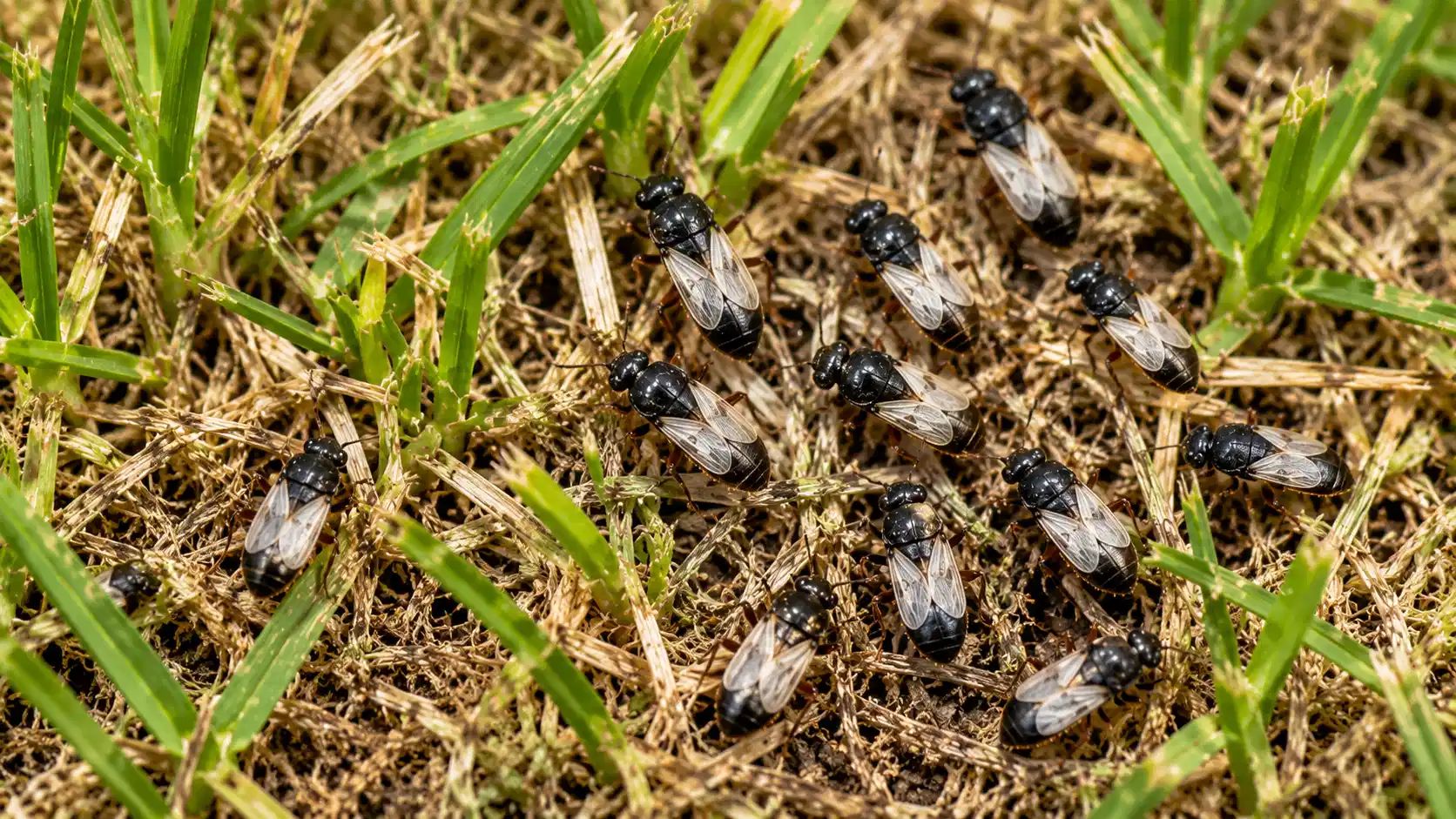
Those frustrating dry, yellow patches on your lawn might be due to chinch bugs, small sap-sucking insects that thrive in warm weather and prefer St. Augustine and Bermudagrass.
It’s easy to mistake the damage for heat stress or sprinkler issues, but these pests can devastate a healthy lawn in just weeks.
Early detection is key, as a small patch can quickly spread across your yard.
By knowing how to identify chinch bugs and understanding their preferences, you can effectively manage an infestation. With the right approach, you can restore your lawn and maintain its health for future seasons.
Where Do Chinch Bugs Live?
Chinch bugs don’t burrow deep into the soil. Instead, they live right at the surface level, tucked securely into the thatch layer at the base of grass stems, where they stay hidden while feeding on the plant tissue just above the soil line.
These pests thrive in warm, dry, and sunny conditions. Because they depend on heat to boost both their activity and their reproduction rates, you’ll rarely find them hanging around shady spots under trees or tucked behind fences, since cooler, damp ground slows them down considerably.
Instead, look for them in the sunniest, driest parts of your yard: along scorching pavement edges, on south-facing slopes that catch the most direct sun, and across open, unshaded stretches of lawn with little protection from the heat.
Checking these hot spots first, rather than searching the whole yard at random, gives you a much better chance of spotting an infestation before the damage spreads further.
What Do Chinch Bugs Look Like?
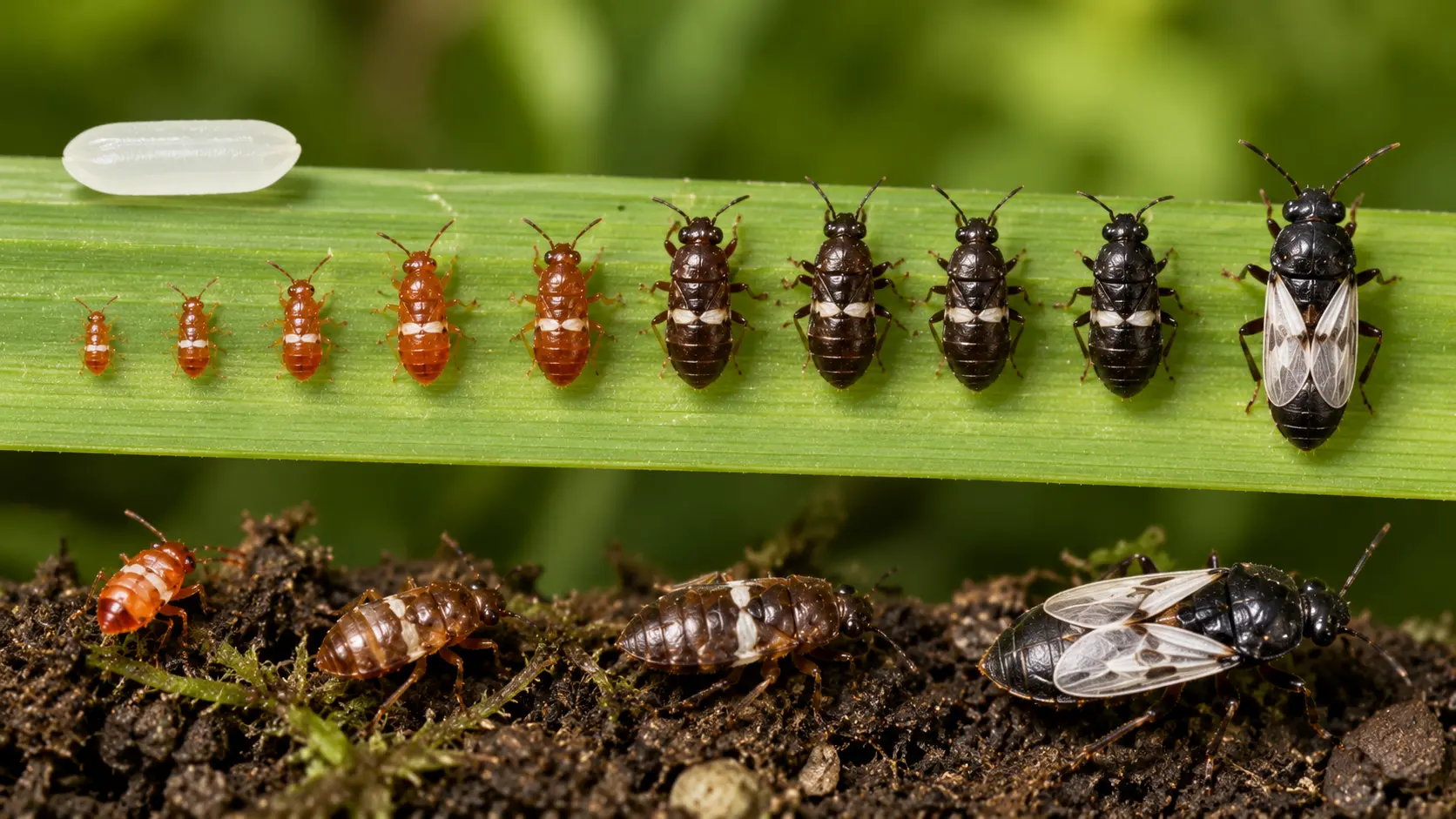
Adult chinch bugs are tiny, black with white wings, roughly rice-grain-sized. They thrive in hot, dry conditions and feed on grass sap, causing yellow patches. Regular watering, mowing, and monitoring help prevent and catch infestations early.
A simple turf tug test confirms their presence, and the University of Florida’s profile on the southern chinch bug confirms adults run about 3/16 inch long with a similar black-and-white wing pattern.
| Life Stage | Color and Size | Key Features |
|---|---|---|
| Adult chinch bugs | Dark brown or black; about 1/5 inch long | White wings lie flat across the back. A dark triangular mark creates an hourglass or X-shaped pattern |
| Young nymphs | Bright reddish-orange; smaller than a pinhead | A pale white band runs across the abdomen. Wings have not developed yet |
| Maturing nymphs | Change from orange to brown, then black | Their bodies darken through each growth stage as full wings gradually develop |
Chinch bugs can pose a significant threat to the health of your lawn, especially during warm weather. By understanding their behavior, identifying the signs of infestation, and recognizing the underlying causes of their presence, you can take proactive steps to protect your outdoor space.
What Causes Chinch Bugs in a Lawn?
Seeing pest damage in your yard does not mean you are a bad gardener. Chinch bug infestations rarely stem from a single oversight; rather, they are usually driven by a combination of environmental factors and lawn conditions coming together at once.
- Hot and Dry Conditions: Warm weather speeds up the chinch bug life cycle, so eggs hatch faster and feeding ramps up right as heat-stressed grass is most vulnerable.
- Thick Thatch: A thatch layer over half an inch thick shelters chinch bugs from predators and harsh weather, right at the base of the grass.
- Overuse of Nitrogen Fertilizer: Heavy nitrogen use pushes soft, lush growth that acts like an easy meal for sap-sucking insects.
- Poor Watering Habits: Light, shallow watering leads to shallow roots, leaving grass dry and far less able to handle insect feeding.
- Stressed or Unhealthy Grass: Compacted soil, dull mower blades, and poor drainage all weaken turf, leaving it with little energy to recover from damage.
Most lawns face more than one of these issues at once, which is exactly why chinch bugs tend to show up fast and hit hard. Fixing even one or two root causes goes a long way toward keeping your lawn resilient.
How to Check a Lawn for Chinch Bugs
Before investing time or money in treatments, confirm that active pests are present. Here are a few simple methods to inspect your lawn.
1. The Hands-and-Knees Inspection
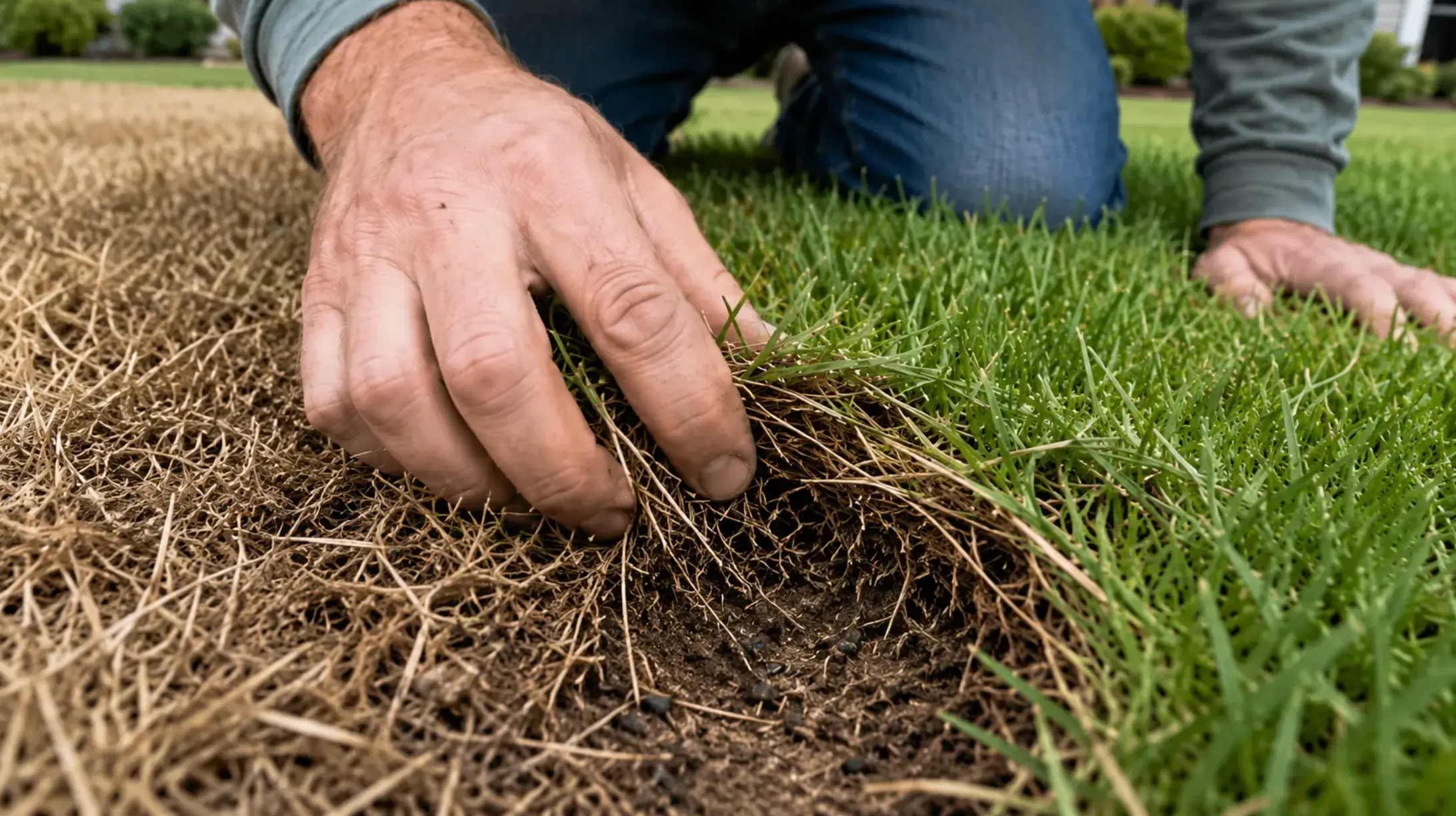
To confirm chinch bugs before treating your lawn, try this quick visual check right where the damage is actively spreading.
- Move to the edge of an expanding brown patch where the dry grass meets healthy, green turf (chinch bugs move outward as grass dies, so they congregate on the green margins).
- Spread the grass blades apart down to the soil surface using your fingers.
- Watch closely for a minute or two. Chinch bugs are fast movers and will scurry through the thatch to hide from the light.
Seeing several bugs scurry through the thatch confirms an active infestation, while an empty check points you back toward watering, mowing, or drainage as the likely cause.
2. The Flotation Test
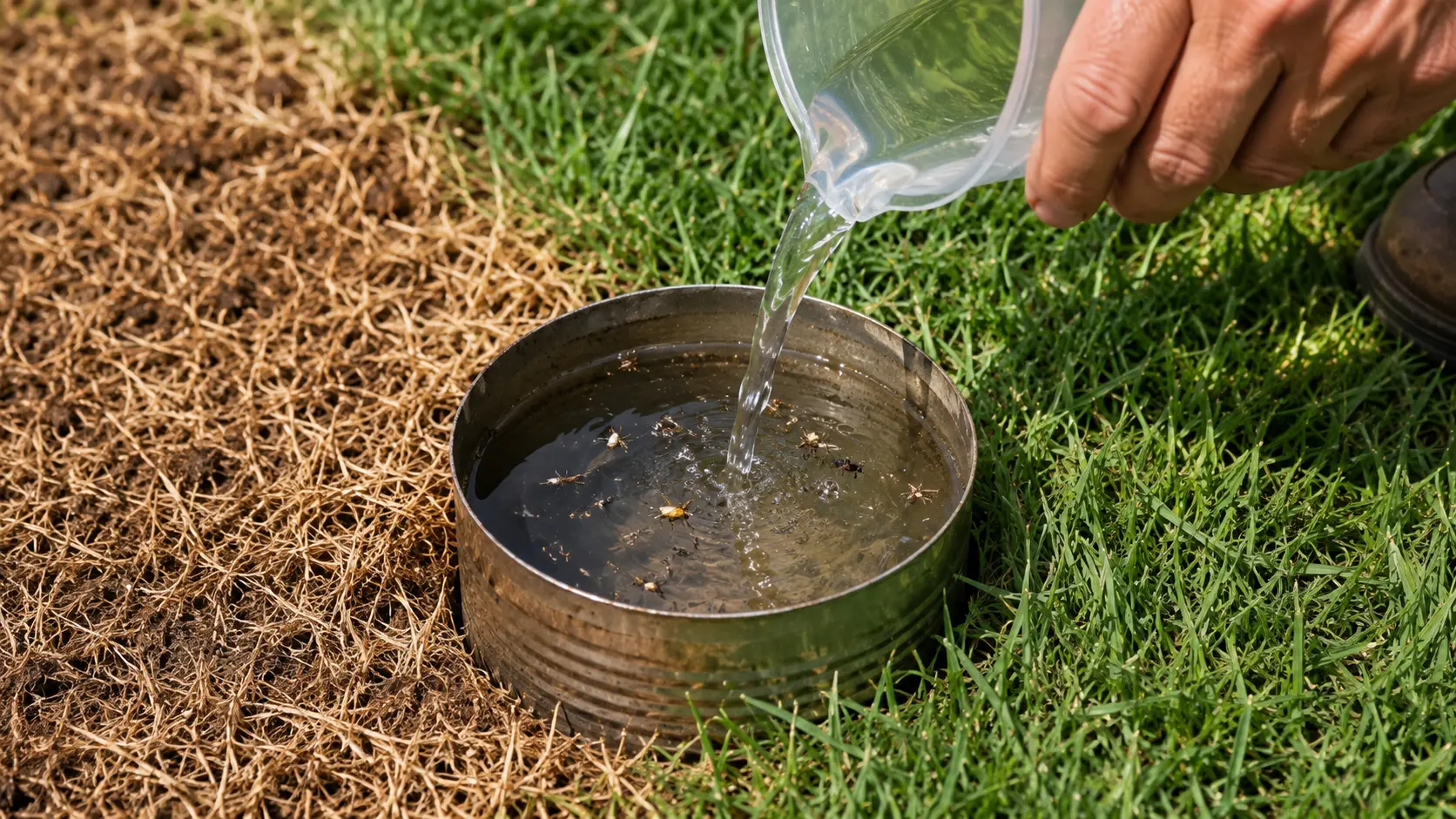
If the ground inspection feels inconclusive, the flotation test offers a foolproof way to bring hidden bugs to light.
- Take a large metal tin or coffee can and cut out both the top and bottom lids.
- Push one open end of the can about 2 inches deep into the soil along the border of a damaged patch, taking care not to crush the turf.
- Fill the can with water, maintaining a steady water level for about 5 to 10 minutes (add more water if it drains quickly into the soil).
- Watch the surface. Any chinch bugs living in the thatch will float up to the top of the water to breathe.
If you float more than 5 to 10 bugs per test spot, your lawn has a high enough population to cause noticeable turf damage, meaning it is time to take action.
3. White Sheet or Cloth Test
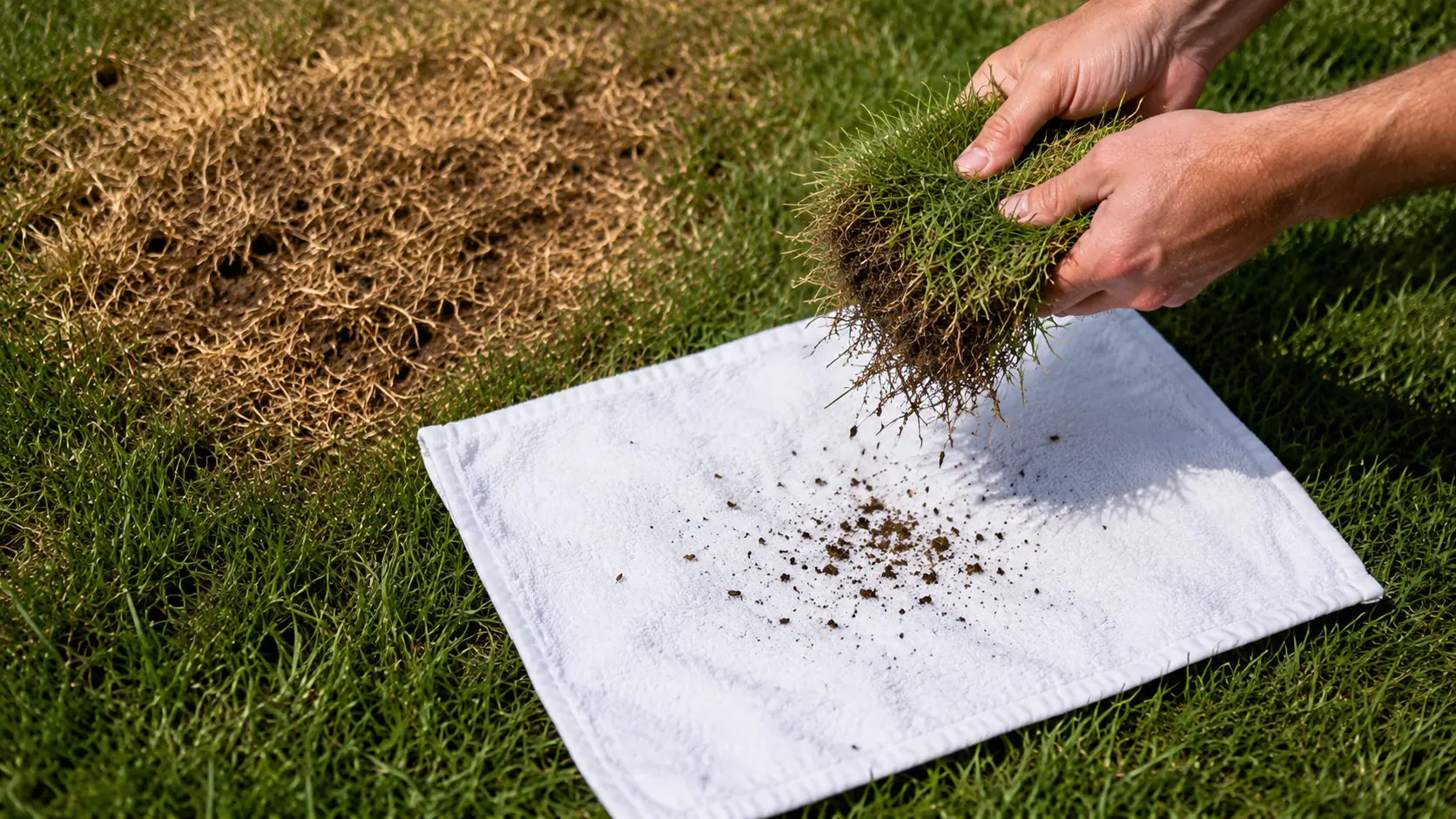
If you suspect that chinch bugs are damaging your lawn, there’s a simple test to confirm their presence. Gather a white cloth, towel, or another light-colored item that will contrast with the grass.
- Position the cloth near the edge of the area where you notice damaged grass.
- Gently shake or disturb the turf above the cloth to encourage any hidden chinch bugs to fall.
- Examine the cloth for any dark spots or moving insects; this indicates the presence of chinch bugs.
By performing this simple test, you can effectively determine if chinch bugs are the culprits damaging your lawn and take the necessary steps to address the issue.
4. Check for Grass Damage Patterns
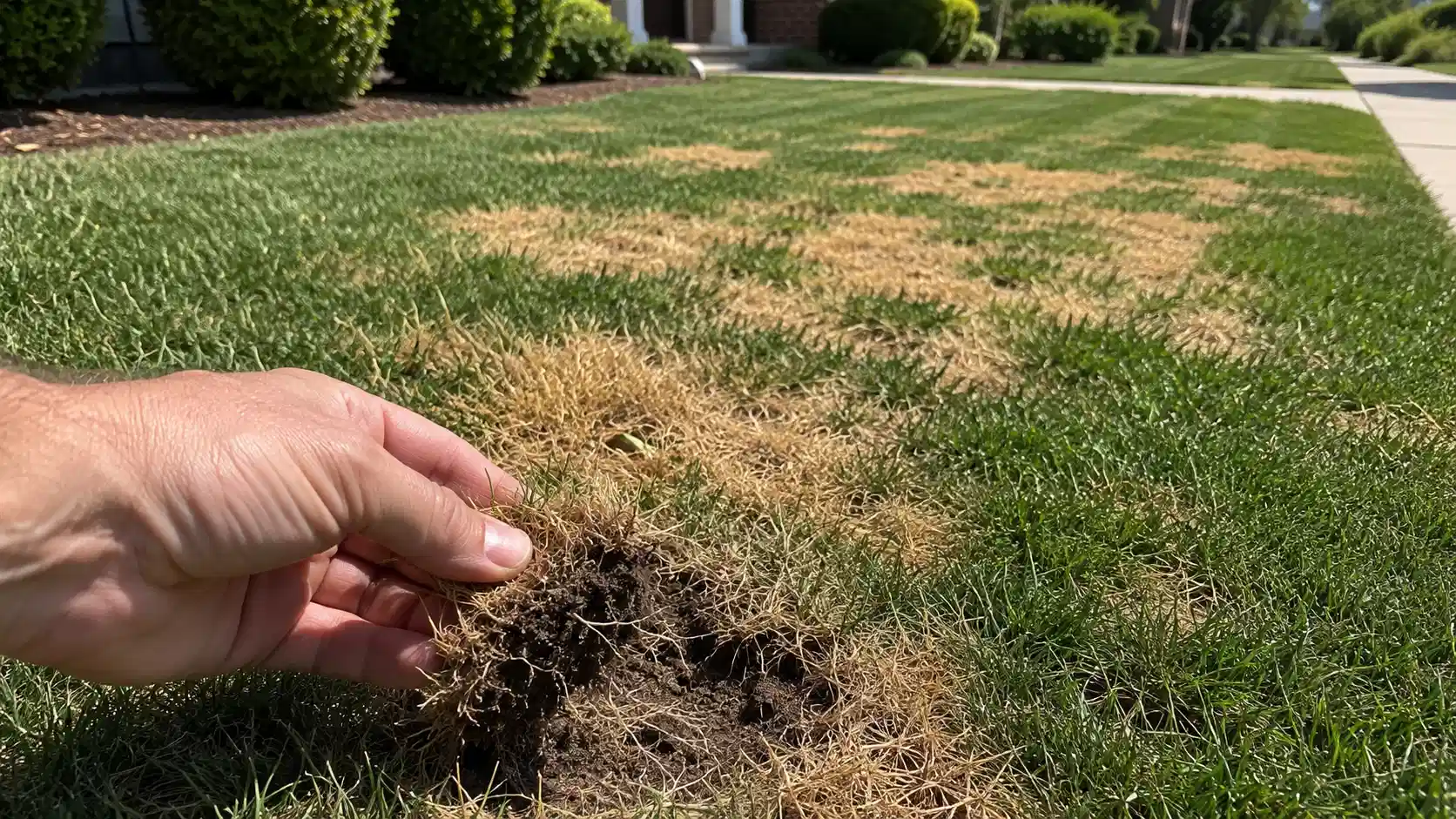
Identifying grass damage can be challenging, but knowing what to look for can help determine if chinch bugs might be the culprits.
- Look for irregular yellow or brown patches. These patches can signal potential chinch bug activity.
- Observe damage spreading outward. Check if the damage is radiating from affected areas.
- Test if the grass pulls away easily. If the grass comes up easily, it’s a sign the roots may have weakened.
- Examine injury concentration. Note if the injury is concentrated in hot, sunny spots, which is common with chinch bug damage.
While these signs can indicate chinch bug activity, it’s essential to verify with an actual insect inspection, as other issues like drought stress or fungal diseases can mimic these symptoms.
Chinch Bug Damage vs. Drought Damage
Telling pest feeding apart from weather stress saves time and prevents misapplying lawn products. Chinch bug damage and drought damage look similar at first glance, but a few clear signs set them apart.
| Feature | Chinch Bug Damage | Drought Damage |
|---|---|---|
| Location | Spreads outward from sunny edges, paths, or hot spots | Spreads evenly across large sections or the whole lawn |
| Grass Color | Yellow-brown patches with a ragged, uneven edge | Uniform gray-green or straw-colored tone |
| Response to Water | Stays brown and dry despite deep watering | Greens up within days of thorough watering |
| Footprint Test | Dead blades break off easily at the base | Blades hold a footprint, then spring back after rain |
| Pest Presence | Visible in a thatch check or float test | No active chinch bugs found during inspection |
| Timing | Worsens fastest during hot, dry midsummer stretches | Tracks closely with rainfall and irrigation gaps |
Dormant grass revives with steady rain or irrigation, while chinch bug damage is dead tissue that needs treatment and time to recover. Confirm the cause before choosing how to respond.
How to Prevent Chinch Bugs
The most effective way to protect your lawn from chinch bugs is to build deep root systems and maintain conditions that discourage pests from settling in.
- Water Deeply but Less Often: Apply about 1 inch of water once or twice a week instead of daily light watering. Deep soakings push roots further down and keep the lawn hydrated without staying soggy on top, following proper lawn watering practices.
- Mow at the Correct Height: Cut grass at the higher end of the recommended range. Taller blades shade the soil, cool the surface, reduce evaporation, and ease stress on the crown. The ideal height depends on grass type, as shown by grass mowing guidelines.
- Control Thatch Buildup: Keep thatch in check with regular maintenance. Core aeration once a year relieves compaction and lets air, water, and microbes reach the root zone.
- Use Fertilizer Carefully: Skip heavy fast-release nitrogen before summer heat hits. Stick with slow-release fertilizer based on a soil test or your grass type’s seasonal needs.
- Improve Soil Health: Aerate compacted areas, fix drainage problems, and top-dress with compost. Strong roots in healthy soil can handle light feeding without visible damage.
- Inspect the Lawn During Warm Weather: Check sunny edges, pavement borders, and past trouble spots every couple of weeks through July and August to catch small populations early.
Repair Damaged Grass: Minor damage often heals on its own once pests are controlled and healthy growth resumes. For larger, dead patches, rake away the dead plant material, top-dress with a light layer of compost, and reseed or lay fresh sod to restore full coverage.
When Should You Call a Lawn-Care Professional?
While many homeowners successfully manage minor chinch bug issues on their own, turning to a lawn-care specialist makes sense in several situations:
- Widespread Damage: If dead patches cover large portions of your yard, professional equipment and targeted treatments can stem the damage quickly.
- Recurring Infestations: If chinch bugs return summer after summer despite correct watering and mowing, an expert can evaluate soil conditions and underlying turf health.
- Uncertain Identification: If you are unsure whether your lawn is suffering from chinch bugs, fungal disease, or soil grubs, a lawn professional can accurately diagnose the issue, saving you time and preventing the unnecessary application of lawn chemicals.
Bringing in a professional isn’t a last resort; it’s often the fastest path back to a healthy lawn. A short visit now can save far more time, money, and turf than waiting things out alone.
Frequently Asked Questions
Can chinch bugs damage every type of grass?
While chinch bugs prefer warm-season grasses like St. Augustinegrass and Zoysiagrass, species like the hairy chinch bug frequently target cool-season turf such as Fine Fescue, Perennial Ryegrass, and Kentucky Bluegrass. Selecting endophyte-enhanced grass seed blends can help cool-season lawns naturally resist feeding.
Do chinch bugs bite people or pets?
No. Chinch bugs pose no physical danger to humans or domestic animals. They do not bite, sting, transmit diseases, or enter homes to feed on household items; their mouthparts are designed strictly for piercing plant tissue to feed on plant juices.
Can chinch bugs survive during winter?
Yes. Adult chinch bugs overwinter by tucking themselves into protected areas such as thick thatch, brush piles, tall weeds, or along overgrown lawn borders. When spring temperatures consistently top 50–60°F (10–15°C), they emerge from dormancy to mate and lay eggs.
Can new sod already contain chinch bugs?
While reputable sod farms maintain strict pest management standards, making it uncommon for new sod to arrive infested, it can happen. More frequently, chinch bugs migrate onto newly laid sod from neighboring lawns or nearby weeds, taking advantage of the transplant stress and frequent early watering schedules. Always inspect new sod rolls prior to installation.
Summing up
Chinch bug problems can be concerning when brown patches appear in your lawn, but they can often be managed effectively.
Early detection and confirming the pests with a flotation test are crucial steps. For light damage, deep watering, thatch removal, and encouraging beneficial insects can suffice.
In cases of heavier infestations, a targeted treatment, along with improved watering and mowing practices, will help prevent recurrence.
If the damage is extensive or persists yearly, consulting a lawn-care professional can identify underlying issues and restore your lawn’s health. Taking proactive measures puts you back in control of your lawn care.
Drop a comment below and let me know if your lawn is infested by these infamous bugs.