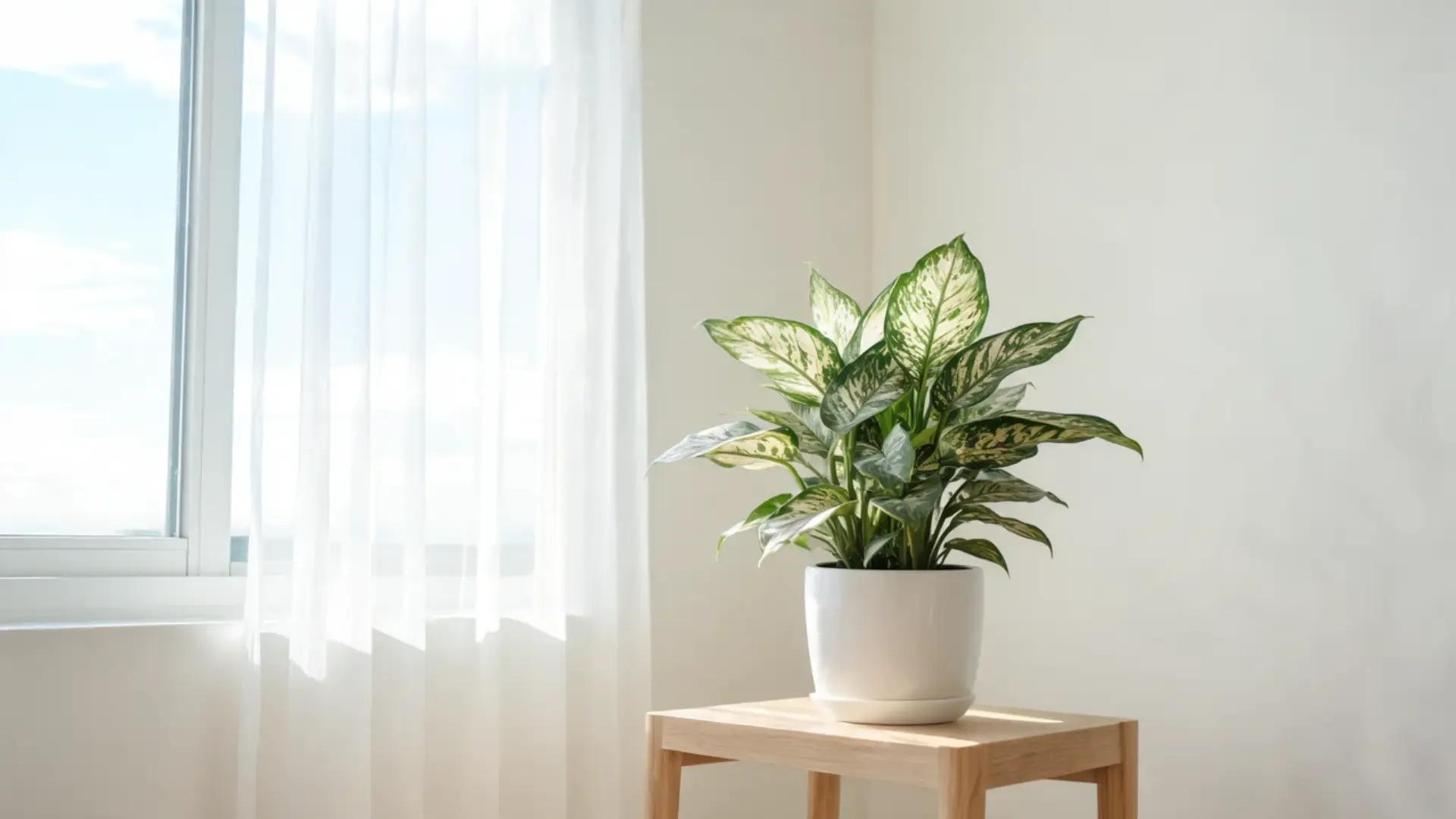
Aglaonema, commonly known as Chinese evergreen, is one of the most forgiving houseplants you can bring indoors. With broad, patterned leaves in shades of green, silver, red, or pink depending on the variety, it adds lasting color to any room without demanding constant attention.
Part of its popularity comes from how well it adapts to less-than-ideal indoor conditions.
It tolerates lower-light corners of a home where many other plants struggle to survive. That said, brighter indirect light usually helps the more colorful varieties hold onto their patterns and stay vibrant over time.
Below, I’ll break aglaonema care down into simple, step-by-step instructions covering light, watering, soil, humidity, pruning, and general maintenance, so you can keep your Chinese evergreen thriving indoors, whether you’re a first-time plant owner or already have a few in your collection.
Understanding Chinese Evergreen Care Instructions
Aglaonema, also called Chinese evergreen, is a popular indoor plant because it adjusts well to many home environments while keeping its attractive foliage. However, healthy growth still depends on understanding its basic needs.
The plant’s light requirements, watering habits, soil type, and indoor conditions all affect how well it grows.
Green varieties usually handle lower light, while colorful types often need brighter indirect light to maintain their patterns.
Proper drainage is especially important because Aglaonema prefers moisture without sitting in wet soil, a balance the University of Maryland Extension addresses directly, noting that overwatering causes root rot more often than any other single houseplant mistake.
Before focusing on individual care steps, it helps to understand how these factors work together. With the right balance of water, light, and temperature, Chinese evergreen can stay healthy and maintain its patterned leaves indoors.
How to Do Aglaonema Care Indoors Step by Step
Follow these eight simple steps to give your Aglaonema the right light, water, soil, humidity, and regular maintenance for healthy indoor growth.
Tools and Materials Needed
- Watering can with a narrow spout
- Pot with drainage holes
- Loose indoor potting mix
- Perlite for added drainage
- Balanced liquid houseplant fertilizer
- Clean pruning scissors
- Soft cloth for cleaning leaves
- Slightly larger pot for repotting
- Small humidifier if your home is very dry
Step 1: Choose the Right Indoor Location
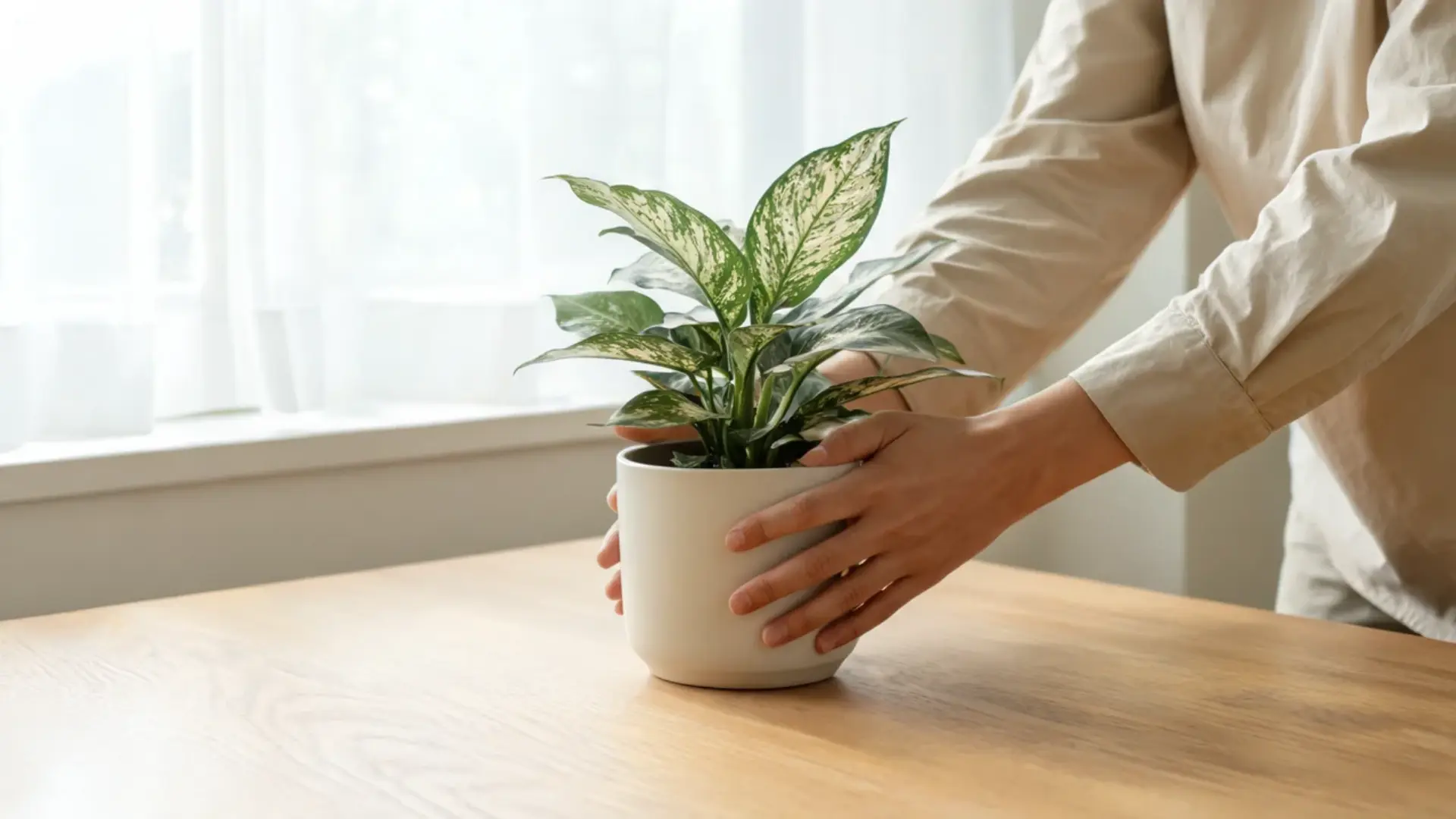
Place your Aglaonema where it receives low to bright indirect light. Green varieties handle dimmer rooms, while pink, red, and silver types need brighter conditions to retain their color.
An east-facing or north-facing window is often suitable. Hang a sheer curtain near intense windows to soften the light. Keep direct sunlight away from the leaves because it can scorch them and cause lasting leaf damage.
Step 2: Check the Soil Before Watering
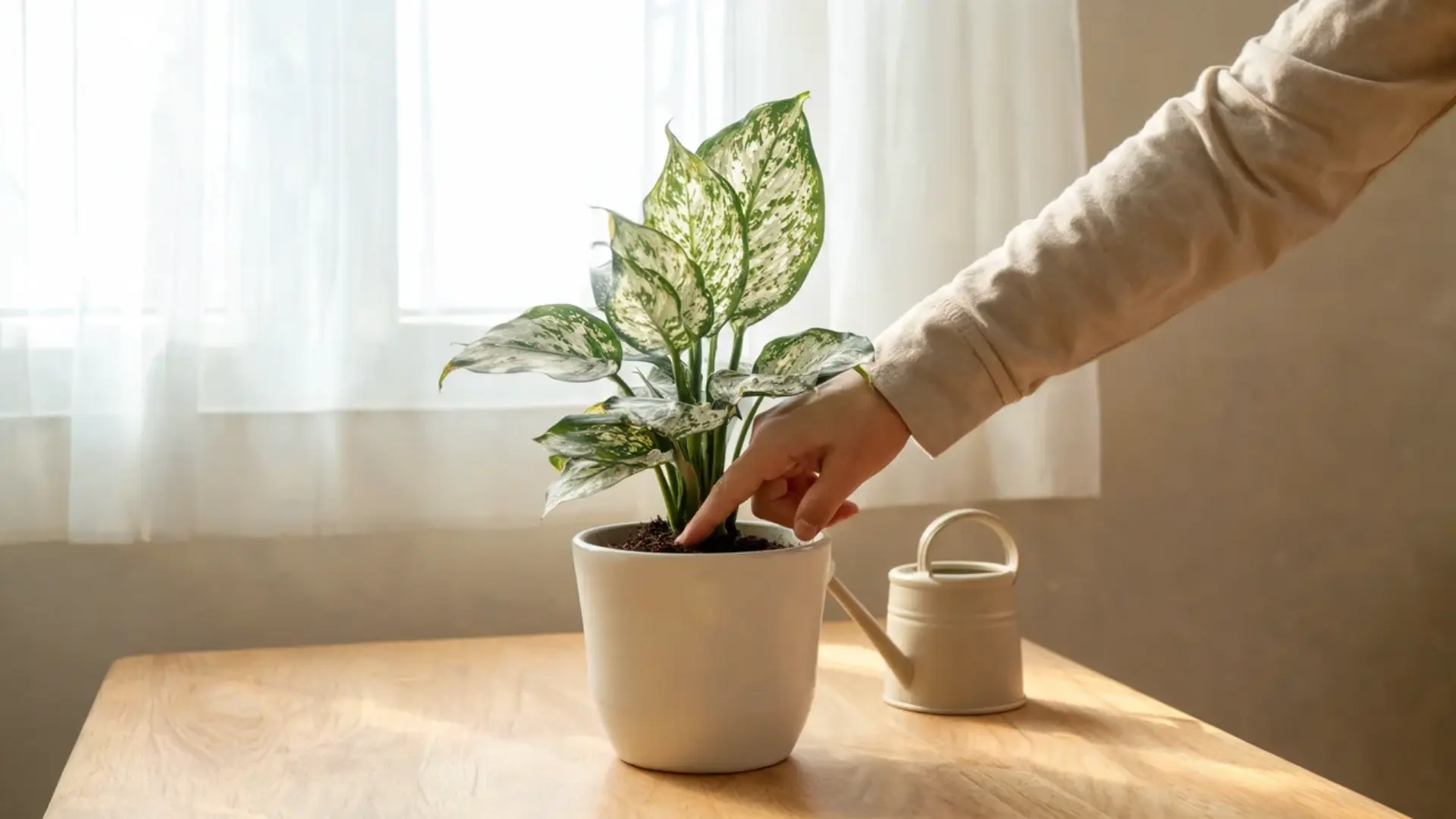
Insert your finger one to two inches into the soil before adding water. Water the plant only when this top layer feels dry. Pour room-temperature water across the soil until excess drains from the bottom, then empty the saucer.
Reading the soil correctly matters more than any fixed schedule, and this same principle is what shapes water for houseplants for growth across nearly every common species.
Check the soil moisture more often during warmer months. Reduce watering frequency in winter because slower growth means the roots use less water and remain wet longer.
Step 3: Use Loose Soil and a Draining Pot
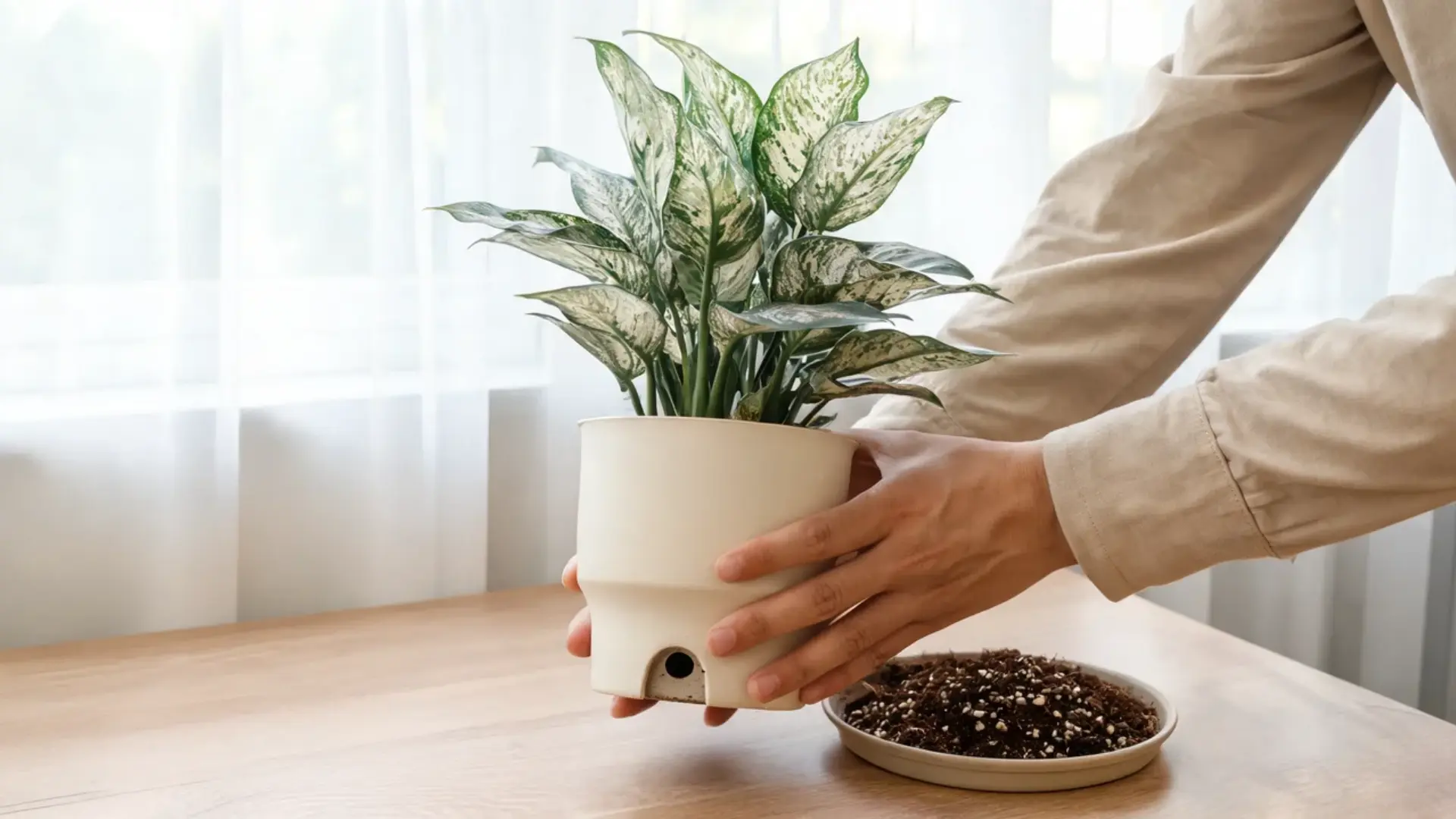
Plant Aglaonema in a loose indoor mix that retains some moisture but allows water to escape. A peat-based or soilless blend mixed with perlite is a good choice. Select a draining pot with holes at the bottom to protect the roots.
Avoid dense garden soil and containers much larger than the root ball because both increase the chance of wet soil and damaging root rot indoors.
Step 4: Maintain Warmth and Moderate Humidity
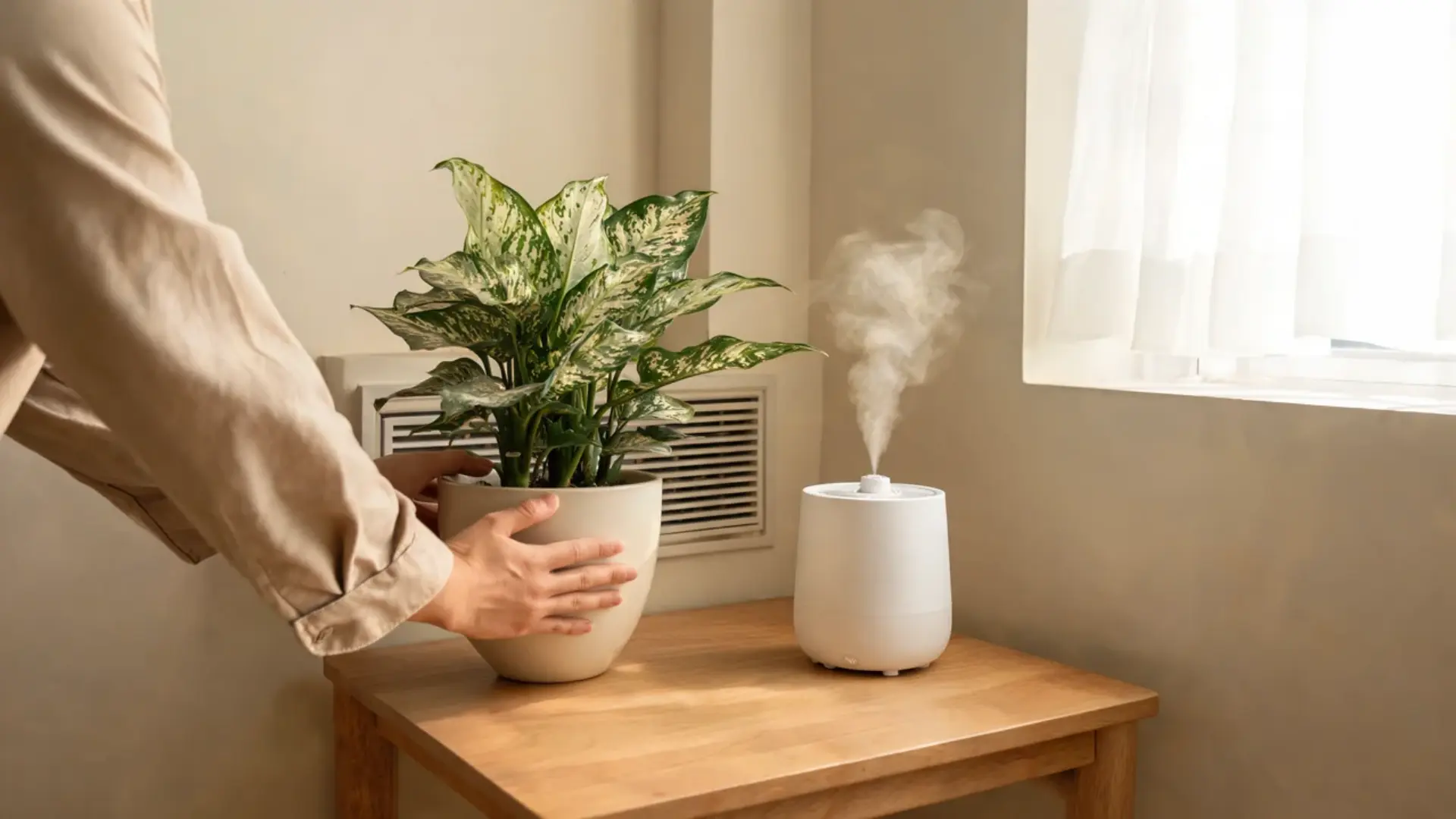
Keep your Aglaonema in a warm room with temperatures between 68 and 80°F. Normal household humidity suits most plants, though a humidifier may help when indoor air remains very dry.
Protect the plant from cold drafts near doors and windows. Place it away from fireplaces, heaters, radiators, and air-conditioning vents because sudden temperature shifts can stress the foliage and reduce healthy indoor growth over time.
Step 5: Fertilize During Active Growth
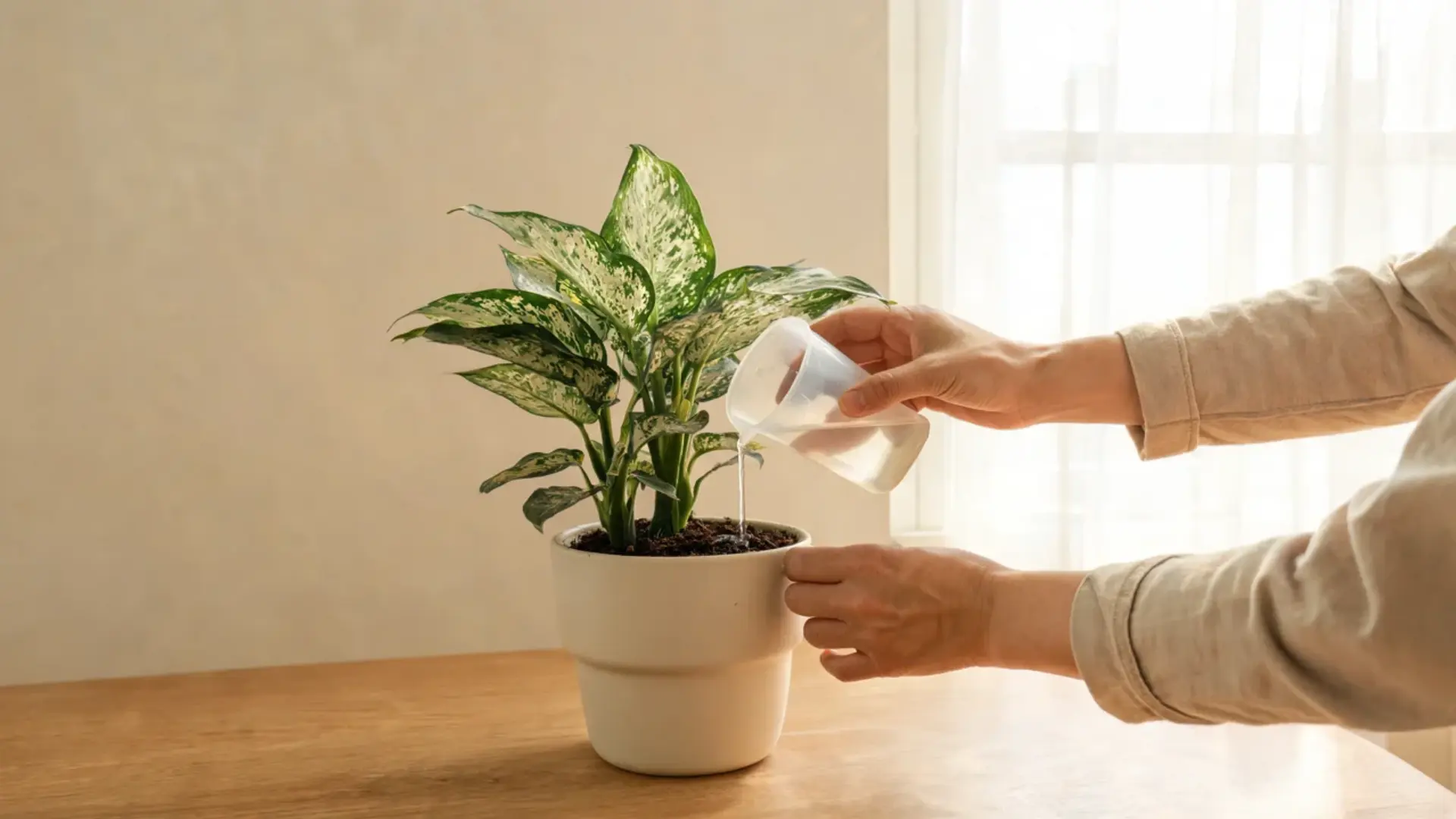
Feed your Aglaonema once each month during spring and summer, when it produces leaves and roots. Use a balanced liquid fertilizer diluted to half the strength listed on the label.
Apply it only to lightly moist soil to protect the roots. Reduce or stop feeding during fall and winter. Excess fertilizer can leave mineral salts behind, leading to brown edges, weak growth, and root damage.
Step 6: Prune and Clean the Leaves
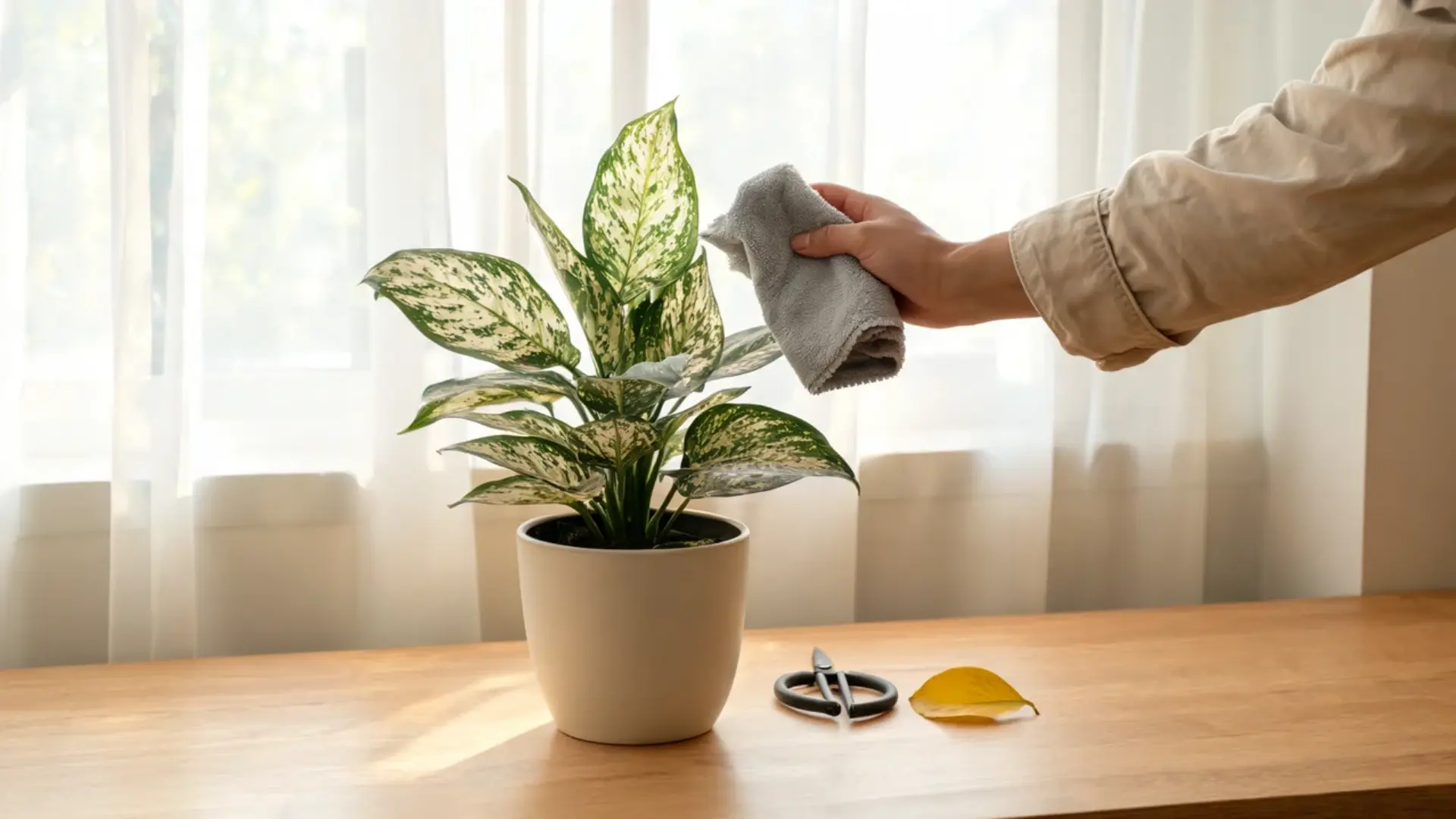
Trim yellow, brown, or damaged leaves near the base using clean, sharp scissors. Aglaonema rarely needs heavy pruning, so remove only unhealthy growth or leaves affecting its shape.
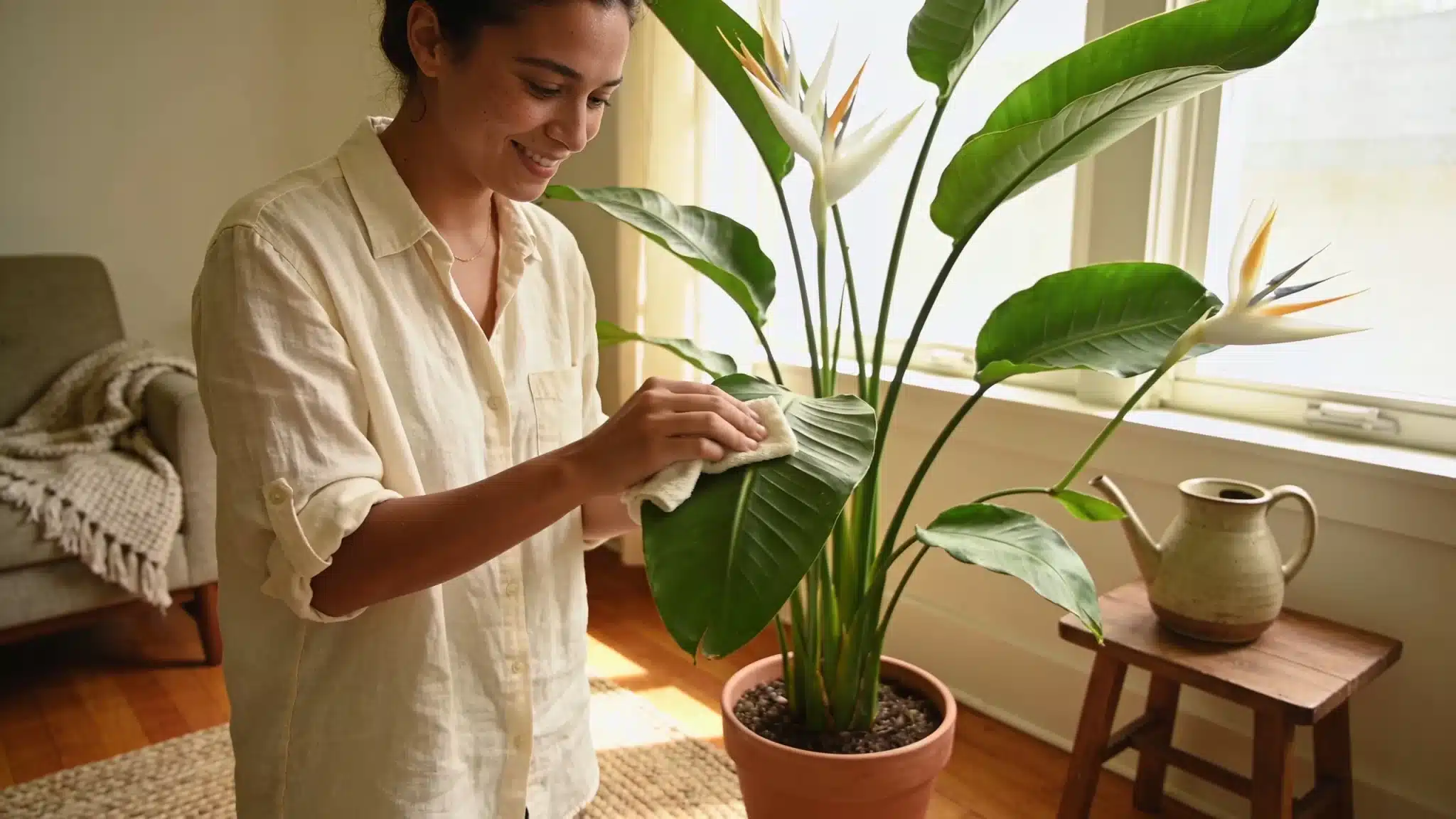
Wipe each broad leaf with a soft, damp cloth to clear away surface dust and improve light exposure. While cleaning, inspect the undersides and leaf joints for webbing, spots, or insects that may signal common pests indoors.
Step 7: Repot When the Roots Become Crowded
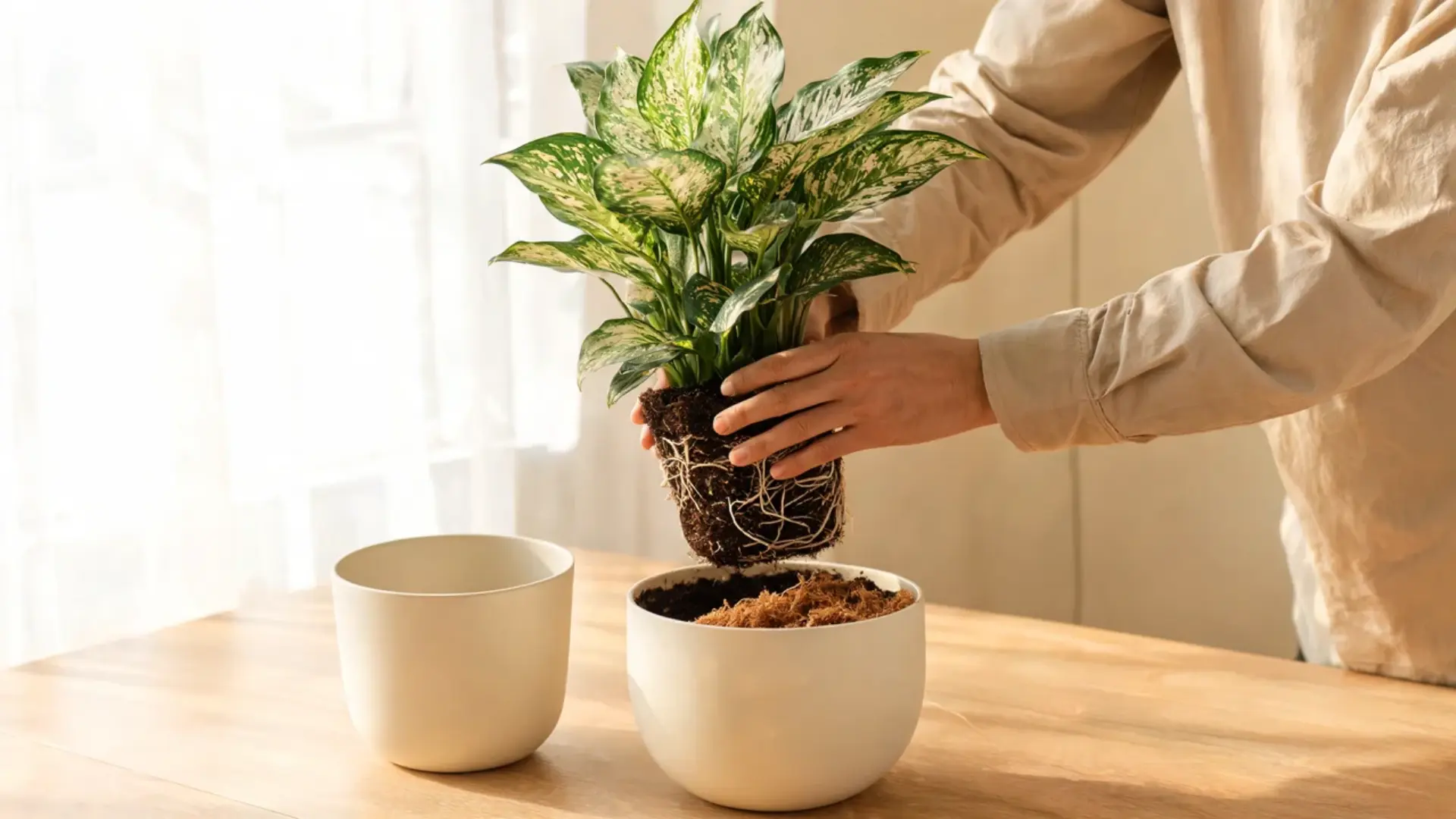
Move your Aglaonema into a pot when roots emerge through the drainage holes, circle tightly inside the container, or the soil dries faster than usual. Choose a pot only one size larger and add loose soil around the root ball.
The best repotting time is spring or early summer, when active growth helps the plant settle in and recover from minor root stress more quickly.
Step 8: Follow a Simple Maintenance Routine
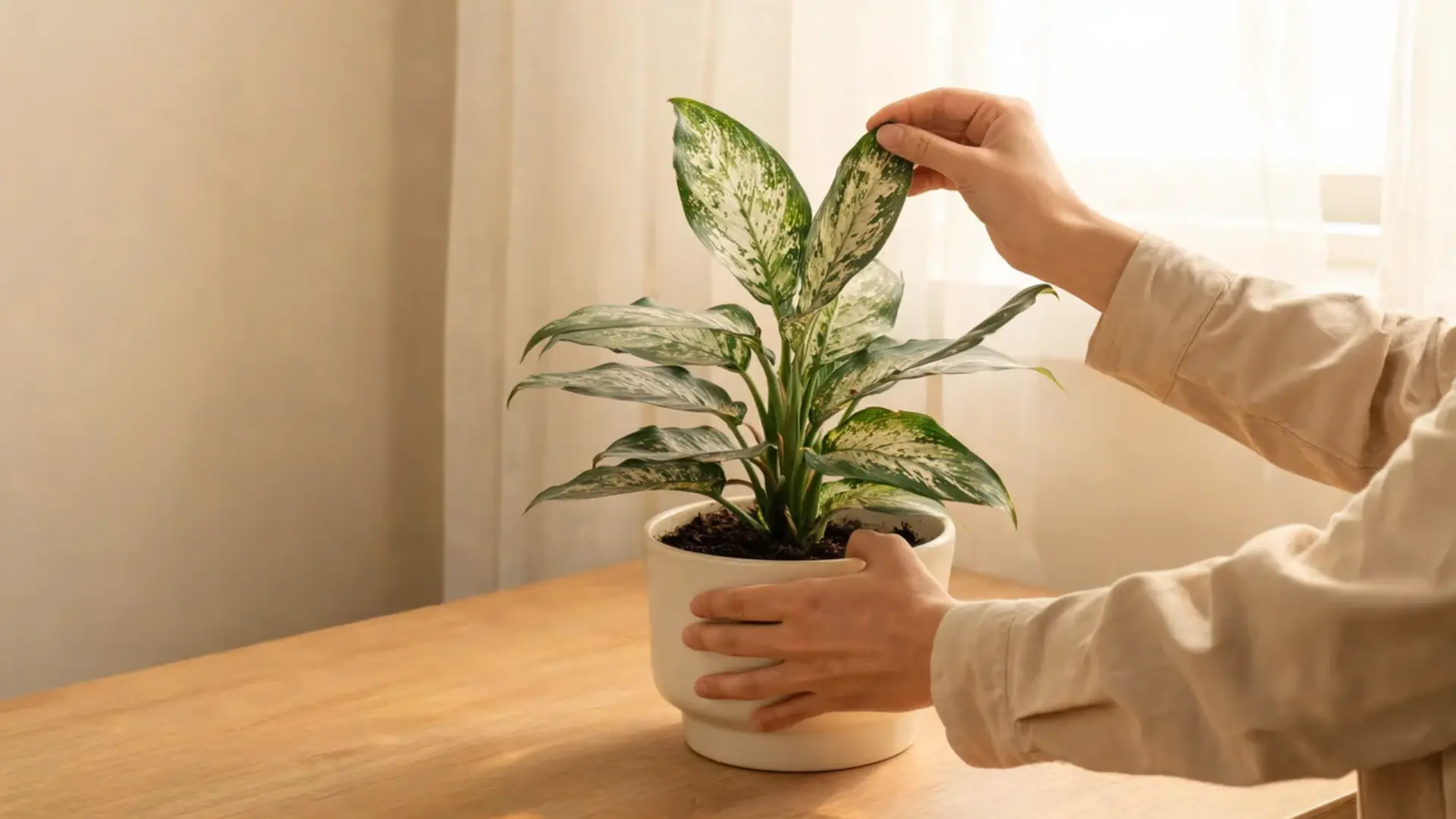
Check your Aglaonema’s soil and leaves once a week. Rotate the pot every few weeks so the sides receive light and grow evenly. Empty standing water, wipe dusty foliage, and inspect stems and leaves for pests.
Change your watering routine as temperatures and growth rates shift through the year. If the plant shows trouble, make one care adjustment at a time so you can identify what helps.
Tips to Keep Aglaonema Leaves Colorful and Healthy
Aglaonema is mainly grown for its patterned foliage, so leaf care deserves a short section of its own.
- Keep colorful varieties in medium to bright indirect light
- Rotate the pot occasionally for even growth on all sides
- Wipe dust from leaves with a damp cloth so they can breathe and catch light properly
- Avoid direct sunlight, which can scorch or fade the foliage
- Use fertilizer lightly, since too much can cause brown edges
- Remove yellow or damaged leaves promptly to keep the plant looking its best
Colorful varieties usually need brighter indirect light than solid green types to hold onto their patterning, while excess fertilizer is one of the more common reasons for burnt leaf edges.
Common Aglaonema Problems and Easy Solutions
Aglaonema problems usually come from incorrect watering, light, temperature, soil, or feeding. Use this table to identify visible signs, correct care mistakes, and keep pets safe around the plant indoors.
| Problem or Mistake | Cause and Fix |
|---|---|
| Yellow or drooping leaves | Check for dry soil, overwatering, poor drainage, or cold drafts. Let the topsoil dry and empty any standing water. |
| Brown edges or slow growth | Reduce fertilizer and check humidity, light, warmth, root space, and pot size. |
| Faded or scorched leaves | Provide brighter indirect light while keeping the plant away from direct sunlight. |
| Wet soil or oversized pot | Use loose soil, drainage holes, and a container only one size larger when repotting. |
| Poor placement | Keep the plant away from heaters, air conditioners, cold windows, and open doors. |
| Several care changes | Change one condition at a time instead of altering light, water, soil, and feeding together. |
| Pet and skin safety | Keep Aglaonema away from cats, dogs, and children. Wash your hands if the sap touches your skin. |
Check one condition at a time before changing your routine. Allow several days for the plant to respond, since damaged leaves may not recover.
Remove affected foliage, watch new growth, and keep Aglaonema beyond the reach of children and pets, since the ASPCA lists Aglaonema as toxic to cats, dogs, and horses if chewed.
Best Aglaonema Varieties for Indoor Spaces
Aglaonemas come in a range of colors and sizes, so picking the right variety depends mostly on your light conditions and the look you want.
- Silver Bay: Silver and green foliage that handles medium or lower light well
- Maria: A compact variety that fits neatly on desks and in small rooms
- Siam Aurora: Red-edged leaves that need brighter indirect light to keep their color
- Silver Queen: Silver-patterned foliage with strong tolerance for low light
- Wishes: Pink and green leaves that add color to any indoor display
Whichever variety you choose, the growing conditions stay largely the same, so pick based on appearance and available light rather than worrying about different care routines, much like choosing among any reliable indoor house plants suited to a beginner’s collection.
Frequently Asked Questions
Can Aglaonema grow in low light?
Yes, especially solid green varieties, which handle low light better than most houseplants. Growth will be slower in these conditions, and colorful types may lose some of their vibrancy without brighter indirect light.
How often should I water a Chinese evergreen?
Water when the top 1 to 2 inches of soil feel dry, rather than sticking to a set schedule. The right timing will shift depending on light, temperature, season, and pot size.
Should I mist my Aglaonema?
Misting isn’t essential. Average room humidity is usually enough for healthy growth, though a humidifier can help if your home tends to stay consistently dry.
Why are my Aglaonema leaves turning yellow?
Yellow leaves are commonly linked to overwatering, poor drainage, cold stress, or simply the natural aging of older, lower leaves.
When should I repot Aglaonema?
Repot when the roots fill the container, start growing through the drainage holes, or when the soil begins drying out unusually fast between waterings.
Final Takeway
Aglaonema care comes down to a few consistent basics: indirect light, careful watering, well-draining soil, stable warmth, and simple, occasional maintenance. Get these right, and the plant will reward you with steady growth and healthy foliage for years.
Before changing anything in your routine, take a moment to check the soil and look closely at the leaves. They usually show early signs of what the plant needs, whether that’s more light, less water, or a change in placement.
Chinese evergreen is adaptable, but it performs best when its roots aren’t sitting in constant moisture and its leaves are shielded from direct sun. In the end, consistency matters far more than a complicated care schedule. Simple, steady attention is really all this plant asks for.
Drop a comment below and let me know if your Aglaonema became colorful and healthy.