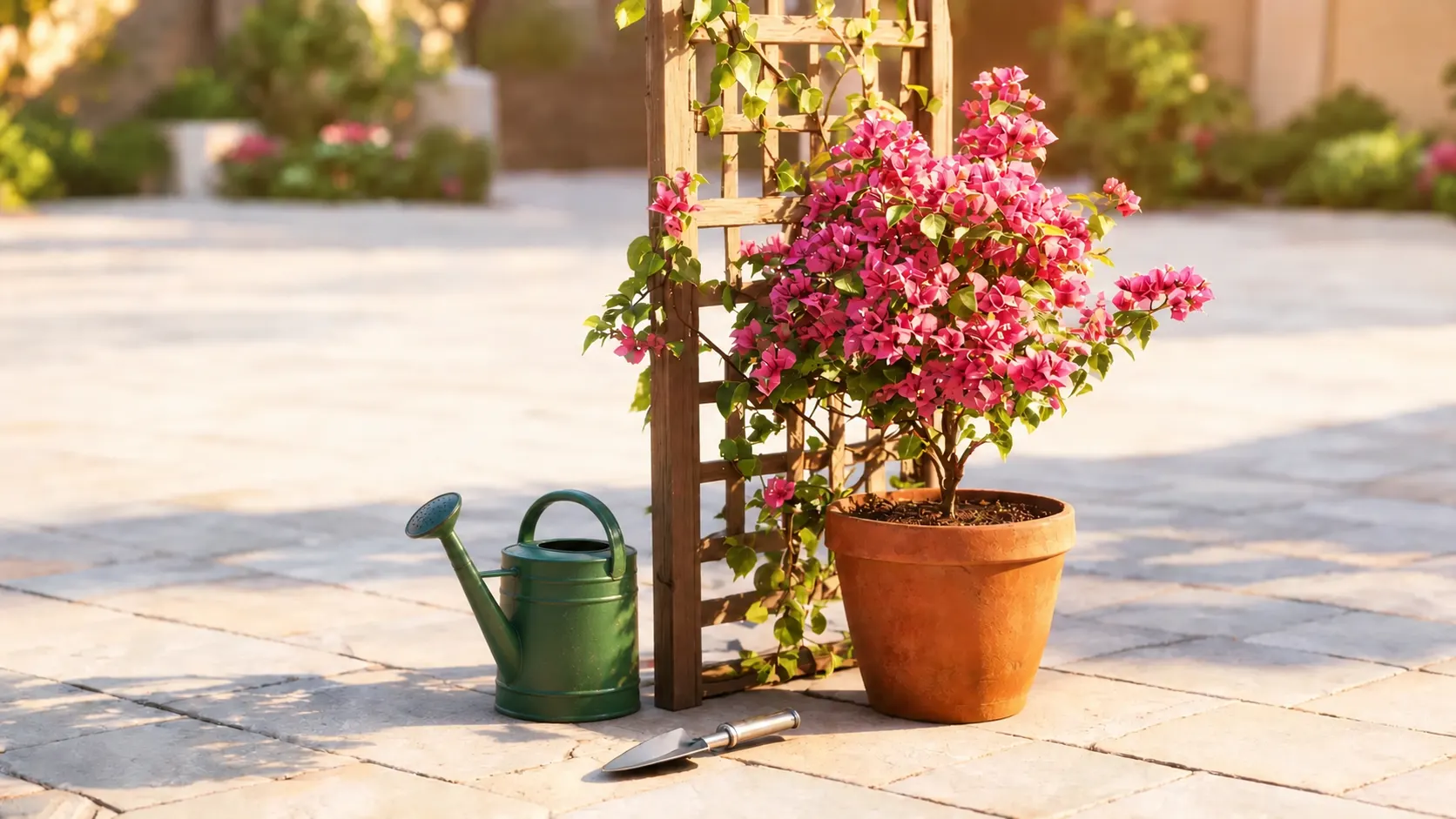
My neighbor’s bougainvillea spills over her fence in a wall of magenta every spring, and I still stop to admire it on my morning walk on my way to work.
When I planted my first bougainvillea plant, I expected constant care, but it proved to be one of the most forgiving plants I have grown in my own garden.
Its bold, colorful display is what makes bougainvillea so instantly recognizable in gardens everywhere, trained along a fence or kept compact in a pot on the patio. Here is what worked for me, along with expert-backed tips to help you grow one of your own.
Bougainvillea Plant: Quick Facts
Bougainvillea is a tropical, woody flowering shrub or vine native to South America, prized for the colorful bracts, modified leaves that surround its tiny true flowers. Dwarf types suit containers, while vigorous climbing types need a fence or trellis.
|
Feature |
Details |
|---|---|
|
Plant family |
Nyctaginaceae |
|
Genus |
Bougainvillea |
|
Common species |
Bougainvillea glabra, B. spectabilis, and cultivated hybrids |
|
Plant classification |
Flowering woody perennial |
|
Mature size |
1 to 2 feet (dwarf/potted) up to 15 to 40 feet (climbing types) |
|
Growth rate |
Fast in warm, sunny conditions; slower in containers or cooler climates |
|
Hardiness |
Generally hardy in USDA zones 9b to 11 outdoors, though frost protection may still be needed depending on location and cultivar; grown as an annual or houseplant elsewhere |
|
Blooming season |
Spring through fall; may bloom for much of the year in frost-free climates |
USDA (U.S. Department of Agriculture) Plant Hardiness Zones indicate which regions stay warm enough for a plant to survive winter outdoors. Its sharp thorns also call for caution around children and pets.
Ideal Growing Conditions for Bougainvillea
Growing a healthy bougainvillea starts with the right environment before it goes into the soil. This plant prefers dry conditions and does poorly in consistently wet soil, unlike many typical flowering shrubs.
Sunlight, temperature, and soil quality work together to help it establish quickly and bloom reliably once planted.
1. Sunlight and Temperature
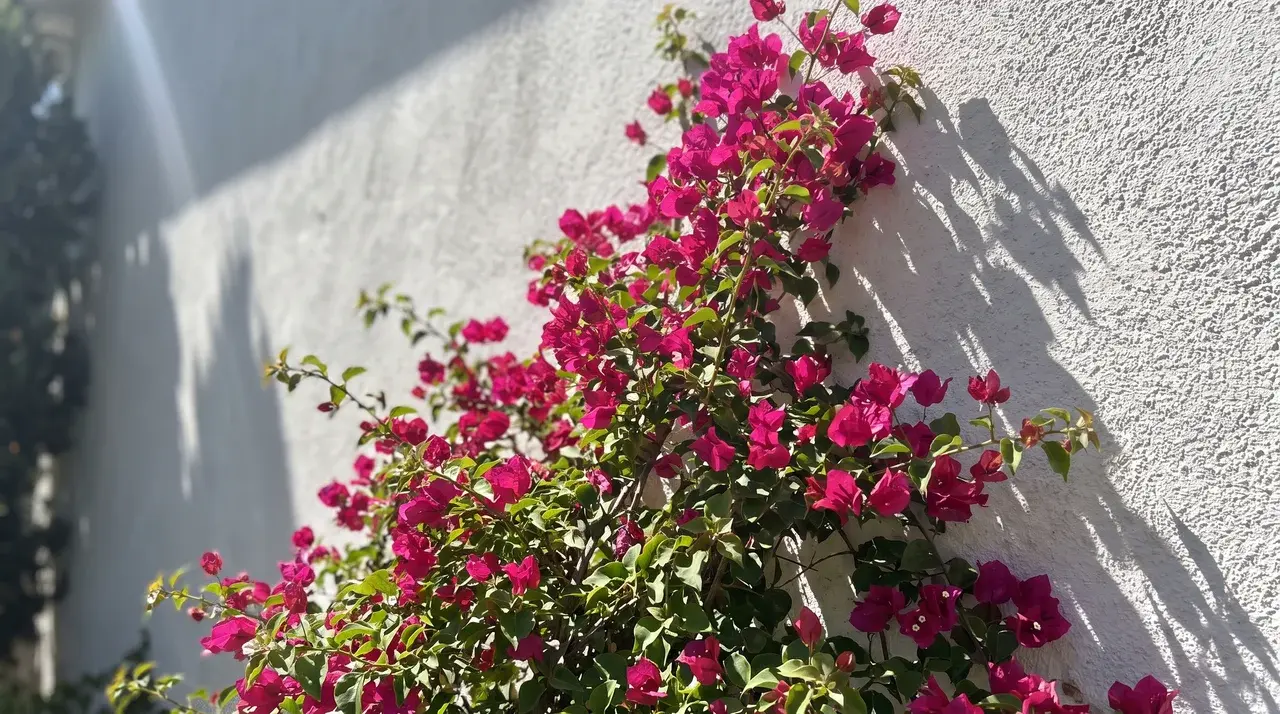
Sunlight is the single biggest factor behind colorful blooms, since a plant without enough direct light grows plenty of leaves but very few bracts.
The University of Florida IFAS Extension notes that bougainvillea often flowers best with full sun and limited excess water, rather than frequent fussing. Provide at least six hours of direct sunlight daily, and choose a warm spot shielded from frost and strong wind.
2. Soil and Drainage
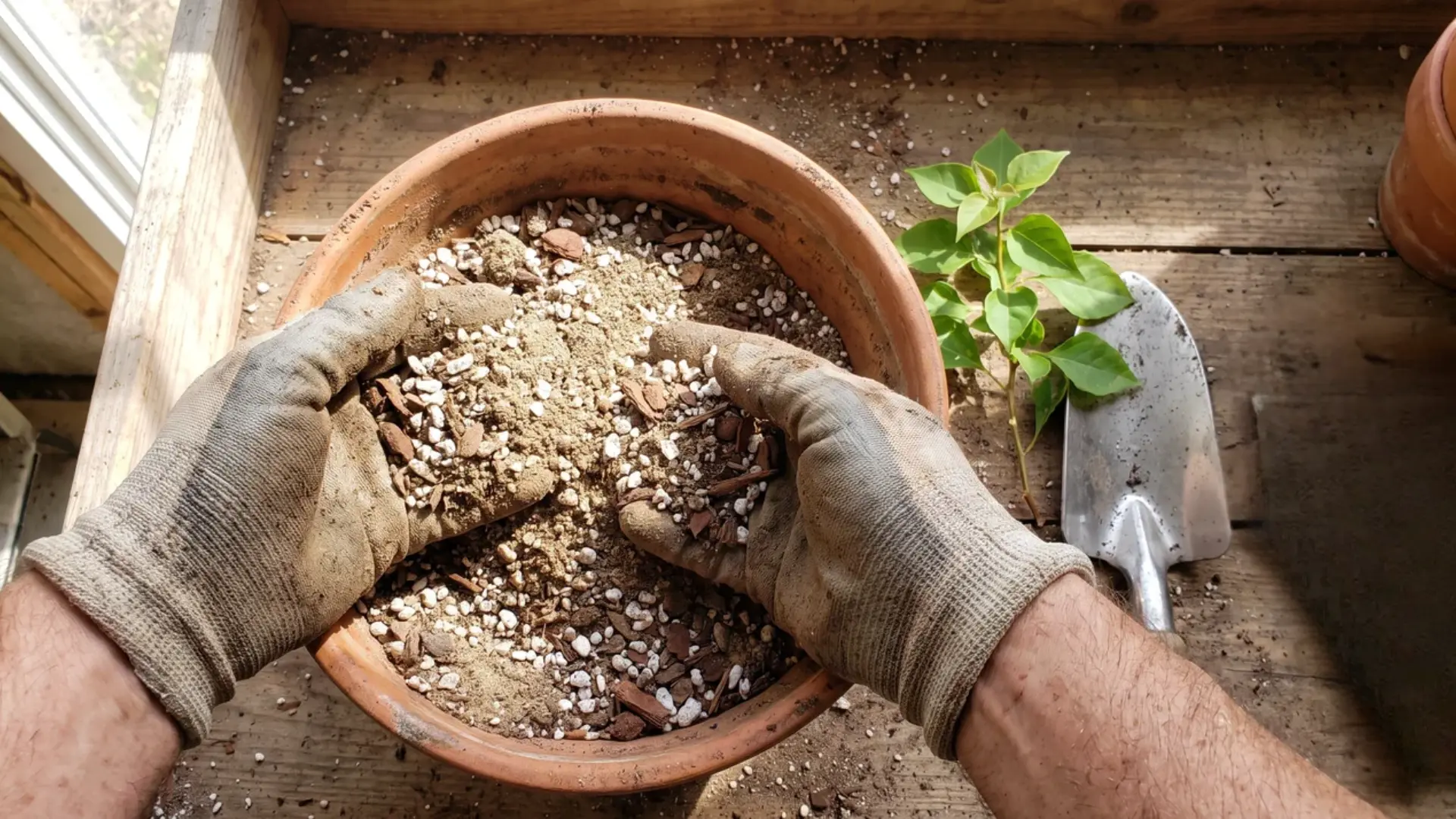
Soil drainage makes or breaks a bougainvillea, since its roots are sensitive to excess moisture. Use loose, well-draining soil with a slightly acidic pH between 5.5 and 6.5, similar to the fast-draining mix recommended for aloe vera, and avoid low spots where water collects around the roots.
The right soil composition keeps roots healthy and supports steady growth season after season.
3. Watering

Consistent moisture management is important during establishment, but mature plants prefer drier conditions. Water when the top 1-2 inches of soil feels dry, and let excess water drain away.
Avoid frequent shallow watering, as overly wet conditions can reduce flowering and weaken the plant over time.
4. Fertilizing
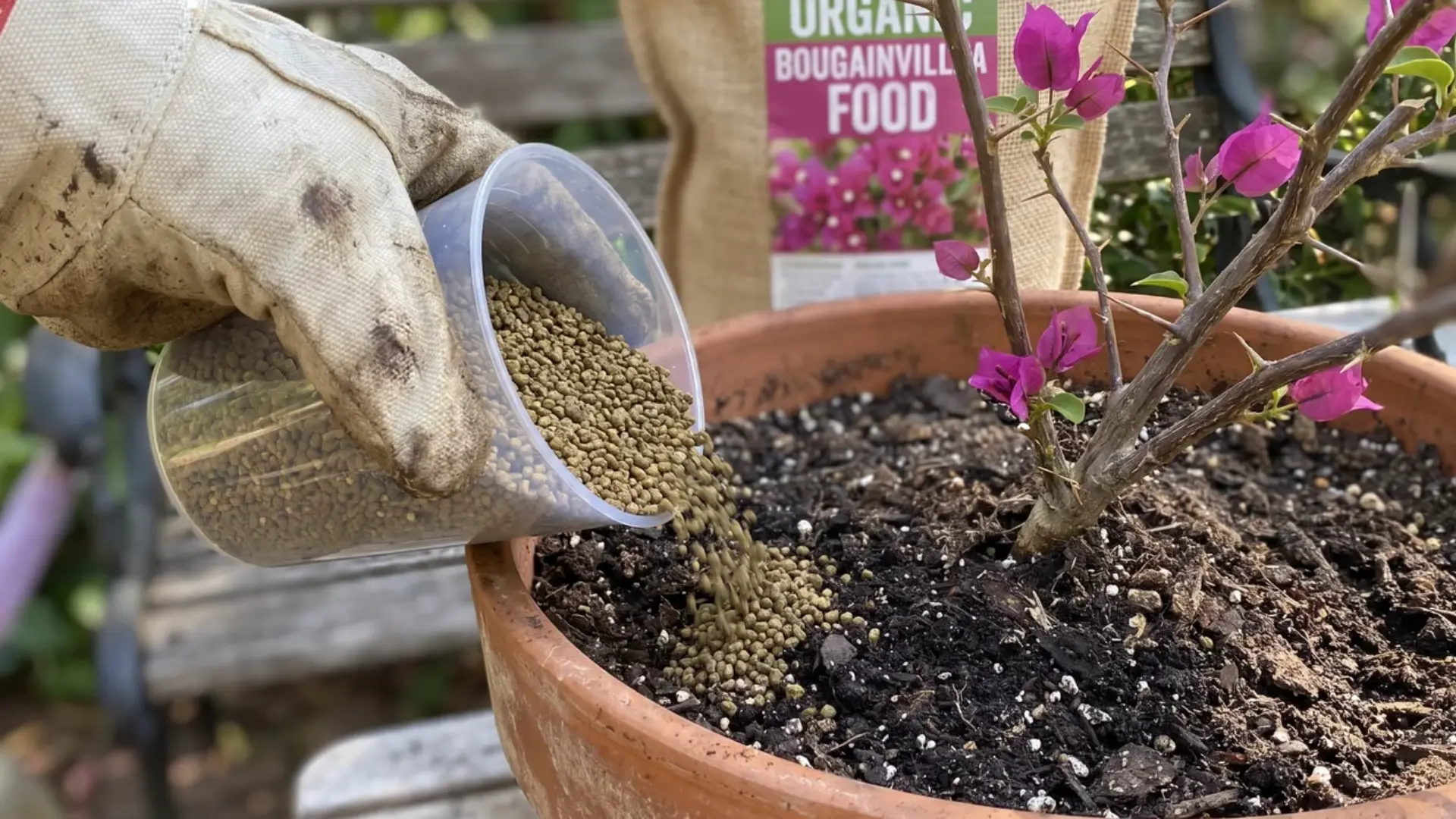
Balanced nutrition supports healthy growth and flowering without encouraging excessive foliage. Use a fertilizer with lower nitrogen levels and apply during the growing season.
Too much nitrogen can promote leaves instead of blooms, while appropriate feeding helps maintain strong stems and colorful bracts. Many gardeners reach for natural fertilizers here, since they release nutrients gradually and build healthier soil over time.
5. Training and Support
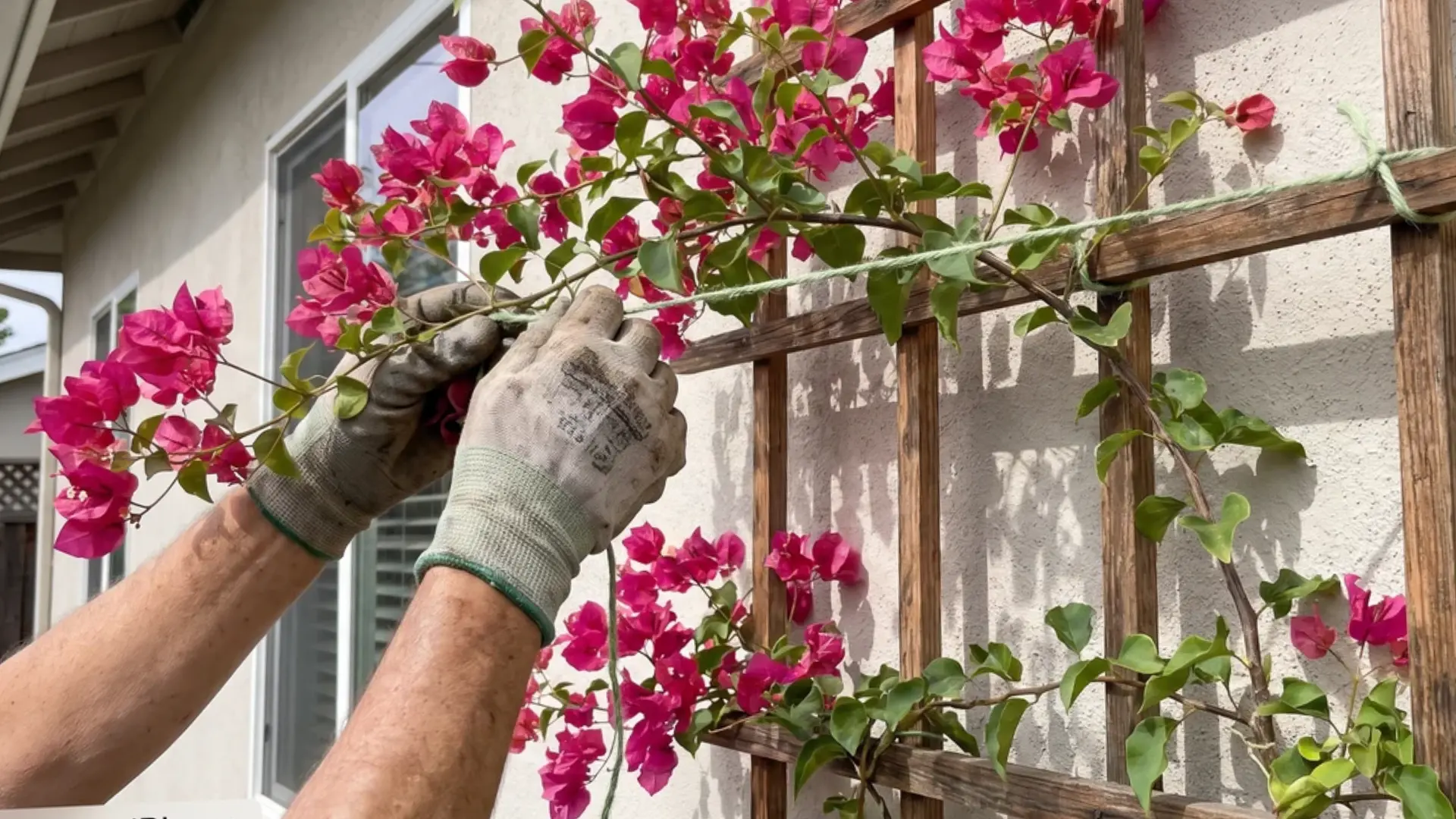
Bougainvillea needs guidance because it does not naturally attach like true climbing vines. Provide a trellis, fence, or arch and gently direct stems as they grow.
Early support helps shape the plant, prevents tangled growth, and creates a fuller display along walls or structures.
How to Plant Bougainvillea
Planting a bougainvillea involves choosing a sunny, well-drained spot, keeping the root ball as intact as possible, and setting the plant at the same depth it grew in its nursery pot.
Ground and container planting differ mainly in drainage control and winter flexibility, as the table below shows.
Tools Required: Prepare these essentials before planting.
- Garden gloves
- Trowel or shovel
- Container with drainage holes
- Potting mix
- Watering can
- Trellis or support stakes
Step 1: Prepare the Site or Container

Good preparation now saves trouble later. For in-ground planting, dig a hole roughly twice as wide as the root ball (the compact mass of roots and soil from the nursery pot) in a spot with full sun most of the day, then loosen the surrounding soil.
For containers, choose a pot with drainage holes and fill it with fast-draining potting mix.
Step 2: Remove the Plant Carefully

Bougainvillea roots don’t respond well to disturbance, so this step calls for a careful hand. Tip the nursery pot on its side and ease the plant out slowly, supporting the base of the stem rather than pulling on it.
Keep the root ball as intact as possible, even if it looks tightly wound, since disturbed roots can stall growth for weeks.
Step 3: Position and Backfill

Once free from its nursery pot, lower the root ball into the hole or container so the top sits level with the surrounding soil.
Backfill with well-draining soil, pressing down gently to settle it without compacting the roots. Check that the plant stands upright and centered before watering it in.
Step 4: Water Thoroughly

A thorough watering right after planting helps roots make firm contact with the soil and reduces transplant shock, the stress a plant shows after its roots are disturbed.
Water slowly and deeply until it drains from the pot or soaks the planting hole, rather than giving it a quick surface splash.
Step 5: Add Support for Climbing Varieties

Climbing varieties benefit from support installed at planting time, before roots and stems become established and harder to work around.
Position a trellis, fence panel, or sturdy stake near the base, then loosely direct the main stem toward it. Doing this early avoids disturbing established roots later on.
Once the plant is settled, a steady watering and feeding routine keeps roots recovering and blooms coming.
Repot into a container only slightly larger than the current one, since bougainvillea often blooms best when its roots stay a little snug. Handle the root ball as gently as possible so new growth is not set back.
When and How to Prune Bougainvillea
Pruning bougainvillea is best done in late winter or early spring in most climates, or after a flowering cycle in milder regions, to maintain shape, control growth, and encourage fuller flowering.
Tools Required: sharp, clean pruning shears; thick gardening gloves; blade disinfectant.
- Wear thick gloves to protect your hands from sharp thorns.
- First, remove dead, damaged, or overcrowded branches.
- Trim long stems to maintain the desired shape and size.
- Avoid heavy pruning during the main blooming period.
The stems you trim away do not have to go to waste. Cut a four- to six-inch piece of healthy stem, remove the lower leaves, and set it in a moist, fast-draining mix to root a brand new bougainvillea for another spot in the garden.
A light, well-timed prune keeps bougainvillea manageable while encouraging a fuller, more colorful display, and it’s also a simple way to grow more plants for free.
Common Bougainvillea Problems
Even with proper care, bougainvillea may develop problems linked to sunlight, watering, or pests rather than disease. The Clemson Cooperative Extension notes that fungal and bacterial leaf spots can affect stressed plants, along with common pests.
- Bougainvillea Not Blooming: Often caused by low sunlight, excess water, too much nitrogen, or frequent pruning. Move it to a sunnier spot, reduce watering, limit fertilizer, and prune lightly.
- Yellow or Falling Leaves: Usually linked to overwatering, cold temperatures, sudden location changes, or seasonal stress. Improve drainage, protect from cold, and avoid unnecessary movement.
- Common Pests: Aphids, whiteflies, mealybugs, and spider mites may affect plants. Remove them with a strong spray of water, or treat with insecticidal soap as needed.
Most of these issues resolve once you make the correction above, often within a few weeks. Leaf drop after a move or a cold snap is usually temporary, with new growth returning as conditions stabilize.
Frequently Asked Questions
How fast does bougainvillea grow?
Bougainvillea grows quickly once established, often adding several feet of new growth each season in warm, sunny conditions. Container plants and cooler climates slow this pace considerably, so expect a fuller shape to take a full year or two.
How do you propagate bougainvillea from cuttings?
Take a healthy stem cutting after pruning, dip the cut end in rooting hormone if you have it, and place it in a moist, fast-draining mix. Roots typically form within a few weeks in warm, sheltered conditions.
How often should you repot a container-grown bougainvillea?
Repot every two to four years, or as soon as roots begin circling the pot or growth slows noticeably. This crowded-root habit is normal for bougainvillea, so you don’t need to rush into a much larger container.
Can bougainvillea grow indoors?
Yes, especially dwarf varieties placed in a south-facing window that gets strong direct light most of the day. Indoor plants need less water and no feeding in winter, then return to a normal routine once spring growth resumes.
Can bougainvillea survive winter outdoors?
It depends on climate and cultivar; USDA zones 9b to 11 are generally warm enough, though frost can still occur in zone 9. Move container plants indoors or to a sheltered spot before the first freeze.
Key Takeaway
A well-cared-for bougainvillea plant rewards patience more than fuss. My own plant sulked for a full season before it finally settled in, so do not be discouraged if yours takes its time too.
Once it catches on, it blooms with a kind of stubborn cheerfulness that makes the earlier wait feel worth it. I still think about my neighbor’s wall of color every time mine puts out a fresh flush of bracts, and it has become one of my favorite plants to walk past on a summer evening, thorns and all.
If you have a tip that has worked well in your own garden, or a bougainvillea story worth sharing, I would enjoy hearing about it.