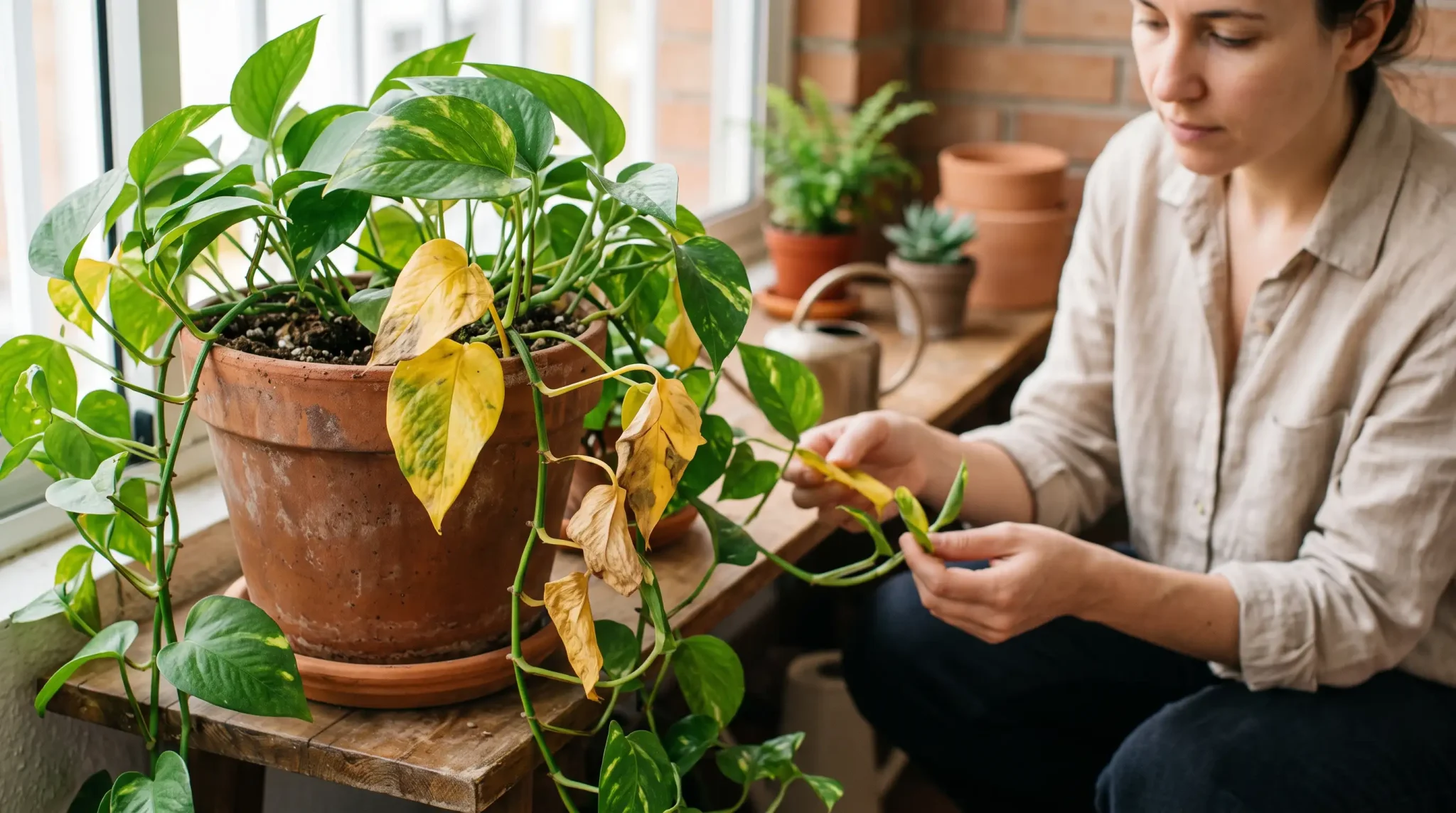
Seeing pothos leaves turning yellow can be worrying, especially when the plant looked healthy just a few days ago. The tricky part is that yellowing does not point to only one problem.
Overwatering, low light, nutrient issues, root stress, pests, temperature changes, and even natural aging can all cause similar symptoms.
One older yellow leaf may be harmless, while several changing at once usually mean something needs attention.
The easiest way to fix it is to check the pattern, soil, roots, light, and recent care changes one at a time. This guide walks through the most common causes and what to do next.
Is a Yellow Leaf Always a Problem?
No. One yellow pothos leaf can be part of normal aging. Older leaves may turn yellow and drop while the rest of the plant stays healthy.
The University of Wisconsin Extension backs this up, noting that older pothos leaves naturally yellow and drop off over time as the plant sends its energy to new growth instead.
Watch the overall pattern in your pothos:
- One older leaf: Usually less concerning, especially near the base of the vine.
- Slow, even yellowing: This can happen as an older leaf reaches the end of its life.
- Healthy new growth: Fresh leaves should stay firm, well-shaped, and true to the plant’s normal healthy color.
- Several yellow leaves: Widespread or fast yellowing usually means the plant needs closer attention.
- Other symptoms: Drooping, spots, curling, or soft stems can point to a larger problem.
Fresh new growth should stay firm, well-shaped, and true to the plant’s normal color.
Most pothos stay green, while a Neon pothos is naturally bright yellow-green, or chartreuse, a trait confirmed by the UF/IFAS Extension pothos fact sheet.
If more than one leaf is changing, check the common causes below to find what may be affecting your pothos.
Why are your Pothos Leaves Turning Yellow?
Six things typically cause pothos leaves to turn yellow: watering habits, light exposure, nutrient levels, root health, pests, and temperature stress.
Pests, natural aging, and repotting stress can also play a role, and matching your plant’s symptoms to the right cause makes it much easier to fix.
1. Overwatering, Underwatering, and Root Rot
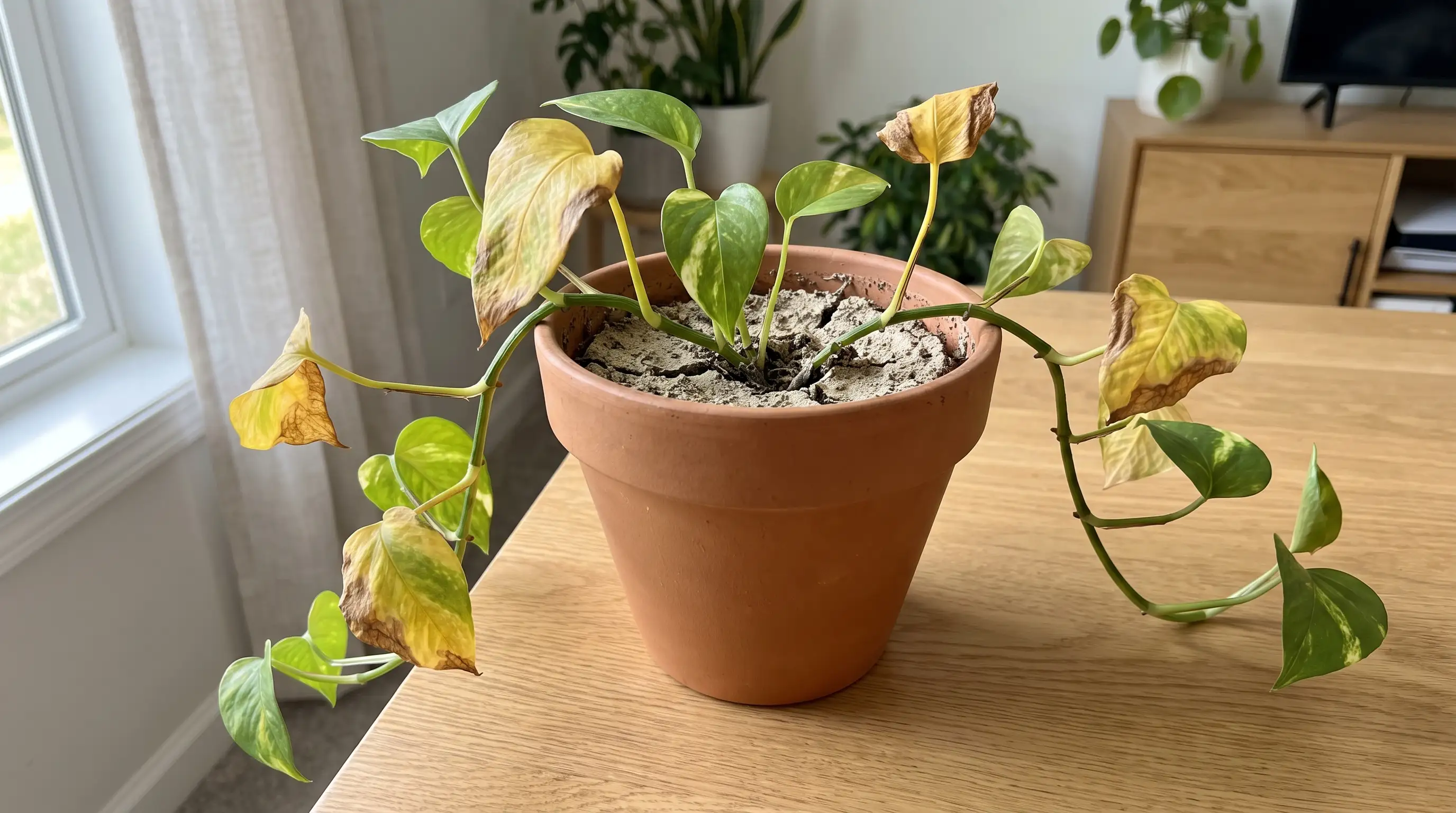
Overwatering starves roots of oxygen, causing them to break down and lose their ability to absorb water. Let the top inch or two of soil dry between waterings.
If you are unsure whether the roots are damaged, check the signs of healthy versus unhealthy roots, including changes in color, texture, and smell.
Underwatering has the opposite problem: water thoroughly until it drains, then resume your normal schedule.
2. Too Little or Too Much Light
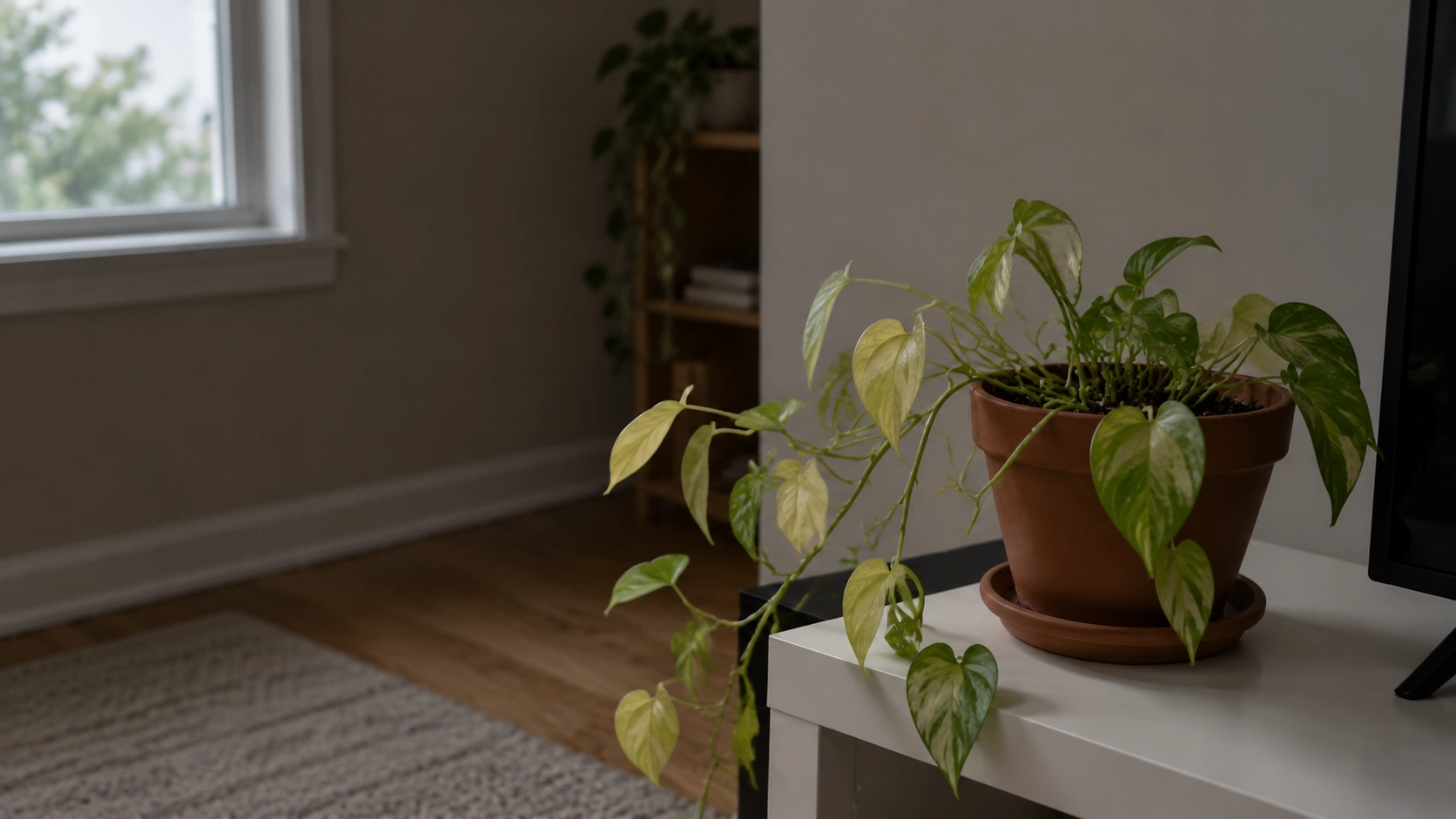
Both too little and too much light can turn pothos leaves yellow. Low light also fades variegated types, leaves with more than one color, toward solid green.
Move the plant to bright, indirect light, bright enough to cast a soft shadow without direct sun on the leaves.
A few feet from an unobstructed window works well. If the light is too intense, use a sheer curtain instead of moving the plant.
3. Nutrient Deficiency and Fertilizer Salt Buildup
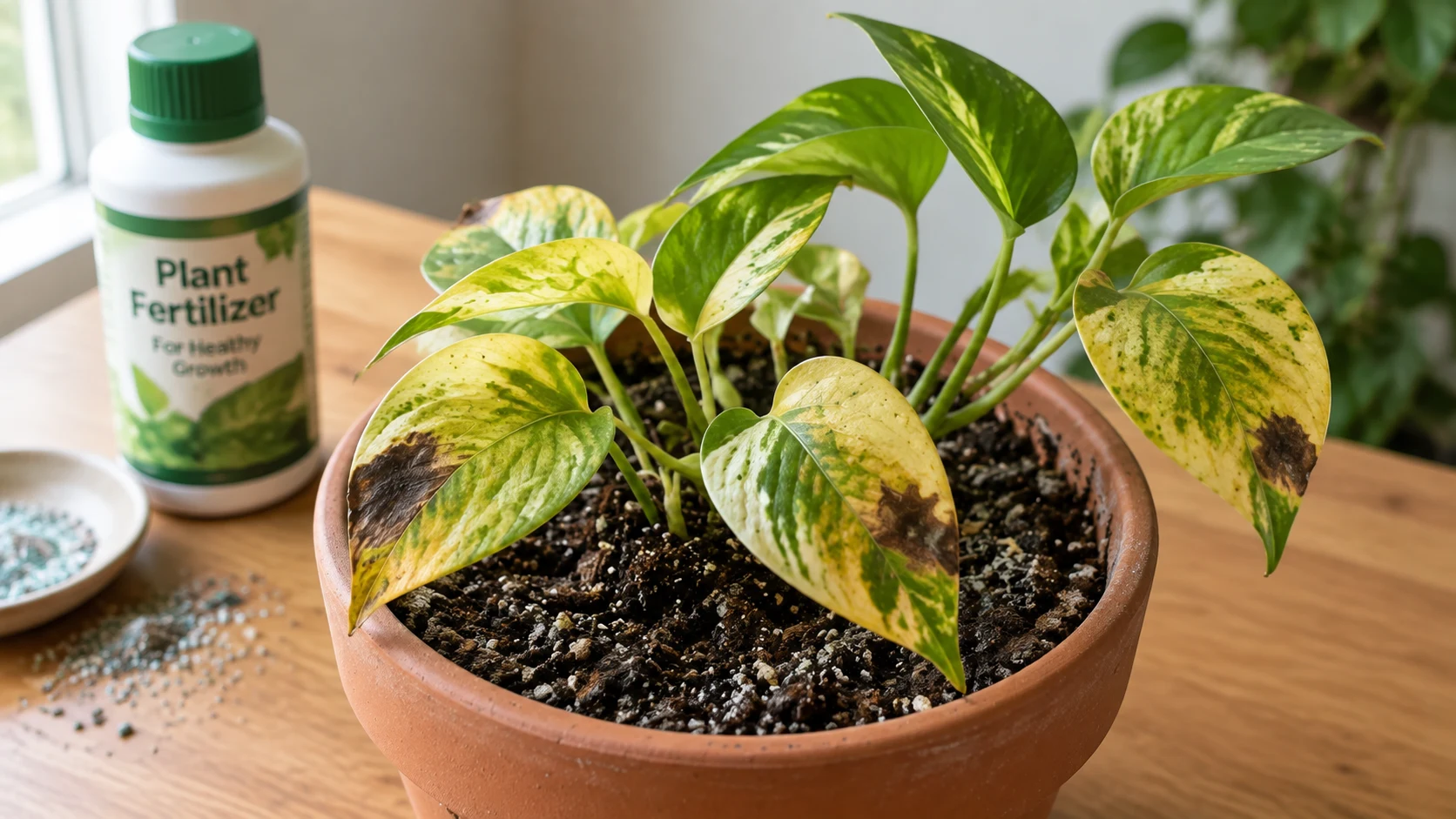
Nutrient symptoms depend on what’s missing. Nitrogen deficiency usually yellows older leaves first, while iron or manganese shortages cause pale tissue between green veins on new growth.
Over-fertilizing or mineral-rich water can cause salt buildup and damage roots.
An unsuitable potting-mix pH can also limit nutrient availability and cause yellowing. Flush the pot with plain water if you suspect salt buildup.
4. Root-Bound Plants and Old Potting Mix

A root-bound pothos may have too little potting mix relative to its root mass. Old potting mix can also collapse and drain poorly, reducing the air available to roots.
Root-bound roots are tan and simply overcrowded, unlike the mushy, dark, sour-smelling roots of rot, according to Clemson Cooperative Extension.
Slide the plant out; a solid root mass or dense mix needs a larger pot and fresh soil.
5. Pests and Disease

Spider mites, mealybugs, and scale are the pests most often reported on pothos, feeding on plant sap or leaf-cell contents.
Isolate an affected plant and treat with an insecticidal soap or neem oil labeled for houseplants.
Phytophthora root rot, a water mold rather than a true fungus, is one of the most common diseases affecting pothos roots when the soil stays too wet.
Bacterial leaf spot, another leaf disease, calls for removing leaves and keeping foliage dry.
6. Temperature Stress and Rare Causes

Cold drafts near doors, vents, or winter glass can also trigger yellowing.
Rarer causes include manganese toxicity, an excess of that mineral sometimes seen in mature plants grown for cuttings. Ethylene, a natural gas released by ripening fruit, can also stress nearby plants.
Once you’ve identified the likely cause, decide whether any leaves need to come off before adjusting your care routine.
Should You Remove Yellow Leaves?
You can remove a pothos leaf once it has fully yellowed. You can leave partly yellow leaves on while you correct the cause. The steps below show how to remove damaged leaves safely.
- Use clean scissors: Cut near the leaf stem instead of pulling it off.
- Avoid pulling by hand: This can tear nearby healthy tissue.
- During root rot, prioritize the worst leaves: Remove soft or badly damaged ones first.
- Skip heavy pruning while roots recover: Cutting too much adds stress when the plant needs to rebuild.
- Don’t feel rushed: A leaf or two left for now won’t cause harm.
Removing a fully yellow leaf redirects the plant’s energy toward healthy foliage and lowers the chance of rot or pests spreading from decaying tissue.
How to Prevent Yellow Leaves in the Future
Most yellow leaves result from the same few care issues. Following the basics of pothos care, including proper watering, light, and feeding, can help prevent common problems and keep your plant healthier long-term.
1. Build a Better Watering Routine

Consistency matters more than frequency. Check the soil before watering instead of following a fixed schedule.
- Check the soil: Water when the top inch feels dry.
- Water thoroughly: Soak until water drains from the bottom, then empty the saucer.
- Adjust by season: Water less often in winter, when growth slows down.
This routine keeps the roots moist without waterlogging them.
2. Give It Steady Light
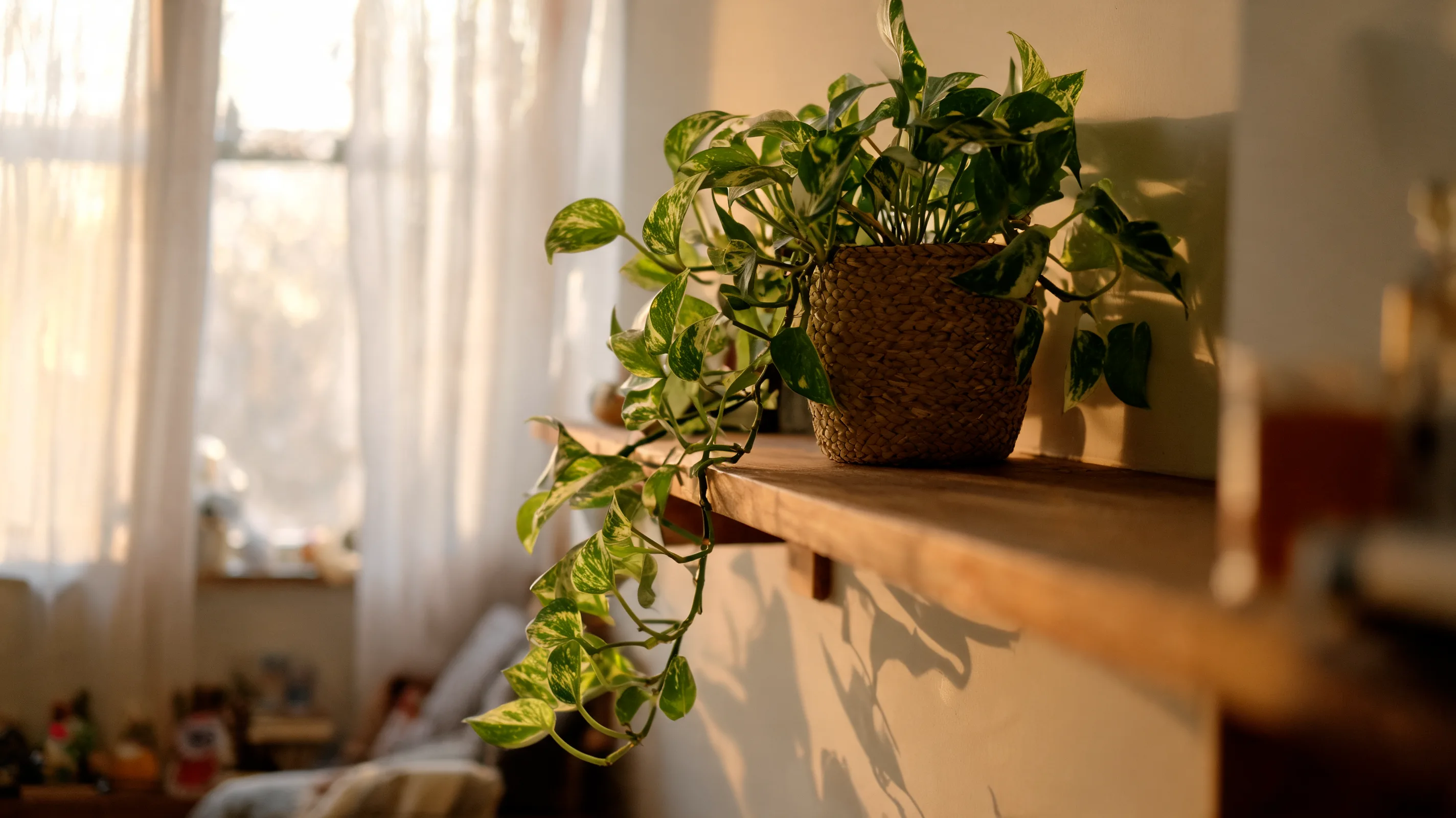
Pothos do best with consistent, indirect light rather than sudden position changes.
- Choose bright, indirect light: Near a window works well, as long as it’s out of direct sun.
- Rotate the pot occasionally: This helps light reach all sides evenly.
- Avoid moving it too often: Frequent location changes can stress the plant.
Stable light helps new leaves develop with more even color.
3. Give Your Pothos the Right Nutrients During Active Growth

Light feeding may support growth when the soil is depleted. Check root health before adding fertilizer.
- Fertilize every four to six weeks: Use a balanced liquid fertilizer during spring and summer.
- Skip fertilizing in winter: Growth slows, so the plant needs less.
- Watch for early signs: Slight paleness often shows up before full yellowing.
Monitor new growth and stop fertilizing if the leaf tips begin to turn brown. Get these habits right, and your pothos should maintain its healthy color year-round with very little extra effort.
How Long Does It Take a Pothos to Recover?
Recovery time depends on what caused the yellowing and how much damage occurred before you caught it. Root damage typically takes longer to reverse than a light or watering adjustment, since the root system itself needs time to heal.
|
Problem |
Estimated Recovery Timeline |
What Recovery Looks Like |
|---|---|---|
|
Underwatering |
Hours to 3 weeks |
Leaves firm up after watering; new growth returns over the following weeks |
|
Light adjustment |
2–6 weeks |
New leaves show improved color and healthier growth |
|
Nutrient correction |
2–6 weeks |
New growth becomes greener and more consistent |
|
Root-bound roots |
2–8 weeks |
New roots and leaves appear after repotting |
|
Root rot |
4–12 weeks |
Slow recovery; healthy roots, firm stems, and new leaves show progress |
New growth is the best sign your pothos is recovering. Existing yellow leaves will not turn green again, so watch the newest leaves rather than the ones already affected.
If yellowing continues after you correct the likely cause, recheck the soil, roots, and light. Changing only one variable at a time helps you tell what is actually helping.
Frequently Asked Questions
Why did my pothos turn yellow after repotting?
Root disturbance and a larger pot holding extra moisture around a smaller root system can cause temporary yellowing. Keep the plant in stable indirect light, avoid moving it again, and resume your normal watering routine once the soil begins to dry.
Can low humidity cause yellow leaves?
Low humidity rarely causes yellowing on its own. It more often shows up as dry, crispy edges when the soil is also too dry for extended periods. A humidifier offers a steadier fix than occasional misting.
Can Tap Water Cause Pothos Leaves to Turn Yellow?
Chlorine, fluoride, and dissolved minerals in some tap water can build up in the soil over time and stress pothos roots, showing up as yellow or scorched leaf edges. Letting tap water sit out for 24 hours before use, or flushing the pot with plain water every few months, usually clears this up.
Final Thoughts
Pothos leaves turning yellow do not always mean the plant is in serious trouble. The key is to look at the pattern and match it to the likely cause before changing several things at once.
Watering, light, nutrients, root health, pests, and temperature are the main areas to check first.
Existing yellow leaves will not turn green again, so watch the newest growth instead. Fresh, firm leaves are the clearest sign that your pothos is recovering.
If yellowing continues, recheck the soil and roots, then adjust only one care factor at a time.
If you are still unsure what is behind it, drop your questions in the comments below, and I will help you work through it.