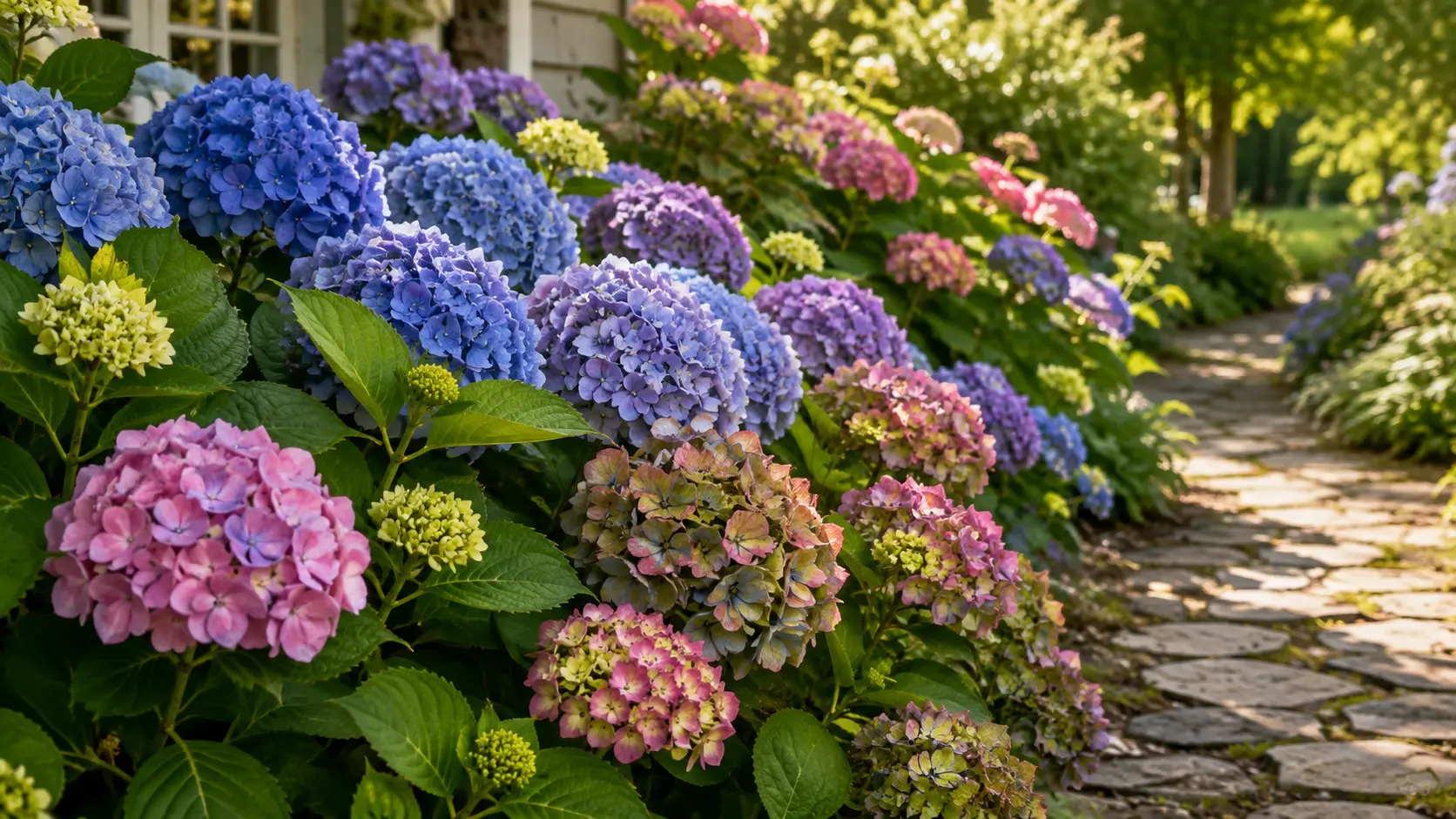
Hydrangeas have a way of turning that quick walk into a much longer one, since there is always a stem worth stopping for.
My neighbors and readers alike constantly ask when hydrangeas bloom, usually right after someone spots a shrub covered in color while their own sits green and quiet.
It is a fair question, and one that comes up more than almost anything else I hear about these plants. Grab a cup of something and settle in, because there is a lot to walk through here.
When Do Hydrangeas Bloom?
Most hydrangeas start flowering in late spring and continue into summer, with many gardens hitting their strongest display between June and August. Some types open earlier, others carry color into fall, and a handful of reblooming varieties can produce a second flush once the first round fades.
The exact timing on any given plant depends on which hydrangea you are growing, since each type follows its own internal schedule.
It also depends on where you garden and how the plant forms its flower buds, either on stems from last year or on fresh growth made this season. That single detail, more than anything else, explains why one shrub can bloom weeks ahead of another growing just down the street.
Hydrangea Bloom Times By Type
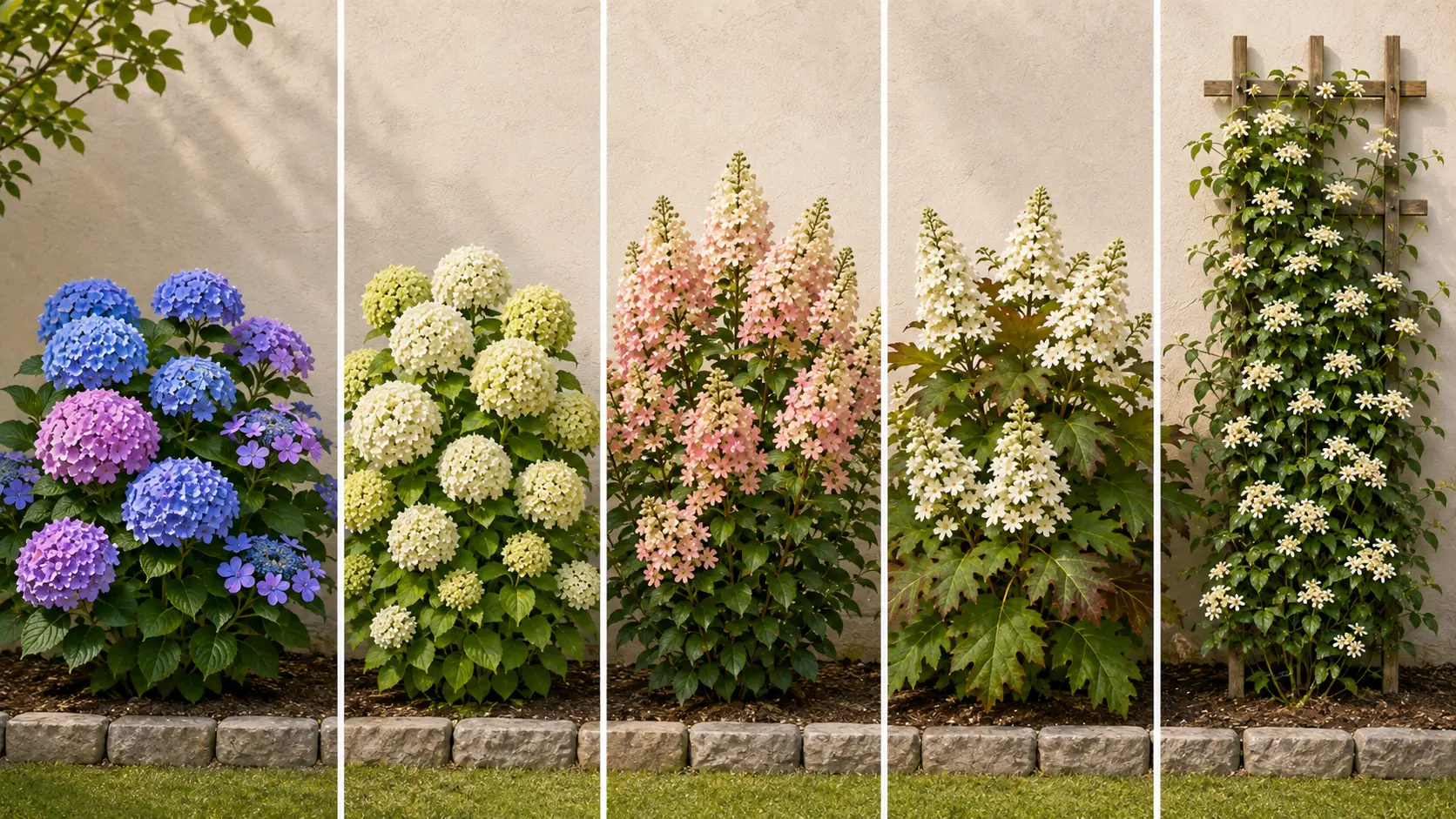
Identifying your hydrangea type is the fastest way to predict its bloom window. The table below covers the six types most common in American gardens, along with which wood each one relies on for flowers.
Several modern bigleaf cultivars also rebloom, flowering on both old and new wood for a second flush later in the season rather than relying on one main flowering period.
|
Hydrangea Type |
Typical U.S. Bloom Window |
Bloom Wood |
Helpful Note |
|---|---|---|---|
|
Bigleaf (Hydrangea macrophylla) |
Late spring through summer |
Usually old wood; some rebloomers use both |
Mophead or lacecap flowers; color can shift with soil pH |
|
Mountain (Hydrangea serrata) |
Summer |
Usually old wood |
Similar to bigleaf but generally smaller and more cold-hardy |
|
Smooth (Hydrangea arborescens) |
Late spring into late summer |
New wood |
Includes Annabelle types; rounded white or green clusters |
|
Oakleaf (Hydrangea quercifolia) |
Late spring through summer |
Old wood |
Lobed leaves; aging flower heads often stay showy into fall |
|
Panicle (Hydrangea paniculata) |
Summer into fall |
New wood |
Includes Limelight types; clusters shift from white toward pink as they age. |
|
Climbing (Hydrangea petiolaris) |
Early to midsummer |
Forms on mature side growth |
Can take a couple of seasons to establish before flowering |
Panicle and smooth hydrangeas are good options for gardeners looking for low-maintenance shrubs, since both flower on new wood and are generally more forgiving of pruning mistakes.
How Climate Changes Hydrangea Bloom Time
Climate can shift flowering by several weeks in either direction. In warmer parts of the South, some hydrangeas begin opening in April or May, while the same general type in cooler northern gardens may not flower until June or later.
A late spring frost or a harsh winter can push things back further, especially for old-wood types whose buds formed the previous fall.
Your USDA hardiness zone, which is based on average winter low temperatures and mapped by the U.S. Department of Agriculture, gives a rough sense of how cold your winters typically run.
It will not predict an exact bloom date, but it does explain why a hydrangea described as blooming in May on a plant tag might open a full month later once it’s planted in your yard.
Old Wood Vs. New Wood: Why It Changes Bloom Time
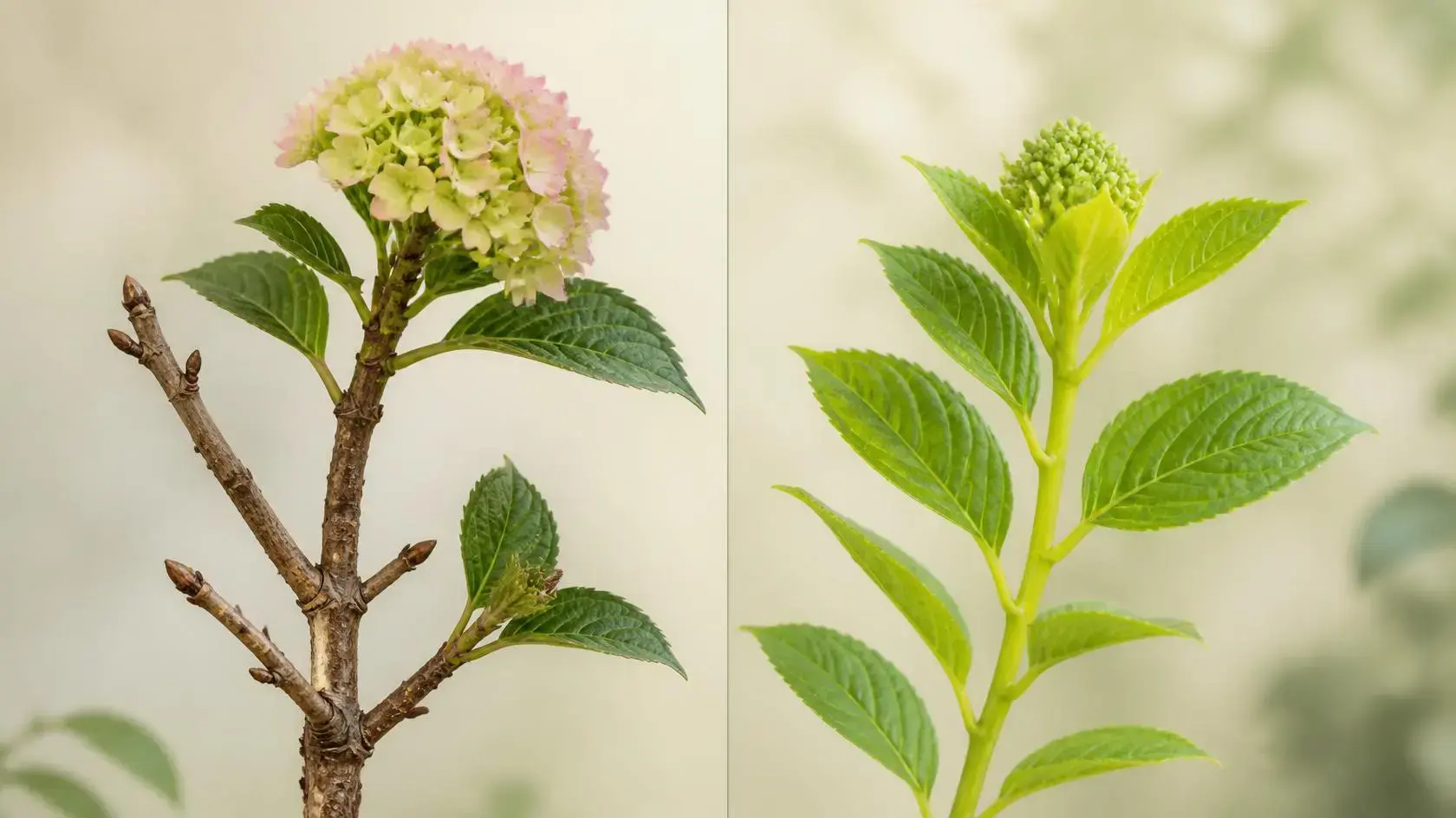
Where a hydrangea forms its flower buds explains most of the confusion gardeners run into around bloom timing and pruning mistakes. The table below breaks the concept down into three simple categories to reference before you pick up shears.
|
Term |
Meaning |
Common Hydrangeas |
Why It Matters |
|---|---|---|---|
|
Old Wood |
Stems that grew last season |
Bigleaf, mountain, oakleaf |
Pruning too late removes next year’s buds |
|
New Wood |
Stems growing this season |
Smooth, panicle |
Safe to prune in late winter or early spring |
|
Both |
Last season’s and current growth |
Some reblooming bigleaf cultivars |
Can flower early, then again later in the season |
Getting the wood type right before cutting anything back protects next year’s flowers.
Why Is My Hydrangea Blooming Late Or Not At All?
A hydrangea that skips its bloom usually points to one of a few repeat offenders. Penn State Extension identifies most of these same culprits when gardeners write in asking why their plant went quiet.
- Wrong-time pruning: cutting old-wood types removes buds before they open
- Winter injury: hard freezes can kill buds formed on old stems
- Late spring frost: damages developing buds and delays or reduces flowering
- Too much shade: reduces flower production even on healthy, vigorous plants
- Inconsistent watering: drought stress weakens buds and shortens the bloom window
- Excess nitrogen: heavy fertilizing pushes leafy growth at the expense of flowers
- New transplants: young plants often flower lightly while roots establish
How Long Do Hydrangea Blooms Last?
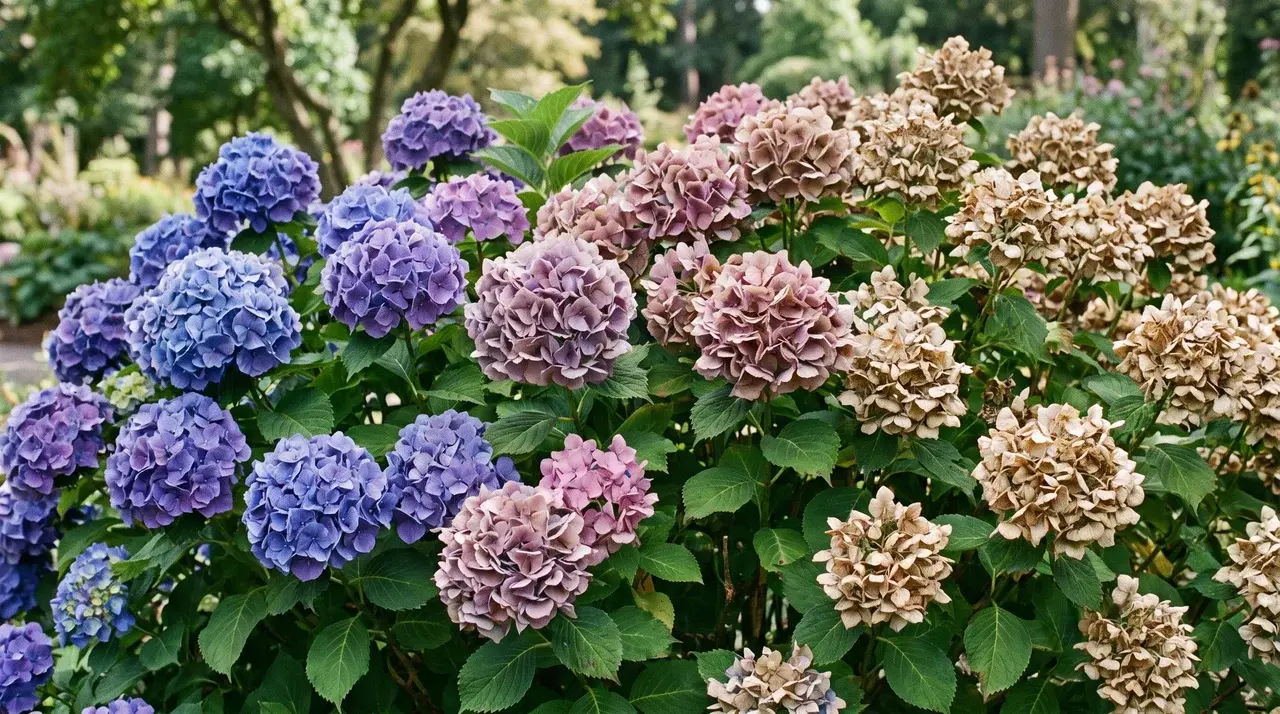
Individual hydrangea flower heads commonly stay attractive for several weeks before they begin to fade.
A whole shrub often looks colorful for six to twelve weeks or longer, though the exact stretch depends heavily on cultivar and climate, since flower heads open and mature at different times rather than all at once.
As blooms age, their bright color typically softens, and the petals take on a drier, papery texture.
Panicle types often shift from white toward pink or rose as the season goes on, while bigleaf and mountain types tend to fade toward muted blue, green, or tan.
Many gardeners leave these aging flower heads in place for a dried, textural look later in the year, though you can trim them off anytime for a tidier appearance without harming the plant.
How To Protect The Bloom Display
A few habits help protect the flowers already on the plant, especially once summer heat sets in. Water deeply during dry spells rather than giving frequent shallow drinks, since a deep soak encourages stronger roots and steadier blooms through the hottest stretch of the season.
A two- to three-inch layer of mulch around the base holds moisture and keeps roots cooler.
Bigleaf, mountain, and oakleaf types generally hold their color better with some afternoon shade in hot climates. At the same time, panicle hydrangeas tolerate considerably more sun and can handle a fuller-sun spot without stress.
Keep the soil evenly moist but well-drained, since soggy roots create their own set of problems. None of this forces extra blooms, but steady care keeps the flowers already on the shrub looking their best for longer.
Frequently Asked Questions
Should you deadhead hydrangeas after they bloom?
Deadheading is optional and mainly improves appearance. It does not turn a once-blooming hydrangea into a repeat bloomer. On old-wood types, cut carefully just below the spent flower so you do not accidentally remove the developing buds for next year.
When should hydrangeas be cut back?
Timing depends on type. Panicle and smooth hydrangeas flower on new wood and can be pruned in late winter or early spring. Bigleaf, mountain, and oakleaf types flower mainly on old wood, so prune them shortly after flowering ends instead.
Do potted hydrangeas bloom on the same schedule as garden plants?
Not always. Gift or florist hydrangeas are often forced to open earlier than they would outdoors, and container soil dries out faster than garden beds. A potted hydrangea needs more frequent watering to keep buds and flowers healthy through summer.
When do hydrangeas bloom after being planted?
A nursery hydrangea may already be flowering at planting time, but a newly installed shrub often produces fewer blooms while its roots establish. Climbing hydrangea can be slow to settle in, taking a couple of seasons before it flowers reliably.
Can hydrangeas still produce blooms in fall?
Some can. Panicle and reblooming cultivars may continue producing fresh flowers well into fall, while many other hydrangeas are simply displaying older flower heads that opened earlier and have since faded to pink, tan, or brown tones.
Final Thoughts
By the time August rolls around, my own hydrangeas usually look like they have been through several different seasons at once, since one branch still holds a bright color while its neighbor has already gone soft and papery.
I still walk past them most mornings, coffee in hand, to see what changed overnight. Every yard answers when hydrangeas bloom a little differently, and yours will settle into a rhythm that makes sense once you have watched it through a full year.
Watch your particular plant rather than a calendar, and the rest tends to sort itself out with time.