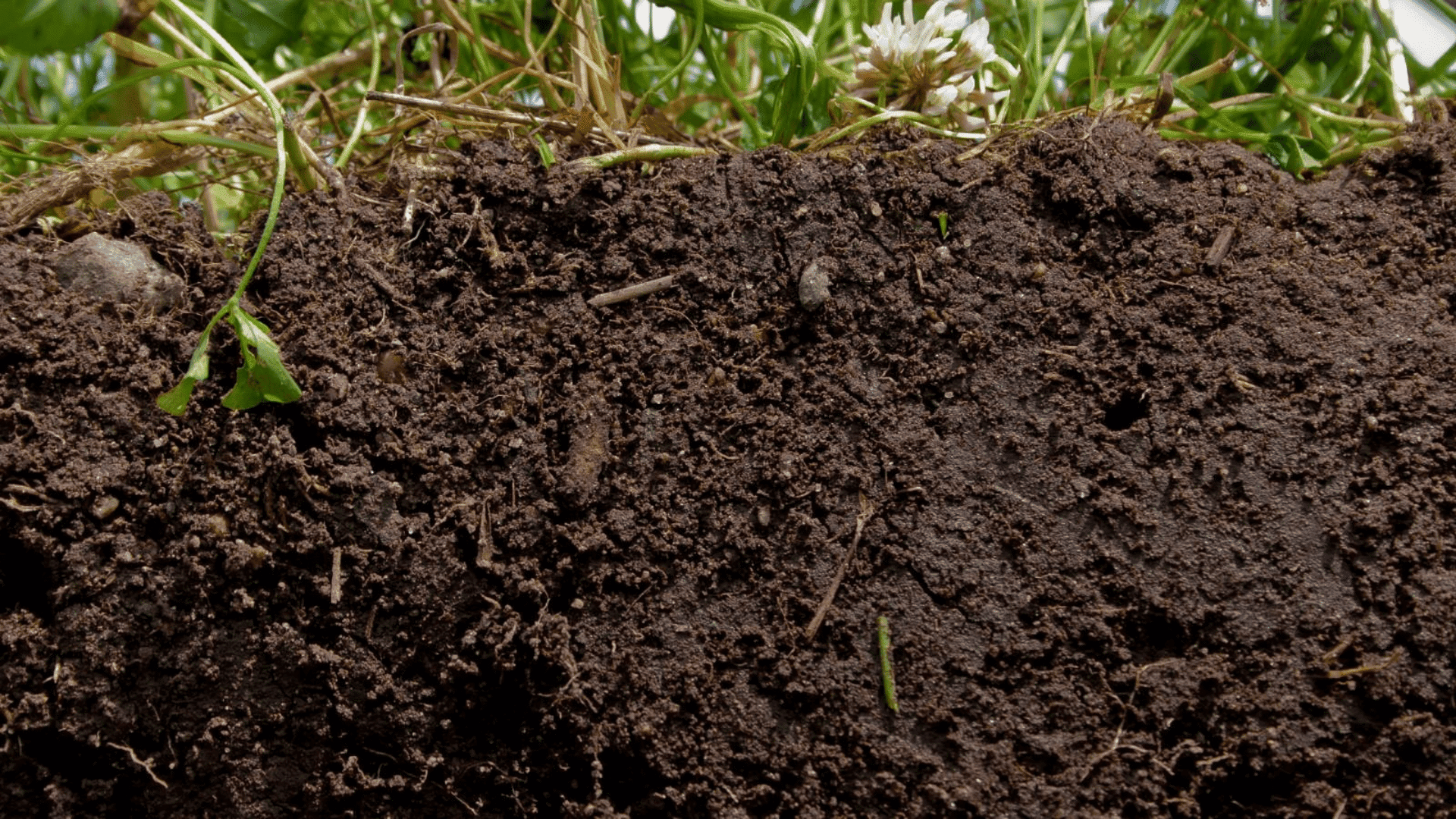
Soil shapes plant growth, water movement, farming success, and even building strength. Learning the main types of soil helps you understand how each one behaves and what it needs to grow well. Every soil contains mineral particles, air, water, and decayed natural matter in a shifting balance.
This balance affects texture, drainage, nutrient levels, and root growth. Some soils dry out within minutes, while others stay wet for days at a time.
Color and feel can reveal useful clues about what you are working with. You can often identify soil through a simple hand check, a drainage test, or a jar test at home. A closer laboratory analysis fills in the details these quick checks cannot.
You will learn the most common soil names, their key features, and simple ways to classify them. You will also see how to test your soil and improve it with confidence.
How the Right Soil Supports Stronger Plants
Soil is the loose natural layer covering most of Earth’s land, formed as rock breaks down and mixes with decayed organic matter.
Water, air, insects, fungi, and countless microorganisms continue to shape it over time, creating a living system that supports roots and stores essential nutrients.
Soil texture controls how quickly water enters the ground, how long it stays near roots, and how much oxygen reaches them, which makes it one of the most important factors in plant health.
When you check soil, the first clues come from its feel, color, and moisture level, since these details often reveal how it will behave in different weather.
Healthy soil supports gardens, farms, wildlife habitats, and safe building foundations, so knowing your soil’s condition helps you choose better plants, water more efficiently, and avoid common care mistakes before problems appear.
The Building Blocks of Healthy Soil
Soil is made from several materials working together, and the exact balance changes from one location to another. The four main parts are mineral particles, organic matter, water, and air, with living organisms playing an important supporting role.
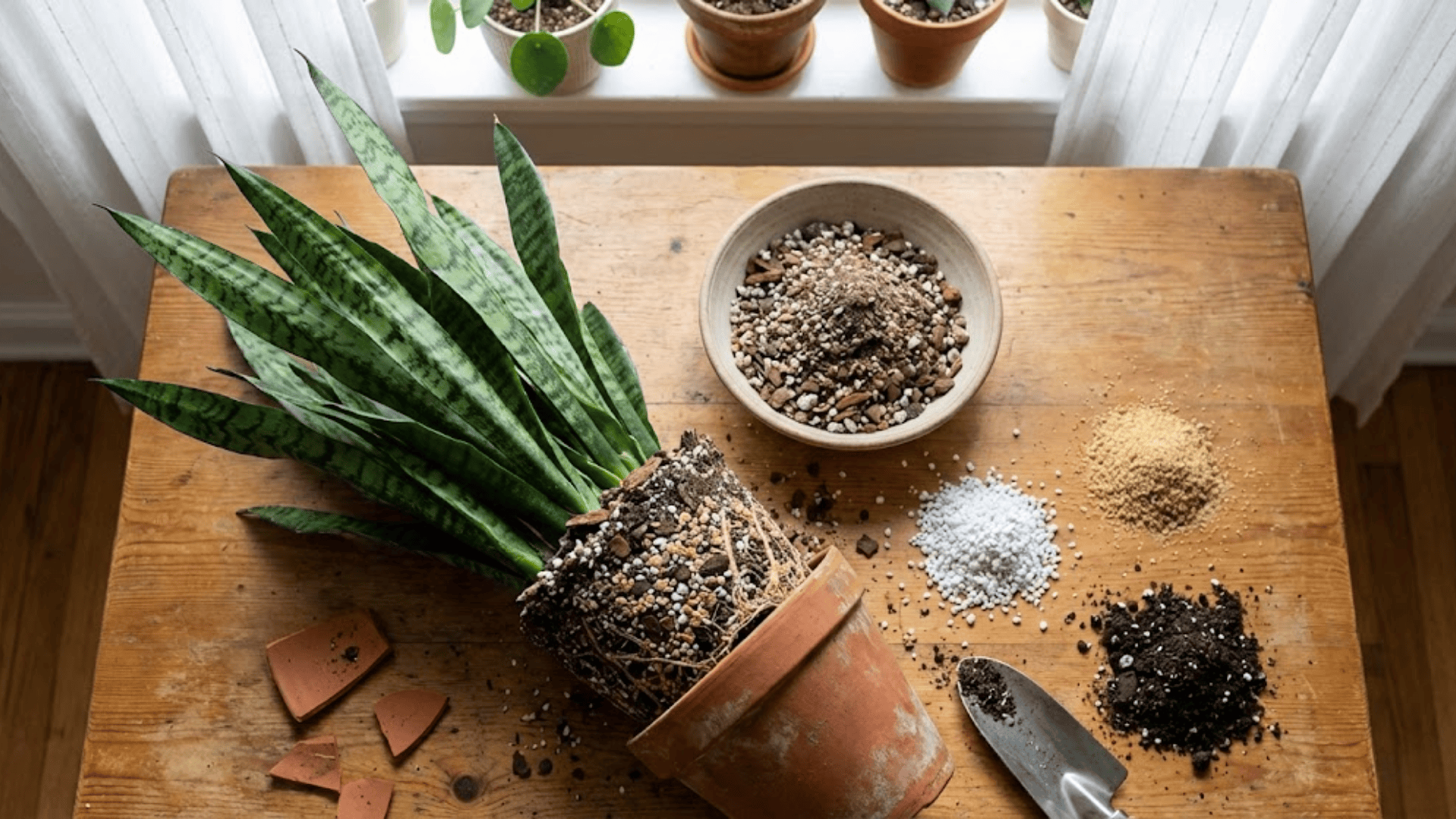
Mineral particles come from broken-down rock and include sand, silt, and clay, the same three particles that separate garden soil versus potting soil in texture and drainage. These particles control much of the soil’s overall behavior.
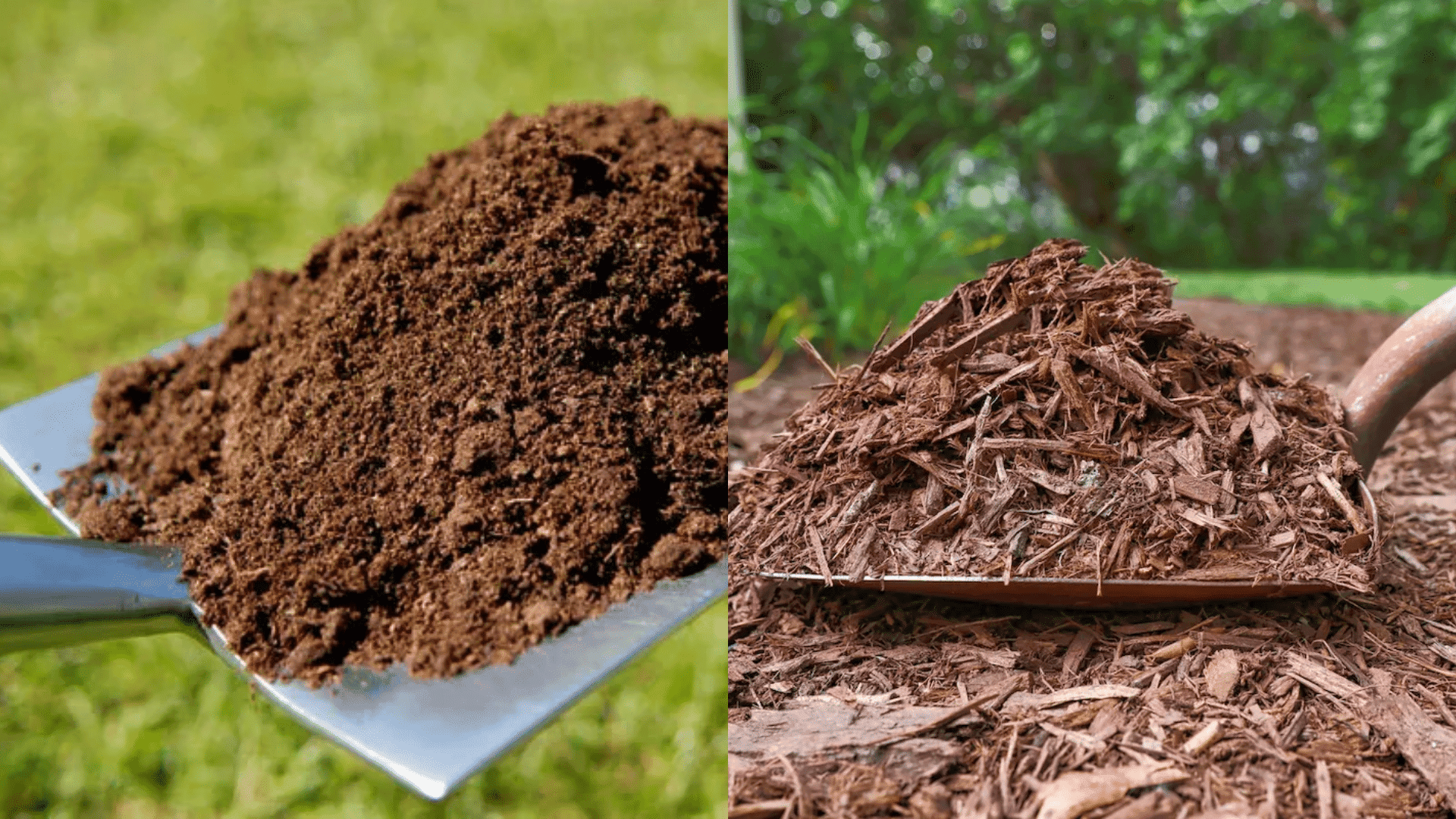
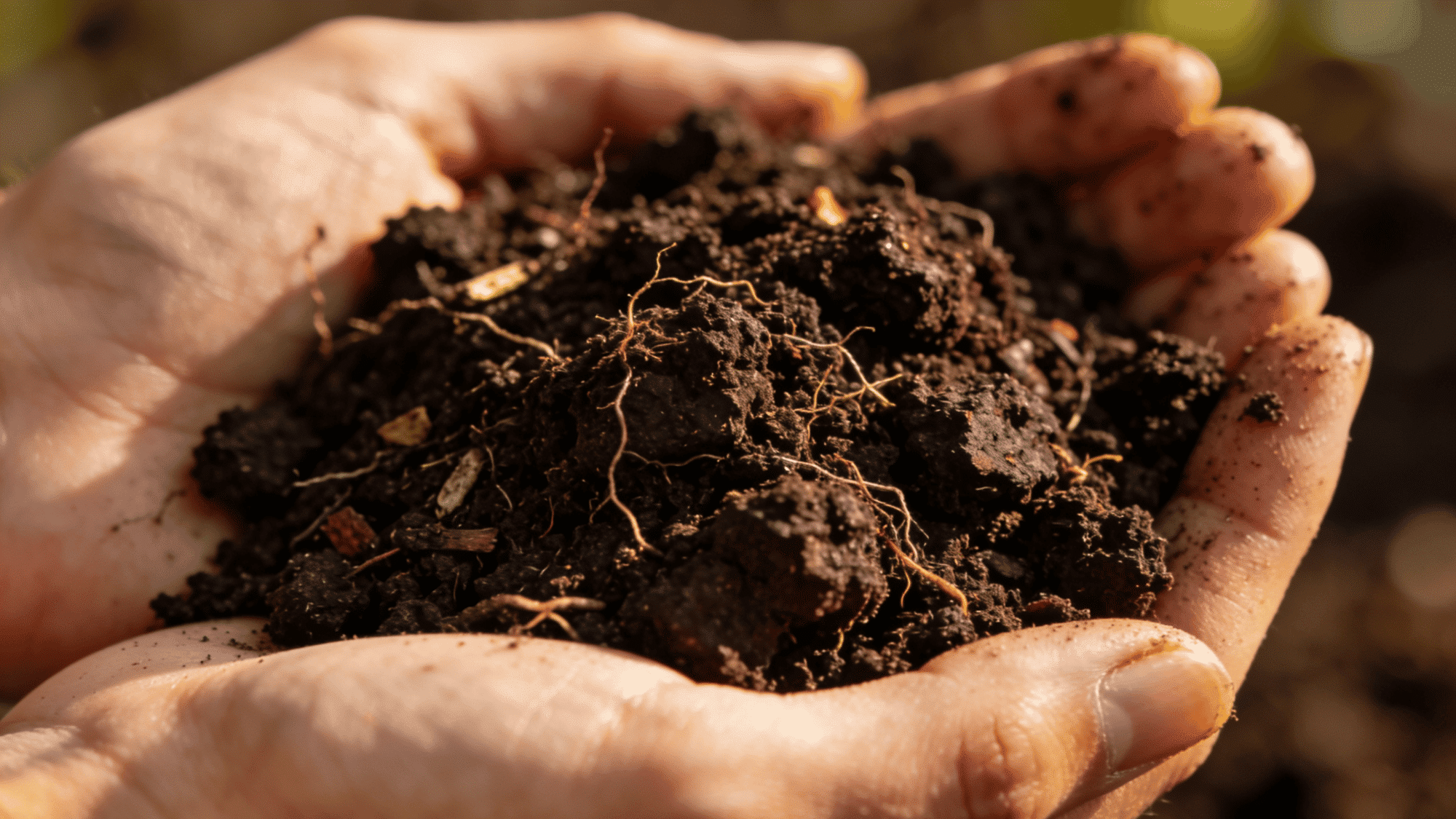
Organic matter comes from dead leaves, roots, animals, and other natural material. As it breaks down, it improves soil structure and adds nutrients that roots can use.
Water fills some of the spaces between soil particles, and roots use this water to absorb nutrients. Air fills the spaces that water does not occupy, and healthy roots need this oxygen to grow well.
Earthworms, fungi, bacteria, insects, and other organisms also live in soil, where they break down organic matter and move nutrients through the ground.
How Soil Is Classified
Soil is classified by texture, particle size, organic matter, drainage, and chemical balance, following the same particle-size framework published by the USDA Natural Resources Conservation Service. These traits explain how soil stores water and nutrients. Texture mainly depends on the ratio of sand, silt, and clay, and most soils contain all three in different amounts. Each particle type behaves in its own way.
| Particle | Size Level | Feel | Water Movement | Water Holding | Air Space | Nutrient Holding | Behavior in Soil |
|---|---|---|---|---|---|---|---|
| Sand | Very large | Gritty, rough | Very fast | Low | High | Low | Drains quickly, dries fast, and is easy to dig |
| Silt | Medium | Smooth, silky | Moderate | Medium to good | Medium | Medium | Often fertile but can erode easily |
| Clay | Very small | Sticky when wet, hard when dry | Slow | High | Low | High | Holds water and nutrients but compacts easily |
The balance of these three particles helps determine soil texture. Most natural soils contain a mixture of sand, silt, and clay rather than only one particle type.
Main Types of Soil
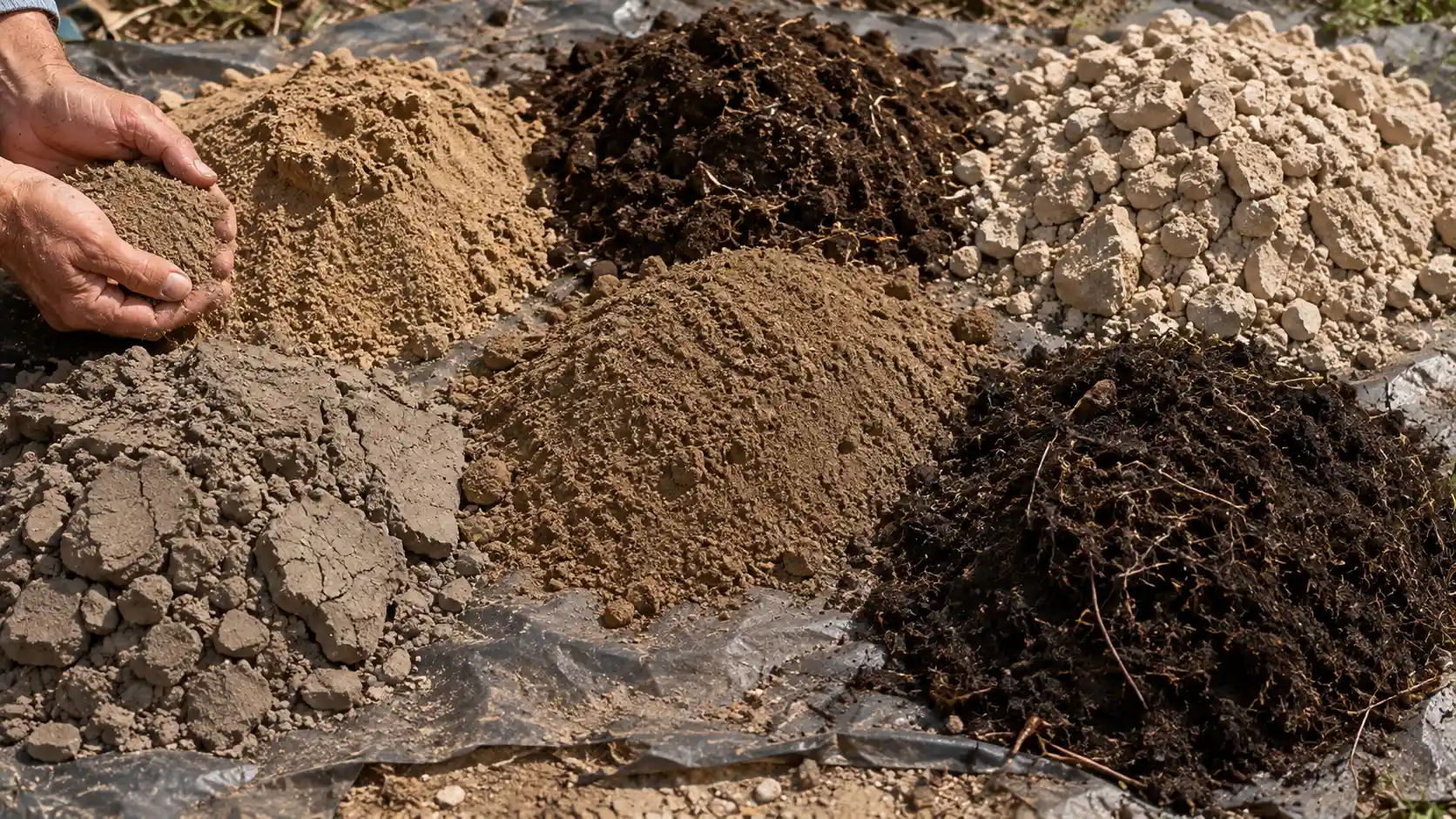
The six common types of soil differ in texture, drainage, moisture storage, and nutrient levels, and one material usually has the strongest effect on each. Every soil type has strengths, limits, and plants that suit it best, and behavior can shift across gardens and seasons.
1. Sandy Soil
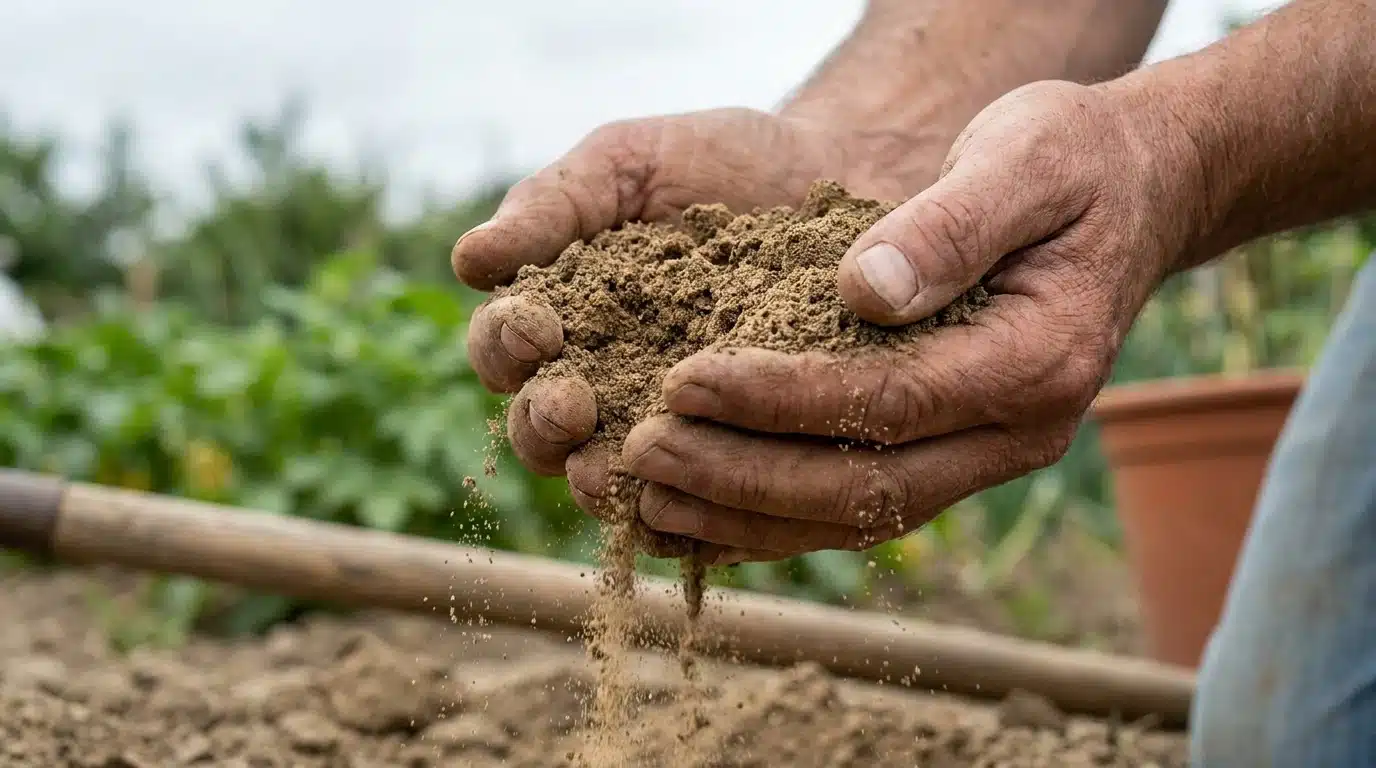
Sandy soil has large particles that feel loose, dry, and gritty between your fingers. Water moves through it quickly, so roots receive plenty of air. However, nutrients and moisture can wash away fast, especially during hot weather.
- Particle size: Large
- Texture: Loose and gritty
- Drainage: Very fast
- Moisture holding: Low
- Nutrient holding: Low
- Best for: Carrots, lavender, rosemary, and drought-tolerant plants
- Care needed: Add compost to improve water and nutrient storage
2. Clay Soil
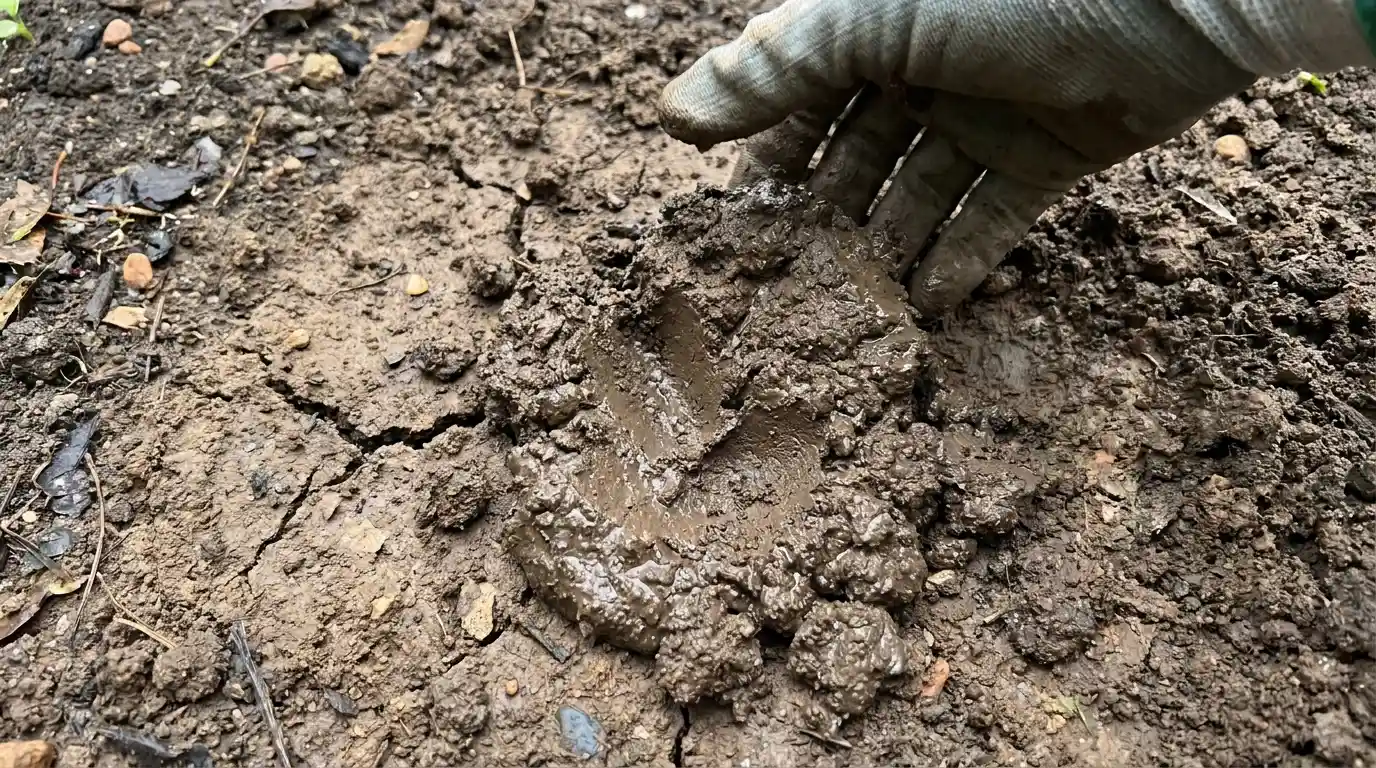
Clay soil has very small particles that press tightly together. It feels sticky when wet and becomes hard or cracked when dry. This soil holds water and nutrients well, but poor airflow and compaction can slow root growth.
- Particle size: Very small
- Texture: Dense and sticky
- Drainage: Slow
- Moisture holding: High
- Nutrient holding: High
- Best for: Roses, fruit trees, and sturdy shrubs
- Care needed: Add compost and avoid digging when the soil is soaked
3. Silt Soil
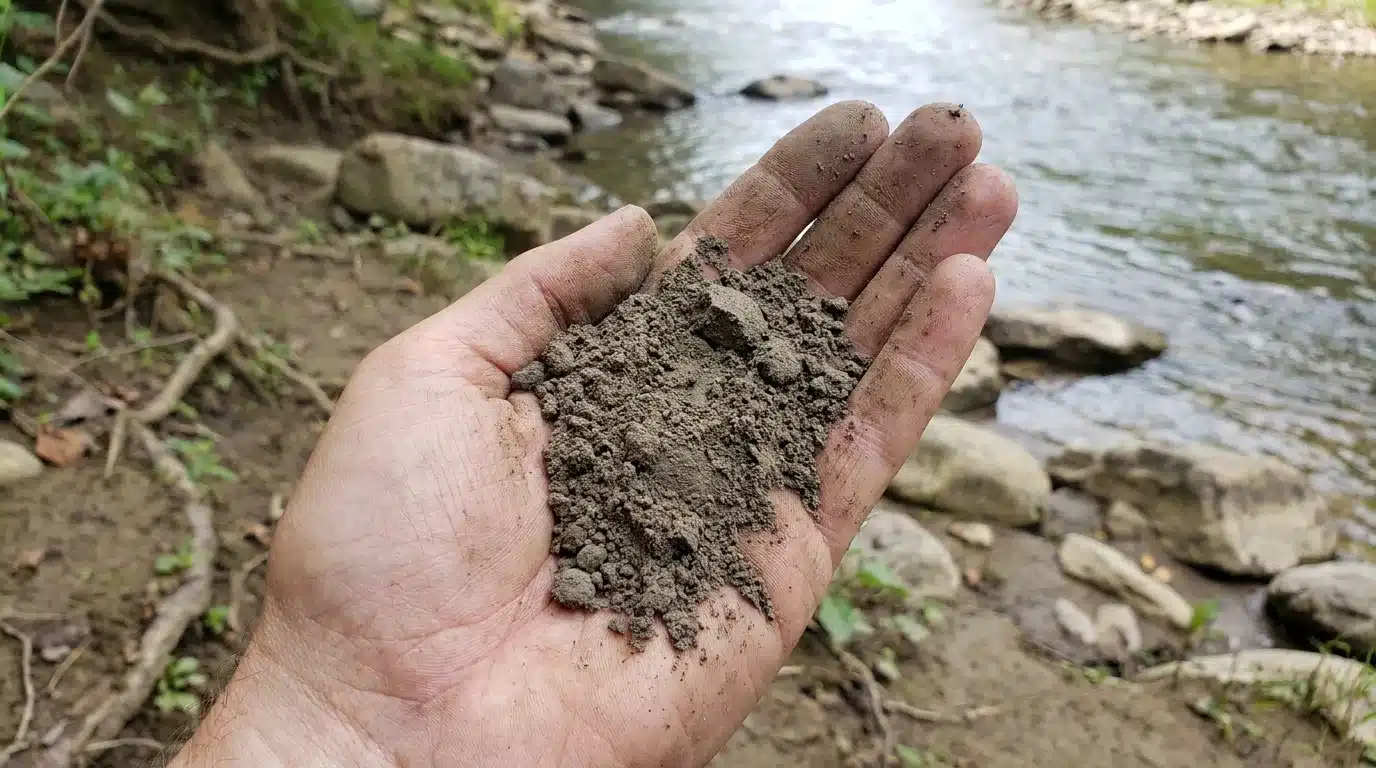
Silt soil has fine particles that feel soft, smooth, and slightly slippery when moist. It stores more water than sandy soil but drains better than clay. Silt is often fertile, though its loose surface can wash away or form a crust after rain.
- Particle size: Fine
- Texture: Smooth and soft
- Drainage: Moderate
- Moisture holding: Good
- Nutrient holding: Good
- Best for: Vegetables, grasses, and moisture-loving plants
- Care needed: Use compost and ground cover to reduce erosion
4. Loamy Soil
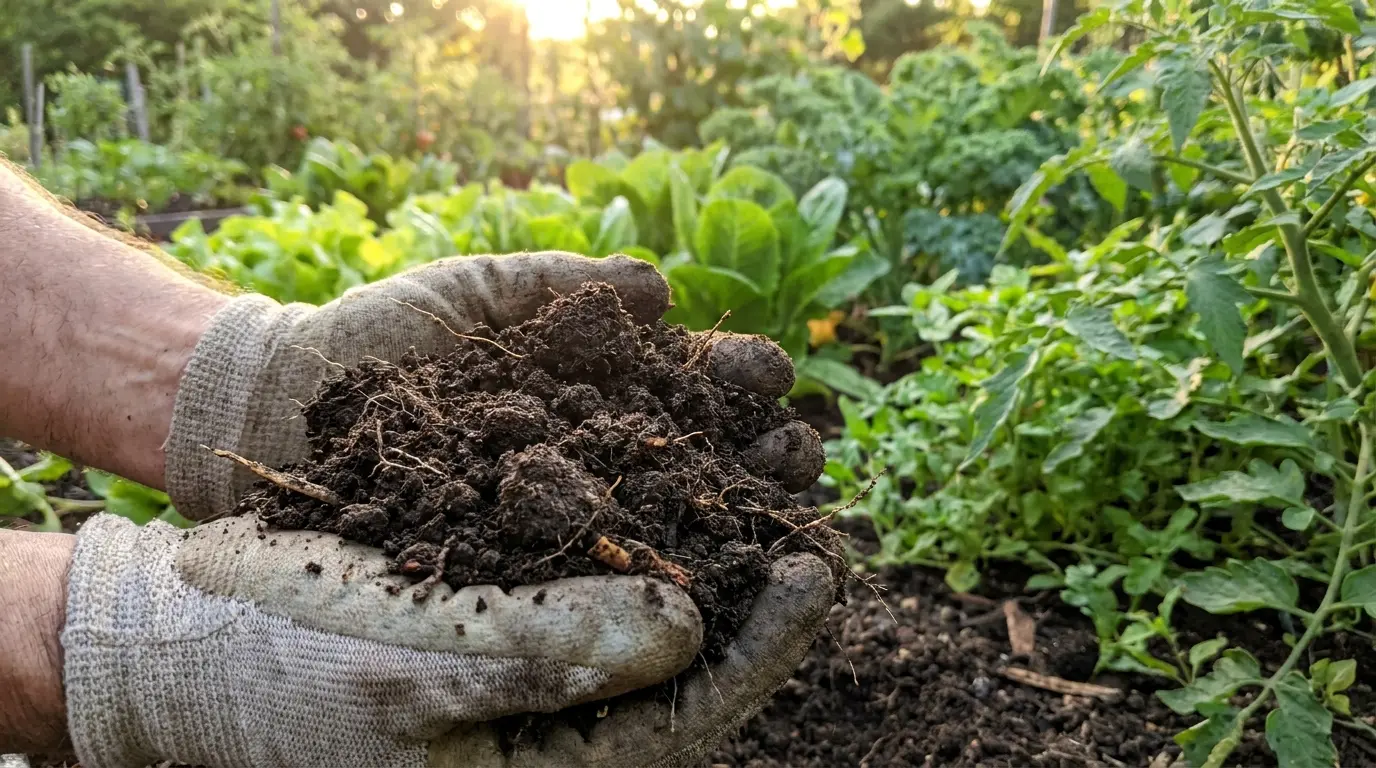
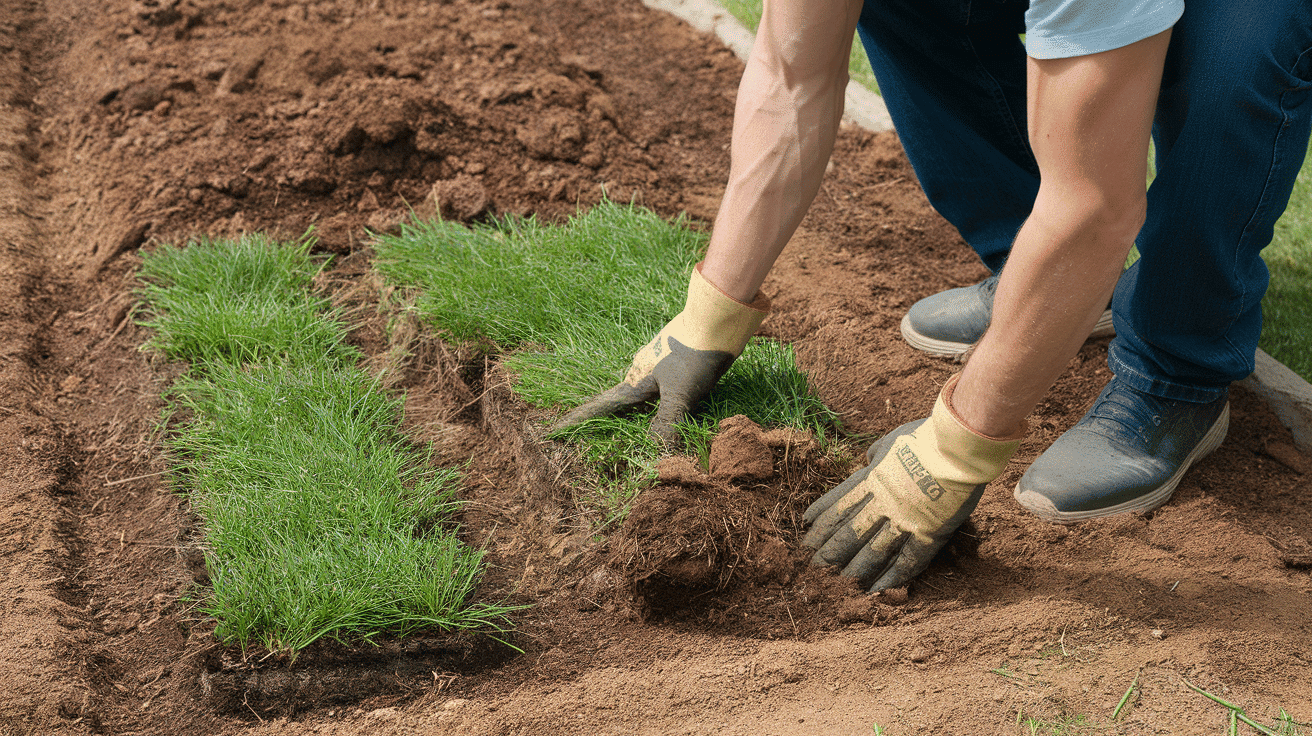
Loamy soil contains a balanced mix of sand, silt, and clay, and it is why gardeners often see grass grow through topsoil more evenly when a new lawn is seeded on this base. It feels soft, crumbly, and easy to work by hand. The soil holds enough moisture for roots while letting extra water drain away, making it suitable for most garden plants.
- Particle mix: Balanced
- Texture: Crumbly and soft
- Drainage: Balanced
- Moisture holding: Good
- Nutrient holding: Good
- Best for: Vegetables, flowers, shrubs, and fruit plants
- Care needed: Add compost regularly to maintain structure and fertility
5. Peaty Soil
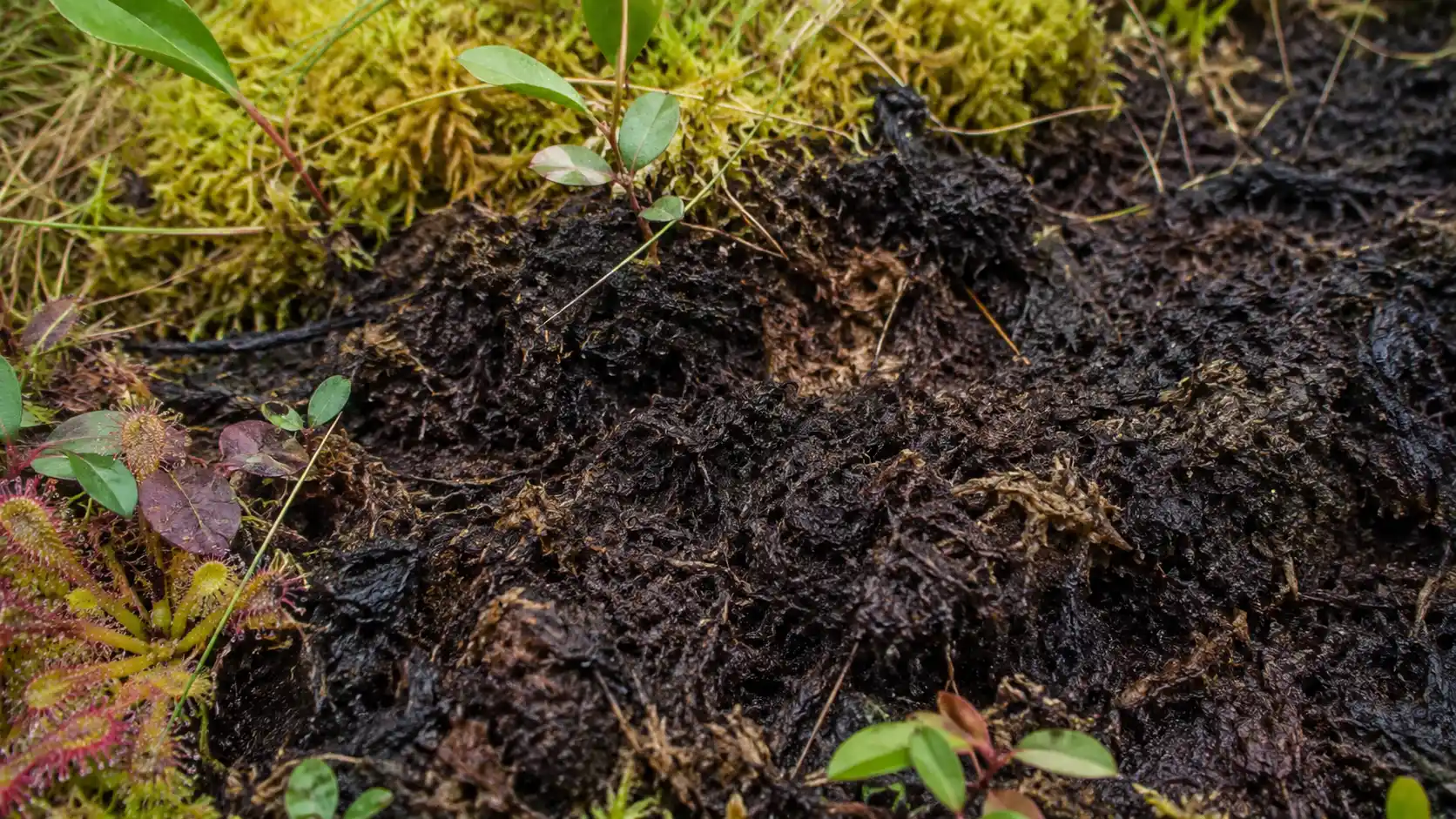
Peaty soil contains a high amount of partly decayed plant material. It is dark, soft, and able to hold plenty of water. This soil is often acidic and rich in organic matter, but it may lack some minerals needed for healthy growth.
- Organic matter: Very high
- Texture: Soft and fibrous
- Drainage: Variable
- Moisture holding: High
- Acidity: Usually high
- Best for: Heathers and other acid-loving plants
- Care needed: Test the soil before adding lime or fertilizer
6. Chalky Soil
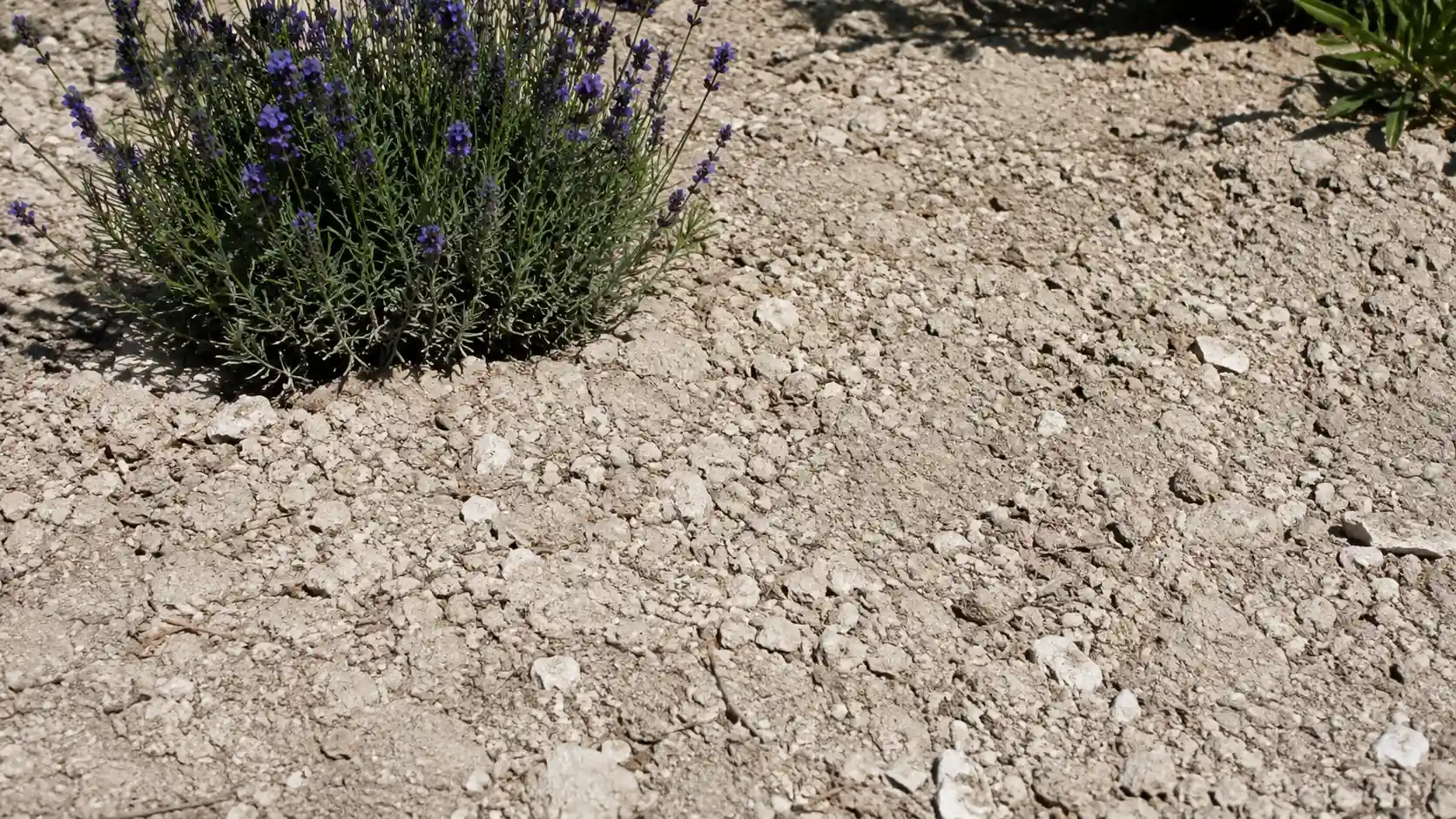
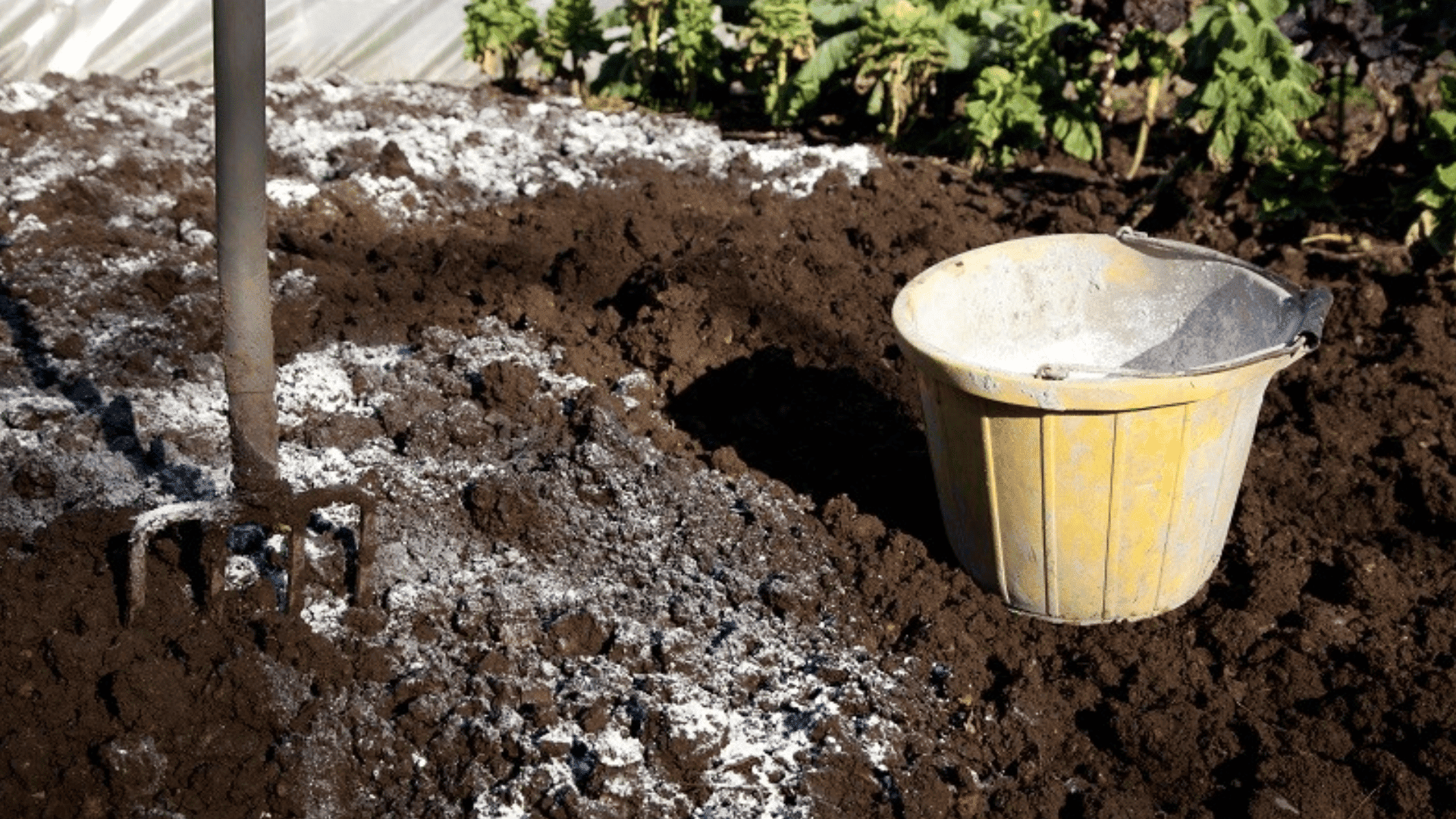
Chalky soil contains calcium carbonate and often looks pale, dry, and stony. Water drains through it quickly, while its alkaline nature can lock up nutrients such as iron and manganese, sometimes causing yellowing between leaf veins. Plants may need extra care during hot, dry weather.
- Mineral level: High in calcium
- Texture: Stony and light
- Drainage: Fast
- Moisture holding: Low
- Acidity: Low
- Best for: Lavender, lilac, clematis, and Mediterranean plants
- Care needed: Add compost and test the soil before feeding plants
Comparing the Different Soil Types
The main soil groups differ most in texture, drainage, moisture storage, and the plants that grow best in them. Weather, slope, and land use can also change how soil behaves in one place, so local conditions always matter.
| Soil Type | Texture | Drainage | Moisture Holding | Best Plants |
|---|---|---|---|---|
| Sandy | Loose, gritty | Very fast | Low | Carrots, rosemary, lavender |
| Clay | Dense, sticky | Slow | High | Roses, fruit trees, shrubs |
| Silt | Smooth, soft | Moderate | Good | Vegetables, grasses |
| Loamy | Balanced, crumbly | Balanced | Good | Most garden plants |
| Peaty | Dark, soft, spongy | Variable | Very high | Heathers, rhododendrons |
| Chalky | Stony, light | Fast | Low | Lavender, lilac, clematis |
Use the comparison as a starting point, since texture, drainage, and plant response give the strongest clues about what you are working with. A soil test can confirm acidity and nutrient needs before you make large changes to a bed or lawn.
Understanding Soil pH
Soil pH shows whether soil is acidic, neutral, or alkaline, and it plays a major role in plant health and nutrient availability. The pH scale runs from 0 to 14, with readings below 7 considered acidic, 7 neutral, and anything above 7 alkaline.
Acidic soil often suits plants such as blueberries, heathers, and rhododendrons, while neutral soil supports most common vegetables, flowers, and garden plants.
Alkaline soil tends to favor lavender, lilac, and other Mediterranean plants that tolerate higher calcium levels.
Peaty soil usually leans acidic, while chalky soil is typically alkaline, though the exact reading can vary from one yard to the next depending on local minerals and rainfall.
You should always test your soil pH before adding lime, sulfur, or other amendments, since guessing can lock nutrients like iron and manganese out of reach for your plants. A simple soil test gives you clearer results and helps you make safer, more effective changes over time.
How to Identify Your Soil Type
You can identify soil by checking texture, color, drainage, and its behavior when wet. Start with samples from several areas of your yard.
Simple checks can reveal useful patterns.
- Touch test: Grit suggests sand, while stickiness suggests clay.
- Drainage test: Watch how quickly water leaves a small hole.
- Jar test: Shake soil with water and let layers settle.
- Color check: Dark soil may contain more organic matter.
These checks give useful clues, but they cannot measure every nutrient in the soil. A laboratory test through a program like the Texas A&M AgriLife Extension Service gives clearer details about acidity and minerals than a home check alone.
Repeat your checks in another season, since moisture changes how soil feels and drains. Compare several spots around your yard for the most reliable results.
Why Soil Type Matters
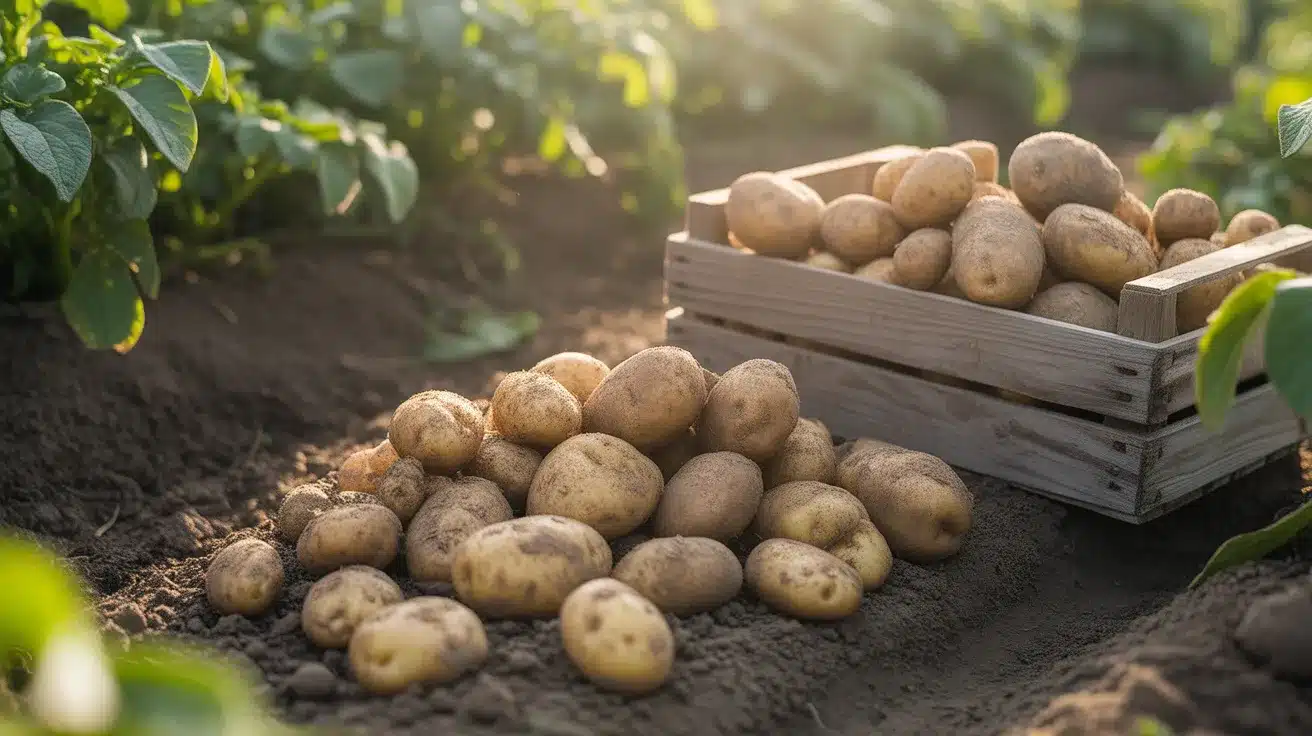
Soil type affects plant health, food production, water movement, erosion control, and building safety, since each use depends on different soil qualities. In gardening, soil guides which plants will grow well, how often you water, and how much compost your beds need to stay productive.
In farming, growers match crops and feeding schedules to the specific conditions of each field, since the wrong pairing can hurt yields.
In construction, dense or shifting soil can affect foundations, drainage, and long-term structural stability, so builders often test soil before breaking ground.
Healthy soil also slows erosion, filters water, and supports the insects and microorganisms that keep local ecosystems balanced.
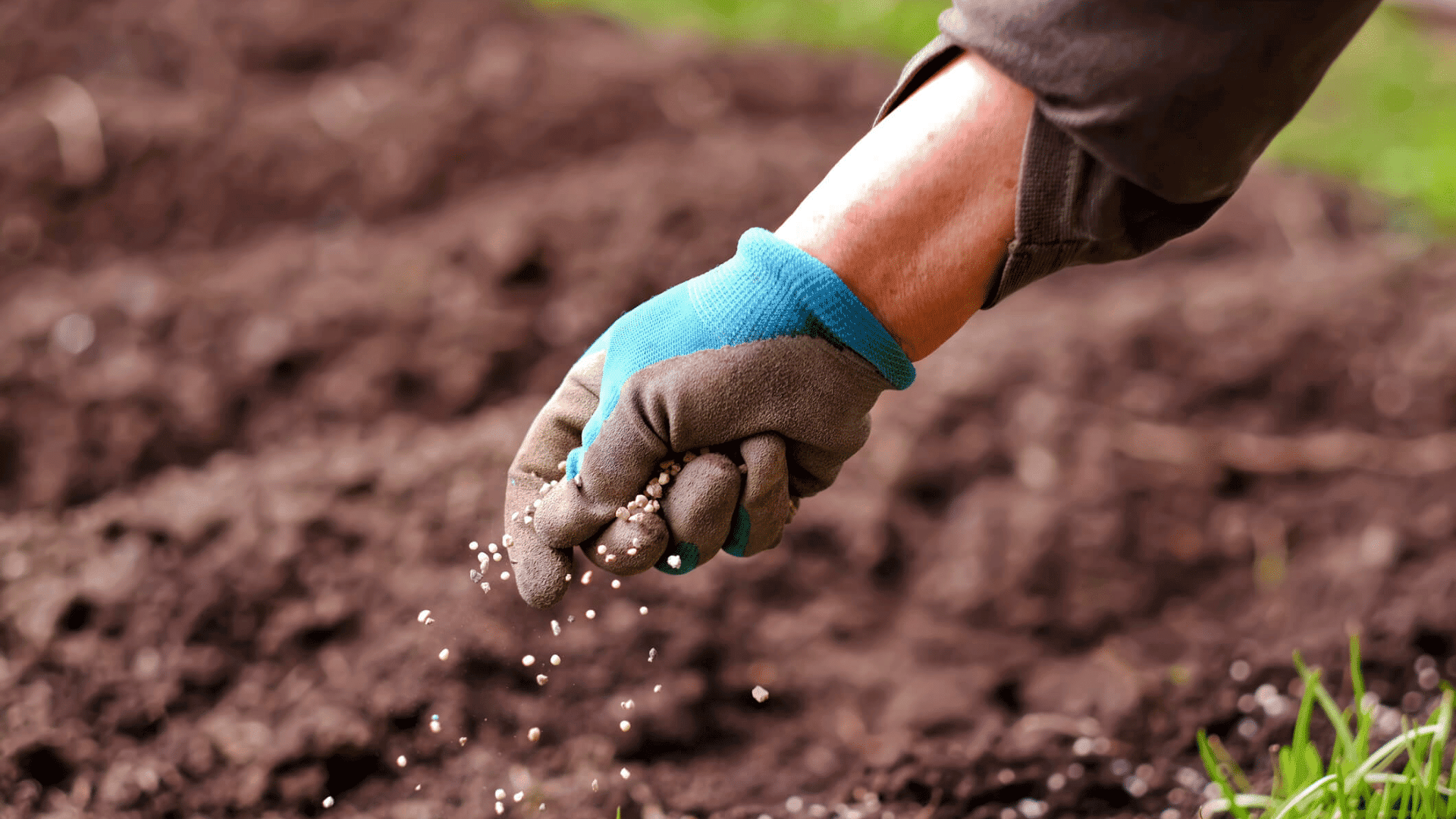
You can improve most soils by adding compost, reducing compaction, and testing before making large changes, since every yard responds differently to treatment. Small, steady adjustments protect soil structure, support stronger roots, and save you time and money compared to guesswork.
How to Manage and Improve Different Soil Types
Different soils need different care because they hold water, air, and nutrients in different ways.
- Sandy Soil: Add compost and mulch to improve moisture and nutrient holding. Water when the soil becomes dry.
- Clay Soil: Mix in organic matter to improve structure and drainage. Avoid digging or walking on it when wet.
- Silt Soil: Add compost and keep the surface covered to reduce erosion and crusting.
- Loamy Soil: Maintain its balance with regular compost, mulch, and gentle cultivation.
- Peaty Soil: Check drainage and test pH before adding lime or fertilizer. Choose plants that prefer acidic conditions.
- Chalky Soil: Add organic matter to improve moisture holding and choose plants suited to alkaline conditions.
Small, regular improvements work better than changes made all at once.
Frequently Asked Questions
How deep should a soil sample be?
For lawns and garden beds, collect several samples from a few inches below the surface after clearing away leaves and mulch. Mix samples from areas with similar soil conditions together so the final result reflects the space as a whole.
When is the best time to test soil?
The best time to test soil is when the ground is workable and not freshly soaked. Testing in autumn gives time to improve conditions before spring planting, and you can test when starting a new bed or when plants struggle.
Do earthworms improve soil?
Earthworms create channels that let air and water move more freely through the ground, and their waste adds nutrients as they feed. Worm activity depends on moisture, food supply, temperature, and your local soil conditions.
Should sand be mixed into clay soil?
Adding a small amount of sand to clay soil can actually make it harder and more compact rather than looser. Organic matter is usually the safer choice, since it gradually improves air spaces, drainage, and root movement.
How often should compost be added?
Many gardens benefit from a thin layer of compost added once or twice each year to refresh nutrients and structure. The right amount depends on your soil condition, the needs of your plants, and how mature and strong the compost is.
Final Takeaway
Understanding the types of soil helps you choose plants, manage water, and care for land with less guesswork. Each soil has strengths and limits. Sandy soil drains fast, while clay stores more water and nutrients.
Silt feels smooth, loam stays balanced, peat holds organic matter, and chalky ground is often alkaline.
Simple checks can reveal these patterns. Start with texture, color, drainage, and moisture. Use a soil test when you need clear details about acidity or nutrients.
Small changes, such as adding compost or reducing compaction, can improve soil over time. What soil do you have? Share its texture, color, or drainage pattern in the comments.