Using neem oil safely may seem simple, but a few small mistakes can stop it from working or even harm your leaves.
Getting good results comes down to three things: mixing it correctly, spraying at the right time, and covering the spots where pests usually hide.
I’ll walk you through the process step by step, from preparing the mixture to applying it without overdoing it, and repeating treatment only when needed.
You’ll also learn what to avoid, so your plants stay safe while pests and mild fungal issues get brought under control. By the end, you’ll know how to use neem oil on plants with confidence, keeping them healthy and better protected going forward.
What Neem Oil Is and Why It Works
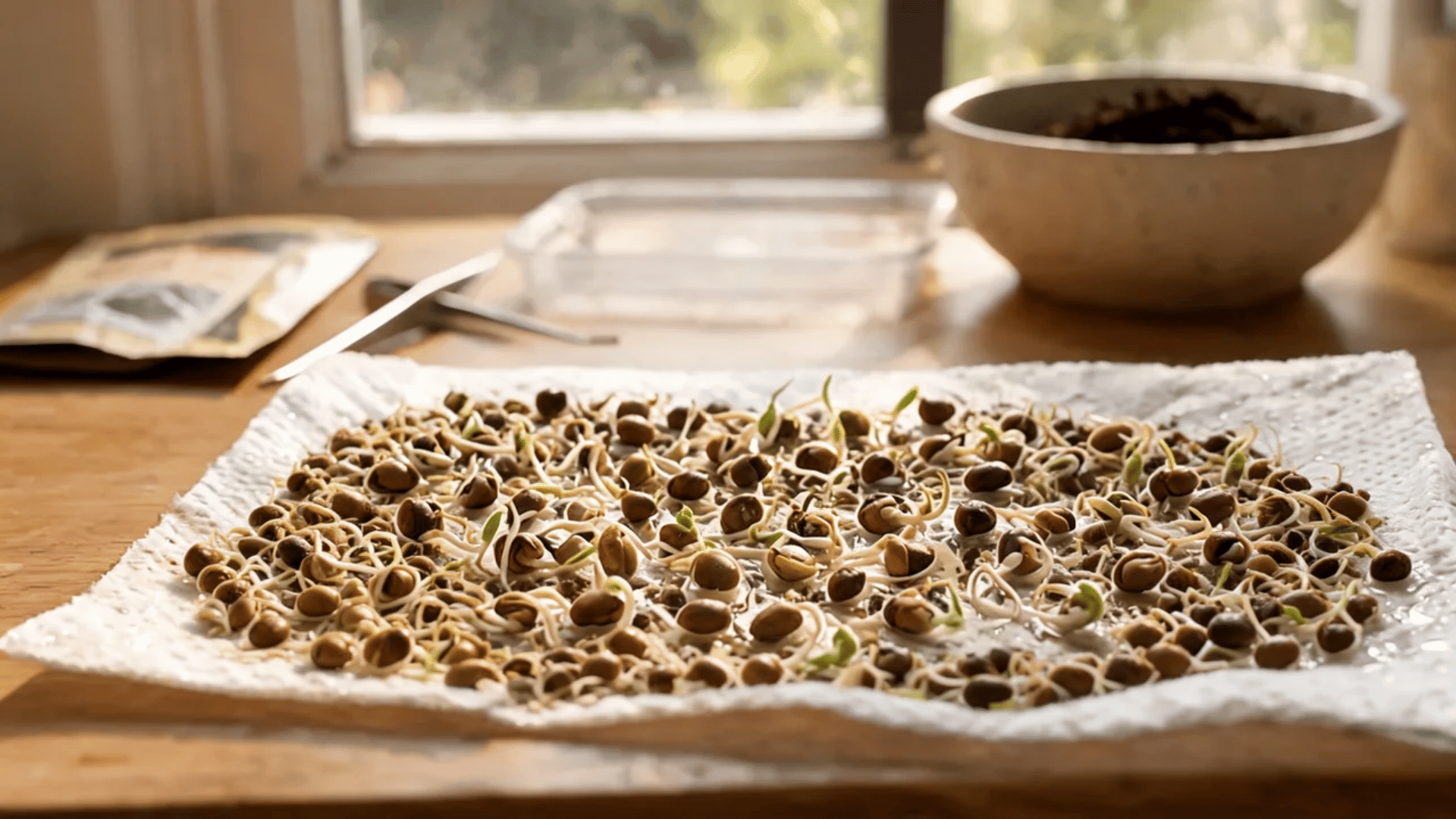
Neem oil comes from the seeds of Azadirachta indica, a tree native to the Indian subcontinent, and gardeners have relied on it for generations as a natural pest and disease control, according to the National Pesticide Information Center.
Cold-pressed neem oil contains azadirachtin, the compound responsible for disrupting insect feeding, growth, and reproduction, along with fatty acids that can suffocate soft-bodied pests on contact.
Because azadirachtin breaks down in sunlight and water within a few days, a single spray rarely finishes the job, and repeat applications matter more than one heavy dose.
Its strength also varies by extraction method and azadirachtin concentration, which is why two bottles labeled neem oil can behave differently on the same plant. Understanding this background shapes decisions about mixing ratios, timing, and how often to repeat treatment throughout each growing season, before spraying a single leaf.
Benefits of Using Neem Oil on Plants
Neem oil isn’t a fix for everything, so it helps to know where it actually works.
- Soft-bodied and exposed pests: Neem oil is most effective against aphids, spider mites, whiteflies, mealybugs, scale crawlers, and some thrips. These pests feed directly on plant surfaces, which makes them easier to reach with a spray.
- Soil pests: Neem oil can target certain soil-dwelling pests, but only when the product label specifically covers soil application for that pest. Not every neem product is labeled this way, so check before using it as a soil treatment.
- Fungal problems: Some neem products may help limit certain surface fungal diseases, like powdery mildew or black spot, when applied early, before the infection spreads. It works better as a preventive step than as a cure for an established outbreak.
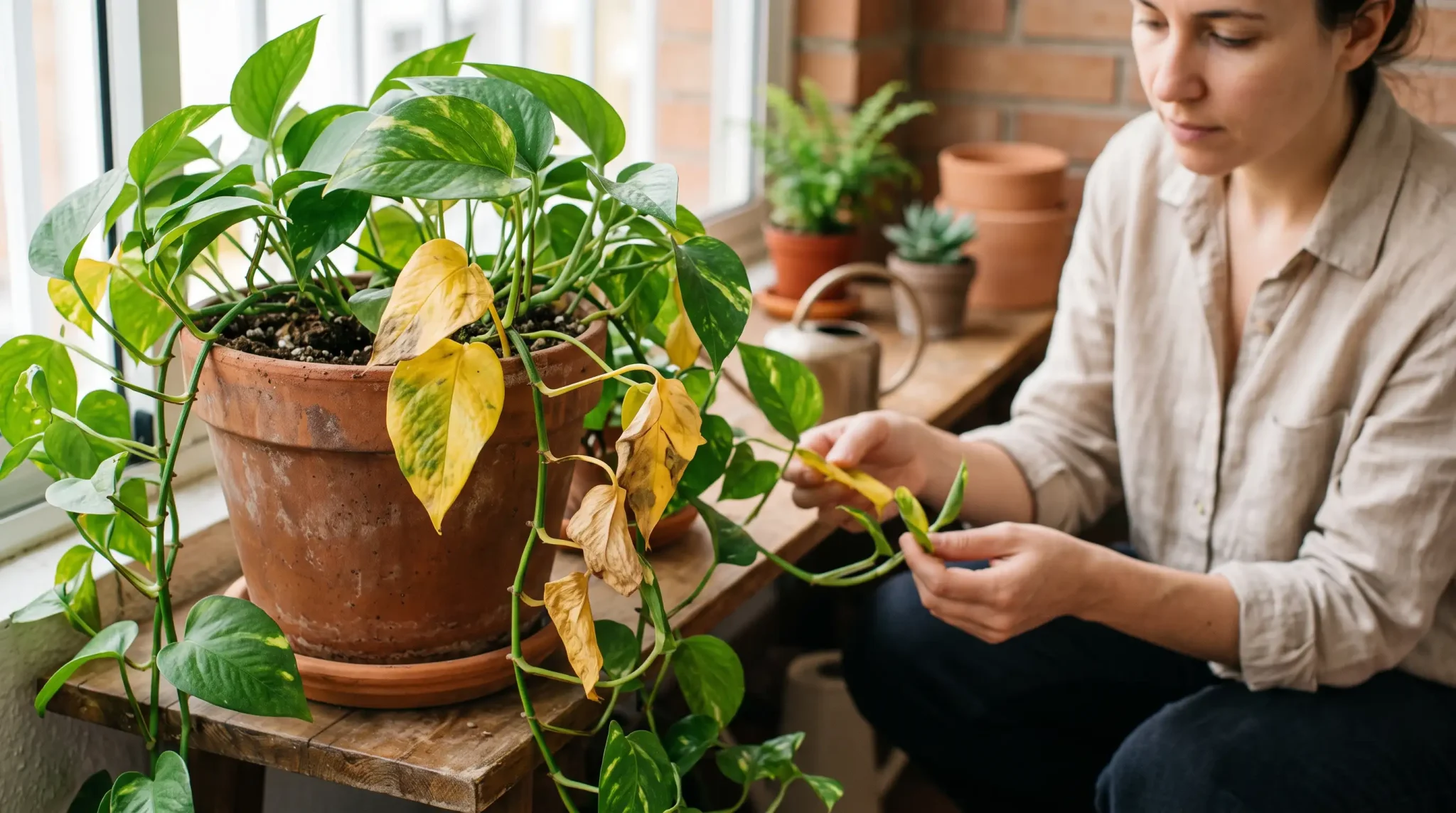
- Problems neem will not reverse: Neem oil won’t undo existing damage; chewed leaves, dead tissue, rot, wilting, or scars stay as they are. It also won’t fix overwatering, underwatering, or nutrient issues, since those aren’t pest or fungal problems.
Knowing this upfront sets realistic expectations: neem oil stops active problems and prevents new ones, but it won’t repair a plant that’s already been through the damage.
How to Use Neem Oil on Plants: Step by Step
The quick answer above walks through the process at a glance. This section breaks down each step so you can complete it safely and get the results you’re after.
Step 1: Identify the Pest or Plant Problem
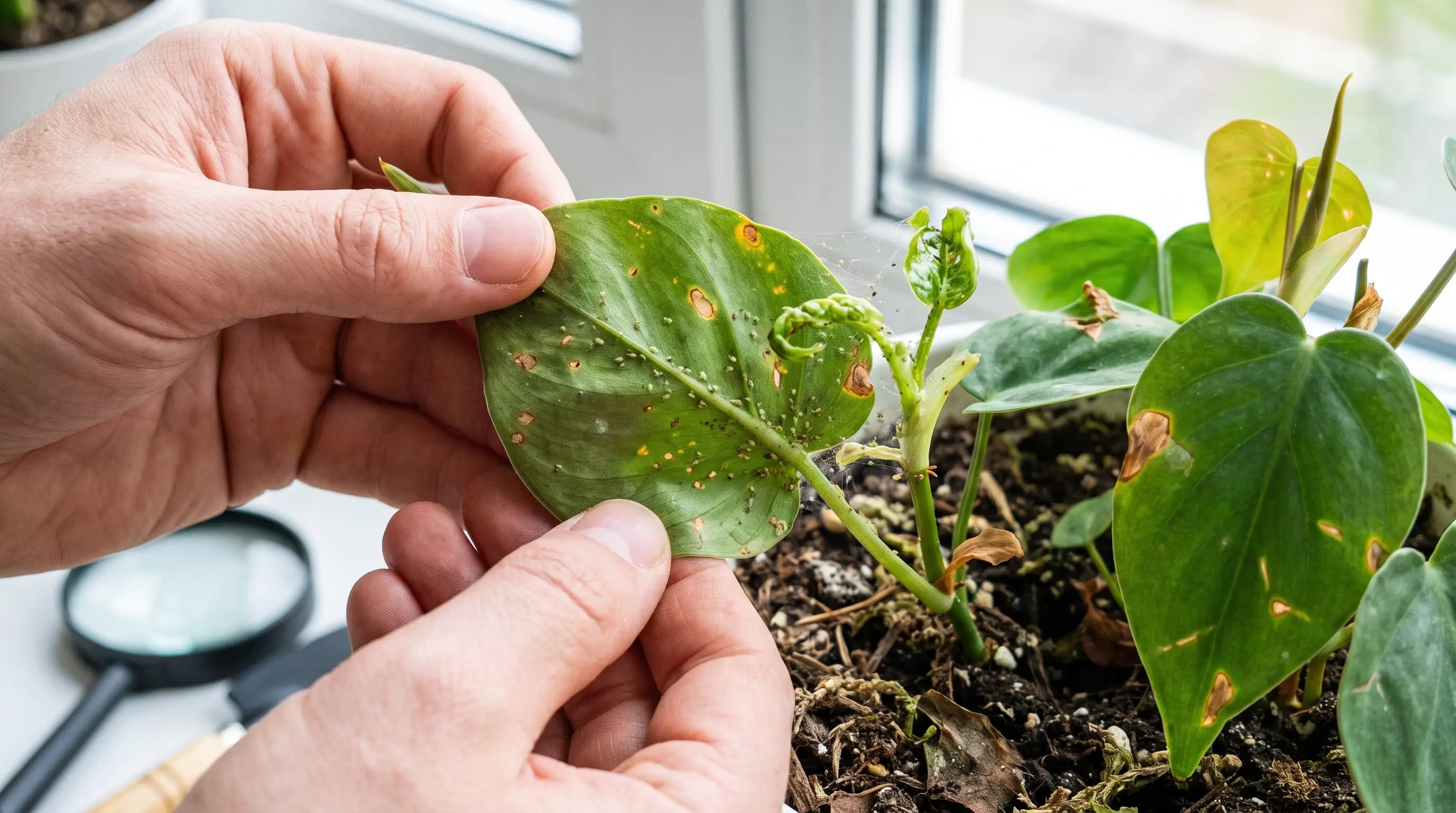
Check the plant closely before spraying. Look under leaves for aphids and spider mites, inspect new growth for feeding damage, and scan stems, joints, and soil for hidden pests.
Fresh yellow specks or webbing signal an active infestation, while dry, scarred leaves are old damage that spraying won’t undo. If pest numbers are still low, rinse or wipe them off by hand first, before treating.
Step 2: Check the Neem Product
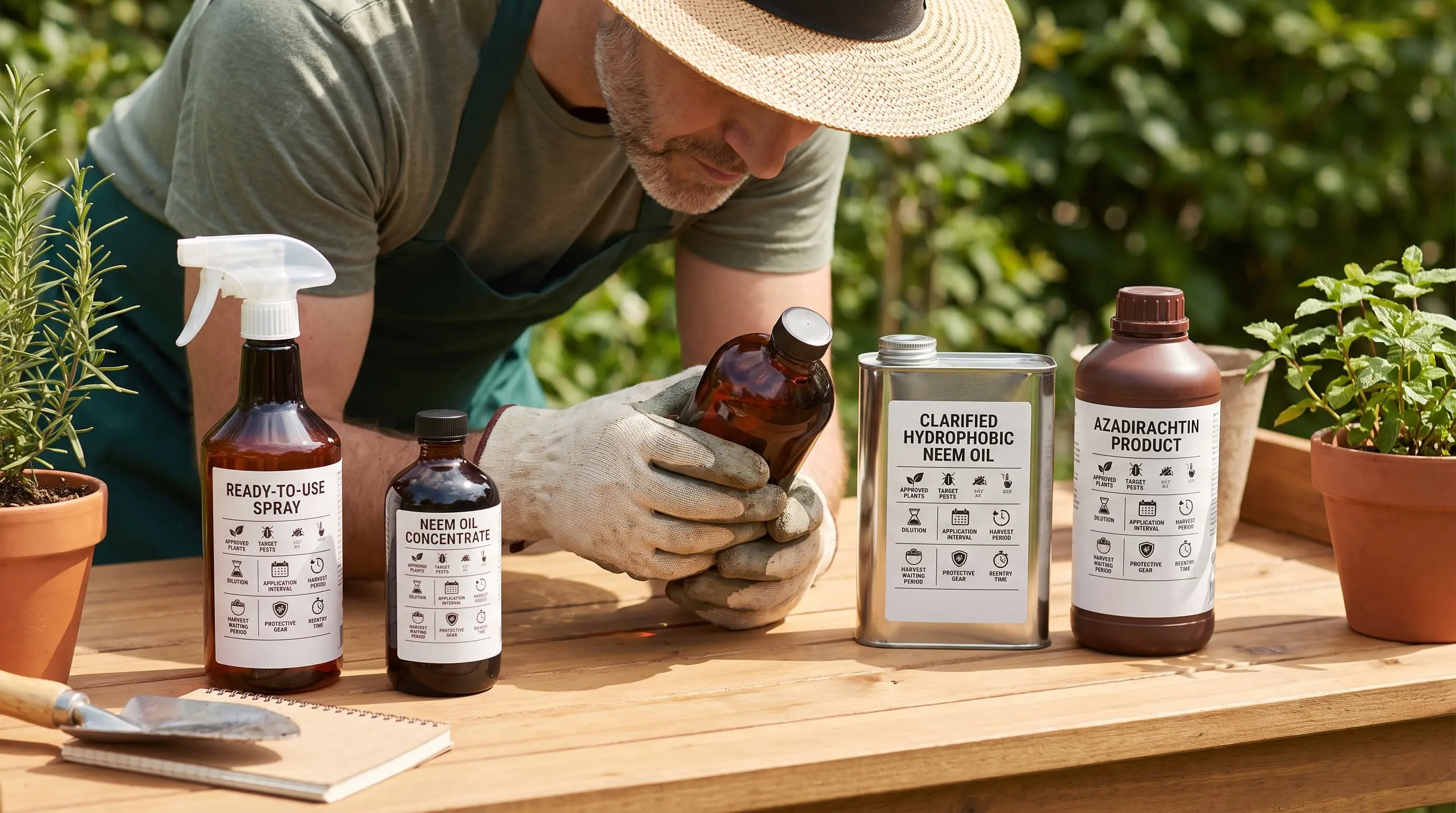
Not all neem products work the same way. Ready-to-use spray goes straight onto the plant, while concentrate needs mixing with water and usually an emulsifier.
Clarified hydrophobic neem oil targets fungal problems like rust or powdery mildew, and azadirachtin-based products isolate the main active compound, often paired with soap. Always check the product label carefully before choosing a method, since formulations and dilution rates vary widely.
Before using check the label for: Approved plants and target pests, Dilution rate, reapplication interval, and harvest wait time, Protective gear needed
Step 3: Test One Small Area
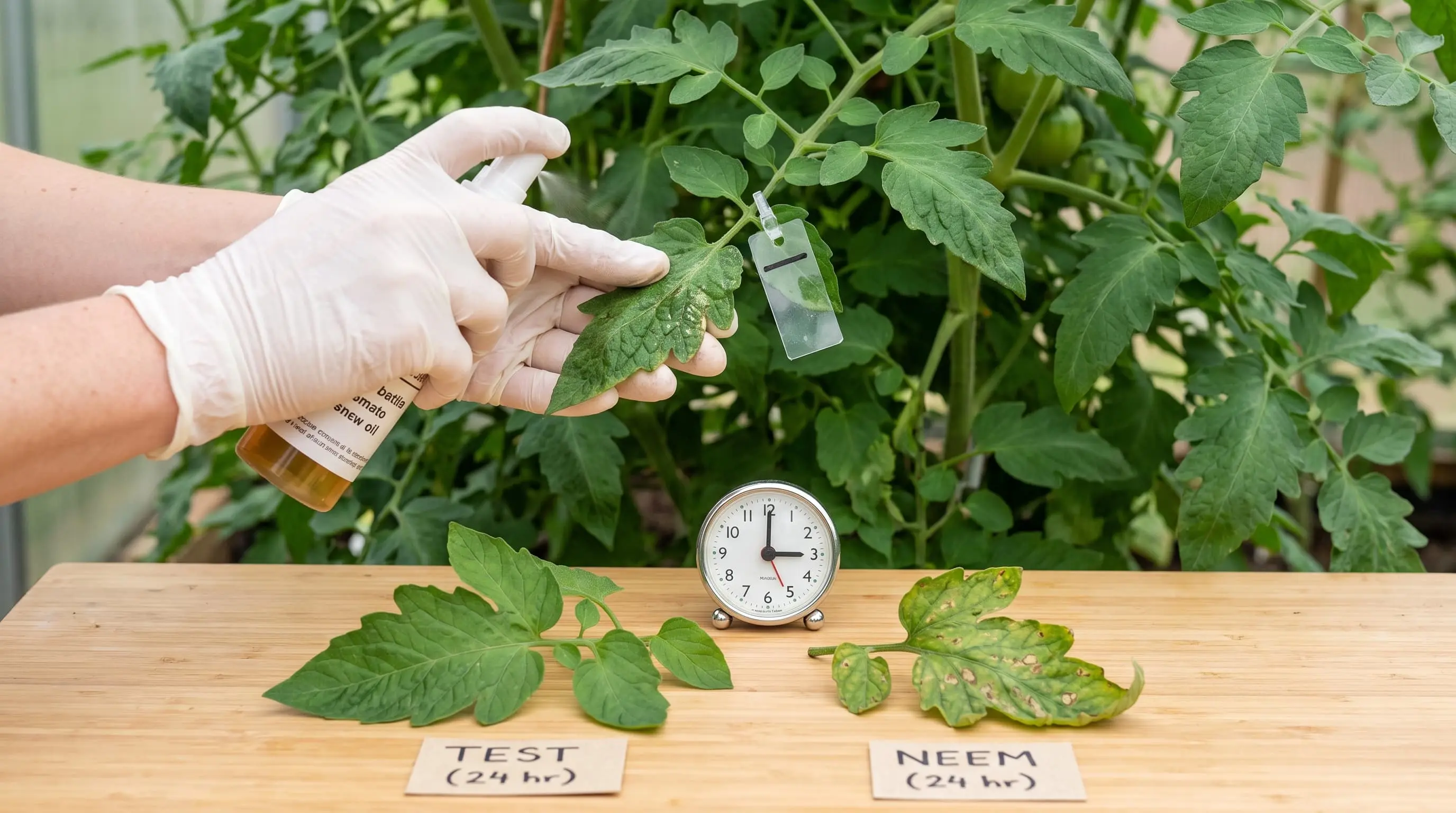
Apply a small amount to one leaf, then wait 24 hours before checking it. Spotting, curling, yellowing, or discoloration means the plant may be sensitive, so rinse the leaf, skip the rest of the plant, and consider diluting the mixture further before trying again.
No reaction after 24 hours means it’s generally safe to treat the whole plant, though sensitivity can vary somewhat by plant.
Step 4: Prepare a Fresh Mixture
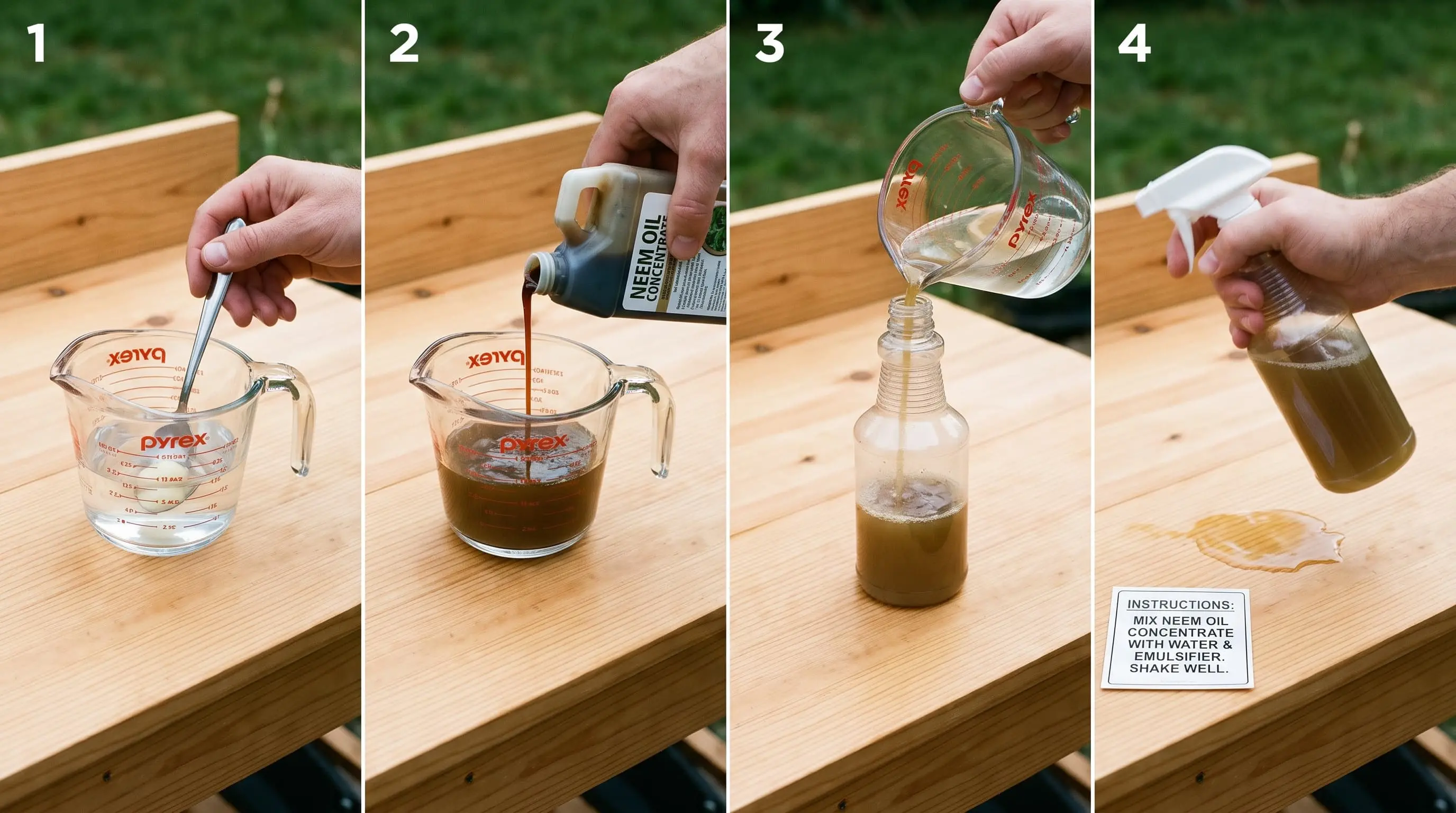
For concentrates, follow the label’s ratio, mixing warm water, then soap, then neem oil, and shaking often since the oil separates fast. Mix only what you’ll use that day, since diluted neem loses strength quickly.
A starting ratio of two teaspoons per quart of water, with a drop of dish soap, matches the baseline used when getting rid of aphids naturally. Ready-to-use sprays skip this step.
Step 5: Spray the Plant Thoroughly
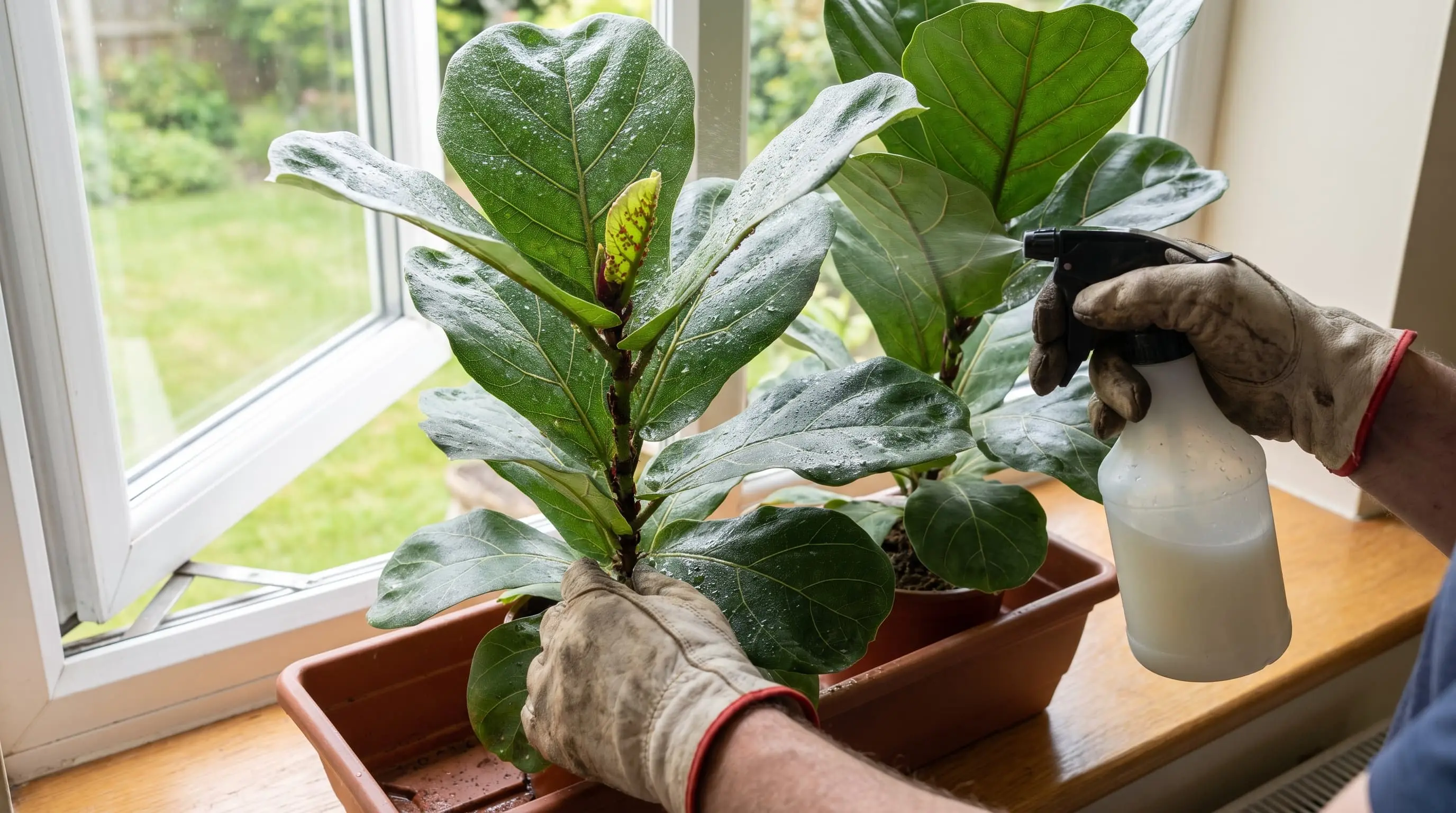
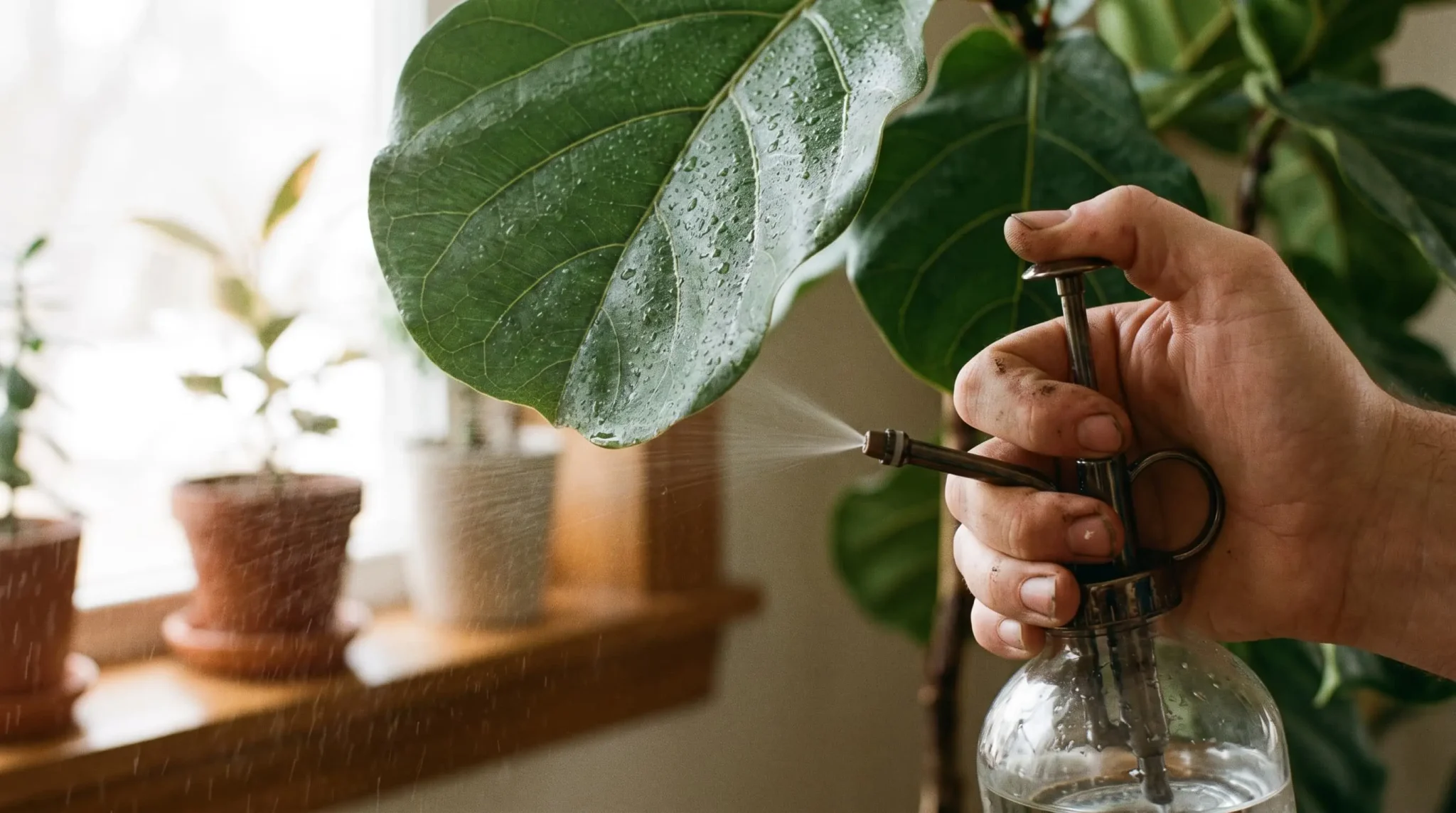
Coverage matters more than strength. Cover upper and lower leaf surfaces, stems, leaf joints, new growth, and any spot with visible pests, aiming for an even, light coating rather than dripping wet leaves that waste product and raise the risk of runoff onto surrounding soil.
For indoor plants, spray over a washable surface with good airflow, and move the plant away from furniture until it dries fully.
Step 6: Let the Plant Dry, Then Inspect and Repeat When Needed
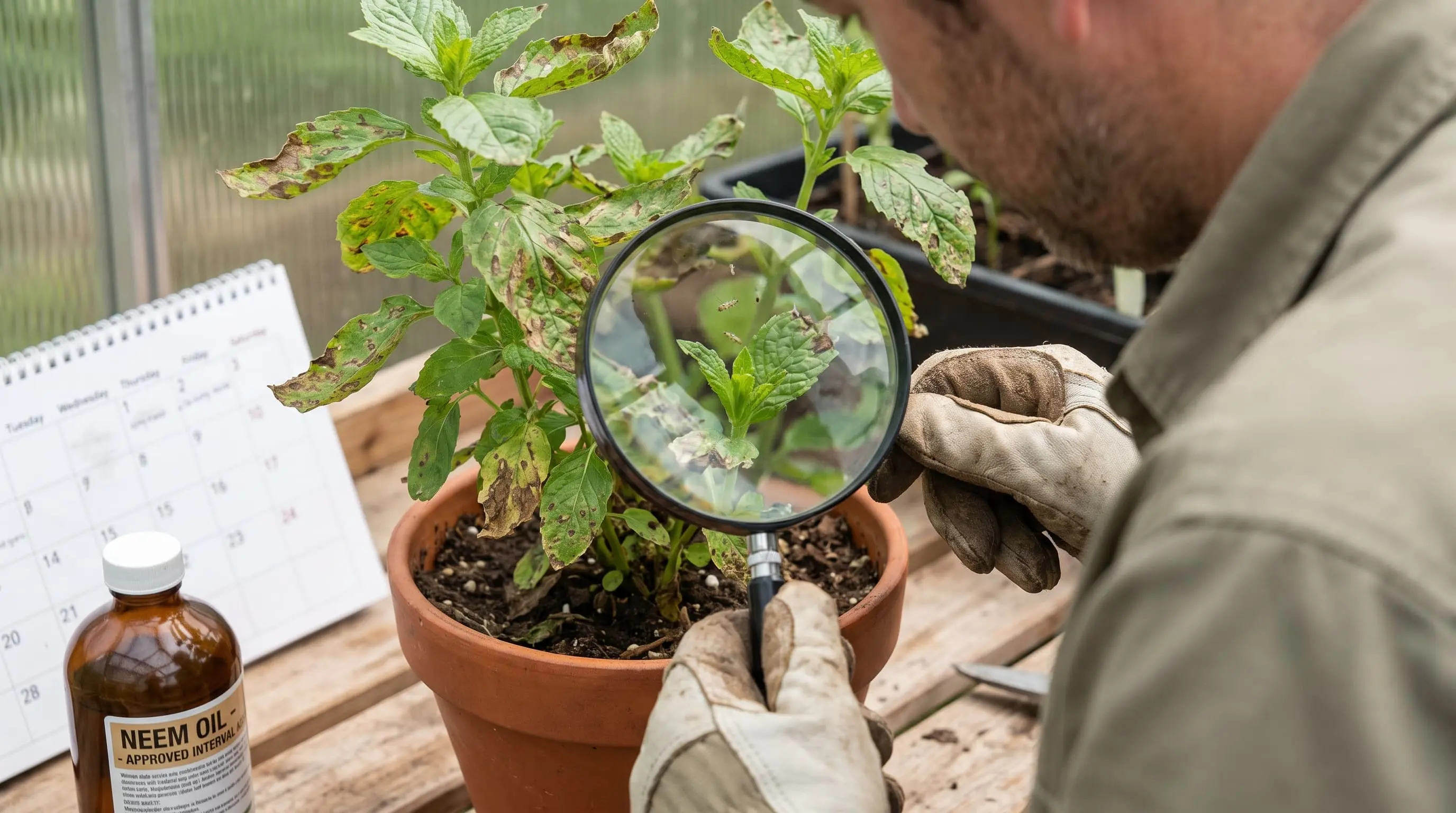
Keep the plant out of strong direct light while leaves are still wet, and avoid spraying outdoors before rain, during a heat wave, or in midday sun. Drying times vary by product, so check the label instead of guessing.
Once dry, watch for fewer active pests, new damage, or continued fungal spread, and repeat treatment only as often as the label allows, usually every 7 to 14 days.
Choose the Right Neem Oil Application Method
Spraying works for most situations, but where the problem sits on the plant decides how you should apply neem oil. Here’s a quick breakdown of the main methods and when each one fits.
| Application Method | Best Used For | How to Apply | Important Notes |
|---|---|---|---|
| Foliar Spray | Pests and fungal problems on leaves, stems, and new growth | Spray the tops and undersides of leaves, along stems, and into leaf joints | Direct contact is important. Cover the places where pests feed, hide, or lay eggs |
| Soil Drench | Problems in the soil, only when the product label approves this use | Dilute the neem oil and pour the mixture into the soil instead of spraying the leaves | Not every neem product is suitable for soil use. Check the label for your plant and pest |
| Leaf Wipe for Houseplants | Dust and visible pests on broad, smooth leaves | Dampen a soft cloth with the neem mixture and gently wipe the leaves before or after spraying. | Avoid using this method on fuzzy, fragile, or densely packed leaves |
| Dormant Application | Pests and eggs overwintering on outdoor trees and shrubs | Apply during the dormant season before new growth begins | Use only if the label allows dormant-season treatment. Follow directions for timing, temperature, and bud stage |
Key point: Choose the method based on where the pest or problem is located, not on personal preference.
Best Times and Intervals for Neem Oil Use
Timing and frequency work together; get one wrong, and the other won’t do much good. The best window for spraying is early morning or evening, when the sun is weaker and pollinators are less active. Spraying in strong midday sun or heat raises the risk of leaf burn.
Skip outdoor applications if rain is expected within 24 hours, since it washes the mixture off before it can work, and for indoor plants, keep leaves out of direct light from bright windows or grow lights while still wet.
How often to spray depends on the situation. Active infestations usually need treatment every 5 to 7 days until pest numbers drop, while preventive spraying can be spaced out every 2 to 4 weeks.
A seven-to-ten-day interval, along with a morning or evening application window, is a common baseline across several natural pest repellents for a chemical-free garden, not just neem oil alone.
Since formulas vary in strength, a stronger mixture or more frequent spraying isn’t automatically better; it just raises the risk of leaf damage. The product label is the final word on timing and frequency, so let it determine the schedule rather than applying one routine to every plant.
What Gardeners Say Works Best
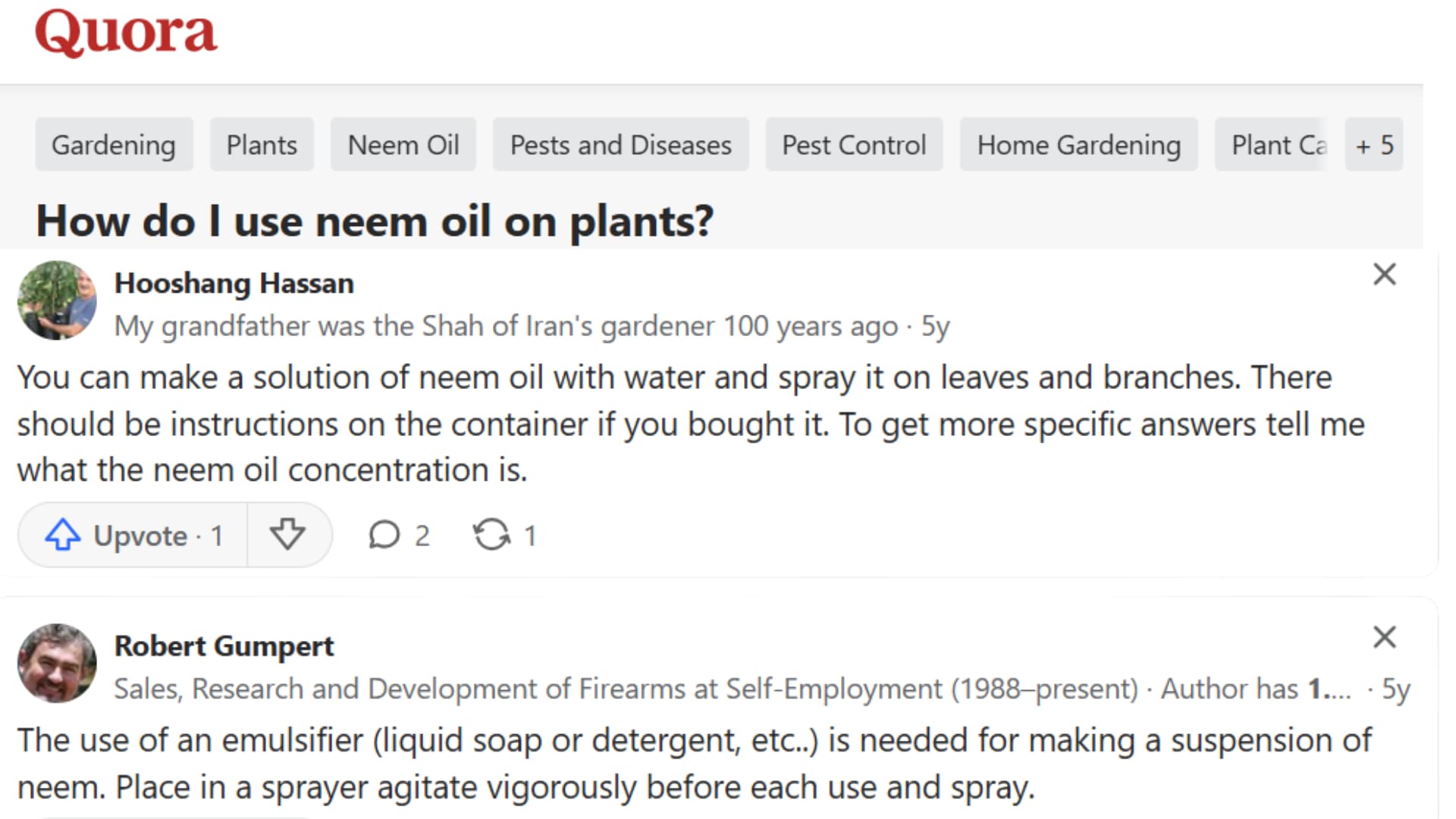
This Quora chat mentions that long-time neem oil users tend to repeat a few of the same practical points. Mixing neem oil with water and spraying it directly onto leaves and branches is the most common method described, and an emulsifier such as liquid soap or dish detergent is almost always mentioned as necessary, since neem oil and water don’t blend on their own.
Mixing habits vary. Some gardeners start with warm water, then add a small amount of neem oil and a few drops of dish soap, adjusting the ratio based on how concentrated the product is. A smaller number mention using neem oil as a soil drench, though this comes from personal habit rather than a labeled direction, so it’s worth confirming with the product itself or a source like UNH Extension before trying it.
Timing gets brought up almost as often as mixing. Spraying before rain, on wet leaves, or in direct sun is widely discouraged, and opinions differ on how much care flowering plants need around pollinators. The one point that comes up again and again: check the product label before treating any single method or ratio as a rule for every plant.
Special Precautions for Neem Oil Use
Neem oil can do a lot for your plants, but not every plant reacts to it the same way. A few situations call for a slower, more careful approach before you spray.
| Situation | Details |
|---|---|
| General caution | Reactions depend on the plant, its condition, the product, and the weather, so a few situations need extra care. |
| Weakened or stressed plants | Seedlings, new transplants, and wilted, drought-stressed, or overwatered plants burn more easily since they’re already under strain. |
| Leaf type | Fuzzy leaves can trap the mixture and irritate the surface. Waxy, blue-gray leaves may lose that coating on contact with oil. |
| Flowers with pollinator visits | Skip spraying, since neem oil can affect bees and other visiting insects. |
| Sensitive plants | Succulents, cacti, and herbs like basil, cilantro, or dill are sometimes flagged as sensitive, but this varies. Check the label and patch test first. |
Even with the right precautions, small mistakes can still happen along the way. Here’s how to spot them early and fix them before they become bigger problems.
Common Neem Oil Problems and Their Fixes
Even with careful application, things don’t always go as planned. Here’s how to troubleshoot the most common issues.
- Leaves developed brown or pale marks: Stop spraying. This usually means the mixture was too strong, or the plant was sprayed in heat, direct sun, or while already stressed.
- Pests are still active: Recheck the pest ID, your spray coverage, the pest’s life stage, and whether you’re reapplying at the right interval; any of these can be the gap.
- The mixture keeps separating: Normal for neem oil. Shake it as directed, and confirm whether the product actually needs an emulsifier to mix properly.
- Leaves feel overly greasy: Too much was applied. Use a lighter, even coating next time instead of soaking the leaves.
- The plant looks worse after several treatments: Stop treating and reassess the diagnosis. Continuing without confirming the problem can make things worse, not better.
- Neem hasn’t solved the infestation: Some pests don’t respond well to neem. If the outbreak keeps spreading despite correct use, it may need a different control method.
Poor results usually mean better coverage, timing, or a product-pest match, not a stronger mixture.
Frequently Asked Questions
Can neem oil be used immediately after repotting?
No. Repotting stresses the plant, and spraying neem oil on top of that stress raises the risk of leaf burn. Wait until the plant has settled before treating it.
Why does neem oil leave white or oily marks on leaves?
Neem oil doesn’t fully dissolve in water, so a film can remain on the leaf surface, especially with too much product or an unmixed batch. A lighter, even coating helps reduce this.
Does unopened neem oil expire?
Store-bought neem oil can last a few months if kept sealed in a cool, dark place. Once mixed with water, though, it should be used the same day, since it loses strength quickly.
Should an infested houseplant be isolated after treatment?
Many plant owners keep a treated houseplant away from their other plants for about a week, which helps prevent pests from spreading before the treatment fully works.
Can neem oil harm beneficial insects after it dries?
Neem oil has little to no effect on bees, ladybugs, and other beneficial insects once it’s dried, since these insects don’t feed on the plant tissue the way pests do. Direct spraying while they’re active is what causes harm, not the dried residue.
To Sum Up
Knowing how to use neem oil on plants comes down to three things lining up: identifying the problem correctly, using the product exactly as labeled, and checking the plant between applications rather than waiting until the next spray.
It’s not a cure-all, but it can slow or stop an active pest or fungal problem when applied with care.
Community experience helps most with the practical side, coverage, isolating an infested plant, and timing sprays around sun and pollinators, while the label still decides strength and safe use.
Before mixing anything, take a moment to inspect the plant, identify the pest, and read the label. Have you treated a plant with neem oil recently? Share which plant it was and what you noticed in the comments below.