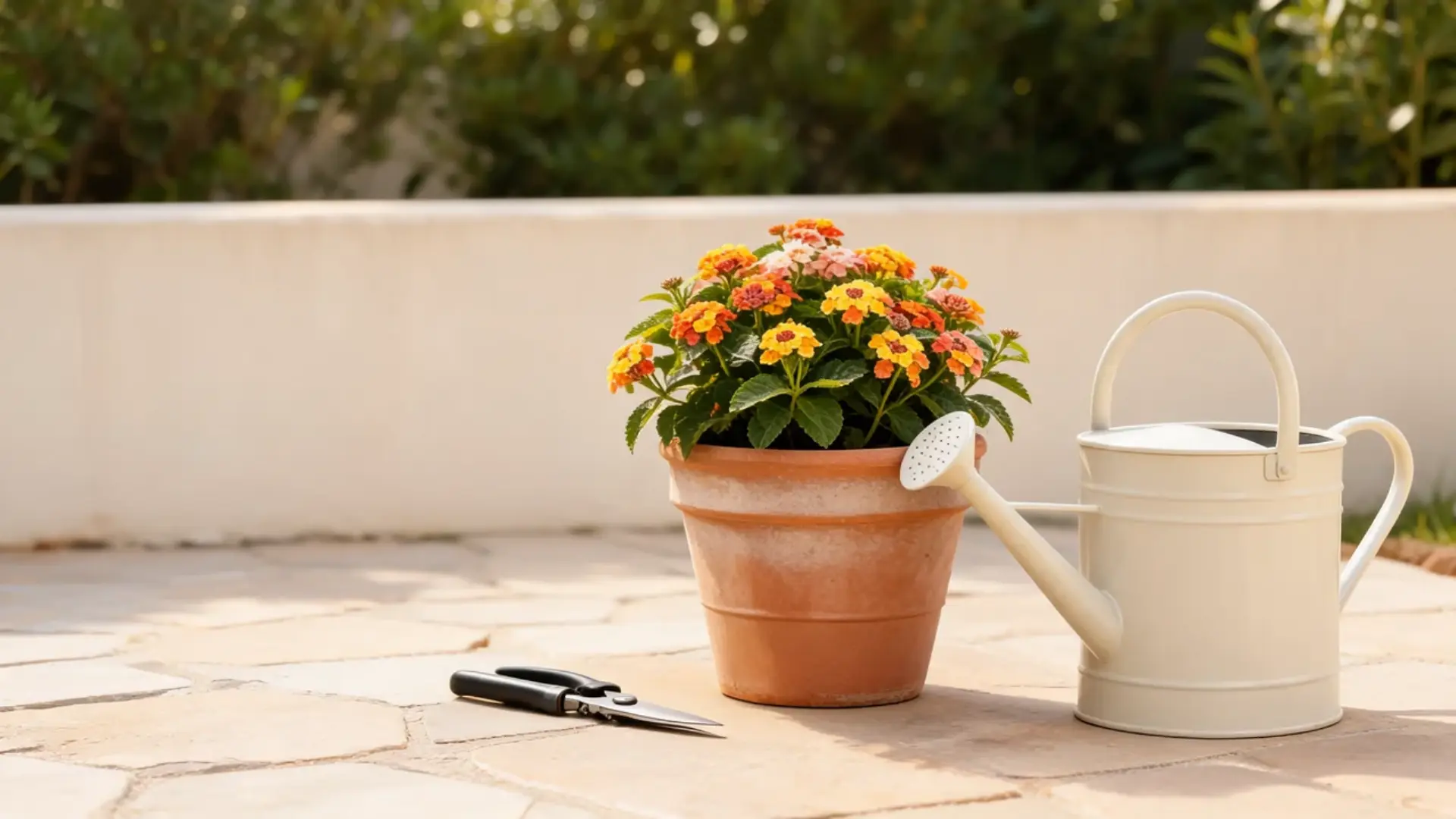
Lantana can fill a sunny garden or container with clusters of bright flowers through warm weather, but steady blooming depends on a few basic conditions. When flowering slows, the plant may still look green and healthy, which can make the cause hard to spot.
Good lantana plant care starts with paying attention to light, soil drainage, watering, temperature, and routine trimming instead of reaching for fertilizer first.
Container plants also need extra attention because their soil dries faster and their roots have less space.
You will learn the key care methods for healthy lantana, including pruning, deadheading, seasonal maintenance, common problems, and what to check when flowering slows or the plant shows signs of stress.
What Is Lantana?
Lantana is a warm-season flowering plant known for clusters of small colorful blooms that can continue through much of the growing season. Depending on the cultivar, it may grow as a compact plant, a rounded shrub, or a trailing form suited to containers and raised pots.
Its flowers are also known to attract butterflies and hummingbirds, which makes lantana a popular choice for pollinator-friendly spaces. If you want to build out a wider pollinator garden, an understanding of the types of flowers butterflies like can help you a lot.
Growth can be fast in warm weather, but final size and shape depend on the variety, sunlight, temperature, and available space.
In some warm regions, lantana can spread by seed and may be considered invasive, so local planting recommendations should be checked before growing it as a perennial.
How to Do Lantana Plant Care
The main needs of lantana are straightforward, but each one affects flowering and growth in a different way. A strong care routine starts with enough direct sun, well-draining soil, warmth, and watering that matches the plant’s stage and location.
Fertilizer, deadheading, pruning, and seasonal checks come after those basics. Working through these needs in order makes it easier to correct problems before they affect the whole plant.
1. Sunlight Exposure
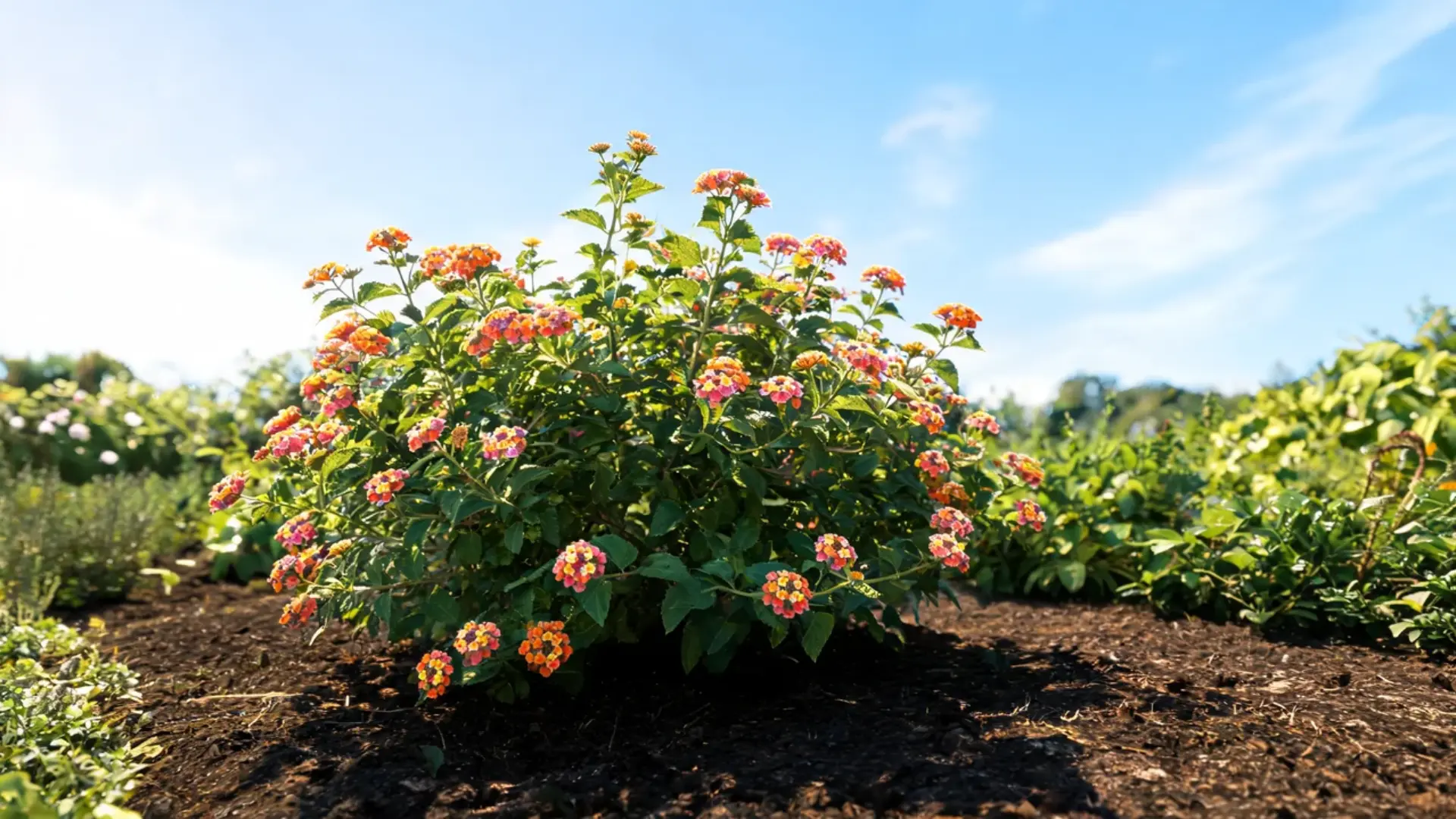
Lantana flowers best when it receives at least six hours of direct sunlight each day. A plant in too much shade may keep producing green leaves while forming fewer flower clusters.
Check container positions again as the season changes because trees, shrubs, fences, or patio furniture can block light that was available earlier. If blooming drops, watch the plant’s location through the day before changing anything else.
2. Soil and Drainage
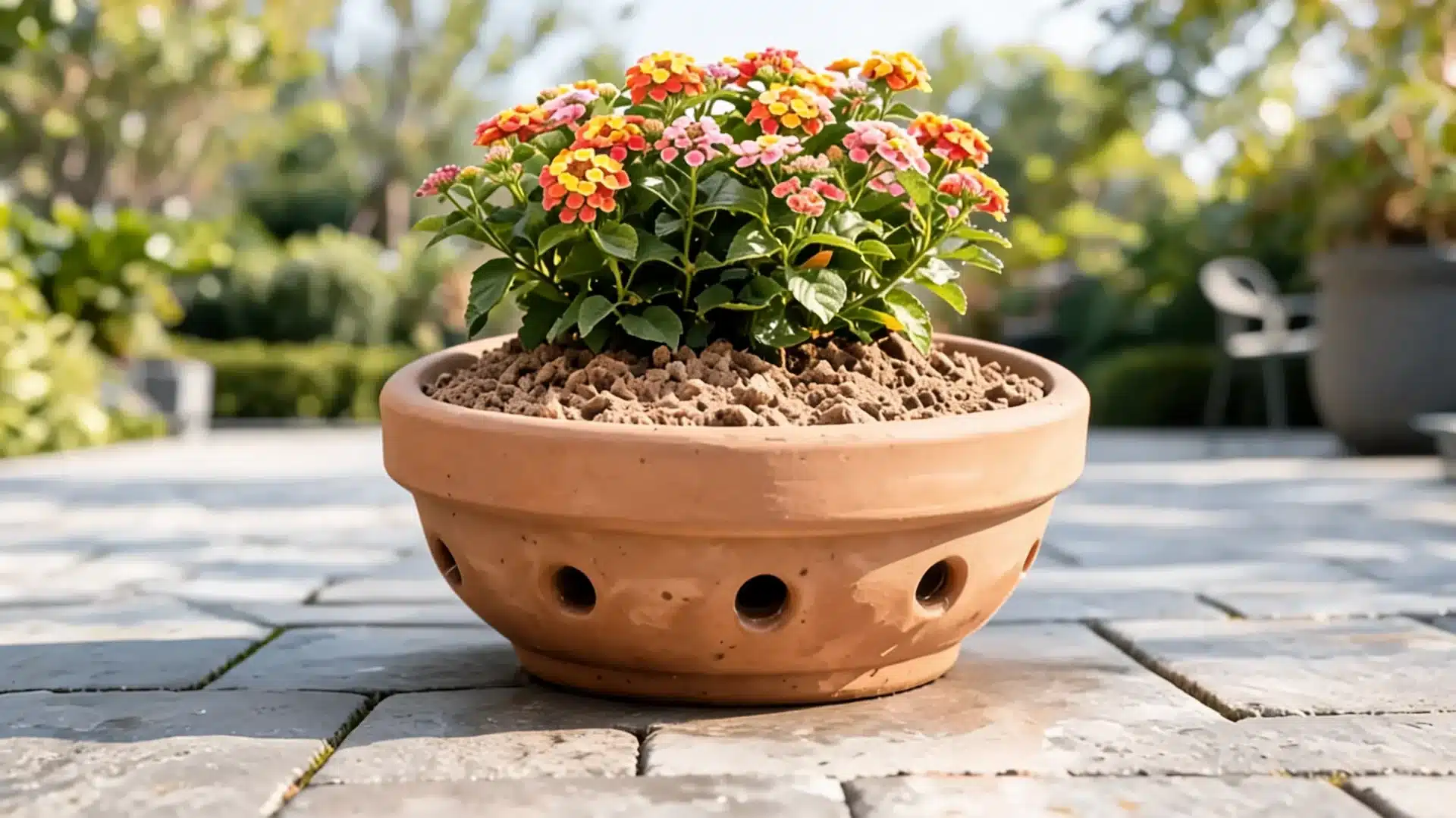
Lantana can grow in different soil types, but the root area must drain freely. Soil that stays wet for long periods limits airflow around the roots and can lead to root rot.
For containers, use a well-draining potting mix rather than garden soil. Choose a pot with open drainage holes and avoid using a container that is much larger than the root ball.
3. Temperature Requirements
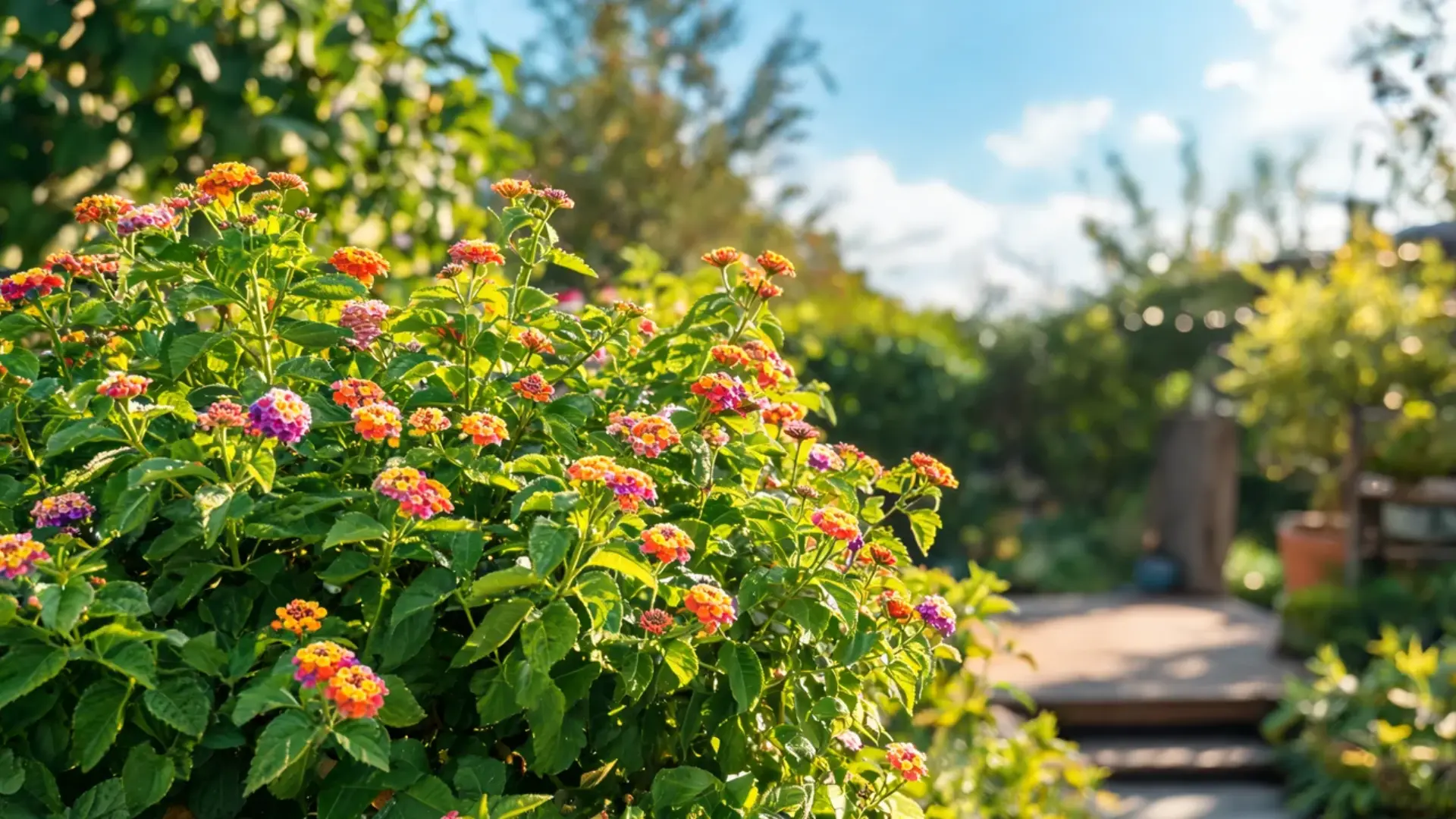
Lantana grows most actively in warm conditions and should not be planted outdoors until the danger of frost has passed. It performs best in temperatures above about 55°F, although cold tolerance differs by cultivar and region.
Container plants are easier to protect because you can move them to a sheltered place when colder weather arrives or frost is expected.
4. Watering and Hydration
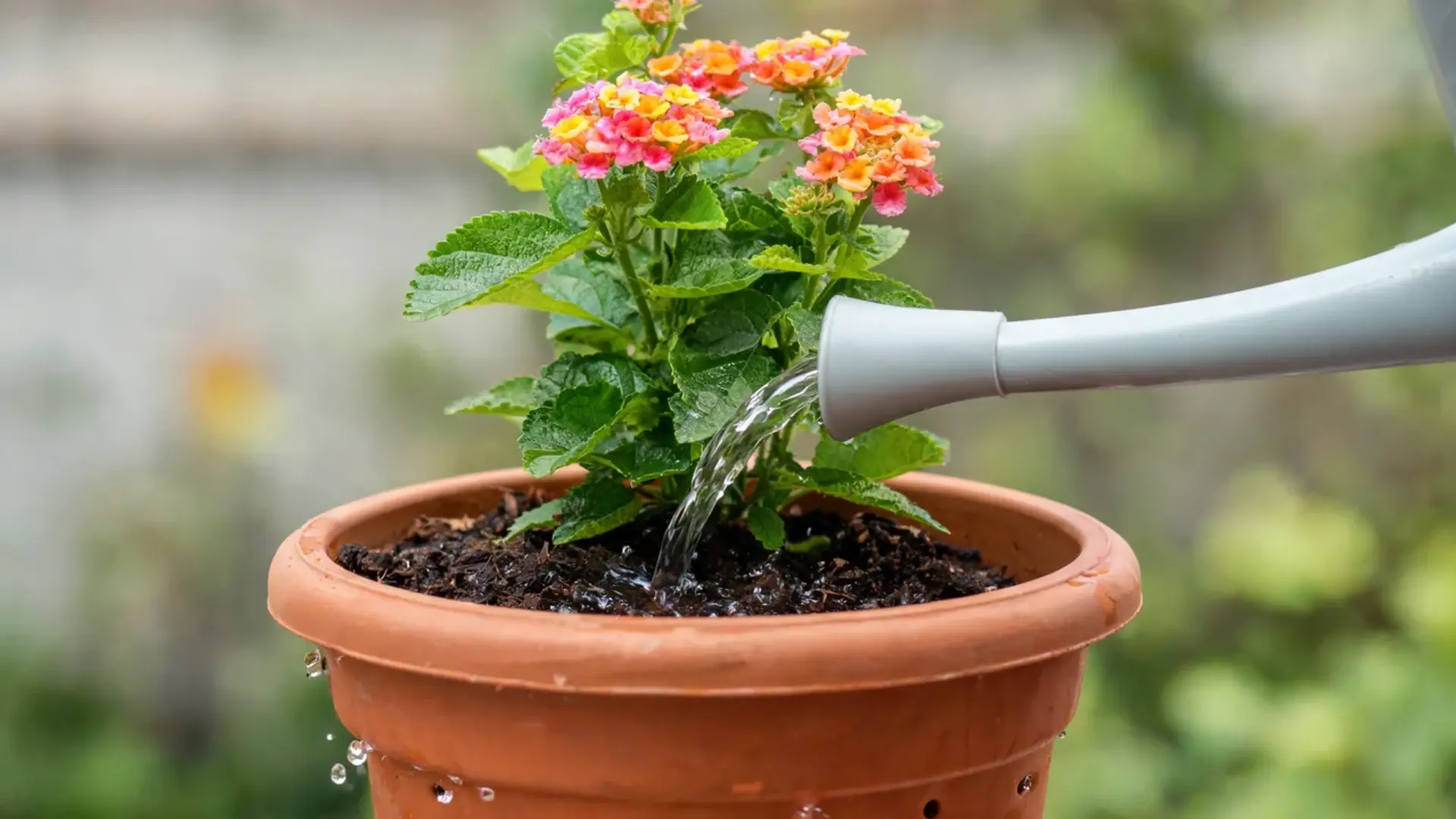
Watering needs change as lantana becomes established. Keep newly planted lantana consistently moist for the first few weeks without leaving the roots waterlogged.
Established plants tolerate dry conditions better, but long dry periods can slow growth and flowering. Pots dry faster than garden beds, especially in heat or wind. Water containers slowly until excess water drains out, then empty any water left in the saucer.
5. Fertilizing the Plant
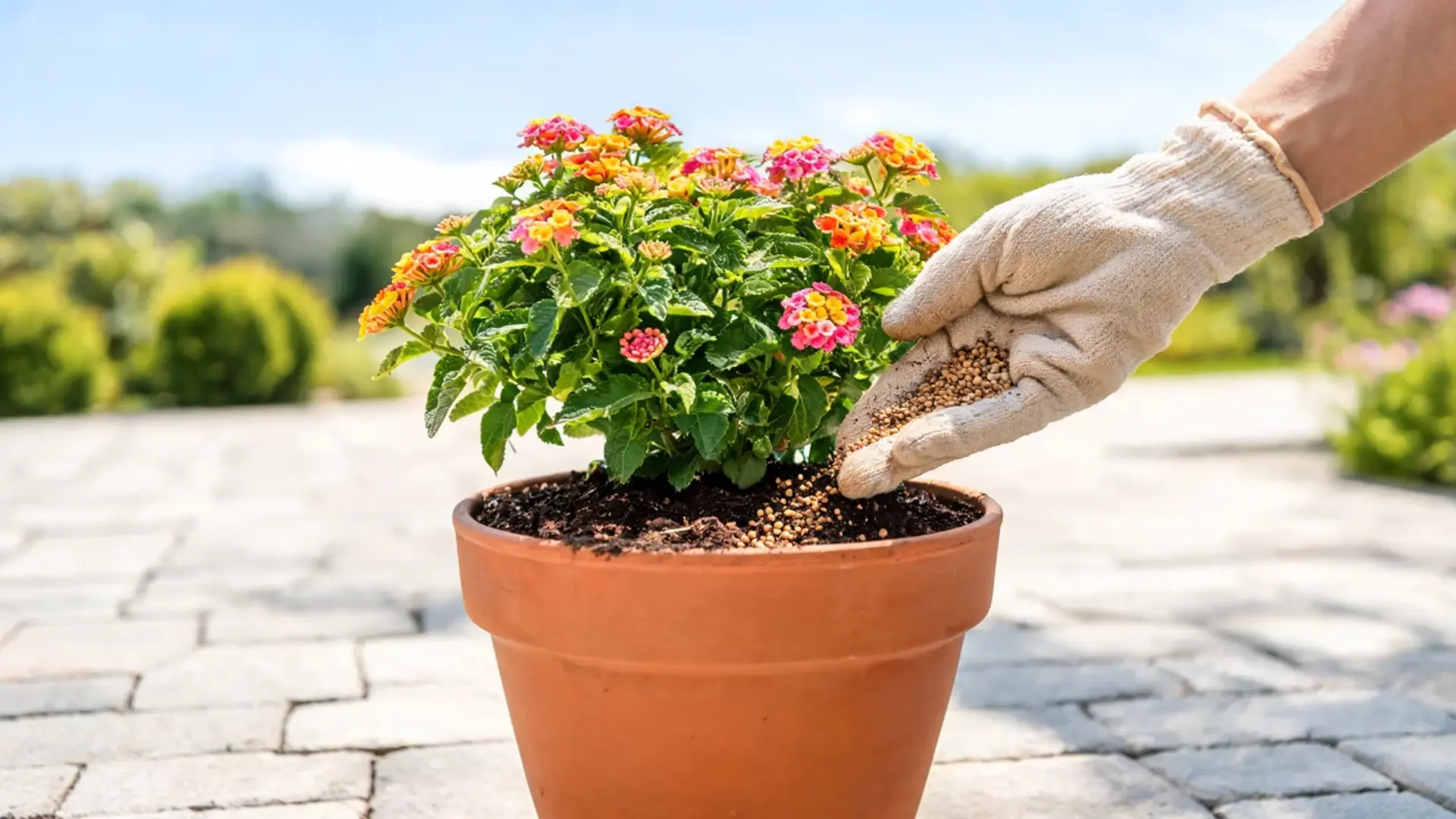
Lantana usually does not need heavy feeding. Too much fertilizer, especially a high nitrogen product, can push the plant toward leafy growth instead of flowers.
Container plants may need feeding more often because watering carries nutrients out through the drainage holes. Follow the fertilizer label and judge the plant’s condition first. If flowering drops, check sunlight, drainage, and moisture before adding more fertilizer.
6. Seasonal Maintenance
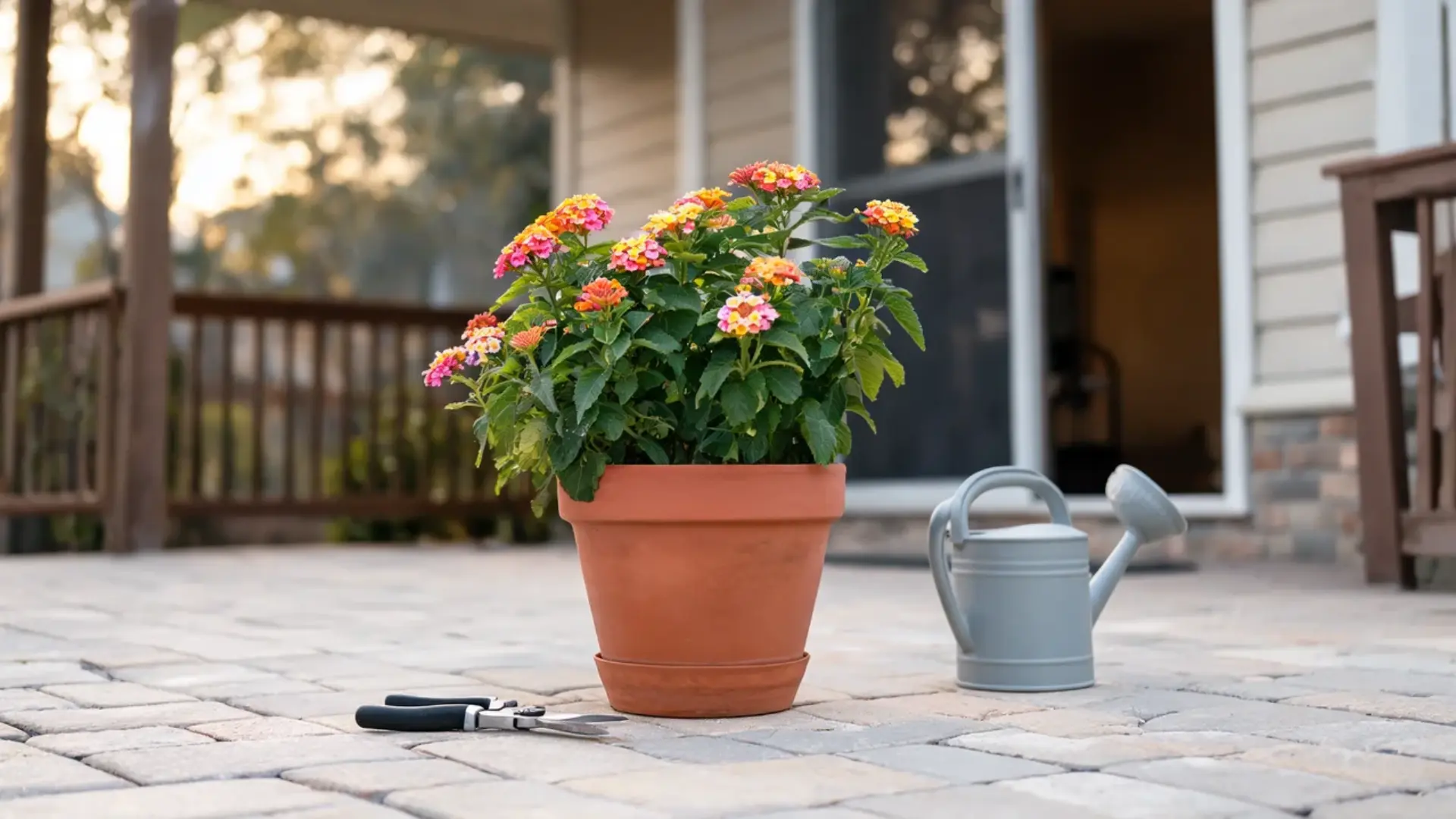
Care changes as the seasons shift. In spring and summer, move pots outside after frost danger passes, remove dead growth, check drainage, water more often during hot weather, and watch for pests.
In fall and winter, reduce watering and fertilizer as growth slows, avoid severe pruning, and protect plants from cold. Dormant lantana needs much less water than a plant that is actively growing.
Lantana Care in Pots vs Garden Beds
Lantana grows well in both containers and garden beds, but the care routine changes slightly between the two. The table below compares the two settings side by side so you can see where the differences matter most.
| Care Factor | Potted Lantana | Garden Bed Lantana |
|---|---|---|
| Watering | Dries out faster; check soil often during warm weather | Needs less frequent watering once roots spread into the surrounding soil |
| Drainage | Needs open drainage holes and a loose potting mix | Depends on native soil; raised beds help in heavy clay |
| Fertilizer | Often needs more frequent feeding since nutrients wash out through drainage holes | Needs lighter, less frequent feeding once established |
| Cold protection | Can be moved to a sheltered spot when frost is expected | Relies on mulch and planting location for cold protection |
Picking the right pot matters just as much as the care routine, and this container size chart guide can help you match the container to the plant. Whichever setting you choose, the same core needs apply: strong sunlight, free-draining soil, and watering that matches the season.
How to Deadhead and Prune Lantana in Pots
Deadheading and pruning both keep lantana blooming and looking tidy, but they solve different problems. Deadheading targets spent flowers, while pruning shapes the whole plant. Knowing when to use each keeps potted lantana healthy all season.
Deadheading Lantana in Pots
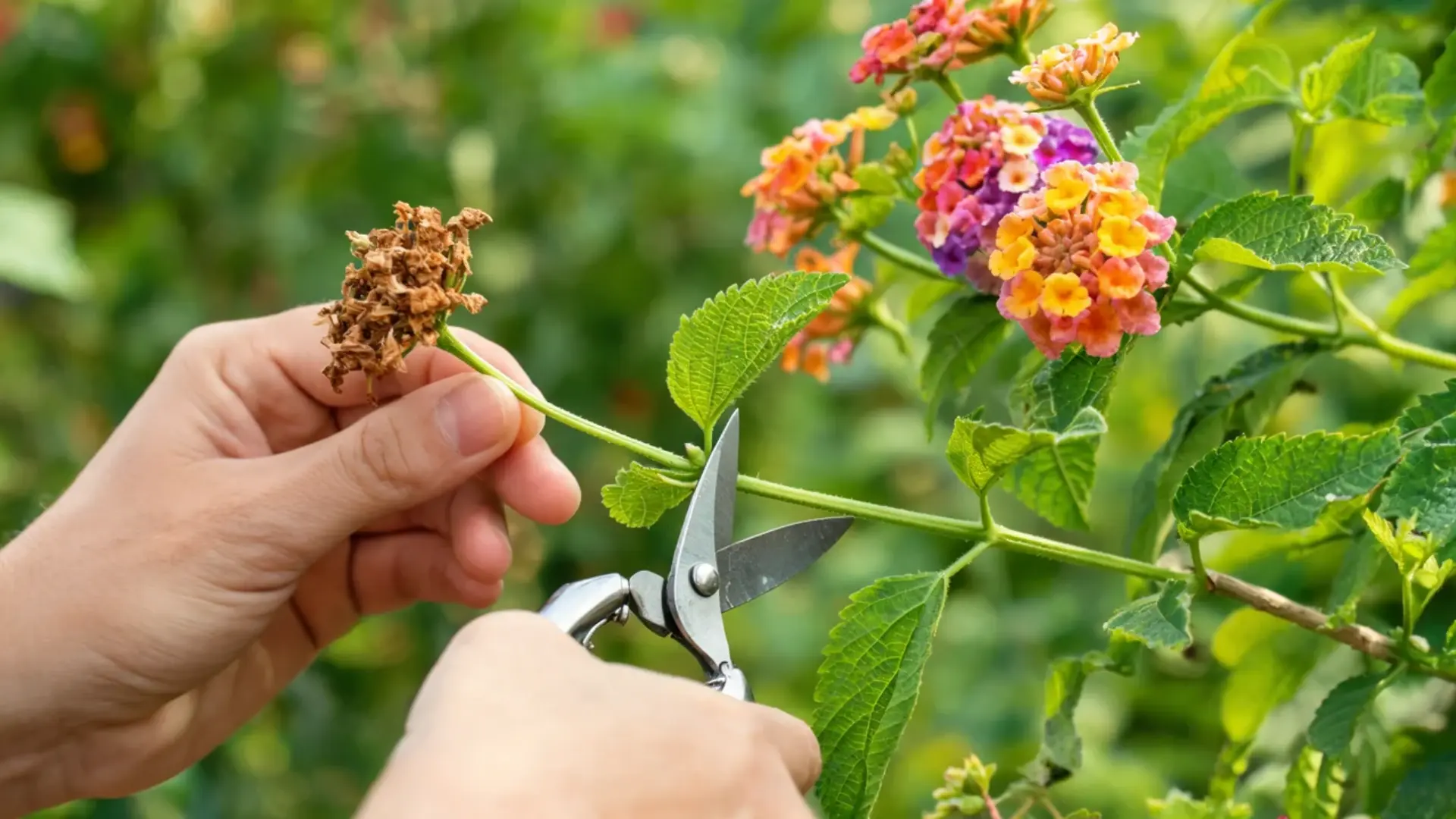
Deadheading means removing spent flower clusters before they set seed, which redirects the plant’s energy into new blooms. Wait until a cluster has mostly faded, then use clean scissors or pinch the short stem with your fingers.
Follow the stem down to the nearest healthy leaves and remove the cluster just above that point. Leave clusters with unopened buds, and collect the removed berries instead of dropping them into the pot.
Pruning Lantana in Pots
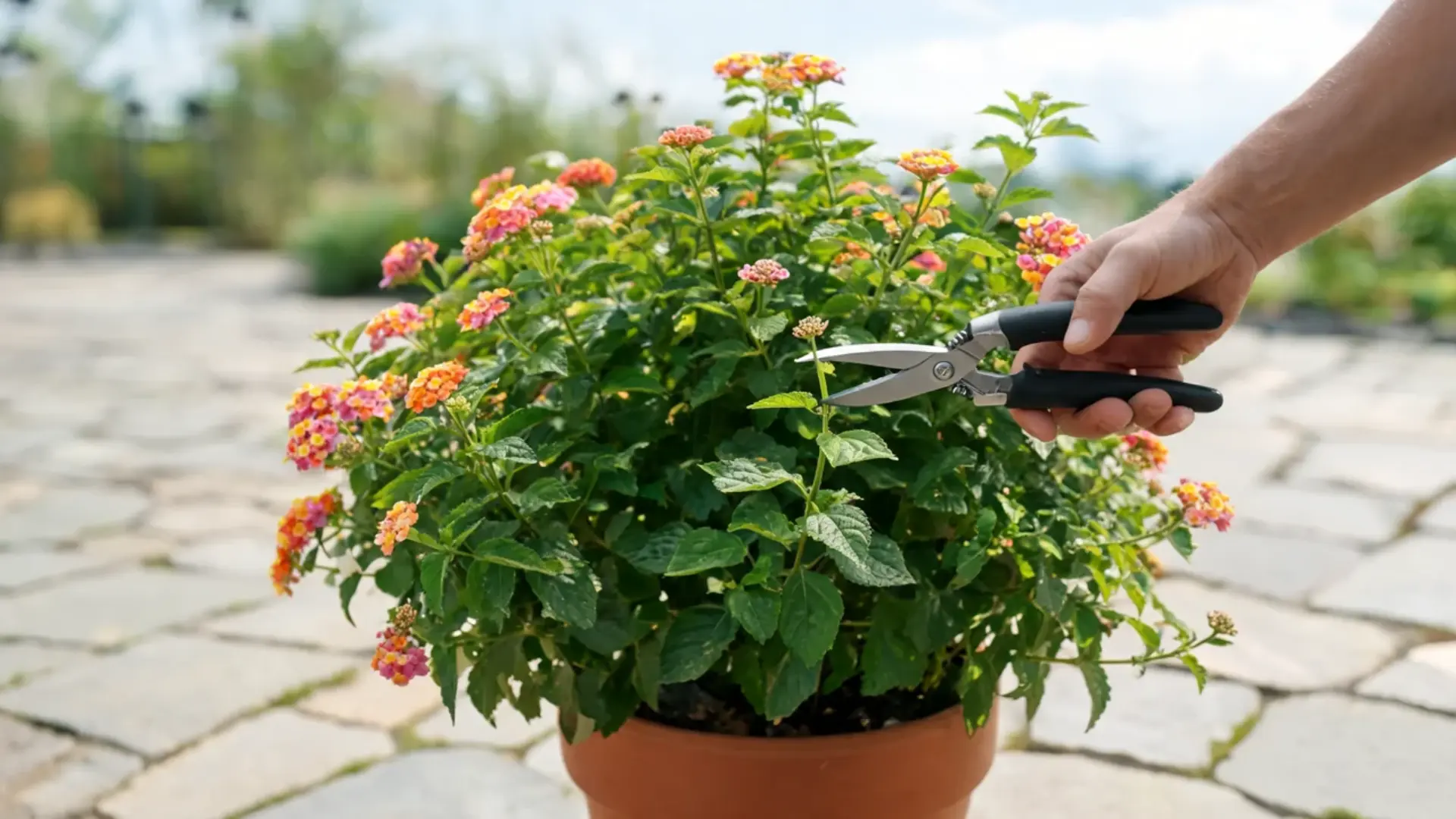
Pruning addresses long, weak, or crowded stems rather than single flowers. Look at the whole plant before cutting, then use clean bypass pruners to follow each stem back to a healthy leaf pair or side branch.
According to University of Arkansas Extension guidance, light trimming suits summer, while stronger cuts suit spring. An overgrown lantana can be reduced by up to one third of its height without setting it back much.
Why Lantana Stops Flowering
When lantana stays leafy but produces fewer flowers, check the growing conditions before assuming disease or pests are responsible. Too much shade is a common reason, and flowering may fall even while the foliage still looks healthy.
Poor drainage, overly wet soil, long dry periods, and too much fertilizer can also reduce blooming.
In lantana plant care, these basics should be checked before adding more fertilizer or making major changes. Look at how many hours of direct sun the plant receives, feel the soil before watering, and make sure excess water can leave the root area.
For seed-producing varieties, removing faded flower clusters and berries may also help the plant put more energy into continued flowering. According to the UF/IFAS gardening solutions guide, sterile cultivars are also available for gardeners who want to limit reseeding altogether.
How to Keep Lantana Blooming All Season
Lantana flowers best when its basic needs stay consistent through the growing season. Meeting these needs in a steady routine, rather than reacting only when blooming slows, keeps the plant fuller and more colorful for longer.
- Sunlight: Give the plant strong direct sunlight for at least six hours a day.
- Drainage: Let the soil drain well and avoid keeping the roots constantly wet.
- Watering: Water more often in containers, since potting mix dries faster than garden soil, especially during hot or windy weather.
- Fertilizer: Avoid heavy feeding, since too much fertilizer can encourage leafy growth instead of flowers.
- Maintenance: Remove faded flower clusters when needed, especially on varieties that produce berries, and trim long or uneven stems to keep the plant compact.
If blooming slows, check light, moisture, and drainage before making bigger changes. Regular care along these lines usually keeps lantana fuller and flowering for longer outdoors.
Common Lantana Problems and What to Check First
When lantana starts looking unhealthy, begin by checking the conditions around the plant before assuming pests or disease are the main cause. The table below outlines common symptoms and where to look first.
| Symptom | What to Check First |
|---|---|
| Few flowers | Too much shade, excess fertilizer, prolonged dryness, or berry production |
| Long or leggy stems | Daily sunlight levels and whether the plant needs trimming |
| Powdery growth | Excess shade, high humidity, or poor airflow |
| Root rot | Soil moisture and whether excess water drains freely |
| Sticky leaves or black residue | Sap-feeding insects such as whiteflies |
| Pale or stippled leaves | Both sides of the leaves for lace bugs or spider mites |
| Wilting | Whether the soil is too dry or staying too wet |
Checking these signs early can help you identify the likely cause and adjust care before the problem becomes harder to manage.
Frequently Asked Questions
How quickly does lantana grow in one season?
Lantana generally grows quickly in warm weather, but final size depends on the cultivar, sunlight, growing space, and care. Compact cultivars suit smaller spaces, while vigorous forms grow large and bushy, so match the plant to your space.
Can lantana be propagated from cuttings?
Yes. Healthy stem cuttings can grow new lantana plants, which works especially well for hybrids since a cutting matches its parent plant. Choose healthy stems rather than damaged or weak ones for the best results.
Can lantana be grown from collected seeds?
Lantana that develops berries may produce seeds, but plants grown from collected seed do not always match the parent, especially with hybrids. Sterile cultivars make little or no viable seed, so remove berries if unwanted spread is a concern.
Is lantana invasive?
Lantana is considered invasive in some warm regions where it survives year-round and spreads by seed. Check with a local extension office before growing it as a perennial, and consider a sterile cultivar to limit reseeding.
What is the difference between lantana and verbena?
Lantana and verbena belong to the same plant family but are different plants. Lantana usually has rough leaves and a shrubby or trailing habit, while verbena often grows lower and spreads more depending on the species.
Final Thoughts on Lantana Plant Care
Healthy lantana comes down to a steady routine built around sun, drainage, sensible watering, warmth, and timely trimming. Once those basics are in place, flowering problems become easier to trace and correct.
Keep new plants evenly moist, let established plants handle slightly drier conditions, and check containers more often during hot or windy weather.
Use fertilizer lightly, remove faded flower clusters when needed, and prune longer or damaged stems without cutting too much at once. Good lantana plant care also means adjusting water and feeding as the seasons change and checking the plant before treating any problem.
Start with these steps on your own lantana this week. Drop a comment below and let me know if your lantana needs and further care that i can assist you with.