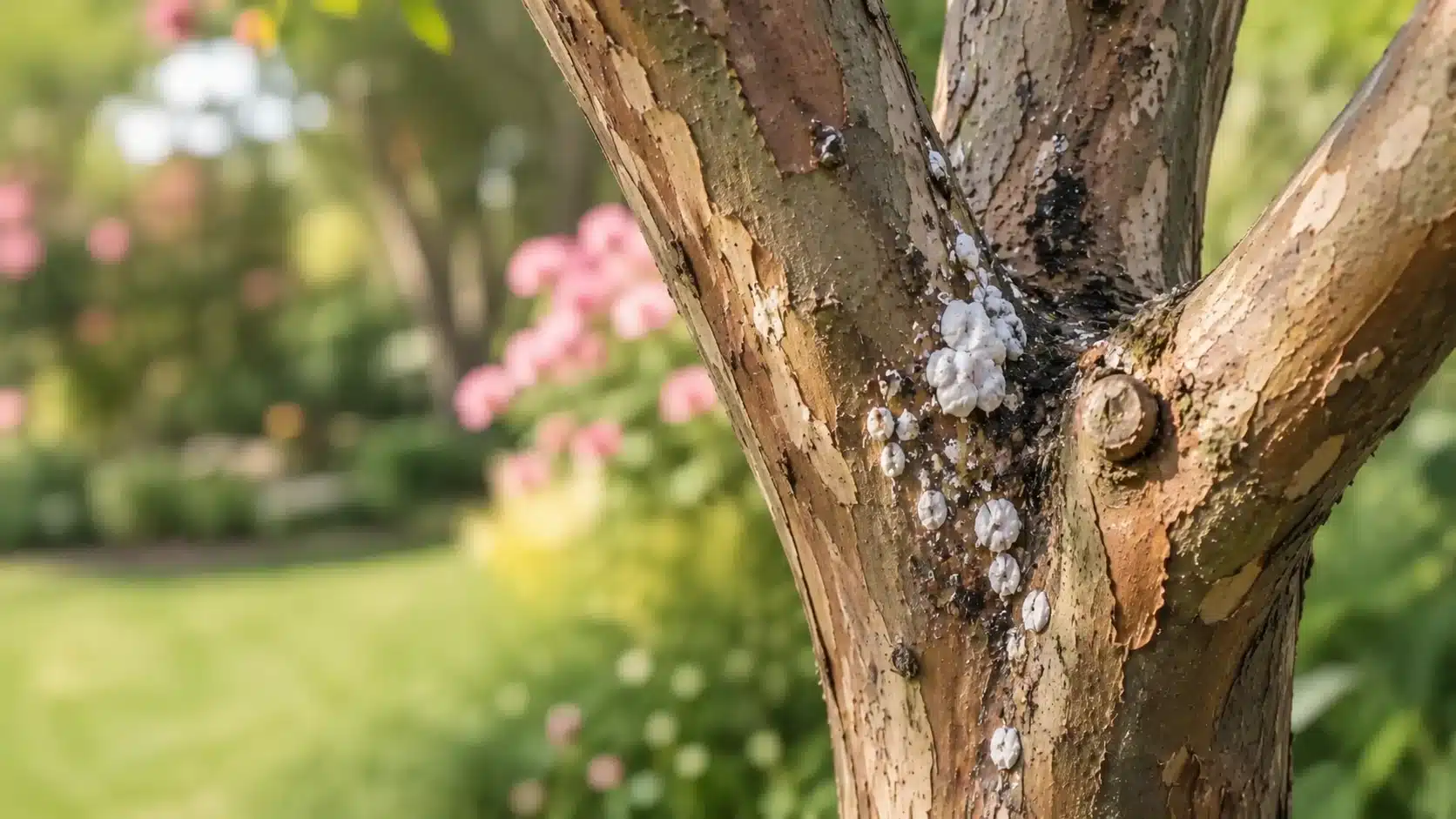
White bumps, sticky leaves, or black bark can make a healthy crepe myrtle look seriously ill. These signs often point to crepe myrtle bark scale, a sap-feeding insect protected by a waxy cover.
However, not every change means your tree has pests. Crepe myrtle bark peeling is usually part of the tree’s natural growth. Healthy bark often sheds in thin pieces and reveals smooth, colorful wood below.
I’ll help you separate normal bark changes from a real infestation, so you can act with more confidence. You’ll learn which symptoms matter and where hidden insects often settle.
Treatment timing also matters because young crawlers are easier to reach than protected adults. Close inspection prevents wasted products, repeated cleanup, and needless stress.
What Is Crepe Myrtle Bark Scale?
Crepe myrtle bark scale is a small insect that feeds on sap from trunks, branches, and twigs. Adult females form white or gray, felt-like coverings that protect their bodies and eggs.
Young insects, called crawlers, move before settling on the plant. They later build the waxy covering that makes mature scales harder to reach.
The pest rarely kills established trees, but heavy numbers can reduce flowering and spoil the tree’s appearance. Infested plants may become coated with white scales, sticky waste, and black mold.
Treatment often reduces the population instead of removing every insect.
How to Identify a Crepe Myrtle Bark Scale Infestation
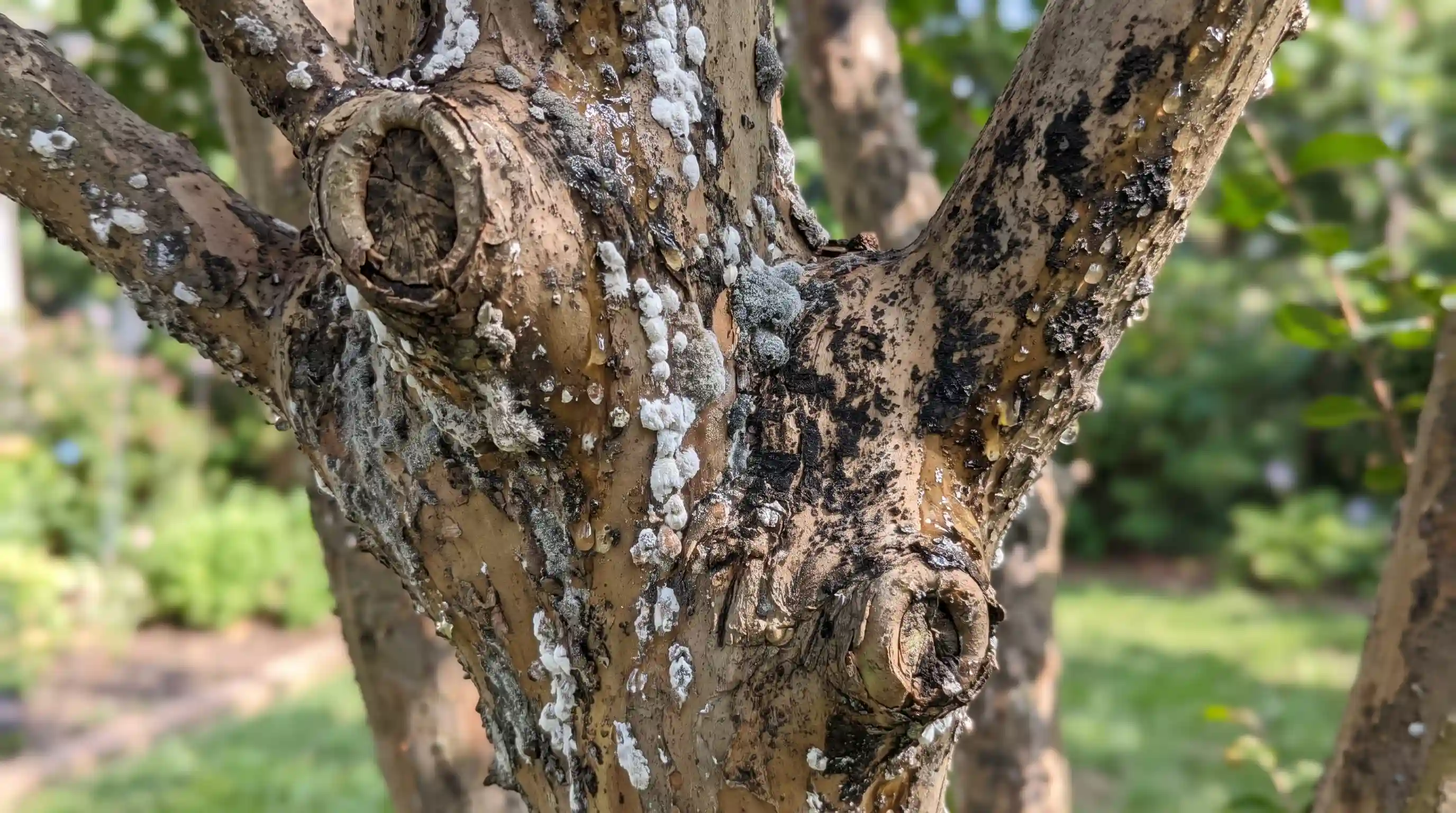
Look for several signs together before deciding your tree has bark scale. Check trunks, branch joints, pruning cuts, and small twigs.
White or gray felt-like bumps are the clearest sign. Heavy infestations may cover whole sections of twigs. Sticky honeydew may coat leaves, bark, mulch, and nearby surfaces. Black sooty mold often grows on this layer, making branches look burned.
Since aphids also produce honeydew, mold alone does not confirm bark scale. Look for white scales on woody areas.
You can gently press one scale with a toothpick while wearing gloves. Pink liquid or pink eggs strongly suggest a live female. Avoid scraping large areas because empty scale covers may remain after insects die.
Is Crepe Myrtle Bark Peeling Normal?
Natural crepe myrtle bark peeling usually creates thin flakes and smooth patches of fresh bark. Colors may include cream, tan, cinnamon, or silver. This exfoliating pattern is one of the traits that make crepe myrtles stand out, and a complete crepe myrtle care routine can help you tell a normal seasonal shed from a stressed tree that needs closer attention.
Scale damage looks different because insects and honeydew appear around the peeling areas. Use these clues before choosing any treatment.
- Normal peeling: Clean, firm bark appears beneath loose outer layers.
- Possible infestation: White bumps, sticky residue, or black mold appear nearby.
- Mixed signs: Scale insects may hide along loose edges and branch joints.
Peeling alone is not proof of pests. Healthy crepe myrtles are known for attractive bark that sheds naturally.
What Damage Can Bark Scale Cause?
Most damage affects appearance and flowering before threatening the whole tree. Heavy infestations can still weaken growth and create cleanup problems.
| Damage sign | What you may notice |
|---|---|
| Fewer flowers | The tree may produce smaller blooms or fewer flower clusters. |
| Black surfaces | Sooty mold may cover bark, leaves, mulch, and nearby plants. |
| Sticky areas | Honeydew can coat patios, furniture, vehicles, and walkways. |
| Poor appearance | White scale insects may hide the tree’s patterned bark. |
| Lower vigor | Long-term feeding may weaken growth during severe infestations. |
Black mold often appears before the insects are noticed. Early checks make the problem easier to manage.
How to Treat Crepe Myrtle Bark Scale
Control often takes several steps because the waxy cover protects settled insects. The safest plan depends on tree size, season, and local rules.
1. Clean Small or Heavy Patches
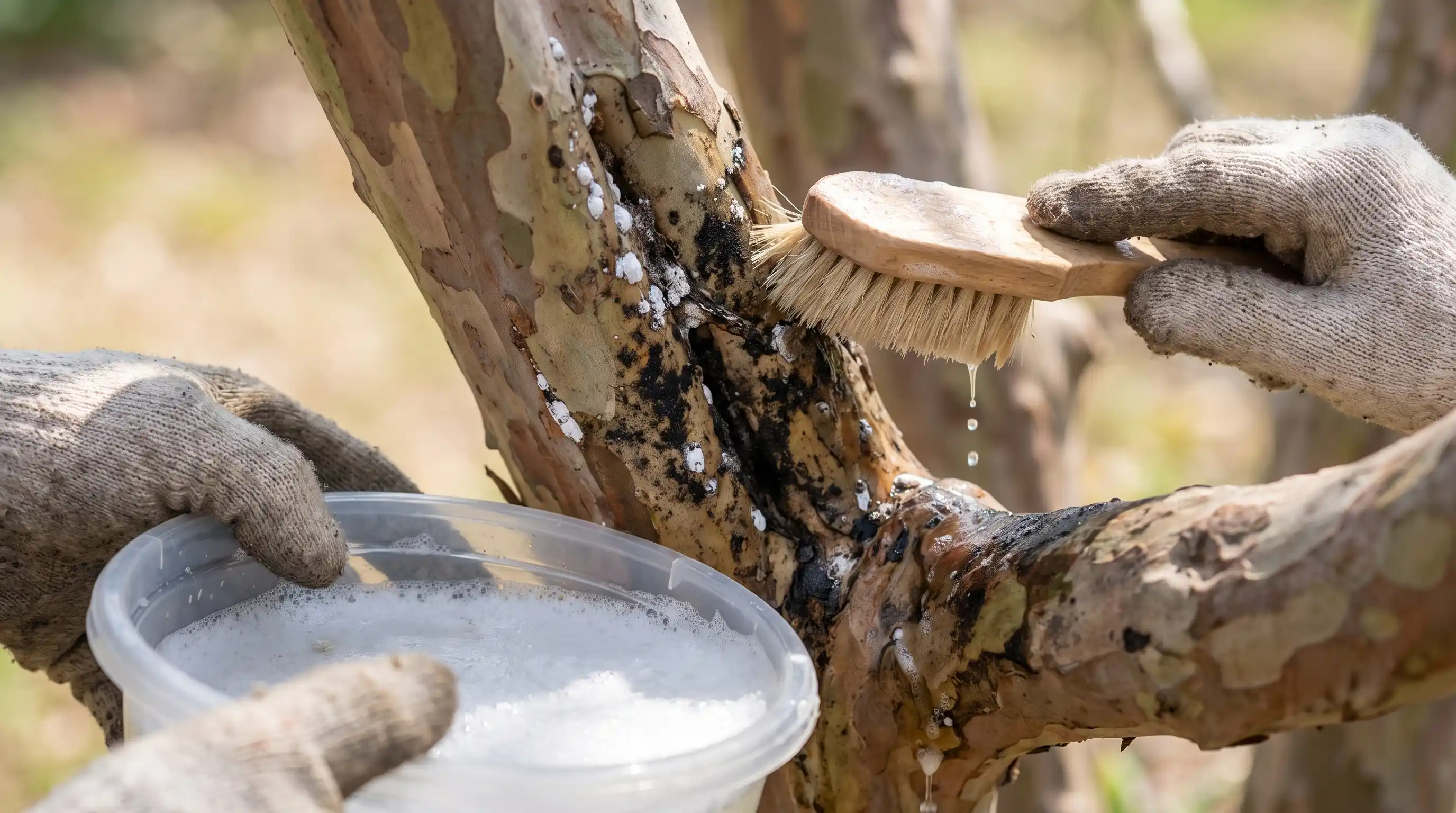
Use a soft brush and mild soapy water to loosen scales, egg sacs, and surface mold. Work gently around bark folds and branch joints.
Avoid wire brushes and strong pressure, which may harm the bark. Cleaning improves appearance but rarely controls scales hidden higher in the tree. Small groups may also be pressed or scraped away carefully.
2. Use Horticultural Oil Carefully
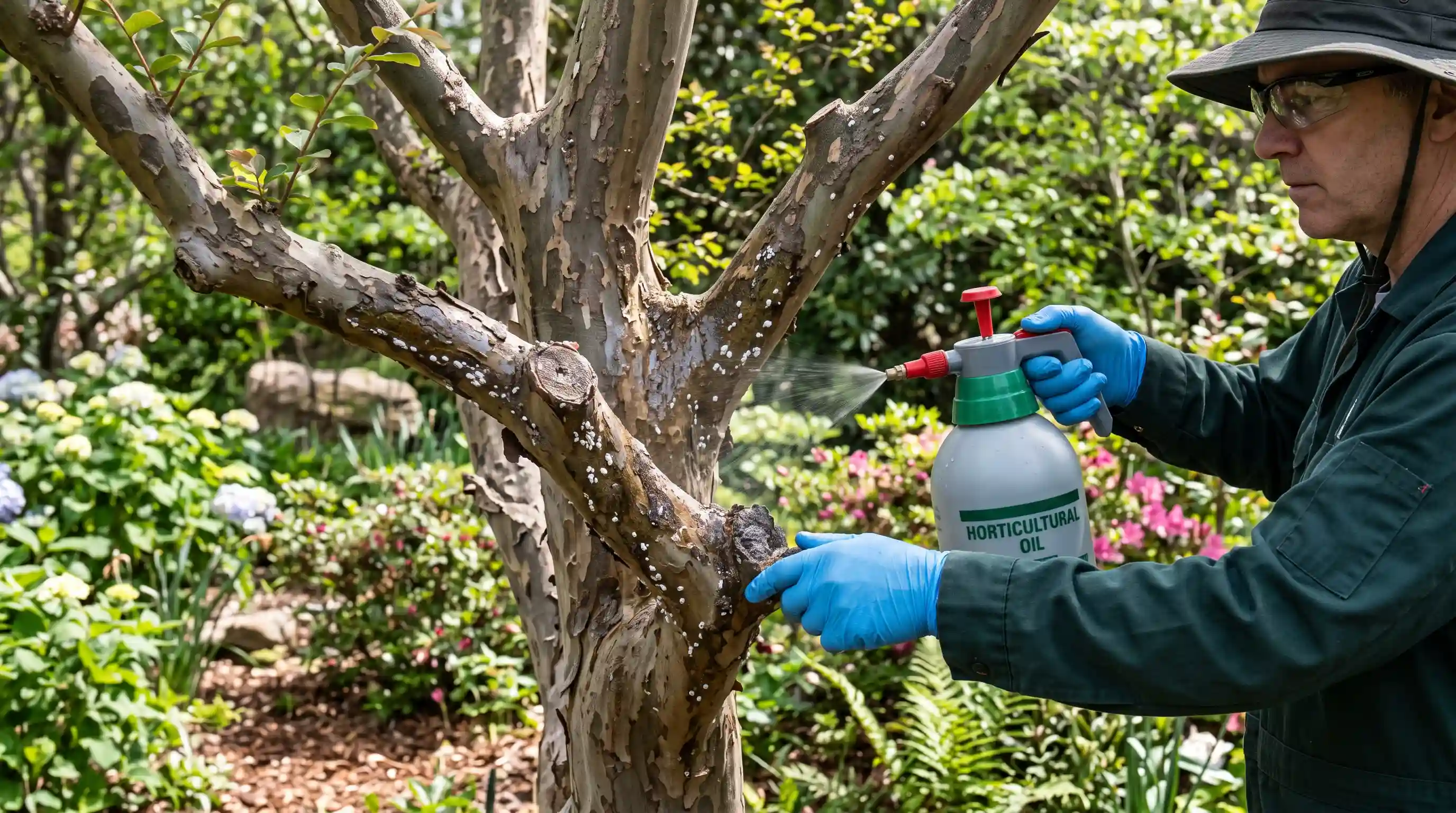
Dormant horticultural oil may reduce exposed crawlers and nymphs when applied with full coverage. Reach the trunk, branches, joints, crevices, and loose bark edges.
Always follow the product label, including temperature and plant safety limits. Oil works through contact, so missed areas can keep active insects. Do not rely on oil alone for control.
3. Target the Crawler Stage
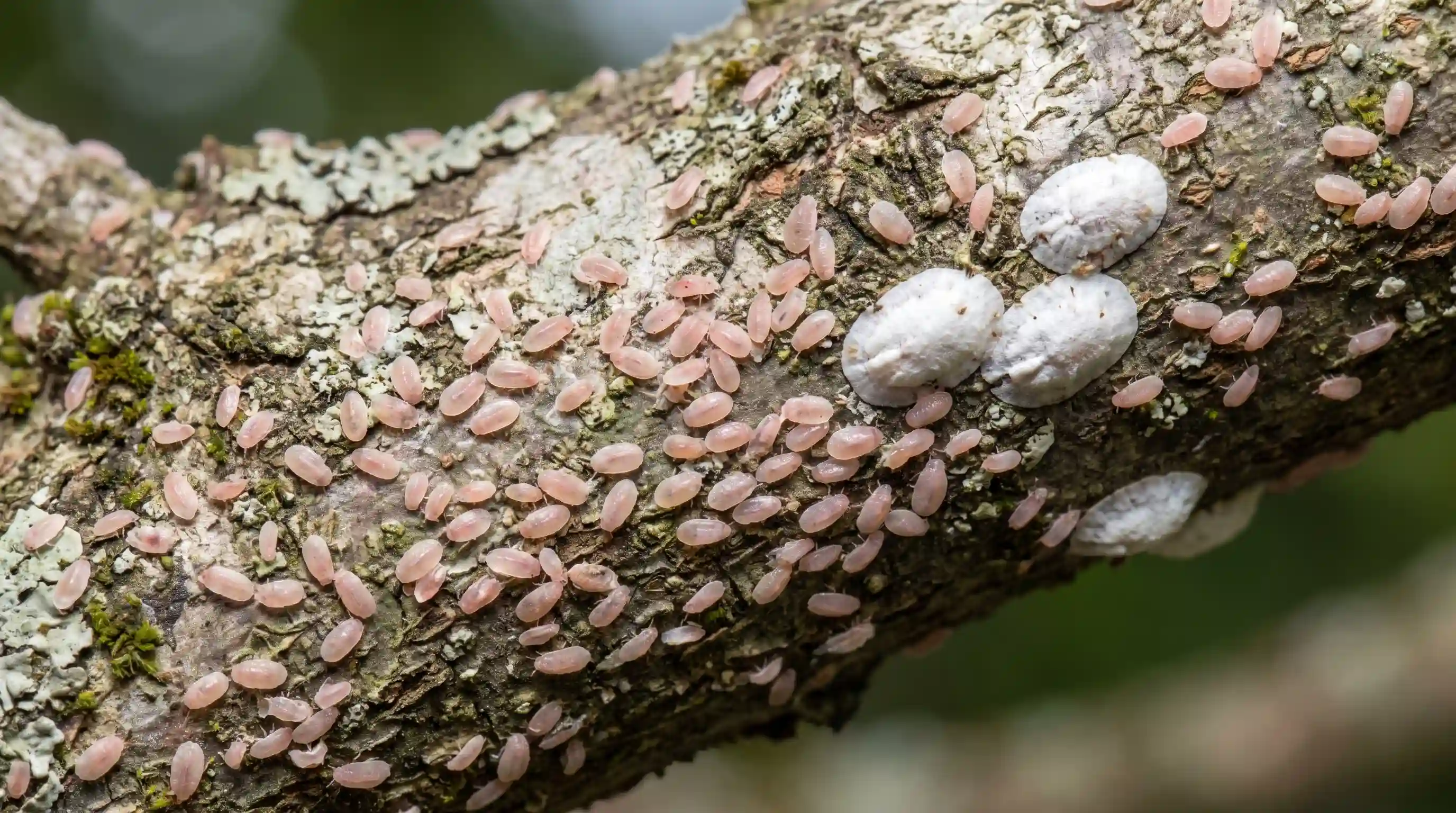
Young crawlers lack the thick wax covering found on adults. Contact products and insect growth regulators work best while these insects are active.
Crawler timing changes with weather and location. University of Delaware Cooperative Extension monitoring has tracked two crawler generations in the Mid-Atlantic, with the first emerging around early June and a second around mid-August, a pattern that differs from the timing seen in southern states.
Ask your Extension office before choosing a treatment date.
4. Weigh Systemic Products and Pollinator Risk
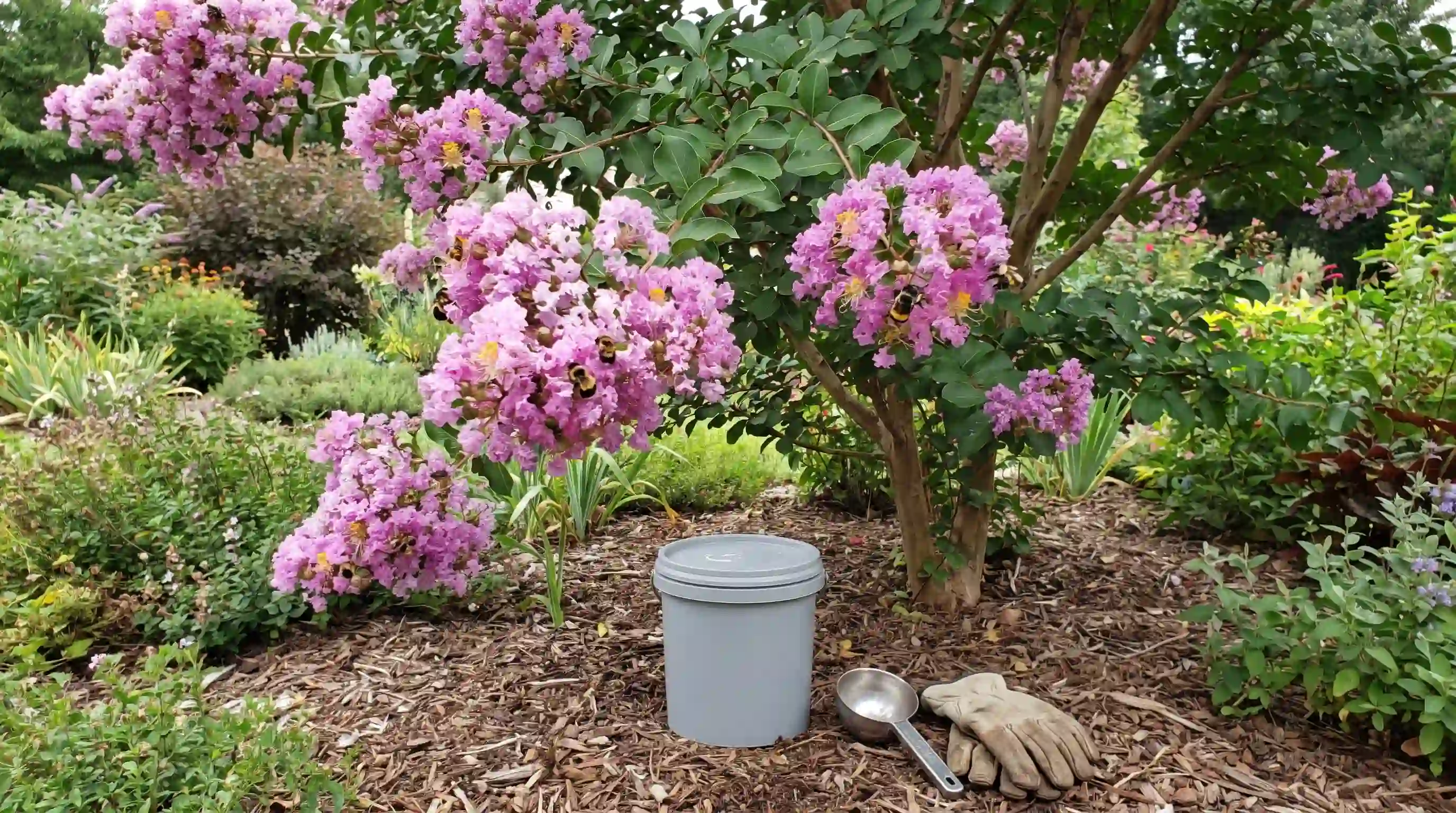
Some soil-applied systemic insecticides can control bark scale, but regional recommendations differ. Crepe myrtles also flower for long periods and attract pollinators.
Oklahoma State and Delaware sources warn against broad or careless pesticide use because helpful insects may be harmed. The Clemson Home and Garden Information Center factsheet outlines specific insecticide options and notes that timing an application around pruning and bloom stage can reduce the risk to visiting pollinators.
Read the current label and seek local advice before applying any systemic product.
When Is the Best Time to Treat?
There is no single treatment month that fits every climate, since the right timing always depends on the product you are using, local temperatures, and the current insect stage. Scale insects change their vulnerability as they develop, so matching your application to that stage matters more than picking a date off a general calendar.
Crawlers are usually the easiest stage to treat, since they have not yet formed the waxy, protective covers that make later stages harder to reach with sprays. Dormant oil applications work well during a plant’s resting period, while some soil treatments need active growth to move through the plant properly, so timing has to match the product’s actual mode of action.
Mid-Atlantic research has found crawler activity concentrated around early summer and again in late summer, though southern regions may follow different cycles entirely based on their own climate patterns.
Because these windows shift by region and species, contact your local Extension office for current timing guidance, and avoid relying only on a national calendar that may not reflect your specific conditions.
How to Prevent Another Infestation
Regular checks cannot promise prevention, but they can stop a small problem from becoming severe. Focus on new plants and hidden branches.
- Inspect purchases: Check trunks, twigs, branch joints, and pruning wounds before buying.
- Watch the canopy: Early scales may settle on smaller upper branches.
- Limit broad sprays: Helpful lady beetles and lacewings may reduce scale numbers.
- Avoid large wounds: Poor pruning can create sheltered areas for scales.
- Track changes: Record treatment dates, fresh honeydew, and new white scales.
Good airflow around the canopy also makes it harder for scale and other pests to settle in, which is one more reason giving each crepe myrtle enough space from structures and other trees pays off long after planting day.
Avoid bringing an infested tree home from a nursery. Moving infested plant stock has helped the pest reach new landscapes.
When to Call an Arborist or Extension Expert
Not every scale problem is safe or practical to handle alone. Call an arborist or Extension expert when you cannot check the upper canopy safely, since scale often settles on branches well out of reach from the ground, and a proper inspection means examining bark and twigs up close rather than guessing from a distance.
Professional support also becomes worthwhile when several trees on a property show signs of infestation at once, since treating each one correctly takes more time and equipment than most homeowners have on hand.
A trained arborist or Extension specialist can tell true bark scale apart from aphids, empty shed covers, and normal bark texture, which are easy to confuse without close examination.
They can also match treatment timing to local crawler activity rather than a general calendar. Mature trees near homes, vehicles, or flowering plants often call for professional spray equipment, since reaching the full canopy safely and accurately requires more than a handheld sprayer.
Frequently Asked Questions
Can bark scale spread to plants near my crepe myrtle?
Young crawlers can move within the tree or travel by wind to nearby plants. Infested nursery stock also spreads the pest. Some other plant species can serve as hosts, so inspect nearby woody plants.
Why are ants climbing my crepe myrtle?
Ants often visit trees covered with honeydew because the sugary liquid provides food. Their presence suggests a sap-feeding insect may be active, but ants alone cannot identify the exact pest.
Will sooty mold disappear after treatment?
Sooty mold stops growing after the honeydew source is controlled. Existing stains may fade through weather, bark shedding, and gentle washing. Heavily coated surfaces may take time to look clean.
Are lady beetles enough to control a heavy infestation?
Lady beetles and lacewings eat bark scale, but they may not reduce a large population quickly. Avoid broad sprays that kill these helpful insects, and ask about targeted control when damage continues.
Should I remove a badly infested crepe myrtle?
Removal is usually unnecessary because bark scale rarely kills established trees. Consider the tree’s health, size, treatment cost, and repeated infestations before deciding. An arborist can assess difficult cases.
The Last Crepe
Crepe myrtle bark scale is easier to manage when you find it before white covers spread across many branches. Start by checking the trunk, branch joints, pruning cuts, and upper twigs. Look for felt-like scales, sticky honeydew, black mold, and pink liquid beneath a live scale.
These signs matter more when they appear together. Remember that natural bark shedding is often normal. Smooth, clean bark beneath thin flakes usually points to healthy growth, not insect damage.
I suggest confirming the pest before spraying because cleaning and crawler control work better after identification.
When the tree is tall, or choices feel unclear, local experts can help protect nearby pollinators. Check again next season, because that habit helps you catch activity early. Drop a comment below and let me know if you have any further questions.