When people think about outdoor space safety, they usually picture lighting, fencing, or a pool cover. Door and gate hardware rarely makes the list. Yet these small metal parts determine whether an exterior door latches every time, whether a gate closes behind a child, and whether people can exit quickly in an emergency. For Gulf Coast properties, they also have to stand up to wind, salt air, and humidity.
This plain-language guide is for homeowners associations, small commercial owners, and landlords around Houston who are responsible for entries, gates, and shared outdoor areas. If you are comparing categories such as panic bars, closers, hinges, and locksets for high-traffic entries, this overview of commercial door hardware can help you get oriented before you talk with a local pro. Treat the code points below as general guidance, not legal advice, and confirm specifics with your local building official.
Quick Wins You Can Check in 5 Minutes
You do not need special tools to spot common problems. Walk up to an exterior door or gate and run through this short list. Think of it as a 5-minute door test.
- Does the door close and latch on its own every time, without slamming or bouncing back open?
- Can you operate the handle with a closed fist? ADA Standard 309.4 calls for hardware that works with one hand and does not require tight grasping, pinching, or twisting of the wrist.
- Does the closer let the door take at least 5 seconds to swing from 90 degrees open to about 12 degrees from the latch? That timing gives people more room to pass through.
- Is the threshold no more than 1/2 inch high? Some existing or altered thresholds may allow a beveled edge up to 3/4 inch.
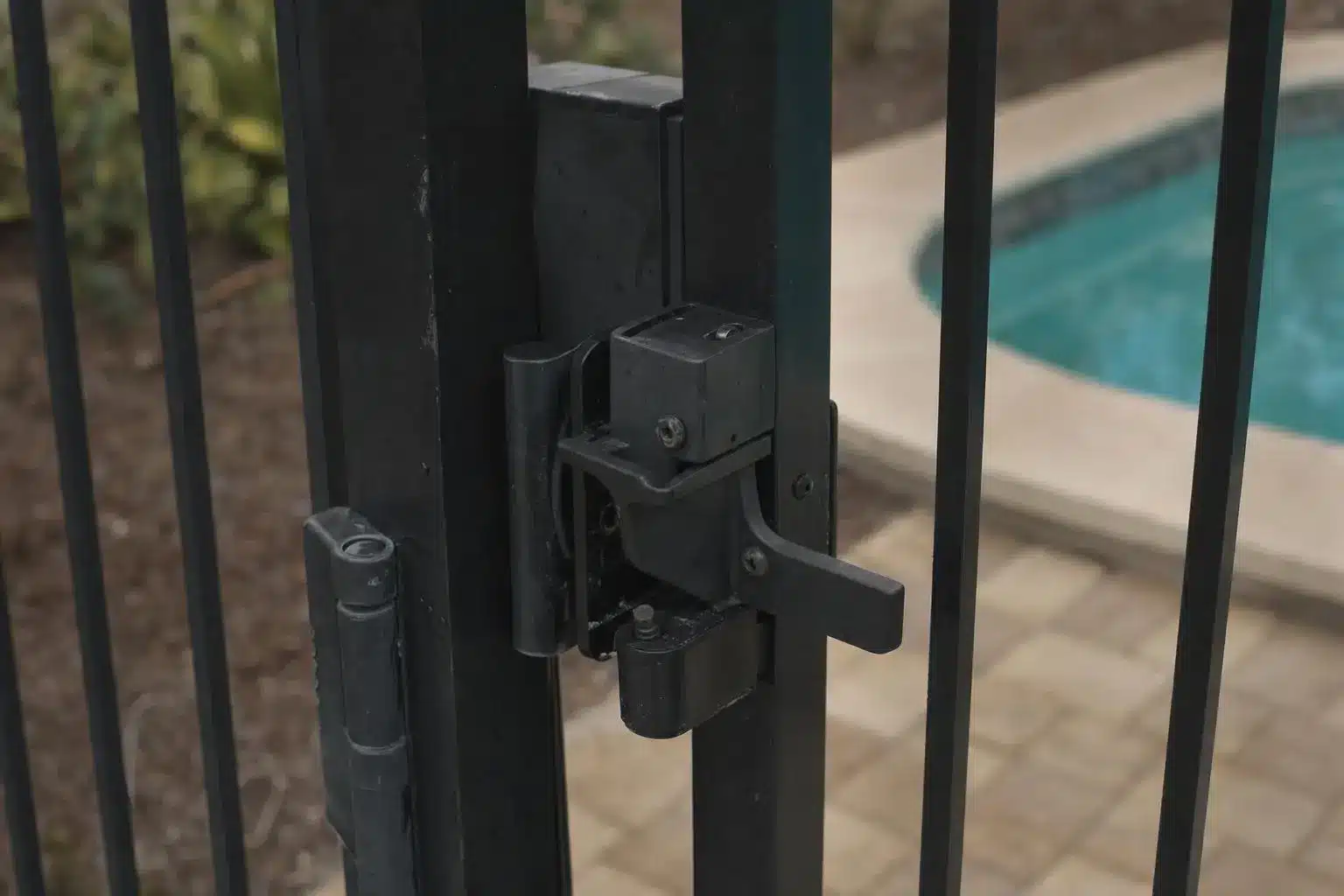
- On a pool or play-area gate, is the hardware self-closing and self-latching, with the latch release out of a small child’s reach?
If any answer is no, you have found something worth fixing. The rest of this guide explains what each piece does and how to prioritize repairs.
Why Exits Matter for Outdoor Space Safety
Panic hardware, the horizontal bar you push to open a door, exists so a room full of people can leave quickly without searching for a knob or thumbturn. Model codes often require it in specific situations, such as certain assembly and educational occupancies with an occupant load of 50 or more, high-hazard spaces, and some electrical rooms. Whether your property triggers that requirement depends on use and layout, so verify it with local officials rather than guessing.
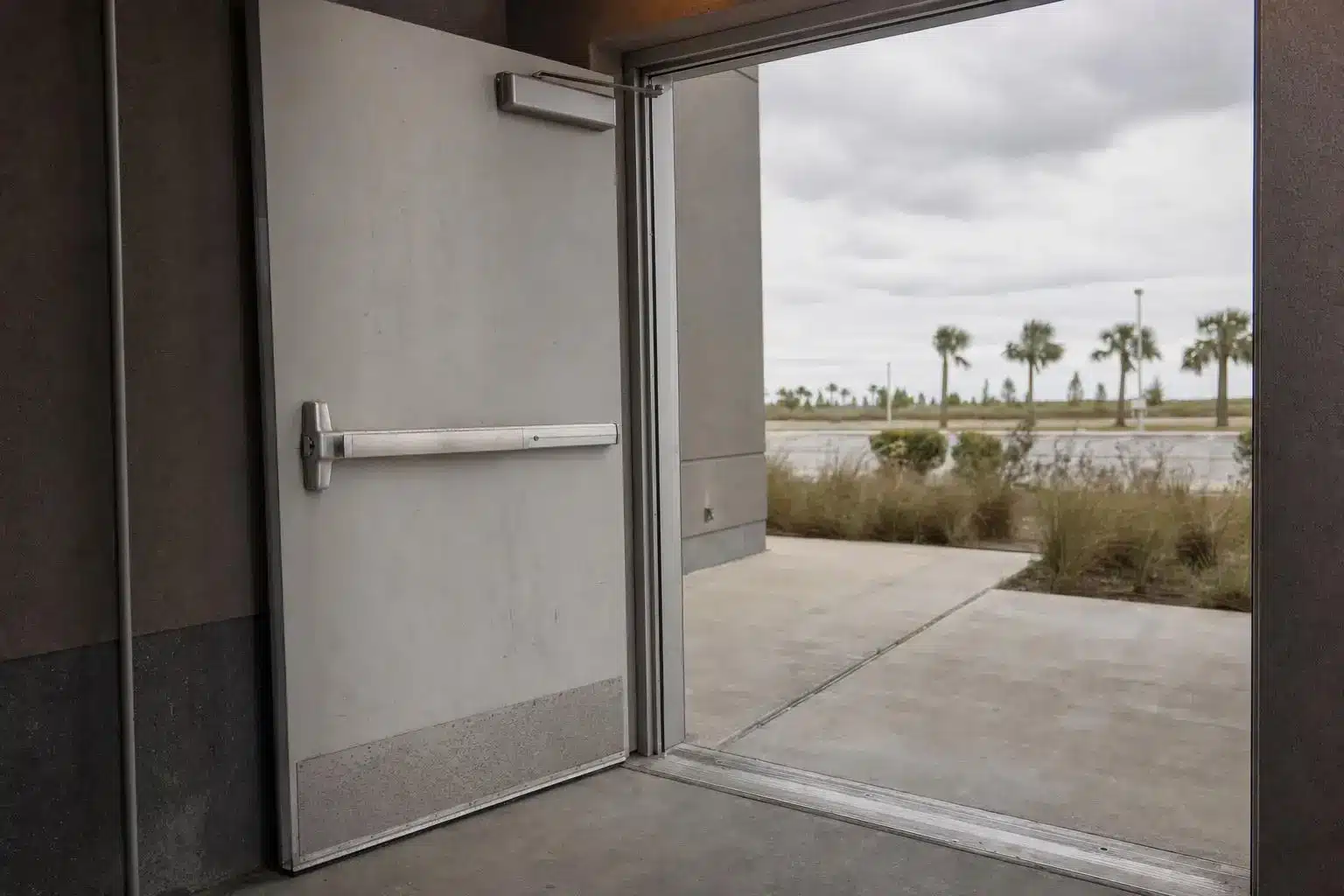
Where panic hardware is required, it usually needs to be listed to UL 305, meaning it has been tested and labeled for that use. If the door is also fire-rated, the device generally needs to meet UL 10C as well. These listings help inspectors confirm that a device should perform as intended, so check labels before buying new hardware or reusing old parts.
Hardware 101 for Safer Entries
A handful of components carry most of the load on any exterior door. Here is what each one does and where owners often get tripped up.
Exit Devices
An exit device releases the latch when someone pushes the bar. Under UL 305, the actuating bar must span at least half the width of the door leaf, so it is easy to reach in a hurry. One rule catches many owners off guard: mechanical dogging, a feature that holds the latch retracted, is not allowed on fire doors. If a fire door needs to stay open during business hours, use an electrically controlled option that re-latches when the alarm sounds.
Locksets and Levers
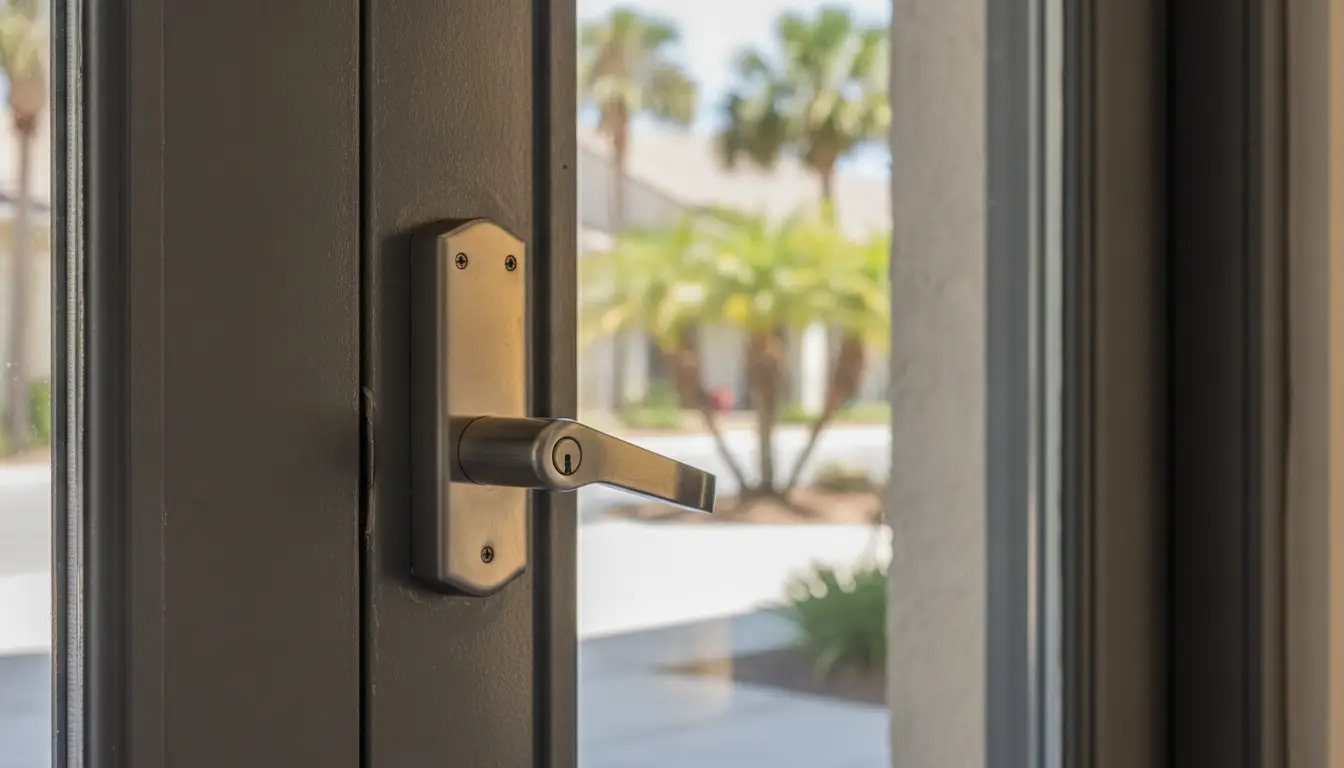
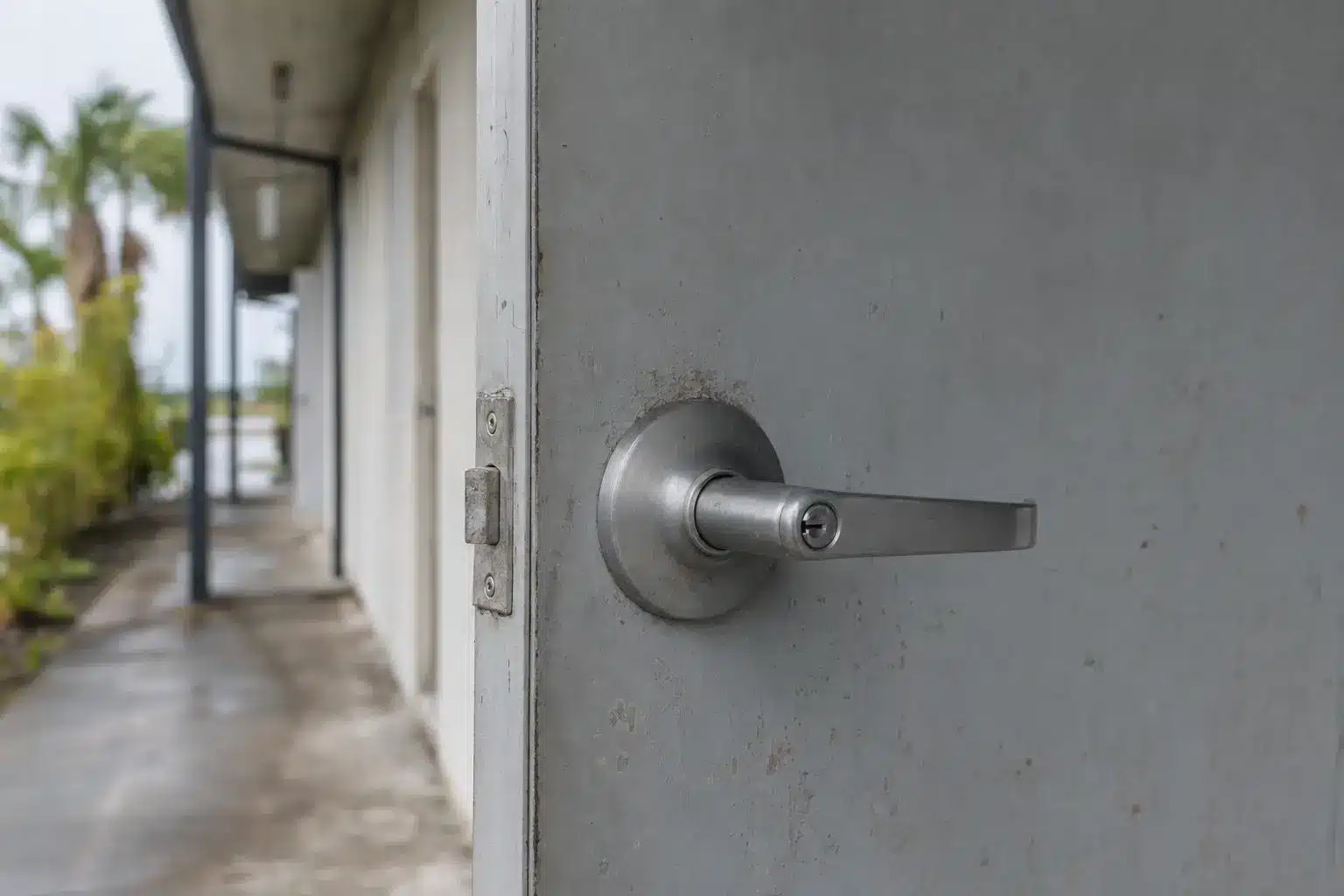
For accessibility, lever handles are usually better than round knobs because they work with a push or a closed fist rather than a firm grip and twist. Mounting height matters too. The ADA Standards place operable hardware between 34 and 48 inches above the floor, with one useful exception: a pool-gate latch release may sit as high as 54 inches.
Closers
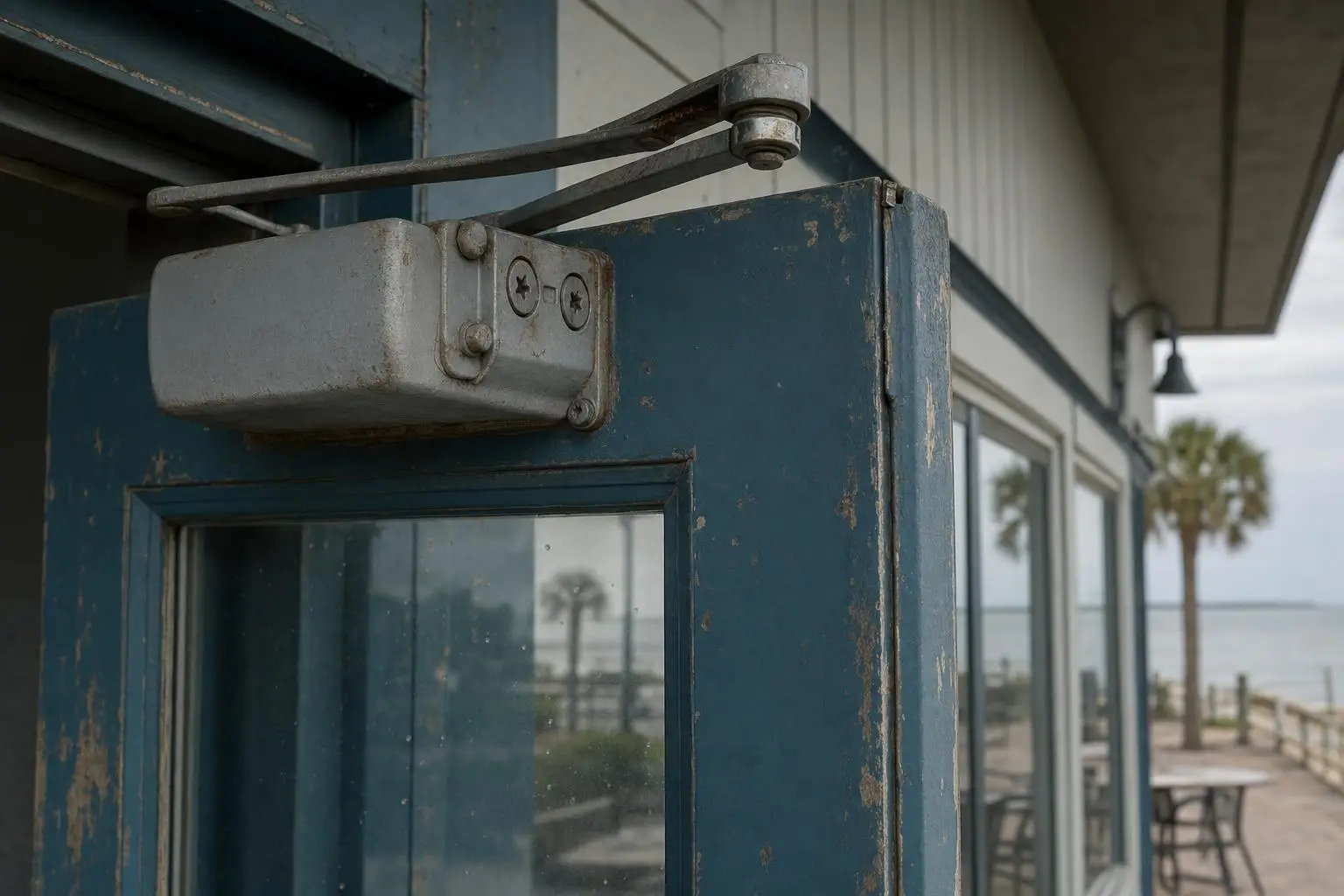
A door closer controls how a door shuts. Its adjustment valves manage the sweep, or main swing, the latch, or final few inches, and backcheck, which slows a door that is thrown open hard. Set the timing so the door takes at least 5 seconds from 90 degrees to near-closed. Spring hinges follow a shorter minimum of 1.5 seconds from 70 degrees to closed. Because closer settings, latch types, and fire-door rules interact, a general overview of commercial door hardware can help owners use the right vocabulary before a site-specific review. For interior hinged doors that are not exterior or fire doors, the maximum continuous opening force is 5 pounds. Never wedge a fire door open. If it needs to be held open, use a hold-open closer tied to the alarm.
Hinges
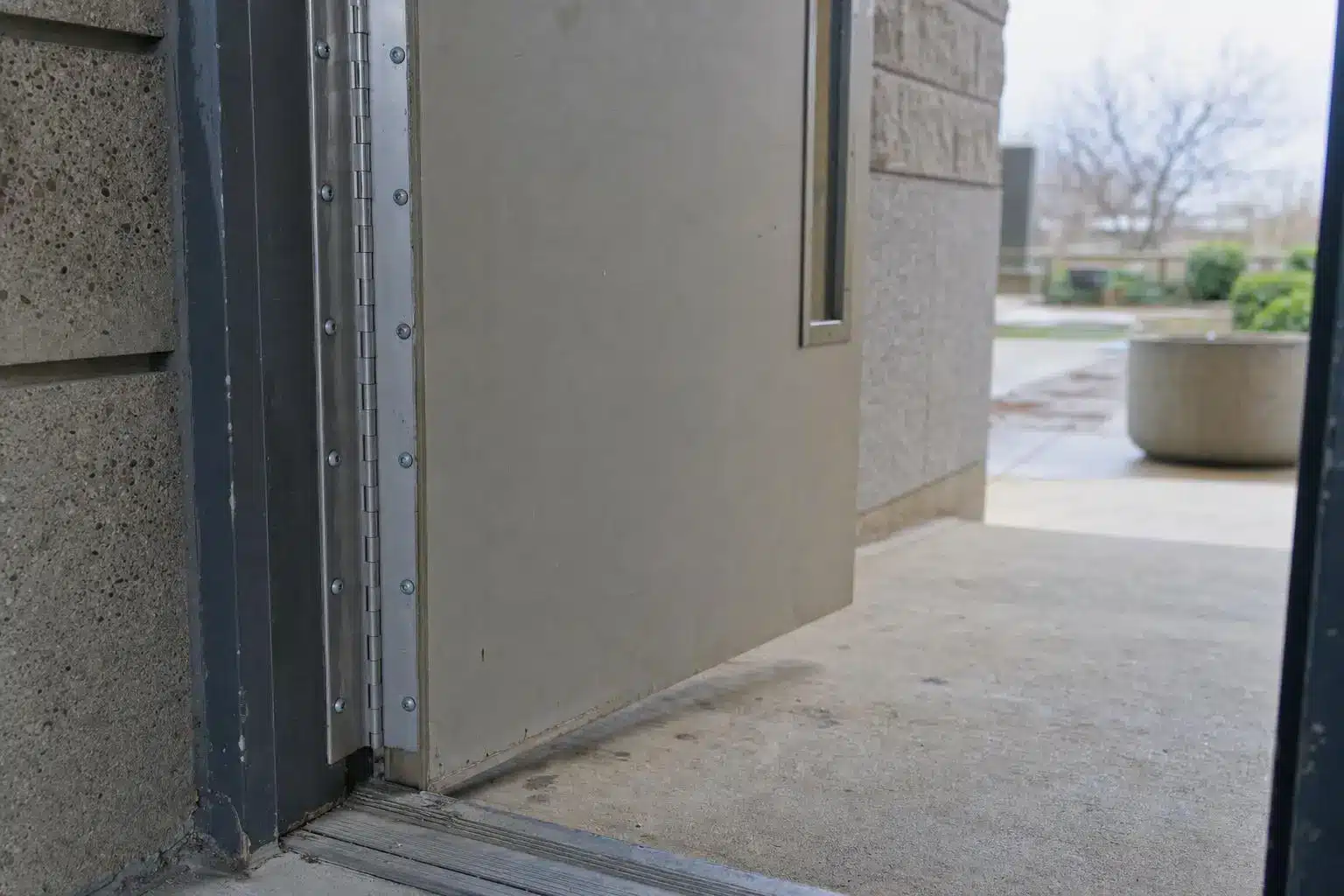
Heavy or high-traffic doors often benefit from a continuous, geared hinge that spreads weight along the full edge instead of concentrating it on three hinge points. Near salt air, corrosion resistance is just as important as strength, which is why coastal sites often specify stainless steel or coastal-rated finishes listed by the manufacturer.
Gate and Pool-Side Choices That Shape Outdoor Space Safety
Gate hardware overlaps directly with outdoor space safety, especially around water. The U.S. Consumer Product Safety Commission recommends that pool-area pedestrian gates open away from the pool and be both self-closing and self-latching, so a gate left ajar returns and locks on its own.
Latch placement matters. If the release is below 54 inches, CPSC guidance suggests mounting it at least 3 inches below the top of the gate on the inside, with no opening larger than 1/2 inch within 18 inches of the release, so a child cannot reach through to trip it. Barrier openings should also be small enough that a 4-inch sphere cannot pass through. A weekly walk-through is the easiest way to catch a latch that has drifted out of alignment or a gate that no longer swings shut cleanly. This is also a good time to review safer pool fencing as part of the same barrier checklist.
Thresholds, Surfaces, and Outdoor Trip Hazards
Entries are also where people trip. The ADA 1/2-inch threshold limit exists partly to prevent toe-catches, and the same logic applies to mats and edge transitions. Use non-slip walk-off mats with tapered or secured edges instead of curled corners, and keep entries well lit so changes in surface height are easy to see. Small adjustments here can improve outdoor space safety for older residents and anyone carrying packages.
Gulf Coast Realities: Wind, Salt Air, and Humidity
Coastal Texas adds a layer many general guides skip. For structures insured through the Texas Windstorm Insurance Association, or TWIA, the 2024 editions of the IBC and IRC apply to work performed on or after April 1, 2026. That timing can affect assemblies and hardware on designated catastrophe-area projects, so confirm current requirements with your inspector before ordering.
Wind-driven pressure is hard on doors that do not latch firmly, and salt air is hard on ordinary steel. Where wind- or impact-rated assemblies are required, use listed products and pair them with corrosion-resistant hardware, such as 316 stainless steel or a manufacturer’s coastal finish. Useful questions for a contractor include: Is this assembly rated for our exposure? Are the fasteners and hinges corrosion-resistant? Will this closer keep the door latched under gusty conditions?
Maintenance That Prevents Failures
Most hardware failures are slow and preventable. A simple routine keeps small problems from becoming safety issues.
- Monthly: Confirm every exterior door latches on its own, fine-tune closer sweep and latch speeds if they have drifted, and check that fasteners are tight and strikes are aligned.
- Seasonally: Inspect weather seals and thresholds, and look for corrosion on hinges and exit devices, especially on doors that face prevailing salt air.
- Annually: If your property has swinging fire door assemblies, industry guidance aligned with NFPA 80 and 101 calls for yearly inspection of those assemblies. Keep simple written records of what was checked and when.
This routine does not require a large budget. It mainly requires a calendar reminder and a willingness to test doors the way a visitor would use them.
When DIY Stops and a Pro Steps In
Some issues are better handled by a specialist. Warped frames, doors that still refuse to latch in wind after adjustment, electrified or alarm-tied hardware, and anything on a labeled fire-rated assembly should be reviewed by a qualified professional. A local locksmith, door hardware specialist, or certified fire door assembly inspector can diagnose the problem and help keep required labels intact.
Codes and adopted editions vary by location and property type, so treat everything here as a starting point. When in doubt, confirm with your local code authority before committing to a fix.