There is something satisfying about pulling a tomato off a vine you grew yourself, knowing exactly what went into the soil. No mystery sprays, no bag of chemicals you cannot pronounce. Just dirt, water, sunlight, and a bit of patience.
If you have been thinking about starting a garden at home but feel unsure about what “organic” actually means in practice, you are in the right place.
This guide is not about doing everything perfectly from day one. It is about understanding what matters most, starting small, building good habits, and growing food you feel confident eating.
From what organic gardening actually means, to how to prepare your soil, pick your first plants, keep pests out, and avoid the mistakes that trip most beginners up, it is all here, in one place, in order.
What Is Organic Gardening?
Organic gardening is a way of growing plants that skips synthetic fertilizers and chemical pesticides, focusing instead on long-term soil health, plant diversity, and natural pest management. At its core, it means working with how nature already functions rather than overriding it with inputs that can disrupt soil life and water quality over time.
The word “organic” sometimes sounds like a premium label or a complicated certification process. At home, it simply means feeding your soil with compost and natural amendments, choosing plants suited to your climate, managing pests through prevention first, and keeping your garden balanced enough that problems do not spiral out of control.
It does not mean doing nothing when pests arrive. It does not mean every plant will thrive without attention. It means using better methods before problems grow, and building a garden system that becomes easier and more productive with each season.
One plain way to think about it: you are not just growing plants. You are growing the soil that grows the plants. Get the soil right, and most of the rest follows naturally.
Why Does Organic Gardening Start With Soil?
Healthy soil is the base of organic gardening because it holds water, supports roots, feeds soil life, and helps plants handle stress. Poor soil can lead to weak growth, more pest issues, and smaller harvests.
Before planting, check these basics:
- Drainage: Water should soak in, not sit on top for hours.
- Texture: Soil should not feel like hard clay or loose beach sand.
- Organic matter: Compost or aged manure helps soil hold nutrients.
- pH: A soil test tells you what the soil needs.
Soil Texture: Soil texture affects how air, water, and roots move through the ground. Sandy soil drains fast but can dry out quickly. Clay soil holds water but may become packed and heavy.
Loamy soil, which has a mix of sand, silt, clay, and organic matter, is often easier for beginners. If your soil is not perfect, do not panic. Compost and mulch can slowly improve it.
Soil pH: Soil pH affects how well plants can use nutrients. If the pH is too high or too low, nutrients may be present but not readily available to roots. That is why a soil test is better than guessing.
A local cooperative extension office can often help with testing. Once you know the results, you can add only what the soil truly needs.
Organic Matter: Organic matter is one of the most useful things you can add to a garden. Compost, aged manure, shredded leaves, and grass clippings can improve soil structure over time.
They help soil hold moisture, support soil microbes, and create a better root zone. The result is a garden that becomes easier to manage each season. Healthy soil is not instant, but it pays you back.
Once your soil has a good base, you can start building the garden in the right order instead of buying random plants and hoping they behave.
How to Start an Organic Garden: Step by Step
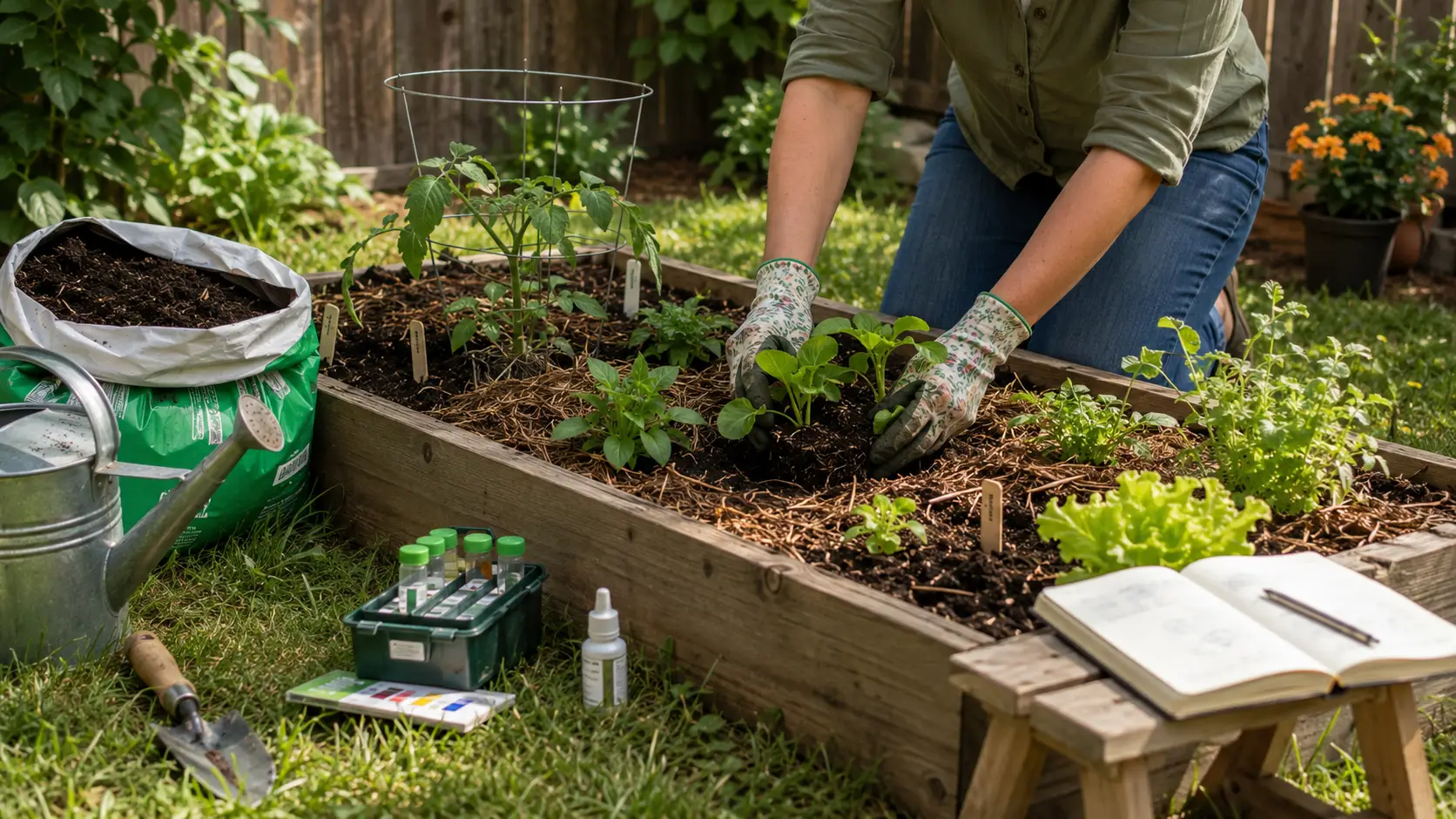
Starting small is the smartest way to learn organic gardening without feeling buried by the work. A 4×8-foot raised bed or a few large containers can teach you soil care, watering, planting, and pest checks while still giving you real food to harvest.
1. Choose Your Garden Space
Pick a spot that gets 6 to 8 hours of sunlight daily, especially if you want vegetables like tomatoes, peppers, beans, or zucchini. Avoid low areas where water collects after rain.
Then choose the setup that fits your space. Raised beds give you more control over the soil; in-ground beds work well with good amendments; and containers suit patios or small yards.
2. Build the Soil Before Planting
Test your soil through a local cooperative extension before adding amendments. This shows pH and nutrient levels, so you do not have to guess.
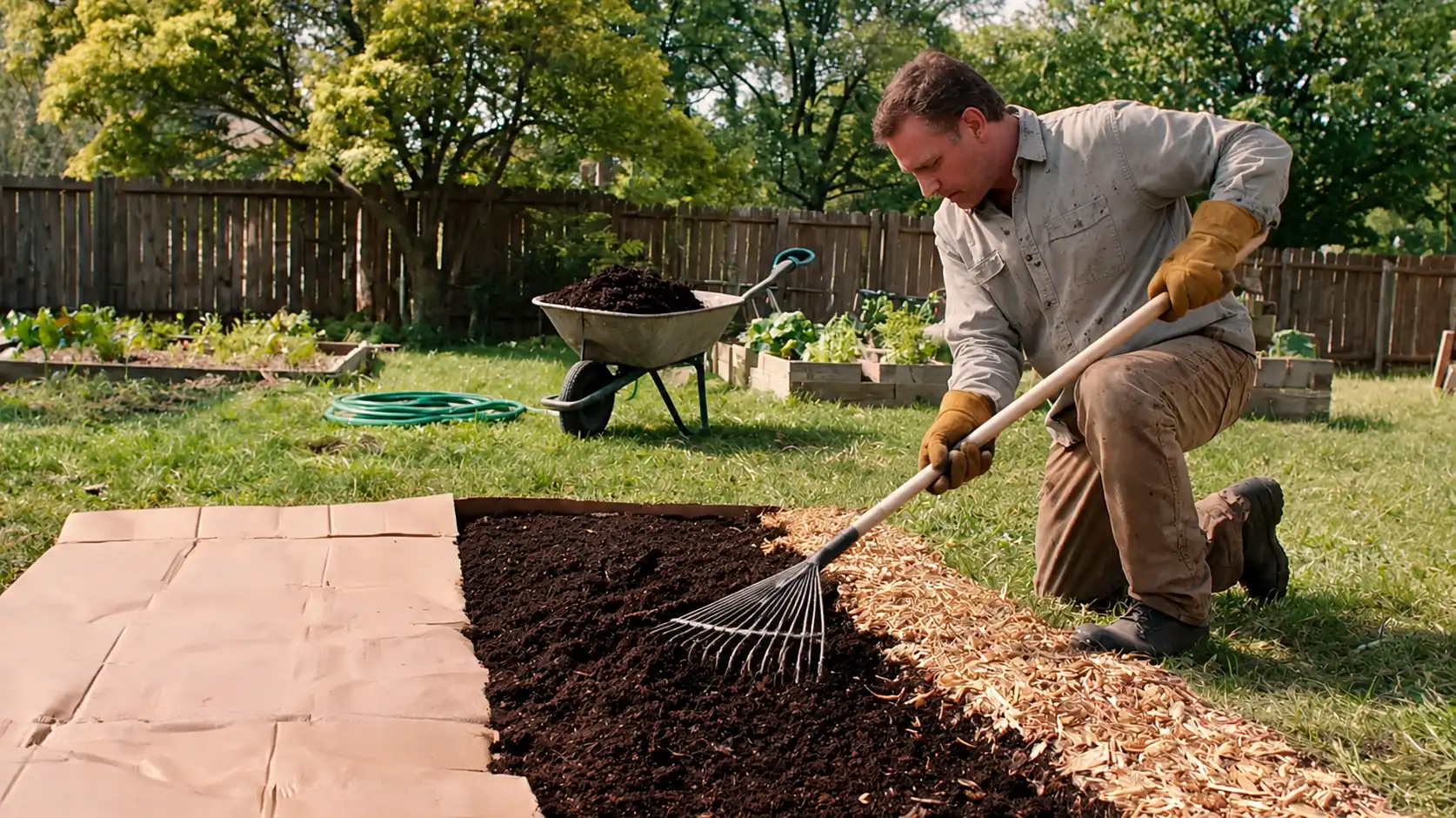
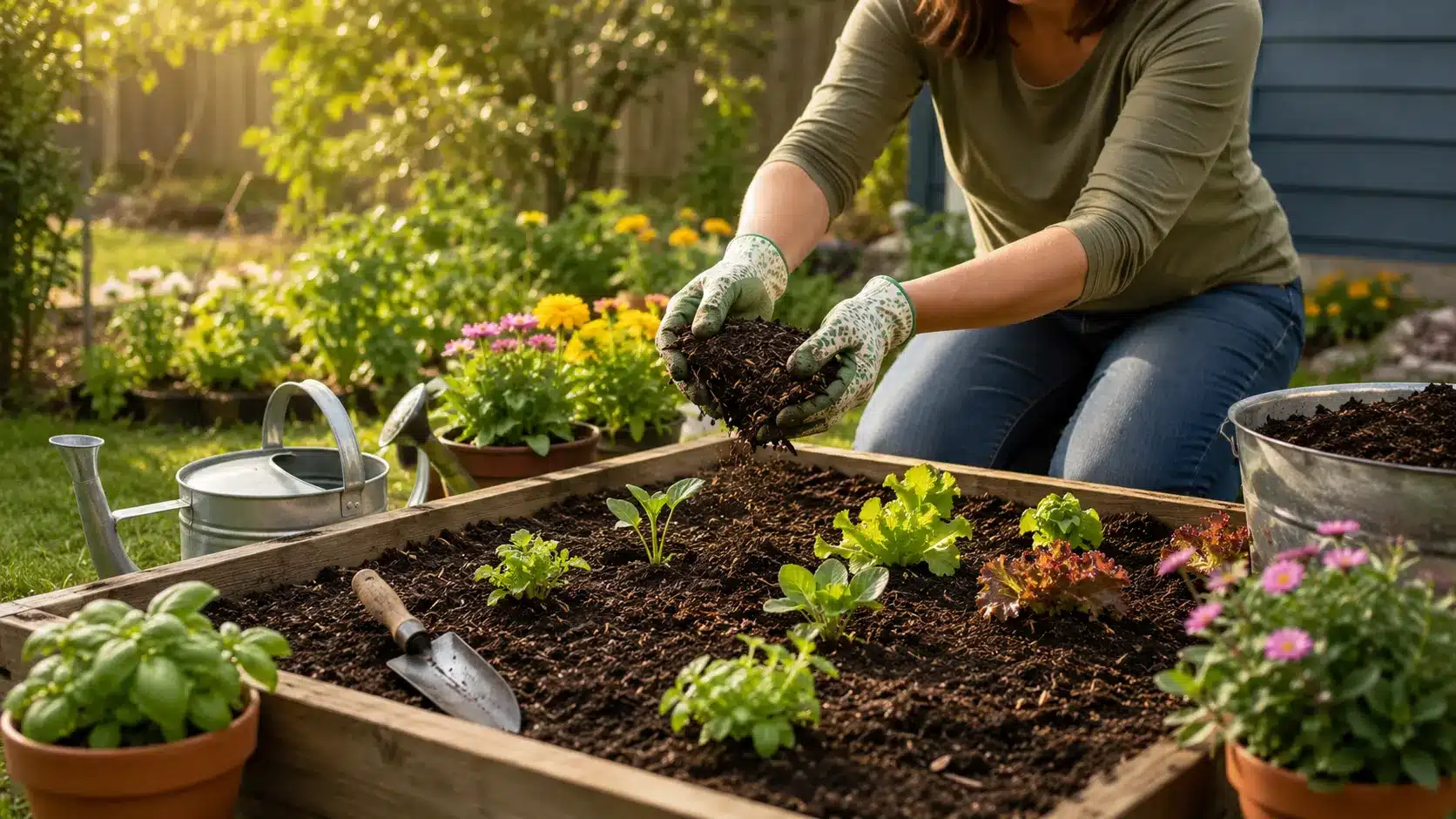
Add 2 to 3 inches of finished compost into the top 6 to 8 inches of soil. Compost improves texture, supports soil life, and gives roots a better start without relying on synthetic fertilizer.
3. Pick Plants and Plant at the Right Time
Choose disease-resistant plants suited to your hardiness zone and growing season. A local planting calendar helps you avoid planting too early or too late.
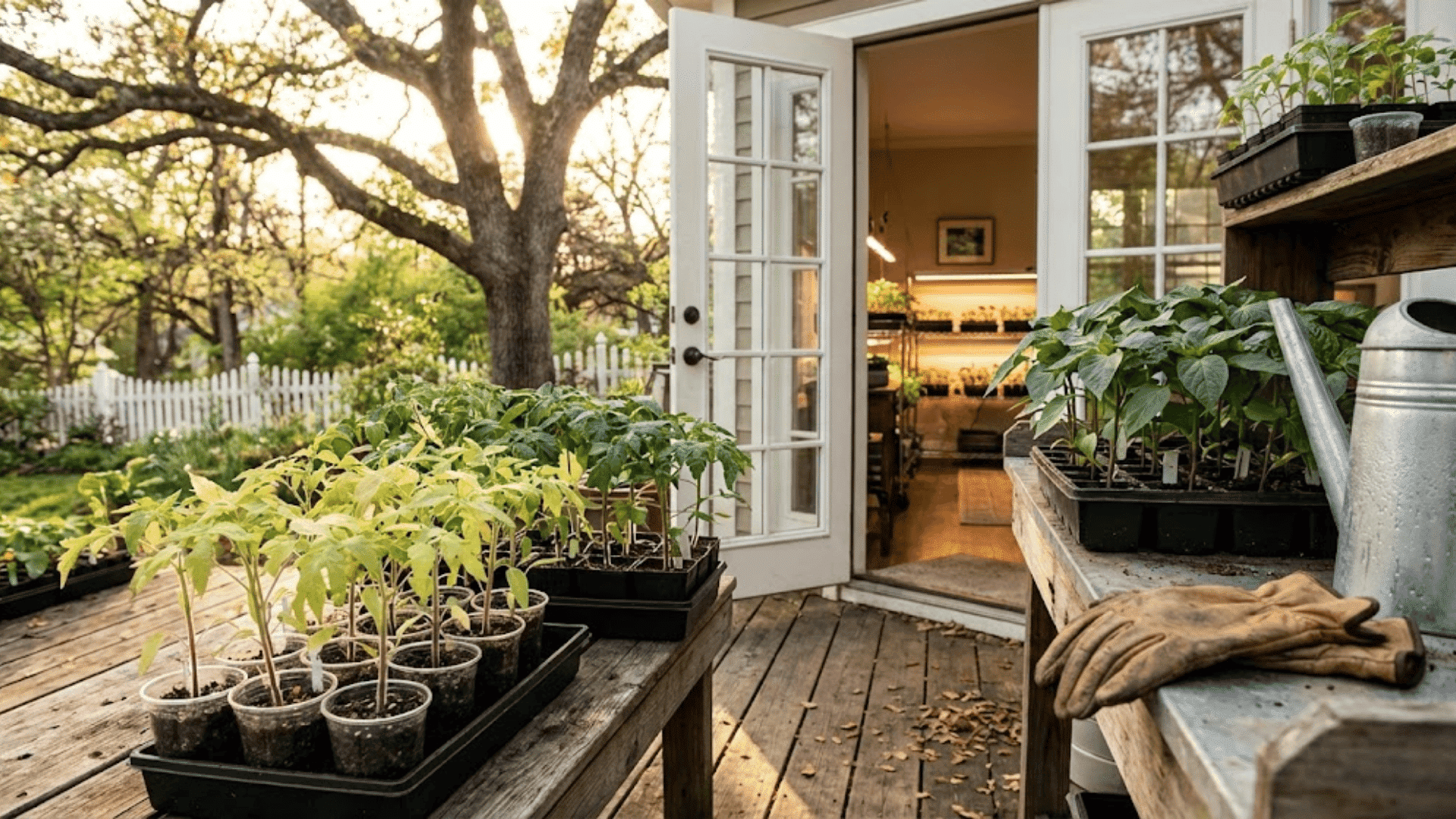
Lettuce, radishes, beans, herbs, and leafy greens are good first choices. Tomatoes and peppers are fine too, but start with one or two plants so they do not take over your first season.
4. Water, Mulch, and Check Early
Water deeply instead of giving plants shallow daily drinks. Deep watering helps roots grow downward where the soil stays cooler and moist longer.
Add 2 to 3 inches of mulch around plants to hold moisture, reduce weeds, and steady soil temperature. Check plants twice a week during the first month so small pest, weed, or watering problems stay small.
5. Keep Simple Garden Notes
Keep a short record of what you planted, when you planted it, where it grew, and how it performed. You do not need a fancy journal. A notes app or small notebook works fine. These notes help you choose better plant varieties, improve timing, and avoid repeating the same problems next season.
A small, steady garden teaches more than a large one that gets out of control by midsummer. Once your space is planned, your soil is ready, and your care routine feels clear, the next smart step is choosing plants that give you early wins.
What Should You Grow First?
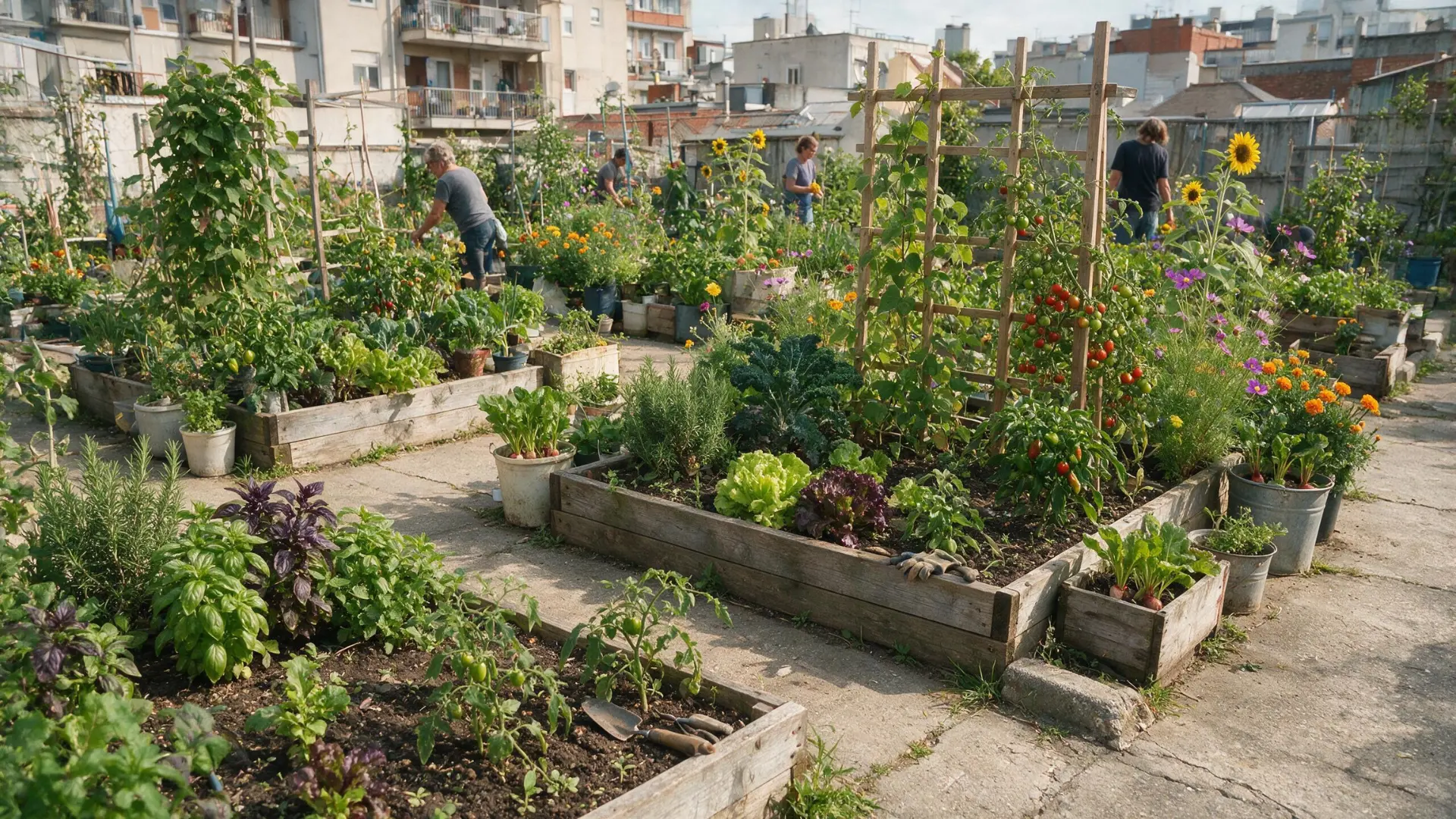
The best first plants are reliable, quick to grow, and easy to manage in your local climate. A mix of vegetables, herbs, and flowers gives you food, flavor, pollinator support, and better pest balance without making the garden too hard to care for.
- Easy Vegetables: Lettuce, radishes, green beans, zucchini, kale, and spinach are strong beginner choices. They grow quickly, handle small mistakes well, and give you early harvests. Tomatoes and peppers are worth adding too, but keep them limited to one or two compact plants
- Helpful Herbs: Basil, parsley, cilantro, chives, and thyme are simple to grow in beds or containers. They also attract helpful insects when they flower. Grow mint in a pot because it spreads fast and can take over garden space if planted directly in the ground
- Supportive Flowers: Marigolds, calendula, nasturtiums, and sunflowers help bring pollinators and beneficial insects into the garden. Nasturtiums can draw aphids away from food crops, while calendula and sunflowers support insects like lacewings and hoverflies
- Simple First Garden Mix: Start with two vegetables, two herbs, and two flowers. This gives you variety, pest balance, and a workload that stays manageable. It also helps you learn what grows best in your space without planting too much at once
Starting with the right plants keeps the first season encouraging instead of stressful. Once you know what to grow, the next practical step is knowing what supplies are worth buying before you plant.
Knowing what to grow is one thing. Knowing what to actually buy before planting is just as important.
Organic Gardening Supplies: What You Actually Need
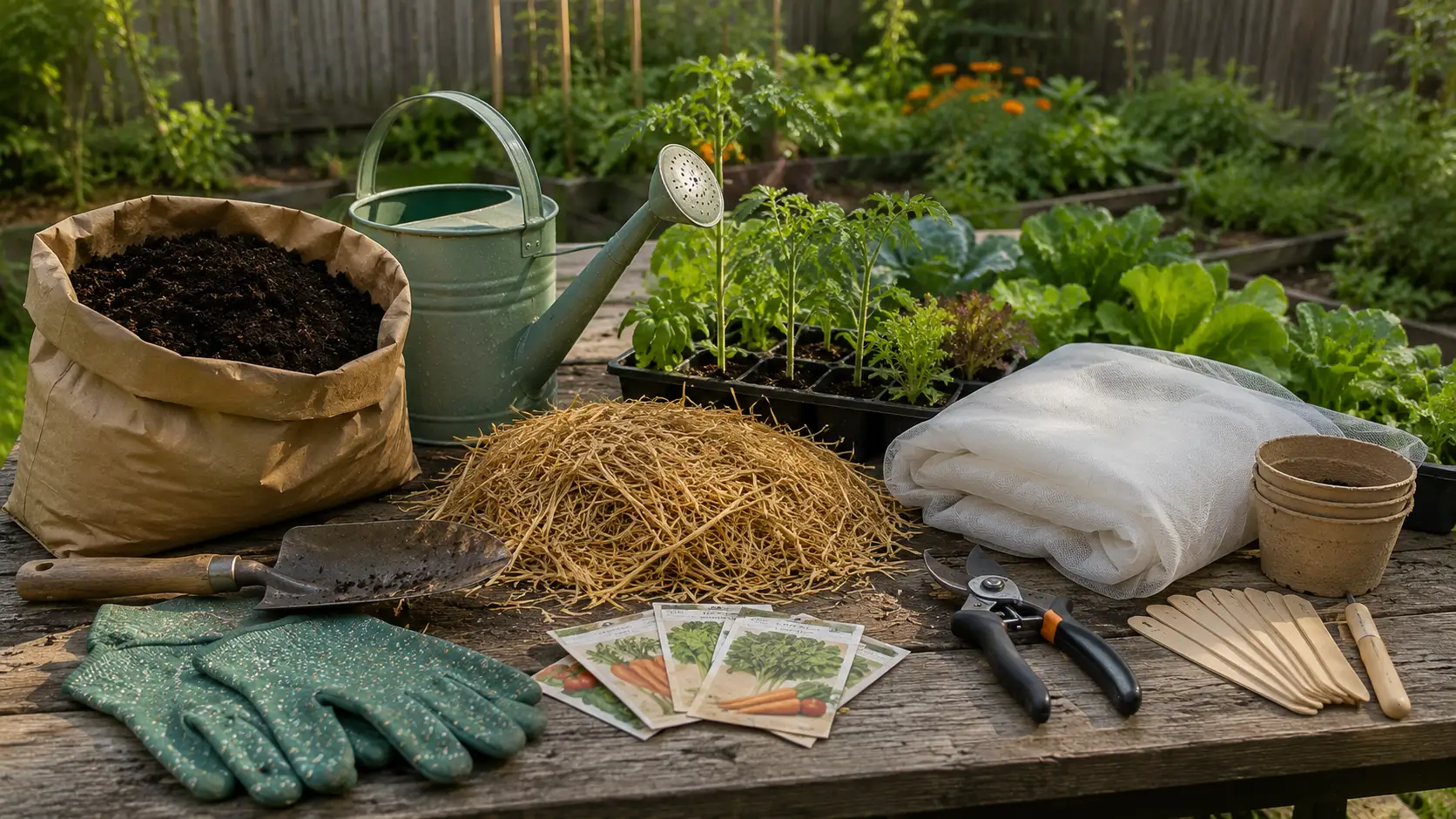
One of the most common traps for beginners is overbuying products marketed as organic solutions. The honest list of what you need for a first season is shorter than most people expect.
| Supply | Why it helps |
| Compost | Feeds soil microbes, improves structure and drainage |
| Hand trowel | For planting, transplanting, and mixing amendments |
| Garden gloves | Protect hands during planting and weeding |
| Watering can or hose with a gentle nozzle | Even low-pressure watering at the soil level |
| Mulch (straw or shredded leaves) | Retains moisture, suppresses weeds |
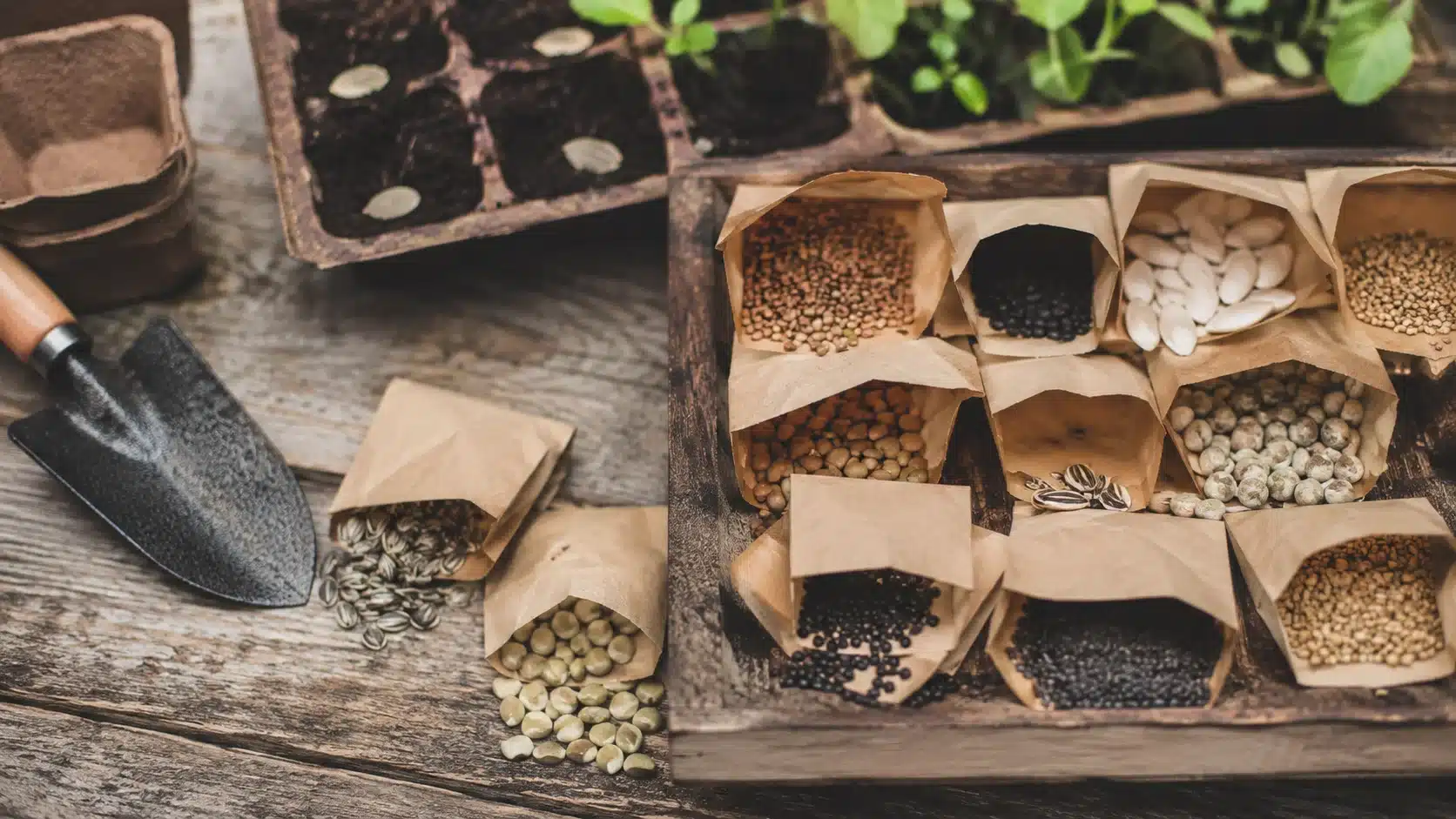
| Organic seeds or seedlings | Suited to your climate and hardiness zone |
| Floating row covers | Lightweight barriers against insects and frost |
| Pruners | For harvesting, deadheading, and removing diseased growth |
| Plant labels | Helps you track what is growing where |
Skip for now: electric soil testers, automated drip systems, specialty organic sprays, and any single-purpose gadget that claims to solve one pest problem. Most of those become useful after season one, once you know your specific garden’s actual needs.
How Do Compost and Mulch Help an Organic Garden?
Compost feeds the soil, while mulch covers and protects it. Compost improves the growing area from within. Mulch protects the surface from drying, weeds, and temperature swings.
Compost is broken-down organic material made from things like vegetable scraps, leaves, grass clippings, and garden waste. Finished compost should look dark, crumbly, and earthy.
Add it before planting, mix it into beds, or use a thin layer around plants. It improves soil texture and supports soil life. Compost is not magic, but it is one of the most reliable habits in organic gardening.
Mulch is a cover placed on top of soil. Straw, shredded leaves, untreated grass clippings, and wood chips can all work in the right place. Mulch helps slow water loss, reduce weeds, and protect soil from crusting. Keep it slightly away from plant stems to prevent rot.
A garden with mulch usually needs less weeding and watering, which is a nice win for busy people.
Use compost to feed and mulch to cover. Together, they make the garden easier to care for and set up the next big concern: pests.
Companion Planting and Crop Rotation Explained
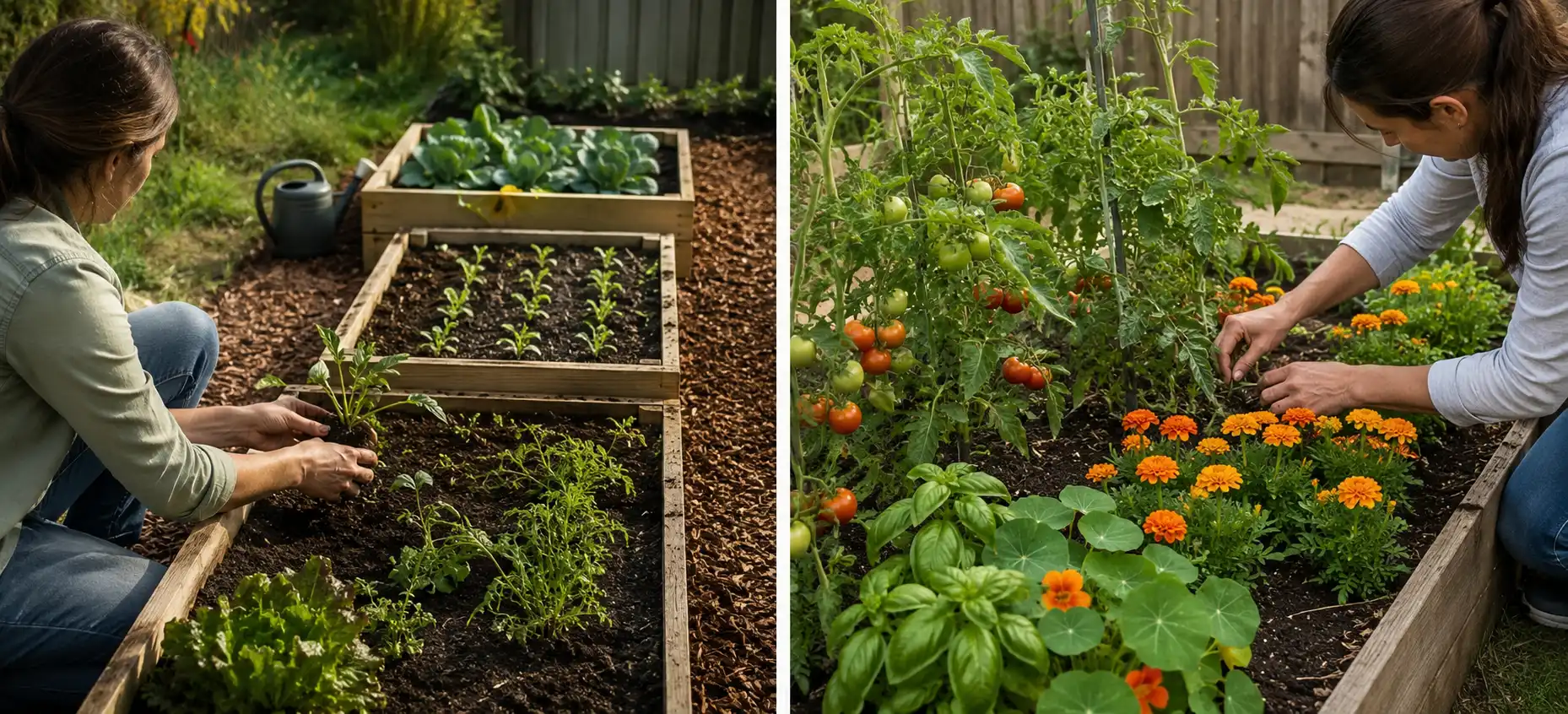
Companion planting and crop rotation sound technical, but both are simple garden habits. They help reduce pest pressure and soil-borne disease by changing how plants are placed and how crops move through beds over time.
| Practice | What it means | Beginner example | Why it helps | What to remember |
| Companion planting | Growing certain plants near each other for possible support. | Marigolds near tomatoes, basil near tomatoes, nasturtiums near beans. | Some plants may attract pollinators, confuse pests, or draw pests away from food crops. | It supports garden health, but it does not replace soil care or regular pest checks. |
| Crop rotation | Avoiding the same plant family in the same bed each season. | Plant tomatoes in bed one this year, then beans or leafy greens there next year. | It helps break pest and disease cycles that build up in soil over time. | Even small rotation changes can help in a home garden by the next few seasons. |
A simple rotation can look like this: tomatoes in one bed this season, beans or leafy greens in that bed next season, then tomatoes in a different bed. These small habits make the garden easier to manage before common beginner problems show up.
Common Organic Gardening Mistakes to Avoid
Most beginner garden problems come from doing too much too fast or missing small warning signs. A simple setup, steady watering, proper spacing, and early checks can prevent many issues before they become hard to fix.
- Starting too big and skipping soil testing: Start with a small bed or containers. Test the soil first, so you know what it needs before adding compost or amendments.
- Watering too often and planting too closely: Check soil moisture before watering. Give plants enough space so roots, airflow, and leaves stay healthier.
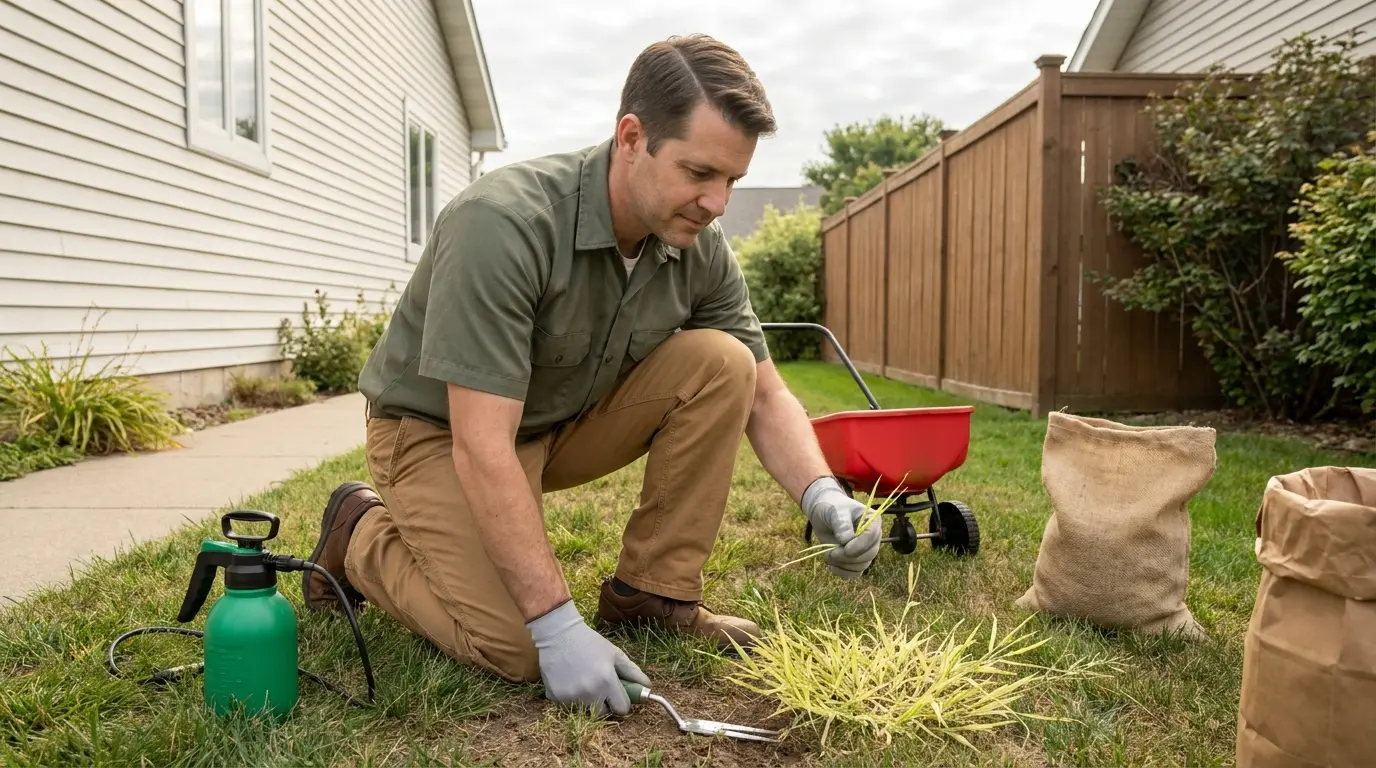
- Ignoring weeds and overusing compost: Pull weeds early before they spread seeds. Use compost carefully because too much can upset the soil balance.
- Spraying before identifying pests: Find the real pest before using any treatment. The wrong spray can harm helpful insects and miss the problem.
- Planting outside the right season: Use a local planting calendar before sowing seeds or transplanting. Good timing prevents weak growth and plant stress.
A quick garden check twice a week during the first month can catch most problems early. Once planting is done, that small care routine is what keeps the garden healthy through the season.
How to Handle Pests Without Synthetic Pesticides
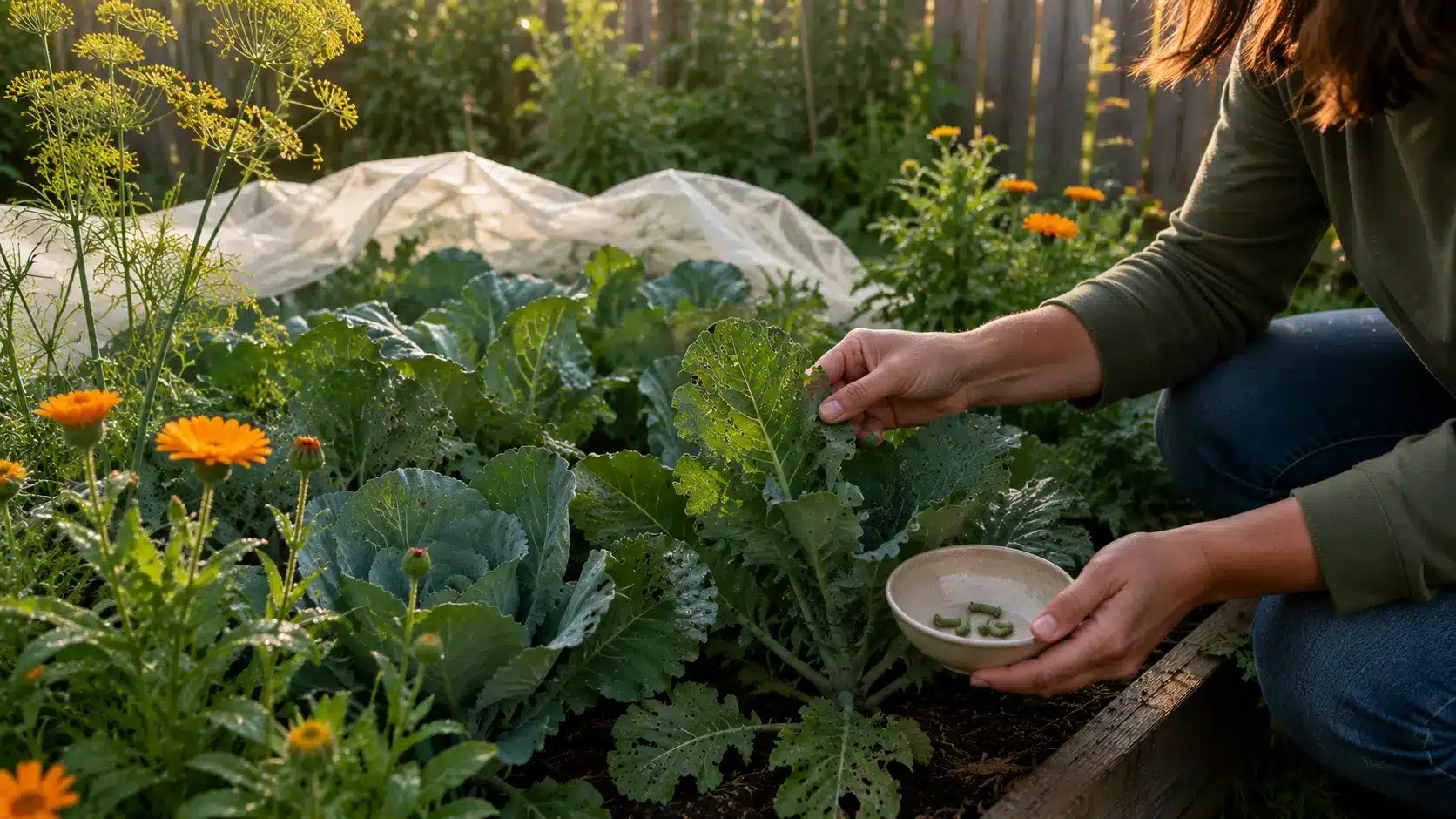
Pest control in an organic garden works best as a simple order of action. First, prevent problems through healthy plants and good garden care. Then use hands-on controls. Only use organic treatments when the problem is clear and other methods are not enough.
- Prevent Problems First: Healthy soil, proper spacing, dry foliage, clean beds, and mixed planting reduce pest pressure before it starts. Strong plants handle stress better, and pests spread less easily when the garden is not planted as one large crop.
- Use Physical Controls: Handpick caterpillars, beetles, or slugs when you see them early. Use floating row covers to block flying insects from laying eggs. Remove badly damaged leaves before pests or disease spread to nearby plants.
- Support Beneficial Insects: Ladybugs, lacewings, ground beetles, and parasitic wasps feed on common pests. Flowers like calendula, dill, fennel, and sweet alyssum help keep them around through the season.
- Use Organic Treatments Carefully: OMRI-listed options like neem oil and Bt can help with specific problems, but they should be used only as directed. Natural products can still affect helpful insects if used too often or too broadly.
Good pest control is not about wiping out every insect. It is about keeping the garden balanced so problems stay small, plants stay healthy, and helpful insects can do part of the work for you.
How to Maintain an Organic Garden Through the Season
Planting is only the beginning. A garden stays productive when you check it regularly, not only when something looks wrong. A short 15-minute garden check twice a week is usually enough to catch small issues before they spread.
Start by checking soil moisture about 2 inches below the surface before watering. Then look under leaves for eggs, larvae, or insect damage . Pull small weeds before they flower and spread seeds.
Add mulch anywhere the soil has become exposed. Harvest ripe produce often because regular picking helps many plants keep producing. Remove leaves with yellowing, spots, or mold so problems do not move through the plant.
A simple notebook or phone photo log helps you track what changes over time. By your second season, those quick notes become one of your most useful garden tools.
Frequently Asked Questions
Can I use store-bought potting mix for organic gardening in containers?
Yes, but check the label before buying. Look for potting mixes that contain compost or aged bark and are free from synthetic slow-release fertilizers. You can also mix standard potting soil with finished compost at roughly a 3:1 ratio to improve nutrient content and microbial activity for container plants.
How do I know when my compost is ready to use in the garden?
Finished compost is dark brown, crumbly, and has an earthy smell with no visible food scraps or large organic pieces remaining. It should not smell sour or like ammonia. If large chunks are still visible, let it break down further before applying it to planting areas.
Is organic gardening more expensive than conventional gardening?
The startup costs are similar. Compost, mulch, and basic tools are not expensive. Over time, organic gardening often costs less because healthy soil needs fewer purchased inputs with each season. Building your own compost pile from kitchen scraps and yard waste reduces ongoing costs further.
Do I need to buy certified organic seeds to garden organically?
Not necessarily. Certified organic seeds are grown without synthetic treatments and are a good choice when available. However, standard, non-GMO, open-pollinated seeds planted in healthy organic soil and managed without synthetic inputs still count as organic practice.
Wrap Up: Is Organic Gardening Worth It?
Yes, and with realistic expectations, most beginners find it more manageable than they expected. The best organic gardens are not the most complicated ones. They are the gardens where the soil comes first, the size stays manageable, and the plants match the local climate. A small bed or a few containers can teach you more than a large garden that becomes hard to handle.
Organic gardening works best when you build simple habits. Test your soil, add compost, mulch bare ground, water with care, and check your plants often. You do not need a perfect season to learn. You just need to notice what works, what struggles, and what needs changing next time.
Start with two or three plants you actually want to eat. Herbs, lettuce, tomatoes, peppers, or beans are all good options. Keep short notes as you go, and your next season will feel much easier.
What are you planning to grow first in your organic garden? Share it in the comments.