Most people who move house leave their garden behind. The pots stay on the porch. The fruit trees stay in the ground.
The roses, the herbs, the slow-grown shrubs that took five years to come into their own all get listed as “established gardens” in the sale brochure and the moving truck drives off without them.
That is a reasonable trade for some movers, but for many it is a quiet loss they regret within the first season at the new place. The good news is that more of a garden can travel than most people realise.
With careful planning, the right tools, and a realistic eye for which plants will survive the trip and which will not, a gardener can carry the best of their work from one home to the next.
The transition is not effortless, but the reward is a new garden that starts with five years of head start rather than a bare bed and a memory.
This guide is the practical playbook for moving a garden. It walks through the eight-week prep window, the move itself, and the critical first thirty days at the new property.
It draws on lessons from gardeners in Queensland, Australia, who have moved between three of the most demanding climate zones on the continent and know better than most what travels well and what does not.
The Honest First Question: What Is Worth Moving?
Before any plant gets touched, work through the three filters honestly. The first is climate compatibility. A plant that thrives in your current garden may not survive in the new one. Move from coastal humidity to inland heat and your gardenias will sulk.
Move from a temperate climate to a subtropical one and your roses may rot at the roots in their first wet season. Look up the USDA hardiness zone or the equivalent local climate map for the new location and be brutal about which of your current plants actually belong there.
The second is replant value versus replacement cost. A mature fig tree is worth moving. A six-pack of annual marigolds is not. Calculate roughly what each candidate plant would cost to buy at maturity at the new property.
If the number is under fifty dollars and the plant is widely available, leave it and buy fresh. The third is sentimental value. The rose your grandmother gave you. The lemon tree you planted the year your first child was born.
Some plants travel for reasons that have nothing to do with horticultural sense, and that is fine. Be honest about which plants are in this category so you give them the extra care they will need.
Eight Weeks Out: The Inventory And The Lists
Once the move date is set, walk the garden with a notebook and a tape measure. Every plant you might consider taking gets a row in the inventory: name, age, size, condition, the three-filter verdict, and a brief note on any special needs.
From the inventory, build three lists. Definitely move (passes all three filters, is in good health, can be lifted or potted without major damage). Maybe move (passes two filters; final decision deferred). Leave behind (fails the climate check or the replant-value check, regardless of how loved it is).
At this stage, get rough quotes for the move itself. Most household removalists will handle potted plants on the truck if you ask in advance, but very large specimens (mature trees, big shrubs that cannot fit through a doorway) may need a separate specialist mover. Sort the logistics now so the budget is real.
Six Weeks Out: Root Pruning The Keepers
Root pruning is the most important and most overlooked part of moving established plants. The process is simple: drive a sharp spade into the soil in a circle around the plant, cutting the outer roots without lifting the plant.
Done six weeks before the move, this triggers the plant to grow new fine roots inside the cut circle. When move day arrives, those fine roots travel with the plant and dramatically improve transplant survival.
For shrubs and small trees, the spade circle should be roughly the width of the canopy. For perennials, half that distance is enough. Tap-rooted plants (oaks, walnuts, anything with a deep central root) do not respond well to root pruning and are usually not worth moving once they are established.
Water the root-pruned plants thoroughly the day after the prune and keep them well watered through the prep period.
Four Weeks Out: Container Prep And Hardening Off
Plants destined for transit move into containers four weeks before the truck arrives. Choose containers one size larger than the root ball will be, fill the bottom with a free-draining mix, and lift the plant carefully with the root mass intact.
Settle it in the container with fresh potting mix around the sides and water in well.
The four weeks in the container do two important jobs. First, the plant adjusts to the restricted root space. Second, you have time to identify any plants that will not cope with the transition.
A potted plant that fails in the four weeks of prep was never going to survive the move itself. Better to know now than to load it on the truck.
Begin hardening off about two weeks before move day. Move the potted plants to a slightly more exposed position. Slightly less water. Slightly more wind. The plants need to be tougher than usual to handle the truck.
One Week Out: Final Prep
The final week is for getting the plants ready for transit. Stake and support anything tall enough to flop in a moving vehicle. Tie loose stems gently with soft ties.
Photograph each plant in its container with a small label or tag stating the plant name, current location in the garden, and ideal position at the new property. The photos and notes save real time at the unload.
Water deeply two days before move day. Do not water the day before or the morning of the move. Wet soil is heavy and creates spillage in the truck.
Pack any garden tools, soil amendments, and stored seeds in clearly labelled boxes so the new garden is set up to receive the plants on arrival.
Move Day: Getting Plants From A to B
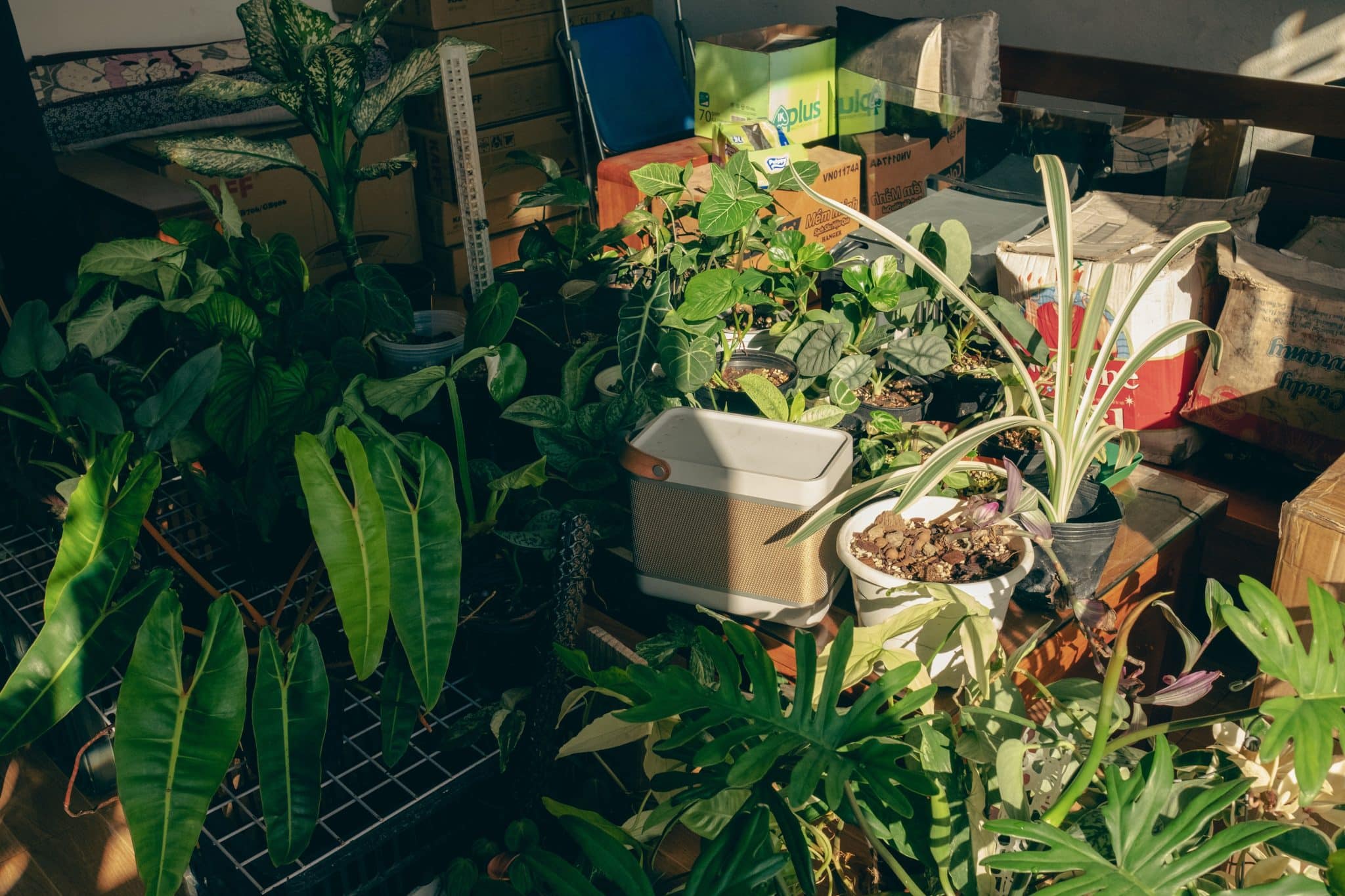
This is the day the prep pays off. A few practical rules. Load the potted plants last and unload them first. They should spend the shortest possible time in the truck.
Position them upright, packed close enough that they cannot tip but loose enough that air can circulate. If the move is longer than four hours, plan a cooling break.
A van or truck closed up in summer heat can hit one hundred and twenty degrees Fahrenheit (about fifty Celsius) inside, which is fatal to most potted plants in less than two hours. A short stop with the doors open in shade resets the temperature.
Brief the removalist team in advance that the plants are travelling with the household goods. A professional crew will load and secure them properly if they know they are coming.
The First 30 Days At The New Home
Most of the survival rate is determined in the first month at the new property. Replant within forty-eight hours of arrival. Plants in containers can hold for a few days if properly watered, but the longer the wait, the higher the loss rate.
Prepare the new beds before the truck arrives so you can start planting on the day of the unload. Water deeply at planting and again two days later, then settle into the same watering rhythm you used at the old garden.
Do not feed for at least three weeks. Newly transplanted roots are sensitive to fertiliser and a hungry plant recovering from a move responds better to consistent water than to nutrients.
Watch for stress signs in the first month: leaf drop, wilting, yellowing. Most transplanted plants will lose some leaves as they redirect energy to root recovery.
This is normal. What is not normal is sudden collapse, which usually means the root ball dried out at some point in transit.
Three Real-World Examples From Queensland
Australia’s eastern coast spans three distinct climate zones in a single state, and Queensland gardeners moving between them have built up real-world experience in what travels and what does not.
A Brisbane couple moving from Sydney brought their entire camellia collection north (Brisbane sits in a humid subtropical climate similar to coastal Texas and the lower Gulf states) and lost only two of nineteen plants in the first season.
Their move was coordinated through experienced Brisbane removalists who handled the potted plants alongside the household goods, which kept the plants travelling no more than half a day in the truck.
A Gold Coast family relocating from Melbourne to Burleigh brought a mix of citrus, succulents, and Australian natives. The natives travelled well.
The citrus needed extra protection from salt-laden coastal wind in the first season. Working with reliable Gold Coast removalists who could schedule the unload during a calm-weather window made a measurable difference in early survival.
A Cairns retiree couple who moved from inland Queensland to the tropical north left almost everything behind. The few plants they brought (a single mature lemon tree, a heritage frangipani cutting, and two pots of orchids) had clear sentimental value and known tropical compatibility.
Engaging Cairns removalists familiar with wet-season scheduling meant the move avoided the heaviest rains, and all three of their carried plants thrived in their first year.
The thread across all three is the same: the move succeeded for the plants that were chosen carefully, prepared properly, and handled like the living things they are rather than as cargo.
The Plants That Almost Never Survive A Move
A short, honest list of the candidates worth leaving in the ground. Mature trees larger than ten feet tall (about three metres). The root mass required to keep them alive is too large to lift and transport with most household moves.
They are also expensive to replace at the new property, which makes them tempting to try, but the survival rate is poor. Plants with deep tap roots that have been in the ground more than three years.
Oaks, walnuts, magnolias, and most stone fruit trees. The taproot is the structural anchor, and breaking it during the lift removes the plant’s ability to take up water.
Climate-mismatched species. A coastal favourite moved inland, an inland favourite moved coastal, a temperate plant moved tropical. The climate filter is the first one for a reason. Plants that fail it do not get a second chance.
The Gardener’s Mindset
Moving a garden is not all-or-nothing. The most satisfying move is usually one where ten to twenty plants of real value travel with the household, the rest of the old garden is given to neighbours or friends who will care for it, and the new property is approached as both a continuation and a fresh start.
The keeper plants give the new garden its head start. The empty space gives the gardener the chance to do something new.
Done well, the result is a garden at the new home that holds the memory of the last one without being constrained by it. The plants that travel become anchors. The new ground becomes the next chapter.
Take the time. Make the lists. Prune the roots. Brief the truck. Plant within forty-eight hours. Your garden will repay the care many times over in the seasons that follow.