Most people spend money on better seeds, better fertilizer, and better tools. But none of it works the way it should if the soil underneath isn’t right. That’s the part nobody talks about enough.
Soil isn’t just a growing surface. It’s the foundation on which everything else depends. It directly shapes how healthy a plant can actually get.
And the frustrating part? Two gardens side by side can look identical on the surface but produce completely different results, simply because of what’s happening in the soil.
Soil composition is where it all begins. Here’s a straightforward breakdown of what it means and why it matters more than most gardeners realize.
The Overlooked Role of Soil Composition in Plant Growth
When plants struggle, most people blame watering or sunlight first. But the real issue often starts in the soil. Soil composition plays a major role in how plants grow, stay healthy, and withstand stress.
If the soil is not right, roots may not grow well, and plants can have trouble taking in what they need. Even healthy-looking plants may grow more slowly over time. Good soil helps plants grow stronger from the ground up.
It supports better growth, healthier roots, and longer-lasting plants. That’s why soil composition matters more than many people realize, even though it is often ignored in everyday gardening conversations.
Soil Characteristics That Can Change How Plants Grow
Not all soil works the same way. Some soils hold water longer, while others dry out very fast. Certain soil characteristics can also affect how well plants grow and how healthy their roots become over time.
- Texture: Describes how the soil feels, whether gritty, smooth, or sticky.
- Color: Soil color can give clues about moisture and soil health.
- Drainage: The rate at which water moves through the soil.
- Moisture Retention: Refers to how well the soil holds water for plants.
- pH Level: Measures whether the soil is acidic, neutral, or alkaline.
- Fertility: Explains how rich the soil is in plant nutrients.
- Compaction: Tells how tightly packed the soil is and how easily roots can grow.
Let’s Take a Closer Look at Soil Composition and Its Properties
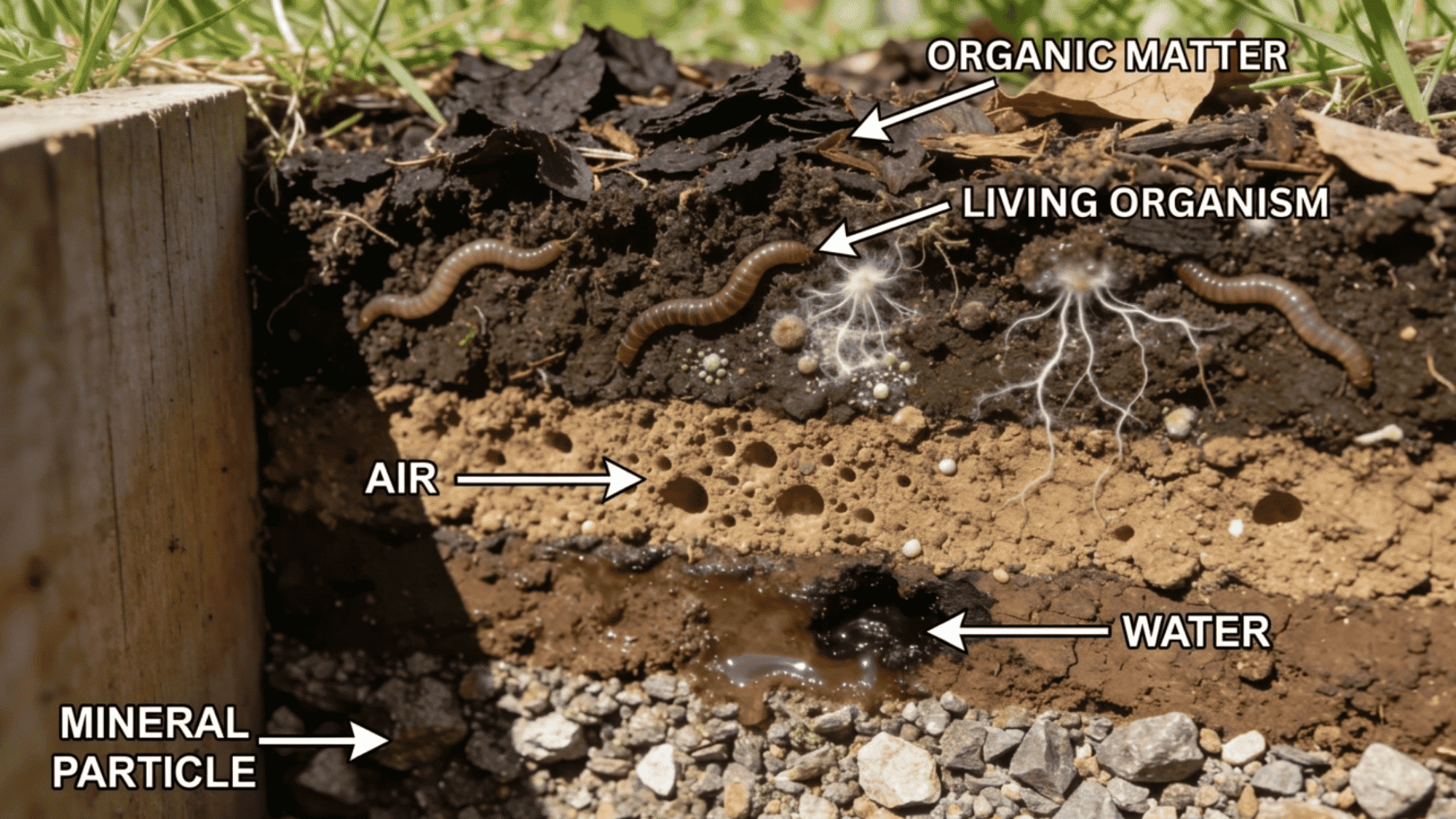
Soil is more than just dirt. It is a natural mix of materials that work together to support healthy plant growth. Understanding soil composition can help you learn why some soils grow strong plants while others struggle over time.
Every component in soil has its own role and unique properties.
1. Organic Matter
Organic matter forms from decomposed plants, leaves, and natural waste materials. It is an important part of soil composition because it improves soil quality and helps support healthy plant growth naturally.
Here are some ways organic matter improves soil conditions.
- Organic matter adds nutrients that plants need for healthy growth.
- It helps the soil stay moist longer.
- The soil becomes softer and easier for roots to spread through.
- Healthy soil with more organic matter often appears darker.
- Organic matter helps reduce soil loss from wind and water erosion.
- It supports worms, microbes, and other useful soil organisms.
- Nutrients remain available in the soil for a longer period.
2. Living Organisms
Living organisms are an active and important part of healthy soil composition. These include earthworms, fungi, bacteria, and microbes that help maintain soil health naturally and support plant growth over time.
Below are some ways living organisms improve soil quality.
- Living organisms break down waste into nutrients for plants.
- They help enrich and fertilize the soil over time.
- Soil becomes looser and easier for roots to grow through.
- Some organisms help protect plants from harmful diseases.
- Soil life keeps the underground ecosystem active and balanced.
- Organic materials break down faster with the help of microbes.
- Healthy soil organisms support stronger and healthier plant growth.
3. Air
Air is a lesser-known but essential part of soil composition. Tiny spaces in the soil contain oxygen, which roots and soil organisms need to survive. Without enough airflow, plants may struggle even in healthy-looking soil.
These points show why air is important for healthy soil conditions.
- Air supplies oxygen that plant roots need to survive.
- Good airflow helps roots grow deeper and stronger.
- Loose soil usually contains more air pockets underground.
- Helpful soil organisms also depend on oxygen to stay active.
- Air allows gases to move properly through the soil.
- Well-aerated soil often supports better drainage.
- Balanced airflow helps maintain healthier growing conditions.
4. Water
Water is one of the most important parts of soil composition. Plants need water to absorb nutrients, grow properly, and stay healthy. The amount of water present in the soil can greatly affect plant development.
The following points explain the role of water in soil health.
- Water helps soil stay moist enough for plant growth.
- Proper drainage prevents too much water from collecting in the soil.
- Nutrients move through the soil with the help of water.
- Water helps regulate soil temperature during hot and cold weather.
- Healthy roots depend on balanced water levels in the soil.
- Seeds need water to begin growing and sprouting.
- Water also keeps plants from drying out too quickly.
5. Mineral Particles
Mineral particles come from broken rocks and form a large part of soil composition. They affect how the soil feels, how water moves through it, and how well roots can grow.
Different particle sizes can also change the overall behavior of the soil. The points below explain how mineral particles affect different soil properties.
- Soil texture can feel sandy, smooth, or sticky depending on the particle size.
- Water may drain quickly or slowly based on the type of mineral particles present.
- Some mineral particles help the soil hold moisture for longer periods.
- Smaller particles can make the soil feel tightly packed and dense.
- Air movement in soil changes depending on particle spacing.
- Mineral particles also affect how quickly soil heats up or cools down.
Different Types of Soil and What Makes Each One Unique
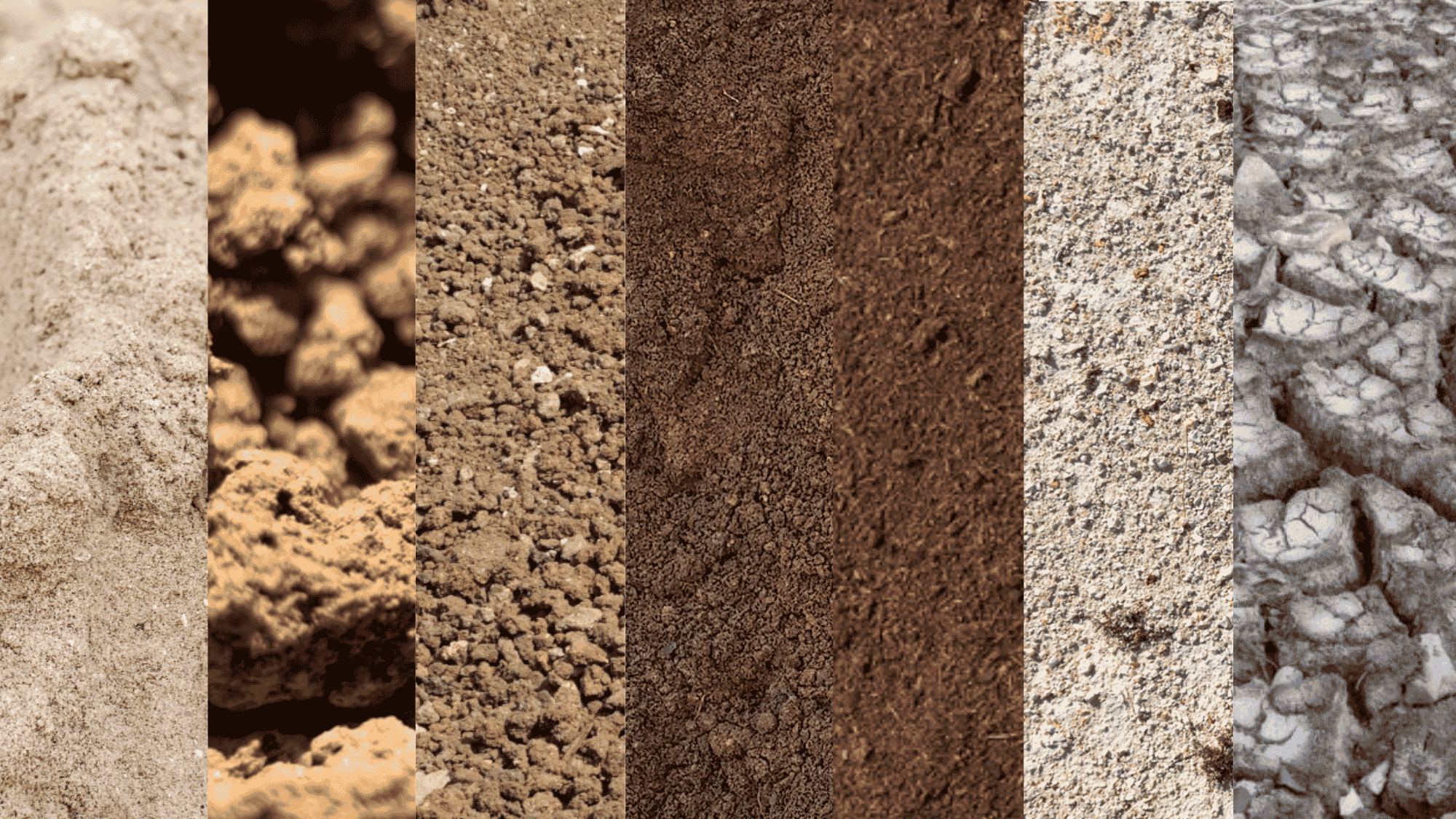
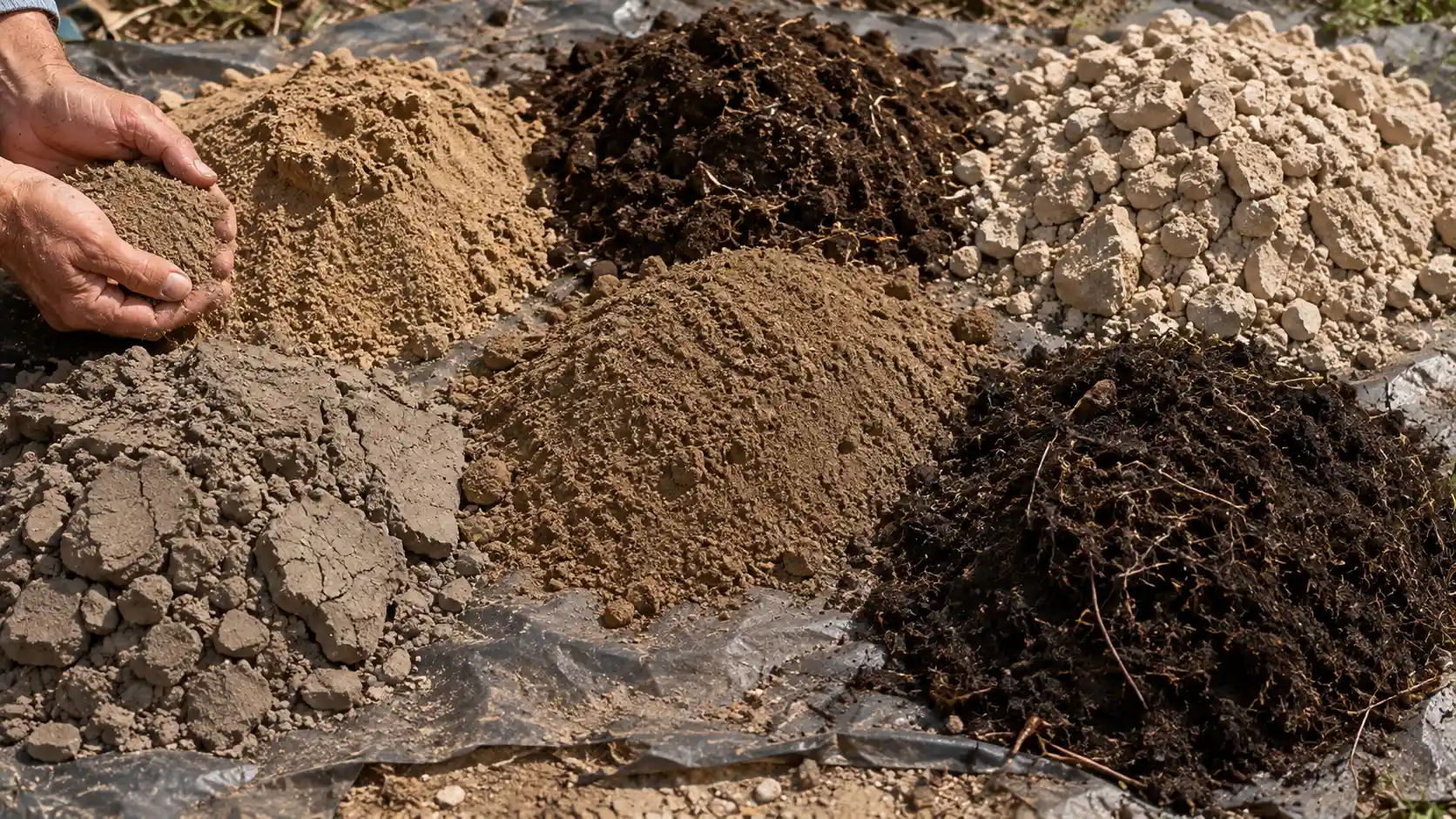
Not all soil is the same. Some soils drain water quickly, while others hold moisture for a long time. Different types of soil can affect plant growth, root health, and even how often you need to water your garden.
| Soil Type | Texture | Water Drainage | Nutrient Level | Best For | Common Problems |
|---|---|---|---|---|---|
| Sandy Soil | Dry, loose, gritty | Very fast | Low | Cactus, succulents, root vegetables | Dries out quickly |
| Clay Soil | Heavy, sticky, dense | Slow | High | Shrubs, roses, some trees | Waterlogging and compaction |
| Silty Soil | Smooth, soft | Moderate | High | Most garden plants | Compacts easily |
| Loamy Soil | Crumbly, balanced | Good | High | Almost all plants | Needs regular maintenance |
| Peaty Soil | Soft, spongy | Slow to moderate | Medium to high | Blueberries, azaleas | Can stay too wet |
| Chalky Soil | Dry, rocky | Fast | Low to medium | Lavender, lilac | Often too alkaline |
| Saline Soil | Crusty, dry | Poor | Low | Salt-tolerant plants | Salt buildup damages roots |
It’s a Wrap
Soil doesn’t announce its problems. It just quietly affects everything growing above it. And once that connection clicks, gardening starts making a lot more sense.
Soil composition isn’t some advanced gardening concept. It’s the foundation. Fix what’s happening underneath, and the results above ground tend to follow on their own.
So whats left for us to do is to understand what the soil is made of, work with it instead of against it, and growing healthy plants gets a whole lot less frustrating.
Frequently Asked Questions
How often should garden soil be tested?
Test garden soil every 2–3 years, or sooner if plants keep struggling. Soil tests check pH, organic matter, texture, and nutrients.
Is topsoil the same as garden soil?
No. Topsoil is the upper soil layer, while garden soil is often mixed with compost or other materials for planting.
Can raised beds fix bad soil?
Raised beds can help when native soil drains poorly, compacts easily, or needs better planting control.