You pulled out your favorite wool sweater and found a hole you did not put there. Or maybe you spotted tiny, bristly bugs crawling along your baseboard.
Carpet beetles are small, but the damage they leave behind is hard to ignore.
Most people do not even realize what they are dealing with until the problem has already spread. Getting rid of carpet beetles takes more than a single spray.
You need to find where they are hiding, treat the right areas, and stay consistent. This guide walks you through every step.
What Are Carpet Beetles?
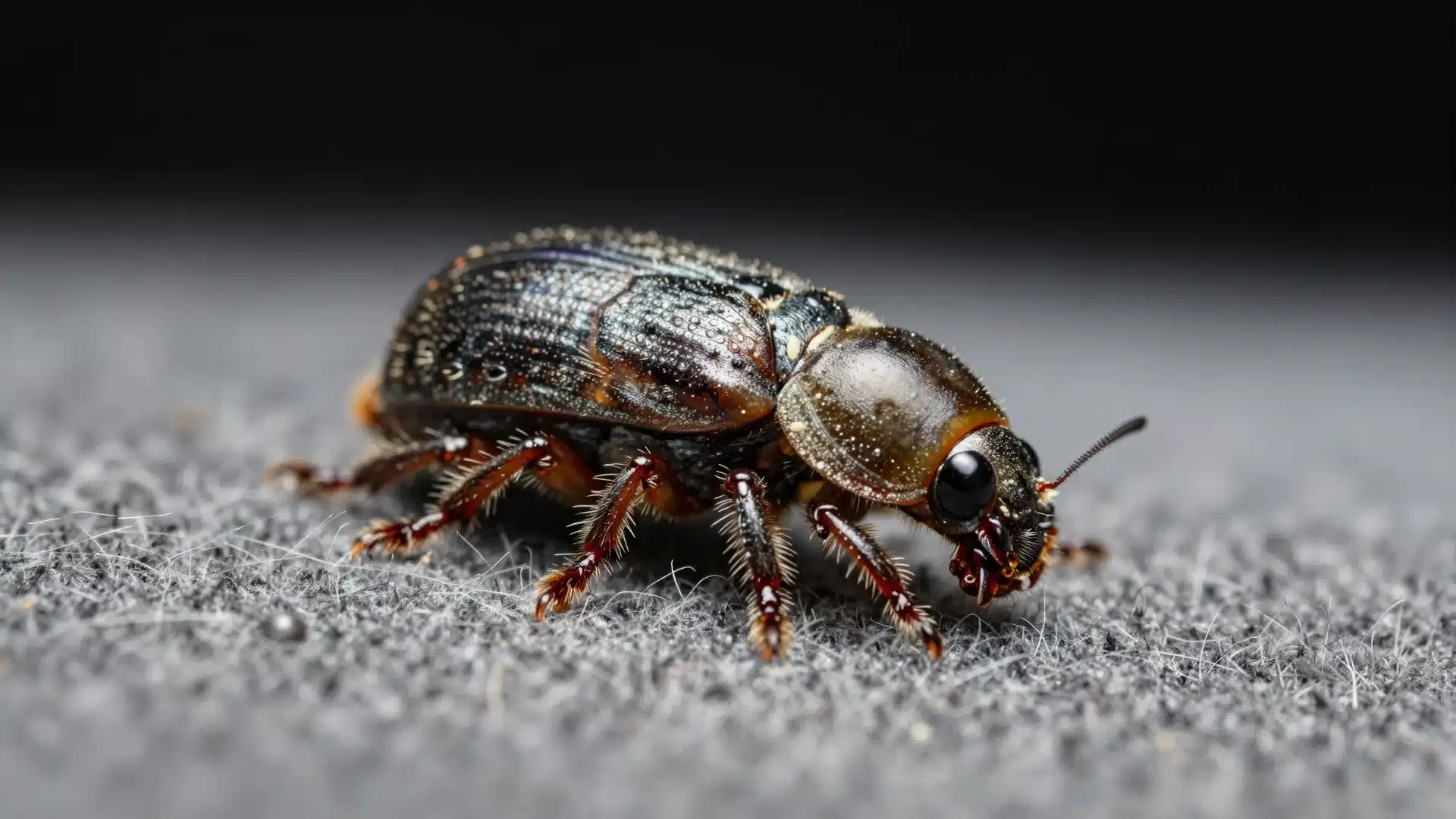
Carpet beetles are small, oval-shaped insects that feed on natural fibers like wool, silk, leather, pet hair, and even dried food.
Adult beetles are roughly 1/8 inch long and are often found near windows or light sources. The larvae are the ones doing the real damage.
They hide in dark spots, out of the light, and chew through fabric, rugs, and stored clothing for months before anyone notices them.
Signs You Have a Carpet Beetle Problem
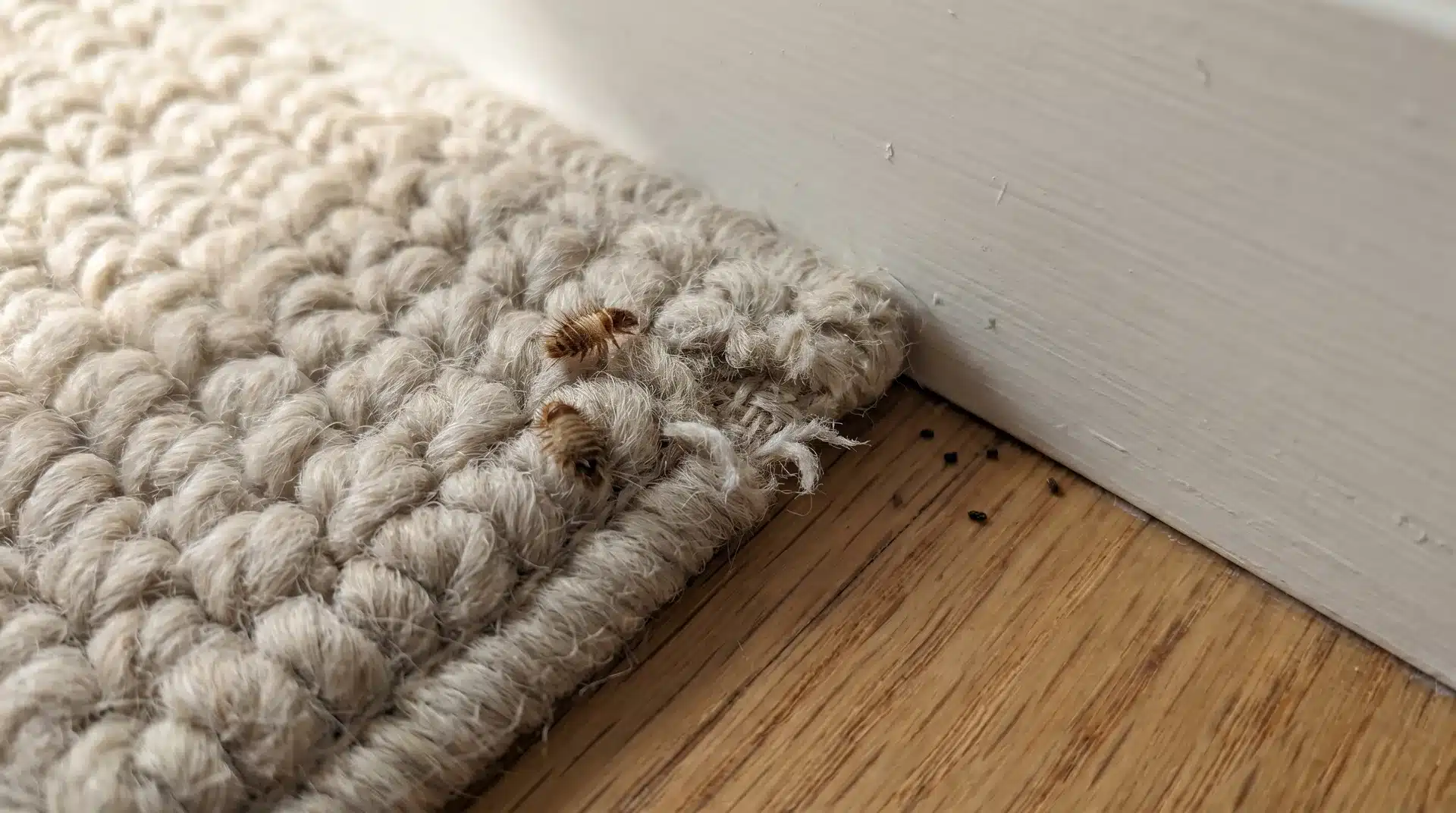
Carpet beetles stay out of sight, which is why most infestations get worse before they get better. Knowing what to look for helps you catch them early.
- Bare patches or irregular holes in rugs, wool clothing, or upholstery: These are usually the first signs. The damage looks uneven, not like a clean cut.
- Shed larval skins in corners or under furniture: These look like tiny, brownish husks with bristly hairs. Finding these confirms that larvae were or are active.
- Fecal pellets near chewed fabric: Tiny dark specks, about the size of a grain of salt, left close to damaged areas.
- Live or dead adult beetles near windowsills or light fixtures: Adults are drawn to light and are often spotted near windows in spring and summer.
- Skin irritation with no visible bites: Larval hairs can cause a rash that gets mistaken for insect bites.
Where Do Carpet Beetles Hide in Your Home?
They are good at staying out of sight. Most homeowners check the obvious spots but miss several areas where larvae can live and feed undisturbed for months.
| Location | Why They Hide There |
|---|---|
| Under area rugs and along carpet edges | Dark, undisturbed, and full of natural fiber |
| Inside closets and dresser drawers | Access to wool, silk, and stored clothing |
| Under and behind heavy furniture | Rarely moved, full of dust, and shed pet hair |
| In air vents and ductwork | Warm, dark, and connected to multiple rooms |
| Attic spaces and wall voids | Often contain old bird or rodent nests |
| Stored vacuum cleaner bags | Full of pet hair and fabric debris |
| Pantry areas | Some species feed on dried grains and spices |
| Around dried flower arrangements | Adults feed on pollen and may breed nearby |
How to Get Rid of Carpet Beetles Step by Step
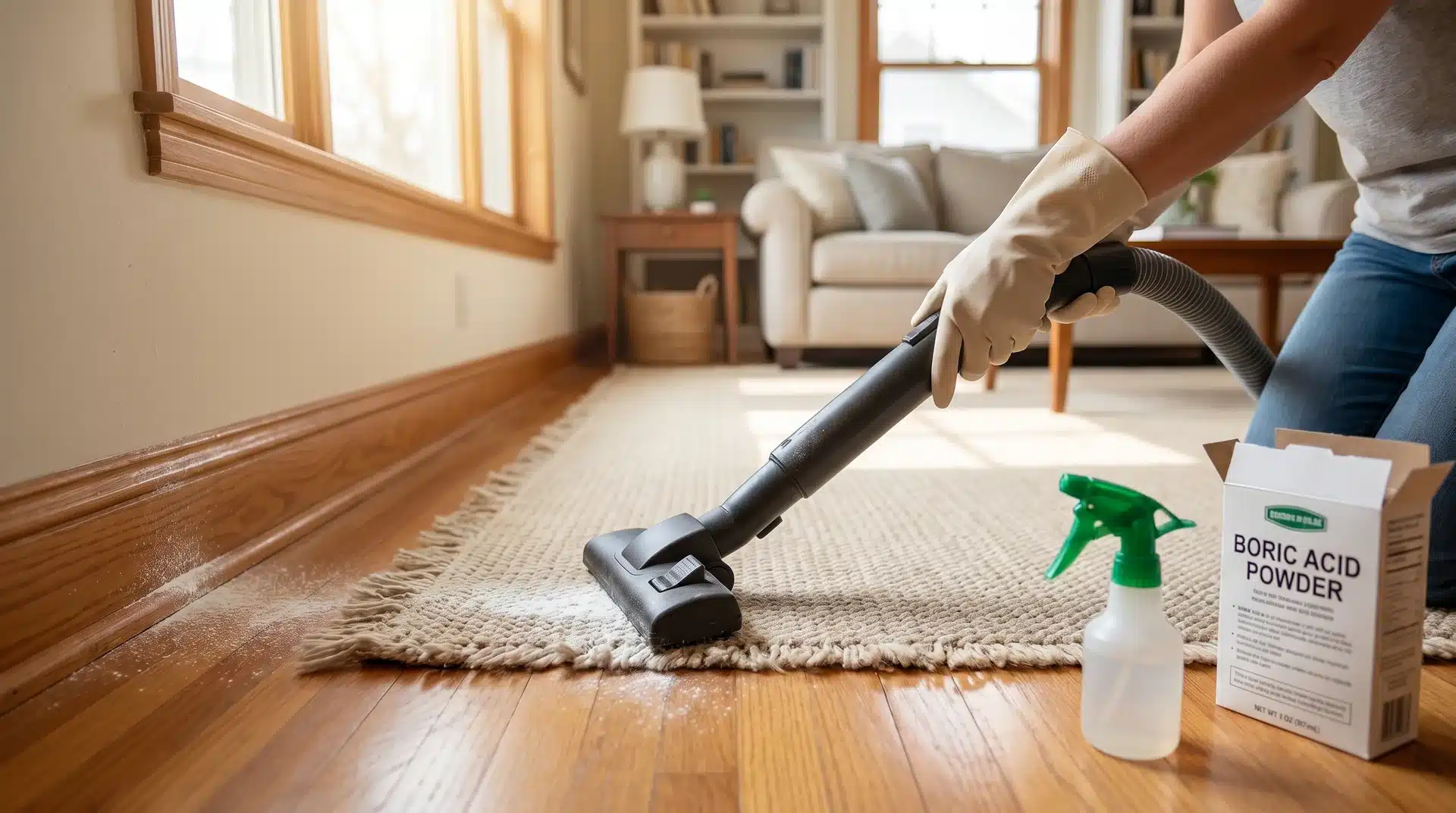
This is not a one-step fix. A successful treatment covers the source, all affected materials, and every room where beetles may have spread. Work through each step in order and repeat treatments as needed.
Step 1: Find the Source
Before you treat anything, find where the infestation started. Check inside closets, along baseboards, under heavy furniture, inside air vents, and in attics or crawl spaces.
Look for old bird or rodent nests in the attic. These are one of the most common starting points for carpet beetle infestations. Mark every area where you find damage, shed skins, or live insects before you begin.
Step 2: Vacuum Everything Thoroughly
Use a vacuum with a HEPA filter and go over every carpet, rug, upholstered chair, sofa, and baseboard in the house. Pay special attention to edges, corners, and beneath furniture that rarely moves.
After each session, empty the vacuum canister or bag outside, away from the house. Do not leave it in the kitchen bin. Repeat this every two to three days during active treatment. Skipping this step is the number one reason treatments fail.
Step 3: Wash and Heat-Treat Infested Items
Wash all suspect clothing, bedding, and linens in hot water set to at least 120°F. Dry everything on the highest heat setting for at least 30 minutes.
For items that cannot go in the wash, seal them in a plastic bag and place them in a freezer set to 0°F or below for at least two weeks. This kills both larvae and eggs. Items labeled dry-clean only should go to a professional cleaner right away.
Step 4: Apply Boric Acid
Sprinkle a light, thin layer of boric acid powder along baseboards, in closet corners, and under rugs. Leave it in place for a few hours, then vacuum it up.
Boric acid damages the digestive system of carpet beetle larvae when they come into contact with it. Keep children and pets out of treated areas until the powder has been fully vacuumed up.
Step 5: Use an Insecticide Spray
Look for a spray that contains deltamethrin, bifenthrin, or cyfluthrin. Apply it along baseboards, under furniture, inside closet corners, and in cracks where beetles might hide.
Follow the label instructions closely for dwell time and ventilation. Do not spray it directly onto clothing, bedding, or food-prep surfaces.
Step 6: Add Natural Repellents
Cedar blocks and cedar oil repel carpet beetles and work well inside closets and storage drawers. Diatomaceous earth, lightly dusted along baseboards and under rugs in dry areas, cuts through the beetle’s outer shell and causes it to dry out.
Spraying white vinegar on hard surfaces, such as shelving, removes residue that attracts beetles. Diluted clove and peppermint oils act as mild surface repellents. These are useful additions, but they will not clear an active infestation on their own.
Step 7: Seal Entry Points
Caulk gaps around window frames, door frames, and baseboards. Install fine-mesh screens on windows and air vents. Inspect attic and crawl space entry points for gaps that birds or rodents could use to nest.
Cutting off their entry routes prevents new beetles from getting in after treatment.
Home Remedies for Carpet Beetles

Not every home remedy is worth your time. These ones have a real effect on carpet beetles when used correctly.
- Diatomaceous earth: Works by physically damaging the beetle’s shell. Apply a thin layer in dry areas. Safe around people and pets once it settles, but avoid breathing in the dust when applying.
- Cedar: Cedar oil repels beetles. Place cedar blocks in all closets and storage bins. Sand or replace the cedar every three to six months to keep the scent active.
- Freezing: Effective for rugs, stuffed toys, or clothes that cannot be washed. Seal in plastic, remove excess air, and freeze at or below 0°F for at least 2 weeks.
- White vinegar: Does not kill beetles, but cleans surfaces and removes the scent trails and food residue that attract them. Use it after vacuuming on shelves and inside drawers.
- Clove oil spray: Mix a few drops in water and spray it in closets and along baseboards. A mild contact repellent, not a treatment for a heavy infestation.
How to Get Rid of Carpet Beetle Larvae
Larvae are the real problem. Adults do not damage your belongings. Larvae do. They avoid light and stay buried in fabric, carpet edges, or stored materials for anywhere from two months to over a year, depending on conditions.
- Deep vacuum every two to three days: Focus on floor edges, inside closets, and under all furniture. This removes larvae, eggs, and shed skins before new ones hatch.
- Steam clean carpets and upholstery: Steam kills larvae and eggs on contact. Run a steam cleaner slowly across carpet edges, rug backs, and upholstered seating.
- Apply boric acid in corners and under baseboards: A thin layer left in hard-to-reach spots targets larvae in areas the vacuum cannot fully reach.
- Spray insecticide in cracks and along skirting boards: This catches larvae hiding in wall gaps and under flooring edges.
- Check for new damage after three to four weeks: If there are no new holes, no fresh shed skins, and no live larvae after a month of consistent treatment, the infestation is clearing.
Carpet Beetle vs. Bed Bug: How to Tell the Difference
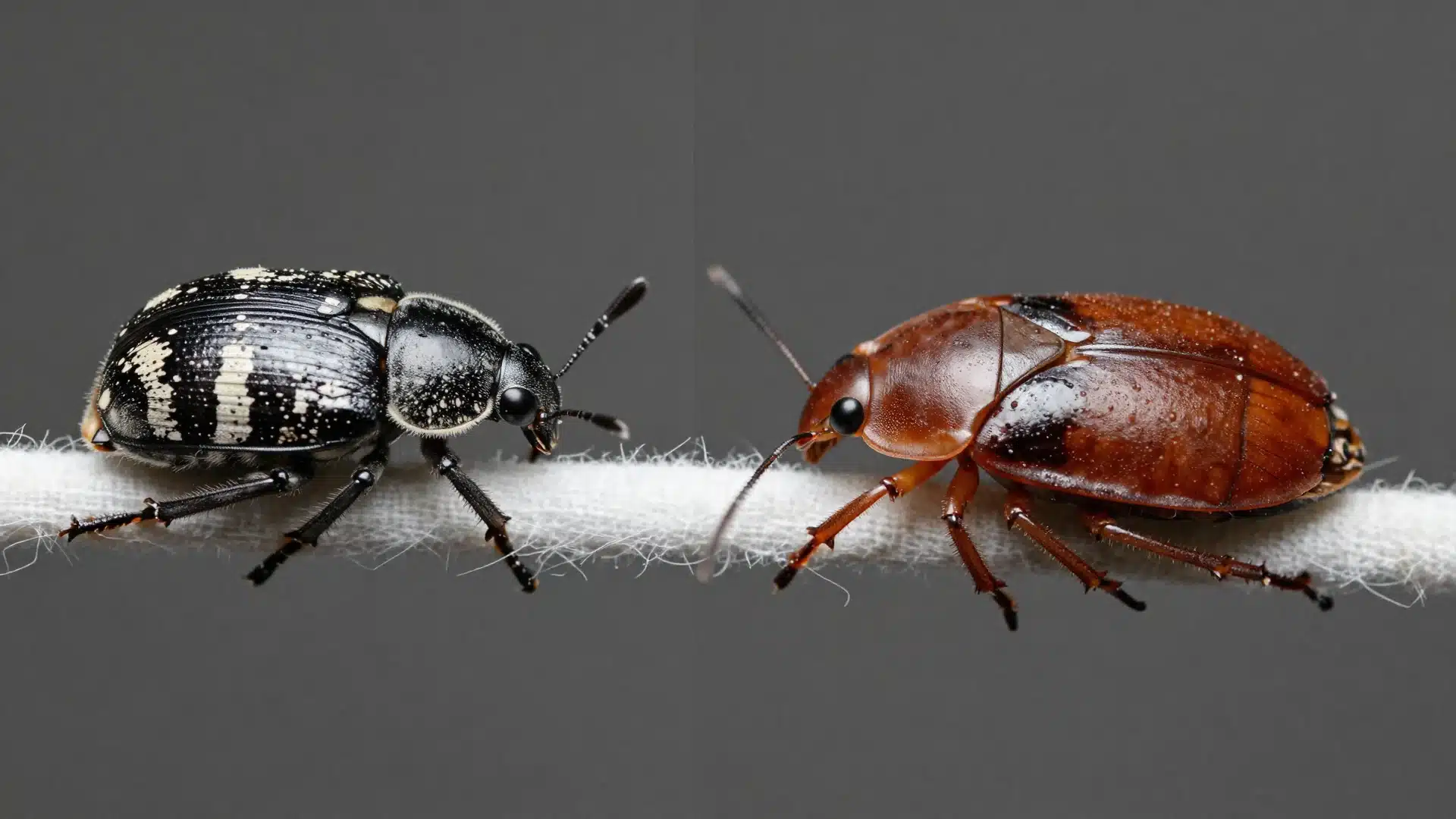
These two often get mixed up, especially when someone notices skin irritation and small insects in the bedroom. The damage they cause and where they show up are very different.
| Feature | Carpet Beetle | Bed Bug |
|---|---|---|
| Shape | Oval, rounded shell | Flat, apple-seed shaped |
| Color | Black, white, or patterned scales | Reddish-brown |
| Size | About 1/8 inch | About 1/5 inch |
| Bites skin? | No, but larval hairs cause skin irritation | Yes, leaves bite marks in lines or clusters |
| Damage caused | Holes in fabric, rugs, and stored clothing | Blood spots on bedding, no fabric damage |
| Where found | Closets, rugs, under furniture, attics | Mattress seams, bed frames, and behind outlets |
| Active time | Daytime (larvae avoid light, adults seek it) | Night, most active while you sleep |
If you are seeing fabric damage but no bite marks, you are most likely dealing with carpet beetles. If there are bite marks on your skin and blood spots on the sheets but no fabric holes, suspect bed bugs.
What Causes Carpet Beetles to Come Inside?
Carpet beetles do not show up randomly. Something in or around your home is drawing them in. Knowing the cause makes prevention much more specific.
- Open windows and doors without screens: Adult carpet beetles fly inside, especially in spring and summer when they are most active outdoors.
- Cut flowers and plants brought indoors: Adults feed on pollen and can ride in on bouquets or potted plants.
- Second-hand furniture or clothing: Larvae or eggs may already be present when you bring these items home.
- Pet hair and dander buildup: Accumulations in corners, under furniture, and in vents are a food source that keeps larvae fed and hidden.
- Bird or rodent nests in attics or wall voids: Nests contain feathers, hair, and dried debris that larvae feed on before moving into the living area.
- Natural fiber materials stored in unsealed containers: Wool sweaters in cardboard boxes, rolled-up rugs in storage, and leather goods left uncovered are all attractive to breeding beetles.
- Dead insects inside wall voids or light fixtures: These are a food source for larvae, especially in older homes with gaps in the walls.
|
When to Call a Pest Control Professional If you have vacuumed consistently, treated with insecticide, and checked every room, but the infestation keeps coming back, it is time to bring in a professional. Professionals have access to stronger regulated products and can treat wall voids, ductwork, and attic spaces that most homeowners cannot easily reach. One thorough professional visit often costs less in time and money than a drawn-out home treatment that does not fully work. |
How to Prevent Carpet Beetles from Coming Back
After you clear an infestation, the next goal is making sure carpet beetles do not find a reason to come back. Store all seasonal clothing, wool items, and linens in sealed plastic bins rather than cardboard boxes. Wash everything before storing it.
Clean carpets, rugs, and upholstered furniture at least once a week and pay close attention to edges, corners, and spots that rarely get foot traffic.
Keep cedar blocks in all closets and replace or sand them every three to six months. Seal cracks around windows, baseboards, and door frames.
Clean up dead insects in light fixtures promptly. Check any second-hand items carefully before bringing them inside. Consistently maintaining these habits is what actually keeps carpet beetles away long-term.
Closing Remarks
Getting rid of carpet beetles takes a clear plan and steady follow-through. Start by finding the source, then vacuum every corner of the house every two to three days.
Wash or freeze affected items, apply boric acid and insecticide in the right spots, and seal up any gaps where beetles can get in. The larvae are what you are really after.
They are the ones eating your belongings. Once you stop them and remove what is attracting them, the problem clears. Keep cedar in your closets, store clothing in sealed bins, and clean regularly.
Those three habits do more to prevent carpet beetles from returning than anything else. Have a tip that worked for you? Drop it in the comments below.
For help identifying other household pests that may be causing similar damage, browse our full pest and problem guides.
Frequently Asked Questions
What Is the Fastest Way to Get Rid of Carpet Beetles?
The fastest approach is to vacuum daily, wash all suspect items in hot water, and apply a deltamethrin or bifenthrin insecticide spray along baseboards and closet corners at the same time.
Is It Safe to Sleep in a Room With Carpet Beetles?
Carpet beetles do not bite, but their larval hairs can irritate your skin and cause a rash, so sleeping in a heavily infested room is not ideal until treatment is complete.
Will Carpet Beetles Eventually Go Away on Their Own?
No. Without removing their food source and treating the affected areas, carpet beetles will continue feeding, breeding, and spreading to other rooms.
Do Carpet Beetles Lay Eggs in a Mattress?
Yes, they can. Carpet beetles lay eggs in mattresses that contain natural materials like wool or cotton, especially if pet hair or fabric debris has accumulated nearby.
Are Carpet Beetles Found in 90% of Homes?
Studies have found carpet beetles in a large number of homes, often without the homeowner knowing, because adults enter through windows and larvae stay well hidden for months.