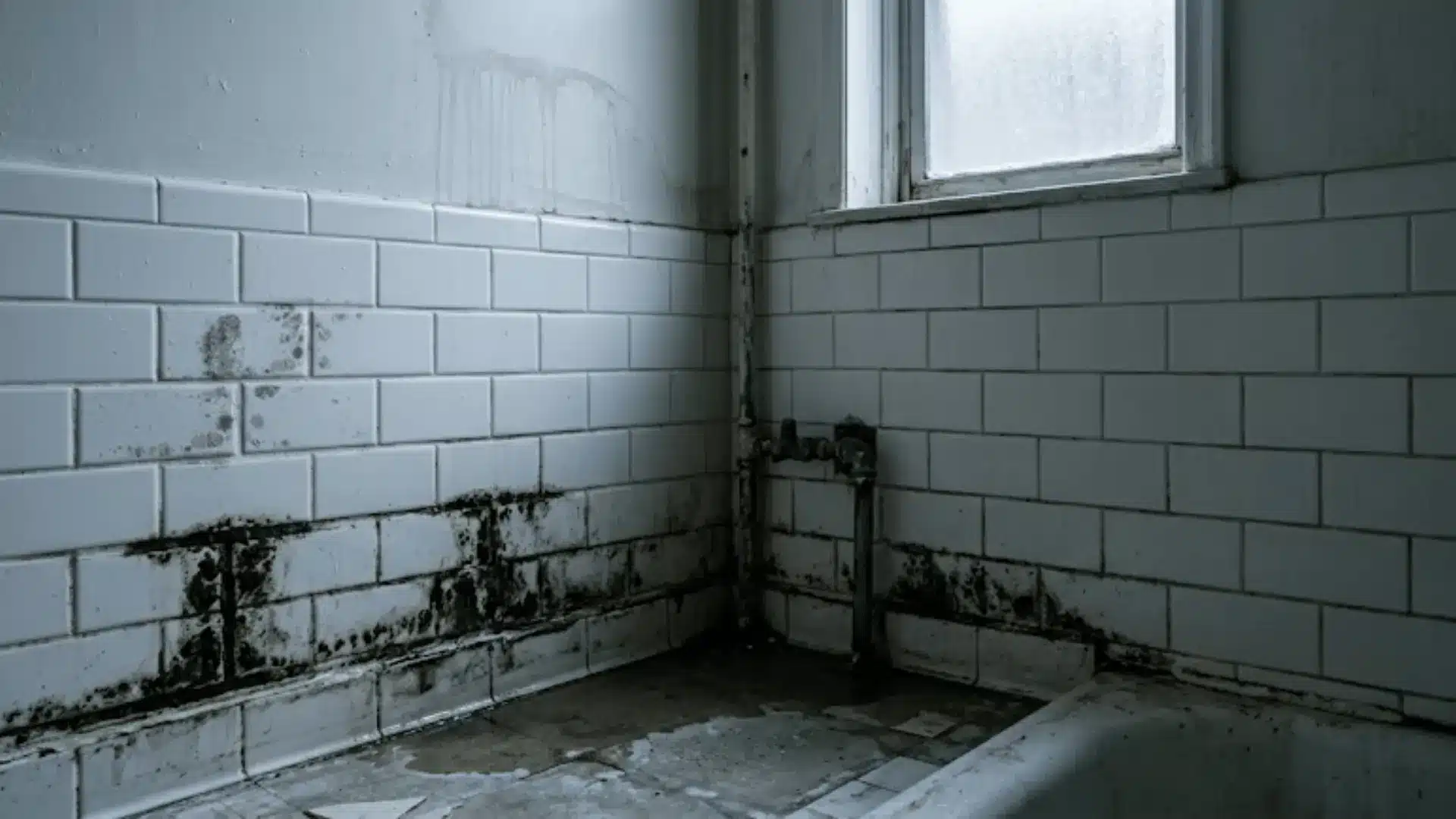
That spot on the bathroom wall or basement corner that makes you pause and wonder what exactly you’re looking at?
It turns out, most of us have been mixing up black mold and mildew for years, and honestly, the confusion makes sense.
They both show up uninvited, both love damp spaces, and both fall under the fungi family. But knowing which one you’re actually dealing with changes everything from how you clean it to how worried you should be.
Ahead, a full breakdown of the real differences, the health risks, and what to do about each.
What is Black Mold?
Black mold, most commonly Stachybotrys chartarum, is a fungus that roots itself deep into organic materials like drywall, wood, and insulation, especially where water damage or chronic humidity has settled in.
Unlike surface fungi, it penetrates what it grows on, which is part of what makes it harder to deal with.
You’ll recognize it by its dark green or black appearance, a texture that reads either fuzzy or slick depending on moisture levels, and a heavy, musty odor that tends to linger.
Basements, wall cavities, and any area that has seen flooding are its most common hiding spots.
What is Mildew?
Mildew is a surface-level fungus, and in many classifications, actually a subset of mold, though it behaves quite differently.
It stays on top of whatever it lands on rather than burrowing in, which makes it far easier to catch and clean early.
It typically shows up as white, gray, or yellowish patches with a flat, powdery texture and carries only a faint, mild odor compared to mold’s aggressive mustiness.
Bathroom tiles, windowsills, and damp fabrics are its usual territory. Anywhere with light, recurring moisture but no deep water damage is where mildew tends to feel most at home.
The Real Differences Between Black Mold and Mildew
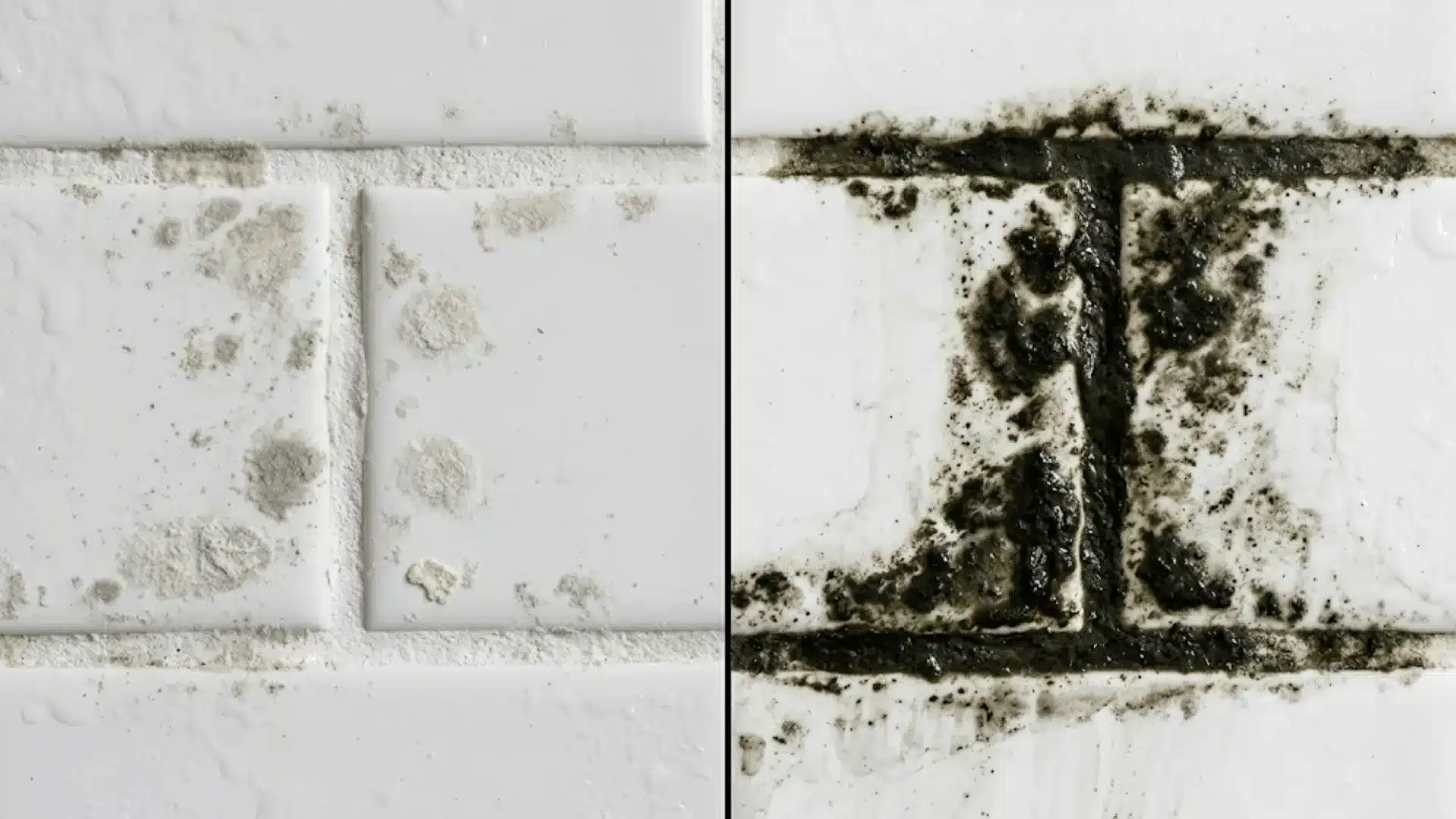
Telling them apart in the moment can feel tricky, but black mold and mildew actually have quite distinct personalities once you know what to look for.
Here is a side-by-side breakdown of everything that sets them apart.
1. Appearance & Color
Mold shows up as dark, irregular patches in deep greens, blacks, and sometimes browns, often spreading in uneven, blotchy formations. Mildew, on the other hand, presents as lighter, flatter patches in white, gray, or pale yellow.
If the growth looks almost powdery and soft in color, you are likely looking at mildew. If it looks dark and unsettling, mold is the more probable culprit.
2. Texture & Structure
Run a visual check before you ever think about touching it. Mold tends to look raised, either fuzzy like a carpet or slick and slimy, depending on moisture levels. Mildew sits flat against the surface with a dry, powdery finish.
The structural difference is significant because mold’s raised, layered growth often signals it has already started working its way into the material beneath it.
3. Growth Pattern
This is where the real difference in damage potential lies. Mold penetrates porous materials like drywall, wood, and grout, embedding itself beneath the surface and making simple wiping ineffective.
Mildew stays cosmetic, sitting on top of whatever surface it colonizes. It spreads outward rather than downward, which is why catching it early usually means a straightforward clean rather than a repair or replacement situation.
4. Smell
Both have an odor, but they are not remotely similar once you have experienced both. Mold carries a heavy, persistent mustiness that tends to fill a room and cling to fabrics and air.
Mildew smells damp and slightly stale, closer to wet clothing left too long in a pile. If the smell hits you before you even locate the source, mold is almost always the one behind it.
5. Spread & Damage
Mildew is cosmetic. It looks unpleasant and should be cleaned, but it does not compromise the integrity of what it grows on. Mold is structurally invasive.
Left untreated, it weakens drywall, warps wood, and permeates building materials, eventually requiring professional remediation. The spread pattern also differs since mildew creeps along surfaces while mold can migrate through walls.
Health Risks: Mold vs. Mildew
Both black mold and mildew can affect how you feel at home, but the degree of harm they cause is quite different. Understanding the health side of this is just as important as knowing how to spot them visually.
Black mold exposure may cause:
- Chronic respiratory issues and persistent coughing
- Aggravated asthma and heightened allergy responses
- Headaches, fatigue, and difficulty concentrating
- In severe cases, mycotoxin-related symptoms that affect the nervous system and immunity
Mildew exposure may cause:
- Mild throat and nasal irritation
- Occasional coughing or sneezing
- Light headaches with prolonged exposure
- General stuffiness, often mistaken for seasonal allergies
Children, the elderly, and immunocompromised individuals are most vulnerable, but consistent exposure in any household is worth addressing sooner rather than later.
Causes of Mold and Mildew Growth
Both mold and mildew need the same basic conditions to take hold, and most homes offer at least a few of them without anyone realizing. Knowing what invites growth in the first place is the first step toward actually preventing it.
Excess moisture and humidity almost always sit at the root of any fungal growth. Here is what typically creates the right conditions:
- High moisture and humidity that lingers in poorly regulated spaces.
- Inadequate ventilation that traps damp air indoors.
- Water leaks and condensation on walls, pipes, or windows.
- Organic materials like wood, paper, and fabric give fungi something to feed on.
Most of these conditions tend to overlap, which is why mold and mildew can establish themselves faster than expected once the environment tips in their favor.
How to Remove Black Mold vs. Mildew?
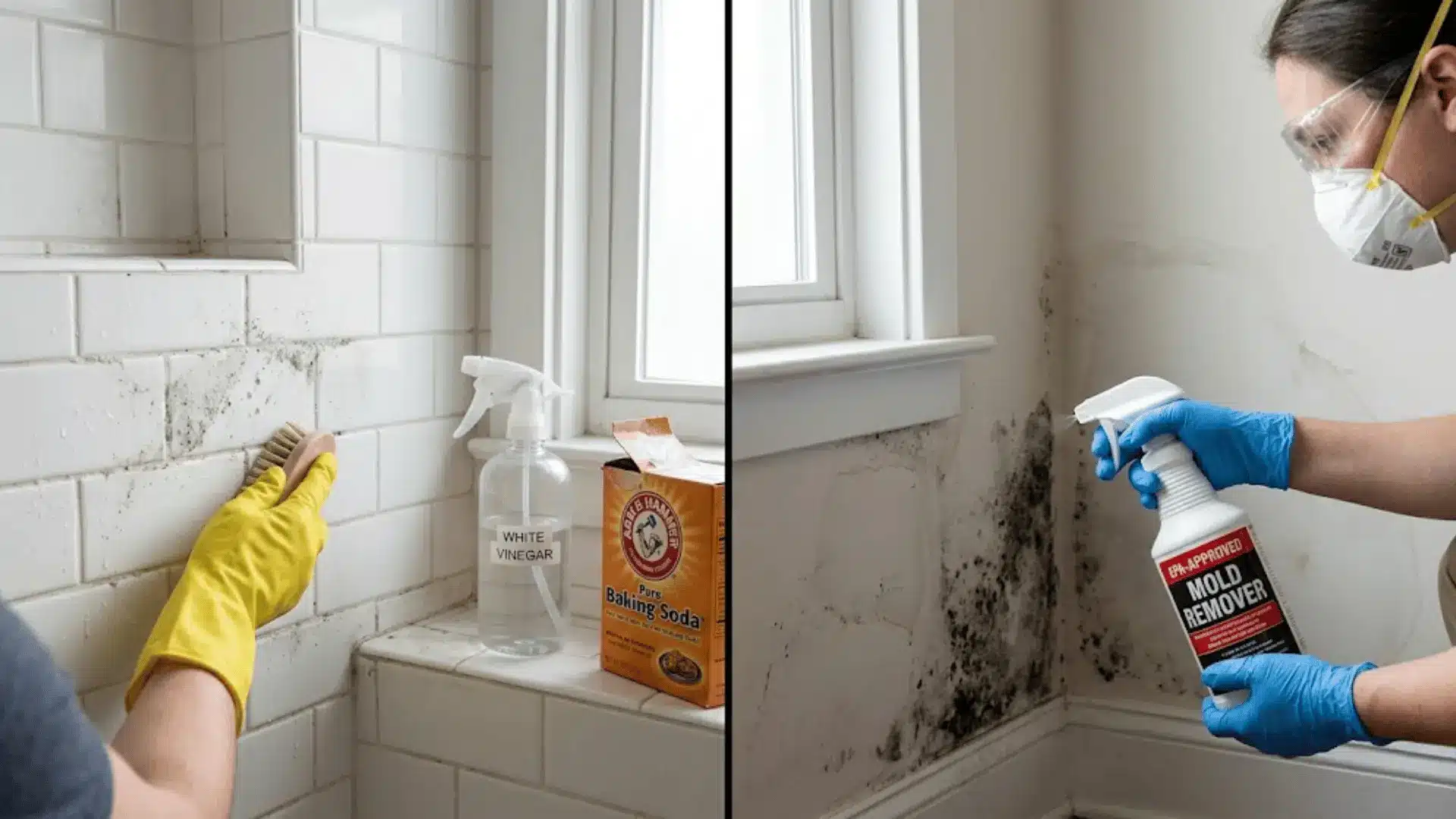
Cleaning mildew and removing black mold are not the same job, and treating them identically is where most people go wrong.
The approach, the products, and the level of caution each one demands are quite different.
Removing Mildew
Mildew is surface-level, which means most cases can be handled at home with the right products and a little consistency:
- Step 1: Ventilate the area by opening windows or running a fan before you begin.
- Step 2: Apply white vinegar, baking soda paste, or a store-bought mildew cleaner directly onto the affected surface.
- Step 3: Scrub gently with a brush and let the solution sit for a few minutes before wiping clean.
- Step 4: Dry the surface thoroughly to prevent immediate regrowth.
Removing Black Mold
Black mold requires a more careful approach, and in many cases, more than just a DIY clean:
- Step 1: Put on protective gear, including gloves, an N95 mask, and eye protection, before touching anything.
- Step 2: Contain the area to avoid spreading spores to other parts of the home.
- Step 3: Use an EPA-approved mold remover and follow product instructions precisely.
- Step 4: If the mold covers a large area, has spread behind walls, or keeps returning, call a professional remediation service.
Black Mold vs. Mildew on Common Surfaces
Not every surface reacts to mold and mildew the same way, and knowing what to expect on each one makes identification a lot faster.
| Surface | Mildew | Black Mold |
|---|---|---|
| Bathroom Tiles & Grout | Powdery white or gray patches along grout lines | Dark stains that sink into grout and resist cleaning |
| Walls & Ceilings | Light surface discoloration near moisture sources | Deep, irregular patches tied to leaks or water damage |
| Fabric & Clothing | Faint white spots with a musty smell | Stubborn dark stains with a strong, lingering odor |
| Windows & Frames | Powdery buildup along edges from condensation | Black or greenish growth that works into the frame |
Common Myths About Mold and Mildew
There is a lot of misinformation floating around about mold and mildew, and some of it leads people to either panic unnecessarily or underestimate a real problem.
Myth 1: “All Black Mold is Toxic”
Fact: Not every dark-colored mold is Stachybotrys chartarum, and not every mold labeled “black” produces mycotoxins. Color is not a reliable indicator of toxicity, which is why professional testing is the only way to know for certain.
Myth 2: “Mildew Eventually Turns Into Mold”
Fact: Mildew and mold are distinct fungi, and one does not transform into the other. However, ignoring mildew in a consistently damp environment can create the exact conditions that allow mold to develop separately.
Myth 3: “Bleach Kills Everything”
Fact: Bleach works on non-porous surfaces but does not penetrate materials like drywall or wood, where mold actually roots itself. Using just bleach on a deep mold problem often removes surface discoloration while leaving the underlying growth entirely intact.
Prevention Tips
Preventing mold and mildew is largely about staying ahead of moisture before it has a chance to settle in.
- Keep indoor humidity levels balanced by monitoring regularly, ideally with a hygrometer.
- Fix leaks immediately, whether from pipes, roofs, or windows, rather than letting them sit.
- Improve ventilation in high-moisture areas like bathrooms and kitchens using exhaust fans.
- Run a dehumidifier in damp-prone spaces like basements during humid months.
Small, consistent habits go a long way here. Most mold and mildew problems are preventable when moisture is managed early and regularly.
When to Call a Professional?
Some mold situations genuinely go beyond what a DIY clean can resolve.
If the affected area is large, if you are noticing a persistent musty smell without a visible source, or if household members are experiencing unexplained respiratory symptoms, it is time to bring in a professional.
Hidden mold inside walls, crawl spaces, or HVAC systems is particularly hard to assess without specialized equipment and can circulate spores through the entire home undetected.
When mold keeps returning after cleaning, that is also a strong sign that the root cause has not been addressed and needs expert evaluation.
Wrapping Up
When it comes to black mold vs mildew, the differences are worth knowing and genuinely easy to act on once you do.
Mildew is manageable, mold demands more respect, and catching either one early saves a lot of trouble down the line.
A little awareness goes a long way in keeping your home feeling clean, safe, and comfortable.
If you have dealt with either in your space, drop your experience in the comments below, as what worked for you might be exactly what someone else needs to hear.
Frequently Asked Questions (FAQs)
Is Mildew a Type of Mold?
Mildew is technically classified under the broader fungi family and shares similarities with mold, but it is its own distinct category. The key difference is behavior: mildew stays surface-level while mold penetrates deeper into materials.
Can Mildew Become Black Mold?
Mildew does not transform into black mold; they are separate fungi entirely. That said, leaving mildew untreated in a persistently damp environment can independently create conditions favorable for mold growth nearby.
Does Color Always Indicate Danger?
Color is a starting point, not a verdict. Dark color alone does not confirm toxic mold, just as light-colored growth does not automatically mean the situation is harmless. Proper testing is the only reliable way.