

My neighbor’s crepe myrtle blooms like crazy every summer, while mine used to look sad and scraggly. I finally asked what she was doing differently, and it changed everything.
Crepe myrtle care isn’t complicated, but timing and a few key steps make all the difference between a tree that barely survives and one that steals the show.
These trees want to thrive; they just need you to work with their natural rhythm instead of against it.
You’re about to learn the exact care routine that transforms stressed trees into showstoppers. I’ll share what actually works for watering, feeding, pruning, and seasonal maintenance.
You’ll also find out which common advice to ignore completely. Ready to give your crepe myrtle what it’s been missing?
Getting Started with Crepe Myrtles
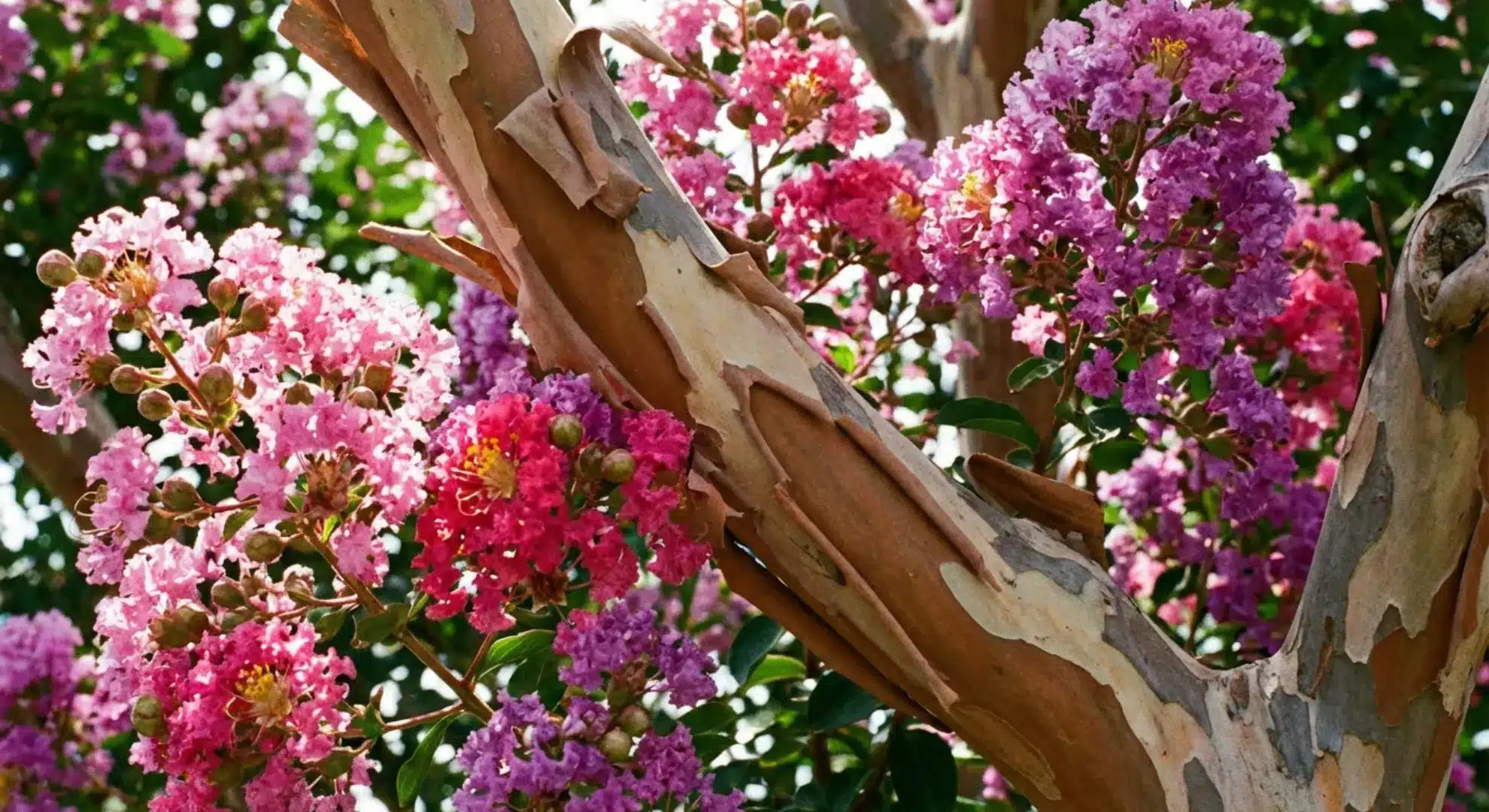
I’ve always loved crepe myrtles because they give you so much beauty without demanding constant attention. They’re tough, colorful, and forgiving, perfect if you want a stunning tree that doesn’t need babysitting.
These trees bloom for months, not just weeks.
You’ll get vibrant flowers from summer through fall. They also have gorgeous bark that peels to reveal smooth trunks in winter. Even when they’re not blooming, they look good.
Crepe myrtles love full sun, at least six hours daily. They handle different soil types but prefer well-draining ground. They thrive in zones 7-9, though some varieties tolerate zone 6.
Size matters here. Some varieties grow thirty feet tall while others stay under five feet. Pick one that fits your space and matches your climate’s temperature range. You don’t want a giant tree crowding a small yard or a dwarf variety getting lost in a large landscape.
Planting Your Crepe Myrtle: A Step-by-Step Guide
Getting your crepe myrtle into the ground properly sets it up for years of beautiful blooms. Follow these steps and you’ll have a healthy, thriving tree in no time:
Step 1: Prepare and dig your hole
Pull back all mulch from your planting area before you start. Dig a hole as deep as your container and twice as wide. Test the depth by placing the container inside. The root ball should sit one to two inches above ground level.
Mix pine bark soil conditioner and compost with the soil you removed. For clay soil, use pine bark. For sandy soil, use peat moss. Put some of this amended mix back into the bottom of your hole.
Step 2: Remove and prepare the roots
Water your plant, then remove it from the container by tapping the sides and pulling from the base. You’ll see roots wrapped tightly around themselves.
Take your shovel and make three or four vertical cuts around the root ball. Pull the roots apart with your hands. Make cuts across the bottom too. This forces roots to grow outward instead of circling. Be aggressive here, crepe myrtles can handle it.
Step 3: Position and backfill
Place your crepe myrtle in the hole with the root ball sitting one to two inches above ground. Rotate it until you find the best angle. Add your amended soil around the root ball and work your way around all sides.
Break up clumps as you go. Stomp the soil down with your foot to remove air pockets. Fill until soil reaches the root ball top but never covers it.
Step 4: Mulch and prune
Spread two to three inches of mulch around your tree but keep it two inches away from the trunk. Don’t pile mulch against the stem—this causes rot. Cut back about twenty percent of the top growth including any flowers.
You damaged roots during planting, so reducing top growth helps your tree recover faster and focus energy on establishing roots.
Step 5: Water deeply
Place your hose at the base and let water trickle slowly to saturate the entire area. This settles soil and removes air pockets. After this deep watering, wait about a week before watering again.
Stick your finger two inches into the soil to check moisture. If it’s dry, water again. If it’s still moist, wait a few more days.
If you prefer a video tutorial that walks through the entire planting process, check out this helpful guide.
If you prefer a video tutorial that walks through the entire planting process, check out this helpful guide.
Caring for Crepe Myrtles: Basic Care Instructions
Once your crepe myrtle is in the ground, the hard part is over. These trees practically take care of themselves with just a little attention from you.
Water deeply but infrequently during the first year.
Stick your finger into the soil before watering. If it’s dry two inches down, give it a good soak. Established trees handle drought pretty well and rarely need watering except during extreme heat.
Feed your crepe myrtle in early spring with a balanced fertilizer. I use a slow-release formula and apply it once. That’s usually enough for the whole season.
Keep that mulch layer fresh but never touching the trunk. A two to three-inch layer works perfectly.
Watch for suckers growing from the base. Pull or cut these off when you spot them. They steal energy from your main tree and make it look messy. You’ll also want to remove any crossing branches that rub together.
A Year-Round Guide to Crepe Myrtle Maintenance
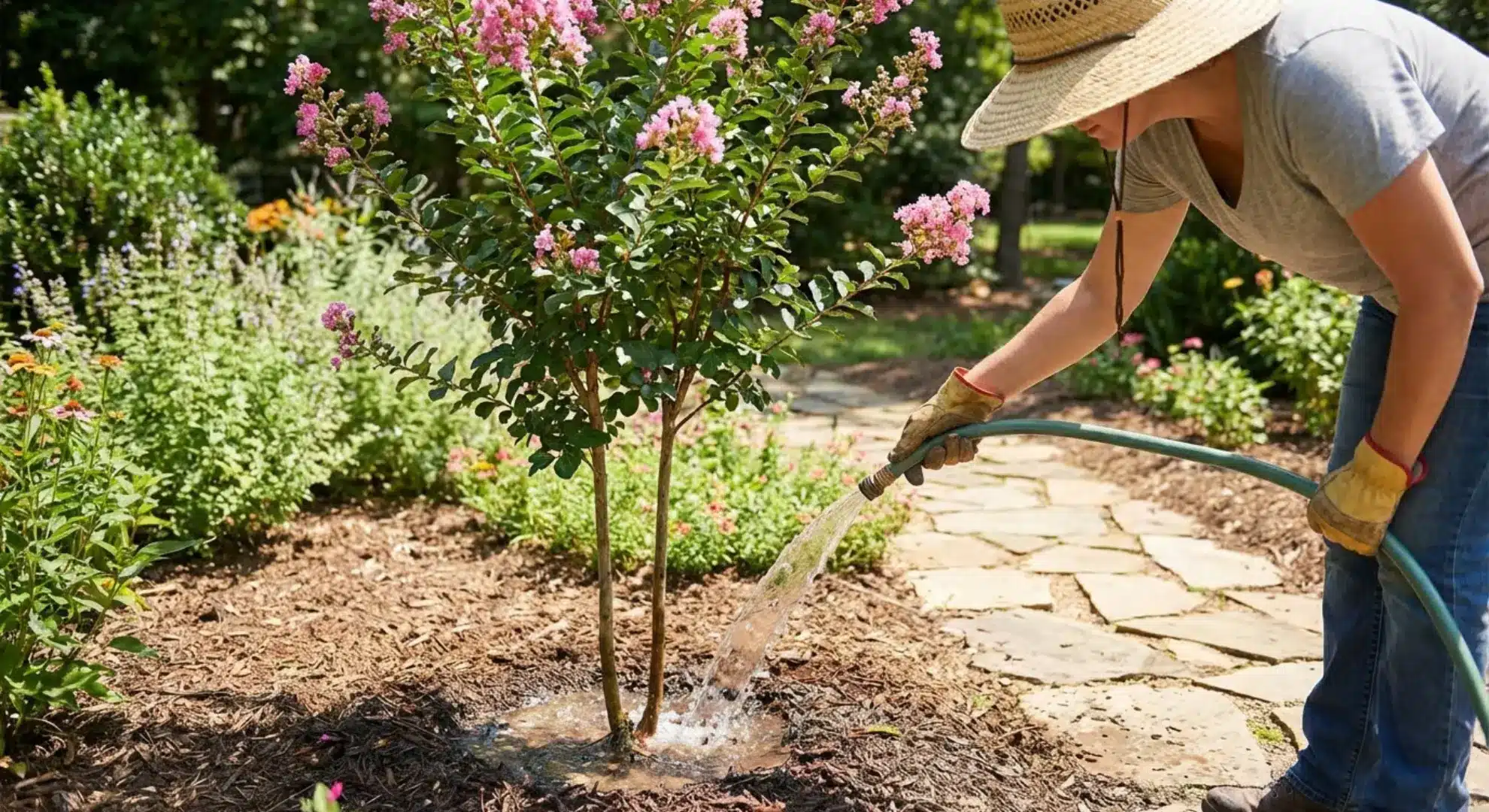
Your crepe myrtle needs different things depending on the time of year. Here’s what I do each season to keep mine looking great:
| Season | Care Tasks |
|---|---|
| Spring |
Apply slow-release fertilizer in early spring. Remove any winter damage or dead wood. Check for new growth and watch for pests like aphids. Refresh the mulch layer around the base. |
| Summer | Water deeply during extreme heat or drought. Deadhead spent blooms if you want to encourage more flowers. Monitor for powdery mildew on leaves. Keep suckers removed from the base. |
| Fall | Enjoy the colorful foliage as leaves change. Let seed pods develop naturally. Stop fertilizing by late summer so the tree can harden off before winter. Clean up fallen leaves if desired. |
| Winter | This is your pruning window. Cut back in late winter before new growth starts. Remove crossing branches and thin out crowded areas. Don’t cut back more than one-third of the tree. |
Following this seasonal routine keeps your crepe myrtle healthy without overwhelming you with work. Most of these tasks take just minutes.
Common Issues and How to Solve Them
Even healthy crepe myrtles sometimes run into problems. Here’s what I’ve dealt with and how I fixed each issue:
- Powdery mildew on leaves: A white powder coating the leaves indicates poor air circulation or too much shade. Prune to open up the canopy and improve airflow. Choose mildew-resistant varieties next time. You can also apply a fungicide if it’s severe.
- Aphids covering new growth: These tiny insects cluster on fresh shoots and leave sticky residue. Spray them off with a strong stream of water. Repeat every few days. Ladybugs eat aphids naturally if you can attract them to your yard.
- No flowers or very few blooms: Not enough sunlight is usually the problem. Crepe myrtles need at least six hours of direct sun. Over-fertilizing with nitrogen also promotes leafy growth rather than flowers. Cut back on feeding and prune lightly.
- Bark splitting or peeling unnaturally: Some peeling is normal and beautiful. But deep cracks mean sunscald or frost damage. Wrap young trunks in winter if you live in colder zones. Damaged bark usually heals on its own over time.
- Suckers growing everywhere at the base: These steal energy from your main tree. Pull them off when they’re small or cut them flush with the trunk. Check weekly during the growing season. They’ll keep coming back if you don’t stay on top of them.
- Leaves turning yellow and dropping: Overwatering is often the culprit here. Let the soil dry out between waterings. Poor drainage can also cause this. Amend heavy clay soil with compost to improve water flow through the root zone.
- Black spots on leaves: Cercospora leaf spot is a fungal disease that occurs in humid conditions. Remove infected leaves and discard them. Don’t compost them. Improve air circulation by thinning branches. A copper-based fungicide helps in serious cases.
- Tree looks stunted or grows slowly: Wrong hardiness zone or poor soil quality could be the issue. Test your soil pH. Crepe myrtles prefer slightly acidic to neutral. Add nutrients if the soil is depleted. Make sure you picked a variety suited to your climate.
Most of these problems are easy fixes once you know what you’re looking at. Catch them early and your tree bounces back fast.
Taking Your Crepe Myrtle Care to the Next Level
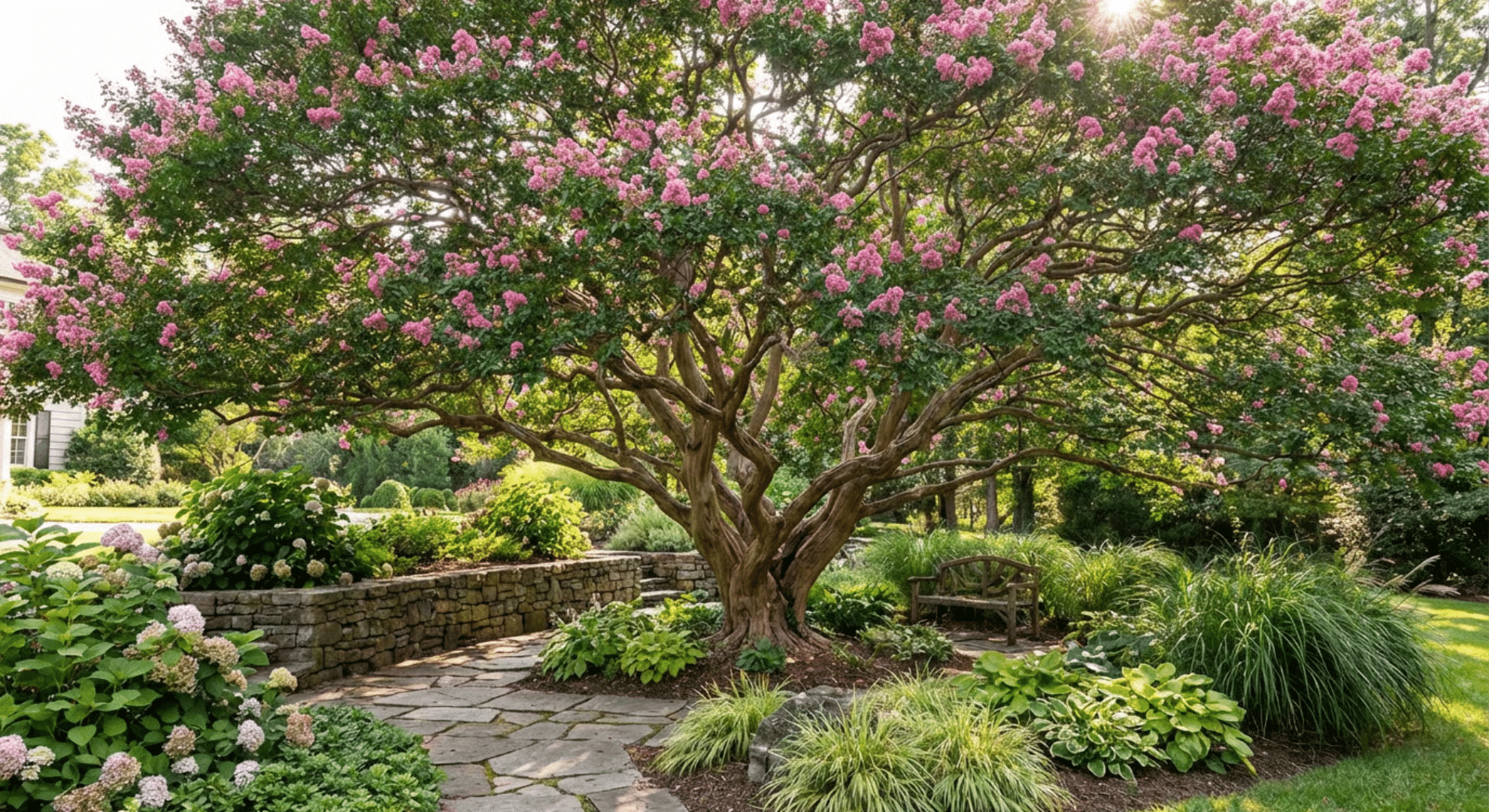
Once your crepe myrtle is established, you can focus on keeping it in peak condition for years. Mature trees need different care than younger ones.
Older crepe myrtles develop thick, beautiful bark and strong branch structures. Prune them lightly to maintain shape and remove any dead or crossing branches.
Don’t top them, this ruins their natural form. If your tree gets too tall, selective pruning of individual branches works better than harsh cutting.
Size control matters more as trees age. Remove lower branches to create a tree-like canopy or keep them bushy if you prefer. Regular thinning prevents overcrowding.
Dwarf varieties stay under six feet and work perfectly for small yards or foundation plantings. Larger trees can reach thirty feet and make stunning focal points in open spaces.
I’ve seen people plant dwarfs in containers and standard varieties as shade trees. Match the variety to your space from the start so you’re not fighting size issues later.
Engaging with the Crepe Myrtle Community: Advice and Shared Experiences
You don’t have to figure everything out alone. Other gardeners love sharing what works for them.
Online forums and gardening communities are goldmines for crepe myrtle advice. Reddit’s gardening subreddit has thousands of members posting questions and solutions daily. Facebook gardening groups connect you with local growers who deal with your exact climate and soil conditions. I’ve learned tricks there I’d never find in books.
Personal stories matter more than you’d think. Someone who’s grown crepe myrtles for twenty years can tell you which varieties actually resist powdery mildew in humid climates. They’ll share pictures of pruning mistakes so you don’t repeat them. You’ll see real results from real yards.
Ask specific questions and you’ll get specific answers. Post photos if your tree looks off. The community usually spots problems quickly and offers multiple solutions to try.
Conclusion
I’ve learned that crepe myrtle care really comes down to a few simple habits, plant them right, water smart, and prune with purpose.
Once you understand what these trees actually need, they reward you with months of beautiful blooms and barely ask for anything in return.
The mistakes I made early on taught me more than any guide ever could. You now have everything you need to grow a stunning crepe myrtle that thrives for decades.
Don’t overthink it, these trees want to succeed. Pick the right spot, give them some sun, and step back.
If you’re curious about other low-maintenance flowering trees or want more gardening tips that actually work, check out our other blogs for practical advice you can use right away.



2 Responses
I’m jealous of a nearby neighbor’s color. Nursery offers no comparable variety. Can I cut & plant suckers? Or do they need to grow roots from a pot, first? Should I trim the leaves? Or take a cutting below an intersection?
Thank you for this educational presentation. I have had two crepe myrtles, one blooming female and one male for several years, and I have just found out that I have not been caring for them correctly. I really appreciate this information.