Lawn aeration sounds simple, but timing is where most people get tripped up. Many assume it’s about picking a free weekend or copying what a neighbor did last year. That’s how lawns end up thin or stressed.
The best time to aerate your lawn is really a question about grass biology, not the calendar. Aeration creates small injuries in the soil and roots. If the grass can heal fast, aeration helps. If it cannot, aeration causes damage.
In this guide, I’ll s explain what timing actually means, why grass type matters so much, and how to tell when your lawn is ready instead of guessing.
What Does “Best Time to Aerate Your Lawn” Actually Mean?
The best time to aerate your lawn is not tied to a specific month. It’s a window when grass can handle stress and recover quickly. Aeration opens the soil and disrupts roots. That disruption is not a problem by itself. It only becomes a problem when the grass lacks the energy to repair the damage.
Aeration works because roots grow back into the open space. When growth is strong, those openings turn into healthier soil and thicker turf. When growth is weak, the openings stay open and the lawn loses ground instead of gaining it.
This is why timing depends on active root growth, not convenience. Two lawns can be aerated on the same day and end up with very different results, simply because one can recover and the other cannot.
The most common mistake is treating aeration like a calendar task. In reality, timing is about recovery speed, not availability or habit.
Why Grass Recovery Speed Determines Aeration Timing
Grass is constantly balancing energy between shoot growth and root repair. Aeration only works when that balance favors recovery.
- Leaves capture energy through growth and sunlight
- Roots use that energy to repair damage and expand into open soil
- When recovery speed is high, roots quickly refill aeration holes
- This restores air flow, water movement, and soil structure over time
When recovery speed is low, the opposite happens:
- Aeration holes stay open longer
- Roots fail to reclaim the space
- Stress builds instead of resolving
This is why aeration helps at some times and causes setbacks at others.
Recovery speed also isn’t fixed. It shifts with the temperature, daylight length, and soil moisture. That variability is what makes timing confusing when you rely on dates alone. Growth behavior matters more than the calendar.
How Grass Type Determines the Correct Aeration Window
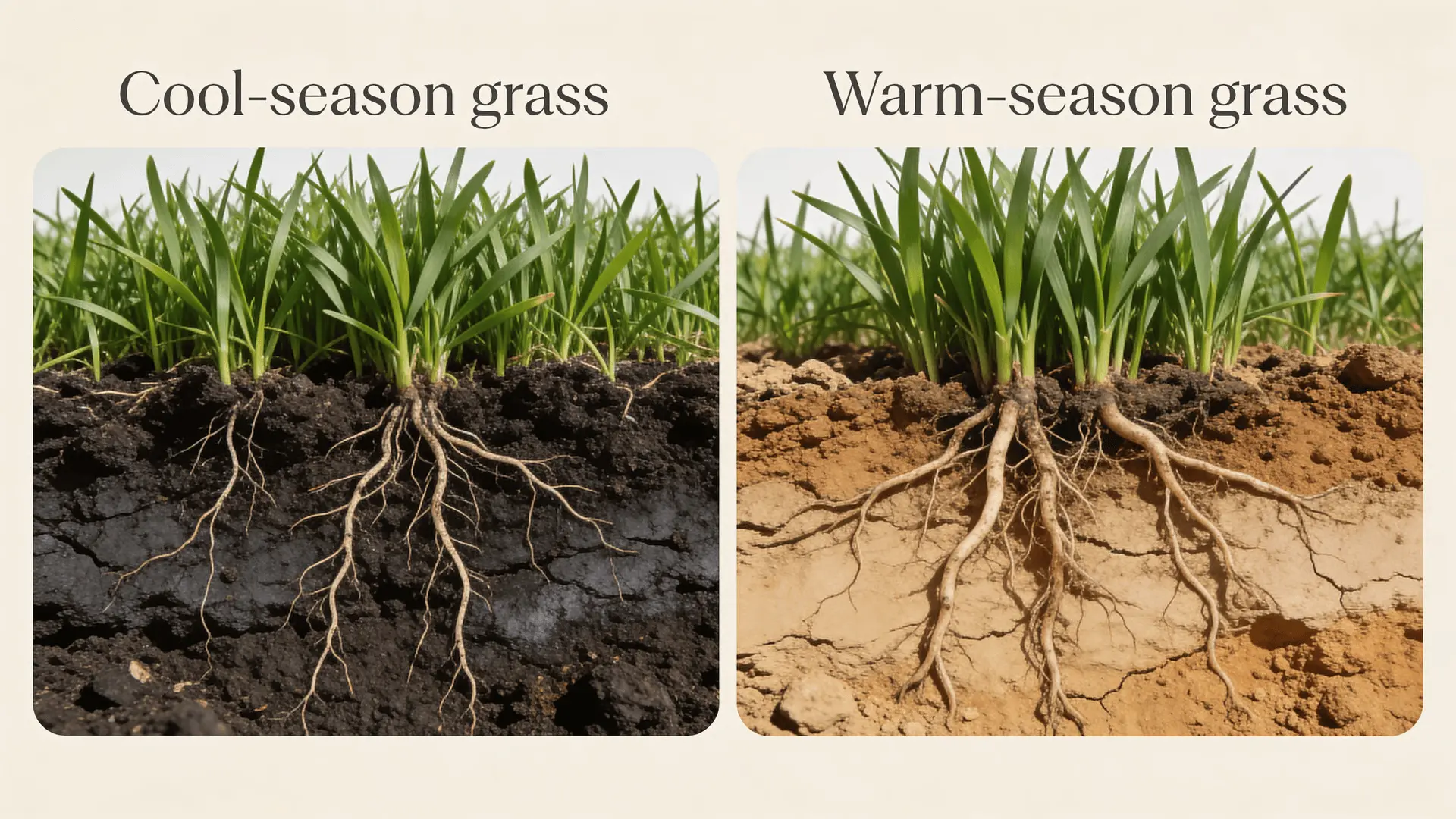
Grass type sets the basic rules for timing. Different grasses grow best at different temperatures. That changes when roots are active and when they slow down.
The key factors are growth cycles, how grass responds to temperature, and what triggers dormancy. Ignoring these differences leads to most timing mistakes.
A common misunderstanding is assuming all lawns follow the same seasonal rules. They do not.
Cool-Season Grasses and Fall Dominance
Cool-season grasses grow best when air and soil are cooler. In late summer and fall, they shift energy below ground. Root growth increases while top growth stays steady.
This creates a strong repair window. Aeration stress is met with fast root expansion. Cooler weather also reduces water loss and heat stress. That combination is why fall is often the most reliable window for these grasses.
In spring, cool-season grasses focus more on leaf growth. Roots still grow, but recovery is less consistent. That difference explains why fall usually works better.
Warm-Season Grasses and Late Spring Activation
Warm-season grasses behave almost the opposite way. They stay dormant in cool weather. Root activity is minimal until soil warms up.
In late spring, these grasses wake up fully. Energy moves into both shoots and roots. That is when aeration openings can be repaired instead of lingering.
Aerating too early hits grass that is not ready. Aerating too late stacks heat stress on top of injury. The late spring window sits between those two risks.
Why Aerating at The Wrong Time Causes Damage
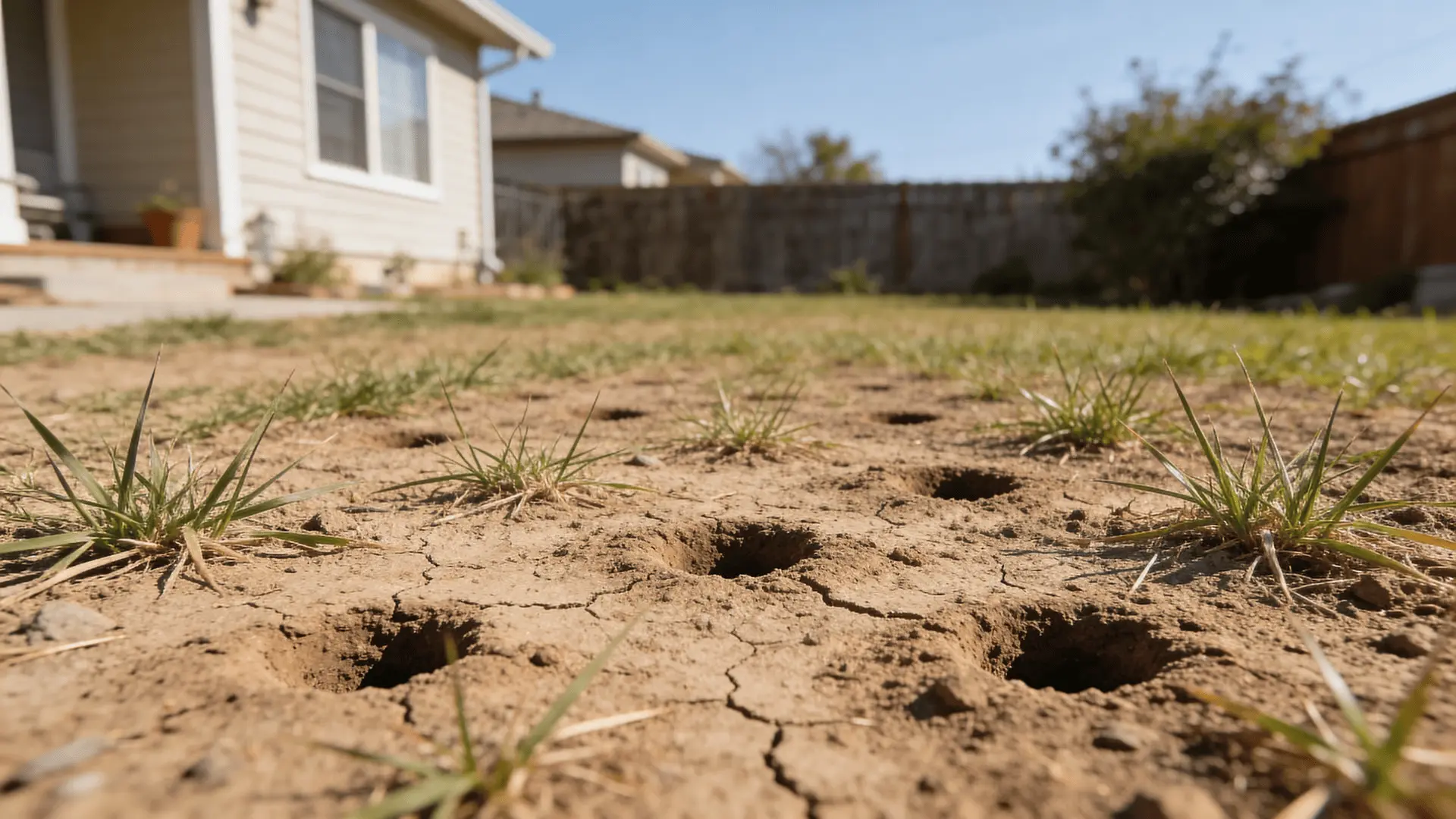
Mistimed aeration doesn’t usually blow things up right away. That’s part of the problem. The lawn often looks fine at first, so it’s easy to think nothing went wrong. Then a few weeks pass, and the damage shows up.
What’s happening underneath is not random. The biggest problems are stress stacking, slow root repair, and increased weed pressure. These things feed into each other.
The biggest misconception is that aeration is harmless, no matter when you do it. It isn’t. Aeration always adds stress. The only question is whether the lawn can handle it.
Dormancy and Zero Recovery Capacity
When grass is dormant, roots are basically on standby. They aren’t pushing outward. They aren’t repairing damage. They’re conserving energy.
Aerating during dormancy pokes holes into soil that roots aren’t ready to use. Those openings dry out. Roots stay shallow. Nothing fills in the space.
The lawn doesn’t collapse overnight. It just quietly falls behind. When the next growing season starts, it’s already playing catch-up. That’s why dormant aeration so often leads to thinning instead of improvement.
Heat and Drought Stress Interactions
Hot, dry conditions slow root growth even when the lawn still looks green on top. The surface can be deceiving.
Aeration under these conditions opens the soil and speeds up moisture loss. Roots are suddenly asked to repair damage and replace water at the same time.
When they can’t keep up:
- stress deepens instead of fading
- recovery drags out
- disturbed soil becomes easy territory for weeds
This is why heat- or drought-time aeration often causes problems that weren’t obvious when the work was done. The damage shows up later, once the lawn runs out of margin.
How Soil Moisture and Conditions Affect Timing Success
Soil moisture decides whether aeration stress turns into progress or problems. It shapes how the soil opens and how roots respond once that disruption happens.
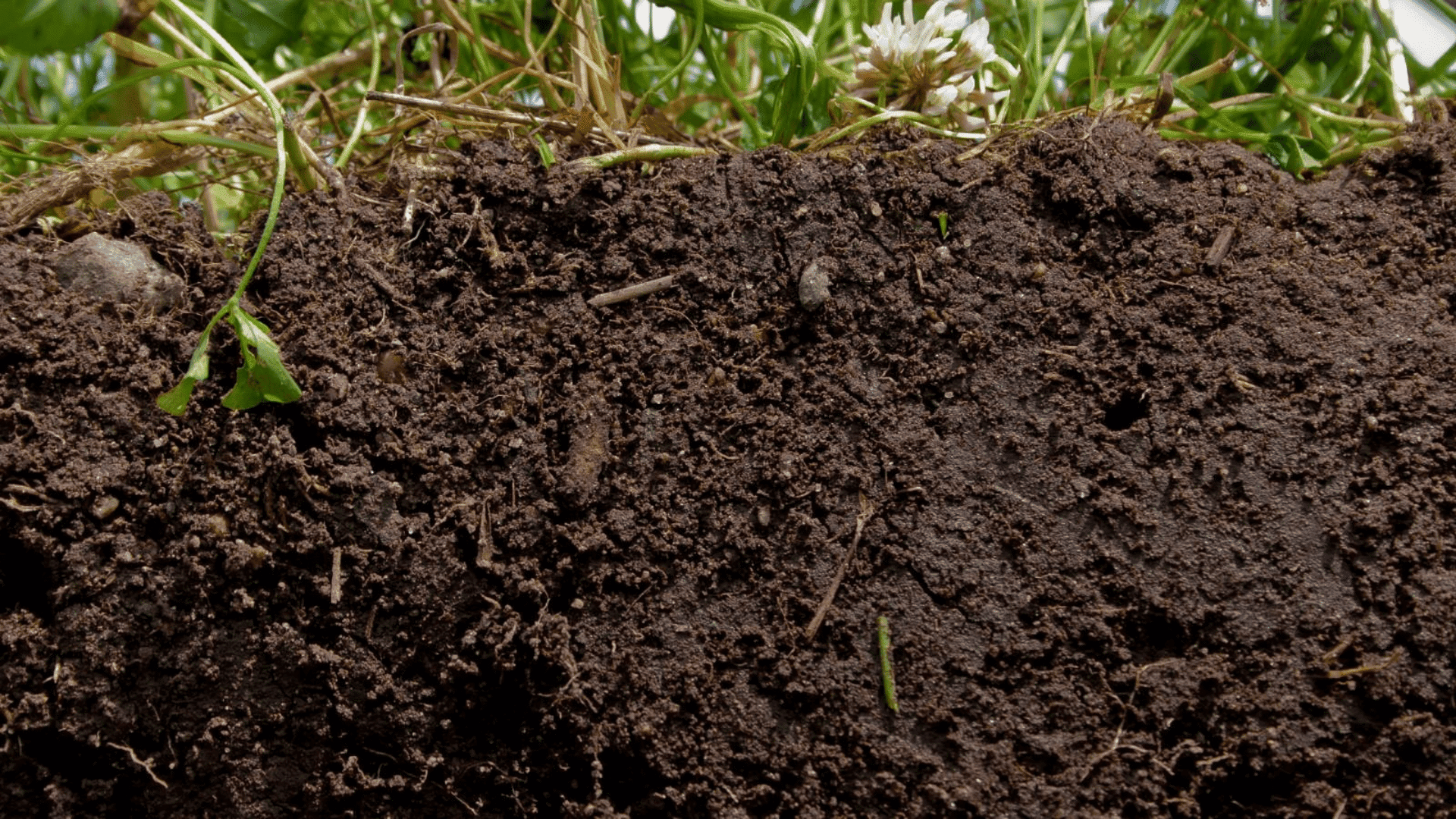
When soil is too dry, it pushes back. Instead of separating cleanly, it cracks and resists, which puts extra strain on roots. When soil is too wet, the structure gives way. The soil smears and collapses, closing off space instead of holding it open.
What works best is soil that’s moist enough to separate, but firm enough to keep its shape. That balance creates stable channels where roots can grow back in and where air and water can move freely after recovery.
Too much water doesn’t improve aeration. It removes the structure that aeration is meant to create.
| Soil condition | What happens during aeration | Effect on roots | Result after aeration |
|---|---|---|---|
| Too dry | Soil fractures instead of opening | Roots tear and recover slowly | Added stress and weak results |
| Too wet | Soil collapses and smears | Roots lose stable space | Little to no lasting benefit |
| Moist and firm | Soil separates cleanly | Roots expand into open channels | Better recovery and soil function |
How to Tell if Your Lawn is Ready for Aeration Right Now
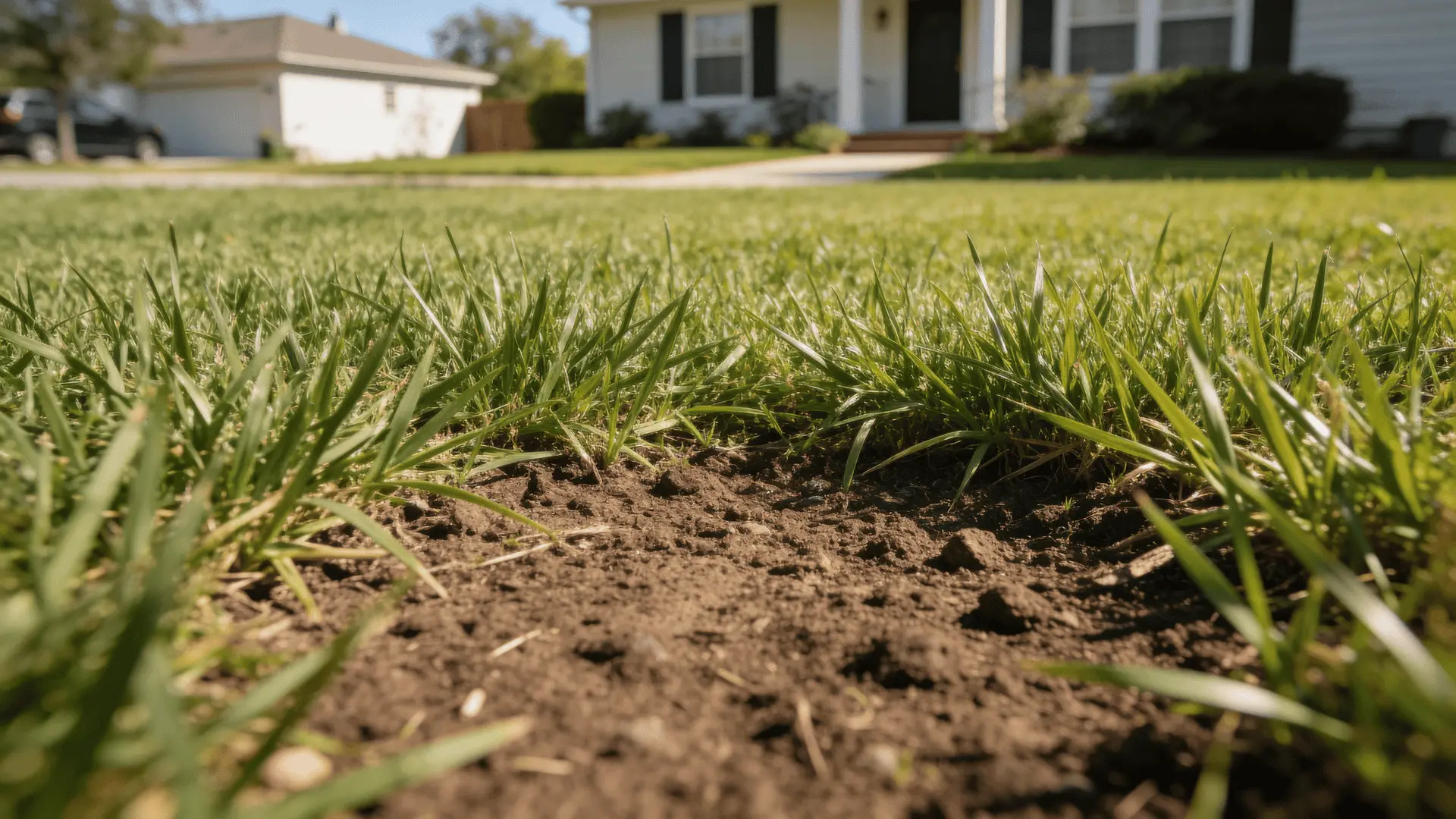
Timing rules become useful only when you can see them in your lawn. Visual and physical signs help confirm readiness, but they must be interpreted correctly.
Signs like compaction, pooling water, or thinning grass point to a need for aeration. They do not override seasonal readiness. Both must line up.
Look for these signals together, not alone:
- Grass is actively growing and recovering from mowing
- Soil allows some pressure without cracking or smearing
- Stress symptoms are mild, not severe or widespread
The connection matters. Compaction symptoms during active growth suggest aeration can help. The same symptoms during dormancy suggest waiting.
Keep in mind that using signs alone to justify aeration at any time will lead to poor results. Readiness is about symptoms plus recovery capacity.
Wrapping Up
Knowing when the best time to aerate your lawn is comes down to one idea. Aeration only works when grass can heal itself.
Grass type sets the general window. Growth activity confirms it. Soil condition fine-tunes the timing. When those line up, aeration supports stronger roots and better soil structure. When they do not, it adds stress instead of relief.
I’ve seen lawns bounce back fast when timing matched biology, and struggle when it didn’t.
If you’re unsure, step back and watch how your grass is growing right now. Let recovery ability guide the decision, not the date on the calendar.