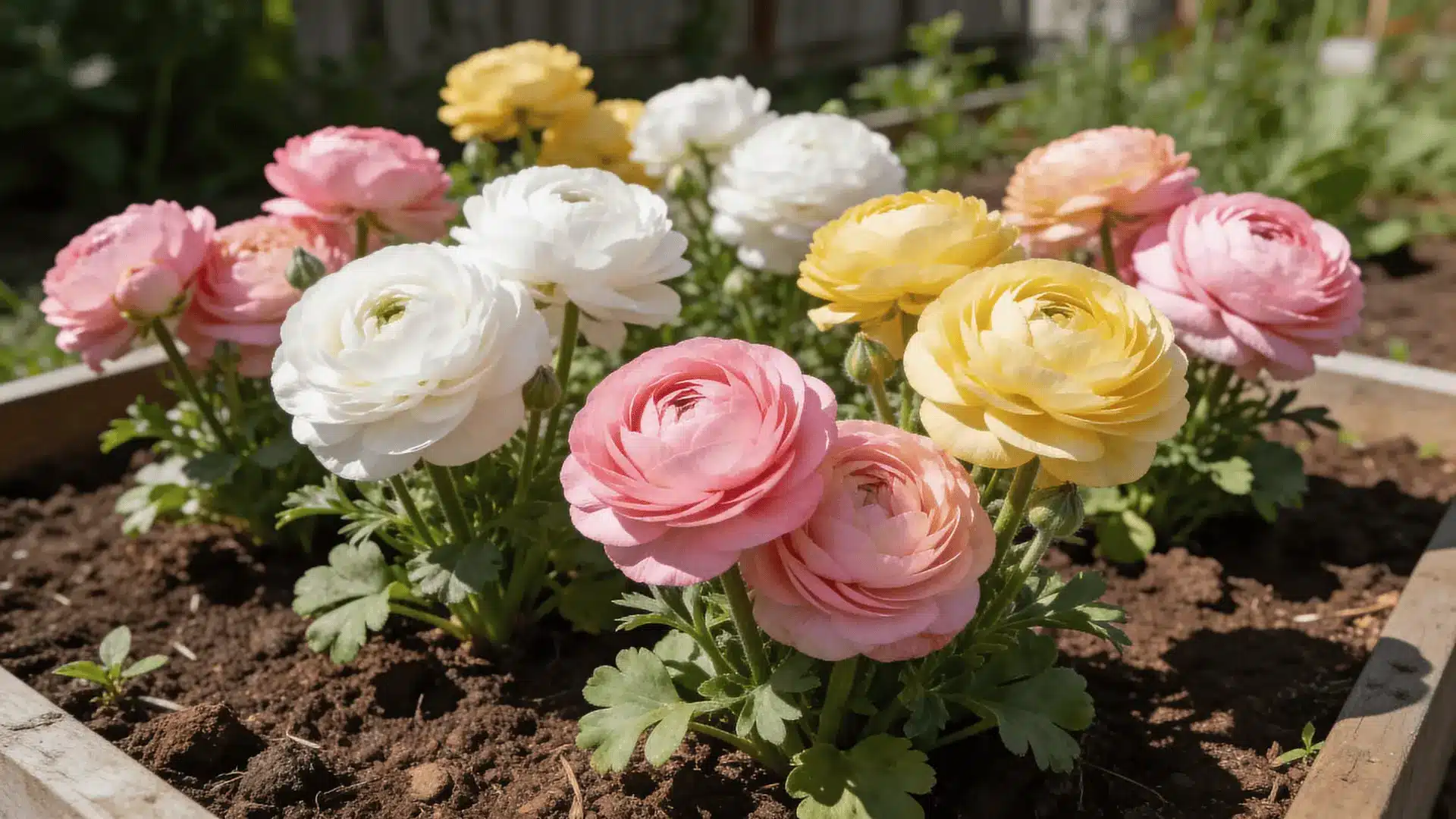
If you’ve been wondering when ranunculus bloom, you’re not the only one. A lot of people expect them to show up in summer, right alongside zinnias and cosmos. That assumption causes a lot of confusion.
Ranunculus don’t follow warm-weather rules. They’re built for cool conditions, and their timing is tied tightly to temperature, not the calendar. That’s why bloom dates can feel unpredictable from place to place.
In this guide, I’ll break down when ranunculus usually flowers, why climate shifts the timing, how long they take to bloom after planting, and what actually ends their season.
When Do Ranunculus Bloom During the Year?
Ranunculus bloom in spring, not summer. For most regions, flowers appear sometime betweenlate March and May.
The exact timing depends on how quickly winter loosens its grip and how fast temperatures warm up. Ranunculus grow and flower best when days are cool and steady, not hot. When those conditions line up, buds form and open.
- In milder areas, blooms can start earlier, sometimes in late winter.
- In colder areas, flowering shifts later into spring.
What stays consistent is the season they prefer. Ranunculus bloom during the cool stretch between winter cold and summer heat.
The big misconception is assuming they follow the same schedule everywhere. They don’t. Temperature sets the pace, and the calendar follows behind.
Why Ranunculus Bloom Earlier or Later Depending on Climate
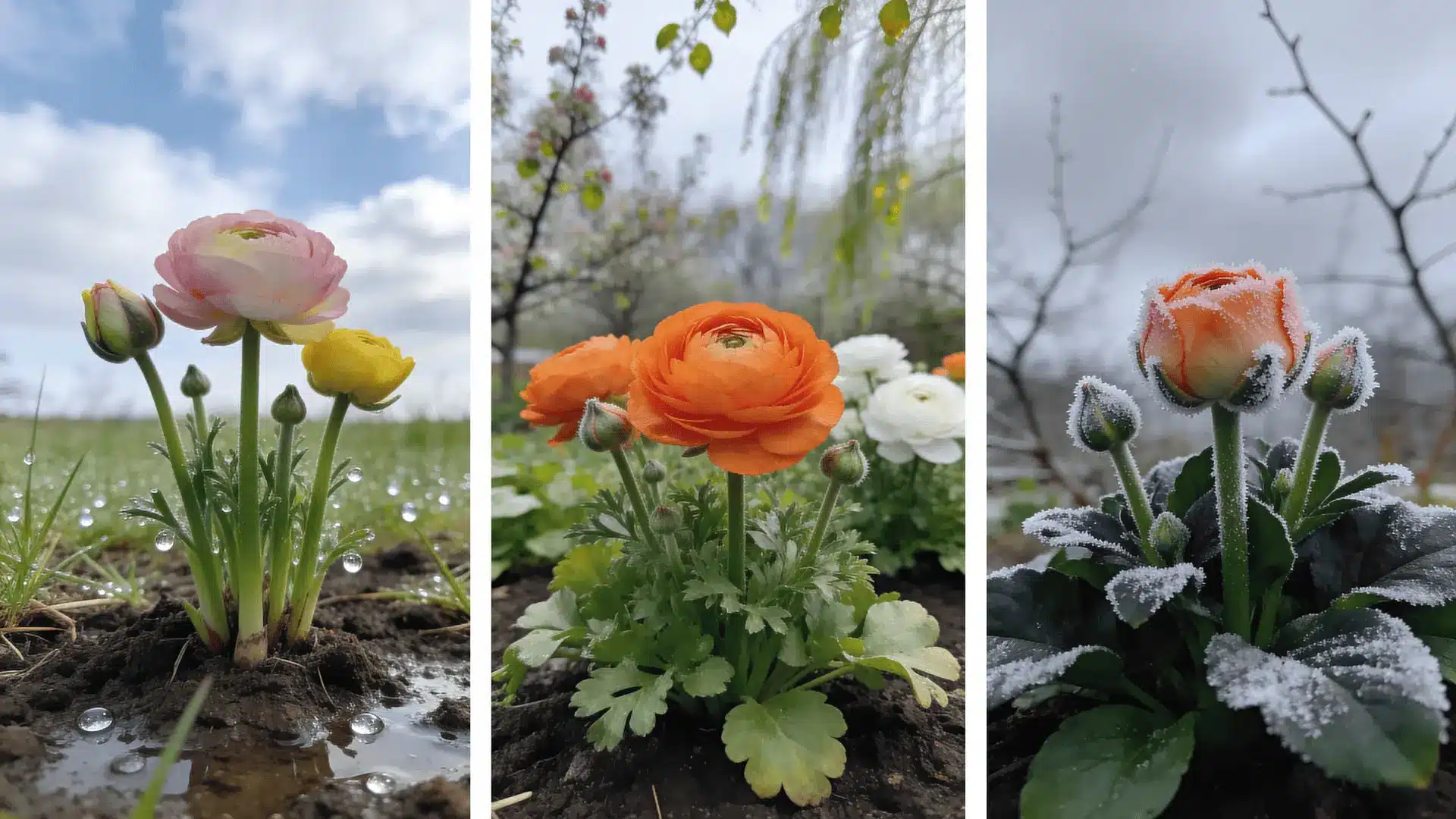
Ranunculus are cool-season plants. Their growth speeds up when temperatures stay moderate and slows down when it’s too cold or too warm.
Ranunculus grows best when daytime temperatures are roughly 50–60°F. That’s about 10–16°C if you’re thinking in Celsius.
Below that range, growth slows because the plant can’t build energy efficiently. Above that range, the plant starts shifting away from flowering and toward shutdown.
Note: Even within the same climate, ranunculus don’t all move at exactly the same pace. Some varieties build leaves and buds a bit faster under cool conditions, while others take longer to reach flowering.
These differences don’t change the season the ranunculus bloom in, but they can shift timing by a week or two, even when the temperature stays consistent.
Bloom Timing in Warm Climates
| Aspect | What happens in warm climates |
|---|---|
| Winter conditions | Winters stay mild enough for ranunculus to begin growing earlier in the year |
| Cool window | Cool, stable temperatures arrive sooner and last longer at the start of the season |
| Bloom timing | Flowers can appear as early as February or March |
| Season end | Once temperatures stay consistently warm, blooming ends quickly |
| Key takeaway | Warm climates pull bloom timing earlier, followed by an earlier shutdown |
Bloom Timing in Cold Climates
| Aspect | What happens in cold climates |
|---|---|
| Winter conditions | Cold temperatures keep growth slow until winter finally breaks |
| Warm-up period | Plants need time to wake up once temperatures rise into their comfort range |
| Bloom timing | Blooms usually appear from late April through May, sometimes into early June |
| Growth pattern | Leaves and buds form later but follow the same biological process |
| Key takeaway | Blooming starts later because suitable temperatures arrive later |
How Long After Planting Do Ranunculus Begin Blooming
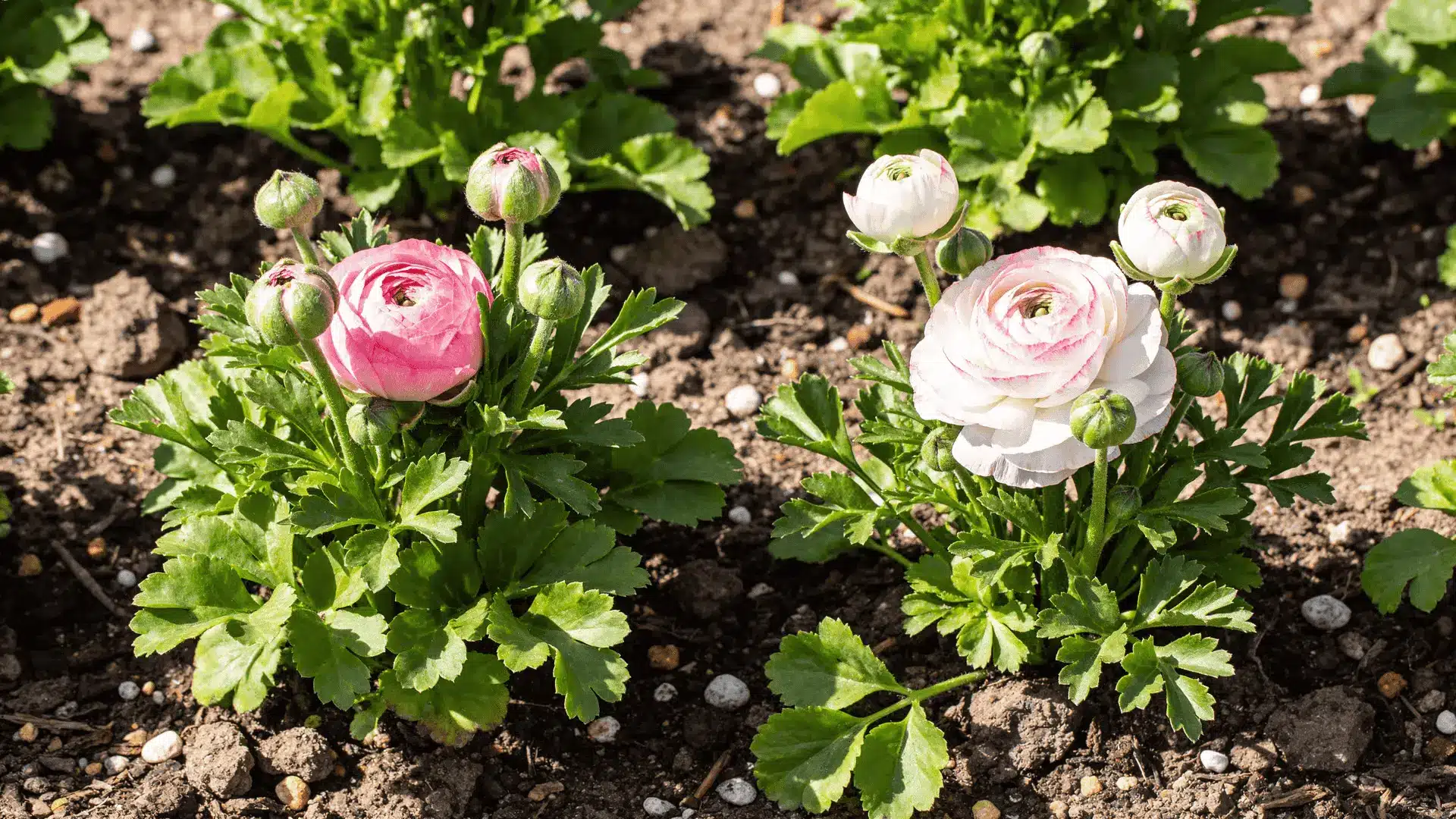
Ranunculus are often said to bloom about 90 days after planting. That number is useful, but only if you understand what it represents.
Those days aren’t a fixed countdown. They’re a stretch of active growth under the right temperatures.
Planting timing mainly affects when that growth period begins on the calendar, not how the plant develops. If growth starts earlier under cool conditions, blooming shows up earlier. If growth begins later, flowering shifts later too. The process stays the same; only the start point changes.
During that time, the plant:
- grows roots that anchor the plant and support water and nutrient uptake
- builds leaf mass to capture energy through photosynthesis
- stores energy needed to support flower formation
- forms flower buds once enough growth and energy are in place
When temperatures stay cool and steady, the process moves along smoothly. Colder conditions slow everything down, while rapid warming can interrupt bud development.
That’s why two plantings done on the same date can bloom weeks apart in different places. The clock runs on temperature, not time alone.
Ninety days gives a general sense of timing, but real conditions can easily shift it earlier or later.
How Long Ranunculus Flowers Last Once Blooming Begins
Once the ranunculus start blooming, the display usually lasts 4 to 6 weeks.
This window is naturally limited. Ranunculus are not long-season bloomers. They put on a strong, focused show, then step aside.
Blooming continues as long as temperatures stay moderate. As days get warmer, flower production slows down, buds become smaller, and then they stop forming altogether.
In cooler springs, flowering can last a little longer. In warmer springs, it wraps up sooner. That shift isn’t a sign of failure. It’s the plant responding to the season it’s built for. Because of that, bloom length isn’t controlled by care alone. Temperature ends up playing the bigger role.
Why Ranunculus Stop Blooming and Go Dormant
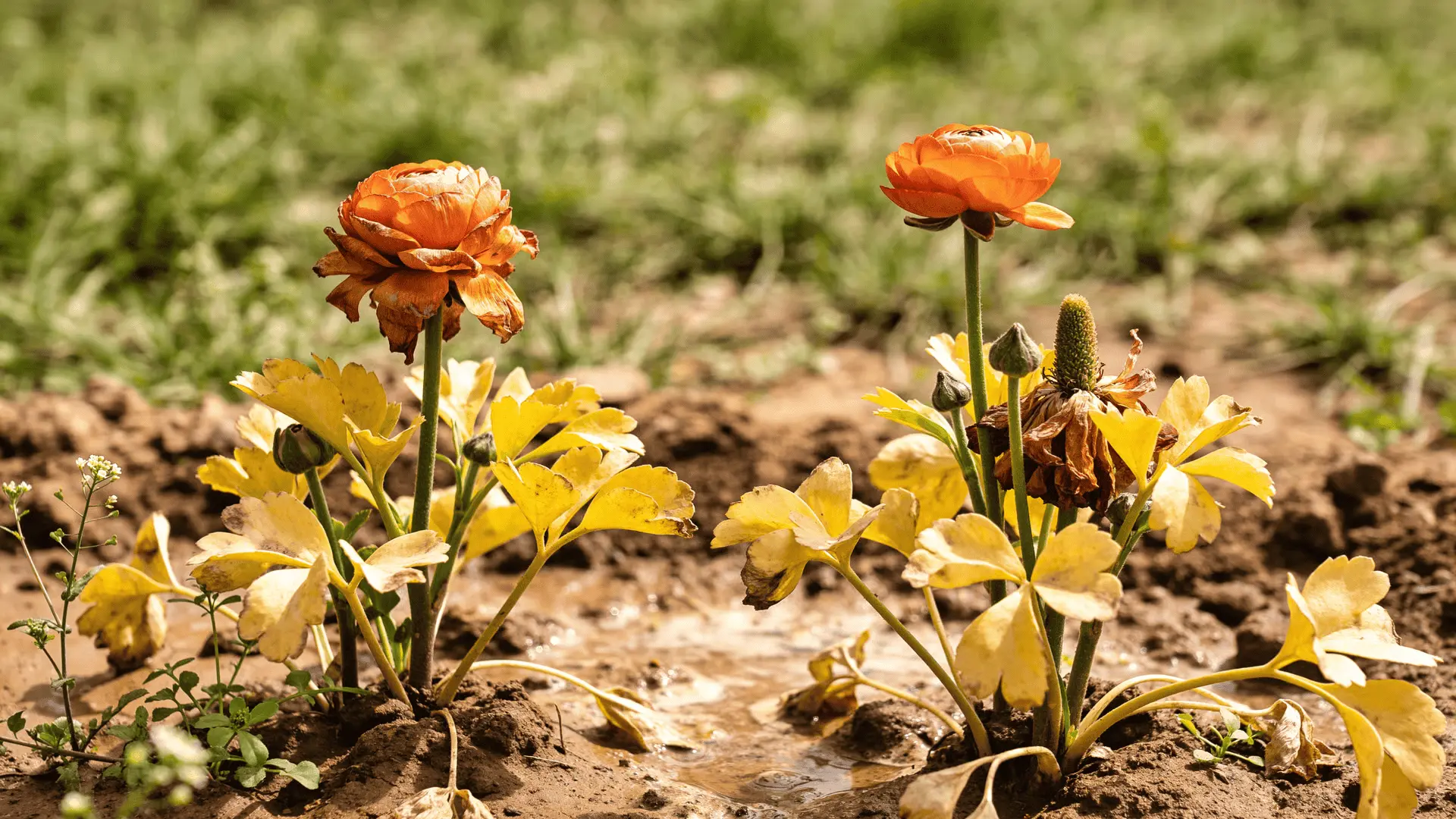
Ranunculus don’t stop blooming at random. Their shutdown follows a clear, temperature-driven pattern tied to how the plant is built to survive.
- Heat triggers dormancy: When warm temperatures become consistent, ranunculus stop flowering as a built-in response to avoid stress and conserve energy.
- Energy shifts underground: As heat rises, the plant redirects energy away from blooms, leaves yellow, growth slows, and activity retreats below the soil.
- Dormancy is not death: A dormant ranunculus hasn’t failed or died; it has simply reached the end of the season it’s biologically designed for.
- Seasonal timing drives the cycle: Ranunculus evolved to grow and bloom before summer heat arrives, then shut down once conditions move outside their comfort range.
- Lifecycle completion, not a problem: Dormancy marks the final stage of a normal growth cycle, even though it’s often mistaken for poor performance or care issues.
Once you see dormancy as timing rather than failure, the end of flowering feels expected instead of frustrating.
Wrapping Up
Understanding when ranunculus blooms really comes down to seeing them as temperature-driven plants, not calendar-driven ones.
They flower during a narrow window when conditions stay cool enough to support steady growth, then step aside once heat takes over. Climate decides when that window opens, how long it lasts, and how quickly it closes.
Once that clicks, bloom timing feels logical instead of unpredictable. You stop waiting for summer flowers and start watching seasonal shifts instead.
The next step is simple. Pay attention to your local spring temperatures and note when cool days begin to give way to warmth. That timing tells you far more than any date ever will.
Frequently Asked Questions
What month do ranunculus typically flower?
Ranunculus most often flower in April or May, though blooms can appear earlier in warmer regions where cool spring conditions arrive sooner and last longer.
What triggers ranunculus plants to start blooming?
Blooming is triggered by sustained cool temperatures that allow steady growth, energy storage, and bud formation before rising heat begins to stress the plant.
How long do ranunculus flowers usually last?
Once flowering starts, ranunculus typically bloom for about four to six weeks, with cooler springs extending the display and warmer temperatures shortening it.
Why did my ranunculus plants stop blooming?
Ranunculus stop blooming when temperatures rise consistently, triggering natural dormancy rather than plant failure, disease, or a care-related problem.