Timing is everything when it comes to transplanting seedlings, and getting it right can make the difference between a thriving garden and a struggling one.
Move them too soon, and tender roots face a world they’re not ready for. Wait too long, and they become rootbound, stressed, and slow to settle.
So many gardeners have stood in their gardens wondering if today is finally the right day, and that instinct to pause and check is already half the battle.
This guide walks you through the signs, the timing, and the gentle steps that give your seedlings the smoothest start possible.
What Does Transplanting Seedlings Mean?
Transplanting is simply the process of moving your seedlings from seed trays or small starter pots into larger containers or garden beds where they have room to truly grow.
Think of it as giving your plants a much-needed upgrade. Those tiny cells they sprouted in were perfect for germination, but roots need space to stretch and expand as the plant develops.
Without that room, seedlings become overcrowded, competing for nutrients and stunting each other’s growth.
Transplanting at the right moment sets the foundation for stronger, healthier plants that settle in quickly and grow with confidence. And a big part of that process starts with hardening off the right way.
When to Transplant Seedlings?
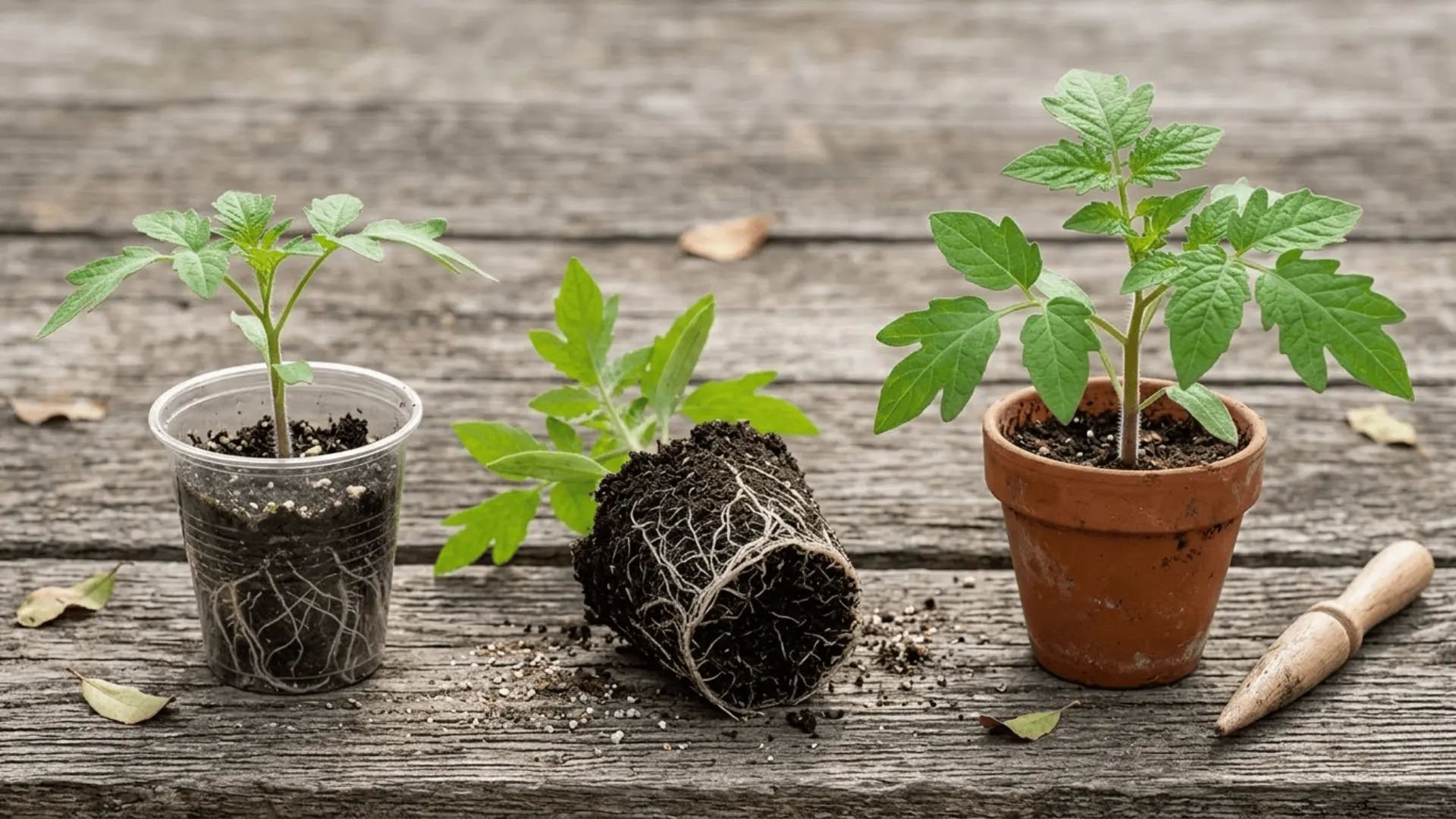
Knowing the right moment to transplant comes down to reading your seedlings carefully. A few reliable signs will tell you everything you need to know.
1. The True Leaf Rule
Those first leaves that sprout are called seed leaves, and they’re just the beginning.
Once your seedling develops 2 to 3 sets of true leaves, the ones that actually resemble the mature plant, it’s signaling that it’s grown enough to handle a wider environment and continue thriving outside its starter cell.
2. Root Development
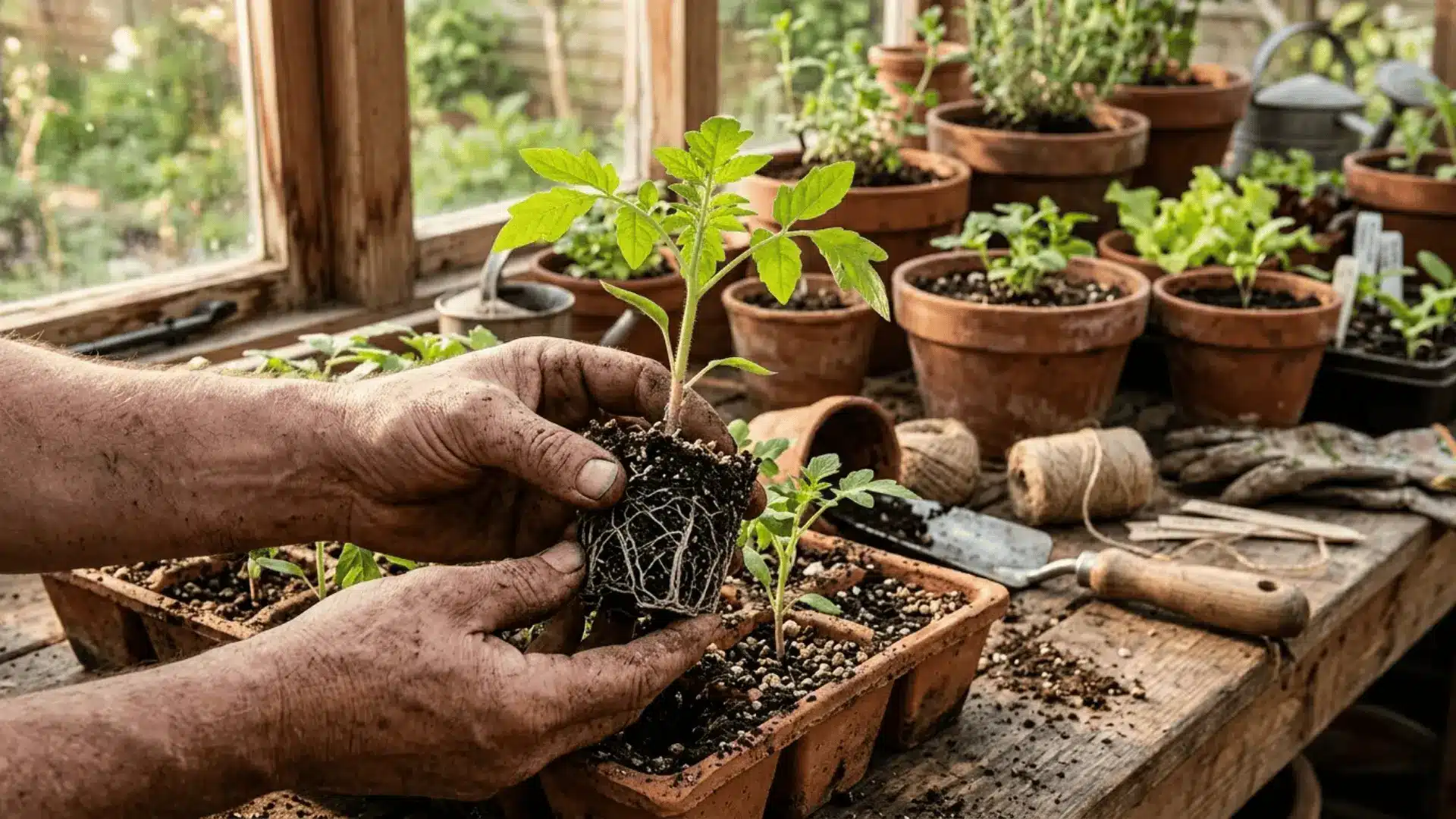
Gently tip your seedling out of its tray and take a peek at the roots. You want to see a healthy, established root system that holds the soil together, but hasn’t started circling the bottom of the pot.
Roots that are tangled and bound mean you’ve waited a little too long, so check early and often.
3. Seedling Height and Strength
A transplant-ready seedling stands firm and upright on its own without flopping over.
Sturdy stems and compact, vigorous growth are good indicators that your seedling has built enough strength to handle the transition without going into shock or struggling to adjust.
Signs Your Seedlings are Ready to be Transplanted
Your seedlings are pretty good at telling you when they’re ready to move; you just have to know what to look for.
- Seedling has developed 2 to 3 sets of true leaves that resemble the mature plant.
- Roots are visibly reaching or circling the bottom of the tray or container.
- Growth has slowed down noticeably despite regular watering and light.
- Stems are sturdy, and the seedling stands upright on its own.
- Seedlings are leaning or stretching toward light, signaling overcrowding.
Once you start noticing these signs stacking up, it’s a clear nudge from your plants that they’re outgrowing their current home and are ready for something bigger.
Best Time of Day to Transplant Seedlings
The time of day you choose to transplant matters more than most gardeners realize.
Early morning is ideal, giving seedlings the entire day to settle in before temperatures rise. Late afternoon or evening works beautifully too, as cooler conditions and lower sun intensity reduce immediate stress on freshly moved roots.
Midday transplanting, however, is best avoided entirely.
Peak sun and heat cause rapid moisture loss from leaves, making it harder for roots to keep up, which often sends seedlings into shock before they’ve had a real chance to adjust.
Hardening-Off Seedlings Before Transplanting
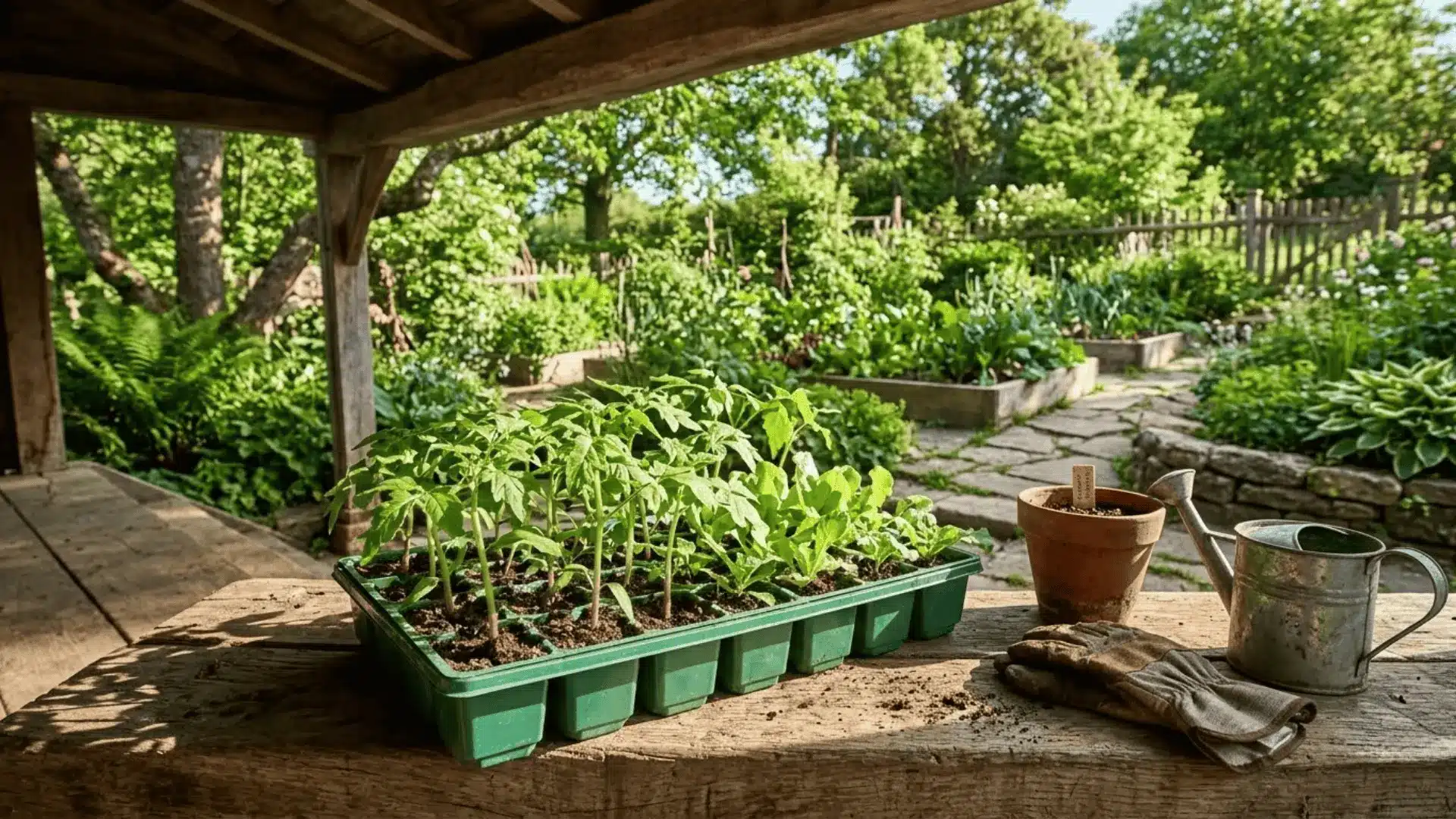
Skipping this step is one of the most common transplanting mistakes, and it’s an easy one to avoid. Taking a little extra time here pays off in a big way.
What Does Hardening-Off Mean?
Hardening off is the process of gradually introducing your indoor seedlings to outdoor conditions before transplanting them permanently.
Seedlings grown indoors are used to stable temperatures, filtered light, and calm air. Sudden exposure to wind, direct sun, and fluctuating temperatures can shock them almost instantly.
A slow, steady transition over 7 to 10 days gives them time to toughen up and adapt comfortably.
Steps for Hardening-Off Seedlings
A little patience during this stage makes the actual transplanting day so much smoother for both you and your plants.
- Step 1: Place seedlings outdoors in a shaded, sheltered spot for a couple of hours on the first day.
- Step 2: Gradually increase outdoor time each day, adding an hour or two as the days progress.
- Step 3: Begin introducing gentle morning sunlight by day 3 or 4.
- Step 4: Reduce watering slightly to encourage stronger, more resilient roots.
- Step 5: By day 7 to 10, seedlings should be ready to stay outdoors overnight and handle transplanting.
Step-by-Step: How to Transplant Seedlings?
Once your seedlings are hardened off and ready to go, the actual transplanting process is simpler than it seems. Follow these steps, and you’ll set them up beautifully.
- Step 1: Loosen and enrich your garden bed or container soil before anything else.
- Step 2: Water your seedlings an hour before transplanting to hydrate roots and ease removal.
- Step 3: Gently remove each seedling, supporting the root ball rather than pulling from the stem.
- Step 4: Plant at the correct depth, making sure the base sits level with the surrounding soil.
- Step 5:Water thoroughly immediately after planting to help roots settle into their new home.
Taking it slow and being gentle with those roots makes all the difference. A little care during transplanting goes a long way toward a garden that grows with confidence.
Common Seedlings That Often Need Transplanting
Many vegetables started indoors genuinely thrive when given the chance to move into a larger, more nourishing space.
Here’s a quick look at some of the most common ones worth knowing.
| Seedling | Best Transplant Time | Ideal Growing Space |
|---|---|---|
| Tomato | After 2 to 3 sets of true leaves | Deep, wide container or garden bed |
| Pepper | When stems are sturdy and upright | Warm, sheltered garden bed |
| Lettuce | Once seedlings are lightly crowded | Shallow bed with good spacing |
| Broccoli | 4 to 6 weeks after sowing | Cool bed with plenty of depth |
| Cabbage | When 3 to 4 true leaves appear | Spacious bed with rich soil |
Tips to Help Seedlings Recover After Transplanting
The first few days after transplanting are crucial, and a little extra attention during this window can make a noticeable difference in how quickly your seedlings bounce back.
- Offer shade for the first 2 to 3 days to protect seedlings from direct sun stress.
- Keep the soil consistently moist but never waterlogged while roots settle in.
- Hold off on fertilizing for at least the first week after transplanting.
- Watch for wilting, yellowing, or stunted growth as early signs of transplant shock.
- If shock appears, trim a few leaves to reduce the plant’s stress load immediately.
With just a bit of post-transplant care, most seedlings recover quickly and get right back to growing beautifully.
Frequently Asked Questions (FAQs)
How Big Should Seedlings Be Before Transplanting?
Most seedlings are ready when they have 2 to 3 sets of true leaves and stand firm on their own. Size matters less than overall strength and root development.
Can Seedlings Recover From Transplant Shock?
Yes, most healthy seedlings bounce back within a week or two with proper care. Consistent moisture, shade, and avoiding fertilizer right away make the recovery process much smoother.
Should You Water Seedlings Before Transplanting?
Watering about an hour before transplanting helps hydrate the roots and keeps the soil ball intact during removal. It makes the whole process gentler on the plant.