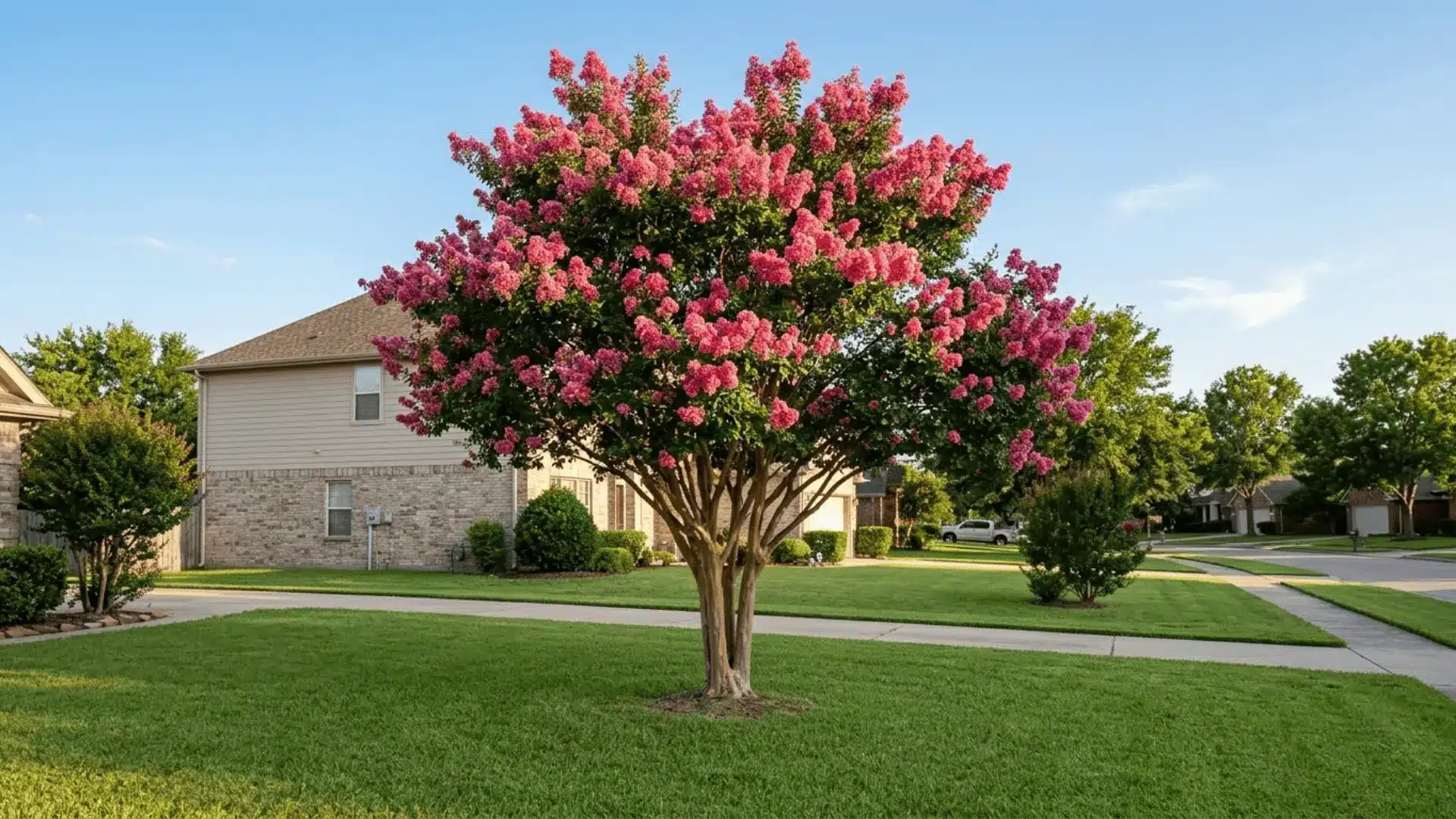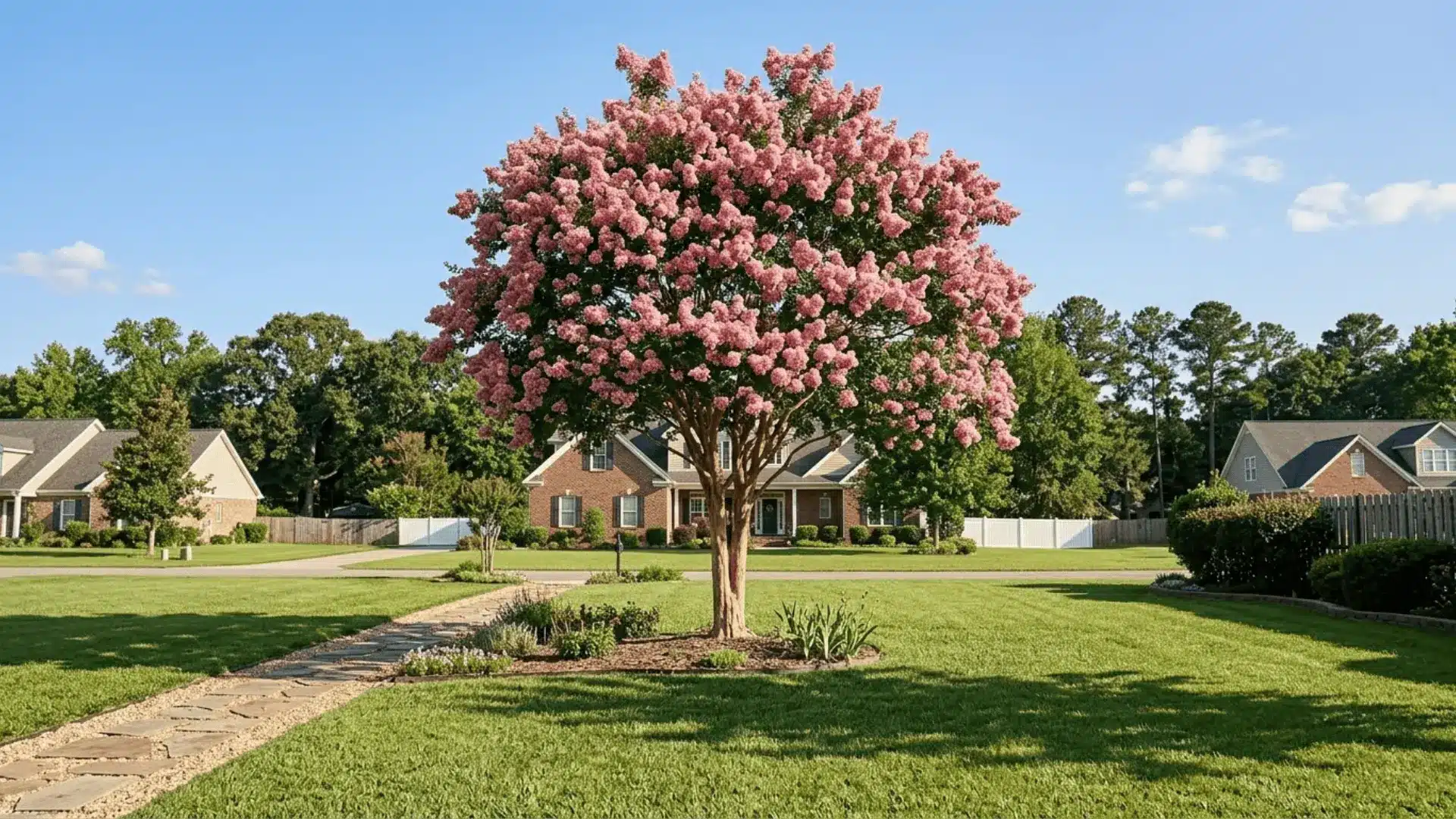
Crepe myrtles have a way of stopping you mid-scroll, mid-walk, mid-everything.
There’s a quiet difference between a crepe myrtle that grows and one that’s been guided.
The bush form spreads freely, sending up multiple stems in every direction, while the tree form rises with intention, one trunk, open canopy, room to breathe.
Most homeowners fall in love with that cleaner silhouette, and honestly, it’s easy to see why.
So if you’ve been eyeing your shrubby crepe myrtle, wondering what it could become, keep reading because shaping it into a single-trunk beauty is so much more doable than it looks.
Can You Train a Crepe Myrtle Bush into a Tree?
Yes, and it’s one of the most rewarding things you can do for your yard.
Crepe myrtles naturally grow as multi-stem shrubs, sending up several trunks from the base rather than one clean leader. That’s just their default habit, not their only option.
If you’re still deciding between forms, understanding the bush vs. tree difference early saves a lot of backtracking later.
With selective pruning over a couple of seasons, you can encourage a single dominant trunk to take over while gradually removing everything competing around it.
The result is a structured, airy canopy that feels intentional. No special tools, no complicated techniques, just consistency and a little patience with the process.
Benefits of a One-Trunk Crepe Myrtle Tree
Honestly, once you see a well-trained crepe myrtle standing tall in a front yard, the multi-stem version rarely compares.
Here’s what a single trunk actually gives you:
- A polished, tree-like silhouette that anchors your landscape without overwhelming it.
- Better airflow through the canopy, which means healthier blooms and fewer disease issues.
- Cleaner space at the base that makes mowing and edging so much less frustrating.
- Stronger, more directed growth that holds up beautifully through every season.
One small shift in how you prune, and your yard ends up looking like someone actually planned it.
Best Time to Train a Crepe Myrtle
If there’s one thing that makes this whole process easier, it’s starting at the right point in the season. Late winter to early spring, right before new growth kicks in, is your window.
The plant is still dormant, so you can clearly see the branch structure without foliage getting in the way.
More importantly, pruning just before the growing season means the plant channels its fresh energy exactly where you want it.
This is also a good moment to think through crepe myrtle placement since where it grows long-term affects how you train it. Cutting too late into spring disrupts that momentum and can set your progress back by a full year.
Tools You’ll Need
Nothing complicated here, just a few basics that make the whole process cleaner and easier on both you and the plant:
- Pruning shears for smaller stems and precise cuts close to the trunk
- Loppers for thicker branches that shears simply can’t get through cleanly
- Garden gloves to protect your hands during longer pruning sessions
- A stake and soft ties if your chosen trunk needs a little support finding its upright footing
Get these ready before you start and you’ll move through the whole thing without stopping mid-way to hunt something down.
Step-by-Step: How to Train a Crepe Myrtle Into a Single Trunk?
Training a crepe myrtle takes patience more than anything else. Work through these steps steadily and the shape will follow.
Step 1: Choose the Strongest Central Stem
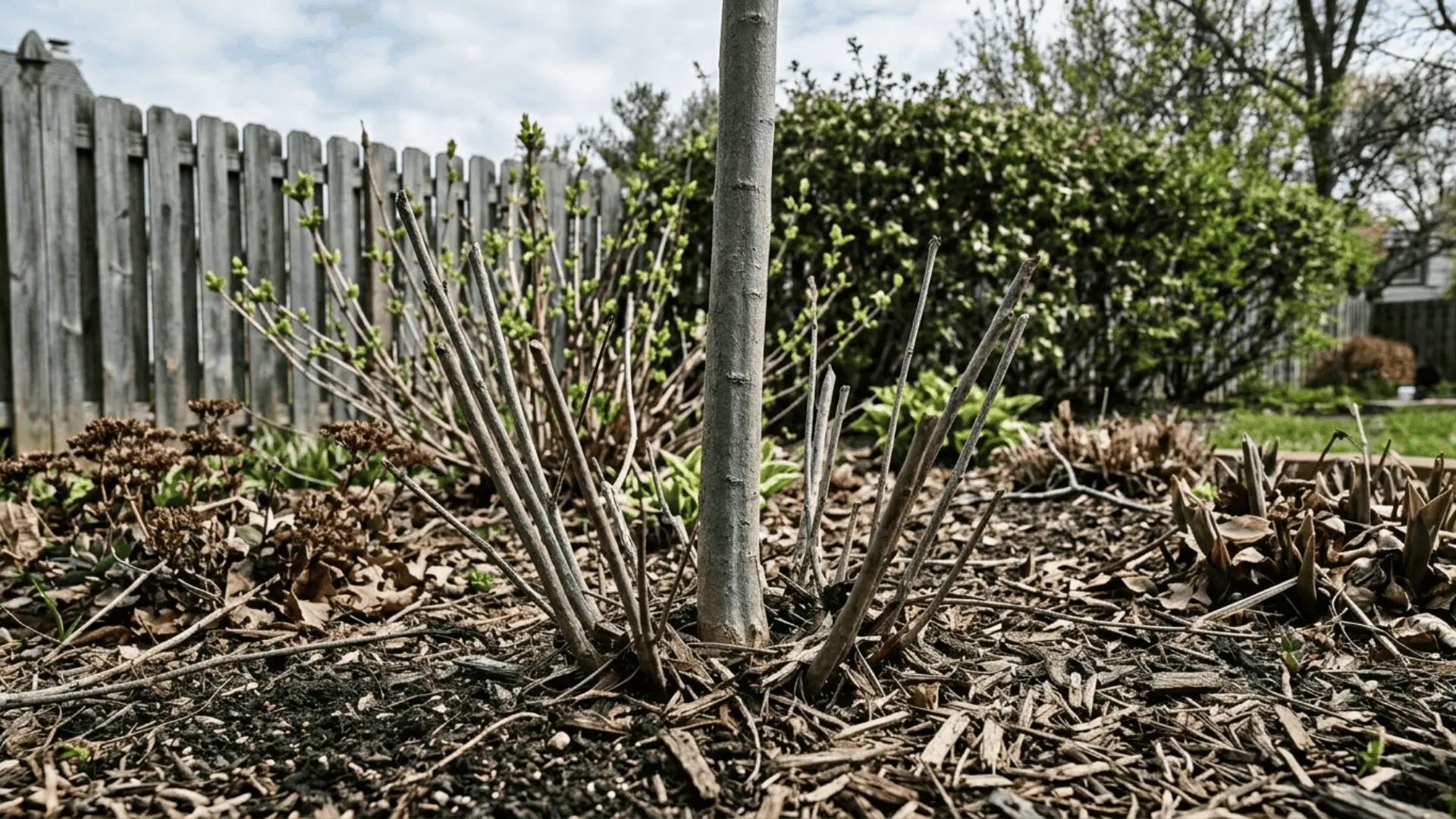
Walk around the plant and really look before cutting anything. You’re selecting the stem that’s straightest, most upright, and healthiest at the base. This becomes your main trunk, so choose deliberately.
If two stems seem equally strong, go with the one that’s most centered. Everything else will eventually be removed around it.
Step 2: Remove Competing Stems
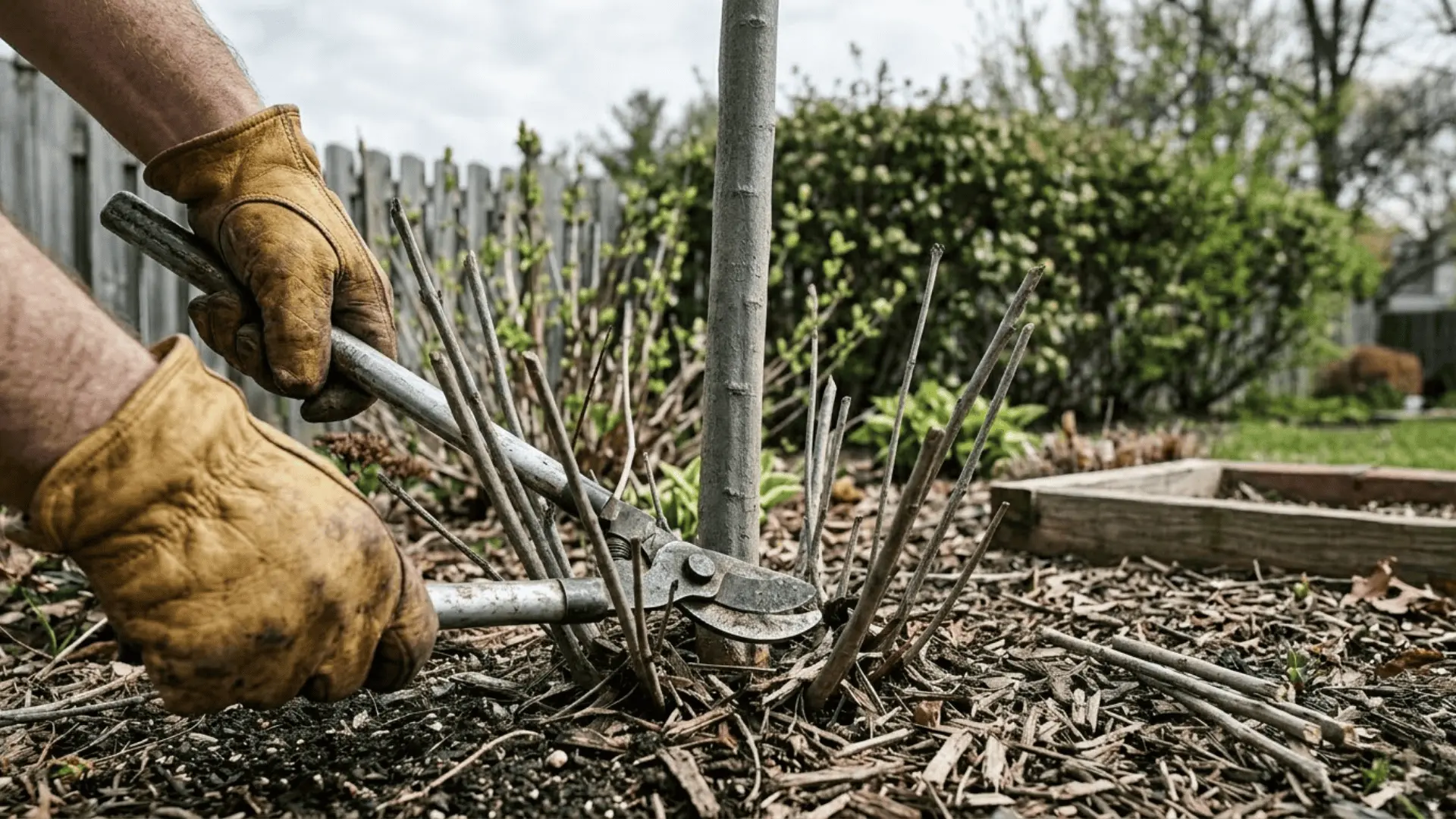
With your trunk selected, begin cutting extra stems as close to the base as possible. Don’t rush this by removing everything at once though.
Taking too much in a single session stresses the plant. Spread removal across two seasons if needed, giving the chosen trunk time to strengthen as competition gradually disappears around it.
Step 3: Clear Lower Branches Gradually
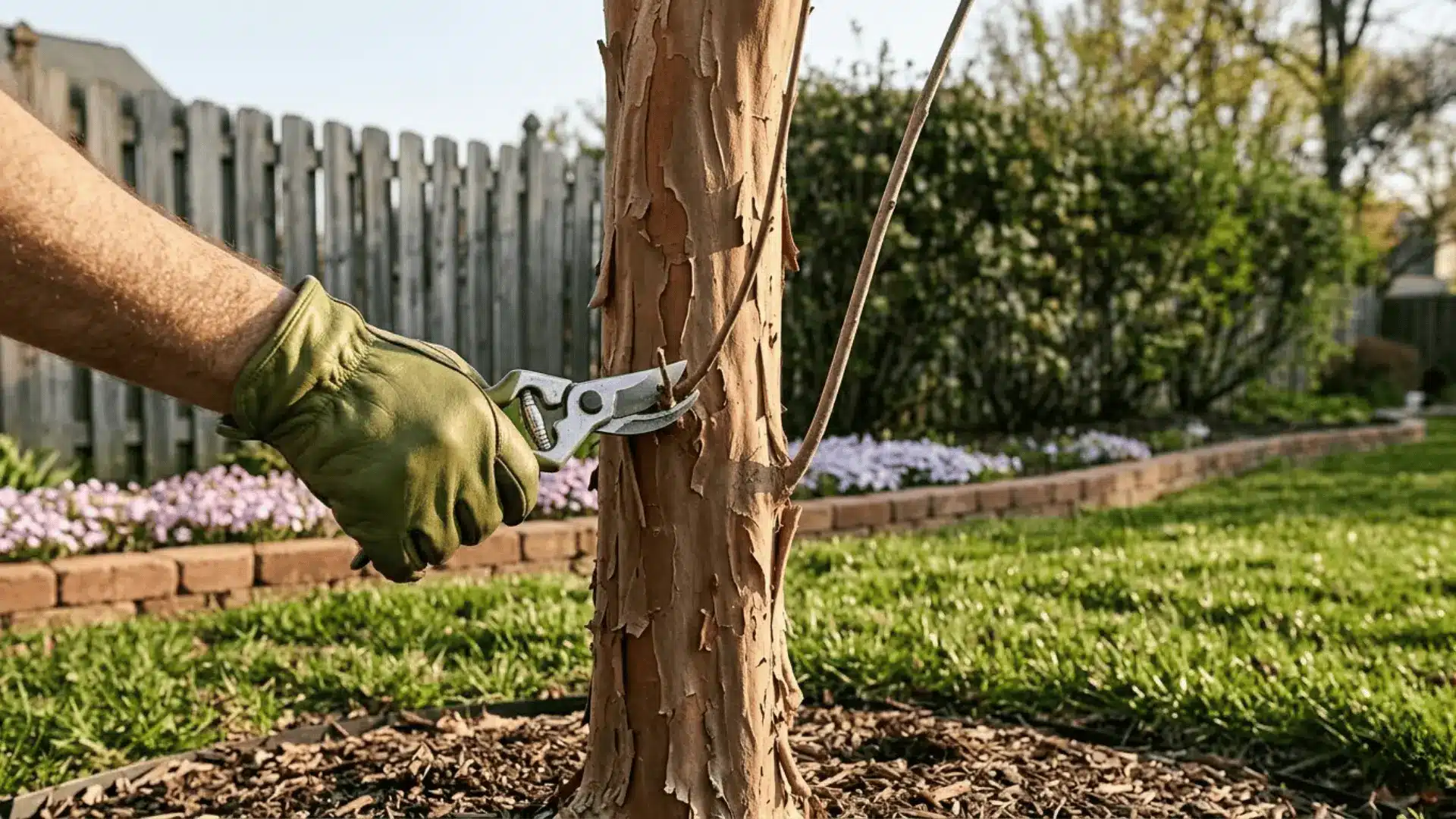
As the trunk establishes, start removing side shoots from the lower portion to lift the canopy. Work upward slowly over time rather than stripping the trunk bare immediately.
A good rule of thumb is keeping the canopy in the upper two-thirds of the plant, letting the lower trunk breathe and show its structure cleanly.
Step 4: Stake the Trunk if It Needs Support
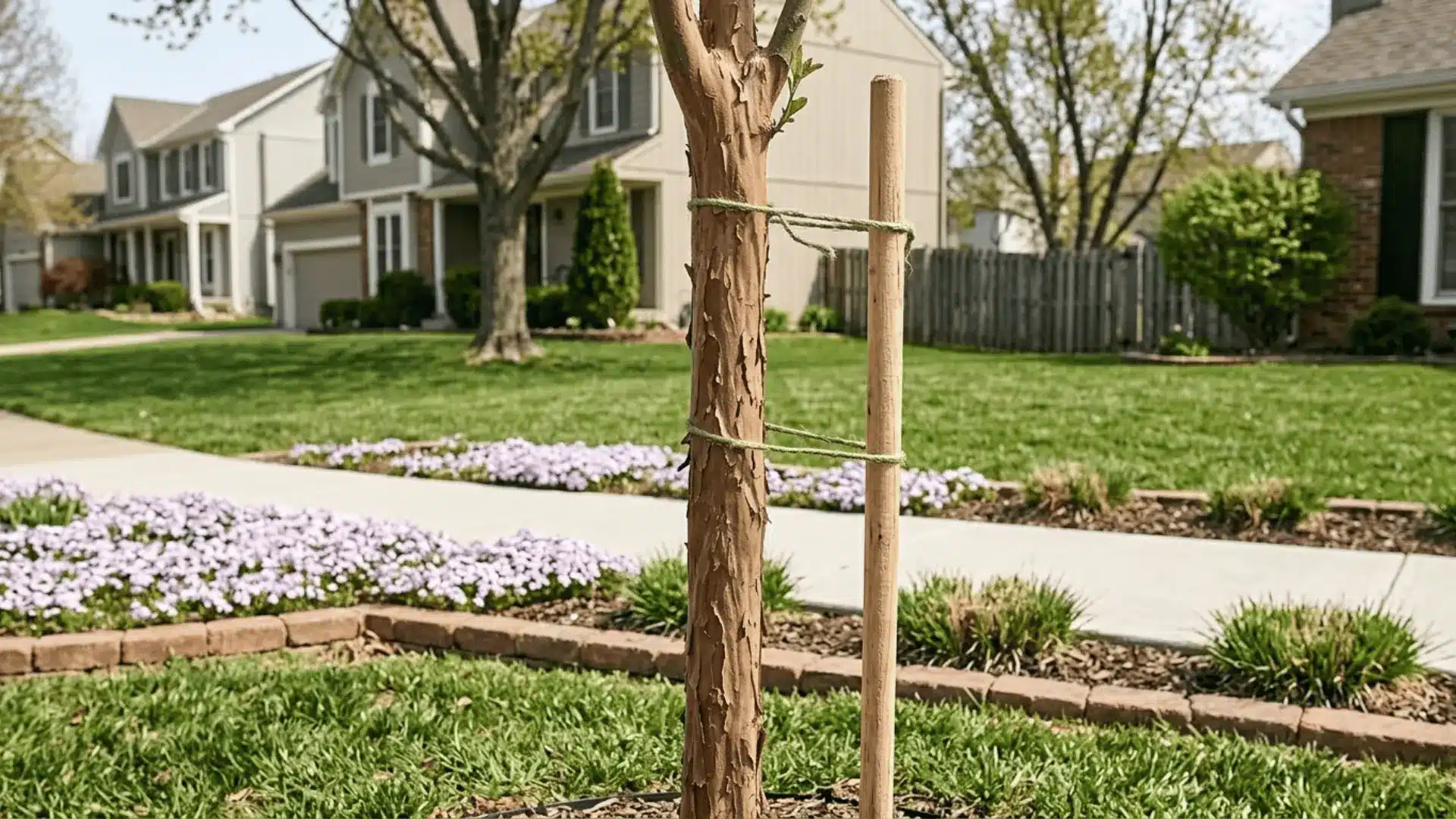
Younger or thinner trunks sometimes lean without something to guide them. Push a sturdy stake into the ground close to the trunk and use soft ties to connect them loosely.
The key word is loosely as too much tension can damage bark and restrict the natural movement that actually helps the trunk build strength over time.
Step 5: Maintain the Shape Every Year
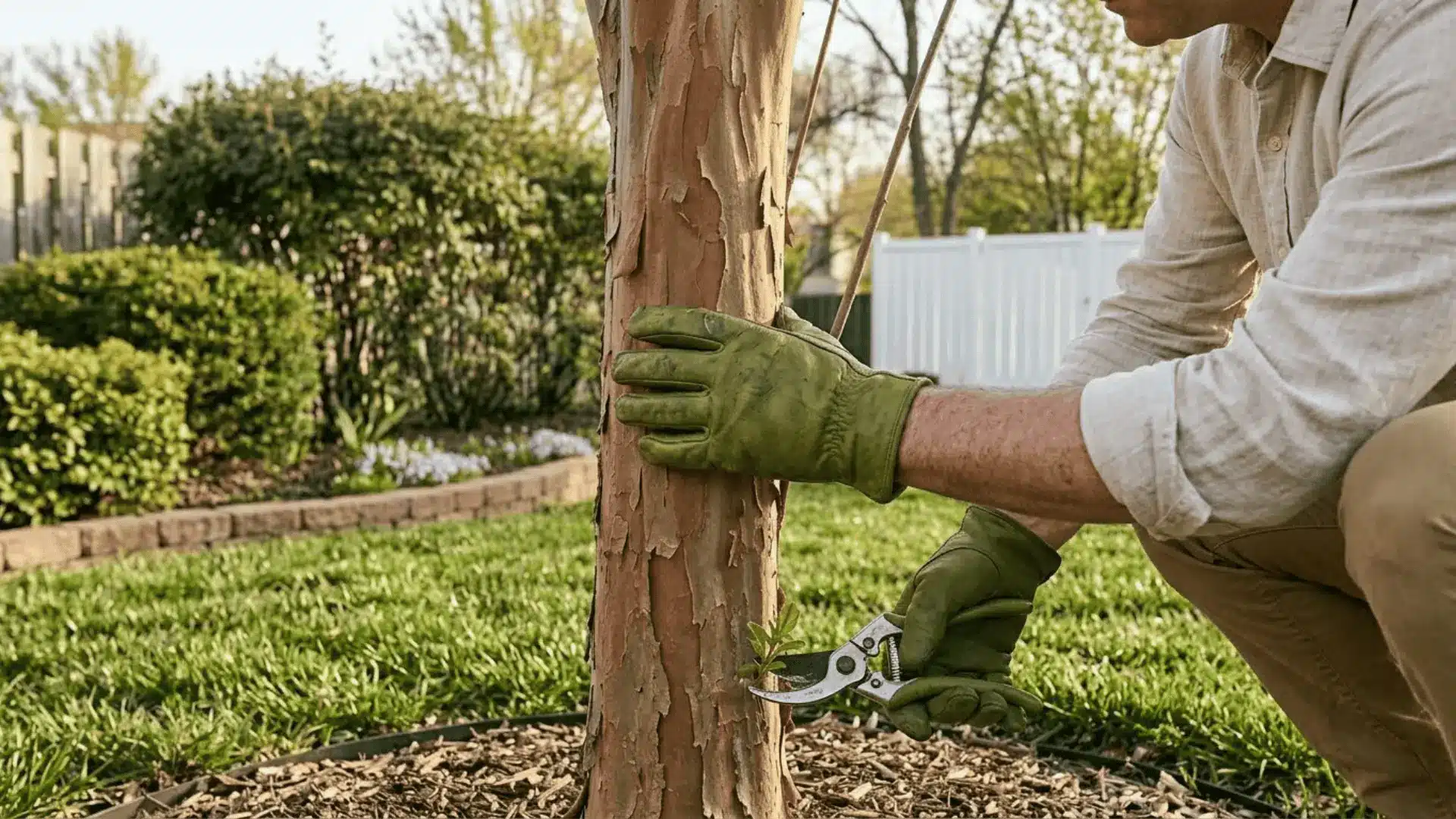
Every spring, go back and remove any new suckers sprouting from the base along with any shoots creeping up the lower trunk.
A little light pruning at the top keeps the canopy balanced without stressing the plant. Consistency here is everything; one season of neglect can send the plant back toward its bushy defaults pretty quickly.
How Long Does It Take to Train a Crepe Myrtle?
Honestly, there’s no single answer because it depends on what you’re starting with.
A younger, smaller plant tends to respond faster, sometimes showing real progress within a single growing season.
An older, more established bush with thick competing stems will naturally take longer, usually somewhere between two to three seasons before the single trunk feels truly dominant and confident.
The size of the plant and how vigorously it grows in your climate both play into the timeline.
Stay consistent with each spring pruning and the shape builds on itself gradually without much fuss.
You’re right, my apologies! Here’s the corrected table:
Single-Trunk vs. Multi-Trunk Crepe Myrtle
Both forms are beautiful in their own way, and choosing between them really comes down to your space, your style, and how much maintenance you’re comfortable with.
| Feature | Single-Trunk | Multi-Trunk |
|---|---|---|
| Appearance | Clean, structured, tree-like silhouette | Full, bushy, naturally layered look |
| Space | Works well in smaller or defined spaces | Spreads wider, needs more room |
| Airflow | Open canopy, better air circulation | Denser growth, slightly restricted airflow |
| Maintenance | Easier to prune and manage annually | Requires more attention to keep tidy |
| Mowing Around | Clean base, simple to edge around | Multiple stems make mowing trickier |
| Bloom Display | Elevated, more visible flower clusters | Blooms spread across a wider, lower form |
| Best For | Focal points, walkways, front yards | Borders, privacy screens, naturalistic gardens |
| Training Required | Yes, needs guided pruning over time | Minimal, follows its natural growth habit |
If your yard leans toward structured and intentional, the single trunk tends to feel like a natural fit. For wilder, more relaxed landscapes, the multi-trunk form holds its own beautifully.
Care Tips After Training
Getting the shape right is only half of it. Keeping your crepe myrtle healthy afterward is what makes that structure actually last:
- Water consistently through the growing season, keeping the soil evenly moist but never waterlogged.
- Feed lightly in spring with a balanced slow-release fertilizer to support healthy new growth.
- Avoid heavy fertilizing as too much nitrogen pushes leafy growth at the expense of blooms.
- Prune once a year in late winter, removing suckers, crossed branches, and anything disrupting the canopy shape.
- Mulch around the base to retain moisture, regulate soil temperature, and keep weeds from competing with the roots.
Stay on top of these through the season and the plant practically takes care of the rest on its own.
Can You Convert an Older Bush?
Yes, older bushes can absolutely be worked with, but going in with realistic expectations matters.
Younger plants respond quickly because their growth habits aren’t fully set yet. An older, more established bush has years of multi-stem energy behind it, so the process moves slower and demands more patience.
The approach stays the same though: gradual pruning spread across multiple seasons rather than aggressive cutting all at once.
Removing too much too soon stresses the plant heavily.
Pick your strongest trunk, reduce competition slowly, and let each growing season do its part before the next round of pruning.
That’s a Wrap
Training a crepe myrtle bush into a one-trunk tree is one of those garden projects that quietly pays off every single year.
You put in the work once per season, stay consistent, and eventually you’re looking at something that feels completely intentional in your yard.
There’s real satisfaction in watching a once-scraggly bush grow into a structured, blooming tree over time.
If you’re somewhere in the middle of this process or just getting started, drop a comment below sharing where you are with your crepe myrtle. Would love to hear how it’s coming along.