Some yards just feel right the moment you look at them, and you can’t quite put your finger on why.
The plants seem to breathe, the space doesn’t beg for your attention, and everything sits together like it was always meant to be that way.
That quiet sense of balance? It usually traces back to 1 surprisingly simple design principle: the rule of 3.
Rooted in the way our eyes naturally move through a space, this little guideline can completely shift how your garden looks and feels.
Let’s get into what it actually means, how to use it, and what it looks like in a real yard.
What is the Rule of 3 in Landscaping?
The rule of 3 in landscaping is the practice of grouping plants, colors, textures, and design elements in sets of 3 to create a space that feels naturally balanced.
Our eyes are wired to move through odd-numbered groupings with ease, and 3 hits that sweet spot without overwhelming the eye.
It works across almost every element in your yard, from the way you cluster shrubs to how you layer hardscaping materials.
A compact garden bed or a sprawling backyard, this principle gives your outdoor space that cohesive, intentional look that’s so hard to achieve by chance.
Why the Rule of 3 Works in Yard Design?
Why does grouping in 3s feel so effortless to the eye? It comes down to how we naturally process what we see.
- Odd numbers create a sense of movement, so the eye travels through the space rather than getting stuck.
- Groups of 3 feel collected without looking too controlled or overly planned.
- Symmetrical, even-numbered layouts can make a yard feel stiff; 3 loosens that up naturally.
- Layering 3 elements together, whether in height, texture, or color, adds visual depth without any extra effort.
- It mirrors how plants grow in nature, which is why it reads as organic and intentional at the same time.
That’s the quiet power of this principle. It doesn’t add more to your yard; it just makes everything already there work better together.
How to Use the Rule of 3 in Landscaping?
Applying the rule of 3 doesn’t require a redesign or a big budget. It’s really about being a little more intentional with what you already have and how you place it.
1. Group Plants in Threes
Single plants can feel lonely, and pairs can feel a little too neat. Grouping the same or similar plants in sets of 3 gives a bed its first sense of rhythm.
Play with height slightly within the group so it doesn’t read as a flat block. That small variation is what makes it feel grown-in rather than just planted.
2. Combine Three Different Plant Types
Think of your garden bed as having 3 distinct jobs to fill.
Each layer brings something different to the space, and together they create a planting that feels full without feeling crowded.
| Layer | Role | Example |
|---|---|---|
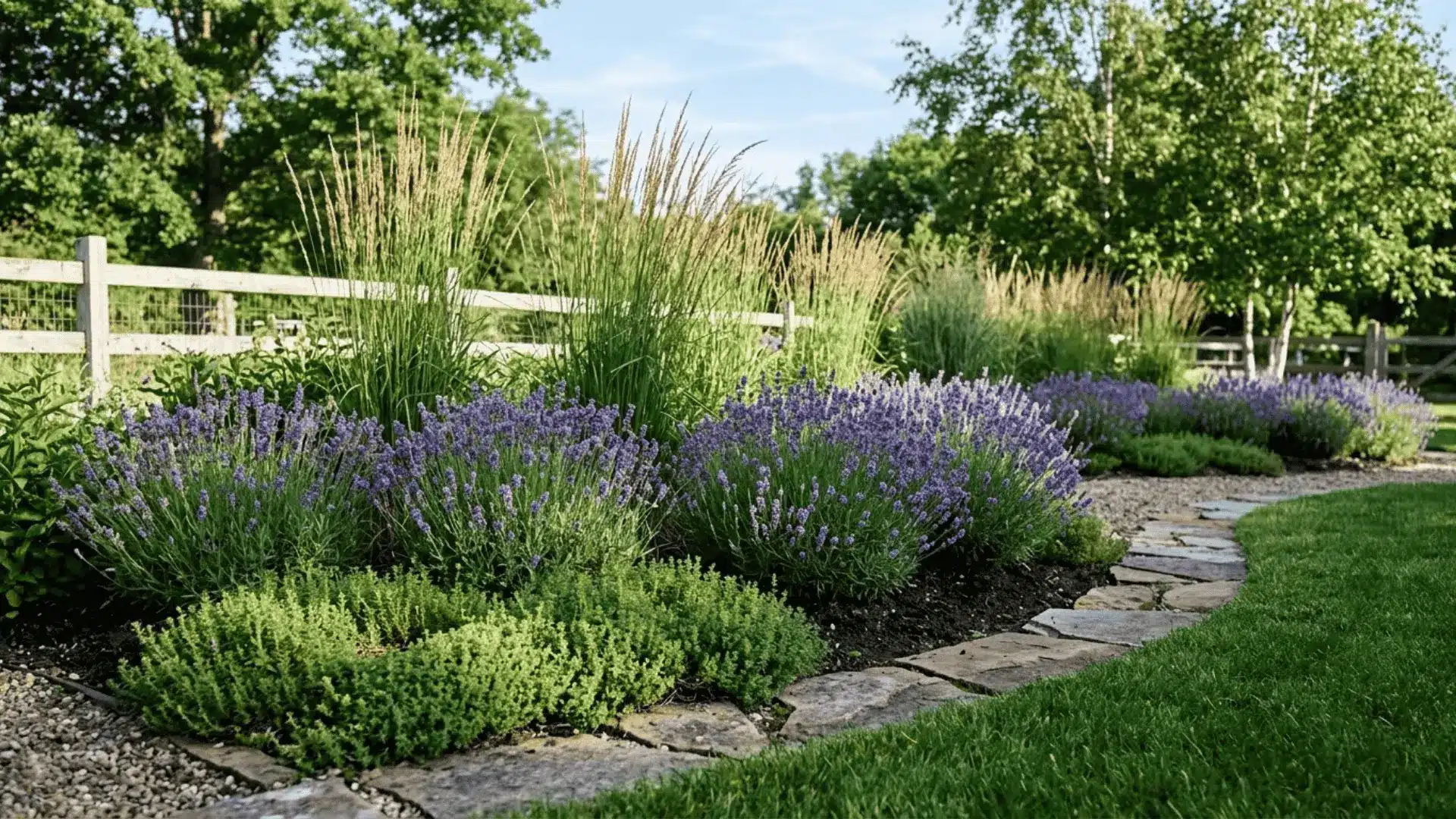
| Ground Cover | Fills space, anchors the base | Creeping thyme, moss |
| Shrub | Adds volume and mid-level interest | Boxwood, lavender |
| Accent Plant | Draws the eye, creates a focal point | Ornamental grass, agave |
3. Use Three Colors
Pick a palette of 3 and let it lead every planting decision. This could be a soft, tonal trio like sage, cream, and dusty rose, or something with more contrast like deep green, white, and burgundy.
The key is repetition. Carrying those 3 colors across different spots in the yard is what ties everything together into something that feels designed.
4. Repeat Patterns Across the Yard
Repetition is what turns individual groupings into a cohesive yard. Once you land on a combination you like, whether that’s a specific plant trio or a color pairing, echo it across different beds and borders.
It creates a visual rhythm that quietly guides the eye from one area to the next, making even a large yard feel like it belongs to itself.
Rule of 3 Landscaping Examples
Real examples have a way of making a principle click. Here’s what the rule of 3 looks like when it actually comes to life in a yard.
Example 1: Flower Bed Design
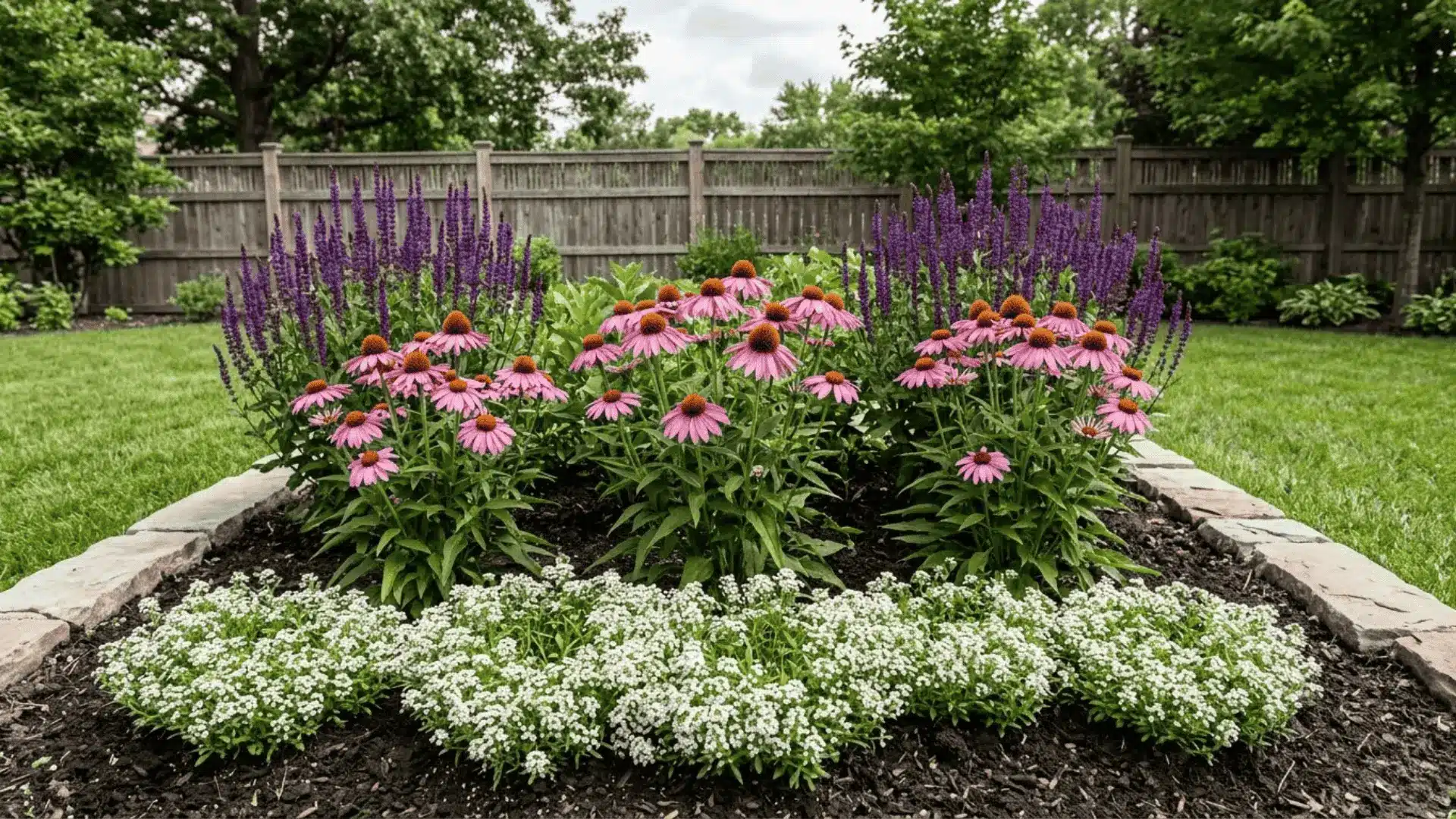
A well-balanced flower bed doesn’t need a lot of variety; it needs the right groupings. Try anchoring the bed with 3 clusters of the same bloom, then varying the heights so your eye naturally moves from low to tall.
Tuck a low ground cover at the front, a mid-height flowering shrub in the center, and a taller ornamental at the back. Simple, layered, and completely intentional.
Example 2: Front Yard Layout
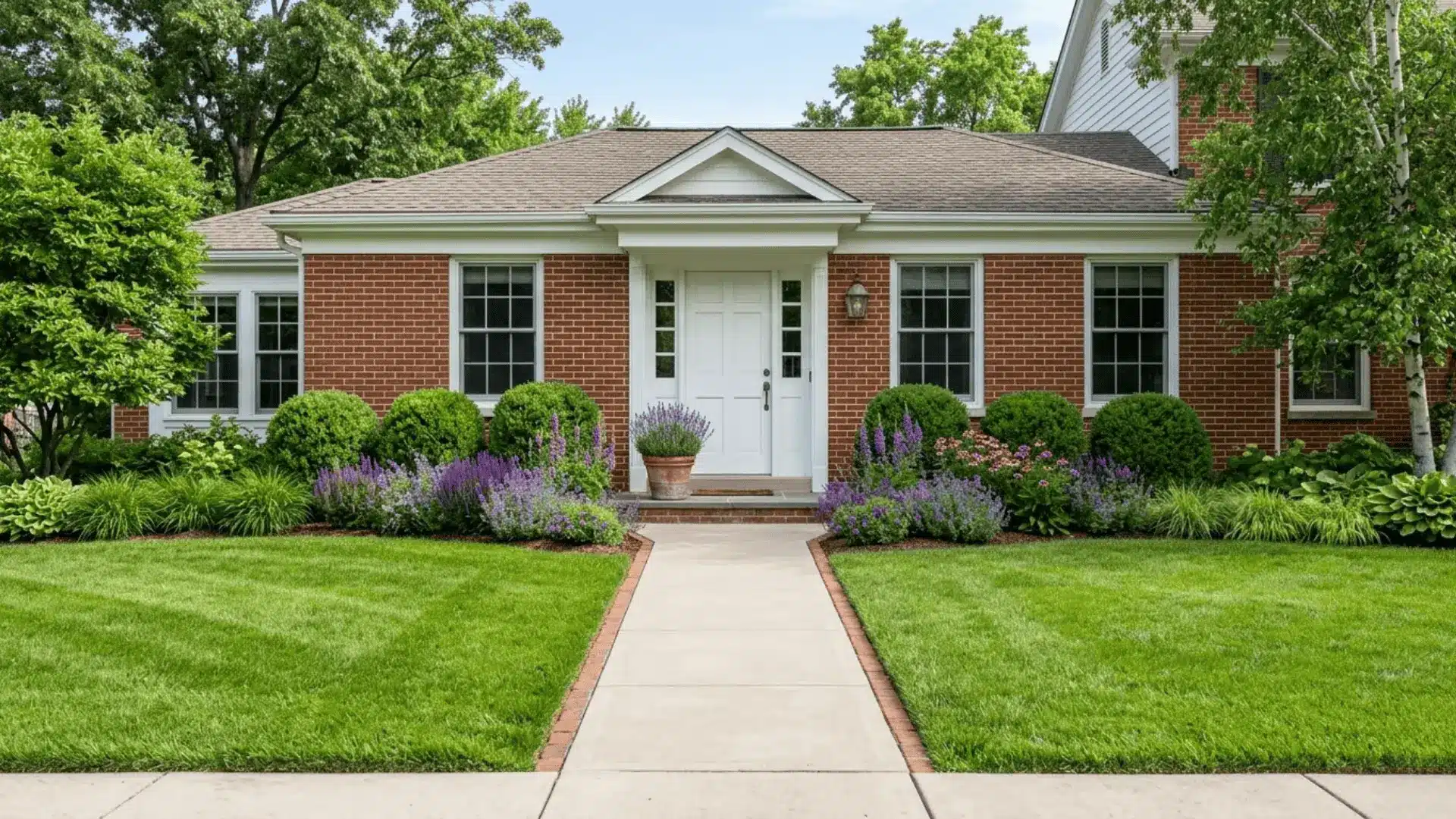
First impressions are shaped by balance, and the front yard is where the rule of 3 does some of its best work. A clean entry layout might look something like this:
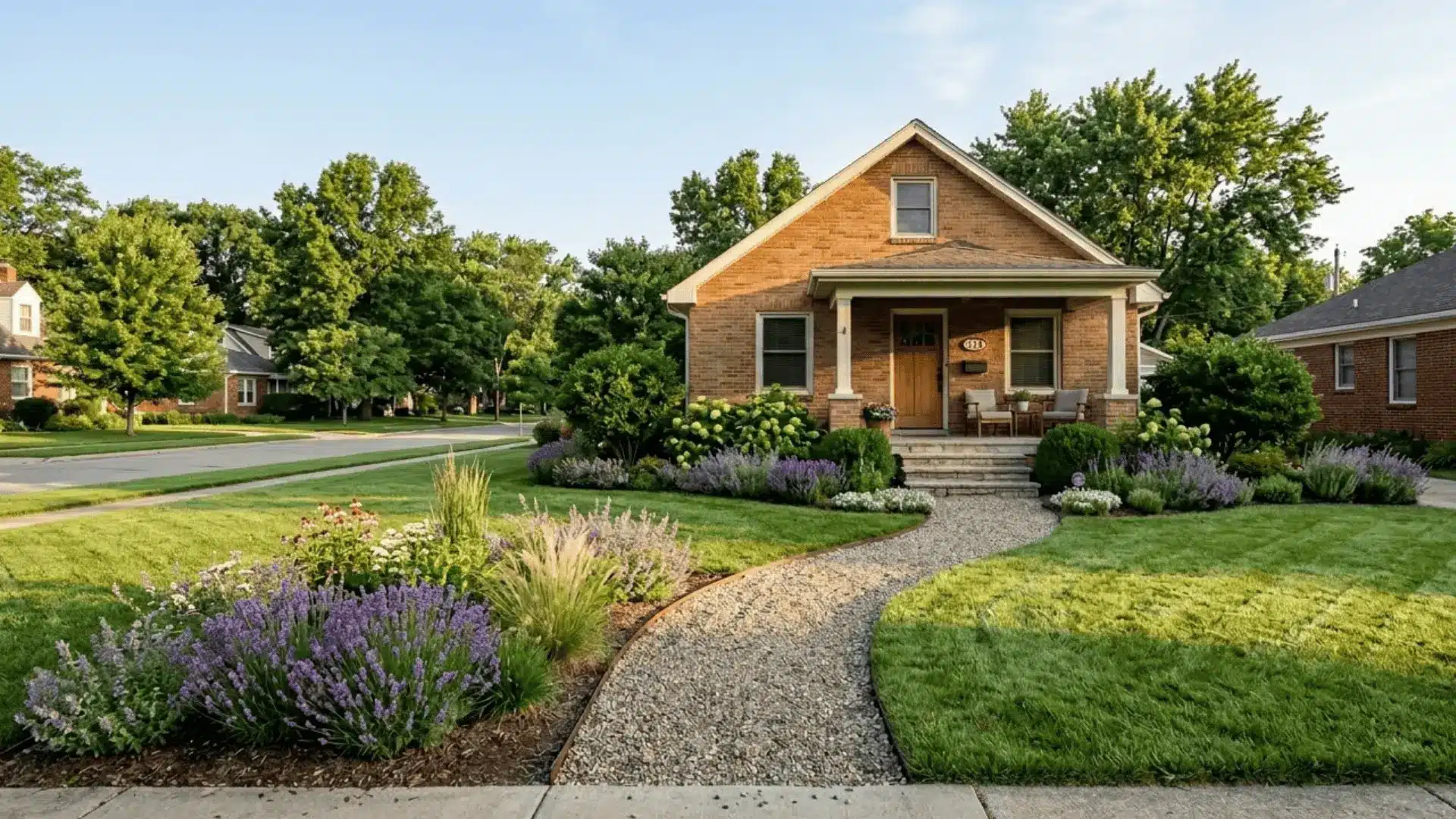
- A trio of matching shrubs flanking the walkway for symmetry that doesn’t feel stiff.
- 3 varying heights of plantings along the foundation to add depth without crowding the facade.
- A repeated color pulled through the flowers, foliage, and even a potted plant by the door to tie it all together.
Example 3: Small Yard Design
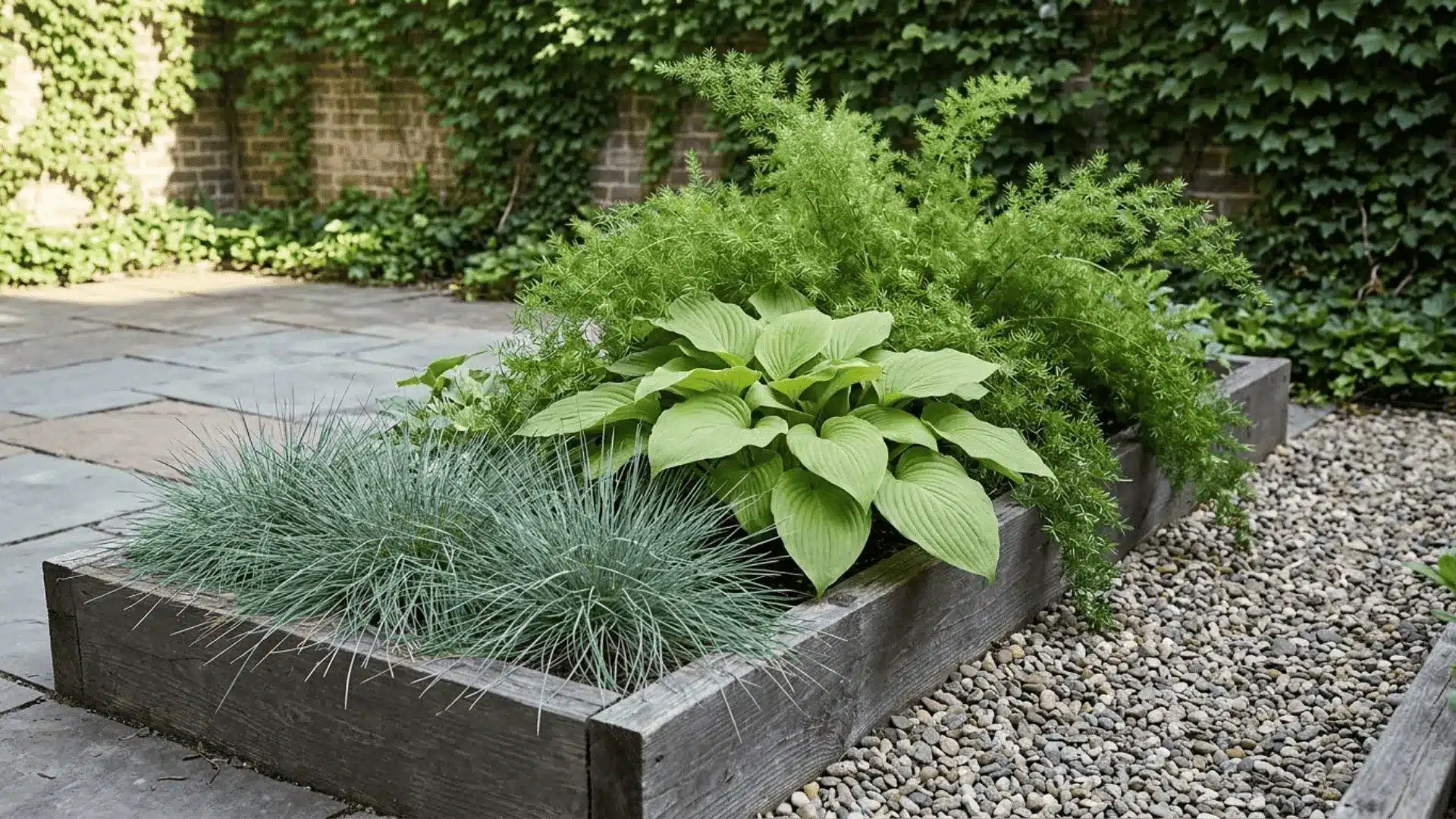
Tight spaces actually benefit the most from this principle because every plant has to earn its place. Stick to 1 trio of plants rather than scattered individuals.
From there, choose 3 textures like fine, bold, and feathery to create contrast without adding more plants. Then repeat a single color in 3 different spots to make the space feel larger and more connected than it actually is.
Rule of 3 for Different Yard Sizes
Large yards come with their own set of challenges.
Uneven growth, dry patches, and common hot zone fixes can quietly disrupt even the most thoughtful groupings if the underlying conditions aren’t addressed first.
| Yard Size | Approach | What to Keep in Mind |
|---|---|---|
| Small Yards | Stick to 1 clean trio of plants or textures | Less is more; simplicity is what makes it feel intentional |
| Medium Yards | Layer multiple sets of 3 across different beds | Repeat the same trio in a few spots to build visual rhythm |
| Large Landscapes | Work in clusters of 3 groups rather than individual plants | Scale up the concept so the groupings read from a distance, too |
Best Plants to Use in Groups of 3
Not every plant holds its own in a grouping, but these 3 tend to shine every time.
- Shrubs like boxwood or lavender bring structure and volume, making them a reliable anchor for any trio.
- Ornamental grasses add movement and texture, softening whatever they’re planted alongside.
- Perennials like coneflowers or black-eyed Susans bring seasonal color that keeps the grouping feeling fresh and alive.
Start with any of these, and the rule of 3 practically applies itself.
Rule of 3 vs. Other Landscaping Design Rules
The rule of 3 is a great starting point, but it sits within a wider set of design principles worth knowing.
Here’s how it compares.
| Principle | Core Idea | Works With Rule of 3? |
|---|---|---|
| Rule of Odds | Any odd number creates a natural grouping | Yes, 3 is just the simplest version of it |
| Symmetry vs. Asymmetry | Symmetry feels formal, asymmetry feels organic | Yes, groupings of 3 naturally lean asymmetrical |
| When to Break the Rule | A single statement plant sometimes does more | Yes, use 3 as a default, not a strict rule |
Simple Step-by-Step Yard Design Using the Rule of 3
Once you’ve done it once, it becomes second nature in every planting decision after that.
For anyone planning a bigger project, a landscaping cost breakdown by yard size can help set realistic expectations before the first plant goes in.
- Step 1: Choose a focal point in your yard, a bed, a border, or an entryway, and let that be where you start.
- Step 2: Select 3 key plants that vary in height, texture, or color but still feel like they belong in the same family.
- Step 3: Arrange them by height, tallest at the back, mid-height in the center, and lowest at the front for a naturally layered look.
- Step 4: Repeat the same grouping or a variation of it in other areas of the yard to build rhythm across the whole space.
Once you’ve done it once, it becomes second nature in every planting decision after that.
Budget-Friendly Rule of 3 Landscaping Tips
Good yard design doesn’t have to cost much. The rule of 3 is actually one of the most budget-friendly approaches out there because it’s built on intention, not volume.
- Start with 1 small bed or border instead of trying to redo the whole yard at once.
- Choose affordable, fast-growing plants like ornamental grasses that fill in quickly and look great in groups. For dry climates, inexpensive desert landscaping with gravel and drought-tolerant plants works just as well.
- Divide existing plants in your yard to create new trios without spending anything at all.
- Stick to a palette of 3 colors so every new plant you add already has a place in the design.
- Buy in odd numbers and resist the urge to fill every gap; breathing room is part of what makes the grouping work.
A little planning up front saves a lot of impulse buying later, and the yard ends up looking more considered for it.
The Bottom Line
The rule of 3 in landscaping is one of those principles that quietly reshapes a yard without demanding much in return.
Once you start seeing it, you’ll notice it everywhere, and once you start using it, going back feels nearly impossible. A balanced, beautiful outdoor space is less about how much you plant and more about how thoughtfully you place it.
Start small, trust the groupings, and let the design build itself from there.
Tried the rule of 3 in your own yard? Drop your experience in the comments below. I would love to see how it’s working for you.