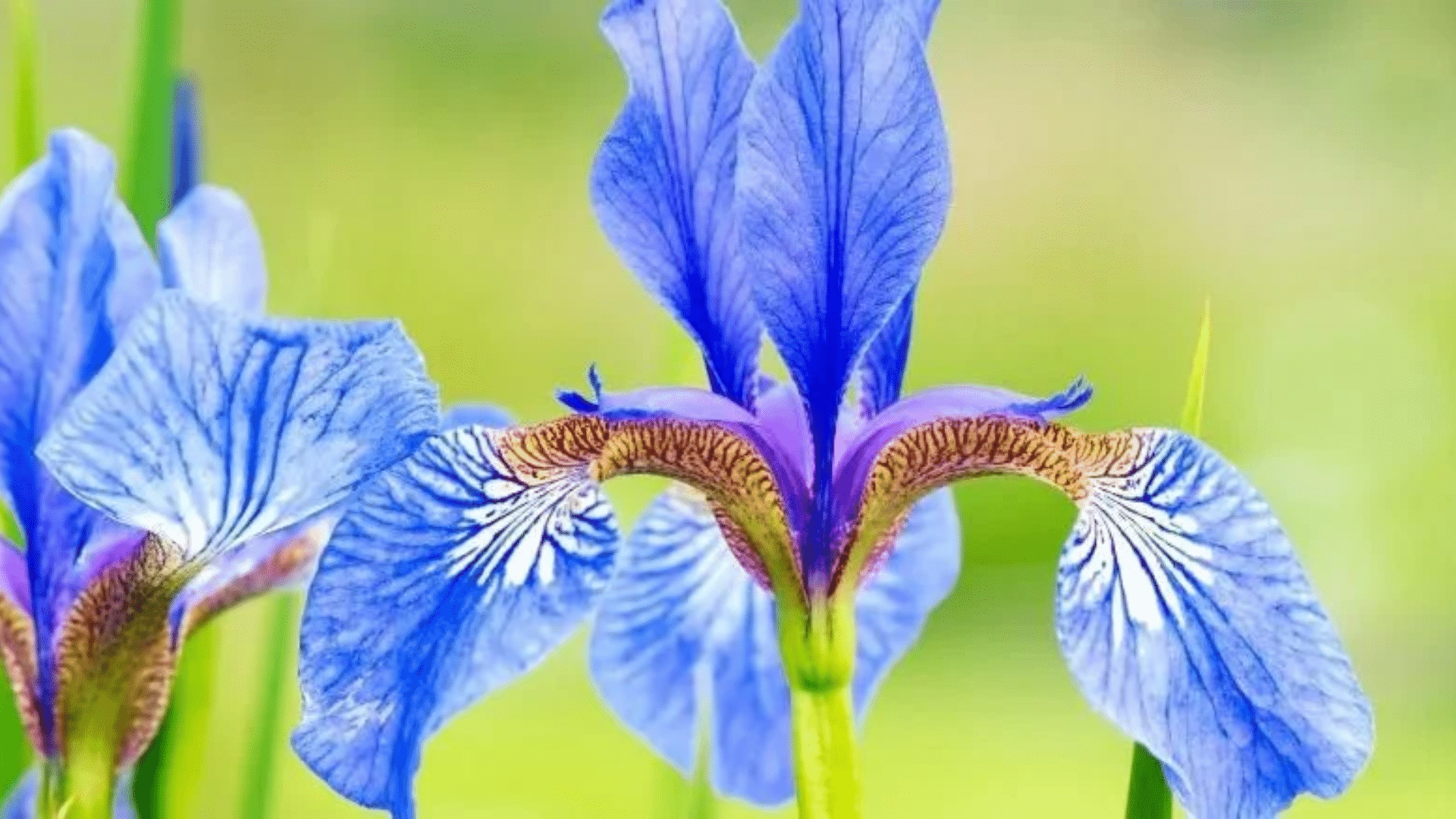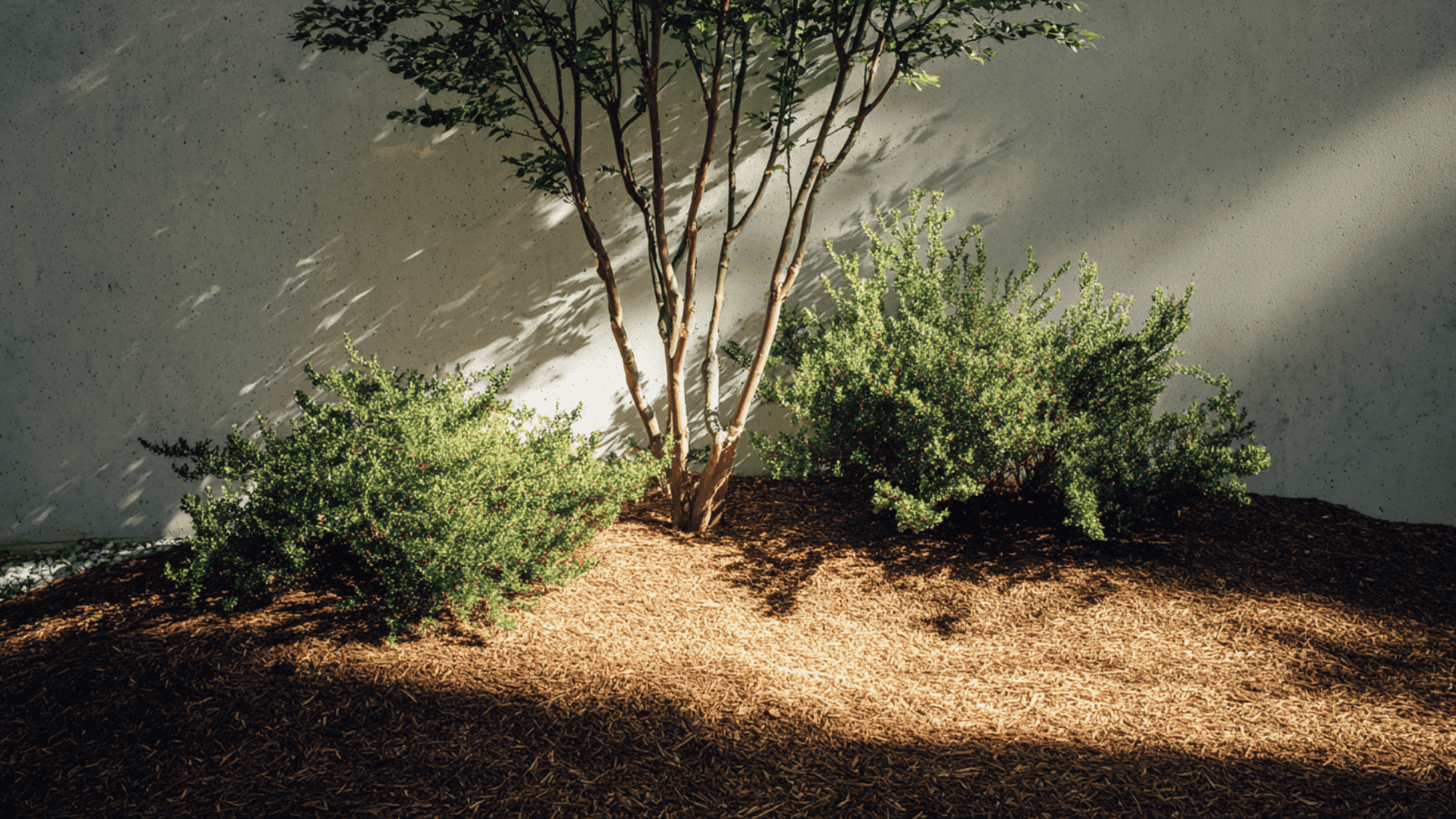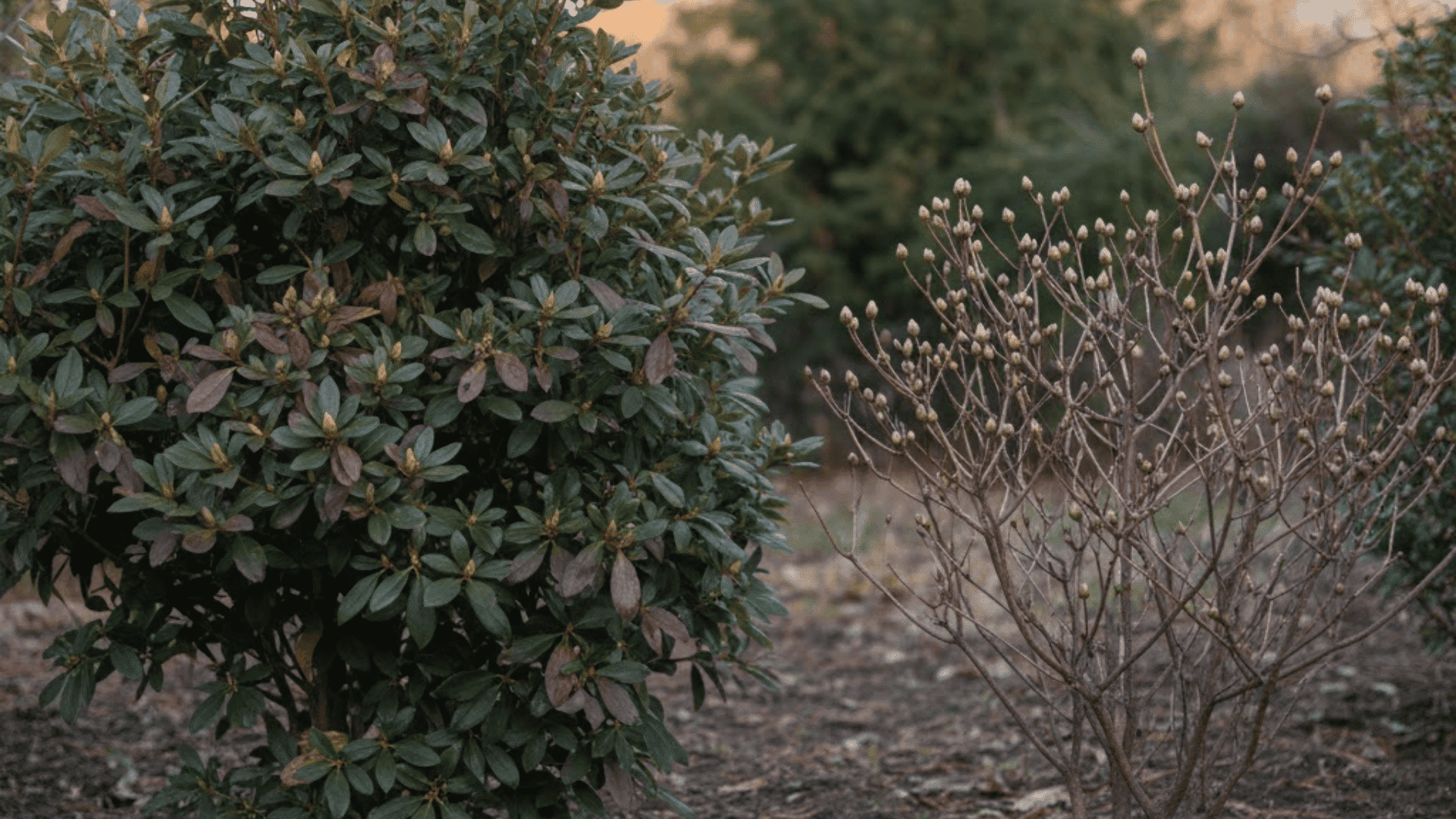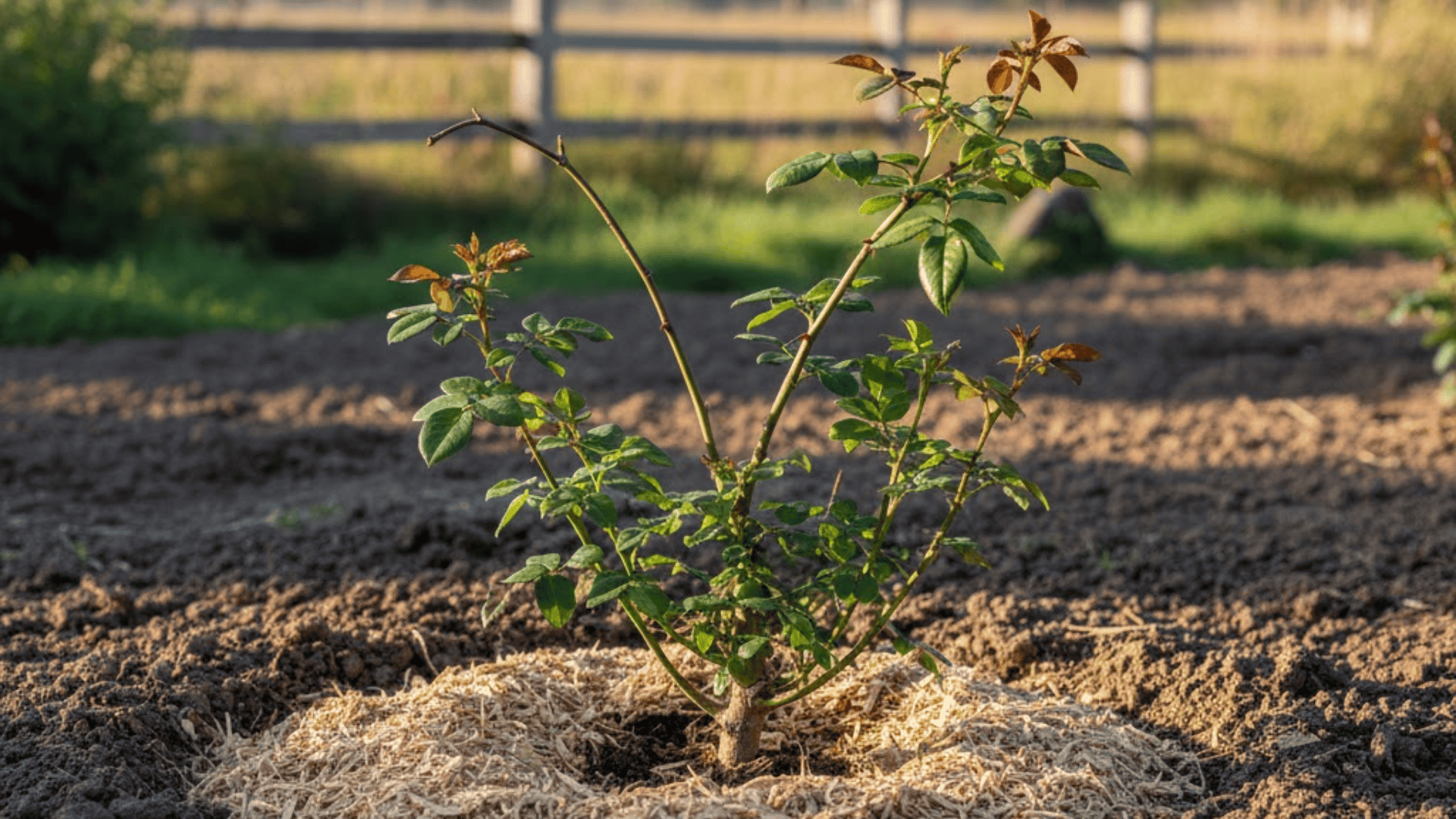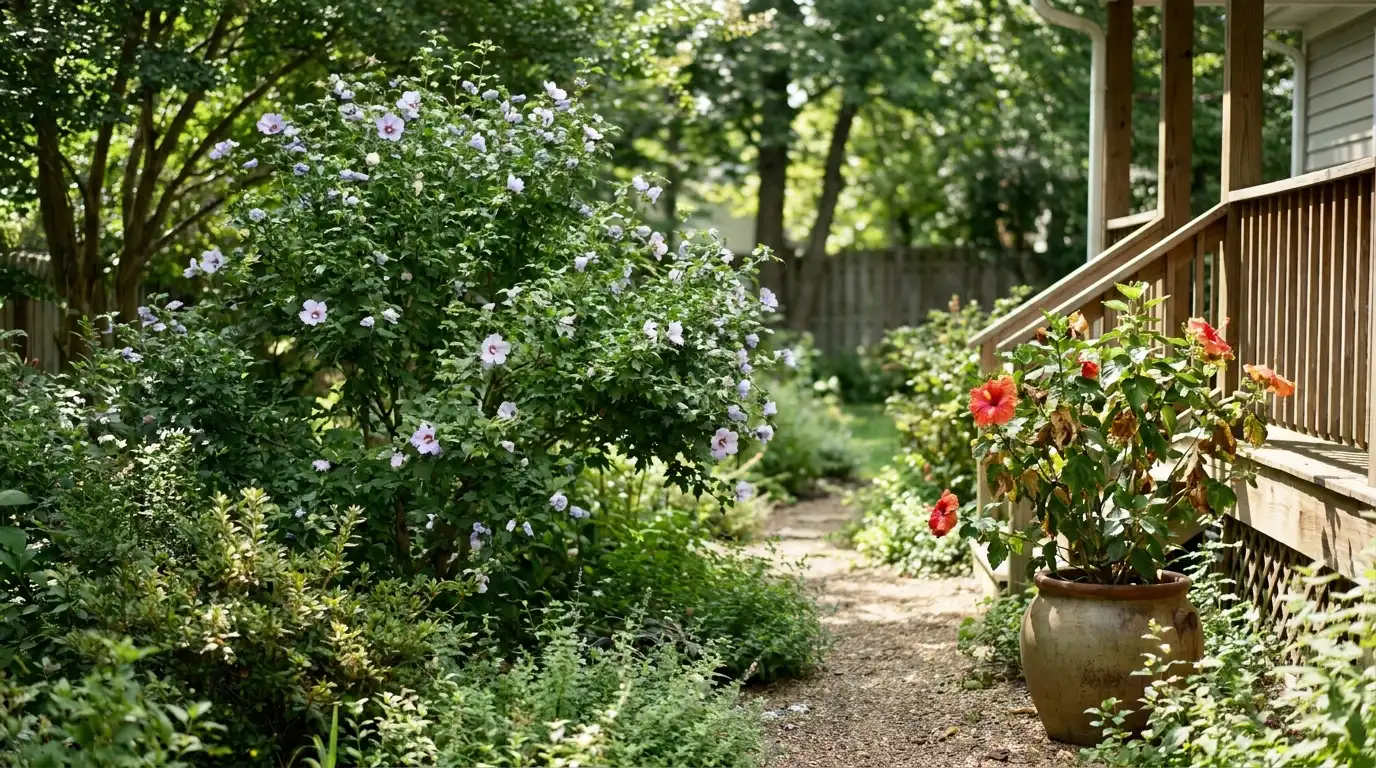
A woody shrub loaded with summer blooms and a leafy tropical showstopper get mixed up more than almost any other pair of plants in the garden center.
Both carry the hibiscus name, both flash big, trumpet-shaped flowers, and both trace back to the same sprawling plant family, so the mix-up is fair.
Rose of Sharon vs hibiscus comparisons usually start with the flowers, but flowers are actually the least reliable clue between them.
The real answers sit in how each plant handles winter, how its leaves are shaped, and whether its branches stay bare and woody or evergreen and full.
Once those differences click, telling Rose of Sharon from tropical hibiscus apart gets a lot easier, starting with what actually connects the two plants in the first place.
Understanding Rose of Sharon and Hibiscus
Rose of Sharon and tropical hibiscus belong to the same genus, which explains why their flowers can look related. Still, they grow and respond to weather very differently.
The name hibiscus can describe hundreds of plants within the genus. In everyday garden talk, it usually refers to tropical hibiscus rather than every hibiscus species.
That naming habit is where much of the confusion begins. Rose of Sharon is usually treated as its own garden shrub, even though it is botanically a hibiscus too.
Understanding that relationship first makes the visible differences easier to sort out.
Once the family tie is clear, growth habit, leaf shape, flower size, and climate needs all start making more sense.
This background also explains why a common name will not always tell you how a plant actually grows in the yard.
Are Rose of Sharon and Hibiscus the Same Plant?
Rose of Sharon and tropical hibiscus are related, but they are not the same species. Their botanical names and growth habits help clarify the relationship.
Here is the simplest way to understand it:
- Rose of Sharon: Its botanical name is Hibiscus syriacus. It is a woody shrub that loses its leaves during colder seasons.
- Tropical hibiscus: It commonly refers to Hibiscus rosa-sinensis. It usually stays leafy where frost is not a problem.
- Shared genus: Both plants belong to the Hibiscus genus, so Rose of Sharon is technically a hibiscus.
- Different species: Not every hibiscus is Rose of Sharon, since the genus contains many species.
This relationship explains why the plants can look similar while growing and responding to climate differently.
Simple way to put it, every Rose of Sharon is Hibiscus, but not every Hibiscus is a Rose of Sharon.
Rose of Sharon vs Hibiscus: Side‑by‑Side Differences
The main Rose of Sharon vs Hibiscus differences show up in growth habit, leaves, flowers, cold tolerance, and seasonal behavior. Looking at these traits together gives you a clearer comparison.
The sections below explain each difference so you can compare both plants more easily.
1. Plant Type and Growth Habit
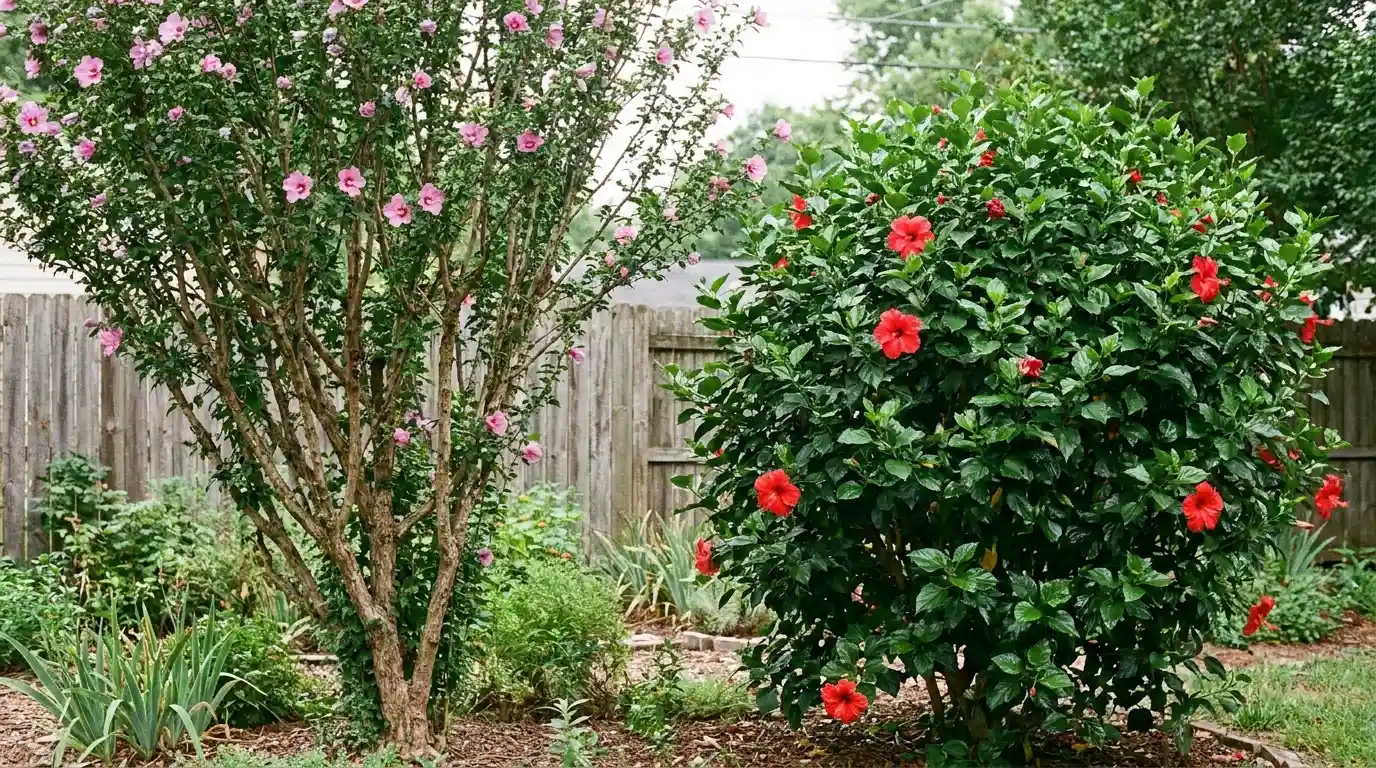
Rose of Sharon grows as a woody, upright shrub with firm branches that remain after the leaves fall, typically reaching 8 to 12 feet tall and 6 to 10 feet wide, and it can also be trained into a small tree form.
Tropical hibiscus is also a woody shrub, usually growing 4 to 10 feet tall and 5 to 8 feet wide, and it keeps a fuller, leafier form in warm climates.
Unlike Rose of Sharon, it generally stays evergreen where temperatures remain suitable.
Growth habit becomes more useful when you also check seasonal behavior. Upright branches combined with winter leaf drop point more strongly toward Rose of Sharon.
2. Leaves
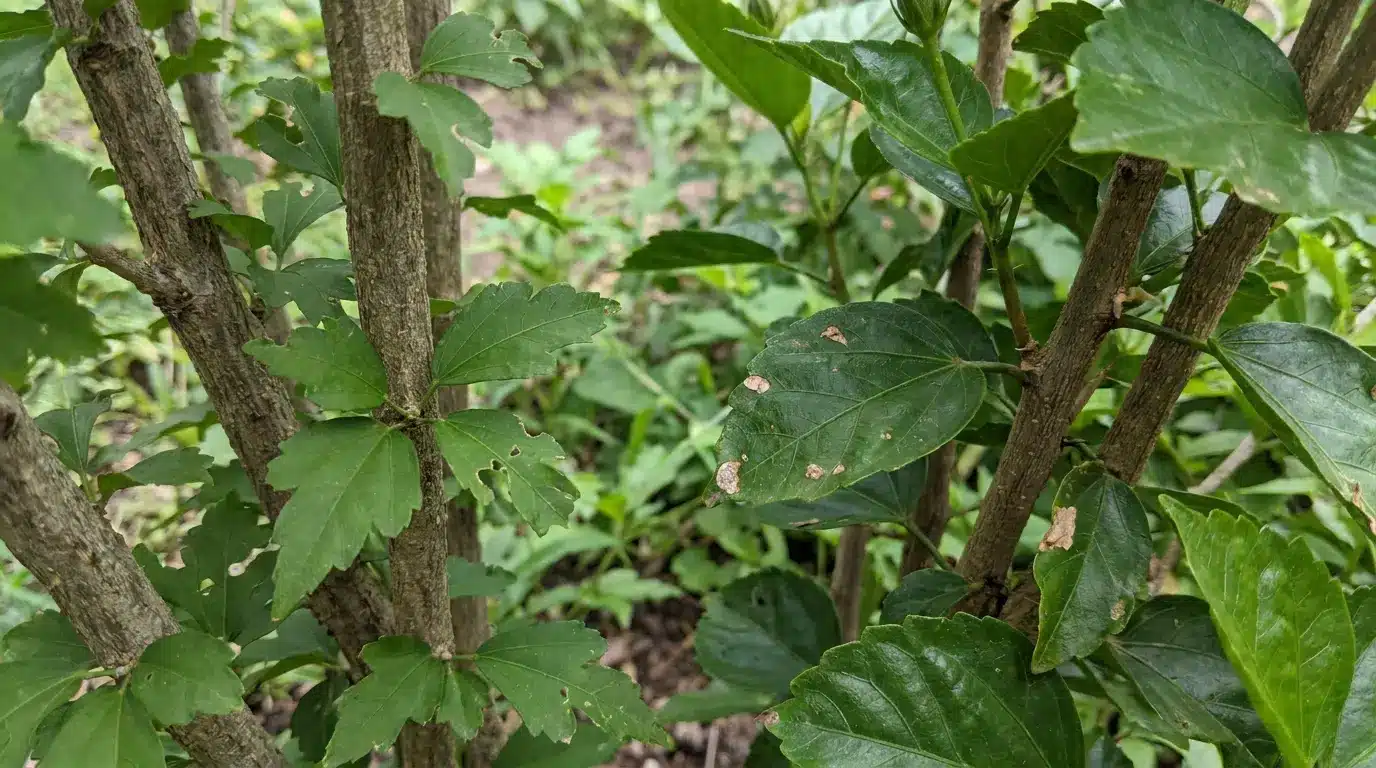
Rose of Sharon leaves are often smaller, coarsely toothed, and divided into three noticeable lobes. Leaf shape can vary between plants and cultivars.
Tropical hibiscus commonly has larger, glossy leaves with toothed edges. Its leaves can also vary in shape, so lobing alone is not enough for identification.
I would compare leaf shape and surface with the plant’s growth habit and seasonal behavior. Using several traits gives you a more reliable answer.
3. Flowers
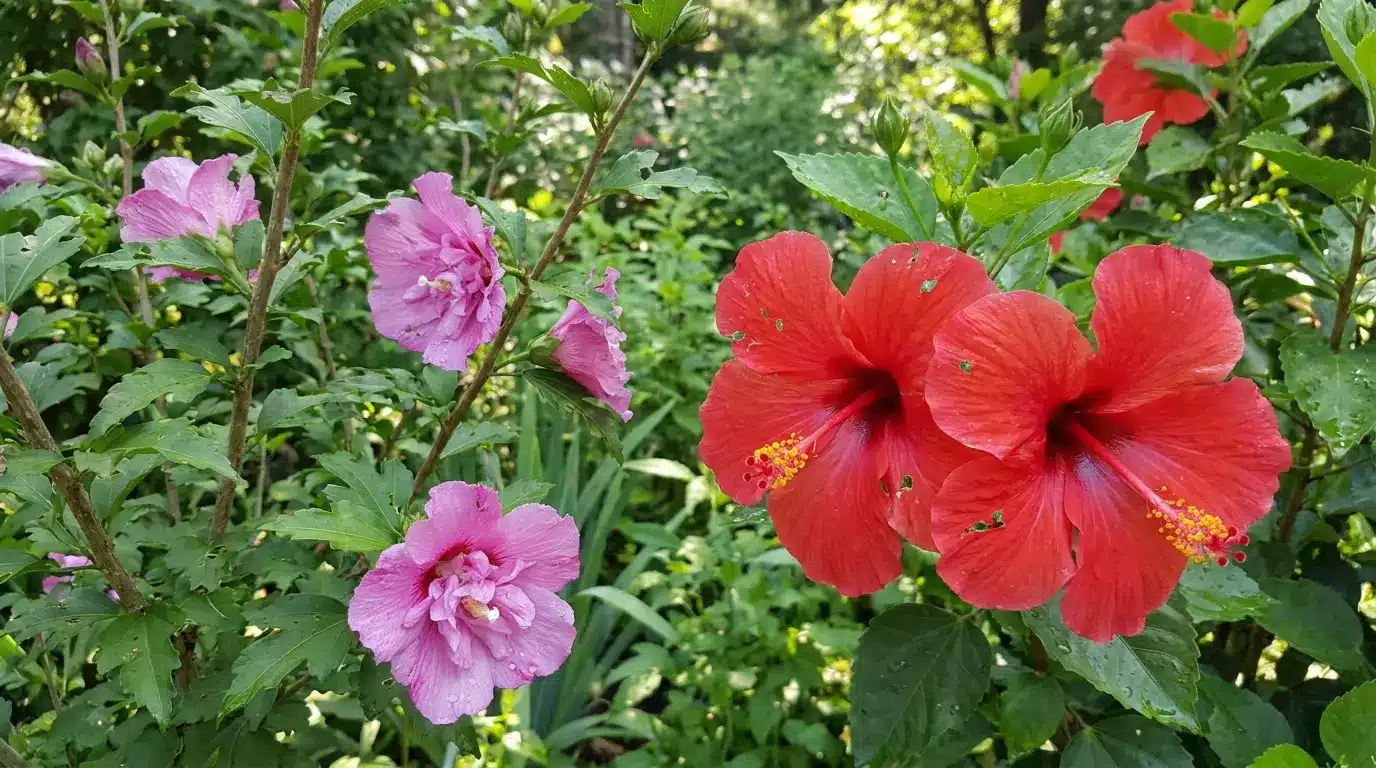
Rose of Sharon flowers are often smaller, typically 2 to 4 inches across, and appear along the outer parts of the branches. They may be single or double, depending on the variety.
Tropical hibiscus flowers are usually larger, often up to 6 inches across, and can look more open and bold. Many types also show a strong central flower column.
Color is not a reliable clue because both plants come in many shades. Together, flower size and plant structure give you better information.
4. Cold Tolerance
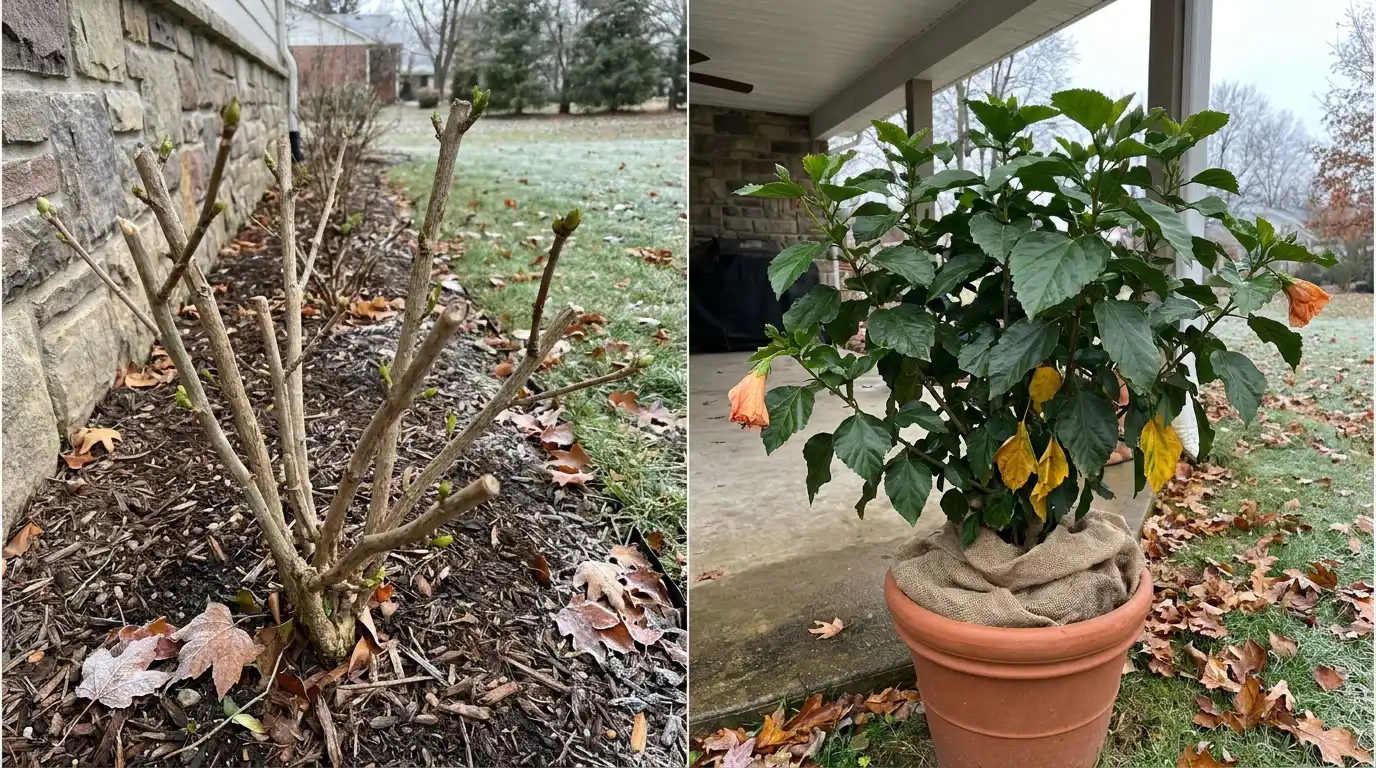
Rose of Sharon handles cold winters far better than tropical hibiscus and is rated for USDA Zones 5 through 9. Established plants can return after freezing weather and produce new growth in spring.
Tropical hibiscus prefers warm conditions and is only reliably hardy in USDA Zones 9 through 11, where it can suffer serious damage from frost.
In colder areas, gardeners often move container plants indoors before temperatures fall.
Winter survival is one of the clearest identification clues. A shrub that returns outdoors after repeated freezes is much more likely to be Rose of Sharon than tropical hibiscus.
5. Winter Behavior
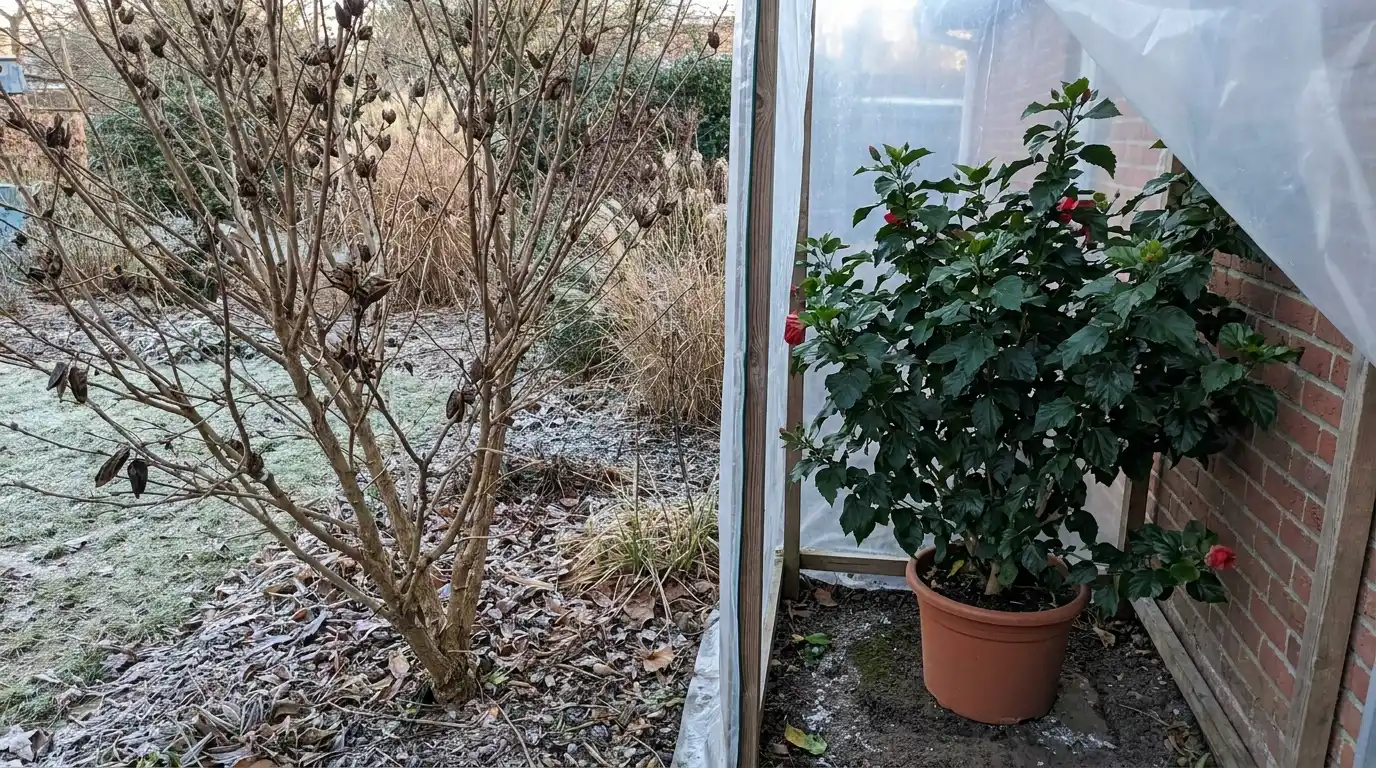
Rose of Sharon is deciduous, so it drops its leaves during the cold season. Bare branches can make the plant look inactive for several months.
Tropical hibiscus can stay evergreen where temperatures remain warm. In cooler places, it may lose leaves, stop growing, or die after frost.
This seasonal pattern helps with identification when flowers are absent. If a woody shrub loses leaves each winter and returns in spring, Rose of Sharon is a strong possibility.
Why Rose of Sharon and Hibiscus Are Easy to Confuse
Flowers are one reason Rose of Sharon and tropical hibiscus are often mistaken for each other. Both can have broad petals and a noticeable central flower column, so blooms alone may not give you a clear answer.
A few details explain why gardeners often mix them up:
- Similar blooms: Both can have broad petals and a long central flower column.
- Common naming: Many gardeners use “hibiscus” when they mean tropical hibiscus.
- Shared genus: Rose of Sharon is also a true hibiscus species.
The confusion only grows once other hibiscus relatives enter the picture.
The confusion becomes easier to clear once you look beyond the flowers. Stems, leaves, plant shape, cold tolerance, and winter behavior give stronger clues.
These traits work best when you compare them together instead of relying on one feature alone. This fuller view makes identification much easier.
How to Identify Rose of Sharon vs Hibiscus in the Garden?
Rose of Sharon vs. hibiscus identification is easier when you compare several traits together. Start with the whole plant before checking smaller details.
Step 1: Start with the Stems, Then Check a Leaf
Start with the stems, then check the leaves. Rose of Sharon usually has firm, woody branches and smaller toothed leaves.
- Stem type: Rose of Sharon keeps clear woody branches after its leaves fall.
- Leaf shape: Its leaves are often smaller and may show noticeable lobes.
- Leaf surface: Tropical hibiscus usually has broader, shinier leaves with toothed edges.
These clues work best together, since leaf shape alone can vary between plants and cultivars.
Step 2: If Flowers are Present, Measure and Compare
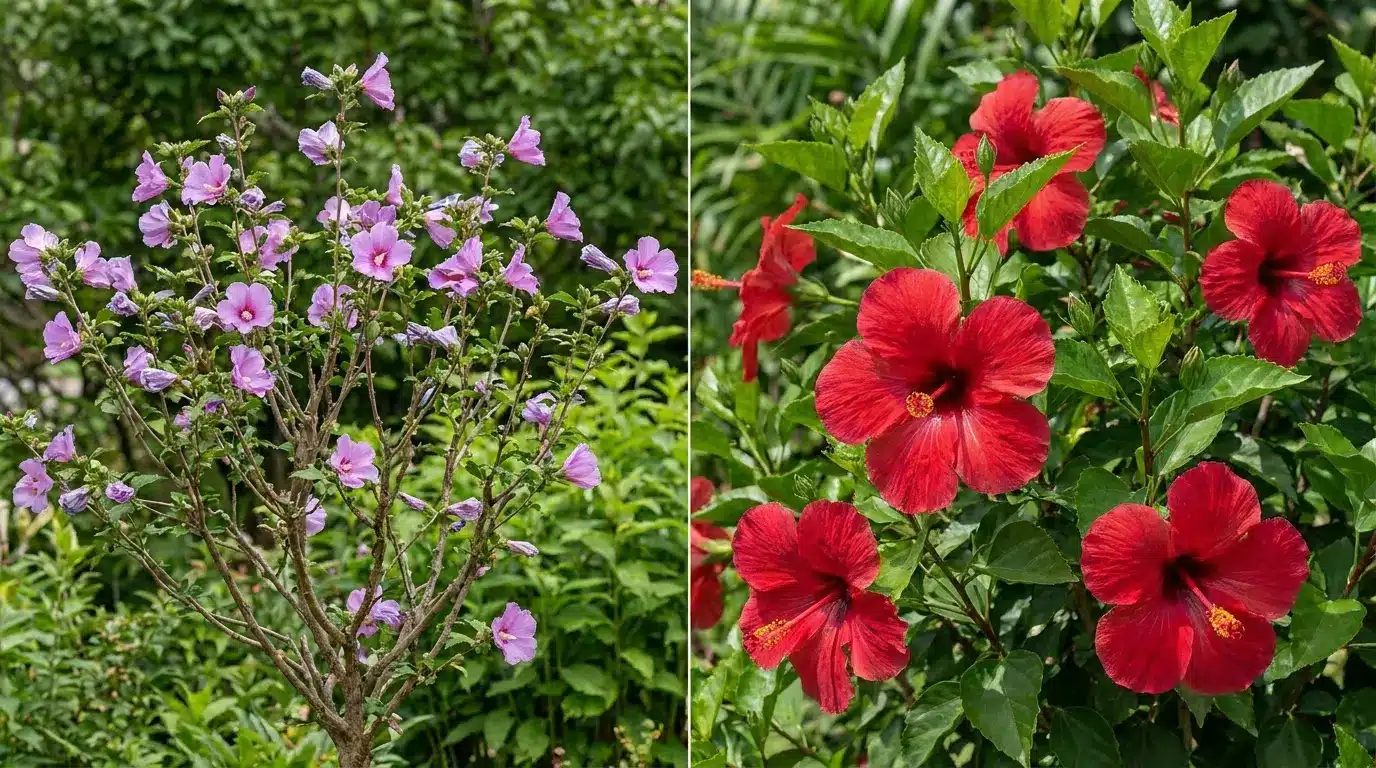
Next, compare the flowers and how they sit on the plant. Tropical hibiscus often produces larger, more open blooms.
- Flower size: Tropical hibiscus usually has larger flowers than Rose of Sharon.
- Flower form: Both can show a long central flower column.
- Flower color: Color is not a dependable clue because both plants come in many shades.
Use flower size and form with the plant’s stems and leaves for a clearer identification.
Step 3: Step Back and Read the Overall Shape
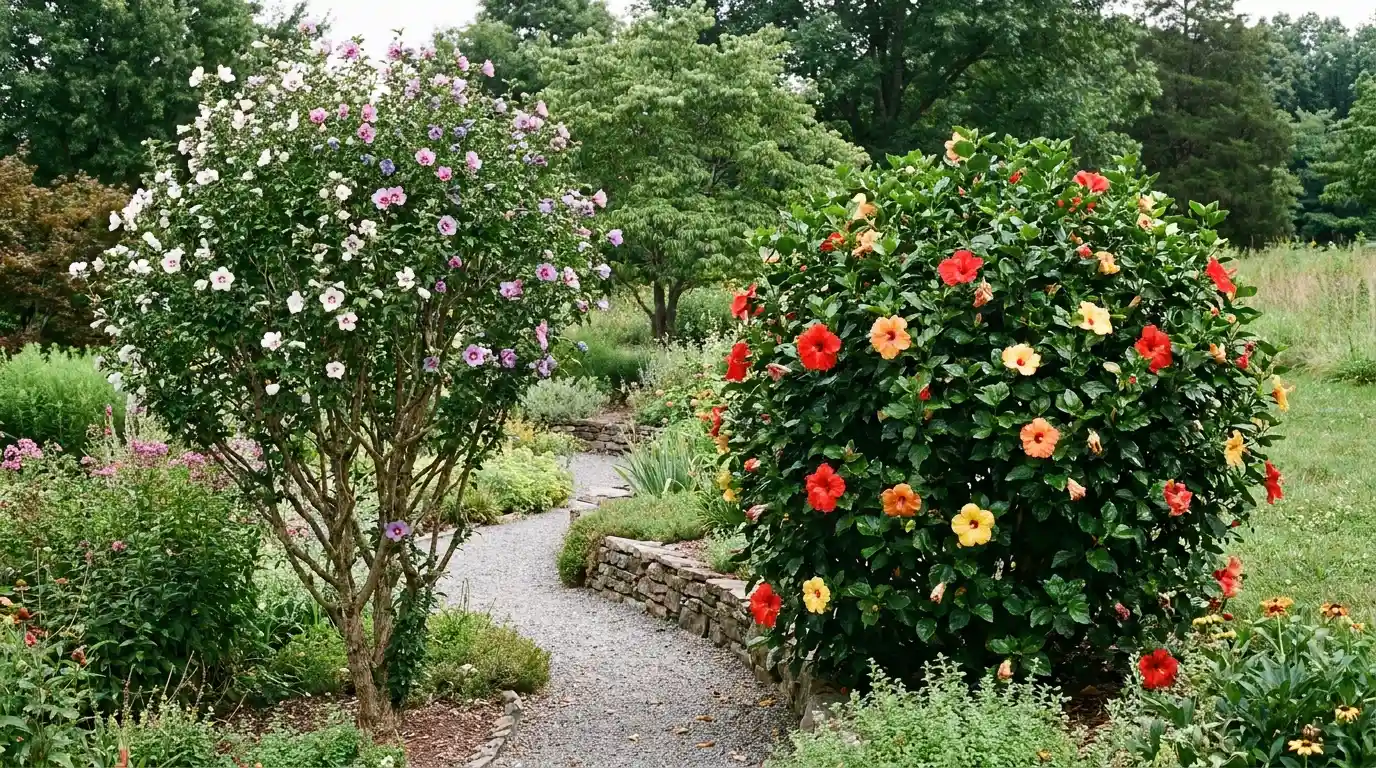
Step back and look at the whole plant before focusing on one leaf or flower. Overall shape can provide a useful clue.
- Growth form: Rose of Sharon often grows taller and more upright.
- Branch structure: Its woody branches stay visible after seasonal leaf drop.
- Overall fullness: Tropical hibiscus usually looks fuller and leafier in warm conditions.
Plant shape can vary with age, so use it with leaves, stems, and seasonal behavior.
Step 4: Final Ask – Has This Shrub Survived Freezing Winters Outdoors?
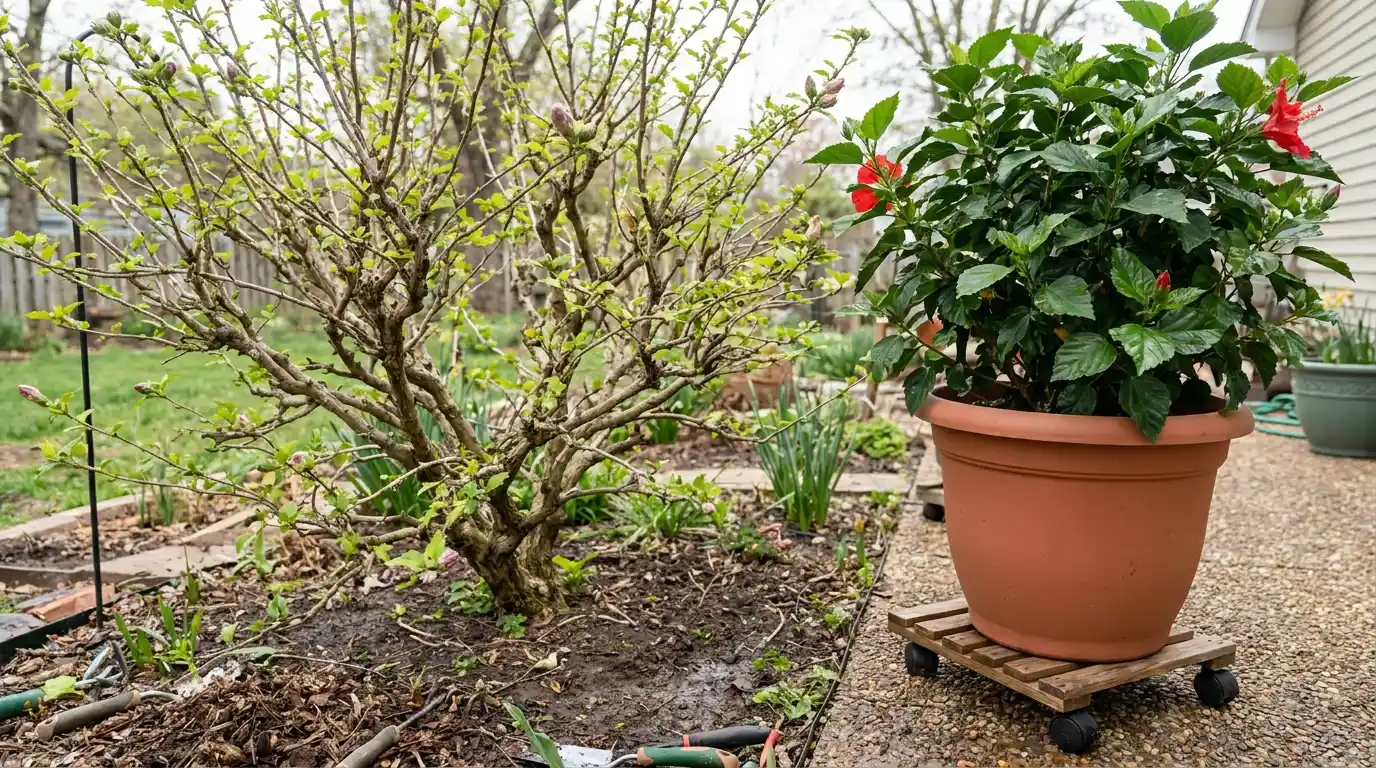
Climate and winter history can help confirm what the plant’s appearance suggests. The two plants respond to cold very differently.
- Cold response: Rose of Sharon can handle freezing winters in many temperate areas.
- Winter growth: It drops its leaves and returns with new growth in spring.
- Frost sensitivity: Tropical hibiscus can suffer serious damage when exposed to frost.
If it loses all its leaves every winter and still comes back, you’re almost certainly looking at Rose of Sharon.
Check the Pruning Response
Pruning timing is a good practical clue, since each plant responds on a different schedule.
Rose of Sharon blooms on new wood, so it is typically cut back in late winter or very early spring before growth resumes, and pruning right then tends to encourage larger flowers later in the season.
Tropical hibiscus tolerates light pruning through most of the warm season and bounces back quickly, since it keeps growing year-round wherever winters stay mild.
If a shrub only gets pruned once a year, right before it leafs back out, that schedule points toward Rose of Sharon.
A broader guide to low-maintenance shrubs breaks down seasonal pruning windows for a mixed shrub bed, plant by plant.
Which Plant is Better for Your Garden?
A Rose of Sharon vs Hibiscus comparison also matters when deciding which plant fits a garden better.
Climate, available space, and a winter care plan all help narrow the choice, and pairing either shrub with other flowering options from this guide to types of shrubs and bushes can round out a planting bed.
|
Garden Need |
Rose of Sharon |
Tropical Hibiscus |
|---|---|---|
|
Cold-winter garden |
Better suited to areas with freezing winters |
Needs protection when frost is common |
|
Warm-climate garden |
Can grow well but loses leaves seasonally |
Better suited to consistently warm conditions |
|
Container growing |
Can grow in a large container, especially while young |
Useful in containers when it must move indoors for winter |
|
Year-round foliage |
Drops its leaves during the cold season |
Can stay leafy through the year in warm areas |
|
Woody shrub structure |
Good choice if you want an upright, woody shrub |
Better if you prefer a fuller, leafier shrub |
|
Winter care |
Usually remains outdoors in suitable climates |
Often needs indoor protection in colder regions |
|
Flower preference |
Often produces smaller single or double blooms |
Usually produces larger, more open flowers |
The right choice depends mostly on your climate and how you plan to manage the plant through winter. Flower size and growth form can help with the final choice.
Frequently Asked Questions
Can Rose of Sharon grow in pots?
Yes. Rose of Sharon can grow in a large container, especially while young. Use a pot with good drainage and enough room for roots. Container plants may need more frequent watering and extra winter care than shrubs planted in the ground.
Does Rose of Sharon attract pollinators?
Rose of Sharon flowers can attract bees, butterflies, and hummingbirds. Pollinator activity varies by flower type and local conditions. Single flowers often give insects easier access to pollen and nectar than very full double blooms.
Does Rose of Sharon spread easily?
Some Rose of Sharon varieties can produce many seedlings when flowers set seed. Newer sterile or low-seed cultivars may spread less. Removing seed pods before they mature can also reduce unwanted seedlings around the parent shrub.
Can tropical hibiscus grow indoors?
Yes, tropical hibiscus can grow indoors if it gets strong light and steady warmth. It may flower less inside than outdoors. Check regularly for pests, since dry indoor air can favor common problems such as spider mites.
When does Rose of Sharon usually bloom?
Rose of Sharon usually flowers later than many spring shrubs, often from midsummer into early fall. Exact timing depends on climate and variety. This late bloom period makes it useful when many earlier flowering shrubs have already finished.
Final Takeaway
The differences between Rose of Sharon vs hibiscus come down to growth habit, climate needs, and how each plant behaves through winter.
Rose of Sharon is a woody, deciduous shrub built for cold winters, while tropical hibiscus stays fuller and leafier wherever the weather never freezes, with larger, bolder flowers to match.
Checking the stems, leaves, and winter history gives a far more reliable answer than flower color, and knowing the zone a shrub is rated for settles most doubts on the spot.
Comparing several traits together is still the surest way to identify either plant with confidence.
Have you grown Rose of Sharon or tropical hibiscus? Share what helped you tell them apart in the comments.