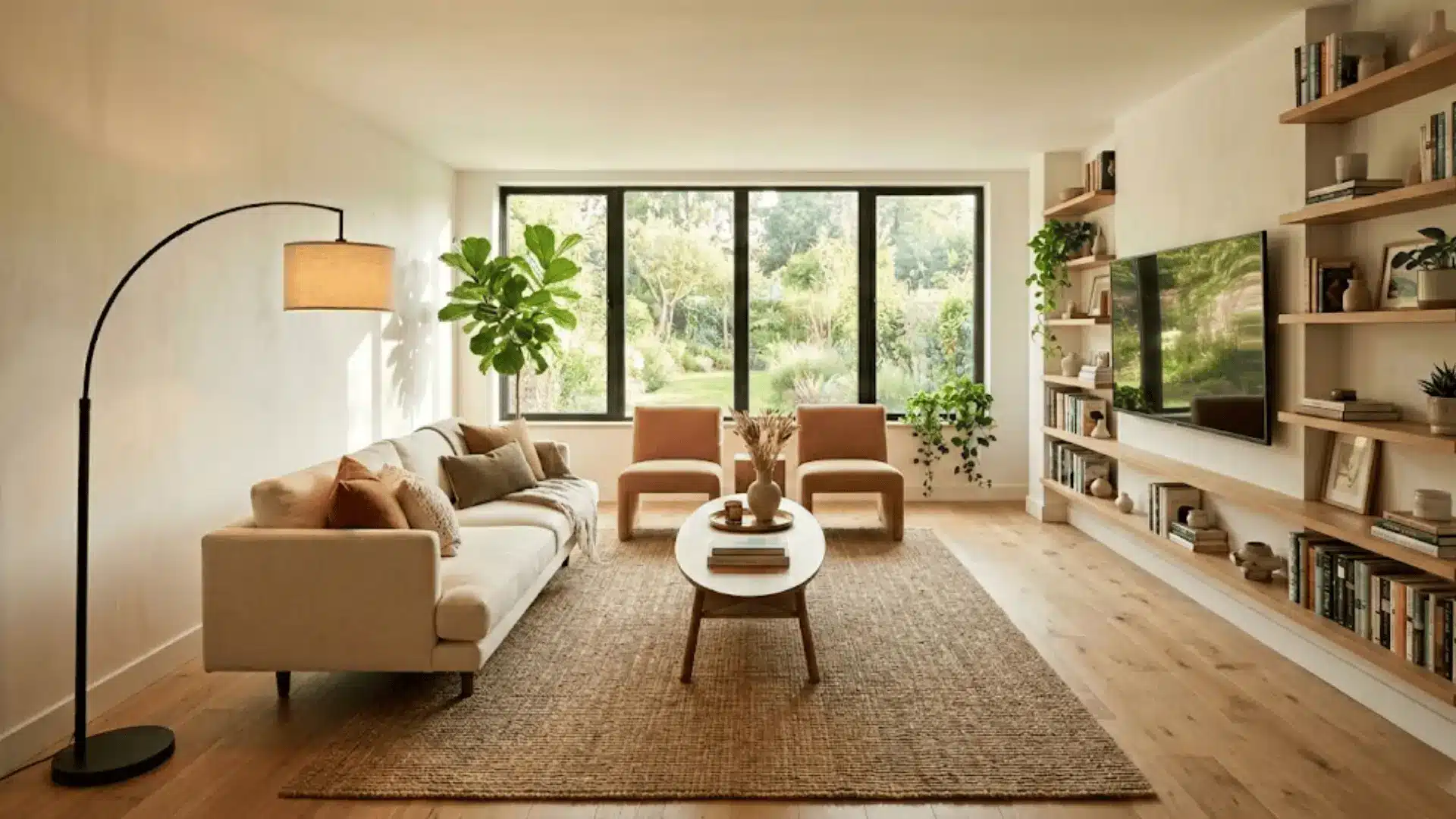
Some rooms just refuse to cooperate, and rectangular living rooms are usually the first to put up a fight.
Between the bowling-alley stretch, the TV ending up in all the wrong spots, and furniture that seems to float without purpose, pulling this layout together can feel more frustrating than fun.
Getting your rectangular living room layout with TV right is really about understanding how the room wants to move and then designing with that in mind.
Once it clicks, the whole space starts to breathe differently.
Why Rectangular Living Rooms are Tricky to Design?
Rectangular living rooms come with a particular set of design headaches that other room shapes simply don’t.
The long, narrow proportions tend to push furniture into single-file arrangements, making the space feel more transactional than relaxing.
Wall space fills up faster than expected, leaving fewer options for anchoring a layout. Then comes traffic flow, which in a stretched-out room almost always cuts straight through the seating area rather than around it.
And TV placement becomes its own puzzle entirely, since the wrong wall choice can mean awkward viewing angles or a setup that visually splits the room in half.
Key Principles for a Successful Rectangle Living Room Layout
Before jumping into specific layouts, a few grounding principles go a long way in making a rectangular room feel considered rather than chaotic.
- Zone your space intentionally so the room reads as layered, not linear.
- Pull furniture away from the walls to create depth and a more collected feel.
- Distribute visual weight evenly so one end of the room doesn’t feel heavier than the other.
- Use area rugs to anchor each zone and give the eye a place to land.
- Always protect your walking paths so movement through the room stays natural and unobstructed.
Apply these as your foundation, and every layout decision that follows becomes a whole lot easier to make.
Best TV Placement Options in a Rectangular Living Room
TV placement can make or break a rectangular living room, and the wall you choose affects everything from seating arrangement to how the room ultimately feels.
| Placement Option | Best For | Why It Works |
|---|---|---|
| Short Wall | Long, narrow rooms | Creates a natural focal point and encourages balanced seating on both sides |
| Long Wall | Wider rectangular layouts | Opens up the room visually when paired with correctly positioned sofas |
| Corner Placement | Smaller or awkward spaces | Saves wall real estate and naturally cuts down on glare |
| Wall-Mounted Above Console | Modern, minimal setups | Keeps the floor open and gives the room a clean, intentional finish |
Each option comes with its own set of trade-offs, so the best choice really depends on your room’s proportions and how you move through the space daily.
Functional Layout Ideas for a Rectangular Living Room Layout With TV
Finding a layout that actually fits your room takes some trial and error, but having the right starting point changes everything.
These 9 ideas cover a range of styles, sizes, and needs, so there is something here for every rectangular space.
1. Symmetrical Sofa Facing TV
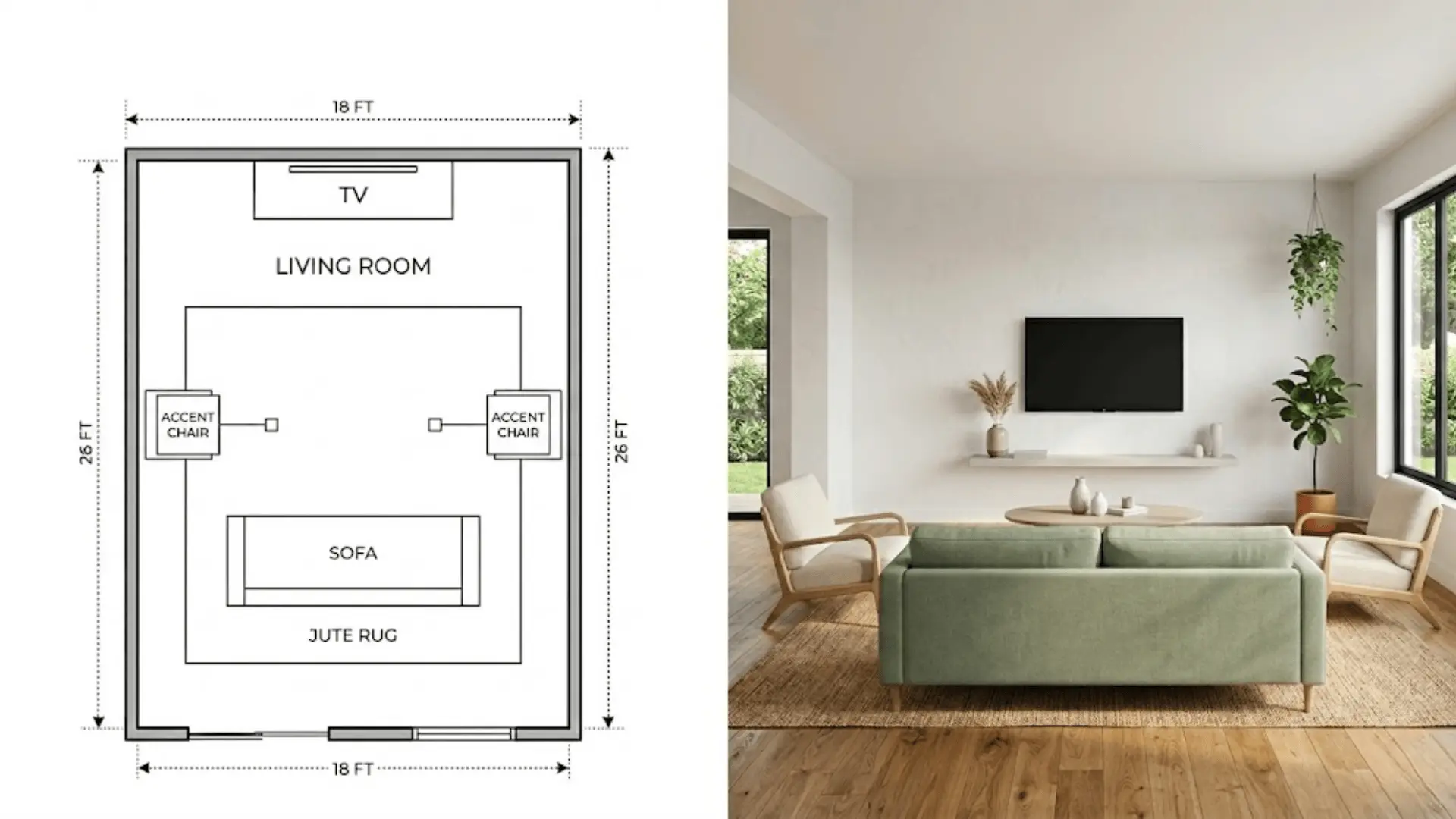
This is the most classic approach for good reason. Center the TV on the short wall, place the sofa directly opposite, and anchor each side with matching chairs.
The symmetry creates instant visual calm and makes the room feel deliberately designed. It works especially well in rooms where balance and clean sightlines are the priority.
2. Floating Sofa Layout
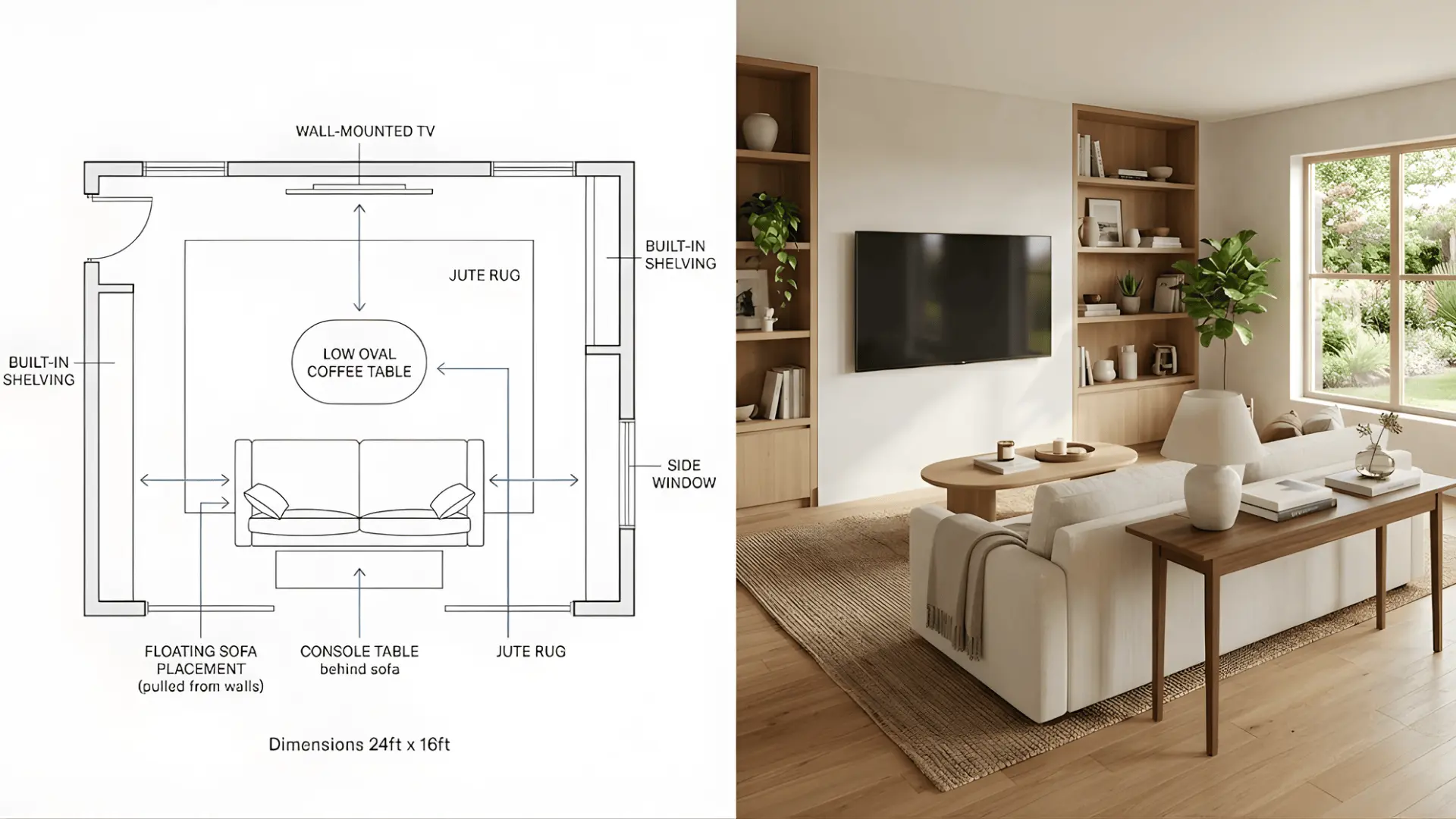
Pulling the sofa away from the wall is one of those moves that feels counterintuitive until you actually try it.
Position the sofa toward the center of the room with a slim console table behind it, and let the TV sit on the long wall. It creates depth, breaks the linear stretch, and makes the space feel curated.
3. Zoned Living and Dining Layout
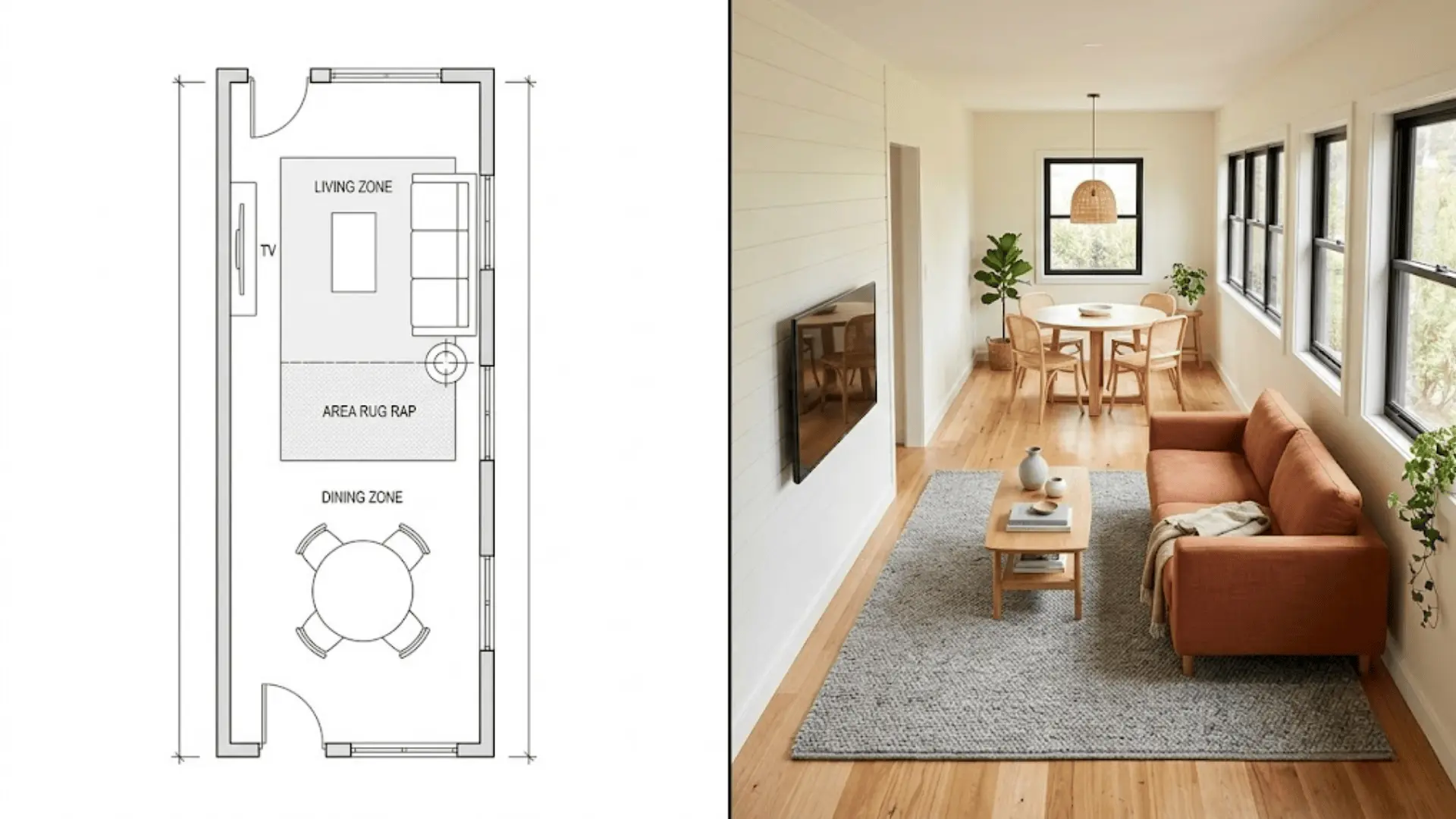
When your rectangular room is pulling double duty, zoning is everything. Dedicate one end to a comfortable seating arrangement with the TV as the focal point, and let the other end carry the dining setup.
A well-placed area rug does the heavy lifting of visually separating the two without needing a single wall or partition.
4. Sectional for Long Narrow Rooms
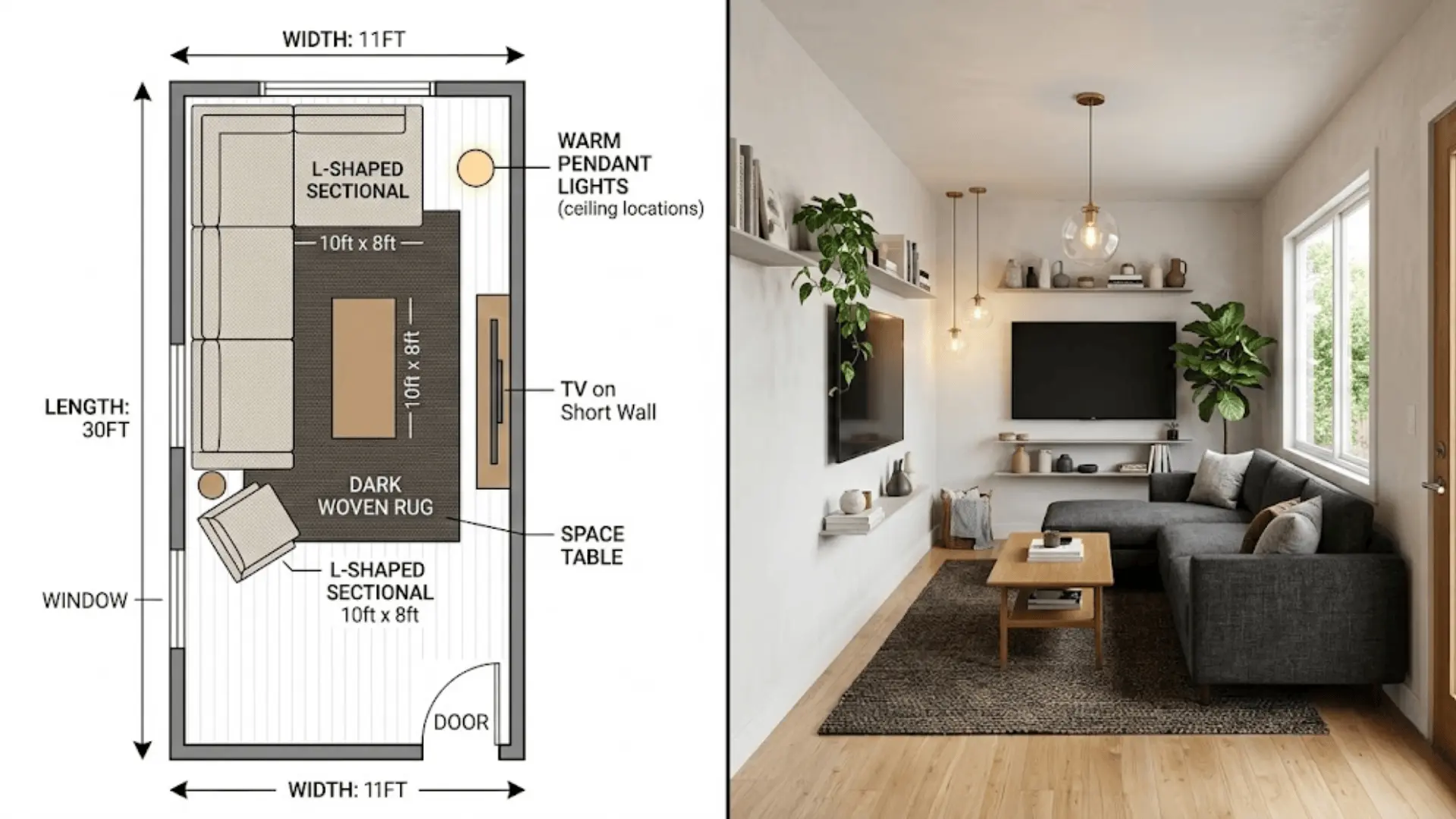
An L-shaped sectional is quietly one of the smartest solutions for a long, narrow room.
It fills the space with intention, creates a natural corner for conversation, and positions beautifully with the TV placed across the narrow width. The result feels cozy and proportional rather than stretched out and sparse.
5. Two Conversation Areas
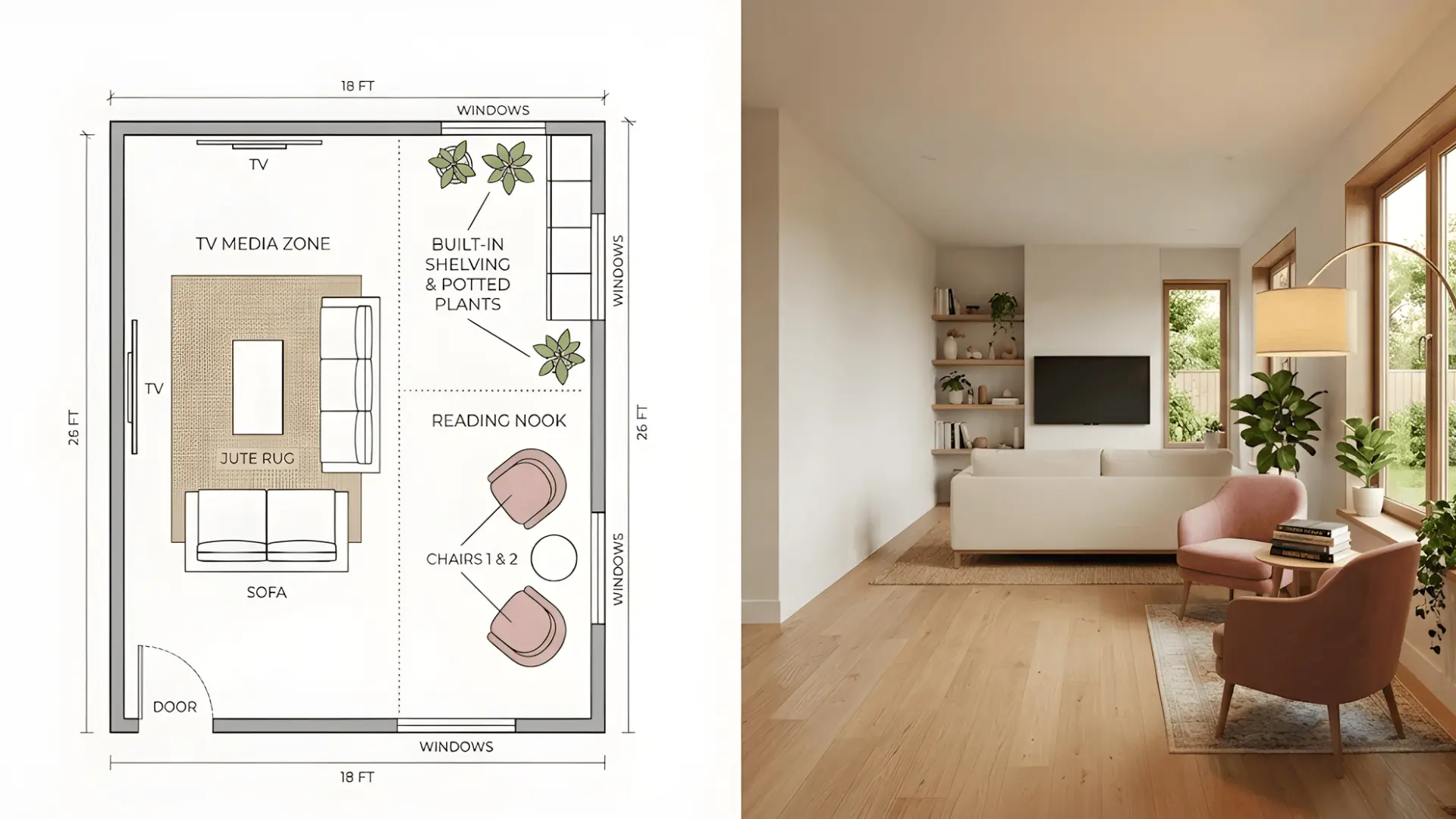
Not every rectangular room needs to revolve entirely around the TV. Splitting the space into a TV-facing zone and a separate reading nook gives the room personality and purpose.
A pair of accent chairs, a floor lamp, and a small side table are all it takes to make that second zone feel just as intentional as the first.
6. Minimalist Narrow Layout
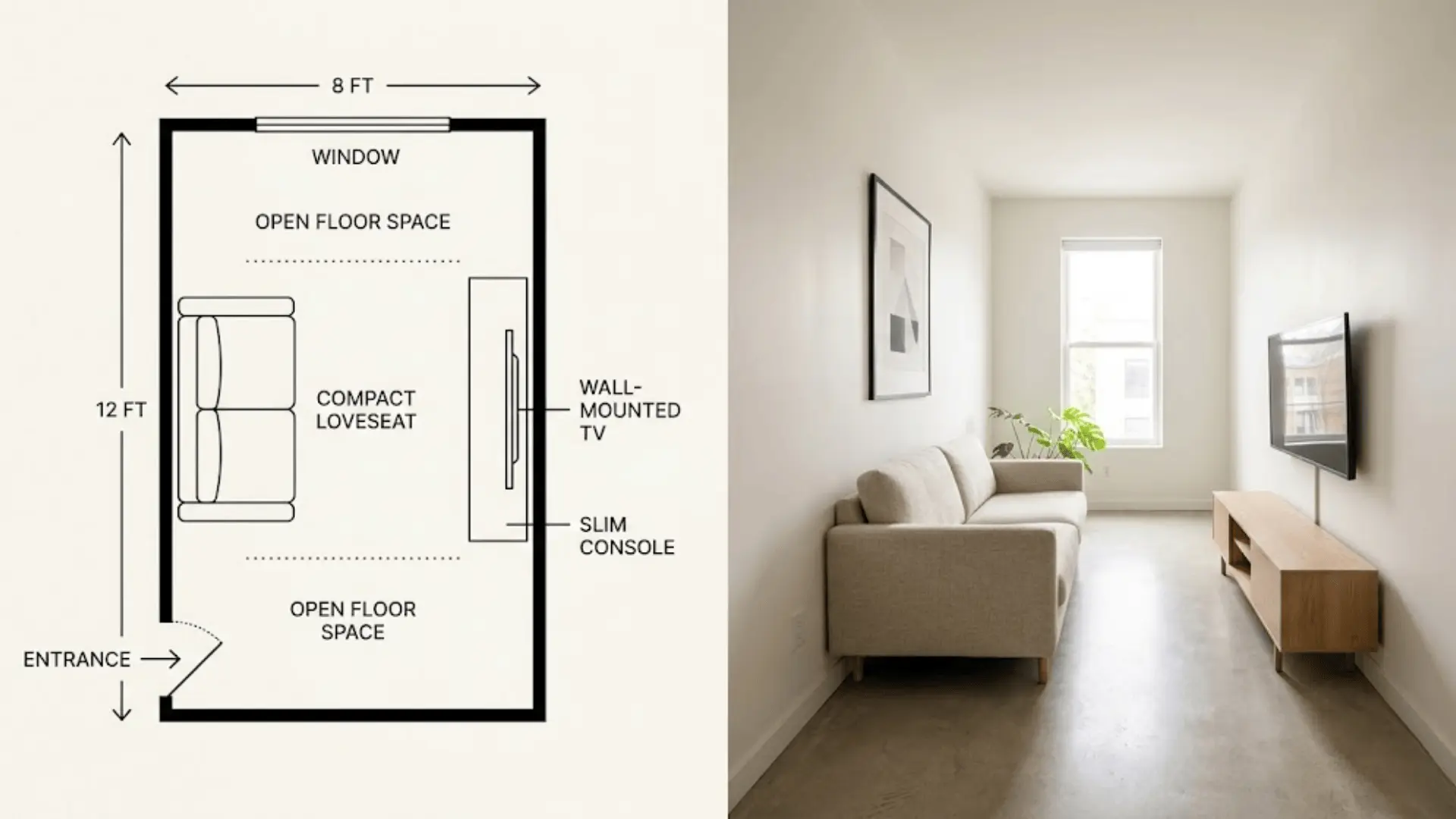
When square footage is tight, restraint is your best design tool. A compact loveseat, a slim low-profile console, and a wall-mounted TV keep things visually light without sacrificing comfort.
Stick to a quiet color palette and let negative space do some of the styling work. The less the room is fighting itself, the more breathable it feels.
7. Fireplace and TV Combo Wall
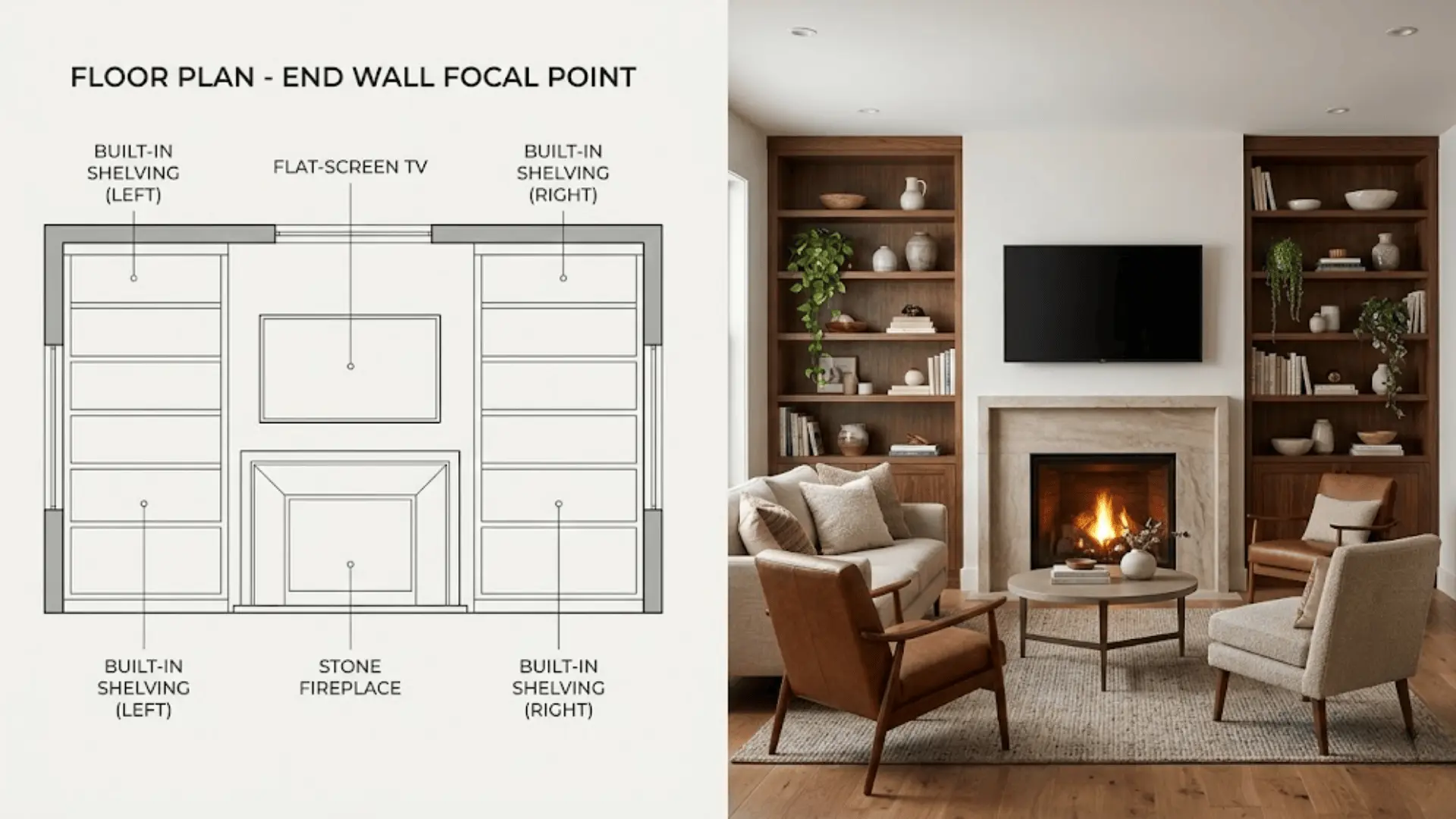
Sharing a wall between a fireplace and a TV is a common challenge, but it is very workable. Mounting the TV above the fireplace and flanking it with built-in shelving creates a unified focal wall that feels architectural rather than cluttered.
The key is keeping the styling on those shelves intentional so the whole wall reads as one cohesive moment.
8. Gallery Wall Around TV
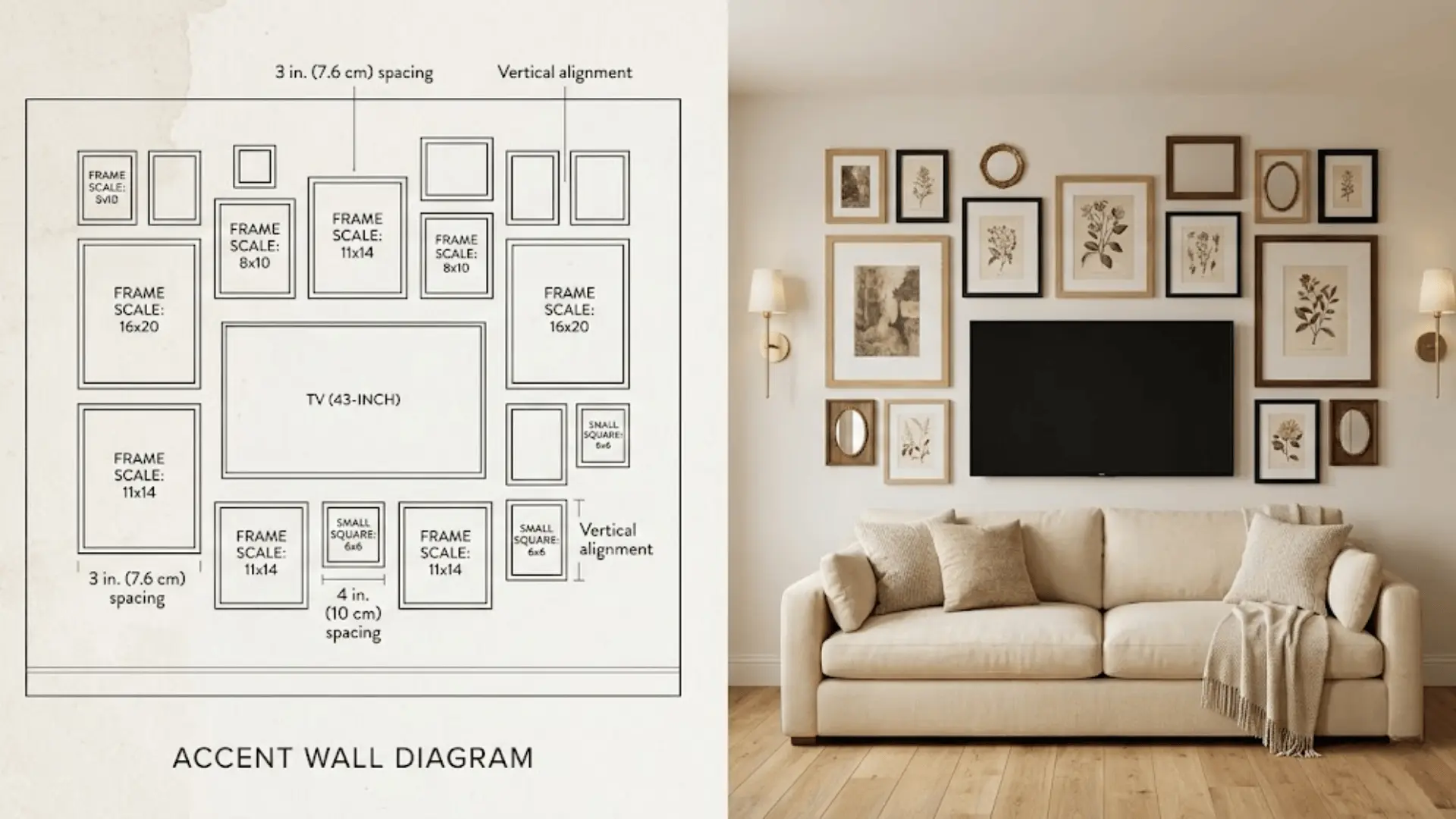
If the TV feels like an eyesore, make it part of the décor instead of hiding it. Building a gallery wall around the screen integrates it into a visual story, making it feel like a deliberate design choice rather than just a black rectangle.
Mix frames, textures, and scales to keep it from looking too rigid or expected.
9. Small Apartment Rectangle Layout
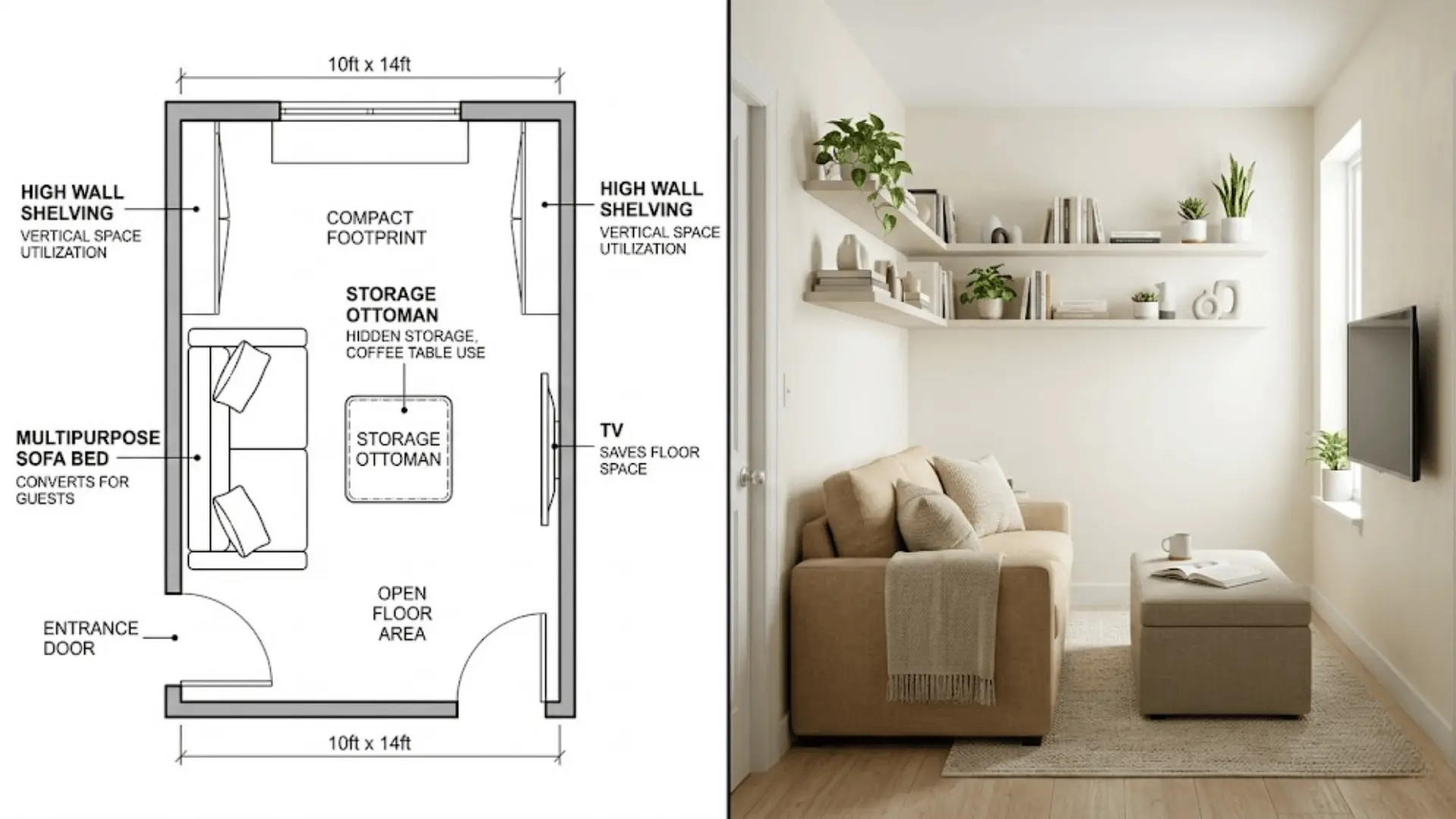
Small rectangular apartments ask for furniture that earns its place. Lean into multipurpose pieces like storage ottomans, nesting tables, and sofa beds where needed, and take storage vertically with wall-mounted shelving.
Keep the floor as clear as possible and let the TV anchor the shortest wall to preserve every inch of the room’s natural flow.
Rectangular Long Narrow Living Room Layout Tips
Narrow rooms have their own design language, and once you learn to work with the proportions instead of against them, the whole space starts to feel a lot more generous.
- Lean into light, airy colors to visually push the walls outward and make the room feel wider than it is.
- Incorporate vertical design elements like tall shelving or floor-to-ceiling curtains to draw the eye up and add dimension.
- Place mirrors strategically across from windows or light sources to stretch the perception of width effortlessly.
- Skip the oversized furniture and choose scaled-down pieces that breathe within the space rather than swallow it.
- Keep your main pathway along one side of the room so traffic flows cleanly without cutting through the seating area.
Small, consistent choices like these quietly transform a narrow room from feeling like a corridor into something that actually feels like home.
Ideal TV Viewing Distance Chart
Before finalizing your layout, it is worth making sure the distance between your sofa and screen is actually comfortable for daily use.
Sitting too close strains the eyes, and sitting too far makes the whole setup feel disconnected.
| TV Screen Size | Recommended Viewing Distance | Viewing Experience |
|---|---|---|
| 43-inch | Around five to seven feet | Intimate and focused, great for everyday casual viewing |
| 55-inch | Around seven to nine feet | Balanced and comfortable, the most universally flattering size |
| 65-inch | Around eight to ten feet | Immersive without being overwhelming when the distance is right |
| 75-inch | Around ten to thirteen feet | Cinema-level experience, but only when the room can genuinely support the scale |
Use this as a grounding reference when mapping out your layout, because the right screen size paired with the right distance is what makes a living room feel like a place you actually want to settle into.
How to Arrange Furniture Around a TV Without Making It the Only Focus?
The TV is a functional necessity, but it doesn’t have to be the only thing the room is saying. A few intentional moves around it can shift the entire visual conversation.
- Hang artwork nearby to give the eye more than one place to travel when scanning the wall.
- Layer your lighting with floor lamps, sconces, or table lamps so the room glows rather than defaults to screen light alone.
- Frame the TV with built-in shelving to make it feel like part of a larger, more considered wall moment.
- Style the surrounding surfaces with collected, balanced décor so the setup feels lived-in rather than purely utilitarian.
When the TV becomes one element among many rather than the loudest thing in the room, the whole space starts to feel more like a home and less like a viewing setup.
Best Furniture Types for a Rectangle Living Room Layout
Furniture choices carry a lot of weight in a rectangular room, and the wrong proportions can make even a well-planned layout feel off. Pieces that are scaled thoughtfully do most of the work for you.
- Slim arm sofas keep the silhouette lean and leave breathing room on either side without sacrificing comfort.
- Armless chairs are quiet team players that tuck in easily, add seating, and never overpower the layout.
- Narrow coffee tables maintain an open, airy center and keep the walking path through the room feeling generous.
- Wall-mounted shelves take storage vertical, free up the floor, and add visual interest without claiming any square footage.
- Storage ottomans pull double duty as seating, surface space, and hidden storage, which in a rectangular room is always a win.
The right furniture doesn’t just fit the room dimensionally; it makes the whole layout feel like it was always meant to look exactly that way.
Final Thoughts
A well-thought-out rectangular living room layout with a TV is less about following rules and more about understanding what your space is asking for.
Once you start treating the shape as an advantage rather than a limitation, the design possibilities open up in ways that feel genuinely exciting.
Every rectangular room has its own personality, and finding the layout that clicks with yours is honestly the most rewarding part of the process.
If this helped you see your space a little differently, drop a comment below and let us know what you are working with.