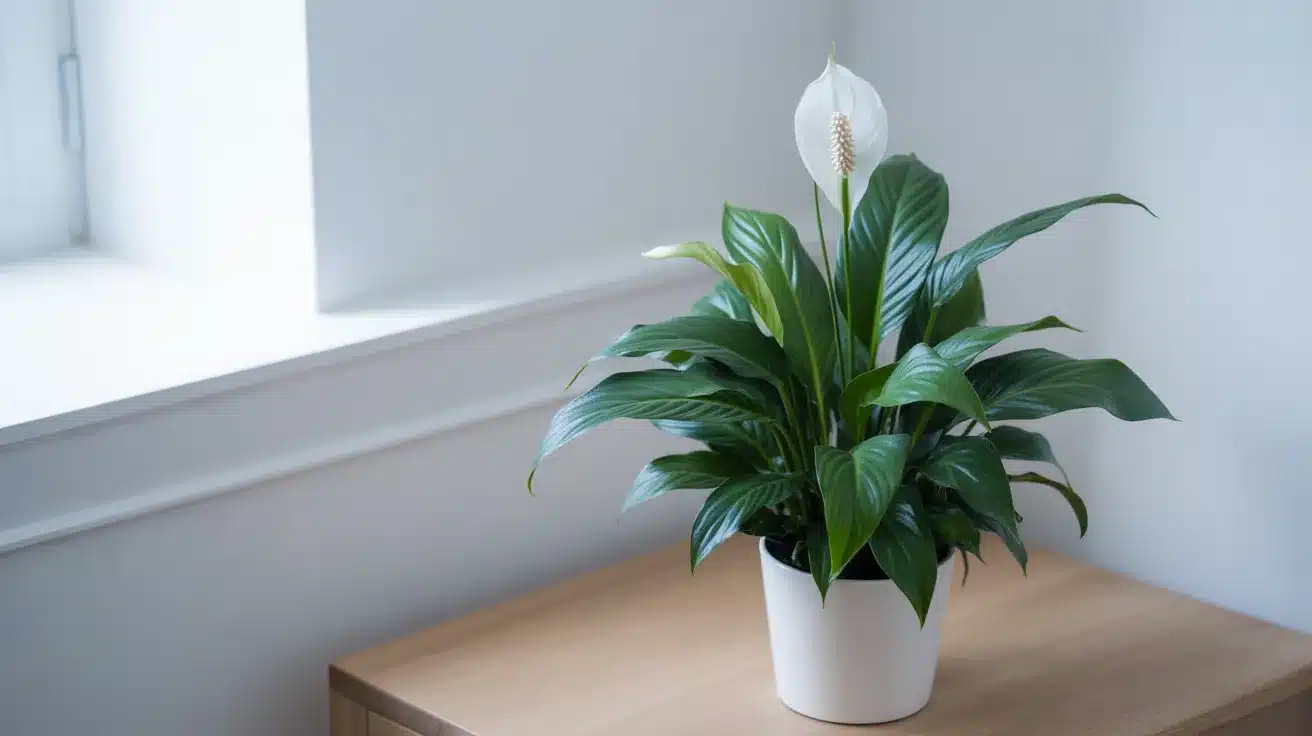
Your peace lily was fine. Then one day, it just flopped. Leaves down, color off, no flowers in sight. You watered it. Nothing. You moved it. Still nothing. Sound familiar?
Peace lily care is not hard. This plant is actually one of the most forgiving you can grow indoors. The problem is that most people do not know what it is trying to say. And it does talk. A lot.
This guide covers everything from light and watering to soil, repotting, propagation, and how to fix the most common problems. By the end, you will know exactly what your plant needs and when.
What Is a Peace Lily?
The peace lily, known botanically as Spathiphyllum, belongs to the Araceae family and is native to the tropical rainforests of Central and South America. It is not a true lily.
The white structure most people call the flower is actually a modified leaf called a spathe, while the real flowers sit on the central spike inside, known as the spadix.
Most indoor varieties grow between 1 and 4 feet tall, though some cultivars reach up to 6 feet.
In its natural habitat, this plant grows on the forest floor under thick tree canopies in warm, humid, low-light conditions, which is exactly what makes it such a natural fit for life indoors.
Peace Lily Varieties Worth Knowing
Not all peace lilies look the same. Knowing which variety you have, or which one you want, helps you plan the right space and care routine from the start.
- Sensation: The largest cultivar available, growing up to 6 feet tall with bold, deeply ribbed, dark green leaves that make a real statement in large rooms.
- Mauna Loa Supreme: A mid-to-large variety and one of the most widely sold in US garden centers, valued for its glossy leaves and long-lasting white blooms.
- Domino: A compact plant with variegated green and white leaves that stand out even when it is not in bloom, great for shelves and smaller spaces.
- Mojo Lime: A medium-sized variety with striking lime-green foliage instead of the classic deep green, a good fit for bright, well-lit rooms.
- Piccolino: One of the smallest varieties available, built for desks, tabletops, and tight corners without sacrificing any of the visual appeal.
How to Care for a Peace Lily
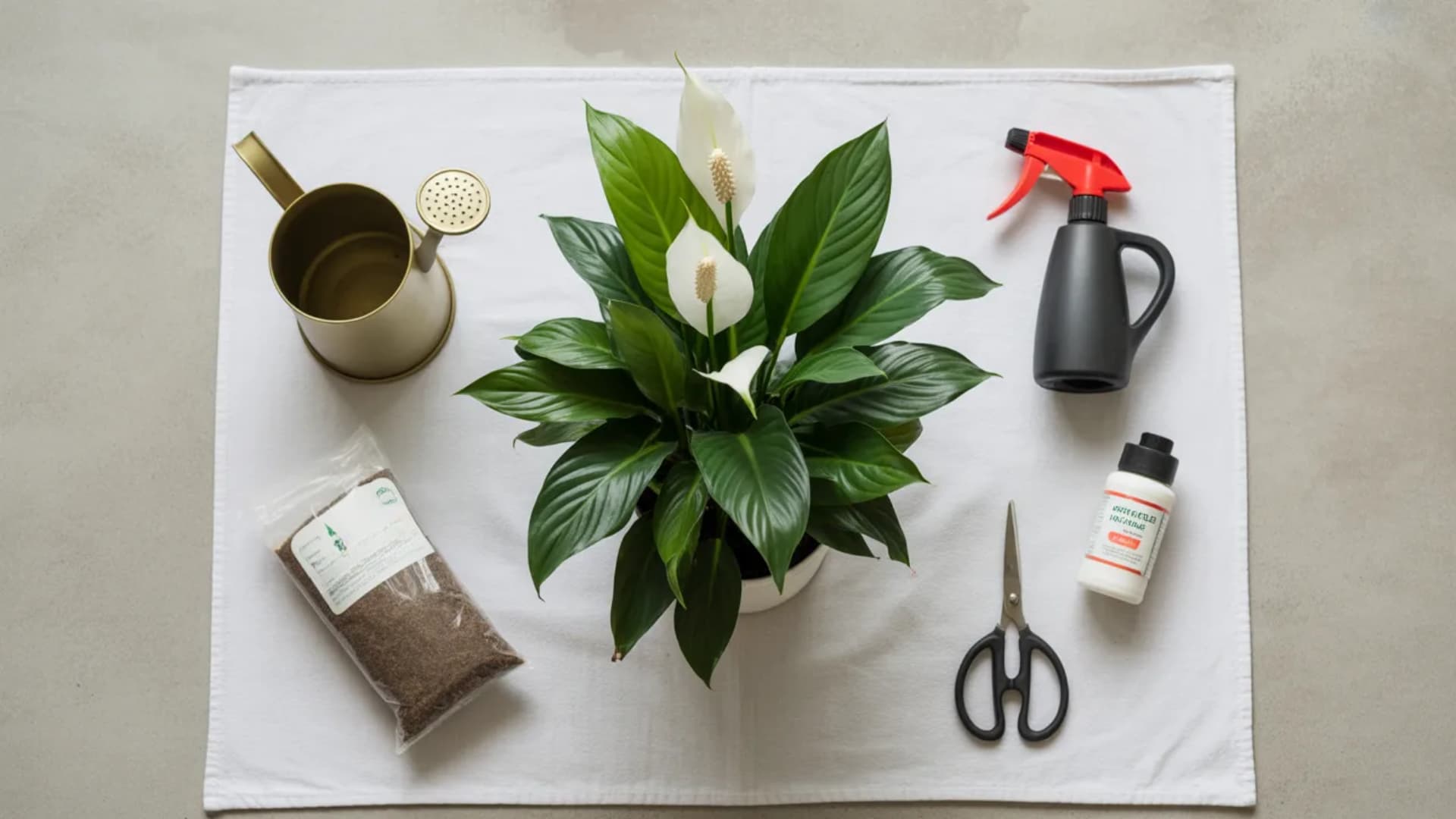
Peace lily care comes down to four key factors: light, water, temperature, and humidity. Nail these, and the plant largely takes care of itself. Here is what each one looks like in practice.
1. Light Requirements
Peace lilies do best in bright, indirect light for 6 to 8 hours a day. An east or north-facing window works well without risking leaf scorch.
- Avoid south or west-facing windows with harsh afternoon sun
- Low light keeps the plant alive, but stops it from blooming
- Grow light option: position 12 to 48 inches away and run 8 to 10 hours daily
- Too much light: pale, bleached, or brown-spotted leaves
- Too little light: limp, dark green leaves with no flowers
2. Watering
Water when the top 1 inch of soil feels dry, roughly once a week. Always check the soil first rather than following a fixed schedule.
- Use filtered, distilled, or rainwater tap water, which contains fluoride and chlorine that cause brown tips
- If only tap water is available, let it sit overnight in an open container before using
- Always use a pot with drainage holes and empty the saucer after watering
- Overwatering signs: yellowing leaves, soggy soil, mushy stems
- Underwatering signs: drooping leaves, dry pulling soil, crispy tips
3. Soil and Pot
A good mix: 3 parts indoor potting mix, 1 part perlite, 1 part orchid bark. This drains well while holding just enough moisture.
- Terracotta pots work best for those who tend to overwater
- Plastic pots suit those who sometimes forget a watering
- Drainage holes are a must, no matter which pot you choose
- Avoid cactus or succulent mixes, too dry for this plant
4. Temperature
The ideal range is 65°F to 85°F. If you feel comfortable in the room, the plant likely does too.
- Keep away from cold drafts near windows and exterior doors
- Avoid heating vents and radiators that blow dry air onto the leaves
- Below 50°F: growth slows; below 45°F can cause lasting damage
5. Humidity
Peace lilies do best at 50% humidity or above. Kitchens and bathrooms are natural fits.
- Pebble tray: Fill a tray with pebbles and water, and set the pot on top
- Mist leaves with room-temperature filtered water regularly
- Group with other plants to build a shared moisture zone
- In winter, indoor heating quickly drops humidity this is when brown tips appear most often. Increase misting during colder months
6. Fertilizing
Feed every 6 weeks in spring and summer with a balanced liquid fertilizer at half-strength. Stop completely in fall and winter.
- Fresh potting soil after repotting provides enough nutrients for 3 to 4 months
- White crust on the soil surface means mineral salt buildup flush with plain water
- Overfertilizing causes brown tips, not better growth
7. Pruning
- Cut yellow or dead leaves at the base near the center of the plant
- For brown tips only, trim with clean scissors following the natural leaf shape — no need to remove the whole leaf
- Remove old flower stalks at the base once the spathe turns green or brown
- Wipe leaves with a damp cloth occasionally to clear dust and help the plant absorb light
- Always use clean, sharp scissors to avoid spreading bacteria between cuts
How to Repot a Peace Lily
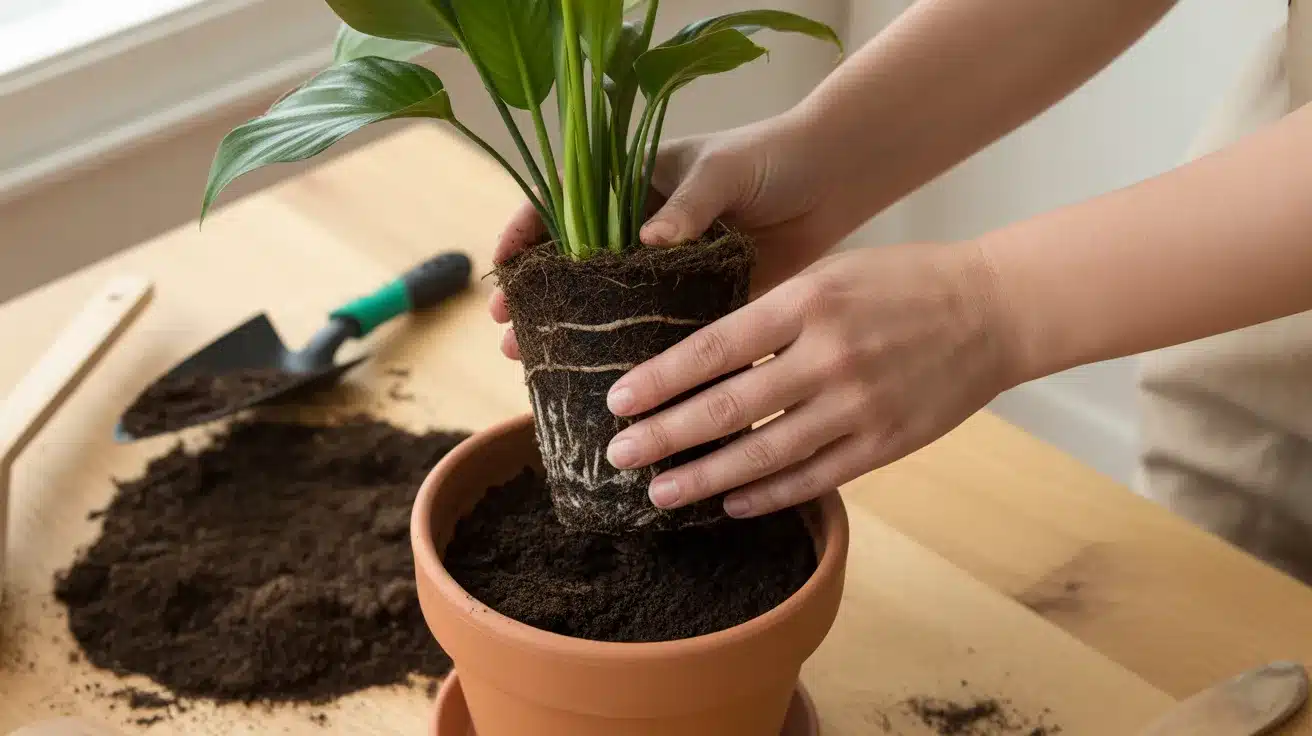
Peace lilies prefer to be slightly root-bound, so there is no rush. When the roots start signaling they have run out of space, the process is simple. Here is a quick reference to walk you through it.
Peace Lily Repotting at a Glance
| What | Details |
|---|---|
| Ready to repot? | Roots out of drainage holes, or frequent wilting despite regular watering |
| Best timing | Late winter or early spring |
| New pot size | 1 to 2 inches wider than the current one |
| Before you start | Water the plant 12 hours ahead to reduce root stress |
| Removing the plant | Lift gently without pulling the stems; loosen the soil from the roots slowly |
| Setting it up | Add fresh mix one-third up the new pot; set the root ball 1 inch below the rim |
| Finishing up | Fill gaps, tap the sides to remove air pockets, and water until it drains from the bottom |
| What to expect | Light wilting or a yellow leaf or two for 1 to 2 weeks is completely normal |
| Next feeding | Wait at least 4 weeks before fertilizing again |
How to Propagate a Peace Lily
Division is the simplest and most reliable method for propagating a peace lily at home. It works best during repotting in late winter or early spring, when the plant is already out of its pot, and the roots are accessible.
- Remove the plant from its pot and gently loosen the soil from around the roots.
- Look for crowns of leaves growing from the base, each with its own set of roots.
- Choose a healthy crown with at least 2 to 3 leaves and a visible, intact root system.
- Separate it carefully using clean hands or a sterilized knife, keeping as many roots intact as possible.
- Plant the new division in a fresh pot with well-draining potting mix and water it well.
- Place in bright, indirect light and keep the soil lightly moist for the first few weeks while it settles.
- Be patient; both the parent plant and the new division may pause blooming briefly before recovering fully in 2 to 3 months.
Peace Lily Problems and How to Fix Them
Most peace lily problems stem from water, light, or the growing environment. The good news is that nearly all of them are fixable once you know what you are dealing with.
| Problem | Likely Cause | Fix |
|---|---|---|
| Yellow leaves | Overwatering, underwatering, or aging | Check soil moisture; adjust watering; remove yellow leaves at the base |
| Brown leaf tips | Tap water, low humidity, or too much fertilizer | Use filtered water; mist more; cut fertilizer to half strength |
| Drooping leaves | Dry soil or root rot | Water if the soil is dry; if soggy, trim rotted roots and repot |
| Dark spots on leaves | Fungal or bacterial infection | Isolate the plant; trim affected leaves; improve airflow |
| Mushy stems | Root rot from overwatering | Repot right away; trim bad roots; use fresh, well-draining soil |
| No blooms | Low light, poor feeding, or root-bound | Move to a brighter spot; fertilize in spring; repot if needed |
| Mold on soil | Overwatering or poor airflow | Water less; check drainage; increase airflow around the plant |
Is Peace Lily Safe Around Pets and Kids?
Peace lilies contain calcium oxalate crystals throughout the plant. If any part is chewed or swallowed, it causes burning in the mouth, throat irritation, swelling, and stomach upset in both pets and children.
The toxicity level is mild, especially compared to true lilies from the Liliaceae family, which can cause kidney failure in cats. However, mild does not mean harmless, and symptoms can be distressing.
Keep the plant on a high shelf or in a space that pets and small children do not access regularly. If a pet chews on the plant, contact your vet right away. For children, call Poison Control at 1-800-222-1222.
Conclusion
Peace lily care is far simpler than most people think. Light, water, humidity, and warmth get those four things roughly right, and this plant will reward you with healthy green leaves and white blooms for years.
The beauty of growing one is that it tells you when something is off. You just have to pay attention.
If you have been struggling with yours, try one change at a time. Nine times out of ten, it is a watering or light issue, and both are easy to fix. This plant is more forgiving than it gets credit for.
Do you have a peace lily at home? Is it thriving or giving you a tough time? Either way, drop your questions or share your experience in the comments below. We would love to hear from you.
Frequently Asked Questions
How Do You Take Care of a Peace Lily Indoors?
Keep it in bright, indirect light, water when the top inch of soil feels dry, and maintain a warm, humid spot away from cold drafts and direct sun. Those four basics cover most of what this plant needs.
What Does an Overwatered Peace Lily Look Like?
The leaves turn yellow and soft, the soil stays soggy for days, and the stems may begin to feel mushy at the base. If it smells off near the pot, root rot has likely already started.
Where Is the Best Place to Put a Peace Lily?
A near east- or north-facing window is ideal for bright light without direct sun. Kitchens and bathrooms also work well since the natural humidity there suits the plant perfectly.
Should I Cut the Brown Tips Off My Peace Lily?
Yes. Use clean scissors and trim just the brown part, following the natural curve of the leaf. There is no need to remove the whole leaf, just the dead tip.