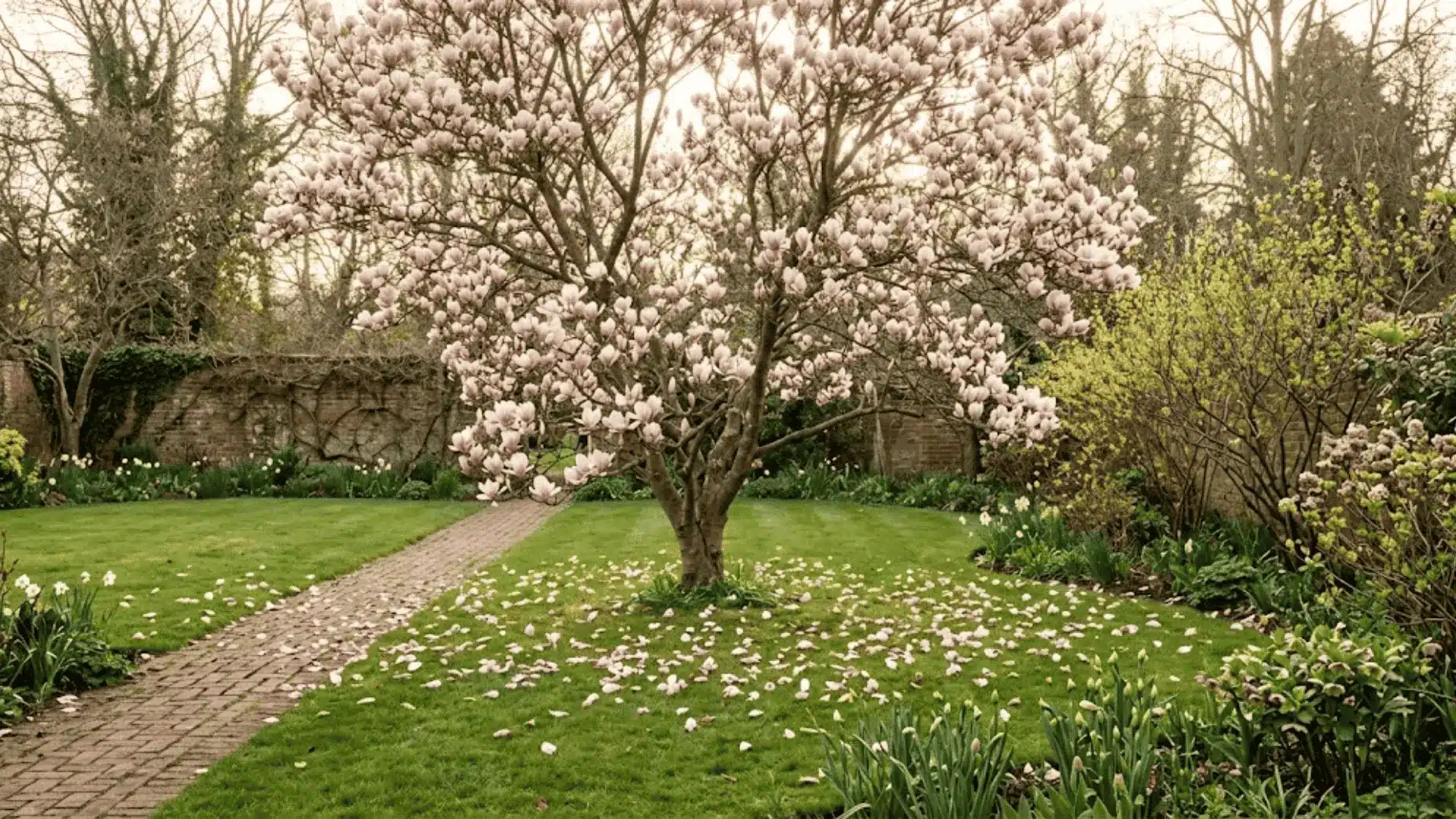
Few flowers command a moment quite like the magnolia flower does, arriving before the leaves even think about showing up, filling the air with something between sweet and spiced.
They’re ancient, unhurried, and somehow more beautiful for it.
Some trees bloom and fade without a second glance, but magnolias stop people mid-step, every single spring.
Read on for everything worth knowing about planting, caring, pruning, and keeping yours thriving so your magnolia grows into exactly the garden centerpiece it was always meant to be.
What is a Magnolia Flower?
Magnolia is a genus of flowering trees and shrubs that has existed for millions of years, long before bees even appeared.
They fall into two main camps: deciduous varieties, which bloom on bare branches in early spring, and evergreen types that hold their leaves year-round.
The flowers themselves range from creamy whites and blush pinks to deep purples, often spanning several inches wide with a fragrance that’s quietly intoxicating.
Bloom timing shifts depending on the variety, some peaking in early spring, others stretching into summer.
The USDA PLANTS Database Plant Guide for Magnolia recognizes Magnolia as a widespread genus with species native across North America and Asia.
Types of Magnolia Trees
Not every magnolia grows the same way, and that’s honestly what makes them so exciting to choose between. Picking the right variety for your space means years of effortless beauty rather than constant upkeep.
1. Southern Magnolia
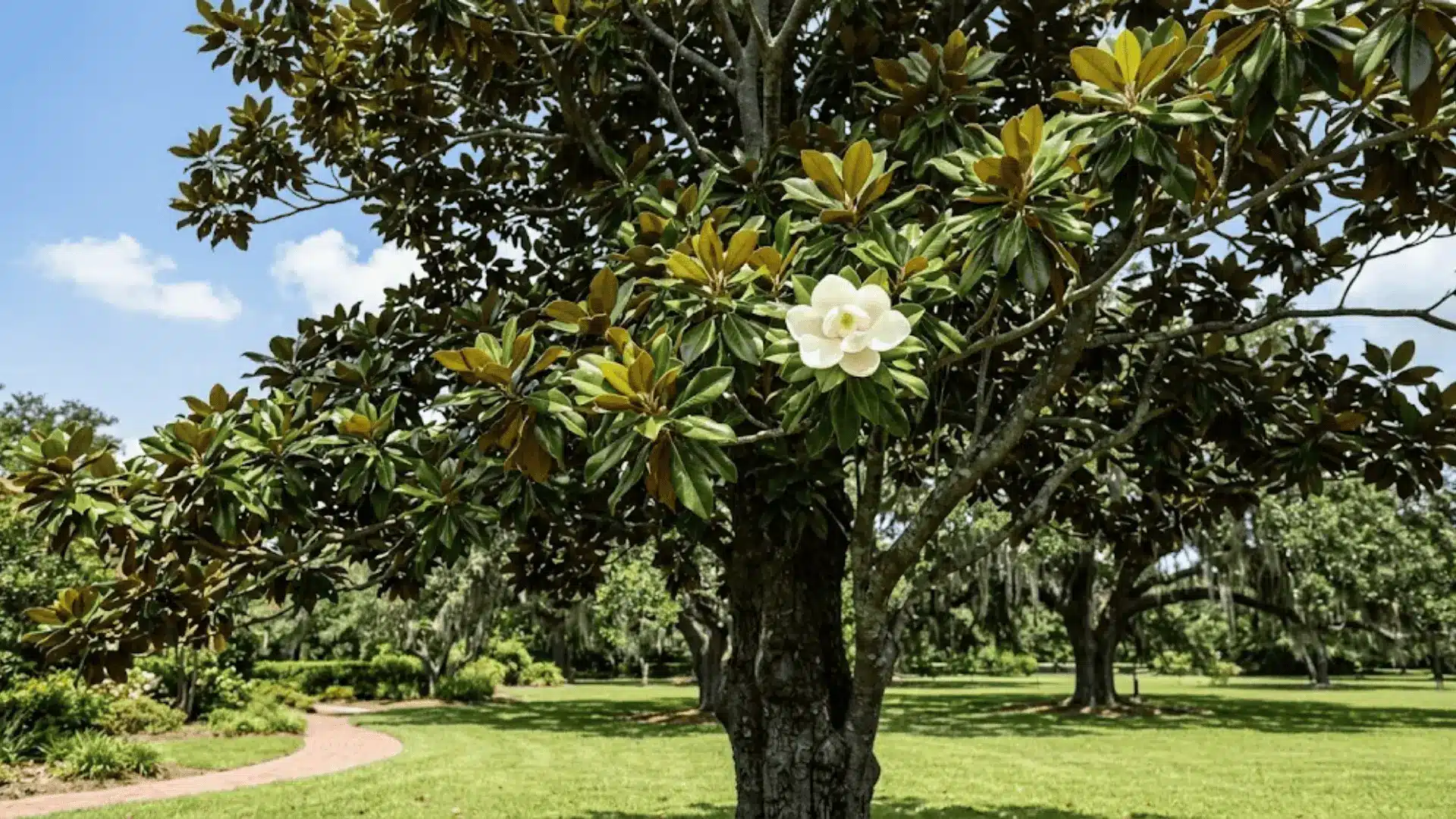
Scientific Name:Magnolia grandiflora
Native Area: Southeastern United States
USDA Hardiness Zones: 7–9
Height: 60–80 feet
The Southern Magnolia is the quintessential warm-climate showstopper, holding its deep green, leathery leaves through every season.
Its large, creamy white blooms can stretch up to a foot wide, releasing a rich, lemony fragrance through summer. As an evergreen, it never goes bare, making it as functional as it is stunning.
Best suited for spacious yards in warmer regions where it has room to grow into its full, commanding presence.
2. Saucer Magnolia
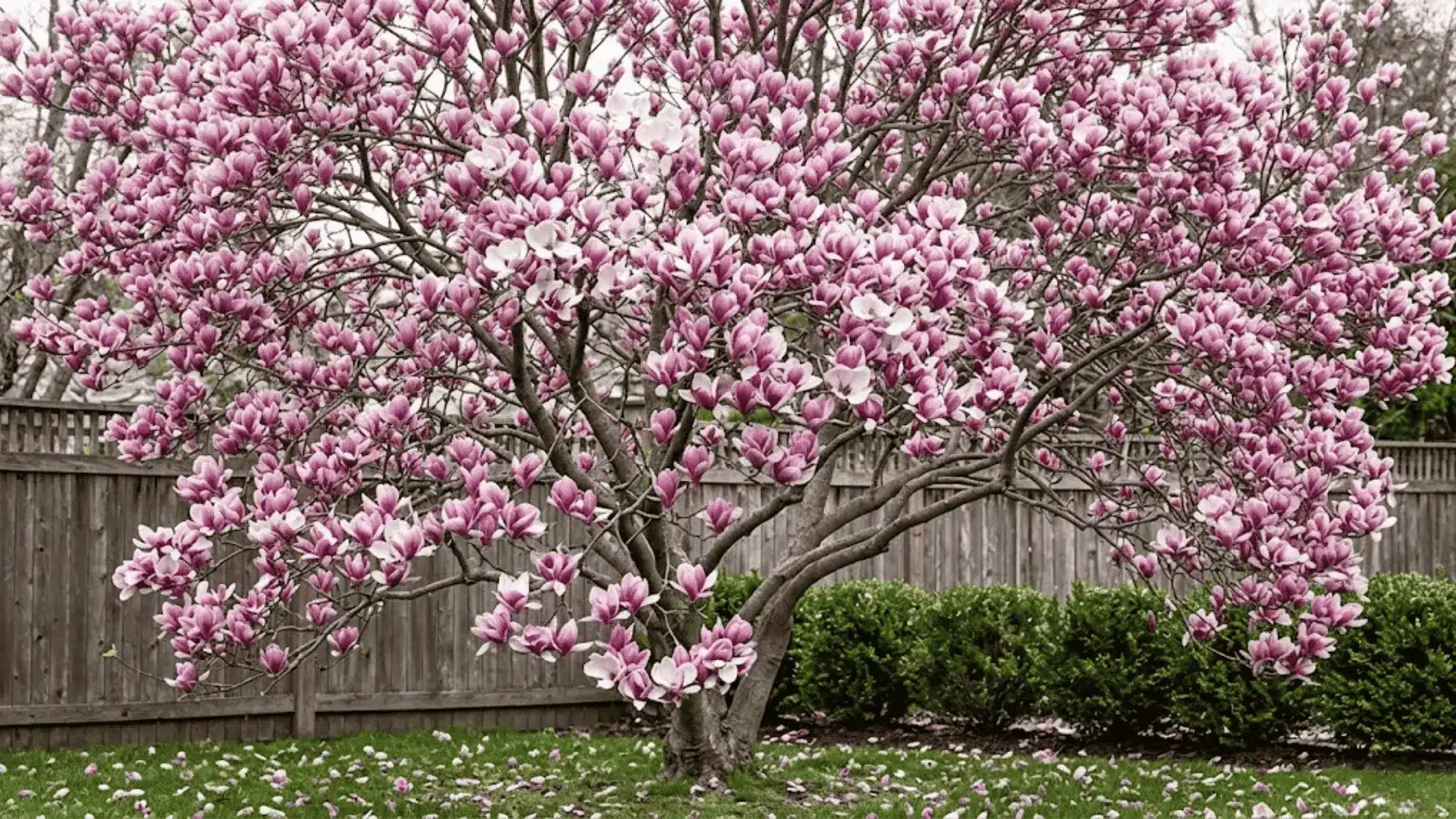
Scientific Name:Magnolia × soulangeana
Native Area: Hybrid origin, parent species from China and Japan
USDA Hardiness Zones: 4–9
Height: 20–30 feet
The Saucer Magnolia is often the first sign that spring has truly arrived.
Its bold pink-purple blooms emerge on bare branches before a single leaf appears, creating a display that feels almost theatrical.
A deciduous variety, it puts on its best show in early spring and settles into lush green foliage for the rest of the season. A reliable, widely adaptable choice for gardens across most of the country.
3. Star Magnolia
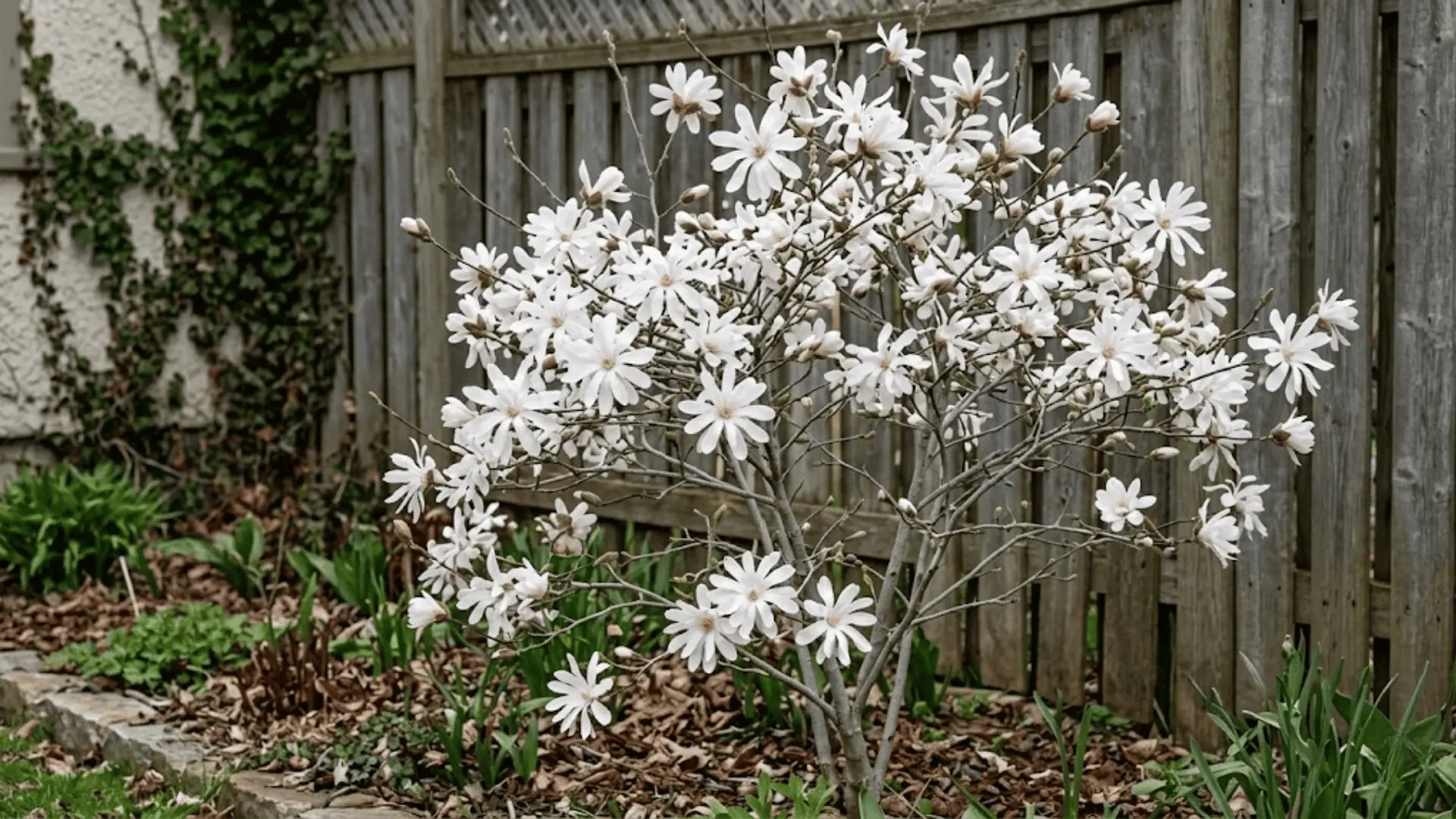
Scientific Name:Magnolia stellata
Native Area: Japan
USDA Hardiness Zones: 4–8
Height: 15–20 feet
For smaller spaces, the Star Magnolia delivers maximum impact without overwhelming the landscape.
Its delicate, multi-petaled white to pale pink flowers bloom in early spring, covering the compact canopy in a way that feels almost bridal.
Slow-growing and naturally tidy, it fits beautifully into cottage gardens, narrow side yards, or anywhere a full-sized tree simply wouldn’t. A thoughtful, elegant choice for gardeners working with limited square footage.
4. Jane Magnolia
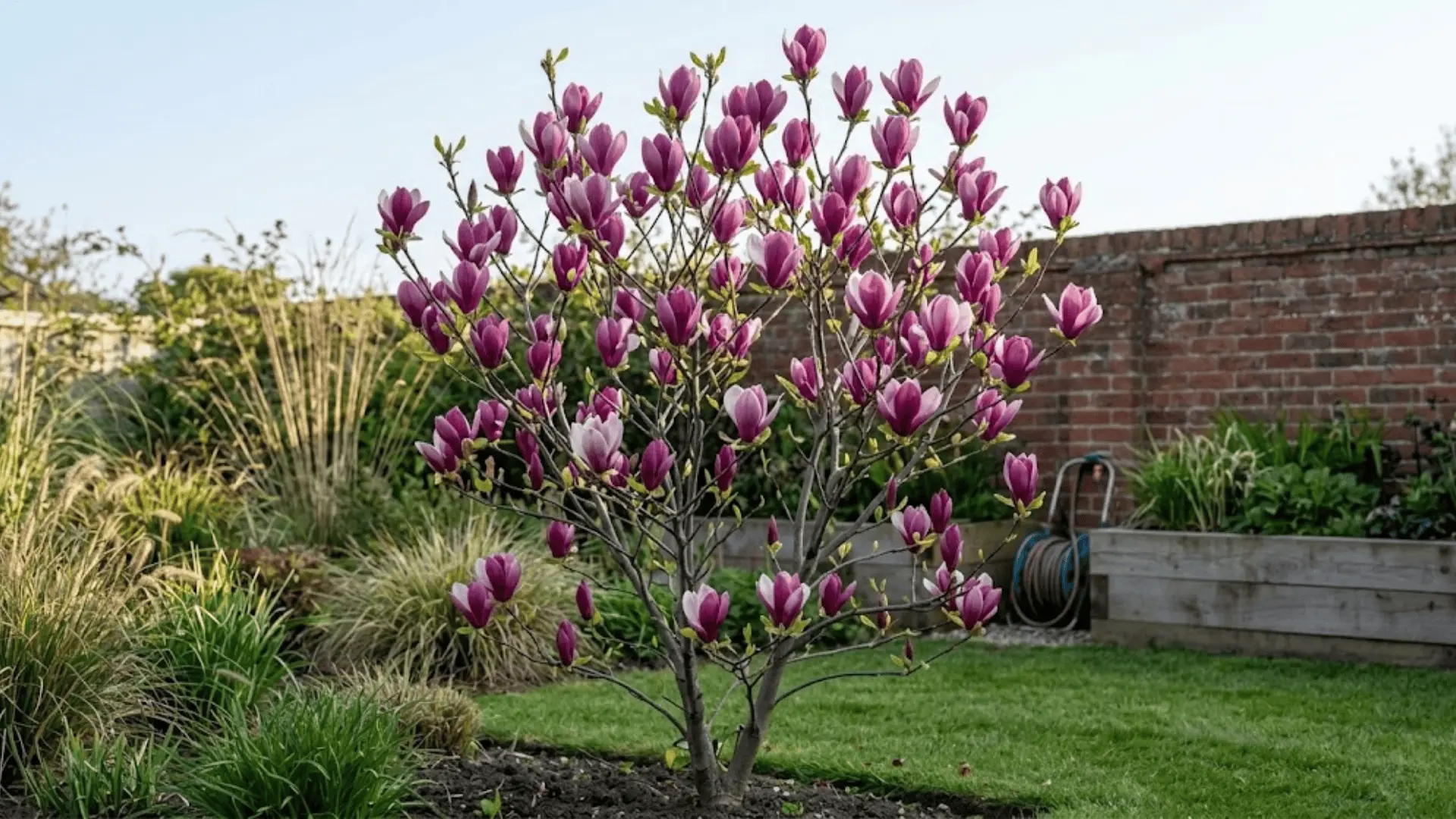
Scientific Name:Magnolia × ‘Jane’
Native Area: Hybrid origin, developed in the United States
USDA Hardiness Zones: 4–8
Height: 10–15 feet
The Jane Magnolia was practically designed for gardeners in cooler climates.
As a late-season bloomer, it sidesteps the late frost window that catches earlier varieties off guard, making it one of the more dependable options for unpredictable springs.
Its rich reddish-purple buds open into softly fragrant, tulip-shaped flowers, and its compact size makes it a natural fit for foundation plantings, borders, or smaller garden beds.
Where Do Magnolia Flowers Grow Best?
Magnolias are more adaptable than they get credit for, but they do have their preferences.
Most varieties thrive in USDA hardiness zones 4 through 9, with some cold-hardy cultivars pushing into zone 4 without much fuss. They prefer full sun to partial shade, ideally soaking up at least six hours of direct light daily.
Soil-wise, slightly acidic, well-drained soil with good organic matter is their sweet spot; compacted or waterlogged ground is where they struggle.
Climate-wise, they favor regions with distinct seasons, consistent moisture, and protection from harsh, desiccating winds.
How to Plant a Magnolia Tree?
Timing and placement make all the difference with magnolias; get those two things right, and the rest follows naturally.
Early spring or fall are the ideal planting windows, giving roots time to settle before temperature extremes kick in.
- Step 1: Choose the right location by picking a spot with full sun to partial shade, enough overhead space, and good air circulation.
- Step 2: Dig a wide planting hole that is 2 to 3 times the width of the root ball, matching its exact depth.
- Step 3: Improve the soil if needed by working in compost or organic matter to improve drainage and nudge the pH toward slightly acidic.
- Step 4: Plant and water deeply by setting the tree just above soil level, backfilling gently, and giving it a long, thorough first drink.
- Step 5: Apply mulch in a 2 to 3 inch layer around the base, keeping it clear of the trunk to prevent rot.
For spacing, most standard magnolia varieties need at least 15 to 20 feet between trees to develop fully without crowding. Compact varieties like Jane or Star Magnolia can be planted closer, around 8 to 10 feet apart, making them well-suited for tighter garden layouts.
Magnolia Flower Care Guide
Magnolias have a reputation for being high-maintenance, but the reality is quite the opposite. Get the basics consistently right, and these trees are remarkably self-sufficient season after season.
1. Watering Needs
Young magnolias need steady, consistent moisture while their root systems are still establishing, typically requiring deep watering once or twice a week through the first 2 growing seasons.
Established trees are considerably more drought-tolerant and generally do fine on rainfall alone, needing supplemental watering during prolonged dry spells. Always water at the base, to keep foliage disease-free.
2. Fertilizing
Magnolias are light feeders, and a simple, well-timed fertilizing routine is all they really need to bloom consistently and stay healthy.
| Aspect | Details | Notes |
|---|---|---|
| When | Early spring, before new growth | Once annually for established trees |
| Type | Balanced 10-10-10 or acid-loving formula | Slow-release granular works best |
| Frequency | Twice in the first 2 years | Once a year after that |
| Avoid | High-nitrogen fertilizers | Promotes leaves over blooms |
3. Mulching
A 2 to 3-inch layer of organic mulch spread around the base of the tree does more work than most gardeners realize.
It retains soil moisture, regulates root temperature, suppresses weeds, and gradually improves soil quality as it breaks down. Keep mulch a few inches clear of the trunk to prevent moisture buildup and bark rot.
4. Pruning
Magnolias prefer to be left alone, and that is genuinely good news for gardeners. Pruning needs are minimal and mostly cosmetic.
- Prune immediately after flowering to avoid cutting off next season’s developing buds.
- Remove dead, damaged, or crossing branches cleanly at the base using sharp, sterilized tools.
- Avoid heavy structural pruning as magnolias are slow to heal from large cuts, making them vulnerable to disease.
When Do Magnolia Flowers Bloom?
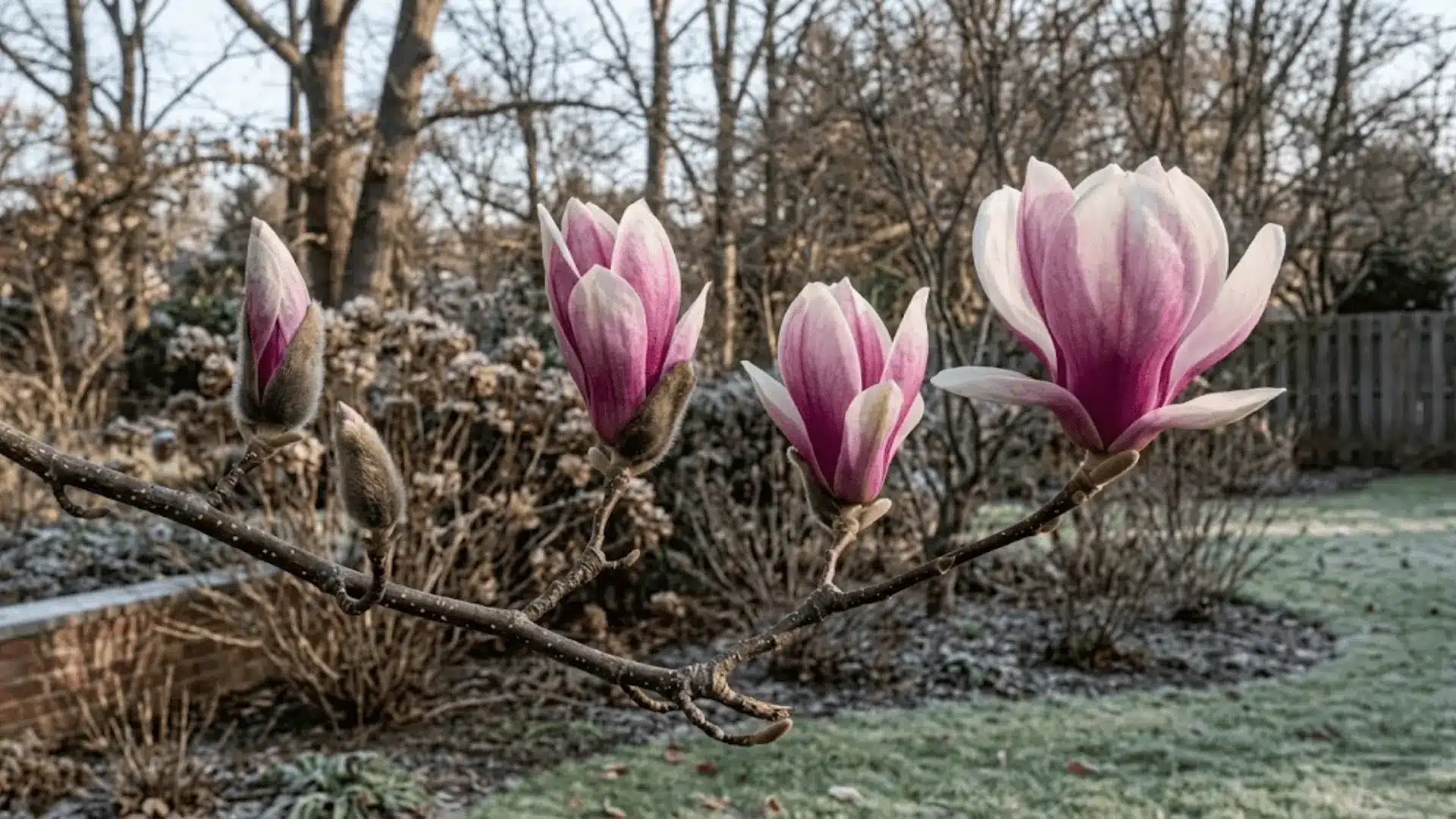
Bloom timing varies more than most people expect across different magnolia varieties.
Early bloomers like Saucer and Star Magnolia typically flower between February and April, often before a single leaf emerges. Late spring and summer varieties, including Southern Magnolia, carry their blooms well into July.
Factors like soil health, pruning timing, and sunlight exposure all influence when and how abundantly a tree flowers.
Magnolias that fail to bloom are usually dealing with one of three culprits: over-fertilization with nitrogen, pruning at the wrong time, or simply being too young to flower yet.
Common Magnolia Problems and Solutions
Magnolias are largely trouble-free, but like any garden plant, they occasionally show signs that something is off. Catching these early and knowing what to look for makes all the difference.
Problem 1: Why are My Magnolia Leaves Turning Yellow?
Solution: Yellowing usually traces back to poor drainage or a nutrient deficiency in alkaline soil. Fix it by amending with sulfur to correct pH, applying chelated iron fertilizer, or improving drainage with organic matter.
Problem 2: Why are My Magnolia Buds Falling Off Before They Bloom?
Solution: Late frosts and transplant shock are the most common culprits behind bud drop. Protect young trees during unexpected cold snaps and hold off on fertilizing until the tree has had a full season to settle in.
Problem 3: Why Does My Magnolia Look Like it’s Losing its Vigor?
Solution: Scale insects and aphids are quiet but persistent, draining the tree’s energy before visible damage becomes obvious. Treat scale with horticultural oil in early spring and knock aphid colonies back with a water spray or neem oil.
Problem 4: Why Do My Magnolia Leaves Have Spots or a White Coating?
Solution: Leaf spot and powdery mildew both thrive in humid, poorly ventilated conditions. Remove affected foliage promptly, switch to base watering, and apply a copper-based fungicide or neem oil spray early.
Can You Grow Magnolia Flowers in Pots?
Yes, and smaller varieties make it surprisingly doable. Dwarf cultivars like Star Magnolia and Jane Magnolia adapt well to container life without sacrificing their seasonal bloom.
Choose a pot that is at least 18 to 24 inches wide and equally deep, with drainage holes that actually allow water to escape freely.
Drainage is non-negotiable in containers since sitting moisture rots roots faster than anything else.
In winter, move pots to a sheltered spot like an unheated garage or against a south-facing wall to protect roots from freezing temperatures that containers cannot buffer the way ground soil naturally does.
How Fast Do Magnolia Trees Grow?
Growth rate varies quite a bit across varieties, and knowing what to expect upfront saves a lot of guesswork down the line.
- Southern Magnolia is the fastest grower, putting on 1 to 2 feet annually and eventually reaching 60 to 80 feet at full maturity.
- Saucer Magnolia grows at a moderate pace of around 1 to 1.5 feet per year, topping out between 20 and 30 feet.
- Star and Jane Magnolia are slow and steady growers, gaining less than 1 foot per year and maturing between 10 and 20 feet.
- Sunlight, soil quality, and consistent watering are the biggest influencers of growth rate across all varieties.
- Newly planted magnolias typically spend their first 1 to 2 seasons prioritizing root establishment over visible top growth.
Patience genuinely pays off with magnolias. The slower the start, the more stable and long-lived the tree tends to be, with some varieties gracing the same garden for well over a century.
Landscaping Ideas with Magnolia Flowers
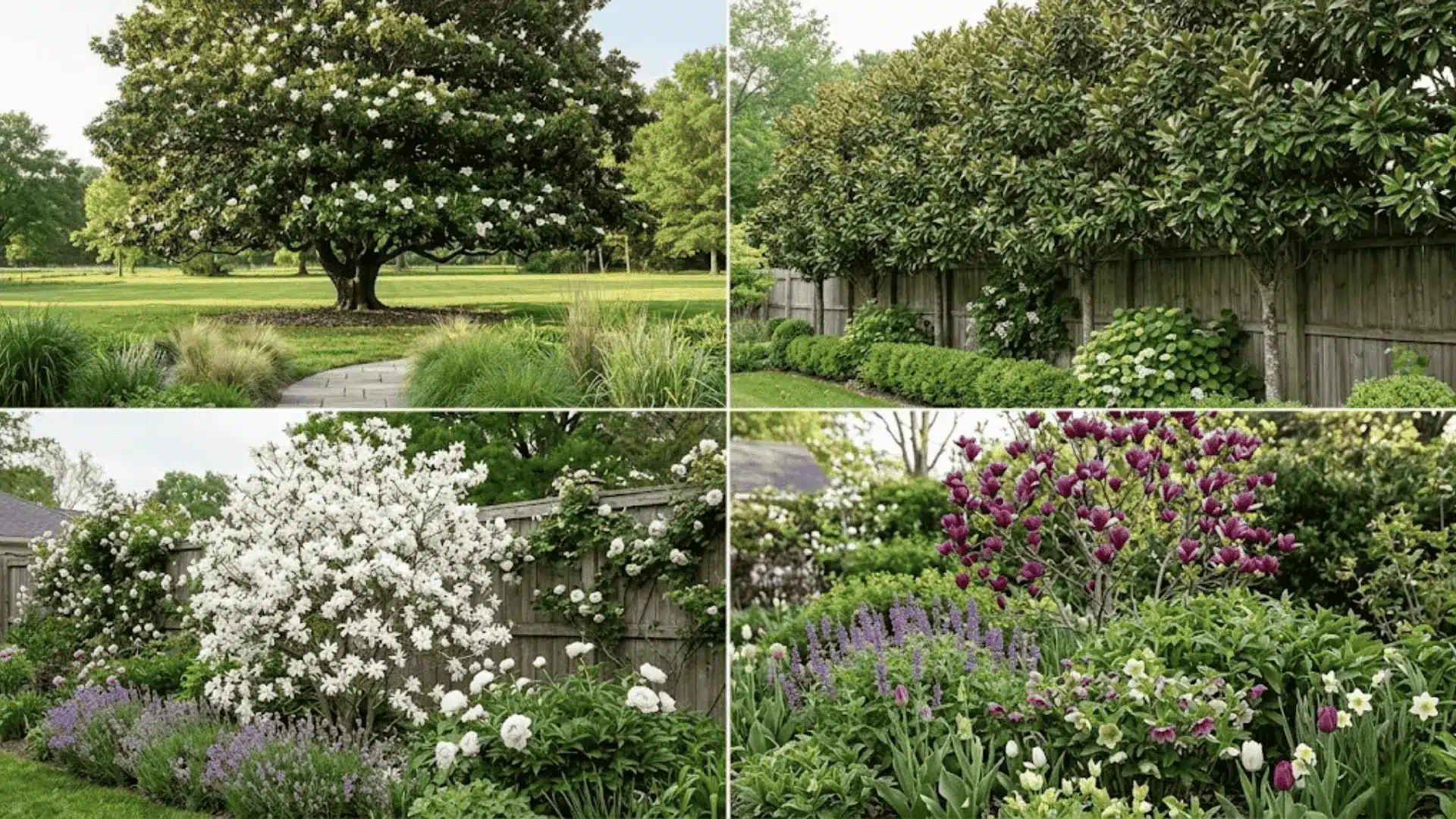
Magnolias are as versatile in the landscape as they are beautiful, fitting naturally into formal gardens, relaxed cottage settings, and everything in between.
Here are some of the most compelling ways to use them.
| Idea | Best Variety | Why It Works | Pair It With |
|---|---|---|---|
| Specimen Focal Point | Southern Magnolia, Saucer Magnolia | Dramatic blooms anchor large open spaces | Ornamental grasses, stone pathways |
| Privacy Screen | Southern Magnolia | Dense evergreen foliage acts as a year-round living wall | Boxwood, holly, climbing hydrangea |
| Cottage Garden Feature | Star Magnolia, Jane Magnolia | Compact size suits relaxed, romantic planting schemes | Lavender, peonies, foxglove, old roses |
| Mixed Border Planting | Jane Magnolia, Star Magnolia | Layers beautifully without overwhelming surrounding plants | Salvia, hellebores, spring bulbs |
Magnolia Flower Meaning and Symbolism
The magnolia flower has carried deep meaning across cultures for centuries.
Its large, pristine blooms have long been associated with purity, dignity, and nobility, a symbolism rooted in the flower’s unhurried, unassuming way of commanding attention.
In the American South, magnolias hold a near-sacred cultural status, woven into literature, architecture, and regional identity as a symbol of enduring grace and resilience.
Magnolias predate most flowering plants, making them symbols of longevity and perseverance across cultures. They appear in Chinese art and medicine for thousands of years, predating Western botanical records.
The Closing Note
Growing a magnolia flower is less about perfection and more about patience, and that is precisely what makes it so rewarding.
These trees ask for very little while giving back season after season in blooms, fragrance, and quiet, enduring beauty.
A sprawling Southern Magnolia anchoring a large backyard and a compact Jane Magnolia gracing a small garden border are both equally stunning in their own right, and that range is exactly what makes this genus so special.
If this guide helped you find your footing, drop a comment below sharing which magnolia variety you are growing or planning to plant next.