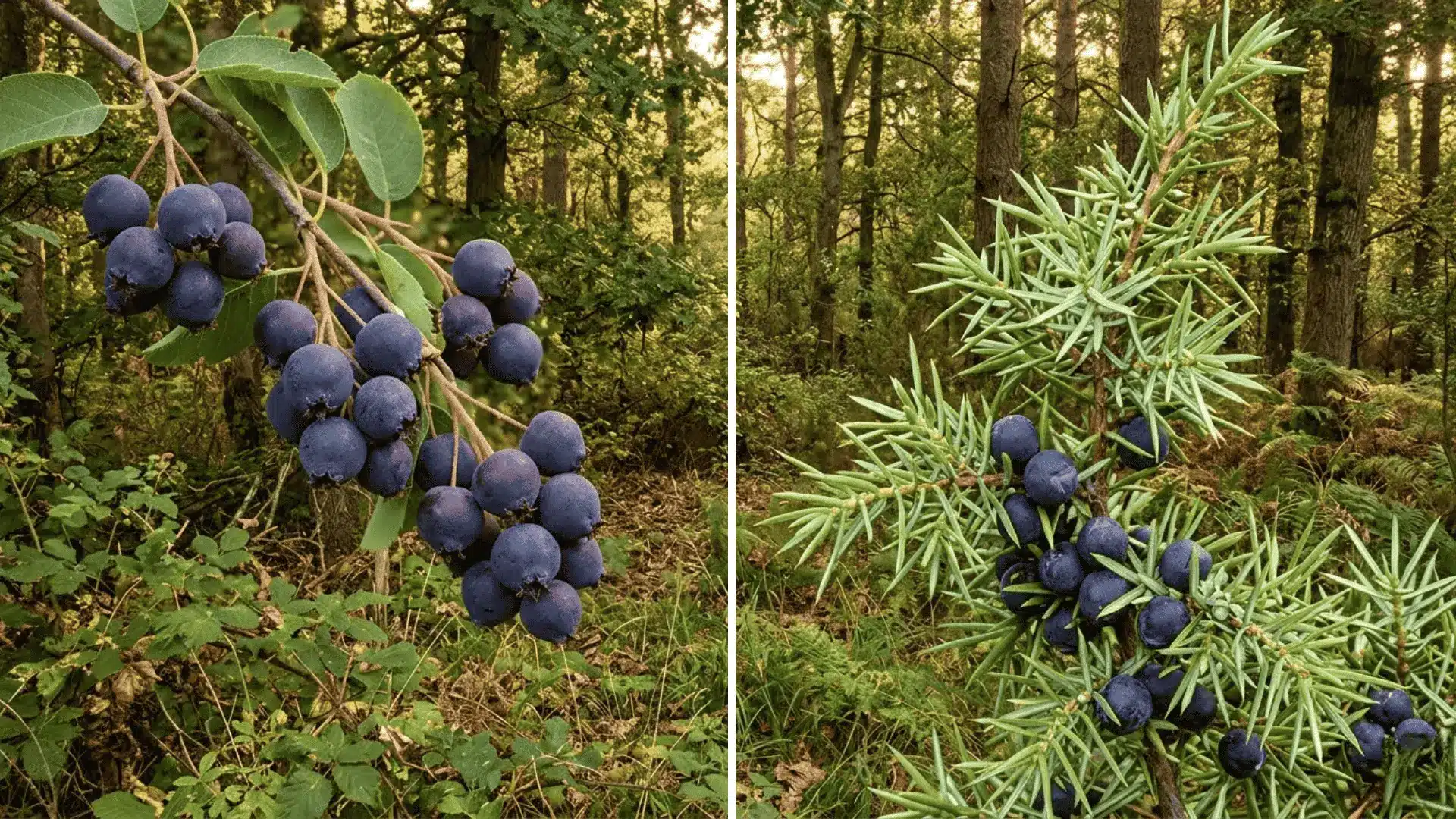
If you’ve ever stood in front of a berry bush second-guessing yourself, the name situation really doesn’t help.
Juneberries and juniper berries sound close enough to cause genuine confusion, and the stakes are a little higher than just picking the wrong thing for a recipe.
One is sweet, nourishing, and pretty easy to love. The other depends entirely on the context, who’s eating it, how much, and why.
By the end of this, you’ll know exactly what sets them apart, when one crosses into unsafe territory, and how to tell them apart before it matters.
A Berry by Many Names: Getting to Know the Juneberry
Juneberries go by a few names depending on where you find them, serviceberry, Saskatoon berry, or simply that sweet little fruit someone’s grandmother baked into pies without making a fuss about it.
They grow on shrubs and small trees, and if you’ve ever bitten into one fresh off the branch, the flavor sits somewhere close to a blueberry but with a slightly nuttier finish.
They’re genuinely good for you, easy to cook with, and for anyone still wondering, is juneberry real: yes, very much so.
Safe fresh, safe cooked, and honestly a little underrated in the berry world.
Juniper Berries: Spice, Gin, and a Bit of a Plot Twist
Juniper berries are not actually berries at all; they’re seed cones that just happen to look the part.
They grow on juniper shrubs and trees, and while they show up in kitchens and bars more than most people realize, very few could point to a juniper plant and name it with confidence.
That sharp, piney, almost resinous flavor is what gives gin its signature character, and in cooking, a small handful can do a lot of heavy lifting in marinades and braises.
They’re a spice first, a fruit second, and a little misunderstood all around.
Are Juniper Berries Safe to Eat?
Not all juniper berries are created equal, and that’s where things get worth paying attention to.
Some varieties, particularly Juniperus communis, are safe in small culinary amounts and have been used in cooking and flavoring for a long time.
But several ornamental juniper species are toxic and not meant for consumption at all.
The tricky part is that they can look nearly identical to an untrained eye.
So while juniper berries aren’t off-limits across the board, the species genuinely matters here, and assuming they’re all the same is where most of the risk quietly begins.
Why Juniper Berries Can Be Unsafe?
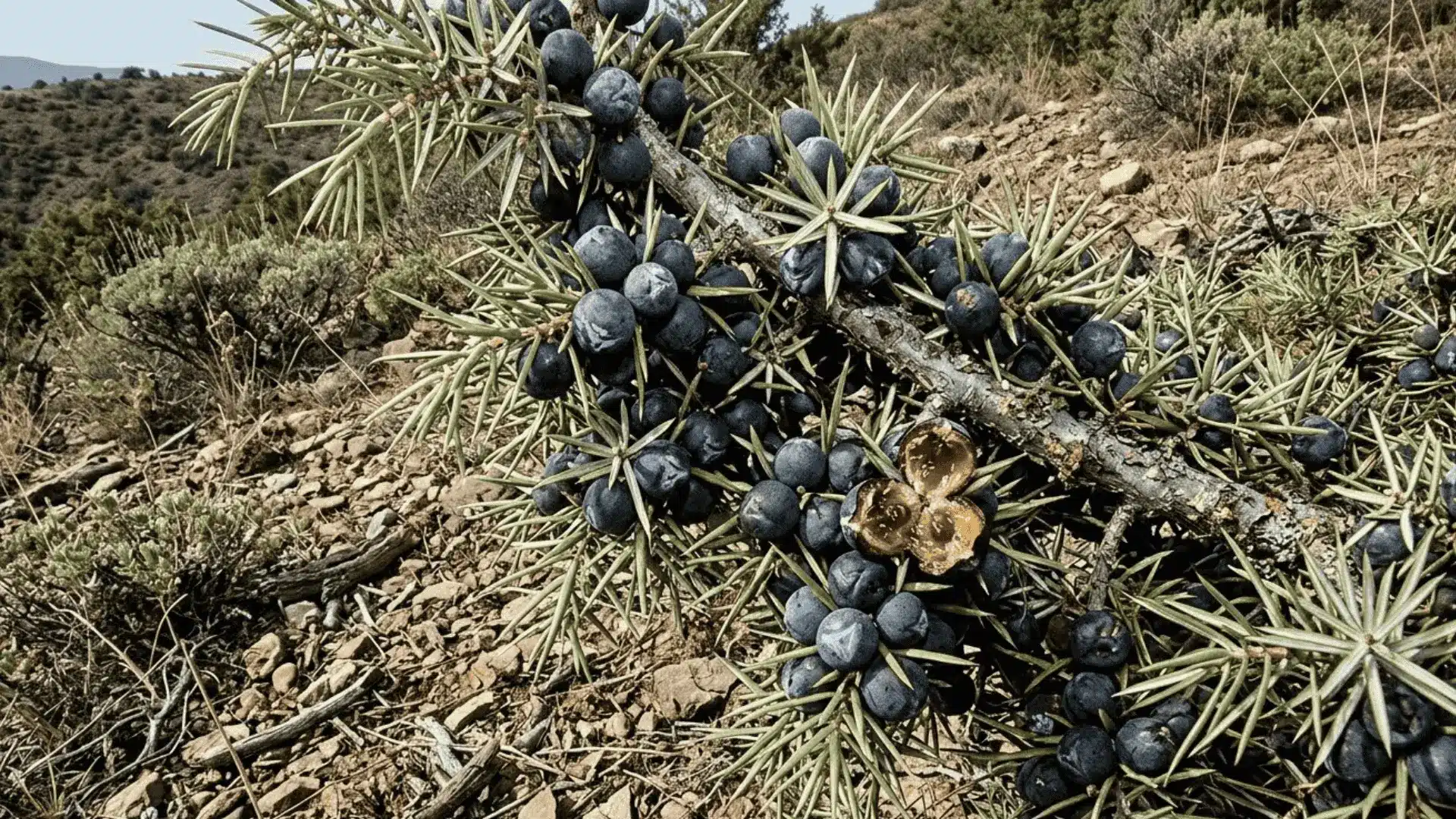
Juniper berries have a long history of use, but that history comes with fine print.
Here’s what’s worth knowing before you treat them like just another pantry ingredient.
1. Toxic Compounds in Certain Species
Not every juniper berry carries the same chemical makeup. Some species contain volatile oils that can irritate the kidneys and digestive system when consumed in more than small amounts.
Juniperus sabina, for instance, is considered toxic and should never make it anywhere near your plate, no matter how similar it looks to the safer varieties.
2. The Very Real Risk of Misidentification
Safe and toxic juniper species can look alike, and that’s what makes foraging for them genuinely risky. Without proper botanical knowledge, telling Juniperus communis apart from a harmful ornamental variety is harder than it sounds.
Most foraging mishaps don’t happen from carelessness; they happen because the visual difference is just that subtle.
3. Not Safe During Pregnancy
This one is important to flag clearly. Juniper berries have been shown to stimulate uterine contractions, which makes them unsafe during pregnancy regardless of the species or the amount.
This isn’t a minor caution; it’s one that holds across traditional medicine and modern guidance both.
4. Side Effects Worth Knowing
Even with a recognized safe variety, quantity still matters more than most people expect.
Too much can tip the experience from fine to genuinely uncomfortable, and these are the side effects that come up most often:
- Stomach pain and cramping after larger amounts
- Kidney irritation, especially with prolonged or excessive use
- Allergic reactions in people sensitive to similar plants
- Digestive upset, including nausea and loose stools
Who Should Avoid Juniper Berries?
Juniper berries aren’t for everyone, and for some, avoiding them entirely is genuinely the safer call.
- Pregnant or breastfeeding individuals, given the risk of uterine stimulation
- People with kidney conditions, as the compounds can aggravate existing issues
- Children, whose systems are far more sensitive to potent botanical compounds
- Dogs and cats, for whom juniper berries can be outright toxic
- Anyone on kidney-related medication, where the interaction risk isn’t worth it
When a single ingredient carries this many exceptions, it’s less about being cautious and more about just being informed.
Juneberry vs. Juniper: Taste and Uses
Two berries, two completely different relationships with your kitchen. Though calling both of them “berries” is already a stretch, and that’s worth a pause if you’ve ever been curious about what makes a berry.
Here’s how they actually compare:
| Feature | Juneberry | Juniper Berry |
|---|---|---|
| Flavor | Sweet, blueberry-like with a nutty finish | Sharp, piney, and resinous |
| Eaten fresh | Yes, straight off the shrub | No, too intense on its own |
| Common uses | Pies, jams, fresh eating, smoothies | Spice rubs, meat marinades, and gin flavoring |
| Amount used | Freely, like any fruit | Sparingly, like a strong spice |
| Safety | Safe for most people | Species and context dependent |
How to Tell Juneberry and Juniper Apart?
Once you know what to look for, telling these two apart gets a lot easier. The differences are there; they just need a little pointing out.
What the Berry Looks Like
Starting with the berry itself is usually the quickest way to orient yourself:
- Juneberries are soft, round, and closely resemble a small blueberry.
- Juniper berries are firmer, darker, and often carry a faint star-like marking at the base.
- Color on juneberries skews purple-blue when ripe, while juniper berries lean deeper blue to near black.
- Size is similar, but juniper berries tend to have a waxy, almost dusty surface finish.
What the Plant Looks Like
If the berry itself isn’t enough to go on, the plant will usually settle it:
- Juneberries grow on leafy shrubs or small trees with soft, oval-shaped leaves.
- Juniper grows on evergreen conifers with needle-like or scale-like foliage.
- Bark and branching on juneberry plants look deciduous and open, nothing like the dense evergreen structure of juniper.
- Seasonal cues help, too; juniper plants lose their leaves in winter, while juniper stays green year-round.
Can You Eat Juniper Berries Safely?
Yes, but with some awareness around how you’re using them. Stick to known edible species like Juniperus communis and keep the amount small since these are a spice, not something to eat freely.
If you’re foraging for wild juniper, proper identification knowledge isn’t optional.
And if you have kidney conditions, are pregnant, or are on related medication, skipping them altogether is the more sensible call.
Juniper berries aren’t inherently dangerous across the board, but they do ask for a little more respect than your average ingredient.
Safer Alternatives to Juniper Berries
If juniper berries feel like more complication than they’re worth, there are plenty of friendlier options that bring great flavor without the fine print.
- Juneberries, sweet, safe, and one of the easiest fruits to grow and harvest at home.
- Blueberries, the most accessible swap with a similar color and texture profile.
- Elderberries, earthy and rich, great for syrups, jams, and wellness recipes.
- Huckleberries, a wilder, slightly tart alternative worth seeking out.
- Mulberries, mild, naturally sweet, and easy to work with fresh or cooked.
Sometimes the simpler choice just tastes better anyway.
Common Myths About Juniper Berries
Juniper berries carry a few assumptions that tend to travel with them. Worth clearing those up before they stick.
Myth 1: All Juniper Berries are Safe to Eat
Fact: Species matters more than most people realize. Several varieties are toxic, and visual similarity between safe and unsafe types makes blanket assumptions genuinely risky.
Myth 2: Juniper Berries and Blueberries are Basically the Same
Fact: The color might be in the same family, but that’s where the similarity ends. Different plant families, different flavors, different safety profiles, and very different ways of using them.
Myth 3: Natural Always Means Harmless
Fact: Some of the most potent toxins in existence come straight from nature. Being plant-based or foraged doesn’t automatically make something safe, especially in larger amounts or for certain people.
That’s a Wrap
Sorting out juniper or juneberry really does come down to a little curiosity and the right information.
Juneberries are an easy yes, wholesome, versatile, and worth cooking with more often. Juniper berries have their place too, just a smaller, more considered one.
Knowing the difference means you can appreciate both without second-guessing yourself at the wrong moment.
Nature’s pantry is generous; it just occasionally asks you to read the label first.
If this helped clear things up, drop a comment below. I would love to know which berry you’re most excited to try!